If We Burn (血在燒, James Leong & Lynn Lee, 2023)

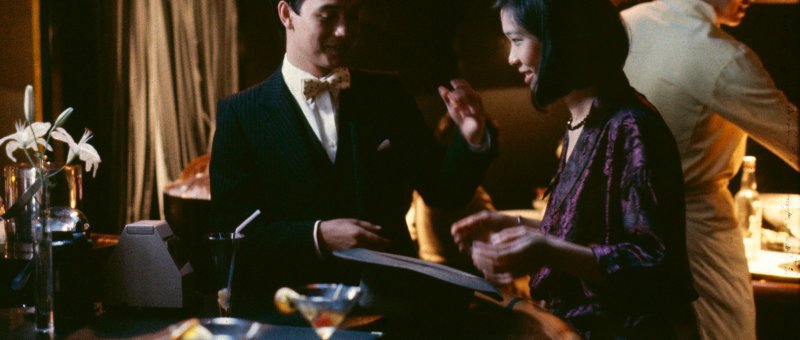
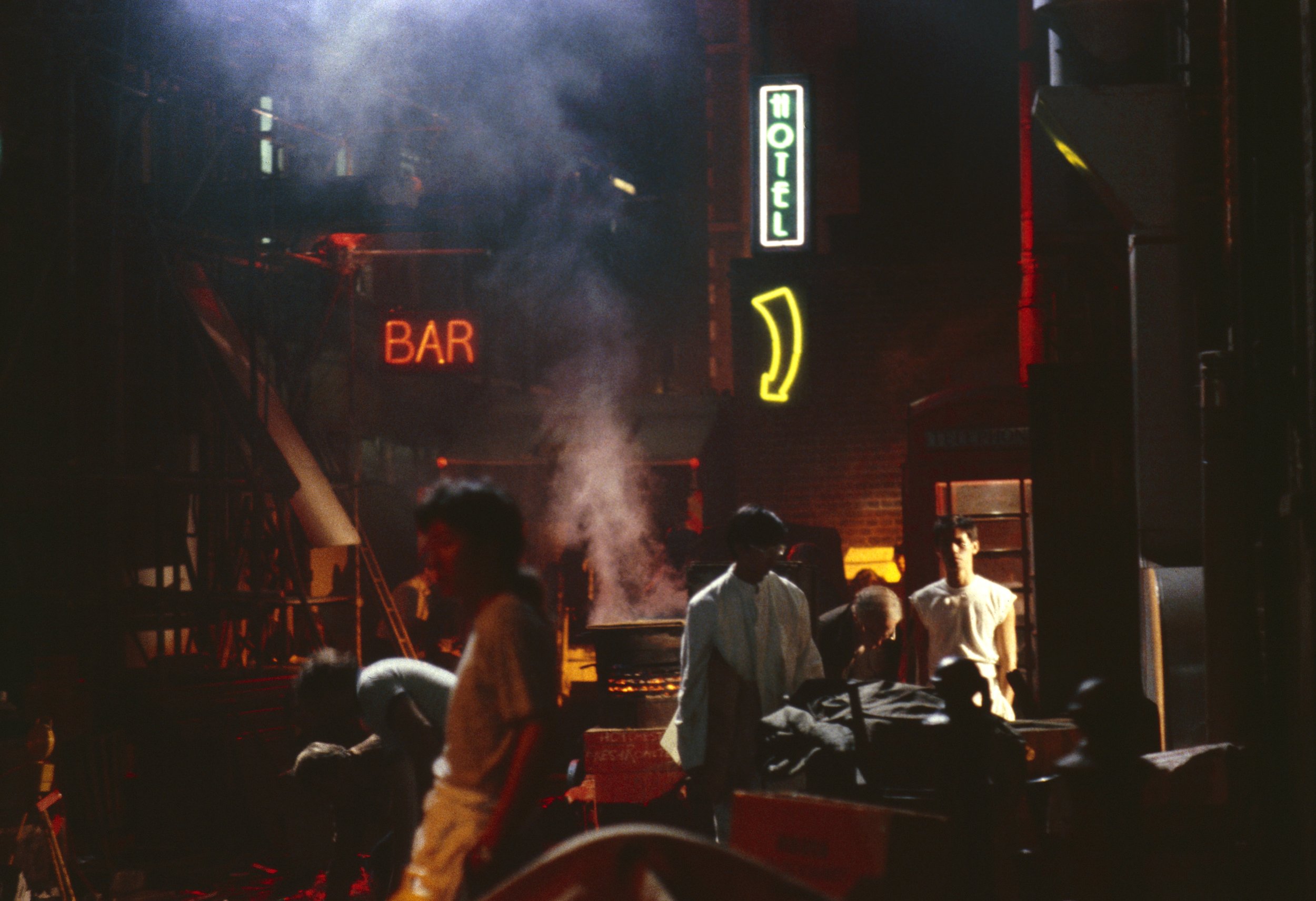
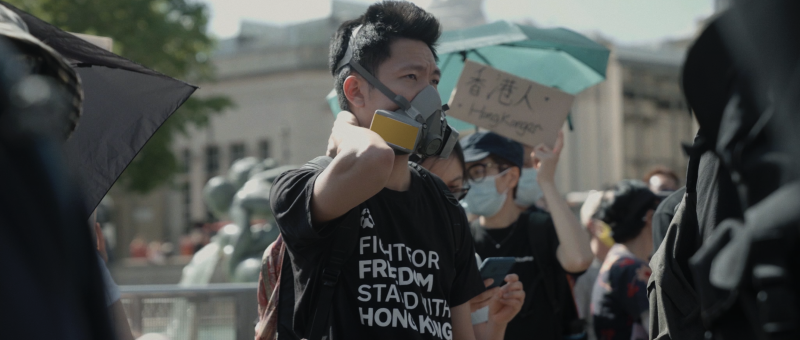
Clocking in at over four hours James Leong & Lynn Lee’s If We Burn (血在燒) provides the most comprehensive overview of the Anti-Extradition Law Amendment Bill Movement of any of the recent documentaries focussing on the events leading up to the passing of the Security Law in June 2020. Utilising professionally shot footage of the protests along with that captured by protestors via mobile phone, the film presents a tale of gradually escalating tensions provoked by increasing police violence and an expanding sense of hopeless desperation. 

Focussing largely on a series of climactic events such as the storming of the Legislature, the Yuen Long and Prince Edward Station attacks, and the sieges of the Chinese University and Hong Kong Polytechnic University, the film posits police brutality as a deliberate tactic that developed into state terrorism designed to intimidate society into submission. In the talking heads segments which occupy the first half of the film, the filmmakers interview a journalist who was present at the Yuen Long attack and was herself beaten by the mysterious vigilantes who raided the station. In this and the attack at the Prince Edward station which followed, it was clear that the target was not solely protestors but the people of Hong Kong who were simply attempting to catch a train in order to go about their ordinary business and became victims of, in the case of the Prince Edward MTR passengers, state violence in an unwarranted police intervention. As the journalist explains, given such a threat to their safety it is not surprising that many were radicalised and that some who had previously been committed to peaceful protest resolved to fight fire with fire. 

Some also regard the police action as a deliberate tactic, that in escalating violence the authorities attempt to provoke those protesting in order to justify even harder crackdowns. It’s also later revealed that police officers infiltrated the movement, dressing as protestors but suddenly attacking those around them giving rise to mistrust and paranoia. A lengthy sequence in which a mob at the airport protest catch a man they believe to be a Mainland police spy hints at the moral ambiguity of the protest movement as they argue with each other what to do with him while the man himself becomes a stand-in for the entirety of the violence inflicted so far. As tensions rise and duplicitous actions of the authorities increase, protestors begin to lose their sense of righteousness agreeing that there no longer is any line they will not cross to secure the freedom of Hong Kong. 

It’s clear that this period of instability has greatly affected the mental health particularly of younger protestors with many thrown into despondency and despair. During the university sieges, many state their intention to die and become martyrs while others talk of suicide and the toll the deaths of friends have already taken on them. During a rally in which older people offer thanks and support to the student protestors a young musician tearfully talks of how the the protest movement’s lack of success has exacerbated his depression and left him feeling hopeless with the only the solidarity of the people around him keeping him going. 

What had begun as a simple request to reject the Extradition Law Amendment Bill soon turns into a series of five demands and finally towards a desire for independence among the more hardline of the protestors who are now so mistrustful of Mainland authoritarianism that they can never consent to living under it. The documentary ends with alarm bells still ringing and a post-apocalyptic vision of battlefield destruction in the quad of the Polytechnic University peppered with small fires and piles of rubble while police drag protestors away from the scene. Talking heads who still appear in masks and goggles with disguised voices look back on the effects of the protests and the various ways they are changing Hong Kong while a piece of onscreen text coldly explains that the Security Law was passed and many have since been arrested or fled into exile. Still, as the alarm bells ring over the closing scene featuring the graffiti that gives the film its title, the documentary seems to suggest that all not yet lost while flame of resistance continues unextinguished.


If We Burn screens at London’s Genesis Cinema 18th March as the Opening Gala of this year’s Hong Kong Film Festival UK.

Queer East Film Festival Reveals Full 2023 Programme

Queer East returns to cinemas across London 18th to 30th April with another handpicked selection of LGBTQ+ films from Asia. This year’s edition has a special focus on Korea including a series of films spanning from the 1960s to the present day and will also feature screenings of classics The Love Eterne and Rebels of the Neon God. Opening with Philippine comedy I Love You, Beksman, the festival will close with Home Ground, a documentary focussing on the first openly lesbian bar in Korea which opened in the 1990s.

Cambodia

  • Lotus Sports Club – documentary filmed over five years following a trans man in his 60s who formed a football team for LGBTQ+ youth.

China

  • Bad Women of China – He Xiaopei’s personal documentary explores the lives of Chinese women from the 1920s to the present day through the stories of herself, her mother, and her daughter.

Hong Kong

  • The Love Eterne – classic Mandarin-language Shaw Brothers musical directed by the legendary Li Han-Hsiang and starring Betty Loh Ti as a young woman who dresses as a boy in order to pursue education and meets a dashing scholar with whom she falls in love (Ivy Ling Po).

Japan

  • Let Me Hear It Barefoot – two alienated young men struggle to identify their feelings while searching for escape from moribund small-town Japan in Riho Kudo’s indie drama. Review.

Myanmar

Philippines

  • About Us But Not About Us – experimental mystery drama in which a student’s dinner with a professor takes an unexpected turn.
  • I Love You, Beksman – comedy starring Christian Bables (Big Night!) as a hairdresser everyone assumes to be gay until he falls for a beauty queen.

South Korea

  • Home Ground – documentary focussing on the first openly lesbian bar in Korea.
  • House of Hummingbird – coming of age drama set in 1994 in which a lonely teenage girl develops a fondness for her enigmatic Chinese teacher. Review.
  • King and the Clown – 2005 drama in which a pair of street performers become embroiled in dangerous intrigue. Screening on 35mm.
  • A Man and a Gisaeng – 1969 comedy in which an office worker is fired for being unmanly and finds a new line of work as a gisaeng only to be courted by the very boss who fired him.
  • Memento Mori – classic millennial horror in which a high school girl discovers a forbidden romance after reading a schoolmate’s diary.
  • Peafowl – drama following a trans woman who is tasked with performing the memorial dance at her estranged father’s funeral.
  • Sa Bangji – 1989 period drama in which an intersex person living in a temple draws dangerously close to a widow in mourning.
  • Stateless Things – festival favourite from 2011 following a North Korean refugee and a young gay man financially dependent on his older lover.

Taiwan

  • Rebels of the Neon God – classic from Tsai Ming-Liang following alienated teenager Hsiao Kang (Lee Kang-sheng) and petty delinquent Ah-Tze in a changing Taipei.

Shorts

In Between Seasons

  • Boy Queen (Dir. Sai Nyi Min Htut, Myanmar, Germany, 2021)
  • Seance of the Past (Dir. Adelaide Sherry, Singapore, 2022)
  • Truthless (Dir. Zhao Badou, China, 2021)
  • Memori Dia (Dir. Asarela Orchidia Dewi, Indonesia, Germany, 2022)
  • Tank Fairy (Dir. Erich Rettstadt, Taiwan, US, 2022)

All About My Mother

  • Will You Look at Me (Dir. Huang Shuli, China, 2022)
  • Skin Can Breathe (Dir. Chheangkea, US, Cambodia, 2022)
  • Fictions (Dir. Alice Charlie Liu, Canada, 2022)
  • Rising Sun (Dir. Cheng Ya-chih, Taiwan, 2018)
  • Fishbowl (Dir. Jacqueline Chan, US, 2021)
  • A Good Mother (Dir. Lee Yu-jin, South Korea, 2022)

A Kind of Queer Utopia

  • Strangers in Paradise (Dir. Huang Yihong, China, 2022)
  • Adju (Dir. Elvis A-Liang Lu, Taiwan, 2021)
  • Leo & Nymphia (Dir. Pan Hsin-An, Taiwan, 2021)
  • The Choir of our Kind (Dir. Xu Zai, Wang Sisi, China, 2021)

First Times

  • The Voice (Dir. Maral Ayurzana, Mongolia, 2022)
  • Swimming in the Dark (Dir. Chen Pin-Ru, Taiwan, 2022)
  • I get so sad sometimes (Dir. Trishtan Perez, Philippines, 2021)
  • Rooted (Dir. Wu Yi-Wei, Taiwan, 2022)
  • We Were Never Really Strangers (Dir. Patrick Pangan, Philippines, 2022)

Queer Korea: A Mixtape

  • Ice (Dir. Lee Seongpwook, South Korea, 2019)
  • Cicada (Dir. Yoon Dae-woen, South Korea, 2021)
  • Butch Up! (Dir. Lee Yu-jin, South Korea, 2022)
  • Don’t worry (Dir. Kim Tae-yong, South Korea, 2022)
  • How Do I Kill That B? – (Seo Ji-hwan, South Korea, 2022)

Dance Performances

Artists’ Moving Image Programmes

Alien Body, Human Dreams

  • to boyhood, i never knew him (Dir. Trâm Anh Nguyễn, Vietnam & Canada, 2022)
  • Longing for the Sun to Set Upwards (Dir. Jao San Pedro, Philippines, 2022)
  • Native beast (Dir. Aileen Ye, Netherlands, 2022)
  • Disease of Manifestation (Dir. Tzu An Wu, Taiwan, 2011)
  • Yummy Body Truck (Dir. Noam Youngrak Son, Netherlands, 2021)
  • BXBY (Dir. Soojin Chang, UK, 2022)
  • Garden Amidst the Flame (Natasha Tontey, Indonesia, 2022)

Wayward Fruits

  • Dikit (Dir. Gabriela Serrano, 2021)
  • out in the world (Dir. Bart Seng Wen Long, 2022)
  • Boy-Taste (Dir. Michio Okabe, 1973)
  • I shudder with pleasure that at last the time has come (Dir. Mari Terashima, 2022)
  • Sexy Sushi (Dir. Calleen Koh, 2021)
  • Super Taboo (Dir. Su Hui Yu, 2017)

Queer East runs 18th to 30th April at venues across Central London while a selection of films will also tour to venues around the UK in the autumn. Full details for all the films as well as ticketing links can be found on the official website, while you can also keep up with all the latest news by following Queer East on FacebookTwitterInstagram, and YouTube.

People Who Talk to Plushies Are Kind (ぬいぐるみとしゃべる人はやさしい, Yurina Kaneko, 2023)

How is it possible to go on living in a society which is often unkind and at times hostile? A collection of sensitive university students find themselves struggling to accept the world around them in Yurina Kaneko’s charmingly empathetic adaptation of the novel by Ao Omae, People who Talk to Plushies are Kind (ぬいぐるみとしゃべる人はやさしい), but discover a kind of solidarity in softness after joining a club where they don headphones and unburden themselves to cuddly toys. 

As they point out, it’s good to talk. But talking to someone else about your worries can end up making them worried too and that’s the last thing any of the members of the Plushie Club want which is why they’ve decided to talk to plushies instead. Yet what’s worrying them isn’t just their worries, but a sense of their powerlessness and complicity in having behaved as if they believed the problems of others were nothing to do with them until they were shown otherwise. The hero, Nanamori (Kanata Hosoda) regrets that he “laughed things away with everyone else” rather than speaking up when he saw something that seemed wrong to him and should change while acknowledging that simply by existing as a man he may make someone feel afraid or uncomfortable without meaning to. 

Nanamori is careful not to hurt others by his own actions, trying to turn down a confession of love from a classmate in high school as kindly as he can but perhaps failing in his awkwardness even as he straightforwardly tells her that he doesn’t understand the concept of romantic desire. He simply doesn’t know what it means to “like” someone, and feels that there must be something wrong with him that he can’t grasp this simple facet of human behaviour. On a trip home uniting with some boys from school, he is immediately put off by their stereotypically masculine banter in which they ask him about girls and crushes and mock him for being a virgin until he finally leaves and tells them not to laugh at him just because he is different. 

Everyone at the Plushie Club is “different” in their own way, but has come to find a place to belong where they are simply allowed to be without needing to offer anything else. As another of the members, Nishimura (Mimori Wakasugi), puts it there’s something between kindness and indifference that is simply gentle, a quiet yet powerful quality of acceptance. When she casually revealed one day that she had a girlfriend, most of her friends were supportive but perhaps superficially. Her revelation had made them uncomfortable and regardless of how they felt about it, their perception of her had changed and she was no longer the person she had been to them before. They began to treat her differently, but at the Plushie Club there was no real difference and everyone carried on reacting to her the same way they always had. 

The Plushie Club is a place where it’s permitted to be soft in a hard world, where the members can allow themselves to feel drained by the process of living and find relief from their sense of powerlessness in acknowledging that they have made a choice to continue being kind rather than become what the world wants them to be. In an effort to understand romantic desire, Nanamori begins dating a fellow member, Shiraki (Yuzumi Shintani), but discovers that she has chosen the opposite path laughing at women who complain about societal misogyny and insisting that it’s pointless to resist because nothing will ever change. She joined the Plushie Club because she was sick of being sexually harassed at other uni gatherings but later decides to deliberately join another club filled with sexist guys because the real world isn’t so nice and the only way to survive it is to become hard yourself. 

Shiraki claims that she finds Nanamori’s “righteousness” “exhausting” and wishes she could free him and a similarly minded classmate, Mugito (Ren Komai), from their “tormenting kindness” which has in its way hurt her though unavoidably so even as she continues to be kind despite herself if rebelling by refusing to talk to plushies. Kaneko sometimes shifts to a blurry plushie vision with shimmering pastel-coloured edges and a kind of glitter snow effect that makes it seem as if the stuffed toys really are watching over their human friends as they silently, or not, agree to shoulder some of the burden of living. “They’re the ones talking to us,” Nanamori points out though in a way perhaps it’s more that the plushies reflect a part of themselves allowing them to exteriorise their internal dialogue and reach an accommodation with their fear and loneliness amid a world which consistently proves immovable and disappointing.


People Who Talk to Plushies Are Kind had its World Premiere as part of this year’s Osaka Asian Film Festival.

Original trailer (no subtitles)
Images: (C) 映画「ぬいぐるみとしゃべる人はやさしい」

A Man (ある男, Kei Ishikawa, 2022)

©2022 "A MAN" FILM PARTNERS

“Why was living so hard for him?” a brother remarks of man he assumed to have died in an accident after severing ties with his family, though with little sympathy in his voice and in truth should the brother be dead it would be all the better for him. Adapted from  a novel by Keiichiro Hirano, Kei Ishikawa’s A Man (ある男, Aru Otoko) asks questions not so much about the limits of identity and the existence of an authentic self, but the kinds of labels we place on others and the prejudice that often accompanies them that makes some want to run from themselves. 

Accidental detective Kido (Satoshi Tsumabuki), a lawyer who previously represented the recently widowed Rie (Sakura Ando) in her divorce from her first husband, is a case in point. He tries not to react while his wealthy and extremely conservative father-in-law runs down a case he’s just won representing the parents of a man who took his own life after being expected to work extreme overtime by an exploitative company solely to fulfil the image of the salaryman. The father-in-law sneers and complaints about the family receiving compensation before moving on to a rant about the welfare state scoffing that “real” Japanese don’t rely on such things which are only for “Koreans and people of that ilk”. 

Aside from its unpleasant xenophobia, the remark is insensitive as Kido is himself third generation Zainichi Korean, though a naturalised citizen of Japan. Throughout the film, he’s bombarded with social prejudice and racist abuse to which he chooses to say nothing, because there’s nothing he can really say, though leaving us to wonder if his decision to marry his wife (Yoko Maki), the daughter of a wealthy and conservative family, is an attempt to secure his own identity as a member of Japanese society even while bristling at her further demands, that they should invest in a more impressive, larger detached house as recommended by her father and also have another child. 

Kido’s quest to uncover the “true” identity of Rie’s husband Daisuke (Masataka Kubota) who is discovered to have been living an assumed identity when the brother of the man whose name he borrowed arrives at his memorial service, is also a quest to affirm his own identity which is in many ways as self-constructed as Daisuke’s is assumed to be. The interesting thing is that Daisuke, who said little of his past, used the other man’s backstory leaving no doubt that is not quite a case of mistaken identity that brings Kyoichi (Hidekazu Mashima) to Daisuke’s memorial service, though he is quick enough to disparage the life the deceased man shared with Rie in a rural “backwater” while making vague references to insurance policies and inheritances and simultaneously offering to pay for the funeral expenses as if reclaiming ownership over Daisuke’s legacy. 

Like Kido’s father-in-law, Kyoichi appears to be a cynical and self-interested man and it’s not difficult to see why the other Daisuke may have wished to escape his life with him. As an older man points out, everyone has things in their past and though they might not seem like much to others it’s natural enough to want run from yourself, to leave everything behind and start again somewhere else. In Japan, this is much easier to do than in some other countries and it’s true enough that changing one’s name is not that uncommon either. Rie’s young son Yuto, now old enough to question his own identity, took his mother’s maiden name after the divorce, then Daisuke’s surname Taniguchi when he married his mother. Now he wonders what his name should be if it is not Taniguchi and who he really is underneath it. 

In essence, we give people names as a kind of label to describe our relationship to them as a means of mapping out the world. These labels also come with prejudices such as that directed towards Kido as a Zainichi Korean and to another of the “disappeared” men who struggled to emerge from the shadow of his father’s crime as a death row felon. The projection of an identity can be harder to live with than the identity itself. When Kido’s wife tells him that he doesn’t seem himself and she wants him to go back to the way he was before, it’s a rejection of the new identity that has begun to surface through his quest to identify Daisuke and an instruction that he conform to the image of him she has constructed for herself as a typical Japanese salaryman not so different from her father in their affluent, middle-class existence.

Having satisfied himself that he understands the man Daisuke came to be, Kido’s self-image and sense of identity seem to be reaffirmed. He is happier with his wife and son, and has fewer doubts about his place in the world, but then he’s suddenly confronted with an unexpected revelation that undermines his new sense of security in causing him to doubt the veracity of the image he has of others, and consequently of their relationship with him which again leaves him unanchored unable to affirm his image of himself without its reflection. Rie’s final acceptance that in the end she never needed the “truth” (now that she has it) points to the same answer, that in the end Daisuke’s name was irrelevant because he was the man he was to her at the time that she knew him and this is all we can ever really know of each other in a continual act of faith in interpersonal connection. A man can be many people at once, or in quick succession, and none of them any less “real” than another. “It’s nobody’s life but your own,” Kido is reminded even as he struggles to reorient himself in a merging of identities self-constructed or otherwise but perhaps destined to remain forever a stranger to himself.


A Man screens in Chicago March 18 as part of the 16th season of Asian Pop-Up Cinema.

International trailer (English subtitles)

BFI Flare Confirms Complete Programme for 2023

The BFI’s LGBTQ+ film festival, BFI Flare, has announced the full programme for this year’s edition which runs at the BFI Southbank 15th to 26th March. This year there are a few features from East Asia included in the lineup including four from South Korea.

Cambodia

  • Lotus Sports Club – documentary filmed over five years following a trans man in his 60s who formed a football team for LGBTQ+ youth.

South Korea

  • The Dream Songs – etherial drama following two high school friends over the course of a day.
  • Life Unrehearsed – documentary following two Korean women who met each other at a summer camp in Germany in 1986 and have stayed in the country together ever since.
  • PEAFOWL – drama following a trans woman who is tasked with performing the memorial dance at her estranged father’s funeral.
  • XX+XY – teen comedy following an intersex high schooler who finds themselves at the centre of a love triangle.

BFI Flare runs at BFI Southbank 15th to 26th March, 2023. A small number of short films are also available to stream via BFI Player. The full programme can be found on the official website where tickets are already on sale. You can also keep up to date with all the latest news via the festival’s Facebook page, Twitter account, Instagram, and YouTube channels.

Like & Share (Gina S. Noer, 2022)

Two young women seeking escape from a repressive social culture find themselves betrayed by the hypocrisies and lawlessness of the online society in an infinitely empathetic drama from Two Blue Stripes’ Gina S. Noer, Like & Share. Like many young people, they see internet stardom as a path towards freedom and independence, but are too naive to understand its underlying darkness even when presented with evidence of its misuse in the alarming popularity of an illicit sex tape and its violent sequel. 

Lisa (Aurora Ribero) in particular is strangely fascinated by the video despite realising that in the sequel that followed the woman is crying and appears to have suffered sexualised violence at the hands of the man whose face is never seen. “No face, no case” the girls are fond of saying, naively thinking that they can safeguard themselves from potential harm simply by shooting from the neck down. When nude photos are leaked of another girl at school, she’s able to claim that it’s not her and encourage people to block the sender but still it seems like no one really believes her. Lisa and Sarah (Arawinda Kirana) seem to feel a sense of invincibility, that they’re in control of their online personas and the channel they’ve set up featuring beautifully produced ASMR videos accompanied by a deliberately “sexy” voice over. Though Lisa is unsure, Sarah brushes off some of the more unpleasant comments they get as simply par for the course while reminding her that they’ll get more likes and shares appealing to the sort of people that make them. 

But the girls are largely ill-equipped to understand the world they’re entering, not least because of the repressive atmosphere in which they’ve been raised. Lisa soon becomes fixated on the sex tape, addicted to pornography and masturbation which temporarily replaces ASMR as her preferred method of stress relief. The problem is compounded by the fact that her mother has married an older, quite conservative religious man and converted to Islam. She is very keen that Lisa not upset her new stepfather, who has agreed to pay for her education, mainly because it’s her own “second chance” to atone for the failure of her first marriage and prove herself a good wife and mother. “What sort of good woman are you that has no empathy for other women?” Lisa later asks her but gets little reply. Her mother advises her to read the Quran if she wants to calm herself down, though Lisa counters that she can’t read Arabic anyway.

As Lisa explains, she was merely curious and it’s not as if she could have asked her mother for knowledge or advice. Her addiction partly stems from the illicit nature of the activity, had she had a healthier outlet and better access to sex education she would probably not have reacted to the video in such an extreme way. Sarah later experiences something similar after meeting a boy, Devan (Jerome Kurnia), at a local recreation ground and agreeing to date him without necessarily seeing any red flags in the fact he’s 27 with a full-time job and wants to date a 17-year-old high school girl. Every time she expresses reluctance to take their relationship to the next level he calls her “childish”, later assaulting her and filming it to use as blackmail and potential online clout. “It’s always the girl’s life that’s ruined, never the man’s” he later sneers, certain that he’ll get away with it because it’s his word against hers and as her lawyer cautions her after Devan leaks the video going to the police is risky because there’s a chance she could end up being charged with obscenity under the country’s laws surrounding pornography. 

Misogyny is already deeply ingrained in the system. Ironically enough, the girls’ teacher tells them the school can’t afford to fund group activities so they need to go swimming on their own and film it for him so he can mark them. The videos are shown to the entire class with even the teacher appearing to salivate over the footage of teenage girls in wet swimsuits while their male classmates make inappropriate comments that go largely unchallenged. Sarah is unwilling to accept that what happened to her was rape, firstly brushing it off as a potential fetish for rough sex or suggesting that Devan did not hear her say no despite having previously told her about a too spicy dish at a restaurant that if she doesn’t like or want something she should say so. Lisa meanwhile is forced to accept her partial complicity after crossing paths with the woman from the sex tape and becoming somewhat fixated on her before reflecting on the harm that she had done in having watched it in the first place. It’s she that later helps Lisa come to an understanding of the best way to support her friend through her ordeal which may be simply to be there and to listen. 

Despite the judging eyes of the world around them, the two women have their friendship and the refreshingly progressive support of Sarah’s older brother who stands by his sister rather than blaming her. Even so, it’s other women who often fail her from the conservative judgement of Lisa’s mother to a lawyer at a court hearing who says that Sarah made her choice when she decided to enter the hotel room with Devan and has no right to call her “regret” “rape”. Yet Lisa and Sarah are finally able to repair their friendship and stand up in solidarity against a patriarchal social culture, refusing to let Devan off the hook while reassuming control of their channel by reading out some of the inappropriate messages they’ve been sent by men online. “Thank you for being brave” a message on the website of a woman’s legal organisation reads, once more reinforcing the power of female solidarity against systematised misogyny. 


Like & Share screens March 14/18 as part of this year’s Osaka Asian Film Festival.

Original trailer (English subtitles)

Cafune (カフネ, Haruki Kinemura, 2023)

A pair of teenagers with differing priorities struggle to deal with the discovery of an unplanned pregnancy in Haruki Kinemura’s evenhanded indie drama Cafune (カフネ). Refreshingly progressive, the film is careful never to characterise the pregnancy as a tragedy or in anyway shameful but centres more on the decisions it forces the teens to make about themselves and their futures rather than fixating on the transience or longevity of teenage love. 

Love is the answer Mio gives when her mother quizzes her over the pregnancy test she found shoved into a black plastic bag hidden at the back of a drawer. There’s no getting away from the fact her mother thinks she’s been foolish and is disappointed to have found out this way, but at the same time she’s not exactly scandalised and is clear that it’s Mio who has a decision to make both for herself and for her unborn child without trying to influence her either way. As for the baby’s father, Nagisa, he does not react anywhere near as well, suddenly trashing his room and flailing around in frustration even though his own mother has been almost as sympathetic as Mio’s despite a similar level of disappointment with him. Though part of that may be that she knows he’s also been carrying on with Mio’s friend Natsumi which would explain the dirty look she gives him on meeting Mio on the way out as she leaves in a hurry after failing her first attempt to tell him about the baby. 

Mio certainly has a point when she tells Nagisa that he’s immature and self-centred. He’s been bunking off school for weeks while supposedly studying at home for an important exam and seems to have a mild superiority complex. Just as she was going to tell him about the baby he announces that they should take a break so he can study harder, leaving her to handle all of this on her own while also beginning to suspect that he’s been cheating on her which makes her situation all the more difficult. “Am I the only one who’s been irresponsible?” she asks him when he reacts badly to the news about the baby, blaming Mio for this sudden crisis right before his exam as if he had no part in it at all. Mio already seems to suspect that whatever her decision she can’t rely on Nagisa to take responsibility even while making it clear that it’s not something she feels she can decide unilaterally. 

Then again as she later says, maybe happiness isn’t something you can just decide either. The conclusion that she comes to is that she should make herself happy rather than waiting around for someone else to do it for her and even if Nagisa promises to make her happy in the future it’s partly for selfish reasons, as much for himself as for her in proving a point of masculine pride. In any case, the solution which is found is in itself refreshingly mature requiring no particular sacrifice for either party as each is allowed to pursue their individual hopes for the future without resentment or recrimination.

Mio is also able to repair her relationship with possibly treacherous best friend Natsumi who in the end was only jealous fearing that she would lose Mio as a friend now that she has a lover while failing to realise that there is someone else to whom she’s currently “number one”. Largely free of the sense of judgment that often colours teen pregnancy drama, Kinemura’s gentle coming-of-age tale instead discovers an unexpected well of support across the generations as the teens take centre stage in shaping their decisions not just for the present moment but for their mutual futures in figuring out who they are, what they want out of life, and what is best both for themselves and for the baby. Making the most of its tranquil fishing village setting, the film gradually makes its way towards a kind of serenity as the friends play together on the beach beset as it is by roaring waves but also a gentle kind of happiness.


Cafune had its World Premiere as part of this year’s Osaka Asian Film Festival.

Original trailer (no subtitles)
Museum of the Moving Image Announces Complete Lineup for First Look 2023

New York’s Museum of the Moving Image has announced the complete programme for this year’s First Look which takes place March 15 – 19. As usual there are a number of East Asian films on offer including a documentary following a streaming star in rural China, the latest drama from Koji Fukada, and an experimental film featuring restorations of footage shot in Palestine in the 1960s and 70s dubbed or subtitled in Japanese for sympathetic audiences in Japan.

Huahua’s Dazzling World and Its Myriad Temptations

Documentary following a middle-aged woman in rural China who has carved out a niche for herself as popular video streamer well known for her cheerful dancing and distinctive outfits.

Love Life

Heartrending familial drama from Koji Fukada in which the cracks in a recent marriage are exposed following unforeseen domestic tragedy. Review.

R 21 aka Restoring Solidarity

Experimental documentary featuring pro-Palestinian footage dubbed or subtitled into Japanese and intended for a sympathetic audience in Japan which felt oppressed by US influence and identified with the Palestinian’s struggle for self-determination.

First Look runs March 15 – 19 at New York’s Museum of the Moving Image. Full details for all the films as well as the complete programme can be found on the official website where tickets are already on sale. You can also keep up with all the latest news by following the Museum on TwitterInstagram, and Facebook.

Where the Wind Blows (風再起時, Philip Yung, 2022)

Philip Yung’s first film since the acclaimed Port of Call was scheduled for release all the way back in 2018 only to be repeatedly held up by troubles with the censors later compounded by the coronavirus pandemic. For many reasons, it isn’t surprising that Where the Wind Blows (風再起時) would run into trouble with the current censorship regime dealing as it does with the touchy subject of police corruption albeit it in the colonial era, but the most surprising thing may be that it was passed at all given the subversive undertones of a late speech delivered by the voice of reason, ICAC chief George Lee (Michael Hui Koon-man), whose attack on the corrupt practices of the British authorities has obvious parallels with the modern day. 

The film is however set firmly in the past ranging from the 1920s to the 1980s and inspired by the “Four Great Sergeants” of post-war Hong Kong who amassed great personal wealth while working as police officers. Once again, the police is just the biggest gang, or perhaps the second biggest given that the great racket in town is the colonial rule. It is indeed the British authorities who have enabled this society founded largely on systemised corruption, something which as Lee points out they are unwilling to deal with because it suits them just fine and they have no real interest in the good of Hong Kong. 

In any case, flashy cop Lok (Aaron Kwok Fu-shing) started out as an earnest bobby before the war who was shocked by the institutionalised corruption all around him and refused to participate in it. But his law abiding nature only made him a threat to other officers who needed him to be complicit in their crimes to keep them safe. After several beatings, he ended up accepting the culture of bribery just to fit in. In the present day, he and likeminded detective Nam (Tony Leung Chiu-wai) justify their dubious methods under the rationale that they’re helping to “manage” triad society by effectively licensing the gangs in taking protection money to leave the chosen few alone while enriching themselves in the process. 

Then again, the balance of triad society is disrupted by the arrival of a bigger Mainland outfit which later ends up backing Lok, with the assistance of his Shanghainese wife (Du Juan), to place him in a position which is the most beneficial to themselves. To quell riots by supporters of the KMT in 1956, Nam lies to the protestors that he secretly supports their cause and that if they do not disperse there is a chance the British Army will forcibly disperse them which he also describes as an inappropriate outcome because this is a matter that should be settled among the Chinese people not by foreigners. In the final confrontation with ICAC chief Lee, the British authorities rule out military or police action, though the rioters in that case are in fact policeman angry about increasing anti-corruption legislation. Ironically enough, Lee’s speech advocates for something similar to that which Nam had suggested, essentially saying that the Hong Kong people should decide their own future and that society in general should be more mindful as to the kind of Hong Kong their children and grandchildren will eventually inherit. 

In any case, the four sergeants are soon eclipsed by changing times while Lok and Nam are mired in romantic heartbreak in having fallen for the same woman who brands Nam an over thinker and implies she may have married Lok less out of love than in the knowledge he’d be easy to manipulate. For his part, Lok is damaged by wartime trauma which has left him cynical and nihilistic while filled with regret and longing for a woman he lost during the war in part because he did not have the money to pay for medical treatment which might have saved her. In this sense, it’s money that is the true corrupting force in a capitalist society in which, as Lee suggests, it might eventually become necessary that you’d have to bribe a fireman to save your house or an ambulance driver to get your ailing mother to a hospital. Then again, as Nam says power lies in knowing there are those weaker than yourself. Yung’s sprawling epic apparently rant to over five hours in its original cut before being reduced to three hours forty-five and then finally to the present 144 minutes leaving it a little hard to follow but nevertheless filled with a woozy sense of place and an aching longing for another Hong Kong along with a melancholy romanticism as a lonely Nam dances alone to a ringing telephone bearing unwelcome news. 


Where the Wind Blows screens in Chicago on March 14 as part of the 16th season of Asian Pop-Up Cinema.

Original trailer (Traditional Chinese / English subtitles)

The Sunny Side of the Street (白日青春, Lau Kok-rui, 2022)

Dualities abound in the stories of two frustrated fathers and the sons who vow to be nothing like them in Malaysian director Lau Kok-rui’s paternal drama, The Sunny Side of the Street (白日青春). The fathers are in their way looking for a place in the sun but struggle to find it, while the sons want nothing but their affection and approval but remain resentful for their repeated failures. Each affected by the legacies of geographical displacement, they remain free floating if looking for safe harbour though perhaps in all the wrong places. 

The parallels between embittered taxi driver Yat (Anthony Wong Chau-sang) and former lawyer turned refugee Ahmed (Inderjeet Singh) are amply demonstrated by the opening sequence in which each is late for a wedding after Yat rams into the van Ahmed had borrowed from store owner Ali to transport a secondhand fridge. Yat arrives just in time to see his son, Hong (Endy Chow Kwok-yin), make the toast at his wedding but thank his father-in-law, a senior policeman at his precinct, while looking daggers at Yat whom he only invited a few days before out of a sense of obligation. Ahmed meanwhile was supposed to be a witness at a wedding between a Pakistani man and an Indonesian woman at the refugee camp not far from where Yat lives which the officiant is keen to remind them is binding in the eyes of Allah but not so much the government of Hong Kong. 

As a somewhat prejudicial radio show playing in Yat’s car explains, Hong Kong is a point of transit. If their claims are upheld, the refugees will not settle there but be moved on to other countries such as Canada where a family at the wedding are about to travel taking the best friend of Ahmed’s son Hassan (Sahal Zaman) with them. The radio show talks about “fake refugees” describing them as a drain on resources depriving local people of services they should otherwise be entitled to while it’s clear that many don’t seem to see the refugees as equals and think of them as lazy shirkers with criminal proclivities. Yat repeatedly uses a racial slur to refer to Ahmed and immediately tries to pin the accident on him assuming the policeman will also jump to the conclusion that it must be Ahmed’s fault for being a bad driver only the policeman doesn’t quite play along even when pulling Ahmed aside for an ID check. 

The irony is that Yat is also a refugee who swam to Hong Kong from the Mainland and is still carrying trauma from his flight in the same way many like Ahmed are yet cannot find it within himself to empathise with him, only to act with entitlement and absolve himself of blame through manipulating his connections with the police. He has quite clearly lost his moral compass as the repeated motif of him looking the one which led him to Hong Kong but now appears to be broken makes plain. Hong pointedly refuses to help his father and is clear they should go by the book, but his less rigorous friend is only too keen to help. In any case the petty vendetta between the two men, Ahmed sticking to his principles and refusing to lie to make the situation go away and Yat insisting on enforcing his privilege by forcing him to back down, escalates with tragic results eventually forcing Yat to wrestle with the consequences of his actions and not least the causes of his estrangement with his son. 

Hong tells him that he doesn’t want to be a man like him who is unable to protect his family, while Hassan snaps at Ahmed that his acts of petty thievery are better than being poor like his father. Yet while Hong has swung in the opposite direction, raising himself to be a man who is compassionate and dedicated to justice, Hassan is in danger of going off the rails not least because he has bad eyesight and is falling behind at school because even as something as simple as glasses for their son is not in the family’s reach. Ahmed’s dodgy friend Numen is forever trying to get him into crime, knowing that refugees are not permitted to work or even accept monetary gifts, but he refuses while Hassan begins to see a way of taking control of his situation though thievery and rebels against his father as he does so. 

When Yat begins to take an interest in Hassan it’s mainly to assuage his guilt in knowing that he ruined Ahmed’s life and has left a boy without a father for whom he is now responsible. Yet it’s also in a way an attempt to repair the relationship he could not rebuild with his son while addressing the latent trauma from his own escape from Mainland China which he has otherwise buried through heavy drinking that finally resulted in a liver transplant from Hong that only seemed to deepen the sense of debt and obligation between them. Perhaps Hong Kong is a transitory place after all, each of them in some way displaced and not least from each other while continuing to hope for a better place in the future only to discover nothing more than loneliness and uncertainty if tempered by love and the shades of a frustrated hope.


The Sunny Side of the Street screens March 12/17 as part of this year’s Osaka Asian Film Festival.

Original trailer (Traditional Chinese / English subtitles)

Images: (C) Petra Films Pte Ltd