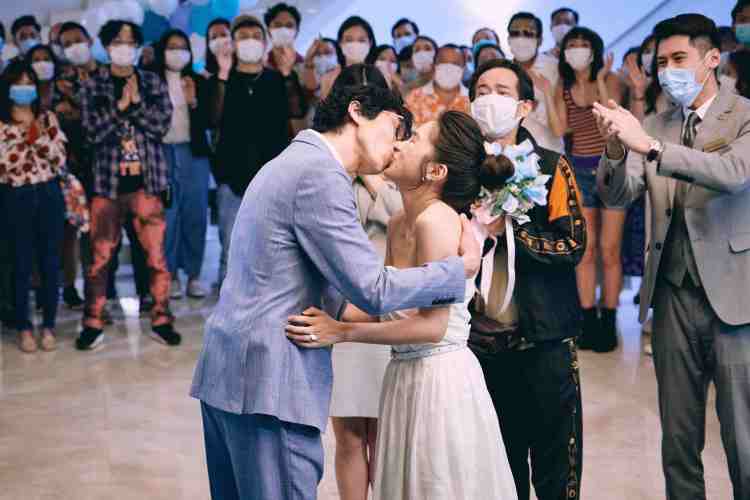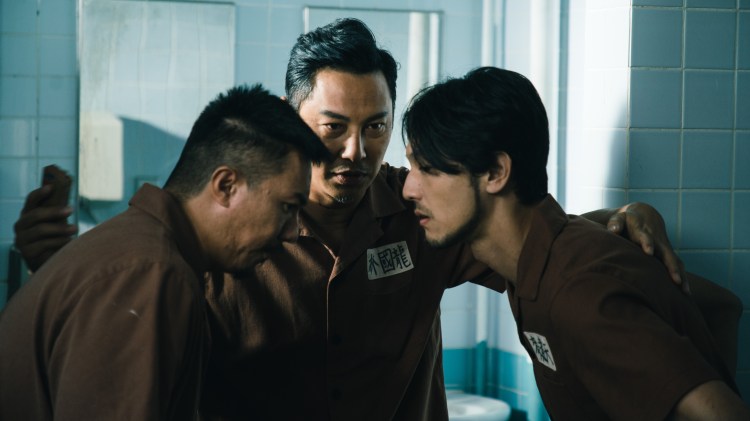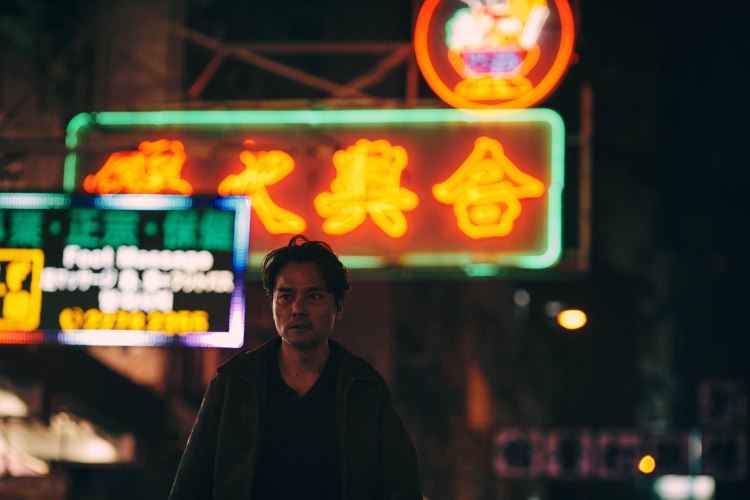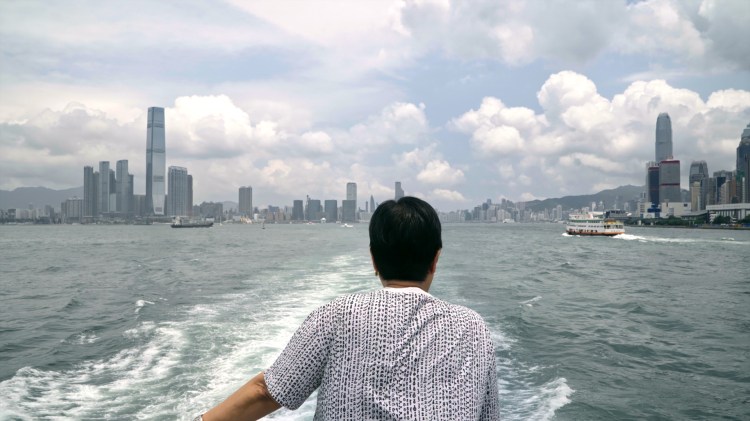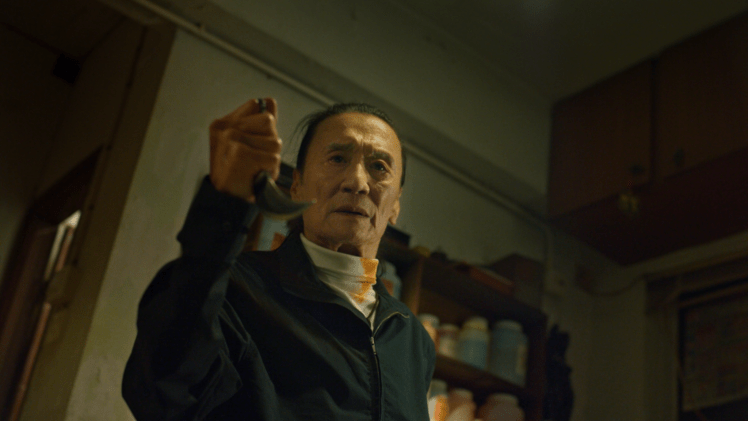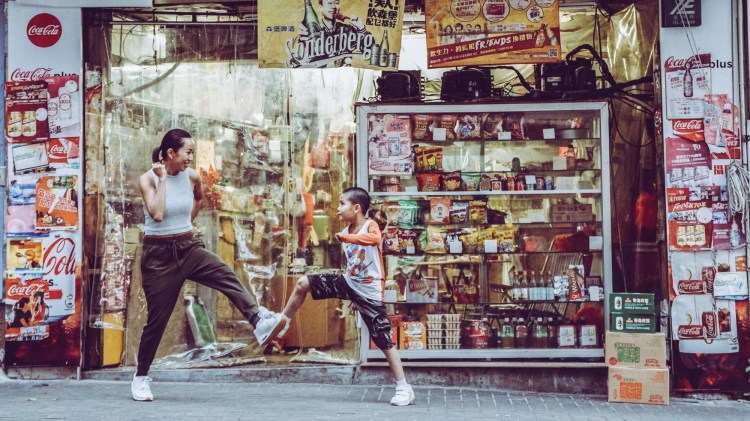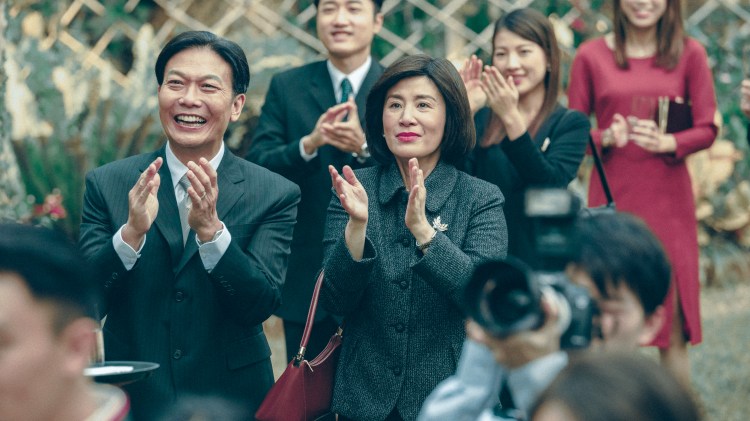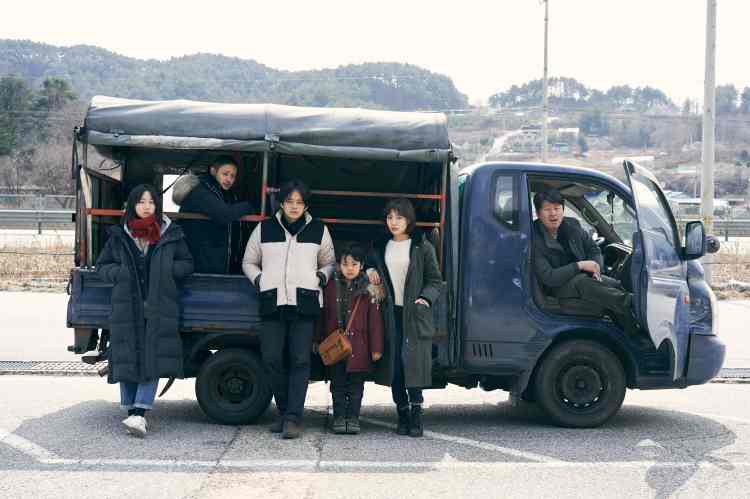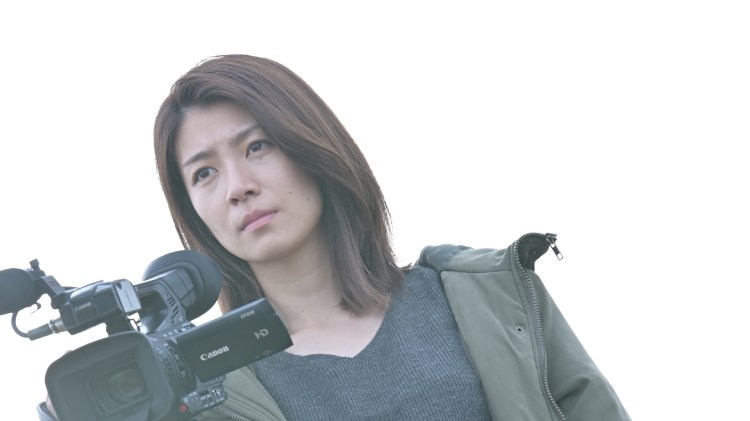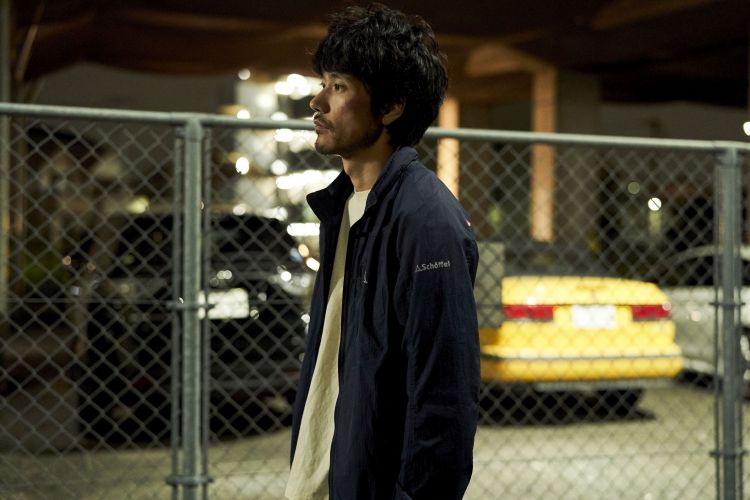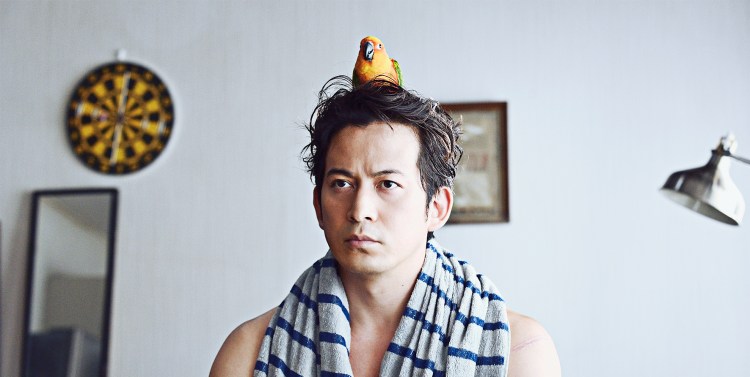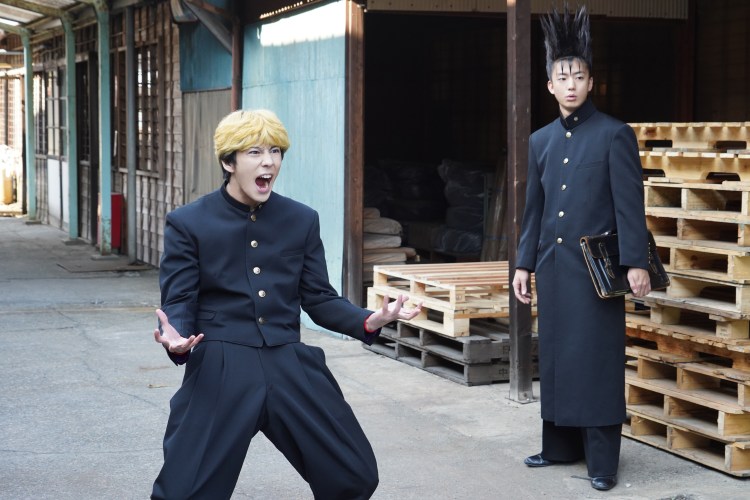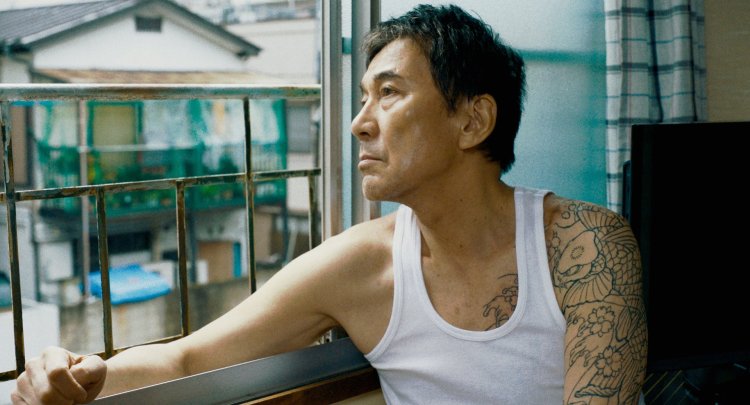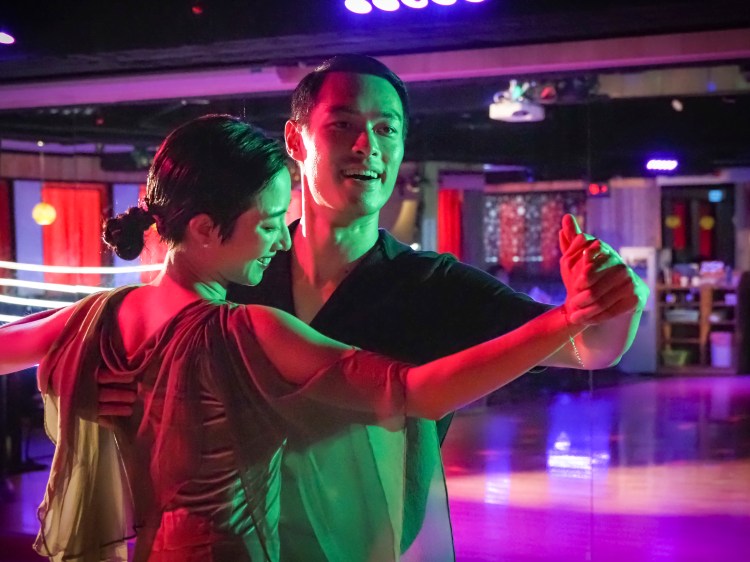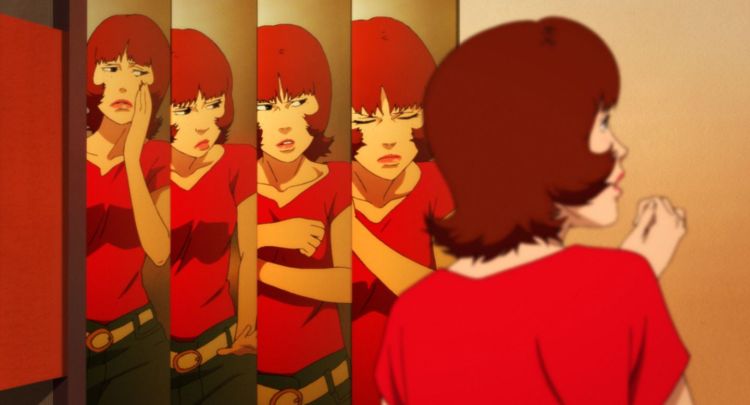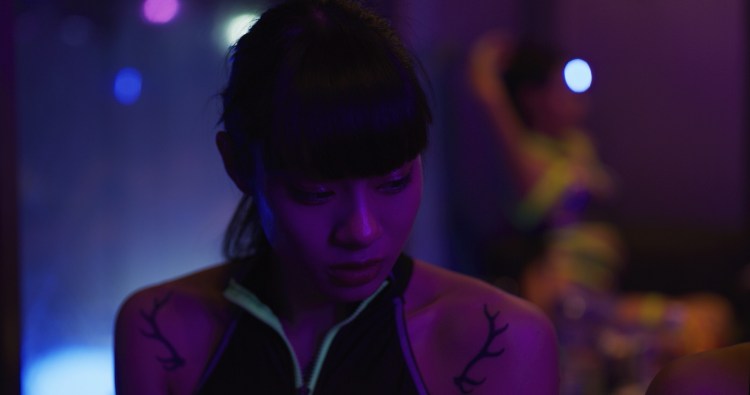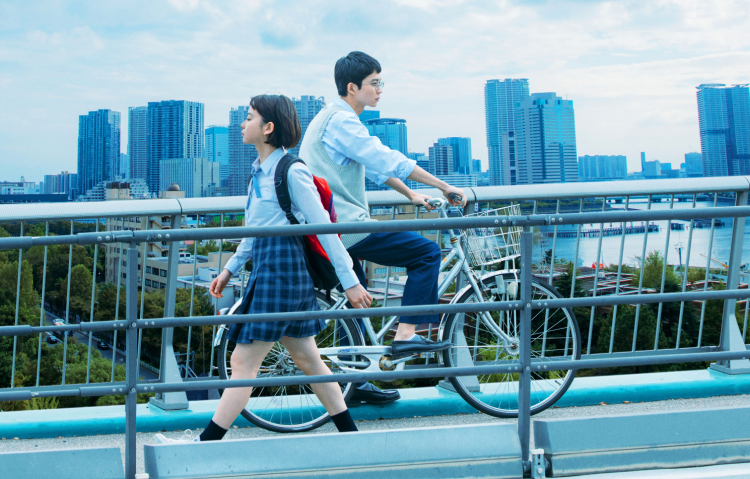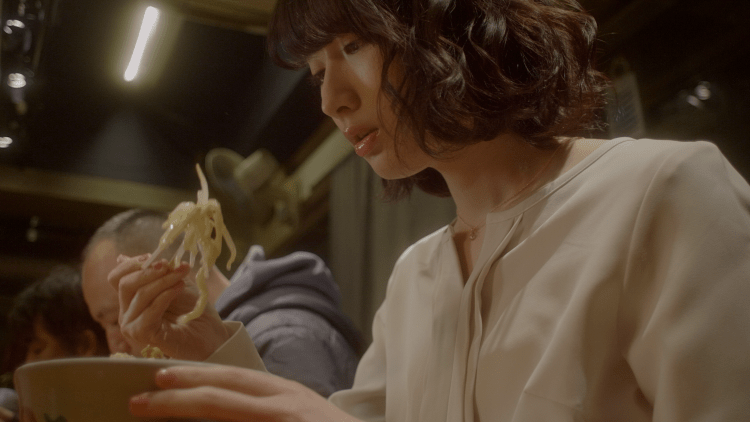
Shadows (殘影空間, Glenn Chan, 2020)

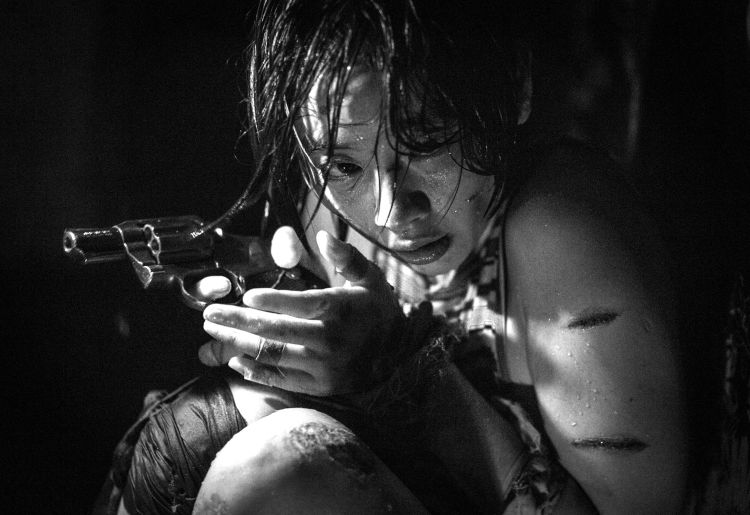
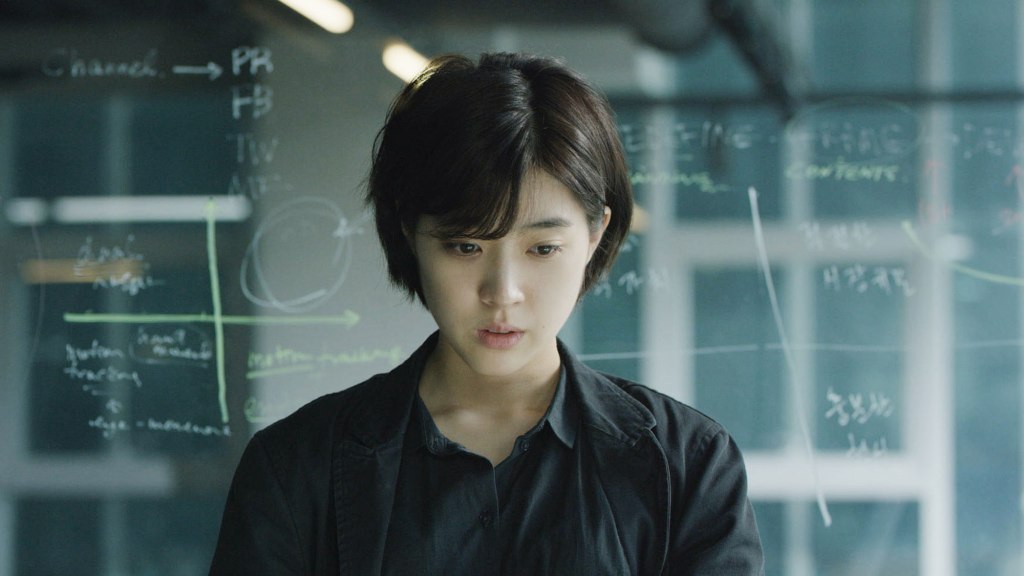
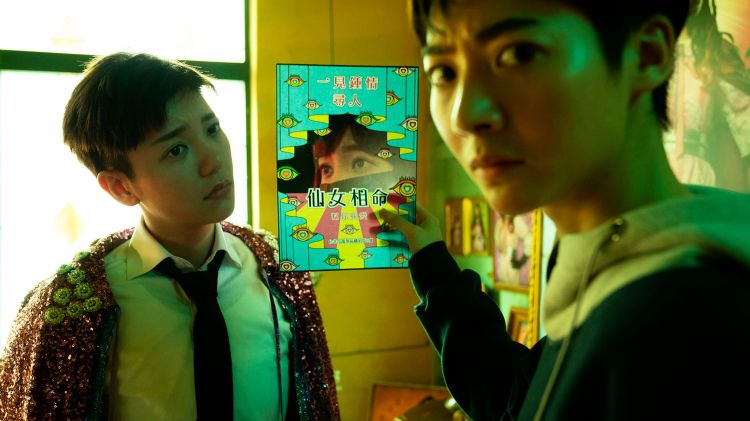
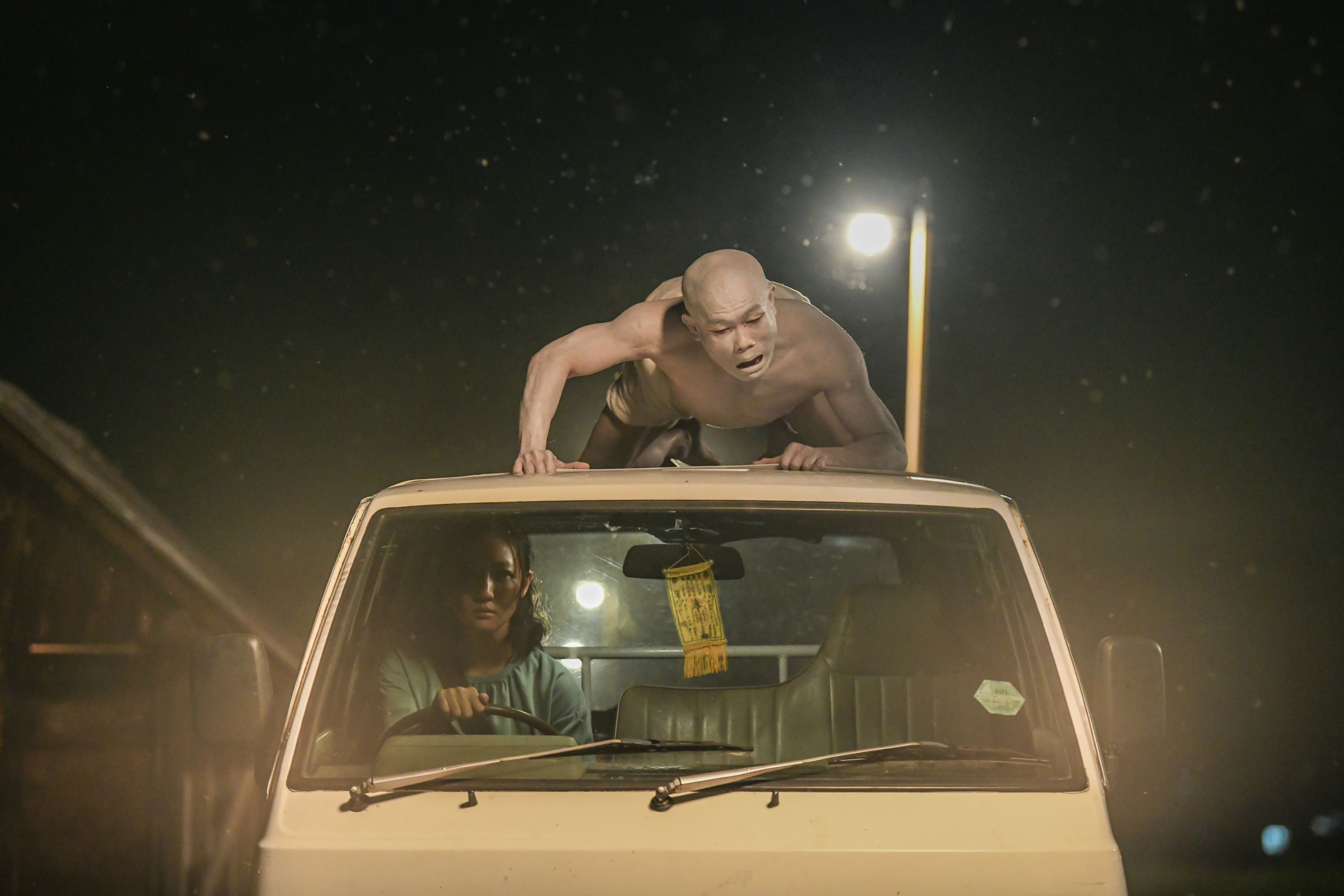
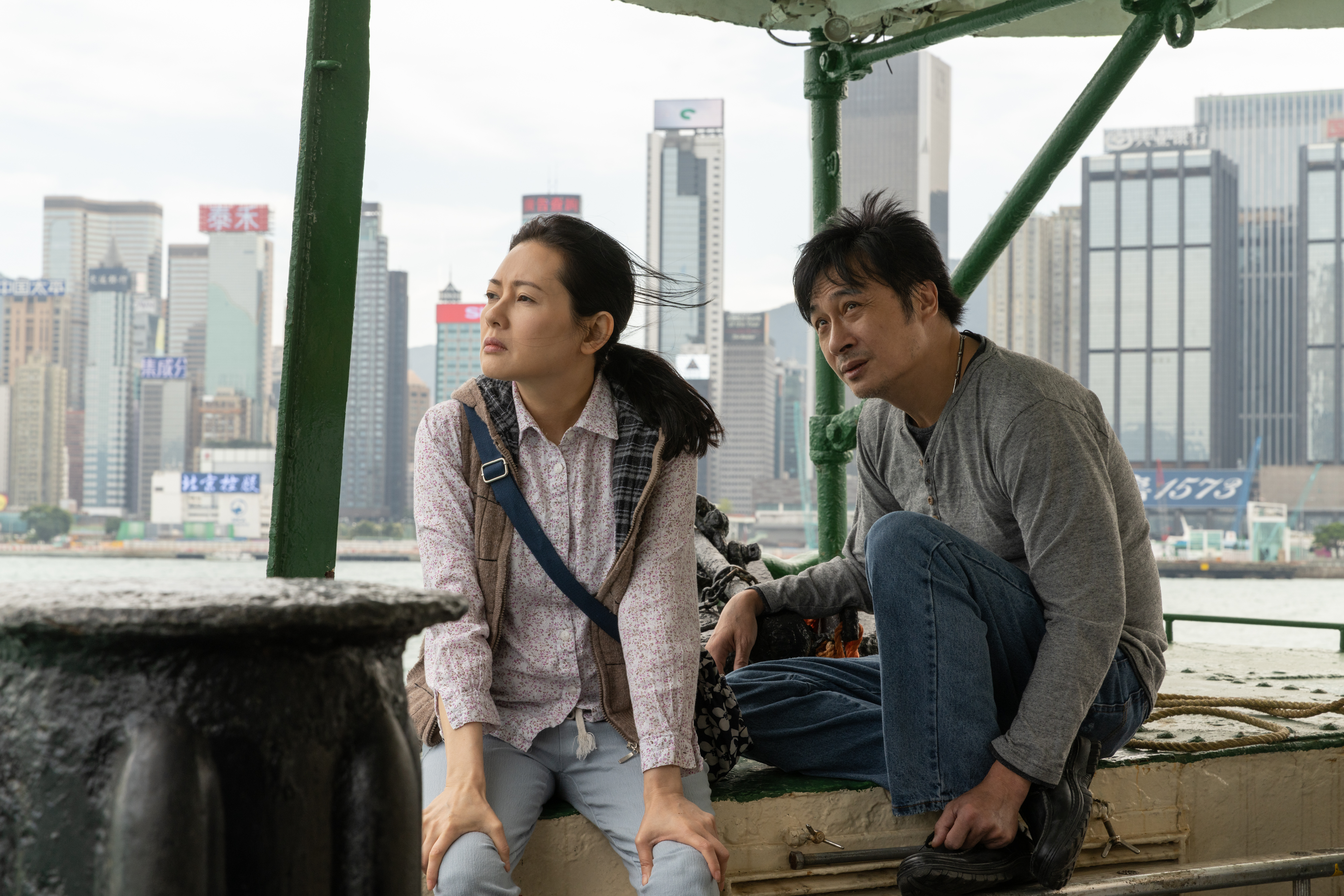
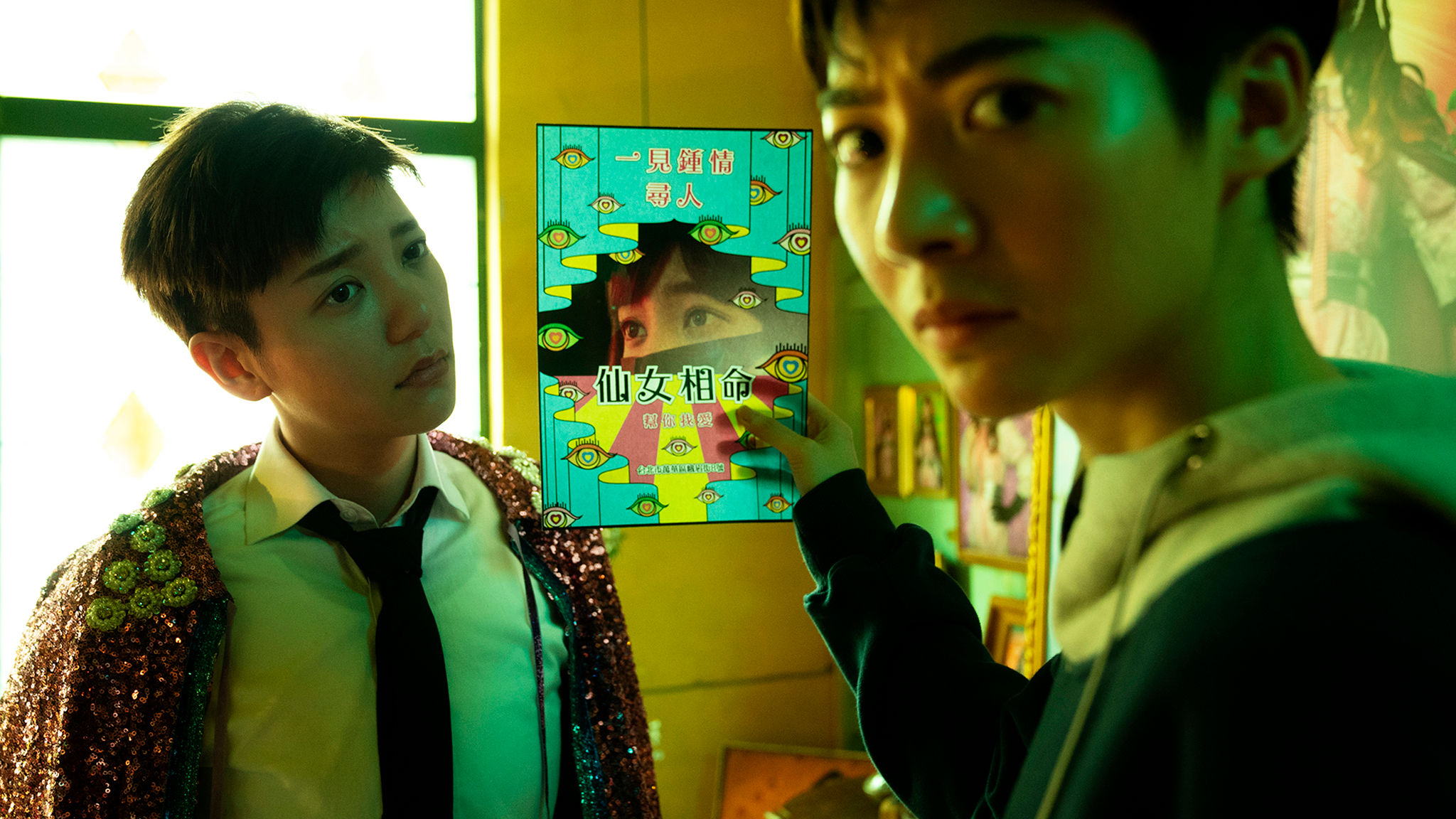
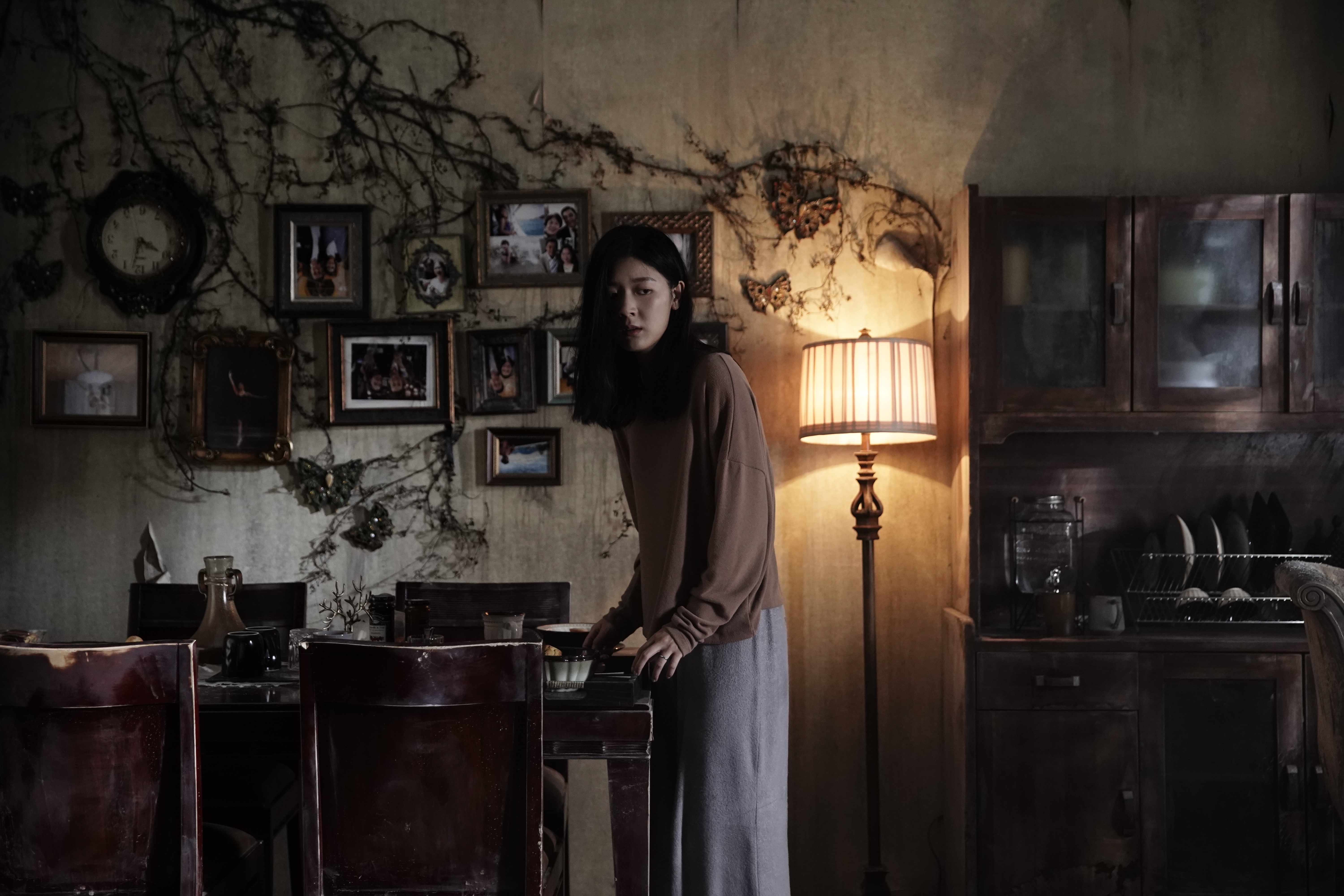
Are humans innately good or innately evil, and when we do good do we do it altruistically or to make ourselves feel better? These are all questions which occur to an idealistic yet conflicted forensic psychiatrist in Glenn Chan’s twisty psycho-noir, Shadows (殘影空間). Burdened both by a medical condition which apparently conveys a kind of superpower and by her own unresolved trauma, Ching (Stephy Tang Lai-Yan) wants to believe that people are at heart good but is herself caught in a complex web of manipulations in which even her well-meaning interventions may have unintended consequences. 

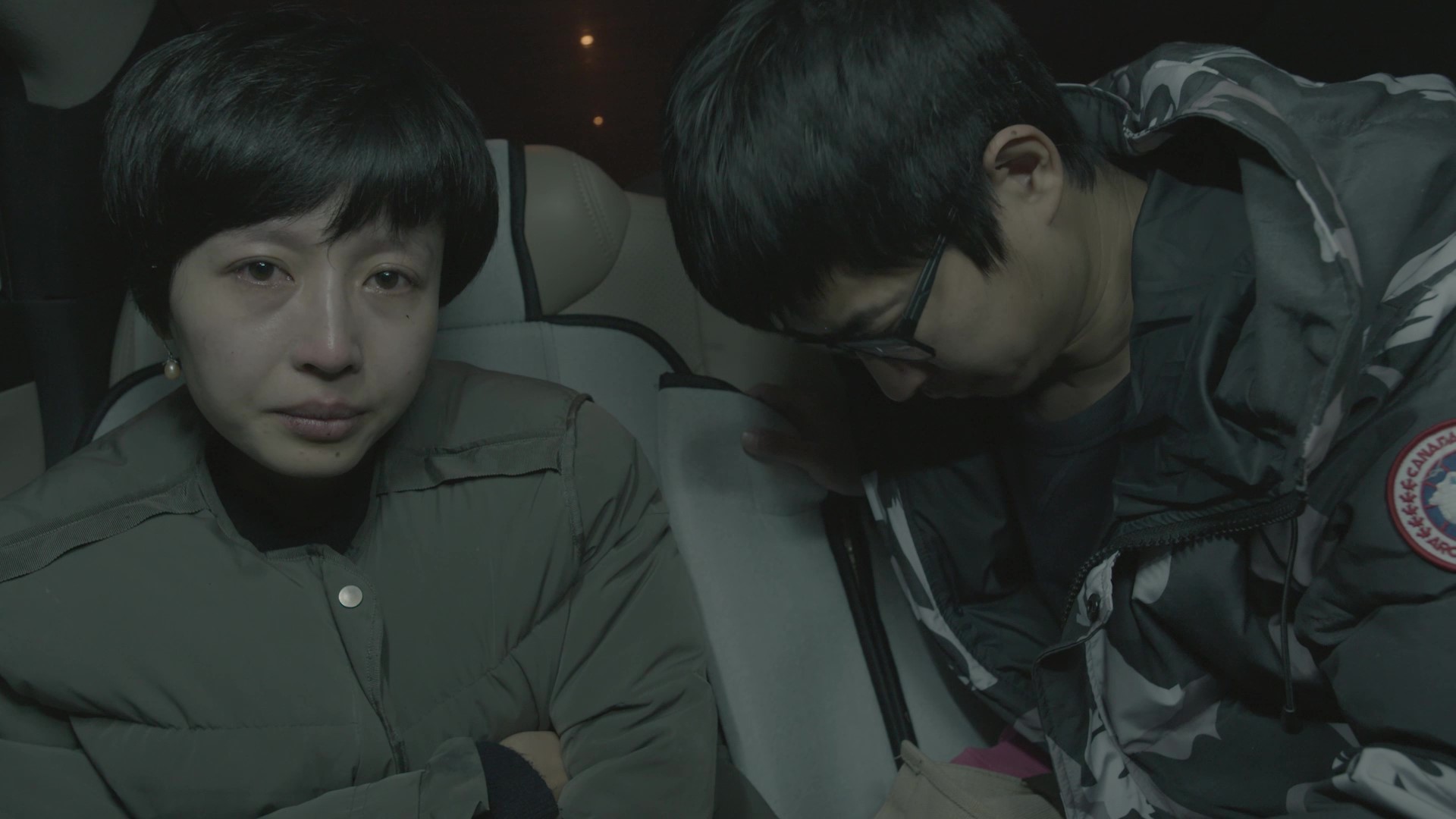
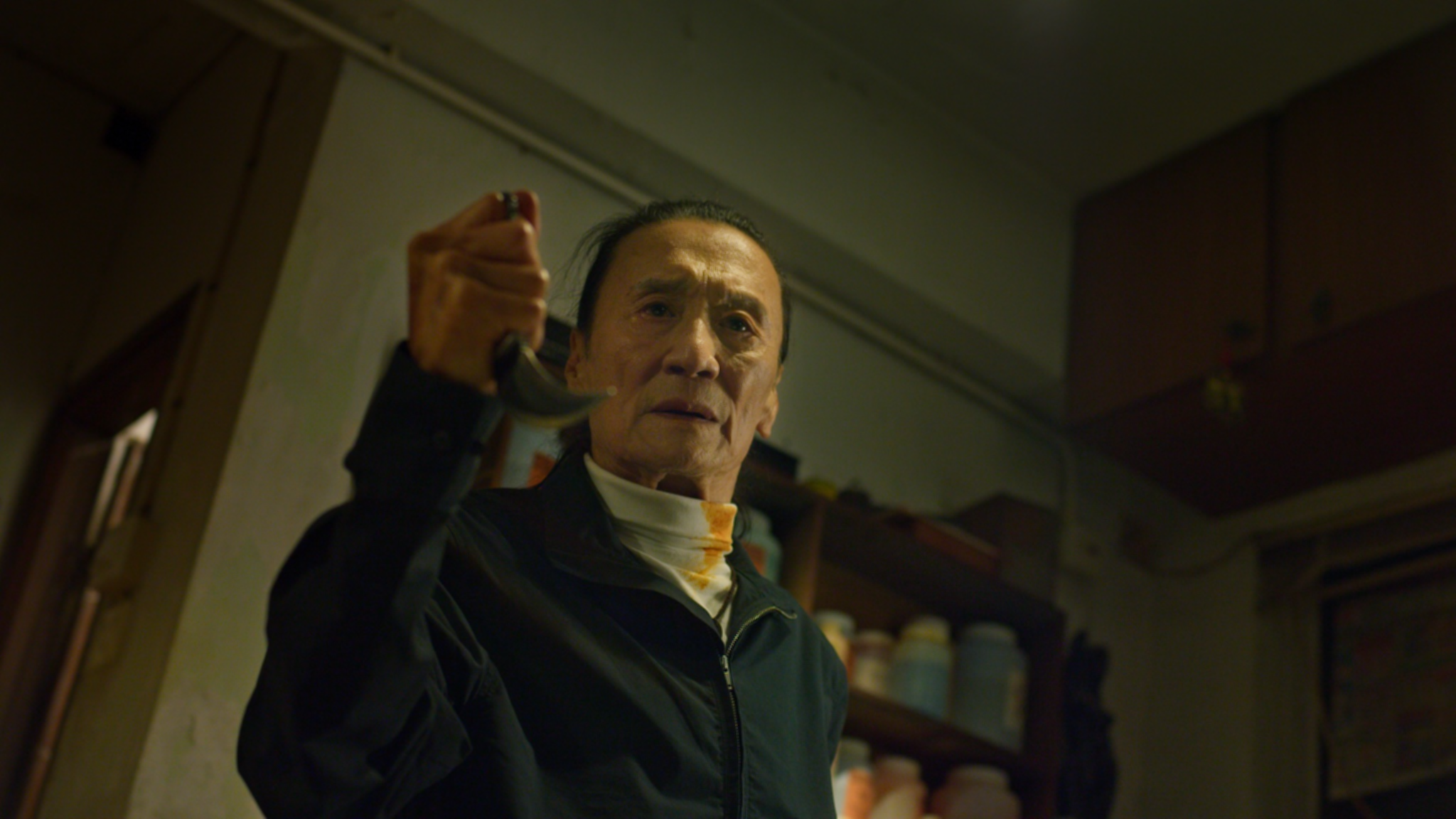
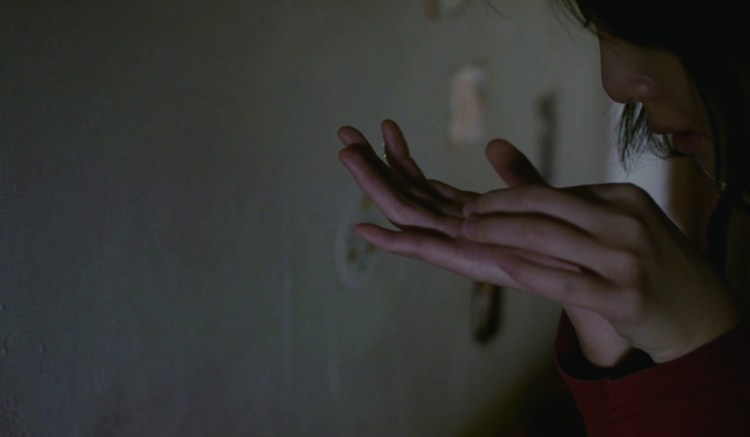
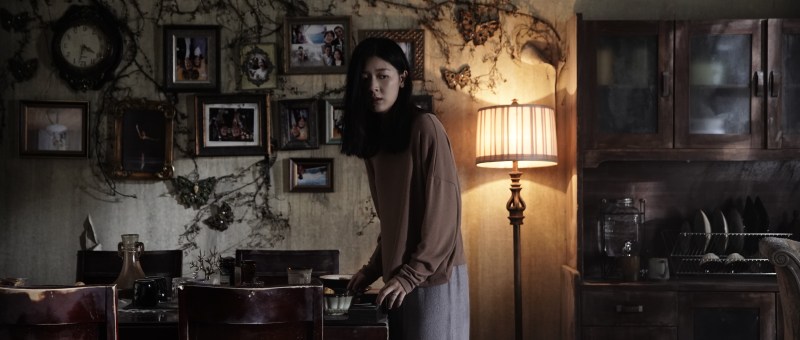
Ching’s big case is that of a 34-year-old social worker, Chu, who suddenly bludgeoned his entire family, three generations of women, to death with one of his many trophies which had a small heart on its top before calling the police and jumping over his balcony. As he only lived on the second floor, Chu survived but appears remarkably nonchalant about his crime. Police officer Ho (Philip Keung Ho-man) brings in Ching to figure out if Chu was really in a state of mental distress when he committed the murders, or if his certainly survivable suicide attempt is part of a smokescreen to help him evade justice. Possibly caused by a brain tumour, Ching’s special power is the ability to insert herself into her patients’ traumatic memories which is where she hears Chu recall a mantra that all humans are selfish and only think of themselves. This statement is meant not as censure but affirmation, Ching recalling a similar sentiment uttered by a rival psychologist, Yan (Tse Kwan-Ho), whom Chu had also been seeing, to the effect that mental imbalance lies in an inability to embrace one’s shadow self including “negative” impulses such egotism. 

In truth, the investigation into Chu’s case soon recedes into the background more or less forgotten as Ching embarks on an ideological battle with Yan who, we are told, has recently returned from many years living in the individualistic West and is peddling a kind of hyper individualist will to power which she regards as abetting his patients, a surprising number of whom go on to commit violent crime. Yan argues that humans are born evil and that the individual has the right to be selfish, abandoning conventional morality to pursue their own desires including those which necessarily harm others. Ching believes she’s doing the opposite, yet her attempt to help a victim of domestic violence by convincing her that she has the right and power to escape her abusive familial environment eventually places her in the same position as Yan. 

Given her own traumatic history, she may have to consider there’s something in Yan’s assertion that her intentions are also “selfish” in that she helps others in order to help herself feel better. When her investigation leads her, somewhat improbably, towards a serial killer with a Silence of the Lambs-esque taste for “beautiful” corpse tableaux she exposes him doing something much the same, claiming that he’s “saving” elderly people from the pain and suffering of old age but in reality trying to make himself feel better for failing to prevent the suffering of someone he loved while selfishly avoiding the pain of losing them. 

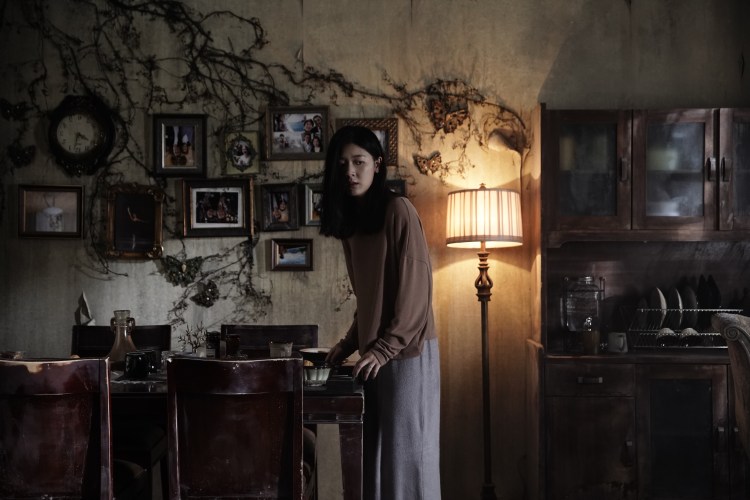
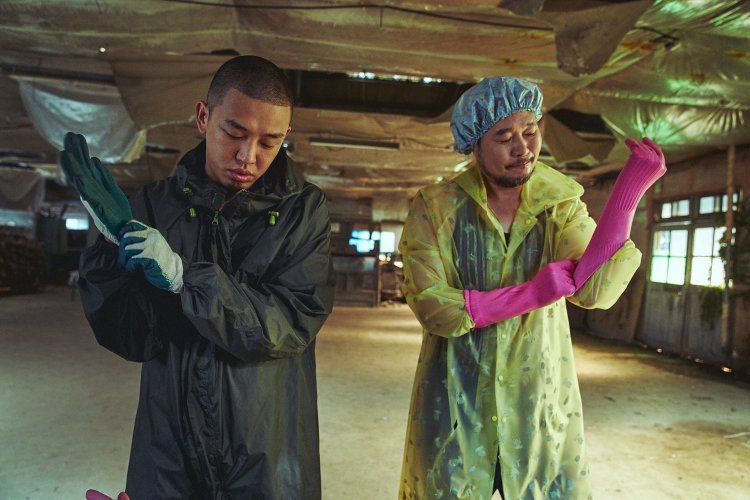
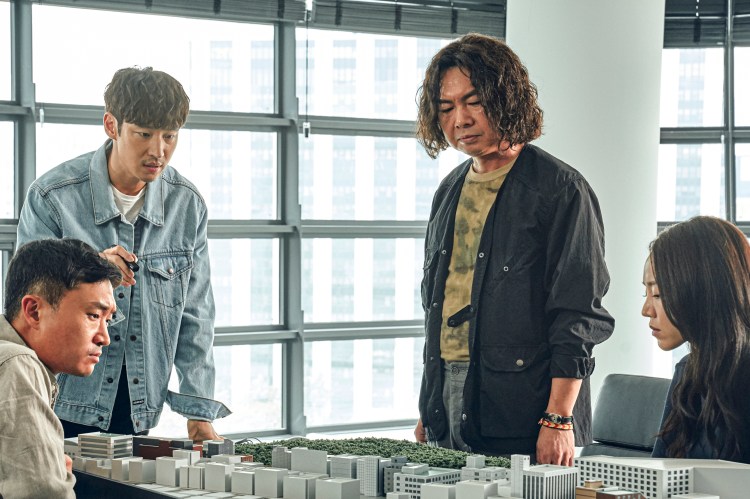
Determined to prove Yan is a serial killer by proxy manipulating his patients by encouraging them to embrace their darkest desires, Ching fails to see the degree to which she is also being manipulated, possibly for much longer than she might have realised. Yan’s patients refuse their responsibility towards others, rejecting the consequences of their actions in insisting that everyone makes their own choices. His hyper individualist philosophy might be seen as a stand-in for the increasingly selfish impulses of a previously collectivist society, a shift away from conventional morality towards the primacy of the self, yet it also darkly suggests that altruism is also cynical and born either of guilt or the selfish desire for reciprocity. In the end the verdict is in a sense left to a legitimate authority, Ho asked to decide if he thinks Yan is a crazed libertarian mad scientist, or if Ching is merely a traumatised and deluded woman pursuing some kind of personal vendetta. Featuring fantastic production design and stand out performances from Stephy Tang and Philip Keung, Shadows has no easy answers for the nature of the human soul but nevertheless casts its various protagonists on a noirish journey through the traumatic past guided only by duplicitous voices and ambivalent authority. 


Shadows screens at the BFI Southbank on 25th July as part of this year’s Chinese Visual Festival.

Original trailer (English subtitles)

New York Asian Film Festival Confirms Lineup For 2021 Hybrid Edition

New York Asian Film Festival returns for 2021 in a new hybrid edition with physical screenings taking place at Lincoln Center & SVA Theatre while much of the programme will be available online in the US via Lincoln Center’s Virtual Cinema from Aug. 6 to 22. To mark its 20th anniversary, the festival will also be co-hosting a special outdoor screening of the Tsui Hark classic Dragon Inn AKA New Dragon Gate Inn on Aug.11.

China

  • Anima – a young man becomes an outcast after killing a bear to save his younger brother.
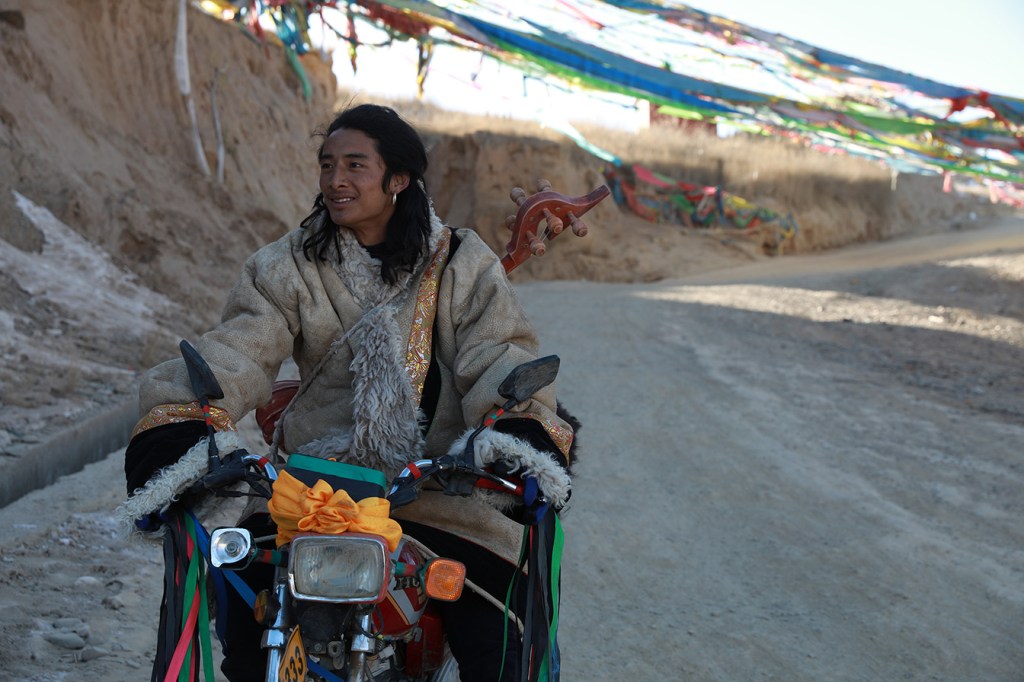
  • A Song for You – a nomad dreaming of becoming a folk singer encounters a young woman resembling the goddess of music who tells him he must record an album in this indie drama from Dukar Tserang.
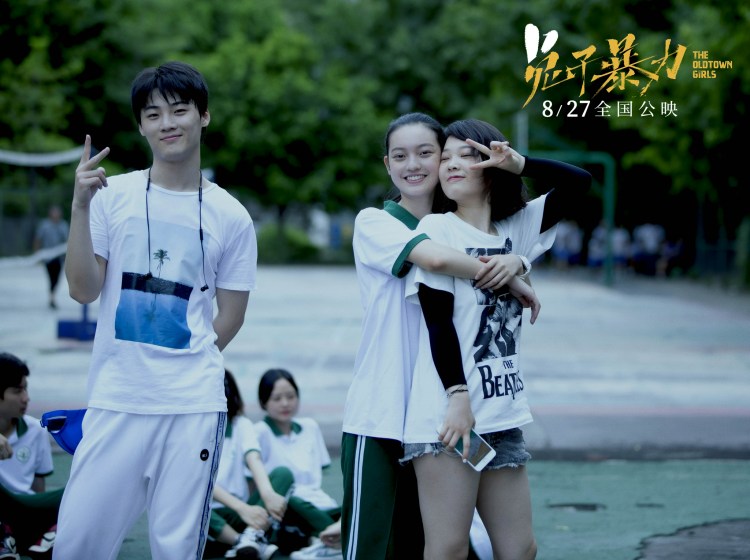
  • The Old Town Girls – drama in which a teenage girl receives a visit from her estranged birth mother.
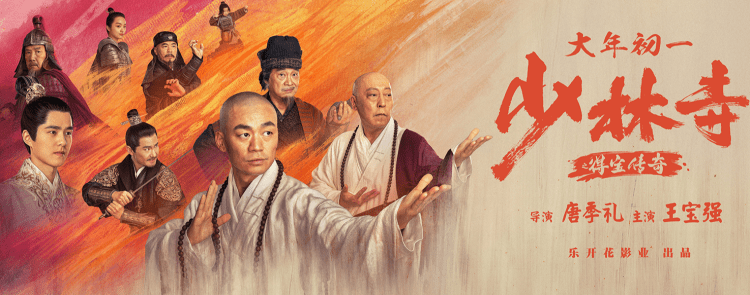
  • Rising Shaolin: the Protector – kung fu drama from Stanley Tong in which an innkeeper starts a scam fake robbing passersby so he can rescue them as a means of guiding them towards his inn.
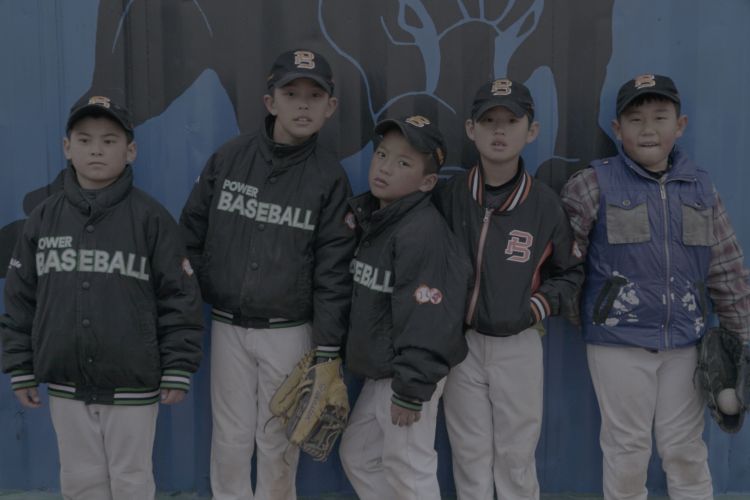
  • Tough Out – documentary following a junior baseball team in Beijing

Hong Kong

  • All U Need is Love – all-star ensemble comedy from Vincent Kok in which a hotel is placed on a 14-day Covid quarantine.
  • Breakout Brothers – the political equilibrium of a prison is shaken by the arrival of a new prisoner
  • Hand Rolled Cigarette – A cynical former British soldier and a South Asian street thief find unexpected solidarity in Chan Kin-long’s gritty neo-noir. Review.
  • Keep Rolling – documentary focussing on the life and career of director Ann Hui. Review
  • Limbo – Morally compromised cops chase a serial killer in the rubbish-strewn junkyards of contemporary Hong Kong in Soi Cheang’s stylish noir. Review.
  • One Second Champion – A dejected single-father with a “useless” superpower finds a new lease of life in the boxing ring in Chiu Sin-hang’s plucky social drama. Review.
  • Shadows – Psychological noir starring Stephy Tang as a psychiatrist with a brain tumour which allows her to enter her patients’ traumatic memories.
  • The Story of Woo Viet – A Chinese-Vietnamese soldier’s dreams of finding love and freedom in the US are frustrated by the legacy of violence in Ann Hui’s fatalistic action drama. Review.
  • Time – an ageing hitman takes up a new career in euthanasia in Ricky Ko’s black comedy. 
  • The Way We Keep Dancing – A collective of artists finds itself torn between complicity and resistance in the face of rising gentrification in Adam Wong’s musical dance drama. Review.
  • Zero to Hero – biopic of gold medal winning-Paralympian So Wa Wai.

Japan

  • The Asian Angel – The lonely souls of Japan and Korea are brought together by angelic intervention in Yuya Ishii’s wistful drama. Review.
  • A Balance – a documentary film director discovers a hidden truth while investigating school violence
  • Blue – A trio of dejected boxers contemplate their place inside and outside of the ring in Keisuke Yoshida’s unconventional boxing drama. Review
  • The Fable: The Killer Who Doesn’t Kill – Junichi Okada returns as the hitman with a no kill mission in Kan Eguchi’s action comedy sequel. Review.
  • From Today, It’s My Turn!! – ’80s set adaptation of the high school fighting manga from Yuichi Fukuda
  • Hold Me Back – latest from Akiko Ohku in which a happily single 31-year-old woman’s peaceful life is disrupted by romance.
  • jigoku-no-hanazono: Office Royale – delinquent office lady comedy drama
  • Joint – A gangster in search of reform finds himself caught between old school organised crime and the shady new economy in Oudai Kojima’s noirish take on yakuza decline. Review.
  • Junk Head – new theatrical edit of the sci-fi horror stop motion animation.
  • Last of The Wolves – sequel to Kazuya Shiraishi’s Blood of Wolves set in 1991 in which a rogue cop attempts to keep the peace between yakuza gangs.
  • Ninja Girl – political satire from Yu Irie
  • Over the Town – An awkward young man chases love and romance on the streets of Shimokitazawa in Rikiya Imaizumi’s soulful ode to the ever changing district. Review.
  • Sensei, Would You Sit Beside Me? – a manga artist pens a story about adultery which causes her husband to wonder if she knows about his ongoing affair with her editor
  • Tonkatsu DJ Agetaro – The nerdy heir to a tonkatsu restaurant finds his heaven on the dance floor in a surprisingly wholesome turn from Ken Ninomiya. Review.
  • Under the Open Sky – A pure-hearted man of violence struggles to find his place in society after spending most of his life behind bars in Miwa Nishikawa’s impassioned character study. Review.
  • Zokki – omnibus movie inspired by Hiroyuki Ohashi’s manga directed by Naoto Takenaka, Takayaki Yamada, and Takumi Saitoh.

Kazakstan

  • Sweetie, You Won’t Believe It – after arguing with his wife a husband gets more than he bargained for while fishing with friends.

Korea

  • The Book of Fish – historical drama from Lee Joon-ik following exiled scholar Jeong Yak-jeon.
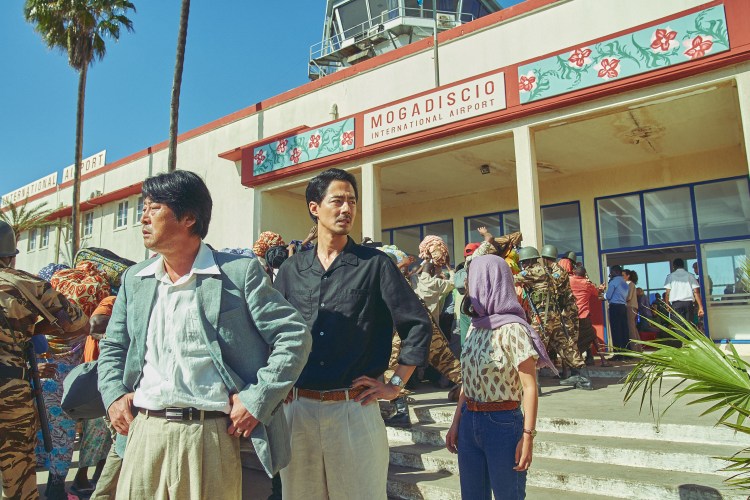
  • Escape from Mogadishu – drama from  Ryoo Seung-wan set during the Somalian Civil War in which the North Korean embassy is forced to ask for help from South Korea as they attempt to escape from the capital.
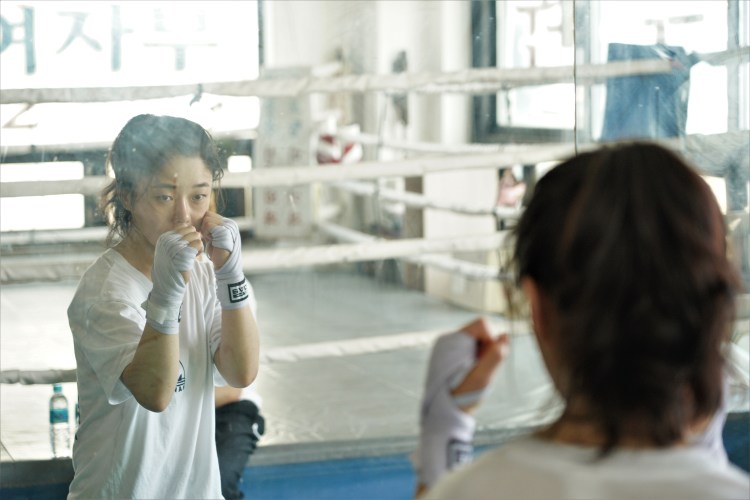
  • Fighter – a North Korean refugee pins her hopes on boxing to bring her father to the South
  • I Don’t Fire Myself – a young woman is determined to stick out a year with a subcontracting company
  • Midnight – thriller in which a deaf woman becomes a target for a killer after witnessing a murder.
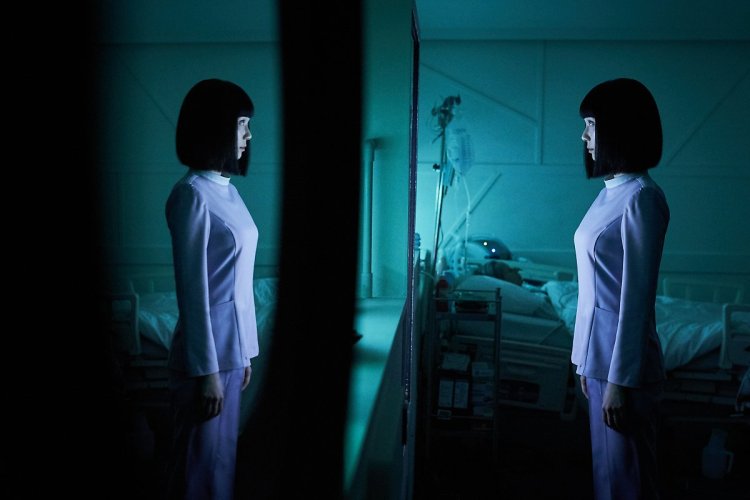
  • The Prayer – a caregiving robot is conflicted witnessing a daughter’s exhaustion attempting to care for her mother who has been bedridden for the past decade.
  • Samjin Company English Class – three office ladies pin their hopes on TOEIC to get promoted but end up exposing an industrial scandal in Lee Jong-pil’s ’90s drama
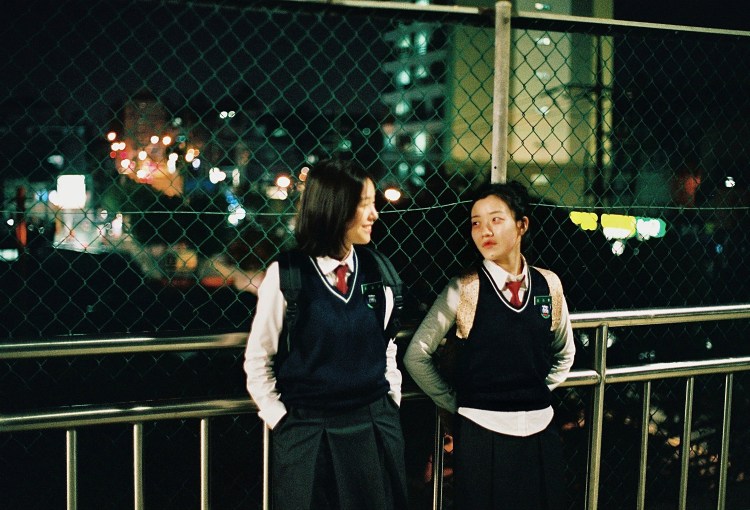
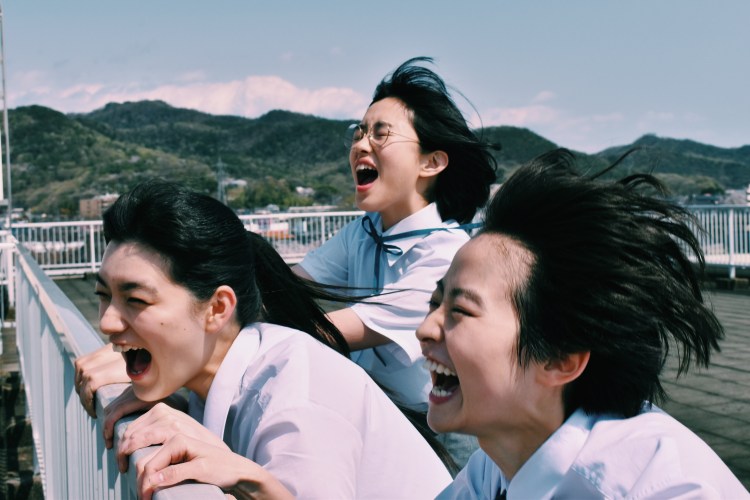
  • Snowball – teenage friendship drama in which three high school girls run away together only for their relationship to descend into bullying and animosity on their return.
  • Ten Months – indie drama charting a game designer’s pregnancy
  • Three Sisters – Three middle-aged women rediscover their sisterly bond when forced to face their traumatic past in Lee Seung-won’s subtle condemnation of a relentlessly patriarchal society. Review.

Malaysia

  • Babi – controversial school violence drama directed by rapper Namewee
  • Barbarian Invasion – Tan Chui Mui directs and stars as an actress making a comeback after retiring to become a housewife and mother only to be told the film can only be made if her ex co-stars.
  • Nasi Lemak 1.0 – Namewee directs a “prequel” to Nasi Lemak 2.0 following 15th century explorer Admiral Cheng Ho

Myanmar

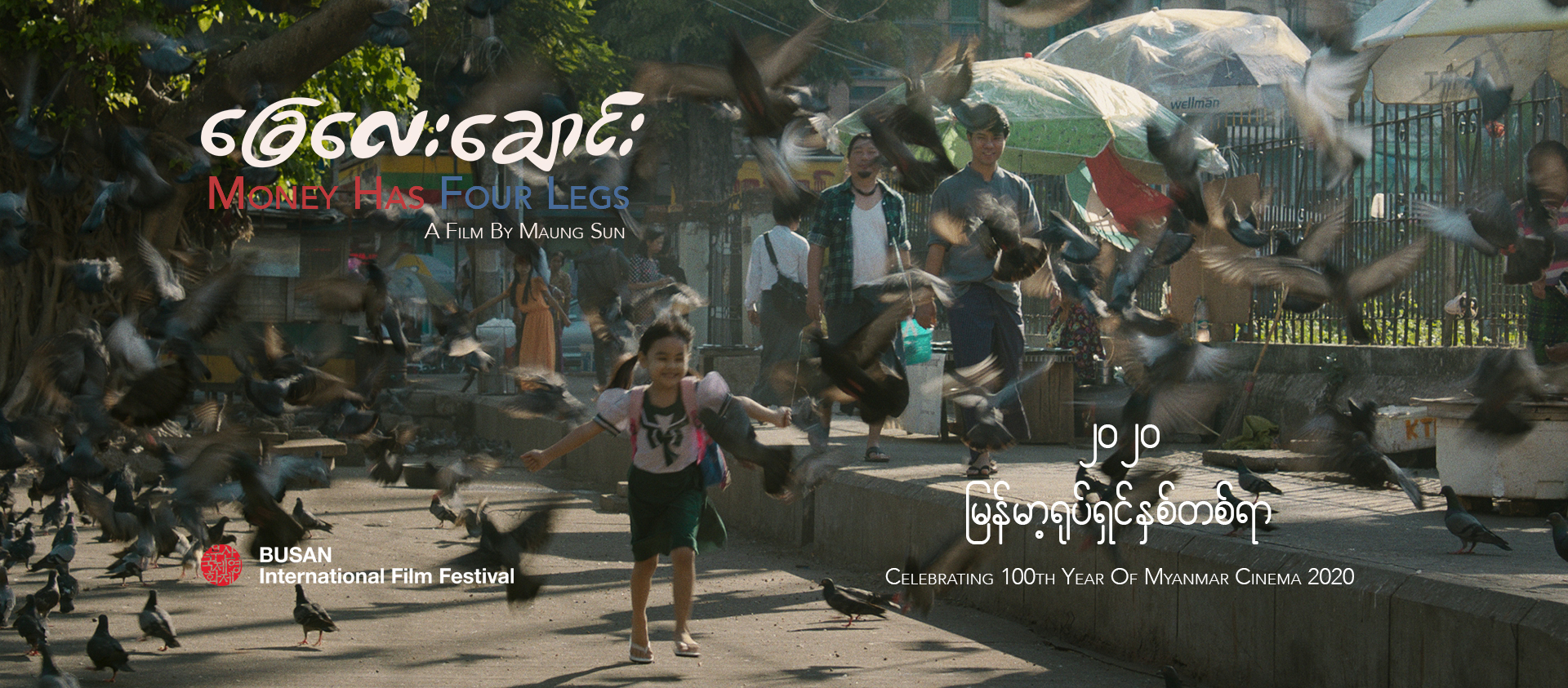
  • Money Has Four Legs – an aspiring film director struggling to complete a project considers robbing a bank.

The Philippines

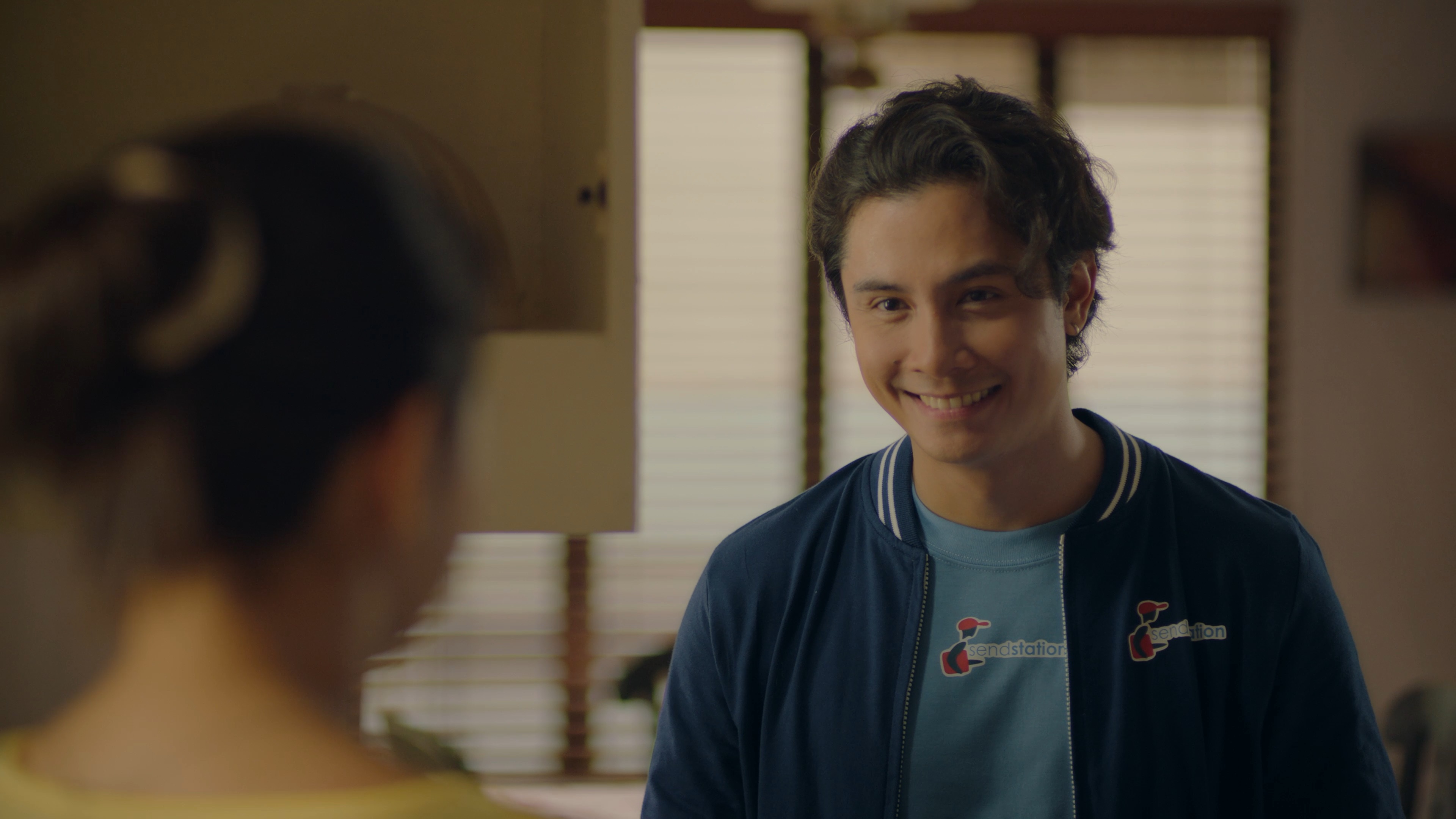
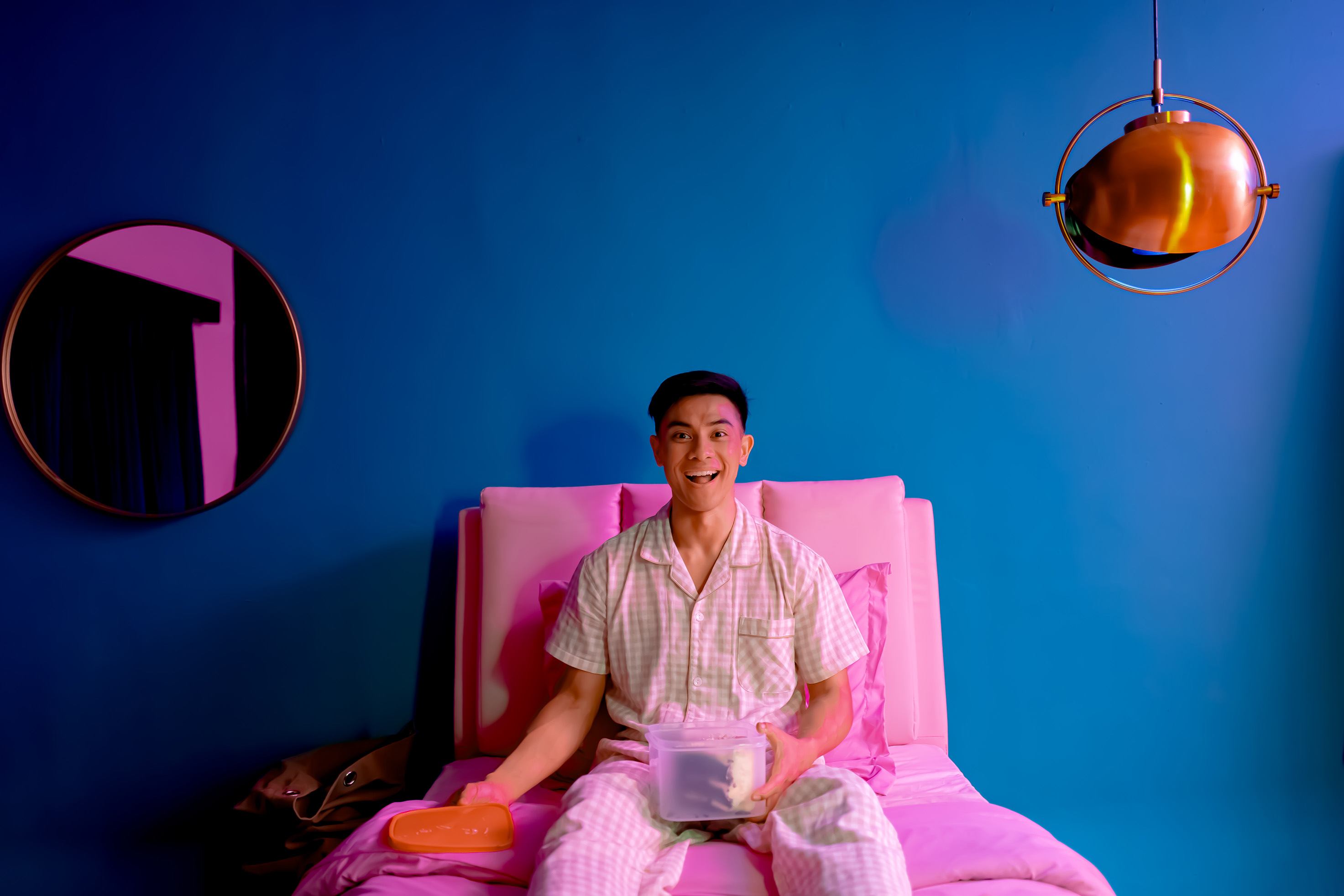
  • Here And There – A pair of anxious youngsters find lockdown love, or something like it, in JP Habac’s sophisticated, zeitgeisty rom-com. Review.

Singapore

  • Tiong Bahru Social Club – An earnest young man experiences an existential crisis while living in the “happiest neighbourhood in the world” in Tan Bee Thiam’s whimsical satire. Review.

Taiwan

  • As We Like It – A romantic exile meanders through an internet free corner of Taipei in Chen Hung-i & Muni Wei’s all-female adaptation of the Shakespeare play. Review.
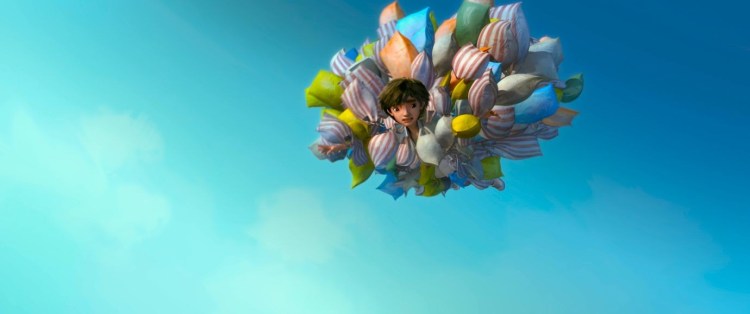
  • City Of Lost Things – animated drama in which 16-year-old leaf is swept away to the City of Lost Things where he befriends 30-year-old sentient plastic bag, Baggy.
  • A Leg – relationship drama in which a bereaved wife refuses to let go of the amputated leg of her late husband.
  • My Missing Valentine – A lovelorn woman finds herself forced to reckon with the forgotten past when she somehow misplaces Valentine’s Day in Chen Yu-hsun’s charmingly quirky rom-com. Review.
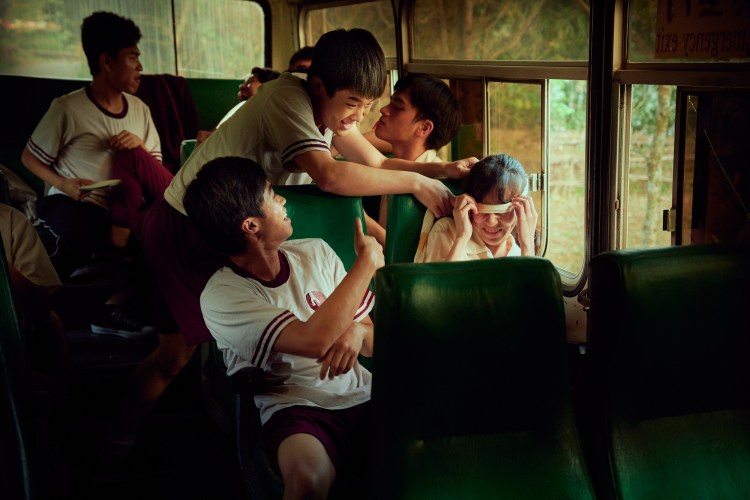
  • The Silent Forest – An idealistic student is caught between justice and complicity when he uncovers a culture of bullying and abuse at a school for deaf children in Ko Chen-nien’s hard-hitting drama. Review.

Thailand

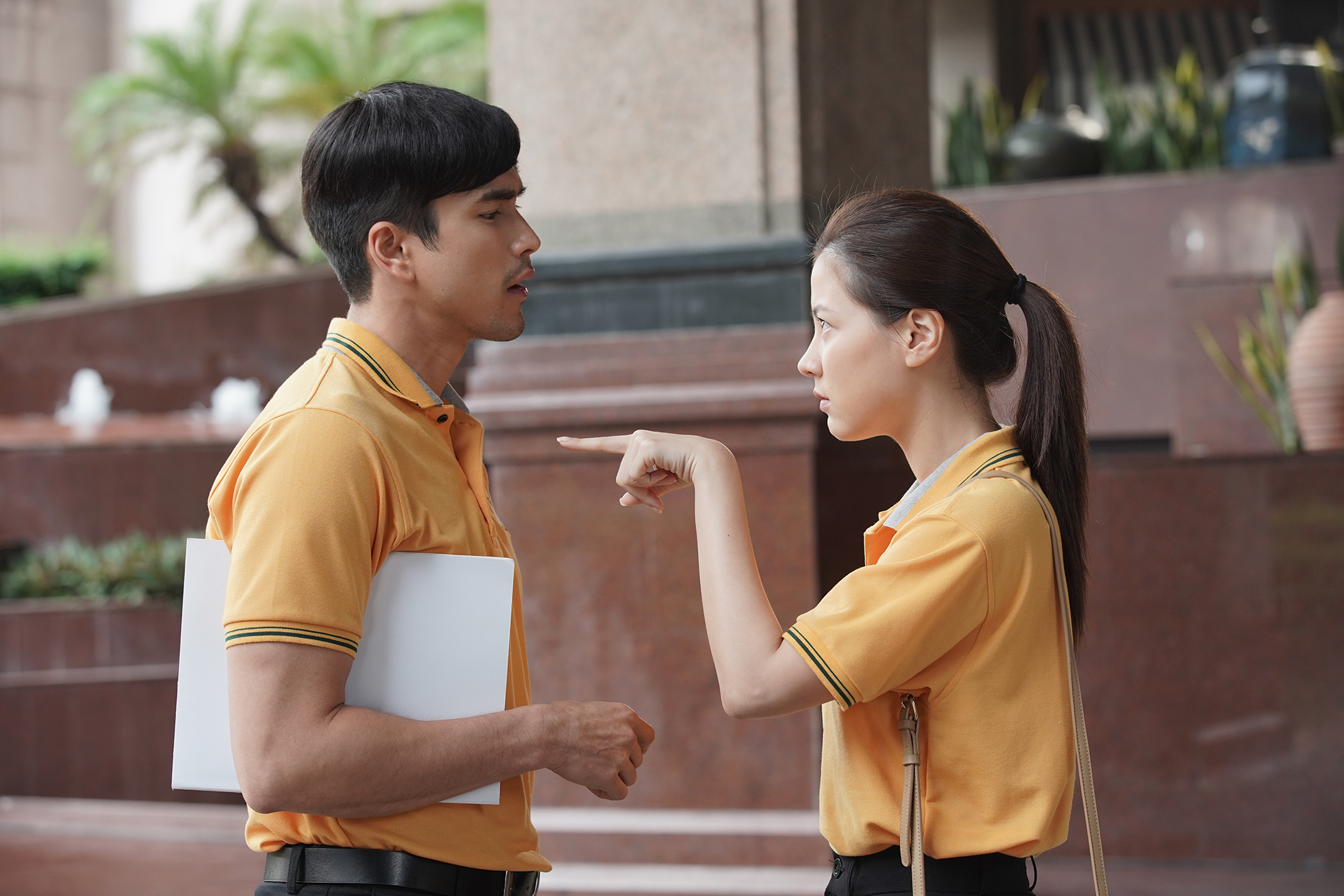
  • The Con-Heartist – A scorned woman teams up with a fraudster to scam her ex only to fall for the conman in Mez Tharatorn’s crime caper rom-com. Review.

The 2021 New York Asian Film Festival runs at Lincoln Center, SVA Theatre, and online in the US Aug. 6 to 22 with tickets on sale from July 23. Full details for all the films as well as ticketing information will shortly be available via the official website while you can also keep up with all the latest festival news via the official Facebook Page and Twitter account.

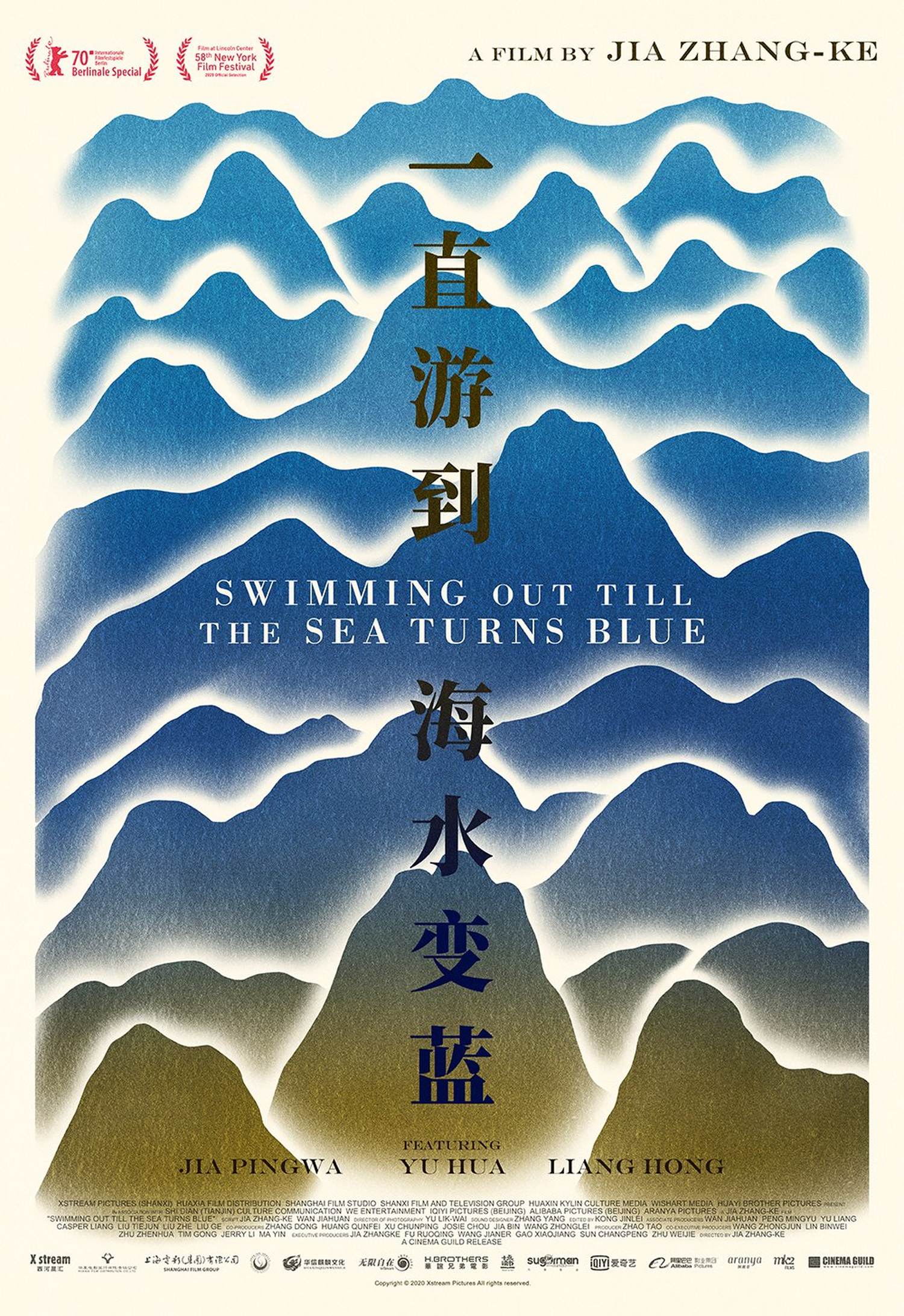
Swimming Out Till the Sea Turns Blue (一直游到海水变蓝, Jia Zhangke, 2020)

Returning to his rural hometown, Jia Zhangke embarks on an alternate history of China in the 20th century through the prism of literature in the poetically titled documentary Swimming Out Till the Sea Turns Blue (一直游到海水变蓝, Yīzhí Yóu Dào Hǎishuǐ Biàn Lán). Taking its title from an off the cuff though strangely profound comment from the witty and loquacious Yu Hua, Swimming is the third in a loose series of documentaries focussing on artists following Dong and Useless each of which were completed over a decade ago. 

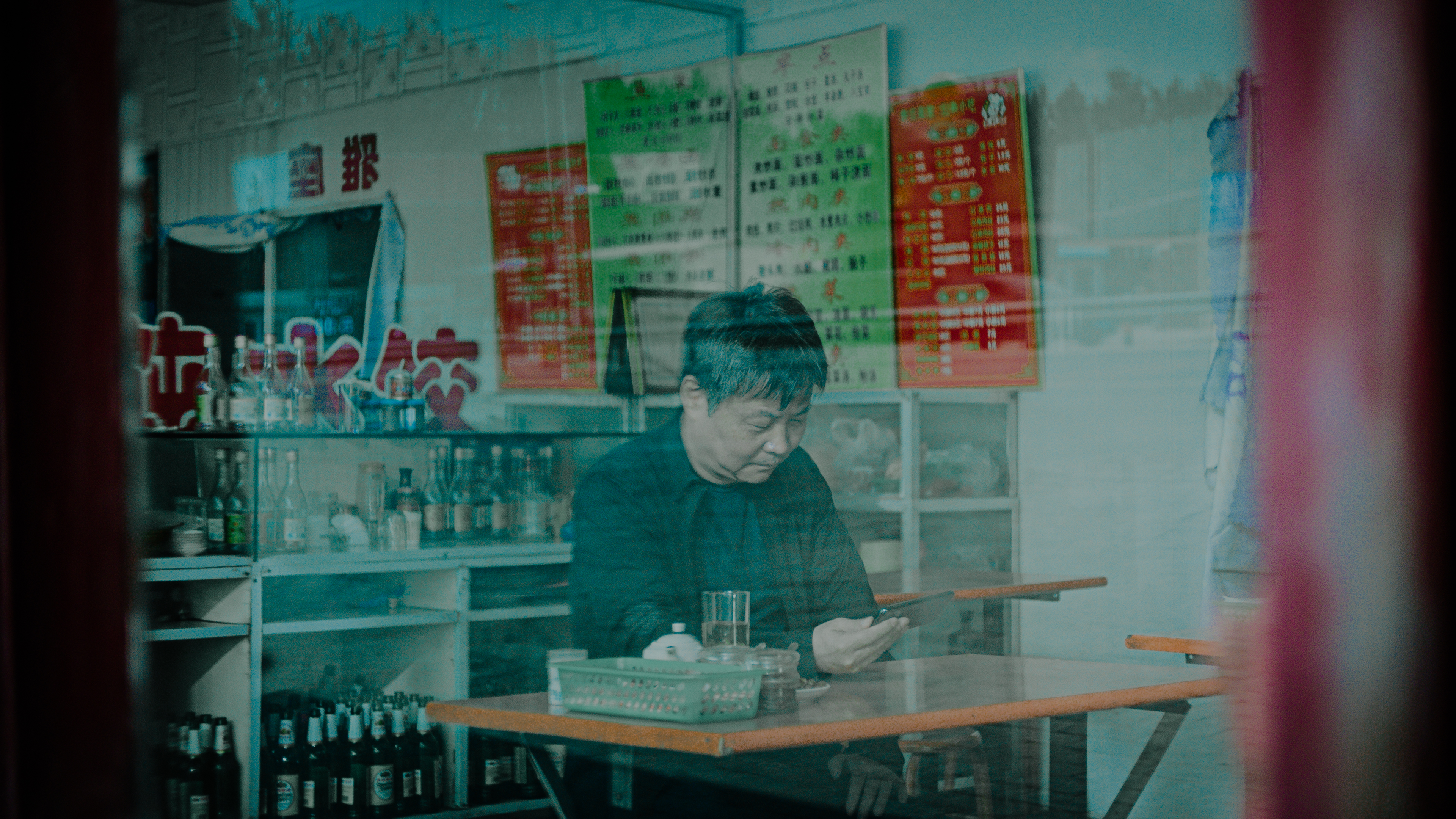
Signalling his intentions early on, Jia opens with a lengthy sequence of elderly people in a canteen. The first of his 18 chapters is titled simply “eating”, and as we quickly infer hunger will be a constant background presence for each of our writers who recount their sometimes difficult rural childhoods and the paths which eventually led to them becoming chroniclers of provincial life. The earliest stretches are dedicated to legendary author Ma Feng who passed away in 2004 but it’s some time before we even get to his literary work, struck as we are by his role as an agrarian moderniser who ingeniously saved his village through collective action, bringing the villagers together in a plan to purify the water before irrigation to reduce the alkaline quality of the soil which had made it impossible to farm. Eventually we’re introduced to Ma’s daughter who begins to fill in his biography from a personal perspective while explaining how it was that he came to be known for his naturalistic depictions of the lives of ordinary rural folk in the early days of Communism. 

That idealism soon takes on a darker hue, however, in the story of Jia Pingwa who recounts his childhood during the Cultural Revolution in which his father was sent sent away for “re-education” after being falsely accused of receiving training as a KMT spy in the ‘40s. In Jia Pingwa’s early childhood eating was indeed a concern, something which he later says caused tension in the family that was only eased by the presence of his grandmother but even she couldn’t keep them all together after the institution of the communal kitchen. Perhaps more austere than you’d expect, Jia Pingwa admonishes his daughter, also a published poet, that she should fulfil her role as a wife and mother before that as artist, and that being a poet doesn’t always mean one lives poetically. Nevertheless he recounts the widening of horizons which occurred as China began to open up in 1980s, an influx of foreign art that introduced him to “the West” but also left him in an artistic quandary in the search for new yet authentic directions. 

A little younger than Jia Pinghua, the 1980s is when the extremely animated Yu Hua came of age, revealing an unexpected effect of the Cultural Revolution that led to his artistic destiny as he found himself re-imagining the endings of books which had long since fallen apart and existed for him only in fragments. Training first as a dentist but finding it not to his liking, Yu Hua longed to broaden his horizons and began writing seriously with the hope of getting a better job, eventually enrolling in university in Beijing in 1989 which he recounts somewhat incongruously as cheerfully uneventful. 

There is indeed a kind of micro framing in Jia’s concentration on rural China as a place to one side of wider society or politics. Just as Yu Hua casually ignores the reasons why others might find it interesting to have been a student in Beijing in 1989, Liang Hong opens by recounting that the year was 1997 which was the year Hong Kong returned to China but she was so busy that as an event it hardly registered for her. Like Yu and Jia Pingwa she recounts a difficult rural childhood in which her mother was rendered ill and later died due to the demands of country living while her kindhearted though feckless father struggled to manage his small family. While the men concentrate on their own paths, Liang mostly talks of her family, the sister who sacrificed her future for her siblings, and later her own son who talks of learning about his history through mother’s books though he no longer remembers the rural dialect and his associations with the area are mainly to do with playing with his cousins on visits to his mother’s family home. 

Liang’s son is the last and least deliberately staged of Jia’s frequent cutaways to local people reciting brief snippets of literature by the four authors and others often in praise of the land. Between lengthy talking head sequences, he switches from present day to historical stock footage showcasing the lives of ordinary people as they play cards, eat, or hurry on their way from one place to another. Spiralling out and away from Fenyang and back around again what Jia presents is less a literary survey than a rural history which is in its own way also mythologised as the wounded soul of the modern China. 


Swimming Out Till the Sea Turns Blue screens at the BFI Southbank on 24th July as part of this year’s Chinese Visual Festival.

International trailer (English subtitles)

Where Now Are the Dreams of Youth? (靑春の夢いまいづこ, Yasujiro Ozu, 1932)

It’s lonely at the top. Perhaps surprisingly, Japan’s depression-era cinema had considerable space for lamenting the complicated position of the young master and, as Hiroshi Shimizu’s The Boss’ Son at College would do the following year, Ozu’s Where Now are the Dreams of Youth (靑春の夢いまいづこ, Seishun no Yume Ima Izuko) follows a young man of privilege realising that inequality is bad for friendship and no matter how much you try to manipulate an inherently unfair system for the good of those you love it is the system itself which will always stand between you. 

Ozu begins, however, in familiar territory continuing in the vein of student comedy which was proving such a big hit for home studio Shochiku and in fact reusing a few gags from his previous films in the genre such as the guys’ persistent attempts to cheat on their exams. The opening sequence in which three of the four friends goof off rehearsing a cheerleading routine neatly sets up the already existing divisions between them as Saiki (Tatsuo Saito), the gang’s outlier, hovers on the sidelines attempting to study explaining to a young woman the guys know from the bakery, Shige (Kinuyo Tanaka), that he has only his mother and cannot afford to spend his time messing around. Despite that, however, we’re also told that Saiki is a hopeless case forever falling his exams and regarded as essentially feckless. 

The hero, Tetsuo (Ureo Egawa), is the son of a company president and even if he doesn’t notice it the guys are already deferring to him as a kind of leader though they are all, in one sense, still “equals” as students at the same university taking the same classes. They all wear the same universal student uniform and drink in the same cafe, though they perhaps have different fears and anxieties for their futures at this difficult economic moment. The friendship is suddenly disrupted by the unexpected death of Tetsuo’s father which necessitates his leaving university to take over the family firm, though it’s also clear that he is not quite in charge and his conservative uncle is in fact running the show. 

Tetsuo’s new status as a company president, now dressed in an expensive tailored business suit, forever sets him apart from his friends who eventually come to him for help on being unable to find jobs in the midst of an economic depression. He decides to use his privilege to help them but in an underhanded way, insisting they sit the company exam but giving them the answer sheet beforehand just like in their school days helping each other to cheat. Nevertheless, he fails to realise that you can’t be both friend and boss and it hurts him that they are now polite and deferent in his presence. Gone is their old camaraderie and foolishness, fear and dependency gradually erode their friendship. 

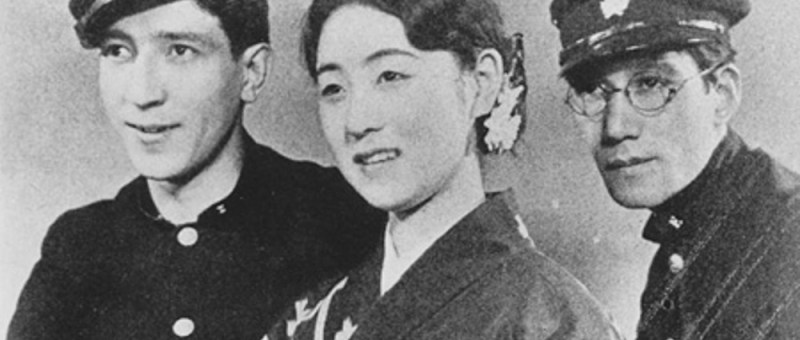
Meanwhile, Tetsuo has continued to carry a torch for Shige but again has failed to realise that they now live in different worlds. His uncle keeps trying to arrange suitable marriages for him which he delights in frustrating with childish pranks. Now settled in his professional life he tries to abide by a college era bro code in asking for the guys’ permission to ask for Shige’s hand, knowing that they had all taken a liking to her. He places himself on their level but only superficially, acting with a degree of self-confident entitlement which assumes firstly that the others will defer to him and back off, and that Shige is his for the asking. What hurts him most is that none of the guys, who must all know, were brave enough to tell him that Saiki and Shige are already engaged. Fearful for his job, Saiki would have sacrificed the woman he loves, essentially traded her for economic stability. Finding out from Saiki’s mother (Choko Iida), Tetsuo confronts Shige who tells him that she agreed to marry Saiki out of pity and despair after growing weary of waiting for him believing that a company president would never marry a woman like her. 

Tetsuo surrenders his love on the altar of friendship. Despite confirming their love for each other, he and Shige are separated by the great wall of social class in a hierarchal society along with the economic pressures of an ongoing depression. What Tetsuo chooses to save is his male friendship, striking Saiki, who does not fight back, for his moral cowardice in debasing himself by allowing those with power and privilege to rob him of his rights and freedoms. The guys sort things out with a fist fight, restoring an artificial “equality” that provokes a “happy” ending despite the fact that nothing has really changed. Tetsuo has to say goodbye to the dreams of youth in acceptance of the disappointments of adulthood but tries to salvage something as he moves forward in preserving what he can of cross-class friendship as bulwark against the inequalities of his age.


Currently streaming in the UK via BFI Player as part of Japan 2020. Also available to stream in the US via Criterion Channel.

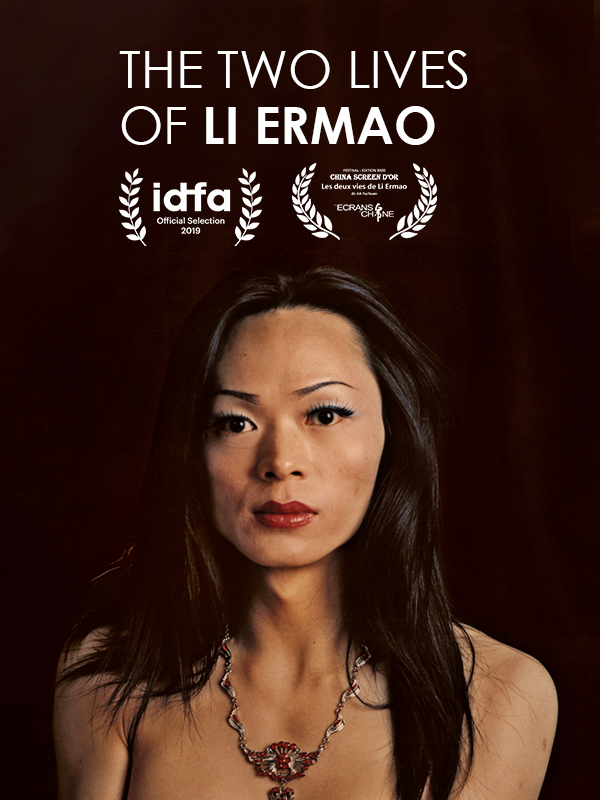
The Two Lives of Li Ermao (他她:李二毛的双重人生, Jia Yuchuan, 2019)

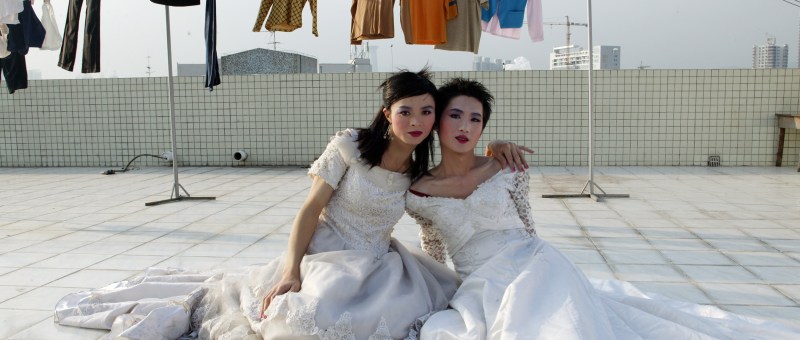
“The only thing I’ve ever wanted is someone with whom to live a normal life” Li Ermao explains thinking she’s found it only to have it slip through her fingers once again. Photographer Jia Yuchuan first met Ermao while working on a project with the LGBT community becoming as she describes it something like a big brother. Following her over 17 years, Jia’s documentary The Two Lives of Li Ermao (他她:李二毛的双重人生, Tā Tā: Lǐ Èrmáo de Shuāngchóng Rénshēng) witnesses her constant search for acceptance in a rigid and conservative society the pressures of which also contribute to her sometimes self-destructive behaviour. 

As Ermao explains in an opening onstage monologue, she is not a man dressing as a woman though once thought of herself as crossdressing before living as a “ladyboy” and now identifying as a transgender woman. Jia begins in a sense with her high point at which she has achieved a degree of success as a cabaret performer despite having no formal training in singing and is in what seems to be a positive and loving relationship with a young man, Jiang. Things start to go wrong when Ermao fails to capitalise on the possibility of recording an album while her self-destructive gambling habit begins to eat away at her relationship with Jiang who eventually leaves her. 

As Jia explains, Ermao would often drop out of contact with him for unexplained periods of time despite describing him as an indispensable big brother. After another self-destructive episode renting out her spare room to randomers from the internet to escape her loneliness, Ermao next calls Jia to introduce him to her new boyfriend, Long, over whom she has apparently just attempted to take her own life prompting him to call the police which ends both with her being evicted by her fed up landlady and arrested for the possession of illegal drugs. 

Worried about her elderly mother, Ermao takes Long with back to her hometown but quickly finds herself conflicted in this even more conservative environment where she’s “Li Guomin’s son”, the villagers by turns bemused and scandalised by her feminine appearance. Ermao ran away to live on the city streets following the death of her father who, we learn, was a notorious people trafficker who kidnapped and sold women and children including Ermao’s younger brother who he sent away to Hainan while rumoured to have eaten the corpse of the stillborn baby who would have been Ermao’s elder. This might go someway to explaining the animosity with which she is held in the village, along with the fact that as she’s been away so long and was not expected to return other farmers have long since colonised her land and are not minded to return it. Stubborn, Ermao pitches a tent and tries to make a living chicken farming on the tiny patch that remains in the hope of funding the completion of her confirmation surgery but is finally forced out by the local mayor who describes her as an “unwelcome stranger” in their community and asks her leave. 

Falling still further, Ermao finds it impossible to gain steady employment as a transgender woman eventually when getting back touch with Jia having made the decision to essentially detransition, preparing to have her implants removed while presenting as male in order to continue working at a factory producing components for iPhones. She fears her coworkers finding out that she is transgender and for good reason as she’s later brutally beaten by a male middle-aged colleague. Despite this she seems in a sense happier to have been reaccepted by her hometown, but soon finds herself rejected once again on learning that she is HIV+ and coming to the conclusion that she is “harmful to others” and should choose self-isolation. 

Despite their long years of friendship, Jia is not always sympathetic to Ermao’s plight nor does he condone her sometimes self-destructive behaviour or tendency to overdramatise while uncomfortably asking where a woman like Ermao belongs in the contemporary society before finding that it may have no real place for her. Rejected in the city and finding no refuge in her hometown, Ermao’s reversion to a male persona cannot help but feel like a defeat, her gradual decline from brassy cabaret star to melancholy recluse a result of her battering at the hands of an unwelcoming society unprepared to accept those who do not conform to its rigid ideas of gender and sexuality.


The Two Lives of Li Ermao screens at Genesis Cinema on 19th July as part of this year’s Chinese Visual Festival in partnership with Queer East.

Love Poem (情詩, Wang Xiaozhen, 2019)

“Dedicated to my dear wife” runs the ironic closing statement of Wang Xiaozhen’s meta marital drama, the equally ironically named Love Poem (情詩, Qíngshī). A love poem does indeed appear if in slightly different contexts, full of adolescent ardour and unrealistic promises of eternal devotion, while the marriage at the film’s centre begins to fracture under the weight of its focus. “I went too far to make this film” director Xiaozhen sighs, breaking the fourth wall in a moment of self-reflection that asks what’s left behind if you mine your personal life for art. 

Wang plays, at least, a version of himself, a film director harangued by his extremely fraught real life wife Zhou Qing who, in the handheld claustrophobic opening sequence which consists entirely of a long take focussed solely on her as she holds their snack-obsessed daughter in the back of the car, repeatedly accuses Xiaozhen of having an affair before asking for a divorce when they reach the house of her grandfather who lies dying and bedridden. The pair argue about the usual things, money mainly, but also the application of it. Xiaozhen is irritated by what he sees as his wife’s disrespect of his family having left their daughter with his parents over the summer but given them a token payment which might be the most insulting of all, no real use in failing to cover the child’s expenses while commodifying a family service which ought to be given if not exactly freely then with the expectation of reciprocity. She meanwhile later accuses him of exploiting her father who died shortly afterwards in order to make to his previous film while also failing to care for the family economically. He alternates between angrily implying that he indeed has been having an affair and pleading with his wife not to divorce him, claiming that he’s done nothing wrong while admitting that there might be someone else he fancies but it’s never gone further than that. When Xiaozhen gets into the back of the car with his wife, the fourth wall seems to dissolve entirely. He tries to comfort her, reminding Qing that it’s “only acting” even as their personal lives seem to have bled into the screen unbidden. 

Appearing an hour in only after this emotionally intense conclusion to the opening episode, the title card divides one “scene” from another as we find the couple again only changed. Xiaohzen picks up Qing, the camera now static and mounted on the bonnet, but this time she’s wearing glasses and has a calmer, softer demeanour. We can gather that in this scene she’s roleplaying the part of the “other woman” her first half counterpart was so incensed by, though the setting has changed to some years previously as Xiaozhen crassly elaborates on his romantic dilemma revealing that his girlfriend may be pregnant in which case he’ll be getting married and becoming a father, before confessing his feelings to another woman. She rightly takes him to task for his inappropriate declaration of love, taking the other woman’s side, while he expounds on his now or never emotional logic insisting that he had to say something now before the window forever closes but indifferent to the consequences for either of his two women. Once again the lines start to blur, the conversation diverges from its scripted direction while Xiaozhen the director reasserts himself. Qing becomes upset, reminding him that she’s not a professional actress and that his insistence in forcing her into the role of his lover is nothing if not cruel. “You don’t even see me as human” she complains, wondering if Xiaozhen views her as anything more than a prop for his movie making, while he admits in a shockingly honest moment that “seeing you cry makes me feel happy”.  

What are we to make of these scenes from a marriage, scenes and a marriage which are clearly in some senses and others “staged”? Xiaozhen is both director and husband, terrorising his wife and exploiting his relatives in order to create his art, but perhaps discovering that when you mine your personal life for inspiration all that’s left is a burrowed out husk of a former love. Then again, is this film actually a love poem in itself, an apologia of an imperfect husband to a long-suffering wife forced into a role she might not have elected to play? Truth and fiction and seem to blur uncomfortably in Wang’s meta meditation on the relationship between art and life, the performative qualities of “husband” and “wife”, and the potential costs of acting out your personal dramas onscreen but even in his self-lacerating cruelty Wang leaves himself the escape valve of irony as the emotional intensity dissipates in the Hong Sang-soo-esque cutesiness of the closing titles. 


Love Poem screens at the BFI Southbank on 17th July as part of this year’s Chinese Visual Festival.

Drifting (濁水漂流, Jun Li, 2021)

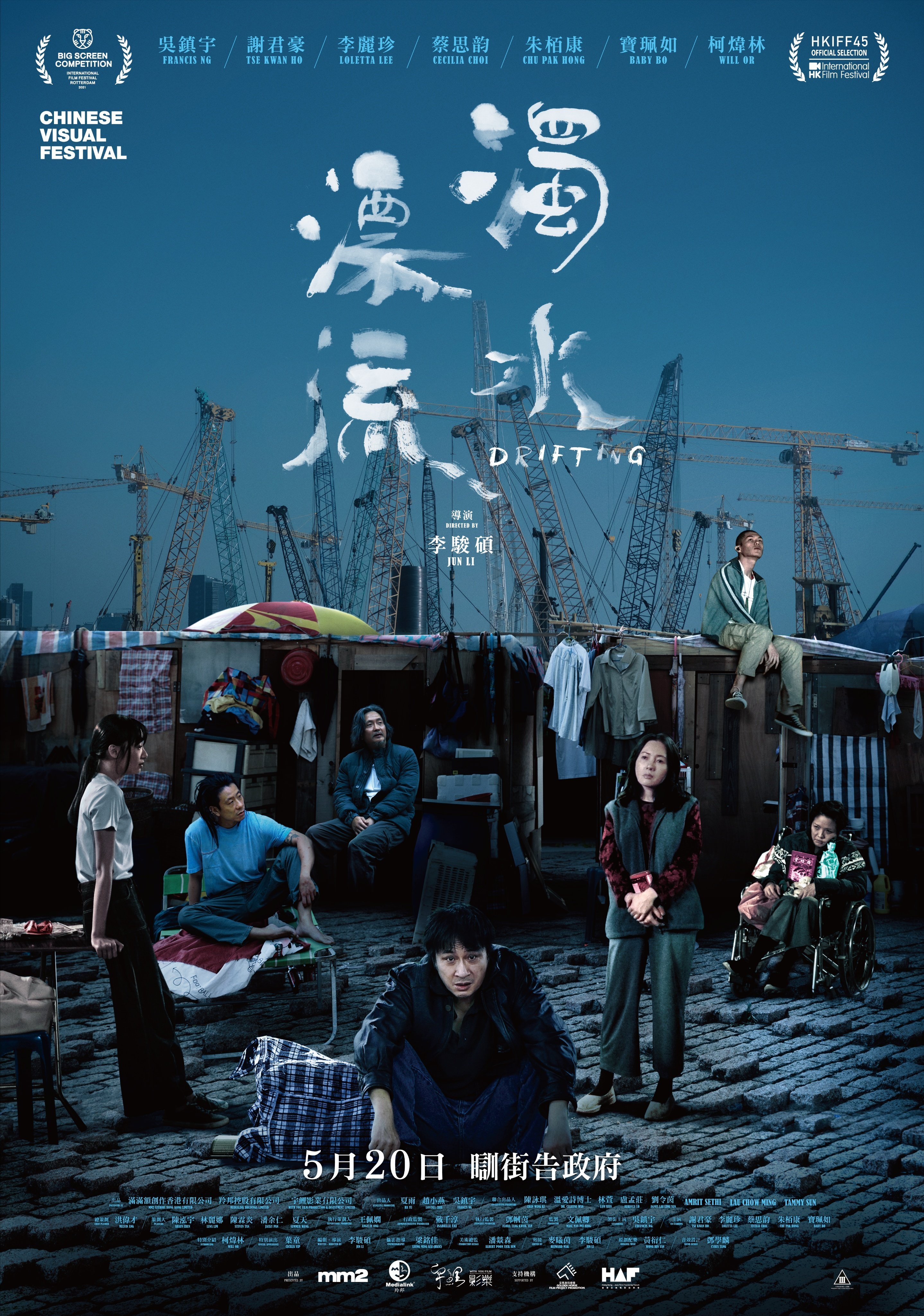
“It’s just a bigger prison out there anyway” a prisoner tells his jailer surprised by his lack of enthusiasm for “freedom”. Following transgender drama Tracey, Jun Li continues his exploration of the marginalised citizens of contemporary Hong Kong with Drifting (濁水漂流), in this case the growing numbers of the unhoused who find themselves unfairly victimised by an increasingly authoritarian regime all while the city’s famous housing problem sprouts new blocks of luxury condos daily further displacing those without the means to live in them. 

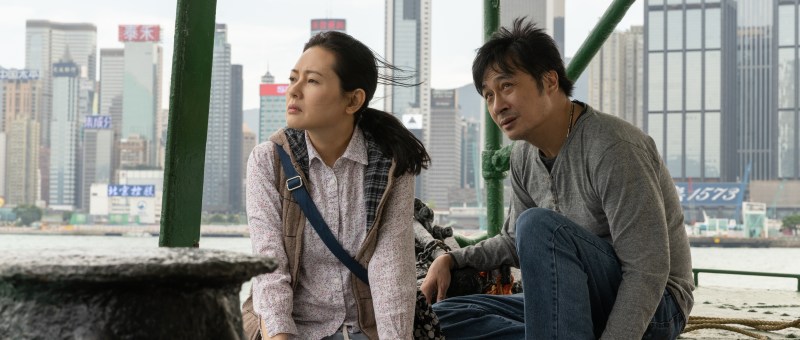
Released from prison Fai (Francis Ng Chun-yu) has nowhere else to go but back to the streets where he is welcomed by a ritualistic shot of heroin gifted by street godfather Master (Tse Kwan-ho), a refugee from Vietnam occupying a liminal status neither able to leave or remain owing to a criminal conviction which prevents his asylum in this or any other country. Fai’s attempts to rebuild his life are however frustrated when the community he is a part of falls victim to “street cleaning” in which uniformed officers turn up without warning to move them on, taking what little possessions they have and disposing of them as rubbish. This proves too much of an indignity for Fai who, along with the others and the help of social worker Ms Ho (Cecilia Choi Sze-wan), launches a law suit against the city both for damages against their stolen property and for an apology for the way in which they have been treated. 

“I am homeless. I am not worthless” runs the chant the small band of protestors recites outside the offices of government, but it’s a feeling that many of them find hard to internalise. Shing (Chu Pak-hong), a long time drug user, is originally afraid of the lawsuit because of the shame of people finding out about his drug use, relenting only when reminded he can file anonymously and thereafter wearing a medical mask just to be sure he can’t be identified. Fai, by contrast, agrees to be the face of the campaign but is frustrated by the approach of the media who, he feels, are not truly interested in publicising his case only in his “sob story” which he refuses to give them. Time and again, the homeless community is exploited by well-meaning do-gooders including a large number of students who either patronise them with ironic tasks or romanticise the homeless “experience”. 

Social worker Ms Ho is the only one who genuinely tries to help but even she finds her interventions sometimes cause more harm than good. While a friend of Fai’s darkly comments that her wheelchair gives her an advantage applying for public housing, Fai struggles to see a future for himself on the streets lamenting that no one’s going to hire him anyway and explaining that his drug use is a self-destructive way of killing time in an attempt to escape the boredom and despair of his futile existence. During the court case, he voluntarily enters rehab to try and come off drugs but also finds himself suffering with a serious illness for which he is afraid to get treatment because “hospitals are not a place for the living”. 

Echoing Fai’s distaste for the fetishisation of poverty, Li offers only sparse details of what brought these men and women to the streets save that many of them have been imprisoned which gives them a healthy scepticism when it comes to dealing with the justice system. Offered a settlement, most of the community want to accept but Fai is minded to hold out. The money is not so important to him, he’s replaced the things he needs, what he wants is his dignity in being given a proper apology and an acknowledgement as a human being. “Where can poor people live?” he asks, peering from the scaffolding on a half-completed luxury condo building witnessing gentrification in action as it towers over a slum knowing that its presence only means more “street cleaning” while people like him are pushed further into the margins, continually displaced by an economic prosperity to which they are not invited. “No one can save anyone” Fai finds himself admitting, the solidarity of the homeless community eventually shattered by their conflicting goals even as they continue to care for each other as best they can. Anchored by a standout performance from Francis Ng Chun-yu as the weary, defeated Fai battling his own traumas in addition to those of the world around him, Drifting paints a bleak picture of an increasingly unequal society seemingly content to abandon its most vulnerable citizens to the vagaries of a marginal existence. 


Drifting screens at the BFI Southbank on 15th July as the opening night gala of this year’s Chinese Visual Festival.

Original trailer (English subtitles)

Fantasia Confirms Second Wave of Titles for 2021 Virtual Edition

Montreal’s Fantasia International Film Festival celebrates its 25th anniversary with another online virtual edition streaming across Canada Aug. 5 – 25 showcasing the best in global genre cinema. With the full programme revealed later this month, here’s a look at the East Asian highlights announced so far:

China

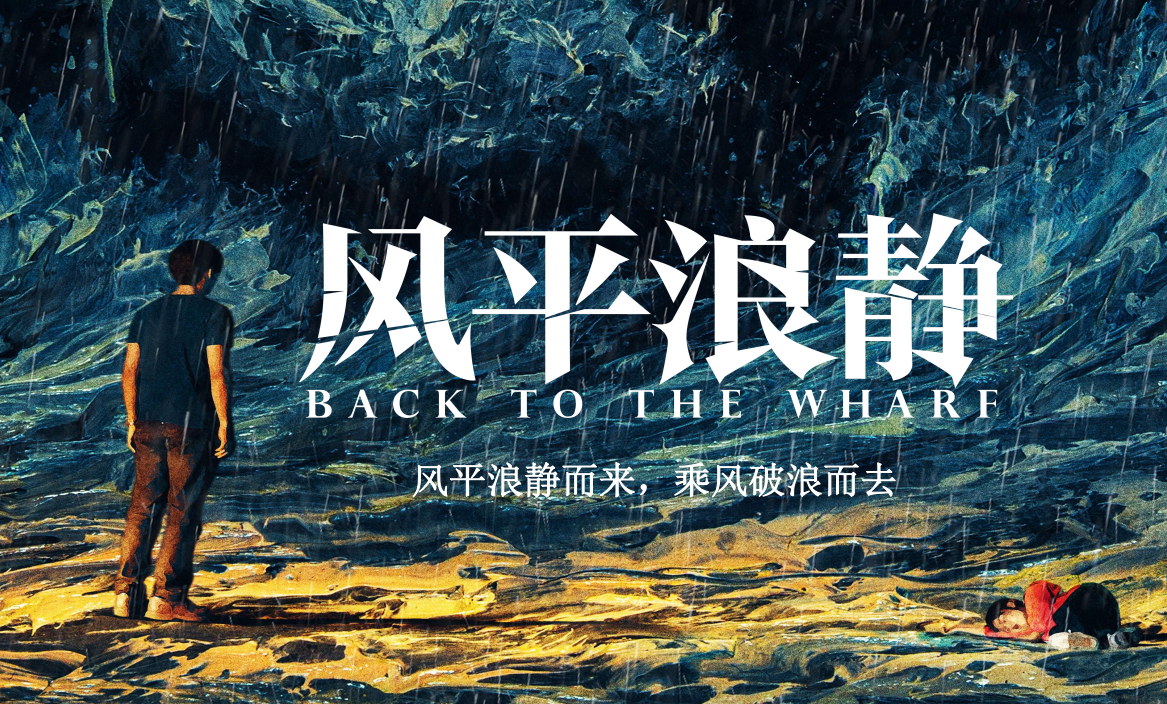
  • Back to the Wharf – A wounded young man’s attempts to start over in the shadow of his crime are doomed to failure in Li Xiaofeng’s moody, fatalistic neo-noir. Review.

Japan

  • Kakegurui 2: Ultimate Russian Roulette – sequel to the hit high school gambling manga adaptation.
  • Remain in Twilight – six former high school friends reunite for a funeral in a poignant drama from Daigo Matsui.
  • Wonderful Paradise – An impromptu going away party descends into a psychedelic rave of death and rebirth in Masashi Yamamoto’s defiantly surreal nighttime odyssey. Review.
  • Caution, Hazardous Wife – big screen outing of the TV drama starring Haruka Ayase as a former assassin turned regular housewife.
  • Not Quite Dead Yet – A resentful young woman comes to understand her awkward scientist dad only after he becomes temporarily deceased in Shinji Hamasaki’s delightfully zany comedy. Review.
  • Art Kabuki – filmed kabuki performance
  • Beyond the Infinite Two Minutes – A diffident cafe owner faces an existential dilemma when trapped in a time loop with himself from two minutes previously in Junta Yamaguchi’s meticulously plotted farce. Review.
  • Love, Life and Goldfish – musical manga adaptation in which a salaryman is demoted to a rural town after insulting his boss.
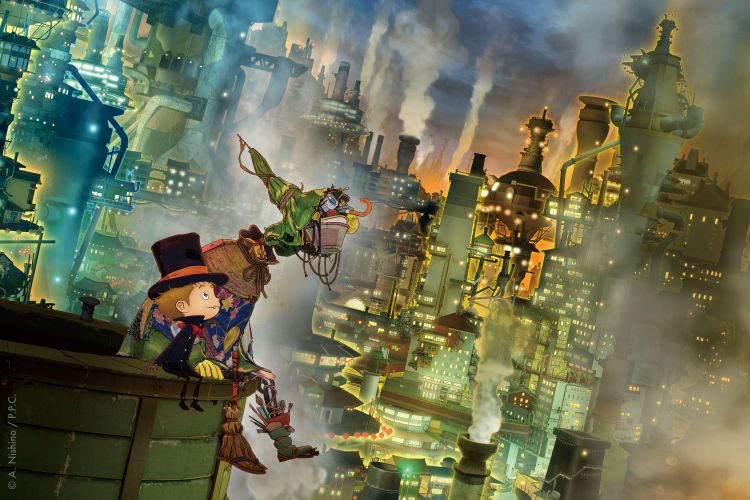
  • Poupelle of Chimney Town – animated adaptation of the picture book by Akihiro Nishino.
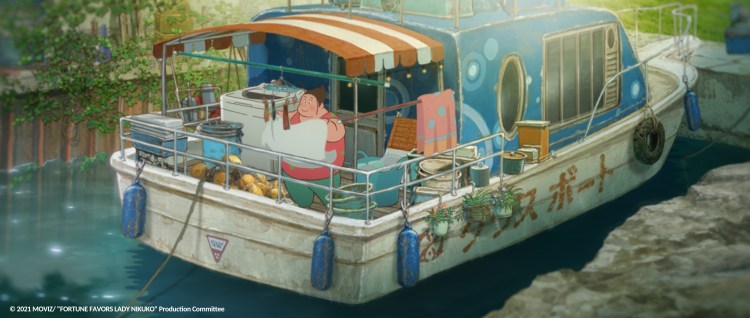
  • Fortune Favors Lady Nikuko – animated adaptation of the much loved book by Kanako Nishi centring on the sometimes difficult relationship between a serious young girl and her cheerful mother.
  • It’s a Summer Film! – A jidaigeki-obsessed high schooler sets out to make her own summer samurai movie in Soshi Matsumoto’s charming sci-fi infected teen rom-com. Review.
  • Jigoku-no-Hanazono ~ Office Royale ~ – delinquent office lady comedy drama.
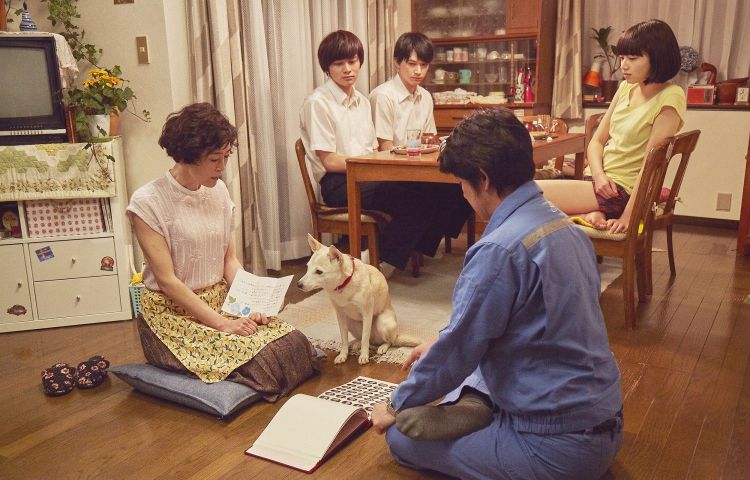
  • Sakura – nostalgic family drama adapted from the novel by Kanako Nishi and directed by Hitoshi Yazaki.
  • Pompo: the Cinéphile – anime adaptation of the movie-themed manga.
  • Satoshi Kon, the Illusionist – documentary by Pascal-Alex Vincent on the late director of Perfect Blue.
  • Junk Head – new theatrical edit of the sci-fi horror stop motion animation.
  • Dreams on Fire – A country girl comes to the city to become a dancer and finds a sense of solidarity in subculture in Philippe McKie’s refreshingly positive drama. Review.
  • Georama Boy Panorama Girl – teen romance adapted from the manga by Kyoko Okazaki and directed by Natsuki Seta.
  • Hold Me Back – latest from Akiko Ohku in which a happily single 31-year-old woman’s peaceful life is disrupted by romance. 
  • Ora, Ora, Be Goin’ Alone – latest from Shuichi Okita starring Yuko Tanaka as an older woman reflecting on her younger self (Yu Aoi) and surrounded by the “voices of her heart”.
  • Sexual Drive – three tales of food and sex from Kota Yoshida

Hong Kong

  • Time – an ageing hitman takes up a new career in euthanasia in Ricky Ko’s black comedy. 

Korea

  • Voice of Silence – A mute farmer begins to dream of a different life after being charged with minding a kidnap victim in Hong Eui-jeong’s strangely warmhearted crime caper. Review.
  • The Slug – A woman in her ’30s struggles to overcome a sense of toxic inadequacy born of teenage trauma in Choi Jin-young’s whimsical drama. Review.
  • Collectors – a tomb raider prepares a daring heist to retrieve a precious artefact.

Malaysia

  • The Story of Southern Islet – a wife embarks on a perilous journey to save her ailing husband.

Singapore

  • Tiong Bahru Social Club – An earnest young man experiences an existential crisis while living in the “happiest neighbourhood in the world” in Tan Bee Thiam’s whimsical satire. Review.

The films will be available to stream in Canada from 5th – 25th August. “Tickets” for each film are limited in number comparable to the size of a physical auditorium and while much of the programme is available on demand selected films will stream live only. Full details for all the films are available via the the official website, and you can also keep up with all the latest news via the festival’s official Facebook pageTwitter account, Instagram, and Vimeo channels.

Chinese Visual Festival 2021 Announces Full Lineup

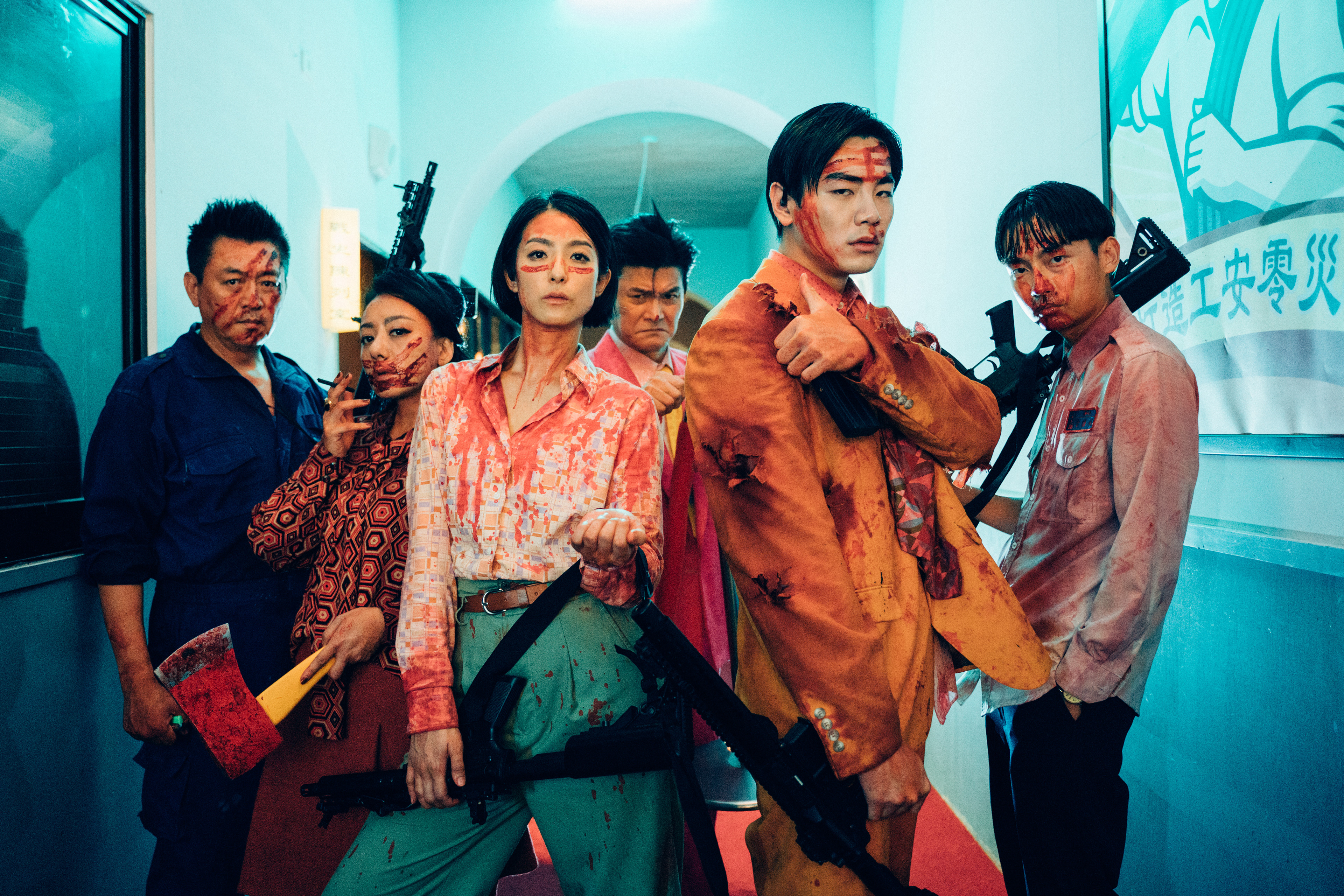
The Chinese Visual Festival returns for its 10th edition with another handpicked selection of contemporary Sinophone cinema taking place at the BFI Southbank and Genesis Cinema 15th to 25th July. Opening with Drifting and closing with Shadows, the festival will also include a Focus Hong Kong strand promising a rare screening of Johnnie To’s 2003 missing gun thriller PTU, while Vision Taiwan will feature screenings of satirical zombie movie Get the Hell Out and all-female Shakespeare adaptation As We Like It which screens in conjunction with Queer East alongside transgender documentary The Two Lives of Ermao.

15th July: Drifting

Tracey‘s Jun Li returns with a socially conscious drama exploring the lives of the increasingly marginalised homeless of contemporary Hong Kong.

16th July: As We Like It

A romantic exile meanders through an internet free corner of Taipei in Chen Hung-i & Muni Wei’s all-female adaptation of the Shakespeare play. Review.

17th July: Love Poem

Director Wang Xiaozhen stars in a meta exploration of art and marriage.

19th July: The Two Lives of Ermao

Documentary focussing on the life of a transgender woman in contemporary China.

20th July: PTU

Johnnie To’s ironic 2003 noir farce in which a bumbling policeman’s missing gun provokes an escalating crisis.

22nd July: Get the Hell Out

An idealistic former MP and a hapless, besotted security guard attempt to fight their way out of a zombiefied parliament in Wang I-Fan’s absurdist satire. Review.

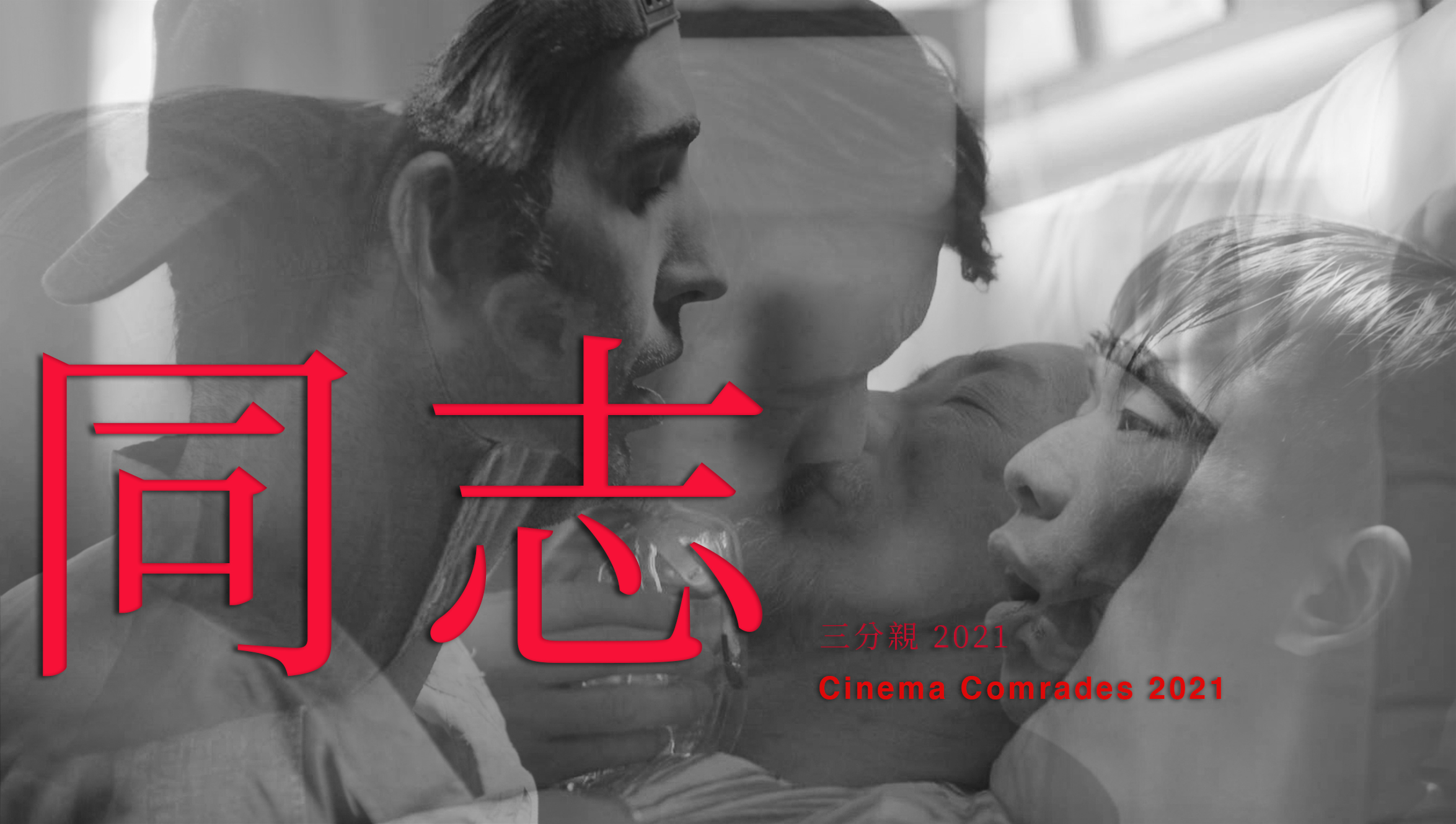
23rd July: Cinema Comrades

Free online event featuring a discussion of Sinophone queer cinema as well as three short films.

24th July: Swimming Out Till The Sea Turns Blue

Literary documentary from Jia Zhangke focussing on three generations of Chinese authors.

25th July: Shadows

Psychological noir starring Stephy Tang as a psychiatrist with a brain tumour which allows her to enter her patients’ traumatic memories. Teaming up with Philip Keung’s cynical cop, she finds herself in a battle of wits with a rival shrink who just might be a serial killer by proxy.

The Chinese Visual Festival runs at BFI Southbank and Genesis Cinema 15th – 25th July. Full details for all the films are available via the official website and you can keep up with all the festival’s latest details via the official Facebook PageTwitter account, and Instagram channel.

Midnight in a Perfect World (Dodo Dayao, 2020)
“It doesn’t matter what’s happening as long as nothing’s happening to me” a middle-aged woman exasperatedly exclaims, irritated by a young man’s naive curiosity. A dark exploration of the legacy of Martial Law, Dodo Dayao’s surrealist horror movie Midnight in a Perfect World asks how much of your freedom you’re prepared to sacrifice for security and if the illusion of a “perfect world” in which everything “just works” is worth the price of your complicity. 

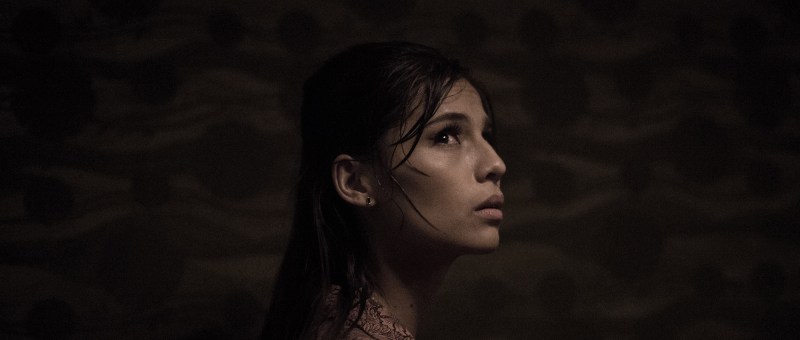
In a near future Manila in which all of the city’s infrastructural problems have been solved, conspiracy theorist Tonichi (Dino Pastrano) is convinced that a mysterious force is disappearing people in random parts of the city after midnight, a theory which is only strengthened after his friend Deana rings him in a panic convinced she’s become a victim of his “blackouts” and insisting that someone’s stolen the moon. Tonichi’s other friends, the sensible Mimi (Jasmine Curtis-Smith), reckless Jinka (Glaiza de Castro), and melancholy hospital worker Glenn (Anthony Falcon), are less convinced but caught in the street after midnight the gang have no option but to look for a “safe house” in order to escape the creeping darkness. For unexplained reasons, Tonichi is unable to enter with his friends and finds himself trapped outside in “God’s Blindspot”, as the mysterious Alma (Bing Pimentel), a middle-aged woman and safe house veteran, describes it. 

Alma might in a sense be seen as the embodiment of the Martial Law generation, holing up in her safe house minding her own business and defyingly not caring what’s going on outside determined only to make it through the night. She offers cryptic words of advice to the youngsters, but does not really try to help them outside of trying to prevent them from interfering with her own survival. The so-called safe house has a hidden upper floor apparently invisible from the outside and hiding its own secrets. When one of the gang manages to break open the door and pays a heavy price for their curiosity, Alma merely creeps forward fearfully and closes it again ensuring she is safe from its myriad horrors even in her wilful ignorance. 

Still, you have to ask yourself why if this world is now so “perfect” the youngsters seem so unhappy. Their drug use appears not to be particularly hedonistic but may offer them a degree of escape from a society which has become oppressive in its efficiency. Sensible Mimi cautions Jinka against associating with smarmy drug kingpin Kendrick (Charles Aaron Salazar) who spins bizarre stories of weird aliens while proffering a new drug which supposedly feels “like dying and going to heaven.” On her way from Kendrick’s Jinka passes a group of intense men and immediately pegs them as a hit squad, realising that Kendrick’s hideout has been exposed and she herself may now be in danger in an echo of the extra-judicial killings which have become a grim hallmark of Duterte’s Philippines. “Beta version Martial Law” is the way Jinka later describes it, drug users now taking the place of “activists” as targets not solely of legitimate authority but vigilante bounty hunters. The rumours of strange disappearances, people “erased” from their society, are yet another means of control inviting complicity with an unofficial curfew for a population ruled by fear.  

As if to ram the allegory home, Dayao ends the credit roll with the Martial Law era slogan “Sa ikauunlad ng bayan, disiplina ang kailangan” or “For the nation’s progress, discipline is needed” followed by the English phrase “Never Again”. Yet, it is happening again, the extra-judicial killings of the Duterte era no different from the disappearances of “activists” under Marcos. Jinka refers to the old Manila as the world capital of malfunction, its transformation seemingly brought about by a mysterious force but unlike Mimi who seems otherwise prepared to accept complicity in her “everything works” conspiracy theory remains dejected and suspicious. None of these young people is happy with their new utopia or prepared to pay the price demanded to live in it yet there appears to be no real way to resist and their eventual decision to brave the darkness exposes nothing so much as their naivety. Scored with eerie sci-fi synths and often shot in total darkness, Dayao’s surreal horror show offers a bleak prognosis for the contemporary society unable to escape from the permanently haunted house of an authoritarian legacy. 


Midnight in a Perfect World screened as part of this year’s Neuchâtel International Fantastic Film Festival (NIFFF).

Original trailer (English subtitles)