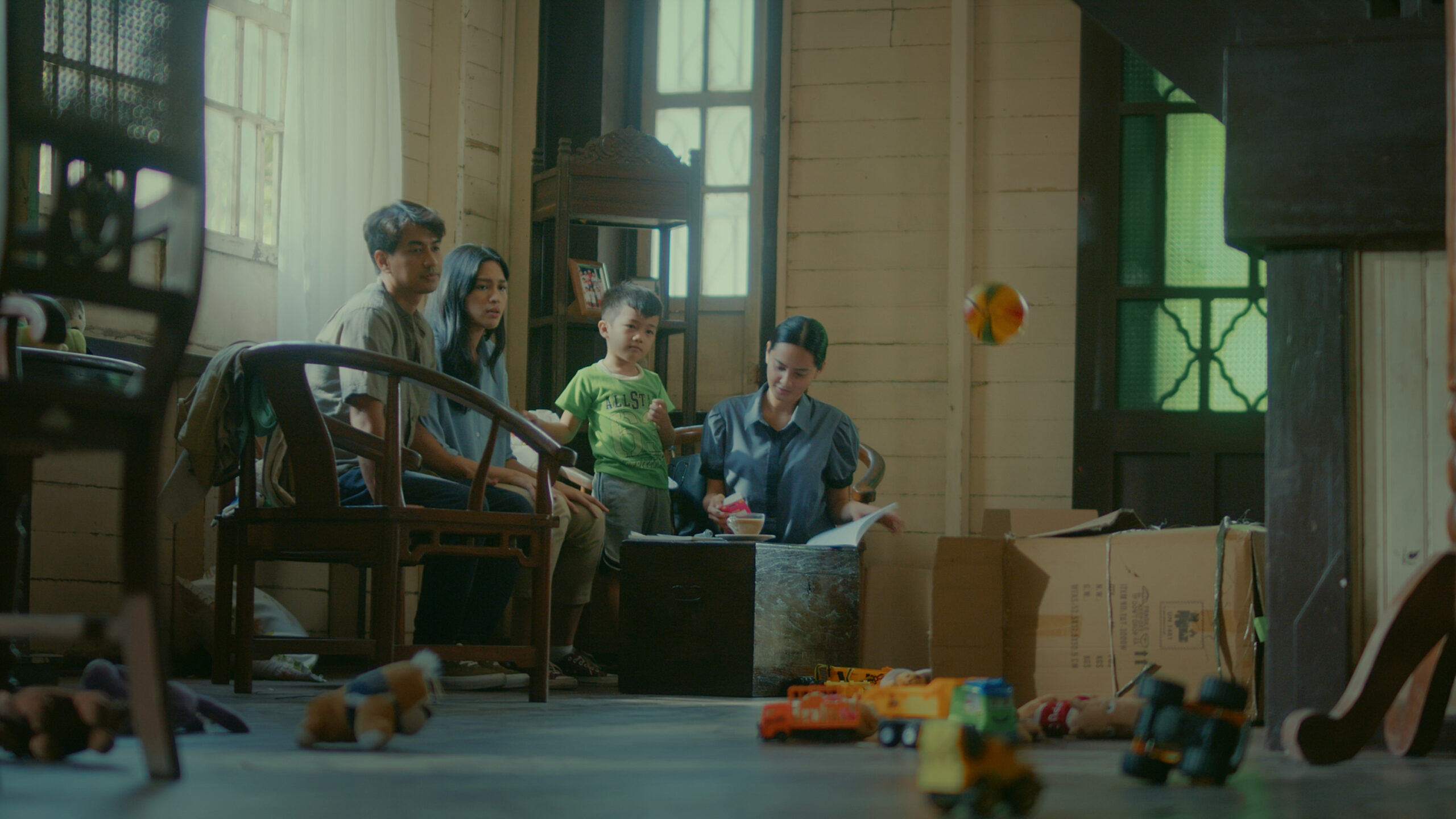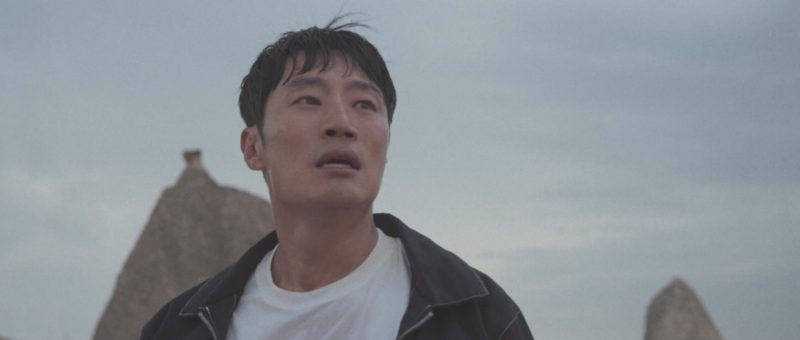

Güle-Güle (귤레귤레, Ko Bong-soo, 2024)

A man and woman saddled with problematic companions find themselves pushed into a space of introspection while on an inescapable Turkish holiday in Ko Bong-soo’s sophisticated comedy, Güle-Güle (귤레귤레). Each of them is perhaps burdened with regrets and wistful for what might have been but for opposing reasons, he facing the realisation that he often runs away from his problems and she that despite her sharp tongue and haughty attitude she lacks the courage to break with a situation that obviously isn’t working and become fully independent.

Dae-sik is there with his bumbling middle-manger boss Won-chang, a nepotism hire who repeatedly calls him a moron and blames him for his mistakes. Jung-hwa, meanwhile, is with her (ex?) husband Byung-sun who continually embarrasses her with his crass attempts to haggle the price down for anything and everything as means of asserting his masculinity through winning a price war. Byung-sun’s drinking and the problematic behaviour that arises from it had evidently strained their relationship with Byung-sun pledging to abstain from alcohol only to immediately break that promise claiming that he assumed drinking with Jung-hwa wouldn’t count. The issues Dae-sik and Jung-hwa face are in some ways the same in dealing with partners that attempt to dominate and overrule them without ever considering what they might actually want. Dae-sik hadn’t even planned on taking a holiday but assumed they’d be heading back to Korea right after closing the deal only to be browbeaten by Won-chang into extending their stay.

Jung-hwa isn’t sure why they’re in Turkey either, while the middle-aged woman and her daughters who are also on their tour drink in all the drama alternately fascinated and irritated that Byung-sun in particular is messing up their holiday. From the way he skirts around her, it seems that Dae-sik and Jung-hwa may have met before or have some unspoken history with each other. They are each dealing with past regrets and the frustrated dreams of the youth even if in differing ways. Dae-sik once had a promising future as a champion snowboarder but gave it up because he needed a paying job to contribute to his father’s medical fees. After a heart-to-heart with Jung-hwa he’s forced to ask himself if in reality he gave up in fear of it not working out and his father’s illness was just a convenient excuse not to have to risk failure. 

Jung-hwa, meanwhile, is irritated to learn that in college her fellow students nicknamed her “the viper” because of her sharp tongue and poisonous looks. She admits that she often says things thoughtlessly and hurts people by accident, pushing them away when she doesn’t mean to though this doesn’t seem to be the case with Byung-sun who she otherwise seems incapable of shaking off despite his treatment of her and repeated broken promises. Unlike Dae-sik who admits that he suppresses everything and approaches life with a fear of failure, Jung-hwa charged ahead doing what she thought she wanted and ended up divorced though with a husband that won’t leave her alone.

The holiday with its myriad challenges both interpersonal and physical, along with their impromptu meeting, affords each of them a new perspective and the clarity they each may be looking for to move on from their dissatisfying circumstances in search of greater personal happiness. Meanwhile, the other guests seem to carry on obliviously, Won-chang otherwise continuing to railroad Dae-sik into dangerous situations he feels unable to resist though perhaps he too is only reacting against his own sense of inadequacy as a nepotism hire promoted well beyond his abilities. Byung-sun’s problems seem less easy to solve and his selfish obnoxiousness is annoying not only to Jung-hwa who may finally be losing patience with him, but the entire group.

Like many similarly themed films from Korea, Ko structures the drama around a series of conversations many of which take place on a rooftop bar or walking through the streets of the city which as Dae-sik remarks become brighter and less intimidating thanks to his interactions with Jung-hwa as if his horizons were literally expanding. Yet what each of them is here to do is in a sense to say “gule gule” or goodbye to their old selves and old lives by gaining the courage to risk failure in breaking with the dissatisfying present for a hopefully more fulfilling future.


Güle-Güle screened as part of this year’s San Diego Asian Film Festival.

Trailer (English subtitles)
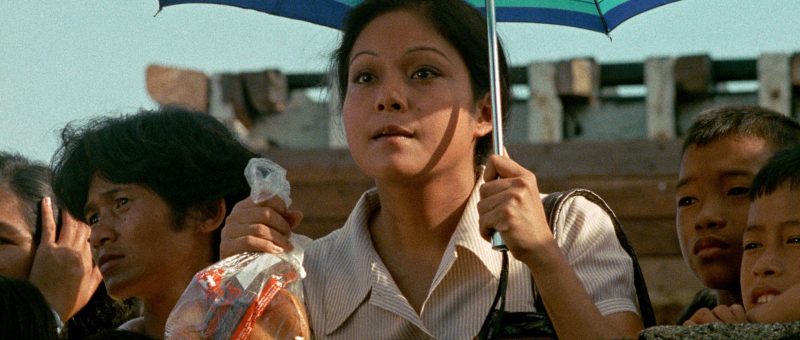
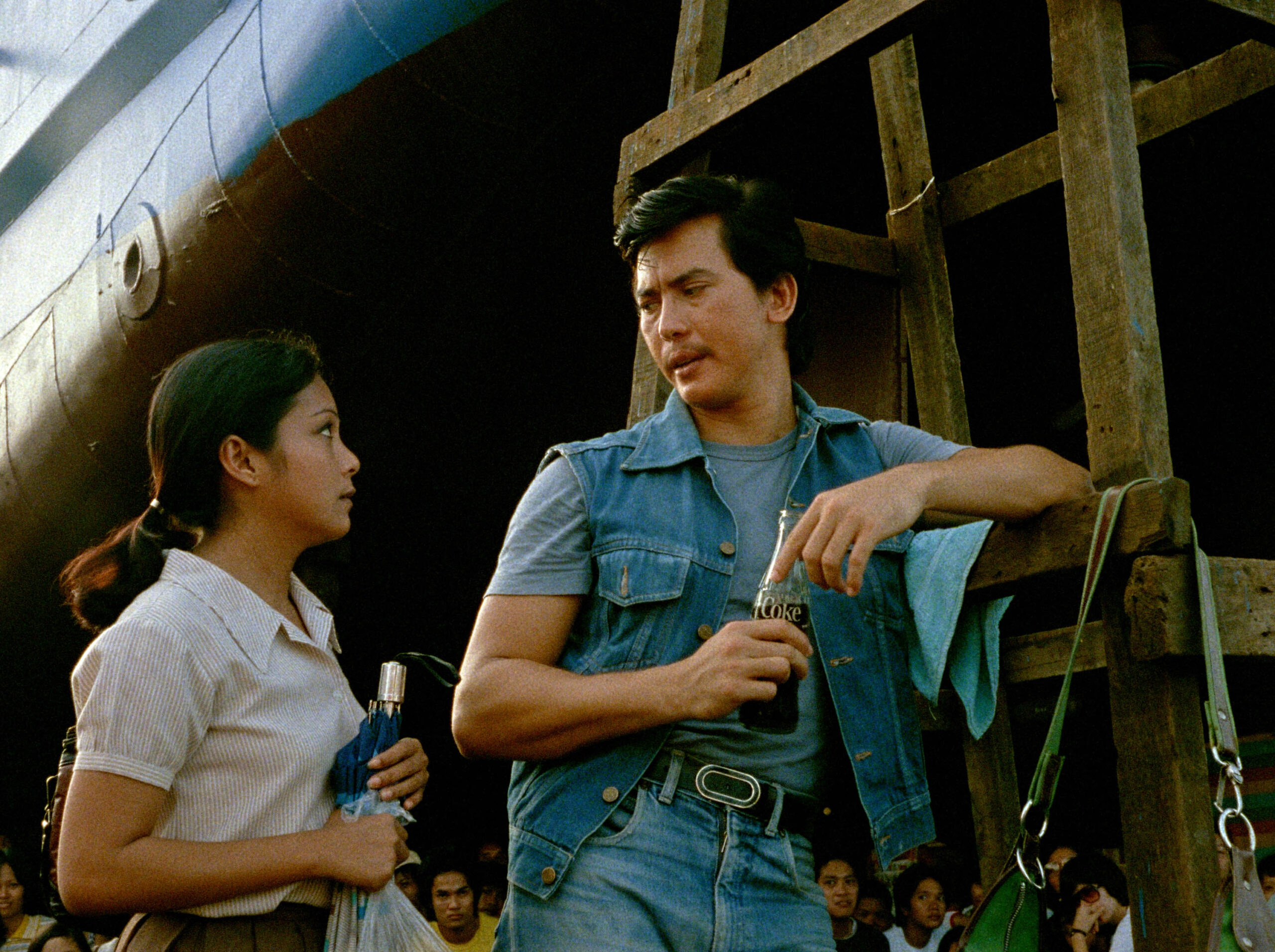
Bona (Lino Brocka, 1980)

Towards the end of Lino Brocka’s Bona (Nora Aunor), the heroine recounts a dream she had in which she tries to escape a fire but finds herself met only by more flames. The inferno she attempts to outrun is that of the oppressive patriarchy of a fiercely Catholic society in which men can do as they please, but women are held to a different standard and in the end have little freedom or independence. 

Brocka opens with a lengthy sequence of a religious festival in which the suffering Mary is carried through the streets on the shoulders of men. Teenager Bona looks on but worships at a different altar, that of Gardo (Phillip Salvador), a struggling bit-player trying to make it in the Philippine film industry. What becomes apparent is that her fascination with Gardo is borne of her desire to escape her family home and the tyrannical reign of her authoritarian father (Venchito Galvez) who berates her for not helping her mother out enough with her business and later whips her with his belt because she stayed out too late. 

Though her family is quite middle class, Bona instals herself in Gardo’s home in the slums in search of greater freedom but ends up becoming his skivvy or perhaps even a kind of maternal figure patiently taking care of him while he continues to bring other women home and even charges her with taking another teenage girl he’s got pregnant to the doctor (who charges him “the same as before”) for an abortion. It’s possible that in Gardo she sees a different kind of masculinity, a performance of manliness, but gradually comes to realise he’s nothing more than an opportunistic lothario with no emotional interest in women let alone her. 

But by then, it’s too late. She’s stuck in a kind of limbo barred from returning home to her family because of her status as a fallen woman who has shamed them by living with a man she is not married to. Even once her father dies, her mother warns her to avoid her brother because his rage is indescribable and he does indeed drag her out of the funeral by her hair while issuing threats of violence. Perhaps what she was looking for was greater independence or an accelerated adulthood with the illusion of freedom, but she can only find it by relying on Gardo rather than attempting to chart her future alone. We can see that other women in the slum are in much the same position, loudly arguing with their husbands who cheat, laze around drinking, and permit them little possibility for any kind of individual fulfilment. 

Yet there is a moment where Bona seems free, ironically dancing at the wedding of a young man, Nilo (Nanding Josef), who she’d turned down but now perhaps regrets it comparing the conventional married life she might have had with him to the prison she’s designed for herself in her life with Gardo. Nilo may be the film’s nicest man, but at the same time he’s still a part of the system that Bona can’t escape. In fact, the only woman fully in charge of herself is a wealthy widow who later buys Gardo’s, not exactly affections, but perhaps loyalty. “She’ll do,” he less than romantically explains after admitting to marrying her for the convenience of her money oblivious of the effect the news may have on the by now thoroughly humiliated Bona whose rage is just about to boil over. 

Unable to free herself from this fanatical devotion or to find possibility outside it, Bona is trapped by her desires and marooned in a kind of no man’s land in which she cannot exist as an independent person but only as servant to a man. “I’ll just serve you,” she explains on moving in and thereafter slavishly catering to all of Gardo’s whims while he largely ignores her. She hasn’t so much escaped her father’s house, but built a prison for herself from which she cannot escape despite her oncoming displacement. A creeping character study, the film finds the titular heroine searching for a way out of the fire only to find herself engulfed by flames with no real prospect of salvation amid the ingrained misogyny of a fiercely patriarchal society.


Bona screens Nov. 14 as part of this year’s San Diego Asian Film Festival.

Trailer (English subtitles)
Shanghai Blues (上海之夜, Tsui Hark, 1984)

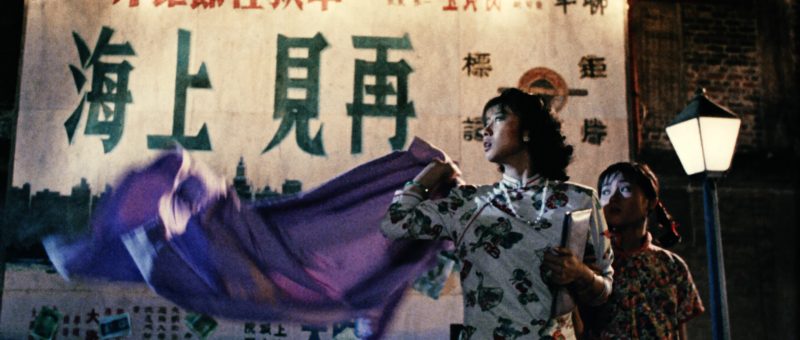
There’s a strange kind of melancholy optimism born of false courage and desperation that colours Tsui Hark’s Shanghai Blues (上海之夜). A clown soon to become a soldier tells a woman he meets in the dark under a bridge as the city burns and Shanghai falls to the Japanese to remember that they will win. 10 years later the wounded of that same war reassure each other that their time will come, they didn’t survive just to die here now seemingly cast out by the society they risked their lives to save.

The Shanghai Stool (Sally Yeh Chian-Wen) arrives in is in a moment of euphoric liberation caught between cataclysmic revolutions with the civil war and eventual coming of the communists hovering on the horizon. A wide-eyed country girl, she’s almost lost amid the hustle and bustle of the city in which the motion never stops. Like many, she is immediately displaced on her arrival, discovering that the relatives with whom she hoped to stay are no longer at their address and she is therefore homeless and alone. The clown, Do-re-mi (Kenny Bee), now a member of a marching band unable to play his instrument, thinks she’s the girl from the bridge in part because she’s wearing the same outfit but mainly because she has the same short hair cut and so he follows but loses her. Meanwhile, she has a kind of meet cute with Shushu (Sylvia Chang Ai-Chia), now a jaded nightclub showgirl still pining for the clown, in which they each believe the other is trying to take their own life but end up becoming best friends and roommates unwittingly living directly below Do-re-mi. 

In this 30s-style screwball world, identities are always uncertain and often obscured by darkness or else the continual march of the crowd. Yet there’s a kind of romanticism in this act of seeing and not seeing. Only in darkness do Shushu and Do-re-mi finally recognise each other and when their romantic moment is interrupted by the end of a power cut, they smash the neon lights opposite to reclaim it as if to reject the intrusion of this glaring modernity. To that extent, the implication may be that this innocent kind of romantic connection can’t survive the bright lights of the big city or that light blinds as much as it illuminates. In several sequences, the characters inhabit the same space but cannot see each other while a nefarious thief lurks on the edges of the frame unseen by all. On realising that Do-re-mi is the clown/soldier for whom she’s been waiting for the last 10 years, Shushu knows that she will have to break her friend’s heart or her own and that Stool’s dream of a family of three is unrealisable amid the constant rootlessness of this transient city. 

To that extent, Stool is an echo of herself as the innocent young woman she was on meeting Do-re-mi under the bridge rather than the more cynical figure she’s become due to her experiences in the wartime city. In the film’s closing moments, Stool meets another version of herself in the form of a wide-eyed young woman in a plain dress who asks her if this is Shanghai but the only reply she can give is that she wishes her luck because for her Shanghai is now a city of heartbreak just it has been one of sadness and futility for Shushu. “I have one hope, if I give it to you I won’t have any,” Shushu tells her lovelorn boss as an expression of the despair that colours her existence in which the distant possibility of romantic fulfilment is all she has to live for. 

The fact that the lovers later flee Shanghai for Hong Kong seems to take on additional import as those in Hong Kong consider a similar trajectory with their own revolution looming while adding to the sense of continual displacement, disrupted communities, and worlds on the brink of eclipse. This Shanghai is a bleak place too with its lecherous gangsters and seedy businessmen but has a sense of warmth even amid its constant motion in its serendipitous meetings and friendships born of the desire for comfort and company in the face of so much hopelessness. In the end, perhaps romanticism is the only cure for futility just as the only thing to do in a world of chaos is to become a clown.


Shanghai Blues screens Nov. 13 as part of this year’s San Diego Asian Film Festival.

Victory (빅토리, Park Beom-su, 2024)

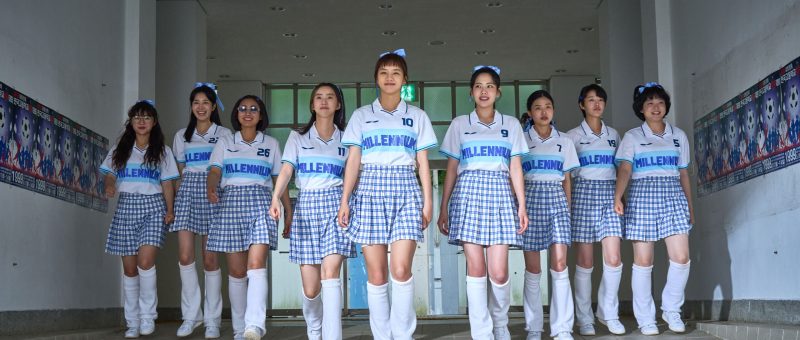
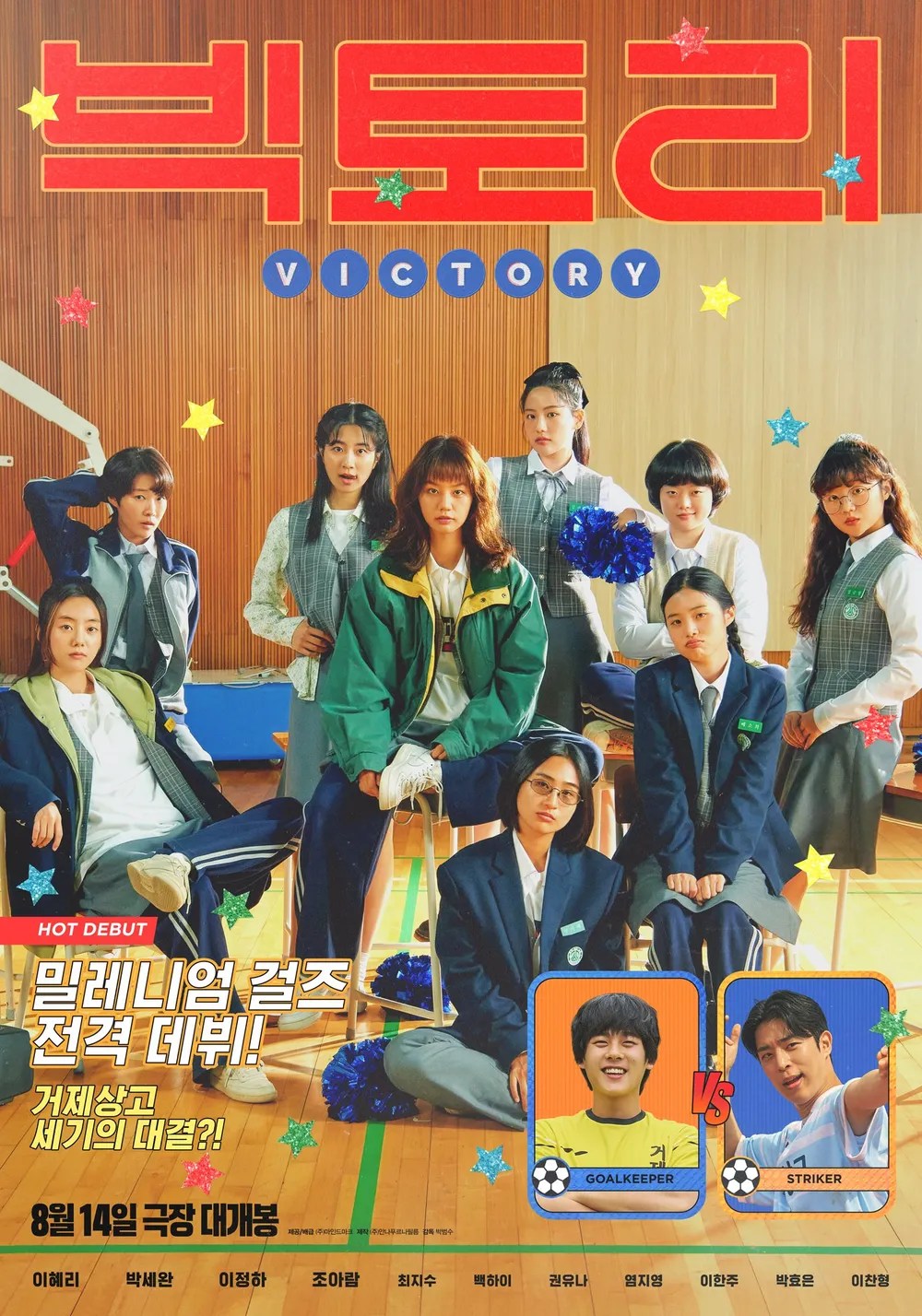
At the end of Park Beom-su’s millennial coming-of-age drama Victory (빅토리) there’s a title card quoting scientific data that people perform better with encouragement. In order to get the headmaster to agree to their starting a cheerleading squad so they can use the clubroom for dance practice, the heroine comes up with a ruse that the moribund football team will play 50% better with the cheerleaders encouraging the crowd to shout their support. But of course it’s really the girls who prosper through a process of mutual encouragement and solidarity.

Set in a small town in 1999, the film’s heroines dream of becoming K-pop dancers in glamorous Seoul. Feisty Pin-sun (Lee Hye-ri) doesn’t see much of a future for herself in Geoje much to her father’s consternation and is forever asking to transfer to a high school in the capital though in truth all she wants to do is dance. The deputy-head seems to have it in for her, taking the clubroom away from them and belittling their dancing while Pil-sun and her best friend Mi-na (Park Se-wan) are older than the other kids having been forced to repeat a year after getting into a fight with a rival school at a disco. Cheerleading’s not something they had much interest in until meeting snooty new student Se-hyun (Jo Ah-ram) who’s moved to their rural backwater with her brother who has been lured their as a top scorer for the school’s football team by the football-crazy headmaster. 

The fortunes of the makeshift team are directly contrasted with the protestors at the shipyard where Pil-sun’s father works. Pil-sun’s father seems to be a man beaten down by life. He’s taken a managerial position but finds himself conflicted in the midst of a labour dispute with his bosses pressuring him to name the ringleaders of the strike so they can shut the protests down. Faced with unfair and exploitative conditions, the men are protesting for basic rights such as not being forced to work overtime  and weekends and having a right to time off. Pil-sun’s father may agree with them, but doesn’t want to risk his job and tries to placate both sides with a spinelessness that later appears cowardly to his daughter Pil-sun. Perhaps as a single-father, he’s mindful of the necessity of keeping his job but otherwise appears obsequious and willing to debase himself in the service of a quiet life. When Pil-sun is once again in trouble in school, her father drops to his knees and apologises much to Pil-sun’s embarrassment.

Yet like the shipyard workers, the girls fight in unity if in this case for cheerleading success. This is after all a synchronised sport that requires the team to act as one. Though they may not universally get on initially, interactions with the team help each to realise their special talents and give them additional confidence to dance their way into a future of their choosing. Meanwhile, they’re each faced with a millennial dread that now seems nostalgic in its references to Y2K and the end of the world. There may not be very much for them in this small town, but there is at least each other along with their burning desire to succeed. 

It’s this  infectious sense of determination that really does seem to improve the atmosphere in this gloomy environment, the protestors also joining in their routine while Pil-sun’s father eventually gains the courage to reassess his loyalties. They are each sustained by the community around them, supported and encouraged by their friends and comrades. The point is rammed home by the fact that Se-hyun’s striker brother Dong-hyun (Lee Chan-hyeong) turns out to be something of a disappointment, while goofy goalie Chi-hyung (Lee Jung-ha) proves unexpectedly reliable telling Pil-sun that he prefers to be the last line of defence rather than the pre-emptive strike as he proves by defending her when the gang is hassled by older kids from another school. With a series of knowing meta jokes (“Girls’ Generation.” “That sounds so dumb.”), Park piles on the sense of nostalgia for a perhaps more innocent turn-of-the century world but equally for the gentle days of youth as the teens dance their way through hardship and heartbreak bolstered by their unbreakable bonds and sense of hopeful determination for brighter futures that are theirs for the taking.


Victory screens Nov. 12 as part of this year’s San Diego Asian Film Festival.

Original trailer (English subtitles)

Love Child (Jonathan Jurilla, 2024)

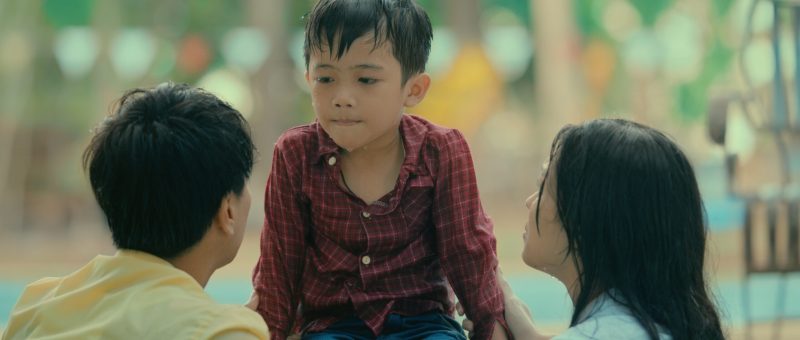
A young couple find themselves struggling in an uncompromising society while trying to raise their young autistic son who has complex needs in Jonathan Jurilla’s semi-autobiographical drama, Love Child. Inspired by the director’s own experiences of raising an autistic son, the film never shies away from the inherent difficulties involved but is as interested in the wider social context that makes life particularly hard for parents Ayla (Jane Oineza) and Pao (RK Bagatsing).

The first issue they face is their youth which though termed a “superpower” by a well-meaning older woman makes it difficult for them to raise a child without having had time to generate a financial buffer. Meanwhile, they also face a mild degree of prejudice because they are not actually married nor do they have a religion in a fiercely Catholic culture. The pair were still in university when Kali (John Tyrron Ramos) was conceived and subsequently had to break off their studies meaning not only that they’ve had to change course in life but that they’re locked out of the better paying jobs their degrees would have led to. Ayla was studying to become a lawyer but now has a part-time remote office job that is increasingly incompatible with raising Kali. Her unsympathetic boss complains about the noise and later lays into her about her priorities, claiming that she’s a mother too and she manages so Ayla’s on notice for the next time she infringes on workplace mores. 

Though Kali is now old enough to be enrolled in school, they struggle to find a place for him and are at a loss when he suffers bullying from one of the neighbourhood children after they send him to a government-run special school. It seems their only option is an expensive private institution, but it’s obviously a struggle for them on their already compromised incomes. Meanwhile, they’re constantly recommended other treatments and services that might help Kali’s development and made to feel like bad parents for not being able to afford them. Neither of them can rely on family support as Ayla’s mother disapproved of them having Kali in the first place and is hostile towards him because of his disability while Pao carries a degree of resentment towards his estranged father who abandoned the family and now lives in Australia. 

Pao’s relationship with his father informs the kind of father he’d like to be in his desire to protect his family, but the solutions that present themselves are those familiar to other struggling youngsters and would result in splitting the family up with one or both parents living abroad to earn higher salaries so they can afford the best education and treatment for Kali. Meanwhile, Ayla looks around her former friendship groups and realises that most people her age have either rejected or postponed the idea of starting a family and are instead spending their money on things like travel and entertainment or patiently saving to achieve financial stability. She wonders if they did the right thing or were naive to believe in love and that everything would somehow work out because they were a family. 

Though raising a child is hard enough on its own, the additional financial strain placed on them along with the impossibility of both looking after Kali and trying to earn a living is something exacerbated by the lack of provision for families like theirs especially those without the support of friends or relatives. Sacrificing their dreams to look after their son, the couple do everything they can to ensure he has the best future possible but are often frustrated by those around them who maybe prejudiced or lack understanding of kids of like Kali and the additional care he sometimes needs especially as his developmental process is obviously slower than average and he may never achieve independence. Though some of the meta commentary and references to tropes of a stereotypical Philippine rom-coms are a little on the nose, Jurilla focuses on the love the parents have for their child and their earnest attempts to do the best for him even at the cost of their own health and wellbeing while also hinting at the unfairness of the society around them in which there is little help available to those who do not have the resources to pay for that which should be provided for all.


Love Child screens Nov. 8/9 as part of this year’s San Diego Asian Film Festival.

Original trailer (English subtitles)

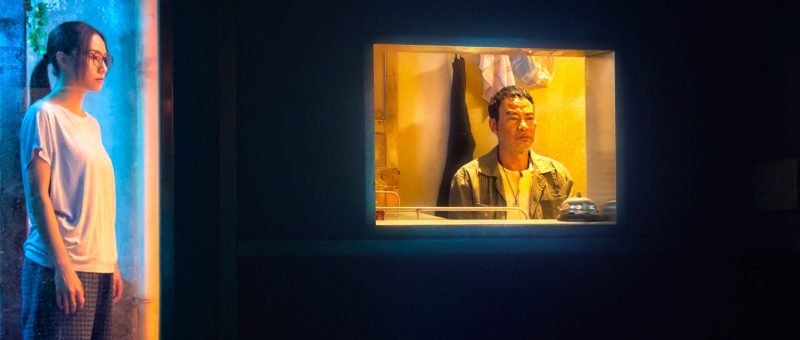
Little Red Sweet (紅豆, Vincent Chow, 2024)

Towards the conclusion of Vincent Chow’s poignant drama Little Red Sweet (紅豆), the heroine says she thinks her family’s sweet soup shop is important because it helps people hang on to memories through food. Like many, May (Stephy Tang) seems to be displaced in a Hong Kong that’s changing all around her while other things stay frustratingly the same from her father’s (Simon Yam) refusal to teach her the family recipe because he wanted to pass the shop onto his son to her brother’s sexist assumptions that the housework is her responsibility while staying home playing games rather than helping in the shop.

Indeed, it’s not until matriarch Lin (Mimi Kung) suffers a stroke that everything she did for the family is thrown into stark relief. It’s clear she did most of the heavy lifting at the shop, especially when it comes to customer interactions which are not May’s father’s forte. He doesn’t speak English and has to fetch Lin when a pair of tourists want to pay. Unable to run the shop alone, he asks his son Boyo (Jeffrey Ngai) to help, but he refuses despite having no other obligations as a cram school student who mainly stays home and plays games. Boyo doesn’t help with the housework either, simply expecting that May will take care of it and him despite his ongoing obnoxiousness. 

Because of his refusal, May finds herself giving up her dream job as an air stewardess to help out in the shop though her father won’t let her near the kitchen and seems as if he’d still ideally like to hand the shop down to his son or perhaps close it for good to free both children from the burden of caring for its legacy. May’s job as an air stewardess may have symbolised her desire for escape but also reflects her rootlessness and sense of displacement. Before her mother was taken ill, she’d suggested using her staff discount to go on a family holiday which would have been their first because her father never wanted to close the shop though it was obviously not to be nor could she repair their familial bonds through her work. Both she and her tentative love interest (Kevin Chu) recall how low the planes seemed to fly when they were children and how distant they seem now reflecting not a broadening of their horizons but the impossibility of escape along with a loss of intimacy and the widening spaces between people.

But as Canadian-Hong Kong travel writer Soar says, it’s the people not the place and it’s the sense of community that May values in the old-fashioned shopping arcade that is inevitably targeted for redevelopment threatening the future of the shop. First trying to resist the march of progress, May eventually starts looking at new spaces but the ones she sees are slick, modern, and devoid of both warmth and character. A journalist who comes to interview May asks her why she wants to carry on a shop selling traditional desserts that might not be so popular among the younger generation but May says that it’s important as they help people hang on to their memories as if she were also talking about an older Hong Kong that is fast disappearing the soul of which lies in the sense of comfort this sweet bean soup provides. Eventually she’s presented with a choice, like many of her generation wondering whether to take her memories somewhere else or stay and try to salvage something from rapidly receding past. 

Her father’s eventual capitulation in agreeing to teach her how to make the family’s iconic sweet red bean soup is akin to a baton being passed, but also a sign of progress in accepting her as his heir rather than insisting on the feckless Boyo whom he also takes to task for his reluctance to look after himself and assumption that it’s his sister’s job to cook and clean for him. Though perhaps bittersweet, there is indeed something poignant in May’s determination to remake a home in a shrinking Hong Kong where community matters and kindnesses are repaid with interest years after they’d seemingly been forgotten. As Soar had said, it’s the people not the place or in another sense perhaps it amounts to the same thing and the taste of home you only find in the warming sweetness of red bean soup.


Little Red Sweet screens Nov. 8/11 as part of this year’s San Diego Asian Film Festival.

Original trailer (no subtitles)