The Gorals (산양들, Yoo Jae-wook, 2025)

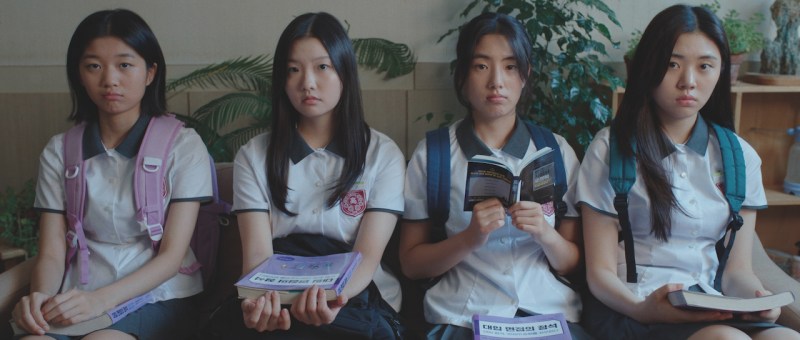
A group of four directionless girls find solace in the natural world and in each other in Yoo Jae-wook’s gentle coming of age drama, The Gorals (산양들, Sanyangdeul). Each finding themselves slightly at odds with Korea’s conformist society, the young women are railroaded onto the conventional path of university and presumably some kind of steady corporate job afterwards with little consideration given to why they’re doing it or what it is they actually want out of life.

The reason the four girls, who did not really know each other previously, are brought together is that none of them have filled in the form regarding their intended universities or career paths. A teacher has, therefore, determined that she’s going to get them into any university that will accept them through a process of intensive interview prep and catch up classes. It doesn’t really matter to the teacher how she does it, so she mainly puts the girls up for random courses such as sending In-hae to an interview to study Spanish at a university with “Seoul” in its name (but not actually “Seoul University”) despite the fact that In-hae wanted to study landscaping.

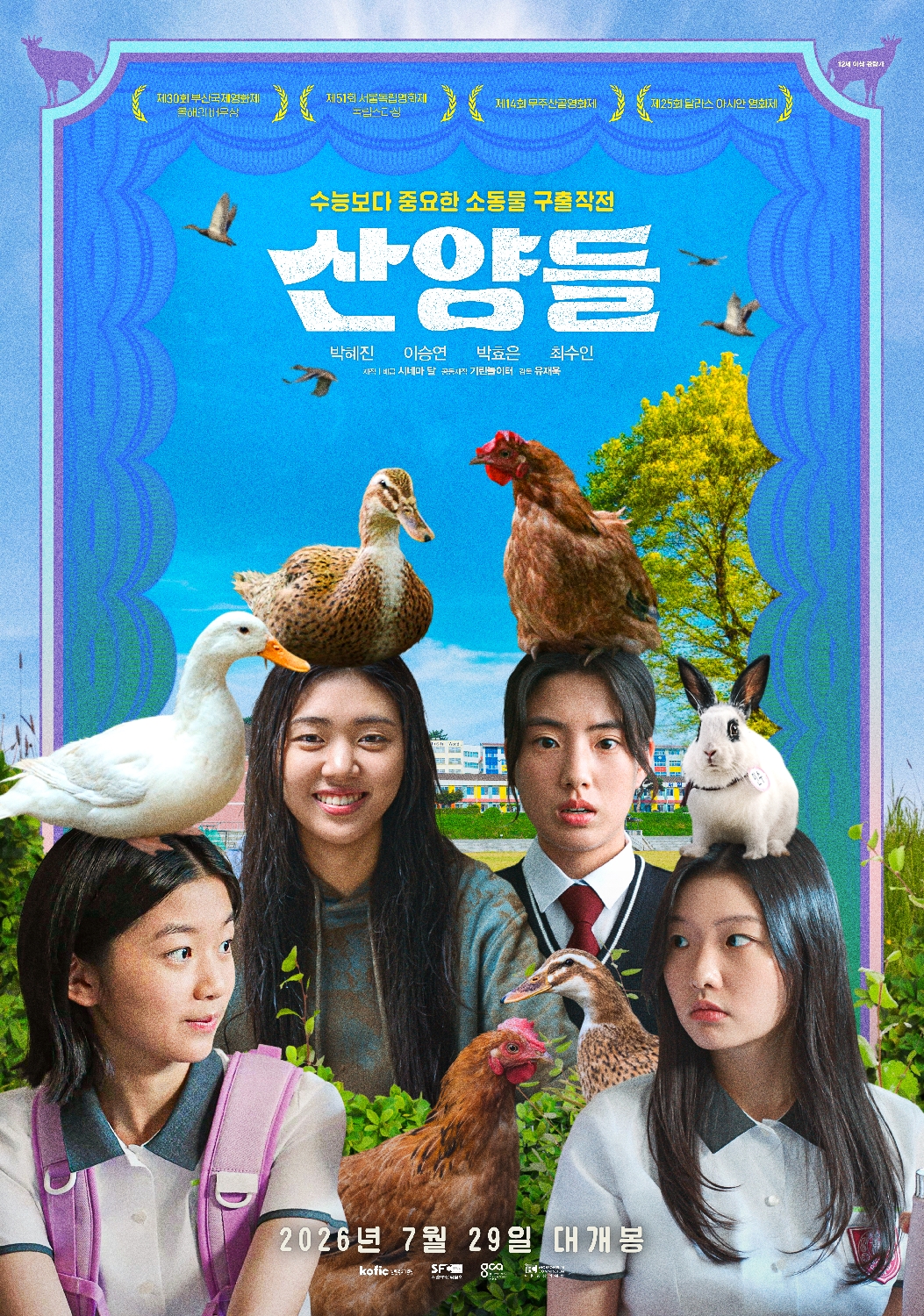
In-hae also tends the school’s small “zoo” consisting mostly of domesticated livestock such as ducks, chickens, and geese alongside a few bunnies. She tells Seo-hee, who is obsessed with prepping for an oncoming disaster, that her dream is to become an influencer and get on the cover of Time magazine even if it’s for doing something nefarious. The girls start posting pictures and videos of the animals, but this only seems to lead to complaints coming in with the school suggesting they may close the zoo altogether. To save their animal friends, the girls decide to set up camp in the woods on their own, building their own farm as a kind of teenage utopia free from parental or hierarchal pressures.

In someways, this desire to retreat is also another way of staving off impending adulthood or the need to make serious decisions about their lives and futures. But it also reflects a new desire among younger people to live in a simpler way, sidestepping the rat race in search of greater personal fulfilment and work that feels as if it’s worth doing rather than just simply being what you do to qualify as a bona fide member of society. The “shelter” they construct is for the animals who face the prospect of being put to sleep with no one to care for them, but it’s also for themselves too as they try to find somewhere they can just be themselves.

Each of the girls is in some way unconventional which might make it harder for them to follow the conventional path. In-hae has secretly been dating a popular boy who won’t go public with their relationship because he’s running for class president and is worried that girls won’t vote for him if they think he’s unavailable. It soon becomes clear that he too is a symbol of the conventional, patriarchal society from which In-hae wants to escape. He tracks the location app on her phone and behaves in a controlling fashion. “You used to listen to me well,” he ominously says after In-hae starts hanging out more with the other girls while trying to pressure her to stick to the conventional path by doing exactly as he tells her to do.

But part of the problem is that, as the girls say of escapee duck Hee-soo, they’ve been raised in a cage and don’t know how to live outside it. Nevertheless, Hee-soo seems to take to life in the wild with confidence and assurance. The name the girls choose for themselves is “The Gorals” after a kind of wandering mountain goat pushed out of its natural habitat by modern civilisation but still finding new ways to live. Adults may try to tear down their sanctuary, but they can simply rebuild it somewhere else. Though facing different issues from overprotective parents, complicated family situations and feelings of abandonment, to impending apocalypse and a terrible boyfriend torpedoing your parents’ business to increase his own success, the solidarity that the young women eventually discover gives them the sense of confidence they need in progressing to the next phase of their lives while following their own paths rather than those set down for them by others.


The Gorals screened as part of this year’s London Korean Film Festival.

Trailer (Korean subtitles only)
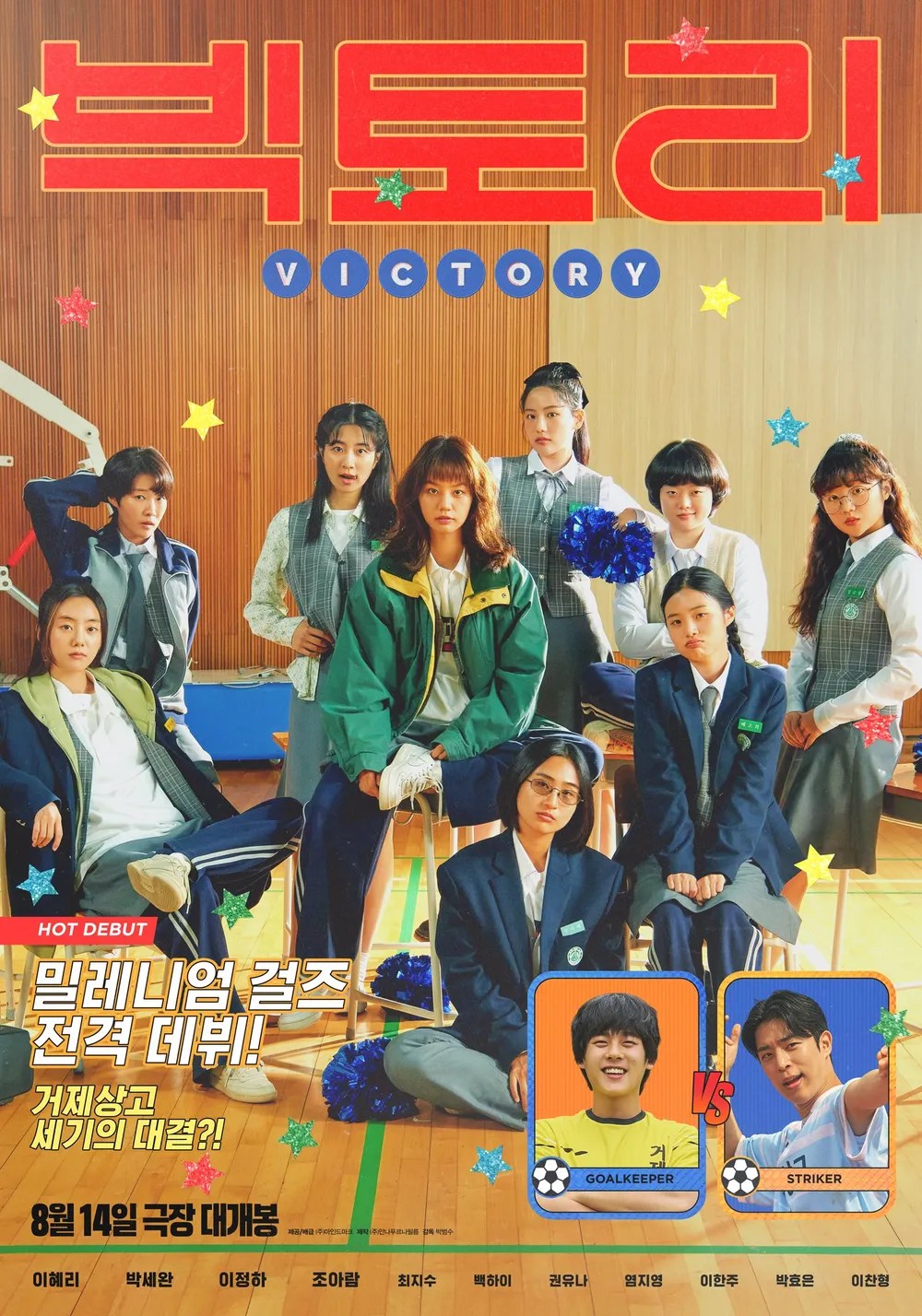
Victory (빅토리, Park Beom-su, 2024)

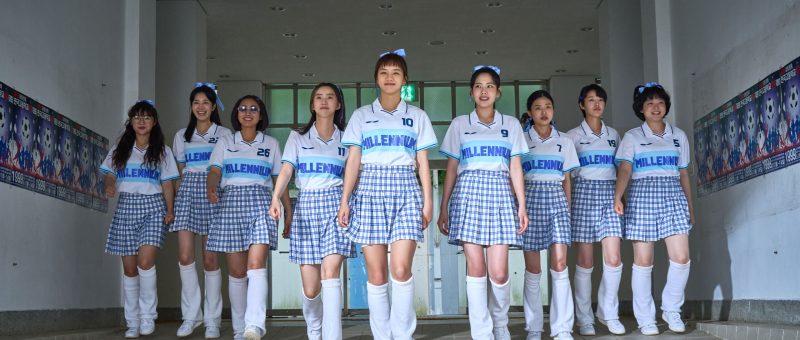
At the end of Park Beom-su’s millennial coming-of-age drama Victory (빅토리) there’s a title card quoting scientific data that people perform better with encouragement. In order to get the headmaster to agree to their starting a cheerleading squad so they can use the clubroom for dance practice, the heroine comes up with a ruse that the moribund football team will play 50% better with the cheerleaders encouraging the crowd to shout their support. But of course it’s really the girls who prosper through a process of mutual encouragement and solidarity.

Set in a small town in 1999, the film’s heroines dream of becoming K-pop dancers in glamorous Seoul. Feisty Pin-sun (Lee Hye-ri) doesn’t see much of a future for herself in Geoje much to her father’s consternation and is forever asking to transfer to a high school in the capital though in truth all she wants to do is dance. The deputy-head seems to have it in for her, taking the clubroom away from them and belittling their dancing while Pil-sun and her best friend Mi-na (Park Se-wan) are older than the other kids having been forced to repeat a year after getting into a fight with a rival school at a disco. Cheerleading’s not something they had much interest in until meeting snooty new student Se-hyun (Jo Ah-ram) who’s moved to their rural backwater with her brother who has been lured their as a top scorer for the school’s football team by the football-crazy headmaster. 

The fortunes of the makeshift team are directly contrasted with the protestors at the shipyard where Pil-sun’s father works. Pil-sun’s father seems to be a man beaten down by life. He’s taken a managerial position but finds himself conflicted in the midst of a labour dispute with his bosses pressuring him to name the ringleaders of the strike so they can shut the protests down. Faced with unfair and exploitative conditions, the men are protesting for basic rights such as not being forced to work overtime  and weekends and having a right to time off. Pil-sun’s father may agree with them, but doesn’t want to risk his job and tries to placate both sides with a spinelessness that later appears cowardly to his daughter Pil-sun. Perhaps as a single-father, he’s mindful of the necessity of keeping his job but otherwise appears obsequious and willing to debase himself in the service of a quiet life. When Pil-sun is once again in trouble in school, her father drops to his knees and apologises much to Pil-sun’s embarrassment.

Yet like the shipyard workers, the girls fight in unity if in this case for cheerleading success. This is after all a synchronised sport that requires the team to act as one. Though they may not universally get on initially, interactions with the team help each to realise their special talents and give them additional confidence to dance their way into a future of their choosing. Meanwhile, they’re each faced with a millennial dread that now seems nostalgic in its references to Y2K and the end of the world. There may not be very much for them in this small town, but there is at least each other along with their burning desire to succeed. 

It’s this  infectious sense of determination that really does seem to improve the atmosphere in this gloomy environment, the protestors also joining in their routine while Pil-sun’s father eventually gains the courage to reassess his loyalties. They are each sustained by the community around them, supported and encouraged by their friends and comrades. The point is rammed home by the fact that Se-hyun’s striker brother Dong-hyun (Lee Chan-hyeong) turns out to be something of a disappointment, while goofy goalie Chi-hyung (Lee Jung-ha) proves unexpectedly reliable telling Pil-sun that he prefers to be the last line of defence rather than the pre-emptive strike as he proves by defending her when the gang is hassled by older kids from another school. With a series of knowing meta jokes (“Girls’ Generation.” “That sounds so dumb.”), Park piles on the sense of nostalgia for a perhaps more innocent turn-of-the century world but equally for the gentle days of youth as the teens dance their way through hardship and heartbreak bolstered by their unbreakable bonds and sense of hopeful determination for brighter futures that are theirs for the taking.


Victory screens Nov. 12 as part of this year’s San Diego Asian Film Festival.

Original trailer (English subtitles)