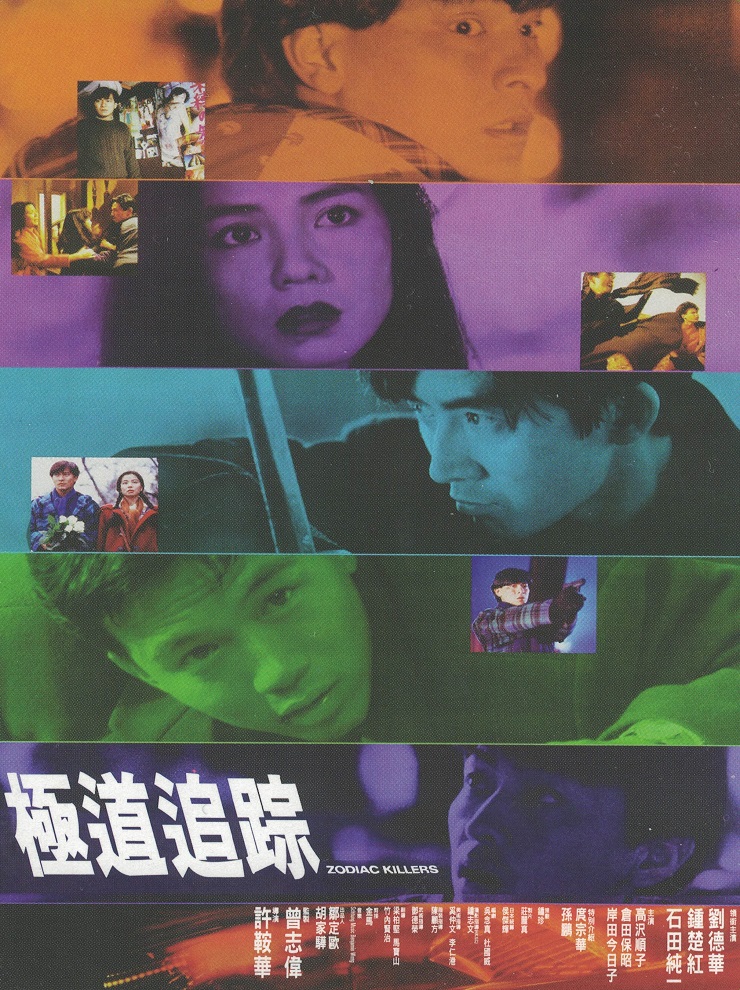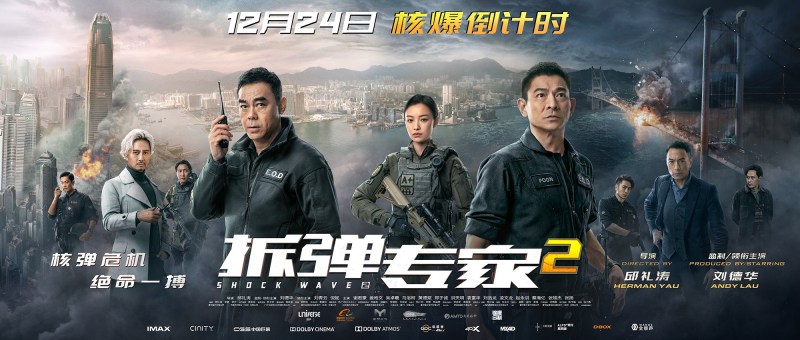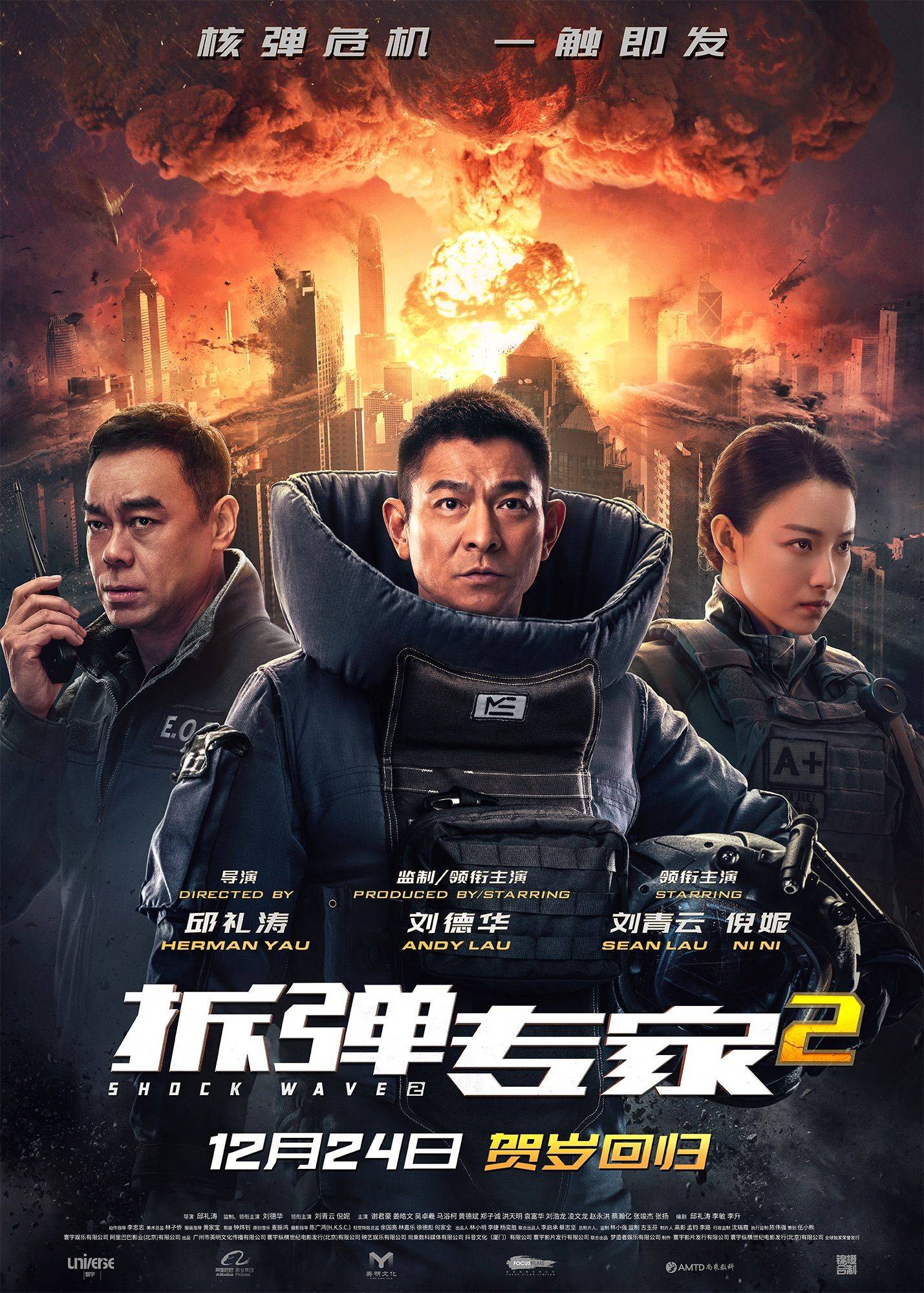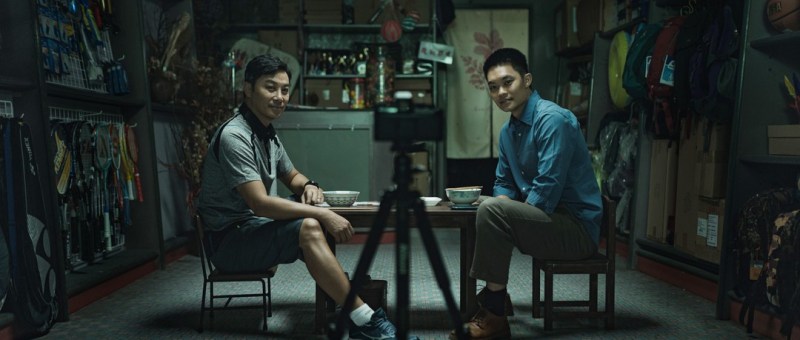
Shock Wave 2 (拆彈專家2, Herman Yau, 2020)

“Anger can destroy everything” according to the voiceover opening Herman Yau’s Shock Wave 2 (拆彈專家2), a thematic sequel to the original Shock Wave once again starring Andy Lau as a Hong Kong police bomb disposal officer battling serious threat to the island’s transport infrastructure but also picking up themes from the pair’s subsequent collaboration White Storm 2 in which the veteran actor had starred against type as a Batman-esque billionaire vigilante fighting a one man war on drugs. The villains here claim they want “change”, but in reality want little more than to burn the world, enraged by its refusal to recognise or remember them consumed as they are by wounded male pride. 

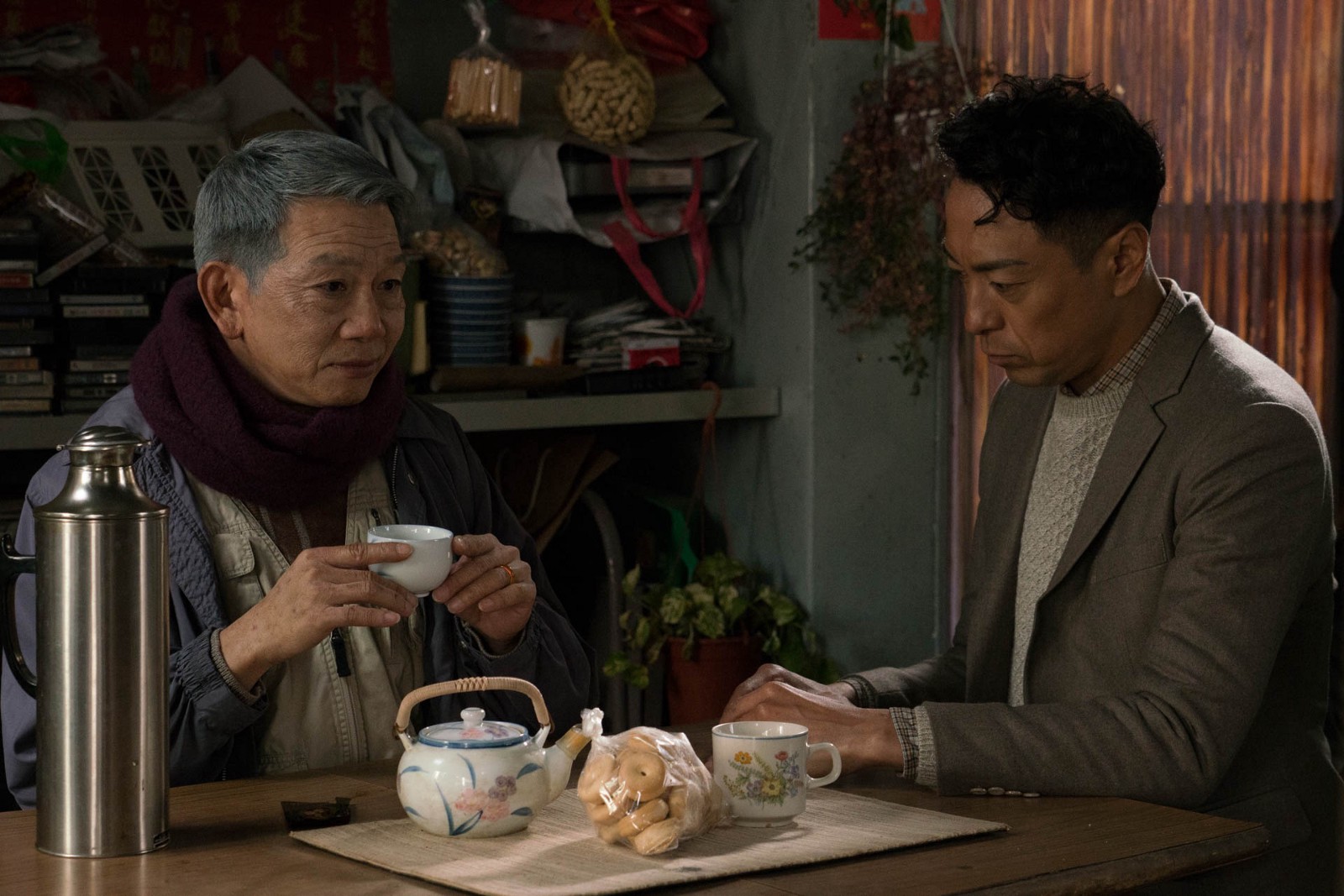
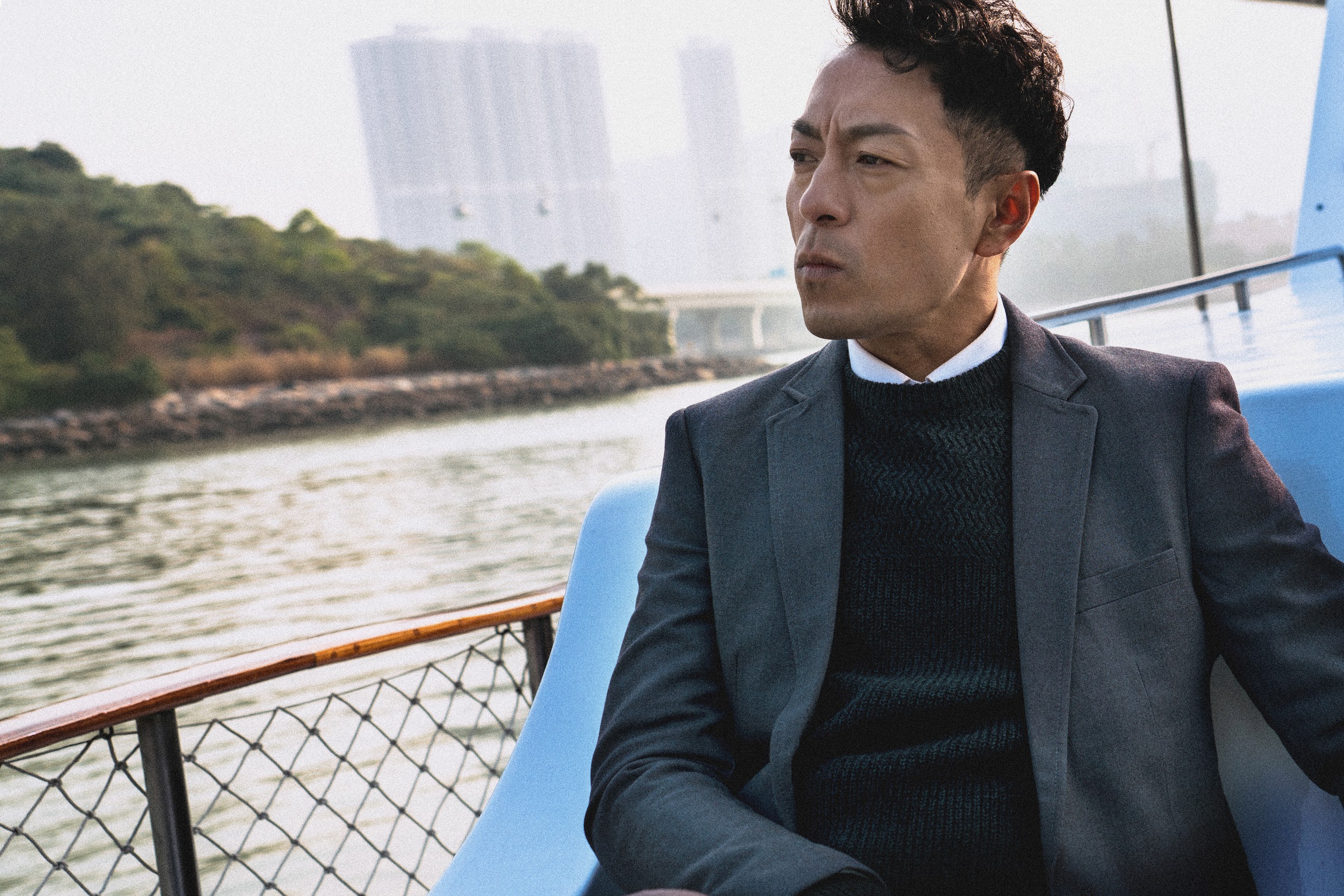
The hero, Fung (Andy Lau Tak-wah), finds himself suffering from amnesia after encountering the second serious accident of his professional life. When we first meet him, he’s essentially playing the same role as the first film, a cheerful, slightly cocky bomb disposal expert with a potentially reckless streak born of his willingness to risk his own life to save those of others. When he’s injured on a job, tricked by a random booby trap while trying to free a trapped cat, and loses his leg he reacts with characteristically upbeat stoicism quickly adjusting to his new prosthesis and determined to get back to work, training intensely with the help of his friend Tung (Sean Lau Ching-wan) who was also injured in the same blast only not so seriously. Despite passing all the fitness criteria Fung is fobbed off with an offer of a desk job in police PR, refused a return to the bomb squad as the panel quite openly admit not so much because they feel his disability impairs his ability to do the job as they fear public blowback should something go wrong and they be blamed for having hired a disabled person in the first place. 

It’s less a sense of discrimination than unfairness that fuels Fung’s growing sense of anger and resentment not only towards the police force but towards society in general which he now feels regards human beings as little more than disposable tools. He rejects the sense of himself as “disabled”, internalising a sense of societal shame keen to remind everyone that he is not impaired proving himself capable above and beyond the force’s criteria but is still rejected while Tung, who suffered only minor burns, is permitted to return to duty and even gets a promotion. His friends later recount that he became a different person after the accident, angry and embittered as if at war with the world. 

Yet after encountering a second accident, Fung loses his declarative memory which is to say he still has his everyday skills such as walking around (including using a prosthesis), getting dressed, brushing his teeth, using a computer and presumably the mechanics of bomb disposal but no longer remembers his own name or how he ended up in hospital now at least implicated in an act of major terrorism. Without his memories, Fung is a blank slate, freed from all the trauma and resentment that may have pushed him towards the dark side and returned to the innate goodness of a soul untouched by the world’s cruelty. The question is, which way will he turn, back towards the darkness or further into the light as the Fung they once new who willingly risked his life for others? In any case, he finds himself potentially misused by his well meaning ex Pong Ling (Ni Ni) who engages in some dubious psychology involving false memory implantation to convince him that he’s been working for the Hong Kong police undercover, hoping to engineer a softer landing for him than the realisation that he may be responsible for the deaths of at least 18 people as a member of an anarchist sect going under the apt name of “Vendetta”. 

Like Fung, the leader of Vendetta is an angry man resentful of having been forgotten by someone he cared about who had simply grown away from him. He rages against the world partly as a consequence of his aimless privilege having discovered his wealthy family made their money peddling opium with the assistance of the colonial authorities, but also as a direct result of childhood bullying and frustrated male friendship. Vendetta claims it wants to stop the world from getting “worse”, but all it really has is anger and the intense hurt of wounded pride. These men refuse to be “KO’d by this sick society” but in the end all they want is to be seen, to be recognised and remembered. To ease their sense of belittlement and impotence, they plan to burn the world by literally severing connections with it. 

Yau takes aim at the various systems which generate this kind of anger, hinting at the shockwaves of ingrained societal discrimination even if Fung internalises a sense of stigmatisation in his intense need to prove himself free of “disability”. Robbed of his memories, Fung’s anger dissipates allowing his natural capacity for selfless heroism to resurface along with a healthy desire to reflect on his own behaviour, at least as much as can he rely on the sometimes duplicitous vagaries of memory both his own and that of others as he searches for the truth of himself and his “vendetta” with the world. Torn between risking his life to save others and blowing it all to hell, Fung ends up doing both, sending shockwaves throughout his society in a deeply ambivalent act of personal and societal redemption. 


Shock Wave 2 is available to stream in the UK until 12th May as part of the Chinese Cinema Season. It will also be released on DVD/blu-ray on 7th June and digitally on 14th June courtesy of Cine Asia.

UK release trailer (English subtitles)

Ready O/R Knot (不日成婚, Anselm Chan, 2021)

After two people have been together a significant amount of time, it might start occurring to others that really they ought to be married. Perhaps it even starts occurring to one or both of the two people too, but should you really make such a big decision based only on the fact that it’s the done thing rather than something you actively want to do? That’s a dilemma that presents itself to the young couple at the centre of Anselm Chan’s marital farce, Ready O/R Knot (不日成婚). While she would like a further degree of certainly in their relationship, he fears commitment along with a loss of freedom and authority as a family man with responsibilities perhaps greater than he feels he can bear. What ensues is an accidental battle of the sexes as each partner teams up with their respective allies to trick the other into going along with their plan. 

Guy (Carlos Chan Ka-Lok) and Ho-yee (Michelle Wai Si-Nga) have been together for five years after meeting at the wedding of Guy’s friend Grey Bear (Chu Pak Hong) and Ho-yee’s bestie Jen (Hedwig Tam Sin-yin). Grey Bear and Jen now have two children, but there is already an air of superficial duplicity in the relationship, Grey Bear using his friends to help him visit illicit sex services in Macao in rebellion against the tyranny of marriage. While the women quietly suggest to Ho-yee that it’s time they got married and left to his own devices Guy will continue to drag his feet, the guys are are determined to dissuade him viewing it somehow as a defeat of masculinity. They fear being tied down and mock other men for being in thrall to their wives while the women seem to fear that their men are duplicitous and unreliable and that therefore they need this additional level of protection. Nevertheless, the moment the marriage debate has begun, the relationship undergoes further strain and scrutiny even as each party descends into sometimes worryingly unethical levels of scheming in order to get their own way. 

It has to be said that for much of its run time, Ready O/R Knot reflects some extremely sexist, hopefully outdated social attitudes while making occasionally off-colour jokes about domestic violence and drugging one’s spouse without their knowledge or consent. At a low moment, Guy finds himself swallowing a morning after pill and thereafter gaining a sudden empathy for women on experiencing what he assumes is akin to period pain, lying on the sofa clutching a copy of Marie Claire while his friend who has also taken one in solidarity eats chocolate ice cream directly from the carton. Grey Bear thinks he was tricked into marriage by Jen’s plan to seduce him to forego protection thereby engineering an accidental pregnancy, which is why Guy has been avoiding intimacy with Ho-yee hoping to avoid being “trapped” in the same fashion. 

A perpetual man child, Guy resists the trappings of adulthood, reluctant to sell his two-person scooter and learn to drive a family car while remaining obsessed with football, his PS4, and hanging out with his sleazy, sexist friends. As the crisis intensifies, however, it leads Ho-yee towards a more progressive realisation, advised by her wise old grandmother (Siu Yam-yam) that she should learn to put herself first for a change and strive for her own happiness rather than that of her man. Guy begins to realise what he’s at risk of losing, but his late in the game epiphany isn’t in the end enough to repair the damage his diffidence has caused, returning agency once again to Ho-yee who has learned to ask for more, that her own hopes and desires are just as important as Guy’s, and that “marriage” is not in itself “the point”.

Buried underneath some of those sexist attitudes is a basic fear and tinge of toxic masculinity as Guy realises his reluctance is partly insecurity that he’ll fail as a husband, unable to “provide for” (apparently something he regards as a male responsibility, simultaneously mocking Grey Bear for living off his wealthy wife) Ho-yee or to make her truly “happy”. Only after undergoing a humbling and being willing to pursue the relationship on a more equal footing is he finally given a second chance, noting that Ho-yee should not be expected to sacrifice herself for their relationship to succeed while he has resolutely refused to invest in their mutual future by clinging to his individual past. Simultaneously cynical about the institution of “marriage” yet somehow eager to believe in the power of love and commitment, Ready O/R Knot takes a moment to make up its mind but in the end comes down on the side of equality in romance as its warring lovers eventually call a truce in rediscovering what it is that’s really important. 


Ready O/R Knot screens at Chicago’s Lincoln Yards Drive-in on May 2 as part of the 12th season of Asian Pop-Up Cinema.

Original trailer (English / Traditional Chinese subtitles)

I Still Remember (二次人生, Lik Ho, 2021)

“I didn’t want to be left alone” admits the hero of Lik Ho’s sporting drama I Still Remember (二次人生) as he watches others his age pull relentlessly ahead of him while he languishes behind drained of all energy and sense of forward motion. Yet reuniting with an equally disillusioned father figure and a young woman battling a different sort of malaise, he eventually comes to realise that he’s never really been “alone” at all but has perhaps suffered a kind of self abandonment, standing on the sidelines cheering for everyone else but failing to cheer for himself or realise that others are in fact attempting to cheer for him only he couldn’t hear them. 

Now around 30, Lee Chi-hang (Tony Wu Tsz-Tung) has an unsatisfying job in real estate working for his childhood best friend (Johnny Hui) which is just as well because he’s regarded by many as the office dead weight and most of his colleagues are running bets on when he’ll eventually be fired. Raised by a single mother (Michelle Lo Mik-Suet), his father having passed away before he was born, Chi-hang was brought up to believe an “ordinary life” was good enough but also feels guilty that he hasn’t made good on his mother’s hopes for him and despite having attended university has no real sense of ambition in life. “How can you be so useless?” his exasperated girlfriend (Sofiee Ng Hoi Yan) eventually asks him, abruptly exiting his life as she leaves to pursue her own personal growth and fulfilment tired of waiting for Chi-hang to step up. 

Attending a reunion for his primary school class brings him back into contact with Mr. Wong (Patrick Tam Yiu-Man), his former PE teacher who had also been something of a surrogate father as he and his wife often looked after him while his mother worked. Mr. Wong it seems has troubles of his own in that his wife Wai-Ying (Isabel Chan Yat-Ning) is suffering with a longterm illness which is why he’s given up teaching and opened a sporting goods store which is itself floundering. Bamboozled into taking part in Mr. Wong’s camping trip, Chi-hang finds himself enlisted to help mentor a young woman, Tin-sum (Toby Choi Yu-Tung), who wants to lose weight and triumph in a 5k race in the hope of winning a trip to Japan to meet her idol, a handsome Japanese pop star (Alston Li Ka-Ho). 

Unlike Chi-hang, Tin-sum is not “alone” in that she appears to have a pair of extremely loving and supportive parents who let her know that whatever happens in the race they’re proud of her all the same. Yet she also finds herself on the receiving end of social prejudice, rejected by the mean girls in her idol fan club who arbitrarily introduce a weight limit for race entrants in order to “preserve the image of Hong Kong” while the competition also provokes a falling out with her best friend (Jocelyn Choi Zung Sze) who ends up siding with the bullies. Chi-hang meanwhile admits that he doesn’t really take his mentoring duties very seriously, too busy “running away” from his own problems to be much use in tackling anyone else’s.  

Yet through picking up the pace, each of the beleaguered runners begins to find direction in the finish line. Rediscovering the sense of joy and possibility he had as a small boy in primary school, Chi-hang realises that he’s never been as alone as he thought he was, all of the people in his life have been running at his side all along rooting for his success. While Tin-sum gains a new sense of self-confidence in finishing out her 5k without being pressured to lose weight or give up her appetite for life, Mr. Wong finds a sense of relief in being able to pass on the baton to a surrogate son in the now more self-assured Chi-hang finally figuring himself out and taking control over his future. Atmospheric shots of the nighttime city filled with a sense of melancholy alienation give way to poignant flashbacks of cherry blossom in bloom outside the primary school where Mr & Mrs Wong first met and bonded with little Chi-hang, while he realises that he does indeed “still remember” the sense of security, positivity, and energy he had as a child as he steps up the pace building the “ordinary life” his mother had envisaged for him. 


I Still Remember streams in the UK 31st March to 6th April as part of Focus Hong Kong. Readers in Chicago will also have the opportunity to catch it at Lincoln Yards Drive-In on April 17 as part of Asian Pop-Up Cinema’s Season 12.

Clip (English subtitles)

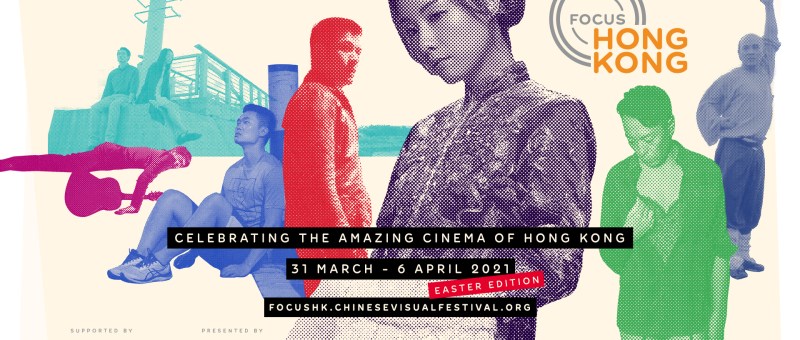
Focus Hong Kong Returns for Online Easter Edition

Following the successful Chinese New Year edition, Focus Hong Kong is back for Easter with another fantastic selection of recent, and not so recent, cinema hits from Hong Kong streaming in the UK from 31st March to 6th April including six features (four contemporary and two classics) along with another round of Fresh Wave Shorts.

I Still Remember

A dejected real estate agent, a young woman hoping to lose weight to run with her idol, and a retired PE teacher trying to keep a promise to his late wife find direction in running in Lik Ho’s sporting drama.

Beyond the Dream

Traumatised romantics struggle to move beyond the dream of love in Kiwi Chow’s elegantly composed romantic psychodrama. Review.

My Prince Edward

(C)My Prince Edward Film Production Limited

A young woman begins to consider her choices when her controlling boyfriend proposes and she’s forced to deal with the fallout from a sham marriage in Norris Wong’s humorous exploration of contemporary relationships. Review.

Tracey

50-something Tai-hung is a married father of two grown-up children living a conventional life in contemporary Hong Kong, but a phone call informing him that a childhood friend has passed away forces him into a reconsideration of his life choices and a long delayed acceptance of a transgender identity in Li Jun’s moving drama. Screening in collaboration with Queer EastReview.

Throw Down

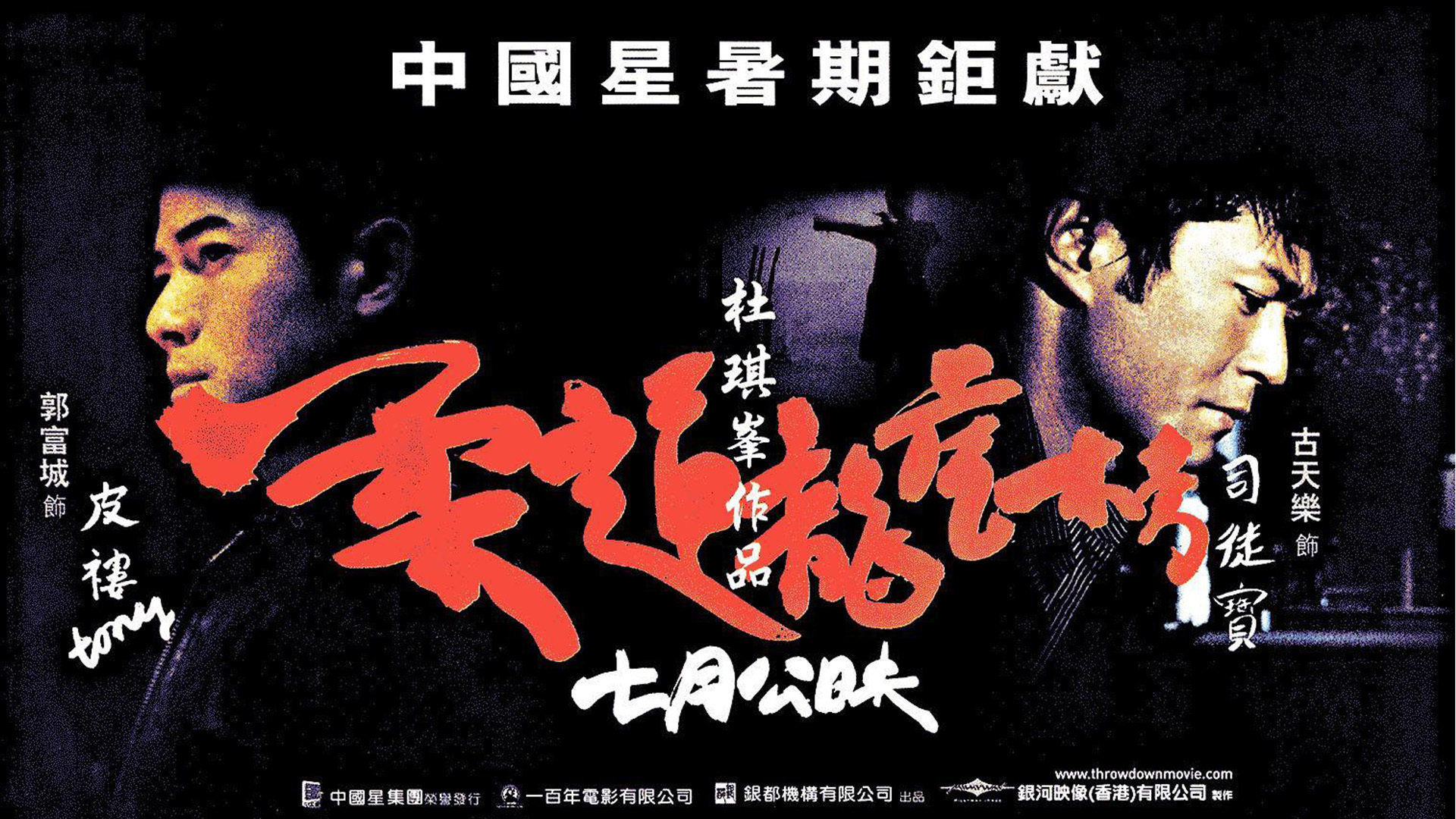
Louis Koo stars in Johnnie To’s 2004 classic as a former judo champ turned depressed barman unexpectedly challenged by Aaron Kwok’s young tough and former rival Tony Leung Ka-fai while his ageing mentor also enlists him to save the failing dojo and a girl from Taiwan needs his help to shield her from evil gangsters.

Once Upon a Time in China

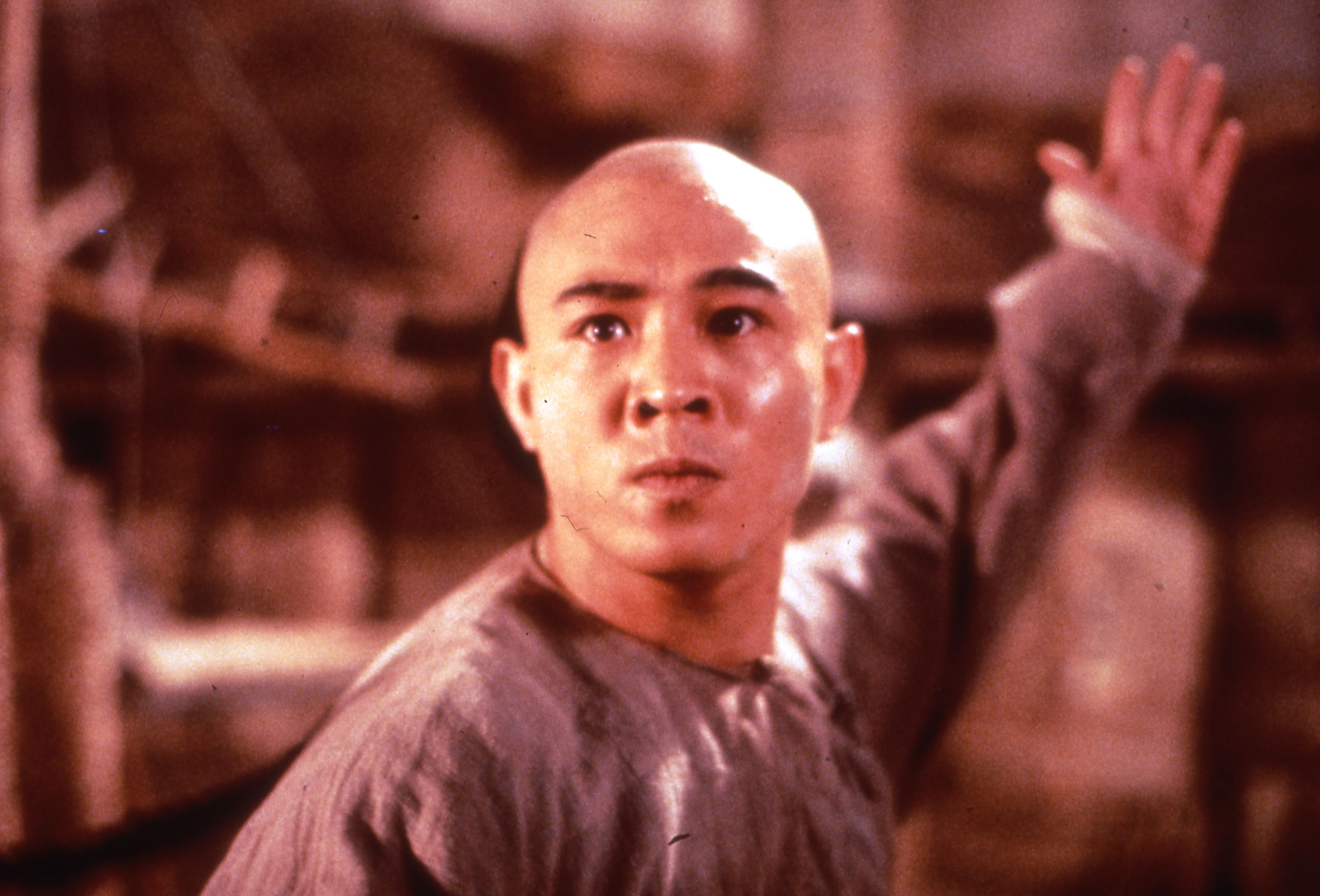
Tsui Hark’s classic 1991 take on the legend of Wong Fei-hung and first in the cycle of films starring Jet Li as the umbrella wielding martial artist.

“Tickets” are on sale now via the official website for the reasonable price of £2.99 for features while shorts stream for free and an all access pass is also available for £8.99. You can keep up to date with all the latest news via the official websiteFacebook PageTwitter account, and Instagram channel.

The Way We Keep Dancing (狂舞派3, Adam Wong, 2020)

In a Hong Kong already under threat, a small community of artists finds itself torn over how best to preserve their culture and way of life amid the seemingly unstoppable wave of gentrification that threatens to engulf them in Adam Wong’s quasi-sequel to his 2013 hit The Way We Dance, The Way We Keep Dancing (狂舞派3). Cheekily titled The Way We Dance 3 in the original Chinese, The Way We Keep Dancing takes place in an alternate reality in which a part two has already been released and follows the fortunes of alternate versions of the earlier film’s stars as they each fight their own battles while finding themselves conflicted over the future direction of their community. 

As the film opens, rapper Heyo (Heyo) receives a tip-off from a friend that the disused industrial building in which he and others are illegally squatting is about to be raided by the police. Later talking to a journalist, he explains that the “apartment” only has a sofa because sleeping there would technically be against the code of usage for former industrial buildings, though it’s obvious that he does indeed “live” there. A member of the “KIDA” (Kowloon Industrial District Artists) community he like others is acutely aware of the increasing gentrification of the local area which threatens to push bohemian artists like himself further out of the city. Yet no one seems to have come up with a united means of resistance, previous protests apparently having proved largely ineffective. 

It’s perhaps for this reason that he, along with the dance stars “returning” from the first movie, is later convinced to begin working with the Urban Renewal Bureau on a new project entitled “Dance Street” which, they are told by YouTuber mastermind Leung (Babyjohn Choi), will bring public attention to the local dance subculture and give them greater leverage to preserve their place within the community. Not all are convinced, however, with other local artists deriding them as sell outs conspiring with the developers who are, after all, subverting everything they stand for in repackaging hip hop and street culture to make it marketable to a mainstream audience of the kind that will eventually be buying and investing in the upscale apartments they presumably plan to build after tearing down disused industrial structures. This conflict comes to the fore when Leung gets the gang involved in promoting a new “Hip Park” which will apparently have a skate bank and graffiti area crassly commodifying the unique creative spirit of the Industrial District while deliberately confining it to a single location, sanitised and controlled. 

Meanwhile, aspiring dancer Hana (Cherry Ngan Cheuk-ling) has become a minor star since the release of The Way We Dance and its sequel, a popular celebrity with a small internet following. Somewhat naive and swept along alternately by her agent Terese and the persuasive Leung, she finds herself torn between her loyalty to her old dancemates and the demands of her rising fame. Terese makes it clear that the agency is only really interested in her while she keeps trying to find opportunities for her friends but also finds herself an accidental figurehead of the Dance Street movement because of her minor celebrity. Like others she is convinced that collaboration is the answer, not quite understanding its duplicities until directly confronted by the odious “call me Tony” head of the development board who embarks on a crass down with the kids routine in order to sell his new brand as a hip urban space for trendy young professionals while the artists are pushed even further into the margins. 

There is perhaps a further meta commentary to be read into Wong’s gentrification debate in the light of Hong Kong’s changing status and relationship to the Mainland in which many feel the local character and culture is being slowly erased. In any case, though including a series of large-scale set pieces, Wong concentrates less on dance than the plight of the KIDA community shooting shaky handheld footage of Heyo as he wanders the city in search of inspiration but encounters both hostility and disappointment from his fellow artists before eventually making the decision to rebel against the Dance Street project and his own unwilling complicity with its slightly dubious aims. Nevertheless, even if slightly ambiguous Wong eventually returns his dancing heroes to their roots as a small boy whose dreams may have been dashed by Leung’s thoughtless machinations dances defiantly amid the ruins . 


The Way We Keep Dancing screened as part of the 2021 Osaka Asian Film Festival.

Original trailer (English / Traditional Chinese subtitles)

Images: Golden Scene Company Limited © 2020

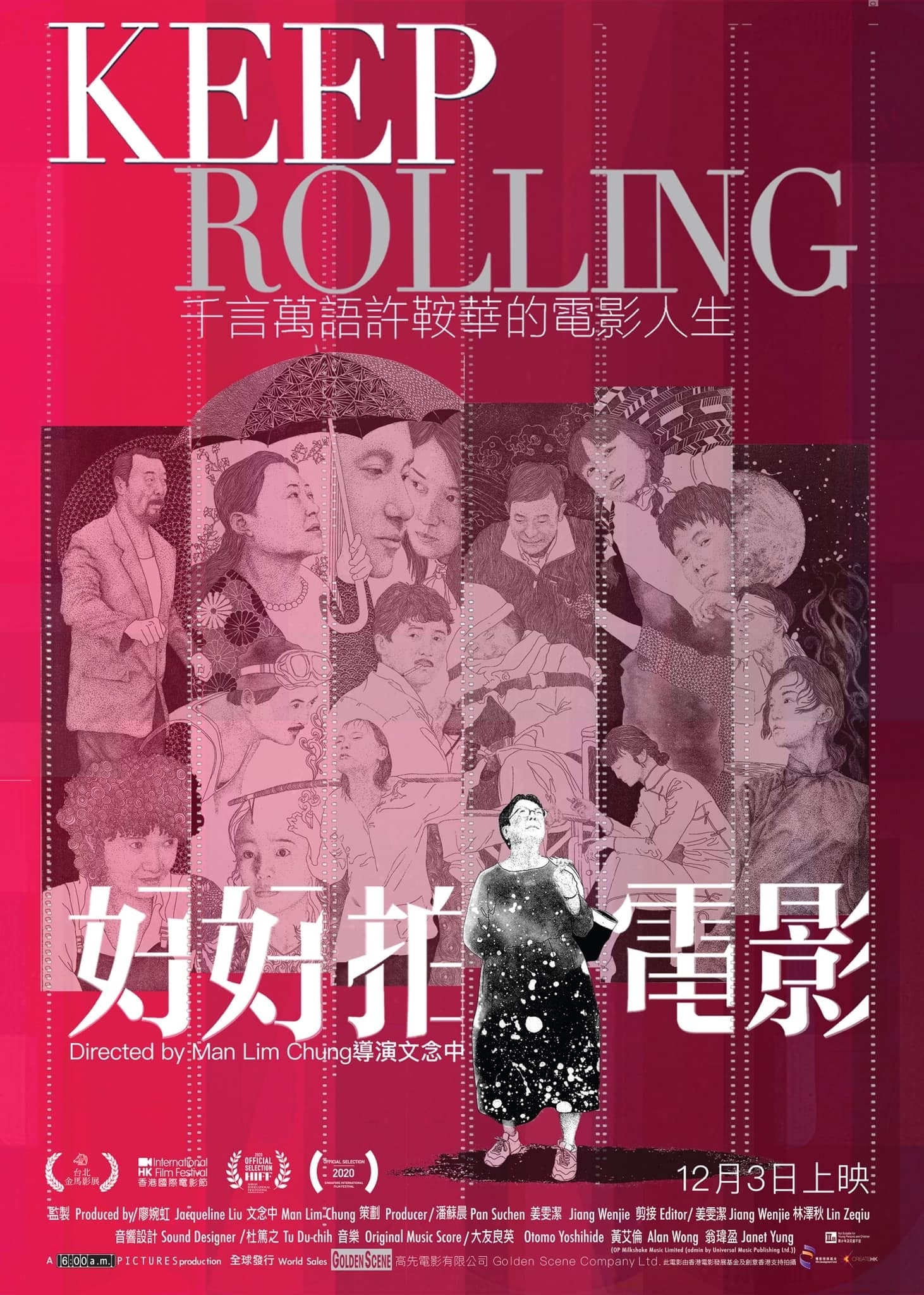
Keep Rolling (好好拍電影, Man Lim-Chung, 2020)

In recent years a festival darling, Ann Hui picked up the Golden Lion lifetime achievement award at the 77th Venice Film Festival yet there have been plenty of ups and downs in her 40-year career as Man Lim-Chung’s candid documentary Keep Rolling (好好拍電影) makes plain. Making his feature directorial debut, Man has been a frequent Hui collaborator as production designer and art director since July Rhapsody in 2002 and follows Hui from the production of 2017’s Our Time Will Come right up to her Golden Lion acceptance speech featuring both behind the scenes footage of Hui directing and direct to camera interviews from herself and other Sinophone directors including Stanley Kwan, Tian Zhuangzhuang, Jia Zhangke, Fruit Chan, Tsui Hark, and Hou Hsiao-Hsien. 

What quickly becomes clear is Hui’s ready willingness to face herself. She makes no secret of her on-set frustrations, Man cutting to footage of her irritated with an assistant director while another director recalls an incident from earlier in her career in which she lost her temper with her creative team only to turn up the next morning with tea and pineapple buns by way of an apology. By contrast, she is also described as unusually flexible in her working practices, willing to listen to the opinions of others and change her mind if convinced rather than stubbornly insisting on perfection or getting the image first in her head. Though she is often direct and forthright, making it plain to a PR that she won’t go on stage just to say a few meaningless words while reminding another that she’s not as young as she was and the schedule of in-person appearances is becoming unmanageable, she is also cheerful and energetic always laughing and joking unconcerned with her image and willing to expose an unvarnished vision of herself such as her agonising over a dress to wear to an awards ceremony only to turn up in her regular clothes because she didn’t have time to change after spending all day deliberating with the jury, much to the annoyance of old friend Sylvia Chang who had dressed up for the occasion. 

This is perhaps why she’s been able to weather the storm, philosophically laughing off the low points of her career in which she struggled to make ends meet as having accorded her additional life experience and added to her understanding of the lives of others. “You should treat each film as if it’s your last”, Stanley Kwan remembers her advising him, not for any morbid reason that tomorrow you may be gone but because you may never get the opportunity again should funding dry up which is a definite possibility in ever pragmatic Hong Kong. After recovering from a slump with Summer Snow, she found herself in another after the consecutive box office failures of The Stunt Woman and Eighteen Springs, funding Ordinary Heroes with investments from friends but seeing that too flop leaving her with no offers at all.

Yet as Jia Zhangke points out, an artist cannot care too much about box office and Hui herself comments on her determination to take on stories that matter to her and more recently to contemporary Hong Kong though she also admits that the growing importance of the Mainland market may be disrupting that of the local industry. Her protagonists are loners and outsiders often standing at a crossroads of history, a position pregnant with symbolism reflecting according to some the spirit of Hong Kong always anxious in search of settlement and security. Yet, they also perhaps reflect a sense of herself as a perpetual exile, born in Northern China to a Chinese father and a mother she discovered only at 16 to have been Japanese, thereby gaining new understanding which helped repair their sometimes fractious relationship as dramatised in 1990’s Song of the Exile. Now in her 70s and still working, Hui also cares for her now elderly mother reluctant to pursue the idea of placing her in residential care unwilling to admit the idea of “abandoning” someone while perhaps also reflecting on her experiences filming A Simple Life, inspired by the life of her friend and producer Roger Lee. A vibrant yet uncompromising look at the life and career of a legendary artist who helped to kick start the Hong Kong New Wave and went on to conquer European festivals, Man’s elegantly put together doc ends with the words “Long live cinema” a fitting tribute to woman who has dedicated her life to its continuing evolution.


Keep Rolling opened the 2021 Osaka Asian Film Festival. Viewers in the US will also have the opportunity to stream the film March 17 – 21 as part of Asian Pop-Up Cinema Season 12.

Original trailer (English / Traditional Chinese subtitles)

In the Mood for Love (花樣年華, Wong Kar Wai, 2000)

“That era has passed. Nothing that belonged to it exists anymore.” So runs a melancholy title card placed a little before the conclusion of Wong Kar Wai’s Sirkian melodrama, In the Mood For Love (花樣年華). Extracted perhaps from the hero’s nascent foray into romantic fiction, the lines hint both at his plaintive sense of longing for lost love, and also to a changed Hong Kong which leaves the lovers stranded having missed their moment for happiness and thereafter trapped, like so many Wong heroes, in a perpetual evocation of the nostalgic past. 

Set like Days of Being Wild in the Hong Kong of the early 1960s, In the Mood for Love is in a sense an anti-melodrama concerning itself with the other side of an affair as betrayed spouses find in each other a kind of solace which ironically leads to love but a love that can never truly be fulfilled. Reporter Chow Mo-wan (Tony Leung Chiu-wai) first brushes past secretary Su Li-zhen (Maggie Cheung Man-yuk), sharing a name with the lovelorn box office girl of Days of Being Wild, when he attempts to rent a room for himself and his wife only to discover she has already taken it. The couple next door, however, are also looking to rent out their spare room now their son has married and so the pair find themselves next-door neighbours. Their respective spouses, seen only from behind and heard only on the other end of telephone calls or distantly from another room, eventually become more than that, their affair exposed as much as by their excessive business trips and suspicious overtime as by the rather crass practice of buying identical gifts for the illicit lover and legal partner, something also practiced by Li-zhen’s sleazy boss (Kelly Lai Chen) who enlists her husband to pick up a pair of handbags for wife and mistress. 

Li-zhen’s husband Chan (Roy Cheung Yiu-Yeung) seems non-plussed by the request but it perhaps gives him ideas, though not particularly good ones considering his mistress lives next-door, Li-Zhen pointing out to Mo-wan that a woman might not like a gift of a handbag identical to that of her neighbour before admitting she’s noticed his wife carrying just that, while Mo-wan is wearing the same tie as Chan who claimed it was a present from his boss which is why he’s been wearing it every day. Confronted on a similar point, Li-zhen’s boss makes a point of changing his tie before meeting his wife for a birthday dinner. Male adultery is, it seems, normalised and to an extent permissible as long it remains a secret even if openly. With her husband so frequently away, however, Li-zhen becomes a figure of suspicion, her landlady Mrs. Suen (Rebecca Pan Di-hua) warning her that her late night returns have not gone unnoticed while others marvel at her elegance, unable to accept she’s all dressed up just to buy noodles in the rain. 

For all these reasons, the relationship between Mo-wan and Li-zhen must remain chaste and pure even as they consciously role play their adulterous spouses. “We won’t be like them” Li-zhen insists, later echoed by Mo-wan’s admission that “I thought we wouldn’t be like them, but I was wrong.” He wanted to know how it started, and now he does. “Feelings can creep up just like that. I thought I was in control” he remarks in a speech which seems to echo Celia Johnson’s shattering revelation in Brief in Encounter “I didn’t think such violent things could happen to ordinary people”. Like the old busybodies of Coward’s prurient, middle class England, the landlady acts as an enforcer of conventional morality, always on the look out for breach of conduct and believing herself acting in Li-zhen’s best interest even as her admonition leaves her in a moment of virtual collapse, grasping the doorframe for support as her eyes momentarily fill with tears. 

Yet it’s Mrs. Suen’s eventual absence that informs us of a sea change. Years later, in 1966, she’s one of many in an apparent mass exodus fleeing the political instability in the wake of a series of riots against British colonial rule. Mrs. Suen is vacating her apartment to live with her daughter in the US where she may stay indefinitely. The Koos from next-door have already moved to the Philippines to live with their son, laying bare the ongoing expansion of the Hong Kong diaspora. Mo-wan eventually finds himself in Singapore, though fleeing emotional rather than political instability, eventually travelling to Angkor Wat in a failed attempt to exorcise his sadness, while Li-zhen, unable to act on her desires and trapped by patriarchal ideas of conventional morality is, like Happy Together’s Po-Wing, left only with memory living in the metaphorical past of Mrs. Suen’s apartment. Something has changed, a once impossible love may now be possible, but “that era has passed”. The couple have missed their moment, trapped on either side of an unbreachable divide. 

For Mo-wan, “the past is something he could see but not touch” a subject of perpetual longing blurred and indistinct as if seen through a dusty window pane. Working again with Christopher Doyle, Wong’s sweeping cinematography captures Mo-wan’s etherial existence through comparatively restrained composition and use of gentle tracking shots following the lovers as they repeatedly pass each other in shadow on the stairs or wander along the deserted, rainy streets of a midnight city. Like a long slow waltz, In the Mood For Love sends its protagonists spinning back towards opposite sides of the floor, trapped in a world which no longer exists and consumed by an irresolvable longing for the nostalgic past. 


Transfer: presented in the original 1.66:1 aspect ratio though like the other films in the series of 4K restorations featuring the near universal green tint in a significant change for a film known for sumptuous colour and particularly associated with the use of deep reds.


In the Mood for Love is currently available to stream in the UK via BFI Player in its newly restored edition as part of the World Of Wong Kar Wai season.

Restoration trailer (English subtitles)

Happy Together (春光乍洩, Wong Kar Wai, 1997)

4K

“Turns out, lonely people are all the same” according to the hero of Wong Kar Wai’s melancholy handover romance, Happy Together (春光乍洩). A statement cutting straight to the heart of Wong’s sensibility, it at once casts the individual as the universal as a man is forced to see himself from another direction, mirrored in the eyes of his former lover a man he can neither keep or forget. The title’s all too apparent irony becomes plain as the couple find peace only in incapacity, lovers on the run perpetually in search of but unable to attain the image of idealised romance. 

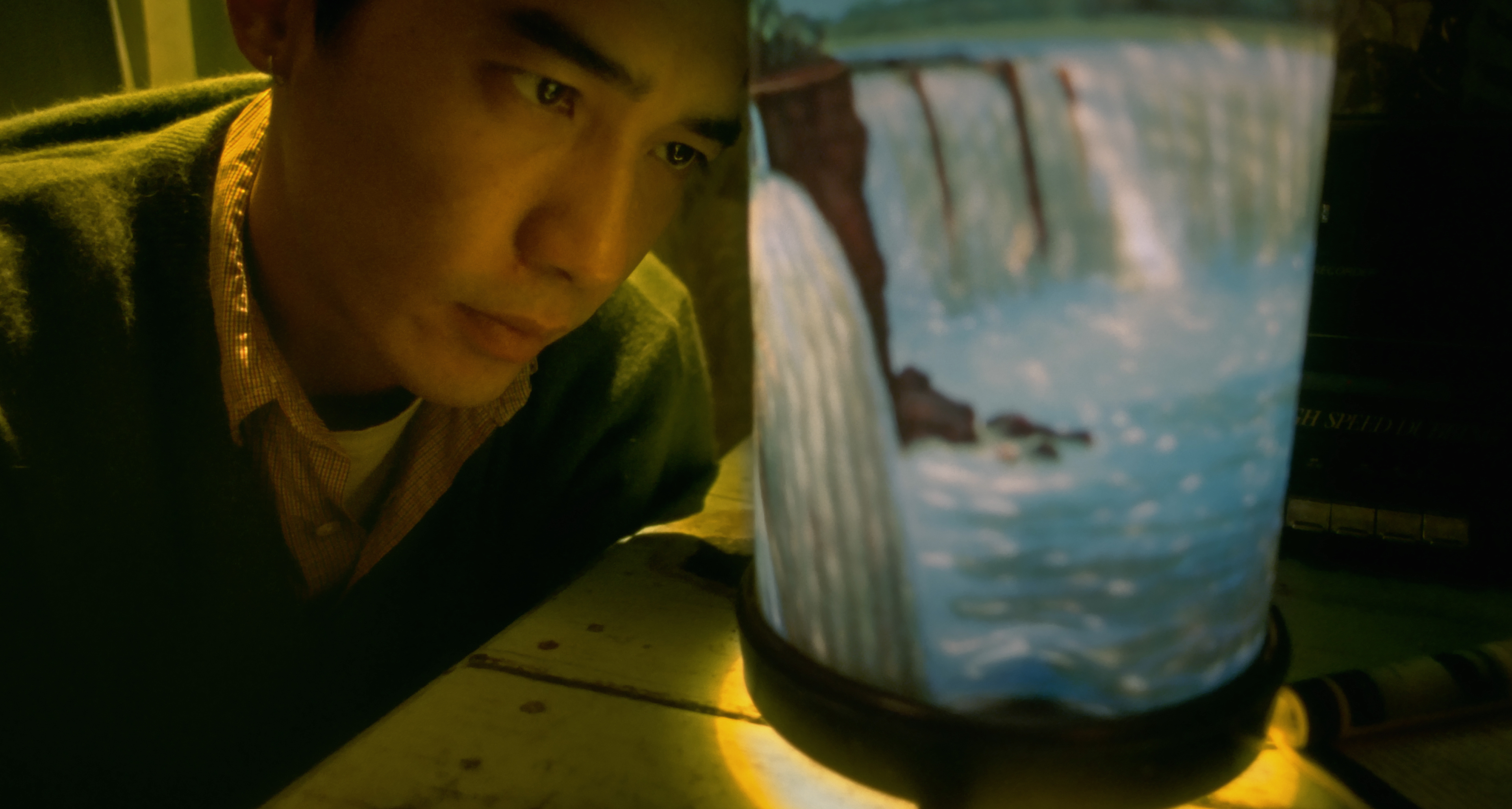
As if to signal his intent, Wong begins with a zoom in on the symbol of the love the two men can never fully realise in the colourful lamp bearing the image of a majestic waterfall they continue to search for but only one of them finds. Switching to a melancholy black and white he shows us for the time at least a semi-explicit sex scene between two men played by two of the biggest stars of the day while the hero, Yiu-Fai (Tony Leung Chiu-Wai), laments in voiceover his tendency to give in when his lover, Po-Wing (Leslie Cheung), utters the phrase “Let’s start over” encapsulating the tempestuous quality of their romance. To do just that, they’ve fled pre-Handover Hong Kong for Argentina in the hope of fixing their relationship but have discovered only more of the same, their contradictory qualities highlighted by their isolation in an unfamiliar environment. 

Tellingly Po-Wing first breaks up with Yiu-Fai on the road after they fail to find the waterfall as if in acknowledgment of the impossibility of mutual acceptance. Both ending up in Buenos Aires the pair awkwardly reunite, Yiu-Fai working earnestly as a bouncer at a tango bar while Po-Wing becomes a sex worker, his sharp outfits and sunshades an immediate contrast with Yiu-Fai’s somber workwear. Nevertheless, when his new life implodes leaving him badly beaten it’s to Yiu-Fai that he returns. By turns resentful, Yiu-Fai will later describe these days as their happiest, those in which Po-Wing was in a sense tethered, incapacitated, and dependent, his worst qualities neutered by his present need. Demonstrative and affectionate, he attempts to rekindle his relationship with the reluctant Yiu-Fai but is soon up to his old tricks again as his wounds begin to heal while strangely jealous as Yiu-Fai develops a friendship with an itinerant young man from Taiwan, Chang (Chang Chen), who works at the restaurant he transfers to after getting into a fight avenging Po-Wing at the tango bar. 

Like Yiu-Fai and Po-Wing, Chang claims he left Taipei because he was “unhappy” and is currently on a journey to the “end of the world”, looking for a lighthouse where it is said the brokenhearted can leave their sadness behind. It isn’t exactly clear if Chang realises Yiu-Fai is gay, seemingly shocked on picking up the phone to hear a man’s voice where he expected a woman’s but saying nothing of it and continuing to frame his conversation in heteronormative terms, though Yiu-Fai certainly seems worried what the fallout might be of Chang’s accidental discovery. Perhaps in flight from an uncertain future in a Hong Kong on the brink of a “reunion” with an authoritarian regime, the two men live freely bathing in the isolation of being two alone together in an unfamiliar culture, but their paths are always set to diverge. Sobbing into Chang’s Walkman, Yiu-Fai bounces to the end of the world and back again, observing the roaring waters for himself before travelling on echoing the footsteps of Chang, representative of another Sinophone nation, coming to realise that his wandering is possible only because he has a place to which he can return. 

Po-Wing, meanwhile, unexpectedly clings to the past, attempting to mend the lamp while living in the apartment he once shared with Yiu-Fai now regretful that they can perhaps never again “start over”. Leaving his sadness at the end of the world, Yiu-Fai extricates himself from a previously toxic relationship in exercising his right to “start over” having accepted the impossibility of his idealised dream of romance. Impassively observing the news of Deng Xiaoping’s death, he travels a nighttime Taipei, apparently resolved to reclaim his home choosing perhaps a kind of rooted independence following Chang’s example as he rides the elevated train into a neon-lit night filled with energy and positivity for the future. Shot with the melancholy greens and woozy ethereality of Wong’s emotional landscape, Happy Together deceptively mines the joys of moving on in a gradual unburdening that spells the end of loneliness.  


Transfer: As the original negative was damaged by fire and could not be fully restored, some of Tony Leung’s monologues have unfortunately been trimmed though the presentation is otherwise more faithful to the original than others in the series if also deepening the greenish tint.


Happy Together is currently available to stream in the UK via BFI Player in its newly restored edition as part of the World Of Wong Kar Wai season.

Restoration trailer (English subtitles)

Fallen Angels (墮落天使, Wong Kar Wai, 1995)

4K

Wong Kar Wai may be associated with a melancholy existentialism but Chunking Express, filmed on the fly in an effort to shake off frustration during the famously difficult shoot on Ashes of Time, had been a breath of fresh air which characterised pre-Handover Hong Kong as a place of anxiety mired in nostalgia but also with tremendous energy and a fervent hope for the future. Its quasi-sequel, however, is the other side of the coin. If Chungking Express’ Hong Kong were heaven Fallen Angels (墮落天使) is its hell. 

As if to signal the connection between the two visions of Hong Kong, the twin protagonists of Fallen Angels each repeat the words of He Qiwu, cop 223, that daily one rubs elbows with a thousand strangers some of whom may later become friends or confidants, but this time around the words spell less of possibility than of a fatalistic inevitability. Indeed, the central drama occurs because melancholy hitman Ming (Leon Lai-ming), tired of his life, yearns for control after years of “lazily” allowing all of his decisions to be made for him. “The best thing about my job is there’s no need to make decisions” he explains, “who’s to die, when, where..it’s all decided by others.” “I don’t know whether it’s a good decision or not” he adds after vowing to make a change, “but at least it’s mine”. 

Good or bad it hardly matters, it is all decided. The protagonists of Fallen Angels live in a kind of purgatory of perpetual longing, looking for a connection which seems to elude them. Ming has been in a non-relationship with his “partner” (Michelle Reis), more of a handler, for 155 weeks, a “dating” method which seems to spell out his preoccupation with time. Despite their long association, however, the pair rarely meet in person, believing that “partners should never get emotionally involved with one another”. That’s something the unnamed partner later comes to accept, explaining that after moving on from Ming she’ll be careful to avoid becoming attached. Mirroring Chungking’s Faye, we find her in Ming’s apartment, sharing his space, tidying up for him, changing his sheets, and repairing his ansaphone but slipping past him at the train station careful that the streams do not cross. Yet she also tells us that sometimes she sits in his favourite seat at their favourite bar because it makes her feel close to him, avowing that sometimes it’s better not to get too close, find out too much about someone and you lose interest. “I know how to make myself happy” she adds, ironically resorting to just that, alone on Ming’s bed while he drifts into another non-relationship with a woman who dyed her hair blonde (Karen Mok) in the hope that it would make her memorable. 

The obsession with blondes recalls Brigitte Lin’s wigged assassin from Chungking Express, another “Blondie” bringing together mute ex-con Ho Chi Moo (Takeshi Kaneshiro), prisoner no. 223 neatly mirroring He Qiwu’s badge number in addition to sharing his nickname and having apparently lost his voice as a child after eating expired tinned pineapple, with his “first love” Charlie Young (Charlie Yeung Choi-Nei) who enlists his help to track down the treacherous young woman about to marry her ex. He later rubs elbows with a changed Charlie, dressed in a stewardess’ uniform ironically mirroring the romantic ending of Chungking Express seconds after Chi Moo’s clumsy mimicking of Faye’s iconic dancing, though she does not remember him. Like Ming, Chi Moo wants control over his life, deciding to be his own boss, but does even this partly out of resignation that his muteness makes it much more difficult to make the kinds of connections he longs to make. He lives parasitically making an illicit living “borrowing” other people’s businesses after hours and intimidating customers into buying his services, eventually losing two father figures in quick succession, thrusting him into an unsought adulthood in which he returns to his former life but tries to pick stronger businesses that won’t “get hurt easily”.

Despite its sense of defeat and melancholy, perhaps even a touch of nihilism, Fallen Angels does however end with a sense of peace and positivity even in that which may or may not be a transitory connection for the gentle warmth it imparts. Collaborating once again with Christopher Doyle, Wong’s underground Hong Kong is a purgatorial dreamland of infinite longing filled with the fatalism of a gangster noir in which there is no future and no freedom only loneliness and death punctuated with brief moments of warmth, but in those brief moments is perhaps a reason for living at least until one’s “expiration date” arrives. 


Transfer: The most radical of the 4K restorations, Fallen Angels is presented in a 2.35:1 aspect ratio, cropped from the 1.79:1 of the original release with the effect that the images appear further constrained while additional distortion occurs at the edges of the frame. In his introduction to the series, Wong offered the following comment on the aspect ratio change:

With Fallen Angels, I have changed the format to CinemaScope, because it was originally what I had intended to release the film in. When we were cutting the film, we accidentally turned the Steenbeck on anamorphic instead of standard. I felt that the film looked much more interesting because the setting[ck] enhanced the distance of the characters on top of the extreme wide angle that we shot with. Back then, it was impossible to shoot a film in standard and release it in anamorphic. With this restoration, we have successfully fulfilled this wish.

Additionally, while the film maintains the distinctive green tint in keeping with the house style of the new restorations, several scenes originally in colour have been regraded to monochrome while others originally in monochrome have been retouched with elements of colour.


Fallen Angels is currently available to stream in the UK via BFI Player in its newly restored edition as part of the World Of Wong Kar Wai season.

Restoration trailer (English subtitles)

Chungking Express (重慶森林, Wong Kar Wai, 1994)

4K

Despite scoring an early success with his debut film As Tears Go By, an atmospheric gangster picture starring some of the most popular actors of the day, Wong Kar Wai’s second feature Days of Being Wild, a melancholy arthouse drama of loneliness and longing set in the heady 1960s, proved disappointing at the box office and divisive with domestic critics. Unable to secure funding for a planned sequel, Wong founded production company Jet Tone Films and agreed to a studio offer to direct a wuxia adventure which was at that time an extremely popular genre. The shoot on Ashes of Time was however notoriously difficult (Wong eventually extensively revised the film for its 2008 “Redux” re-issue), and during a short break from its various demands he shot Chungking Express (重慶森林), an extremely vibrant, zeitgeisty journey through pre-Handover Hong Kong in which a lovelorn policeman is preoccupied with expiration dates while another reflects on new possibilities when his stewardess girlfriend rediscovers her right to make her own choice. 

Lovelorn policeman He Qiwu (Takeshi Kaneshiro), badge number 223, has just been dumped by his girlfriend of five years but as she chose April 1 to break the news, he assumed it was a joke. To go along with it, he’s been buying tins of pineapple which expire on May 1, firstly because his girlfriend May loves pineapple and secondly because May 1 happens to be his birthday. If she hasn’t got back with him by then, he’ll accept that their love has “expired”. A rather melancholy young man, Qiwu gets his emotional release through jogging in the rain, avowing that while running your body sheds water so you don’t cry as much and in the rain no one can see you anyway. The password for his answering service is “love you for 10,000 years”, but his attempts to hook up with old flames from his little black book are a series of embarrassing misfires, the first having turned in early, another already married with two children, and the last not even remembering him. Nevertheless, despite his melancholy he lives in a constant state of possibility as his opening monologue reminds us in his defence of the city as a place in which one may brush past a hundred people a day some of whom may later become friends or lovers. 

Nevertheless, the Hong Kong he inhabits is one of infinite nostalgia. He tells us that his girlfriend is often likened to ‘70s Japanese pop star Momoe Yamaguchi, only to lament that he was never quite her Tomokazu Miura, Yamaguchi’s frequent co-star whom she later married and thereafter left showbiz to become the ideal housewife and mother. The woman that he falls for, a mysterious drug trafficker (Brigitte Lin Ching-hsia) hot on the trail of a group of Indian tailors she’d hired as mules who absconded at the airport, wears a trench coat, blonde wig, and sunglasses seemingly modelled on Gena Rowlands in Gloria. She too however is caught in a moment of crisis, admitting that the sunglasses and raincoat are in a sense an attempt to hedge her bets while the expiry date on an abandoned can reminds her that time is running out. The conclusion Qiwu comes to is that to May he is no different to a can of pineapple, past his best and fit to be abandoned, while the mysterious woman eventually implodes her assumed identity by taking her revenge and thereafter shedding her trademark wig to recede back into the crowd pausing only to send Qiwu a happy birthday message via his pager in another act of distanced communication.  

The irony of Qiwu’s seeming obliviousness to his proximity to crime is never touched upon despite his apparently deep, essential connection with this slightly older mysterious woman whom he manages to woo despite his awkward opening gambit of asking if she likes pineapple in four different languages. Nor does he seem to be familiar with fellow officer badge 663 (Tony Leung Chiu-Wai) who frequents the same late night food stand as he does, while neither of them apparently know the mysterious “Richard” who seems to have beaten them both to win the heart of previous assistant also coincidentally named May who has now been replaced by proprietor’s cousin, Faye (Faye Wong). Obsessively listening to California Dreamin’ at high volume because it stops her thinking too much, Faye falls for 663 who is apparently unceremoniously dumped by his air hostess girlfriend (Valerie Chow Kar-Ling) after being persuaded to alter his regular order of Chef’s Salad for Fish and Chips introduces a new element of choice into their relationship. 

In a kind of meta, expressionistic irony, 663 becomes obsessed with his sadness gently consoling the inanimate objects of his apartment in his girlfriend’s absence, lamenting that his soap bar has grown thin while his dish cloth weeps until finally the whole place floods. This last incident is partly down to the ministrations of Faye who has been, in the nicest possible way, semi-stalking him, using the keys which were returned to the food stand along with a letter 663 refuses to read to break into his flat and literally breathe life back into it by tidying up and replacing the fish in his fish tank. 663 appears not to notice as her distanced care seemingly nurses him back to health even as they begin in a sense to swap roles, he shedding the policeman’s uniform his ex mistakenly thought suited him better for the flannel shirts left by Faye which reflect perhaps his authentic self as observed by the woman who truly loves him. 

Even so she remains restless and bound for (temporary) exile while 663 once again refuses to open correspondence which may prove hurtful or unpleasant, getting a second chance at a fated love only thanks to the magical coincidences of the forever buzzing streets of Hong Kong. At once frenetic and anxious, Christopher Doyle’s swooping, mobile photography with frequent alteration in frame rate and transitions to slow motion capturing a sense of nervous energy, Wong’s take on the pre-Handover society is more positive than most as his neurotic, lovelorn protagonists breeze through their melancholia ultimately discovering a sense of forward motion in hope for the future born of chance connection in an ever moving city. 


Transfer: The 4K restoration is presented in the original 1.66:1 aspect ratio and in keeping with new the house style, has shifted slightly towards the green in terms of colour grading which is overall darker and richer than the previous Criterion release.


Chungking Express is currently available to stream in the UK via BFI Player in its newly restored edition as part of the World Of Wong Kar Wai season.

Restoration trailer (English subtitles)