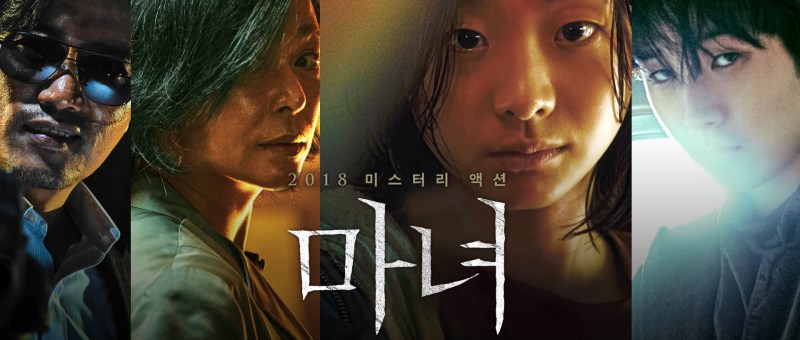
The Witch: Part 1. The Subversion (마녀, Park Hoon-jung, 2018)

There’s probably something quite profound to be said about the folkloric tradition of the foundling child and untold destiny, that exiled nobility can salvage the best qualities of the place they escaped in a rural paradise before returning to make their restoration. Superheroes do indeed seem to find frequent refuge in the wholesome plains of farm country where the salt of the Earth raises them into upstanding people with the right kind of values to couple with their “unnatural” powers to enable them to “save the world” in ways both literal and metaphorical. Perhaps there is darkness in that idea too, that we need such people to save us rather learning to save ourselves or that we secretly long to believe in our latent specialness and hidden destiny, and of course those rightful values may also be inherently conservative in that they aim to preserve a particular vision of “goodness”. In any case, the heroine of Park Hoon-jung’s The Witch: Part. 1. The Subversion (마녀, Manyeo) is not so much out to save the world as engaged in a war to save herself and that particular vision of goodness she’s been gifted by good people (or, then again, perhaps not).

Park begins with blood as a little girl manages to escape a massacre at some kind of shady facility before passing out in front of an idyllic farmstead where she is eventually taken in and nursed back to health by a kindly older couple, the Koos. 10 years pass. The little girl is now the teenage Koo Ja-yoon (Kim Da-mi) and an archetypal farm girl albeit an extraordinarily pretty one with straight A grades and fierce love for her now struggling adoptive parents. With the farming industry in crisis and Mrs. Koo suffering with Alzheimer’s, Ja-yoon finds herself bullied into taking part in a televised singing competition by her boisterous best friend Myung-hee (Go Min-si), which is not the best idea if you’re trying to hide from shady government forces. Sure enough, the past begins to resurface leaving Ja-yoon with a series of difficult choices.

Like many other recent Korean action dramas with female leads, The Witch steps back into the familiar territory of “good” mothers and “bad” while uncomfortably asking if childhood corruption can be cured by love alone. Living as Ja-yoon, the unnamed little girl has been reset. Given a “normal” childhood, she seems to have become a “normal”, perhaps ideal, young woman who does well at school, is confident and self possessed, and dearly loves her family and friends. When we finally meet the woman responsible for her corruption, Professor Baek (Jo Min-su) who presents herself again as a maternal figure and Ja-yoon’s “creator”, we learn that Ja-yoon is a creature born of icy violence, raised without compassion or love for no greater purpose than destruction.

Mr. Koo (Choi Jung-woo), perhaps understanding Ja-yoon a little better than she understands herself, often tells her not to go out “like that” which seems like slightly archaic paternal sexism but is also an attempt to soften those “male” instincts towards violence which are so much a part of her early life and of her essential nature. Frightened by her “unnatural” cruelty, Mr. Koo wasn’t sure if they should keep Ja-yoon with them but his wife (Oh Mi-hee) disagreed, believing they could heal her by raising her in love. The choice Ja-yoon faces is whether to embrace her persona as Koo Ja-yoon as raised by her adoptive parents, or the psychopathic killer which lies underneath.

Park leaves the dilemma very much in the air with “Ja-yoon” a vacillating cypher whose internal divisions seem to become ever more stark as she begins to wall off her various personas. “The Witch”, as the title implies, may itself have its misogynistic overtones in pointing directly at Ja-yoon’s transgressive femininity, both innocent farm girl and unstoppable killing machine, but as the subtitle hints Ja-yoon is also attempting to subvert herself in service of a greater mission which (for the moment) remains unclear. Park opens the door to a sequel in which subversion might not be the aim, sending Ja-yoon further along the path of dark self exploration which promises still more violence and mayhem before her bloody work is done.


The Witch: Part 1. The Subversion is released on Digital HD in the UK on April 22nd courtesy of Signature Entertainment.

UK release trailer (English subtitles)

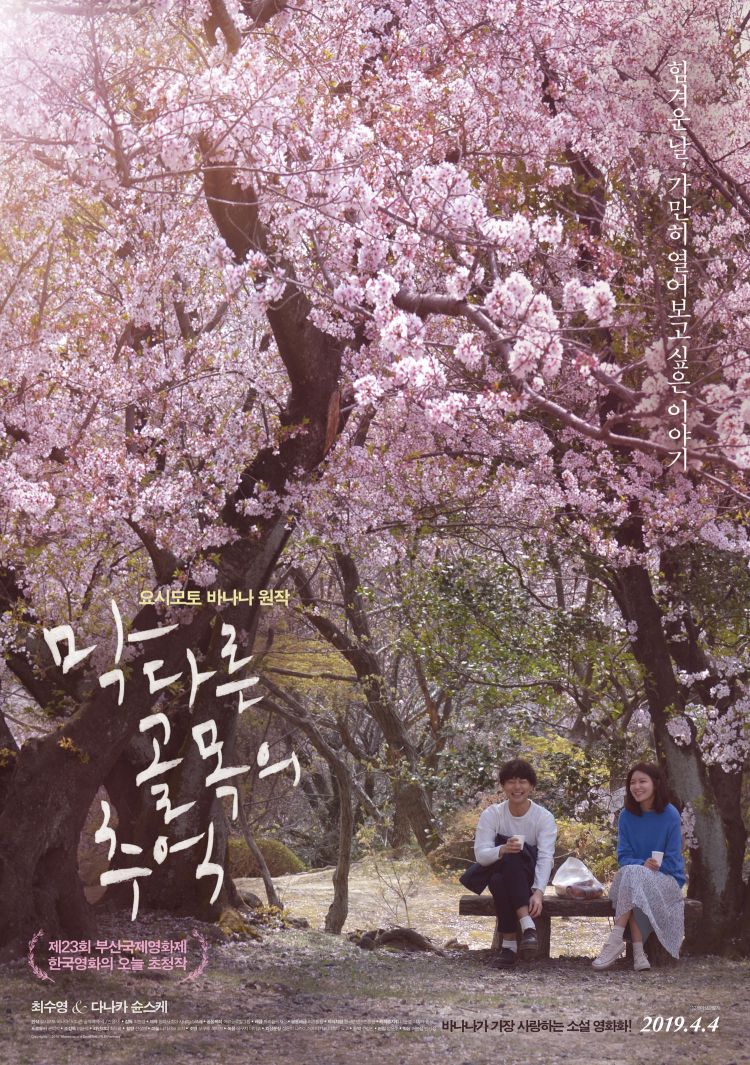
Memories of a Dead End (막다른 골목의 추억, Choi Hyun-young, 2018)

Memories of a dead end posterSometimes dead ends show up unexpectedly, as the heroine of Memories of a Dead End (막다른 골목의 추억, Makdareun Kolmokui Chueok) points out while ruminating on the abrupt revelation which has just rendered all her life’s hopes and dreams null and void. Adapted from the Banana Yoshimoto novella, Choi Hyun-young’s debut feature follows a young-ish Korean woman to Japan where she finds out something she probably knew already but didn’t quite want to accept and, thanks to the kindness of strangers, begins to see a way forward where she feared there might not be one.

Yumi (Sooyoung), a woman in her late 20s from a wealthy family, has been engaged to Tae-gyu (Ahn Bo-hyun) for the last few years but he has been working away in Japan supposedly preparing for their shared future. Unable to get in touch with him and worried he seems to be dodging her calls and refusing to return her texts, Yumi decides (against the advice of her steadfast sister) to go to Japan and confront him. Sadly, her family were right when they advised her that perhaps she should just forget her fiancé and move on. Tae-gyu has met someone else. On arriving at his apartment, Yumi is greeted by another woman who knows exactly who she is and why she’s come, but takes no pleasure in explaining that she and Tae-gyu plan to marry and were hoping Yumi would take the hint given a little more time.

Confused and heartbroken, Yumi checks into a hotel for the night planning to return to Korea the following day but a nagging phone call from her “I told you so / plenty of fish in the sea” mother (tipped off by her loudmouth sister) makes her think perhaps that’s not the best idea. Wandering around, she winds up at the End Point hotel and cafe where she cocoons herself away to think things through, trying to reconcile herself to the “dead end” she has just arrived at in the life path she had carved out for herself.

“End Point” is not perhaps an auspicious name for a hotel. A hotel is, after all, a deliberately transient space and not in itself a destination. The reason it might accidentally become one is perhaps on Yumi’s mind when she decides to check in, but despite the name the cafe is a warm, welcoming, and accepting place perfectly primed to offer the kind of gentle support someone like Yumi might need in order to rediscover themselves in the midst of intense confusion.

This is largely due to the cafe’s owner, Nishiyama (Shunsuke Tanaka), who, we later discover, was himself neglected as a child and almost adopted by the community who collectively took him under their wing and sheltered him from his childhood trauma. This same community still frequents the End Point cafe and is keen to extend the same helping hand to those in need, becoming a point of refuge for a series of lonely souls many of them travellers from abroad. Despite her desire for isolation, Yumi is finally tempted out of her room by the gentle attentions of the cafe’s regulars who make sure to include her in all their gatherings, reawakening something of her faith in humanity in the process.

In introducing her to the cafe, Nishiyama remarks that though it is literally in a dead end, many begin their forward journeys from here. A dead end does not, after all, have to be an “end point” but can become an opportunity to turn around and start again without necessarily having to go back the way you came. Yumi likes the End Point so much she briefly considers staying, but it would, in a sense, be a betrayal of its spirit. Nishiyama, becoming a staunch friend and ally, finally comes to the conclusion that her former fiancé was not a bad man even if he was a weak one, but that in all the time he knew her he never discovered the “treasure” of her heart as he seems to have done despite knowing her only a few days. Yumi takes this new knowledge with her on her forward journey as she abandons her much commented on practicality for warmhearted connection as a path towards fulfilment, learning to treasure her “dead end” memories not as time wasted but as a pleasant diversion which led her to exactly the place she needed to be in order to discover the treasure in her own heart and the willingness to find it in others.


Memories of a Dead End screens as part of the eighth season of Chicago’s Asian Pop-Up Cinema on April 17, 7pm, at AMC River East 21.

International trailer (English subtitles)
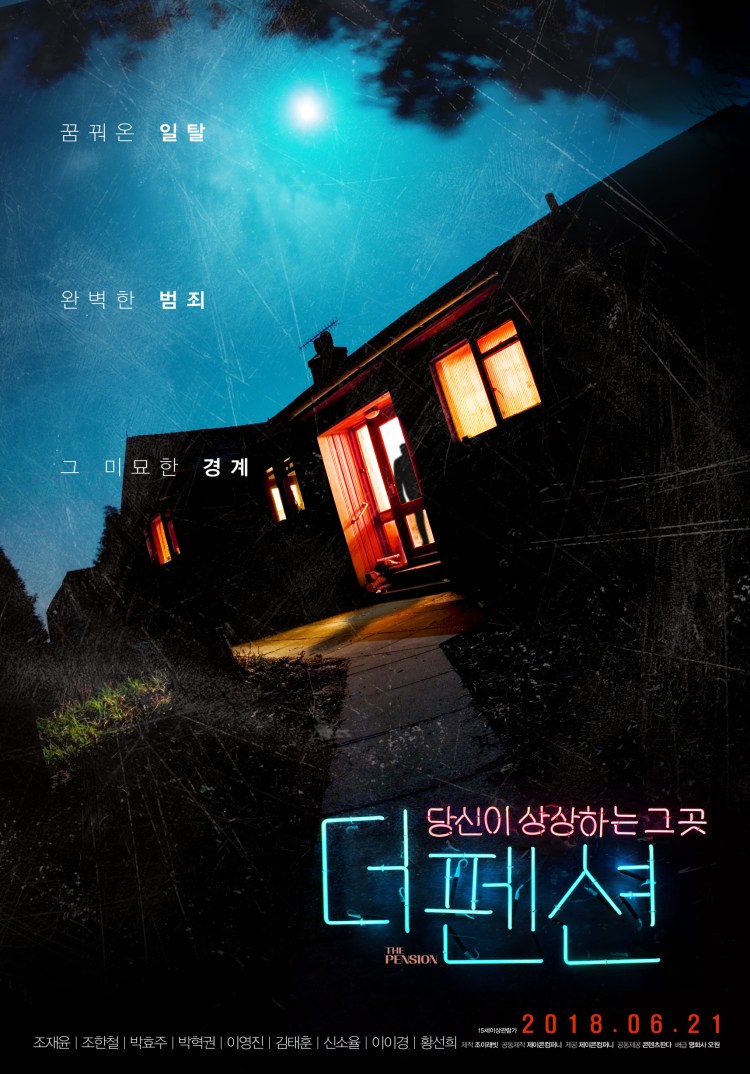
The Pension (더 펜션, Ryu Jang-ha, Yang Jong-hyun, Yoon Chang-mo, Jung Heo Deok-jae, 2018)

The Pension poster“We’re all lonely beings” the proprietor of a small mountain lodge advances hoping to comfort a distressed guest. The temporary denizens of The Pension (더 펜션), a four part omnibus set in a charmingly old-fashioned forest hideaway, are indeed mostly lonely beings making use of this liminal place to process the taboo away from the prying eyes of civilisation, embracing the savagery of the natural world as they cast off conventional morality to pursue their illicit desires be they vengeful, violent, protective or loving.

We begin with darkness as our first pair of guests, a man, Choo-ho (Jo Han-chul), and his wife Mi-kyung (Park Hyo-joo), seem to be all too interested in the family next door. Eventually we discover that the couple have come with ill intentions and revenge on their mind, though the man they’re after doesn’t seem so bad to begin with – he asks them to dinner with his wife and son who seem happy, but the atmosphere grows tenser as he begins to drink and a darkness creeps in. Before long Mi-kyung has set her mind on poetic justice, leaving the other couple’s young son in peril while Choo-ho struggles with his desire to stop his wife making a terrible mistake while not wanting to upset her.

Unhappy families continue to be theme with the second pair of guests – a married couple hoping to rekindle their listless romance in the peace and tranquillity of the remote mountain lodge. While the arrival is pleasant enough, perhaps too much so as the husband (Park Hyuk-kwon) puts on a show of making the effort, despair creeps in when he realises he’d made sure to bring his wife’s (Lee Young-jin) favourite coffee but forgotten the grinder. He wants her all to himself, but she just wants to go home and worries about their young daughter staying with a mother-in-law she doesn’t seem to like very much. Eventually the couple decide they need some time apart and she ends up meeting someone else (Kim Tae-hoon) in the woods to whom she recounts all the loneliness and isolation she experiences in her married life, seemingly trapped by conventionality but unconvinced that anything would be very different if she left.

The hotel owner (Jo Jae-yoon) might agree with her – a lonely soul he is too, though it appears he opened this hotel for just that reason, burying himself away from his heartache by coming to live alone with the transient presence of strangers and peaceful isolation of the woods. His mother, however, is not convinced and is constantly nagging him to get married – in fact, she’s set up a meeting for the following day meaning he’ll have to close the shop. That might be a problem, because he gets a surprise guest in the middle of the night, a distressed woman (Shin So-yul) intent on staying in a very particular room. Finding it odd, he can hardly turn her away with nowhere else to go but a TV programme on the causes of suicide (loneliness, the decline of the traditional family, economic pressures etc) convinces him he ought to check on her. Assuming she is merely lovelorn (as is he), he tries to comfort her with platitudes but pulls away from her emotional need only to find himself eventually wounded only in a much more physical way as he idly fantasises what it might have been like if he’d gone back to her room and been a bit more sympathetic.

Our proprietor is notably absent in the final segment, replaced by a much younger man (Lee Yi-kyung) with much more urgent desires. Despite being there to do a job, the boy has brought his girlfriend whom he alienates by failing to explain a mysterious text from another girl all while making eyes at the attractive young woman (Hwang Sun-hee) staying next door who claims to be “from the future”. When another guest turns up and starts making a fuss about a missing engagement ring she supposedly left behind, everything becomes much more complicated than it seems but one thing is certain – there is precious little love to be found in this hotel where everyone has come to embrace the side of themselves the city does not allow to breathe.

Much more cynical and obviously comedic than the preceding three tales, the final chapter perhaps bears out the message that it’s not so much rest and relaxation people have come to The Pension for, but “privacy” or to be more exact “discretion”. Some came for love, others for lack of it, but all of them are looking for something they are unlikely to find here though the first couple could perhaps have found it if only they had stuck together. Nevertheless, hotels are transient places for a reason – take what you need from your stay and leave the rest behind.


The Pension screens as part of the eighth season of Chicago’s Asian Pop-Up Cinema on April 16, 7pm, at AMC River East 21.

International trailer (English subtitles)
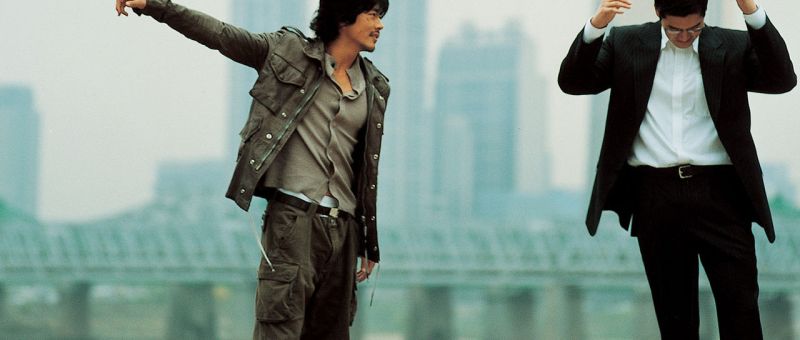
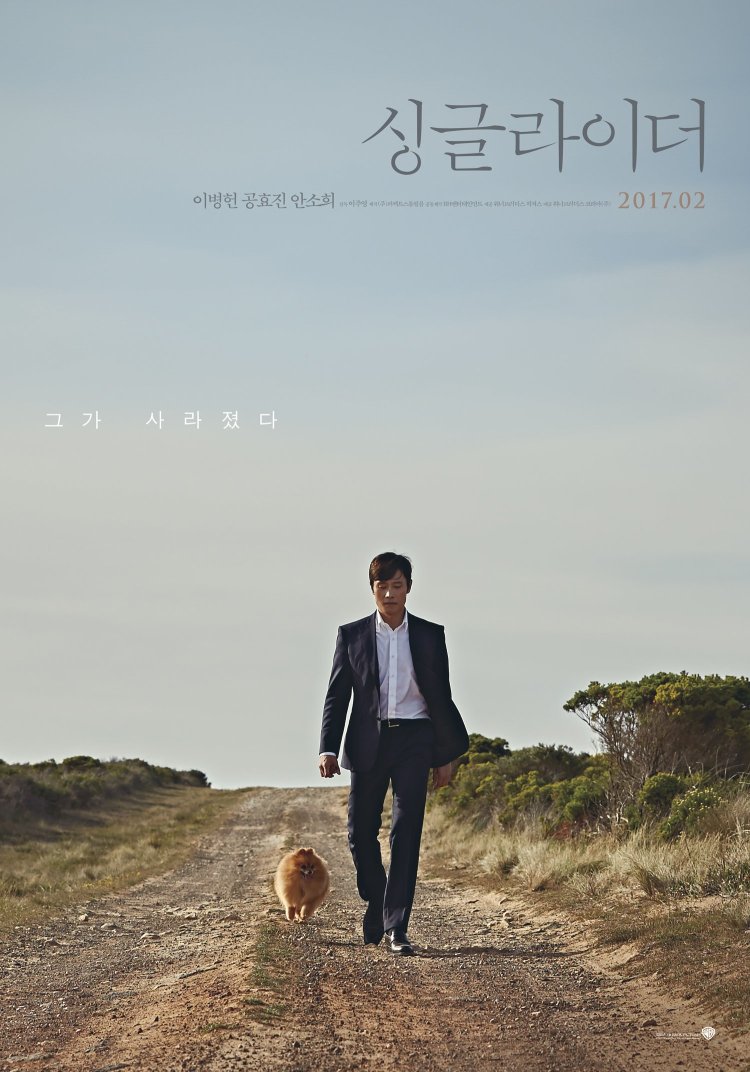
A Single Rider (싱글라이더, Lee Zoo-young, 2017)

Single Rider posterAs the old adage goes, you don’t know what you’ve got ’til it’s gone. Having sacrificed it all for “conventional success”, an emotionally repressed salaryman loses everything when his company is exposed for its immoral business practices only to discover that he’s left it all too late and those he meant to keep close have begun to draw away from him. Quietly contemplative, Lee Zoo-young’s debut A Single Rider (싱글라이더) is a gentle meditation on the way life can get away from you. Brainwashed into the salaryman dream, our financier “hero” allows himself to be swept along by the confidence of his superiors, taking friends and family with him, when he knows deep down that if something seems too good to be true, that’s because it is. Sometimes, it really is just too late, and then sometimes, tragically, it isn’t but you miss your chance anyway.

Kang Jae-hoon (Lee Byung-hun) is a broker at a securities company. Buttoned-down and near silent, he cuts a geeky if reassuringly dull figure but there’s a storm brewing under his calm exterior. His top rated company is in a lot of trouble. They’ve all been breaking the rules, and now they’re about to go under taking the savings of hundreds of ordinary, innocent people with them – people that Kang personally assured that their money would be safe because the company would never declare bankruptcy. Not quite as morally bankrupt as he seems, Kang has been depressed for some time and is on some pretty heavy duty medication. Sending what looks eerily like a suicide note to his bosses, Kang appears to rethink. He sent his wife and son to Australia to “upgrade” them through adding English functionality but hasn’t exactly paid much attention to them since. Searching for the address of the house where they live on Google Maps, he spots them captured together outside and makes an abrupt decision. Before he knows it, he’s bought a plane ticket for Sydney, heading straight to the airport with no luggage and leaving his phone behind so his boss can’t bother him.

Far from a joyful reunion, however, what Kang finds is a visual guide to all the ways he has been erased from the lives of his family. Though Kang’s wife Soo-jin (Gong Hyo-jin) and son Jin-woo (Yang Yoo-jin) have been in Australia for a couple of years, Kang does not appear to have visited before and has trouble finding the house. When he eventually locates it, he knocks at the door and gets no answer, only to find his wife laughing and joking with a neighbour – apparently the father of a friend of Jin-woo’s. Unable to bring himself to knock again, or even to find a call box and explain, Kang begins “haunting” his family, creeping around the house while they’re out, spotting pictures of the Australian neighbour, Chris (Jack Campbell), everywhere and none at all of him.

Watching them from afar, Kang is forced to reevaluate his choices. The smallest details trigger memories of his life in Korea – a flapping kitchen door left ajar when his wife had insisted on a deadlock in Seoul because she felt so afraid with him gone so often even though they lived in an upscale high-rise with an electronic entry pad, the violin she gave up for him but now apparently has taken back up, the papers on the kitchen table which imply she wants to stay rather than go “home”. Like many men who work away from their families, Kang forgot that time was passing for them too and assumed they would be waiting for him like toys put away in a box, sleeping until he’s ready to wake them. Now he wonders how close she really is to Chris, if she wants to stay for him, if she’s grown away from her husband, or simply enjoys the wide open breeziness of their spacious Sydney home with its comparatively relaxed rhythms and friendly laid-back way of life. The only thing he can be sure of is that he doesn’t seem to belong in this house anymore and this is very much not his world.

Then again perhaps Australia is not all good – Kang hates the way everyone seems to call his wife “Sue” to make her foreign name easier to remember. He runs into something similar with a young girl he noticed at the station whose name is “Ji-na” (Ahn So-hee) but everyone in Australia seems to call “Gina”. Ji-na’s problems turn out to be bigger than a misremembered name. Despite his obvious familiarity with financial scams, Kang does nothing when he overhears Ji-na on the phone to some dodgy people who want to do a “personal currency exchange”. He doesn’t see them convince her to get in their car, but does catch sight of her coming back the same way later limping and bloody having been deprived of the money she’d carefully been saving up while her labour was exploited as she lingered on after her visa had expired (which is why she can’t go to the police, as her abusers are well aware). Ji-na, like him, made a series of bad decisions though perhaps for “better” reasons and has paid dearly for her mistakes.

To be fair, Kang thought he was making his decisions for good reasons – he convinced himself he was working to provide for his family, even sending them away “for their benefit”, but now he regrets it. He regrets everything – his workaholic lifestyle, the way he allowed his principles to be compromised in pursuit of “success”, the way he bought his swanky Seoul apartment and a middle-class suburban home in Australia through defrauding people who trusted him, and the way he lost his family through a misplaced desire to “better” them rather than simply allowing them to be happy. He thinks it’s too late, that he’s ruined himself and that his family have already moved on. He may be wrong, but he won’t find out by snooping around the house and following Chris about all day to figure out how close he is to his wife.

Kang’s tragedy is that he made a series of bad decisions in which the last was the worst and the most sad. Lee Byung-hun invests Kang with an air of utter defeat, as if the air itself were crushing him while he remains unable to reconcile himself to his new circumstances or bring himself to make contact with his family. A final revelation (or perhaps confirmation of an obvious fact) makes plain why exactly it is that he seems to wander invisibly through the city streets, using public transport but miraculously disappearing from one place to appear in another as if in a trance. Kang’s only option is, perhaps, to learn to be glad that his wife and son finally have a chance to be happy even if it’s without him and be grateful that his son has found another man who’d run until his feet were sore just to keep him safe. Sometimes it really is just too late, but, tragically, sometimes you accept defeat too early when what you thought you’d lost is already on its way back to you only you’ve already given up, not on it, but on yourself.


Original trailer (no subtitles)

Counters (카운터스, Lee Il-ha, 2017)

Counters poster 1The far right is on the rise the world over and Japan is no exception. A resurgent nationalism has long been a worry as the memory of wartime folly fades and the young, manipulated by fears of the nuclear threat from North Korea and frustrated by a stagnant economy, are duped by the messages of unscrupulous forces who convince them the cause of all their troubles is an easily scapegoated minority. Lee Il-ha’s documentary Counters (카운터스) takes a look at the deeply entrenched xenophobic racism directed at “Zainichi” Koreans and the counter protest movement against it which finds itself divided over the question of violence.

The main focus of Lee’s documentary is the enigmatic leader of the “Otoko-gumi” (lit. “men’s group”, a noticeably yakuza-esque name) – former mob boss Takahashi. Unlike many of the “Counters” who turn up to disrupt right-wing rallies, Takahashi identifies himself as a right-winger who venerates the Emperor and the Imperial past but cannot tolerate the unfettered bullying of those who shout vile racist statements while preaching the glory of Japan. A former yakuza, Takahashi himself had originally been taken in by the falsehoods spread by men like Sakurai – the virulently racist leader of Zaitokukai which makes the dubious claim that Zainichi Koreans are somehow “privileged” thanks to special residency arrangements originally set up to avoid the bureaucratic nightmare of trying to account for all the Korean (and Taiwanese) residents who arrived as Japanese citizens during the colonial period. Though he had harboured doubts about the anti-Korean propaganda he’d been hearing, it wasn’t until he had the opportunity of a straightforward conversation with an activist that he came to realise that it was all lies and the guys on the other side had a point after all.

Later, one of his comrades describes Takahashi as an old school yakuza – the kind that thinks it’s his job to protect people and stand up for those who can’t stand up for themselves. Takahashi evidently doesn’t like bullies or liars and was brought into the struggle by witnessing an old lady in kabukicho crying after a protest. His methods are, however, those of the street. Running Otoko like a gang he determines that the best way to silence the racists is to rough them up so they’ll think twice about coming back.

This places places Otoko at odds with the mainstream Counter movement which is committed to non-violent protest and social change through outreach and education. Though their aims share much in common, the Counter organisation fears becoming with associated with Otoko because of its less savoury elements – not only the violence itself but Takahashi’s criminal past and ties to the yakuza. If the Counters want to be taken seriously as a legitimate protest group, they have to be careful to present a professional, diplomatic image. Meanwhile, Otoko is free to shake things up without needing to think too hard about anything much beyond crushing the racist right.

Another activist engaged in building a shelter for oppressed minorities – not just Zainichi Koreans but Ainu, Brazilian-Japanese, LGBTQ+ etc, admits as much when he attempts to probe the paradox of Takahashi’s liminal status in the political world. The progressive movement has long been bound by its own principles and progress has been slow. Like it or not, Otoko seems to have created a shift in the political landscape no matter how one might feel about their methods. Takahashi corrals his men into building the shelter by day, but is a frequent visitor to the Yasukuni shrine in the mornings. Nevertheless, he remains an unlikely ally at the side of all oppressed peoples including transgender men and women and the LGBTQ+ community.

Lee imbues his footage with the true punk spirit, spinning back from Takahashi’s violent clashes to a whimsical jazz overshadowing the shadiness of government while playing heavily with on screen text and effects which occasionally trivialise the action as in Sakurai’s failed showdown with the Mayor of Osaka who proves once and for all that he won’t have any of Sakurai’s nonsense in his kind and welcoming city. The level of vitriol on show is truly shocking with heinous, violent statements offered by ordinary young women turning on the kawaii to call for the deaths of a persecuted minority while middle-school girls influenced by right-wing fathers preach atrocity in the streets (tacitly confirming the veracity of various other atrocities the right is usually keen to deny). The long awaited anti-hate speech law may finally have been passed, but there is still much work to do. The Sakurais of the world aren’t giving up, but neither are the Counters. A timely reminder that now more than ever resistance is the key.


Counters was screened as part of the 2018 New York Asian Film Festival.

Original trailer (Korean subtitles only)

Underground Rendezvous (만남의 광장, Kim Jong-jin, 2007)

Underground Rendezvous posterAt the very beginning of Kim Jong-jin’s Underground Rendezvous (만남의 광장, Mannamui Gwangjang), a group of kindly villagers in the north of Korea are caught by surprise when they unwittingly help to build the 38th parallel – a series of fortifications which will divide them from one another forevermore. Family members are trapped on different sides of an artificial border by a matter of accident rather than choice, a decision effectively made for them by the Americans and Russians amping up cold war hostility in engineering a proxy war over war-torn Korea.

30 years after the villagers sealed their own fates through being overly helpful, the South Korea of the 1980s is perhaps not so different from its Northern counterpart. A brief hope for democracy had once again been dashed and the land remained under the yoke of a cruel and oppressive dictatorship. Young-tan (Im Chang-jung), a boy from a poor village, is determined to escape his life of poverty by travelling to Seoul and studying to become a teacher. However, within five minutes of exiting the station, his country bumpkin ways see his only suitcase swiped by a street thief. An attempt to report the crime only gets him into trouble and so Young-tan is sent to a “re-education” camp in the mountains. Falling off the back of a truck, he gets lost and eventually ends up in a remote village where they assume, ironically enough, that he is the new teacher they’ve been expecting for the local school. The village, however, has a secret – one that’s set to be exposed thanks to Young-tan’s questions about a beautiful lady he saw bathing at the local watering hole.

Young-tan turns out to be a pretty good teacher, though not exactly the sharpest knife in the drawer. The village’s big secret is that the divided families were so attached to each other that they each started digging tunnels to the other side shortly after the wall went up and eventually met somewhere in the middle where they’ve built a large cave they use for underground reunions. Apparently existing for 30 years, no one outside of trusted citizens on either side knows about the tunnel’s existence. No one has used it to switch sides, the only purpose of the tunnel is for relatives and friends to mingle freely in defiance of the false division that’s been inflicted on them by outside forces.

Young-tan, however, is fixated on the bathing woman who turns out to be North Korean Sun-mi (Park Jin-hee) – the sister-in-law of the village chief. Thinking only of his crush and also a comparative innocent and devotee of the moral conservatism of ‘80s Korea, Young-tan catches sight of Sun-mi and the village chief and is convinced that the old man is molesting an innocent young maiden. He sets out to convince the villagers of this, little knowing the truth and unwittingly threatening to expose the entire enterprise through failing to understand the implications of his situation.

Kim pulls his punches on both sides of the parallel, only hinting at the oppressions present on each side of the border with Sun-mi fairly free in the North, working as the army propaganda officer in charge of the noisy broadcasts which attempt to tempt South Koreans to embrace the egalitarian “freedoms” on offer to defectors. Meanwhile the villagers in the South live fairly isolated from the unrest felt in the rest of the country, continuing a traditional, rural way of life but are also under the supervision of a local troop of bored army conscripts on the look out for North Korean spies. Nobody wants to defect, though perhaps there’d be little point in any case, but everyone longs for the day when families can all live together happily as they used to free from political interference.

Satire, however, is not quite the main aim. An absurd subplot sees the “real” teacher marooned on his own after taking a detour and accidentally standing on a landmine leaving him rooted to the spot on pain of death, but the majority of the jokes rest on Young-tan’s “misunderstandings” as a village outsider, goodnatured simpleton, and bullheaded idiot. A final coda tries to inject some meaning by hinting at the effects of repurposing the truth for political gain and the tempered happiness of those who get what they wanted only not quite in the way they wanted it, but it’s too little too late to lend weight to the otherwise uninspired attempts at comedy.


Currently streaming on Netflix UK (and possibly other territories)

Original trailer (no subtitles)

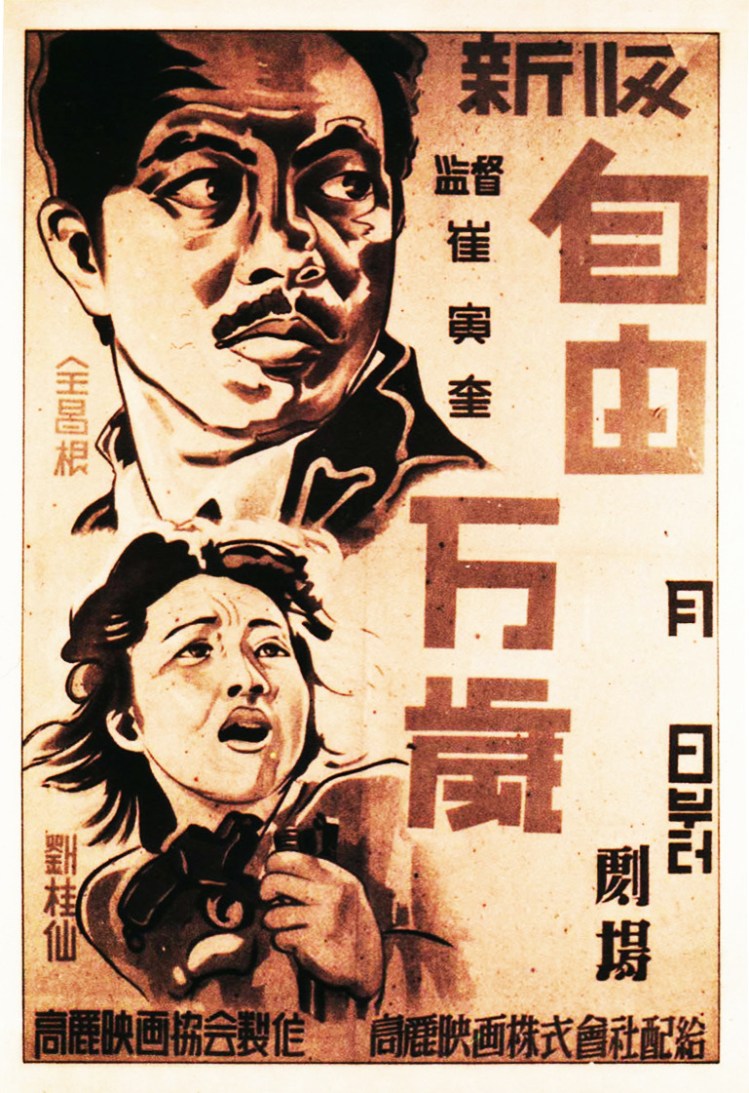
Hurrah! For Freedom (自由万歲 / 자유만세, Choi In-kyu, 1946)

hurrah for freedom posterAttempts to foster a Korean film industry had often been frustrated during the colonial era throughout which aspiring filmmakers found themselves dependent on the Japanese film industry for financial and technological assistance while forced to produce increasingly overt Imperial propaganda under the ever tightening grip of the militarist colonial government. Hurrah! For Freedom (自由万歲 / 자유만세, Jayu Manse), the first film produced after the liberation, was then an aptly titled chance to start anew, create a new film language for a new young nation finally free of what some saw as decades of brutal oppression which made successive attempts to erase a national character.

Sadly, we cannot quite know exactly what director Choi In-kyu intended to create with this the first truly “Korean” film because so little of it survives intact, not because like much colonial cinema it was simply lost but because it bears witness to the next chapter in Korea’s unhappy 20th century history in undergoing severe editing during the oppressive era of Park Chung-hee’s military government who decided to remove scenes featuring popular pre-war actor Dok Eun-gi who, like many in his position, eventually defected to the North after the Korean war. As for Choi himself, he perhaps felt he had some atonement to do for having remained complicit with the Imperial machine. Following the completion of 1941’s Angels on the Street, he’d vowed to never to direct another pro-Japanese film but was eventually persuaded to return by the right-wing Han Hyung-mo (also the cinematographer on this film) and made a further three propaganda movies the last of them in 1945.

Nevertheless, Hurrah! For Freedom opens with a tribute to those brave Resistance fighters who gave their lives for liberty. Our hero is cell leader Choi Han-joong (Jeon Chang-geun – also the film’s scriptwriter) whose friend is killed while fleeing from Japanese police after being denounced by collaborator Nam-bu (Dok Eun-gi). Forced into hiding, Han-joong is lodged with a friendly nurse, Hye-ja (Hwang Ryuh-hee), who seems to have become fond of him though he remains distracted by his Resistance activities even if he does eventually notice the flowers that she bought him as a token of affection. While saving another comrade from the police and rescuing some explosives in the process, Han-joong ends up taking refuge in the flat of none other than Nam-bu’s main squeeze Mi-hyang (Yoo Kye-sun) who also develops a crush on him.

Though Nam-bu, an obvious bad guy antagonist, is sidelined by the demands of ‘70s censorship, the main thrust of the drama is conveyed by the melancholy figure of Mi-hyang who eventually becomes a symbol of betrayed, thwarted ambition and the relative impossibility of redemption for those who made “weak” choices during the colonial era (as you could perhaps accuse Choi himself along with the entire film industry of having done). Mi-hyang, having fallen for Han-joong’s passionate intensity, decides to betray Nam-bu by giving valuable information she has obtained from him to the Resistance, little knowing she has been weaponised in a plot laid by her vindictive former lover.

Nevertheless, her true love confession is rejected by Han-joong whose only lover is the revolution. Han-joong, reminding her that he is a man who could be killed at any moment flits between talking of his bright future and his dark end. He reassures Mi-hyang that, despite her past, she like everyone else has the right to start again but coldly insists that she does not have what it takes to join the cause and should return to her hometown and safety. Denied the right to be by his side in life, Mi-hyang affirms that she will be the one to tend Han-joong’s grave, suddenly returning this talk of new beginnings to the nihilistic struggle which seems to define Han-joong’s existence.

Nevertheless, in contrast with the defeated figure of Mi-hyang who must pay not only for her “weakness” in complicity with the colonial regime but also for her sexual transgression with an “enemy”, the saintly Hye-ja remains pure and brave – a brighter mirror for the gloomy Han-joong who seems surely destined to be her romantic hero as the pair of them fight earnestly for a freer future. Sadly, this is where we leave them – in media res as the film cuts out just at its most climactic moment as if affirming that this is a revolution very much in progress. Choi, shifting away from the realism that defined his earlier work, seems to be reaching for a new cinematic language with which to begin a new era free of colonial constraints. History, however, would defeat them all as this short period of hard won liberty would lead eventually to another conflict and another oppressive dictatorship. Choi himself went missing during the Korean War, presumably either killed or fled to the North. Nevertheless, what we can discern from the extant lessons of Hurrah! For Freedom is that there was perhaps more appetite for nuance than might have been expected even if sympathy for the collaborator does not quite extend to forgiveness.


Hurrah! For Freedom was screened as part of the Early Korean Cinema: Lost Films from the Japanese Colonial Period season currently running at BFI Southbank. Also available to stream online via the Korean Film Archive’s YouTube Channel.

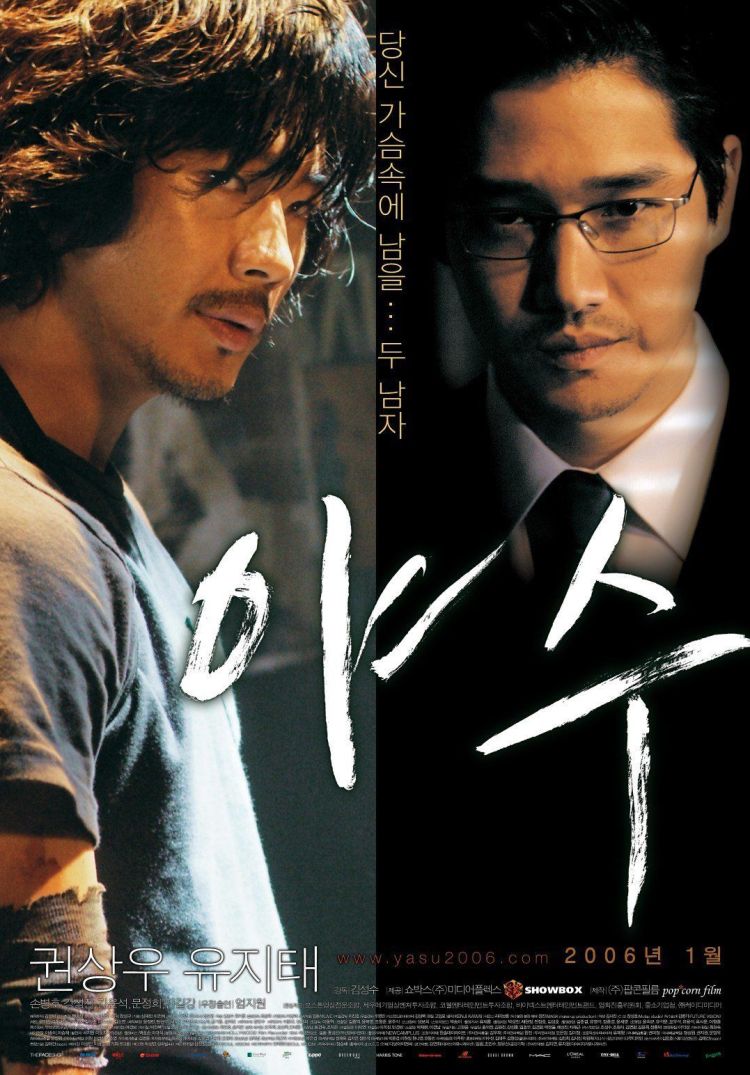
Running Wild (야수, Kim Sung-soo, 2006)

Running wild posterHeroic bloodshed meets corruption drama in the retro debut feature from Kim Sung-soo (b. 1971 – not to be confused with the director of Beat/Asura), Running Wild (야수, Yasu). Over the top macho action mingles with saccharine family drama as two seemingly very different law enforcement officials realise they aren’t that different after all as their relentless pursuit of a mob boss turned “legitimate businessman” with political aspirations becomes increasingly intense. Filled with typically 70s touches from split screens to zooms and descents into ridiculous displays of male aggression set against the pounding rhythms of an action score, Running Wild is a story of the law on fire but one which never quite knows which side it’s on.

Straight-laced prosecutor Oh (Yoo Ji-tae) has been slumming it in the boonies for the last few years after his attempt to bring down top gangster Yoo Kang-jin (Son Byong-ho) was derailed because of the dirt Yoo has on a selection of important people. Stopping only to take out a local big wig mobster, Oh is finally on his way back to Seoul with settling scores firmly on his mind. Meanwhile, maverick cop Jang (Kwon Sang-woo) collects his younger half-brother from jail and takes him to see their seriously ill mother in hospital. While Jang is busy meticulously filling in a lottery ticket, Dong-jik (Lee Joong-moon) is knifed by his old buddies and so Jang now has his own score to settle with the Dokang family.

Eventually teaming up to take down their common enemy, Jang and Oh have very different approaches to law enforcement. Oh hates the likes of Yoo because they break the social order while Yoo is a bully who profits from the suffering of others and laughs at the likes of Oh while he does it. Oh believes in the supremacy of the law, that the law is his greatest weapon and the one unassailable force that even men like Yoo will eventually have to submit to. Yoo feels differently. For Yoo the law is an irrelevance or even a symbol of other men’s naivety; he will overcome it and live outside of its control.

While Oh pins his hopes on the proper operation of the law, Jang pins his on his fists. Flailing wildly, Jang is more thug than cop – urging Oh to abandon his ridiculous righteousness and do what it takes to take the bad guys down even if that means planting evidence and beating information out of suspects. He is a classic angry man, frustrated by his powerlessness in the face of his mother’s illness and his inability to protect his makeshift family. Blaming himself for Dong-jik’s death and for failing to prevent his flirtation with criminality, Jang spars with his step-sister, half rejecting her role as primary care-giver to the mother he can’t save and part longing to see her as a true and permanent member of the family which constantly eludes him.

Family becomes a recurrent theme as both Jang and Oh ruin their respective relationships through their unconventional working lives. Despite finally getting back to Seoul, Oh’s wife plans to leave the husband whose obsession with his work, or more particularly his vendetta with Yoo, has consumed him while Jang’s family life remains a total mess. Yoo, by contrast, now a legitimised CEO playing golf with the rich and famous, enjoys lovely family meals with his elegantly dressed wife and cute little children who seem to adore him.

The law, it seems, is not robust enough to withstand the finagling of the corrupt criminal class who ride the waves of their power and influence all the way to the top. Oh steps further towards the edges of his noble goal, at which point he has to admit his quest is also one of personal revenge more than of truth or justice. Both men ruin themselves in stupid acts of self destruction, turning themselves into grenades thrown against a regime content to protect its inherent injustices. Running Wild, the pair fight fire with fire but also become victims of the system which oppresses them. Kim piles on the retro style but lets the old fashioned heroics run away from him abetted by the bombastic Kenji Kawai score. Nevertheless, Running Wild is a stylish enough calling card even if its aesthetics trump its sincerity.


Currently streaming on Netflix UK (and possibly other territories)

Original trailer (English subtitles)
Military Train (軍用列車 / 군용열차, Seo Gwang-jae, 1938)

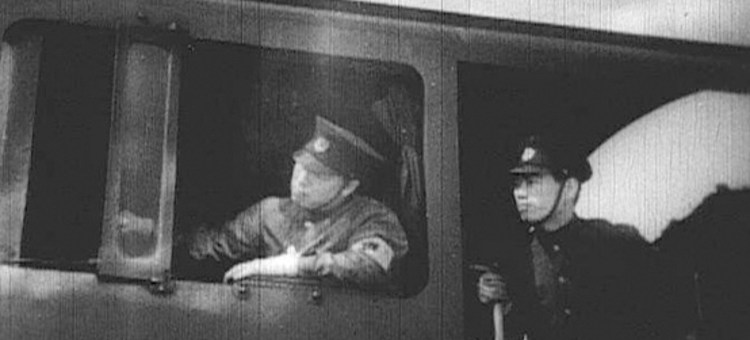
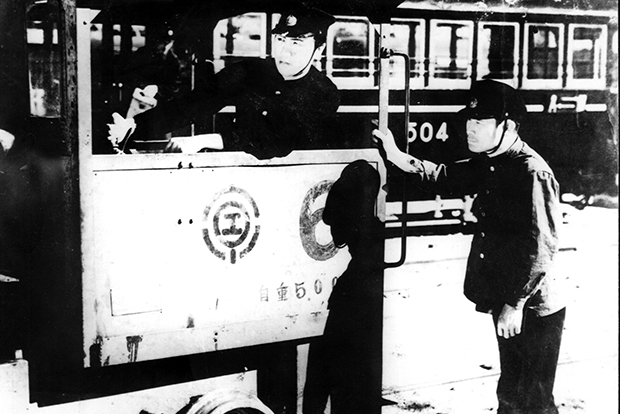
Military Train still 2Though there had obviously been increasing pro-Japanese sentiment in Korean cinema throughout the colonial era, 1938’s Military Train (軍用列車 / 군용열차, Gunyongyeolcha), a co-production with Toho, is accounted as the first government backed propaganda film. Military Train is in fact the only film ever directed by Seo Gwang-jae who began his career after winning a contest run by the Chosun Film Art Association which selected 20 people for a one year film course, later becoming an actor and film critic before debuting with his first and only feature. Prior to travelling to Japan to train with the Tokatsu Kinema in Kyoto, Seo had been a member of the left-wing Korea Proletarian Artist Federation, but it appears that by the time he came to make Military Train he had abandoned his socialist ideals and embraced militarism.

Taking advantage of the heated political context of 1937 following the break out of the Sino-Japanese war, Military Train was produced to promote the important work of the Chosun Railway running soldiers and supplies to the front lines. The hero is train driver Jeom-yong (Wang Pyong) who longs to get the opportunity to drive one of the military trains which all the men look on at with envy as they pass them by. Jeom-yong is best friends with his roommate, Won-jin (Dok Eun-gi), who is also dating his little sister Young-shim (Moon Ye-bong). Young-shim is currently working as “gisaeng” or bar girl – an occupation she took up some years ago to support her family after her father died. She and Jeom-yong have another older brother who is currently in Manchuria trying to make his fortune so he can comeback and redeem Young-shim.

The drama occurs when Young-shim’s madam informs her that there is a client interested in purchasing her contract. Young-shim obviously does not want this to happen as she is intending to marry Won-jin as soon as she is released from her life as a gisaeng. Though she assures the madam that her brother will shortly be returning from Manchuria cash in hand, there is little she can do about the fact that she will likely be sold unless they can gazump the wealthy client. This awkward situation provides an in for a shady looking man who’s been hanging round the railway. Overhearing the drama in a cafe, he approaches Won-jin and offers him a large amount of money in return for information on the movement of military trains. At his wits end, Won-jin agrees but is ambivalent about his betrayal of his country and endangerment of his friend.

This being a propaganda film, the obvious message is that Won-jin’s selfish decision to pursue his romantic desires over the national good is an unacceptable act of treason. Nevertheless, Seo’s framing of Won-jin’s dilemma is perhaps not quite the one which might be expected in that it’s only latterly that the national betrayal becomes the paramount issue. Won-jin’s primary conflict is in his betrayal of his friend, who he later hopes will become his brother-in-law, in the full knowledge that what he’s doing places them all in danger from the authorities as well as the Independence Movement while also placing Jeom-yong in the direct line of fire seeing as he may very well be aboard one of the trains blown up by the Resistance.

Then again, it is surprising in itself that the existence of the Resistance movement is even hinted at even if not directly named within the film (the suspicious-looking man is referred to only as a “Chinese spy”). This would seem to undermine the “one nation” idea that Korean cinema has been intent on pushing and explicitly enforces in the final stretch of the film in which Jeom-yong gets to drive a military train and is reminded that he does not belong to himself but to the Japanese citizens. The film carries this idea to its natural conclusion in casting a number of Japanese stars alongside their Korean counterparts including Jeom-yong’s pretty girlfriend Soon-hee (Nobuko Sasaki) and his boss at the railway. Nevertheless, Won-jin’s eventual letter of contrition further makes plain his “mistake” as he instructs Jeom-yong to do his best to preserve the Chosun Railway in order to preserve “peace in Asia”.

The action concludes “positively” from the point of view of the colonial regime as Won-jin’s treachery and subsequent reconsideration allow them to bust a Resistance cell before it can prove effective. Young-shim is eventually saved by her older brother’s return from Manchuria where he has apparently made something of himself thanks to the benefits of empire while Jeom-yong prepares to drive the shiny military train North towards glory leaving his sister behind in the pre-modern past as he prepares to enter a new age of modernity and prosperity as symbolised by the coming of Japan.


Military Train was screened as part of the Early Korean Cinema: Lost Films from the Japanese Colonial Period season currently running at BFI Southbank. It is also available as part of the Korean Film Archive’s The Past Unearthed: the Second Encounter Collection of Chosun Films in the 1930s box set. Not currently available to stream online.

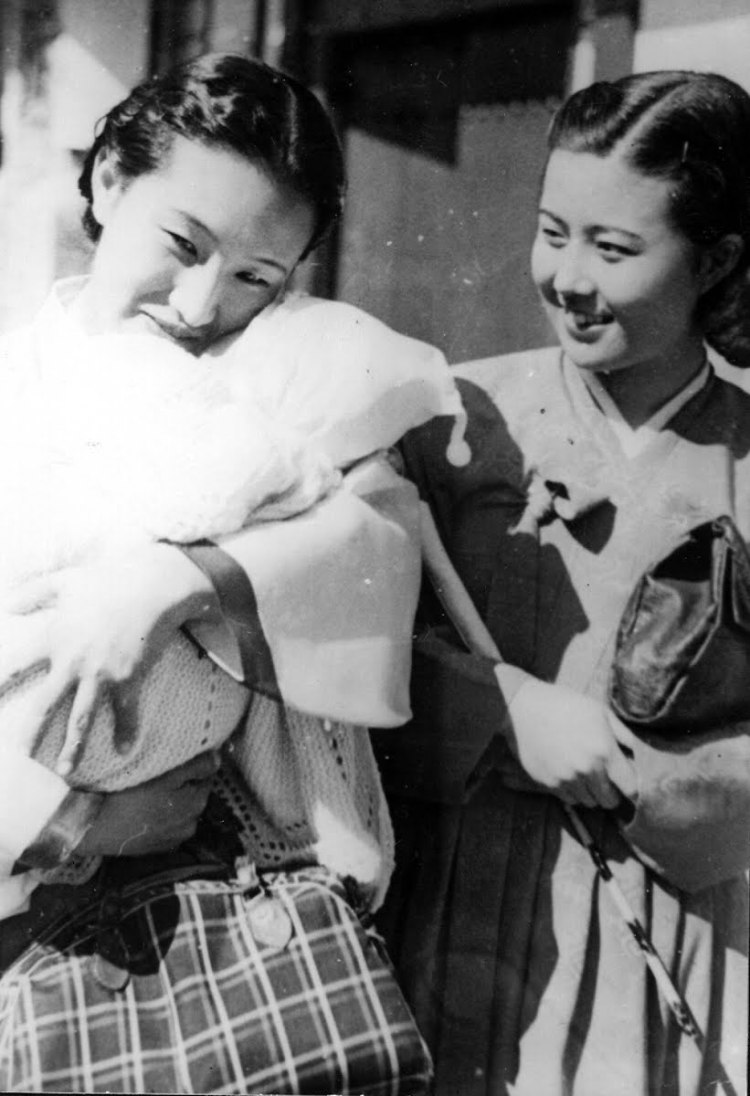
Straits of Chosun (朝鮮海峽 / 조선해협, Park Gi-chae, 1943)

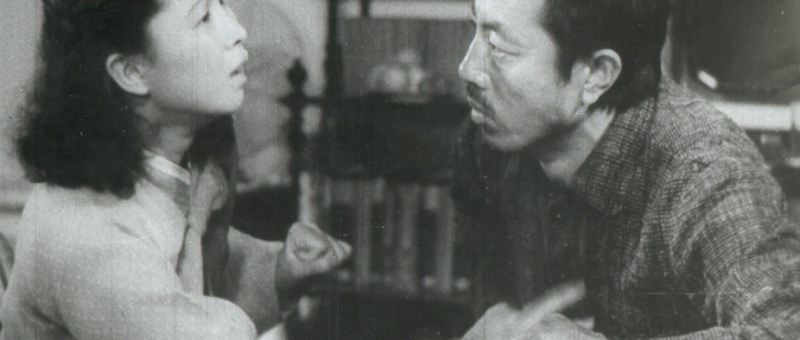
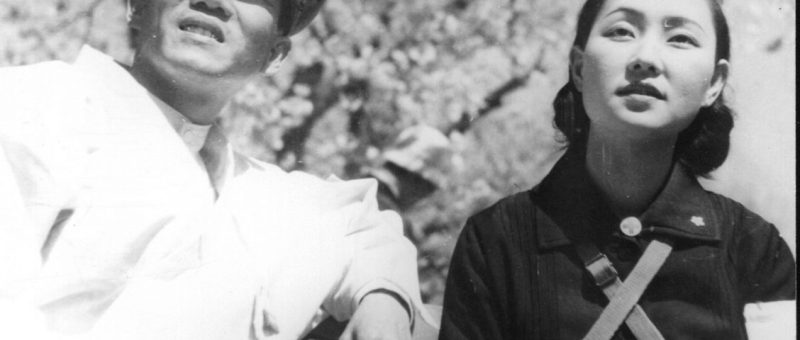
Straits of Chosun still 1Following a period of increasing censorship, the Colonial Government banned Korean language cinema altogether in 1942. Nevertheless, cinema was still a major propaganda tool even if much of the audience was not quite ready to receive its messages offered only in a language they may already have felt hostile towards. 1943’s Straits of Chosun (朝鮮海峽 / 조선해협, Joseonhaehyeob) was shot entirely in Japanese and is fully committed to the “one nation” ideals which had marked Korean Cinema in the colonial period but it also faces a somewhat interesting battle in paradoxically arguing for a kind of liberal modernity in which “love” overcomes centuries of tradition and becomes the driving force enabling the continuing forward propulsion of the Japanese empire by means of war.

The film opens with its hero, Seki (Nam Seung-min), making a melancholy offering at the altar of his older brother recently fallen in war. For reasons of which we are not yet aware, Seki is thrown out of his familial home and seems to be at odds with his father who insists he has shamed them. It turns out that Seki’s crime is not of the kind one might expect, but only of having selfishly married a woman of his own choosing without his family’s consent. Kinshuku (Moon Ye-bong), his wife, is now pregnant and the couple seemingly have no money. In order to impress his father, Seki enlists in the army leaving his pregnant wife behind, alone, and with no real idea where he is or whether he’s ever coming back.

Whichever way you look at it, Seki’s abrupt enlistment is an extremely selfish and irresponsible action seeing as Kinshuku appears to have no family and will have to find a way support herself financially even when the baby’s born – though Seki refers to her as his “wife”, their exact legal connection is not quite clear and it does not seem she is getting any of his military pay (or, perhaps he just chooses not to send it to her). Nevertheless, his primary goal in enlistment seems to be proving himself a man worthy of respect by honouring his father’s wishes in the hope that he will eventually relent and give his blessing to their marriage. Strangely, while he does this he cuts off contact with Kinshuku while she adopts the role of the patient wife offering spiritual support from afar and serving the nation by working in a factory (later resolving to raise her son to become a fine soldier like his dad).

In fact, Straits of Chosun is extremely reminiscent of the earlier Japanese film So Goes My Love save for complicating matters with the addition of a baby and a war. Released in 1938, So Goes My Love is a mildly anti-militarist melodrama in which a spoilt son of a wealthy household has defied his family to marry a young woman of humble means and been disowned in the process. As in Straits of Chosun, it is the anxious sister (Kim Sin-jae) who eventually becomes the bridge bringing the traditionally minded parents and earnest daughter-in-law together. In both cases, the sister is the voice of reason speaking for the rights of youth to determine its own destiny – a desire which would become more prominent in the post-war world but was already growing even in the ‘30s.

The Colonial Government had realised that the major stumbling block to increasing recruitment was the reluctance of noble families to risk the end of their family line in sending their childless sons off to war. What they needed to break was centuries of patriarchal traditions which placed familial authority solely in the hands of the father when they needed that authority to belong to the nation. Thus Seki’s compromise, like that of the son in So Goes My Love, requires some give on the part of the parental generation who must cede some of their authority to their son, who will then transfer it not to his own family or his own will but to the forces of empire. Seki goes to war to bring glory to his father’s name, but his father must then accept the choice that he has made to defy his authority by marrying a woman of his own choosing without seeking permission. Of course, having a guaranteed heir in the form of a new, legitimised grandson is an ideal bridge to just such a compromise in neatly unifying Seki’s twin obligations.

Compromised as it is, Straits of Chosun does its best to push the one nation idea in insisting that each and every Korean must do their bit in order for Japan to secure peace in Asia. Thus Kinshuku works herself into nervous collapse in service of her nation just as Seki is injured on the battlefield, neatly symbolising their continuing spiritual connection. Kinshuku’s selfless love is, in a sense, the force which serves to underpin the expansion of imperialism, as uncomfortable as that idea eventually seems to be. Nevertheless, despite its propaganda aims and naive defence of imperialist goals, Straits of Chosun accidentally makes an argument for liberal modernity in which men and women are equal partners in their shared endeavour, the class system has collapsed, and the individual has the right to determine their own destiny free of familial obligation.


Straits of Chosun was screened at the Korean Cultural Centre in conjunction with the Early Korean Cinema: Lost Films from the Japanese Colonial Period season currently running at the BFI Southbank. It is also available on DVD as part of the Korean Film Archive’s The Past Unearthed box set (currently OOP). Not available to stream online.