 Do you know Hong Sang-soo? So asks the heroine of Miss Ex (비치온더비치, Bitch on the Beach) as part of her nefarious mission to win back her childhood sweetheart. Unfortunately, his reply is to ask if he directed The Host, so Ga-young (Jeong Ga-young) is out of luck with her Dark Knight loving former love, but possibly in luck with us as her movie obsessed ramblings and strange stories about accidental AIDS tests during wisdom tooth extractions continue to dominate the screen for the next 90 minutes. Divided into three chapters and filmed in an oddly colourful black and white, director and leading actress’ Jeong Ga-young’s debut feature channels Hong Sang-soo by way of Woody Allen and the French New Wave but may prove funnier than all three put together.
Drunken Ga-young has invited herself over to her ex’s flat with the express intention of seducing him. Jeong-hoon (Kim-Choi Yong-joon) is sort of fed up with this kind of thing, in fact he has Ga-young listed in his phone under the name “do not answer” but she manages to bamboozle him into opening the door anyway. Ga-young has quit her job to pursue a career in the movies, though it seems she’s not having much success. Jeong-hoon knows she only calls him for a shoulder to cry on when she’s fed up but falls for it anyway. He has a girlfriend and makes it clear he’s not up for any funny business, but Ga-young is quite determined – only time will tell if Ga-young will get what she came for, or if she even really even knows what that is.
Miss Ex was originally titled “Bitch on the Beach” in Korean which, seeing as there are no beaches in this film, seems to be an obvious reference to the Hong Sang-soo movie Woman on the Beach – a similarly reflexive exercise about a film director and his relationships with a number of women who only really become fodder for his screenplay. Filming in black and white with simple, static camera set ups and concentrating on the amusing banter between its two leading characters credited only as “woman” and “man”, Hong’s influence is palpable. Ga-young is, however, a true cinephile who, after finding time to express her boredom with The Dark Knight, goes on to detail her strange dreams about other famous directors such as Bong Joon-ho (who really did direct The Host) and arguably Korea’s greatest living filmmaker Lee Chang-dong whom she asks to be her assistant director(!).
It’s fair to say the banter is more or less one sided as Jeong-hoon is forced to listen to Ga-young’s increasingly bizarre stories. Surprisingly frank and forthright in talking to her ex-boyfriend, Ga-young proceeds to tell him about various other men in her life, her sexual desires and preferences, and even those of her friends. Jeong-hoon listens patiently with occasional bemusement, but their relationship is close enough to be totally open without causing too much of a problem. Despite his protestations it’s clear Jeong-hoon is still on the hook for Ga-young, which she clearly knows, but it’s a little less clear whether she’s just keeping him there for convenience’s sake or is actively trying to win him back.
Even if Hong Sang-soo is the obvious reference point, he is after all referenced in the text, Miss Ex also owes a debt to the breeziness of the French New Wave and its freewheeling absurdity. Cutting between amusing silliness and understated emotional drama Miss Ex is perfectly posed to examine the various trials and tribulations of romance among contemporary young people. Ga-young is, perhaps, too modern for the slightly more conservative Jeong-hoon who tells her that her problems with men mostly stem from being too quick to take the lead and also constantly picks her up on her “unladylike” colourful language. One gets the impression Ga-young might not be very good for Jeong-hoon who eventually jeopardises his relationship with his current girlfriend to keep her happy, but whatever anyone else thinks about it, it seems as if he won’t be giving up on her any time soon. Cute, quirky and extremely smart, Miss Ex is an accomplished debut from director and leading lady Jeong Ga-young who marks herself out as an interesting new indie voice in Korean cinema.
Reviewed at the 2016 London Korean Film Festival.
Original trailer (no subtitles)
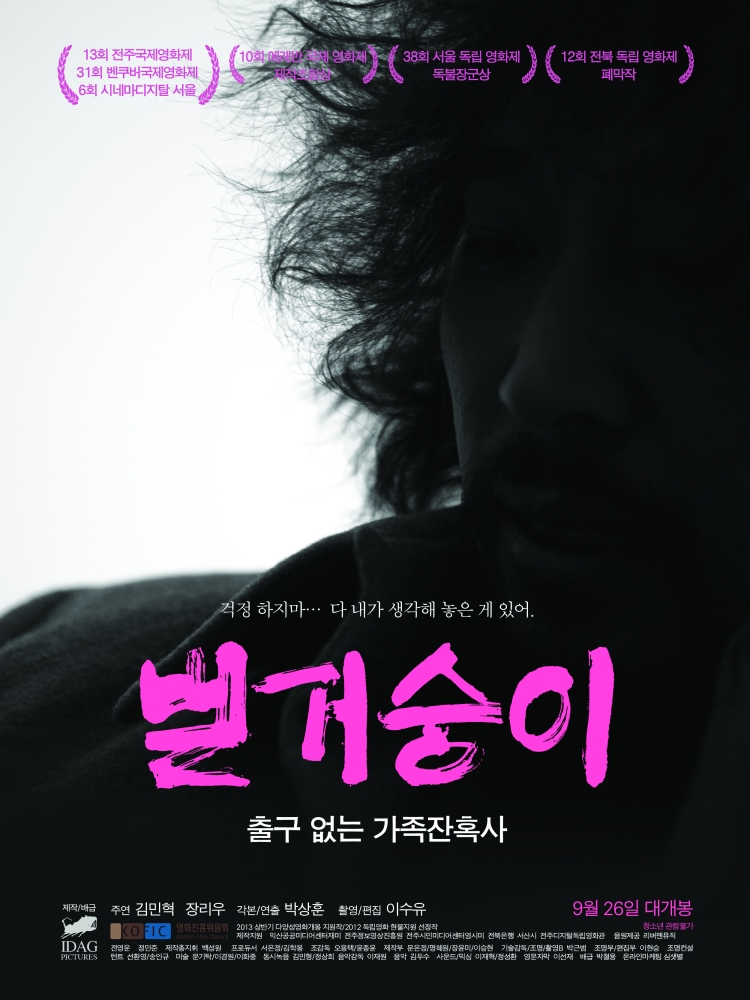 Anyone who follows Korean cinema will have noticed that Korean films often have a much bleaker point of view than those of other countries. Nevertheless it would be difficult to find one quite as unrelentingly dismal as A Mere Life (벌거숭이, Beolgeosungi). Encompassing all of human misery from the false support of family, marital discord, money worries, and the heartlessness of con men, A Mere Life throws just about everything it can at its everyman protagonist who finds himself trapped in a well of despair that not even death can save him from.

 Review of Byun Young-joo’s Helpless (화차, Hwacha) first published by
 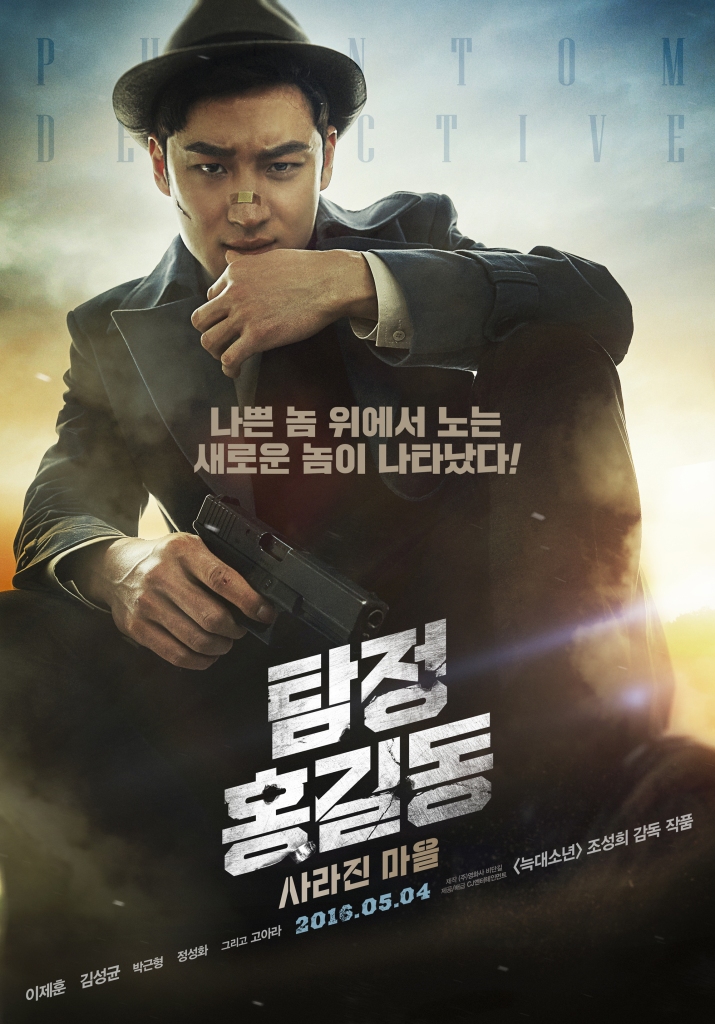 Review of Jo Sung-hee’s The Phantom Detective (탐정 홍길동: 사라진 마을, Tamjung Honggildong: Sarajin Maeul) first published by
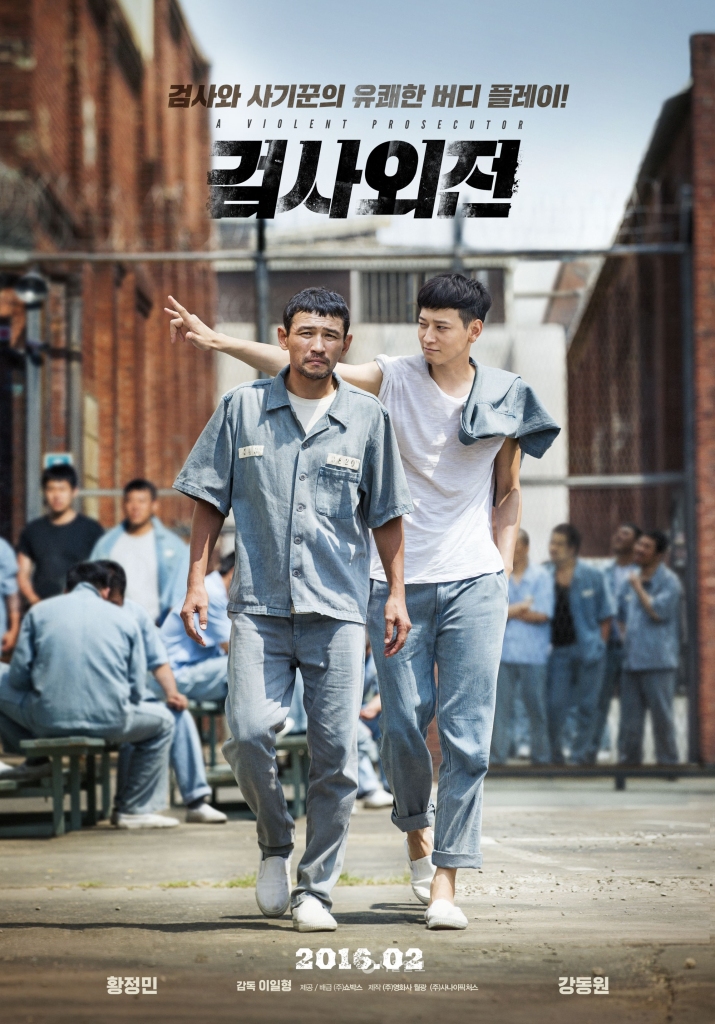 Review of Lee Il-hyeong’s A Violent Prosecutor first published by
 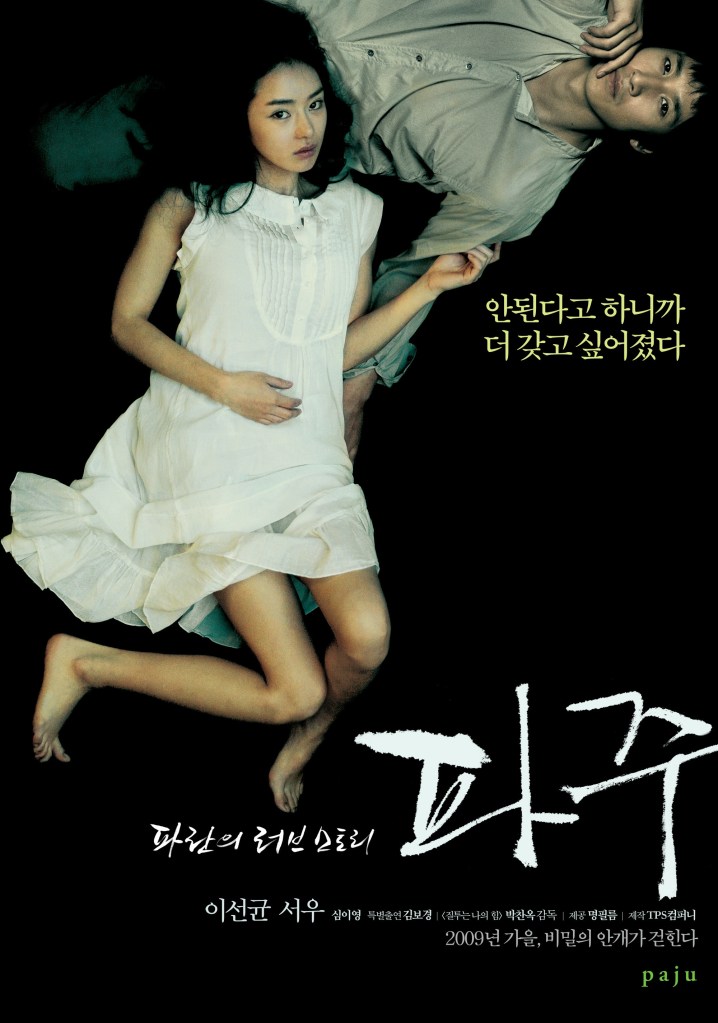 Paju (파주) is the name of a city in the far north of Korea, not far from “the” North, to be precise. Like the characters who inhabit it, Paju is a in a state of flux. Recently invaded by gangsters in the pay of developers, the old landscape is in ruins, awaiting the arrival of the future but fearing an uncertain dawn. Told across four time periods, Paju begins with Eun-mo’s (Seo Woo) return from a self imposed three year exile in India, trying to atone for something she does not understand. Much of this has to do with her brother-in-law, Joong-shik (Lee Sun-kyun), an local activist and school teacher with a troubled past. Love lands unwelcomely at the feet of two people each unable to make us of it in this melancholy coming of age tale shot through with tragic irony.
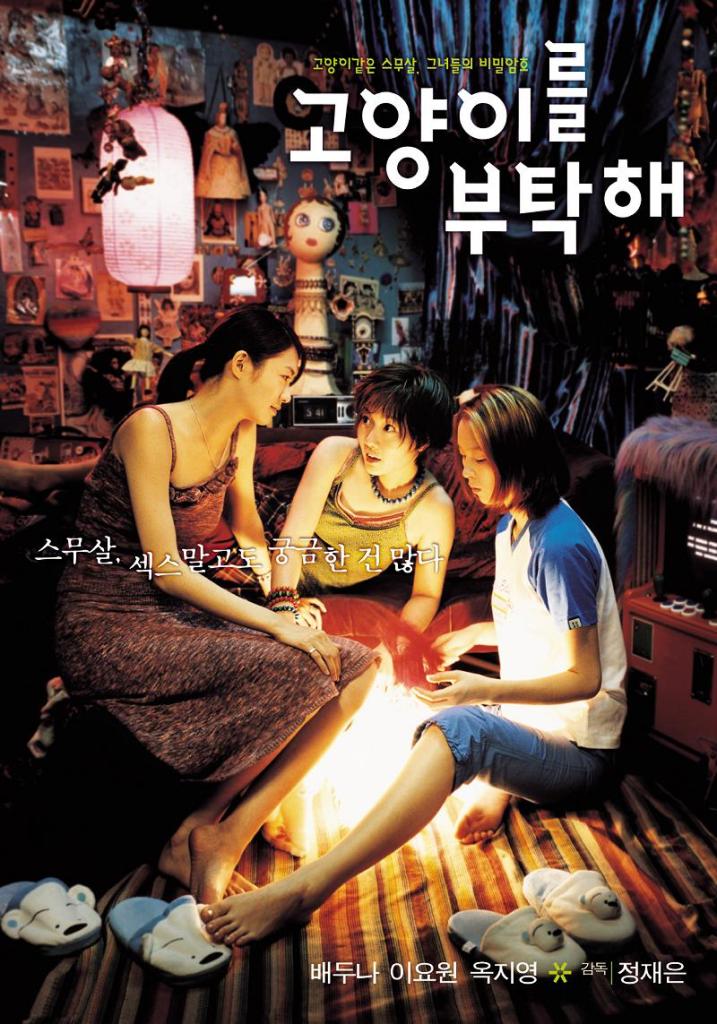 The time after high school is often destabilising as even once close groups of friends find themselves being pulled in all kinds of different directions. So it is for the group of five young women at the centre of Jeong Jae-eun’s debut feature, Take Care of My Cat (고양이를 부탁해, Goyangileul Butaghae). All at or around 20, the age of majority in Korea, the girls were a tightly banded unit during high school but have all sought different paths on leaving. Lynchpin Tae-hee (Bae Doo-na) is responsible for trying to keep the gang together through organising regular meet ups but it’s getting harder to get everyone in the same place and minor differences which hardly mattered during school grow ever wider as adulthood sets in.
 Windows on Worlds