 Post-war cinema took many forms. In Korea there was initial cause for celebration but, shortly after the end of the Japanese colonial era, Korea went back to war, with itself. While neighbouring countries and much of the world were engaged in rebuilding or reforming their societies, Korea found itself under the corrupt and authoritarian rule of Syngman Rhee who oversaw the traumatic conflict which is technically still ongoing if on an eternal hiatus. Yu Hyun-mok’s masterwork Aimless Bullet (오발탄, Obaltan) takes place eight years after the truce was signed, shortly after mass student demonstrations led to Rhee’s unseating which was followed by a short period of parliamentary democracy under Yun Posun ending with the military coup led by Park Chung-hee and a quarter century of military dictatorship. Of course, Yu could not know what would come but his vision is anything but hopeful. Aimless Bullets all, this is an entire nation left reeling with no signposts to guide the way and no possible destination to hope for. All there is here is tragedy, misery, and inevitable suffering with no possibility of respite.
Nominal head of the family Cheolho (Kim Jin-kyu) has an OK job as an accountant but still he can’t make ends meet and his small family consisting of his wife, two children, war hero younger brother Yeongho (Choi Moo-ryong), unmarried sister Myeongsuk (Seo Ae-ja), and senile mother with wartime PTSD lives in a makeshift hovel in the middle of a fetid slum. Yeongho may have distinguished himself on the battlefield, but now the war is over society can’t find a use for him and so he remains jobless and another drain on his brother’s resources. In many ways he was one of the lucky ones, returning from the war with physical and mental scars but no permanent impairments. Myeongsuk’s former fiancé was not so lucky and requires the use of crutches to get around leading him to reject the woman he loves in the belief that he will never be anything more than a burden to all around him.
Cheolho suffers with a persistent toothache which he refuses to get treatment for despite the constant urging from his colleagues because he cannot in good conscience consider spending the money on himself when he has so many people with so many different needs to take care of. His toothache is not just a toothache but a manifestation of the unending torment of life in this ruined city defined by despair, madness, and cruelty.
The film begins with broken glass – a motif which will be repeated throughout as the structural integrity of this makeshift environment is repeatedly tested and repeatedly fails. A group of former soldiers is drinking in a bar, each lamenting their sorry progress in the post-war world. Yeongho remarks that he feels like a broken bowl – something used up and ready for the scrap heap. The country he fought so hard to protect has no place for him now the fighting is done. After such a long time searching for work, Yeongho is finally offered a promising job by an old flame currently working as an actress in the fledgling film industry, but the part they’ve offered him is that of a war veteran with similar scarring to his own. The studio want realism and casually ask him to remove his shirt and show off the traces of bullet holes on his side which is a step too far for Yeongho who objects to his wartime service being “exploited” in such a mercenary way. Insulted and not wanting to dishonour the memories of his fallen comrades Yeongho storms out only to later reconsider and realise he may have been foolish to turn down such a promising opportunity despite his indignation.
It isn’t just bowls and glass which end up shattered but dreams too as love lies bleeding in a land of permanent despair. Yeongho seems like something of a ladies’ man but re-encountering a kindly nurse he met at the front he begins to feel another life is possible. This particular dream is complicated by the presence of a disturbed neighbour who has also fallen in love with the nurse and stops by late at night to read her poetry despite the fact that she has taken to waving a gun to scare him off.
Cheolho has committed himself to living honestly, even if it means his family suffers. Yeongho is beginning to wonder if his philosophy is worth suffering for, why should they have to keep living like this when they could abandon conventional morality and humanitarian concerns and become rich through immoral means. Myeongsuk, abandoned by the love of her life and unable to find work, has fallen into prostitution, another effect of the ongoing American military presence. Yeongho, having lost all hope, makes a drastic decision of his own but one which is destined to be as ill fated as each of his other dreams, hollow and unfulfillable as they are.
Experiencing a moment of selfish indulgence born of total despair, Cheolho finally gets his tooth seen to. Actually he asks the dentist to just pull all his teeth right now but medical ethics suggest that’s not a good idea. Ignoring the dentist’s advice, Cheolho roams the streets of the city before stopping into another dental clinic for more “treatment”. Dazed and bloody he steps into a taxi but confuses his drivers by changing his mind on destinations from the morgue to the hospital to the police station. The Aimless Bullet of the title, as the cabbie calls him, Cheolho can only echo the words of his senile mother, “let’s go”, even if he has no idea where. Earlier in the film another character has the same dilemma and frames it as a joke – ask a dying man where he’s going, he says, and he’ll tell you he doesn’t know. There is nowhere for Cheolho to go. His road is blocked, his meter running. Korea is directionless and lost, a desolate land of broken bowls and ruined hearts too tired to keep moving even if there were any destination available.
So relentlessly bleak, it’s little wonder that the film ran into censorship problems which eventually saw it pulled from cinema screens. Legend has it censors objected to the frequent refrains of “let’s go” from the bedridden mother which they interpreted as “let’s go to North Korea” as opposed to the “just let us die” which seems to be the much darker message implied by her later talk of sheep and green pastures. Everything here is broken, caged, ruined. There is no way out or possibility of salvation in this life or any other. Lasting only a few seconds, the film’s most shocking moment passes with little to no reaction as Yeongho, on the run from the police, dashes past the body of a woman who has hanged herself with her crying baby still tied to her back. Yeongho, and presumably the police chasing him, ignore both the body and the wailing of the child in their self obsessed propulsion forwards. A warning – but one which is heeded only too late.
Short scene from the film (English subtitles)
Aimless Bullet is available on English subtitled region free blu-ray courtesy of the Korean Film Archive but you can currently watch the HD restoration version of the film in its entirety legally and for free via the Korean Film Archive’s YouTube channel. (You may have to sign in and “confirm” you’re a grown up.)
 Korea is quite good at rom-coms. Consequently they make quite a lot of them and as the standard is comparatively high you have to admire the versatility on offer. Korean romantic comedies are, however, also a little more conservative, coy even, than those from outside of Asia which makes Petty Romance (쩨쩨한 로맨스, Jjae Jjae Han Romaenseu) something of an exception in its desire to veer in a more risqué direction. He’s too introverted, she’s too aggressive – they need each other to take the edges off, it’s a familiar story but one that works quite well. Petty Romance does not attempt to bring anything new to the usual formula but does make the most of its leads’ well honed chemistry whilst keeping the melodrama to a minimum.
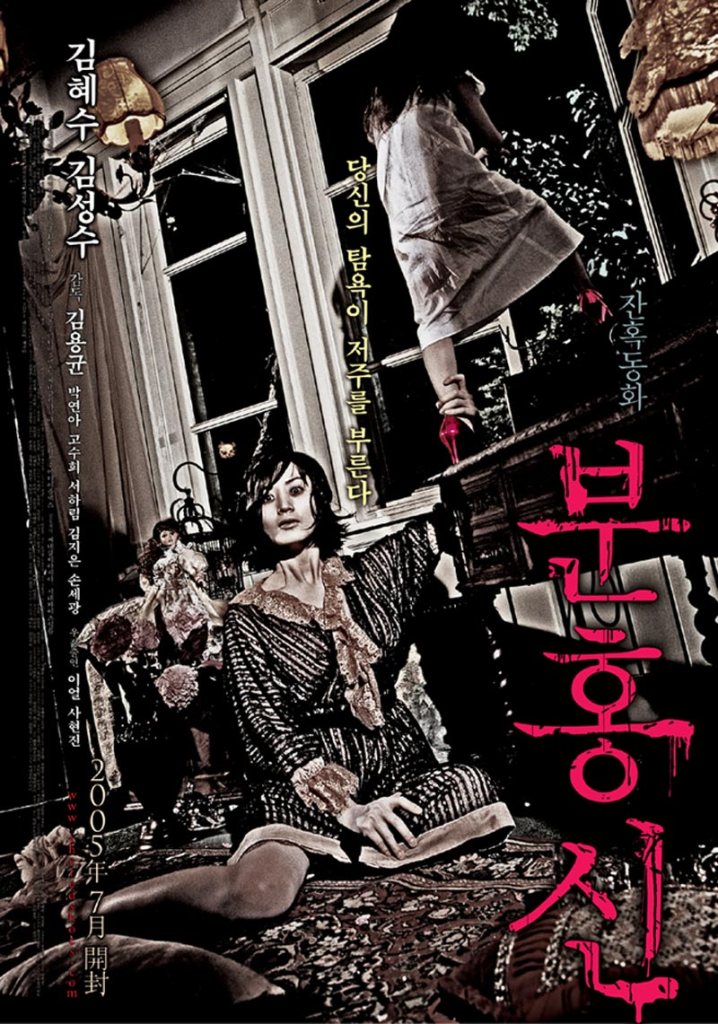 Walk a mile in a man’s shoes, they say, if you really want to understand him. If Kim Yong-gyun’s The Red Shoes (분홍신, Bunhongsin, 2005) is anything to go by, you’d better make sure you ask first and return them to their rightful owner afterwards without fear or covetousness. Loosely based on the classic Hans Christian Andersen tale this Korean take replaces dancing with murder and also mixes in elements from other popular Asian horror movies of the day, most notably
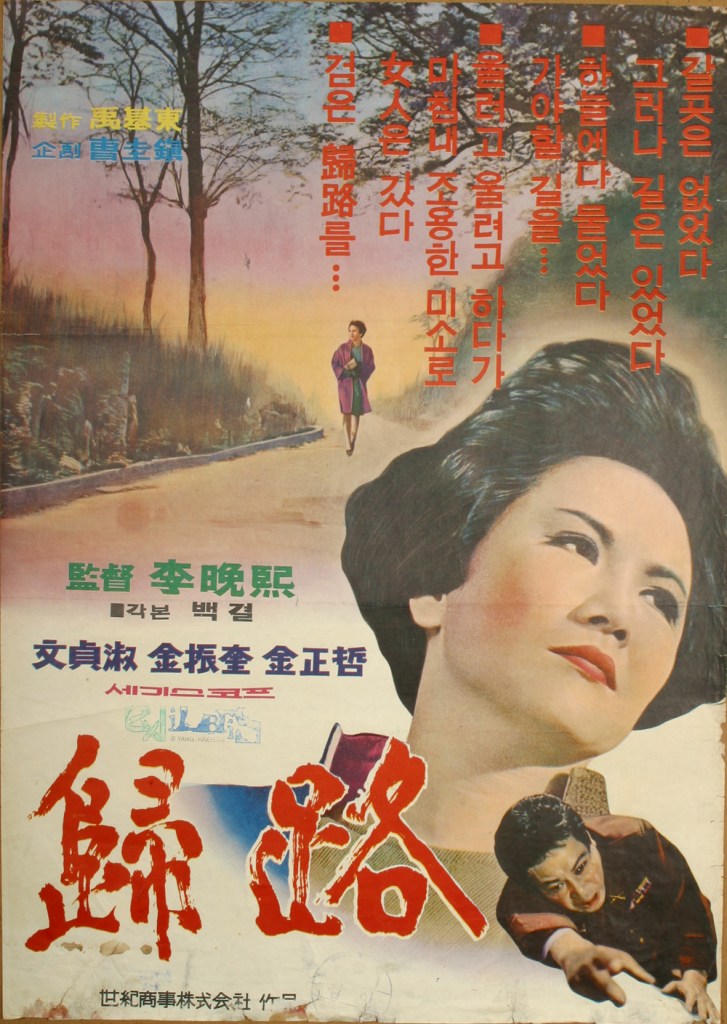 Lee Man-hee was one of the most prolific and high profile filmmakers of Korea’s golden age until his untimely death at the age of 43 in 1975. Like many directors of the era he had his fare share of struggles with the censorship regime enduring more than most when he was arrested for contravention of the code with his 1965 film Seven Female POWs and later decided to shelve an entire project in 1968’s
 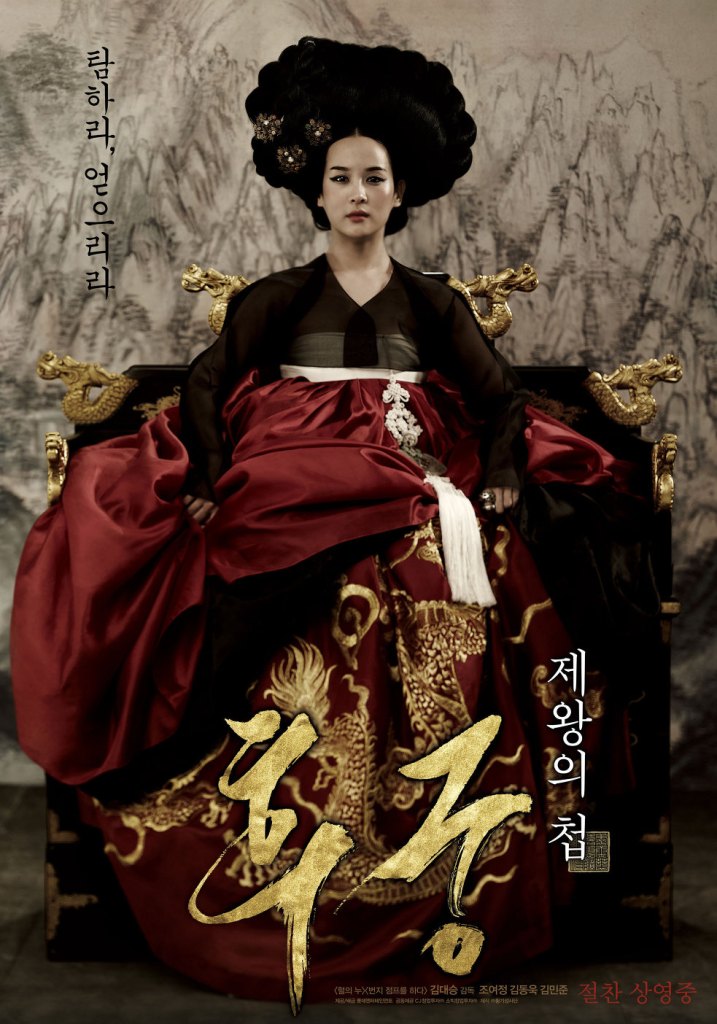 You can become the King of all Korea and your mum still won’t be happy. So it is for poor Prince Sungwon (Kim Dong-wook) who becomes accidental Iago in this Joseon tale of betrayal, cruelty, and love turning to hate in the toxic environment of the imperial court – Kim Dae-seung’s The Concubine (후궁: 제왕의 첩, Hugoong: Jewangui Chub). Power and impotence corrupt equally as the battlefield shifts to the bedroom and sex becomes weapon and currency in a complex political struggle.
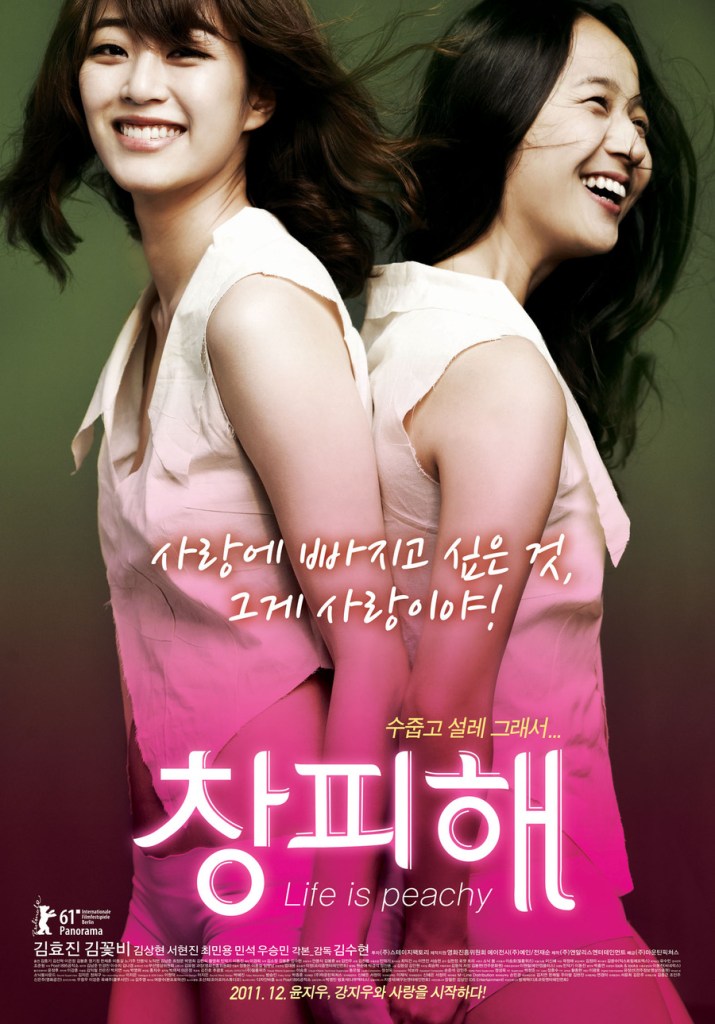 One of the very earliest films to address female same sex love in Korea, Ashamed (yes, really, but not quite – we’ll get to this later, 창피해, Changpihae, retitled Life is Peachy for US release) had a lot riding on it. Perhaps too much, but does at least manage to outline a convincing, refreshingly ordinary failed love romance even if hampered by a heavy handed structuring device and a lack of chemistry between its leading ladies.
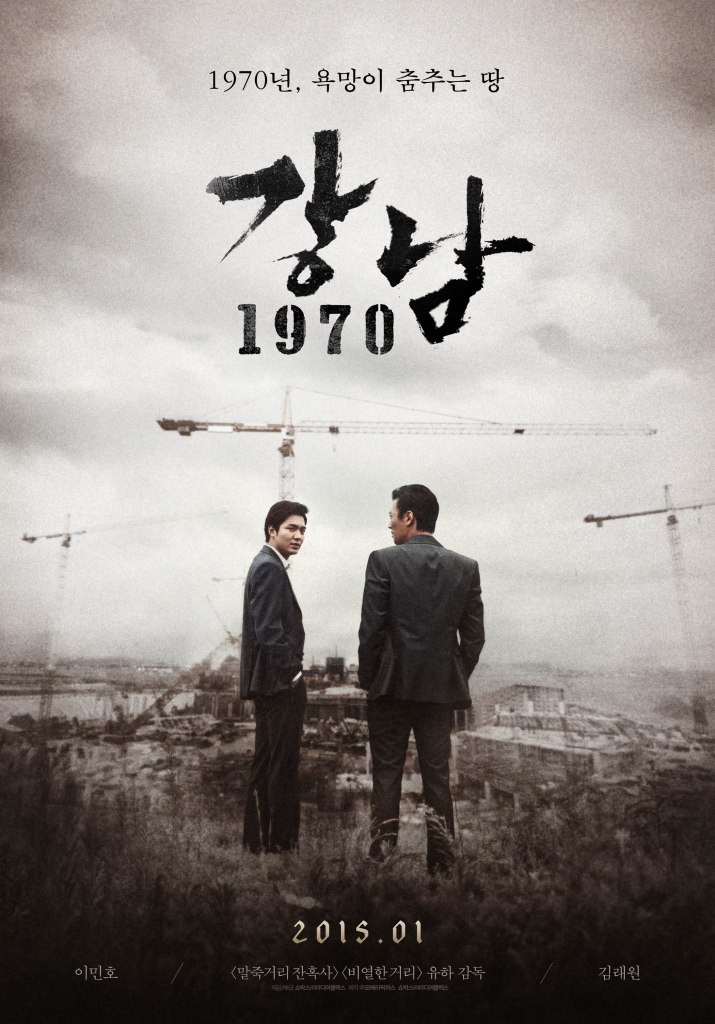 Yoo ha takes us back to the 1970s for some Gangnam Blues (강남 1970, Gangnam 1970) in a sorry tale of fatherless men caught up in dangerous times of ambition and avarice, very much at the bottom of the heap and about to be eclipsed by the “new world” currently under construction. Back then, Gangnam really was all just fields, owned by farmers soon to be cheated out of their ancestral lands by enterprising gangsters engaged in a complicated series of land grab manoeuvres, anticipating the eventual expansion of the bursting at the seams capital. Far from the shining city of today, Gangnam was a wasteland frontier town, the sort of place where a man can make a name for himself trading on his wits and his fists alone.
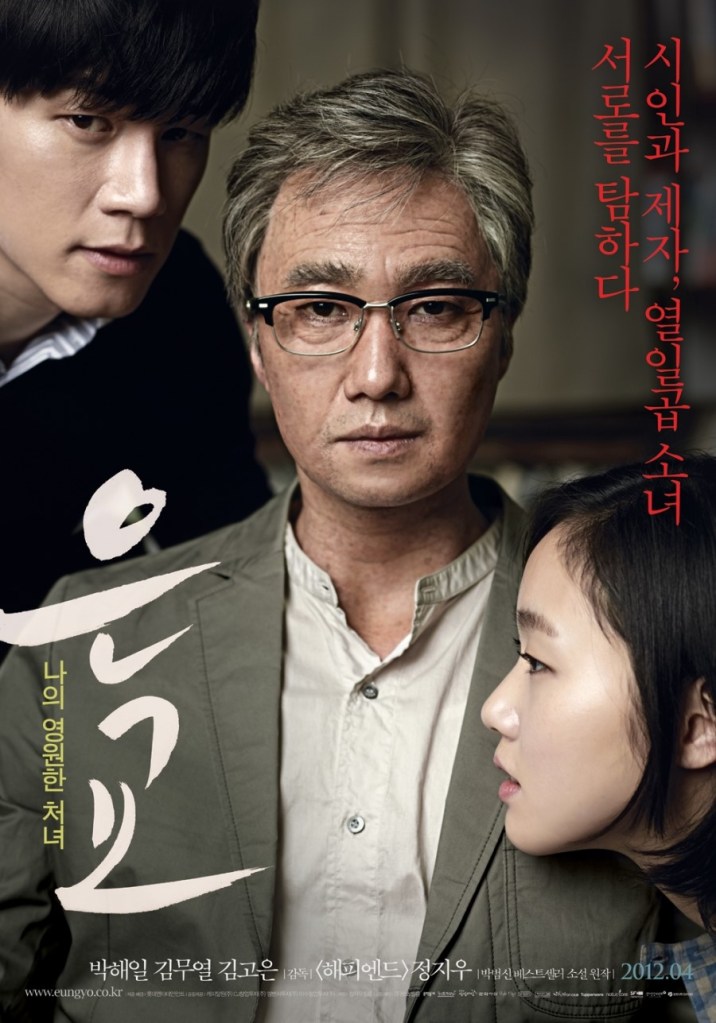 Stories of old men trying to recapture their lost youth through projecting their fantasies onto pretty young women are not exactly rare and the protagonist of Jung Ji-woo’s Eungyo ( AKA A Muse, 은교) is just as aware as most that his dreams of youthful romance border on the ridiculous. A tale of loss, nostalgia, and jealousy both professional and personal, Eungyo is a poetic exploration of the burdens and benefits of age which are often invisible to those who can only look forwards.
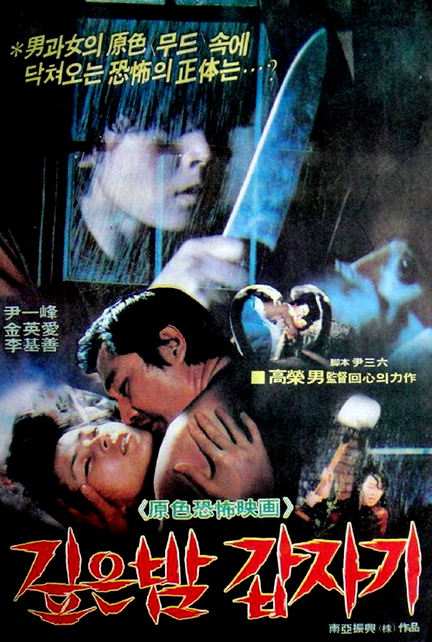 Everybody ought to have a maid, goes the old adage, but finding one you can trust can be a tall order. Kim Ki-young’s The Housemaid clearly sounds a warning call to husbands everywhere not to be tempted by the enticements of pretty young girls or conniving social climbers with designs on upending the domestic order by supplanting the legitimate wife from within her own home. The Housemaid is melodrama rewritten as horror in which a parasitical force colonises the domestic environment hell bent on taking it over through a subversion of its binding yet taboo foundation – sexual desire. Twenty years later, Suddenly in the Dark (깊은밤 갑자기, Gipeun Bam, Gapjagi) returns to the same theme but from a different angle. A once harmonious household is suddenly turned upside down following the introduction of a second female, provoking a series of crises within the already strained mind of its wife and mother.
 Review of Hur Jin-ho’s The Last Princess first published by
