Han Gong-ju (한공주, Lee Su-Jin, 2014)

Photo 1Review of this complex Korean social drama up at UK Anime Network. Went a bit intense with this one….


Hot on the heels of A Girl at My Door, we’re confronted with another impressive debut film from a Korean director which once again deals with a series of important, if unpleasant, often over looked social phenomenons. It’s difficult to review Han Gong-ju without revealing the mysterious events at its centre yet much of the film’s impact is bound up with the slow drip of its structural dissection of its raw and painful wounds. Based on a real life case from 2004, Hang Gong-ju is a harrowing tale of victim shaming, social injustice and ingrained systems of corruption which will shock even the most cynical Korean cinema fan.

At the beginning of the film, Hang Gong-ju is being a little less than sensitively dealt with by her school teacher who hands her a new mobile phone and instructs her not to call anyone she knows, not even her father, and only to accept calls from his own phone. She’ll be transferring to a new school and staying with her teacher’s mother until other suitable accommodation can be arranged. We don’t know why any of this is happening but the teacher seems put out, less than willing to help Gong-ju – almost as if he finds her existence a little embarrassing. At her new school she keeps herself to herself, making sure to remain distant from her fellow pupils. However, a group of singers finds out that Gong-ju has musical talents and becomes intent on adding her to their group. Though fearful and unwilling, Gong-ju gradually becomes closer to them. The reason for her aloofness leads back to the very reason she’s been exiled from her hometown and is a secret Gong-ju is terrified will eventually be revealed. Following a possibly well meaning (or maybe a little less so) action by her new group of friends, the true reasons for her being forced into hiding are thrown into the light and Gong-ju once again becomes the centre of a storm composed of a complex system of societal repercussions.

Without giving too much away, nothing that happens to Han Gong-ju is her fault yet she’s the one sent away from her home, from her friends and family, and forced to feel ashamed for having undergone a terrifying ordeal. She’s just a normal teenage girl, but there’s no one to stand with her or for her – she is left totally alone in the home of a stranger with no one to talk to or be comforted by. Those that are responsible, the guilty parties, who were able to act in such a morally repugnant way thanks to their connections, social standing and the arrogance the combination of those things afforded them seem to have largely escaped the shame and ignominy which has continued to dog Gong-ju who is still subject to physical manifestations of their actions – let alone the mental scarring. Not only that, Gong-ju is also pursued by the families of those that have caused her harm who seem to want her to change her statement of events in favour of their children. The father of one whom she had been close to even wants her to sign a petition to say that his child was “forced” into these heinous acts. Perhaps even, in a sense, he was though it’s hard to see how any rational person could ever see that as a mitigating factor in the events which did actually take place.

It’s not only Gong-ju who’s found herself at the mercy of rigid social codes. Her hard nosed and originally reluctant landlady-cum-responsible-adult Mrs. Lee has also had her fair share of disapproval from the local housewives thanks to her relationship with the town’s police chief. Her middle aged romance also causes a degree of resentment from her horrified son who doesn’t seem to care very much about his mother’s actual feelings or those of Gong-ju whom he deposited at his mother’s house like an inconvenient suitcase in the hope of making a good impression with his boss. Although originally put out by the sudden arrival of a teenage house guest who may even be some sort of delinquent, Mrs. Lee comes to a grudging admiration for this obviously damaged girl and is close to being her only real supporter (though perhaps only up to a point). Gong-ju’s growing closeness with Mrs. Lee is even more valuable as her relationship with her own mother was fractured even before the events that have befallen her and leave her unable even to count on her mother’s love and support during such a difficult time.

Told with remarkable assurance by Lee Su-jin who opts for a complex, non linear structure Han Gong-ju is frankly more harrowing than any horror film as the demons which plague the central character (and actually, many of the other women in the film) are all too real – manmade by a rigidly conformist, conservative society riddled with corruption and all too quick to point the finger of blame at those incorrectly positioned within its complex network of social hierarchies no matter what the facts of the matter may be. Shocking, even if sadly somewhat unsurprising, Han Gong-ju dares to shine a bright light on this dark corner of human suffering and by telling the sad story of this one lonely, victimised girl who nevertheless tries to live her life in spite of her difficult circumstances may help others finally wake-up to the kind of injustices we allow to take place in the world which we, daily, create.


Out today on DVD & blu-ray from Third Window Films

The Fake (UK Anime Network Review)

2013 - The Fake (still 7

Another Korean Film Festival review just gone live on UK Anime Network, this time a new animated effort from the director of King of Pigs – The Fake.


Yeon Sang-ho’s previous film, The King of Pigs, was the first Korean animation to be screened at Cannes and was nothing if not a bleak look at the prevalence and long term effects of bullying in the Korean high school system. His next film, The Fake, is another dark exposé but this time of another great pillar of Korean society – evangelical religion. False prophets abound as Yeon takes us on a difficult journey through the nature of faith, desperation and the exploitation of human weakness.

A small Korean town is slowly being dismantled before being sacrificed for new damming project. The people of the town are being appropriately compensated by the government, but still they’ll have to pick up and start again somewhere else even though many of them are already past retirement age. Two new forces are descending on this once ordinary town – one offers hope in the form of an evangelical preacher who claims to cure the sick and offers a place in a new paradise (to those with the money to buy a ticket – places strictly limited, terms and conditions may apply) and the other a violent drunkard, Min-chul, who wastes no time in wreaking havoc on the lives of his wife and daughter. Unfortunately, Min-chul picks a fight with the wrong person and is the only one to realise that the preacher’s “backer” is notorious fraudster currently wanted by police for a string of similar crimes. Sometimes the truth comes in unpleasant packages, and being the sort man he is, who would believe Min-chul when he’s the only one who’s seen through this “fake” miracle?

It goes without saying that like The King of Pigs, the world depicted in the The Fake is utterly bleak and without even the faintest glimmerings of hope. Every character is flawed, very few have any redeeming features at all and almost nothing good happens in the entire course of film. However, it is marginally more subtle than King of Pigs which is a much welcome upgrade over the previous film’s excesses. Faced with such a bleak situation, it isn’t surprising that the entire town has fallen hook, line and sinker for the false hope offered by the eerily cult-like preacher and his camp of evangelicals. The preacher himself may once have been a genuine man of god, but his business minded backer acts totally without compunction and is only interested in cold, hard cash. Peddling “holy water” as a supposed curative, neither the preacher nor the business man seem to care that one of their biggest supporters is currently suffering from tuberculosis and foregoing modern medicine in favour of this spiritual treatment – after all, the con is nearly played out and they’ll be on their way before their spurious claims are exposed.

Their only adversary is Min-chul, a man so rude and violent that people stopped paying attention to him years ago. It doesn’t help that Min-chul is much less interested in the injustice of the fraudulent operation than he is in taking personal revenge against the group, firstly because of what happened the first time he met the businessman and secondly because they threaten to take away his wife and daughter which seems to be the thing that most frightens him. Nevertheless, he is a dogged pursuer and his constant attention is enough to put the fraudsters on edge. The real horrifying truth is that some of these people half know the reality already, they just don’t want to hear it. It’s much easier to just believe in the false hope offered to you than to face a hopeless reality in which you have no control and no possibilities. If someone tells you they can carry your burdens for you and make it all OK, you likely won’t want to listen to someone who says differently and the fact of the matter is you’re very unlikely to trust someone you didn’t like very much in the first place no matter how sensible their arguments maybe.

In terms of animation style, The Fake offers a slight upgrade over The King of Pigs whilst retaining a similar aesthetic. Yeo overuses the shaky-cam effects which have an oddly rhythmical, computerised feeling which becomes distracting and works against their intended purpose but overall the The Fake feels much more accomplished in terms of production values. It’s a cynical message and hardly an original one, but The Fake offers its own take on the nature of faith and organised religion and bar a few missteps does so with a much more nuanced eye than The King of Pigs. Intensely bleak, violent and unremitting, The Fake is definitely not for the faint of heart but is a definite step up from The King of Pigs and ironically offers a ray of hope for serious animation in Korea.


A Hard Day (끝까지 간다, Kim Sung-hoon, 2014)

2014 - A Hard Day (still 2)In an unprecedented level of activity, here is another review up on UK-anime.net – this time Korean black comedy crime thriller, A Hard Day (끝까지 간다, Kkeutkkaji Ganda) which was shown at the London Film Festival and the London Korean Film Festival and is now out on DVD from Studio Canal.


For most people, a “hard day” probably means things like not being able to find a parking space, missing your train, the office coffee machine being broken and your boss having a mental breakdown right on the office floor but for not-totally-honest-but-sort-of-OK Seoul policeman Gun-su “hard” doesn’t quite begin to cover it.

Gun-su is driving furiously and arguing with his wife on the phone because he’s skipped out on his own mother’s funeral to rush to “an important work matter” which just happens to be that he has the only key to a drawer which contains some dodgy stuff it would have been better for internal affairs not to find – and internal affairs are on their way to have a look right now. So pre-occupied with the funeral, probable career ending misery and the possibility of dropping his fellow squad members right in it, Gun-su is driving way too fast. Consequently he hits something which turns out to be man. Totally stressed out by this point, Gun-su does the most sensible thing possible and puts the body in the boot of his car and continues on to the police station. Just when he thinks he’s finally gotten away with these very difficult circumstances, things only get worse as the guy the he knocked over turns out to be the wanted felon his now disgraced team have been assigned to track down. Oh, and then it turns out somebody saw him take the body too and is keen on a spot of blackmail. Really, you couldn’t make it up!

Some might say the Korean crime thriller format is all played out by this point, but what A Hard Day brings to the genre is a slice of totally black humour that you rarely see these days. Gun-su is obviously not an honest guy, but he’s not a criminal mastermind either and his fairly haphazard way of finding interesting solutions to serious problems is a joy to watch. This isn’t the first film where someone happens on the idea of hiding a body in a coffin, but it might be the first where said person uses a set of yellow balloons to block a security camera, his daughter’s remote control soldier to pull a body through an air conditioning duct and his shoelaces to prize the wooden nails out of his own mother’s coffin to safely deposit an inconvenient corpse inside. Gun-su (mostly) manages to stay one step ahead of whatever’s coming for him, albeit almost by accident and with Clouseau like ability to emerge unscathed from every deadly scrape. He’s definitely only slightly on the right side of the law but still you can’t help willing him on in his ever more dastardly deeds as he tries to outwit his mysterious opponent.

Though it does run a little long, refreshingly the plot remains fairly tight though it is literally one thing after another for poor old Gun-su. A blackly comic police thriller, A Hard Day isn’t claiming to be anything other than a genre piece but it does what it does with a healthy degree of style and confidence. The action scenes are well done and often fairly spectacular but they never dominate the film, taking a back seat to some cleverly crafted character dynamics. Frequent Hong Sang-soo collaborator Lee Sung-kyun excels as the slippery Gun-su whose chief weapon is his utter desperation while his nemesis, played by Cho Jing-woong, turns in an appropriately menacing turn as a seemingly omniscient master criminal.

Yes, A Hard Day contains a number of standard genre tropes that some may call clichés, but it uses them with such finesse that impossible not to be entertained by them. Bumbling, corrupt policemen come up against unstoppable criminals only to find their detective bones reactivating at exactly the wrong moment and threatening to make everything ten times worse while the situation snowballs all around them. However, A Hard Day also has its cheeky and subversive side and ends on a brilliantly a-moralistic note that one doesn’t normally associate with Korean cinema in particular. It may not be the most original of films, but A Hard Day is heaps of morbidly comic fun!


One on One (일대일, Kim Ki-duk, 2014)

9ae7eea7-3b8a-4212-96ca-023eb8b5cdd5wallpaper1Review of Kim Ki-duk’s latest from the London Korean Film Festival up at UK Anime Network.


Kim Ki-duk is back with another frankly baffling state of the nation style assault on contemporary Korean values. In contrast with much of his other work, One On One is much more dependent on plot and dialogue and has a much more straight forward yet distant shooting style than the poetic and painterly scenes we often see from him. Like his other films however, it employs shocking episodes of violence to expose some of society’s festering wounds though perhaps this time it’s with the eyes of a curious anthropologist rather than an embittered social investigator.

This oddly symmetrical tale begins with the shockingly matter of fact murder of a young schoolgirl by a gang of seven masked aggressors. Following this seemingly senseless crime another group of seven, this time a group of vigilantes brought together by a desire for some kind of personal vengeance against society, have taken it upon themselves to avenge this killing by kidnapping each of the seven perpetrators and torturing them until they confess and give some kind of information regarding the true nature of the crime. In another duality, the “villains” are all well to do, successful underlings whereas the “vigilantes” are generally working-class people who’ve lost out in the current economic climate and in some cases are living in dire poverty through no fault of their own. The villains offer several different reactions or explanations for their involvement in such a heinous crime varying from “I was just following orders” or “it was for the common good” to “what does it matter, I have status and can do as I please” but at the end of the day those on both sides will have to realise that the lines between good and bad are much more fluid than most people would like to think and that eventually you will have to decide for yourself not just where you stand but who it is you really are.

One on One often feels like a slightly underbaked pudding, the flavour is good (mostly) but it’s gone a bit soggy in the middle. The symmetrical nature of the two sets of seven is interesting as is the direct mirroring of their social statuses but somehow the ideas don’t quite feel developed enough and even end up feeling a little too neat or obvious. The elite group who murdered the school girl in the beginning are all successful people with seemingly no particular worries in their lives other than being caught up in a hierarchical system and unable to climb the ladder fast enough. When one of the men whose explanation is simply that this isn’t his fault, he was only following orders and whoever gave the order is to blame is reminded that one day he may be the one giving the orders he seems to regard it simply as the natural order of things. He and some of the others seem to have an unshakeable faith that they would not have been asked to do this (and presumably other “crimes” too) had it not been of vital importance for the survival of the Republic of South Korea. Where this “faith” comes from remains unclear, though it offers the slim justification of the fanatic for the senseless murder of a teenage girl. Some of these men wanted to get ahead and simply didn’t care what they had to do to get there, but others at least thought their actions had  a noble purpose no matter how terrifyingly awful the task they’ve been assigned.

The group of vigilantes by contrast are mostly those who’ve been disadvantaged by the current climate of Korean society. One is living on instant ramen, which as is pointed out by the group’s leader is a staple food for the poor but simply “a snack” for the rich, whilst trying to save money for his wife’s medical treatment and fend off various loan sharks. Another is living outside his old tenement building in a tent with his mother who seems to be suffering with dementia because they have nowhere else to go. The young men are angry that even if they’ve done everything right – got a degree, been abroad, learned English, they still can’t get those steady white collar jobs and a leg up into the middle classes like they were always promised. The one aberration in the group is its only female whose anger stems from being involved in an abusive relationship which she nevertheless does not seem keen to end. It isn’t difficult to see where their anger stems from and for most of them the vigilante activities are a way of taking a personal revenge against society as a whole by taking these entitled, well connected “thugs” down a peg or two and trying to make them realise the true nature of their societal roles.

However, things start to fall apart towards the end where Kim allows his message to become a little too muddy. There are good bad guys and bad good guys, nobody’s perfect and perhaps nobody even wants to be – can you really build a society when everyone has completely lost sight of any kind of human compassion? At one point some of the vigilantes attempt to make the best of their situation by exclaiming “ah, at least we aren’t in North Korea” which just makes you half wonder if North Korea isn’t just a giant government conspiracy designed to maintain the status quo by allowing the lowest members of society to feel good enough about their situation to avoid any revolutionary grumblings from the proletariat. The title card at the end flashes up the following three words “Who Am I?” with no other explanation to whom they might pertain. Like all the best riddles there might be several answers to that multifaceted problem though they may end up saying more about those who answer than those who posed the question.


Moebius (뫼비우스, Kim Ki-duk, 2013)

pXQzqHE - ImgurKim Ki-duk’s latest reviewed at uk-anime.net.


A Moebius strip is a twisted loop with no beginning and no end. No matter where you start your journey, you could pass the same point many times without ever crossing a boundary. It this inexorable and infinite cycle to which Korean auteur and professional cage rattler Kim Ki-duk now turns his unfaltering gaze as the ancient wheel of sex, death and violence trundles on untroubled by our modern day pretences of a more enlightened society. Completely dialogue free, Kim presents a contemporary greek tragedy framed as the blackest kind of satire.

Things are not going well in this quietly suburban, middle class household. It’s not even breakfast time but the father has retreated to his study because the mother is already perched on the stairs, a large refilled glass of red wine in hand and all while the bemused teenage son looks on disinterestedly. This is a normal morning, nothing has changed very recently. Things are about to change though – quite drastically. Finally at the end of her tether and filled with a Medea-like fury the mother decides to put an end to her husband’s philandering days by means of a kitchen knife. She is extremely drunk and half crazed so her husband easily disarms her at which point she comes up with another idea – if she can’t hurt her husband himself, she can cause him pain by proxy and takes her knife to her unsuspecting son’s room. Literally emasculated by his mother, the young son must then face difficult questions regarding the nature of his masculinity, particularly as it appears to others. His father in turn must cope both with the guilt of his own sins being visited on his son as well as that of his own behaviour as a father, husband and finally a man. Never one for easy answers, Kim Ki-duk’s examination of modern day Korean society continues apace but its implications are far more wide reaching.

Though Kim is firmly focussed on his native Korea, the questions he presents are as old as the hills and common to almost every culture (at least to those that also male dominated). It’s not the first Korean film where the successful father is having an affair with a girl young enough to be his daughter, or the first where the wife’s humiliation spills over into violence but the nature of her revenge is so specific, and perhaps bizarre, that it brings its own particular line of discourse. The first question is one of traditional masculinity and how that is defined between men. The son seems to feel emasculated and looks for different ways to explore his manhood but is at pains that no one should discover the nature of his injury. Though he approaches the woman who had been his father’s mistress (played by the same actress who plays the mother), he backs off when she reaches for his genitals. Later, he makes an attempt to step in when she’s being hassled by a gang of dangerous looking youths but quickly subjugates himself to them and, when they do actually gang rape her, pretends to join in rather than stand up to them or have them think he is less than a man.

The fact the object of his adolescent lust is both his father’s mistress and looks eerily like a younger version of his mother is another ancient problem where, as they say, everyman kills his father and beds his mother. The father’s first reaction to his son’s predicament is to look for ways someone without a penis might experience orgasm – the answer he comes up with also speaks volumes and points to another of Kim’s ideas of circularity, that pain and pleasure aren’t so much linear poles but a circular continuum where both can exist equally at the same time as a sort of self feeding vortex. The second idea he has is a penis transplant, and as the boy’s is no longer available he makes the ultimate decision to sacrifice his own source of pleasure in favour of his son’s. Unfortunately, it comes with some sort of homing device which means it only works with the mother (perhaps her ultimate revenge). The relationship between father and son changes again as they become rivals in an incestuous love triangle only now it is the father who has become impotent and the son, literally, the man of the house.

If you think this all sounds a bit ridiculous (is a penis transplant even possible?) you aren’t wrong, and Kim Ki-duk knows too. Odd as it might sound, Moebius is a comedy, even if a macabre one. Sexual violence, incest, penis theft – not traditional comedic ingredients it has to be said but Kim Ki-duk’s very definitely of the it’s better to laugh than cry school of thought and the sheer scale of Kim’s vision gives the entire project the sort of absurd grandiosity that makes it very difficult not to find humour even the bleakest of situations. Kim isn’t proposing any answers here so much as offering a series of (critical) observations of human nature. The world isn’t going to change just as it hasn’t changed since Euripides first started telling stories of people driven to the edge of madness. We’re all walking on a Moebius strip, repeating the cycle endlessly completely unaware that, at some point, we began walking on the other side. Like the best Greek tragedies, Moebius is has a feeling of inevitability driven by the most primal of emotions. Once again Kim proves he’s not afraid to look deep into the dark heart of human nature and, though not for the faint hearted, Moebius is one of his most accomplished films to date.


Pluto (명왕성, Shin Su-won, 2013)

GSEOiWzAs we’ve seen lately, there are certainly no shortage of films looking at the complicated and often harsh world of high school in Korea. Pluto (명왕성, Myungwangsung) takes a sideways look at the darker side of academic excellence when the praise and prestige of being one of the top students becomes almost like a drug and makes otherwise bright young people do things even a heroin addict in serious need of a fix might at least feel bad about afterwards with an all encompassing sense of entitlement that gives them a lifetime free pass for even the worst transgression.

June (David Lee) is a bright young boy from a regular high school who’s just transferred into an elite boarding school educating the country’s next great hopes. He may have been a top student at his old school, but here he’s merely average as the school hotshots are pretty quick to point out. Here, the top ten students are treated like princelings – a special computerised teaching room, no curfew, better rooms, better resources and they can more or less do what they like so long as they keep their grades up. Occasionally someone manages to bump one of the top ten from the list but they quickly get kicked out again. The top ten operate like some kind of swatters mafia – they all stick rigidly together, swapping hot tips for the upcoming exams that they refuse to share with the others and engaging in a series of increasingly cruel “pranks” they term rabbit hunts.

The film opens with the police finding the body of the previously number one student Yu-jin (Sung Joon) in a wood with June’s phone lying next him having been used to film the entire grisly affair. June is arrested for the murder but is released after his alibi checks out. Sick of all the struggle and unfairness, June puts his particular talents to use to try and teach the world a lesson about the sort of people this system is producing.

The picture Pluto paints of the Korean schools system is a frankly frightening one in which academic success is virtually bought and paid for or guaranteed by class credentials. Yes, the top students obviously must have ability – some of their activities may come close to cheating but interestingly nobody seems to want to try actual deception to get ahead. However, that natural ability has clearly been bolstered by their parents’ wealth. Attending an elite school and spending more than some people earn on private tutors geared towards knowing how to get into the best universities undoubtedly gives them advantages which are out of reach for others no matter how smart they may be. Perhaps that’s fair enough in a capitalist society, they didn’t ask to be born to rich parents and who would turn that sort of help down if offered it? However, though they may possess the virtues of discipline, hard work and a desire to succeed what they lack is any sort of empathy or even common human decency. Engaging in a series of manipulative hazing exercises, the elite group will stop at nothing to protect their status specialising in thuggery, blackmail, rape and even murder. The sort of people this system is advancing are not the sort of people you want running your schools and hospitals, they are morally bankrupt and only care about their own standing in the eyes of others.

Perhaps it’s fitting that this elite boarding school is housed inside a former compound of the Korean secret police, including a subterranean layer of prison-like tunnels once used as a torture chamber. Aside from the obvious school as torture analogies, much of them film seems to be about what people choose to ‘unsee’. The headmaster of the high school is aware of the ‘untoward’ behaviour of some of his pupils but refuses to do anything in case it upsets their well connected parents, damages the reputation of his school or has an adverse effect on those all important test results. The ‘Pluto’ of the title is referenced in June’s university application essay on the demotion of Pluto from the accepted list of planets. He argues that this is unfair and a fallacy as it’s illogical to measure anything by its proximity to the sun which is, after all, just another star which will eventually die like all the others. Just because it’s a little different looking, you shouldn’t necessarily categorise it as being in some way ‘inferior’ based on a set of fairly flimsy criteria. June, like Pluto, hovers in uncertain orbit on the periphery – always wanting in but perpetually locked out. Naturally gifted but from an ‘ordinary’ background where his single mother sells insurance for OK money, June can’t hope to compete with these elite kids even if his capabilities may be greater. A lot of decisions have already been made as to what people choose to see, have chosen to regard as an ideal, even if the reality is painfully obvious.

Though oddly funny in places for such a hard hitting film, Pluto is a difficult watch at times and paints a depressing picture of the high pressured nature of the Korean educational system and of human nature in general. The elite group are universally awful people who run the gamut from arrogant, entitled prigs to snivelling cowards which makes it difficult to feel any sort of sympathy and you start to long for bad things to happen to them which somewhat undermines the film’s premise. Perhaps the problem is just that they were awful people who were enabled by a system rather than people who started out good and were corrupted by it. Stylishly shot and supported by well grounded performances from its young cast, Pluto is a welcome addition to this perhaps overcrowded genre which brings more than a few new thought provoking ideas to the table.


Review of first Pluto published by UK Anime Network.

Crossroads of Youth – Barbican centre 2nd August 2012

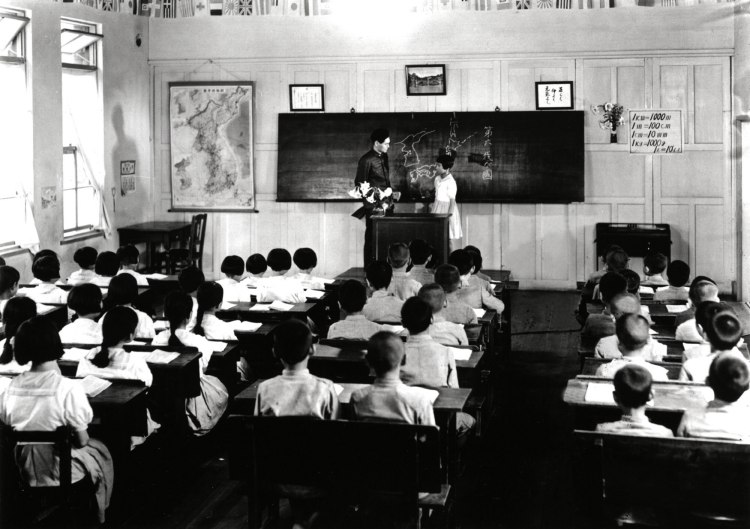
London was treated to something very special today as Korea’s oldest surviving silent film was screened at the barbican exactly the way its original 1934 audience would have seen it.

Young-bok has been adopted into Bong-Sun’s family as her intended husband. For seven long years he’s done everything that’s been asked of him, no matter how tedious or demanding, without complaint. Now 21, Bong-sun’s father is beginning to think the time for Young-bok’s marriage is near seeing as Bong-sun is now sixteen. However, tragedy strikes as Bong-sun is seduced by another man from the village. Heartbroken, Young-bok takes off for the city to make something of himself there, leaving his mother and sister behind in his home village.

Although Yong-bok is a good and kind young man, his heartbreak leads him to waste his life in drink. When working at the station one day he catches sight of the man who crushed all his young hopes in the village – little does he know of the havoc he is still to wreak on Young-bok’s city life.

Unbeknownst to Young-bok, his younger sister has come to the city to look for him following the death of their mother. Unable to find him she takes a job as hostess in a bar where she falls prey to the same man that ruined Bong-sun and an even worse friend of his. Young-bok also begins a tentative romance with a girl, Ge-soon, who pumps petrol but she has her own problems as her father’s ill health and rising debts have decreed she is to become the third wife of a money lender to satisfy them. Can these three young people find each other and happiness despite the poverty and hardship to which they’ve been subjected?

In contrast to the way silent films were usually seen in the west, in Korea rather than the intertitles we use to give crucial information of the story a live narrator (byeonsa) would interpret the action and/or act some of it out. As I understand it director Ahn’s original script is lost (though fortunately a brief synopsis had survived) and a new version had to be put together by closely watching the film and filling in the gaps.  Kim Tae-yong director of Late Autumn and Family Ties effectively re-directed the piece for for the stage along with Cho Hee-bong who fills the role of the narrator. The new script is obviously not afraid to embrace the melodrama of the film’s storyline in a self aware way, even throwing in a few knowing jokes at its own expense.

The performance began with a song by two young actors portraying Ge-soon and Young-bok, both of whom had absolutely wonderful voices and interpretation. Even though there were no subtitles for this first part it didn’t matter as the heartfelt intention of the song came across perfectly. Once this finished the film started playing with English subtitles for what the narrator was saying. Occasionally the subtitles didn’t cover the length of the narrator’s speech or perhaps missed some of the nuances of his humour but there was never a problem knowing what was going on. There was then another song about half way through covering a particularly intense scene between Ge-soon and Young-bok with the narrator adding occasional dialogue in the middle and a final song song functioning as an epilogue. The film was accompanied throughout by a band of four musicians playing an energetic and lively score which worked extremely well with the film and atmosphere.

All in all it was a fascinating and extremely enjoyable experience which deserves to be seen as widely as possible.

Poetry


Last year’s winner of the Cannes award for screenwriting, Lee Chang-dong’s Poetry is the story of one women’s yearning to see the beauty of life and finding that often it’s only to be found in its blackest tragedies. Mija (Yun Jung-Hee), a sixty-five year old woman, is caring for her grandson in a tiny apartment of the edges of a city when simple aches and pains lead to the discovery of a serious health problem. Having seen a poster for a local adult education class in poetry writing, and recalling a teacher once predicted she’d one day become a poet she decides to enroll. In the midst of this she also discovers that her grandson has done something unthinkable, and that the reactions of others to these events ranges from the nonchalant to the wildly self interested. Bewildered by the conspiracy of these conflicting crises, Mija must reach an understanding of what must happen now and learn to see the beauty of life in all its ugliness so that she can finally write her own poem.

Although it has a gentle melancholy, Poetry is not quite as depressing as it sounds and is in the end deeply beautiful. Yun Jung-Hee’s performance is breathtaking, never straying too far into melodrama she keeps a film that might have become overwrought firmly rooted whilst allowing the audience to totally empathise with her character. It’s no wonder that this won the screen writing prize at Cannes last year as it’s incredibly well written and hugely literate.

Poetry is a beautiful film that everyone would benefit from seeing. It’s a real shame that this is the first of Lee Chang-Dong’s films to be released in the UK, hopefully it won’t be the last!