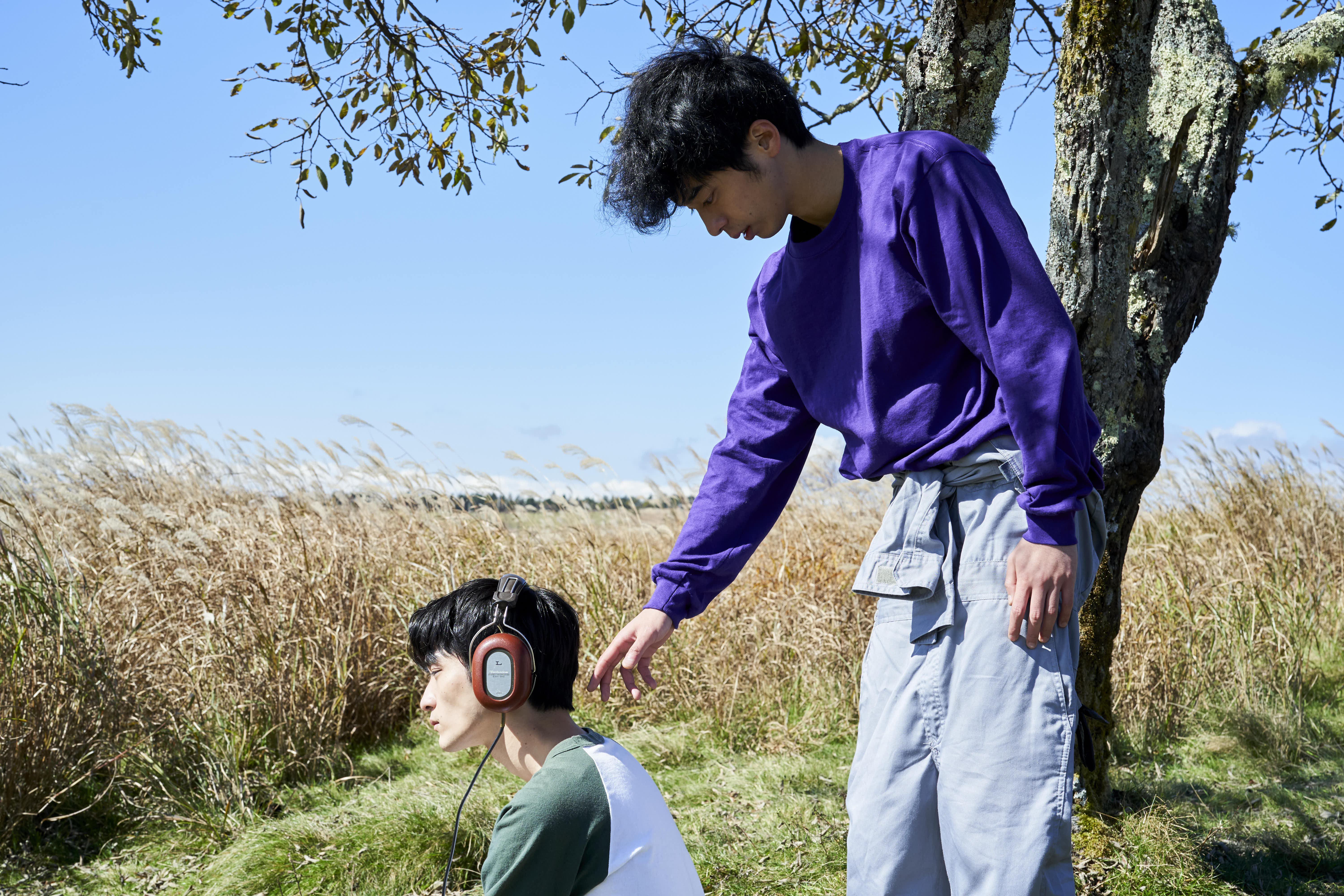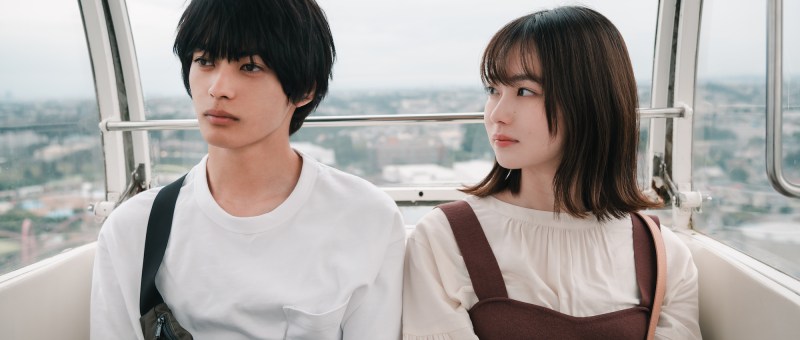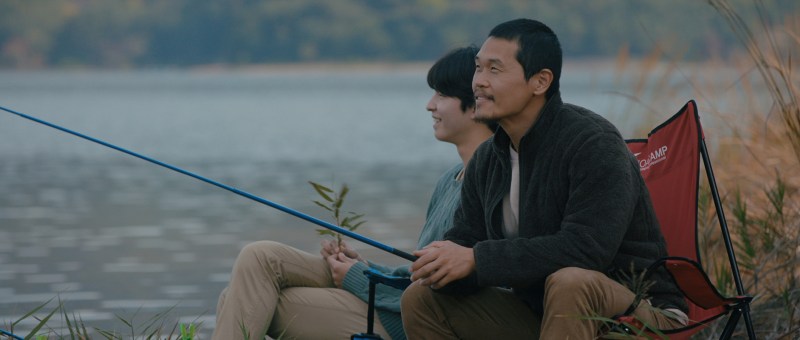
Tales from the Occult (失衡凶間, Fruit Chan, Fung Chih-Chiang, Wesley Hoi Ip-Sang, 2022)

A collection of Hong Kongers contend with the hidden horrors of the contemporary society in the first instalment in a series of anthology horror films, Tales from the Occult (失衡凶間,). Veterans Fruit Chan and Fung Chih-Chiang are accompanied by Wesley Hoi Ip-Sang making his directorial debut as the three directors each tackle lingering terrors as the protagonists of the three chapters are quite literally haunted by past transgressions from a pop singer on the edge consumed with guilt over a teenage trauma, to a sleazy financial influencer who might inadvertently have killed a hundred people, and the denizens of a rundown tenement who are too afraid to report a possibly dangerous presence to the police lest it damage the property value of their flats. 

In Wesley Hoi Ip-Sang’s opening instalment The Chink, a carefree high school girl chasing a stray cat stumbles on the body of a burglar who apparently fell from the rooftops and was trapped in a tiny cavity between two buildings. Some years later Yoyi (Cherry Ngan) has become a successful pop star but is still haunted by her failure to report the body to the police all those years ago worried that perhaps if she had he might have been saved though he had obviously been dead for some time when she found him. Her kindly psychiatrist uncle Ronald (Lawrence Cheng Tan-shui) tries to assuage her anxiety but fails to consider that there might actually be a dark presence in her new flat. Meanwhile, she’s also under considerable stress given that she’s in an ill-defined relationship with Alan, her married manager, who eventually brands her “mentally unstable”, and she’s somehow oblivious to the fact her high school best friend is clearly in love with her. Even so, as it turns out, perhaps you can also be haunted by the living while there are some threats that even the most well-meaning of psychiatrists is ill-equipped to cure. 

It’s ironic in a sense that Yoyi was provided with her new apartment as a path towards an illusionary freedom which is really only a means for Alan to exert greater control over her life while the heroine of Fung Chih-Chiang’s final sequence The Tenement has in a sense chosen seclusion in installing herself in a moribund tenement block in order to concentrate on her writing. The contrast between the two buildings couldn’t be more stark but even the tenement dwellers are paranoid about house prices while assuming the creepy, water-drenched presence encountered by author of pulpy internet novels Ginny (Sofiee Ng Hoi Yan) is an attempt by developers to scare them out of their homes amid Hong Kong’s horrifyingly competitive housing market. Still, like Yoyi they are each haunted by past transgressions but pinning the blame on former gangster Frankie Ho (Richie Jen) who was once accused of drowning a man. What began as a haunting soon descends into farce as they realise the “water ghost” seems to be a young woman who has passed away in their stairwell and decide to “dispose” of her with Frankie’s help to avoid a scandal destroying the value of their homes. But then, all is not quite as it seems as the sudden appearance of a journalist investigating a scandalous “love crime” makes clear. 

Fruit Chan’s middle chapter Dead Mall also takes aim at internet investigators and dodgy “influencers” as sleazy financial snake oil vlogger Wilson (Jerry Lamb) fetches up at a shopping centre surrounded by shoppers in masks to advertise that the mall is actually doing fine despite the economic downturn produced by the pandemic which he describes as worse than that of SARS. In reality the mall is “dead” with barely any customers and rows of shuttered stores, Wilson is simply doing a paid post in an attempt to raise its fortunes not least because the original mall was destroyed in a fire 14 years previously started by a carelessly discarded cigarette. Wilson is pursued not only by those who claim they lost money because of his terrible financial advice, but by a paranormal live streamer who has a separate grudge against him while he continues to refuse any responsibility for his actions answering only that investment carries risk and there’s no opportunity without crisis. What he discovers is perhaps that you reap what you sow, Chan frequently cutting to hugely entertained netizens baying for his blood while he attempts to outrun his fiery karma. 

In each of the increasingly humorous storylines, Chan’s being a particular highlight of wit and irony, there is a lingering dissatisfaction with the contemporary society from the pressures of the fiercely competitive housing market to the kind of financial desperation and longing for connection that fuels the consumerist emptiness of influencer culture. The jury might be out on whether there’s really any such thing as “ghosts” but the haunting is real enough even if it’s only in your mind. 


Tales from the Occult screens at the Garden Cinema, London on 9th July as part of Focus Hong Kong’s Making Waves – Navigators of Hong Kong Cinema.

Original trailer (English subtitles)

Backlight (逆光, Ren Sudo, 2021)

©2021 『逆光』 FILM
©2021 『逆光』 FILM

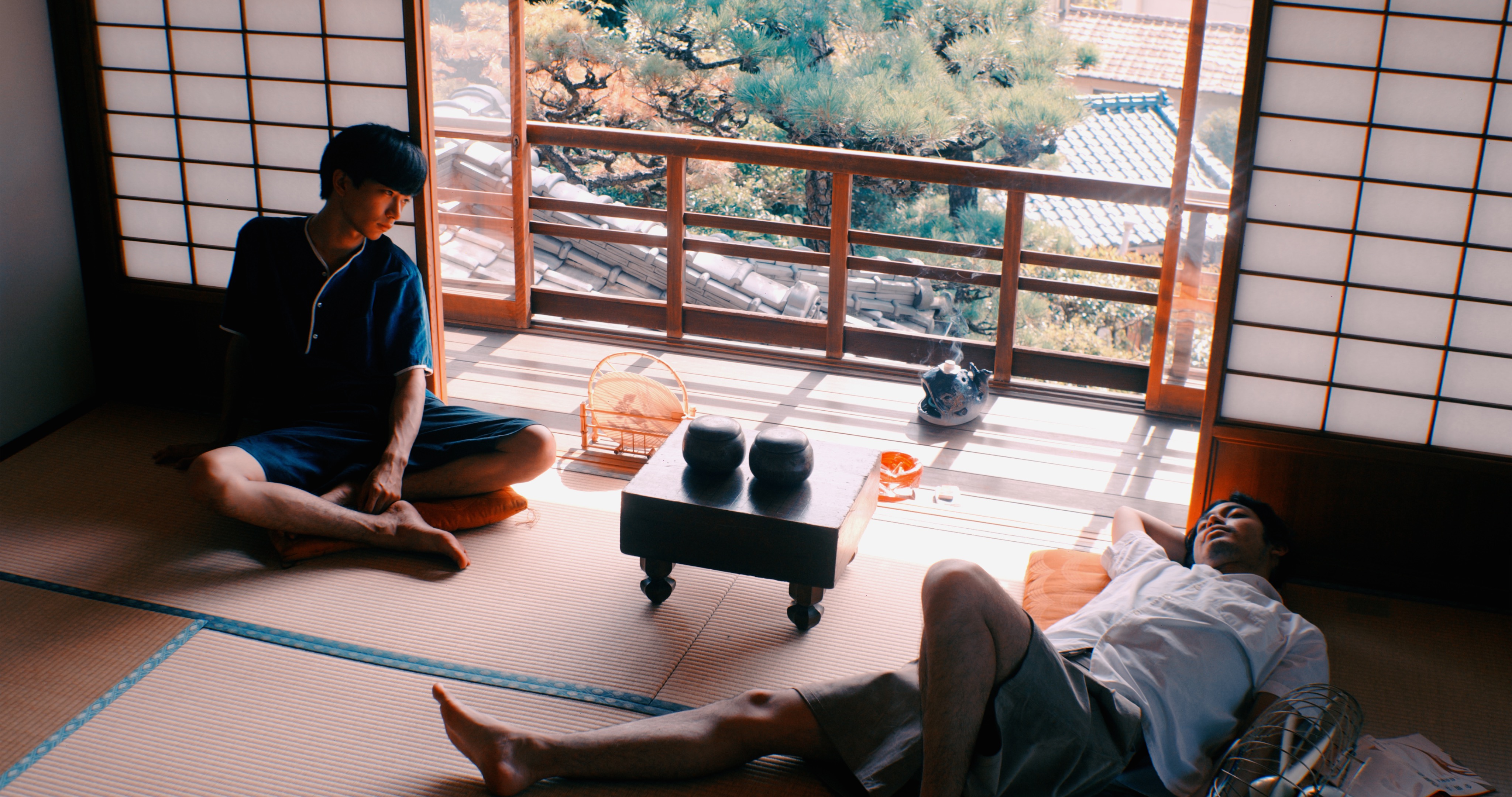
An aloof young man brings a friend back from college but struggles to convey to him his true feelings in the Onomichi of the 1970s in actor Ren Sudo’s directorial debut, Backlight (逆光, Gyakko). This may partly be because he himself is uncomfortable in his childhood home while the object of his affection seemingly takes to it though as someone else later hints perhaps in the end he is only toying with him as a pleasant summer diversion that will eventually draw to a close. 

Sudo opens the film with a series of black and white slides of Onomichi in the 70s accompanied by a cheerful voiceover in opposition to the film’s subsequent gloominess describing the area for tourists and in particular its cable car. Finally the slides give way to clumsy shots of Yoshioka (Haya Nakazaki), university friend of Akira (Ren Sudo), and a copy of Yukio Mishima’s College of Unchasteness. Akira has invited Yoshioka to stay with him at his family home in Onomichi for a week over the summer, but it’s fairly odd behaviour to invite someone somewhere and then spend the whole time telling them how awful it is and that you can’t wait to leave. 

Evidently the son of wealthy parents who for whatever reason are not around, Akira is a fairly unsympathetic figure who seems to have been harbouring resentment towards Onomichi ever since his family moved to the area from Tokyo when he as a child. He views it as dull and backward and seems to have only contempt for those who live there such as childhood friend Fumie (Eriko Tomiyama) whom he blanks in the street as like the cable cars of the opening he passes her in the company of Yoshioka. Realising he is back, she arrives at his home to return some books he’d lent her but even on encountering her there Akira treats Fumie disdainfully and is quite embarrassingly rude in front of his new friend explaining that he lent the books so that a simple country girl like her wouldn’t fall behind the times while contemptuously assuming that she won’t actually have read them. 

These misogynistic attitudes seem prevalent in the local community which is in any case unusually obsessed with Mishima. Another local intellectual describes College of Unchasteness, which Akira has not actually read, as “silly prose for women” a phrase Akira later echoes, while making a cynical comment as to its content suggesting that a woman’s ultimate pleasure lies in being murdered by a man she may have been manipulating. Unable to voice their desires directly there may be a degree of manipulation going on, Akira silently courting Yoshioka who may indeed be toying with him in the way that he may have been toying with Fumie who has since come to know of his sexuality. In any case he seems to be uncertain of Yoshioka’s receptiveness, crassly suggesting Fumie invite another girl, Miko (Akira Kikoshi), who seems strange and otherworldly, with the rationale that it would be a problem if she were too pretty and by implication insulting Fumie too in the process. Miko meanwhile is evidently upset by the lewd conversation while later prompted to leave the party after a political debate breaks out about nuclear arms. Perhaps it’s not surprising for a party that seems to be populated by Mishima devotees but even if their support for re-armament is a facet of their anti-Americanism it is curiously at odds with the times again upsetting Miko whose mother is a survivor of the atomic bomb having lost all her family. 

Even so the closing scenes turn back to Mishima and doomed romance in a description of love as a political act in which love that does not transgress, is not considered shameful or taboo, is not really love at all. Akira may have found the courage to overcome his fear of rejection, but it seems has not been altogether successful in love. Playing with the light, the brightness of the beaches, murkiness of the room occupied by Yoshioka, and that of the fire ominously reflected on Akira’s face, Sudo adds a note of wistful nostalgia expressed in the song sung by Miko that perhaps presents this “heartbreaking” summer with a sentimentality it does not quite appear to have even as Akira seems to come to an accommodation with himself, Fumie, and Onomichi amid the confusing summer heat. 


Backlight streamed as part of this year’s Nippon Connection.

Original trailer (no subtitles)

Images: ©2021 『逆光』 FILM

One Day, You Will Reach the Sea (やがて海へと届く, Ryutaro Nakagawa, 2022)

“We only see one half of this world” according to the absent heroine of Ryutaro Nakagawa’s moving mediation on loss and the eternally unanswered questions we leave behind when we die, One Day You Will Reach the Sea (やがて海へと届く, Yagate umi e to todoku). Taking its name from a plaintive folk song about a wife waiting for the return of a husband lost at sea, Nakagawa’s indie drama finds its melancholy heroine struggling to move on while plagued by a sense of regret in the absence of an ending. 

Mana (Yukino Kishii) first bonded with Sumire (Minami Hamabe) in the early days of university when she helped her navigate the tricky social rituals of freshers week, eventually moving in to her apartment but then moving out again to live with uni boyfriend Tono (Yosuke Sugino). It’s Tono who in one sense brings the reality of Sumire’s absence back to her more than a decade later as he decides it’s time let go. Letting go is however something Mana struggles to do, not least because Sumire disappeared during the 2011 tsunami and as her body was never found there’s still a part of her that refuses to believe she will never be coming back.  

Tono criticises Mana for wanting to keep Sumire stuck in the same place forever yet it is she who is somehow stuck, still living her admittedly stunning apartment as if afraid to move in case Sumire should return and find her gone. She had once told her that she wanted to work for a furniture company in Kyoto but is currently working as a head waiter at an upscale restaurant where she has developed a paternal relationship with the manager, Mr Narahara (Ken Mitsuishi), only to discover that perhaps she didn’t really know him either or that she only knew the part of him he wished for her to see. Her resentment towards Tono is in part that he knew a different side of Sumire that remained unknown to her, though equally neither of them can be said to have known her entirely. 

The relationship between the two women remains frustratingly ill-defined but what’s clear is that they represented something one to the other as two halves of one whole. They made each other feel at ease, but if romance is what it was it remains unresolved. Despite having claimed that she wanted nothing more than to stay in Mana’s apartment, Sumire eventually leaves explaining to Tono that she cannot say cannot stay with her forever giving him a look that perhaps he should know when he quite reasonably asks why. Then again perhaps she just thinks she’s holding her back, that if it were not for her Mana would long ago have moved on finding new and more fulfilling directions in life. She urges Mana to interact more, hoping that she’ll find someone to tease out the “real” her though she of course already has.

A perspective shift late in the film fills in some of those details from the other half of the world that we don’t get to see, laying bare Sumire’s own distress and vulnerability as it becomes clear that she has something she wants to say to Mana but is always frustrated and finally never does. When someone is gone, you can no longer ask them what they meant or solve the riddles of their life even if you can patch back together a vague picture composed of the memories of those who knew them. “I didn’t want her to be found but I felt I had to find her” Mana explains of her early attempts to look for Sumire after the tsunami wanting answers while simultaneously afraid to get them. Burdened by another sudden and unexpected loss, she takes a road trip to Tohoku and witnesses testimony taped by a local woman from tsunami survivors eventually receiving her own epiphany in an animated dream sequence that links back to those which bookend the film. Watching footage from Sumire’s ever present videocamera fills in a few more details, but what she comes to is less a point of moving on that an accommodation with loss that suggests Sumire has in a sense returned and will always be with her as sure as the sea. What we mourn is not only an unresolved past with all its concurrent regrets, but the other half of the world we’ll never see in all the unlived futures that never got to be. 


One Day, You Will Reach the Sea streamed as part of this year’s Nippon Connection.

Original trailer (English subtitles)

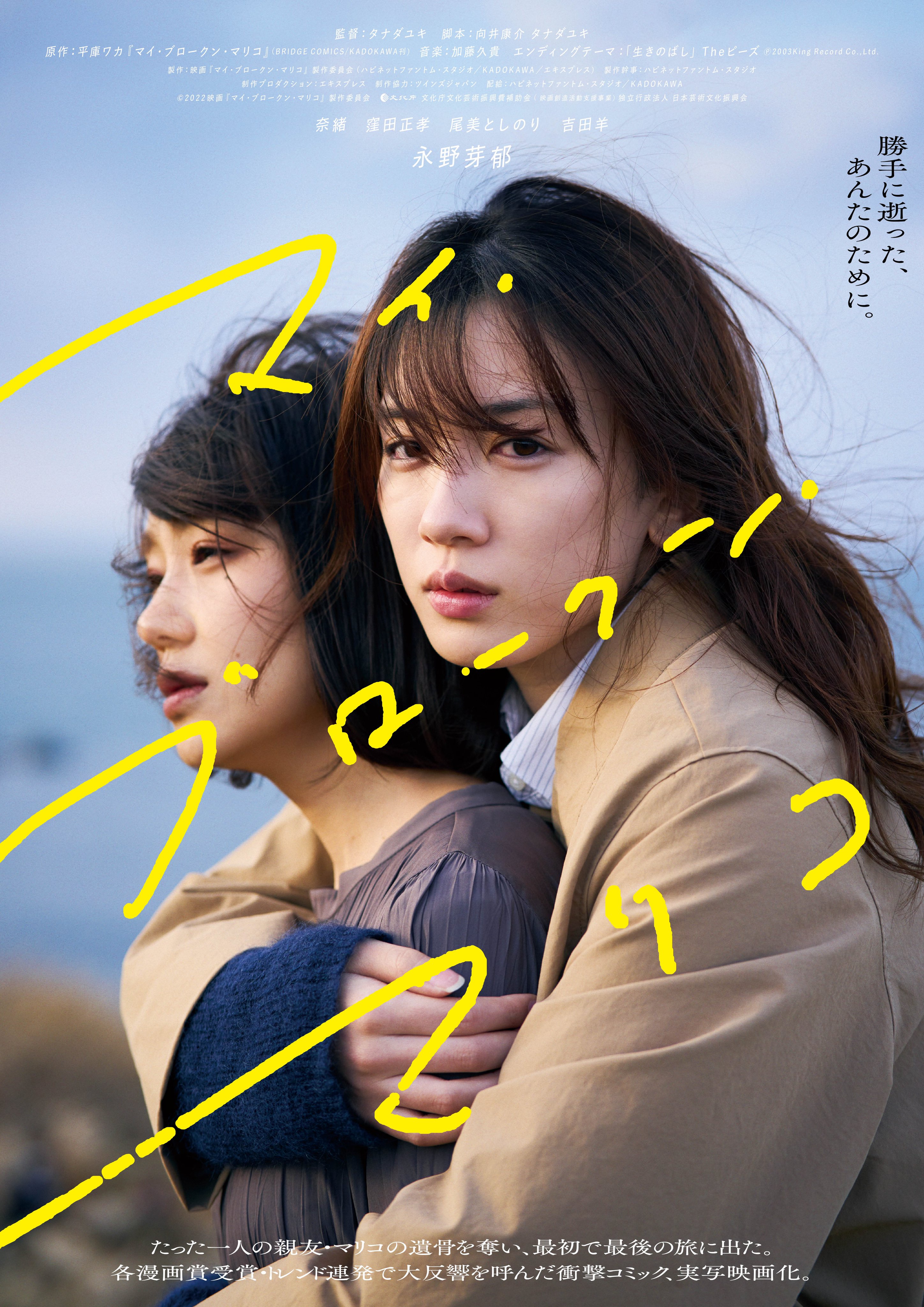
Let Me Hear It Barefoot (裸足で鳴らしてみせろ, Riho Kudo, 2021)

“I can touch it if I reach out” one of the heroes of Riho Kudo’s second feature Let Me Hear It Barefoot (裸足で鳴らしてみせろ, Hadashi de Narashite Misero) claims as he narrates a fantasy trip to Iguazu Falls, but his tragedy is that he can not reach out and neither can his friend or really anyone in this suffocating enclave of moribund small-town Japan. As in her debut Orphan’s Blues, Kudo finds her heroes trapped with a space of artificial nostalgia and yearning for escape while in constant dialogue with Wong Kar-Wai’s melancholy romance Happy Together as the two young men process their frustrated desires not only for each other but for an end to the loneliness that defines each of their lives. 

Naomi (Shion Sasaki) is lonely in part because he feels trapped. Having dropped out of university he’s working in his father’s (Masahiro Komoto) recycling depot while his best friend and high school sweetheart Sakuko is about to move to Canada. He first catches sight of the enigmatic Maki (Tamari Suwa) at the local pool after trying to learn to swim to effect change in his life and later bonds with him along with a mysterious old woman, Midori (Jun Fubuki), who has lost her sight and claims to have travelled the world in her youth. What the boys later discover is that Midori had not been entirely honest in that her travels had been vicarious, related to her by a third party long since departed whom she did not want to forget. Following a health scare she tries to give Maki her savings telling him to travel the world in her stead but he soon discovers that she was sadly mistaken about amount she’d put away. Lacking the heart to tell her, Maki decides to use an old tape recorder to fake trips to famous places ironically mirroring her final confession that her friend had never travelled either but made all the stories up for her benefit. 

The tape recorder conceit of course directly recalls Happy Together as does the final destination of the Iguazu Falls while hinting at the unattainable freedom each of the young men yearns for as mediated by their desire to travel the world. “We can go anytime” Maki tries to convince Naomi in his mounting desperation though each of them on some level knows they will never leave nor escape their sense of loneliness. Maki describes himself as feeling as if he is trapped within a magnetic field, surrounded by people but unable to touch them. A man permanently at odds with his environment, Naomi feels the same but their feelings for each other are complex and confusing. In a repeated motif one reaches out to touch the other but suddenly pulls back, their repressed desire expressed only through increasingly intense play fighting until one is finally unable to go on with the subterfuge and unsuccessfully attempts to address their unresolved romantic tension. 

Much of their courtship occurs in Naomi’s converted garage bedsit, a space filled with unwanted relics of the past from countless VHS and discarded books to TVs and radios. The garage is his literal safe space, Naomi explaining to Maki that he feels the urge to collect things out of a sense of security that they are safe here even if they disappear from the outside world. “Memories will stay” Maki reminds him, but that’s not good enough for Naomi who ironically can only trust the things that he can touch. Preoccupied with a sense of loss he is unable to move forward, cannot take hold of himself or his desires wishing to preserve the past at all costs while Maki has learnt to live in the moment able to let go but adrift in the present. 

“We may not even be alive tomorrow” Naomi wails in desperation, feeling as if he’s running out of time while boxed in by his equally lonely, disappointed father as a vision of his future self worn down by small-town life and a persistent sense of futility. The two men are forever divided, literal glass standing between them in the closing scenes in which they can no longer touch even if they wished it. Small-town life is it seems the place dreams go to die as symbolised in Sakuko’s eventual defeated return, Naomi left only with resignation to the life he had rejected in an acceptance of the failure of his unfulfilled desires. “I don’t want to forget” he claims echoing Midori’s explanation for her mysterious tattoo while left only with the ironic words of Maki’s cassette tape in their melancholy echo of the romantic impossibilities of Happy Together, “we need to start over”. 


Let Me Hear It Barefoot streamed as part of this year’s Nippon Connection.

Images: (c)PFF Partners

Yes or No (Yes or No อยากรัก ก็รักเลย, Saratswadee Wongsomphet, 2010)

An uptight girl from a wealthy conservative family finds herself conflicted on falling for her tomboyish farmer’s daughter roommate in Saratswadee Wongsomphet’s romantic dramedy, Yes or No (Yes or No อยากรัก ก็รักเลย, Yak Rak Ko Rak Loei). Yes or no is in some ways the question each of the heroines find themselves asking struggling not only with their feelings for each other but their respective identities along with stereotypical visions of homosexuality wondering if it’s your appearance that defines you or something less visible deeper inside. 

That’s something doubly true for Pie (Sucharat Manaying), who exasperatedly exclaims that she “ran away from a lesbian” and “ended up with a tom”. As the film opens we see her switching rooms in her uni dorm explaining to her mother on the phone that her previous roommate, Jane (Arisara Tongborisuth), was perfectly nice but had a lot of problems notably her heartbroken sobbing on being dumped by her latest suitor who happened to be a butch lesbian. Pie leaves that bit out in talking with her mother, later revealing that her mum hates anything gay or even androgynous and finds tomboyish women disturbing.That’s one reason why she immediately tries to switch rooms again only to run into Kim (Suppanad Jittaleela) on coming out of the shower. 

For her part, Kim largely rejects the “tom” label and repeatedly reminds Pie she is a girl who happens to have short hair and is dressed in a comfortable fashion. Nevertheless, she continues to experience a degree of hostility based on her appearance, a gang of sexist boys giving up on their cheesy pickup lines while taunting her as she walks past. “She’s more handsome than me” one of them jokes as Kim ignores them with Pie looking on from an upper balcony. Kim isn’t particularly aware of her sexuality either, seeing herself as inherently different from those like Jane who readily identify themselves as lesbians while confused on two levels seeming to simultaneously believe both that Pie cannot be a lesbian because lesbians look the way she herself does and that she is not a lesbian and should not be assumed to be one simply because of her appearance in which she obviously has a point. 

Pie’s animosity towards Kim is originally so extreme that, on being unable to switch yet again, she simply runs red tape down the centre of the room though she has also brought with her much more stuff than simple farmer’s daughter Kim. The resentment only really eases once she comes to appreciate that Kim has unexpected skills such as the ability to run up delicious meals in only a rice cooker. In a running gag, the supposedly masculine Kim is often afraid of childish things such as cockroaches and thunder storms, while Pie declares herself fearless but is actually deeply afraid and carrying a degree of internalised shame while confused by her changing feelings for Kim. Though they continue to grow closer, not only pulling up the tape but pushing their beds together, each continue to hold back Kim trying to figure out her identity and Pie preoccupied with her mother’s homophobia. While Pie is jealous of Jane who is also in love with Kim, Kim contends with Pie’s family friend, Waen (Soranut Yupanun), her mother’s chosen suitor and the symbol of the lingering heteronormativity that overshadows their relationship, 

Then again, there may be an uncomfortable emphasis placed on traditional gender roles in which the tomboyish Kim is cast as the man, eventually trying to cement her relationship with Pie by approaching her mother for permission to date her despite knowing of her animosity to what she labels “abnormal sexuality” having taken one look at Kim on campus and exclaimed “good thing you aren’t like that or I’d be dead by now”. Kim’s farmer father and his male best friend (?) meanwhile, are far more understanding instantly welcoming Pie when she, essentially, tries to do the same thing seeking Kim’s forgiveness for having faltered in the moment and failed to stand up to her mother. While there might also be an unpleasant stereotype in Jane’s emotional instability which later leads her to the point of self harm in the depths of her unrequited love, and the gang’s gay male friend is depicted rather shallowly little more than as sassy and effeminate, Yes or No nevertheless does its best to navigate the difficult path on which the women find themselves figuring out their feelings for each other and perhaps discovering the only important question is is this love, yes or no. 


Yes or No screened as part of this year’s Queer East. It is also available to stream in many territories via GagaOOLala.

Original trailer (English subtitles)
Love of Siam (รักแห่งสยาม, Chookiat Sakveerakul, 2007)

Two young men contending with grief and familial dislocation begin to wonder if it’s possible to love someone knowing that you’ll lose them, or conversely if it’s possible to live without love in Chookiat Sakveerakul’s melancholy drama Love of Siam (รักแห่งสยาม, Rak haeng Siam). The title may sound overly patriotic but in actuality refers to the Siam Square shopping area when the boys meet again as teenagers after many years apart and rekindle their friendship only to be confused by their growing feelings for each other while each struggling with contradictory demands from fracturing family and romantic drama to the responsibilities of friendship and career. 

When they first meet as small boys, Mew (Arthit Niyomkul), who has come to live with his elderly grandmother, and Tong (Jirayu La-ongmanee) live opposite each other in a small Bangkok back street. When Mew is hassled in the school toilets, Tong comes to his rescue and gains a black eye in the process, cementing the boys’ friendship. Everything begins to change, however, when Tong goes on holiday with his family to Chiang Mai. His older sister Tang (Laila Boonyasak) stays on to hang out with friends and later disappears during a hiking trip leaving the family devastated. To escape their grief they decide to move away, breaking the friendship between the two boys. A decade or so later, they re-encounter each other by chance in Siam Square where Tong (Mario Maurer) is trying to buy a CD of rising boyband August of which Mew (Witwisit Hiranyawongkul) just happens to be the lead singer. 

In the intervening years, Tong has become somewhat distant and is now in an unsatisfying relationship with one of the school’s most popular girls, Donut (Aticha Pongsilpipat). As we discover, his father has developed an alcohol problem unable to overcome his guilt and grief over what happened to Tang, while his mother attempts to power through by exerting control over every aspect of her life. In a shocking coincidence, Mew’s band manager June (Laila Boonyasak) happens to look exactly like Tang, Tong and his mother eventually asking her to play the part of the absent sibling in the hope of curing his father’s depression. 

As much as the film revolves around the love story between the boys as they begin to figure out their sexuality, at the end it’s a story of love in its many forms and key among them the familial. Both the boys are in a sense displaced, Mew for reasons not explicitly stated living not with his father but his grandmother and then as a teenager alone following her death while Tong is caught between his grieving parents looking for new signs of stability. Understandably anxious, Tong’s mother still makes a point of picking him up by car though he is already a teenager when such solicitation might seem embarrassing. When she catches Tong kissing Mew, her world is destabilised attempting to reassert her control by asking Mew to stay away from her son fearful of losing him and the life she’d envisioned for his future with a wife and children. Yet through her interactions with June, who is also displaced having lost her parents in some kind of accident, she begins to realise that her need for control is not the way to save her family as they each begin to face their grief and repair their familial bonds accepting both the continuing presence and absence of Tang as symbolised by the family photo taken on their last holiday in which she is not pictured but only because she was standing behind the camera. 

In this way, Mew perhaps gets his answer to whether it’s possible to go on loving someone knowing that you’ll lose them unwilling to live a life without love even if the price is grief and loneliness. Where there’s love, there’s hope according to a Chinese song translated by Mew’s lovelorn neighbour, Ying (Kanya Rattapetch), who becomes an accidental friend of Tong learning to put her hurt and jealousy aside to embrace her friendship with both boys. As someone else puts it, mistakes are just opportunities for change and perhaps doing the wrong thing out of love is better than doing nothing at all. Nevertheless, as the family begins to repair itself, healing in mutual acceptance along with acceptance of their loss, the youngsters discover the strength to accept themselves discovering their place amid the admittedly chaotic streets of Siam Square. 


Love of Siam screens at Rich Mix on 29th May as part of this year’s Queer East.

Original trailer (English subtitles)
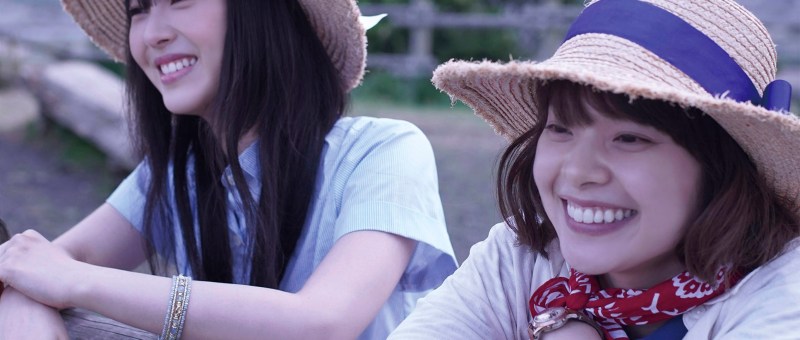
What She Likes (彼女が好きなものは, Shogo Kusano, 2021)

“Distance keeps us safe” according to the hero of Shogo Kusano’s LGBTQ+ teen drama What She Likes (彼女が好きなものは, Kanojo no Sukina Mono wa) ironically commenting on the nature of “social distancing” in the age of corona along with his own sense of alienation. Though in comparison to other recent similarly themed features Kusano’s film may in some senses seem behind the times in its BL filter, it has its heart firmly in the right place as the hero and several of his friends attempt to find a place for themselves within the contemporary society which for various reasons they fear will not accept them. 

In high schooler Jun’s (Fuju Kamio) case, his sense of alienation is born of his internalised homophobia in which all he wants is to have a conventional heteronormative life within the confines of the traditional family with a wife, children, and grandchildren. Part of this may stem from a secondary source of marginalisation in that he comes from a single parent family which is itself still frowned upon by some as evidenced by the mild discomfort experienced by his new friend Sae (Anna Yamada) when he explains to her why he always eats cafeteria food rather than bringing a homemade bento. Sae’s source of internalised shame, meanwhile, is that she is a fujoshi or obsessive fan of boys love manga which revolve around romances between men but are aimed at an audience of young straight women rather than the LGBTQ+ community. 

Based on the novel by Naoto Asahara, what the film attempts to do is examine the gap between the BL fantasy and the reality of being gay in contemporary Japan. Sae is ashamed of her love of BL and ironically paranoid that Jun will expose her secret after running into him at a bookshop, explaining that she was shunned in middle school when her friends found out she enjoyed reading gay love stories which they viewed as “creepy”. Meanwhile, she has a complicated view of homosexuality off the page which is not always completely supportive. Both she and Jun continue to use a world that many would consider to be a homophobic slur to describe men who love men, Jun at times using the word against himself while simultaneously denying the identity. The first conclusion that he comes to is that Sae does not really like him but only the romanticised gay ideals from the fantasy world of BL which as is later pointed out are often set among a largely gay milieu or even in a world where everyone is gay. 

Sae refers to this space as the BL Planet, but Jun’s desire to go there is also a reflection of his internalised homophobia in that on the BL Planet he’d obviously be just like everyone else. He’s fond of repeating a sentence they learned in science class about a simplified world with zero friction which he later claims to reject unwilling to erase complication for superficial harmony but this is exactly what he’s doing in attempting to erase a part of himself in order to better conform to a heteronormative society. He beats himself up for not being able to have “normal” sex after half-heartedly agreeing to date Sae while engaging in physical intimacy with a much older man who is married with a child. Jun’s lover Makoto (Tsubasa Imai) later explains that his marriage is one of convenience born of the same kind of internalised homophobia experienced by Jun though he obviously loves his wife and child if in a different way while the inappropriateness of his relationship with a teenage boy is never raised by anyone.

Jun is taken to task by a brash classmate, Ono (Ryota Miura), for his irresponsibility in dating Sae knowing that he has no romantic interest in her hinting that perhaps not that much has changed in the last 10 or 15 years both men convincing themselves that heteronormative relationships are the only valid markers of success. Then again when Jun is accidentally outed his classmates are given a crash course in LGBTQ+ relations most of them expressing support and the conviction that society needs to become more accepting of diversity though it has to be said they were less than understanding before, particularly the boys who found Jun’s presence a challenge to their masculinity. 

Teenage boys they all are, but even infinitely sympathetic straight best friend Ryohei (Oshiro Maeda) engages in crude, misogynistic banter with their classmates forcing Jun to play along pretending to be a connoisseur of heterosexual pornography. Probably some or even most of the other boys are also lying in an act of performative masculinity but the pretence only adds to Jun’s internalised sense of otherness and belief that he is in some way broken continually asking not only why he was born like this but why anyone is. After receiving an alarming message from an online mentor, he is pushed towards a dark place in becoming convinced that the world has no place for him only to belatedly come to an acceptance of his identity as mediated through Sae’s concurrent epiphanies realising that without friction there is no progress and discovering liberation in authenticity. Despite a few mixed messages and a bizarre subplot about a hairdresser who is not himself gay but nevertheless obsessed with gay people to the extent that he thinks he can spot them in public places through codified signs and the look in their eyes, Kusano’s teen coming-of-age drama has its heart in the right place in its gentle plea for a more inclusive, joyfully diverse society. 


What She Likes screens at Genesis Cinema on 28th May as part of this year’s Queer East.

Original trailer (English subtitles)

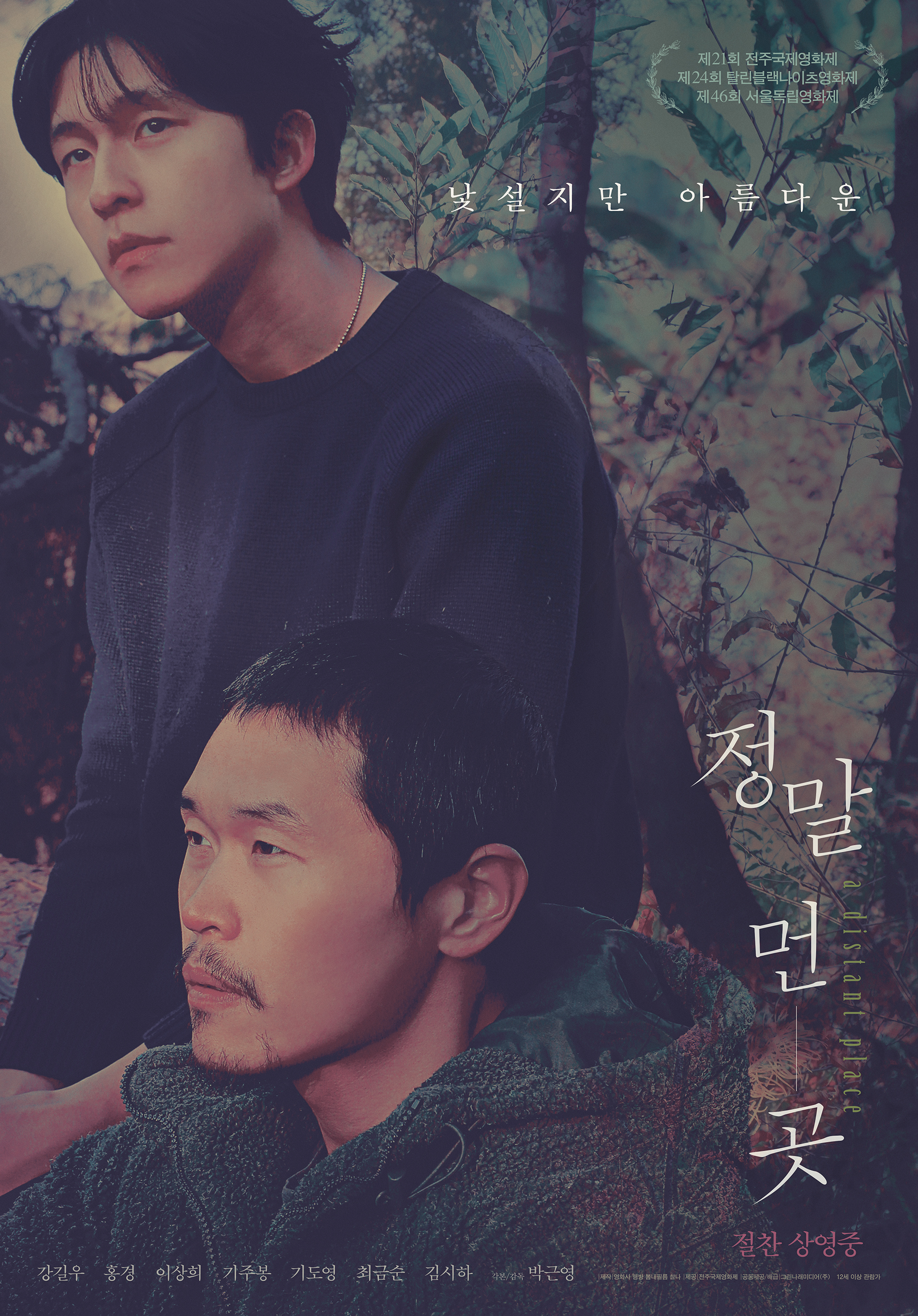
A Distant Place (정말 먼 곳, Park Kun-young, 2020)

A gay couple searching for a far off land of love and acceptance find their rural dream crumbling in Park Kun-young’s melancholy autumn drama, A Distant Place (정말 먼 곳, Jeongmal Meon Gos). As it turns out, you can’t outrun yourself nor an internalised sense of shame and if you can’t find a way to root yourself firmly in the ground you risk losing those close to you lashing out in anger towards a needlessly judgemental society. 

Jin-woo (Kang Gil-woo) is indeed a man on the run, chased out of Seoul by his internalised homophobia and seeking a quieter life in a small mountain town with fewer people around to feel rejected by. Having studied fine art, he now works as a hired hand on a sheep farm where he’s bringing up his daughter Seol (Kim Si-ha) while waiting for his partner, Hyun-min (Hong Kyung), a poet, to join him. Once he arrives, everything goes well for them living a discreet life in the mountains where no one it seems has noticed that they are a couple though as we later realise the farmer, Mr Choi (Ki Joo-bong), and his daughter Moon-kyung (Ki Do-young) have figured it out and little care choosing to say nothing. The real drama begins, however, with another arrival in that of Jin-woo’s estranged twin-sister Eun-young (Lee Sang-hee) who as we discover is actually Seol’s birth mother having abandoned her to Jin-woo only to come back to try and reclaim her having married and opened a cafe. 

Jin-woo’s conflict lies partly in wondering if he’s being selfish in his desire not to return Seol to Eun-young while genuinely believing that a life of isolation in the mountains is better for her longterm future. His ideal is undercut when Seol upsets another child at a formal occasion by snatching his toy away from him, hinting at the costs of her lack of socialisation spending almost all of her time on the farm helping with the sheep or talking with Mr. Choi’s elderly mother (Choi Geum-Soon) who is suffering with advanced dementia. In a certain sense, each of them is trapped by their environment, the elderly grandma seeking escape in her small moments of lucidity. Moon-Kyung is beginning to fear her dreams of escaping small-town life will not come to pass while she has perhaps also missed the boat for becoming a wife or a mother snapped at by her grandmother in a moment of frustration. Her realisation that her crush on Jin-woo is misplaced on finding him in bed with Hyun-min is then a double moment of disillusionment leaving her only the vicarious position of becoming a surrogate mother to Seol who continues to refer to Jin-woo as “mama” rather than father. 

This framing in itself foregrounds the primacy of the traditional family in highlighting both the absence of a female caregiver and then by implication a father while simultaneously feminising Jin-woo as a man who is raising a child as we later find out with another man, if secretly. When the pair are accidentally outed, it not only strains the relationship between the two men but implodes Jin-woo’s dream of discreet country living. Though the townspeople had previously been friendly towards them, they find themselves shunned in town, figures of gossip and ridicule. Having been essentially run out of Seoul by his internalised homophobia, Jin-woo begins to fear he has nowhere left to run. Hyun-min tries to convince him that he’s asking for too much, that they should live quietly and keep the peace, but his shame gets the better of him lashing out that he’s never felt comfortable with Hyun-min around always self-conscious and paranoid about what others may be thinking of him. 

As Hyun-min puts it in a poem, only the hope of a “distant place” keeps them going even as the road ahead crumbles at a rapid pace with the abyss creeping ever closer. While there are small rays of hope in the quiet acceptance of Mr Choi who has come to think of Seol as his own granddaughter, Jin-woo begins to fear that his distant place is beyond his reach and that no matter how far he runs he will never reach a point of comfort or happiness where he can live openly with the man he loves and the little girl he has raised since birth as his daughter. Figures of loneliness and disappointment haunt the otherwise idyllic landscape shattering the nurturing image of a simple life in the country but even as the film opened with an ominous death it ends in new life promising perhaps a new if uncertain dawn. 


A Distant Place screens at Genesis Cinema on 26th May as part of this year’s Queer East.

International trailer (English subtitles)

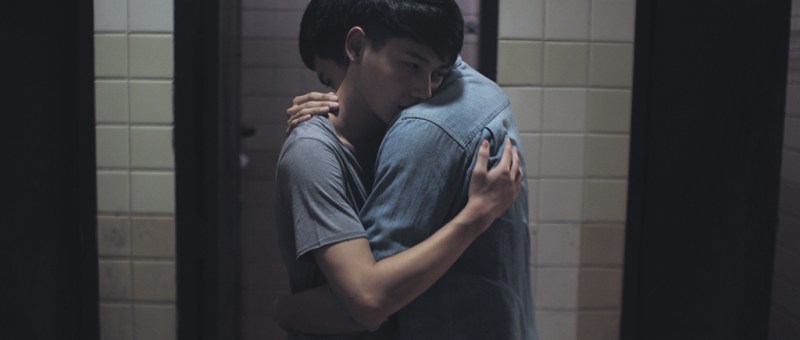
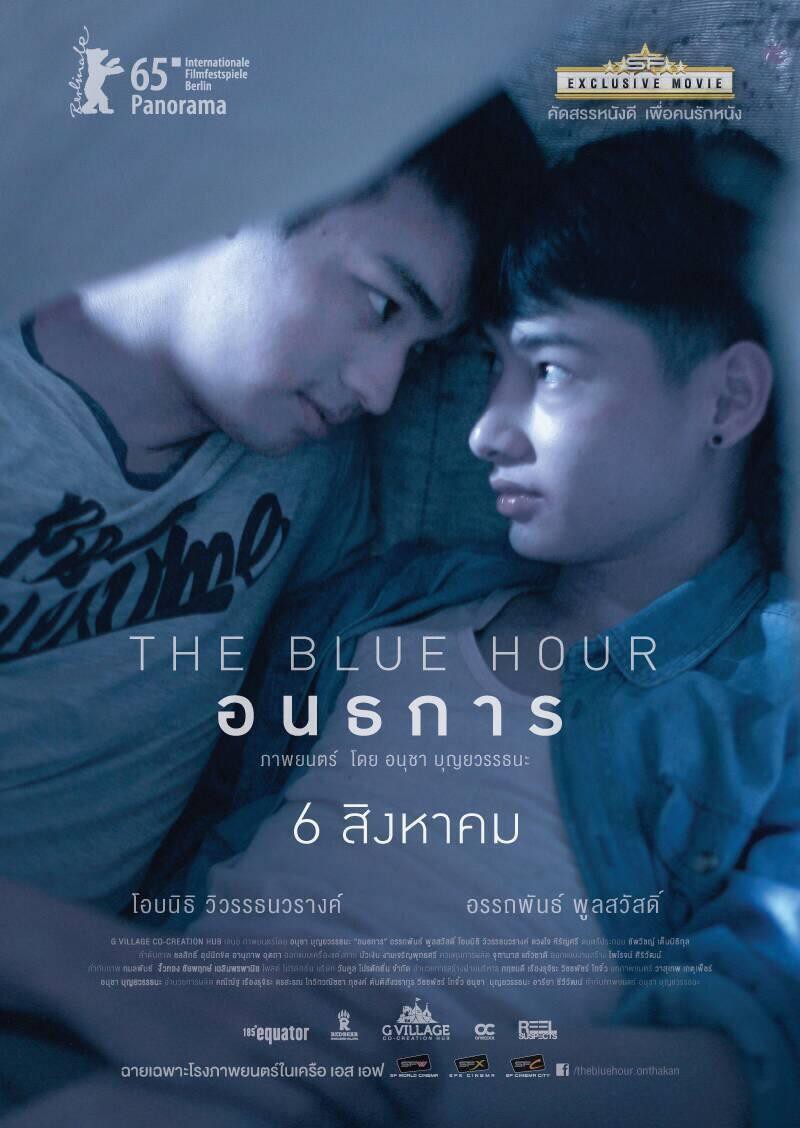
The Blue Hour (อนธการ, Anucha Boonyawatana, 2015)

Reality and fantasy begin to blur for a young man rejected by his family and persecuted by a society he feels has no place for him in the ethereal debut from Anucha Boonyawatana, The Blue Hour (อนธการ). Imbued with a strong sense of spiritual dread, the film casts its duplicitous hero adrift in an increasingly confusing reality in which his relationship with a mysterious boy encountered online may be his only anchor while drawn towards darkness and a lonely obsolescence. 

As we first meet high schooler Tam (Atthaphan Phunsawat) he is bloodied and bruised, a scene later repeated finding him beaten by bullies after money he’d supposedly borrowed from them but is unable to to return. He seems to be carrying an intense amount of resentment and self-loathing, not least towards his mother and brother who he says do not trust him accusing him of being responsible for anything untoward that occurs in their home. Then again, as Tam explains to new friend Phum (Oabnithi Wiwattanawarang), sometimes he actually did do what he’s accused of yet still resents the assumption while undermining our faith in him as a reliable narrator of his own history. In any case, Tam’s mother has figured out he’s gay and is very unhappy about it directly asking him why he can’t “change” while taking his sexuality as a personal slight against her parenting, asking him if he hasn’t considered her feelings and reminding him that his father “hates it”. In Tam’s mind his family’s negative view of him is directly tied to his sexuality and concurrent sense of otherness, fearing that they see him as inherently wicked simply because he is different. “My family don’t hit me in the face” he reassures Phum when questioned about the collection of scars and bruises across his body hinting that they hurt him in other ways that the world can’t see. 

Yet his meeting with Phum is also in its way dark and ominous as if Phum himself is one of the spirits of which he later speaks hiding people away until they can claim them for the spiritworld. Their first meeting takes place at a dilapidated, disused swimming pool Phum claims is haunted which has eerie stains in the shape of people covering its walls one of which looks just like the figure of Tam sitting on the pool’s edge. If that weren’t odd enough, Phum later takes him on a date to garbage dump he says is on land that his family once owned but were unfairly cheated out of. This literal dumping ground nevertheless has its own sense of spiritual oddness, Tam finding the body of a man which seems to have regained some kind of life as does the body of a dog he later leaves there. Meanwhile, he’s shot at by a random man with a gun, presumably one of the gangsters Phum says are squatting on his land, and eventually clubs him over the head in act of violence later to recur whether in fantasy or reality outside of Tam’s direct memory. 

When Phum tells him that “if we can get rid of them then this land will be ours. Then we can live here together” he’s perhaps talking more widely or at least to Tam’s fracturing psyche suggesting that if he could rid himself of the oppressive forces in his society then he’d be able to live freely having reclaimed his emotional landscape and cleared it of the trash left behind. His visions become darker, haunted by a sense of dread as he tries to scrub the silhouette of himself from the pool’s wall and encounters bloody scenes of his own violence whether real or imagined. What he seems to seek is the promised oblivion of Phum’s stress beating ritual immersed beneath the murky waters of his escapist dreamscape. Oneiric and elliptical, Anucha Boonyawatana’s beautifully photographed non-linear tale of repression and release paints a darkening picture of the contemporary society for boys like Tam fracturing under the weight of rejection and resentment, their mounting rage and loneliness turned inward yet threatening to explode into self-destructive violence. Hidden away he might well be and bound for another world hand in hand with his mysterious saviour. 


The Blue Hour screens at the Barbican on 23rd May as part of this year’s Queer East.

Original trailer (English subtitles)
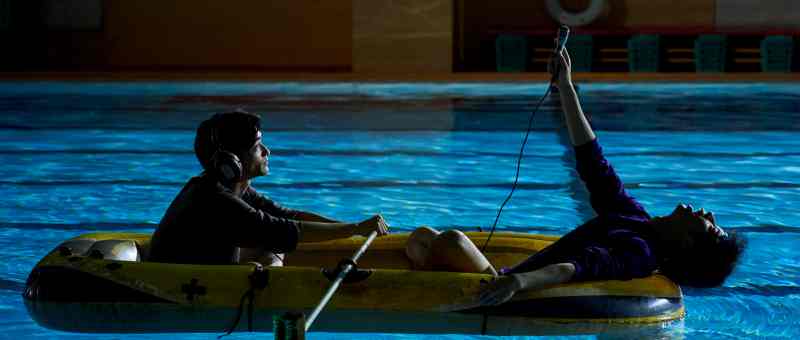
Take Me Home (담쟁이, Han Jay, 2020)

A schoolteacher is confronted with the multilevel prejudices of her society in Han Jay’s pointed social drama Take Me Home (담쟁이, Damjaengi). Examining the changing concept of family in contemporary Korea, the film not only addresses deep seated prejudices towards both the LGBTQ+ community and those with disabilities but also an exploitative and unfeeling working environment in which employers adopt the language of family while continually undermining their employees’ interpersonal relationships and always ready to casually discard them should their circumstances change. 

Middle-aged high school teacher Eunsu (Woo Mi-hwa) is in a happy relationship with a much younger woman, Yewon (Lee Yeon), who uncomfortably enough was once one of her students. Though the pair live together, they are not completely out keeping their relationship vague with coworkers and family members Yewon explaining to her colleague that Eunsu is her cousin while Eunsu describes Yewon as a roommate to the sister she barely sees on returning home for her mother’s annual memorial service. Yewon it seems is less cautious, but Eunsu quickly bats away her hand as they walk home together from the local baths worried that someone might see even as they poignantly walk past an elderly couple with no such fear sitting quietly on a park bench. 

Yewon views their relationship as familial despite Eunsu’s occasional anxiety, yet when Eunsu is involved in a car crash which claims her sister’s life Yewon is reminded that she is not “family” and cannot act as Eunsu’s caregiver at the hospital. Even so she becomes temporarily responsible for Eunsu’s now orphaned niece Sumin (Kim Bo-min), her teacher apparently abandoning her with this woman she knows nothing about other than she is in someway connected to Eunsu. When Eunsu comes round and discovers that she has lost the use of her legs and may need to use a wheelchair for at least the next couple of years, it further destabilises her relationships firstly feeling as if she’d be overburdening Yewon and secondly uncertain that she is able to take care of her niece while simultaneously withdrawing into herself wary of her emotional bonds with others. 

Yewon tries to point out that they are family and family knows no burden, compassionately caring both for Eunsu and Sumin as they each try to adjust to their change in circumstances though she too suffers at work unable to explain to her boss that she needed to take time out because her partner had been involved in an accident even as he coldly tells her that time off is only given for a “family matter” while cancelling an opportunity for promotion he’d recently presented to her. Eunsu meanwhile encounters something similar, returning to the school where she works only for her boss to tell her he’ll be letting her go, the implication being that parents will object to a teacher using a wheelchair. He suggests another job in a much more rural location in a school with fewer than 10 children as if hiding her away or suggesting that her disability makes her ineligible for all but the least desirable of positions. Further fuelling her sense of resentment, she’s also subject to a series of sexist remarks to the effect that it’s a shame such a pretty woman met with an accident, as if on the one hand she is no longer desirable and on the other that she’s somehow lost more than someone considered unattractive while continuing to struggle with a unaccommodating society. 

Having begun to accept her new circumstances, Eunsu begins to warm to the idea of herself, Sumin, and Yewon as a family but her hopes for the future are crushed when her attempt to file formal adoption documentation is blocked. On consulting a series of lawyers, she is given the irrational advice that she might be able to win custody but only if she eliminates one of the two bars against her those being a same-sex relationship and her disability. Adoptions she is told are generally only approved for married couples, same-sex marriages currently not recognised under Korean law which also lacks anti-discrimination legislation on the grounds of sexuality, though the lawyer seems to think that the court could be convinced to allow a lesbian or a disabled woman to adopt but apparently not a disabled lesbian which obviously makes no sense at all. The sinister social worker who approaches Sumin alone in a park and asks her inappropriate questions about the nature of the relationship between her aunt and Yewon, which Sumin sees as nothing other than warm and loving like any other couple gay or straight, claims to have her well-being in mind but later snatches her from the back of a taxi depriving her of the loving family home she continues to yearn for while asking Eunsu to make a series of choices and compromises that leave no one happy. 

The villain is clearly the unsympathetic state which places its own idealogical concerns above a child’s happiness though the film’s conclusion cannot help but seem manipulative while leaving aside the more generalised examination of what the word family means in contemporary Korea, the persistent discrimination levelled at the LGBTQ+ community, and the barriers placed in front of those living with disability who find themselves infantilised by a society all too often refusing to accommodate their needs. In any case, the film argues for a world in which no one would have to choose between love and family because they truly would be one and the same. 


Take Me Home screens at Catford Mews on 21st May as part of this year’s Queer East.

Original trailer (English subtitles)