Love of Siam (รักแห่งสยาม, Chookiat Sakveerakul, 2007)

Two young men contending with grief and familial dislocation begin to wonder if it’s possible to love someone knowing that you’ll lose them, or conversely if it’s possible to live without love in Chookiat Sakveerakul’s melancholy drama Love of Siam (รักแห่งสยาม, Rak haeng Siam). The title may sound overly patriotic but in actuality refers to the Siam Square shopping area when the boys meet again as teenagers after many years apart and rekindle their friendship only to be confused by their growing feelings for each other while each struggling with contradictory demands from fracturing family and romantic drama to the responsibilities of friendship and career. 

When they first meet as small boys, Mew (Arthit Niyomkul), who has come to live with his elderly grandmother, and Tong (Jirayu La-ongmanee) live opposite each other in a small Bangkok back street. When Mew is hassled in the school toilets, Tong comes to his rescue and gains a black eye in the process, cementing the boys’ friendship. Everything begins to change, however, when Tong goes on holiday with his family to Chiang Mai. His older sister Tang (Laila Boonyasak) stays on to hang out with friends and later disappears during a hiking trip leaving the family devastated. To escape their grief they decide to move away, breaking the friendship between the two boys. A decade or so later, they re-encounter each other by chance in Siam Square where Tong (Mario Maurer) is trying to buy a CD of rising boyband August of which Mew (Witwisit Hiranyawongkul) just happens to be the lead singer. 

In the intervening years, Tong has become somewhat distant and is now in an unsatisfying relationship with one of the school’s most popular girls, Donut (Aticha Pongsilpipat). As we discover, his father has developed an alcohol problem unable to overcome his guilt and grief over what happened to Tang, while his mother attempts to power through by exerting control over every aspect of her life. In a shocking coincidence, Mew’s band manager June (Laila Boonyasak) happens to look exactly like Tang, Tong and his mother eventually asking her to play the part of the absent sibling in the hope of curing his father’s depression. 

As much as the film revolves around the love story between the boys as they begin to figure out their sexuality, at the end it’s a story of love in its many forms and key among them the familial. Both the boys are in a sense displaced, Mew for reasons not explicitly stated living not with his father but his grandmother and then as a teenager alone following her death while Tong is caught between his grieving parents looking for new signs of stability. Understandably anxious, Tong’s mother still makes a point of picking him up by car though he is already a teenager when such solicitation might seem embarrassing. When she catches Tong kissing Mew, her world is destabilised attempting to reassert her control by asking Mew to stay away from her son fearful of losing him and the life she’d envisioned for his future with a wife and children. Yet through her interactions with June, who is also displaced having lost her parents in some kind of accident, she begins to realise that her need for control is not the way to save her family as they each begin to face their grief and repair their familial bonds accepting both the continuing presence and absence of Tang as symbolised by the family photo taken on their last holiday in which she is not pictured but only because she was standing behind the camera. 

In this way, Mew perhaps gets his answer to whether it’s possible to go on loving someone knowing that you’ll lose them unwilling to live a life without love even if the price is grief and loneliness. Where there’s love, there’s hope according to a Chinese song translated by Mew’s lovelorn neighbour, Ying (Kanya Rattapetch), who becomes an accidental friend of Tong learning to put her hurt and jealousy aside to embrace her friendship with both boys. As someone else puts it, mistakes are just opportunities for change and perhaps doing the wrong thing out of love is better than doing nothing at all. Nevertheless, as the family begins to repair itself, healing in mutual acceptance along with acceptance of their loss, the youngsters discover the strength to accept themselves discovering their place amid the admittedly chaotic streets of Siam Square. 


Love of Siam screens at Rich Mix on 29th May as part of this year’s Queer East.

Original trailer (English subtitles)

What She Likes (彼女が好きなものは, Shogo Kusano, 2021)

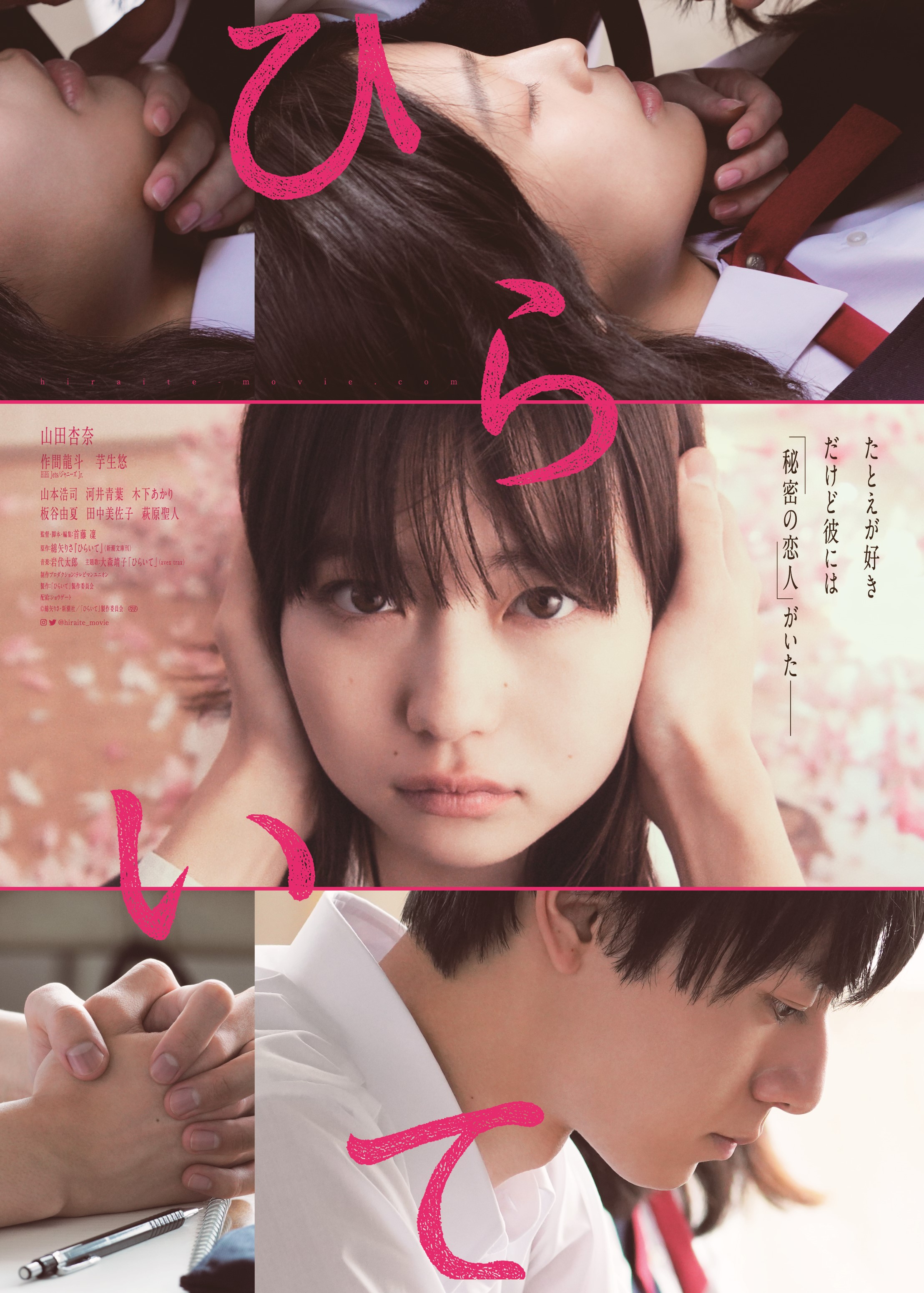
“Distance keeps us safe” according to the hero of Shogo Kusano’s LGBTQ+ teen drama What She Likes (彼女が好きなものは, Kanojo no Sukina Mono wa) ironically commenting on the nature of “social distancing” in the age of corona along with his own sense of alienation. Though in comparison to other recent similarly themed features Kusano’s film may in some senses seem behind the times in its BL filter, it has its heart firmly in the right place as the hero and several of his friends attempt to find a place for themselves within the contemporary society which for various reasons they fear will not accept them. 

In high schooler Jun’s (Fuju Kamio) case, his sense of alienation is born of his internalised homophobia in which all he wants is to have a conventional heteronormative life within the confines of the traditional family with a wife, children, and grandchildren. Part of this may stem from a secondary source of marginalisation in that he comes from a single parent family which is itself still frowned upon by some as evidenced by the mild discomfort experienced by his new friend Sae (Anna Yamada) when he explains to her why he always eats cafeteria food rather than bringing a homemade bento. Sae’s source of internalised shame, meanwhile, is that she is a fujoshi or obsessive fan of boys love manga which revolve around romances between men but are aimed at an audience of young straight women rather than the LGBTQ+ community. 

Based on the novel by Naoto Asahara, what the film attempts to do is examine the gap between the BL fantasy and the reality of being gay in contemporary Japan. Sae is ashamed of her love of BL and ironically paranoid that Jun will expose her secret after running into him at a bookshop, explaining that she was shunned in middle school when her friends found out she enjoyed reading gay love stories which they viewed as “creepy”. Meanwhile, she has a complicated view of homosexuality off the page which is not always completely supportive. Both she and Jun continue to use a world that many would consider to be a homophobic slur to describe men who love men, Jun at times using the word against himself while simultaneously denying the identity. The first conclusion that he comes to is that Sae does not really like him but only the romanticised gay ideals from the fantasy world of BL which as is later pointed out are often set among a largely gay milieu or even in a world where everyone is gay. 

Sae refers to this space as the BL Planet, but Jun’s desire to go there is also a reflection of his internalised homophobia in that on the BL Planet he’d obviously be just like everyone else. He’s fond of repeating a sentence they learned in science class about a simplified world with zero friction which he later claims to reject unwilling to erase complication for superficial harmony but this is exactly what he’s doing in attempting to erase a part of himself in order to better conform to a heteronormative society. He beats himself up for not being able to have “normal” sex after half-heartedly agreeing to date Sae while engaging in physical intimacy with a much older man who is married with a child. Jun’s lover Makoto (Tsubasa Imai) later explains that his marriage is one of convenience born of the same kind of internalised homophobia experienced by Jun though he obviously loves his wife and child if in a different way while the inappropriateness of his relationship with a teenage boy is never raised by anyone.

Jun is taken to task by a brash classmate, Ono (Ryota Miura), for his irresponsibility in dating Sae knowing that he has no romantic interest in her hinting that perhaps not that much has changed in the last 10 or 15 years both men convincing themselves that heteronormative relationships are the only valid markers of success. Then again when Jun is accidentally outed his classmates are given a crash course in LGBTQ+ relations most of them expressing support and the conviction that society needs to become more accepting of diversity though it has to be said they were less than understanding before, particularly the boys who found Jun’s presence a challenge to their masculinity. 

Teenage boys they all are, but even infinitely sympathetic straight best friend Ryohei (Oshiro Maeda) engages in crude, misogynistic banter with their classmates forcing Jun to play along pretending to be a connoisseur of heterosexual pornography. Probably some or even most of the other boys are also lying in an act of performative masculinity but the pretence only adds to Jun’s internalised sense of otherness and belief that he is in some way broken continually asking not only why he was born like this but why anyone is. After receiving an alarming message from an online mentor, he is pushed towards a dark place in becoming convinced that the world has no place for him only to belatedly come to an acceptance of his identity as mediated through Sae’s concurrent epiphanies realising that without friction there is no progress and discovering liberation in authenticity. Despite a few mixed messages and a bizarre subplot about a hairdresser who is not himself gay but nevertheless obsessed with gay people to the extent that he thinks he can spot them in public places through codified signs and the look in their eyes, Kusano’s teen coming-of-age drama has its heart in the right place in its gentle plea for a more inclusive, joyfully diverse society. 


What She Likes screens at Genesis Cinema on 28th May as part of this year’s Queer East.

Original trailer (English subtitles)

A Distant Place (정말 먼 곳, Park Kun-young, 2020)

A gay couple searching for a far off land of love and acceptance find their rural dream crumbling in Park Kun-young’s melancholy autumn drama, A Distant Place (정말 먼 곳, Jeongmal Meon Gos). As it turns out, you can’t outrun yourself nor an internalised sense of shame and if you can’t find a way to root yourself firmly in the ground you risk losing those close to you lashing out in anger towards a needlessly judgemental society. 

Jin-woo (Kang Gil-woo) is indeed a man on the run, chased out of Seoul by his internalised homophobia and seeking a quieter life in a small mountain town with fewer people around to feel rejected by. Having studied fine art, he now works as a hired hand on a sheep farm where he’s bringing up his daughter Seol (Kim Si-ha) while waiting for his partner, Hyun-min (Hong Kyung), a poet, to join him. Once he arrives, everything goes well for them living a discreet life in the mountains where no one it seems has noticed that they are a couple though as we later realise the farmer, Mr Choi (Ki Joo-bong), and his daughter Moon-kyung (Ki Do-young) have figured it out and little care choosing to say nothing. The real drama begins, however, with another arrival in that of Jin-woo’s estranged twin-sister Eun-young (Lee Sang-hee) who as we discover is actually Seol’s birth mother having abandoned her to Jin-woo only to come back to try and reclaim her having married and opened a cafe. 

Jin-woo’s conflict lies partly in wondering if he’s being selfish in his desire not to return Seol to Eun-young while genuinely believing that a life of isolation in the mountains is better for her longterm future. His ideal is undercut when Seol upsets another child at a formal occasion by snatching his toy away from him, hinting at the costs of her lack of socialisation spending almost all of her time on the farm helping with the sheep or talking with Mr. Choi’s elderly mother (Choi Geum-Soon) who is suffering with advanced dementia. In a certain sense, each of them is trapped by their environment, the elderly grandma seeking escape in her small moments of lucidity. Moon-Kyung is beginning to fear her dreams of escaping small-town life will not come to pass while she has perhaps also missed the boat for becoming a wife or a mother snapped at by her grandmother in a moment of frustration. Her realisation that her crush on Jin-woo is misplaced on finding him in bed with Hyun-min is then a double moment of disillusionment leaving her only the vicarious position of becoming a surrogate mother to Seol who continues to refer to Jin-woo as “mama” rather than father. 

This framing in itself foregrounds the primacy of the traditional family in highlighting both the absence of a female caregiver and then by implication a father while simultaneously feminising Jin-woo as a man who is raising a child as we later find out with another man, if secretly. When the pair are accidentally outed, it not only strains the relationship between the two men but implodes Jin-woo’s dream of discreet country living. Though the townspeople had previously been friendly towards them, they find themselves shunned in town, figures of gossip and ridicule. Having been essentially run out of Seoul by his internalised homophobia, Jin-woo begins to fear he has nowhere left to run. Hyun-min tries to convince him that he’s asking for too much, that they should live quietly and keep the peace, but his shame gets the better of him lashing out that he’s never felt comfortable with Hyun-min around always self-conscious and paranoid about what others may be thinking of him. 

As Hyun-min puts it in a poem, only the hope of a “distant place” keeps them going even as the road ahead crumbles at a rapid pace with the abyss creeping ever closer. While there are small rays of hope in the quiet acceptance of Mr Choi who has come to think of Seol as his own granddaughter, Jin-woo begins to fear that his distant place is beyond his reach and that no matter how far he runs he will never reach a point of comfort or happiness where he can live openly with the man he loves and the little girl he has raised since birth as his daughter. Figures of loneliness and disappointment haunt the otherwise idyllic landscape shattering the nurturing image of a simple life in the country but even as the film opened with an ominous death it ends in new life promising perhaps a new if uncertain dawn. 


A Distant Place screens at Genesis Cinema on 26th May as part of this year’s Queer East.

International trailer (English subtitles)

The Blue Hour (อนธการ, Anucha Boonyawatana, 2015)

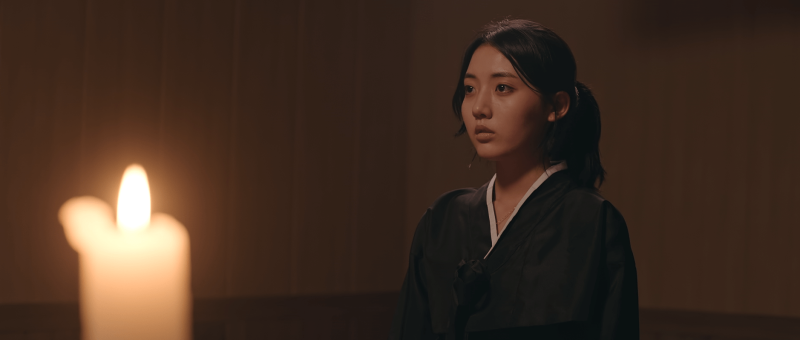
Reality and fantasy begin to blur for a young man rejected by his family and persecuted by a society he feels has no place for him in the ethereal debut from Anucha Boonyawatana, The Blue Hour (อนธการ). Imbued with a strong sense of spiritual dread, the film casts its duplicitous hero adrift in an increasingly confusing reality in which his relationship with a mysterious boy encountered online may be his only anchor while drawn towards darkness and a lonely obsolescence. 

As we first meet high schooler Tam (Atthaphan Phunsawat) he is bloodied and bruised, a scene later repeated finding him beaten by bullies after money he’d supposedly borrowed from them but is unable to to return. He seems to be carrying an intense amount of resentment and self-loathing, not least towards his mother and brother who he says do not trust him accusing him of being responsible for anything untoward that occurs in their home. Then again, as Tam explains to new friend Phum (Oabnithi Wiwattanawarang), sometimes he actually did do what he’s accused of yet still resents the assumption while undermining our faith in him as a reliable narrator of his own history. In any case, Tam’s mother has figured out he’s gay and is very unhappy about it directly asking him why he can’t “change” while taking his sexuality as a personal slight against her parenting, asking him if he hasn’t considered her feelings and reminding him that his father “hates it”. In Tam’s mind his family’s negative view of him is directly tied to his sexuality and concurrent sense of otherness, fearing that they see him as inherently wicked simply because he is different. “My family don’t hit me in the face” he reassures Phum when questioned about the collection of scars and bruises across his body hinting that they hurt him in other ways that the world can’t see. 

Yet his meeting with Phum is also in its way dark and ominous as if Phum himself is one of the spirits of which he later speaks hiding people away until they can claim them for the spiritworld. Their first meeting takes place at a dilapidated, disused swimming pool Phum claims is haunted which has eerie stains in the shape of people covering its walls one of which looks just like the figure of Tam sitting on the pool’s edge. If that weren’t odd enough, Phum later takes him on a date to garbage dump he says is on land that his family once owned but were unfairly cheated out of. This literal dumping ground nevertheless has its own sense of spiritual oddness, Tam finding the body of a man which seems to have regained some kind of life as does the body of a dog he later leaves there. Meanwhile, he’s shot at by a random man with a gun, presumably one of the gangsters Phum says are squatting on his land, and eventually clubs him over the head in act of violence later to recur whether in fantasy or reality outside of Tam’s direct memory. 

When Phum tells him that “if we can get rid of them then this land will be ours. Then we can live here together” he’s perhaps talking more widely or at least to Tam’s fracturing psyche suggesting that if he could rid himself of the oppressive forces in his society then he’d be able to live freely having reclaimed his emotional landscape and cleared it of the trash left behind. His visions become darker, haunted by a sense of dread as he tries to scrub the silhouette of himself from the pool’s wall and encounters bloody scenes of his own violence whether real or imagined. What he seems to seek is the promised oblivion of Phum’s stress beating ritual immersed beneath the murky waters of his escapist dreamscape. Oneiric and elliptical, Anucha Boonyawatana’s beautifully photographed non-linear tale of repression and release paints a darkening picture of the contemporary society for boys like Tam fracturing under the weight of rejection and resentment, their mounting rage and loneliness turned inward yet threatening to explode into self-destructive violence. Hidden away he might well be and bound for another world hand in hand with his mysterious saviour. 


The Blue Hour screens at the Barbican on 23rd May as part of this year’s Queer East.

Original trailer (English subtitles)

Take Me Home (담쟁이, Han Jay, 2020)

A schoolteacher is confronted with the multilevel prejudices of her society in Han Jay’s pointed social drama Take Me Home (담쟁이, Damjaengi). Examining the changing concept of family in contemporary Korea, the film not only addresses deep seated prejudices towards both the LGBTQ+ community and those with disabilities but also an exploitative and unfeeling working environment in which employers adopt the language of family while continually undermining their employees’ interpersonal relationships and always ready to casually discard them should their circumstances change. 

Middle-aged high school teacher Eunsu (Woo Mi-hwa) is in a happy relationship with a much younger woman, Yewon (Lee Yeon), who uncomfortably enough was once one of her students. Though the pair live together, they are not completely out keeping their relationship vague with coworkers and family members Yewon explaining to her colleague that Eunsu is her cousin while Eunsu describes Yewon as a roommate to the sister she barely sees on returning home for her mother’s annual memorial service. Yewon it seems is less cautious, but Eunsu quickly bats away her hand as they walk home together from the local baths worried that someone might see even as they poignantly walk past an elderly couple with no such fear sitting quietly on a park bench. 

Yewon views their relationship as familial despite Eunsu’s occasional anxiety, yet when Eunsu is involved in a car crash which claims her sister’s life Yewon is reminded that she is not “family” and cannot act as Eunsu’s caregiver at the hospital. Even so she becomes temporarily responsible for Eunsu’s now orphaned niece Sumin (Kim Bo-min), her teacher apparently abandoning her with this woman she knows nothing about other than she is in someway connected to Eunsu. When Eunsu comes round and discovers that she has lost the use of her legs and may need to use a wheelchair for at least the next couple of years, it further destabilises her relationships firstly feeling as if she’d be overburdening Yewon and secondly uncertain that she is able to take care of her niece while simultaneously withdrawing into herself wary of her emotional bonds with others. 

Yewon tries to point out that they are family and family knows no burden, compassionately caring both for Eunsu and Sumin as they each try to adjust to their change in circumstances though she too suffers at work unable to explain to her boss that she needed to take time out because her partner had been involved in an accident even as he coldly tells her that time off is only given for a “family matter” while cancelling an opportunity for promotion he’d recently presented to her. Eunsu meanwhile encounters something similar, returning to the school where she works only for her boss to tell her he’ll be letting her go, the implication being that parents will object to a teacher using a wheelchair. He suggests another job in a much more rural location in a school with fewer than 10 children as if hiding her away or suggesting that her disability makes her ineligible for all but the least desirable of positions. Further fuelling her sense of resentment, she’s also subject to a series of sexist remarks to the effect that it’s a shame such a pretty woman met with an accident, as if on the one hand she is no longer desirable and on the other that she’s somehow lost more than someone considered unattractive while continuing to struggle with a unaccommodating society. 

Having begun to accept her new circumstances, Eunsu begins to warm to the idea of herself, Sumin, and Yewon as a family but her hopes for the future are crushed when her attempt to file formal adoption documentation is blocked. On consulting a series of lawyers, she is given the irrational advice that she might be able to win custody but only if she eliminates one of the two bars against her those being a same-sex relationship and her disability. Adoptions she is told are generally only approved for married couples, same-sex marriages currently not recognised under Korean law which also lacks anti-discrimination legislation on the grounds of sexuality, though the lawyer seems to think that the court could be convinced to allow a lesbian or a disabled woman to adopt but apparently not a disabled lesbian which obviously makes no sense at all. The sinister social worker who approaches Sumin alone in a park and asks her inappropriate questions about the nature of the relationship between her aunt and Yewon, which Sumin sees as nothing other than warm and loving like any other couple gay or straight, claims to have her well-being in mind but later snatches her from the back of a taxi depriving her of the loving family home she continues to yearn for while asking Eunsu to make a series of choices and compromises that leave no one happy. 

The villain is clearly the unsympathetic state which places its own idealogical concerns above a child’s happiness though the film’s conclusion cannot help but seem manipulative while leaving aside the more generalised examination of what the word family means in contemporary Korea, the persistent discrimination levelled at the LGBTQ+ community, and the barriers placed in front of those living with disability who find themselves infantilised by a society all too often refusing to accommodate their needs. In any case, the film argues for a world in which no one would have to choose between love and family because they truly would be one and the same. 


Take Me Home screens at Catford Mews on 21st May as part of this year’s Queer East.

Original trailer (English subtitles)

Lan Yu (蓝宇, Stanley Kwan, 2001)

“It’s not really over as long as there are memories” the cynical hero of Stanley Kwan’s haunting romantic tragedy, Lan Yu (蓝宇, Lán Yǔ), is reminded by his earnest lover only to find himself both immersed in and comforted by nostalgia, “because I feel you never really left”. Inspired by a subversive yet hugely popular erotic LGBTQ+ web novel thought to have been written by a Chinese woman in exile in the US Kwan’s aching melodrama is one of very few Mainland films to deal directly with the subject of homosexuality but is also a melancholy meditation of the frustrated liberations of post-Tiananmen China. 

In 1988, hero Handong (Hu Jun) is perhaps the personification of an age of excess. In a sharp suit and sunshades, he plays the ladies man while repressing his homosexuality in an act of superficial conformity. His money can buy him anything, and to begin with it buys him Lan Yu (Liu Ye) a cash-strapped architecture student turning to sex work to make ends meet, only to discover himself drawn to this “weird” young man who doesn’t really care about his consumerist success save asking with a melancholy air if he’s ever been to America. As we later discover, Lan Yu had wanted to study abroad but travel was not such an easy matter in late ‘80s China while even some years later he has trouble organising a passport and visa. Handong as a wealthy businessman may have no such trouble, perhaps his money really can buy him anything after all even a superficial sense of liberty in what is still an oppressive and authoritarian society. 

For Handong, sex with men may be a way of expressing a freedom he does not really believe he has endangering his relationship with Lan Yu by picking up another random student in a park while reminding him that “this kind of stuff isn’t serious”. “So what is serious for you?” Lan Yu not unreasonably asks, but it may be a difficult question for Handong to answer. What’s serious for Lan Yu is the authenticity of his feelings. He is uninterested in Handong’s wealth, saving the money that he gives him rather than spending it, ironically making good on Handong’s joking suggestion “maybe you’ll bail me out if I’m broke one day”. 

In the pivotal sequence set against the backdrop of the Tiananmen Square protest, it is nevertheless Handong who finds a kind of liberty in accepting the reality of his feelings for Lan Yu overcoming his internal conditioning which convinces him that love is a weakness. Meanwhile, Lan Yu’s revolution evidently fails in the chaos of the protests, Handong cradling him as he weeps for all he’s seen. It’s this liberation that allows them to engage in a conventional romance, Handong buying a suburban villa he puts in Lan Yu’s name where they can live together as a couple albeit discreetly. But in the end Handong cannot let go of a sense of conventionality, eventually sacrificing his love for Lan Yu for a traditional marriage which later fails presumably because of its essential inauthenticity or at least Handong’s inability to accommodate himself with it. 

Torn in two, he makes his money through dodgy deals with Russian businessmen themselves perhaps also experiencing a degree of political confusion. They turn down Handong’s invitation for champagne hinting they’d rather go shopping for their wives. Yet Handong also aspires towards Japan, then at the height of its economic success, buying fancy clothes for country boy Lan Yu which lend him the air of a sophisticated Tokyoite. But Japan like China and Russia is also about to experience a moment of instability quite literally bursting Handong’s bubble while he is left to carry the can for his company’s not entirely above board business practices after his influential father dies. Saved by Lan Yu’s unwavering love for him, he abandons his consumerist conceits and immerses himself a world of simple comforts living in his small flat which is, ironically enough, rented at a preferential rate from Lan Yu’s Japanese boss. 

Through his various experiences, Handong rediscovers a sense of pure joy and contentment in his newly simple life of domesticity in which his relationship with Lan Yu appears to be accepted by his sister, brother-in-law, and best friend, but Kwan hints at sense of uncertainty in the anxious canted angles and frequent mirror shots that return us to the opening sequence. The men have in a sense exchanged roles, Lan Yu now guiding Handong in this changing society. Yet the bleakness of the ending suggests that these changes will never come to fruition, a literal construction accident resulting in a romantic tragedy that leaves Handong both trapped and comforted by the nostalgic past in the memory of Lan Yu and the idea of the better society he came to embody. 


Lan Yu screens in London at Prince Charles Cinema 12th May as part of Odyssey: a Chinese Cinema Season.

Trailer (English subtitles)

Queer East Film Festival Reveals Full 2022 Programme

Queer East returns to cinemas across London 18th to 29th May with another handpicked selection of LGBTQ+ films from Asia. The special focus for this edition is Thailand with 2003 classic Beautiful Boxer opening the festival while Jose Enrique Tiglao’s sensitive intersex drama from the Philippines Metamorphosis will bring the event to a close on 29th May.

Beautiful Boxer

Inspired by the real life of Parinya Charoenphol, Beautiful Boxer follows Nong Toom who decides to master Muay Thai to earn a living and pay for her gender confirmation surgery.

Metamorphosis

Sending a strong message of acceptance, Jose Enrique Tiglao’s sensitive drama finds its adolescent hero embracing an intersex identity in a patriarchal society dominated by outdated ideas of gender and sexuality. Review.

Coalesce

The hopes and aspirations of three men in Phnom Penh are set to collide in Jessé Miceli’s voyage through the backstreets of the contemporary city. Review.

Yes or No

A girl from a conservative family is scandalised by her tomboyish roommate after arriving at university in Saratsawadee Wongsomphet’s romantic comedy.

Richard Fung Double Bill – Orientations: Lesbian & Gay Asians

Landmark 1984 documentary from Richard Fung exploring the lives of queer Asian Canadians in contemporary Toronto.

Richard Fung Double Bill – Re: Orientations

Richard Fung’s followup to his 1984 documentary revisiting many of the participants 30 years later and interviewing younger queer and trans activists to explore the way things may or may not have changed over the intervening three decades.

Take Me Home

A reserved schoolteacher’s life is turned upside-down when she is involved in a car accident in which her sister is killed. She and her girlfriend decide to take in her orphaned niece but discover that their new family faces many barriers in the eyes of a conservative society.

The Iron Ladies

Sporting dramedy in which the members of a male volleyball team quit on discovering the latest two recruits are gay leading them to invite their uni friends including a transgender dancer, a guy who is still in the closet, and a gay army conscript resulting in a team which is majority queer.

The Blue Hour

Supernatural drama in which a boy who is rejected by his family and bullied at school because of his sexuality meets a mysterious man from the internet at an abandoned swimming pool only to be swept into a confusing world in which dreams and reality become increasingly blurred.

Girls’ School

The intense friendship between two young women is tested when a jealous classmate starts a rumour that they are more than just friends in this landmark Taiwanese drama from 1982. Review.

24

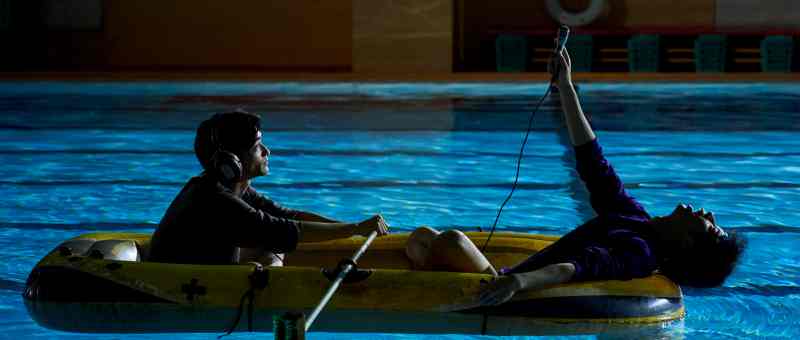
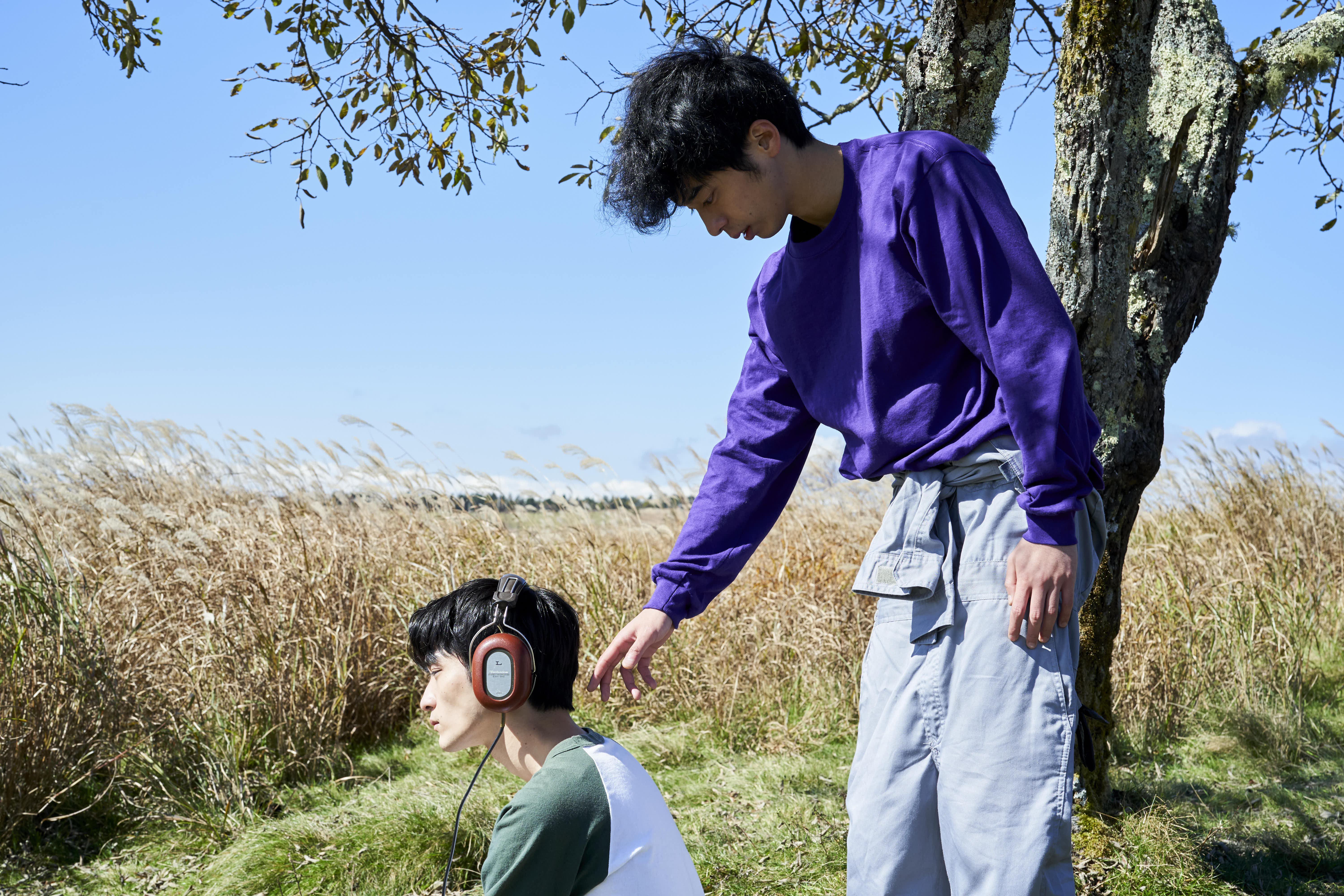
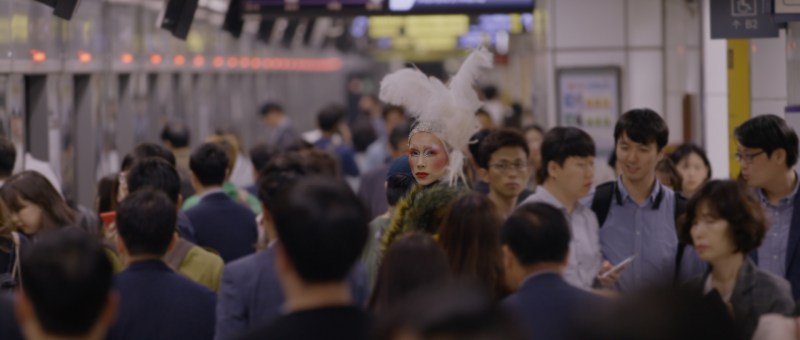
Experimental drama from Royston Tan following a recently deceased sound recordist through 24 diverse environments.

A Distant Place

Having fled the city, Jin-woo has started a new life as a hired hand on a sheep farm while raising his young daughter Seol and waiting for his partner Hyun-min to join him. At first the two men live together happily if discreetly but when Jin-woo’s twin sister, the birth mother of Seol, arrives intending to take her back their distant dreams of a tranquil family life are shattered.

East Palace, West Palace

Screening on 35mm

Landmark 1996 drama from Mainland China following gay writer A-Lan who forms a masochistic bond with the police officer questioning him after he is arrested during a night raid at a Beijing park.

Malila: The Farewell Flower

Reeling from tragic loss, a young man reunites with the love of his youth only to discover he has terminal lung cancer and has chosen to forgo all treatment in Anucha Boonyawatana’s melancholy meditation on love, life, and transience. Review.

What She Likes…

A young man struggling to accept his sexuality ironically bonds with a young woman embarrassed by her love for BL or boys love literature which revolves around idealised love stories between men.

Mundane History

Class conflict jostles with the fading grandeur of a declining bourgeoisie while two young men lament their broken dreams, one believing himself a prisoner of his privilege and the other trapped by economic inequality. Yet despite their differences, the familial disconnections, and the austerity of their “soulless” environment, a connection is eventually formed making way for a rebirth, new life birthed in the ashes of the old. Review.

Love of Siam

Childhood friends reunite by chance at Siam Square one now a popular and handsome guy bored with his girlfriend and the other an introverted musician secretly admired by a neighbour.

I Told Sunset About You TV

Streaming via BFI Player.

Five-episode TV drama from Thailand in which former high school friends meet again while studying for their uni exams and gradually realise that they have feelings for each other.

Shorts

VR Cinematic Experience: In the Mist

Virtual reality experience from Chou Tung-Yen set in a gay sauna.

Artists’ Moving Images

Queer East runs 18th to 29th May at venues across Central London while a selection of films will also tour to venues around the UK in the autumn. Full details for all the films as well as ticketing links can be found on the official website, while you can also keep up with all the latest news by following Queer East on FacebookTwitterInstagram, and YouTube.

Perhaps Love (장르만 로맨스, Cho Eun-ji, 2021)

A blocked writer finds himself growing as a person after mentoring a young protégé but is also forced to meditate on his own romantic cowardice and tendency to treat others badly because of his inner insecurity in the directorial debut from actress Cho Eun-ji, Perhaps Love (장르만 로맨스, Jangleuman Lomaenseu). Caught in a complicated web of romantic intrigue between himself, his ex-wife, current wife, publisher, son, the woman across the road, and the young protégé, the writer is forced to reflect on the varying natures of love which may sometimes be misdirected or unreciprocated but no less real or important. 

Hyun’s (Ryu Seung-ryong) problem is that he had a big hit and became a literary phenomenon while relatively young but hasn’t written anything of note in the last seven years and is currently supporting himself as a professor of creative writing. His old university friend and publisher Soon-mo (Kim Hee-won) is becoming thoroughly fed up with increasing pressure from above to deliver the manuscript knowing that if he really can’t turn anything in Hyun risks being plunged into inescapable debt in having to repay his generous advance. After being pranked by a friend who invited him to his old teacher’s “funeral” which turned out to be a birthday party, Hyun goes to visit another old friend, Nam-jin (Oh Jeong-se), with whom as it transpires he had fallen out. Possibly out of jealously, Hyun had not only panned Nam-jin’s book in a review but thoughtlessly outed him by complaining that his writing was full of “cheap gay sentiment”, a comment which Nam-jin took to be essentially homophobic and on a personal level unnecessarily cruel. Hyun of course disputes this and doesn’t quite see why Nam-jin is so upset. 

Nam-jin’s short-term boyfriend Yu Jin (Mu Jin-sung) has point when he tells Hyun that the reason he can’t write is because he’s too afraid of losing what he has, unprepared to risk vulnerability in the service of his art. Then again, all Hyun really has is the faded glory of his former success, his present life is a mess. His second wife (Ryu Hyun-kyung) has been living in Canada with their daughter, while he ends up ruining his relationship with his angst-ridden teenage son Sung-kyung (Sung Yoo-bin) when he’s caught in the middle of a drunken fumble with feisty ex-wife Mi-ae (Oh Na-ra) who has secretly been dating Soon-mo. Sung-kyung meanwhile is in the middle of his first breakup after being dumped by his high school girlfriend who is carrying someone else’s child. Disillusioned by his adulterous parents he develops a not entirely appropriate relationship with an eccentric actress (Lee Yoo-young) who lives across the road. Meanwhile, Yu Jin suddenly reappears in Hyun’s life and reveals he’s been in love with him for years. 

All of these loves are in someway incomplete, hesitant or uncertain each of the lovers lacking the confidence to claim the word. A terrible holiday forces Mi-ae and Soon-mo to realise that they’ve been keeping their romance secret less because of the potential awkwardness in their shared history with Hyun than because they themselves are romantically insecure. Sung-kyung thinks he’s in love with the older lady from across the road and completely misses all of her attempts to avoid his romantic overtures, while she is perhaps just lonely and unfulfilled in both her marriage and her career. Hyun meanwhile is confronted with his own romantic cowardice in cheating on both of his wives, continually self-sabotaging in his insecure inability to commit. Having ruined his friendship with Nam-jin he threatens to do the same to a younger female writer joining the university who has eclipsed him in literary success in having been shortlisted for the Booker Prize. 

It’s the arrival Yu Jin that shakes him up, seeing something in the young writer that reawakens his creative spirit as he offers to become a mentor co-authoring a novel with him, but it also disturbs Hyun in confronting him with his latent homophobia and later his complicated feelings for the young man which might extend to a kind of love he cannot quite put a name to. Where Hyun is too afraid to risk losing the comfortable life he currently has, Yu Jin has no such worries because as he later says he’s used to getting hurt and having to get over it. As gay man in a conservative society he’s familiar with a constant sense of casual rejection, a fellow student in Hyun’s writing class shouting out “the gay guy” in mocking tones when Hyun asks who’s missing during roll call while the pair are later the subject of a media frenzy when Nam-jin goes to the press accusing them of being lovers. Yet Yu Jin is willing to state his feelings plainly with no expectation that they will be reciprocated leaving Hyun floundering as to the proper way to react.

While there may be some latent conflict in Hyun, what he comes to realise is that love is more complicated than he thought and what he feels for Yu Jin may be a kind of it comprising the paternal, fraternal, that of a mentor for a pupil, and that simply for another human being. In an interview promoting the book they’ve written together, Hyun explains that he wanted to explore how people can change and grow with relationships having overcome his latent homophobia in advancing that no one should be judged for who they love while otherwise able to appreciate Yu Jin’s talent without jealousy or resentment having regained his own desire to write. Through their various experiences each of the lovers is confronted with a romantic reality accepting who it is they love or don’t while teenager Seung-kyung experiences his first real heartbreak in realising the extent to which he’d misinterpreted his relationship with the quirky neighbour. Always forgiving of its feckless hero’s flaws, Cho’s warm and empathetic dramedy is indeed about how people can grow and change through their interactions with others finding new equilibrium with themselves if not, perhaps, love. 


Perhaps Love screened as part of this year’s Udine Far East Film Festival.

International trailer (English sutbtitles)

Big Night! (Jun Robles Lana, 2021)

In the opening scenes of Jun Robles Lana’s darkly comic farce Big Night! a young man is shot in the head by another young man, this one wearing a motorcycle helmet with its visor down, who calmly walks away and gets back on the back of the bike he arrived on his friend then driving them both away. Of course people are shocked but then again not all that much, they barely pause despite the fact that his man, Ronron, was well known to them and no one really thought he had much to do with drugs. Beautician Dharna (Christian Bables) gossips about the killing with his friend Biba but gives it little thought before returning to his day, so normalised has death on the streets become in Duterte’s Philippines. 

Dharna may not have given much thought to extrajudicial killings, but then it’s different when it’s you who might be next in the firing line as he discovers when Biba gets an advance view of the following day’s “Watch List” from her law enforcement boyfriend. What ensues is a kafkaesque quest to clear his name though there’s no real “official” path towards getting off a watch list when you’re on one. His boyfriend Zeus who is due to perform in a “Big Night” pageant at a local gay bar that very night suggests simply fleeing to another district, but flight implies guilt and as Dharna points out he’ll lose all his customers if he has to move to another area and neither of them have the money to start all over again somewhere new. Like many of Dharna’s friends and acquaintances Zeus doesn’t seem to share his concern. “The police won’t bother you if you’re not doing anything illegal” he naively advises, sure it’s all just a random mistake that soon will blow over but otherwise so numbed to the idea of extrajudicial killing that he doesn’t really think too much of it and is mainly annoyed that Dharna has lost interest in helping finish his costume for the big show. 

Neither of them can think of a reason why Dharna, under his full legal name, would have been placed on a list as he’s not a drug user and doesn’t know anyone who is. He does, however, have some useful connections including local law enforcement official Cynthia who isn’t terribly interested or helpful but manipulates his anxiety to force him to help her out by filling in for her regular mortician, Connie, who has mysteriously not shown up for work. The morgue is currently overflowing, Cynthia making a dark joke that undertaking is a growth industry while revealing that there are so many bodies in part because families have to pay a fee to get them back and most of those involved in extrajudicial killings are from the slums so they can’t afford it. Even so, she explains to Dharna that they get more donations when families can see the body which is why he’s supposed to make them up to look as good as they can despite many of them having sustained gunshot wounds to the head or face. 

Cynthia sends him on to local community leader Roja warning him that he’s “allergic to gays” while he too makes Dharna do his bidding pointlessly walking laps around a fountain in some sort of macho display of endurance while insisting that he’s so anti-drug that even if he gets a stomach upset he just powers through it with raw masculine energy. He too is a self-interested hypocrite spouting religious nonsense while hanging out in “massage parlours”, dangling the idea of salvation but unprepared to grant it. Dharna wonders if it might have been someone from the area where he grew up who reported him but discovers that unlicensed midwife Melba (Janice De Belen) makes a point of not putting any names forward at all and is herself willing to risk breaking the law to help women in need who are denied medical treatment because of their poverty.

It’s impossible to avoid the implication that this is happening to Dharna in part because he’s poor and powerless in an authoritarian and hierarchal society but he’s eventually forced to consider that someone may have put his name in a drop box anonymously, that perhaps they gave a random name when someone asked for one to save their own, because they had something against him, or sought to profit in some way from his absence. Like the witch trials of old, the war against drugs is another tool that can be manipulated for personal gain and so inured to violence has the society become that many are prepared to use it. Dharna finds himself at the centre of a random conspiracy in which he has no other option than to accept his complicity or die, discovering that as the radio report that opened the film had suggested the same officials in charge of prosecuting the war on drugs are in fact secretly using it to secure their stranglehold over the local drugs trade. 

Dharna finds himself compromised at every turn, beginning by offering free haircuts to help his case to progressing to covering up state crime, literally, by repairing the faces of the dead and graduating to faking a seizure in an ambulance to bypass a checkpoint. At the hospital he is confronted by the face of an old lady filled with despair one hand holding that of a little girl and the other a pair of bloody sandals before she simply collapses. Dharna tries to wash the sandals clean but there’s only so much you can do when the stain runs so deep. The irony of his big night taking place on All Souls Day is not lost though there’s precious little time for honouring the dead when your survival can no longer be assured. 


Big Night screens at UltraStar Cinemas Mission Valley, San Diego April 23/27 as part of this year’s SDAFF Spring Showcase.

Original trailer (English subtitles)

Girls’ School (女子學校, Mimi Lee, 1982)

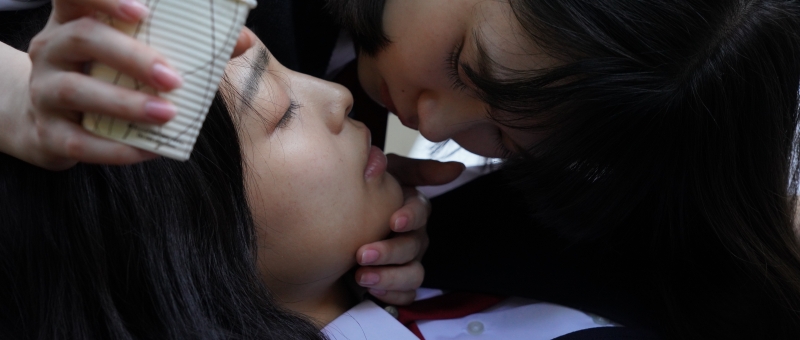
The intense friendship between two young women is placed in jeopardy when a rumour begins to circulate that they are more than friends in Mimi Lee’s subversive 1982 drama Girls’ School (女子學校, nǚzǐ xuéxiào). The film’s educational framing may ensure that it can only reinforce the contemporary social codes of the repressive martial law era in insisting the two women must be guided back towards he “correct” path, but otherwise affords them a genuine sympathy that undercuts the sense of moral censure while simultaneously rooting the source conflict in the rejection and frustrated longing that provoke only pettiness and jealousy. 

Chia-Lin and Chih-Ting have been best friends all the way through school and are more or less inseparable but the transgressive intensity of their relationship has also isolated them from their classmates some of whom, such as Chun-Hsueh, feel rejected and excluded. Possibly with a high degree of projection, it’s Chun-Hsueh who first starts the rumour that the two young women are “lesbians” only later admitting to the teacher Mr. Mei, informed via a note from class monitor Yu-Liang who has a crush on him, that she doesn’t quite understand what the word means or what saying it might mean not only for Chia-Lin and Chih-Ting but for the other girls and indeed for the school’s reputation. In reprimanding her, Mr. Mei accuses Chun-Hsueh of casting a dark shadow over the hearts of her previously innocent classmates now corrupted with the ugliness not only of her lie but the topic of homosexuality which he and the rest of the educational body view as something shameful and taboo. 

Reminiscent of William Wyler’s The Children’s Hour, the reason the rumour takes hold may be that there is a grain of truth in it in the burgeoning feelings between the two women yet in keeping with the social attitudes of the time the main interest is in proving that it isn’t true with each keen to clear their name of such vicious slander while the other girls frequently describe them as “disgusting”. Even so, the unfairness of their separation and the obviously strong feelings between the two women cannot help but evoke sympathy while Chih-Ting, the bolder of the pair, continues to insist that they’ve done nothing wrong even as Chia-Lin is overwhelmed by the pressure all around them suggesting that they might be better to simply “keep our friendship in our hearts” shamed into repressing their true feelings by an oppressively judgmental society. 

Then again, the film also succumbs to a series of uncomfortable stereotypical tropes in rooting Chih-Ting’s potential lesbianism in her tomoboyishness having been raised by a single father and longing for maternal affection. Having been abandoned by her mother she also feels emotionally rejected by her father who has a gambling problem and rarely returns home while further rejection by Chia-Lin at the instigation of her sister who is also a teacher at their school herself nursing a broken heart after her longterm boyfriend married someone else leaves her feeling like a “monster”, constantly asking herself “what’s wrong with me?” while wondering why others treat her like a “poisonous sore”. This sense of rejection and frustrated longing is the primary motivator for the actions of all, Chun-Hsueh starting the rumour because she wanted to be included in the girls’ friendship and Yu-Liang reporting it because she wanted to curry favour with Mr. Mei after seeing him scrunch up and bin a love letter while quite obviously smitten with Chia-Lin’s sister Miss Yang. 

Mr. Mei is clearly in a difficult position and often trying to do the right thing, admitting to Chih-Ting that the teacher’s don’t know how to help them, but also somewhat insensitive while like others overly mindful of the school’s reputation rather than girls’ fragile emotions never quite considering that the intensity of their feelings and the pressure placed upon them could lead them to harm themselves or else endanger their mental health. It is then a little uncomfortable that the resolution lies in Chih-Ting who had previously professed to hate everyone except Chia-Lin undergoing a softening in which she becomes “more cheerful and mature”, eventually re-embraced by the same classmates who shunned her now satisfied the rumour isn’t true while Chih-Ting has quite literally sacrificed a part of herself to be accepted by a society whose acceptance she had been insistent was unnecessary. The starkness of her conversion along with the subversive quality of the melancholy love song which recurs throughout may attack the underlying homophobia in supporting the truth of the feelings between the two women but leaves them with little possibility for emotional authenticity in an overly conservative society. 


Girls’ School screened as part of Osaka Asian Film Festival 2022

Restoration trailer (Traditional Chinese / English subtitles)