Inherit (คุณยายวรนาฏ, Banjong Pisanthanakun, 2026)

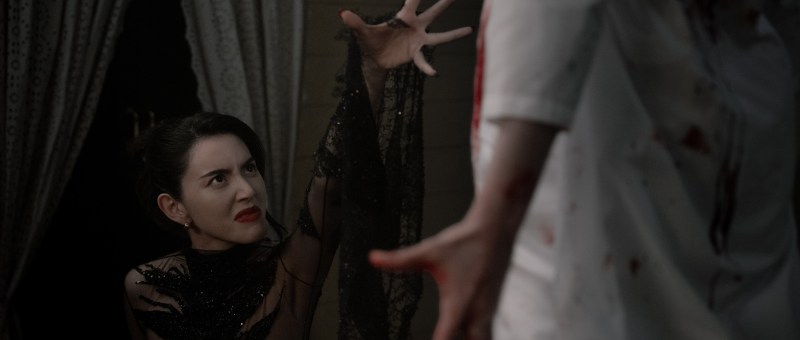
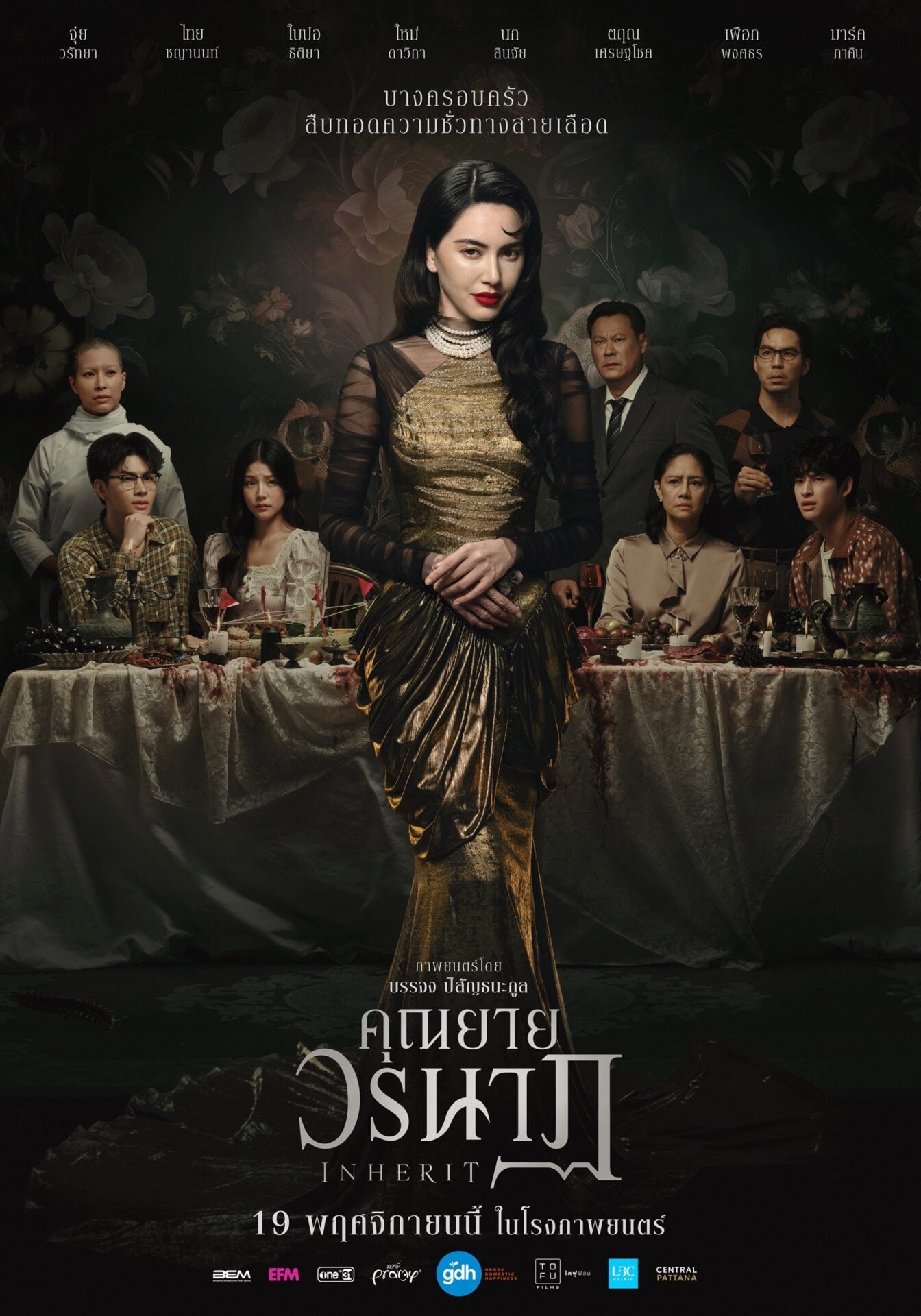
Playing out as something between Teorema and An Inspector Calls, Banjong Pisanthanakun’s Inherit (คุณยายวรนาฏ) asks its audience to suspend their disbelief to an unusual extent, but certainly takes those willing to go with it on a wild ride from ancient curses and super monks to corporate coverups, social inequality, and the moral corruptions at the heart of a seemingly “nice” upper-middle-class family. In fact, the more you learn about this incredibly compromised group of people, the harder it is not to start rooting for the malevolent centipede entity even if she does seem to kill and feast on beautiful young women in order to preserve her youthful appearance. 

At least, one has to wonder why no one explores rational explanations for the arrival of a glamorous woman claiming to be the family’s estranged octogenarian great aunt, Woranart (Davika Hoorne), seeing as she looks about 35. Everyone just seems to take her explanation that she’s undergone every anti-ageing and plastic surgery option going and they’ve all gone swimmingly at face value. Then again, perhaps you really can look this good when you have seemingly infinite funds at your disposal. For some reason, it never occurs to the family that she might just a young person trying to take advantage of them financially or get revenge for one of their many transgressions, the most public of which is a scandal surrounding a chemical leak from father Olan’s (Trin Settachoke) factory that they covered up after it caused sickness, death, and birth abnormalities in the surrounding community.

Olan is, however, the only one who thinks there’s something not right about Woranart and correctly guesses that only black magic could make a supposedly elderly woman look far younger than her middle-aged niece, Sudaduang (Sinjai Plengpanich). Woranart’s glamorous appearance further undermines Sudaduang’s self-confidence, leaving her wondering if she too should try plastic surgery while otherwise insecure in her relationships with husband and sons. She evidently had a strained relationship with her mother whose funeral the family had travelled to attend. The other attendees gossip that Sudaduang was not a good daughter while her mother was alive, putting her in what they call “a nuthouse”, while giving a glowing eulogy. Sudaduang had been close to Woranart in her childhood and therefore may feel a desire to reconnect with her now that her mother has passed away. 

Woranart, however, shows more interest in the family’s daughter Oui (Thitiya Jirapornsilp) who is first seen guzzling pills at the funeral and is kept on a tight leash by Sudaduang having apparently suffered a series of childhood illnesses. In some ways, it’s easy for Woranart to seduce her by offering her the sense of freedom and impending adulthood that’s denied her by her mother. Meanwhile, as Woranart seems to worry away at the family’s secrets, Oui has fewer reasons to reject the supposed “demon” given what she’s just found out about her father and brothers who may well be the “real villains” she describes them as. Woranart makes cryptic comments that it’s time for Oui to become “a real woman”, and much of the battle seems to be for Oui’s soul as she’s faced with a choice of whether she’s going to continue to go along with her family’s wealth and privilege despite knowing what she knows, or accept Woranart’s “gift” and a life without pain or suffering. 

On her arrival, Woranart had had all the Buddhist statues removed from the cottage on the family’s estate where they put her up, telling Oui that she doesn’t believe in karma because it’s “too slow”. That may suggest she’s come here with a mission of revenge after all, and it is later revealed that the centipede deity has held a grudge against Sudaduang’s family for over 800 years, though no one can remember why. She does seem to be intent on destroying them, but then again some might say they deserve it and were in the process of destroying themselves anyway. Nevertheless, it’s Oui who is finally left to decide what exactly she wants to “inherit”, neatly inverting the logic of the Western slasher along with that of a conservative society to claim her own agency. Anchored by a perfectly pitched performance from Davika Hoorne as the alluring great aunt / foxy 800-year-old demon meeting her match in a vengeful nun (Warattaya Nilkuha), Banjong Pisanthanakun’s take on this classic tale is an absolute riot that never forgets its feminist heart.


Inherit screens 9th/10th October as part of this year’s BFI London Film Festival.

Trailer (English subtitles)

Love of Siam (รักแห่งสยาม, Chookiat Sakveerakul, 2007)

Two young men contending with grief and familial dislocation begin to wonder if it’s possible to love someone knowing that you’ll lose them, or conversely if it’s possible to live without love in Chookiat Sakveerakul’s melancholy drama Love of Siam (รักแห่งสยาม, Rak haeng Siam). The title may sound overly patriotic but in actuality refers to the Siam Square shopping area when the boys meet again as teenagers after many years apart and rekindle their friendship only to be confused by their growing feelings for each other while each struggling with contradictory demands from fracturing family and romantic drama to the responsibilities of friendship and career. 

When they first meet as small boys, Mew (Arthit Niyomkul), who has come to live with his elderly grandmother, and Tong (Jirayu La-ongmanee) live opposite each other in a small Bangkok back street. When Mew is hassled in the school toilets, Tong comes to his rescue and gains a black eye in the process, cementing the boys’ friendship. Everything begins to change, however, when Tong goes on holiday with his family to Chiang Mai. His older sister Tang (Laila Boonyasak) stays on to hang out with friends and later disappears during a hiking trip leaving the family devastated. To escape their grief they decide to move away, breaking the friendship between the two boys. A decade or so later, they re-encounter each other by chance in Siam Square where Tong (Mario Maurer) is trying to buy a CD of rising boyband August of which Mew (Witwisit Hiranyawongkul) just happens to be the lead singer. 

In the intervening years, Tong has become somewhat distant and is now in an unsatisfying relationship with one of the school’s most popular girls, Donut (Aticha Pongsilpipat). As we discover, his father has developed an alcohol problem unable to overcome his guilt and grief over what happened to Tang, while his mother attempts to power through by exerting control over every aspect of her life. In a shocking coincidence, Mew’s band manager June (Laila Boonyasak) happens to look exactly like Tang, Tong and his mother eventually asking her to play the part of the absent sibling in the hope of curing his father’s depression. 

As much as the film revolves around the love story between the boys as they begin to figure out their sexuality, at the end it’s a story of love in its many forms and key among them the familial. Both the boys are in a sense displaced, Mew for reasons not explicitly stated living not with his father but his grandmother and then as a teenager alone following her death while Tong is caught between his grieving parents looking for new signs of stability. Understandably anxious, Tong’s mother still makes a point of picking him up by car though he is already a teenager when such solicitation might seem embarrassing. When she catches Tong kissing Mew, her world is destabilised attempting to reassert her control by asking Mew to stay away from her son fearful of losing him and the life she’d envisioned for his future with a wife and children. Yet through her interactions with June, who is also displaced having lost her parents in some kind of accident, she begins to realise that her need for control is not the way to save her family as they each begin to face their grief and repair their familial bonds accepting both the continuing presence and absence of Tang as symbolised by the family photo taken on their last holiday in which she is not pictured but only because she was standing behind the camera. 

In this way, Mew perhaps gets his answer to whether it’s possible to go on loving someone knowing that you’ll lose them unwilling to live a life without love even if the price is grief and loneliness. Where there’s love, there’s hope according to a Chinese song translated by Mew’s lovelorn neighbour, Ying (Kanya Rattapetch), who becomes an accidental friend of Tong learning to put her hurt and jealousy aside to embrace her friendship with both boys. As someone else puts it, mistakes are just opportunities for change and perhaps doing the wrong thing out of love is better than doing nothing at all. Nevertheless, as the family begins to repair itself, healing in mutual acceptance along with acceptance of their loss, the youngsters discover the strength to accept themselves discovering their place amid the admittedly chaotic streets of Siam Square. 


Love of Siam screens at Rich Mix on 29th May as part of this year’s Queer East.

Original trailer (English subtitles)