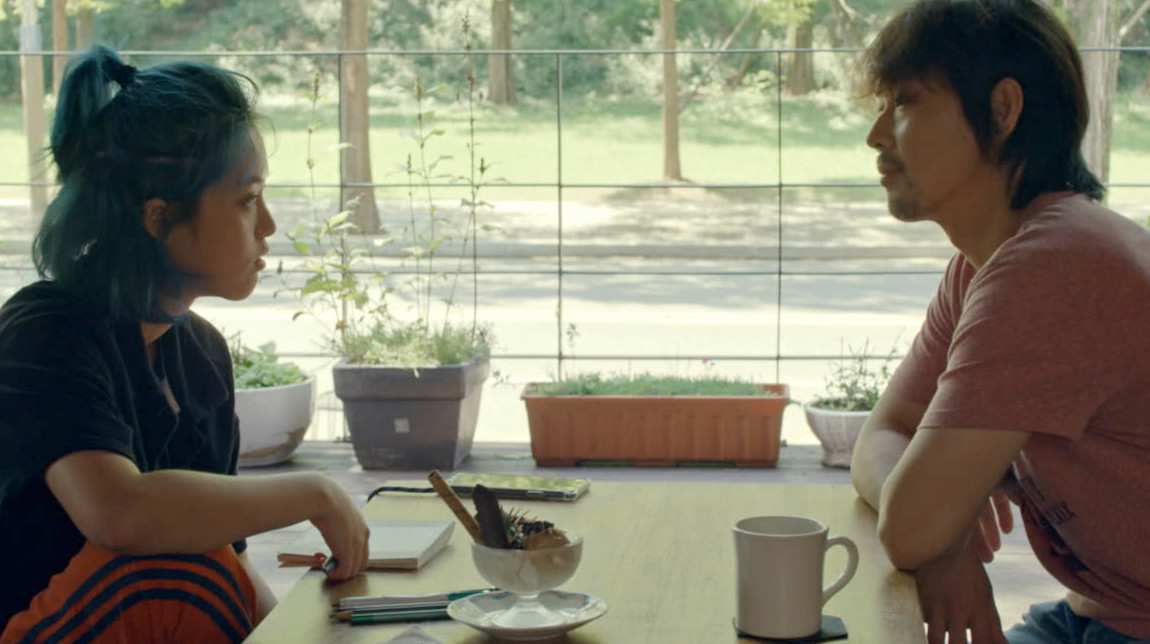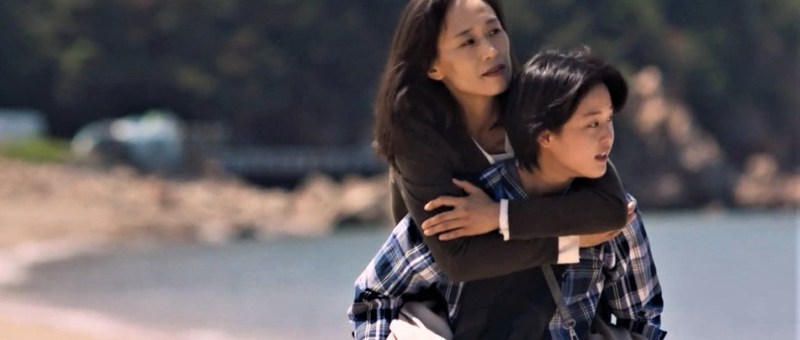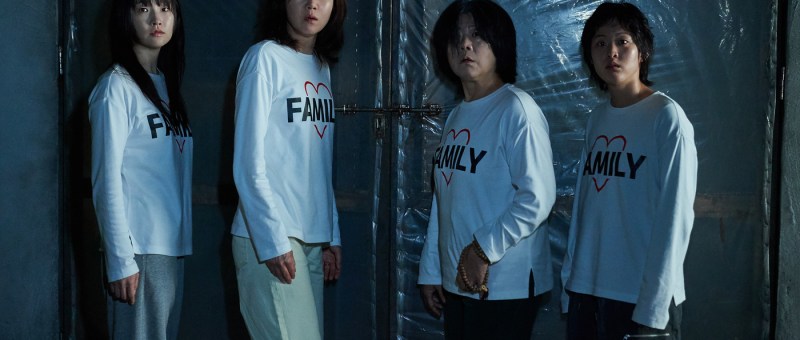
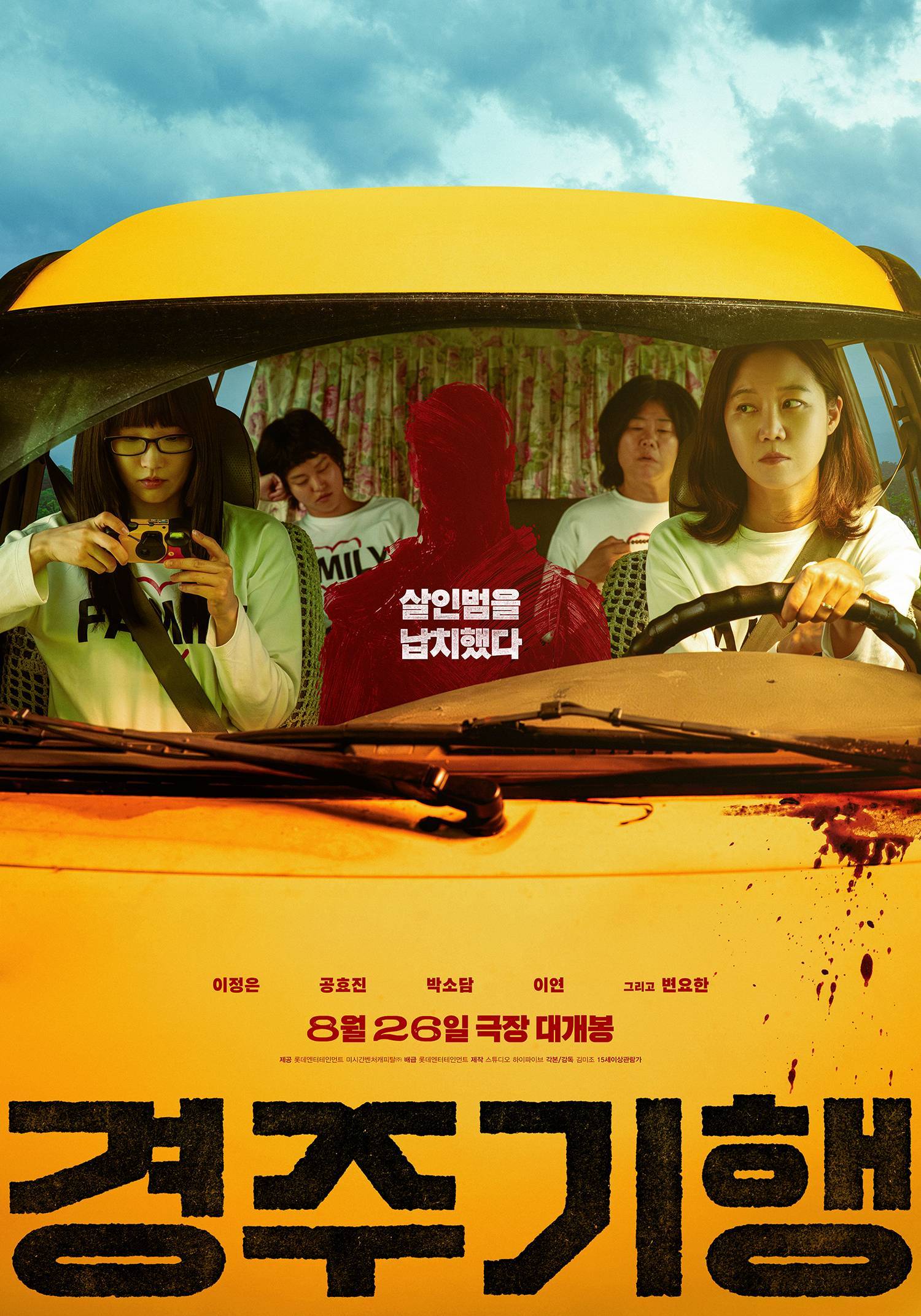
The Journey to Gyeong-ju (경주기행, Kim Mi-jo, 2025)

You know what they say, if you’re going to seek revenge, you’d best dig two graves. In a way, that’s what the bereaved mother at the centre of Kim Mi-jo’s familial vengeance comedy The Journey to Gyeong-ju (경주기행, Gyeongju gihaeng) ends up doing, but really what she wants is to repair her fracturing family which has been torn apart in the wake of her youngest daughter’s brutal abduction and murder. The killer was caught, but as the judge saw something in him that suggested he might be a candidate for rehabilitation, he handed him a comparatively light sentence that Ok-sil (Lee Jung-eun) in particular feels provides no sense of justice for her daughter.

For that reason alone, she decided to accept a cash settlement rather than press charges knowing that the killer, Sang-hyun (Byun Yo-han), would be released relatively quickly so she could kill him herself with the help of a shady underground fixer she met at a support group. To pull this off, she enlists her three surviving daughters, most of whom have their doubts about this plan, not only the morality of it but whether a group of four ordinary women who’ve never done anything like this before can really hold a brutal killer captive and torture him to death. They are, though, largely unable to directly defy their mother and are therefore looking for other ways to stop her from going through with this by pretending to play along. Ok-sil, however, feels like this is the only way that she will be able to move forward with her life.

The irony is that they frame this as a family trip to honour Gyeong-ju’s birthday, all of them piling into the now beaten up camper van father Mu-il (Kim Hak-sun) bought when Gyeong-ju was born hoping they’d take a lot more family holidays. The age gap between the sisters, however, meant that they only took one all together and that was, like this trip, impromptu and rolled in with a business obligation, or maybe the other way around. When oldest daughter Jang-ju’s (Gong Hyo-jin) husband and young daughter turn up announced, in a way, it’s like the family is restored with Seok-man (Kim Young-sung) taking Mu-il’s place while Yun-ji takes that of the absent Gyeong-ju. Waking up in the middle of the night at the remote villa they’ve rented, Ok-sil does a quick head count, realises someone’s missing, then looks over at Yun-ji and acknowledges there are the right number of people after all. They took this trip for the purposes of murder, but also ended up having a nice family holiday while creating “alibis” at various local tourist spots and posting pictures on social media.

What did they didn’t really know was that Sang-hyun had figured out they probably took the settlement money with the intention of killing him, and so is actually intent on killing them first. There is something bestial about him in the way that he can’t be subdued and immediately begins a crime spree after managing to escape. It’s difficult to see why the judge felt he might have a chance at reform given the nature of his crime and the probability that Gyeong-ju was not his first victim. The fact that Sang-hyun is actively trying to kill her lends a kind of moral justification to Ok-sil’s plan that might not otherwise be there, even as he pleads and wheedles, suddenly playing the mild-mannered fool who made a mistake, is very sorry, and is not going to do anything like this ever again.

Still, Ok-sil’s determination is born from a desire for vengeance rather than by the fact that Sang-hyun will go on creating more victims as long as he walks the earth. Confronted by her daughters, she has to face the ways in which her grief has caused her to shut out those who are still living while meditating on the dead. Killing Sang-hyuk won’t help her put her family back together in the way she thought it would, while strangely going on holiday together seems to have done the trick. Despite the absurd humour of the film’s early stretches as these very ordinary people try to get their heads around the practicalities of killing while largely trying to ignore the psychological pressure and affects of taking another person’s life, there is a genuine poignancy to its scenes final scenes in which Ok-sil realises she will finally have to let her daughter go.


The Journey to Gyeong-ju screened as part of this year’s London Korean Film Festival.

Trailer (English subtitles)

A Lonely Island in the Distant Sea (절해고도, Kim Mi-young, 2021)

A dejected artist finds himself reconsidering his life’s choices when his teenage daughter drops out of education to become a Buddhist nun and he falls in love with a forthright professor in Kim Mi-young’s contemplative drama, A Lonely Island in the Distant Sea (절해고도, Jeolhaegodo). Though the title could easily enough refer to the hero himself, it echoes the sense of impossible longing symbolised by an island he could see but did not travel to though there was no real reason preventing him save his own feelings. In any case, the island and the day on which he saw it have become lodged in his memory as a nostalgic image of irresolvable desire. 

Now in early middle-age, Yun-cheol (Park Jong-hwan) is an unsuccessful sculptor who feels he has failed to live up to the promise of his youth and mainly earns his keep through commercial work such as crafting replicas of the solar system for a local museum. Divorced from his workaholic wife, he’s called in by his daughter Gina’s (Lee Yeon) school when they object to some admittedly disturbing artwork she had drawn on a series of roller blinds without permission. Yun-cheol is less concerned with the fact the paintings suggest that Gina is experiencing some kind of mental anguish than the school’s reaction to them, her teacher admitting that they took the blinds out and burned them. His anger is directed towards their wilful destruction of a work of art because it seemed to them more akin to vandalism or destruction of their property. Describing Gina as “mean”, they imply that they will ask her to leave suggesting that she would benefit from a different environment. In many ways that’s how Gina feels too, eventually revealing that she has decided to leave education altogether and later giving up her art to practice Buddhism. 

It’s the idea of abandoning her obvious talent that Yun-cheol struggles to understand. As a young man, he’d also considered becoming a monk or even a Catholic priest as, as he describes it, “safe paths for lost souls” if he failed to realise his ambitions of becoming an artist. Discovering that his daughter had had the same dilemma, even if she took a different path, shakes his sense of self in realising that his internal conflict was not unique. While trying to understand Gina’s desire to renounce the world, he begins to fall in love with a free spirited professor and cancer survivor but Ji-young (Kang Kyung-heon) is not prepared to wait around for him to sort himself out on his own and is quickly tired of his tendency to retreat into isolation rather than face his problems. Having learned only half a lesson, he later moves into Gina’s retreat where he is eventually asked to leave by the head nun bluntly who tells him that he is not suited for the monastic life. 

It may be that Yun-cheol exists outside of regular society because of his unusual upbringing in a mountain shack with his similarly isolated father, yet he struggles with himself and his relationship to art while seemingly unable to build lasting relationships with people as if they too were islands in a distant sea he could only gaze at from afar. He tells his daughter he would never abandon her in the way his mother had him but in a sense he might have done so in having lost the will to live amid his intense loneliness and lack of artistic fulfilment. Nevertheless, his growth comes in a kind of acceptance in acknowledging Gina’s choice to become a nun along with Ji-young’s declining heath and desire for isolation. 

When he had first met her, Yun-cheol had responded to Ji-young’s lecture about a would-be-revolutionary who did not go through with his cause by asking her why he would seek to implode the world in which he lived though this is the same thing Yun-cheol eventually does in his own mini-revolution choosing new paths in middle age whether in fear and regret or in search of possibility. A mystical meeting with a maternal wild boar helps to give him clarity though it seems he is forever destined to be a lonely island looking out at a distant sea filled with an unanswerable longing.


A Lonely Island in the Distant Sea screened as part of this year’s London Korean Film Festival.

Original trailer (no subtitles)

Take Me Home (담쟁이, Han Jay, 2020)

A schoolteacher is confronted with the multilevel prejudices of her society in Han Jay’s pointed social drama Take Me Home (담쟁이, Damjaengi). Examining the changing concept of family in contemporary Korea, the film not only addresses deep seated prejudices towards both the LGBTQ+ community and those with disabilities but also an exploitative and unfeeling working environment in which employers adopt the language of family while continually undermining their employees’ interpersonal relationships and always ready to casually discard them should their circumstances change. 

Middle-aged high school teacher Eunsu (Woo Mi-hwa) is in a happy relationship with a much younger woman, Yewon (Lee Yeon), who uncomfortably enough was once one of her students. Though the pair live together, they are not completely out keeping their relationship vague with coworkers and family members Yewon explaining to her colleague that Eunsu is her cousin while Eunsu describes Yewon as a roommate to the sister she barely sees on returning home for her mother’s annual memorial service. Yewon it seems is less cautious, but Eunsu quickly bats away her hand as they walk home together from the local baths worried that someone might see even as they poignantly walk past an elderly couple with no such fear sitting quietly on a park bench. 

Yewon views their relationship as familial despite Eunsu’s occasional anxiety, yet when Eunsu is involved in a car crash which claims her sister’s life Yewon is reminded that she is not “family” and cannot act as Eunsu’s caregiver at the hospital. Even so she becomes temporarily responsible for Eunsu’s now orphaned niece Sumin (Kim Bo-min), her teacher apparently abandoning her with this woman she knows nothing about other than she is in someway connected to Eunsu. When Eunsu comes round and discovers that she has lost the use of her legs and may need to use a wheelchair for at least the next couple of years, it further destabilises her relationships firstly feeling as if she’d be overburdening Yewon and secondly uncertain that she is able to take care of her niece while simultaneously withdrawing into herself wary of her emotional bonds with others. 

Yewon tries to point out that they are family and family knows no burden, compassionately caring both for Eunsu and Sumin as they each try to adjust to their change in circumstances though she too suffers at work unable to explain to her boss that she needed to take time out because her partner had been involved in an accident even as he coldly tells her that time off is only given for a “family matter” while cancelling an opportunity for promotion he’d recently presented to her. Eunsu meanwhile encounters something similar, returning to the school where she works only for her boss to tell her he’ll be letting her go, the implication being that parents will object to a teacher using a wheelchair. He suggests another job in a much more rural location in a school with fewer than 10 children as if hiding her away or suggesting that her disability makes her ineligible for all but the least desirable of positions. Further fuelling her sense of resentment, she’s also subject to a series of sexist remarks to the effect that it’s a shame such a pretty woman met with an accident, as if on the one hand she is no longer desirable and on the other that she’s somehow lost more than someone considered unattractive while continuing to struggle with a unaccommodating society. 

Having begun to accept her new circumstances, Eunsu begins to warm to the idea of herself, Sumin, and Yewon as a family but her hopes for the future are crushed when her attempt to file formal adoption documentation is blocked. On consulting a series of lawyers, she is given the irrational advice that she might be able to win custody but only if she eliminates one of the two bars against her those being a same-sex relationship and her disability. Adoptions she is told are generally only approved for married couples, same-sex marriages currently not recognised under Korean law which also lacks anti-discrimination legislation on the grounds of sexuality, though the lawyer seems to think that the court could be convinced to allow a lesbian or a disabled woman to adopt but apparently not a disabled lesbian which obviously makes no sense at all. The sinister social worker who approaches Sumin alone in a park and asks her inappropriate questions about the nature of the relationship between her aunt and Yewon, which Sumin sees as nothing other than warm and loving like any other couple gay or straight, claims to have her well-being in mind but later snatches her from the back of a taxi depriving her of the loving family home she continues to yearn for while asking Eunsu to make a series of choices and compromises that leave no one happy. 

The villain is clearly the unsympathetic state which places its own idealogical concerns above a child’s happiness though the film’s conclusion cannot help but seem manipulative while leaving aside the more generalised examination of what the word family means in contemporary Korea, the persistent discrimination levelled at the LGBTQ+ community, and the barriers placed in front of those living with disability who find themselves infantilised by a society all too often refusing to accommodate their needs. In any case, the film argues for a world in which no one would have to choose between love and family because they truly would be one and the same. 


Take Me Home screens at Catford Mews on 21st May as part of this year’s Queer East.

Original trailer (English subtitles)

Height of the Wave (파고, Park Jung-bum, 2019)

Height of the Wave poster“The suspects are all the residents” says the world weary police chief at the end of Park Jung-bum’s uncharacteristically forgiving island drama Height of the Wave (파고, Pago). Island communities are often thought of as innocent idylls, the city’s corruption lying far off over the horizon, but where there are people there is suffering and perhaps there’s nowhere completely free of human cruelty.

Recently divorced maritime police woman Yeon-su (Lee Seung-yeon) has been seconded to a remote island to act as its police chief for two years. She’s brought her deeply resentful teenage daughter with her, and is currently struggling with a “panic disorder” she’s keen to keep a secret. Meanwhile, island’s sleazy foreman, handsy and making inappropriate comments about the scent of Yeon-su’s hair, is hard at work to a get a designation as a “desirable destination” and attract much needed funding. His plans are disrupted, however, when Yeon-su overhears some worrying comments from the island’s only young woman, Yae-eun (Lee Yeon), which suggest she is indulging in sex work (which is illegal). Yeon-su investigates, becoming worried for Yae-eun who is an orphan and seems to be a little different than you might expect for a woman of her age, and contacts the mainland for support. As you might expect, this does not go down well with the foreman who worries that his precious designation might be denied if word got out about the base immorality lurking in his town.

Traumatised by her career as a policewoman on the mainland which mainly involved retrieving the bodies of those who’d committed suicide by drowning, Yeon-su might have come, or been sent, to the island as quiet place to recover. The island is after all a liminal space, between one state and another, where one might pause for reflection before preparing to move forward. Yae-eun, who lost her parents at sea, is trapped because of her fear of water and terror that someday a great wave will swallow everything and everyone. Yeon-su fears something similar, unable to sleep on thinking about all the bodies she never managed to save that sunk to the bottom of the ocean never to be seen again.

Yeon-su’s daughter Sangyi (Choi Eun-seo) recognises the similarities in the anxieties of the two women, bonding with Yae-eun out of a shared sense of betrayal and abandonment but finding it more difficult to forgive her mother for her increasingly strange behaviour, the breakdown of her parents’ marriage, and for bringing her to this barren place. Early on, Sangyi tries to join in with some of the other children, but finds them playing a cruel game in which they’re trying to kill off the sleepy ants on the grounds that they will soon invade and destroy all their houses. Sangyi, perhaps identifying with the “alien” bugs, tries to stop the kids crushing the ants before they’ve even done anything but is then othered herself, ironically put in “jail” with the chickens as a hostile element. “It’s your fault” a boy tells her, “we wanted to be friends”.

From the perspective of the foreman and perhaps others in the village, Yeon-su is a burrowing termite intent on undermining their foundations. This is an island, after all, and they do things a bit differently. What’s normal here, might not be appropriate on the mainland. It seems that Yae-eun has been accepting money in exchange for sex, and that she might not be fully capable of understanding the implications of her actions, but if she’s making a free choice to sell her body and is not in that sense being exploited by a third party then perhaps some might say that is her own business. The situation is complicated, however, when Yae-eun reveals she may have been doing this as young as 17, which means she was underage. Yeon-su wants to protect the young woman, all alone on an island full of possibly predatory old men and cared for only by an “uncle” (Park Jung-bum) and a “grandpa”, but has to accept that her desire to do so may involve short-term harm in that Yae-eun is terrified of getting on boats which means she is unable to escape her present environment even if she wanted to.

Yae-eun immediately recognises something in the other woman. “You look so lonely, chief”, she tells her placing artificial flowers on the altar of a disused church reassured by the fact they never change, “I thought I was the only lonely one”. The foreman tries to get the others on board by referring to Yae-eun as everybody’s child, literally raised by a village, but he wants to forcibly export her to the mainland so that she won’t mess up his desirable island plan by embarrassing him when the inspection committees arrive. Yae-eun’s uncle apologises for not being better able to protect her, complaining that the villagers are “blinded by money”, and have decided to sacrifice her rather than risk destroying their chances of financial gain. Yeon-su’s attempts to help have merely created a different, perhaps more dangerous, set of problems that expose but do not intend to heal a painful hypocrisy. Tellingly, it is Sangyi who eventually proposes the only positive solution in her desire to help Yae-eun overcome her fear of water but even this has its darkness because it is also a path to exiling her from the island possibly against her will to cover up the “scandal” of her existence. The wave may not be so high that it drowns us all, but it’s as well to learn to swim.


Height of the Wave was screened as part of the 2019 London Korean Film Festival.

Short clip (dialogue free)