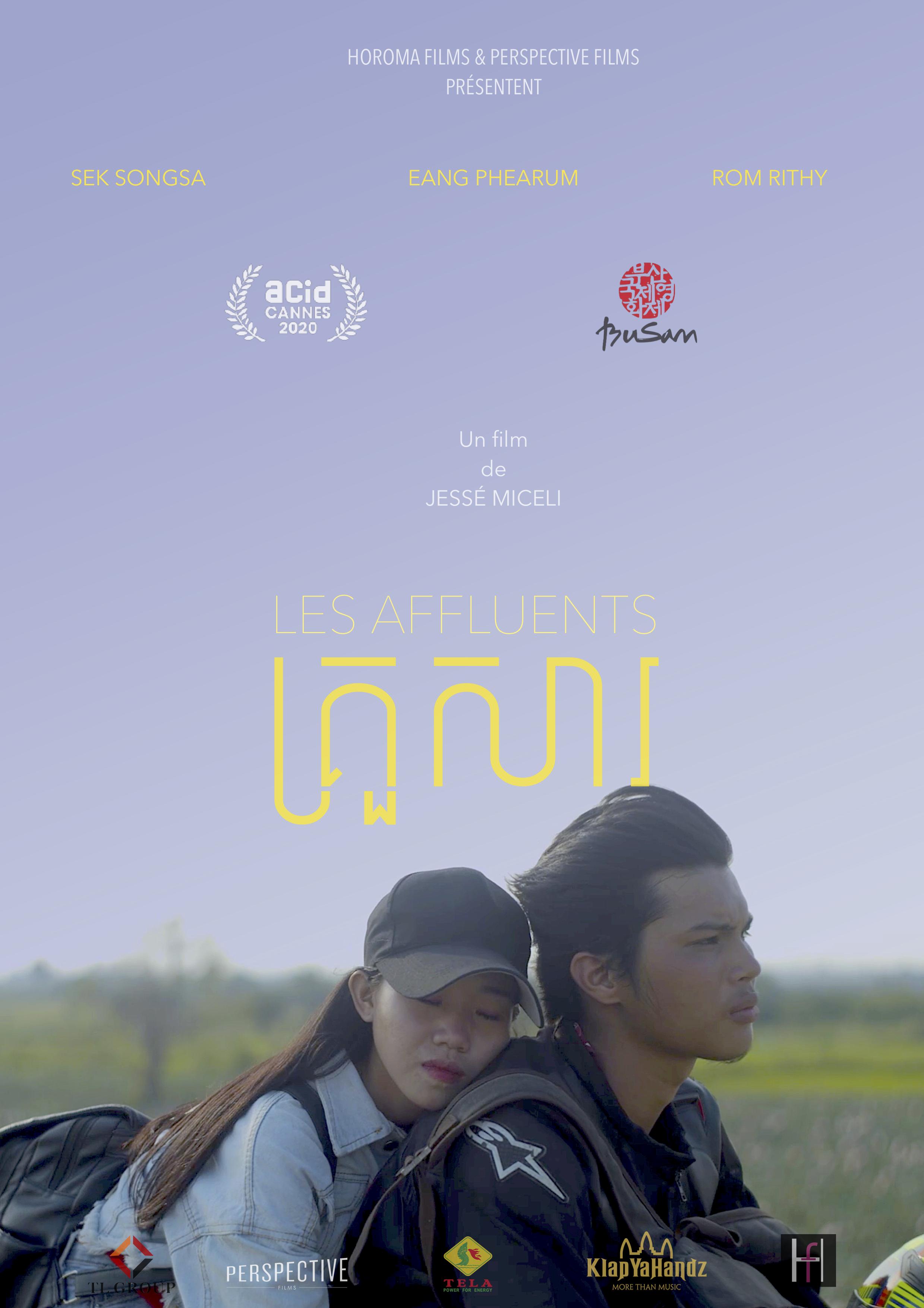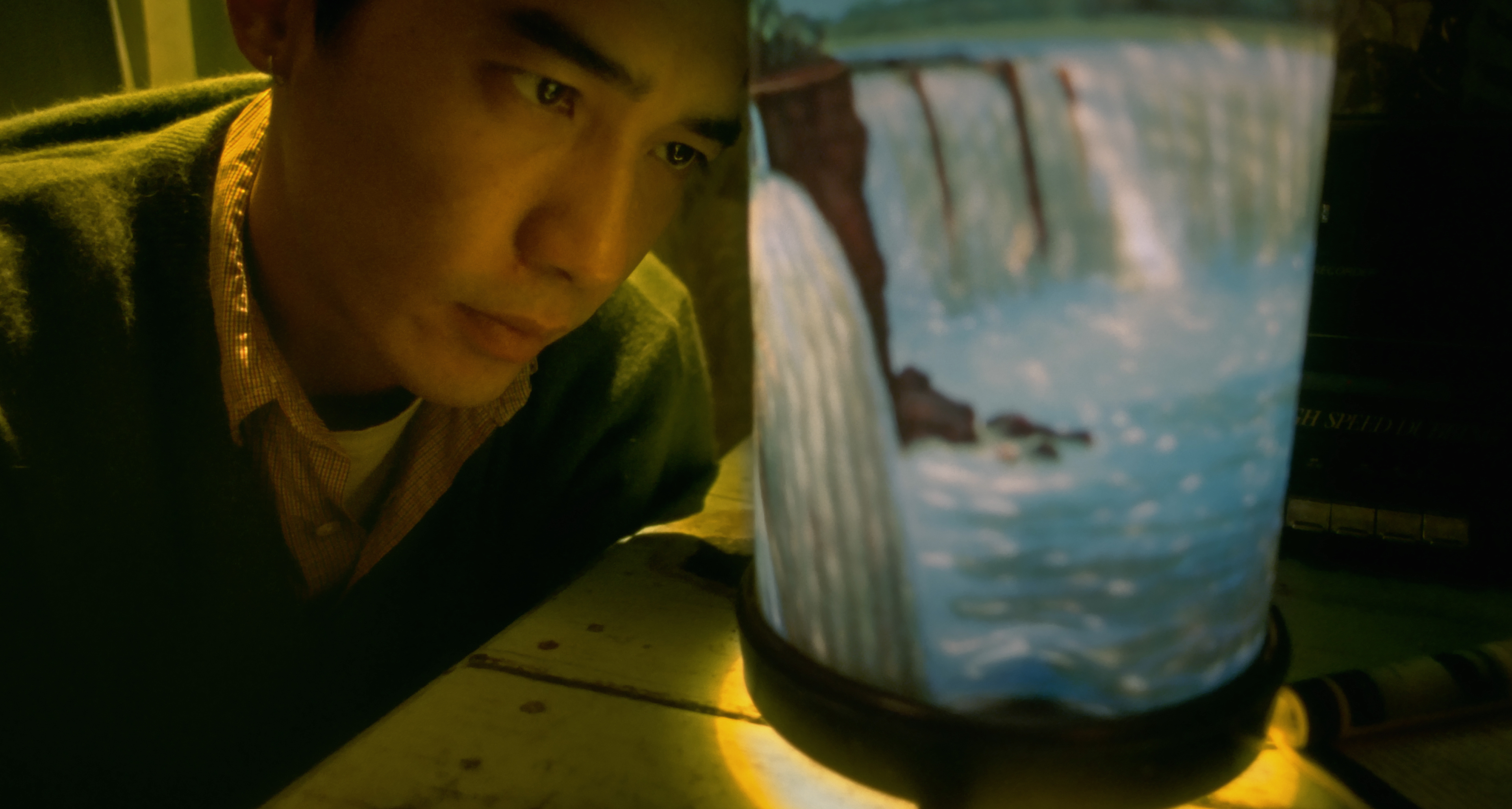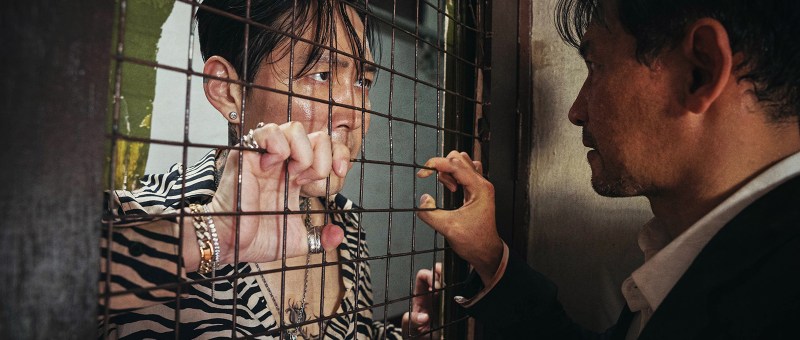
Turning 18 (未來無恙, Ho Chao-ti, 2018)

How much do you really owe a family that has failed you? A difficult question at the best of times, it’s one that continues to play on the mind of teenager Chen, one of two young women from indigenous communities at the centre of Ho Chao-ti’s documentary Turning 18 (未來無恙, Wèilái Wúyàng). Following the two girls who each come from challenging family backgrounds from the ages of 15 to 18, Ho perhaps draws a slightly uncomfortable contrast in the differing paths their lives eventually take after they briefly meet during an internship at funeral home but nevertheless presents an all too often ignored perspective on a hidden side of the island nation.  

Forced to grow up far too soon, both young women are children of single parent families in which there has been a history of domestic violence and, as we later discover, in Chen’s case sexual abuse. In response to her difficult family circumstances in which her mother has become an alcoholic and she has become the primary carer for her eight siblings, Chen has grown serious and mature. She intensely resents her mother’s drinking, not least because it plays into a racist stereotype about indigenous people while also trapping them in desperate poverty. Chen has had to take time out of education to look after her siblings and is grateful for the internship opportunity after which she will return to high school. 

Pei, meanwhile, has moved in with her possessive boyfriend, Wei, and his despairing mother. She is slightly less enthused about the internship, but dutifully completes it. Unlike Chen she never returns to school but remains with Wei who later becomes a delinquent and encounters trouble with the law. Pregnant before her 18th birthday, Pei finds herself navigating teenage motherhood and economic instability while the increasingly irresponsible Wei gravitates towards a life on the margins of crime. 

As such, it seems almost as if we’re being pushed towards judgement of the unlucky Pei for, perhaps, making the same mistake as her mother in unwisely depending on an unreliable man though they are both only teenagers, while it is undoubtedly much easier to get behind the earnest Chen who is determined to make something of her life while fiercely defending her family. Nevertheless, their marginalised status as members of an indigenous community is quickly brought home to us. Ho throws in a few snippets from post-war propaganda programs regarding the development of Hualien which describe the local Tayan population alternately as savage and uncivilised and then simple and innocent, apparently grateful for their “civilisation” at the hands of the KMT government which recommends Hualien to industry leaders as a source of cheap labour. 

Both the young women suffer at the hands of a patriarchal social code and fractured economy. Forced to compromise her education, Chen resents her mother for being unable to hold down a job of her own while it seems clear that she has little education herself and that her drinking is in part a response to her despair. Having escaped abusive spouses, the mothers of both girls have been left without effective means to support themselves in the absence of men, Chen’s mother depending on the support of her extended family who, we later learn, were also abusive. When the abuse is brought to light, Chen’s mother encourages her to lie to the court in order to protect her family members afraid perhaps of the shame but equally of the impossibility of surviving without them. 

Yet Chen continues to try to love her mother no matter how much she disappoints her, sorry only that her mother could not learn to love herself enough to save herself and determined never to make the same mistake. Finding an outlet in Taekwondo which she sees as another way to protect her family, Chen discovers another side of herself in dating another girl, at this young stage of her life incongruously insisting on referring to her as a “boyfriend” though the relationship appears to be accepted by her classmates as entirely normal. We never see how Chen’s family feels about her sexual identity save that she later affirms her desire to march in the Pride parade in Taipei precisely because she wants them to understand she loves women and that’s not something that will change, no one has the right to tell her who to love or who to marry. 

In this at least, Chen appears to have broken the cycle in definitively embracing her identities as a queer indigenous woman while also continuing to love and support her problematic family. Pei meanwhile is in a much less advantageous position, having perhaps repeated the same behaviour patterns in being letdown by an unreliable man and left to bring up a baby on her own though little more than a baby herself. Nevertheless, Ho’s camera is never judgemental in capturing this largely hidden side of Taiwanese society in which systemic male failure and entrenched patriarchy contribute to the marginalisation of the indigenous community even in the contemporary era. 


Turning 18 screens at London’s Riverside Studios on 3rd November as part of this year’s Queer East Film Festival.

Original trailer (English subtitles)

The Shepherds (牧者, Elvis Lu, 2018)

Among the most liberal of Asian nations, Taiwan became the first to legalise same-sex marriage in 2019 but that doesn’t mean that it’s always easy to be LGBTQ+ particularly if you come from a religious background and wish to maintain your faith. Elvis Lu’s documentary The Shepherds (牧者, Mùzhě) follows a small group of religious leaders who are or have been involved with a progressive church, Tong-Kwang, which was the first in Taiwan to expressly embrace the LGBTQ+ community on its foundation back in 1996. Unfortunately, however, the pastors have faced significant barriers in their personal and professional lives because of their views on homosexuality which face staunch opposition from mainstream religious organisations. The founder of Tong-Kwang Yang Ya-hui, a heterosexual female pastor, eventually took her own life because of the discrimination she later faced within the religious community which made it impossible for her to continue working and support herself without compromising her beliefs. 

Discrimination is also something which has affected pastor Huang Guo-yao and his wife who now work for Tong-Kwang but began their careers in Hong Kong. Huang was forced to give up his ministry after advocating for LGBTQ+ rights brought him into conflict with the more conservative local Churches, eventually making the decision to migrate to Taiwan while his children remained in Hong Kong. He laments that the situation in which he found himself may have had a negative effect on his now grown-up sons, the younger one he worries having become increasingly withdrawn and unwilling to talk about his feelings. 

Zeng Shu-min, meanwhile, is in a similar position unable to find employment with more conventional churches as an openly gay pastor. While officiating at same sex weddings, he’s had to look for other employment to support himself and generally lives an ascetic existence, dependent on the kindness of friends such as Hsiao-en, a lesbian advocate for LGBTQ+ Christians who was herself ejected from the seminary for her liberal views. Running the Light Up project, she provides a more positive religious presence at rallies where conservative voices loudly protest against the advancement of rights for LGBTQ+ people and the movement for marriage equality. Presenting a united front in their priestly outfits, conservative preachers openly commit to undermining the seats of local politicians sympathetic to LGBTQ+ issues, some advancing that they want to “protect” the LGBTQ+ community who must be living “very painfully”, while they refuse to compromise the “basic values” of their society. 

As part of her outreach, Hsaio-en also liaises with the parents of LGBTQ+ children who often find themselves ostracised from their church community solely because of their children’s sexual orientation. Like Shu-min, she also has to work a regular job to support herself while feeling guilty for not being able to devote herself to activism full time and lamenting that hard as she works it often feels as if she isn’t getting anywhere and her efforts don’t make much difference. Yet Tong-Kwang in itself provides a valuable safe place for LGBTQ+ Christians, running a hotline those in distress can call for relief when experiencing difficulty in their personal or religious lives and affirming that their sexuality need not conflict with their faith nor is it a barrier to God’s love. 

With a mixture of observational footage and talking heads interviews, Lu bookends the film with poetic black and white re-enactment featuring the words of pastor Yang Ya-hui taken directly from her autobiography, positioning her as a kind of martyr for the rights of LGBTQ+ people in Taiwan and particularly for LGBTQ+ Christians. The film ends with the passing of the marriage equality act, but is quick to point out that that does not mean that prejudice and discrimination evaporated overnight, Hsiao-en in particular worried that organisations such as hers will come under greater pressure from conservative religious voices intensifying their opposition. Nevertheless, despite the sometimes great toll on their personal lives and those of their families, each of the shepherds remains committed to defending the rights of LGBTQ+ people not only to occupy an equal place within their society but also within their faith as members of a compassionate and progressive religious community. 


The Shepherds streams in the UK 30th October to 5th November courtesy of Queer East and Taiwan Film Festival Edinburgh.

Original trailer (English subtitles)
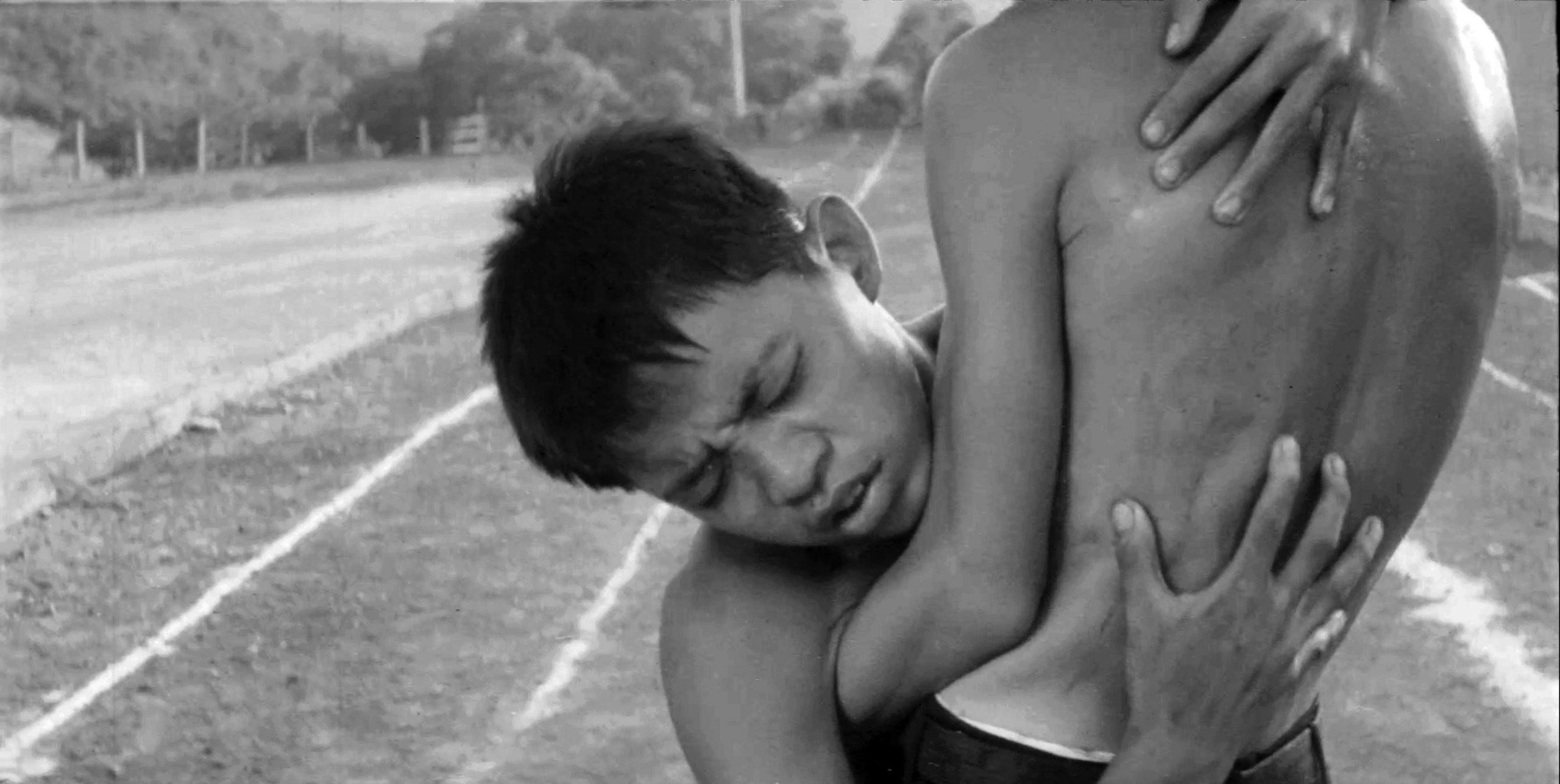
Miss Andy (迷失安狄, Teddy Chin, 2020)

“The things we like we’re still going to lose” according to a drunken young man lamenting youthful impossibility in Teddy Chin’s melancholy tale of marginalisation and frustrated hope, Miss Andy (迷失安狄). A Malaysian-Taiwanese co-production, Chin’s sensitive drama allows its disparate protagonists to find a sense of security in the solidarity of an accidental family, but all too quickly reminds us that despair is the enemy of love and that a lack of faith in human connection can undermine even the most genuine of bonds in those who can no longer believe in future happiness. 

The titular “Miss Andy”, Evon (Lee Lee-zen), has certainly had her share of disappointment. Now 55, she transitioned five years previously following the death of her wife but both of her grown-up children have since disowned her. Having lost her livelihood, she’s had no choice other than to resort to sex work in order to make ends meet, finding herself on the receiving end of male violence from her clients only then to be arrested with the man insisting that he was only defending himself against her advances and attempt to rob him while the unsympathetic police officer dead names and berates her with homophobic slurs. She is eventually forced to strip and expose her genitals while half the station gawp and take photos. Evon decides to give up on sex work and advises her friend Lucy to do the same, but she refuses to see the danger and is later murdered by a man who solicited her for sex. 

Feeling totally alone, Evon tries to claim her position in society, insisting on receiving her pay from her previous employer who tries to short-change her justifying herself with more transphobic slurs. Evon has only one other friend, Teck (Jack Tan), a young man with a hearing impairment who offers her additional work as a delivery driver during which she encounters a little boy looking longingly at some pastries in a small store by a petrol station. She decides to buy one for him, but the boy has gone when she returns. Later that night, however, she gets a surprise discovering the boy and his mother having snuck into her apartment after stowing away on the truck. Hearing that they’ve escaped an abusive relationship and have nowhere else to go she invites them to stay.

Sophia (Ruby Lin), the boy’s mother, is an undocumented migrant from Vietnam. She’s struck by the unlikely miracle of Evon because her name sounds a little like the Vietnamese for hope, something on which she was beginning to give up. We see her telephone her family, but her father only angrily demands more money, eventually passing the phone over to her sister who unsentimentally tells her that her mother has died. All the rest of the family were with her, only Sophia was absent. Feeling just as alone as Evon she is grateful for her kindness, swearing to find a job to repay it while cooking and cleaning as a means of saying thank you. 

Later joined by Teck and anchored by Sophia’s young son Kang who is the same age as the granddaughter Evon is rarely allowed to see, they begin to become a family, united in their sense of marginalisation each in some way rejected by mainstream society. Evon religiously buys lottery tickets using the birthdays of her wife and children as numbers in the hope they’ll eventually come up and she’ll somehow win her family back. Even Sophia who had perhaps not dared to dream of a brighter future eventually joins in as they idly fantasise about the kind of home they’d build if they actually won while sitting in an upscale furniture store before the server at a festive restaurant offers to take a picture of their “family”, but when that sense of possibility finally presents itself the illusion is shattered. Desperation undermines their fragile bond, pushes them towards doubt and betrayal, no longer able to believe in the viability of simple human goodness or mutual support as mechanisms for living but suddenly selfish and self-destructive destroying everything they’d built in mistakenly staking all on the vague possibility of material comfort.

Asked about her dreams, Evon had only stated that she wanted a safe and stable life but what she craved was the sense of togetherness and acceptance she felt with Sophia and Kang while her children continue to reject her and she finds herself marginalised by a conservative society that refuses to affirm her existence as a transgender woman. Bathed alternately in the melancholy neon of the outside world and the golden warmth of Evon’s apartment, Miss Andy leaves its marginalised protagonists wounded, pushed into acts of self harm having lost all faith in the veracity of simple human connection corrupted by the fear and despair of an unforgiving society ruled by inequality and prejudice. 


Miss Andy streamed as part of this year’s New York Asian Film Festival.

Original trailer (English subtitles)

Sisterhood (骨妹, Tracy Choi, 2016)

Middle-aged regret and irreconcilable loss bring one lonely woman home from exile in Tracy Choi’s melancholy exploration of impossible love and illusionary futures, Sisterhood (骨妹, Gwat Mui). Moving from present day Taiwan to pre-handover Macao, Choi’s emotionally complex drama is both a chronicle of changing times and not as the collection of women at its centre attempt to protect themselves from a relentlessly patriarchal society through female solidarity only to see their fragile bonds disrupted by a political sea change. 

Choi opens in the present day with a now almost middle-aged Sei (Gigi Leung Wing-kei) visiting a doctor’s surgery after fracturing her wrist, apparently the result of an all too common drunken accident. Now living in Taiwan and running a small inn with her devoted husband who is perhaps overly supportive in his willingness to enable her drinking on the grounds that it keeps her “happy”, Sei appears to be quietly miserable. Spotting an ad in a newspaper telling her that an old friend, Ling (Jennifer Yu Heung-ying), with whom she’d long since lost touch has passed away jolts her out of her inertia, journeying back into the past as she finds herself travelling to a very different Macao to that of her youth in which the young Sei (Fish Liew) worked as a masseuse and was part of a quartet of close friends trying to survive the indignities of life on the margins through shared sisterhood. 

Sei’s “breakup” with Ling occurs on the very day that Macao returns to China, her friends seemingly thereafter scattering as she finds herself agreeing to a rebound marriage with an earnest Taiwanese customer who abruptly proposed on their very first date. We hear Ling tell her that she has found a man willing to marry her, but that her son Lok is an obstacle and so she plans to send him to the Mainland, cruelly ignoring the part that Sei has been playing in their lives as a co-parent even if, as we discover, the relationship between the two women goes largely undefined. Having moved in with her after losing her apartment, it is Sei who is there to support Ling when she becomes unexpectedly pregnant by a casual boyfriend/customer, eventually convincing her to have the baby by assuring her they’ll raise it together, but despite their pledges to stay together always the spectre of heteronormativity hangs over them constantly. Mocked in the street by a couple of old busybodies, Ling reacts with extreme sensitivity to the word “lesbian”, quickly moving her hand away from Sei’s as they push their son together in his pushchair lest conclusions be drawn from their closeness. Sei, by contrast, pays it no mind though this could easily be because she knows it isn’t “true”, at least in any concrete sense. The two women are evidently not lovers, if perhaps in love, but so impossible does their relationship seem to them that they lack the ability to recognise it let alone envisage its future. 

It is perhaps this degree of internalised shame that leads Ling to push Sei away, believing either that she will be “happier” in a heterosexual relationship, that she is in some way preventing her from living a more socially conventional life, or just afraid of her own feelings in assuming they are not returned and that she does not in any case deserve romantic happiness. The irony being that Sei’s married life seems to have been one of miserable emptiness and regret, stubbornly attempting to make the conventional work without quite knowing what the cause of her pain really is. On her return to post-handover Macao, she’s confronted with the failed futures of all her friends, one now a young grandmother owning her own business but forced to work herself to the bone to provide for her family, and the other near destitute and alone, floundering in the casino paradise of the upscale modern city. Meeting the now grown Lok she confides that she’s happy for him because lost as he is he has choices they never had in their young lives in which they did anything they could just to survive. 

The female solidarity which had enabled the four women to navigate a world in which they were encouraged to believe that their only option was to gain access to male economic power has thoroughly broken down in the post-handover society, and so Sei’s return is also a healing in helping to repair the broken bonds between her friends and restore the “sisterhood” which had been ruptured by the passing of an era. She can no longer repair her relationship with Ling and is perhaps left with a sense of longing and regret for an irretrievable past, but in coming to an understanding of her youth, her own feelings and desires, she gains the self-knowledge denied to her during her 15 years of exile, finally in a sense returning “home”. 


Sisterhood is available to stream in the UK 23rd October to 5th November via Barbican on Demand as part of this year’s Queer East Film Festival.

Original trailer (English subtitles)

The Teacher (我的靈魂是愛做的, Chen Ming-Lang, 2019)

Taiwan became the first Asian nation to legalise same-sex marriage on 24th May, 2019. That does not however mean that the LGBTQ+ community is universally accepted or that entrenched conservative social attitudes simply evaporated over night. As Chen Ming-Lang’s The Teacher (我的靈魂是愛做的, Wǒ de Línghún Shì Ài Zuo de, AKA My Soul is Made of Love) makes plain, not even those within the community are entirely free of prejudice especially when comes to issues such as HIV and the complicated give and take of what it means to be “out” when personal concerns may conflict with those of an employer or industry. 

Those are perhaps questions that politically engaged civics teacher Kevin (Oscar Chiu) has largely resisted asking. On his off days, he campaigns for marriage equality and for gender equality in education as well as attending pride rallies, but is warned about including LGBTQ+ issues in his teaching programme for fear of offending parents. Director Lin (Lin Chin-Yu), the headmaster, makes offhand comments about Kevin’s perfectly respectable haircut while reminding him that while he works at the school he’s also its representative and he’d prefer it that he keep a low profile to avoid bringing its name into disrepute. Lin is careful to couch his complaints in neutral language, stressing that he personally is fine with Kevin’s sexuality, but is required to be mindful about the reactions of others, deflecting responsibility for at least failing to counter homophobic attitudes in and around the school. Nevertheless, Kevin tries to sidestep him by continuing to include the topics he’d like to talk about by framing them in less problematic terms, for example discussing the upcoming referendum on marriage equality by debating the vote itself, asking if it’s even ethical to give people the option to vote to deny a specific sector of their society the same rights that everyone else has that should be accorded to all without question. 

Kevin’s worldview is challenged, however, when he starts dating a slightly older man, Gao (Chang Chin-hao), whom he met in a gay bathhouse. Kevin tells him that he’s looking for a longterm relationship, wanting to settle down and eventually get married but is currently living with his hairdresser single mother. Moving in with him quite quickly after Gao went temporarily incommunicado following a minor illness, Kevin is later shocked to discover not only that Gao’s relationship with his ex-wife is not quite as over as he implied, but that he is also HIV+. Learning that Gao has HIV exposes Kevin’s rather shallow grasp of his sexual health. Not only does he not know where to go to get tested, but he conflates HIV and AIDS, convinced that he’s been given a death sentence after noticing that his gums are bleeding. 

While beginning to resent Gao for exposing him to the virus, Kevin is also confused by his admittedly complicated family situation. At some point in the past, Gao evidently opted for a heterosexual marriage to please his conservative family who still don’t seem to be aware that the relationship is over or that Gao is gay. At an awkward family gathering, Kevin is invited but introduced as Gao’s friend while his former wife, Wei, sits on the other side of him being quietly needled by her judgemental mother-in-law for failing to provide a grandchild. Gao apparently promised to father a child with Wei through IVF as a condition for dissolving the marriage which is why she’s still overly present in his life and in Kevin’s eyes laying claim to him. Yet Kevin’s major preoccupation isn’t so much with the results of everyone’s choices or how best to support his new partner and his extended family in this unusual situation but with his own reluctance to think of himself as a “home wrecker” the fact that the marriage ended two year’s previously seeming not to occur to him. 

It’s at school, however, where he faces the greatest challenges not only in the homophobic bullying from his immature students with whom he never seems to have much of a rapport, but from his colleagues when he becomes the subject of an internet rumour about a teacher with AIDS. Faced with a dilemma Kevin’s reluctance to confirm his sexuality while insisting that the rumour is false (despite suspecting it might not be) is more personal than political even as his female colleagues attempt to stand up for him by countering a belligerent, older male teacher who wants him sacked that no one should be expected to submit themselves to invasive medical procedures or be denied their right to privacy simply because of a malicious rumour. Lost and afraid, Kevin shuts down, giving in to passivity while succumbing to misplaced rage about his marginalised place in society as he’s denied access to a hospital where he believes Gao has been taken for treatment after an accident assuming they won’t tell him if he’s there because he’s not a legal relative. 

Chen closes with a brief coda explaining that same-sex marriage will be legalised later in the year, Kevin declaring that it will be on his syllabus as if confirming something has changed, yet it’s clear that attitudes may not have shifted as much as hoped while there is still a widespread lack of awareness about HIV issues combined with a social stigma compounded by homophobia. Nevertheless The Teacher presents a complex picture of LGBTQ+ lives at a moment of social transition in which the promise of a coming equality brings with it both anxiety and hope for those who’ve had to accommodate themselves to life on the margins of a now less hostile society. 


The Teacher is available to stream in the UK as part of the Iris Prize Film Festival in collaboration with Queer East.

Original trailer (no subtitles)

Between the Seasons (계절과 계절 사이, Kim Jun-sik, 2018)

“To live the way I am” replies the reserved heroine of Kim Jun-sik’s Between the Seasons (계절과 계절 사이, Kyejeolkwa Kyejeol Sai Kaebongyejeong) when questioned about her dream, not quite able to answer when asked if she isn’t living that way now. An anti-romance and gentle meditation on the costs of authenticity, Between the Seasons finds two women at different stages of life unknowingly fighting a similar battle, perhaps identifying something in each other but unable to voice themselves fully though in fear and insecurity rather than shame even if they each internalise something of that too as they struggle to push past the barriers that prevent them from fully becoming themselves. 

In her mid-30s, Hae-soo (Rie Young-zin) has just moved from Seoul to a small town to open a bare bones coffee shop. She spends her spare time alone, and we quickly get the impression that she’s making an attempt to move on from something, eventually visiting a mobile phone shop to buy a new handset and instructing the salesman to delete all of her previous contacts and photos. Despite her attempts to discourage her, however, Hae-soo ends up forming an awkward friendship with bubbly high schooler Ye-jin (Yoon Hye-ri) who came into the coffee shop with an unusual order and then became a regular customer. Further bonding on a rainy night after the movies where Ye-jin was stood up by her boyfriend, the young woman starts randomly helping out just because she can see Hae-soo is overstretched eventually becoming an official part-timer spending most of her spare time with Hae-soo much to the consternation of her overbearing, grades-obsessed mother. 

Ye-jin quite literally begins to bring spring into Hae-soo’s life decorating the cafe with pretty cherry blossoms and floral motifs, lending it a cosier, more domestic atmosphere than the rather frosty, utilitarian vibe of Hae-soo’s original non-design. Questioned by Hae-soo about her dream she says she’d like to make things by hand, a dream that is perhaps in direct contrast with her mother’s obvious ambition for her. There’s not much money in paper cherry blossoms after all. That’s two reasons she might prefer being in the cafe rather than at home or studying somewhere else, Hae-soo both mysterious older sister and quasi-maternal figure, only the relationship is further complicated by Ye-jin’s growing romantic attraction to the older woman, becoming jealous as Hae-soo begins a tentative relationship with the sweet and goofy guy from the phone shop (Kim Young-min). 

For her part, Hae-soo remains either wilfully oblivious or simply unwilling to acknowledge Ye-jin’s obvious crush, awkwardly failing her as a friend and as a quasi-parental figure in refusing to engage with her complicated feelings in fear of having to reveal her true self. Instead she pushes the younger woman away without explanation, rejects her, and leaves her with only more shame and awkwardness despite having insisted that that there is nothing wrong in being different and that only by embracing your difference can you improve your life. Ye-jin continues to struggle with her feelings, observing her homophobic friends making fun of the supposed lesbian only to find herself semi-stalking the young woman confessing that if the rumours are true she too is the same. Despite eventually approving of her, the other girl tells her to keep her distance at school, lest they each fall victim to guilt by association. Eventually she gets all dolled up and heads to a gay bar where she furiously makes out with the bartender, mostly one assumes because she reminds her of Hae-soo doubly confirming her feelings. 

Hae-soo, however, is still conflicted, afraid to reveal her true self to anyone. The realisation she eventually comes to, symbolically removing the scarf from around her neck, is that she wanted to shine by herself, finding the confidence in authenticity rather than reflecting the light cast by the approval of others. Ironically that’s something she tried to encourage Ye-jin to do too but accidentally crushed in her brutal rejection of her feelings, costing her perhaps more than she realised in the process. Ye-jin had coyly asked her if she wasn’t making a rash decision, that so far she’d only shown her spring in her cheerful coffeeshop interior design, perhaps she’d like to take in the summer, even see her in winter too, truly thinking long term but the two women remain caught between the seasons, trapped by a sense of internalised anxiety that prevents forward motion. A gentle meditation on connection, authenticity, and self-acceptance Between the Seasons offers no easy answers for its conflicted heroines but motions towards a season of openness in which all are free to be who they are.


Between the Seasons streams in the UK until Oct. 11 as part of the Iris Prize Film Festival in collaboration with Queer East.

Original trailer (Korean subtitles only)

Days (日子, Tsai Ming-liang, 2020)

It’s not so much time that makes you feel old as the weight of all the days. Returning with his first narrative feature since 2013’s Stray Dogs, Tsai Ming-liang’s Days (日子, Rìzi) spins a tale of twinned loneliness in which two men, one young one older, one rich the other poor, embody two kinds of sadness as they live out their days of detachment as living ghosts in world which seems to have no place for them. 

Tsai opens with the face of his muse, Lee Kang-sheng billed only in the credits as Kang a wealthy man living in a spacious home surrounded by the beauty of nature. The lengthy, unbroken scene finds him staring impassively out of a window while a storm rages outside, the sound of rain falling while the reflection of trees blown by the wind is eerily reflected behind him. We can see that Kang is a man in great pain, his eyes filled with a melancholy desperation. He stretches and rubs his neck, his physical discomfort perhaps a manifestation of the emotional suffering which he tries to heal by fire, enduring painful moxibustion in search of relief.

Meanwhile, in Bangokok, Laotian migrant Non (Anong Houngheuangsy) is quietly tending fires of his own, firstly those of ritual offering and secondly of sustenance as he stokes the embers to cook the old fashioned way in his tiny, spartan apartment. While Kang is a resolutely passive presence, Non fills his lonely days with industry, constantly at work as we witness him laboriously prepare his dinner with documentary realism. Non is at home with solitude in the private space, but forever alone outside of it. He stands to one side at the market where he works as customers mingle around him, always out of place and unseen like a ghost hovering in the corner of the frame. 

Parallel lines who meet, the two men eventually share a poignant, nominally transactional encounter in a nebulous third space of a neutral hotel room to which Kang has called Non for a sensual massage, presumably how he makes ends meet in Bangkok. Once again the young man does all the work while Kang lies impassive, Non oiling his fingers as he runs his hands over the older man’s body easing his pain through physical contact before he retreats off screen and we hear fabric falling, his Calvin Kleins hitting the floor as the two men briefly connect through an intense act of lovemaking, later proceeding to the shower where Non, still in the role of caregiver, tenderly washes the dejected Kang. Before he leaves, Kang idly hands the younger man the gift of a music box, a spontaneous decision that sparks a moment of melancholy emotional release. They struggle to say goodbye. Non leaves and Kang chases after him, Tsai lingering in the empty space of the hotel room while the two men head for dinner before returning to their respective days in someways changed and others not. 

His pain perhaps temporarily eased, Kang is not quite so passive as before, doing something or other with a fish and going for late night walks, but still finds himself lying awake while the sounds of outside wash over him, his eyes wide with fear and sadness. Non, meanwhile, returns to his routine but even more of a ghost than before, sadly cradling the music box as if in memory of his momentary connection its sound drowned out by the noise of anonymous modernity while the world goes on all around him, an invisible figure ignored by passersby walking alone into the night. 

A opening title card warns us that this is a film intentionally unsubtitled, much like life left to our own shallow grasp of meaning in thought or action, but what little dialogue there is hardly requires interpretation we feel it all the same. Tsai conjures an almost Antonionian sense of emptiness in place, a lengthy still shot of a “haunted” building peeling at the facade suddenly brought to life by the brief shadow of a cat in a window, while abruptly shifting to handheld to follow Kang, somehow alone and clutching his neck in pain in the chaotic streets. Both men exist at angles to the world, as if in some kind of secondary plane, meeting only for an instant and then returning to their solitary existences with only the brief memory of connection perhaps more painful than its absence. Tsai charts competing reactions to existential loneliness, the listless ennui of the wealthy Kang and the ceaseless industry of migrant worker Non, but finds them both equally displaced, searching for connection in an increasingly disconnected world. 


Days streams in the UK until 11th October, 6.30pm as part of this year’s BFI London Film Festival.

Original trailer (dialogue free)

Seven Days War (ぼくらの七日間戦争, Yuta Murano, 2019)

“Youth is the liberated zone of life” according to the voice of experience in Yuta Murano’s impassioned anime adaptation of the cult novel by Osamu Soda, Seven Days War (ぼくらの七日間戦争, Bokura no Nanoka-kan Senso). Featuring a number of meta references to the ‘80s original and live action movie, Murano’s stylistically conventional adaptation shifts the action to Hokkaido and the present day encompassing such themes as economic strife, systemic political corruption and small town nepotism, migration and exploitation, but is most of all a coming-of-age story as the rebellious teens meditate on the costs of adulthood, resolving not to become the vacuous and resentful adults they see all around them who have traded emotional authenticity for a mistaken ideal of civility. 

Obsessed with 19th century European military history, high schooler Mamoru (Takumi Kitamura) complains that no one takes any interest in him and remains too diffident to confess his feelings to the girl next door, Aya (Kyoko Yoshine), with whom he has been in love for the past six years. Hearing that Aya and her family will soon be moving away because her authoritarian politician father has been offered the opportunity to take over a relative’s seat in Tokyo gives him the boost he needs, nervously suggesting that he and Aya run away together so they can at least celebrate her upcoming birthday the following week. Aya surprises him by agreeing, but rather than a romantic getaway for two she decides to invite several not particularly close friends from school, holing up in a disused coal refinery on the edge of town. Once there, however, they realise someone has beaten them to it. Marret (Makoto Koichi), the child of undocumented migrant workers from Thailand, has been hiding in the building after being separated from their parents when the building they were living in was raided by immigration authorities. 

Though the group is not universally in favour, they quickly find themselves deciding to protect Marret while trying to help find the kid’s family using both their ingenuity in fortifying the coal refinery and their youthful know how in weaponising the internet and social media to win sympathy and fight back against the oppressive ideology of the authorities. Yet Marret finds it difficult to trust them because they occupy a liminal space between the idealism of childhood and the cynicism of maturity. Marret’s family came to Japan on the false promise of finding good employment only to be ruthlessly exploited, convincing the idealistic youngster that all adults lie and can never be trusted. Mamoru, whose name literally means “protect”, does his best to save everyone but temporarily gives in to despair, confessing that he is just an “optimistic child” lacking the power to do any real good, only later coming to a revelation that the problem with the duplicitous adults they’re rebelling against is that they continue to run from their emotions and the pain of not being able to be fully themselves for fear of not fitting in has made them cruel and cynical. 

Honda (Takahiro Sakurai), the conflicted assistant to Aya’s authoritarian father, tacitly approves of the teens, affirming that the young always fight for the things they believe in but then rebels against himself in doxxing them, exposing both their identities (sans Aya’s) and dark secrets online in an attempt both to intimidate and to drive them apart. But the kids run in another direction. They elect to share their truths and in the sharing neutralise the threat while gaining the confidence that comes with deciding not hide anything anymore. The sharing is it seems what matters, a collective unburdening which paves the way for emotional authenticity but sidesteps the need to consider the fallout from the concurrent revelations. A heavily telegraphed confession of same sex love, for example, is accepted by all though there is no explicit indication as to whether or not is reciprocated save that is in no way rejected. 

In any case, the kids decide that being their authentic selves is more important than conformity and make a mutual decision to respect the same in others, something which is eventually mirrored in those like Honda among the duplicitous adults touched by the kids’ pure hearted rebellion. Necessarily, that leaves the weightier themes such as the plight of undocumented migrants, the casual cruelty of the authorities, small-town corruption and persistent nepotism relegated to the background, perhaps superficially considered seen trough an adolescent lens, but nevertheless products of the inauthenticity of the cynical adult world the kids are rebelling against. A heartfelt advocation for the idealism and universal compassion of youth carried into a more open adulthood that comes with emotional authenticity, Seven Days War leaves its heroes with the spirit of resistance, defiantly themselves as they step into an adult world uncorrupted by cynicism or prejudice.


Seven Days War screened as part of Camera Japan 2020.

Original trailer (no subtitles)

Beneath the Shadow (影裏, Keishi Ohtomo, 2020)

“There’s nothing wrong with leaving it a mystery” the enigmatic presence at the centre of Keishi Ohtomo’s Beneath the Shadow (影裏, Eiri) advises the hero as he vows to look into the unexpected appearance of a fish found swimming in the wrong river. Best known for mainstream blockbusters such as the Rurouni Kenshin series, March Comes in Like a Lion, and Museum, Ohtomo shits towards an arthouse register in adapting the Akutagawa Prize-winning novella by Shinsuke Numata which is in a sense obsessed with the unseen, the hidden details of life and secret sides we all have that are perhaps intended to protect but also leave us vulnerable. 

Konno (Go Ayano), an introverted man in his 30s, has just been transferred to rural Morioka by the pharmaceuticals company at which he works. He keeps himself to himself and largely spends his time caring for a Jasmine plant which appears to have some especial yet unexplained significance. It’s at work that he first encounters the enigmatic Hiasa (Ryuhei Matsuda), reminding him that theirs is a non-smoking building only to discover that Hiasa isn’t the sort to care very much about rules. For some reason or other, Hiasa takes a liking to Konno, turning up at his house with sake, teaching him how to fish, and going on what to anyone else look like dates. Yet when winter comes Hiasa abruptly quits his job and disappears without a word, resurfacing a few months later with a better haircut and a sharp suit explaining that he’s now a top salesman for a suspicious insurance company designed to help pay for expensive ceremonies such as weddings or more commonly funerals. The two men resume their friendship, but soon enough Hiasa again disappears. Only when he’s contacted by a co-worker (Mariko Tsutsui) after the earthquake hoping to find him because it turns out he owes her a large some of money does Konno begin to reflect on how little he might really have known this man he thought a friend. 

“Right from the start you have to groom it so it’s tantalised” Hiasa later explains, operating on several metaphorical levels but talking quite literally about lighting a fire. Konno has to wonder if that’s all it really was, if Hiasa is just a manipulative sociopath playing a long game, getting him on side in case he’d be useful later. When he resurfaces after his first absence, Hiasa eventually asks Konno to sign for one of his policies claiming that he’s one away from his quota and will be getting the can if he can’t fill it despite having talked a big game in proudly showing off a commendation he’d won as a top salesman when he turned up on Konno’s doorstep. “What you see is where the light hit for an instant, no more than that. When you look at someone you should look at the other side, the part where the shadow is deepest”, Hiasa had pointedly told him during a heated fireside conflagration, seemingly hurt as if in the moment he had wanted to be seen and is disappointed to be met with Konno’s irritated rejection, fed up with his mixed signals and distance both emotional and physical. 

Yet Konno is also himself living half in shadow as a closeted man choosing not to disclose his sexuality to those around him. A meeting with an old friend who has since transitioned presumably having embraced her own essential self raises further questions about the reasons he accepted the transfer to Morioka as if he too, like Hiasa, wanted to disappear from his old life and reinvent himself somewhere new, he’s just done it in a more conventional way. Even in contemporary Japan which is in some ways very old fashioned when it comes to the technology of everyday life and with a strong belief in personal privacy it’s surprisingly easy to just vanish at the best of times, but even his family members who are in no hurry to find him wonder if Hiasa may simply have used the cover of disaster to disappear for good. His conflicted brother (Ken Yasuda) affirms he thinks he’s probably alive because he’s “someone who can survive anywhere” which in the way he’s putting it is not much of a character reference. 

The conclusion Konno seems to come to, in a happier epilogue some years later, is that Hiasa himself was perhaps a fish swimming in the wrong waters, unable to adapt to the world around him. Perhaps it’s alright for him to remain a mystery because a mystery was what he was. Konno, by contrast, sets himself free apparently less gloomy, no longer living half in shadow, even if still hung up on the one that got away. A slow burn affair, Beneath the Shadow eventually refuses conflagration in favour of something cooler in accepting that you never really know anyone, perhaps not even yourself, even when you peer into the darkest part of the shadow. In the end you just have to let it go, “the cycle keeps repeating”. 


Beneath the Shadow streams in the US via the Smart Cinema app until Sept. 12 as part of this year’s New York Asian Film festival.

Original trailer (no subtitles)

Me & My Brother’s Mistress (おろかもの, Sho Suzuki & Takashi Haga, 2019)

Why does everyone always blame “the other woman” and not the cheating boyfriend? That’s a question earnest high schooler Yoko begins to ask herself in Sho Suzuki & Takashi Haga’s Me & My Brother’s Mistress (おろかもの, Orokamono) after spotting a suspicious text on her brother’s phone and then spying on him as he leaves a love hotel with another woman a month before his wedding. But what is it that she finds so troubling, realising her only remaining family member is a two-bit louse, or the fact he’s going to get married and it won’t be just the two of them anymore?

In the last year of high school, Yoko (Nanami Kasamatsu) is filled with anxiety about the future. In fact, she’s the only one who hasn’t returned her careers survey and it seems she also turned the previous one in blank. Her parents passed away nine years previously, and ever since then it’s just been her and her older brother Kenji (Satoshi Iwago), now a permanently exhausted salaryman engaged to the homely Kaho (Hachi Nekome). Yoko doesn’t get on with Kaho, for the bizarre reason that she’s just too nice, but when she figures out that Kenji is having a torrid affair mostly conducted in love hotels on Sunday afternoons, she is quite rightly outraged that her brother could be so duplicitous. Rather than confront him, she decides to have a word with the “mistress”, following her around all day but conflicted on spotting her doing such unexpectedly decent things as giving up her seat on the train for a middle-aged woman laden with shopping. Tracking her to a restaurant, she planned to give her a dressing down but Misa (Yui Murata), as she discovers her name to be, is perfectly reasonable if also unrepentant.

Misa asks a number pertinent questions including why it is Yoko thinks this is any of her business in the first place and why she’s decided to have it out with her and not Kenji all of which Yoko has to concede is fair. Unlikely as it sounds, the two women end up becoming friends of a sort, Yoko beginning to sympathise in realising this is all her brother’s fault but still not really feeling all that sorry for Kaho which is one reason why she suddenly suggests they try to stop Kenji’s wedding. 

Tellingly, she later asks Kaho if she’s not afraid that another woman will steal Kenji away, but it’s a question she should perhaps have asked herself. She is quite obviously at difficult time. Everything is about to change for her. She’ll soon be leaving school and evidently doesn’t really want to think about what happens next, while her home life is also about to change when Kaho moves in with them permanently meaning it’ll no longer be just her and Kenji. Perhaps that’s what’s really bothering her, that Kaho is displacing her in her own home and stealing her big brother away to start a new family that might not include her in quite the same way. 

Indeed, her main objection to Kaho is in her genial domesticity, the various ways she and Kenji already operate as a couple, the perfectly cooked meals she prepares and the maternal care with which she overseas the house. Kaho isn’t really worried about another woman because she knows what Kenji is looking for is exactly what she gives him – a settled home. Misa, meanwhile, laments her status as a perpetual mistress, never really valued by the usually already attached men she ends up dating who think of her as a casual fling, a short-lived distraction from their domestic responsibilities. Still too young to fully understand, Yoko feels offended on Misa’s behalf that her brother could treat her or any woman this way. Yet their plan to stop the wedding ends up proving counterproductive in that it forces her to sympathise with Kaho and perhaps realise that Kaho herself was never the problem while also regretting having encouraged Misa’s self destructive descent towards an inevitable conclusion that is only going to cause her more pain. 

Yoko’s only future goals were apparently to become a decent and honest person, an ideal she perhaps is not quite serving in her “evil” plot to ruin her brother’s wedding. Misa brands her a “boring teen” already obsessed with dull stability, while it’s perhaps Misa’s boldness and unconventionality which attracts the otherwise straight-laced young woman. In any case, Yoko begins to discover a new equilibrium or at least a new accommodation with adulthood that lends her a little of Misa’s defiance as she makes an unexpectedly bold decision of her own in figuring out what it is she really wants and walking confidently towards the future even if with no real clue as to what comes next.


Me & My Brother’s Mistress streamed as part of this year’s online Nippon Connection Film Festival.

Original trailer (English subtitles)