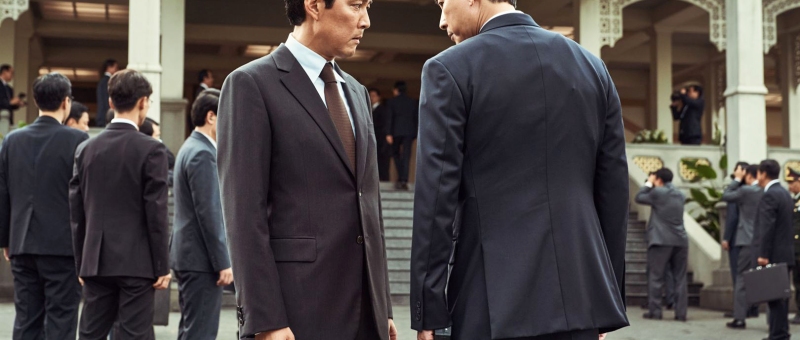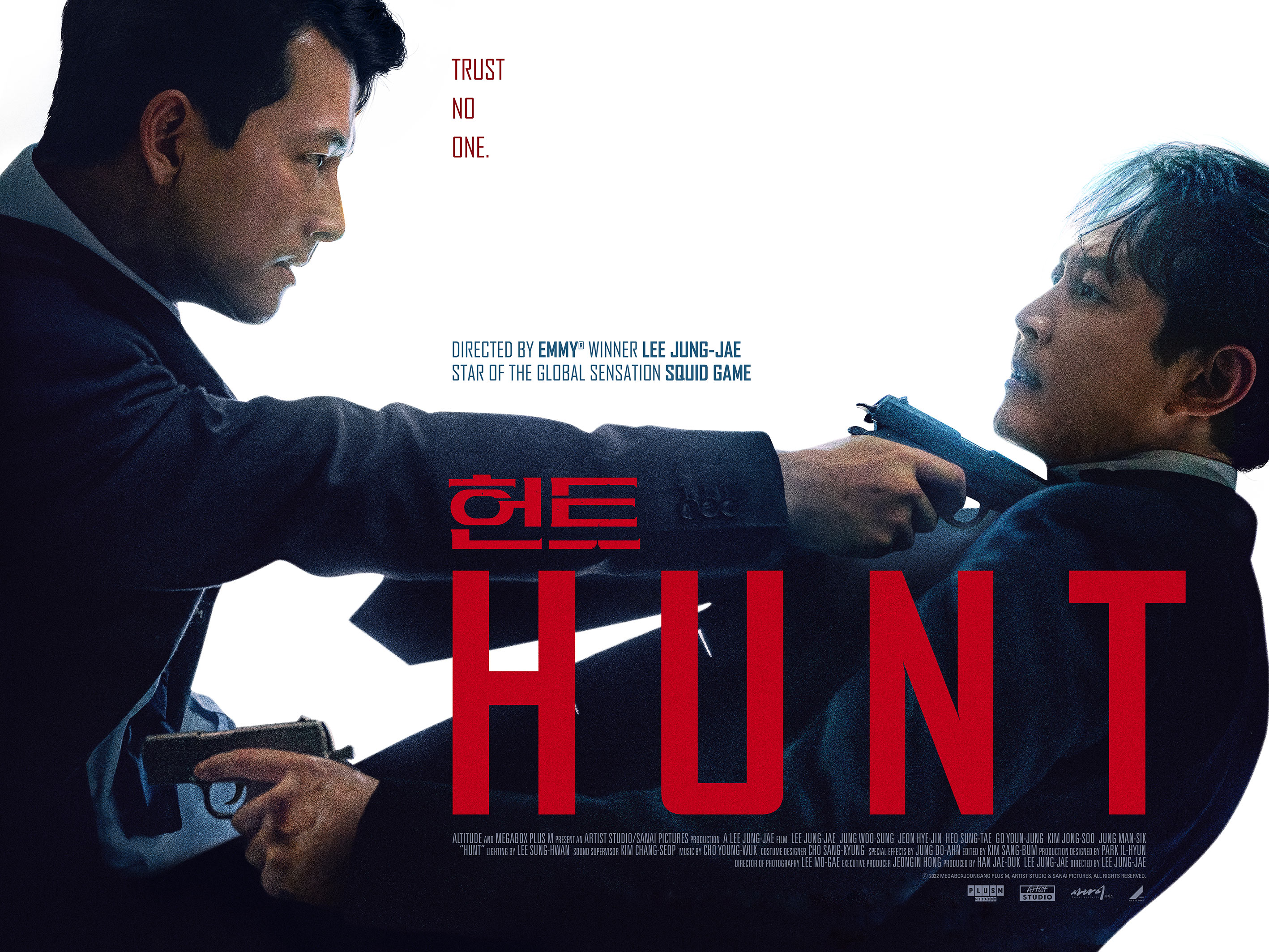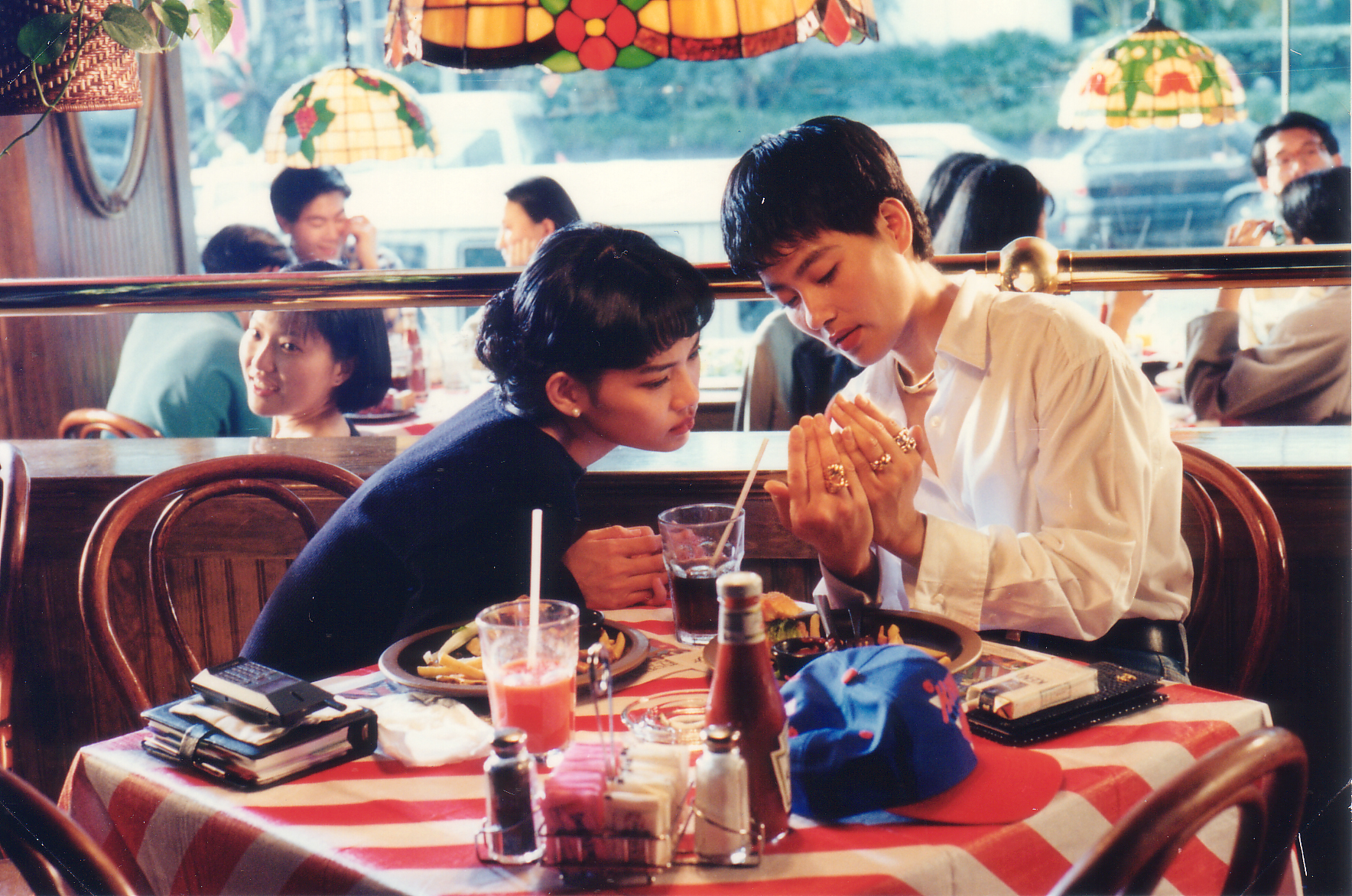
Prior Convictions (前科者, Yoshiyuki Kishi, 2022)

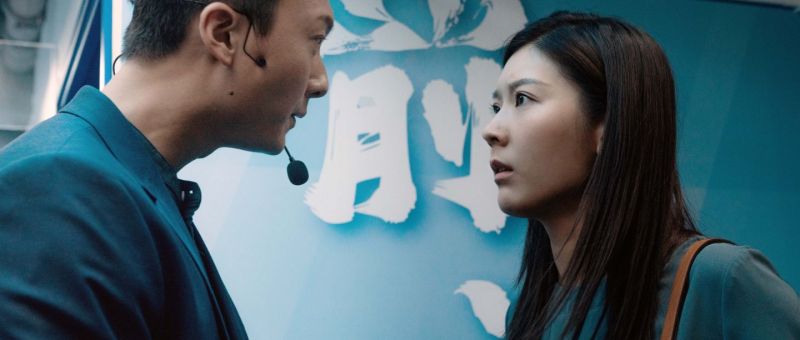
An earnest young woman finds herself questioning her way of life after one of her charges is implicated in a spate of murders in Yoshiyuki Kishi’s social drama Prior Convictions (前科者, Zenkamono). As the double meaning of the English title implies, the issue is as much about preconceived notions and unfair judgements as it is about “crime”, its causes and legacies, while ultimately arguing for a more compassionate approach to law enforcement which prizes healing and rehabilitation over meaningless punishment. 

Kayo (Kasumi Arimura) is what’s known as a volunteer probation officer which is to say that she assists those who’ve recently been released from prison to reintegrate into mainstream society so that they can live comfortable lives within the law. She is not however a civil servant and though making regular reports to an official probation officer has very little power and no pay for her work which can at times be difficult and emotionally draining especially considering that she also needs to work a regular job in a convenience store to support herself. In what seems like a very poor safeguarding decision, she meets most of her clients in her own home where she lives alone one of them even breaking in while she’s not there for an impromptu hotpot party. 

While she is exasperated by some of her charges such as a woman who can’t seem to stick to a regular job no matter how many she finds her, Kayo is incredibly proud of her work with Kudo (Go Morita), a quiet and soulful middle-aged man who was convicted of murder after stabbing a co-worker who had been bullying him so badly that he lost the hearing in one ear. Kudo had been struggling to reconcile himself to his crime, intensely worried that while unable to understand why he did it he might end up doing it again. When Kudo suddenly disappears after being linked to a series of suspicious deaths most assume the worst, but Kayo alone refuses to believe that Kudo could be the killer and is determined to find out what’s really going on if only to vindicate her conviction that her work is good and useful rather than naive and misguided as some including intense police officer Takimoto (Hayato Isomura) seem to see it. 

As Kayo later reveals she’s carrying some baggage herself which contributed to her decision to begin working with those who’ve been convicted of crimes, but is doing it with the aim of reducing suffering and ending the cycle so that there are no more victims or victimisers. Also wounded, Takimoto tells her that murderers aren’t human and can never be rehabilitated, while she’s forced to consider the problem from all angles meeting with a lawyer (Tae Kimura) who defended an abusive husband who murdered his wife and learning that she did so for similar reasons to herself certain that he too deserved a second chance and could perhaps be reformed if given the proper treatment. Kayo sees that many of the people she meets ended up committing crimes because of traumatic personal circumstances and if someone had helped them earlier they may not have offended in the first place. She can’t change the past but at least in helping them now she might prevent further crimes in the future while giving them a source of stability as they attempt to root themselves more firmly in mainstream society. 

Inspired by Masahito Kagawa’s manga, Prior Convictions was previously adapted into six-part WOWWOW TV drama to which the film is technically a sequel though fairly stand alone in its gentle unpacking of Kayo’s own unresolved trauma and subsequent epiphanies as regards her relationships with those she’s trying to help. As one young woman puts it, they find her vulnerability reassuring in contrast to the often authoritarian, didactic approaches taken by law enforcement and social services who only talk down to them from a condescending place of superiority rather than trying to meet them on a more human level. In the end it’s about healing, trying to find an accommodation with the traumatic past and limiting its legacy to break the cycle of pain and violence. The prior convictions which most need addressing are those of a judgemental society that all too often contributes to the mechanisms of violence in seeking to punish rather than to help.


Prior Convictions screened as part of this year’s Camera Japan.

International trailer (English subtitles)

Moon Man (独行月球, Zhang Chiyu, 2022)

A diffident everyman battles loneliness and despair only to become a selfless sacrifice for a world that left him behind in the latest film from the Mahua FunAge gang, Moon Man (独行月球, Dúxíng Yuèqiú). Not quite the raucous comedy that Mahua FunAge has become known for with popular hits Never Say Die and Hello, Mrs. Money, Moon Man is a more contemplative affair adapted from a South Korean manhwa by Cho Seok and equal parts absurdist exploration of the human condition and cathartic post-pandemic dramedy that insists there is always a homecoming in one way or another. 

Yue Dugu (Shen Teng) is proud to refer to himself as a “middle man” in that he has deliberately cultivated the image of Mr. Average in an intense attempt never to stand out from the crowd. On applying for an engineering job on a space programme he’s told the position has been filled but there’s an opening in maintenance. Yue didn’t really want to take it but does, as we later learn, after falling in love at first sight with Xing (Ma Li), the commander of a mission set to save the Earth from a meteor strike some years in the future. Being the kind of guy he is, Yue never makes an attempt to get close to her but thinks his chance has finally come when the mission is concluded successfully though Xing doesn’t appear to even know he exists. He decides to write a long love letter while listening to romantic music and consequently misses all of the alarms alerting him to the fact that something has gone very wrong, the mission is being aborted, and they all need to evacuate as soon as possible. Left behind as the rockets take off he can only look on in horror as a meteor strikes the Earth leading him to believe he is the sole survivor of the human race. 

Of course, that turns out not quite to be the truth. What starts out as Robinson Crusoe quickly becomes The Truman Show as Xing, who has found safe refuge on a nearby space base, realises someone was left behind and plans to livestream their daily life to give hope to the survivors on Earth who are now living a dismal post-apocalyptic existence underground. Recruiting a former live-streaming king, they try to set Yue up as an idealised propaganda hero but, as they are unable to communicate with him, Yue still thinks he’s the last of his kind and his behaviour cannot really be called inspirational seeing as he spends most of his time trying to crack the code to enter Xing’s quarters and having dinner with a mannequin he’s pasted her face on. Meanwhile, he’s also discovered that he’s not quite as alone as he thought but is trapped with a very angry kangaroo left behind by a research team. 

Yue was a lonely man before, but begins to experience true despair while quite literally alone on the moon wondering what the point of his life is especially if, as he assumes, Xing is no longer in this world. He contemplates suicide and then, after hearing radio static and coming to believe there may be someone else out there comes into his own trying to plot his escape by thinking outside of the box and proving himself a talented scientist. Struck again by despair he realises that cure for loneliness is knowing there’s someone there to keep the light on for you to guide you home only to see the Earth light up with a message intended to read “you are not alone” but which accidentally reads “you are no one” reinforcing Yue’s everyman status as a middle of the road guy who shouldered the burden that was handed to him and set out to save the world all while locked outside of it. 

Yue’s accidental heroism begins to soften Xing’s austerity as she gradually falls for this “awkward” man, while he learns to step up to the plate to protect her and the rest of humanity all of which lends hope to those trapped in the bowels of the Earth and encourages them to begin rebuilding even if at great personal cost. Shifting into Armageddon territory, it’s a nobody who finally saves the world in a final act of selfless heroism. Over the past few years, many may have felt as if they were alone on the moon or found themselves trying to parse grief on a mass scale while mourning the world they knew which had been so abruptly taken from them. Yet as the final title card puts it, the universe is vast, “we will meet again” and there will always be a homecoming in one way or another. Boasting excellent production values including some adorable animated sequences, Moon Man is a strangely cathartic experience filled with zany humour but also genuine hope for brighter future on the other side of the darkness. 


Moon Man is in UK cinemas now.

Original trailer (Simplified Chinese subtitles only)

Bad City (バッド・シティ, Kensuke Sonomura, 2022)

V-Cinema legend Hitoshi Ozawa returns in a tale of big city corruption helmed by Hydra’s Kensuke Sonomura. Scripted by Ozawa himself and apparently created in part as a celebration of his 60th birthday, Bad City (バッド・シティ) is a clear homage to the classic yakuza dramas of the early ’90s while boasting some of the best action choreography in recent Japanese cinema performed by the likes of Tak Sakaguchi along with Ozawa himself who performs all of his own stunts. 

According to dodgy CEO Gojo (Lily Franky) who has just inexplicably been acquitted of extortion and colluding with the yakuza, Kaiko City is riddled with crime and violence which is why he’s announcing his candidacy for mayor. Meanwhile, behind the scenes, a mysterious assassin (Tak Sakaguchi) is cutting swathes through the Sakurada gang who dominate the city’s western district which Gojo has earmarked for a redevelopment project he claims will improve the lives of citizens but is in reality just an excuse to build a massive casino complex intended to enrich himself and his company. The previous mayor had won a landslide victory thanks to his opposition to the redevelopment plan which enjoys little support from the local population but Gojo isn’t exactly interested in winning hearts and minds in the community. 

Really just another gangster himself, Gojo’s machinations are also destabilising the existing underworld equilibrium in seducing treacherous minions from other gangs including vicious Korean gangster Kim Seung-gi whose loyalty to ageing gang boss Madam Kim is clearly waning. Then again, an enemy’s enemy is a friend allowing unexpected alliances to emerge between previously warring factions especially given that the sudden offing of a high status gang boss is frowned upon in the gangster play book. 

With police and judicial collusion the only possible explanation for Gojo’s miraculous escape from justice, an earnest prosecutor sets up a secret task force under the command of Public Security agent Koizumi (Mitsu Dan) and led by veteran officer Torada (Hitoshi Ozawa) who is currently in prison awaiting trial on suspicion of offing Mrs Kim’s only son, Tae-gyun. Torada is an unreconstructed violent cop operating under the philosophy that if you beat up a good guy that’s violence but if he’s bad then it’s justice. He has perhaps learned to see the world as morally grey, not believing himself to be necessarily on the side of right so much as resisting the forces of darkness by doing whatever it takes to survive in this city which is indeed already quite corrupt. Partnered up with two veterans and a junior female officer from violent crimes who were assigned to investigate the Sakurada boss’ murder, the gang do their best to trap Gojo legally by uncovering incontrovertible evidence of his dodgy dealings they can use to nail him in court, or failing that the court of public opinion, that cannot be swept aside by his friends in high places. 

Sonomura opens as he means to go on with a series of bloody assassinations culminating the massacre of the Sakurada gang in a bathhouse, while building towards the final mass confrontation in which Ozawa and his team face off against hordes of foot soldiers trying to fight their way towards a confrontation with Kim Seung-gi. Dynamically choreographed, the action sequences are surprisingly bloody and heavy on knife action but crucially also displaying a high level of characterisation and dramatic sensibility as the earnest cops square off against amoral gangsters willing even to sacrifice their own. 

Though there might be something uncomfortable in setting up the major villain as a rogue Korean gangster, the film paints his defection in part as a reaction to Mrs Kim’s initial loathing of the Japanese while in the end allowing a kind of cross-cultural solidarity to emerge as the Sakurada gang become accidental allies and Mrs Kim receives a lost letter from her son that allows her to change her way of thinking while helping to take down the destabilising force of Gojo, restoring a kind of order at least to the streets of Bad City Kaiko. Ozawa may be an equally dangerous extra-judicial force, but at least for the moment he’s standing in the light where everyone can see him taking out the trash and leaving those like Gojo no quarter in an admittedly violent place.


Bad City screened as part of this year’s Camera Japan.

Original trailer (dialogue free)

Riverside Mukolitta (川っぺりムコリッタ, Naoko Ogigami, 2021)

The spectre of death hangs over the protagonists of Naoko Ogigami’s adaptation of her own novel Riverside Mukolitta (川っぺりムコリッタ, Kawapperi Mukolitta) despite the sunniness and serenity of the riverside community where they live. They are each, in their own way, grieving and sometimes even for themselves in fear of a far off lonely death or else wondering what it’s all for and if this persistent suffering is really worth it, but eventually find a kind of solidarity in togetherness that can at least make the unbearable bearable. 

Recently released from prison, Yamada (Kenichi Matsuyama) has been sent to a remote rural village to start again with a job in a fermented squid factory and an apartment in a small row of houses by the river. His landlady Shiori (Hikari Mitsushima), an eccentric young woman with a little girl, assures him that though the building is 50 years old and many have passed through during that time no one has yet died in his unit. His neighbours Mizoguchi (Hidetaka Yoshioka) and his small besuited son Yoichi traipse the local area selling discounted tombstones reminding potential customers that no one lives forever and it might remove some of the burden of living to have your affairs in order for when you die. If all that weren’t enough, the last house in the row is thought to be haunted by an old lady whose ghost sometimes appears to water the flowers so they don’t turn to weed. Arriving home one day, Yamada discovers a letter from the local council letting him know that his estranged father has passed away in a lonely death and his remains are ready to collect at the town hall at his earliest convenience. 

Yamada is a man who keeps himself to himself, clearly ambivalent in trying to adjust to his new life wondering if he really deserves the opportunity to start again and if there’s any point in doing so. Seeing as his parents divorced when he was four and he had no further contact with his father, he is unsure if he wants the responsibility of his ashes which will of course contain additional expense for some kind of funeral. He meditates on the fates of “those who are not thought to exist”, such as the many homeless people who live by the river and are swept away by typhoons, and the elderly who die nameless and alone. When he ventures to the town hall, he discovers an entire room filled unclaimed remains some of which remain anonymous while the sympathetic civil servant (Tasuku Emoto) explains that in general they keep them for a year and then bury them together if no one comes forward to claim them. Aside from the staff members at the crematorium, the civil servant was the only person present at his father’s cremation which at any rate must be quite an emotional burden for him though he is familiar with the case and willing to talk Yamada through his father’s final days. 

Meanwhile, he’s bamboozled into an awkward friendship with the strange man from next-door (Tsuyoshi Muro) who brands himself a “minimalist” and claims to be self-sufficient in the summer at least with the veg he grows in the garden behind their apartments but insists on using Yamada’s bath because his is broken and he doesn’t have the means to fix it. Giving in to Shimada’s rather aggressive attempts at connection, Yamada comes to feel the power of community in finding acceptance from the other residents in the small row of apartments along with the paternal influence of his boss at the factory and the kindness of an older woman who works there. Yoichi, the tombstone seller’s son, is fond of playing on a junk heap which is in its way a graveyard of forgotten and discarded things from rotary telephones to CRT TVs and broken air conditioners, while he and Shiori’s daughter Kayo try to contact aliens from a purgatorial space where the living and the dead almost co-exist. Taking place at the height of summer during the Bon festival when the mortal world and the other are at their closet, Ogigami’s laidback style gives way to a gentle profundity in the transient nature of existence but also in the small joys and accidental connections that give it meaning. 


Riverside Mukolitta screened as part of this year’s Camera Japan.

Original trailer (no subtitles)

Camera Japan Announces Complete Programme for 2022

Camera Japan returns for its 17th edition in Rotterdam 22nd to 25th September and in Amsterdam 29th September to 2nd October bringing with it another fantastic selection of the best in recent and not so recent Japanese cinema.

Feature Films

  • Alivehoon – an e-sports champ finally gets the chance to test his skills on the track in Ten Shimoyama’s retro drift racing drama. Review.
  • Angry Son – a resentful young man comes to a better understanding of his place in the world while searching for his estranged father in Kasho Iizuka’s sensitive coming-of-age drama. Review.
  • Anime Supremacy – adaptation of the novel by Mizuki Tsujimura following three women in the anime industry.
  • Arc – a young woman ponders the concept of immortality when presented with two opposing versions of its manifestation in Kei Ishikawa’s sci-fi drama. Review.
  • Awake – childhood rivals eventually find a sense of equilibrium after an AI challenge in Atsuhiro Yamada’s shogi drama. Review.
  • Baby Assassins – a pair of mismatched high school girls raised as elite assassins get swept into gangland conflict while forced to live together to learn how to integrate into society in Yugo Sakamoto’s deadpan slacker comedy. Reivew.
  • Bad City – a ruthless veteran cop in prison on suspicion of murder is brought out to tackle rampant violence and corruption in a V-cinema homage starring Hitoshi Ozawa.
  • Broken Commandment – a young man wrestles with himself torn between breaking a promise to his father and speaking out against prejudice in Kazuo Maeda’s adaptation of the Toson Shimazaki novel. Review.
  • End of the Pale Hour – dejected youngsters flounder amid the ruins of the salaryman dream in Hana Matsumoto’s youthful drama. Review.
  • Eternally Younger than Those Idiots – An aimless 22-year-old college student’s life changes after bonding with a mischievous philosophy major but she discovers through her various encounters that life isn’t always as it first seems in Ryohei Yoshino’s adaptation of the novel by Kikuko Tsumura.
  • The Great Yokai War: Guardians – an anxious little boy discovers his inner hero and saves the world through kindness in Takashi Miike’s warmhearted return to the world of folklore. Review.
  • Intolerance – latest from Keisuke Yoshida in which the father of a teenage girl killed by a car while running away after being accused of shoplifting takes revenge.
  • It’s all My Fault – a lonely young man befriends a drifter after his mother rejects him in Yusaku Matsumoto’s indie drama.
  • Joint – A gangster in search of reform finds himself caught between old school organised crime and the shady new economy in Oudai Kojima’s noirish take on yakuza decline. Review.
  • Just Remembering – former lovers are confronted by reminders of their failed romance amid the loneliness of the coronavirus pandemic in Daigo Matsui’s melancholy drama. Review.
  • Let Me Here it Barefoot – two alienated young men struggle to identify their feelings while searching for escape from moribund small-town Japan in Riho Kudo’s indie drama. Review.
  • The Midnight Maiden War – a nihilistic young man is torn between a mysterious tech genius and his more cheerful sempai in the latest from Ken Ninomiya.
  • My Brother, the Android, and Me – a lonely researcher attempts to ease his existential anxiety by building a simulacrum of himself in Junji Sakamoto’s gothic sci-fi chiller. Review.
  • Nagi’s Island – cheerful indie drama in which a young girl tries to overcome family trauma after moving to an idyllic island.
  • Offbeat Cops – a maverick cop develops a new appreciation of group harmony after being demoted to the police band in Eiji Uchida’s warmhearted comedy. Review.
  • Popran – a self-involved CEO gets a course correction when his genitals suddenly decide to leave him in Shinichiro Ueda’s surreal morality tale. Review
  • Prior Convictions – a volunteer probation officer questions her life philosophy when one of her charges is implicated in a spate of killings in the latest from Yoshiyuki Kishi.
  • Ribbon – a young student wrestles with her sense of purpose when her graduation exhibition is cancelled in Non’s charming directorial debut. Review.
  • Riverside Mukolitta – a young man recently released from prison finds a new sense of community after moving to a remote village in the latest from Naoko Ogigami.
  • Shrieking in the Rain – a rookie female film director faces industry sexism and corporate interference while trying to fend off a visit from the censors before shooting an erotically charged love scene in this 80s drama from Eiji Uchida.
  • Small, Slow, But Steady – latest from Sho Miyake (And Your Bird Can Sing) following a young woman’s determination to become a champion boxer.
  • Spotlight – a struggling director is approached by a young woman who offers him a large amount of money to make a film in this indie drama from KOUMEI.
  • Thanc You – comedy duo Jaru Jaru take on 11 roles each in this anarchic sketch comedy.
  • They Say Nothing Stays the Same – an ageing boatman finds himself adrift on the great river of time in Joe Odagiri’s exquisitely shot, ethereal meditation on transience and goodness. Review.
  • Unlock Your Heart – teen romantic drama in which a high school girl befriends her crush’s girlfriend.
  • Wandering – intense drama from Lee Sang-il in which a student takes in a neglected little girl but is later accused of kidnapping.

Animation

  • Dozens of Norths – feature animation by Koji Yamamura.
  • Goodbye, Don Glees! – three teenage boys come to terms with past and future while on a climactic summer adventure in Atsuko Ishizuka’s heartfelt coming-of-age anime.
  • House of the Lost Cape – two young girls are taken in by a kindly old lady who lives in a remote mansion by the sea which is also home to a series of mysterious creatures in this family animation adapted from the novel by Sachiko Kashiwaba.
  • Summer Ghost – three teens team up to search for the elusive spirit of a woman said to have taken her own life.

Documentary

  • Salaryman – Allegra Pacheco’s wide ranging documentary examines Japan’s contemporary corporate culture through the prism of the salaryman. Review.
  • Target – Shinji Nishijima’s documentary follows former Asahi Shimbun journalist Takashi Uemura as he continues to fight for press freedom in an increasingly authoritarian Japan. Review.
  • Tokyo Kurds – documentary exploring the lives of young Kurdish refugees in Japan.
  • Yonaguni – documentary following a group of teens living on a remote island.

Special Screenings

  • (c) Nikkatsu 1955
  • Forever a Woman – Kinuyo Tanaka’s directorial debut draws inspiration from current events to interrogate contemporary notions of womanhood through the story of a female poet suffering from terminal breast cancer who eventually rediscovers her femininity through the embrace of her sexual desire. Review.
  • Love Under the Crucifix – Juxtaposing the use of the crucifix as a method of execution for sexual transgression with the growing influence of Christianity in late 16th century Japan, Takana’s final film as a director stars Ineko Arima as a young woman in love with a reticent lord (Tatsuya Nakadai) who is already married and among the growing class of merchant samurai who have converted to Christianity through trading links with European nations. Review.
  • The Moon Has Risen – Tanaka’s second film was co-scripted by Yasujiro Ozu and features several homages to his visual style including the use of pillow shots but otherwise has a sensuality and sensitivity not common in his filmmaking. The comic melodrama follows the attempts of a young woman (Mie Kitamura) to set her lovelorn sister up with a sensitive visitor while falling for her childhood friend. Look out for Tanaka’s brief cameo as a ditsy maid. Review.
  • Wandering Princess – again based on very recent events, The Wandering Princess is a sumptuous romantic melodrama in which a Japanese noblewoman (Machiko Kyo) agrees to marry the brother of the former emperor of China now a puppet king of the Japanese colony of Manchuria but is eventually separated from him by the fall of the Japanese empire. Review.
  • Where Now Are the Dreams of Youth – Ozu silent melodrama in which a young man learns a painful lesson about class and friendship when he becomes CEO of his father’s company and sets his uni friends up with jobs.

Camera Japan 2022 takes place in Rotterdam 22nd to 25th September and Amsterdam 29th September to 2nd October. Full information on all the films as well as ticketing links can be found on the official website and you can also keep up to date with all the latest news via Camera Japan’s official Facebook pageTwitter account, and Instagram channel.

Give Me Five (哥,你好, Zhang Luan, 2022)

A struggling 30-year-old begins to repair his relationship with the difficult father he believed never liked him after being unexpectedly thrown back to the past and almost erasing himself from history in Zhang Luan’s sci-fi-inflected tale of filiality, Give Me Five (哥,你好, gē nǐhǎo). What begins as a Chinese riff on Back to the Future eventually skews closer to recent hit Hi, Mom which the Chinese title subtly echoes as the hero comes to appreciate the power of maternal love and sacrifice through bonding with the younger versions of his parents. 

Now 30 years old, Xiaowu (Chang Yuan) explains that he was long estranged from his grumpy father Wu Hongqi (Wei Xiang) and rarely visited him but has since become his main carer now that he is living with Alzheimer’s. Xiaowu makes his living as an e-sports entrepreneur which is not something former engineer Hongqi can well understand and in truth Xioawu doesn’t seem to be that successful as he’s been putting off proposing to longterm girlfriend Huahua because of an anxiety about his finances. When Hongqi suddenly jumps off a bridge for no apparent reason and ends up in a coma, Xiaowu is at first oddly pleased and immediately begins raiding his office looking for his bankbooks only to find a mysterious ring and an old diary penned by his mother who died when he was a baby. Putting the ring on sends him back to 1986 where he manages to mess up his parents’ meet cute, endangering his own existence. In order to put things right he has to go back in time Marty McFly-style to ensure his mum and dad fall in love just like they were supposed to. 

Back to the Future is a film from the 1980s expressing nostalgia for an idealised 1950s small-town America. Give Me Five to a degree romanticises the China of the mid-1980s but does so from an entirely different angle than the recent trend in 80s nostalgia which has taken hold in the West in that, other than a brief romantic moment featuring Teresa Teng’s Tian Mi Mi along with a few other retro hits, it is largely uninterested in pop culture or revisiting childhood memories but is attempting to draw a comparison between China before economic reform and the ultra-capitalist society of today. In what some might see as a simpler time, Xiaowu’s mother Daliu (Ma Li) is, as she’s fond of saying, a “model worker” in a factory which is in danger of closure while the “Biff” character, Qiang (Jia Bing), is a former employee who was dismissed for stealing coal. Having become wealthy after almost certainly doing something dodgy in Hong Kong he’s returned with a prominent Cantonese accent to buy the factory as part of a public-private partnership. A feisty young woman, Daliu sends him packing insisting she won’t let anyone disadvantage her fellow workers. 

The comparison is further borne out by the melancholy figure of Qin (Huang Yuntong) who dated Hongqi after getting the meet cute that was supposed to go to Daliu but thew him over for the promise of riches with Qiang only to be left lonely in her old age having unwisely betrayed love for material gain. Meanwhile, there’s an interestingly progressive element to the relationship between Daliu and Hongqi in which Hongqi is somewhat feminised as the domestic partner cooking and shopping for his wife while Daliu is the uncompromising model worker as she proves during a high impact welding competition while eight months pregnant. The couple first fall in love talking over industrial plans with Daliu offering advice from the shop floor to help improve educated engineer Hongqi’s designs. While interacting with his parents before he was born, Xiaowu gains the familial experience he always felt he lacked in being able to share a family meal while touched by the love that existed between his mother and father and the knowledge that his parents were at least blissfuly happy with each other even if it was only for a short time. 

Xiaowu had been resentful of his father that he never really told him how his mother died. He decides to try saving his mother’s life too and through his various experiences comes to an appreciation of maternal love not least through somehow being able to time travel into the womb to forge a more direct connection with her. In part an advocation for a more traditional filiality in which Xiaowu develops an understanding of the interplay between love and sacrifice between parent and child while coming to understand his relationship with his father after learning his family history, the film also offers a subtle rebuke against the consumerist society in idolising Daliu and her model worker attitude insisting that everything was better when people worked together for the good of all rather than for personal gain. It might be a slightly disingenuous message, Daliu’s factory life is indeed somewhat idealised, but there is something touching in Xiaowu’s eventual conversion and belated bonding with his heartbroken father. 


Give Me Five is in cinemas across the UK, Australia and New Zealand courtesy of CMC and Well Go USA in the US and Canada.

International trailer (Simplified Chinese / English subtitles)
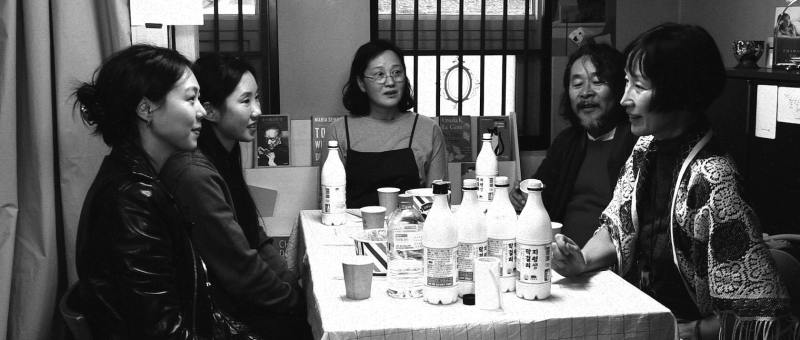
The Approach of Autumn (秋立ちぬ, Mikio Naruse, 1960)

For a small boy in post-war Japan, childhood’s summer is already over in Mikio Naruse’s at times uncharacteristically cheerful The Approach of Autumn (秋立ちぬ, Aki Tachinu) . In truth, the Japanese title is the slightly more depressing “autumn has begun” echoing the dismal circumstances that the hero eventually finds himself in while working his way towards an understanding of the disappointments and loneliness of adulthood. Abandoned by his mother he remains alone, in a sense homeless, trapped between the new Japan and the old in a liminal space shrinking by the hour as the construction of modernity encroaches all around him. 

The amazement on Hideo’s (Kenzaburo Osawa) face is palpable as he exits a train station in the middle of Tokyo peering up at the high rise buildings amid busy city streets. He and his mother Shigeko (Nobuko Otowa) have travelled by train from rural Nagano following the death of his father intending to stay with his mother’s brother (Kamatari Fujiwara) who owns an old-fashioned grocery store in Ginza. What Shigeko has not really explained to her son is that they will not be living there together as she has taken a job as a live-in hostess at a nearby inn. 

Plunged into this unfamiliar world all alone, Hideo cannot help but feel awkward in the house of relatives he has never before met. His grown-up cousins playfully argue in front of him about having to share a room, while he makes a point of not eating too much at dinner though as Harue (Hisako Hara) jokes perhaps he doesn’t like the food seeing as his penny pinching uncle mainly feeds the family on fruit and veg from the store that’s gone past its best. Meanwhile, he struggles to make friends with the local children who mock his country bumpkin accent and use him as a scapegoat when it looks like they might get in trouble. His only companion is the precocious daughter of the owner of the inn where his mother works, Junko (Futaba Hitotsugi), who instantly takes to him and even goes so far as to beg her mother to adopt Hideo as an older brother. 

Junko is in a similarly liminal position herself as we later find out. Her mother (Murasaki Fujima) is the mistress of a wealthy businessman who only visits them every so often and appears to be well aware of the precarity of her position. Junko’s father, awkwardly inviting her out on a playdate with his other two children born to his legal wife who apparently knows everything and at least pretends to be alright with it, urges her mother to take advantage of rocketing Ginza land prices and sell the inn to buy a fancy new apartment but she is understandably wary. Running an inn is all she knows how to do and should he die or simply decide to drop her she’d be in trouble fairly quickly. Hideo’s cousins similarly nag their father to sell the shop, reminding him that with the increasing gentrification of the area there is no longer sufficient footfall to support it, and suggesting they use the money to buy larger premises in suburbia. Both Hideo and Junko are in a sense orphans of these liminal spaces, relics of a disappearing Japan soon to be eclipsed by endless office buildings symbols of the nation’s increasing economic prosperity. 

All of the sites on which the children play are earmarked for construction, Junko later explaining that the docks where they eventually head looking for the sea are built on reclaimed land big enough to build a baseball field. Like Hideo she longs for the country with clean air and unpolluted rivers though as Hideo points out it’s all the same to him, his mother isn’t in either place and so neither has any meaning for him. Her strange idea of adopting Hideo is in a way an attempt to anchor herself with family, assuring her mother that she’s old enough to understand but struggling to parse her family circumstances while deeply hurt on discovering she does have siblings after all only they don’t want to know her. She is looked down upon because of the choices her mother has made, as is Hideo especially after his mother leaves abruptly with a customer from the inn (Daisuke Kato) abandoning him with his uncle in search of romantic fulfilment which it seems she probably did not find considering a later telegram explaining she’s working as a maid at a hotel in the resort town of Atami. 

Shigeko is made out to be the villain, but she too is only chasing safety in a changing society hoping to find it in the arms of a reliable man be he a husband or not. Hideo may be an obstacle to that, but her anxiety is mostly maternal, unwilling to rely on her brother’s goodwill and knowing she will need to find a way to support her son even if she is not with him. Hideo’s cousins meanwhile are the youth of the new society. Harue has rejected the old-fashioned family grocers and now works in a department store while her former student protestor boyfriend is certain of getting a salaryman job seeing as there’s a massive labour shortage. Shotaro (Yosuke Natsuki), who is always kind to Hideo, runs around town on his scooter ferrying girls to the beach sometimes forgetting his melancholy cousin in favour of transitory pleasures. He envisages taking over the store and selling it to open up somewhere new, reassuring Hideo that there will always be a place for him there even while letting him down in the present. 

In the end, Hideo’s only friend is a beetle packaged in a box of apples from his grandma in the country which his uncle selfishly claims for the shop under the rationale that he can’t eat them all himself. A symbol of an older, rural Japan as well of the idyllic childhood for which Hideo’s longs, the beetle is as out of place in central Tokyo as he is the pair of them looking down on the sprawling city and out towards the barely visible sea from the roof of a department store which holds no sense of promise for them. Despite the bleakness of the ending, Naruse’s depiction of an ordinary childhood is deceptively cheerful perhaps implying that Hideo is merely enduring a period of adjustment only to leave him with the crushing weight of impossibility, trapped between the new society and the old with no home to go to. 


French release trailer (French subtitles only)

Director’s Intention (영화의 거리, Kim Min-geun, 2021)

A location scout struggles with memory and landscape when reuniting with a former love in Kim Min-geun’s indie drama, Director’s Intention (영화의 거리, yeonghwaui geoli). The director’s intention is something she’s trying to tease out in trying to find the places that best reflect his feelings, but in doing so she’s also forced to confront herself, her regrets about the past, and her true feelings about her city and her place within it. 

Longtime movie-obsessive Sun-hwa (Lee Sun-hwa) has been working as a location scout in her home city of Busan for quite some time and while moderately successful has not yet hit the big time. Her boss is excited to call her back to the city for a big new job he thinks could even lead to some Hollywood connections, but Sun-hwa isn’t sure she wants to take it because the director, Do-young (Lee Wan), turns out to be an old flame who broke her heart by leaving her behind to chase movie success in Seoul. 

It’s Sun-hwa’s firm opinion that Busan is as good as anywhere else and that filmmaking shouldn’t be limited to a small elite in the capital. She couldn’t understand why Do-young was so keen to leave and was determined to stay making films with those she loves in a place she loves. She accuses him of selfishness, but it is perhaps on another level simply afraid to leave the security of the familiar for the promise of the new, while he is too quick to abandon the old insisting that there are better opportunities to be had elsewhere. At the end of the day what they have is contradictory perspectives that cause each of them a crisis of faith in the relationship, he because she won’t leave with him and she because he won’t stay. “He cared more about his dreams, I cared more about my life” Sun-hwa later explains, justifying her desire to stay and build something on firmer foundations rather than take a gamble on an unlikely success. 

Sun-hwa prides herself on being able to match the emotions from the scene she’s given to a particular place to help the director express his feelings onscreen, but Do-young seems to reject each of her choices simply walking away from each location as in someway unsuitable. She offers him only barbed comments which seem to confuse the other members of the film crew who presumably have no clue what’s going on or of the couple’s former relationship while he says barely anything leaving the question open as to whether he’s here to rekindle an old romance or simply to memorialise it in film. Sun-hwa meanwhile needles him by deliberately selecting painful places filled with their shared memories sure to provoke something if not necessarily the effect Do-young was hoping for. Then again, his key criteria for a pivotal, unwritten scene is that it should look nice but feel empty. 

In any case, as Sun-hwa says there are no places you only see in the movies. Every location has its own story to tell, but can also play host to the stories of others. In the opening scenes, Sun-hwa holds a notebook and surveys a river ominously containing abandoned boots and clothing. She is mistaken for a detective by a panicked local who has in a sense created his own story from what he sees only to be relieved on discovering it to be an illusion. No horrific crime has disrupted the tranquility of this peaceful, rural scene. The only thing that matters is that it’s the right place for the right director and perhaps at the right time. Wander around and you might just find what you’re looking for while in having a firm destination you might ending up missing the perfect spot and never reach what you thought you were searching for. Then again, even if a place no longer exists the feelings surrounding it survive and can perhaps be salvaged even if not quite the same as they once were as Sun-hwa discovers in revisiting her past to scout locations that will either bring an old story to an end or begin it anew.


Director’s Intention in Chicago on Sept. 25 as part of the 15th season of Asian Pop-Up Cinema.

International trailer (English subtitles)

Mother’s Place (엄마의 자리, Ryu Hee-jung, 2022) 

Outdated patriarchal social codes conspire against the emotional bonds of family in Ryu Hee-jung’s touching family drama, Mother’s Place (엄마의 자리, eomma-ui jali). While adult siblings keep secrets from each other to avoid personal embarrassment and fail to resist the demands of otherwise estranged relatives, a teenage girl is forced to mourn the loss of her parents alone feeling as if her place in the family unit was never guaranteed and that she has been abandoned by those closest to her simply because her mother’s was a second marriage. 

High school girl Yuna is called to the hospital by her oldest sister, Jungsun, who is desperately trying to hold it together but receiving little support, to be told that her parents have been involved in a car accident and are in critical condition. Jungsun rings her other sister, Jungwon, to ask her to pick up her children while waiting for her husband to get off work but Jungwon is also busy with her job as a lawyer and ignores her first few calls. Meanwhile, the oldest brother, Junghan, rudely tells her he’s too busy to talk and makes no attempt to travel to the hospital which the other siblings partly understand because they believe him to be in Japan only as it turns out that is not quite the case. After the parents sadly pass away, Jungsun and her sister organise the funeral but are immediately overruled by a grumpy and extremely conservative uncle who happens to be a prominent politician and is outraged that they are holding a joint memorial considering it was a second marriage. Apparently from a somewhat prestigious family, the other relatives intend to bury the father in the family plot and think it would be improper to inter the mother alongside him because his first wife and the mother of the eldest three children already rests there. 

“Things won’t change even if you insist” Yuna is told by her siblings who are minded to simply go along with the uncle’s instructions even though they too were shocked and hurt by the suggestion that a joint funeral is improper, reminding the uncle that she may have been a stepmother but she was their mother too. Orphaned at such a young age, Yuna is then left to deal with her mother’s death all alone while simultaneously prevented from being able to attend her father’s funeral. Her outsider status is already signalled by her name, all of her siblings share the first syllable “Jung” while she obviously does not and while they always acted like a family now it’s like they’re disowning her while disrespecting her mother’s memory in suggesting there was something sordid about her relationship with her father that prevents her being buried next to him in her rightful place as his wife. 

She can’t understand why they would just go along with something so obviously wrong, totally unable to reject the uncle’s intrusion into what should be a matter for the immediate family. When he first arrives, the uncle immediately takes issue with the fact that Jungsun is acting as the chief mourner, insisting her husband (who might otherwise not be considered a member of her father’s family) take over until Junghan arrives because a woman occupying such a role is to him in his extremely conservative thinking inappropriate. A tearful Jungsun just lets it go if internally hurt and irritated given that she’s the one doing all the work of making these arrangements that have so casually been overturned. When Junghan finally shows up with a bruised face, the uncle immediately commandeers him and reveals that he’s invited some professors from a local university along with the intention of getting him a “proper” job though there can be few people who would otherwise think a funeral is an appropriate place for a job interview or professional networking. 

Junghan does however mimic his uncle’s conservative views in his constant digs at Jungwon for not yet being married at a comparatively late age. As will be discovered, Jungwon may have her reasons and they’re ones which she may not have felt comfortable sharing with her family members given the quality of the relationship that exists between them. They are all already holding secrets from each other because of the toxic performativity of their familial roles which leaves them embarrassed and fearful of failing to conform to a societal ideal as seen through the conservative eyes of their uncle and those like him. The older siblings only begin to realise their mistake on witnessing Yuna’s rebellion and fearing for her safety while reflecting on their own emotional bond with her mother and the various ways they are now being forced to deny their love and affection for her. 

Oddly, it’s the surprise appearance of the first wife’s ultra-glamorous sister that gives them permission to question the patriarchal norms expressed by the uncle and begin to re-establish the bonds they share as siblings brokered by an emotional connection and founded in shared memories rather than a simple blood relation. With truths aired and a little more emotional honesty in play, the family is free to remake itself along healthier lines of mutual support and compassion free of the constraints placed on them by outdated social codes. In searching for her mother’s place, Yuna begins to find her own outside of the cold and austere conservatism imposed by those like her uncle. 


Mother’s Place in Chicago on Sept. 24 as part of the 15th season of Asian Pop-Up Cinema.

Fairy (요정, Shin Tack-su, 2021)

The cracks in the foundations of a recent marriage are exposed by a mysterious guest in Shin Taku-su’s marital parable, Fairy (요정, Yojeong). A marriage is necessarily a shared endeavour, but the central couple can’t seem to shift their mindsets from “mine” to “ours” while each pulled in different directions by unfinished business and external responsibilities. What their possibly magic visitor shows them is that their sense of competition is pointless when at the end of the day they could each benefit if only they committed fully to a shared future. 

The central problem Cheol (Kim Ju-hun) and Ran (Ryu Hyun-kyung) have is that when they met they were both owners of cafes in a similar part of town. Now they’ve tied the knot, they’re still running independent businesses which are technically in competition with each other. Ran suggests that maybe they should amalgamate the cafes to focus on growing just one, but really she just means closing Cheol’s because it’s not as profitable as hers is. Cheol appears to go along with the idea even if not entirely happy with it while carrying baggage from his previous marriage along with a sense of emasculation in having moved into Ran’s home while supported by her business more than his own. 

It’s after a brief argument about the business plan and Cheol’s ex-wife that the couple accidentally knock over a young man while driving home having had too much to drink. In order to avoid getting involved with the police, they take him home instead of the hospital but when he comes to the boy, Seok (Kim Sin-bi), only asks them if they can put him up for a bit and help him find work because he’s nowhere else to go. After Seok starts working at Cheol’s cafe it suddenly becomes successful much to Ran’s consternation while the pair’s relationship to him becomes increasingly exploitative even as they become something like a “family” living under one roof. 

If Seok really is a magical spirit, it’s only made him unhappy as his presence necessarily sets people against each other. Unable to see that as a married couple they both benefit from a business doing well, Cheol and Ran begin squabbling over Seok and whose cafe he gets put to work in. Cheol’s unexpected success annoys Ran who is perhaps attached to the sense of independence she feels as a business owner while fearing that Cheol will come to take over her life if she ends up his assistant in his cafe. Yet the film isn’t intending to say that she should be subservient to her husband or that her anxiety is misplaced only that she is still insufficiently committed to the relationship to be able to trust Cheol with her future while he is also reluctant to accept the responsibility while dealing with the failure of his first marriage and a sense of damaged masculinity in being unable to play a paternal role to his daughter nor offer any meaningful financial support to the family he is now separated from. 

While Ran agonises over Cheol’s desire to smooth things over with his ex-wife and daughter, her responsibilities are also split by her devotion to her older sister and her family which is only deepened when her brother-in-law is taken ill and her sister needs her help keeping their business afloat. As she discovers, however, familial relationships can also be exploitative both emotionally and financially even if the intent is not necessarily malicious. As Seok’s presence continues to divide them, it does eventually lead to the realisation that Ran and Cheol only have each other and should be pooling their resources into the shared endeavour that is their marriage despite the risks that necessarily come with that level of commitment. The marriage will only succeed when both partners are on an equal footing and working together towards a shared goal rather than anxious in their roles and responsibilities or constantly vying for the upper hand. A lonely being whether magical or not, it may be Seok who loses out in the end unable to find a place to accept him solely for who he is and not what he offers while ironically showing others the way to find the place to belong that he so sorely seeks.  


Fairy screens in Chicago on Sept. 24 as part of the 15th season of Asian Pop-Up Cinema.

Trailer (no subtitles)