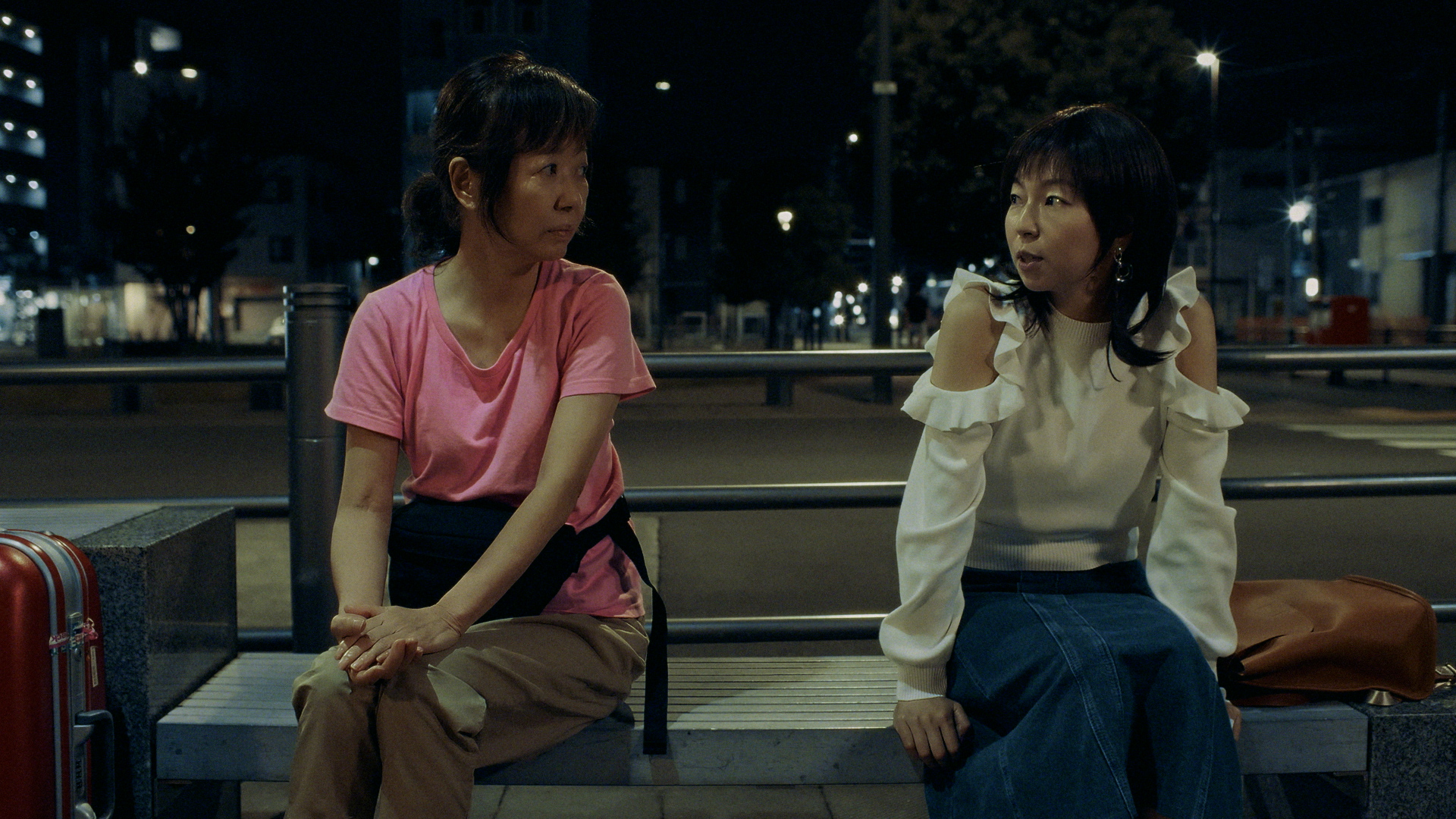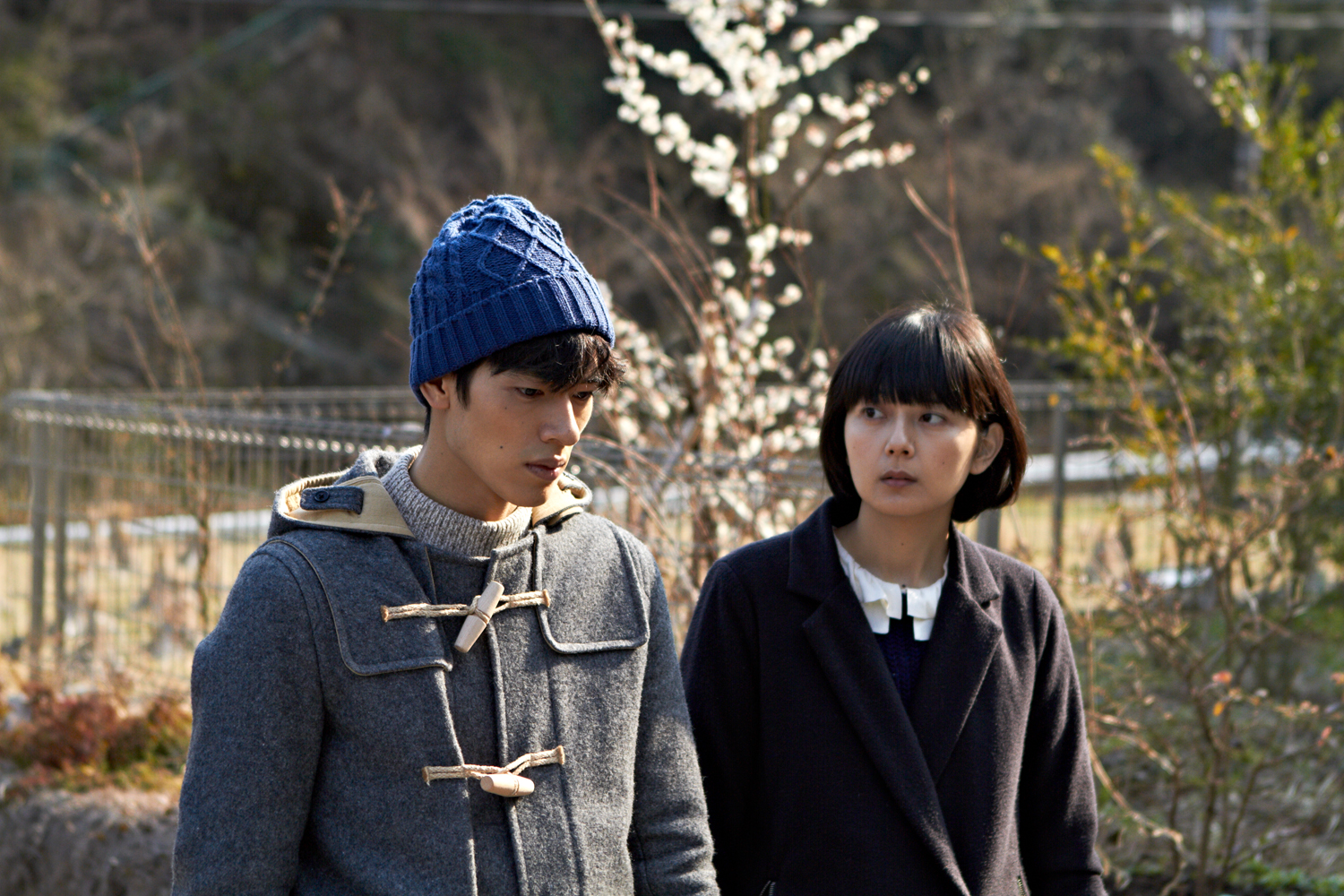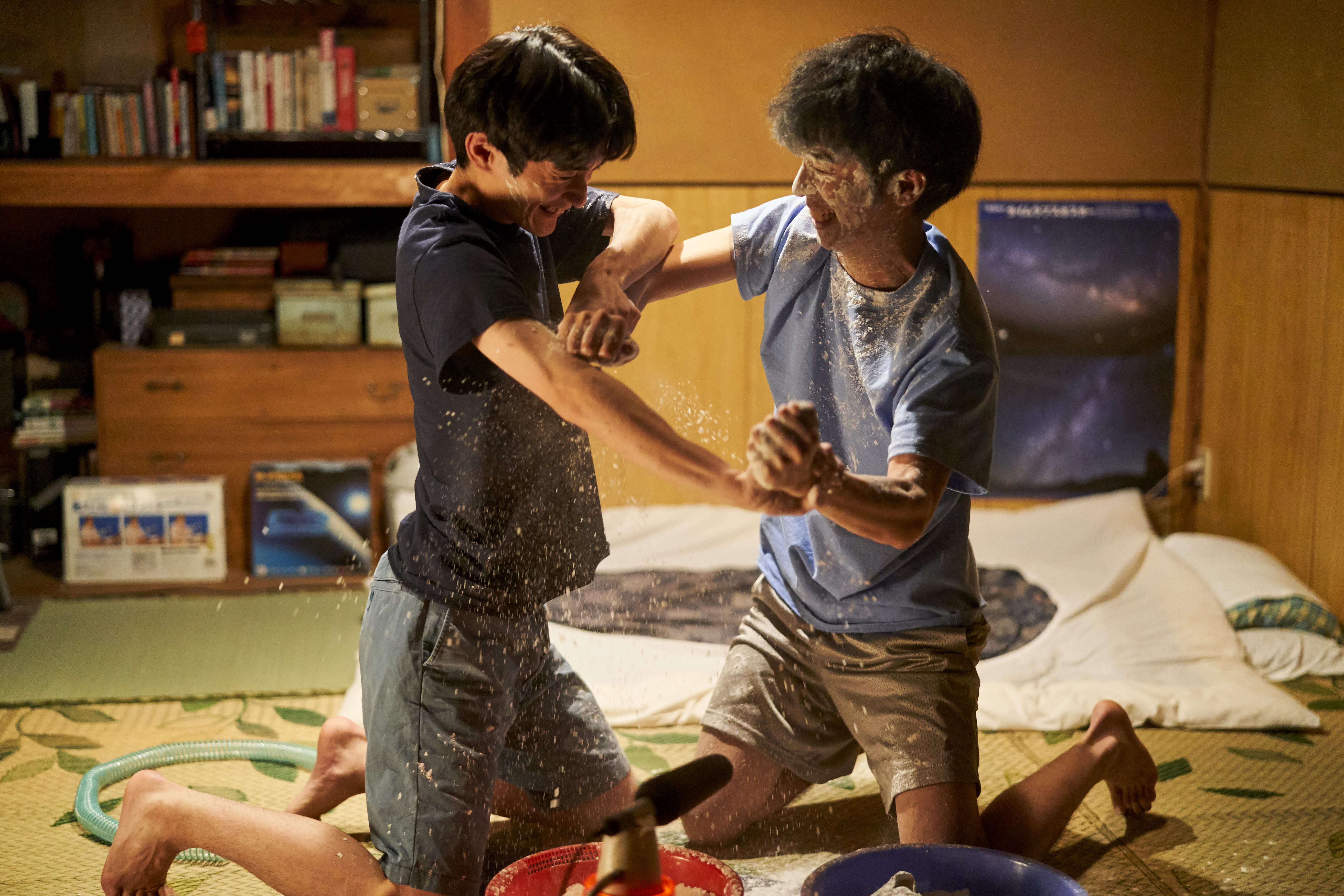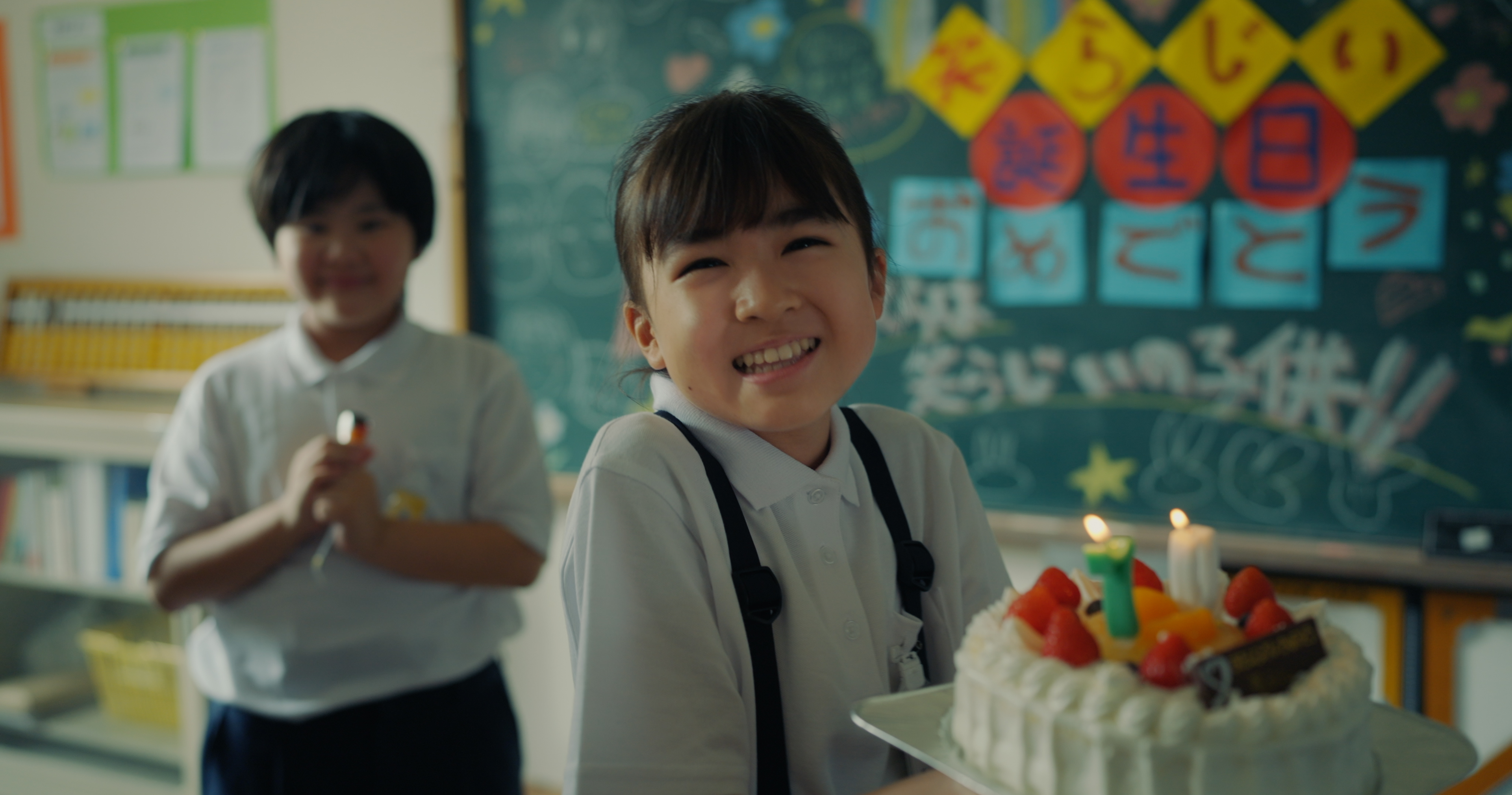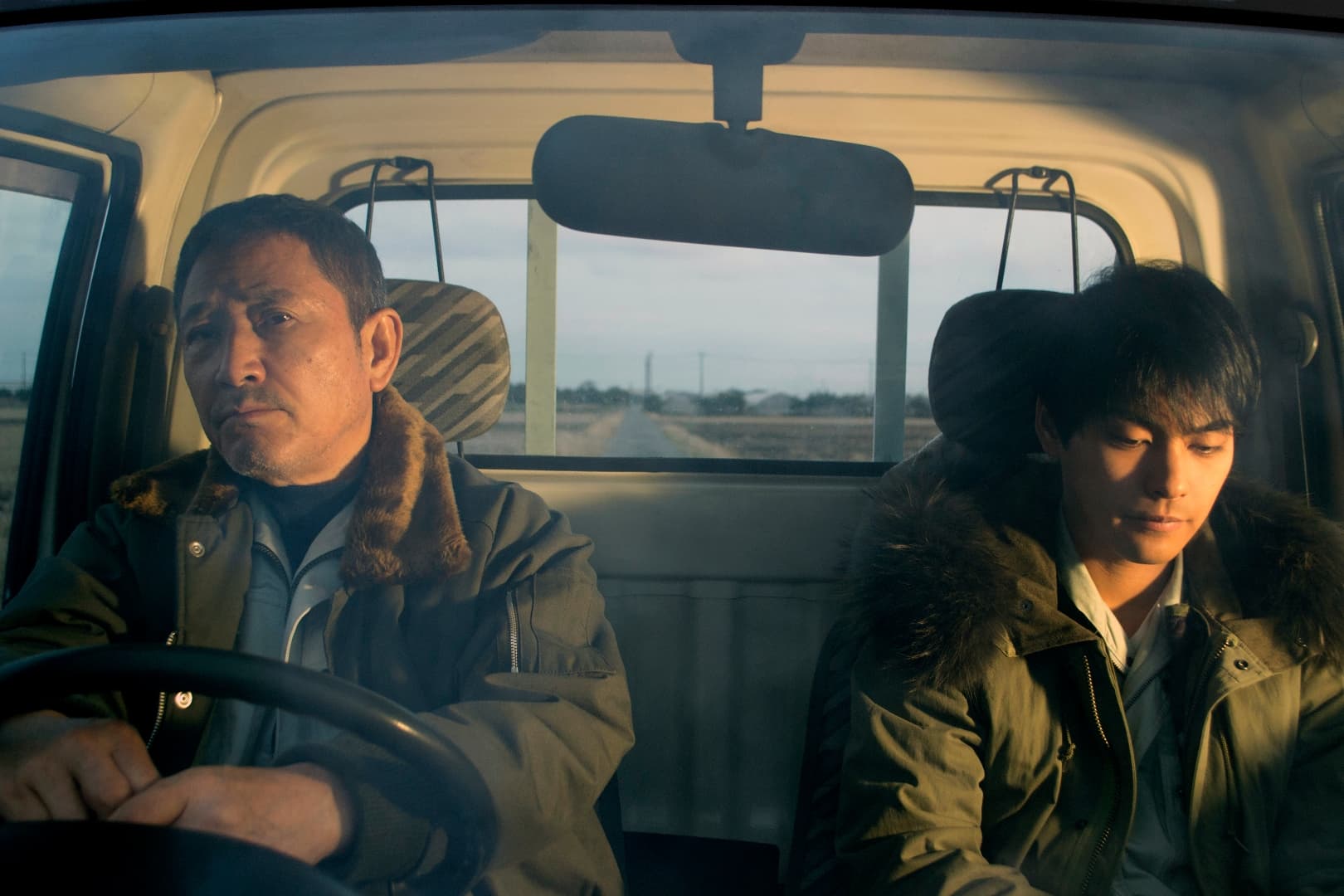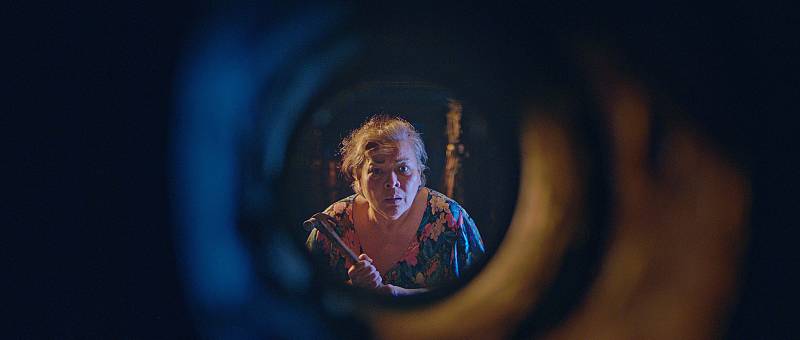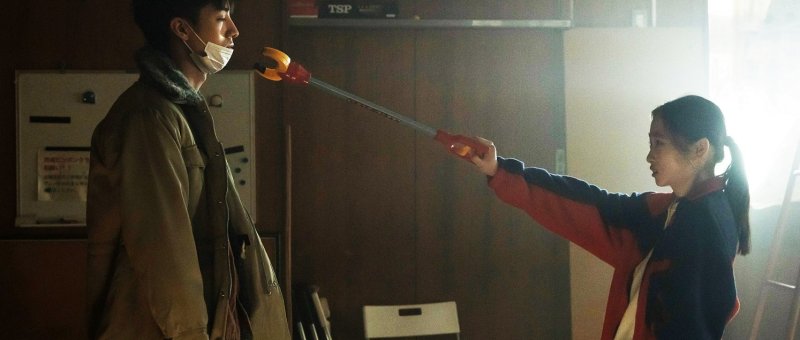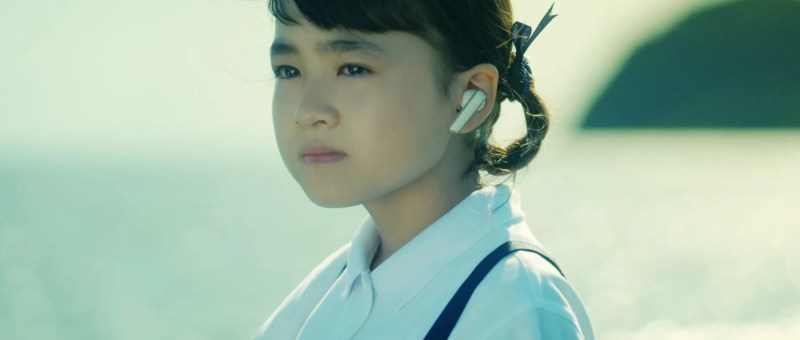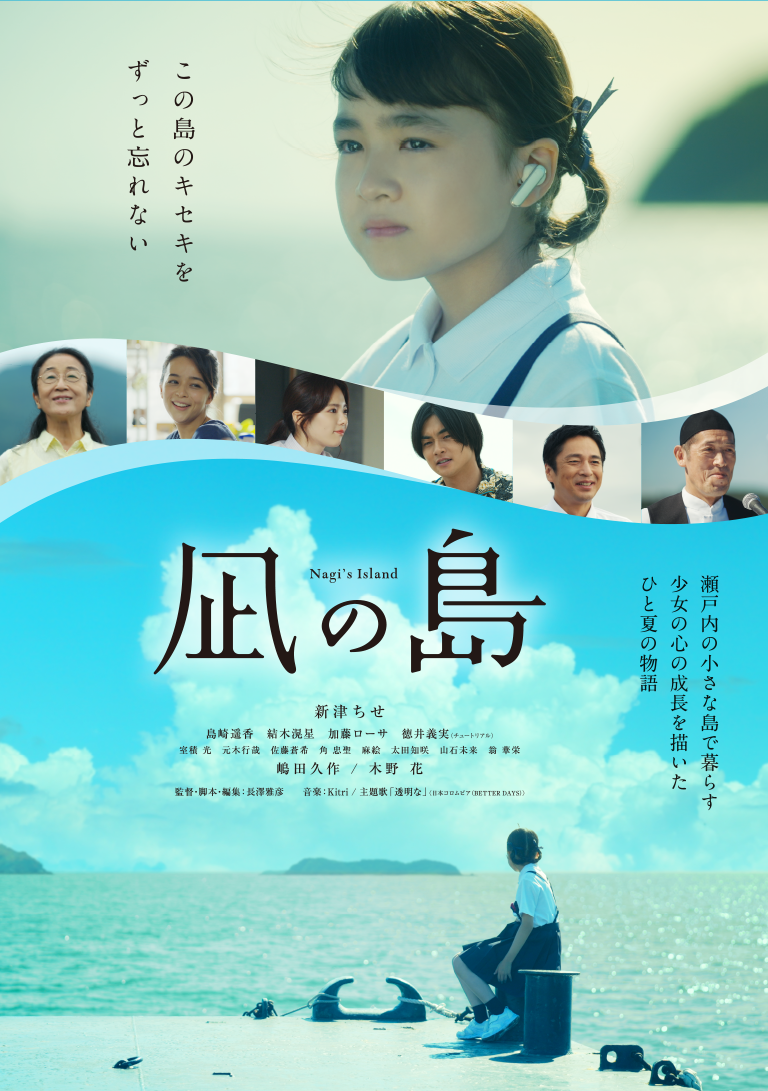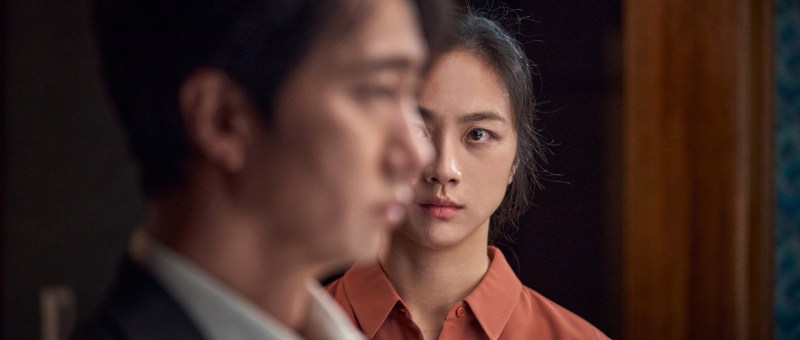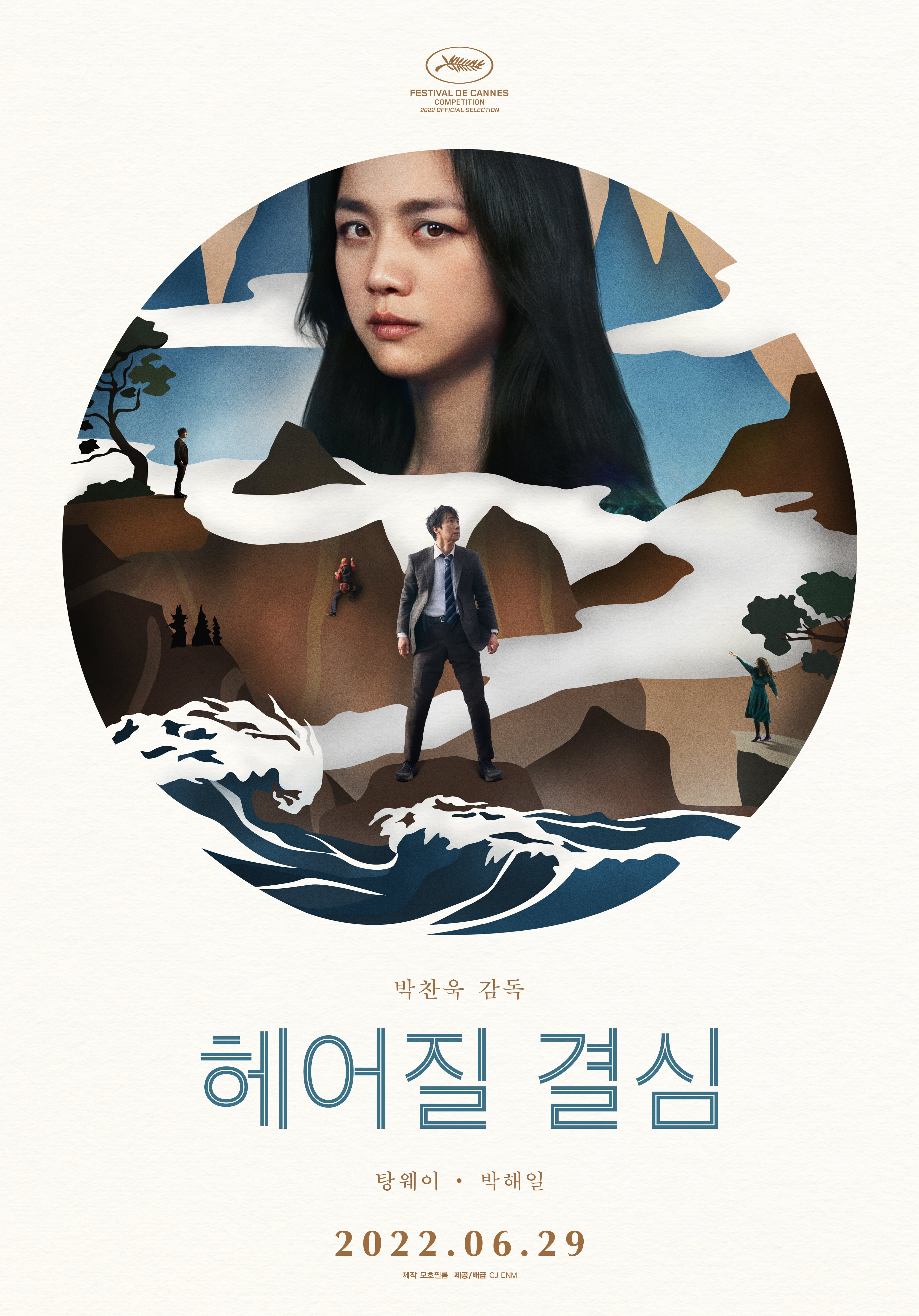
Any Crybabies Around? (泣く子はいねぇが, Takuma Sato, 2020)

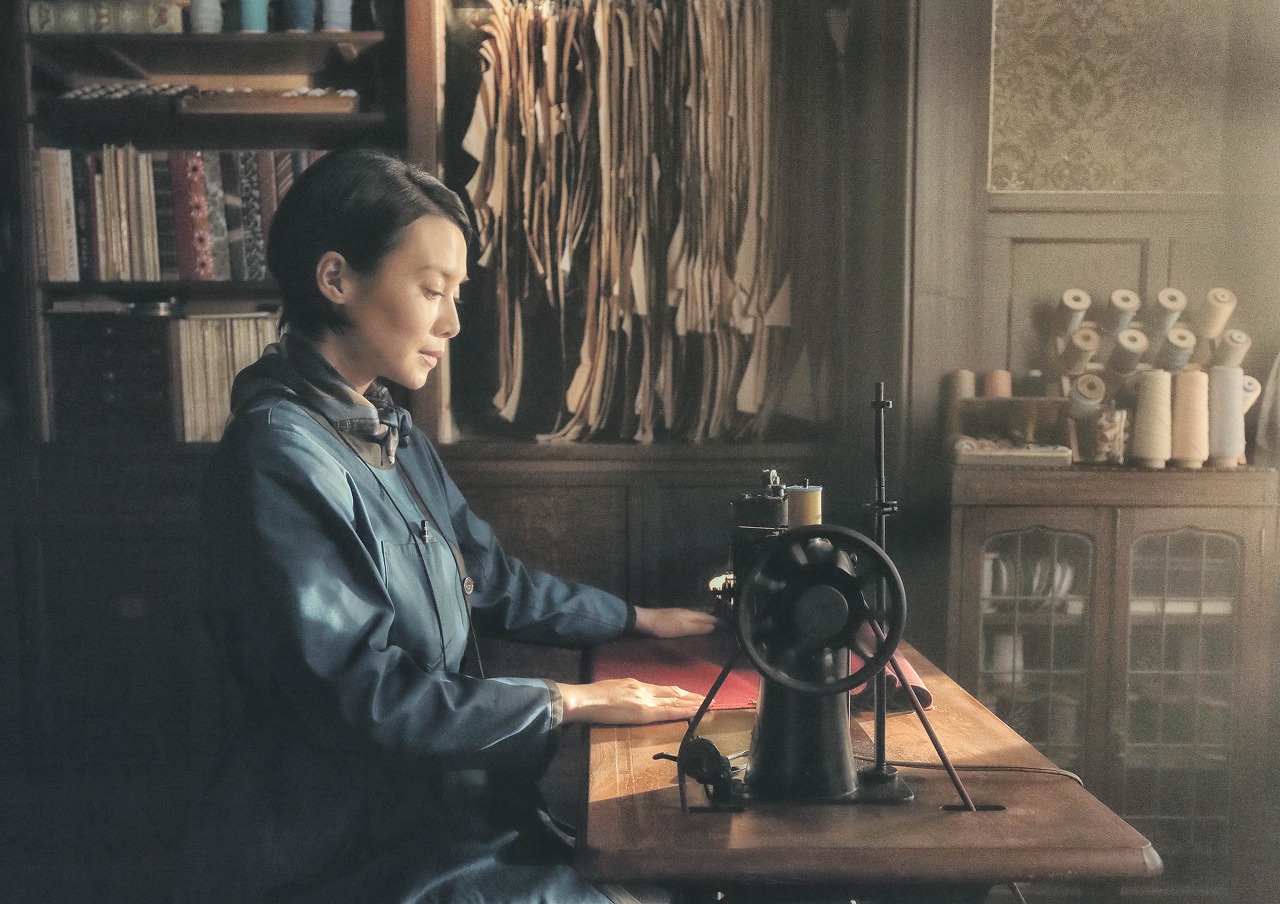
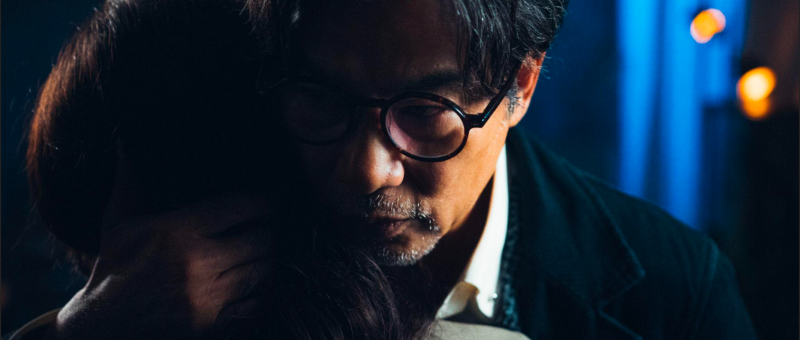
“Get your act together” an exasperated new mother exclaims, but it seems even new fatherhood isn’t quite enough to jolt the aimless hero of Takuma Sato’s paternity drama Any Crybabies Around? (泣く子はいねぇが, Nakuko wa Inega) into accepting his responsibility. Fatherhood is indeed a daunting prospect, however Sato isn’t interested solely in Tasuku’s (Taiga Nakano) attempts to “grow up” and embody the ideals of masculinity in a patriarchal society but also in the nature of fatherhood itself along with its legacies and the effects of male failure on those caught in its wake. 

Everyone in the small town of Oga seems to be aware that Tasuku has undergone a shotgun marriage though it’s more the subject of gentle ribbing than scorn or disdain. Many remark on his relative youth, though he’s perhaps not so much younger than his parents might have been when he was born it’s just that times have changed. In any case, his wife, Kotone (Riho Yoshioka), is beginning to get fed up with him worried that he isn’t ready to be a father and isn’t taking the responsibility seriously enough. As young men do he still drinks like a single man and is vulnerable to peer pressure. Kotone begs him not to participate in the local Namahage festival but he insists they have to keep the tradition alive while apparently feeling an obligation to Mr. Natsui (Toshiro Yanagiba) who ensures it continues. She makes him promise not to drink, and he does his best in the beginning but, paradoxically, the Namahage is a drinking festival. Soon enough, Tasuku has had a little too much and beginning to feel hot takes off all his clothes, running around in the nude save for the large oni mask on his face while local reporters there to cover the traditional festival decide to make him a viral sensation. Unable to bear the shame, Tasuku abandons his wife and child and runs away to anonymity in Tokyo. 

The irony is that introducing the festival to the reporters, Mr. Natsui had flagged it up as a bastion of family values, that it’s not about “scaring” children but teaching them “good ethics” while reassuring them that their fathers will always protect them. According to Mr. Natsui, those children then grow up to become fathers who protect their offspring, Tasuku’s unfortunate streaking somewhat undermining his argument. It’s interesting in a sense that Tasuku is himself fatherless, his father having passed away some years earlier leaving not much of himself behind other than the oni masks he carved for the Namahage. Tasuku’s brother (Takashi Yamanaka), who was supposed to be getting married but apparently did not perhaps because of Tasuku’s scandal, later becomes upset on deciding to sell the family business lamenting that he was able to save “nothing” of his father, rejecting the Namahage mask that Tasuku offers him as “trash” while acknowledging perhaps that the Namahage is all is he left them along with the transitory lessons it imparts. 

Tasuku was clearly not quite ready to be a dad, but having spent some time growing up and hearing that his father-in-law has passed away leaving his ex with little choice than to work as a bar hostess on the fringes of the sex trade, he decides to go home and try to make amends. He swears repeatedly that he won’t run away again and will do whatever it takes until he’s forgiven, but still he flounders failing to find secure employment while periodically visiting his grandmother in a nursing home and helping his mother (Kimiko Yo) out selling traditional ice creams at local tourist attractions. “You’re not the only one who can be Nagi’s father” she reminds him as he perhaps begins to realise that there are some bonds you can’t repair even if you’re eventually forgiven for having broken them. 

Performing the Namahage forces Tasuku uncomfortably into the role of the authoritarian father safe scaring the child in order to instil in them a sense of confidence that encourages them not to be afraid of life, in the way that he may ironically be, because there will always be someone there waiting to catch them. The ability to protect a family is a defining feature of the masculine ideal, and the Namahage in its way perpetuates outdated ideas of gendered social roles while Tasuku’s mother and even grandmother are always there for him with unconditional acceptance, supporting him even in the depths of his “disgrace” and encouraging him to move forward even if that means accepting defeat. Keeping the Namahage alive is also in a sense to preserve the paternal legacy, just as Tasuku’s father may have passed nothing else down to his sons so Tasuku may find he has nothing more to offer, perhaps no longer a “crybaby” but still struggling to shift into the role of the father even while belatedly coming of age in the knowledge that he may have left it too late. 


Any Crybabies Around? streams in Germany until 6th June as part of this year’s Nippon Connection. For viewers outside of Germany it is also available to stream in many territories via Netflix.

International trailer (English subtitles)

Asia is One (アジアはひとつ, NDU, 1973)

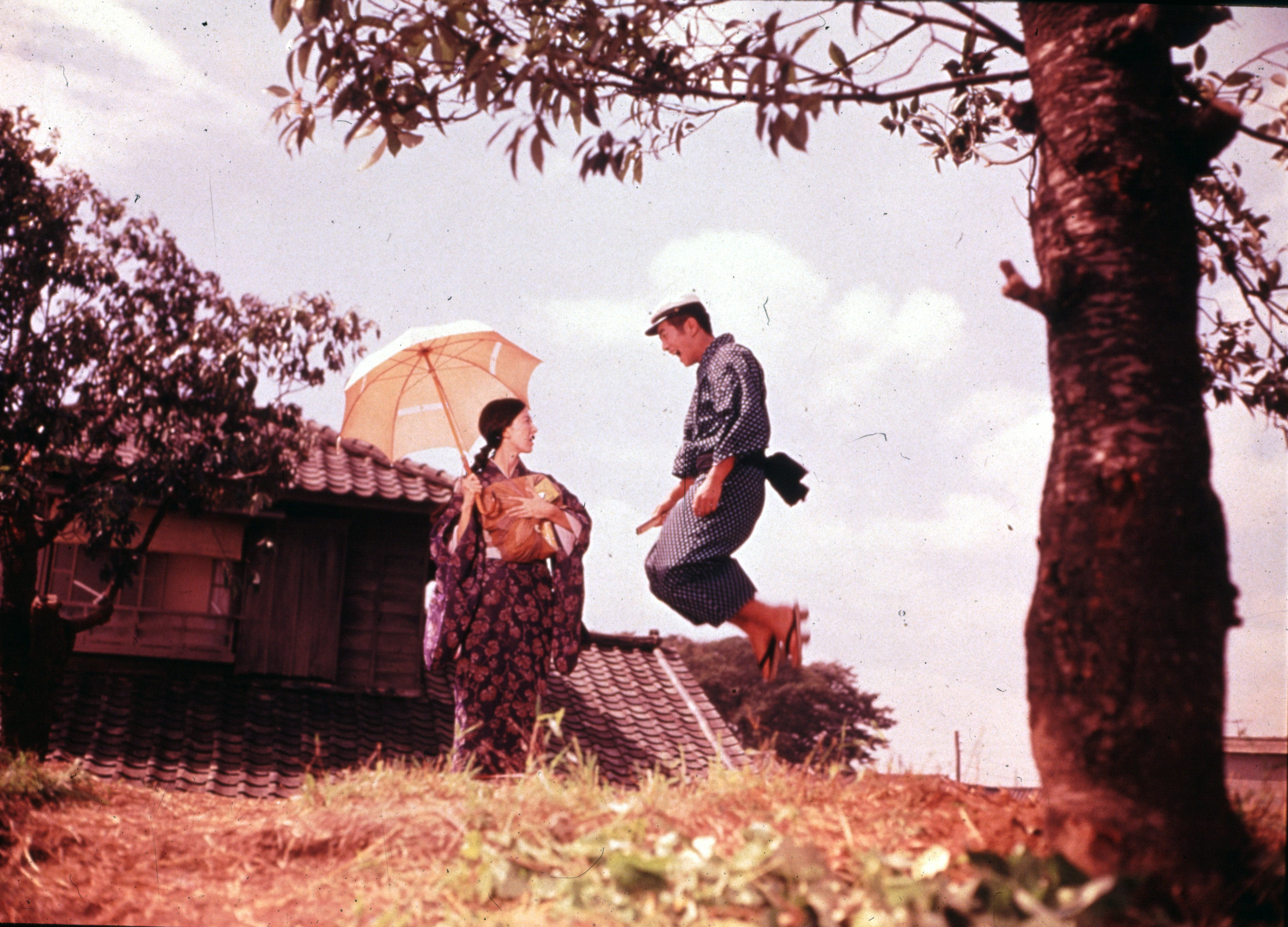
“They came to beat us into a splendid Japanese future, to conquer us” according to an interview in a small Taiwanese mountain village towards the end of the Nihon Documentarist Union’s Asia is One (アジアはひとつ, Asia wa Hitotsu). Having documented Okinawa on the brink of its reversion to Japanese sovereignty, the collective return to examine more widely its legacies of oppression and exploitation under Japanese imperialism venturing first to its smaller islands and then all the way out to Taiwan from which many migrant workers had come to work in harsh conditions in Okinawan mines during the colonial era. 

One man describes himself as having been tricked in coming to the Marusan mine in 1933 in the mistaken belief he could work there for six months and then return home. “I thought it would be better to die than live there” he goes on, originally too afraid to attempt escape having seen others rounded up and punished but later managing to get away by blowing up a boat. A Japanese man who worked at the Noda mine in Iriomote, meanwhile, reveals that they were refused days off and sick workers were often cast out. Many simply died because they could not afford to pay for medical attention. Workers were paid in company script which could be spent only on the compound, the mine owners fearing workers would abscond if they were paid in cash. By his reckoning, however, the Taiwanese workers had it better because they were working on a contract basis and could get a better rate of pay. A third man, Masuda, meanwhile describes long days and early mornings, being unable to eat if they didn’t have money for the canteen, and the watchmen locking their bedroom doors at night to prevent them escaping. The conditions were so bad that one man took his own life by blowing himself up with dynamite tied around his waist. 

Even so, the second man then living in a nursing home, does not blame the mine owner, Mr. Noda, describing him simply as a “capitalist” and remarking that he was often kind and generous giving workers money for medical treatment etc, blaming instead the foreman. “It’s the people working under the capitalists who are bad” he explains, bearing out the extent to which oppressed people will often oppress others like them in order to feel less oppressed but also letting the system off the hook in failing to acknowledge that if Mr Noda had really been good and kind he could have improved conditions in the mine while still remaining “a capitalist”. Hsieh King-Fu, known as Dr. Seh, whose father worked as a doctor at the mines recalls a mass outbreak of malaria among the Taiwanese migrant workers leading to a shortage of morphine. Having bought supplies from a local pharmacy himself a rumour later circulated he was injecting them deliberately to get them addicted so he could drag them away so endemic had the sense of betrayal and exploitation become. 

Meanwhile since the reversion the islands have been fostering deeper connections with Taiwan which is after all geographically closer than the Japanese mainland. An older man explains that he’s instilling Taiwanese agricultural techniques in the local population and has successfully been cultivating pineapples on the island for the last 40 years. Fishermen too remark on how much easier it is to trade with Taiwan rather than the mainland because it’s simply closer meaning they can also trade live fish with a longer shelf life. Meanwhile an official details a potential agreement between the Ryukyu government and Taiwan to recruit workers developing new ties independently from those of mainland Japan. 

Yet in travelling to Taiwan itself, the documentary collective encounter surprising reactions to the legacy of Japanese colonialism in a small village inhabited by the indigenous Atayal community who still play the Japanese national anthem every day at noon. Many of them can still speak fluent Japanese having been forced to learn it during the colonial era and have almost a fondness for Japanese rule. “We owe everything to Japan” one woman states, uncomfortably grateful for her “civilisation” and thankful that the Japanese educated them out of some of their more “barbaric” customs such as the admittedly oppressive practice of beheading. Like the Korean man who obtained three names during his travels through the Japanese empire, many of the villagers have names in their indigenous language, names in Mandarin, and names in Japanese. “I’m still terrified of imperialism and oppression” one man admits though adding “I guess imperialism is different now” in lamenting that the emperor has never visited him but observing that he looked “free” on his last tour to Taiwan before going on to talk about a seal he received from the emperor after executing prisoners, by beheading, as a conscript soldier during the war. Asia may indeed be one if ironically, united in the destructive legacy of Japanese imperialism, but perhaps also finding new ways to repair itself which take less account of concepts such as sovereignty, diplomatic recognition, or man-made borders. 


Asia is One streams worldwide (excl. Taiwan and Japan) until June 3 as part of Japan Society New York’s Visions of Okinawa: Cinematic Reflections.

Yes or No (Yes or No อยากรัก ก็รักเลย, Saratswadee Wongsomphet, 2010)

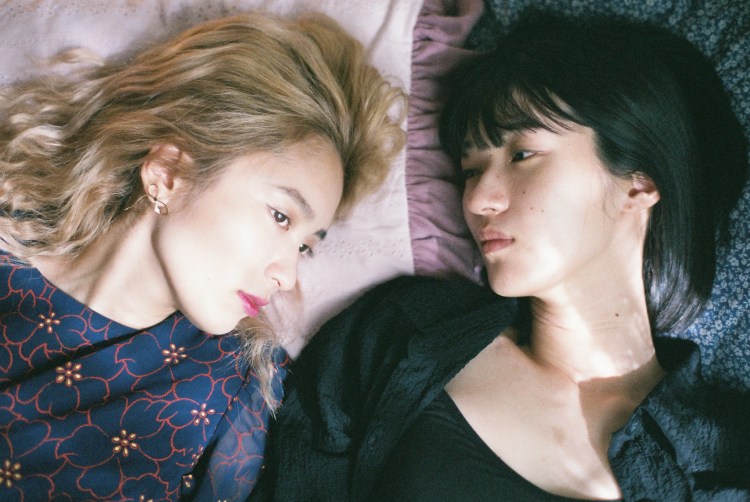
An uptight girl from a wealthy conservative family finds herself conflicted on falling for her tomboyish farmer’s daughter roommate in Saratswadee Wongsomphet’s romantic dramedy, Yes or No (Yes or No อยากรัก ก็รักเลย, Yak Rak Ko Rak Loei). Yes or no is in some ways the question each of the heroines find themselves asking struggling not only with their feelings for each other but their respective identities along with stereotypical visions of homosexuality wondering if it’s your appearance that defines you or something less visible deeper inside. 

That’s something doubly true for Pie (Sucharat Manaying), who exasperatedly exclaims that she “ran away from a lesbian” and “ended up with a tom”. As the film opens we see her switching rooms in her uni dorm explaining to her mother on the phone that her previous roommate, Jane (Arisara Tongborisuth), was perfectly nice but had a lot of problems notably her heartbroken sobbing on being dumped by her latest suitor who happened to be a butch lesbian. Pie leaves that bit out in talking with her mother, later revealing that her mum hates anything gay or even androgynous and finds tomboyish women disturbing.That’s one reason why she immediately tries to switch rooms again only to run into Kim (Suppanad Jittaleela) on coming out of the shower. 

For her part, Kim largely rejects the “tom” label and repeatedly reminds Pie she is a girl who happens to have short hair and is dressed in a comfortable fashion. Nevertheless, she continues to experience a degree of hostility based on her appearance, a gang of sexist boys giving up on their cheesy pickup lines while taunting her as she walks past. “She’s more handsome than me” one of them jokes as Kim ignores them with Pie looking on from an upper balcony. Kim isn’t particularly aware of her sexuality either, seeing herself as inherently different from those like Jane who readily identify themselves as lesbians while confused on two levels seeming to simultaneously believe both that Pie cannot be a lesbian because lesbians look the way she herself does and that she is not a lesbian and should not be assumed to be one simply because of her appearance in which she obviously has a point. 

Pie’s animosity towards Kim is originally so extreme that, on being unable to switch yet again, she simply runs red tape down the centre of the room though she has also brought with her much more stuff than simple farmer’s daughter Kim. The resentment only really eases once she comes to appreciate that Kim has unexpected skills such as the ability to run up delicious meals in only a rice cooker. In a running gag, the supposedly masculine Kim is often afraid of childish things such as cockroaches and thunder storms, while Pie declares herself fearless but is actually deeply afraid and carrying a degree of internalised shame while confused by her changing feelings for Kim. Though they continue to grow closer, not only pulling up the tape but pushing their beds together, each continue to hold back Kim trying to figure out her identity and Pie preoccupied with her mother’s homophobia. While Pie is jealous of Jane who is also in love with Kim, Kim contends with Pie’s family friend, Waen (Soranut Yupanun), her mother’s chosen suitor and the symbol of the lingering heteronormativity that overshadows their relationship, 

Then again, there may be an uncomfortable emphasis placed on traditional gender roles in which the tomboyish Kim is cast as the man, eventually trying to cement her relationship with Pie by approaching her mother for permission to date her despite knowing of her animosity to what she labels “abnormal sexuality” having taken one look at Kim on campus and exclaimed “good thing you aren’t like that or I’d be dead by now”. Kim’s farmer father and his male best friend (?) meanwhile, are far more understanding instantly welcoming Pie when she, essentially, tries to do the same thing seeking Kim’s forgiveness for having faltered in the moment and failed to stand up to her mother. While there might also be an unpleasant stereotype in Jane’s emotional instability which later leads her to the point of self harm in the depths of her unrequited love, and the gang’s gay male friend is depicted rather shallowly little more than as sassy and effeminate, Yes or No nevertheless does its best to navigate the difficult path on which the women find themselves figuring out their feelings for each other and perhaps discovering the only important question is is this love, yes or no. 


Yes or No screened as part of this year’s Queer East. It is also available to stream in many territories via GagaOOLala.

Original trailer (English subtitles)

Love of Siam (รักแห่งสยาม, Chookiat Sakveerakul, 2007)

Two young men contending with grief and familial dislocation begin to wonder if it’s possible to love someone knowing that you’ll lose them, or conversely if it’s possible to live without love in Chookiat Sakveerakul’s melancholy drama Love of Siam (รักแห่งสยาม, Rak haeng Siam). The title may sound overly patriotic but in actuality refers to the Siam Square shopping area when the boys meet again as teenagers after many years apart and rekindle their friendship only to be confused by their growing feelings for each other while each struggling with contradictory demands from fracturing family and romantic drama to the responsibilities of friendship and career. 

When they first meet as small boys, Mew (Arthit Niyomkul), who has come to live with his elderly grandmother, and Tong (Jirayu La-ongmanee) live opposite each other in a small Bangkok back street. When Mew is hassled in the school toilets, Tong comes to his rescue and gains a black eye in the process, cementing the boys’ friendship. Everything begins to change, however, when Tong goes on holiday with his family to Chiang Mai. His older sister Tang (Laila Boonyasak) stays on to hang out with friends and later disappears during a hiking trip leaving the family devastated. To escape their grief they decide to move away, breaking the friendship between the two boys. A decade or so later, they re-encounter each other by chance in Siam Square where Tong (Mario Maurer) is trying to buy a CD of rising boyband August of which Mew (Witwisit Hiranyawongkul) just happens to be the lead singer. 

In the intervening years, Tong has become somewhat distant and is now in an unsatisfying relationship with one of the school’s most popular girls, Donut (Aticha Pongsilpipat). As we discover, his father has developed an alcohol problem unable to overcome his guilt and grief over what happened to Tang, while his mother attempts to power through by exerting control over every aspect of her life. In a shocking coincidence, Mew’s band manager June (Laila Boonyasak) happens to look exactly like Tang, Tong and his mother eventually asking her to play the part of the absent sibling in the hope of curing his father’s depression. 

As much as the film revolves around the love story between the boys as they begin to figure out their sexuality, at the end it’s a story of love in its many forms and key among them the familial. Both the boys are in a sense displaced, Mew for reasons not explicitly stated living not with his father but his grandmother and then as a teenager alone following her death while Tong is caught between his grieving parents looking for new signs of stability. Understandably anxious, Tong’s mother still makes a point of picking him up by car though he is already a teenager when such solicitation might seem embarrassing. When she catches Tong kissing Mew, her world is destabilised attempting to reassert her control by asking Mew to stay away from her son fearful of losing him and the life she’d envisioned for his future with a wife and children. Yet through her interactions with June, who is also displaced having lost her parents in some kind of accident, she begins to realise that her need for control is not the way to save her family as they each begin to face their grief and repair their familial bonds accepting both the continuing presence and absence of Tang as symbolised by the family photo taken on their last holiday in which she is not pictured but only because she was standing behind the camera. 

In this way, Mew perhaps gets his answer to whether it’s possible to go on loving someone knowing that you’ll lose them unwilling to live a life without love even if the price is grief and loneliness. Where there’s love, there’s hope according to a Chinese song translated by Mew’s lovelorn neighbour, Ying (Kanya Rattapetch), who becomes an accidental friend of Tong learning to put her hurt and jealousy aside to embrace her friendship with both boys. As someone else puts it, mistakes are just opportunities for change and perhaps doing the wrong thing out of love is better than doing nothing at all. Nevertheless, as the family begins to repair itself, healing in mutual acceptance along with acceptance of their loss, the youngsters discover the strength to accept themselves discovering their place amid the admittedly chaotic streets of Siam Square. 


Love of Siam screens at Rich Mix on 29th May as part of this year’s Queer East.

Original trailer (English subtitles)

What She Likes (彼女が好きなものは, Shogo Kusano, 2021)

“Distance keeps us safe” according to the hero of Shogo Kusano’s LGBTQ+ teen drama What She Likes (彼女が好きなものは, Kanojo no Sukina Mono wa) ironically commenting on the nature of “social distancing” in the age of corona along with his own sense of alienation. Though in comparison to other recent similarly themed features Kusano’s film may in some senses seem behind the times in its BL filter, it has its heart firmly in the right place as the hero and several of his friends attempt to find a place for themselves within the contemporary society which for various reasons they fear will not accept them. 

In high schooler Jun’s (Fuju Kamio) case, his sense of alienation is born of his internalised homophobia in which all he wants is to have a conventional heteronormative life within the confines of the traditional family with a wife, children, and grandchildren. Part of this may stem from a secondary source of marginalisation in that he comes from a single parent family which is itself still frowned upon by some as evidenced by the mild discomfort experienced by his new friend Sae (Anna Yamada) when he explains to her why he always eats cafeteria food rather than bringing a homemade bento. Sae’s source of internalised shame, meanwhile, is that she is a fujoshi or obsessive fan of boys love manga which revolve around romances between men but are aimed at an audience of young straight women rather than the LGBTQ+ community. 

Based on the novel by Naoto Asahara, what the film attempts to do is examine the gap between the BL fantasy and the reality of being gay in contemporary Japan. Sae is ashamed of her love of BL and ironically paranoid that Jun will expose her secret after running into him at a bookshop, explaining that she was shunned in middle school when her friends found out she enjoyed reading gay love stories which they viewed as “creepy”. Meanwhile, she has a complicated view of homosexuality off the page which is not always completely supportive. Both she and Jun continue to use a world that many would consider to be a homophobic slur to describe men who love men, Jun at times using the word against himself while simultaneously denying the identity. The first conclusion that he comes to is that Sae does not really like him but only the romanticised gay ideals from the fantasy world of BL which as is later pointed out are often set among a largely gay milieu or even in a world where everyone is gay. 

Sae refers to this space as the BL Planet, but Jun’s desire to go there is also a reflection of his internalised homophobia in that on the BL Planet he’d obviously be just like everyone else. He’s fond of repeating a sentence they learned in science class about a simplified world with zero friction which he later claims to reject unwilling to erase complication for superficial harmony but this is exactly what he’s doing in attempting to erase a part of himself in order to better conform to a heteronormative society. He beats himself up for not being able to have “normal” sex after half-heartedly agreeing to date Sae while engaging in physical intimacy with a much older man who is married with a child. Jun’s lover Makoto (Tsubasa Imai) later explains that his marriage is one of convenience born of the same kind of internalised homophobia experienced by Jun though he obviously loves his wife and child if in a different way while the inappropriateness of his relationship with a teenage boy is never raised by anyone.

Jun is taken to task by a brash classmate, Ono (Ryota Miura), for his irresponsibility in dating Sae knowing that he has no romantic interest in her hinting that perhaps not that much has changed in the last 10 or 15 years both men convincing themselves that heteronormative relationships are the only valid markers of success. Then again when Jun is accidentally outed his classmates are given a crash course in LGBTQ+ relations most of them expressing support and the conviction that society needs to become more accepting of diversity though it has to be said they were less than understanding before, particularly the boys who found Jun’s presence a challenge to their masculinity. 

Teenage boys they all are, but even infinitely sympathetic straight best friend Ryohei (Oshiro Maeda) engages in crude, misogynistic banter with their classmates forcing Jun to play along pretending to be a connoisseur of heterosexual pornography. Probably some or even most of the other boys are also lying in an act of performative masculinity but the pretence only adds to Jun’s internalised sense of otherness and belief that he is in some way broken continually asking not only why he was born like this but why anyone is. After receiving an alarming message from an online mentor, he is pushed towards a dark place in becoming convinced that the world has no place for him only to belatedly come to an acceptance of his identity as mediated through Sae’s concurrent epiphanies realising that without friction there is no progress and discovering liberation in authenticity. Despite a few mixed messages and a bizarre subplot about a hairdresser who is not himself gay but nevertheless obsessed with gay people to the extent that he thinks he can spot them in public places through codified signs and the look in their eyes, Kusano’s teen coming-of-age drama has its heart in the right place in its gentle plea for a more inclusive, joyfully diverse society. 


What She Likes screens at Genesis Cinema on 28th May as part of this year’s Queer East.

Original trailer (English subtitles)

Motoshinkakarannu (沖縄エロス外伝 モトシンカカランヌー, NDU, 1971)

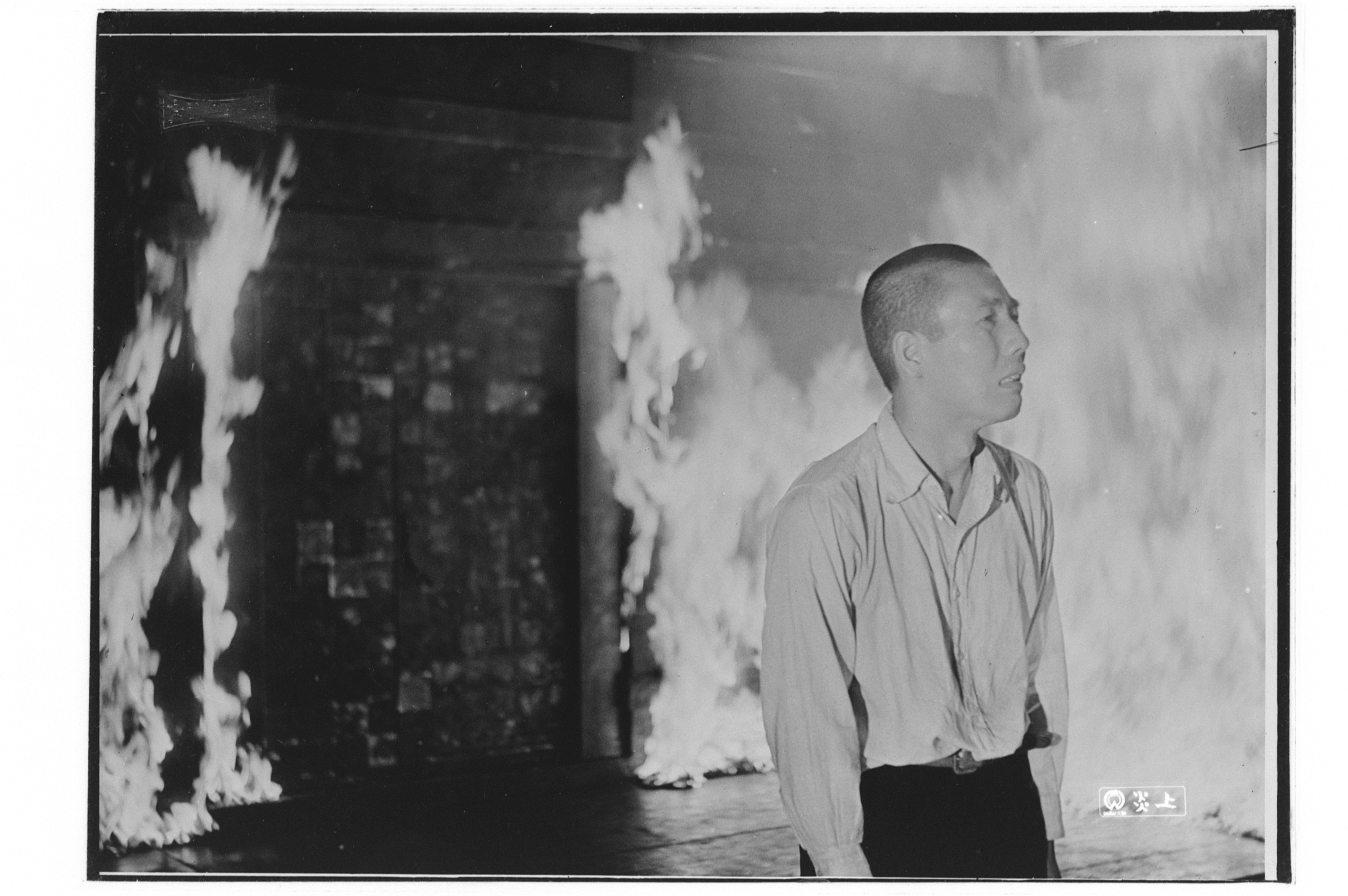
Active between 1968 and 1973, the Nihon Documentarist Union or NDU was a collective of documentary filmmakers emerging from the then declining student movement and “Zenkyoto” struggle committees whose members were often university drop outs disillusioned with the system. The group’s 1971 documentary Motoshinkakarannu (沖縄エロス外伝 モトシンカカランヌー, Okinawa Eros Gaiden: Motoshinkakarannu), shot in black and white and using asynchronous sound, takes its name from a word in the Okinawan language used to describe a business which can be started without seed money, effectively an ironic euphemism for sex work. Visiting the islands immediately prior to their return to Japan, the collective examines among other things a legacy of exploitation along with the effects of economic dependency on one or another colonising force. 

“How come Okinawa changes so much?” a street singer asks playing a sanshin while reflecting on the islands’ complicated history. An old lady born in 1889, the tail end of the Meiji era, reflects on cultural change when speaking of the tattoos on her hands which she’d so wanted as a child believing not to have them was not to be accepted as a woman and therefore unable to marry. But tattoos are taboo in Japan and the practice was eventually banned by the police leaving her stigmatised in her own community and forced to wear gloves in order to hide the markings of her culture. “Now in the contemporary society you can’t get married if you have a tattoo. Things can change 180 like that” she adds reflecting on the rapid changes which have taken place within her lifetime in which even ancient traditions can be abruptly ended by outside forces. 

Meanwhile, another woman prepares to adjust her currency exchange business once Okinawa reverts to Japan and the American presence decreases. While some are in favour of the reversion more because they want the Americans to leave than actively desire to return to Japanese sovreignity, others wonder what the effect will be on the local economy given that workers are already being laid off from jobs on American bases. The documentary captures several labour protests held outside military facilities by anxious workers. “Okinawa is sacrificed again under military control” one leader insists while another later adds “for 20 years Okinawa was denied normal employment opportunities due to its militaristic colonisation” each emphasising the unanswered questions in the reversion agreement of what is supposed to happen to these now redundant workers, where will new jobs be coming from and what are they supposed to do until they arrive? Many of the protestors are extensively masked appearing somewhat like the invisible man with their heads wrapped in fabric and sunglasses covering their eyes presumably because they fear negative consequences from their employers if they’re caught at the demonstration.

The documentary team muddy the waters a little by challenging one man that as he’s a cook he could easily find new work, but as he points out it’s not just about him and he believes the labour movement will be beneficial to the islands’ future. Many feel betrayed that the local Okinawan police force continues to protect the interests of the Americans in attempting to suppress their protests, but conversely there is also anxiety regarding new industrial investment from Japan with the CEO of Toyo Oil, directly labeled a war criminal in the embedded subtitles, trying to argue that he is an environmentalist and would not go ahead with the plant if it were to produce pollution. Such worries are perhaps at the forefront of the minds of ordinary Okinawans given the numerous mainland scandals of the postwar era such as the Minamata disease and Yokkaichi asthma among many others, while an old man’s hand-painted sign also protests that the oil refinery is to exist on land stolen from local farmers. The anxiety seems to be as the camera pans ominously across a new industrial zone that Okinawa will become a dumping ground for problematic industries the mainland isn’t willing to place on its own soil, the people of Okinawa once again sacrificed for Japan’s gain. 

Then again others are worrying about a collapse in the local sex industry which they suggest caters almost entirely to American personnel. The documentary collective spend some time with a collection of American servicemen who discuss with them the US civil rights movement, but also appear to have a more regressive view of the sex industry than many in Okinawa making what seems to be a moral judgement as one flat out refuses to believe the women have no choice but to pursue sex work claiming they’ve chosen an “easy” solution to their problems rather than taking a more nuanced view of the economic realities of the islands and the complex networks of exploitation which support them. Then again as Akemi, the sex worker with whom the documentary opened, hints perhaps the filmmakers are no different. “They’re filming me because they want to show “Motoshinkakarannu”. They don’t know what it is, but they want to use the title.”


Motoshinkakarannu streams worldwide (excl. Taiwan and Japan) until June 3 as part of Japan Society New York’s Visions of Okinawa: Cinematic Reflections.

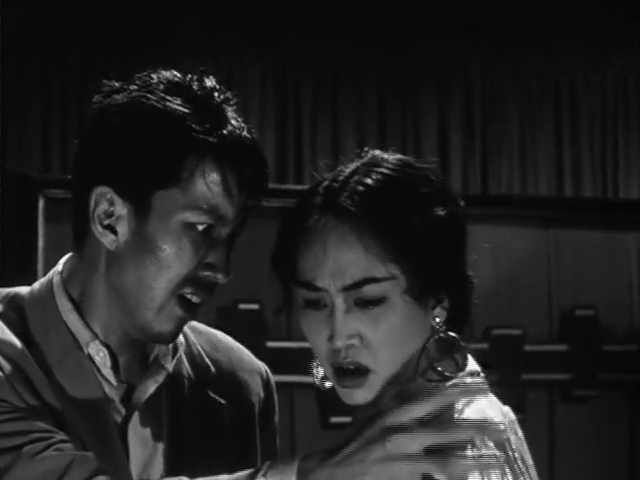
East Palace, West Palace (东宫西宫, Zhang Yuan, 1996)

“The convict loves her executioner, the thief loves her jailer. We love you. We have no other choice.” the hero of Zhang Yuan’s beguiling, transgressive drama East Palace, West Palace (东宫西宫, dōng gōng xī gōng), whispers to his no longer sleeping guard. “I love you”, he later adds, “why don’t you love me?” turning the tables on an implacable authority and demonstrating that he too wields power. Considered the first Mainland film to deal directly with homosexuality, Zhang’s theatrical chamber piece is as much about the co-dependency of the oppressor and the oppressed as it is about gay life in post-Tiananmen Beijing while suggesting that in a sense submission too can be a weapon. 

Gay travel writer A-Lan (Si Han) is first challenged by a uniformed policeman in a public toilet. Staring at him intently, he stops A-Lan for no real reason, asking for his ID followed by a series of other personal questions with seemingly no law enforcement import before double checking if the bike outside is his and that he has a proper permit for it. These acts of hostility begin a cat and mouse game between the A-Lan and law enforcement, another policeman, Shi Xiaohua (Hu Jun), almost desperate to come up with a reason to arrest him on raiding the park, a popular spot for cruising, after dark. But as he leads him away, A-Lan suddenly plants a kiss on the policeman’s cheek and taking advantage of his momentary shock makes his escape. 

During in the arrest, meanwhile, Shi and the other policemen had a made a point of insulting each of the men who have not actually done anything illegal under the Chinese law of the time, beating them or forcing them to beat themselves, ordering them to squat on the ground, and even threatening to call one frequent offender’s place of work. As Shi often will, the police refer to the men as “despicable” and the “dregs of soceity”, yet A-Lan is in a sense empowered by his submission in allowing himself to be arrested before subsequently escaping having planted the seeds of his seduction. He flirts with danger in mailing Shi a book with the inscription “To my love, A-Lan” and thereafter deliberately gets himself arrested, later running away from Shi only in the desire to be chased by him.  

Hugely reminiscent of Kiss of the Spider Woman, the majority of the film takes place within the confines of the park’s police hut occupied only by A-Lan and Shi, a prisoner and a guard. Yet as in the Peking opera story A-Lan repeatedly quotes, elegantly recreated in Zhang’s theatrical shifts into fantasy, the two roles are to an extent interchangeable. Shi thinks he’s the guard, that he exercises authority over A-Lan, but A-Lan is also manipulating him, trapping Shi within this space and drawing him towards a recognition of his own latent desires, the same desires that were aroused when he hassled him in the public toilet. While Shi, the guard though no longer in uniform, is constrained by authority, A-Lan, the prisoner, is free in embracing his essential self and weaponising the essence of his power in the choice to submit as reflected in his masochistic desires. “It is not despicable. It is love” he insists on being challenged by Shi after detailing his BDSM encounter with a wealthy man, echoing his previous reminders that “What I write might be trash. But I am not”, refusing to allow Shi to degrade him even while taking pleasure in submitting to authority. 

Even so, he declares himself conflicted in having married a woman presumably for appearances’ sake something of which many in his community do not approve and leaves him both guilty in his treatment of his wife and disappointed in himself. When Shi barks “explain yourself” he details his life as a gay man from his first sexual experience in which he pretended to be a woman to being assaulted by thugs after sleeping with a factory boss adding only that “this kind of experience makes life with living”. “We all march to a different tune” he tries to explain to Shi, individual but also identical. He mentions another regular to the park he describes as a transvestite but in the language of today might better be thought of as transgender, A-Lan explaining that she enjoys wearing women’s clothes but is different from the men in the park. She does not make love to them, and they do not bother with her, A-Lan insisting that she too has her own beat to which to march as does Shi even in his increasing confusion. 

Shi wields his handcuffs, the relationship between the pair mediated through them just as that between the guard and beautiful prisoner in his story is mediated through chains, but eventually places the cuffs on each of their hands locking them together in an intense embrace. The guard cannot exist without the prisoner, nor the prisoner without the guard. “He will no longer escape from his love for her” A-Lan ends his story, the guard releasing his beautiful charge while she decides to return to him each of them knowing they are trapped in melancholy waltz of love and hate. Highly theatrical and scored with a persistent note of dread, Zhang’s beguiling drama hints at the sadomasochistic interplay between authoritarian power and a subjugated populace while allowing its hero to mount his resistance only through deriving pleasure from submission. 


East Palace, West Palace screens at the BFI on 27th May as part of this year’s Queer East. It is also available to stream in many territories via GagaOOLala.

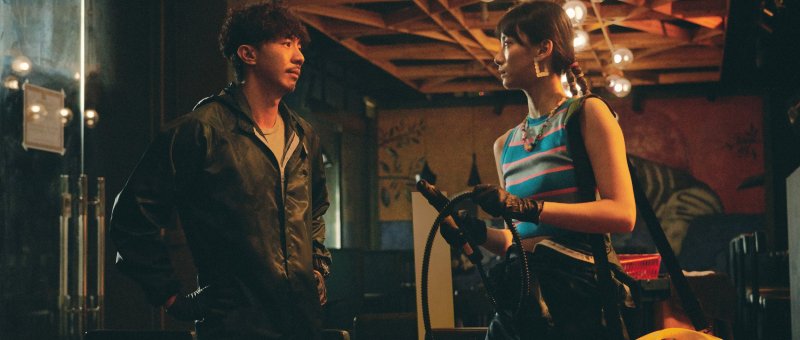
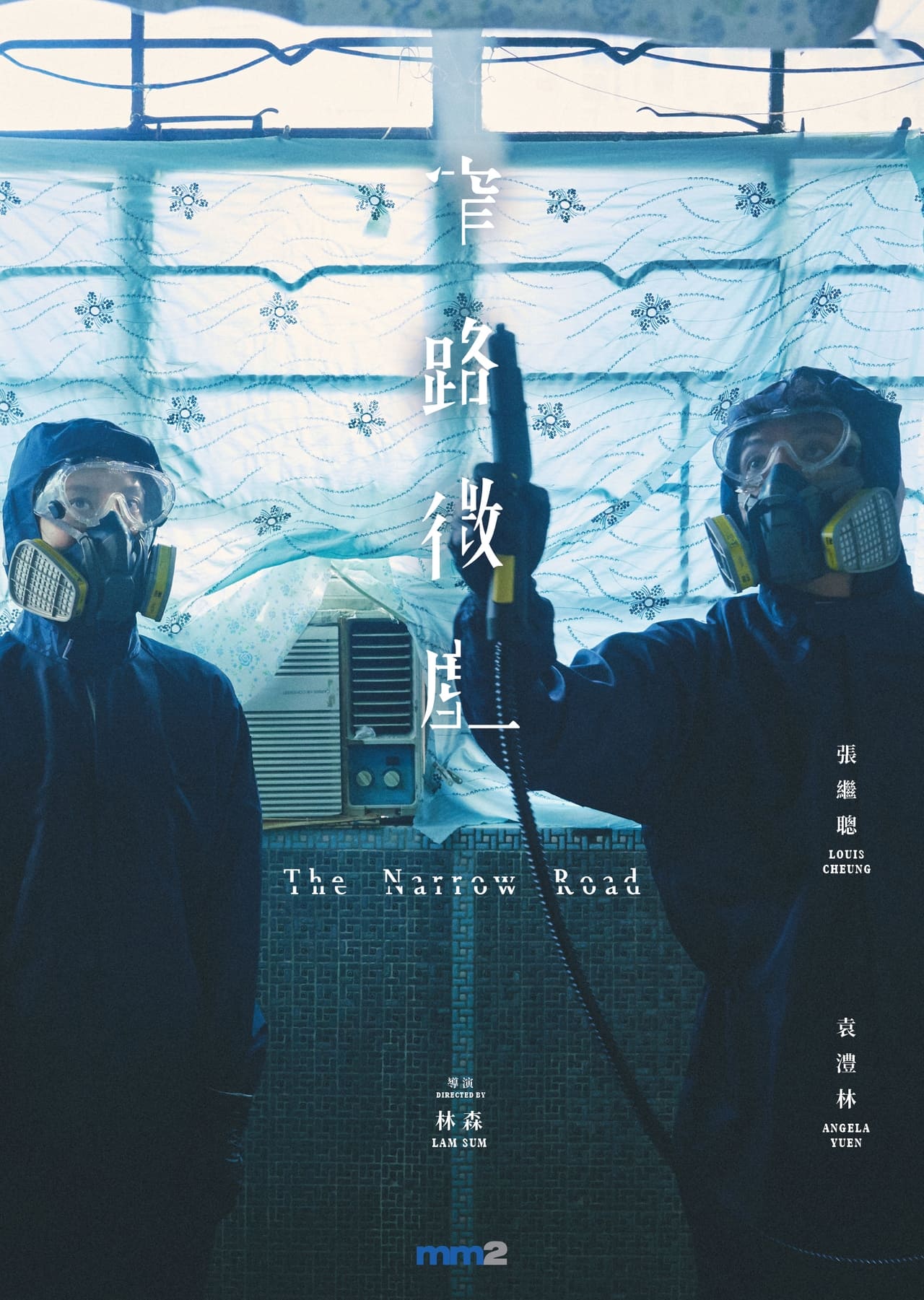
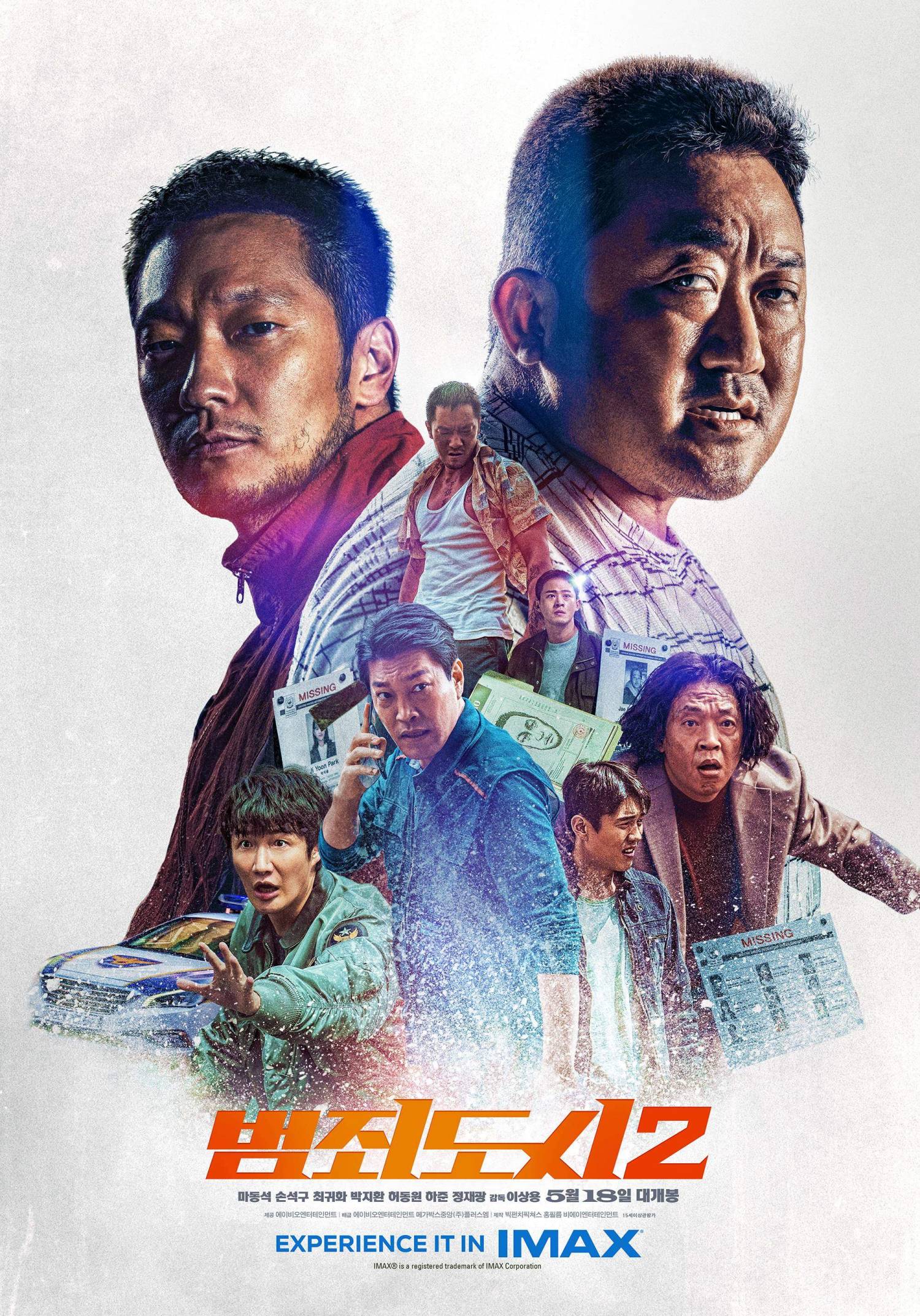
Boonie Bears: Back to Earth (熊出没·重返地球, Lin Huida, 2022)

One of the biggest animation franchises in Mainland China, Boonie Bears began airing as a children’s cartoon show back in 2012 and has produced over 600 episodes across 10 seasons. The latest movie, Boonie Bears: Back to Earth (熊出没·重返地球, xióng chūmò: chóngfǎn dìqiú), is the franchise’s eighth theatrical movie and again proved popular at the box office on its Lunar New Year release. As might be expected for a series revolving around woodland creatures, the first antagonist was a logger who later came round and teamed up with the animals to protect the forest, the franchise has a strong if potentially subversive ecological theme which reverberates throughout Back to Earth. 

In fact, the chief job of unreliable younger brother bear Bramble (Zhang Bingjun) is sorting rubbish into the appropriate bins to keep the forest tidy. Daydreaming he casts himself as superhero battling a giant trash monster symbolising the destructive effects of the buy now pay later philosophy of the modern consumerist society. In any case Bramble’s cheerful days of chasing ice cream and just generally enjoying life in the forest are disrupted when he’s almost wiped out by bits of a falling spaceship and becomes the repository for all of its knowledge. This brings him to the attention of alien space cat Avi who needs his brain to locate his ship but is also being chased by a gang of nefarious criminals led by an amoral entrepreneur who wouldn’t let a little thing like the survival of the Earth interfere with her desires for untold wealth and power. 

As it turns out Avi also has a few lessons to offer as to the costs of irresponsible industrialisation having been born in an ultra-advanced cat society buried deep in the Earth’s core. The over mining of a valuable mineral soon destroyed the environment forcing the cats to flee into space looking for a new home. Avi hopes to return to his home city which lies abandoned as a kind of cat Atlantis accessible only with a valuable necklace which he needs Bramble’s help to retrieve. To begin with, the relationship between the pair is less than harmonious, though they soon bond in their shared quest to stop the evil corporate entities taking over the ancient technology and causing the death of the forest through their insatiable greed. 

Then again as one of the other creatures had put it, “you can’t rely on Bramble”, cross that he never pulls his weight and is always off in a daydream or chasing the next tasty treat. While Avi poses as an adorable kitten trying to convince Bramble to use his brain to help get the spaceship back, the others become even more disappointed in him believing that he’s taken against the cat out of jealously and resentment. Yet the lesson that everyone finally has to learn is that it doesn’t matter if Bramble isn’t the smartest or most hard working because he is strong and kind and has plenty to offer of his own. His gentle bear hug eventually saves the world in healing the villainess’ emotional pain so she no longer has any need to fill the void with cruel and ceaseless acquisition. 

Aside from the gentle messages of the importance of protecting the forest from the ravages of untapped capitalism, after all “this is our only homeland”, the film packs in a series of family-friendly gags including a surprising set piece in which Bramble dresses up as Marilyn Monroe to recreate the famous subway vent moment from The Seven Year Itch, while a pair of eccentric scrap merchants with a taste for rhyme provide additional comic relief. Even in the villains get a lengthy cabaret floorshow to mis-sell their evil mission to the guys from the forest belatedly coming to Bramble’s rescue. In any case, thanks to everyone’s support and encouragement Bramble finally gets to become the hero he always wanted to be proving that he’s not unreliable and even if he doesn’t always succeed is doing his best. Boasting high quality animation, genuinely funny gags, some incredibly catchy tunes and well choreographed musical sequences along with a warmhearted sense of sincerity, Boonie Bears: Back to Earth is another charming adventure for the much loved woodland gang.


Boonie Bears: Back to Earth is in UK cinemas from 27th May courtesy of The Media Pioneers (screening in a family-friendly English dub).

Original trailer (no subtitles)

A Distant Place (정말 먼 곳, Park Kun-young, 2020)

A gay couple searching for a far off land of love and acceptance find their rural dream crumbling in Park Kun-young’s melancholy autumn drama, A Distant Place (정말 먼 곳, Jeongmal Meon Gos). As it turns out, you can’t outrun yourself nor an internalised sense of shame and if you can’t find a way to root yourself firmly in the ground you risk losing those close to you lashing out in anger towards a needlessly judgemental society. 

Jin-woo (Kang Gil-woo) is indeed a man on the run, chased out of Seoul by his internalised homophobia and seeking a quieter life in a small mountain town with fewer people around to feel rejected by. Having studied fine art, he now works as a hired hand on a sheep farm where he’s bringing up his daughter Seol (Kim Si-ha) while waiting for his partner, Hyun-min (Hong Kyung), a poet, to join him. Once he arrives, everything goes well for them living a discreet life in the mountains where no one it seems has noticed that they are a couple though as we later realise the farmer, Mr Choi (Ki Joo-bong), and his daughter Moon-kyung (Ki Do-young) have figured it out and little care choosing to say nothing. The real drama begins, however, with another arrival in that of Jin-woo’s estranged twin-sister Eun-young (Lee Sang-hee) who as we discover is actually Seol’s birth mother having abandoned her to Jin-woo only to come back to try and reclaim her having married and opened a cafe. 

Jin-woo’s conflict lies partly in wondering if he’s being selfish in his desire not to return Seol to Eun-young while genuinely believing that a life of isolation in the mountains is better for her longterm future. His ideal is undercut when Seol upsets another child at a formal occasion by snatching his toy away from him, hinting at the costs of her lack of socialisation spending almost all of her time on the farm helping with the sheep or talking with Mr. Choi’s elderly mother (Choi Geum-Soon) who is suffering with advanced dementia. In a certain sense, each of them is trapped by their environment, the elderly grandma seeking escape in her small moments of lucidity. Moon-Kyung is beginning to fear her dreams of escaping small-town life will not come to pass while she has perhaps also missed the boat for becoming a wife or a mother snapped at by her grandmother in a moment of frustration. Her realisation that her crush on Jin-woo is misplaced on finding him in bed with Hyun-min is then a double moment of disillusionment leaving her only the vicarious position of becoming a surrogate mother to Seol who continues to refer to Jin-woo as “mama” rather than father. 

This framing in itself foregrounds the primacy of the traditional family in highlighting both the absence of a female caregiver and then by implication a father while simultaneously feminising Jin-woo as a man who is raising a child as we later find out with another man, if secretly. When the pair are accidentally outed, it not only strains the relationship between the two men but implodes Jin-woo’s dream of discreet country living. Though the townspeople had previously been friendly towards them, they find themselves shunned in town, figures of gossip and ridicule. Having been essentially run out of Seoul by his internalised homophobia, Jin-woo begins to fear he has nowhere left to run. Hyun-min tries to convince him that he’s asking for too much, that they should live quietly and keep the peace, but his shame gets the better of him lashing out that he’s never felt comfortable with Hyun-min around always self-conscious and paranoid about what others may be thinking of him. 

As Hyun-min puts it in a poem, only the hope of a “distant place” keeps them going even as the road ahead crumbles at a rapid pace with the abyss creeping ever closer. While there are small rays of hope in the quiet acceptance of Mr Choi who has come to think of Seol as his own granddaughter, Jin-woo begins to fear that his distant place is beyond his reach and that no matter how far he runs he will never reach a point of comfort or happiness where he can live openly with the man he loves and the little girl he has raised since birth as his daughter. Figures of loneliness and disappointment haunt the otherwise idyllic landscape shattering the nurturing image of a simple life in the country but even as the film opened with an ominous death it ends in new life promising perhaps a new if uncertain dawn. 


A Distant Place screens at Genesis Cinema on 26th May as part of this year’s Queer East.

International trailer (English subtitles)

Being Mortal (来处是归途, Liu Ze, 2020)

A young woman finds herself haunted by a sense of erasure in Liu Ze’s moving family drama Being Mortal (来处是归途, lái chǔ shì guītú) adapted from the novel by Li Yanrong. As the title might suggest, the questions the heroine faces are those of mortality and of the realities of death and ageing in contemporary China as she struggles to decide what the best thing to do is when it comes to caring for her ageing parents. Highlighting both the social changes born of increasing modernity and the pressures of an ageing society, Liu’s drama has few answers but explores the strain caring for those who will not recover can place on those around them. 

At 30, Tian (Tang Xiaoran) makes the difficult decision to accept a job transfer and return to her hometown in order to help her mother, Wenxiu (Li Kunmian), care for her father, Jianguo (Zhang Hongjing), who has been suffering with dementia for the past few years. Though we do not hear much about her life in the city, it’s also true that part of the motivation for moving lies in her unsatisfying relationship with a married co-worker who refused to leave his family. A friend suggests that he may have been reluctant to make the move in part because of Tian’s responsibility to her father, viewing him as a burden he was unwilling to bear. At the wedding of a hometown friend, she rekindles a relationship with her high school boyfriend, Qin Mu (Shi Xiaofei), the two of them being the only ones among their classmates to have remained unmarried. But as both the romance and Jianguo’s illness progress, the need to care for him also places a strain on the couple’s relationship with constant confusion as to the shared responsibilities and uncertainty for the future. 

Tian does have an older sister, Hua (Wang Tan), who is already married and has a child of her own yet lives some distance away and is able to help only financially though her money is often refused. Feeling guilty and seeing the toll caring for Jianguo is taking on her mother and sister, Hua suggests that it might be time to consider a nursing home or else a professional carer but Wenxiu and Tian are reluctant believing they’d be abandoning him or failing in their responsibility of care. Even so the rapid progression of his dementia which intensifies when he is hospitalised with pneumonia places an increasing strain on the two women, Wenxiu at one point snapping and shouting at Jianguo after he has soiled himself. As the women argue, Qin Mu finds himself trying to clean the old man up only to be shooed away by a regretful Wenxiu after she’s pulled herself together and retreat to the bathroom where Tian can hear him retching. This momentary crisis brings the couple’s relationship to a crunch point, Tian telling Qin Mu he can leave and he doing so without much of a protest. 

Much of the drama revolves around the effects of Jianguo’s illness on those around him, but he often has heartbreaking moments of lucidity sobbing in terror and frustration the first time he wets himself as his wife and daughter even in their own shock and confusion do their best to help him. “I’m completely worthless” he later cries, returning a pained gaze and muttering “I’m sorry” before trying to stab himself in the neck after hearing Wenxiu snap “stop tormenting me” in a moment of frustration. Meanwhile he keeps saying that he wants to go home, back where they lived years ago haunted by the figure of a small boy reminding him of the son they lost to illness in childhood. 

Tian is perhaps lucky in that despite the One Child Policy, she does have a sister and is not entirely alone even in the spectre of her impending orphanhood no matter how her relationship with the similarly burdened Qin Mu may turn out as he contends with his hardline former soldier father pent up with his own sense of embittered resentment. Nevertheless, Liu captures a sense of the despair among women like Tian facing a series of dilemmas in considering the best way to care for her parents as they age while also worrying for her own future in a sometimes uncertain society. Though essentially low key and naturalistic determined to present a sense of everyday ordinariness Liu’s sweeping transitions between moments in time along with flights into Chinese opera and the occasional dream sequence lend a note of poignancy to the familial tragedy at the film’s centre. 


Being Mortal streamed as part of Odyssey: a Chinese Cinema Season.

Original trailer (English subtitles)