The Many Faces of Ito (伊藤くん A to E, Ryuichi Hiroki, 2018)

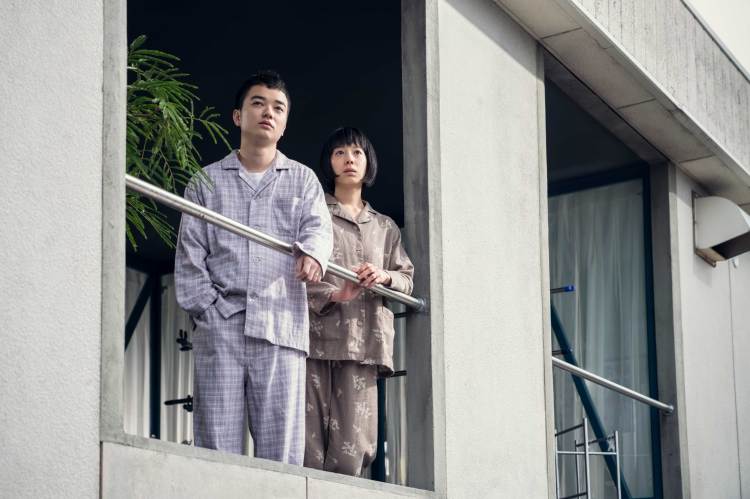
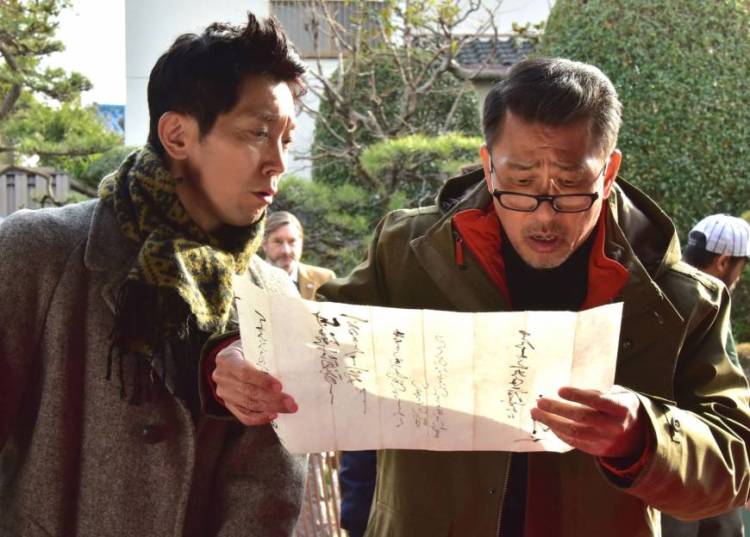
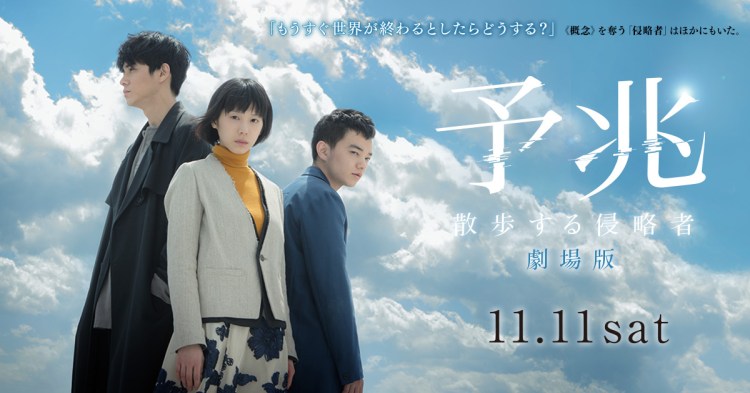
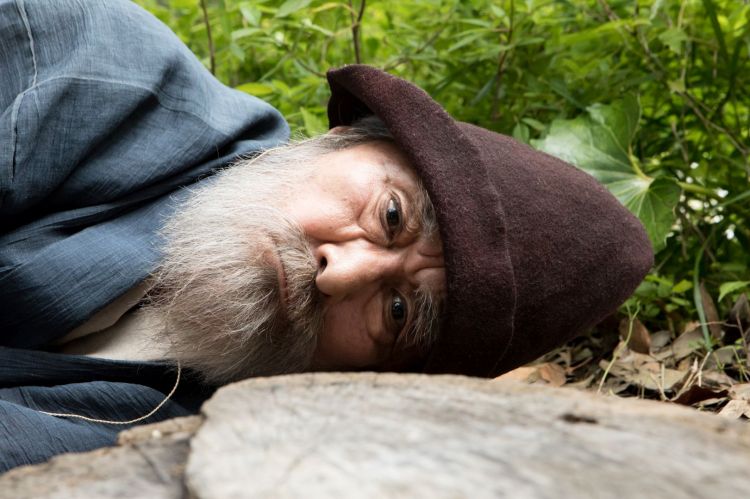
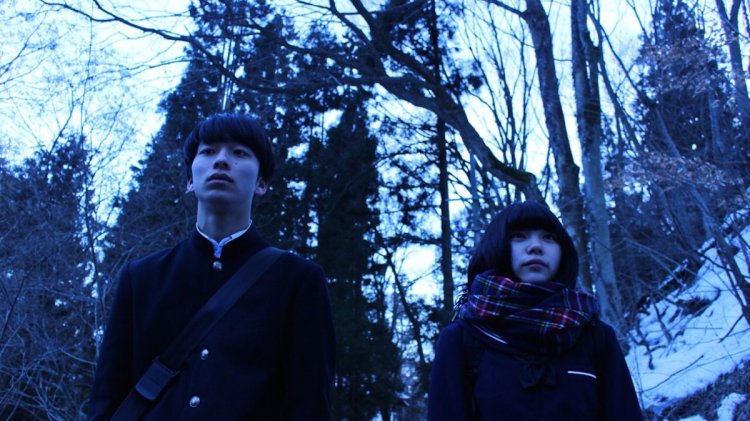
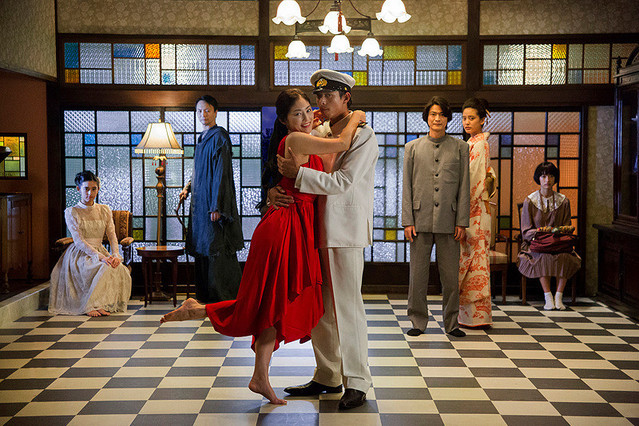
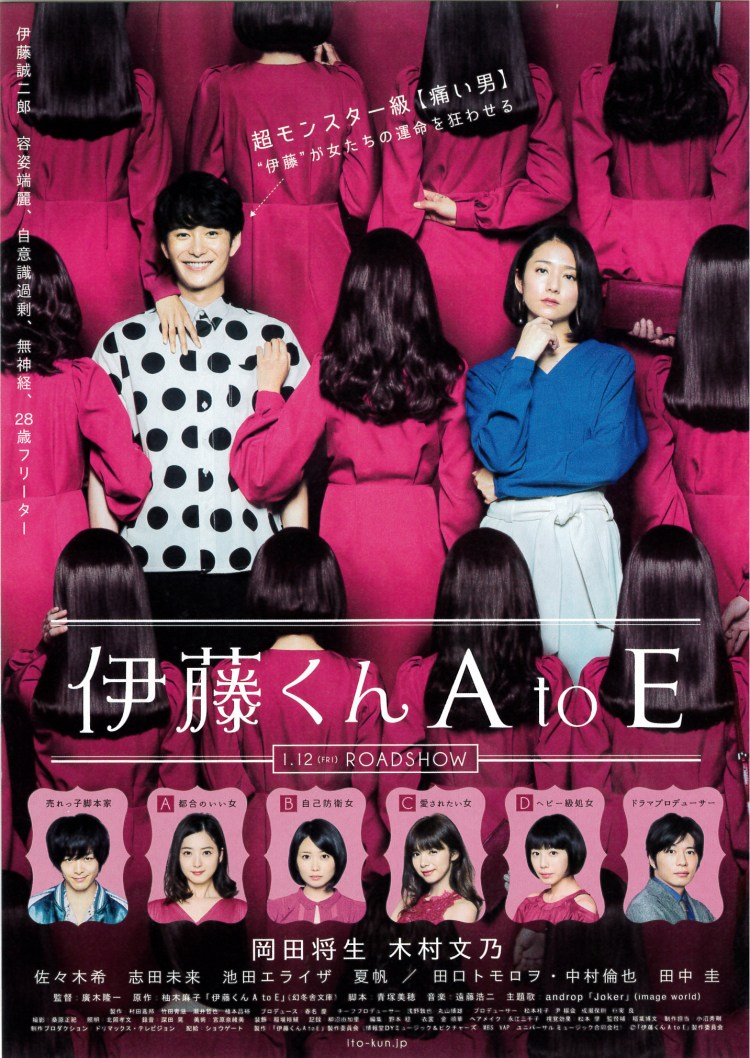
Many Faces of Ito posterRyuichi Hiroki’s career has been oddly varied, but he’s never been one to avoid straying into uncomfortable areas. Adapted from the novel by Asako Yuzuki, The Many Faces of Ito (伊藤くん A to E, Ito-kun A to E) explores the risks and rewards of modern existence through the prismatic viewpoint of five women messed around by the same terrible man as he seems to breeze through life buoyed up by the sense of superiority he gains through their unwavering appreciation. Then again perhaps his air of ultra confidence is yet another mask for his insecurity as he paints every failure as a conscious rejection, sneering superciliously at the desires of others while wilfully negating his own. Our guide, a blocked TV drama scriptwriter, may have imagined this entire scenario as she attempts to break through her own sense of painful inertia but it remains true that the world she inhabits is far from kind to women seeking the key to their own destinies.

32-year-old Rio (Fumino Kimura) won a scriptwriting competition which developed into a top TV hit some years previously but has struggled to replicate her success and now makes her living teaching screenwriting and acting as an expert on love for women captivated by the idealised romance of her debut “Tokyo Doll House”. Her longterm editor/producer (and former lover but that’s a problem we’ll get to later) encourages her to mine her romance sessions for possible material through interviewing women with unusual romantic dilemmas on the pretext of helping them find a way out. Rio, now jaded and cynical, is of a mind to make money from other people’s misery and the advice she gives is less in service of her clients and more in that of the story as she tries to engineer “naturalistic” drama but as in all things, her writing becomes increasingly personal and she is in effect in dialogue with herself.

Unbeknownst to Rio, each of the four women she decides to interview is involved with the same man – Ito (Masaki Okada), who is, because coincidence is real, a student in her screenwriting class. With his patterned black and white shirts and handsome yet somehow anonymous appearance, Ito is earnest but superior, shifting from over eager puppy to dangerously possessive stalker. 28-year-old Tomomi (Nozomi Sasaki) has been carrying a torch for him for five years longing for an intimacy that will never develop while Ito insensitively tells her about his crush on a workplace colleague, Shuko (Mirai Shida). Shuko is in no way interested in his advances but Ito refuses to take no for an answer, eventually forcing her to leave the company because of his constant harassment. Wounded, he retreats to university “friend” Miki (Kaho) who he knows has been nursing a long time crush and is shy and naive enough for him to push around without much resistance. Luckily (in one sense) Miki has a devoted roommate, Satoko (Elaiza Ikeda), who is keen to look out for her friend but there is perhaps more to this relationship than meets the eye and Satoko’s jealously eventually pulls her too into Ito’s web of romantic destruction.

The question Rio finds herself asking if each of these women, and she herself in her failure to get over the betrayal of her producer Tamura (Kei Tanaka) who eventually broke up with her to marry someone else, is in a sense complicit in their own inability to move forward. It’s almost as if their collective sense of low self-esteem and fear of rejection has conjured up its own mythical monster in the figure of Ito who displays just about every male failing on offer. He uses and abuses and when rejected proudly states that he never wanted that anyway because he’s simply far too good for whatever it is that you might prize. Yet through battling his cruelty and emotional violence, each of the women is able to cut straight through to the origin of all their problems, correctly identifying what it is that ails them and committing to moving forward in spite of it even if the part of themselves they most feared was the one the saw mirrored in Ito’s insecurities.

The “battle” between Ito and Rio comes out as a draw which sees them both lose but only provokes a final confrontation which is as much with Rio herself as it is with the Itos of the world. Ito rejects his failure, sneers at the TV industry and claims to have loftier goals but Rio has figured him out by now and correctly assesses that his life philosophy is to back away from the fight to avoid the humiliation of losing. Pushed by the unexpectedly profound interventions of fellow writer KazuKen (Tomoya Nakamura) who reminds her that she was once a writer unafraid to bare her soul, Rio realises that a life without risk is mere emptiness and the soulless (non)existence of a man like Ito is no way to live. To be alive to is open yourself up to pain, but if you refuse to engage in fear of getting hurt you might as well be dead and if what you want is to make art you’ll have to lift the lid on all that personal suffering or you’ll never be able to connect. Each of our timid ladies finds themselves ready to stand tall, no longer willing to afford the likes of Ito the esteem which allows him to sail on through papering over his lack of self-confidence by sapping all of theirs. The masks are off, and the game is on.


Currently streaming on Netflix in most territories along with the companion TV drama.

Original trailer (no subtitles)
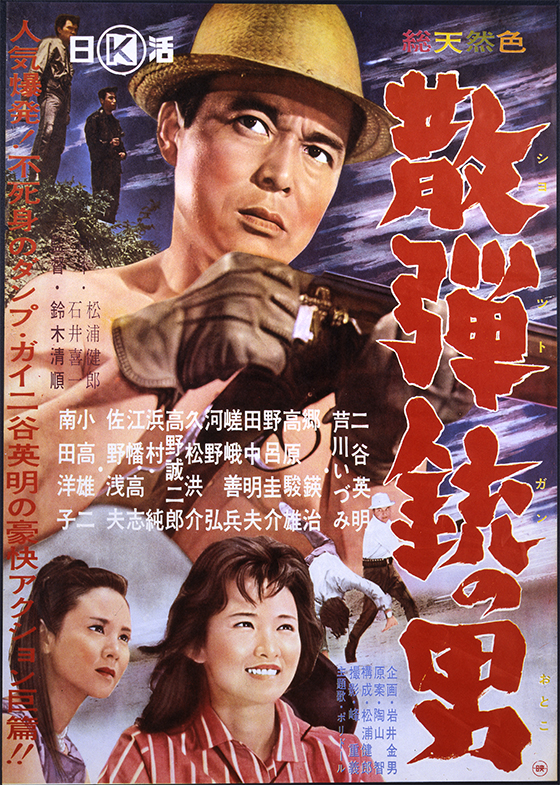
Man with a Shotgun (散弾銃の男, Seijun Suzuki, 1961)

Man with a Shotgun 1961Nikkatsu’s “Borderless Action” seemingly opened a portal to a world entire to be found within Japan itself. Man with a Shotgun (散弾銃の男, Shotgun no Otoko) is, as the title suggests, another tale of a wandering, gun toting hero though this time one less of aimless flight from failure, responsibility, or rejection than of revenge. Hideaki Nitani gets a (relatively) rare chance to strut his stuff as the lead in a full colour picture, perhaps incongruously starring as one of Nikkatsu’s singing cowboys but he does certainly lend his characteristic sense of gravitas and authority to an otherwise underwritten role.

Ryoji (Hideaki Nitani) rocks up at at rickety bridge looking for a nearby shrine only to be warned off by a grumpy old man in a van. You don’t want to go up there, he tells him, there’ll be trouble if you do. Ryoji is, he claims, a hunter and so he’s not afraid. After all, he’s still in Japan – it’s not as if the entire place is infested with lions and tigers. Then again it’s not exactly game he’s come to hunt.

When he reaches the shrine, Ryoji finds himself in a strange mini kingdom presided over by mill owner Nishioka (Akio Tanaka). The few locals who still live in the village mingle uncomfortably with the migrant work force who people the mill while Nishioka dominates the local economy by owning the only bar in town which is also the only place his largely male workforce have to blow off steam. After getting roughed up by three of Nishioka’s henchmen on the way into town, Ryoji makes the first of many enemies when he stands up to fellow drifter Masa (Yuji Kodaka) when he threatens to throw a man’s daughter to the sex starved labour force unless he pays his debts. The sheriff, an ineffectual local, gets himself seriously wounded meaning the position becomes temporarily open. Nishioka, originally a “benevolent” dictator, is in danger of becoming less so when it is suggested he also form a police force given that the state authorities can’t be bothered with such a remote little village. Ryoji doesn’t quite want to stand for that and volunteers only for Masa to do the same, but the argument is eventually settled to one side of their continued male posturing.

As far as westerns go, Man with a Shotgun leans heavily towards colonial romance and adventure rather than your typically arid, dusty world of saloons and ranches. Lush and green, the small mountain town smacks more of the jungle as does Nitani’s idiosyncratic costume which arrives somewhere between chic safari and fashionable cowboy. Claiming to be a “hunter” Ryoji wanders around with self satisfied smugness, certain that he’s bringing justice to this lawless town all while he makes investigations into the matter which sent him wandering in the first place. Of course, while he’s here, there are other damsels in distress including Setsuko (Izumi Ashikawa) – the younger sister of the sheriff’s late wife, apparently raped and killed by “drifter” bandits.

“Drifters” turn out to be the scapegoated big bad as the migrant workforce quickly take over this little town, making trouble in the bar and hassling the locals, only the locals don’t seem to mind as much as they say they do. There’s trouble at the mill, but not quite the kind that might be imagined. Nishioka has his sticky fingers in some nasty business which also involves not just migrants but actual foreigners and illegal activity on a grand scale. As it turns out, some people are in on the action and some aren’t, and Nishioka is currently making a few calculations as to how to “eliminate” a few inconveniences – something to which he thinks Ryoji and his sparring partner Masa might turn out to be the perfect solution.

Like many a Nikkatsu hero Ryoji is a noble sort, something which engineers for him a happier ending than many get even if it has to be bittersweet to hint at possible followup instalments where Ryoji takes names and fights crime in other small towns. Nevertheless, given the choice he opts for the cool guy conclusion of firing into the air and casting his burdens away rather than damning himself forever in becoming what he hates. Shooting in colour even if not quite with Nikkatsu’s A-list, Suzuki doesn’t get much scope to flex his muscles but does make pointed use of painted backdrops coupled with location shooting, as well as doing everything he can to bring out Nitani’s cowboy cool and adding in a number of B-movie western cliches from letters delivered by a knife thrown into a door to the constant refrains of the title song. Still even if it largely lacks Suzuki’s anarchic touch save for the stylishly composed and absurdly humorous bar room brawls, there’s plenty of fun to be to had with Ryoji and his shotgun as they protect the innocent and seek justice in an often unjust world.


Available as part of Arrow’s Seijun Suzuki: The Early Years Vol. 2 Border Crossings box set.

Original trailer (English subtitles)

Tokyo Knights (東京騎士隊, Seijun Suzuki, 1961)

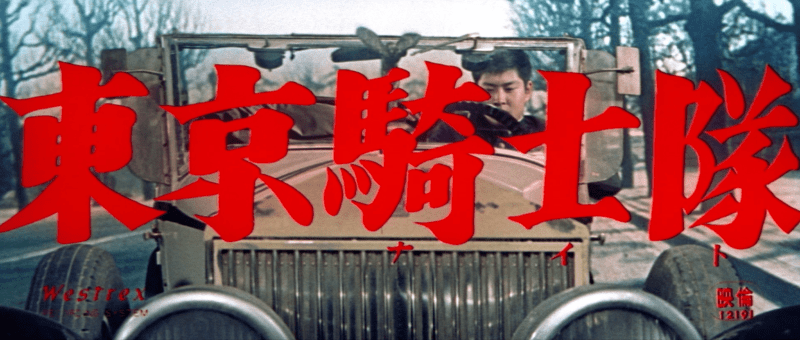
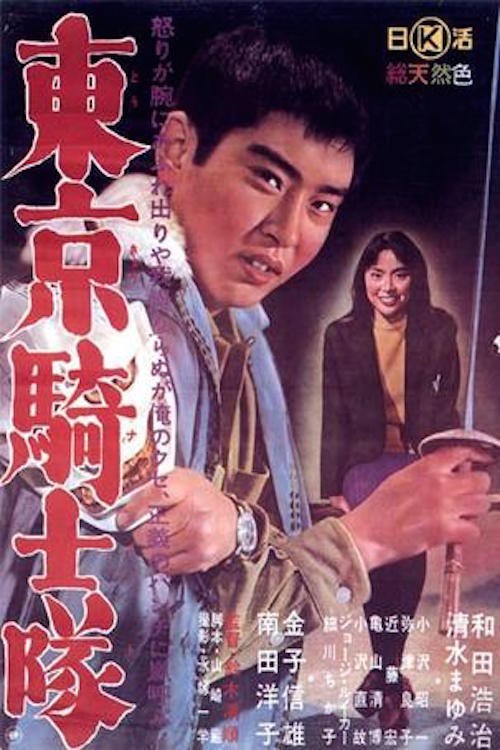
Tokyo Knights posterUnlike those from elsewhere, Japanese teen movies can often exist inside their very own bubbles in which the central characters refuse their coming of age stories and either die senselessly or simply carry on from their zany adventures as if nothing had really happened. Tokyo Knights (東京騎士隊, Tokyo Knight) definitely falls into the comedy category as its teen heartthrob hero, played by the then up and coming matinee idol Koji Wada, pulls a Hamlet in being called back from overseas studies to become CEO in waiting to his late father’s company only to suspect there’s something rotten in the state of Matsubara Construction. Quirky high school antics quickly give way to conspiracy thriller, but Koji (Koji Wada) remains steadfast and unwavering in the face of adversity as he faces off against the forces of darkness with little more than Nikkatsu spirit.

The film opens with a rather strange ceremony in which high school student Koji is instated as the new CEO of his father’s company. Koji’s dad apparently died suddenly in a freak accident meaning Koji has had to come home early from studying abroad in the US. Despite apparently being an amazing student who is good at absolutely everything and has joined all the after school clubs on offer, Koji has chosen the Catholic Elizabeth Academy because it’s well known as a coasting school where you can graduate with average grades. Fairly low attainment goals might be just as well because Koji is about to have his hands full with another mission. He’s convinced his dad’s death wasn’t an “accident” and he suspects his deputy, Mishima (Nobuo Kaneko), who is also getting close to his mum, might know more about it than he’s letting on.

In the grand tradition of heroes in Japanese teen drama, Koji has just found himself at the centre of a huge and dark conspiracy involving dodgy yakuza construction deals, blackmail, and murder. He does not lose heart or look to the grown ups for help but decides to handle the problem himself, settling back into the Hamlet-esque role he’s been assigned in neatly setting traps for the treacherous Mishima only doing it with a little more cosmopolitan flair carried back from abroad. Swapping roles like one of his much loved Noh costumes, he then becomes a kind of Romeo to the high school darling Yuriko (Mayumi Shimizu) whose dad, unbeknownst to her, turns out to be a horrible gangster who might be involved in the nefarious plan to take over the family firm. Enjoying a minor romance with the melancholy Yuriko, Koji considers the best way to get revenge and expose evil while protecting his mother, surrogate little sister figure, and his newfound love (?) Yuriko who will undoubtedly suffer now that she knows what kind of man her father really is.

Suzuki apparently incited the wrath of studio bosses when he took a serious crime script and turned it into an anarchic teen comedy but then you have to wonder what they thought it was he would do with it. The impossibly cool Koji is certainly an unrealistic hero, presented unironically he’d be sure to irritate – guys like Koji are, after all, more usually the antagonist set up to make our imperfect everyman feel inferior while he progresses towards some kind of self actualisation as a result of the standard narrative. Koji is, however, heroic and easily likeable as he assumes complete control, handling every situation with practiced ease and remembering to remain kind and just while he does so. He even stops to listen to his mother’s problems, sympathising with her when she reveals her unhappiness with his father, and urging her to grasp happiness wherever she sees it without worrying whatever he or anyone else might think.

Perhaps because of the relative simplicity of the plot, and the opportunity to shoot in colour, Suzuki flexes his muscles a little more than usual in adding in a fair few post-modern techniques including on screen graphics such as a series of large question marks zooming out of the major players Koji suspects may be involved in his father’s death and making a joke out of the need to include the songs of the day with frequent cuts to a teen cabaret club. For all of the tale’s darkness and almost Shakespearean overtones, Suzuki keeps his tongue firmly in cheek with a cartoonish sense of fun and lightness, allowing our heroes to emerge from their ordeal fairly unscathed while honour and justice are preserved. Who knew Catholic school could be so much fun?


Available as part of Arrow’s Seijun Suzuki: The Early Years Vol. 2 Border Crossings box set.

Original trailer (English subtitles)

Neuchâtel International Fantastic Film Festival (NIFFF) Confirms 2018 Lineup

Inuyashiki Banner

The Neuchâtel International Fantastic Film Festival (NIFFF) has long been a champion of East Asian cinema and returns for 2018 with another exciting selection of recent hits from China, Indonesia, Japan, Korea, and Thailand.

China

Operation Red Sea

  • Operation Red Sea – a team of elite special forces soldiers handles the extraction of Chinese diplomatic staff caught up in a Middle Eastern coup in Lam’s Operation Mekong followup. Review.
  • Monster Hunt 2 – Wuba returns! When the Monster village is raided, the little radish guy finds himself on the run and is taken in by a cynical gambler and his Monster partner while he looks for his human mum and dad. Review.

Indonesia

Satan's slaves still 1

  • Satan’s Slaves – Joko Anwar revisits an Indonesian classic in which a family is torn apart by vengeful spirits. Review.

Japan

One Cut of the Dead still 1

  • Kasane – adaptation of the manga in which a young woman with a facial scar dreams of becoming an actress and inherits a magical lipstick that allows her to take on the appearance of anyone she kisses.
  • Woman of the Dunes – Hiroshi Teshigahara’s classic adaptation of the Kobo Abe novel in which a bug enthusiast finds himself trapped in a hole in the beach with a mysterious woman.
  • Hanagatami – Nobuhiko Obayashi realises a longtime ambition of filming Kazuo Dan’s 1937 tale of youth on the brink of war. Review.
  • Inuyashiki – Shinsuke Sato adapts the popular manga in which a mildmannered middle-aged salaryman unexpectedly gets superpowers. Review.
  • Laplace’s Witch – Takashi Miike adapts Keigo Higashino’s “scientific mystery” in which a series of mysterious deaths occur at a hot springs resort.
  • Mutafukaz – French/Japanese anime co-production in which a pizza delivery boy becomes embroiled in a conspiracy.
  • Liverleaf – a bullied student gets her revenge!
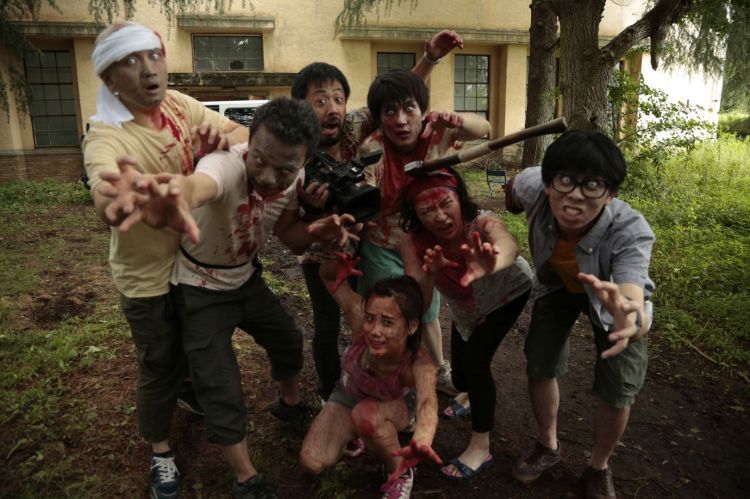
  • One Cut of the Dead – hilarious zombie action from Shinichiro Ueda.  Review.

Korea

Gonjian horizontal

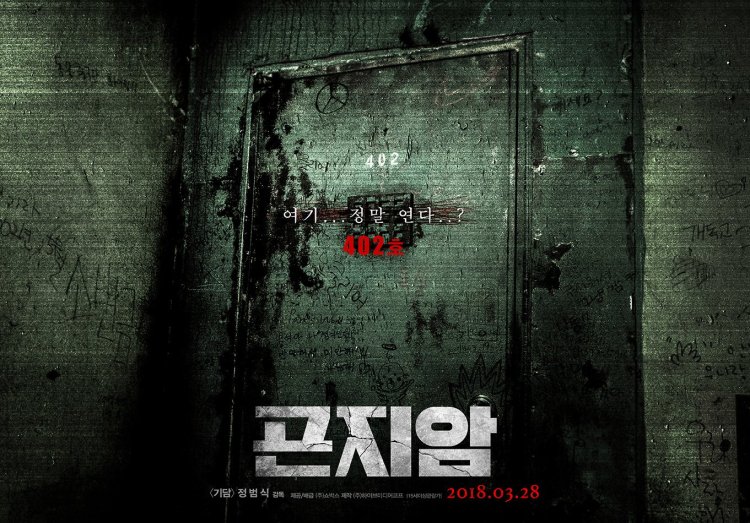
  • Gonjiam: Haunted Asylum – a team of social media stars venture into a haunted asylum in search of additional views and find more than they bargained for…

Thailand

bad genius still

  • Bad Genius – brainy teens plan a heist to scam the exams system. Review.
  • Premika – a vengeful karaoke obsessed ghost terrorises a group of guests at hotel!

The Neuchâtel International Fantastic Film Festival runs from 6th – 14th July 2018 in Neuchâtel, Switzerland. You can find the complete programme as well as screening times and ticketing information on the official website, and you can also keep up with all the latest news via the official Facebook page, Twitter account, Instagram, and YouTube channels.


Smashing the 0-Line (密航0ライン, Seijun Suzuki, 1960)

(C) Nikkatsu 1960

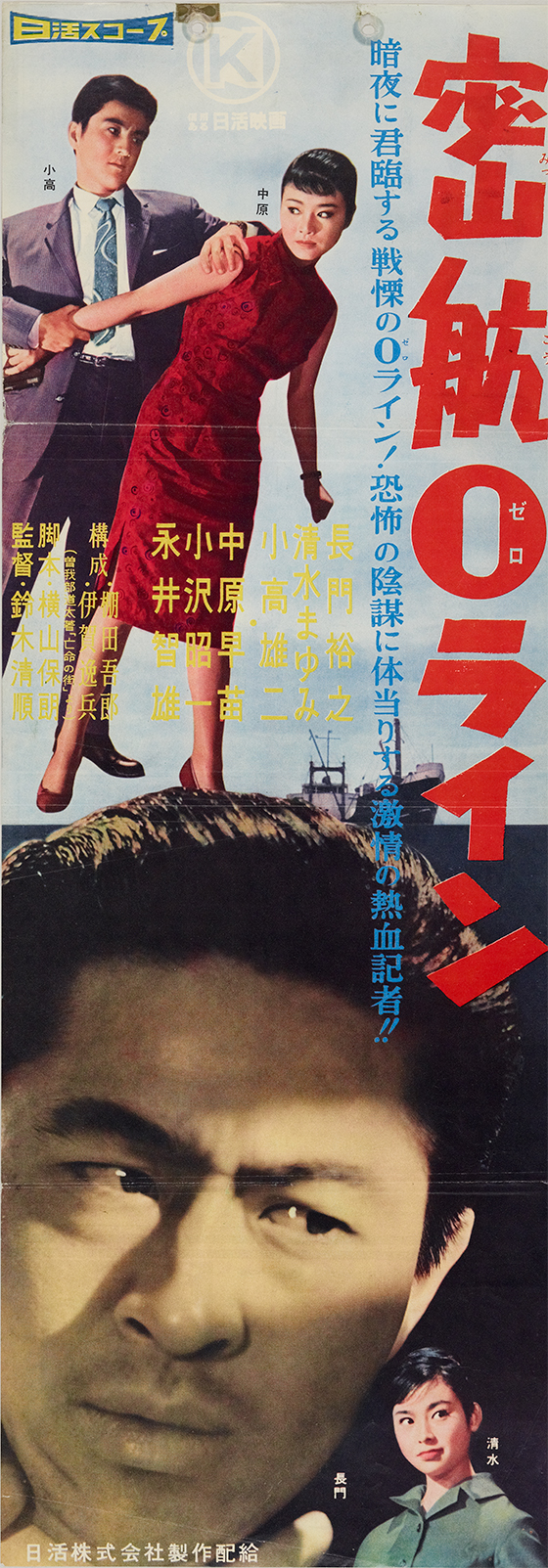
(C) Nikkatsu 1960Looking from the outside in, the Tokyo of 1960 seems to have been one of rising economic prosperity in which post-war anxiety was beginning to transition into a relentless surge towards modernity, but there also seems to have been a mild preoccupation with the various dangers that same modernity might present. Like The Sleeping Beast Within released just two months previously, Smashing the 0-Line (密航0ライン, Mikko Zero Line) centres on a mystery which leads straight back to Hong Kong and a dangerous, international smuggling ring – this time involving both drugs and people. Our heroes are both reporters, but at odds with each other despite being old friends in having diametrically opposed notions of professional ethics.
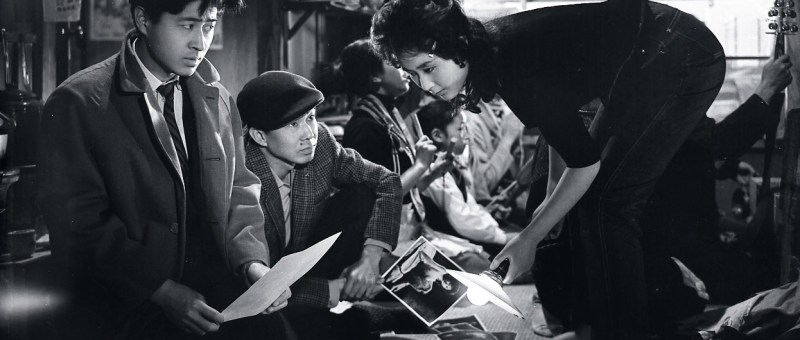

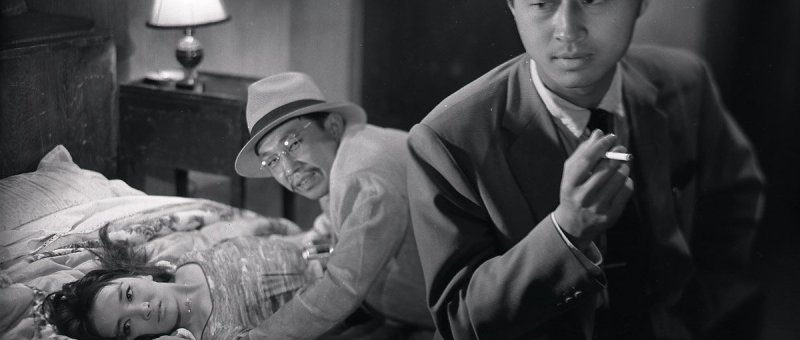
Katori (Hiroyuki Nagato), our anti-hero, is a man so desperate to get a scoop that he thinks little of engineering one. Thus we witness him making passionate love to a woman one minute before turning her into the police the next. The woman, Reiko (Sanae Nakahara), is also the little sister of one of his oldest friends, Saiko (Ryohei Uchida), whom he also decides to turn into the police in service of his story. Another old friend, Nishina (Yuji Kodaka), has also become a reporter but for a more respectable paper and is dating Katori’s little sister, Sumiko (Mayumi Shimizu), who is now the announcer at the local baseball stadium. Katori’s decision to turn on Reiko will have profoundly negative consequences for her former lover who is prepared to sacrifice all in pursuit of his goal.
Three men, once college friends, have chosen three radically different paths in the post-war world. Saiko has become a gangster while Katori has become an unscrupulous yet apparently publicly minded newshound and Nishina a pure hearted journalist who insists on doing everything by the book and abiding by conventional journalistic ethics. Yet despite himself, or possibly because of his love for Sumiko, Nishina tries to help Katori see the dangers of his extremely dangerous pattern of behaviour in which he has been content to use people like things to get what he wants.

Katori claims to be on the same side as Nishina – he thinks something is going sour in the city and that only he can stop it by exposing the various conspiracies in play. Katori’s chief fear is that Tokyo will become “another Hong Kong” – a crime ridden state of drug addled lawlessness (an extremely biased and seemingly inaccurate view of ‘60s Hong Kong but one that speaks of a certain fear of Japan’s new spot on the global scene). This particular conspiracy does indeed ping back to Hong Kong and the illegal traffic of drugs but also people heading in both directions. In the Japan of 1960, it was near impossible to get a passport and so smuggling yourself out might be the only way if you really need to get to Hong Kong which means you’ll need to pay a people trafficker to do it.

Katori, broadly, seems to think people trafficking is a bad thing he doesn’t want in Japan but is entirely blind to the same ways he himself uses people in pursuit of his goals. Not only does he bed Reiko (his friend’s little sister) only to make a speedy exit minutes before the police arrive, but he also palms off another mark on his informant only to turn them both in in hope of greater gain. He even manages to find time to seduce a doctor at the centre of the scandal who tries to pull a gun on him but later surrenders completely, only to fall victim to some proactive tidying up from the bad guys. Not content with sacrificing former lovers, Katori will not give in even for his sister, refusing to give up on his lead even when Sumiko is threatened with gang rape. When Nishina turns up and saves the day, Katori doesn’t even stop to ask how Sumiko is but walks off in the direction of the story with nary a second glance to his unconscious sister.

Yet Katori’s particular brand of nihilistic heroism consistently fails. His scoops are uninteresting and he only gets them by inserting himself into the story. Nishina, steadfast and honest – he even goes to the trouble of getting a proper passport to hide on his person in case he’s caught pretending to be a stowaway, is the one who gets there in the end, breaking the smuggling ring, rescuing Katori after he gets himself in trouble, and generally always being around to save the day. Mildly ironic themes of xenophobia aside, Smashing the 0-Line is a typically frenetic piece from Suzuki which offers only a few instances of unusual experimentation in his use of freeze frames and onscreen text but packs in plenty of punch in its amoral anti-hero and the dogged investigative reporter trailing along behind.


Available as part of Arrow’s Seijun Suzuki: The Early Years Vol. 2 Border Crossings box set (also features incisive audio commentary from Jasper Sharp providing a wealth of background information not just about Suzuki’s career but the state of the Japanese film industry at the time)
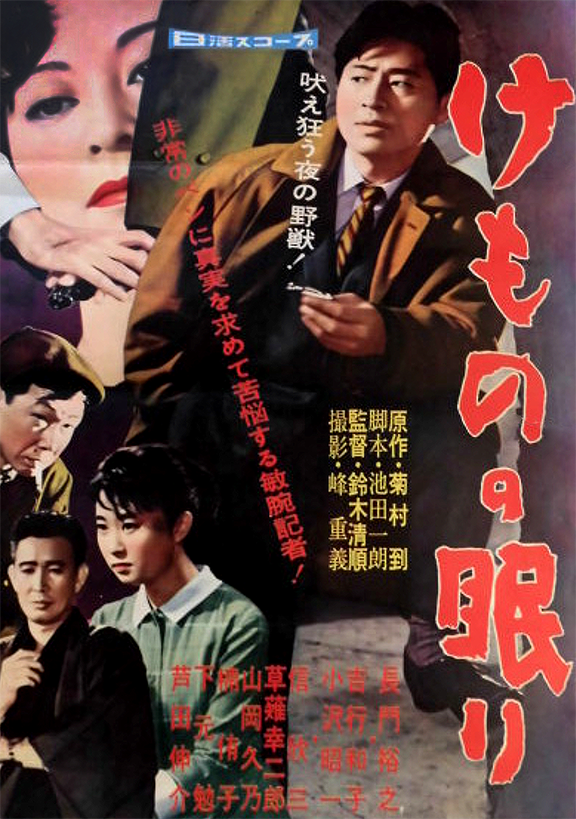
The Sleeping Beast Within (けものの眠り, Seijun Suzuki, 1960)

Sleeping Beast Within posterTo those of a “traditional” mindset, a woman’s career is her home and she never gets to retire. Men, by this same logic, are killed off at 60 and reborn into a second childhood where they get to indulge their love of fly fishing or suddenly discover an untapped talent for haiku. Seeing as a man often lives at the office, being excommunicated from his corporate family can seem like a heavy penalty for those who’ve devoted their entire existence to the salaryman ideal. So it is for the old timer at the centre of Seijun Suzuki’s 1960 mystery thriller, The Sleeping Beast Within (けものの眠り, Kemono no Nemuri) in which the sudden disappearance of a model employee sparks his daughter and her dogged reporter boyfriend to investigate, unwittingly discovering a vast drug smuggling conspiracy headed by a dodgy cult leader.

Veteran salaryman Junpei Ueki (Shinsuke Ashida) has been working in Hong Kong for two years and is finally coming home, to retire. His family have come to meet him but, as his daughter’s reporter boyfriend Kasai (Hiroyuki Nagato) points out, no one much else has turned up – so it is for those who don’t play office politics, claims one of the few colleagues who has arrived to greet the recently returned businessman. Ueki isn’t very happy about his retirement and believes he’ll be getting a part-time job at the same company only to be informed position has been “withdrawn”. When he doesn’t come home after his retirement party, something surely out of character for such a straight shooting family man, his wife and daughter become worried. Keiko (Kazuko Yoshiyuki) enlists Kasai to help figure out what’s happened to her dad only for him to suddenly turn up with a bad excuse and an almost total personality transplant. Kasai keeps digging, and the reporter in him loves what he finds even if the nice boyfriend wishes he didn’t.

Suzuki sets up what a good guy Ueki is when he brings back a modest ring for Keiko only for her to mockingly ask if her dad couldn’t have brought something a bit flashier. Ueki points out that the customs people might not have liked that so she jokes that he should have just smuggled it in like everyone else. Kasai reminds her that her dad’s not that kind of man, but two years in Hong Kong have apparently changed him. Having spent two years away from his family and 30 years slaving away at a boring desk job, Ueki feels he’s owed something more than an unceremonious kiss off and a little more time for gardening. The reason he ended up entering the world of crime wasn’t the money, or that he was blackmailed – it started because of his sense of integrity. He felt he owed someone and he did them a favour. It went wrong and he ended up here. His decision to join the gang came after he tried to “pay back” the money for some missing drugs only to realise that his entire retirement plan was worth only a tiny fraction of his new debt. Ueki felt small and stupid, like a man who’d wasted his life playing the mugs game. He wanted some payback, but his life as criminal mastermind turned out not to be much of a success either.

Trying to explain her father’s actions to the wounded Keiko, Kasai explains that everyone has a sleeping beast in their heart which is capable doing terrible things when it awakens. Ueki’s sleeping beast was woken by his resentment and sense of betrayal in being so cruelly cast aside by the system to which he’d devoted his life while the guys who broke all the rules – drug dealers, gangsters, and corrupt businessmen, lived the high life. One could almost argue that a sleeping beast is stirring in Kasai’s heart as he pushes his investigation to the limit, occasionally forgetting about the harm it will do to Keiko even whilst acknowledging the greater good of breaking the smuggling ring once and for all. Keiko too finds herself torn, confused and heartbroken by the change in her father’s personality though her mother feels quite differently.  Claiming that “a woman has no say in her husband’s work”, Keiko’s mum tells her daughter that a wife’s duty is to do as her husband says and avoid asking questions. Keiko has asked a lot of questions already and shows no signs of stopping now, even once she realises she won’t like the answers.

Despite the grimness of the underlying tenet that it doesn’t take much for honest men to abandon their sense of morality, Suzuki maintains his trademark wryness as Kasai and Keiko go about their investigation like a pair of pesky kids chasing a cartoon villain. Though the tale is straightforward enough, he does throw in a decent amount of experimentation with two innovative flashback sequences in which the flashback itself is presented as a superimposition with the person narrating it hovering at edges as if referring to a slide. The beast is quelled with a shot to the heart, but not before it wreaks havoc on the lives of ordinary people – not least Ueki himself who is forced to confront what it is he’s become and who he was prepared to sacrifice to feed the hungry demon inside him.


Available as part of Arrow’s Seijun Suzuki: The Early Years Vol. 2 Border Crossings box set.

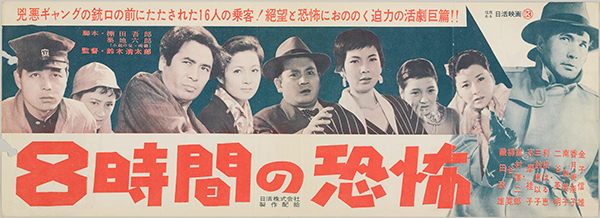
Eight Hours of Terror (8時間の恐怖, Seijun Suzuki, 1957)

(C) Nikkatsu 1957

Eight Hours of Terror poster 2Mr. Thank You meets The Lady Vanishes? Seijun Suzuki’s early slice of claustrophobic social drama Eight Hours of Terror (8時間の恐怖, Hachijikan no Kyofu) is another worthy example Japanese cinema’s strange obsession with buses, transposing John Ford’s Stagecoach to the Japanese mountains as a disparate collection of travellers is forced onto a perilous overnight journey in the hope of making their city-bound connection. Shooting in academy ratio and with a mix of studio shot interior action and on location footage, Suzuki keeps the tension high but maintains his detached sense of humour, finding the comedy in the petty prejudices and selfish preoccupations which take hold when civilisation is abandoned and bandits run free.

When a typhoon causes a landslide and halts the trains, the anxious travellers in a small mountain town are left with the choice of waiting until the tracks are clear or piling into a rundown rail replacement service and driving through the mountains overnight to meet their Tokyo-bound connection set to leave at midday. They are warned that there has recently been a bank robbery and the police have issued a general alert for loose bandits. Those whose journey is not “urgent” might do better to wait, but the bus is the only solution for anyone wanting to get back to the city in good time.

Tense as Hitchcock’s Lifeboat, the bus journey throws together a group of people who would never normally keep company with each other and largely have no interest in bonding in their shared hardship. Businessmen moan endlessly about potentially missed meetings while student radicals ironically mirror them, giving mini lectures on leftwing politics to a disinterested audience and trying to raise rousing choruses of Russian folk songs to lift the spirits of the masses. Meanwhile, a suicidal mother with a young baby sadly bides her time, a pan pan makes the best of a bad situation, an elderly couple frets anxiously about making it back to the city to see their seriously ill daughter, and a policeman escorts a man arrested for the murder of his former wife and her new husband.

The spectre of the war haunts them all – almost like a fare-dodging stowaway concealed somewhere on the back of the bus. The driver lost his son and grandchildren in Manchuria, the nervous lingerie salesman claims to have led a motorised brigade but is constantly terrified by every little set back, and the convict turns out to be a former army doctor battling some kind of post-traumatic stress disorder coupled with intense rage and regret for his post-war fate. The student radicals regard the presence of the bandits as a symptom of social breakdown (a narrative they can get behind in the general failures of capitalism) while the fat cat CEO and his ridiculously bejewelled wife angrily bark at the young men who can’t find work in the struggling post-war economy, attributing their economic difficulties to pure laziness and failure to slot into to the demands of a conformist society.

The twin dramas revolve around the intertwined fates of the young woman and her baby, and the bank robbers who eventually turn up and hijack the bus. Despite a need to pull together in the face of adversity, many of the passengers are content to ignore the pain and suffering of those around them in order to achieve their own selfish goals. The lingerie salesman, panicked by the delay, attempts to drive the bus over a rickety bridge the driver is currently checking for safety at the risk of everyone’s lives. Meanwhile the woman and her baby are missing. Later found seriously ill, the woman recovers but the baby struggles. The pan pan, who becomes the de facto leader of group, suggests getting the convict, a former doctor, to treat the baby but not everyone is happy about uncuffing a potential killer even if it means life and death for an innocent child. Similarly, after the pan pan helps to despatch one of the hijackers, many of the passengers want to drive off and leave her behind with only the convict eventually coming to her rescue. Despite all she’d done for them, the passengers reject her once again when directly confronted by the taboo nature of her work as a prostitute at the American bases after someone steals her purse and finds a picture of a black GI inside the fold.

The world outside the bus is changing. The pan pan fears for her future now the occupation is coming to an end, as do some of the young men who’d relied on the presence of the American troops for their employment. The CEOs and lingerie salesmen of the world are content to remain within their own bubbles, ignoring everyone else they protect their elitist status while the idealistic student activists are perhaps no better – they too want to take the hijackers’ ill gotten gains and repurpose them for social good by getting more leftists elected to parliament. The convict and the pan pan are the kindest and the most human, finding an unexpected bond in their shared humanism while the aspiring actress finds joy in treating everything like a fantastic adventure only to give up on her dreams of stardom after realising she’d be forced to kiss a bunch of guys she didn’t like in order to achieve them.

Mixing studio shot rear projection and location shooting of the bus making its precarious journey along winding mountain roads, Suzuki keeps the tension high as the passengers bicker and bond, eventually banding together despite themselves in order to despatch the final bandit who finally takes care of himself. Things do, however, end by going back to normal. Crisis averted, the same old prejudices return as soon as “civilisation” reappears on the horizon. 


Available as part of Arrow’s Seijun Suzuki: The Early Years Vol. 2 Border Crossings box set.

New York Asian Film Festival Confirms Complete 2018 Lineup

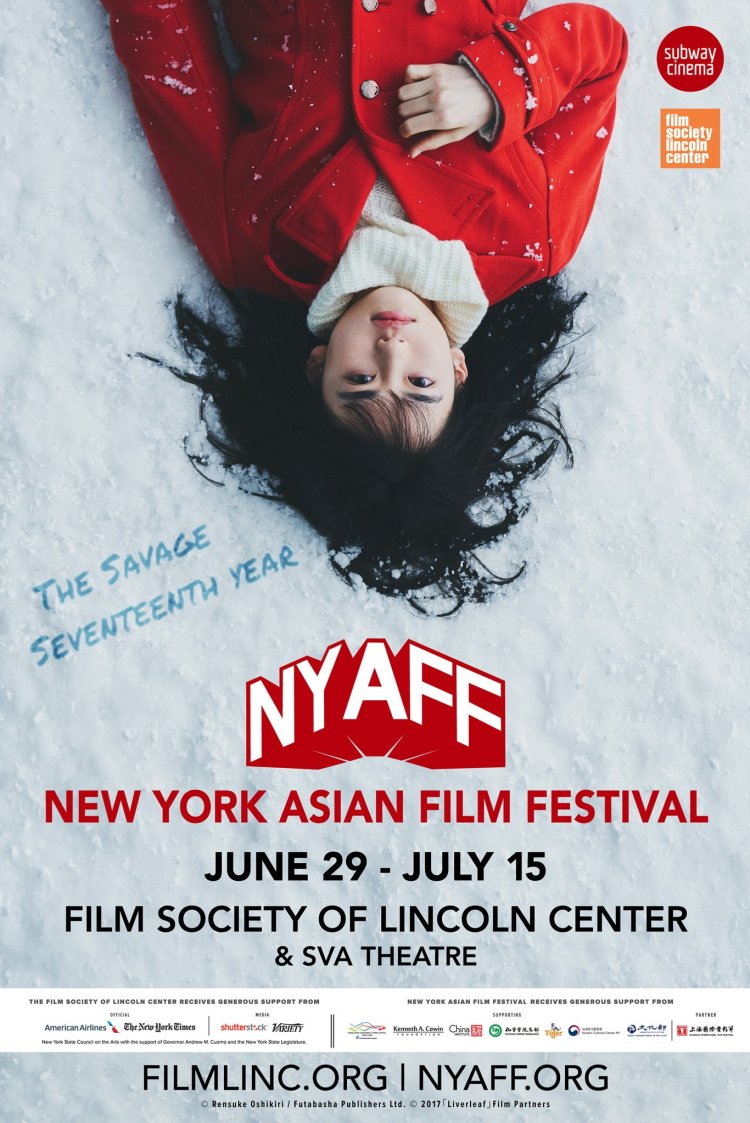
NYAFF 2018 posterThe New York Asian Film Festival returns for its 17th edition with a packed programme of recent hits from East Asia. This year’s festival will open with Masanori Tominaga’s Dynamite Graffiti and close with the World Premiere of Erik Matti’s BuyBust. Hong Kong’s Dante Lam will receive the Daniel A. Craft Award for Excellence in Action Cinema, while the Star Asia Lifetime Achievement Award goes to Japan’s Masato Harada and the Star Asia Awards will honour actors Kim Yun-seok and Jiang Wu.

The programme in full:

China 

wrath of silence horizontal

  • Dude’s Manual (Kevin Ko, 2018) – the first Mainland film from Taiwanese director Kevin Ko is a ribald sex comedy in which one student attempts to teach another a lesson in love. Q&A with director Kevin Ko
  • End of Summer (Zhou Quan, 2017) – coming of age football drama in which a little boy’s obsession with the world cup irritates his headmaster dad.
  • The Ex-Files 3: The Return of the Exes (Tian Yusheng, 2017) – final film the Ex-Files series.
  • Looking for Lucky (Jiang Jiachen, 2018) – a graduate student loses his professor’s dog and ropes in his dad to help him find it.  Director Jiang Jiachen in attendance.
  • The Looming Storm (Dong Yue, 2017) – a factory worker tries to solve a serial killing case in 1997. Q&A with director Dong Yue
  • Old Beast (Zhou Ziyang, 2017) – an old man spends his final years gambling and womanising.
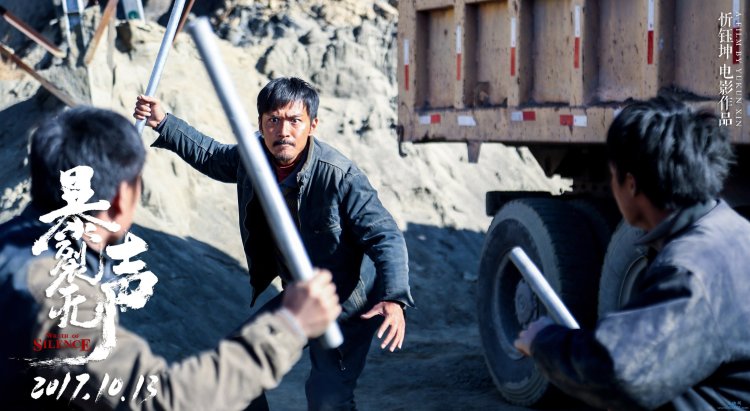
  • Wrath of Silence (Xin Yukun, 2017) – a mute minor searches for his missing son. ReviewQ&A with director Xin Yukun and actor Jiang Wu

Hong Kong Panorama

paradox still 1

  • Beast Stalker (Dante Lam, 2008) – Dante Lam’s 2008 thriller starring Nicholas Tse and Nick Cheung. Director Dante Lam will be in attendance
  • The Big Call (Oxide Pang, 2017) – noble policeman Ding goes in hard chasing villainous phone scammers in Oxide Pang’s high octane thriller.
  • The Brink (Jonathan Li, 2017) – Jonathan Li makes his feature debut with a metaphorical police procedural in the form of a salty sea shanty. Review.
  • The Empty Hands (Chapman To, 2018) – a young woman thinks she’s finally free of her father’s legacy only to realise he’s left half his dojo to a former pupil who says she can only have his share if she wins a fight. Q&A with actress Stephy Tang
  • House of the Rising Sons (Antony Chan, 2018) – musical biopic of ’70s Hong Kong band The Wynners directed by the band’s drummer Antony Chan. Preceded by a live performance. Q&A with director Antony Chan.
  • Men on the Dragon (Sunny Chan, 2018) – Francis Ng stars as the leader of a team of salarymen forced to join the company dragon boat team. Q&A with director Sunny Chan and actress Jennifer Yu
  • Operation Red Sea (Dante Lam, 2018) – a team of elite special forces soldiers handles the extraction of Chinese diplomatic staff caught up in a Middle Eastern coup in Lam’s Operation Mekong followup. ReviewQ&A with director Dante Lam and producer Candy Leung
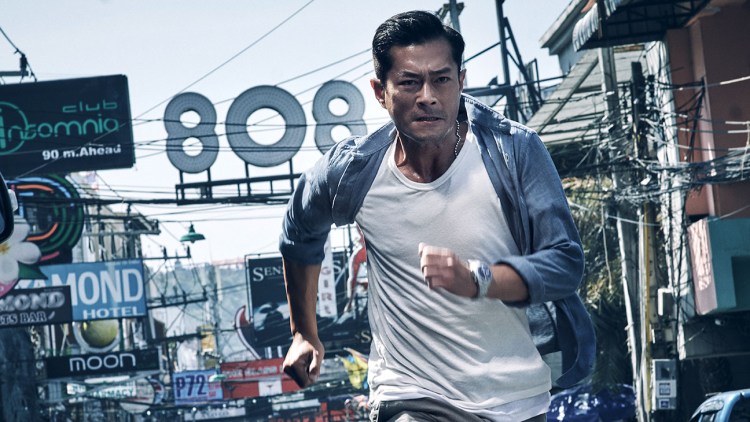
  • Paradox (Wilson Yip, 2017) – Louis Koo becomes embroiled in a conspiracy when his daughter goes missing in Thailand. Review.
  • Unbeatable (Dante Lam, 2003) – Nick Cheung stars as a down on his luck boxer starting over in Macau. Director Dante Lam will be in attendance

Indonesia

buffalo boys 2

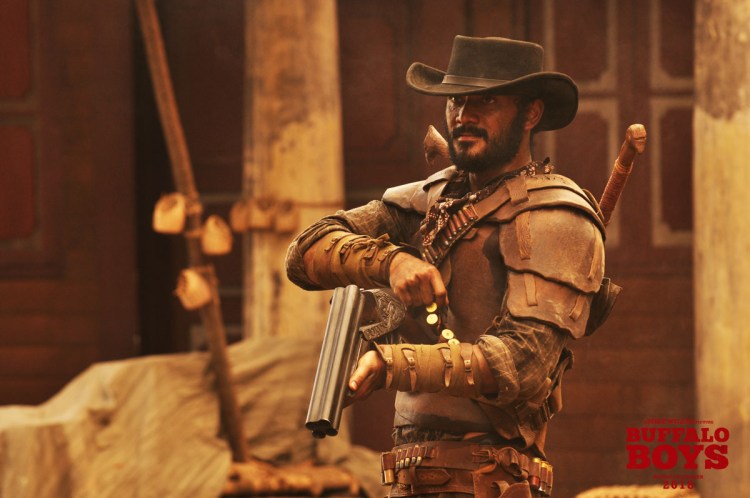
  • Buffalo Boys (Mike Wiluan, 2018) – Indonesian Western in which two brothers come back from California to avenge the death of their father. Q&A with director Mike Wiluan 

Japan

blood of wolves still 1

  • Blood of Wolves ( Kazuya Shiraishi, 2018) – Kazuya Shiraishi takes jitsuroku into the ’80s as Koji Yakusho’s rogue cop tries to keep the lid on a gang war. Review.
  • Dynamite Graffiti (Masanori Tominaga, 2018) – biopic of porn-mag mogul Akira Suei. Q&A with director Masanori Tominaga and actor Tasuku Emoto
  • The Hungry Lion (Takaomi Ogata, 2017) – a teenage girl is harassed when she is rumoured to be the girl in a sex tape featuring a high school teacher. Q&A with director Takaomi Ogata
  • Inuyashiki (Shinsuke Sato, 2018) – a mild mannered middle-aged man and an angry teen are given mysterious super powers and decide to use them in very different ways. Review.
  • Kakekomi (Masato Harada, 2015) – a small temple becomes an Edo era women’s refuge for those seeking escape from abusive marriages in Masato Harada’s light hearted drama. ReviewDirector Masato Harada will be in attendance
  • Kamikaze Taxi (Masato Harada, 1995) – Koji Yakusho plays a taxi driver taken hostage by a rage fuelled yakuza out for revenge on the politician who killed his girlfriend. Q&A with director Masato Harada
  • Liverleaf ( Eisuke Naito, 2018) – manga adaptation in which a teenage girl takes revenge on her bullies. Q&A with director Eisuke Naito
  • Midnight Bus (Masao Takeshita, 2017) – a bus driver’s second chance at life is ruined when his estranged ex-wife, salaryman son, and engaged daughter all come home. Director Masao Takeshita will be in attendance
  • One Cut of the Dead (Shinichiro Ueda, 2018) – real zombies suddenly invade a film set in Shinichiro Ueda’s hilarious madcap horror comedy. Review.
  • River’s Edge (Isao Yukisada, 2018) – disaffected teens fight ennui with a studied appreciation of death in Yukisada’s adaptation of the classic ’90s manga. Review.
  • The Scythian Lamb (Daihachi Yoshida, 2017) – a rural town opens itself up to a government backed scheme to repopulate through employing ex-cons in Daihachi Yoshida’s thoughtful drama. Review.
  • Sekigahara (Masato Harada, 2017) – historical epic starring Junichi Okada and Koji Yakusho dramatising events leading up to the famous battle. ReviewQ&A with director Masato Harada
  • Smokin’ on the Moon (Kanata Wolf, 2017) – indie slacker drama about two guys who work at a midnight bar and also deal marijuana. Q&A with director Kanata Wolf
  • The Third Murder (Hirokazu Koreeda, 2017) – Hirokazu Koreeda puts the law on trial. Review.

Malaysia 

one two jaga still 2

  • Crossroads: One Two Jaga (Nam Ron, 2018) – corruption drama in which a straight-laced rookie turns out to be the most dangerous destabilising element in a fracturing society. Review. Q&A with director Nam Ron and actor Ario Bayu.
  • Dukun (Dain Said, 2018) – shelved for over a decade, Dukun is the controversial tale of a nightclub singer suspected of murdering a politician seeking immortality through ritual sacrifice!

Philippines 

https://www.respetomovie.com/

  • BuyBust (Erik Matti, 2018) – high octane action thriller from Erik Matti in which a young rookie police officer gets caught up in a bust gone wrong. Q&A with director Erik Matti and actors Anne Curtis & Brandon Vera
  • Neomanila (Mikhail Red, 2017) – neo noir in which a young man becomes an apprentice to an older woman taking out drug dealers for the government.
  • On the Job (Erik Matti, 2013) – a conspiracy is uncovered when a drug dealer is murdered. Director Erik Matti will be in attendance
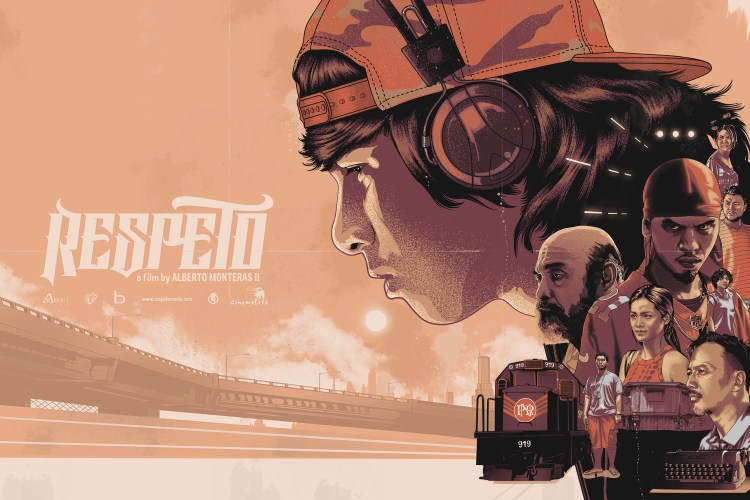
  • Respeto (Treb Monteras, 2017) – intergenerational hip hop drama in which a young rapper comes into conflict with a Marcos-era poet. ReviewDirector Treb Monteras, actor Abra, and producer Monster Jimenez will be in attendance
  • Sid & Aya: Not a Love Story (Irene Villamor, 2018) – rom-com in which an insomniac stock broker pays a waitress to talk through his troubles. Q&A with actress Anne Curtis
  • We Will Not Die Tonight (Richard Somes, 2018) – genre thrills as a former stuntwoman is forced to defend herself against hordes of bad guys.

South Korea

korean little forest 1

  • 1987: When the Day Comes (Jang Joon-hwan, 2017) – powerful democracy movement drama. ReviewQ&A with director Jang Joon-hwan and actor Kim Yoon-seok
  • After My Death (Kim Ui-seok, 2017) – a high school girl’s disappearance raises fears of suicide and also puts her best friend in the firing line.
  • The Age of Blood (Kim Hong-sun, 2017) – period drama in which a top swordsman is demoted to prison guard.
  • Counters (Lee Il-ha, 2017) – documentary centring on anti-racist protest in Japan.
  • Hit the Night (Jeong Ga-young, 2017) – Jeong Ga-young once again stars in her Bitch on the Beach followup as a young woman unafraid to ask “inappropriate” questions while researching a screenplay. Q&A with director/actress Jeong Ga-young
  • I Can Speak (Kim Hyeon-seok, 2017) – an old woman convinces a young man to teach her English and gives voice to a dark part of her nation’s history.
  • Little Forest (Yim Soon-rye, 2018) – gentle tale in which a wounded young woman retreats to her country home to figure things out. Review.
  • Microhabitat (Jeon Go-woon, 2017) – a young woman decides rent is an unnecessary expense and commits to couch surfing her way through life. Q&A with director Jeon Go-woon and actor Ahn Jae-hong
  • The Return (Malene Choi, 2018) – two Danish-Korean adoptees return to the country where they were born for the first time.
  • What a Man Wants (Lee Byeong-hun, 2018) – social satire in which an adulterous husband and his mild-mannered brother-in-law become involved with a sexy dance teacher.

Taiwan

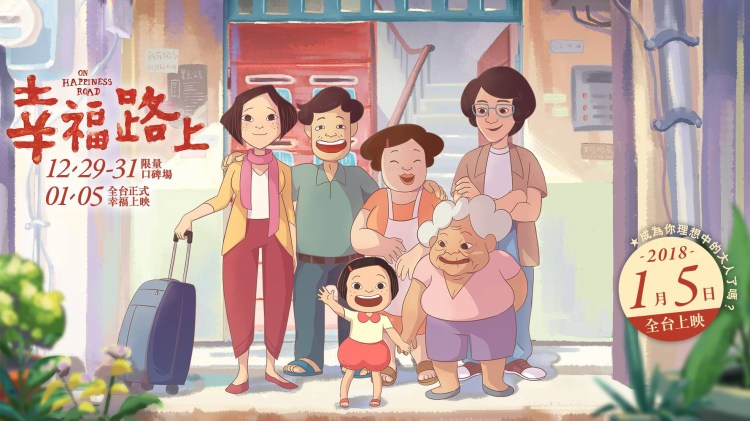
On Happiness road banner

Thailand

tears of the black tiger

  • Premika (Siwakorn Jarupongpa, 2017) – horror comedy in which guests at a resort are terrorised by a karaoke obsessed ghost! Actress Gena Desouza will be in attendance
  • Sad Beauty (Bongkod Bencharongkul, 2018) – the friendship between two women is tested by a violent encounter. Q&A with director Bongkod Bencharongkul and producer Kongkiat Khomsiri
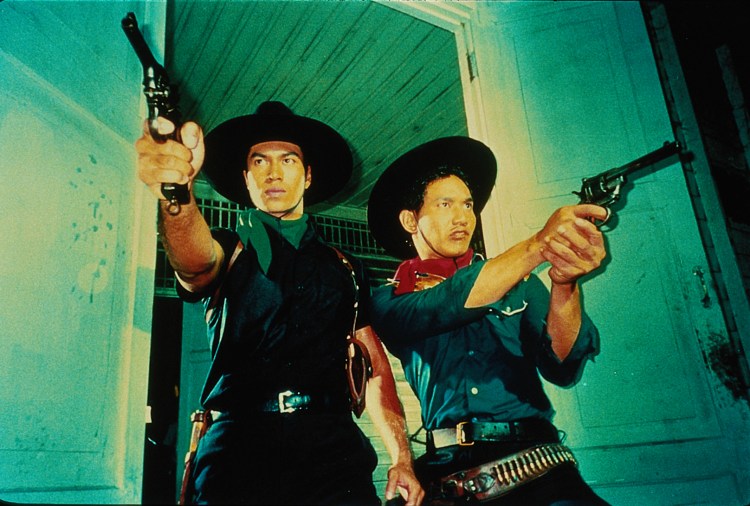
  • Tears of the Black Tiger (Wisit Sasanatieng, 2000) – cult classic Thai western!

The 17th New York Asian Film Festival runs from 29th June to 15th July. Full details for all the films are available via the official website where you can also find screening times and ticketing information. You can also keep up with all the latest festival news via the official Facebook Page and Twitter account.

The DMZ (비무장지대 / 非武裝地帶, Park Sang-ho, 1965)

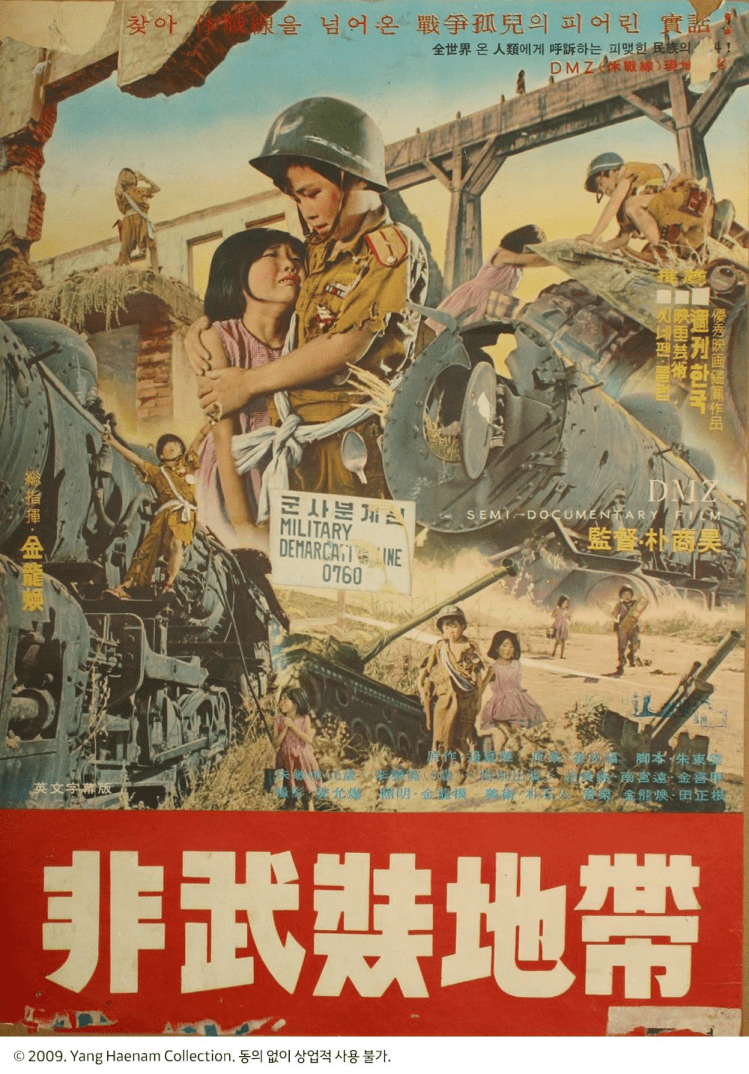
DMZ 1965 posterTalking about the “reunification” of Korea could be a risky business in the increasingly censorious 1960s. Directors had been jailed for less, and the anti-Communism drama was fast becoming a staple genre in the rapidly expanding film industry. Director Park Sang-ho had been at the forefront of Korea’s burgeoning International cinematic success when his 1963 film A Happy Businesswoman had been selected for the Tokyo film festival. Whilst there to present the film (which picked up a best actress award for Do Keum-bong), Park was met with consternation by foreign delegates who assumed he was Japanese and could show them around Tokyo. On learning he was Korean all they wanted to know about was the Demilitarised Zone and the village that was trapped inside it – Panmunjeom. Park had no answers for them. He’d never been to Panmunjeom and knew nothing about it, but he was surprised and concerned that an obscure little village and an ongoing political dispute had come to dominate the thinking surrounding his country with Panmunjeom emerging as a grim tourist destination for those interested in experiencing the “thrill” of life in a dormant war zone.

On return to Korea he knew he had to make a film about the DMZ, but the subject was a difficult, perhaps taboo one which had to be approached carefully. Park’s first cut which was released in theatres ran to 90 minutes and conformed more obviously to the standard commercial cinema of the time. In a radical move, the director then decided to re-edit it with the intention of submitting to foreign film festivals. Cutting most of the scenes with well known actors, Park retained only the stock footage which bookends the film (apparently enough to qualify the remainder as a “documentary” rather than narrative feature), and the central drama focussing on two small children desperately wandering the ruined landscape alone in search of their mothers.

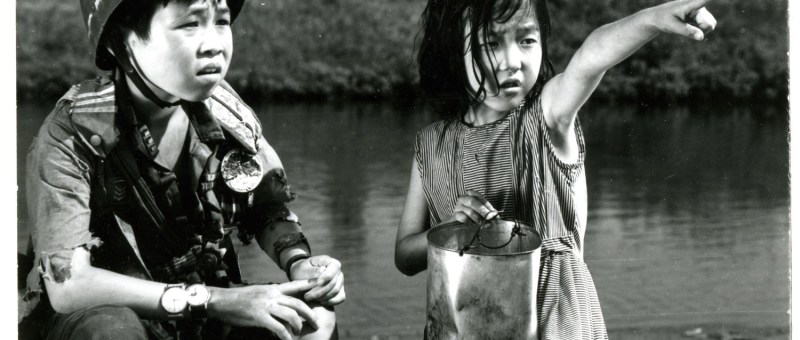
The younger of the two, Yong-ha (Ju Min-a) – a five year old girl, falls into a lake and is rescued by an 8-year-old boy (Lee Yeong-gwan) she originally mistakes for a grown man because of the ragged military uniform and soldier’s helmet he is wearing. The unnamed little boy tells Yong-ha he had a little sister with her name, and there are enough coincidences in their back stories to make one wonder if they really might be related, but in any case the boy “becomes” Yong-ha’s big brother and agrees to protect her while they each look for their long lost mothers.

As the pair are only children, they do not really know that they’re in the “DMZ” or what the DMZ is, they only know they are alone and surrounded by danger. Skeletons and decomposing bodies are a frequent sight, as are abandoned tanks, overturned trucks, broken trains, and rusty equipment. There are no other people, and nature has begun to reclaim the land – wild dogs and foxes are potential perils, while Yong-ha later finds herself separated from her brother after chasing a cute rabbit into a woodland grove and then being unable to find her way back.

The allegory becomes clearer as the children engage in absurd games exposing the arbitrary and destructive nature of the division itself. Walking up to the line, the boy gleefully jumps over to show Yong-ha how meaningless it is. Yong-ha, enjoying the game, thinks “division” seems fun and they should try it out for themselves. Her brother agrees, marking his territory and then insisting that they turn their backs on each other and refuse to speak. He keeps this up for quite a while until Yong-ha becomes distressed, at which point he jumps up and smashes the makeshift division marker to pieces so he can once again embrace his sister.

Nevertheless the anticommunist sentiments are present in the form of a cruel and callous North Korean spy who tries to kidnap the children and take them away with him. To add to the spirit of adventure, the boy sings a nationalist song which honours those who have given their lives to “liberate” the country from “oppression”, while a propaganda broadcast tries to do something similar whilst the children are playing division by offering a message of solidarity to those in the North who might like to come South. Dangerous as the situation is, the children’s innocent naivety eventually leads to a small diplomatic incident when they unwittingly pick up a landmine to use as a firestone but are frightened away by the approach of soldiers just before it explodes, leading both sides to claim the act as one of provocation by the other.

Park takes the dangerous step of shooting directly within the real DMZ with all of its eeriness as a place abandoned by humanity and filled with man made dangers. The children attempt to survive in it alone – foraging for food, using the wood from crosses put up as grave markers to start fires, and looking after each other in the absence of adults. They play when they can, swimming, pretending to commandeer tanks and steal trains, pilfering left behind supplies and always talking about their families and how best to find them. The theatrical version, as was expected at the time, apparently has a more positive ending but Park refuses to soft-pedal the disproportionate suffering experienced by children in time of war, even whilst adding a pointed statement to the end advancing the cause of Korean brotherhood and calling for an end to the unfair and arbitrary separation of a people which feels itself to be of one blood. Unusual for the time but ending on a note of hope (if however bleak), DMZ is part anti-communist propaganda, part unification treatise, and most of all the story of two unlucky orphans created by a war and a diplomatic stalemate who find themselves alone in no-man’s land with no safe refuge in sight.


The DMZ (비무장지대 / 非武裝地帶, Bi-mu-jang Ji-dae) is available on DVD with English subtitles courtesy of the Korean Film Archive. The set also includes an English subtitled documentary about the career of director Park Sang-ho as well as a 32-page bilingual booklet. Not currently available to stream online.

Ramen Shop, Hanagatami Bookend Japan Cuts 2018

yocho still 1

Japan Cuts returns for its 12th instalment bringing some of the best recent mainstream and indie hits to Japan Society New York from 19th to 29th July. This year’s Japan Cuts Cut Above Award goes to much loved actress Kirin Kiki who will be on hand to present the North American premiere of Shuichi Okita’s Mori, The Artist’s Habitat.

The programme in full:

Ramen Shop

ramen shop still 1

Takumi Saitoh stars in Singaporean director Erik Khoo’s cross cultural family drama in which the son of a ramen shop owner discovers a suitcase full of old photos which belonged to his late Singaporean mother and decides to travel to the place of his mother’s birth to find out more about his family history. Opening Night Gala featuring intro and Q&A with director Eric Khoo and star Takumi Saitoh.

Of Love & Law

Of love and law still 1

Hikaru Toda reunites with Love Hotel’s Fumi and Kazu who run a small law firm in Osaka specialising in representing the LGBT community. ReviewIntro and Q&A with director Hikaru Toda.

blank 13

blank 13 still 1

Actor Takumi Saitoh steps behind the camera for this atypical family drama in which a young man travels home for the funeral of his estranged father only to find himself charmed by the roguish stories of his fellow mourners. Intro and Q&A with director Takumi Saitoh.

Violence Voyager

violence voyager still 1

Experimental animation from The Burning Buddha Man director Ujicha in which an American boy called Bobby and his friend Akkun take off for the mountains but end up trapped in an abandoned theme park called Violence Voyager.

Born Bone Born

Born Bone Born still 1

Set once again in Okinawa, the second feature from comedian Toshiyuki Teruya follows a pregnant woman home to a remote island to mourn her late mother while her family continues to fall apart and neighbours gossip about the absent father of her unborn child.

Dream of Illumination

Dream of Illusion still 1

High schooler Nana has been dragged around by her divorced father Ueda who works as an immoral real estate broker facilitating cheap land sales for foreign buyers but an extended stay in Rokujo forces the pair to reassess the past and their current way of life in Thunder Sawada’s rural drama. Intro and Q&A with director Thunder Sawada, star Yuya Takagawa and producer Kazuyuki Kitaki

Last Winter, We Parted

Last Winter We Parted horizontal

Tomoyuki Takimoto adapts the award winning novel by Fuminori Nakamura in which an ambitious journalist decides to look into the mysterious case of a beautiful female model who died in a horrific fire on the set of a shoot by a famous fine arts photographer.

Passage of Life

passage of life still one

A small family from Myanmar attempts to get by undocumented only to face an uncertain future when their application for refugee status is rejected. The two children born in Japan struggle to identify with their Burmese heritage while their parents face more immediate concerns for the family’s safety and security. Intro and Q&A with director Akio Fujimoto.

The Night is Short, Walk On Girl

The night is short still

Masaaki Yuasa adapts Tomihiko Morimi’s novel in which a university student undergoes a surreal odyssey through nighttime Kyoto in search of a beloved childhood book while her not so secret admirer has a few adventures of his own in the hope of winning her heart. Review.

We Make Antiques!

We make antiques still 1

Comedy from Masaharu Take in which a smoozy antiques dealer is unwittingly sold a fake tea cup claiming to have belonged to famous tea master Sen no Rikyu only to decide if you can’t beat ’em join ’em and plan a heist with the guys who just scammed him.

Toward a Common Tenderness

Common tenderness still 1

Documentarian Kaori Oda weaves together unused footage from her time with Béla Tarr at his Film Factory in Sarajevo in 2013-2016 as well as her life in Japan to explore a path towards connection. Intro and Q&A with director Kaori Oda 

Side Job.

Sidejob banner

Ryuichi Hiroki adapts his own novel in which a young woman living in temporary accommodation following the 2011 earthquake attempts to escape the crushing inertia of her uncertain life through undertaking casual sex work in Tokyo. Review.

Sennan Asbestos Disaster

Sennan Asbestos Disaster still 1

Kazuo Hara follows the residents of Sennan, Osaka as they pursue legal compensation from the government for exposing them to pollution from asbestos factories. Intro and Q&A with director Kazuo Hara, producer Sachiko Kobayashi, and film participants 

Yocho (Foreboding)

Yocho banner

Kiyoshi Kurosawa revisits the world of Before We Vanish with a cut down of his TV companion piece in which a factory worker stumbles on the alien invasion thanks to her corrupted healthworker husband. Review.

Call Boy

call boy still 1

An apathetic student begins to find a sense of purpose when sucked into the world of the male escort in the latest from Daisuke Miura.

KUSHINA, what will you be

kushina

Okinuma took off and founded an all female colony in the woods with her pregnant 14-year-old daughter, Kagu. Now that Kagu’s daughter Kushina is approaching the same age her mother was when they first left modern society behind she is beginning to ask questions about the outside world. When an anthropologist and her male assistant stumble onto the colony Okinuma will do whatever it takes to protect it. Intro and Q&A with director Moët Hayami and star Tomona Hirota

Radiance

radiance

A young woman attempting to create audio description scripts for the visually impaired is tested by a former photographer trying to come to terms with losing his sight in Naomi Kawase’s romantic drama. Review.

Mori, The Artist’s Habitat

39415762940_128b534524_o

Shuichi Okita chronicles the later life of artist Morikazu Kumagai who has barely left his garden in the last 30 years but must prepare to bid it goodbye as a modern apartment complex nears completion. ReviewIntro and Q&A with star Kirin Kiki plus Cut Above Award ceremony.

Still Walking

stilll walking 1

Family divisions, secrets, and prejudices are brought to the surface as a family gathers for the memorial service for their eldest son who was killed trying to save a child from drowning in Koreeda’s classic family drama. Review.

Empty Orchestras and the Speed of Your Voice

Yeah still 1

Five experimental short films including Yohei Suzuki’s YEAH! ReviewIntro and Q&A with dir. Nao Yoshigai, dir. Yohei Suzuki and actress Elisa Yanagi

Abnormal Family

abnormal family still

Masayuki Suo’s only pink film takes the form of an Ozu pastiche centring on one very unusual family.

Tremble All You Want

tremble all you want still 1

Unfulfilled office lady Yoshika is still nursing a high school crush but when a colleague suddenly confesses his love for her, Yoshika’s cheerful fantasy world threatens to implode. Review.

Thicker than Water

Ken-en banner

Print shop owner Yuria is desperate to attract the attentions of client Kazunari but he only has eyes for her assistant and younger sister Mako. Meanwhile, Kazunari is also contending with his rowdy brother just released from jail and crashing at his apartment. Intro and Q&A with director Keisuke Yoshida 

Outrage Coda

outrage coda still

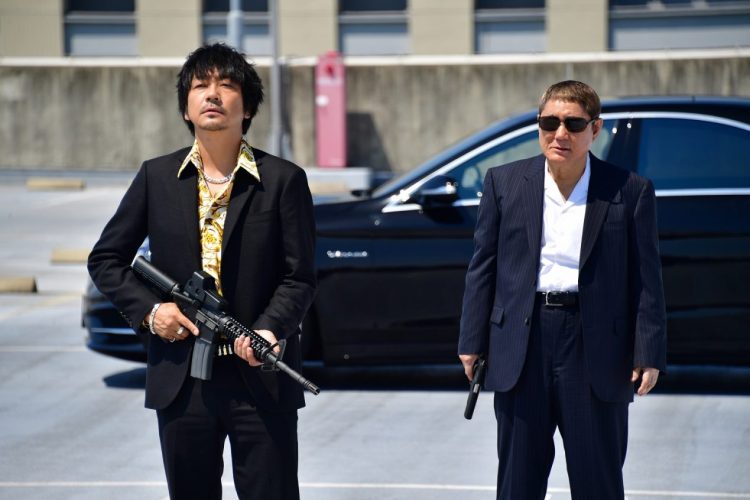
Kitano returns with the third and final instalment in the Outrage trilogy which finds Otomo in exile in Korea.

BLEACH

Bleach still 1

Tite Kubo’s hit manga gets a live action adaptation helmed by I am a Hero’s Shinsuke SatoSota Fukushi stars as Ichigo – an ordinary high school boy with orange hair and the ability to detect spirits, who comes to the rescue of imperilled Soul Reaper Rukia (Hana Sugisaki) and soon finds himself battling Hollows on her behalf. Intro and Q&A with director Shinsuke Sato.

Dear Etranger

Dear Etranger still 2

Divorced father Makoto has remarried and has two step-daughters but when his second wife discovers she is carrying their child, he begins to worry that the new baby may pull his blended family apart in this very modern family drama from Yukiko Mishima. Review.

Amiko

Amiko still 1

Lonely 16-year-old Amiko finds a kindred spirit in footballer Aomi, but when he abruptly takes off for Tokyo with a former student Amiko cannot help but follow him hoping to make sense of his sudden betrayal. Intro and Q&A with director Yoko Yamanaka.

TOURISM

tourism still 1

Nina wins the lottery and takes her friend Su with her on a trip to Singapore where they quickly grow bored of tourist hotspots and retreat to the global anonymity of shopping malls. When Nina loses track of her friend and her phone, the trip sends her on a different kind of odyssey through the “real” Singapore in the latest from Daisuke Miyazaki.

Hanagatami

hanagatami still 1

Nobuhiko Obayashi realises a long held ambition of filming Kazuo Dan’s 1937 novella of youth living in the shadow of an oncoming tragedy. Review.

Japan Cuts runs from 19th to 29th July at Japan Society New York. Full details for all the films along with ticketing links are available via the official website and you can also keep up with all the latest details by following the festival’s official Facebook page and Twitter account.