Gravity’s Clowns (重力ピエロ, AKA A Pierrot, Junichi Mori, 2009)

wp03_1024-768

Based on a novel by Kotaro Isaka (Fish Story; The Foreign Duck, the Native Duck and God in a Coin Locker), Gravity’s Clowns is the story of two very different brothers who discover a dark family secret following the death of their mother. Part mystery story part character drama, Gravity’s Clowns takes a look at the themes of nature vs nurture as well as the importance of familial love and acceptance.

Returning home for the first anniversary of his mother’s death, Izumi (Ryo Kase) and his younger brother Haru (Masaki Okada) spend some time with their father Tadashi (Fumiyo Kohinata) reminiscing about the past. Watching a local news broadcast, Haru realises the site of a recent arson attack is not far from where he’s been working. Noticing a pattern in the location of the attacks, Haru decides to investigate and ropes his brother in for the ride. However, the mystery Izumi finds himself embroiled in ends up being far different than the one he imagined.

It’s revealed fairly early on in the movie, but the fact of the matter is that Izumi and Haru may only be half brothers as their mother became pregnant with Haru shortly after being brutally assaulted in her own home by a serial rapist operating in the area. Having decided to have the baby and raise the child together whatever his true parentage, Haru’s parents did their best to give him a normal, loving upbringing alongside his older brother. Though there was some gossip in the town thanks to the incident’s notoriety, neither Haru nor Izumi were aware of their mother’s ordeal until after her death. After discovering the truth, both brothers react in different, though ultimately similar ways.

As a mystery, Gravity’s Clowns tries to pack in a fair few twists and turns though ultimately they are all quite obvious and frequent viewers of crime thrillers or psychological dramas will have guessed the entire plot in the first ten minutes. However, the mystery is definitely of secondary importance to the character drama that is being played out in front of it. The real key to the film is in the relationship between the two brothers, and to a larger extent the family as a whole. What’s important is that the brothers support and and love each other no matter what and as their father told them, their family is the strongest family there is. No matter what past traumas or biological facts may interfere, these guys will always come through for each other.

Having said that, the narrative does meander somewhat and in particular the “comedy stalker” subplot feels a little out of place and under developed. Despite playing a crucial plot role, and providing quite an amusing joke early on in the film and at its end, Yuriko Yoshitaka’s “Natsuko” (this is just a nickname and a fairly amusing pun as Haru’s name means “spring” and she always follows him around so they called her “Natsuko” which means “summer’s child” , she doesn’t even get a proper name) doesn’t have a tremendous amount to do. Likewise, the small but important role played by the boys’ father feels as if it bounces around a little in terms of weight as does that of their mother who is only seen in flashback. Ultimately Gravity’s Clowns over reaches itself as it tries to tackle some more weighty themes like nature vs nurture and the ethics of certain kinds of crimes which are only addressed in a very superficial way, and in fact concluded fairly ambiguously.

A flawed, if pleasant enough character drama, Gravity’s Clowns is generally entertaining but ends up feeling a little insubstantial. High quality and committed performances from the cast and especially from Ryo Kase and Masaki Okada as the two central brothers help to elevate the material but somehow it never quite takes off. Heart warming and actually quite funny at times, Gravity’s Clowns is a noble effort but one that ultimately fails to strike home.
Brain Man 脳男

imgnewly1-187l

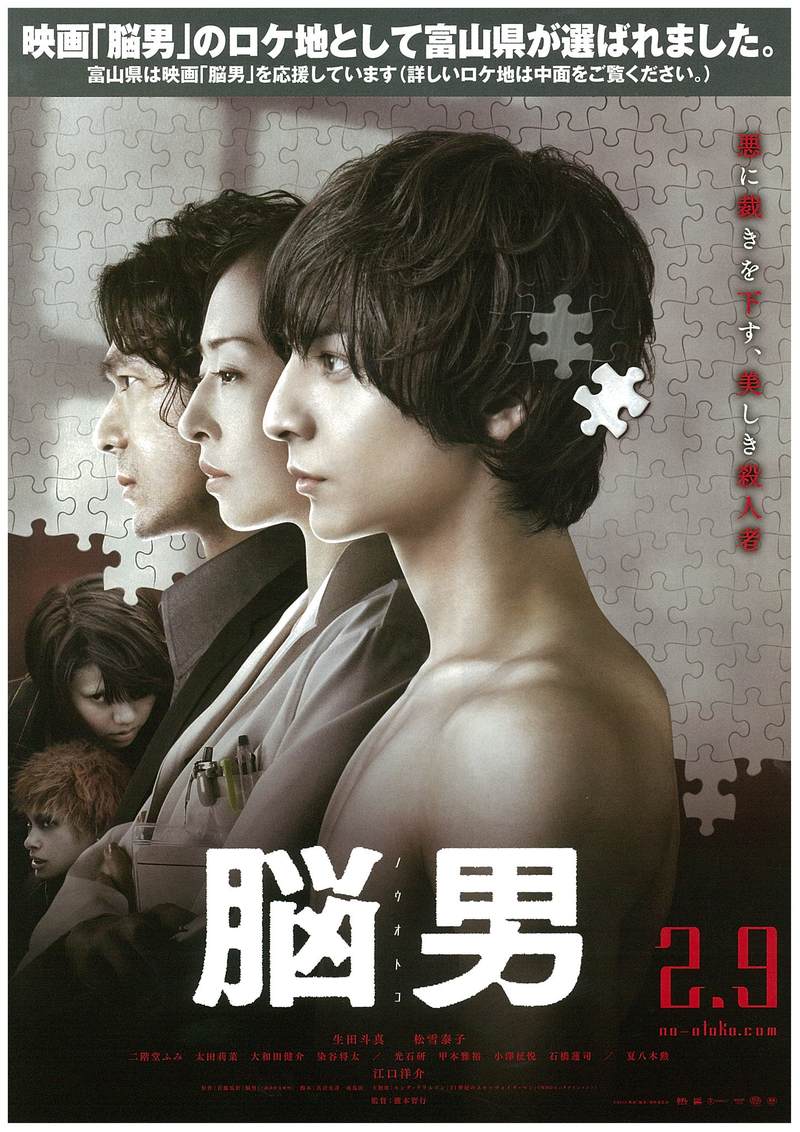
Based on the Edogawa Rampo award winning novel by Urio Shudo, Brain Man is a stylish psychological thriller which addresses such themes as guilt, redemption and the effects of childhood trauma. Are some people just born bad, can even those who’ve committed terrible crimes be rehabilitated? People on opposite sides of the legal system seem to have some conflicting ideas but perhaps the answer is never going to be as simple as ‘yes’ or ‘no’.

While a series of explosions rock a small provincial town, forensic psychologist Mariko Washiya (Yasuko Matsuyuki)  is the head of a research programme which aims to help convicted felons come to terms with their crimes through interacting with the victim’s families and there by coming to feel a kind of empathy for all the hurt and destruction they have caused. After leaving the office one day she races to catch the bus only to miss it by seconds while a bunch of bratty kids make faces through the window. Moments after the bus pulls away, it explodes killing all on board. Becoming an unwitting witness to events, Mariko finds herself at odds with the hardline policeman investigating the crime. When the police arrest the perfect suspect, a strange, near silent man discovered at the site of an explosion, Mariko is called upon to examine him. Ichiro Suzuki (Toma Ikuta) presents himself robotically, answering each of Mariko’s questions at face value no matter how strange and otherwise remaining motionless. That is, until something disturbs his sense of justice and he breaks out some killer martial arts moves. As might be expected, nothing is quite as cut and dried as it might seem on the surface and something convinces Mariko that there might be something more ‘human’ locked away deep down in Ichiro’s psyche.

First and foremost Brain Man is pretty mainstream thriller which means it isn’t totally free of a few melodramatic turns and far fetched plot developments but by and large it gets away with them. The first plot line centred around the bombings quickly gives way to the mystery surrounding Brain Man himself before getting back to the bombers towards the end. The two narrative strands sometimes seem at odds with each other and don’t feel as cohesive as they perhaps should. Though having said that though the “bombers” plotline is definitely the film’s second strand it gives ample room for Fumi Nikaido’s gloriously crazed depiction of a drug addled lesbian terrorist which she manages to play in a refreshingly restrained way (well, as far as the part allows – it is a particularly well pitched performance). There is also even a third subplot regarding Mariko’s prestige project of a young man who’s shortly to be released from a young offenders institute (played by Shota Sometani) seemingly rehabilitated and eager rejoin society all thanks to Mariko’s new therapy program which plays in conjunction with a fourth subplot concerning Mariko’s family and its own past traumas. Undoubtedly, there’s a lot to juggle but Brain Man makes a surprisingly valiant attempt at getting it all to work together.

Director Tomoyuki Takimoto is probably best known for his previous film Ikigami: The Ultimate Limit – a low budget though similarly impressive adaptation of a manga. Brain Man has a slightly higher budget and its fair share of flashy direction both of which impress from the get go. Even more so Takimoto has amassed a cast of up and coming stars who each turn in well rounded performances ranging from the completely out there extremes of the aforementioned Fumi Nikaido to Shota Sometani’s small but complicated patient and, of course, Toma Ikuta’s powerful portrayal of the near silent and emotionless killing machine the Brain Man not to mention Yasuo Matsuyuki’s warm hearted doctor.

Although a little slow to get going initially and excusing the odd lacuna brought about by throwing the points on the great train track of narrative, Brain Man manages to pack in a decent amount of excitement into its relatively tightly plotted structure. In many ways it isn’t particularly original, but it does what it does pretty well and mixes in enough twists and turns to keep even the most jaded mystery enthusiast interested. Perhaps a little bit too crazy for its own good, Brain Man is another classy Japanese thriller that isn’t afraid that isn’t afraid to go to some pretty strange places in the name of entertainment.

A Hard Day (끝까지 간다, Kim Sung-hoon, 2014)

2014 - A Hard Day (still 2)In an unprecedented level of activity, here is another review up on UK-anime.net – this time Korean black comedy crime thriller, A Hard Day (끝까지 간다, Kkeutkkaji Ganda) which was shown at the London Film Festival and the London Korean Film Festival and is now out on DVD from Studio Canal.


For most people, a “hard day” probably means things like not being able to find a parking space, missing your train, the office coffee machine being broken and your boss having a mental breakdown right on the office floor but for not-totally-honest-but-sort-of-OK Seoul policeman Gun-su “hard” doesn’t quite begin to cover it.

Gun-su is driving furiously and arguing with his wife on the phone because he’s skipped out on his own mother’s funeral to rush to “an important work matter” which just happens to be that he has the only key to a drawer which contains some dodgy stuff it would have been better for internal affairs not to find – and internal affairs are on their way to have a look right now. So pre-occupied with the funeral, probable career ending misery and the possibility of dropping his fellow squad members right in it, Gun-su is driving way too fast. Consequently he hits something which turns out to be man. Totally stressed out by this point, Gun-su does the most sensible thing possible and puts the body in the boot of his car and continues on to the police station. Just when he thinks he’s finally gotten away with these very difficult circumstances, things only get worse as the guy the he knocked over turns out to be the wanted felon his now disgraced team have been assigned to track down. Oh, and then it turns out somebody saw him take the body too and is keen on a spot of blackmail. Really, you couldn’t make it up!

Some might say the Korean crime thriller format is all played out by this point, but what A Hard Day brings to the genre is a slice of totally black humour that you rarely see these days. Gun-su is obviously not an honest guy, but he’s not a criminal mastermind either and his fairly haphazard way of finding interesting solutions to serious problems is a joy to watch. This isn’t the first film where someone happens on the idea of hiding a body in a coffin, but it might be the first where said person uses a set of yellow balloons to block a security camera, his daughter’s remote control soldier to pull a body through an air conditioning duct and his shoelaces to prize the wooden nails out of his own mother’s coffin to safely deposit an inconvenient corpse inside. Gun-su (mostly) manages to stay one step ahead of whatever’s coming for him, albeit almost by accident and with Clouseau like ability to emerge unscathed from every deadly scrape. He’s definitely only slightly on the right side of the law but still you can’t help willing him on in his ever more dastardly deeds as he tries to outwit his mysterious opponent.

Though it does run a little long, refreshingly the plot remains fairly tight though it is literally one thing after another for poor old Gun-su. A blackly comic police thriller, A Hard Day isn’t claiming to be anything other than a genre piece but it does what it does with a healthy degree of style and confidence. The action scenes are well done and often fairly spectacular but they never dominate the film, taking a back seat to some cleverly crafted character dynamics. Frequent Hong Sang-soo collaborator Lee Sung-kyun excels as the slippery Gun-su whose chief weapon is his utter desperation while his nemesis, played by Cho Jing-woong, turns in an appropriately menacing turn as a seemingly omniscient master criminal.

Yes, A Hard Day contains a number of standard genre tropes that some may call clichés, but it uses them with such finesse that impossible not to be entertained by them. Bumbling, corrupt policemen come up against unstoppable criminals only to find their detective bones reactivating at exactly the wrong moment and threatening to make everything ten times worse while the situation snowballs all around them. However, A Hard Day also has its cheeky and subversive side and ends on a brilliantly a-moralistic note that one doesn’t normally associate with Korean cinema in particular. It may not be the most original of films, but A Hard Day is heaps of morbidly comic fun!


Quirky Guy – An Interview with Yosuke Fujita (via UK Anime Network)

44ea2aa088e78643f1ee584fde4e3d2eI interviewed the director of Fuku-chan of Fukufuku Flats for UK Anime Network while he was over here for the Raindance Film Festival. You can read my review of the film too if you’re so inclined (that might be a link to a link to a link, um – sorry!).

Seeing as I asked him about enka in the interview here’s a video of one of the songs featured in the film (as tracked down by ace music detective and film blogger genkina hito!)

Tabidachi no Uta

Those opening chords sound a little like I am a Rock by Simon & Garfunkel which I did listen to a lot as a child, maybe that’s why the song sounds so nostalgic even though I couldn’t have heard it before?

New Directors From Japan Box Set (UK Anime Network Review)

A1rM9z8kBbL._SL1500_Great new box set from Third Window Films reviewed on Uk-anime.net.


We’re used to Third Window Films bringing us some of the best in contemporary Japanese cinema (as well as a few classics too), but this time they’ve gone even further and let us in on the ground floor as we meet these three new directors on the rise. This project was also a first as it took the unusual route of going to Kickstarter to fund its production, albeit following a pleasingly straightforward pre-order system. The three directors featured in this set all come from different backgrounds and are working in very different genres. As such they represent the level of diversity in modern Japanese indie filmmaking and each prove they have something very different and particularly idiosyncratic to offer in their later careers.

The first of these up and coming directors is Nagasa Isogai who has two films featured in the set – her student film My Baby and her longer short film, The Lust of Angels. My Baby tells the slightly crazy story of two sisters whose sibling rivalry intensifies as they both plan to have children of their own. Made to very strict guidelines, it’s shot in a now old fashioned looking 4:3 screen ratio with non-sync sound and has a strangely ‘70s-esque feeling with its odd, melodramatic concept and mostly straight forward shooting style.

Similarly, Lust of Angels takes on a lot of baggage from ‘70s exploitation cinema and though shot in a more modern feeling 2.35:1 widescreen it still has a distinctly old school feeling. Taking its queue from the delinquent girl movies of the past, The Lust of Angels is a dramatic story about train groping and female revenge. Transfer student Yuriko accidentally catches the train to school, something which most girls don’t do owing to its reputation as a “groper train”, where she discovers fellow student Saori about to fall victim to just this unpleasant crime. However, unbeknownst to the others Saori catches the train because she enjoys the attentions of the various perverts who ride it and even goes so far as to carry a special book which marks her out as desiring their attentions. Exploring such complicated themes as the differing reactions to burgeoning teenage sexuality, sexual abuse and sexual violence as well as female violence and revenge, The Lust of Angels is one of the more complex efforts in the set. However, first and foremost it works best as an exercise in genre and proves enjoyable both in that regard and in offering a good deal of promise for the future.

Next up is Kosuke Takaya whose 27 minute short is the most straightforwardly comic selection on the bill. Made under the NDJC program which aims to give a helping hand to promising new Japanese directors, Buy Bling Get One Free is a humorous satire on the fashion industry. Its hapless protagonist Kamono is literally a fashion victim – much less interested in expressing himself than in fitting into a scene, Kamono is easy prey for a bunch of weird fashion cultists. While it is undoubtedly very funny (and totally packed with awesome puns!), Buy Bling Get One Free is slightly hemmed in by the constraints of the NDJC programme. As such it may feel like a slighter effort than the other offerings in the set but it does still allow director Kosuke Takaya to show off a fair amount of skill which bodes well for the future.

The final and longest film included comes from Hirofumi Watanabe whose 88 minute feature tells the surreal story of layabout Takashi who unexpectedly discovers he has a teenage half sister he was previously completely unaware of. Takashi is a divorced father with no job and no hopes or plans for the future but his sudden discovery of a little sister and the new found responsibility being a big brother prompts him into thinking about his life. Finally, he makes a decision but unfortunately it ends up involving drug smuggling, shady business and finally….aliens! And The Mud Ship Sails Away is definitely the most surreal film in the set. It starts off with a sort of Jarmuschian aloofness which is brought out by the relatively static camera and black and white photography but towards the end this has been completely turned on its head. The last and strangest act takes on a Gilliam-esque level of absurdity with completely crazy, jagged camera action and bizarrely framed super close-ups. Some may feel the third act is simply too much or at least too far removed from the relative naturalism of the rest of the film but for those who like their movies surreal with a capital “S” And the Mud Ship Sails Away is another excellent addition to weird cinema.

Alongside the films themselves the package also offers interviews with each of the directors discussing how they got into filmmaking and more specifically how they came to make these particular films, as well as their general hopes for the future. Additionally, there’s also an interview with producer Shogo Tomiyama who’s the supervisor of the NJDC programme at the moment but is also famous for his involvement in the Godzilla franchise. This entire package was something of a labour of love for its producers and a fairly risky business venture – hence the initial need for Kickstarter. However, what The New Directors From Japan box set proves is that there is a wide and varied crop of new talent hovering just below the surface of contemporary Japanese cinema. Hopefully not the last boxset of this kind, each of the films presented has its own degree of promise and it will certainly be interesting to see how these burgeoning careers develop in years to come.


Rurouni Kenshin 2: Kyoto Inferno (UK Anime Network Review)

ruruoni_kenshin_the_kyoto_inferno_still(saito’s just so cool!)

Review of the first Rurouni Kenshin sequel, Rurouni Kenshin 2: Kyoto Inferno up at UK Anime Network.


At the end of the first Rurouni Kenshin live action film, you might have been forgiven for thinking that this once wandering warrior had finally found a place to hang up his (reverse blade) sword for good. As fans of Nobuhiro Watsuki’s much loved manga and its anime adaptation will know, there’s no such luck for Himura Kenshin or the long suffering Kaoru as once again Kenshin will be called upon to put his unique skills to use and this time the very survival of Japan’s new era of modernism and equality is at stake!

Having successfully seen off would be drug baron Kanryuu and the false Battosai Jin-e, once remorseless killer Kenshin (Takeru Satoh) has moved into the dojo run by Kaoru (Emi Takei) and made a seemingly joyful life alongside Kaoru’s only pupil, the boy Yahiko (Kaito Oyagi), the doctor Megumi (Yu Aoi) and loud mouth Sanosuke (Munekata Aoki). However, the happy family’s peace is about to be rudely interrupted as an envoy from the Home Minister arrives and requests a private meeting with Kenshin. It seems an old enemy once believed dead has been discovered to be alive and currently plotting terrible vengeance against the new government in Kyoto. Shishio’s skills are matched only by Kenshin and so the government wishes to make use of his services once again to stop this new threat to the development of the modernising Japan. However, Kenshin has laid down his sword and dedicated his life to atoning for the lives he took as a warrior – will he really return to the life of a wandering swordsman? Originally reluctant and very much against the wishes of Kaoru, a tragic event finally convinces Kenshin he has no choice but to stop Shishio whatever the cost!

Even more so that the first film, Rurouni Kenshin 2: Kyoto Inferno is set against the backdrop of a Japan in the middle of earth shattering cultural shifts. The age of the Shogun is over, there are no more samurai or feudal loyalties to fulfil. This fresh new world of possibilities has no place left in it for the men who fought so bravely to bring it into being. Some, like Kenshin, hung up their swords and set themselves into atoning for the violence of the past by vowing to build a better, kinder, future. Others, however, like Shishio, were left with nothing other than the desire to return to a world where their skills mattered – the familiar world of lords and castles and glorious battles. Kenshin and Shishio are two sides of the same coin – light and shadow. Having been assassinated and thrown on a funeral pyre before miraculously surviving thanks to a fortuitous fall of snow, Shishio has made fire his very own symbol and primary weapon of attack. This new world is a hell for him and along with his bandage clad gang of followers, he’s about to plunge all of Japan into a fiery abyss too.

The first instalment was also notable for its fairly high production values and if anything, Kyoto Inferno even improves upon the original film’s impressive aesthetics. Fire in particular has often proved something of a bug bear for the modern action film and as you might expect from the title Kyoto Inferno is jam packed with flaming action. From its extremely striking opening scene, Kyoto Inferno lays on some of the most complex and beautifully filmed action sequences to be seen in a Japanese film in quite some time. Where it falls down slightly is bound up with its nature as the first part of a two part film as it is does begin to pile on the sub plots and risks becoming overloaded while the original gang (and particularly Yu Aoi’s doctor Megumi) end up with relatively little to do. Likewise, as with the first film the more manga-like elements such as some of the overly broad comedy or a couple of characters who are just the wrong sort of outrageous don’t quite fit with the otherwise classical feeling of the film though fans of the manga franchise may appreciate this attempt at remaining faithful to the source material.

In many ways the Rurouni Kenshin movies are just fluffy mainstream action films (not that there’s anything wrong with that) but Rurouni Kenshin 2: Kyoto Inferno is that rarest of beasts in that it manages to build on the foundations of the first film to become something greater with the result that it even helps to elevate the original. Of course, this largely hinges on how well the last part of the trilogy, appropriately entitled The Legend Ends will fare but suffice to say the first two thirds have stood it in very good stead. Action packed but with a tightly plotted storyline, convincing characters, good performances and high production values Rurouni Kenshin 2: Kyoto Inferno offers everything that’s good about blockbusters without any of the drawbacks. In fact the only real problem that the film presents is the likely long wait until The Lengend Ends finally arrives!


This is out in UK cinemas from Friday 28th November 2014 when it’ll play all these cool places:

  • Cineworld Enfield
  • Cineworld Crawley
  • Cineworld Sheffield
  • Cineworld West India Quay
  • Cineworld Glasgow RS
  • Cineworld Cardiff
  • Cineworld Stevenage
  • Cineworld Bolton
  • Vue Piccadilly (London)

Well worth seeing on the big screen, might even be better than the first one!

One on One (일대일, Kim Ki-duk, 2014)

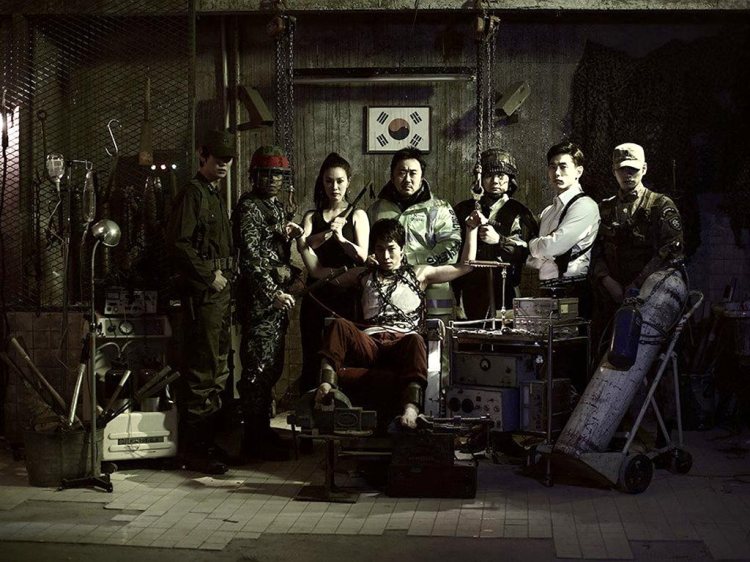
9ae7eea7-3b8a-4212-96ca-023eb8b5cdd5wallpaper1Review of Kim Ki-duk’s latest from the London Korean Film Festival up at UK Anime Network.


Kim Ki-duk is back with another frankly baffling state of the nation style assault on contemporary Korean values. In contrast with much of his other work, One On One is much more dependent on plot and dialogue and has a much more straight forward yet distant shooting style than the poetic and painterly scenes we often see from him. Like his other films however, it employs shocking episodes of violence to expose some of society’s festering wounds though perhaps this time it’s with the eyes of a curious anthropologist rather than an embittered social investigator.

This oddly symmetrical tale begins with the shockingly matter of fact murder of a young schoolgirl by a gang of seven masked aggressors. Following this seemingly senseless crime another group of seven, this time a group of vigilantes brought together by a desire for some kind of personal vengeance against society, have taken it upon themselves to avenge this killing by kidnapping each of the seven perpetrators and torturing them until they confess and give some kind of information regarding the true nature of the crime. In another duality, the “villains” are all well to do, successful underlings whereas the “vigilantes” are generally working-class people who’ve lost out in the current economic climate and in some cases are living in dire poverty through no fault of their own. The villains offer several different reactions or explanations for their involvement in such a heinous crime varying from “I was just following orders” or “it was for the common good” to “what does it matter, I have status and can do as I please” but at the end of the day those on both sides will have to realise that the lines between good and bad are much more fluid than most people would like to think and that eventually you will have to decide for yourself not just where you stand but who it is you really are.

One on One often feels like a slightly underbaked pudding, the flavour is good (mostly) but it’s gone a bit soggy in the middle. The symmetrical nature of the two sets of seven is interesting as is the direct mirroring of their social statuses but somehow the ideas don’t quite feel developed enough and even end up feeling a little too neat or obvious. The elite group who murdered the school girl in the beginning are all successful people with seemingly no particular worries in their lives other than being caught up in a hierarchical system and unable to climb the ladder fast enough. When one of the men whose explanation is simply that this isn’t his fault, he was only following orders and whoever gave the order is to blame is reminded that one day he may be the one giving the orders he seems to regard it simply as the natural order of things. He and some of the others seem to have an unshakeable faith that they would not have been asked to do this (and presumably other “crimes” too) had it not been of vital importance for the survival of the Republic of South Korea. Where this “faith” comes from remains unclear, though it offers the slim justification of the fanatic for the senseless murder of a teenage girl. Some of these men wanted to get ahead and simply didn’t care what they had to do to get there, but others at least thought their actions had  a noble purpose no matter how terrifyingly awful the task they’ve been assigned.

The group of vigilantes by contrast are mostly those who’ve been disadvantaged by the current climate of Korean society. One is living on instant ramen, which as is pointed out by the group’s leader is a staple food for the poor but simply “a snack” for the rich, whilst trying to save money for his wife’s medical treatment and fend off various loan sharks. Another is living outside his old tenement building in a tent with his mother who seems to be suffering with dementia because they have nowhere else to go. The young men are angry that even if they’ve done everything right – got a degree, been abroad, learned English, they still can’t get those steady white collar jobs and a leg up into the middle classes like they were always promised. The one aberration in the group is its only female whose anger stems from being involved in an abusive relationship which she nevertheless does not seem keen to end. It isn’t difficult to see where their anger stems from and for most of them the vigilante activities are a way of taking a personal revenge against society as a whole by taking these entitled, well connected “thugs” down a peg or two and trying to make them realise the true nature of their societal roles.

However, things start to fall apart towards the end where Kim allows his message to become a little too muddy. There are good bad guys and bad good guys, nobody’s perfect and perhaps nobody even wants to be – can you really build a society when everyone has completely lost sight of any kind of human compassion? At one point some of the vigilantes attempt to make the best of their situation by exclaiming “ah, at least we aren’t in North Korea” which just makes you half wonder if North Korea isn’t just a giant government conspiracy designed to maintain the status quo by allowing the lowest members of society to feel good enough about their situation to avoid any revolutionary grumblings from the proletariat. The title card at the end flashes up the following three words “Who Am I?” with no other explanation to whom they might pertain. Like all the best riddles there might be several answers to that multifaceted problem though they may end up saying more about those who answer than those who posed the question.


The World of Kanako (渇き, Tetsuya Nakashima, 2014)

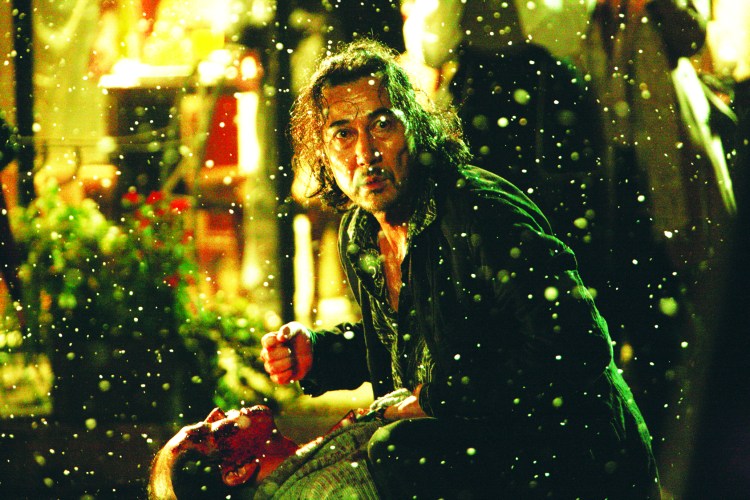
WorldOfKanako-PAnother LFF review up at UK Anime Network – The World of Kanako. I was also lucky enough to interview the director, Tatsuya Nakashima, who was actually very nice and quite chatty in contrast to some of the other interviews I’d read with him! (The consequence being I had way too many questions so it’s sort of a front loaded interview, oh well.) Interview’s already transcribed and in the system so hopefully live soon.


Tetsuya Nakashima is probably best known for his 2010 film, Confessions, which saw a school teacher’s extremely convoluted bid to avenge the death of her daughter at the hands of her students spill out to reveal a whole host of other ‘confessions’ of varying natures from its out of control teenage cast. Though Confessions had its fair share of violence and blood, this is nothing compared to the hellish darkness which fills The World of Kanako. Corrupt cops, teenage femme fatales, wife beaters, child traffickers, pimps and drug dealers make up the cast of this grim exposé of just how wrong you can be about the people most close to you. Those of you with a weak disposition had better step off here – this journey is not for the faint of heart.

Disgraced former policeman Fujishima has a whole host of problems in his life, alcoholism and possible schizophrenia being but two of them. Suddenly he gets a call from his estranged wife who’s out of her mind with worry because their teenage daughter, Kanako, has not been home in a few days. On searching her room in true detective style, he finds a stash of illegal drugs hidden in her school pencil case. This alarming discovery sends Fujishima down an increasingly dark alley way that leads only to the heartbreaking realisation that the kind and beautiful straight A student he believed his daughter to be was no more than a figment of his own imagination.

Fujishima is not a nice guy. There’s not really any other way to put it – he’s an arsehole. A self aggrandising drunk who lives inside a dream where he’s a hero fighting for justice with a loving wife and adorable little daughter waiting for him in their beautiful home. Except that his wife wants nothing to do with him, he hasn’t seen his daughter in a very long time and he’s been kicked off the force and currently works in security. Often drunk and on medication he’s never quite in the moment and therefore neither are we – thrown between flashbacks and unreliable mental images, we begin to float just as freely as Fujishima. It’s testimony to the abilities of the great Koji Yakusho that somehow we still feel a degree of sympathy and a desire to understand Fujishima’s complex psychology despite his deep seated rage which is directed both at himself and others. Deluded beyond belief, his quest to find his daughter is really a thinly veiled attempt to save himself by resurrecting the idealised image he had of her as the one decent thing he’d been able to  build in his life.

His daughter turns out to be daddy’s little girl after all, just not in the way Fujishima originally thought. She may be beautiful and clever, but never kind and her attentions are always part of some grander plan. Like the femme fatales of old and despite her young age, Kanako knows how to get what she wants but what she wants is to cause other people pain. She too lives in a dream, or perhaps a nightmare, as she says at one point falling like Alice in Wonderland through a seemingly endless black hole. There aren’t any ‘decent’ people in this world, everyone is fighting to maintain some kind of delusional self image that will allow them to believe in their own goodness – often through projected images of an idealised family.

Coupled with this intensely dark world, the film wears its influences on its sleeve including ‘60s quirky cool action films, as evidenced by its psychedelic title sequence, and 50s Noir B-movies with their down at heel antiheroes who are often lost in worlds far darker than their imaginings. It’s also true the film is extraordinarily violent in way you don’t generally see in modern times but that doesn’t mean that Nakashima’s gift for intensely beautiful set pieces is entirely absent. The teenager’s world is full of extreme bubblegum pop and purikura garishness coupled with introspective retro tunes and animated sequences which contrast heavily with the adults’ universe of bespoke kitchens and ordered realities.

Ironically, Fujishima turns out to be quite a good detective, though the clues don’t lead him to the answers he really wanted to find. Where they do lead him is ever onward down a dark and dingy rabbit hole with no end in sight. It’s a gloriously bleak tale, but told with an ironic, detached eye that seems to be finding all of this cosmic lack of clarity ever so slightly amusing. The World of Kanako almost redefines the word ‘extreme’ but it does it with so much style that even the most jaded of viewers couldn’t help raising a wry, if slightly depressed, smile.


A Girl at My Door (도희야, July Jung, 2014)

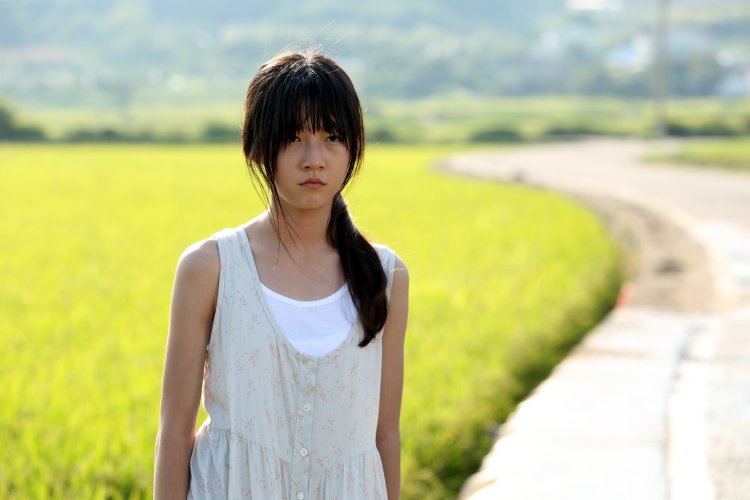
fullsizephoto427951Review of A Girl at My Door from the London Film Festival up at UK-anime.net. This is also playing at the London Korean Film Festival which opens today with a gala screening of Kundo: Age of the Rampant. Director July Jung will be at the LKFF screening on 7th November for a Q&A tootickets still available!


You’d never know it, but A Girl at My Door is actually the first feature film from promising new Korean director July Jung. Produced by well regarded Korean auteur Lee Chang-dong (Poetry, Oasis, Peppermint Candy), the film evidently benefits from some of his expertise but it would be a mistake to over emphasise his involvement. Like Lee’s films A Girl at My Door is a tightly plotted character drama that opens up to explore a whole host of social issues but Jung has certainly been able to put her own stamp on the project and if A Girl at My Door is anything to go by, she is very much a talent on the rise.

Lee Young-nam (Bae Doona) has just arrived in the little hick town she’s been exiled to thanks to some kind of undisclosed infraction committed in Seoul. As the town’s new police chief, she’s thrust into the largely male world of local law enforcement and forced to acclimatise to small town politics with hardly enough time to breathe. Lee is also a high functioning alcoholic who guzzles soju from refilled litre bottles of water though her colleagues don’t seem to have noticed and her work is barely affected. After catching sight of the same young girl who seems to be constantly running away from someone or other, Lee eventually intervenes when a group of teenagers are picking on her. Do-hee is a troubled teenager from a violent home where, abandoned by her mother, she’s ‘cared for’ by a step father and resentful drunken grandmother. Do-hee quickly fixates on Lee and her superficially fearless attitude and eventually Lee has taken the girl in and offered her a place of solace way from the chaos of her home life. However, no matter how good one’s intentions may be, others will twist the facts to their own advantage and doing the right thing can often prove dangerous.

Possibly one of the benefits of having a high profile producer like Lee Chang-dong is that you’re able to get yourself a high profile cast of talented actors for your first film despite not having a proven track record or industry clout of your own. Bae Doona’s performance of the largely silent Lee is nothing short of extraordinary. There’s a sort of defiance in Lee’s silence, an unwillingness to speak because she knows there’s very little point. All we can glean about what happened in Seoul is that her dismissal has something to do with the fact that Lee is gay – something that is accidentally discovered by exactly the wrong person when Lee’s ex-partner comes to town. It’s not so much that she’s keeping that secret from the townspeople, but more that she knows it’s going to be a problem and she’s unwilling to deny it either. After all, she’s been here before and she knows how this scenario plays out. Taking in someone else’s child can be a dangerous thing for anyone, but as one policeman later puts it “it’s different when a homosexual does it” and even the most innocent, well meaning of gestures suddenly becomes something sordid and dirty. Lee’s world weary attitude seems to imply she half expected this would happen, still – there was a girl at her door, what else could she do?

Bae Doona is equally matched by the already fairly experienced teenage actress Kim Sae-ron as the troubled young girl, Do-hee. A mess of contradictions, Do-hee is both vulnerable and dangerous. One of the villagers refers to her as a monster and she certainly has a dark side which can be selfish and manipulative as well as a tendency towards fantasy. However, at the root of things she’s just a lonely, abandoned, unloved and unwanted child. Of course, as soon as someone shows her the slightest hint of kindness she will latch on and become fearful of losing even that extremely slight glimpse of affection. Perhaps therefore, she says things that aren’t quite true without fully understanding their implications and ironically risks ruining the fragile happiness she’s so desperate to cling to. It is quite an extraordinary performance from such a young actress – Kim Sae-ron manages to unify all of Do-hee’s contradictory sides into a convincing, and ultimately quite moving, whole.

A Girl at My Door does have its social issue dimension – the exploitation of illegal immigrants, small town politics, homophobia, sexism and of course unwanted children are all themes at some point touched on through the film, but what is at heart is a character drama about two lonely women who both find new strengths thanks to their unexpected friendship. Jung has crafted a charming and moving film that is only improved by its tremendous feeling of stillness. Beautifully shot and full of intriguing ambiguities, A Girl at My Door is a fantastically assured debut feature which hints at a very interesting career ahead for director July Jung.


Roommate (ルームメイト, Takeshi Furusawa, 2013)

meinImage(Is the tag line really “A woman’s unpainted face is scary!”? I get where they’re coming from but, hmmm – problematic)

Adapted from the 1997 novel by Aya Imamura, you’d be forgiven be forgiven for thinking that Roommate is something of a rehash of seminal ’90s “my roommate is a psycho” drama Single White Female though it goes a couple of steps further in the influences stakes and throws in Fatal Attraction and The Three Faces of Eve for good measure. Honestly anything else is a spoiler (though anyone who’s ever watched a film of this nature before is going to guess 70% of the plot about ten minutes in) but sit back and get ready to enjoy a very silly (though not really silly enough) tale of violence and psychological intrigue!

The film starts with the police arriving at the scene of a violent crime where a severely injured man and woman are being taken to hospital leaving another man dead inside. Cut to three months earlier and Harumi (Keiko Kitagawa) – the woman from the crime scene, has been injured in a car accident and wakes up in a hospital dormitory. Shortly thereafter she’s visited by the man who was driving the car, Keisuke (Kengo Kora), along with his insurance broker friend who’s very keen to sort out the paperwork for the compensation etc. Whilst recuperating Harumi builds up friendship with one of the nurses, Reiko (Kyoko Fukada), and when it comes time for Harumi to be discharged the two decide to become roommates! It’s all amazing at first but cracks begin to appear as Reiko’s behaviour becomes increasingly strange and Harumi starts getting closer to Keisuke. Then Harumi starts seeing a woman who looks really like Reiko, but is not actually Reiko, hanging around and things just start to get even more bizarre from then on.

Yes, you’ve seen all of this before. Not just in Single White Female and every other identity theft stalker drama since but even the various twists and turns feel lifted from other, more successful, movies. There’s even an incident with a pet that’s kind of like the one in Single White Female but it’s been given a Fatal Attraction style twist to make it less obvious. At this point, when your roommate’s behaviour has become this dangerous, a normal person would actually do something about it, wouldn’t they? Not in the land of the movies though! Revelation after revelation and about an hour of psychobabble later it’s all explained (sort of, as long as you don’t really think about it) but the last twist and the subplot with Tomorowo Taguchi’s sleazy mayoral candidate seem a little superfluous.

Mostly the film has a disappointingly televisual feeling and though there are a fair few interesting techniques in play such as the use of split screens, this feels both too on the nose and underdeveloped to have much of an impact. Performances are also on the weaker side though this may rest partly on the lack of depth in the fairly schlocky script – Kengo Kora isn’t left much to do other than being generally ‘nice’ and though the bond between the two women is well brought out, neither of them really gets to let loose with the intense extremes of their characters. The problem, really, is that Roommate walks a fine line between camp horror movie and serious psychological thriller, which just makes it a little bit dull. It never manages to build up much of an atmosphere of fear and its unwillingness to play with ambiguity makes it that much less engaging. Had it gone further down the schlocky, campy, melodrama route, Roommate might have proved more fun but this light on gore heavy on drama approach makes it only mildly diverting.

It’s about as tame and mainstream as they come, but Roommate isn’t exactly a bad film, just not a very interesting one. Not crazy enough for the midnight crowd nor smart enough lovers of cerebral thrillers, it ultimately falls between two stools. With such a high profile cast you might have expected something a little more powerful but Roommate is the classically OK, yet totally inconsequential film that’s fine for occupying a couple of hours but little more.