Gangnam Zombie (강남좀비, Lee Soo-sung, 2023)

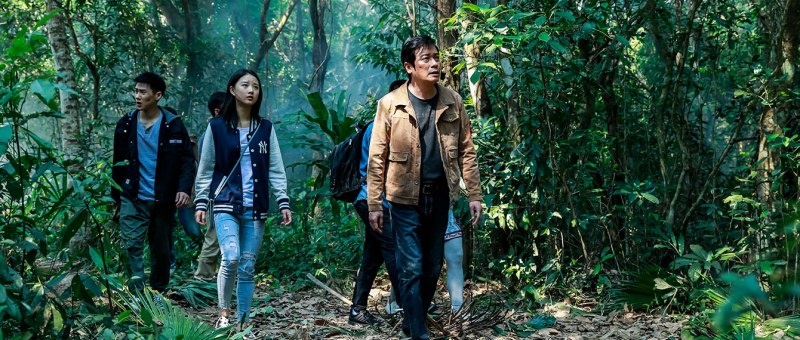
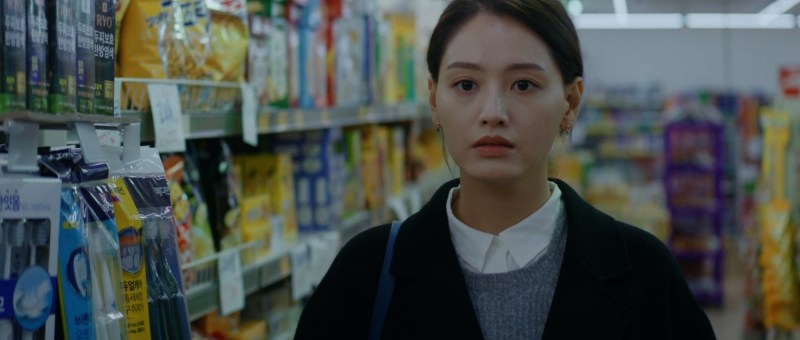
A struggling YouTuber takes on sexism, classism and the zombie apocalypse in Lee Soo-sung’s office-bound horror Gangnam Zombie (강남좀비). Lee apparently chose the title to appeal to international audiences hoping to cash in on the cachet of Gangnam Style and the film does have a made for export aesthetic, but even so it tackles some of the ills of contemporary Korea from work-based sexual harassment to the difficulties of getting a foot in the door in media and calls from your mother asking you to go home and farm melons with her rather than hang around failing to make it Seoul. 

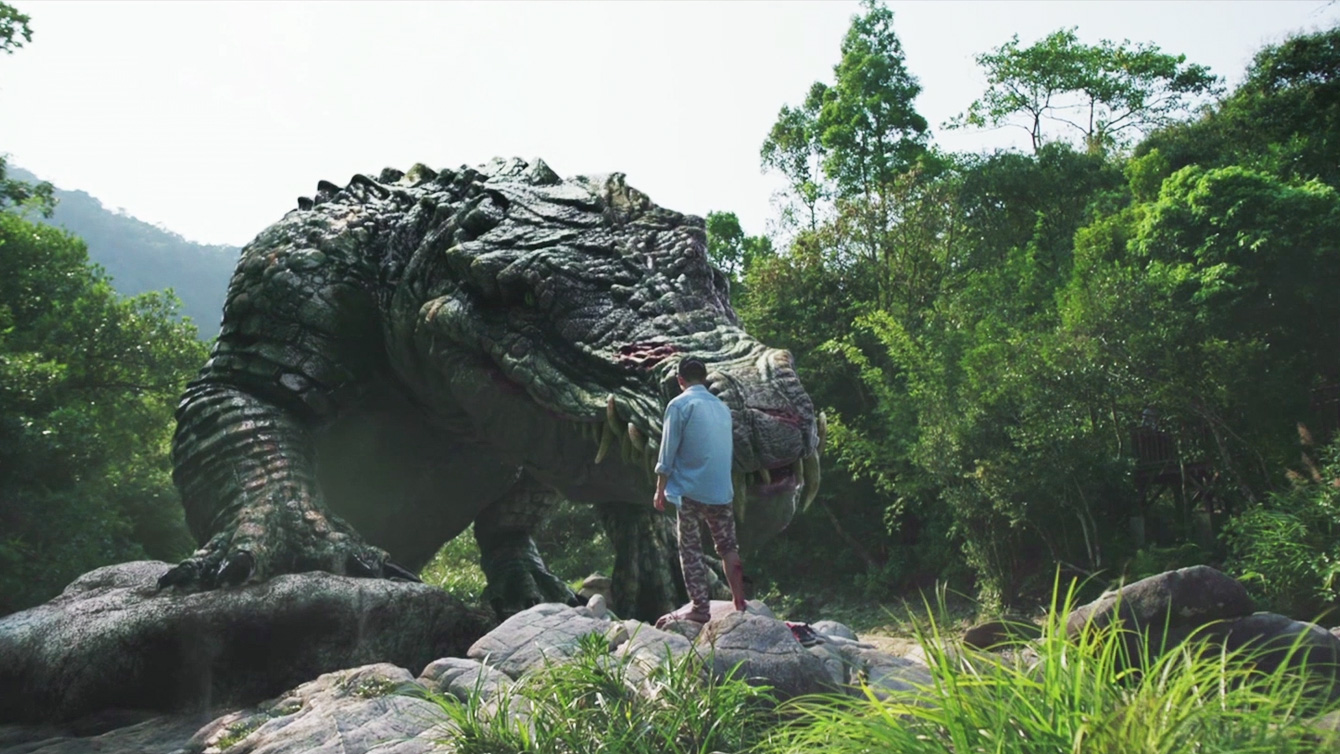
For all that, however, Hyun-seok (Ji Il-joo) is a fairly cheerful man actually quite excited about asking his colleague Min-jeong (Park Ji-yeon ) out to a Christmas concert even if voices on the radio warn that we’re not so much living in a post-pandemic world as with a virus that could easily mutate again and there’s no telling when the next great pathogen may arise to kill us all off for good. This is essentially what the film suggests the zombie virus is, though the implication that it was shipped in from China may be in fairly poor taste along with the immediate allusion to the first cases of COVID-19 in Wuhan in 2019. In any case, patient zero acquires the virus from a zombie cat apparently trapped inside a container vessel he was in the middle of robbing and then goes on to kill his accomplice. 

Meanwhile the film devotes much of its time to the travails of Hyun-seok who is accosted by the landlady of the building where his office is because his boss is way behind on their rent while Hyun-seok counters he hasn’t been paid for three months either. The boss is also sexually harassing Min-jeong but she feels she can’t say anything because it was difficult for her to get this job and she’s worried about being blacklisted if people find out she reported her harassment. Hyun-seok had run into her outside work standing up for two women against to two chauvinistic men who’d apparently tried to use a date rape drug on one only her friend had noticed and saved her. Min-jeong feels confident standing up to them, citing the law to prove her point, but has mixed feelings when Hyun-seok intervenes pointing out that if they get lawyers it could be him going to jail not them. 

But then again, the law’s not much use in a zombie apocalypse. Hyun-seok is also a reserve member of the national Taekwondo team which is certainly a handy skill to have, but it’s also true that he sometimes ironically falls into a sexist hero mode in his desire to protect Min-jeong even if he does teach her a few moves she can use against both zombies and sleazy bosses allowing her to hold her own and in fact save him on more than one occasion. Meanwhile they are both saddled with the snooty landlady who is forever complaining that “the poor” have no manners, sense of responsibility, or inclination to save up for things while insisting no one call the police because it’ll lower the property prices and she’s trying to sell the building. It might be tempting to see her as an embodiment of a rabidly capitalist society consuming its workers and turning them into mindless, flesh-hungry drones if it weren’t perhaps also true that the film is not all that sympathetic about Hyun-seok’s failure to make it as a YouTuber. Perhaps he ought to listen to his mother and go home to farm melons after all. 

Lee does his best with a limited budget, as Hyun-seok and Min-jeong desperately try to escape the corporate prison of the office building to seek freedom and safety outside but largely saves the zombie action for the climactic final sequences in returning to the film’s opening while otherwise focussing on Hyun-seok’s romantic diffidence and the problematic atmosphere in his moribund live-streaming office. But then again it seems to say that just because you got away once doesn’t mean you’re safe or the aggressors of a dog eat dog society won’t necessarily wake back up when you least expect it to embody the city once again consuming those who cannot escape it with increasingly bloody violence. 


Gangnam Zombie is released in the US on Digital, DVD, and blu-ray on Sept. 26 courtesy of Well Go USA.

International trailer (English subtitles)

Where Is the Lie? (Marupok AF, Quark Henares, 2023)

What is it that motivates acts of seemingly pointless cruelty, why do people obsessively waste their own lives trying to make those of others miserable? Quark Henares’ inspired by real events (depending on who you ask) catfishing drama Where is the Lie? (Marupok AF) sees a trans woman fall victim to homophobic love fraud amid a climate of intense transphobia and subsequently make the decision to take a stand not as a petty act of revenge but to reclaim her dignity and protect her community while generously wishing her tormentor well. 

The catfisher, Beanie (Maris Racal), is given the right to reply through a series of confessional videos which slowly gain prominence towards the film’s conclusion. She admits that she knows what she did but does not really understand why she did it save justifying herself that she’s been “bullied” by members of the LGBTQ+ community in the past. She deliberately mangles the acronym and makes a point of using male pronouns to refer to the trans woman she’s currently targeting, Janzen (EJ Jallorina), but later starts to slip up instinctively using “she” after spending months talking to her normally over a dating app posing as buff model Theo (Royce Cabrera). Asked what the point of all this is, Beanie doesn’t have much of an answer beyond the cruelty itself explaining that the end goal is simply to ghost the target once they’ve made an emotional connection to cause them to feel hurt or humiliated. Perhaps these seem like low level consequences to Beanie who regards the catfishing as something like a weird hobby though one she expends an immense amount of time on seeing as she doesn’t appear to have anything else going on in her life aside from her actual job as a video director working in the fashion industry. 

The strange thing is though is Beanie describes Janzen as fun to talk to and they even seem to strike up a genuine connection over their shared interest in design. Beanie then finds herself in dilemma, simultaneously accelerating the plan to avoid having to deal with her complicated feelings but then restarting it after its natural end point by inserting herself into the conversation posing as Theo’s cousin and apologising on his behalf for his treatment of her in a moment of panic. The implication is that Beanie’s behaviour is motivated by an internalised homophobia in which she cannot bear to admit her desire for other women keeping her connection with Janzen because she is attracted to her but simultaneously denying it through a deliberate attempt to cause her pain and humiliation in returning her feelings vicariously through the fake Theo persona.

Some may feel that the film to too sympathetic towards outward transphobe Beanie or that once again implying the villain is closeted is unhelpful, but there may be something in her claims to be a kind of victim too in that her internalised homophobia is caused by societal conservatism in a largely Catholic, patriarchal culture. The film is clear on the dangers and discrimination Janzen faces daily both online and off as her friends remark on the case of a trans woman being arrested for using the ladies’ bathroom and later TV news footage shows president Duterte pardoning a US soldier who had been convicted of murdering a transgender sex worker. As the film begins, Janzen’s boyfriend breaks up with her over his discomfort about publicly dating a trans woman, implying that he is ashamed or embarrassed in his inability to explain the relationship to his older conservative parents. An online date then goes south when he realises she is trans. As her friends tell her Theo seems too good to be true especially as his social media only contains professionally taken photos and no personal posts or connections but Janzen is blinded by love and deeply wants to believe that the relationship is “real”.

That might go someway to explaining why she puts up with so much nonsense from Theo and continues to interact with him even after he calls her a series of slur words, leaves her waiting at the airport for a fake meeting, and then dumps her in a Jollibee after convincing her to travel all the way to Manila knowing she has no return ticket or place to stay. Playing out almost like an incredibly perverse Cyrano de Bergerac, the film at times pushes Janzen into the background in favour of exploring Beanie’s motivations for her seemingly senseless, sadistic cruelty, but subsequently allows her to reclaim centrestage in owning her own story by taking a stand against transphobic bullying on behalf of the other victims and her wider community while very much claiming the moral high ground by wishing Beanie nothing but peace though whether she’ll ever find it is anybody’s guess. 


Where Is the Lie? screened as part of this year’s New York Asian Film Festival

Original trailer (English subtitles)

Images: © Anima Studios, Kroma Entertainment, December 2022.© 2022 Kroma Entertainment. All Rights Reserved

Harvest Moon (Эргэж ирэхгүй намар, Amarsaikhan Baljinnyam, 2022)

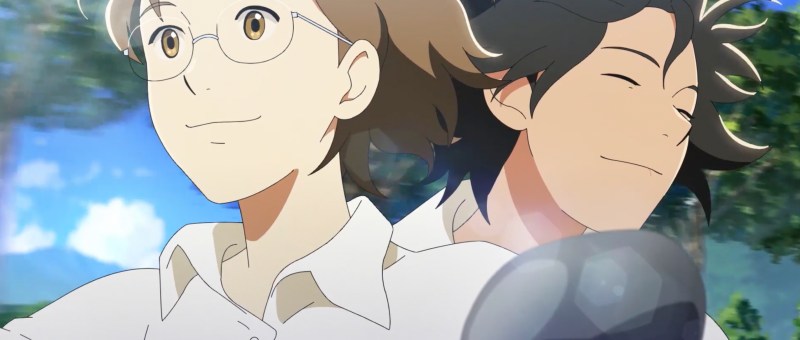
A young man who left for the city is forced to reckon with his childhood self and the nature of paternity when called back to his rural home in Amarsaikhan Baljinnyam’s touching directorial debut Harvest Moon (Эргэж ирэхгүй намар). The melancholy title may hint at the short-lived nature of the central relationship but also reflects the slowly disappearing traditional culture of the Mongolian Steppe and the loneliness of those who find themselves in one way or another orphaned amid its vast and empty landscapes.

Tulgaa’s (Amarsaikhan Baljinnyam) dilemma is that he’s just received a voice message from a woman he’s been seeing explaining that she has a son she had not previously disclosed and wants to know if it’s a dealbreaker before the relationship becomes more serious. Meanwhile, he receives a call from his home village letting him know that the man who raised him, but was not actually his biological father, has been taken ill and may be close to death. Though reluctant, Tulgaa begins the long journey to say goodbye and then finds himself agreeing to stay a little longer to finish his father’s last harvest. 

While there, he meets a little boy, Tuntuulei (Tenuun-Erdene Garamkhand), who is like he was a child without a father though currently living with elderly grandparents while his mother works in the city. Older than his years, Tuntuulei too is bullied and ostracised by the other villagers who gossip and disapprove of the manner of his birth which apparently occurred after a one night stand. Neither Tulgaa nor Tuntuulei ever knew their biological fathers and are each looking for something to soothe their loneliness, eventually developing paternal relationship even in the knowledge that Tulgaa will return to the city once the harvest is done whether or not he eventually decides to accept becoming a father to his girlfriend’s son. 

In many ways Tulgaa is bonding with his childhood self and processing his paternal anxieties through the lonely, abandoned child he once was which is perhaps a little unfair given that he essentially taking a test run with Tuntuulei in preparation for becoming another boy’s father. Tuntuulei’s grandparents meanwhile contemplate sending him to the city to be with his mother, conscious that he’s bored with only the elderly couple for company and takes no interest in schooling. Tulgaa’s discovery that the boy cannot read provokes a rift between them in his insensitive reaction though Tuntuulei has already taught him a series of essential life skills for living on the Steppe from fishing to how to salve the blisters on his hands from cutting grass with a scythe. Tulgaa’s father had finally accepted that there was nothing he could have done to prevent him from leaving, but Tuntuulei seems so perfectly in tune with this landscape that it may not be possible for him to find happiness in the city even as this way of life continues to decline with other youngsters increasingly choosing urban civility over nomadic freedom.

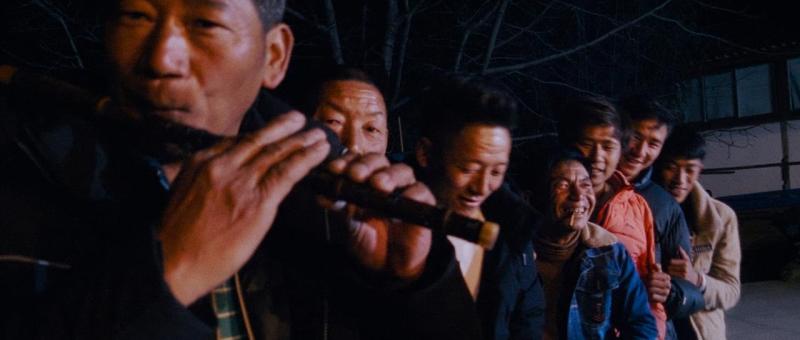
As Tulgaa is eventually told, the age of harvesting by hand may be over as his stay in the village is quite literally cut short leaving Tuntuulei all alone a tiny figure amid heaps of drying grass. The once verdant field now seems sad and empty, a sign that autumn has arrived and not only for the two men but for the village as a whole. The film had opened with a group of men desperately trying to get a phone signal by attaching a mobile to a pole and standing on a horse, shouting up at the receiver and barely able to understand the reply. Tuntuulei suggests building tower so people could climb up and make a call whenever they want which in part symbolises his own desire for connection along with the community’s isolation from the outside world. But when he tries to use it himself he discovers only disappointment. After all this effort, his mother is too busy to speak to him and blithely asks that he call back later cruelly crushing his fantasy of being able to contact someone any time he wants and reinforcing his sense of aloneness. Even so through his relationship with Tulgaa who is after all an older version of himself he is able to find another connection which may endure even in its absence. Beautifully lensed to take advantage of the majesty of the Mongolian landscape, Amarsaikhan Baljinnyam’s poetic debut is a quietly affecting affair in its own way melancholy but also filled with warmth and a sense of future possibility.


Harvest Moon screens in Chicago Sept. 23 as part of the 17th season of Asian Pop-Up Cinema where Pinnacle Career Achievement honouree Amarsaikhan Baljinnyam is scheduled to attend the award ceremony before the film and Q&A after.  

Original trailer (English subtitles)

The Eleventh Hour (どたんば, Tomu Uchida, 1957)

The problematic working practices of a post-war coal mine are thrown into stark relief when five men are trapped underground during a collapse in Tomu Uchida’s tense rescue drama, The Eleventh Hour (どたんば, Dotanba). Based on a TV play which was itself inspired by real events, the title alone tells us that we can expect a happy ending even if it’s somewhat undercut by the cynical quality of the fanfare with which it is greeted. Nevertheless, it’s clear that the mine itself reflects a dark side of the contemporary society even as it rocketed towards an economic miracle at least on one level fuelled by coal. 

The Towa mine is a small concern run by the owner, Sunaga (Yoshi Kato), who was a miner himself in his younger days, and the chief engineer Kusaka (Shin Tonomura). In the opening scenes it becomes apparent that they are having difficulty running the business effectively while chasing lucrative large-scale contracts. Kusaka pulls Sunaga aside and attempts to warn him that recent attempts to fit a replacement support beam have caused the structure to shift with the effect that it has begun leaking water. The implication is that Sunaga has attempted to cut corners and endangered the miners’ safety. He barely listens to Kusaka’s complaint before barking at him that it’s his responsibility to take care of, and he must be aware of the cost implications involved seeing as he more than anyone knows how hard it is to run this kind of business. 

Unfortunately for him, a sudden rainstorm spells disaster when the mine begins to flood. Some workers still underground are able to escape thorough a support tunnel that connects to another mine, but five are trapped at the other end having managed to climb to a higher shelf above the water. In the rain-soaked soil, some of the above ground structure also begins to collapse, while to his credit a distraught Sunaga calls in the police and miners’ union as soon as possible rather than trying to cover up the disaster to hide his mismanagement. 

For all that, Sunaga is not a stereotypically exploitative mine owner so much as a bad businessman possibly in over his head though as a former miner he should have known better. On the one hand, he had only just found out about the unstable support arch and could not have fixed it before the disaster but as he himself agrees he bears the ultimately responsibility for the way the mine was run which includes skimping on repairs and inspections. More than anyone else, he wants the men to be rescued alive and later tearfully tells his wife that he has considered suicide but is now resolved to sell the mine and his own home to compensate the families should the worst happen. Kusaka later does try to take his own life after witnessing the rescue effort flounder, a Buddhist priest later suggesting that his act may have been intended as a kind of human sacrifice as if he could save the men’s lives by offering up his own. 

Then again, the way some of the men put it it seems like some mine owners view the compensation money for workers killed on the job as a kind of fine they’re prepared to pay to maximise profits. The film briefly introduces the circumstances of the some of the men and their families, one a husband and father who asks for an advance on his pay because his wife and daughter are ill with something that could turn out to be measles. The amount of the compensation money isn’t clear, but may not be enough for a widow to raise a five-year-old daughter to adulthood. If these men die, their families may die with them. Other relatives waiting for news include an elderly man anxious for his only son, and a grandmother waiting for her grandson who only went to the mine to have a look around before potentially starting to work there. 

In the case of the young Yamaguchi (Shinjiro Ebara), the film hints at the way the industrialisation presented by the mine has disrupted local communities as farmers’ sons leave the land for the promise of better pay for working underground. Yamaguchi is taking the job because his father is ill with some kind of neurological complaint, possibly caused by industrial pollution, and he has argued with his brother presumably about money and the responsibility of earning his keep. While underground, he runs into a friend of his father’s, Banno (Takashi Shimura), who tells him that mining is not a job you can do for life and he himself seems far too old to be doing such physically strenuous work though he is the only one almost able to stand when the men are eventually lifted from the mine. 

A veteran miner, Banno too is perhaps complacent. He smokes underground and blows the cigarette out after every puff but only to avoid carbon monoxide rather than a potential explosion. Trapped underground twice before, he does his best to comfort the other men while reassuring them that their colleagues are working to rescue them as they speak. Most of the mine workers from the surrounding area have indeed come to help, along with a specialist rescue team from Tokyo, though they make little progress with the tools available to them. As a journalist puts it, small enterprises don’t have access to the same resources as large corporations and cannot simply order in larger pumps or better diggers. Many of the workers want want to give up with the main support coming from the korean miners from a neighbouring town though they get little thanks for the efforts. After overhearing a frustrated member of the rescue team employ a racist stereotype to describe them as lazy drunks only after money, they withdraw their labour. 

Sunaga is later forced to go back to the Koreans cap in hand with a personal apology, but though some of them are personally sympathetic they remark on the level of discrimination they’ve faced for the entirety of their careers and aren’t sure why they should help Sunaga now considering the way they’ve been treated. On a side note, standard workers protections would not apply if they were killed or injured during a rescue attempt meaning they’d be risking their families’ lives as well as their own for men who are almost certainly already dead. It’s not surprising that they overwhelmingly vote not to help leaving a dejected Sunaga devoid of all hope. 

Nevertheless, they eventually reconsider reflecting that if they were trapped underground they’d want to believe someone was coming and if they don’t come now then they won’t have any right to expect them to. It is workers’ solidarity that eventually saves the miners, from winch operator Michi (Masako Nakamura) who refuses to leave her post so that the men won’t feel “abandoned” to those who arrive to rejoin the rescue effort just when it seems the most hopeless. The solution to cracking the mine is found only by listening to a former employee who hints at its dark history in reminding them of a secret support tunnel sealed up after the war once military equipment had removed.

It might be tempting to read an allegorical message into the solution being the need to blast through the buried wartime past to rescue the men trapped on the other side though it may be a bit of a stretch. In any case the action outside is also somewhat ironic. As the mine collapse becomes national news and attracts rubbernecking crowds, a man turns up to sell ice cream, while journalists also report on the event from the close by. They seem broadly hopeful, but are also looking for a good story and all too quick to report on Kusaka’s suicide attempt. When the men are eventually rescued, they order a helicopter to drop confetti over the surrounding area (possibly unhelpful to local farmers) along with a bouquet for each of the men. Uchida had some experience of working in a mine during his time in Manchuria which had permanently ruined his health and had first hand knowledge of how a mine works and what happens when something goes wrong which explains the otherwise naturalistic opening sequence laying out the conveyor belt design of the complex as the coal is picked and transferred into pick up trucks that will take it to its new owners. It is however “dark and wet like hell” underground, a place that ideally no one should have to go and that all should eventually be rescued from. 


Bear Man (웅남이, Park Sung-kwang, 2023)

According to an ancient legend, bears who eat garlic and mugwort can become human though it’s not exactly clear why they’d want to. The debut film from Park Sung-kwang, Bear Man (웅남이, Woongnami) as its name suggests follows a pair of bear cubs who decide to give things a go in the human world but with wildly differing results as one is adopted by the researcher who allowed them to escape and the other by a vicious gangster who exploits him for his violent capabilities and shows him little love. 

Love is something Woongnam (Park Sung-woong) got a lot of thanks to his devoted mother and though not exactly the sharpest knife in the drawer had forged a promising career as a local policeman before he was let go after falling into a kind of funk on overhearing his father on the phone suggesting that the life expectancy for a regular bear is only 25 so he might not have much time left. Thanks to his nature as a bear man, Woongnam ages much faster than everyone else and already appears to be middle-aged though he is also blessed with immense strength and agility. After agreeing to bend the law by helping his feckless friend Malbong (Lee Yi-kyung) win in at illegal gambling Woognam comes to the attention of a group of police detectives investigating a shady gangster who notice a man looking just like Woongnam taking out a host of bad guys at the harbour. 

There is something quite poignant in the puppy-like existence of Woongbok (also Park Sung-woong) who keeps looking up to his boss as a father figure with a mixture of fear and longing. He gazes enviously at a family crossing the road in front of him and later visits Woognam’s home where Woongnam’s mother thinks that he’s Woognam and tries to feed him his favourite foods while he just looks on silently without expression. Where Woongnam is basically good, not too bright but heart in the right place, Woongbok has been raised as creature of violence by his intimidating father figure and carries a threatening aura with his slick haircut and tailored suit. 

The police want Woongnam to pose as Woongbok so they can take down the gangsters who have not only been trafficking drugs but also dabble in scientific research into viruses and their cures apparently about to unleash an epidemic in China to profit off the drug sales. It’s not all that clear what the scientists who released the bears were actually researching though there is a kind of parallel in the fact the other pair seemingly settled down, adjusted to their new environment and had a few cubs while Woongnam and Woongbok ended up becoming humans with bear-like abilities. Woongnam has to be prevented from entering hibernation and sleeps flat out like a bear but otherwise keeps his true nature secret even while covertly helping the townspeople out getting rid of beehives and freeing trucks stuck in the mud. 

That would be about the extent of “policing” in this kind of small-town where there’s nothing much to do but catch fish in the river and chat to wild boar. Park builds on the surreality of everyday rural life with mounting absurdities such as the parade of teenagers who troop through the convenience store where Woongnam’s live-streaming friend Malbong works each of whom he is largely able to unmask thanks to his keen sense of smell, and the polytunnel that doubles as a gambling den for down on their luck farmers. Woongnam’s biggest regret is losing his position as a police officer and it’s his desire to get it back to make things up to the people who raised him that encourages him to go along with the detectives’ crazy plan even if means he has to undergo weird martial arts training inspired by Drunken Master and take lessons from a strange movement coach in how to walk like a gangster. Yet in the end it’s Woongbok’s innocent desire for familial love that becomes a source of salvation, turning against his gangster brethren to protect the warmth of Woongnam’s family home. Quirky in the extreme and defiantly absurd, the film nevertheless has genuine heart in otherwise strange tale of wandering sons and bears of men.


Bear Man screened as part of this year’s New York Asian Film Festival

Images: © 2023 KIMCHI PICTURES PRODUCTION. ALL Rights Reserved.

Bad Education (黑的教育, Kai Ko, 2022)

According to a jaded policeman in Kai Ko’s directorial debut Bad Education (黑的教育, Hēi de Jiàoyù), only 10% of people are good and 10% bad with 80% somewhere in the middle depending on the circumstances. As another person puts, even bad people have principles and in an odd way it’s a sadistic gangster who becomes a moral authority teaching the trio at the film’s centre a few valuable lessons in just how far south something can go when you allow yourself to be swayed by peer pressure and adolescent bravado. 

Perhaps intended as a graduation prank, Chang (Berant Zhu) suggests he and his friends Han (Edison Song) and Wang (Kent Tsai) exchange otherwise unspeakable secrets to cement their ongoing friendship through the threat of blackmail and exposure. Chang tells a frankly disgusting story that he raped and impregnated a young woman with learning difficulties while Han claims that he bludgeoned a homeless man to death but no one noticed. The only one to be going on to university, Wang does not have any particularly dark secrets to share. All he can come up with is that he once read his father’s texts and found out he’s having an affair, while otherwise confessing to having stolen the answer sheet to a test. As expected, Chang and Han don’t like his answers and begin to threaten him, pushing Wang back towards the edge of the roof as if they meant to kill him so wouldn’t spill the beans. 

Chan and Han were of course bullshitting, they haven’t done anything of the sort, but they manage to persuade Wang that he’ll have to do something similar to complete the pact. They challenge him to throw paint at a gangster which turns out to be an incredibly bad mistake though to be fair to them, Chan and Han may not have expected Wang to actually do it. It’s only then that they start to realise they aren’t children any more. Actions will have consequences and even if, as Mr. Hsing (Leon Dai) the gangster boss later says, they haven’t done “anything wrong” they’ve gone about everything in the wrong way and will eventually have to pay. Chan looks up at him pleadingly and answers like a child that he’s sorry and won’t do it again, but Mr. Hsing points out that whether he does it again or not is of no interest to him. It’s not what this is about. 

What it’s about is perhaps a different kind of “graduation”, leaving the innocence and naivety of childhood behind for the cynicism of adulthood and the moral greyness of grownup society. Then again, they weren’t all that innocent to begin with that they could come up with heinous crimes to confess and imagine that their friendship would survive it. The policeman says that 80% of people could go either way in most situations, himself included it seems, painting a fairly bleak picture of the contemporary society. Chased through the city by Hsing’s foot soldiers, Chan and Wang end up stealing a taxi from a taxi driver who had just raped the young woman passed out drunk in his car though no one makes much of an effort to help her as each remains fixated on their personal goals such as escaping and fleeing the city. 

In the opening scenes, a lobster had been plucked from a tank and had its legs cut off in a moment of foreshadowing while customers in Mr Hsing’s seafood restaurant with greasy mouths suck on shrimp whose corpses they soon spit out and discard. Something quite similar happens to the boys as the cracks in their friendship are further exposed. Even back on the rooftop, they’d reflected on the class difference between them with Wang, whose father owns a factory he is expected to take over, the only one going to college, while Chan jokes about becoming his driver and Han remarks that he’d like to drive a Maserati (one stands across from him as he’s viciously beaten in his underwear by Hsing’s goons). 

Figuring out they have no underworld connections, Hsing asks for money and the boys immediately look to rich kid Wang only he refuses because it’s too embarrassing to ask his dad for that amount of cash. Engaged in some kind of sadistic power play, Hsing tries to get them to cut each other’s pinkies off with the guys each turning on and blaming each other. Chan too tries to argue that they came back to save Han so he owes them (only they didn’t), while later blaming Wang for going ahead with the dare rather than himself for setting up this stupid prank as a means of having something to remember in their old age. Later he admits his insecurity, uncertain of his own future and frightened that his friends will leave him behind but it’s already too late. Wang ironically fulfils the pact, his graduate rosette fluttering as he does so as if to remind us that he’s now “graduated” from childhood innocence, but ironically destroys rather than cements the boys’ friendship with one chaotic night of violence and terror. Incredibly dark with moments of bleak humour, Bad Education offers a lesson in retribution and the costs of peer pressure and bravado and leaves each of its heroes changed, if not slightly broken, by the realities of a duplicitous adulthood. 


Bad Education screened as part of this year’s New York Asian Film Festival

Teaser trailer (Traditional Chinese / English subtitles)

Faces of Anne (แอน, Kongdej Jaturanrasmee & Rasiguet Sookkarn, 2022)

A young woman wakes up in a grimy hotel room with floral wallpaper marked by damp stains. She discovers that the window is frosted over and won’t open while she has no idea of how she got there or who she is but otherwise instinctively knows that the face she sees in the mirror does not belong to her. She tries to call out and hears a voice from an adjacent room telling her to be quiet and that her name is “Anne”. Anne asks her how she knows if she can’t see her, but the voice just tells her that she knows her name is Anne with no further explanation. 

As it turns out in Kongdej Jaturanrasmee & Rasiguet Sookkarn’s Faces of Anne (แอน) every girl in the place has the same name and as gradually becomes apparent are all reflections of a single personality. The key Anne discovers that her face seems to change seemingly at random leaving her uncertain even within the bounds of her fractured identity. A psychiatrist tells her that a name is “not as important as who you are” while encouraging her to learn to accept the face she sees as her own, but she remains confused, abstracted from herself, and unable to reconcile her selfhood with its reflection. Meanwhile, she is stalked by a violent demon in the guise of a deer name Vitigo who wanders the hospital corridors taking out any Annes that it finds. 

What seems to be going on is an attempt to reintegrate the shards of a fractured personality into a coherent whole only it’s manifesting as a massacre of the self as the demon bumps off each of the multiple Annes insisting that only one, the “real” Anne, can be allowed to leave. But then no one is really only one person but presents a series of personas to the outside world all of whom can be said to be “real” even if otherwise inauthentic. In an illuminating flashback, high school girl Anne chats with another couple of girls about fake online profiles where they can share their “real” selves each of which of course have a completely different profile photo much as the serial Annes have a different face. What we can assume to be the key Anne expresses that she just wants to find a place where she can be completely herself and thinks she has one in a relationship with a boyfriend whose face we never see but had shades both of a man who might be her father and the hero of a video game the atmosphere of which seems to have coloured the aesthestics of her eerie mindscape. 

Some might find it easy to dismiss her identity crisis as teenage angst or to suggest that what she’s suffering from is a broken heart though Kongdej Jaturanrasmee & Rasiguet Sookkarn also make reference to a number of problems faced by young people in contemporary Thailand such as online harassment and bullying, sexual harrassment at school and the bad student movement protesting an oppressive educational environment laying bare the pressures on key Anne’s mind that might cause her to become estranged from herself. Asking probing questions about identity, the film wonders if Anne can learn to find herself as distinct from all of these images or if in the end identity and image are inextricably linked to the extent that they can no longer exist distinctly and Anne has no power to identify herself but must rely on the identification of others. Then again, the voice from the other room knows she is Anne without seeing her precisely as she is also Anne, identifying herself in the absence of image. 

Eerie and filled with a Lynchian dread in its hellish lightning and grimy hotel room setting, the film turns Anne’s psychodrama into an existential slasher in which she awaits the arrival of the Final Girl. Retracing her steps, she seeks escape in a pattern of trial and error unwittingly at war with herself even as tussles over identity and authenticity while trying to reconstruct a shattered identity by reclaiming the images of the past or perhaps as simply as the psychiatrist had put it learning to accept the face she now wears as her own. Haunting and empathetic, the film has only sympathy for the wandering ghosts of a fractured mind and the vague hope that together they can put Anne together again. 


Faces of Anne screened as part of this year’s New York Asian Film Festival

Original trailer (English subtitles)

Images: © M Pictures Entertainment Public Company Limited.

The Nineteen-Year-Old’s Map (十九歳の地図, Mitsuo Yanagimachi, 1979)

“What should I do with my life?”, the question becomes a frequent refrain in Mitsuo Yanagimachi’s dark tale of urban alienation, The Nineteen-year-old’s Map (十九歳の地図, Jukyusai no Chizu). Adapted from a novel by Kenji Nakagami which painted a bleak picture life on the margins of the economic miracle, the film’s quiet sense of unease hints at a coming explosion but also that there will never be one because in the end the hero is too filled with despair and ennui to ever follow through on the various threats he makes during a series of prank calls to people in the neighbourhood who’ve incurred his wrath.

The nineteen-year-old of the title, Yoshioka (Yuji Honma) is in theory a student taking a year out to study for university exams while earning his keep delivering papers for a newsagent where he lives in a dorm with several other paperboys all just as defeated and aimless as he is. They all, however, look down on and make fun of him for being a bit odd not least because he hangs around with a 30-year-old man who is still stuck living a like a teenager that the other guys think is creepy. Konno (Kanie Keizo) is creepy in a way, in that he’s an obvious image of what these boys might be in 10 years’ time if they do not manage to find something that will allow them to move forward, out of the slums and into a more fulfilling life. 

Yoshioka’s main outlet is making a map of the local area which he annotates with notes about the various people who live there, many of them on his paper round. If they do something to displease him or otherwise display something he regards as a moral failing he puts a large cross against their name, and when someone has three crosses he makes a harassing phone call threatening to burn down their house. It’s never quite clear whether his threats have any serious intent or if the threat itself is enough in allowing him to feel powerful and superior to world around him which he feels is rotten beyond repair. People often ask him where he’s from and he tells them but with slight hesitation, as if he’s not telling the entirety of the truth as perhaps confirmed by one woman’s attempt to probe his origins surprised that he doesn’t have any kind of rural accent while she’d never heard of the town he claimed to be from. 

One of the other boys at the newspaper office is an aspiring boxer, but he gets badly beaten in a fight and eventually leaves to join the Self Defence Forces. The meanest of them, Sato, has a sharp tongue but seemingly no more direction than Yoshioka finding his release through more direct forms of violence and hateful behaviour. Everyone around him is disappointed and filled with despair. Even the lady who runs the newsagent’s reflects on her unsatisfying life and the ruined hopes of her youth in which she dressed in fine kimonos and kept herself nice. Her only comfort is that she “saved a man deserted by his wife” even if she mainly treats him with contempt for his failure to repair the loose nail in the hallway she keeps catching her foot on, or fix the toilet which continually backs up and floods the bathroom. 

Yoshioka does seem to be followed around by leaky appliances while everywhere around him is dank and muddy. Konno has one ray of hope in his life in the form of a woman he calls Maria (Hideko Okiyama) who is covered in scars but still she survives. Maria is indeed a Madonna figure, a symbol of scarred purity and human suffering that Konno regards as a kind of salvation. Yet Konno’s attempt to reach her only leads to further ruin as he commits small but increasingly daring acts of crime from bag snatching to burglary to get the money to run away with her only to end up in prison still wondering what it is he should do with his life. 

Maria had told them of a dream she had in which hundreds of people emerged from her and went happily to heaven while she was left on the ground below. Some angels on a cliff tried to lift her up, but she found herself unable to reach out to them only standing immobile and looking up in jealousy. In his way, Yoshioka is much the same perhaps as Konno had said afraid to be happy and unable to envisage for himself a life outside of the slum. Konno sometimes introduces him as a student at a top university which seems to further press on his insecurity. Yoshioka rarely attends classes, spending all his time delivering papers or making his map of iniquity. He describes himself several times as a “right-winger” and at one point fantasises about taking part in a nationalist parade, but aside from his conservative takes on morality seems to have no real ideology save the fact that everyone, even the people who are actually nice to him, pisses him off. 

“Even if you’re angry at something, why should you explode the gas tanks?” a telephone operator reasonably asks after Yoshioka makes a prank call reporting a bomb threat on a train leaving Tokyo station while explaining that he also plans to blow up a set of gas cylinders to obliterate the town. The voice on the phone does not appear to take him seriously and sympathetically tries to talk him out of his strange delusion, but all Yoshioka can do is go home and cry in the utter impotence of his life. In the end, Maria is the only one who is able to feel any kind of joy. Finding a pretty dress while dumpster diving, she twirls cheerfully dancing around even with the leg which was left lame after a failed suicide attempt. This time she’s the one who tries to reach out, but Yoshioka ignores her and looks away as they head in different directions. It seems he will never really act on any of his threats, or be able to escape the futility of his life trapped on the margins of a prosperous society which he feels continues to reject him. Yanagimachi films his uneasy existence with naturalist detachment, capturing the mud and filth that cling to Yoshioka along with the strangely violent, goldfish-killing kids, the angry dads, and women who urinate in the street that occupy his round in this particular corner of the “hell” of modern Tokyo.


DVD release trailer (no subtitles)
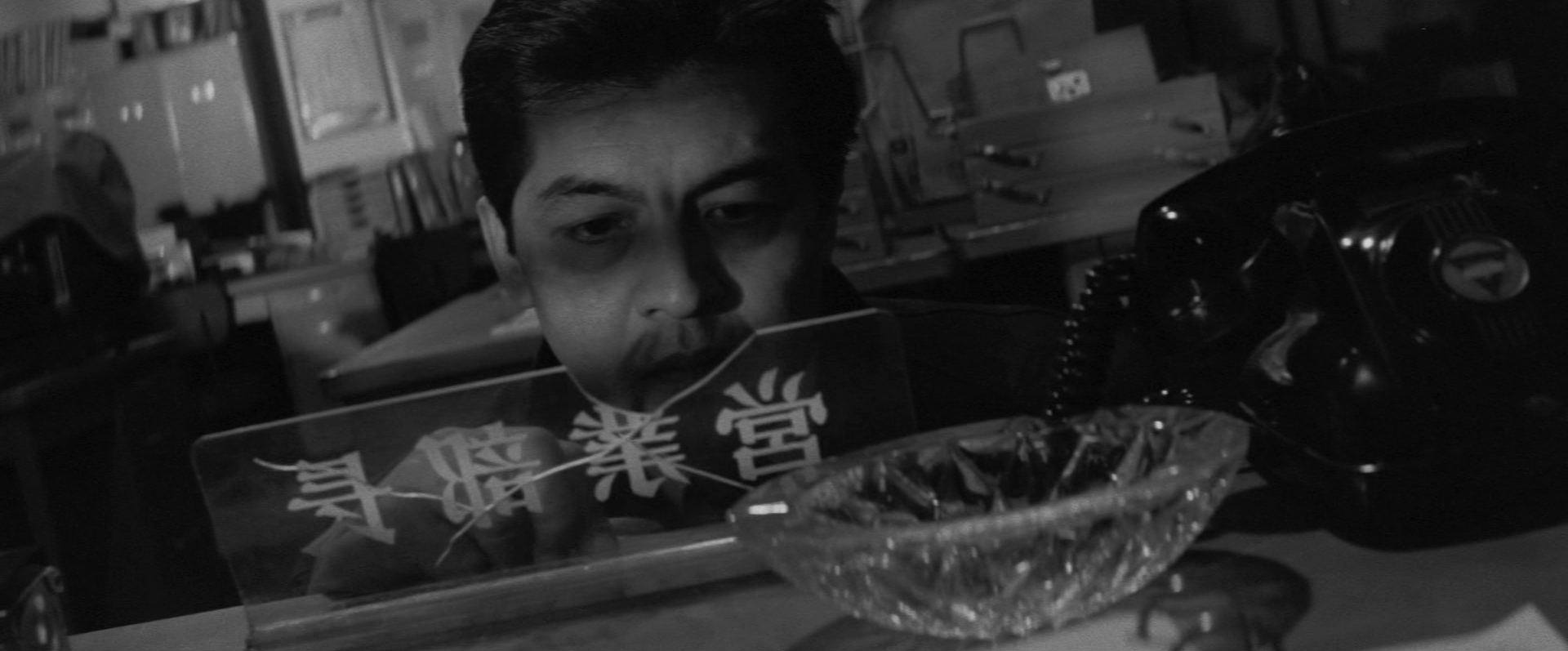
Stand Up Story (說笑之人, Amen Au Cheuk-man, 2023)

A lost young man tries to turn his grief into laughter while realising he might have more in common with his ageing father than he first assumed in Amen Au Cheuk-man’s poignant drama, Stand Up Story (說笑之人). Partially an exploration of the marginalisation of those with disabilities, the film is also a gentle tale of learning to stand up for one’s self and one’s family while gaining the courage to follow your dreams rather than holding back in fear of failure. 

Manny’s (Ng Siu-Hin) dreams lie in stand up comedy, but he struggles to convince his father, who has learning difficulties due to a childhood illness, that telling jokes can be a real job. Wah (Ben Yuen Foo-Wa) raised him alone after the woman he married left the family once her Hong Kong residency was confirmed leaving them both with a sense of absence and lingering feeling of lonely abandonment. Though his father was very excited his son has graduated university, Manny is working as a delivery driver while floundering for direction half-heartedly pursuing standup but lacking the confidence to jump in and try it full-time while also unwilling to look for a steadier job because it would mean giving up on comedy.

As the former headmaster who employs him at his restaurant after he retires from his job as a high school janitor suggests Wah is also lacking in confidence and afraid to try new things in part because of his insecurity as someone with learning difficulties who may have encountered impatience and anger in the past. Though he manages well enough on his own, Wah has experienced prejudice and discrimination all his life and has made himself smaller because of it. Always cheerful he does his best to be useful and help others where he can even if they sometimes take advantage of him accidentally or otherwise like the thoughtless Fourth Auntie who gets him to do a lot her work for her and place bets on her behalf pledging to chip in with her share of the money if they win. 

Manny is quick to warn him about such people, but as the master suggests may also be guilty of underestimating his father while insensitive to his fear of loneliness. As a teenager, Manny had also been somewhat embarrassed by his father and did little to defend him when the other kids at school made of him. He also doesn’t invite him to his university graduation despite the excitement that has already seen Wah buy a new suit for the occasion. In a moment of anger he expresses his resentment, exclaiming that he feels trapped in their claustrophobic apartment and is fearful that he’ll stuck there forever but of course regrets it realising how much he’s hurt Wah’s feelings in the knowledge of how difficult his life has been raising him as a single father on a janitor’s salary. 

The irony is that Wah had wanted his son to become a teacher, a respectable, steady job he has a particular respect for because of the support he received from the headmaster, but becomes a kind of teacher himself albeit wordlessly. Manny can only progress his comedy career by wrestling with his life even if some of his routines feel as if the may be crossing a line between laughing at and with his father. Wah’s discomfort is evident on watching Manny telling jokes about him on stage, but so is his relief and thankfulness that people seem to be laughing and he might be able to make a career out of it after all. 

One of Manny’s colleagues suggests that stand up might just save Hong Kong, that now more than ever people need to find a way to channel their anxiety into comedy to able to carry on. That anxiety is only deepened by the pandemic in which even the headmaster’s restaurant is threatened by the economic reality and Wah’s world becomes even smaller. Warmhearted though also honest in Manny’s inner conflict and ambivalence towards his relationship with his father the film is essentially about giving things a proper chance while there’s time rather than giving up because it seems difficult or awkward be it in relationships or finding the courage to chase happiness doing something you love.


Stand Up Story screens in Chicago Sept. 16 as part of the 17th season of Asian Pop-Up Cinema. Pinnacle Career Achievement honoree Ben Yuen and Bright Star Award recipients Ng Siu Hin and Rachel Leung are scheduled to attend the award ceremony before the film and Q&A after

Original trailer (Traditional Chinese / English subtitles)

Motherhood (母性, Ryuichi Hiroki, 2022)

Is love ever really unconditional or are we all just chasing a sense of parental approval even after we become parents ourselves? According to a reporter late into Ryuichi Hiroki’s adaptation of the Kanae Minato novel Motherhood (母性, Bosei), there are only two types of women, mothers and daughters, and it is in some ways a confusion of roles that frustrates the relationship between two women who are never fully able to form a maternal connection. 

Asked by a colleague if she felt her parents loved her, the reporter answers that they were the kind who made her wear a frilly blouse with a big collar for the school play and got her new shoes for Sports Day suggesting that their love was in its way performative and they cared more about how other parents would judge them than they did about her feelings seeing as she actively hated filly blouses with big collars. Alternatively, it may have been another kind of misunderstanding in they got her these things because they thought they should make her happy and took her rejection of them as resistance. 

The little girl at the film’s centre, Sayaka whose name is only spoken in the film’s closing scenes, encounters something similar when she asks her grandmother for a Hello Kitty bag having been presented with one featuring a beautifully embroidered bird. Her mother, Rumiko (Erika Toda), finds this highly offensive thinking that Sayaka has rejected her grandmother’s lovingly handmade gift in asking for something shop bought featuring a popular character, but Sayaka treasured her grandmother’s embroidery and just wanted her to sew Hello Kitty instead. 

In her voiceover, Rumiko implies that her annoyance is also born of shame in that Sayaka has forgotten everything she taught her about consideration for the feelings of others, while in her own the pain in Sayaka’s eyes is clear. She feels slighted, almost threatened by her mother’s hushed reaction advising her that it’s better to stick with birds because then people will realise that’s what she likes and go out of their way to give her bird-themed presents. The irony is that, at least in the way Rumiko tells it, her mother Hanae (Mao Daichi) believed they were such a happy family because she accepted their love “straightforwardly” when really it was anything but. Fixated on Hanae, Rumiko lives her entire life to make her mother happy even down to her choice of husband despite warnings from all sides that they are otherwise not particularly well suited. 

The reporter makes a point of commenting on another diner’s poor table manners in a restaurant with the result that he gets up and leaves, feeling uncomfortable in the wake of her rude intrusion. She explains that she was brought up to feel as if she always had to get everything right as if being loved depended on being good much as Rumiko had felt. Little Sayaka is more or less the same, constantly chasing maternal affection though receiving little in return as Rumiko struggles to transition from the role of daughter to mother and continues to fixate on Hanae caring little for anything else. When the family are forced to vacate their cute forest cabin of a home to move in with father Satoshi’s (Masaki Miura) harridan of a mother (Atsuko Takahata), Rumiko tries the same tactic believing that if she can become “good” in her mother-in-law’s eyes then she will eventually accept her little realising that she is simply a difficult woman who will never be like her own mother and only finally embraces her as a daughter as she lovingly mothers her long after she has become bedridden and appears to be suffering from dementia. 

Then again, perhaps the constant nagging, a tendency to run people down and push them away, are also frustrated ways of showing love and ironically what the mother-in-law might have wanted was someone to fight back as Sayaka tried to do much to Rumiko’s chagrin as she accused her of ruining her attempt to curry favour. Sayaka finds a diary belonging to her father, Satoshi, which recounts memories of domestic violence which he rebelled against indirectly through taking part in the student protests little caring about the cause only channeling his rage and disillusionment into something that didn’t really matter to him so would make no difference if it failed. She calls him a weak man who hides behind women, forcing Rumiko to take care of his mother while otherwise unwilling to stand up for himself or take responsibility for his family. 

Perhaps men are only fathers or sons too and this one had little idea what to do with a daughter. Naively proposing on the third date, he said he wanted to build a “beautiful home” presumably to escape the one he grew up in attracted as much the genial atmosphere of Hanae’s upper middle class mansion as to Rumiko herself. Hiroki paints the forest-bound “dream home” in nostalgic shades of pastel, lending it almost an uncanny sense of fairytale bliss that the family can never live up to despite Rumiko’s Stepford-esque attempts to become the perfect housewife by essentially becoming her mother. Offering her version of events mainly through a confession to a priest, it’s clear that Rumiko has not been entirely honest before God, but neither of our narrators are really all that reliable even if relating how they felt something happened at the time leaving us less with one concrete version of the truth than a tragic tale of love frustrated by the codified roles of mother and daughter along with maternal jealously and anxiety. 

Nevertheless, they are united by a maternal legacy and the act of ensuring the line will continue connecting all of them to the future through the chain of motherhood. The reporter’s thinking may have a degree of internalised misogyny as she remarks on the societal prejudice that regards an unmotherly woman as hardly a woman at all while giving no recognition to women who are neither mother nor daughter in her contemplation of the maternal instinct which she otherwise regards as learned rather than innate. Asking for definitions, she comes up with the need to protect one’s child which is perhaps something her mother may have lacked when it counted but did not necessarily mean she had no love for her at all despite her fits of resentment. Shot with a degree of eeriness that dissipates in favour of a darkening realism in the later stages, Hiroki’s heightened drama nevertheless suggests that an equilibrium can be found in the maternal relationship even if it is painfully won.


Motherhood screened as part of this year’s New York Asian Film Festival

Original trailer (English subtitles)

Images: ©2022 “MOTHERHOOD” FILM PARTNERS