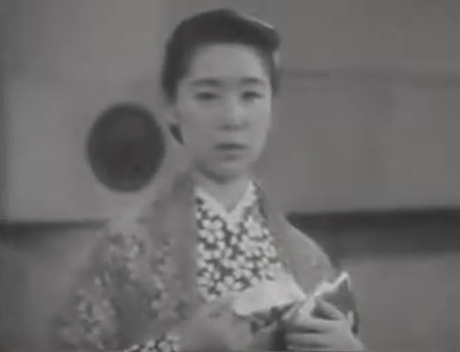
Kinuyo’s First Love (絹代の初恋, Hiromasa Nomura, 1940)

The changing social mores of the 1930s are played out in the fortunes of two sisters unwittingly falling for the same man in Hiromasa Nomura’s melancholy romance Kinuyo’s First Love. One of Shochiku’s most bankable directors, Nomura had one of his greatest hits with the romantic melodrama Aizen Katsura starring Kinuyo Tanaka and Ken Uehara. Tanaka was herself so popular in this period that her name was sometimes inserted into the titles of films in which she starred as it had been in earlier Nomura collaboration Kinuyo the Lady Doctor though this time she plays another stoic and self-sacrificing woman who gives up her own chance of happiness for that of her sister. 

Kinuyo (Kinuyo Tanaka) is the oldest daughter of the Miyoshi senbei shop and has been acting as a mother to her sister Michiyo (Kuniko Igawa) since their own passed away some years previously. Their father, Mr Miyoshi (Reikichi Kawamura), has a job as a doorman at a Western-style hotel, but as the opening sequence proves he’s no longer as young as he was. When Kinuyo reminds him to be careful on his way, he snaps back that he’s “not that old”, though proceeds to forgot almost everything he needs including his hat and walks off with Michiyo’s significantly smaller bento rather than his own. The bento mixup, however, enables a meet cute between Michiyo, who has a job on the trading floor of a stockbroker’s, and the boss’ ennui-ridden son Shoichiro (Shin Saburi). Meanwhile, Kinuyo ends up falling head over heels for him when he gives she and her friend his tickets for a kabuki play after his geisha girlfriend stands him up. 

The arrangements of the Miyoshi family are perhaps odd for the time in that Kinuyo seems to be supporting the family well enough with the senbei store alone even though she keeps giving half the stock away to a little girl who comes every morning. She desperately wants her father to retire and evidently feels their finances wouldn’t suffer without his wages. When he’s eventually fired for being old by the young boss who apparently “just likes everything new” and doesn’t appreciate the hotel’s history or Mr. Miyoshi’s place within it, she’s pleased rather than worried and sets about finding things for him to do at home where she can keep an eye on him and he can still feel useful. Michiyo meanwhile though she has received a good education and has managed to get a stable modern office job feels much the same secure in the knowledge that it doesn’t really matter if she gets fired because Kinuyo can go on supporting them all without her help. It’s perhaps this freedom that all own her to talk to the boss’ son like he was a regular human, something that immediately impresses him because he’s fed up of people sucking up to him or only telling him what they think he wants to hear. 

To that extent, Shoichiro maybe an example of the wastrel modern boy who is ruined by his privilege as evidenced in his lack of interest in the family business and relationships with geisha though the film is also usually sympathetic of his go-playing girlfriend Fusa (Yoshiko Tsubouchi) whom he callously throws over after falling in love with Michiyo ironically because of her seeming modernity in her willingness to be straight with him. But then, lingering feudalism continues to overshadow their romance in the obvious class difference which exists between them. Mr Miyoshi wonders if the marriage is a good thing or if they will simply be incompatible but Kinuyo, even on realising that her sister’s suitor is the man with whom she has also fallen in love, assures him social class needn’t be an issue unless they make it one while simultaneously explaining that Michiyo will need to sever ties with them to fully join Shoichiro’s social rank because they are no longer good enough to be accounted members of her family. To make her point, she begins teaching Michiyo matters of upper-class ettiequte such as the importance of kneeling down to open a shoji with the wooden kick board rather than risk damaging the paper by opening it while standing up. 

Michiyo’s forthrightness might be seen as modern, but her values are otherwise old-fashioned bringing Shoichiro back to the “right” path of honest handwork through refusing to indulge him. Meanwhile a very clear message is being sent that the older generation need to step out of the way, as Kinuyo puts it make their children capable and then let them work as Shoichiro’s father has perhaps failed to do while Mr. Miyoshi has done all too well. For a film of 1940, Kinuyo’s First Love has surprisingly little political content but is perhaps intended to send this message of industry among the young while the family’s senbei store may otherwise satisfy the censors in its presentation of a traditionally Japanese culinary craft. Having adopted the role of the mother, Kinuyo selflessly sacrifices her own happiness for that of her sister even though it will mean their separation but remains undefeated even in her heartbreak sniffling through her tears that she will go on looking for a good husband for herself refusing to “burden” her father with a responsibility which would traditionally belong to him declaring herself perhaps the most modern of them all. 


No More Bets (孤注一掷, Shen Ao, 2023)

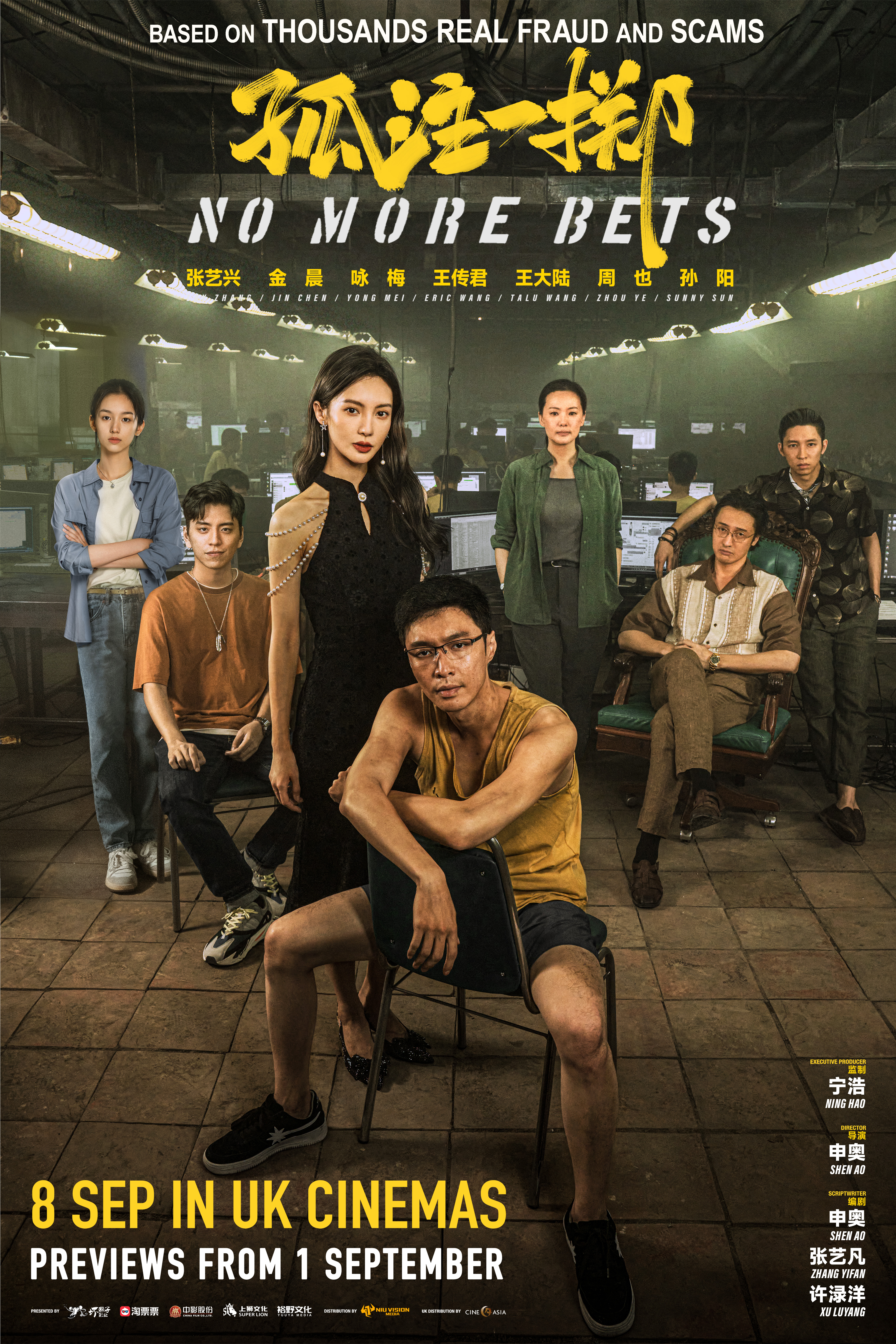
That the two biggest hits at the Chinese box office in summer 2023 both had a strong anti-gambling message perhaps hints at a contemporary anxiety, though No More Bets (孤注一掷, gūzhùyīzhì) is clearly the more direct of the two even if it also shares with Lost in the Stars its echoing of a theme in contemporary mainstream cinema that Chinese citizens are safe nowhere other than China. Then again, that particular message maybe somewhat disingenuous seeing as the villains here are all themselves Chinese if operating abroad to try and evade the law. 

This ambitious programmer Pan (Lay Zhang) learns to his cost when he abruptly quits his job after being passed over for a promotion in favour of someone with an influential father and accepts a too good to be true offer from what he’s been led to believe is a gaming company in Singapore. Soon enough, however, he realises their brief stopover is actually their destination and he’s been trafficked to another South East Asian nation where he is forced to participate in online gambling scams. Pan is however a righteous young man and immediately takes a stand, explicitly telling his captors he won’t do their bidding though they viciously beat him. Eventually he teams up with the slightly less conflicted model Anna (Gina Jin Chen) who vaguely understood the job when she agreed to it but not that they’d confiscate her passport and she’d be unable to leave. 

Like Pan, Anna accepted the job while frustrated by the vagaries of her industry after being unfairly let go by her agency after her photo was used on a flyer advertising sex work without her (or their) consent. Like those who play the games, she was suckered in by the promise of easy money that could be earned quickly and didn’t really think about the implications of what she was doing. That the film positions the victim, Tian (Darren Wang), as an incredibly wealthy young man who had access to vast generational wealth avoids the implication that some are drawn into scams for the same reasons that Pan and Anna were in they feel a sense of impossibility in their lives because of societal unfairness and economic hopeless but nevertheless paints his gradual descent into madness and addiction as a personal failing born of his insatiable greed rather than a misfortune that might befall anyone with a smartphone. Even so, if a highly educated young man can be tricked by such an obvious scam it suggests that it really can happen to anyone. 

At least, the film seems to say that in any case it’s bad to gamble but you should definitely think twice about promises that sound too good to be true, especially if they involve offers of work abroad. A series of talking heads interviews (with blurred faces) from victims of trafficking at the film’s conclusion all advise viewers not to travel to other countries to work, while several remark on how relieved they felt to see Chinese police when they were eventually rescued. Uniformed police also give a press conference during the film insisting that they are doubling down on combatting fraud and other kinds of cybercrimes while Inspector Zhao (Yong Mei), whose speech bookends the film, struggles to get anything done because the crimes are taking place overseas and therefore outside of her jurisdiction. Then again, the entire operation is run by Chinese businessmen who try to engender a sense of loyalty and rebellion among the men whom they’ve essentially enslaved by making them think that they’re merely rebelling against an unfair society by taking the money of the “greedy” people who play their games and redistributing it to their own, downtrodden families. 

Pan is trying to do the right thing, but often does it in the wrong way actively putting others in danger while trying to find a way to blow the whistle on the whole operation in the hope of being rescued while even Inspector Zhao at times seems dismissive, failing to take the claims of Tian’s girlfriend that he’s being swindled out of his entire family fortune by online scammers seriously until it’s too late. Even so, Shen crafts an often tense tale of escape as Pan does his best to send out coded messages under the noses of his kidnappers while unwillingly participating in the fraud hoping that eventually someone will figure out what’s going on and put a stop the cruel cycle of misery once and for all. 


No More Bets opens in UK cinemas 8th September courtesy of CineAsia.

UK trailer (English subtitles)

Flaming Cloud (三贵情史, Liu Siyi, 2023)

Regrets can turn into curses too, according to a melancholy middle-aged woman in Lin Siyi’s beautifully designed romantic fable, Flaming Cloud (三贵情史, Sānguì qíng shǐ) The English title refers to the deaths of gods and goddesses and a physical harbinger either of the joy of reunion or the sorrow of parting. Of course, in one way it’s all the same, every hello is also a goodbye and a curse can also be a blessing depending on how you look at it. 

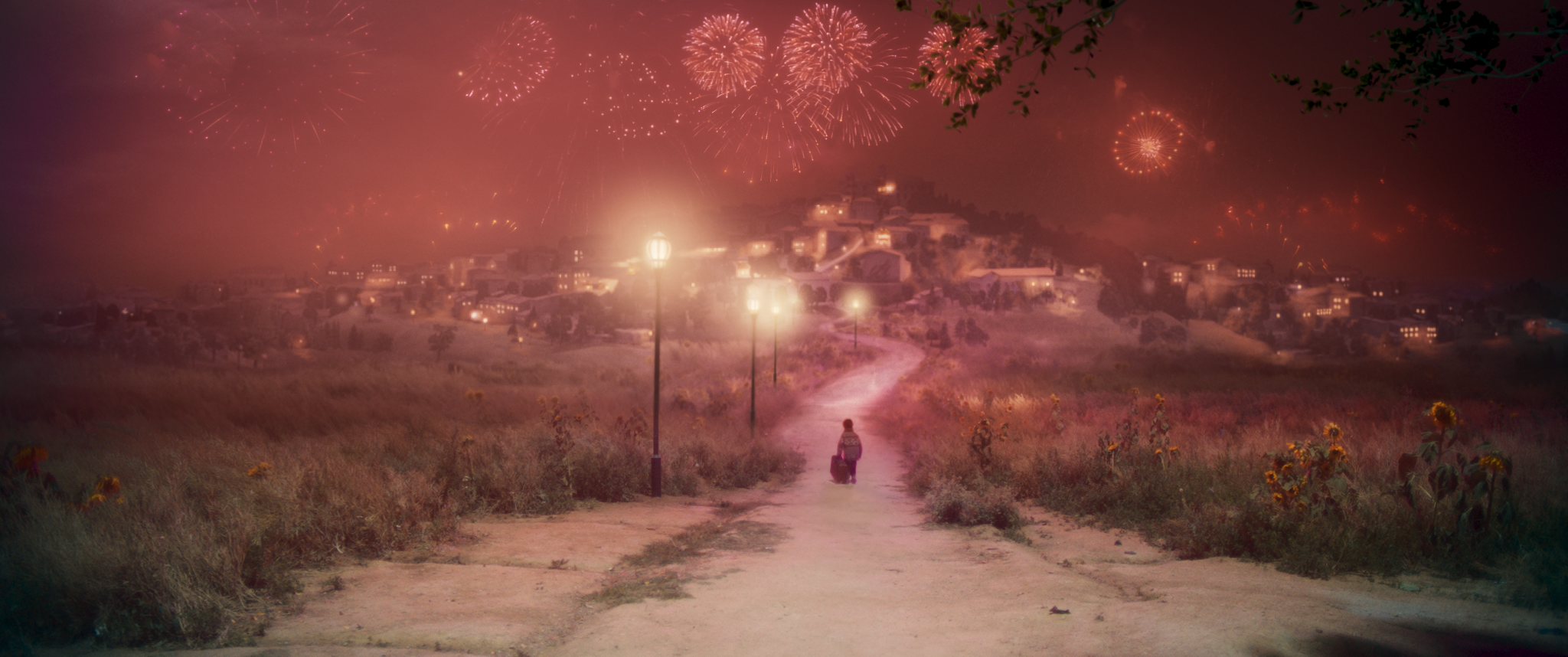
As the narratorial voiceover explains, the heavens is where all of this starts as bored gods in a casino on a cloud place bets on the lives of mortals. A young woman approaches and places a wager on the existence of true love which is immediately countered by the bar’s musician. To carry out the wager, the gods decide to curse the then baby Sangui that anything he kisses will fall into a deep sleep until he kisses his one true love. 

A kind of reverse sleeping beauty, the film follows Sangui’s path through a fairytale world where he meets various others suffering in similar ways to himself but is otherwise regarded as an outcast because of unusual ability to put people to sleep. A young woman, Yuyu (Zhou Ye), who thinks he might be her prince, introduces him to a “witch” who promises to cure his curse if only he’ll treat her chronic insomnia in which he’s had not a drop of sleep in the last 12 years. What he discovers is that she is not a witch at all but the faded star, Yuexin (Yao Chen), who tells him that she cannot cure his curse for there is nothing really wrong with him and some might even see his ability as a gift, especially those like her who have trouble sleeping. 

Yuexin’s insomnia is born of past regret and the pain of lost love. She can’t sleep because she lacks the courage to face her past, while Sangui too is afraid unable to search for the girl he believes to be his one true love whom he met in childhood in case she has forgotten him or like everyone else regards him as a “freak”. Yuexin warns him that if he never gains the courage to look for Tingting (Zhou Yiran) he may regret it in time and that regret could become its own kind of curse. But in the fairytale society of White Stone he discovers only more prejudice and cruelty, stumbling on a hidden factory staffed by enslaved workers who describe themselves as being, like him, “freaks” unlikely to be missed by the world above. The villain is an exploitative factory owner whose business model is dependent on their forced labour though a mysterious ally has been helping them by smuggling medicine through the steampunk pipes that puncture their environment. They alone stand up to the factory owner, insisting that the workers are “no different” from themselves and defiantly resisting the authoritarian austerity of a wicked stepmother turned capitalist fat cat. 

But the film’s Chinese title reminds that this is a story of Sangui’s love and whether his curse can be lifted or not. Yuexin realises that the choice she made may have been mistaken, while the musician who bet against the existence of true love later admits he did so because he knows it’s real but the reality is painful for him or else he just wanted to see it proved and send a message to his own lost love that they would one day meet again. Even so, that doesn’t necessarily mean there will be a happy ending. The course of true love is always bittersweet and whichever way you look at it destined to end in a farewell though that doesn’t mean it isn’t worth following and not doing so out of fear is as Yuexin discovered only to suffer from the curse of regret. Featuring exquisite production design from the opening animation to the whimsical fairytale town gleefully melding eras from Yuexin’s flapper-esque costuming to the 1950s aesthetic of the factory owner’s wife and the steampunk quality of factory itself, Lin Siyi’s charming romantic fable is as much about middle-aged regret for the forgotten dream of love as it is about finding the courage to seek it out no matter the risk. 


Flaming Cloud screened as part of this year’s New York Asian Film Festival

Original trailer (English subtitles)

Kitty the Killer (อีหนูอันตราย, Lee Thongkham, 2023)

“You might be the stupidest killer I ever met” an ice cool assassin says of the bumbling hero at the centre of Lee Thongkham’s comic book action comedy Kitty the Killer (อีหนูอันตราย). She might indeed have a point, though as Charlie (Denkhun Ngamnet) points out killing is not strictly part of his job description which is more akin to a baby sitter for the “high school girl from hell” under his care, Dina (Ploypailin Thangprapaporn). In part a story of self-transformation, the film ironically plays with a series of genre tropes while providing a point of origin for an ongoing universe. 

As the film opens, Charlie is a feckless young man who can’t seem to get it together and is struggling to make a mark in his job as an “accounts manager” where he is semi-aware that everyone thinks of him as a bit useless. He muses on the difficulties of changing the way that others see him, but never quite takes the first step towards realising that what he needs to change is himself. Nevertheless, his life is changed for him when he runs into top assassin Grey Wolf shortly after The Agency tried to off him when he told them he wanted out of the game. Fearing he’s not long to live, Grey Wolf hands Charlie his trademark ring and tells him that he’s taken out a contract on his mum so if he doesn’t manage to rescue his associate Dina his whole family will be killed. 

Dragged into a world of assassins and conspiracy, Charlie has little option than to rise to the occasion shaking off his boring office boy persona to become a stylish handler perfectly equipped to face off against vicious killers as the gang chase vengeance for Grey Wolf and battle another faction of their own organisation which has apparently cut a deal with the Japanese which is why they all wear masks and carry katana. Lee Thongkham plays with a kind of re-imported orientalism in clear references to Kill Bill, even echoing a famous line in the film when assassin Nina the Faceless says to Charlie, “silly boy like you likes to play with swords.”

The line also hints at the subversion of traditional roles in play as Charlie becomes a male intruder in what in an otherwise a female space. Known as “Kitties” all the assassins are female though aside from villainess Violent all the handlers are men who are otherwise placed in a paternal role yet sidelined as nannies to the super-powered killers over whom they have almost total control. As Violet says, The Agency also has its rules and they are nothing if they do not obey. Charlie is to a degree raised by the four assassins under boss Makin (Vithaya Pansringarm) who train him to become to a capable handler allowing him to transform himself as he said he wanted to do in his opening voiceover while his mother otherwise pampers him at home. 

Nevertheless, the film also sympathises with the constrained lives of the Kitties who are told to have no emotions and that they must eliminate anyone who gets too close to them or witnesses them going about their business. As one of Dina’s “sisters” Tina remarks, she’s “just tired” of her emotionless life and lack of freedom, while Nina who already turned to the dark side tries to seduce them with false promises of greater autonomy under female boss Violet if simultaneously telling them they’d have to kill their friends and “family” in order to win it. In any case, it’s the sense of solidarity between the Kitties and the deeper than expected bond with their handlers that becomes the best weapon against Violet’s hostile take over of The Agency. Well, that and a magic stone that has the power to grant immortality, anyway. Filled with a good deal of deliberately silly dialogue and zany humour, the film also features a number of innovatively choreographed action sequences along with elaborate production design and the occasional use of onscreen graphics and animation. The depth of the world building hints at the potential for an ongoing series with a post-credits epilogue teasing a sequel offering further intrigue for the Kitties and their distinctly goofy handler in an expanding comic universe of retro charm. 


Kitty the Killer screened as part of this year’s New York Asian Film Festival

Original trailer (English subtitles)

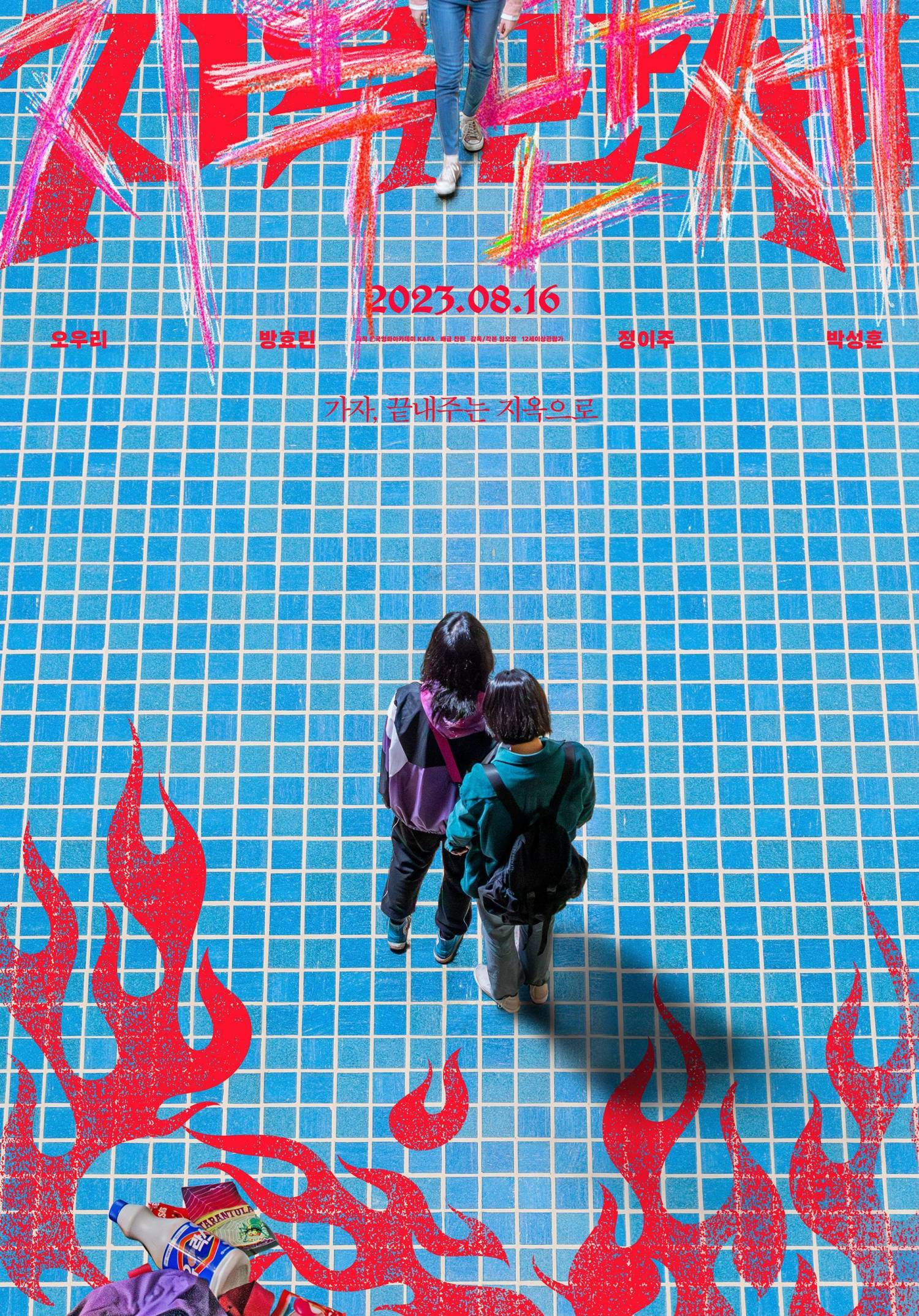
Hail to Hell (지옥만세, Lim Oh-jeong, 2022)

Two teenage girls swap thoughts of suicide for revenge on learning that their former tormentor is living well in Seoul but find their plans frustrated on discovering she has joined a religious organisation and apparently reformed in Lim Oh-jeong’s bullying drama, Hail to Hell (지옥만세, Jiogmanse). “Hell” is what the two girls, and a fair few others, believe their lives to be while seeing little way out other than taking their own lives but are confronted with questions of redemption and forgiveness not to mention death and paradise while plotting vengeance in the capital. 

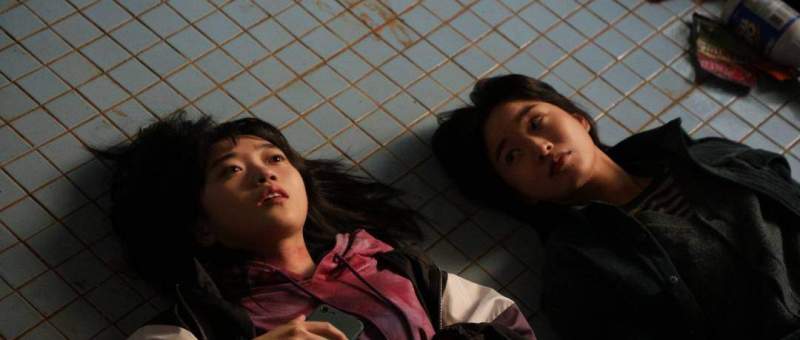
The surprising thing about high school girls Na-mi (Oh Woo-ri) and Sun-woo (Bang Hyo-rin) is that Na-mi was once part of popular girl Chae-lin’s (Jung Yi-Ju) gang and only left it when they turned on her. Nevertheless, the two young women have bonded in their shared victimisation and desire for an end to their suffering. After several failed attempts at taking their own lives, they change tack on coming across Chae-lin’s Instagram posts which imply that she is living the high life in Seoul and even planning to study abroad which the girls regard as a cruel irony given the extent to which the bullying orchestrated by Chae-lin has disrupted their lives. Unsure exactly what they plan to do, they board a bus to the capital and make their way towards Chae-lin only to discover she’s joined a weird cult in which the members are expected to earn points through doing service in order to qualify for a ticket to “paradise”.

The language itself is quite sinister even if the “paradise” that’s on offer otherwise sounds fairly conventional. Then again, there is no real evidence that “paradise” actually exists while Chae-lin claims that her mother is already there which is why she’s so desperate to go. When the girls first arrive, her expression is strange to the extent that it’s impossible to tell if she’s “happy” to see them or merely excited by the prospect of tormenting them all over again. She says that she’s already confessed all her sins and views the girls’ appearance as a miracle sent by god so that she could atone and earn their forgiveness. Then again, being forgiven for one of your sins is worth the most amount of points and Chae-lin would definitely win if Na-mi and Sun-woo could be talked in to publicly forgiving her. 

Whether Chae-lin has changed or not the girls are divided on the prospect of forgiveness and whether the way they’ve been treated is something that even should be forgiven. Na-mi begins to concede that Chae-lin may have changed “a bit”, but is later forced to reflect on the ways she herself hasn’t changed or faced her complicity with Chae-lin’s bullying when she was a member of the gang while still apparently susceptible to her manipulation. Then again, it’s impossible to tell if Chae-lin is only in the religion for cynical reasons or genuinely believes in its teachings. The church itself has a distinctly eerie quality only deepened by talk of a possibly problematic article, onerous demands on members to buy “offerings”, and a points-based system of spiritual redemption. 

Meanwhile, it seems there is bullying even here with a young woman abruptly silenced, threatened with both a loss of points and “punishment”, for even making the suggestion that someone may be bullying her. Though Sun-woo sympathises with her plight, she does not know how to help her or to change the culture within the church. “No matter how long you wait, no one will help you,” Sun-woo advises another trapped young woman as she in turn attempts to shake off the feeling of powerlessness she had experienced as a victim of bullying and harassment. Neither girl had found any help from those around them, Sun-woo’s family apparently preoccupied with her disabled sister and Na-mi’s mother blaming her for being bullied insisting it was her own fault for being “weak” rather than fighting back but if their experiences have taught them anything, it’s that they can rely on each other and that they don’t really want to die so much as live without fear which might be more possible than they’d previously assumed it to be. “Welcome back to hell” Na-mi somewhat cheerfully calls out, countering a sign on the bus which had ironically claimed that wherever we are is “paradise” but perhaps finding something in it as she and Sun-woo prepare to move forward together having exorcised a few demons and reclaimed a sense of their own agency. 


Hail to Hell screened as part of this year’s New York Asian Film Festival

Trailer (English subtitles)

Portrait of Hell (地獄変, Shiro Toyoda, 1969)

Asked to paint a vision of heaven, an artist replies that he cannot because he sees it nowhere in this present society. “Over my body and my life, you have absolute authority. But you can never command my artist’s soul,” he spits back at his corrupt lord, but in many ways the lord can command his soul as an artist for he creates the world he reflects for all that he attempts to manipulate him as a man and one he assumes to be far inferior to himself. 

Shiro Toyoda’s adaptation of the classic horror story by Ryunosuke Akutagawa, Portrait of Hell (地獄変, Jigokuhen) opens with a brief voiceover narration that explains that this story takes place almost 1000 years ago in the Heian era when the Fujiwara clan was at the height of its power. But after so long at the top of the tree, the Fujiwara have become both restless and indifferent in their complacency. “The common people live lives of hopeless despair,” the narrator explains outlining the Fujiwara’s inability to govern as even minor natural disasters give rise to famines and corpses litter the streets. Even nobles now live “lives of perpetual dread” having gained a sense of their own impermanence. 

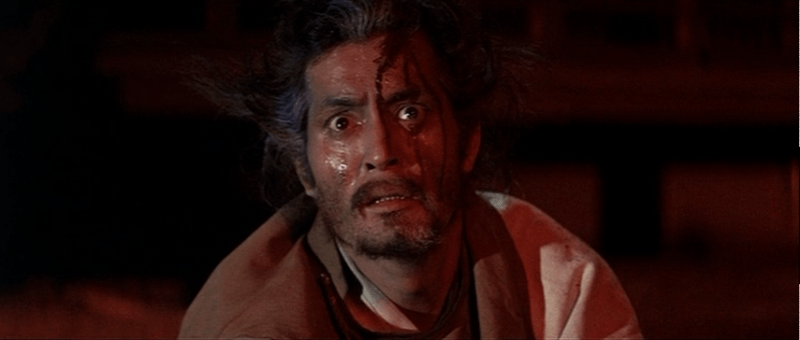
Lord Horikawa (Yorozuya Kinnosuke) is however seemingly oblivious to the suffering of his people. Yoshihide (Tatsuya Nakadai), a Korean painter, tells him that his problem is everyone tells him what he wants to hear (because they fear for their lives) rather than what is actually happening. During the opening sequence, Horikawa had abruptly decided to leave a public celebration. An old man appeals to some of the guards for money, but they roughly beat him and he is later trampled to death by Horikawa’s frightened bull which had become loose during a storm. The old man dies cursing him, exclaiming that “he has treated us like slaves. I have become no better than an animal.” Horikawa had been told that the man used his last dying breath to remark on what an honour it was to be trampled by the lord’s bull. Yoshihide paints a picture that drives a court lady out of her mind featuring the corpse of the old man under a cherry tree that seems so vivid to her that it emanates a stench of death. Horikawa doesn’t like it much either, and its uncanny realism unsettles his mind. He thinks he sees the ghost lying in wait for him in his own bed and orders Yoshihide to dismantle the painting as if that would make the ghost disappear. 

Horikawa believes the “ghost” is a manifestation of Yoshihide’s rage rather than his own guilt or incompetence. Yoshihide certainly does not like the world the lord has made, replying that he has seen hell everywhere in the cities and the villages while there is no heaven to be had which is why he cannot paint it. Yet Yoshihide and the lord are almost perfect mirrors of each other. Yoshihide is also rigid and superior. He prides himself on being Korean, pointing out that the foundations of the court and of modern learning were all brought over by Korean scholars even if Horikawa claims to have “improved” upon them. Yet some of his fellow painters worry that the style their Korean ancestors worked so hard to perfect has been eclipsed by Japanese influence while secretly considering returning to Korea which has now become prosperous unlike the conditions in Japan. 

Horikawa later slips and calls Yoshihide a stupid “foreigner” making plain his contempt despite describing him as the greatest artist of his generation which is why he’s commissioned this piece of art in the first place even though he had described all of his previous pieces “ugly” while objecting to their attempt to show him how rotten his kingdom has become. Yet Horikawa is correct when he says that it’s Yoshihide’s “infernal arrogance” that has provoked his downfall. Having caught his daughter Yoshika (Yoko Naito) with one of his pupils, he locked her in a shed and exclaimed that no other man would have her. If he had not done so, she may never have come to the attentions of the lord and suffered her eventual degradation at his hand, nor would Yoshihide have been so easily manipulated into a obsessive desire to effectively depict the depths of hell. 

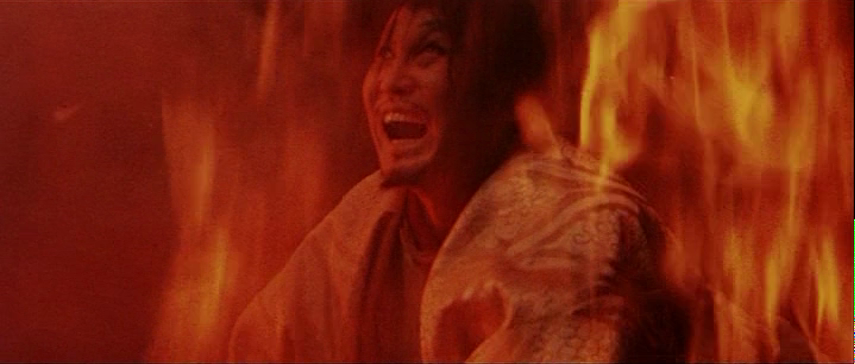
Yoshihide is some kind of method artist who insists he can only paint what he sees. Thus he goes to great lengths to observe hellish cruelty, tying up an apprentice boy in chains and torturing him with snakes, his eyes burning with a fiery intensity. His tragedy is that he comes to realise that the painting reflects not the world but himself. He is hell, hell is here. While his daughter burns, he looks on impassively only to be outdone by her pet monkey who in a gesture of selfless love leaps into the flames. Even so, Horikawa praises the finished painting as a masterpiece, “an impressive depiction of the hell that is our life,” commenting somewhat ironically on the current conditions within his fiefdom. Only latterly does he notice his own role within it, suddenly consumed by his hellishness as if dragged own into the flames despite himself. 

Toyoda shoots in the manner of a classic ghost story, making fantastic use of ghostly effects as Horikawa finds himself haunted by the spirits of those he’s wronged. At times, the screen fills with red light as if soaked in blood or baked in the hellish glow of slow burning flames. He flips between the icy blues of Horikawa’s estate, and the stifling ochre that seems to surround Yoshihide who does after all feed off all this strife rather than seeking to cure it. The two men end up in an impossible game of brinksmanship from which neither can back down, two “arrogant” rivals blindly creating a hell for those around them through their selfishness and vanity. “Life is more hellish than hell itself” runs a final quote from Akutagawa, laying bare the tale’s essential irony in our inability to recognise the hell we create for ourselves and others through our own arrogance and fear.


BFI London Film Festival Confirms Complete Programme for 2023

The BFI London Film Festival returns to cinemas across the city 4th to 15th October. East Asian highlights this year include stupendous Chinese animation Deep Sea, tense Korean drama Cobweb, and the latest from Ryusuke Hamaguchi and Hirokazu Koreeda. Here’s a look at the East Asian features on offer:

China

Hong Kong

  • Expats – feature-length fifth episode of the Amazon TV series revolving around the lives of three American expats against the backdrop of the 2014 Hong Kong protests.

Japan

  • The Boy and the Heron – semi-autobiographical fantasy animation from Studio Ghibli & Hayao Miyazaki.
  • Evil Does Not Exist – latest from Ryusuke Hamaguchi (Drive My Car) focussing on a construction project in a peaceful rural village.
  • Monster – latest from Hirokazu Koreeda starring Sakura Ando as a mother who confronts a teacher after noticing changes in her son’s behaviour.
  • Perfect Days – Tokyo-set tale from Wim Wenders starring Koji Yakusho as cleaner living a simple but soulful life.

Malaysia

  • Tiger Stripes – femininst pre-teen body horror in which a young woman begins to change in unexpected ways.

Mongolia

Philippines

  • Asog – road movie docudrama following a non-binary schoolteacher on the way to compete in a drag competition soon after surviving a typhoon.

South Korea

  • Cobweb – meta drama from Kim Jee-woon set in the authoritarian 70s in which a director becomes obsessed with the idea of reshooting the ending of his completed film despite the interference of the censors.

Vietnam

  • Inside the Yellow Cocoon Shell – 178-minute slow cinema epic in which a man reconnects with his estranged family following the sudden death of his sister.

The BFI London Film Festival takes place at various venues across the city from 4th to 15th October 2023. Full details for all the films as well as screening times and ticketing information are available via the official website. Priority booking opens for Patrons on 4th September, for Champions on 5th September, and Members 6th September, with general ticket sales available from 12th September. You can also keep up to date with all the latest news via the festival’s Facebook page, Twitter account, Instagram, and YouTube channels.

In Broad Daylight (白日之下, Lawrence Kan, 2023)

A jaded investigative reporter rediscovers a sense of purpose even as her industry flounders while exposing systematised abuse and neglect in privately run care homes in Lawrence Kan’s hard-hitting drama, In Broad Daylight (白日之下). The film’s title hints at its pervasive sense of despair, the problem isn’t so much that no one knew the state of affairs but that no one cared enough to do anything about it while the journalists too find themselves at the mercy of a hyper-capitalistic society. 

A whistleblower close to the end of the film reveals that they’d been anonymously sending photos from the care home where they work because they wanted “to feel human again” and “treat others as humans” only until now no one had taken any notice. They weren’t really expecting that anyone ever would. Top investigative reporter Kay (Jennifer Yu Heung-Ying) is one of only a handful of reporters left on her paper which is threatening to shut down the investigative department altogether if they can’t bring in a big scoop. Kay’s boss is similarly conflicted, not wanting to crush the idealism of rookie recruit Jess in insisting that their work has value in telling the stories that should be told while privately reminding Kay that the care home scandal might not be “explosive” enough to earn them a reprieve from their boss. 

For her own part, Kay is already jaded explaining to Jess that nothing really matters and nothing they write makes any difference when wrongdoers generally get off scot-free. Her desire to pursue the care home story is partly personal in that she’s dealing with a degree of guilt and grief over the death of her grandfather who took his own life in a privately run facility. To investigate one she’s been tipped off is particuarly bad, she poses as the granddaughter of a patient with dementia, Kin-tong, explaining that she’s not visited before because her family moved to Canada when she was a child, and thereafter making an offer to volunteer on seeing how bad things really are there witnessing not only a dead rat in Kin-tong’s room but physical abuse of the residents. 

It would be easy enough to assume that the faults are “isolated incidents” as the regulatory body likes to describe them and mostly down to the presence of the head nurse, Mrs Fong, who is clearly not someone who should be working in a care facillity, but the truth is that these are systemic problems largely born of governmental indifference. A government source tells her that the waiting list for a publicly funded homes stands at 15 years leaving many families little choice but to take what they can afford in the private sector. They are often unable to take care of elderly relatives themselves because they cannot take time off work to do so, or are simply not equipped to respond to their loved ones’ needs. 

But neither are the care homes. The manager, Chief Cheung who is blind himself, in part justifies the existence of his facility on the grounds that it is difficiult for people with disabilities to find homes to take them, painting the community as a happy family home doing its best rather than a callous attempt to exploit the vulnerable run by a dodgy businessman who admits that even if they’re exposed they’ll just change their name and start again somewhere else. Kay asks Kin-tong why he stays but he tells her that they’re all the same anyway. Even when she uncovers evidence of sexual abuse of a resident with learning difficulties she discovers that it’s almost impossible to prosecute because no one wants to put a vulnerable person on the stand opposite their abuser which allows them the confidence to think they can do whatever they want because they’ll never face dismissal let alone criminal proceedings. 

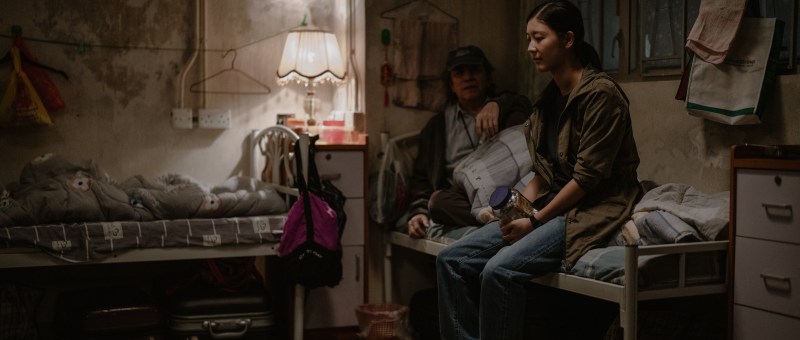
Kay begins to wonder what the point is if, as people are fond of telling her, no one really cares, but also is also forced to reflect on the moral difficulties of the situation. If the home is closed down, it will leave many of the residents with nowhere else to go. Mostly likely they will end up on the streets or in another equally bad private care home while she at least might earn herself a temporary reprieve in achieving the kind of scoop her money-minded editor was looking for. Her boss insists that she can’t change the world, the system won’t change overnight even if people are temporarily outraged. The truth is that these are people who’ve been abandoned by their society and often by their families especially with so many younger people emigrating leaving relatives behind with no one to watch over them. Though somewhat jaded, Kay comes to empathise with the people she meets at the care home and rediscovers a sense of purpose in her work that reminds her it’s worth the fight even if in the end nothing really changes. In many ways bleak, Kan’s empathetic drama is otherwise undespairing in its gentle advocation for mutual compassion and world in which we can truly take care of each other.


In Broad Daylight screened as part of this year’s New York Asian Film Festival. It will also be screening in Chicago on Sept. 16 as part of the 17th season of Asian Pop-Up Cinema.

Original trailer (English subtitles)

The Legend & Butterfly (レジェンド&バタフライ, Keishi Otomo, 2023)

“What was everything for?” an ageing Nobunaga (Takuya Kimura) asks his attendant Ranmaru (Somegoro Ichikawa) towards the conclusion of Keishi Otomo’s historical epic, The Legend & Butterfly (レジェンド&バタフライ, Legend & Butterfly) produced in celebration of Toei’s 70th anniversary. Oda Nobunaga is such a prominent historical figure that his story has been told countless times to the extent that his legend eclipses the reality, but rarely has been he depicted so sympathetically as in Otomo’s history retold as romantic melodrama in which he and his wife, Lady No (Haruka Ayase), are mere puppets of the times in which they live dreaming only of a place beyond the waves where they might be free of name or family. 

Tellingly, Otomo opens in the spring of 1549 in which the dynastic marriage was arranged to broker peace between unstable neighbouring nations Owari and Mino. Nobunaga’s father’s health is failing and he fears in the chaos of his death Mino may attack, while No’s father fears that her brother will soon revolt against him plunging the fiefdom into disarray and therefore vulnerable to an attack by Owari. At this point, Nobunaga is known as “the biggest idiot in Owari,” a foppish dandy who cares only about appearances. As he prepares to meet No, his courtiers apply his makeup and do his hair while dressing him in a rather outlandish outfit No immediately insults as “foolish”. He treats her with chauvinistic disdain, barely speaking save to order her to pour the drinks and give him a massage only for her to point out that she’s been travelling all day and a “thoughtful” considerate husband would be giving her a massage instead. “I detest women who do not know their place,” he snaps. “I detest men who are ignorant,” she counters. The wedding night ends in humiliating failure as No demonstrates her martial arts skills and Nobunaga is forced to call his guards to rescue him. 

Little is known of Lady No in historical record, but here she is bold and defiant, as her father had said too free with her opinions for a woman of the feudal era. She claims to have been married twice before and assassinated both husbands on her father’s orders, implying that she is essentially sleeper agent more than hostage and will kill Nobunaga without a moment’s thought as soon as the word is given. Yet she also begins to guide her husband towards his destiny, mocking him as a fool but giving him useful strategic advice that wins him glory on the battlefield along with the political advancement that led him to become the first great unifier of Japan. For all that they “hate” each other, they are well matched and have a similar sensibility that allows them first to become allies and then friends before frustrated lovers.

But their love is enabled only when they escape the feudal world, shaking off their retainers to go on a “normal” date in Kyoto where they dance to Western musicians and taste foreign candy only to end up accidentally massacring some peasants when No’s martial arts training kicks in trying to stop a man beating his son. Even so, they are forever linked by their time in Kyoto in the romantic talisman’s of a carved wooden frog and a European lute even if the blood-spattered jizo and buddhist statue watching their eventual connection imply there will be a reckoning for all the blood that is spent. Jumping on a few years, the film does not elaborate on what caused Nobunaga to become a man without a heart and lose the love of his most trusted ally but positions his transformation into the “Demon King” as the kernel of his undoing just as his dream of unifying Japan and bringing about an age of peace (if one ruled by fear) is about to become a reality. 

In any case, the one thing that everybody knows about Nobunaga is how he died though then again his remains were never recovered giving rise to a happier ending in which he and Lady No were finally able to escape the feudal world to chase a freer future beyond the sea which is perhaps what they do in the film’s poetic final sequence in which they might in a sense share a dream connected by frog and lute. It might not be very historically accurate, but that is perhaps the point in hinting at the lives they might have led if the world had been different. Otomo films with a painterly eye that lends an air of poignant gravitas to a tale of romantic tragedy in which love is both salvation and destruction amid the flames of a collapsing temple. 


The Legend & Butterfly screened as part of this year’s JAPAN CUTS.

Original trailer (English subtitles)

Those Swell Yakuza (極道渡世の素敵な面々, Seiji Izumi, 1988)

The yakuza movies of the post-war era had largely depicted the gangster world as being one of internecine desperation and even if the hero was a pure-hearted defender of a traditional honour code those around him were anything but honourable. By the late 1980s, however, the yakuza were increasingly seen as an outdated institution amid the high rise office blocks of a prosperous Bubble-era Japan in which the street thug had given way to more corporatised kinds of organised crime. 

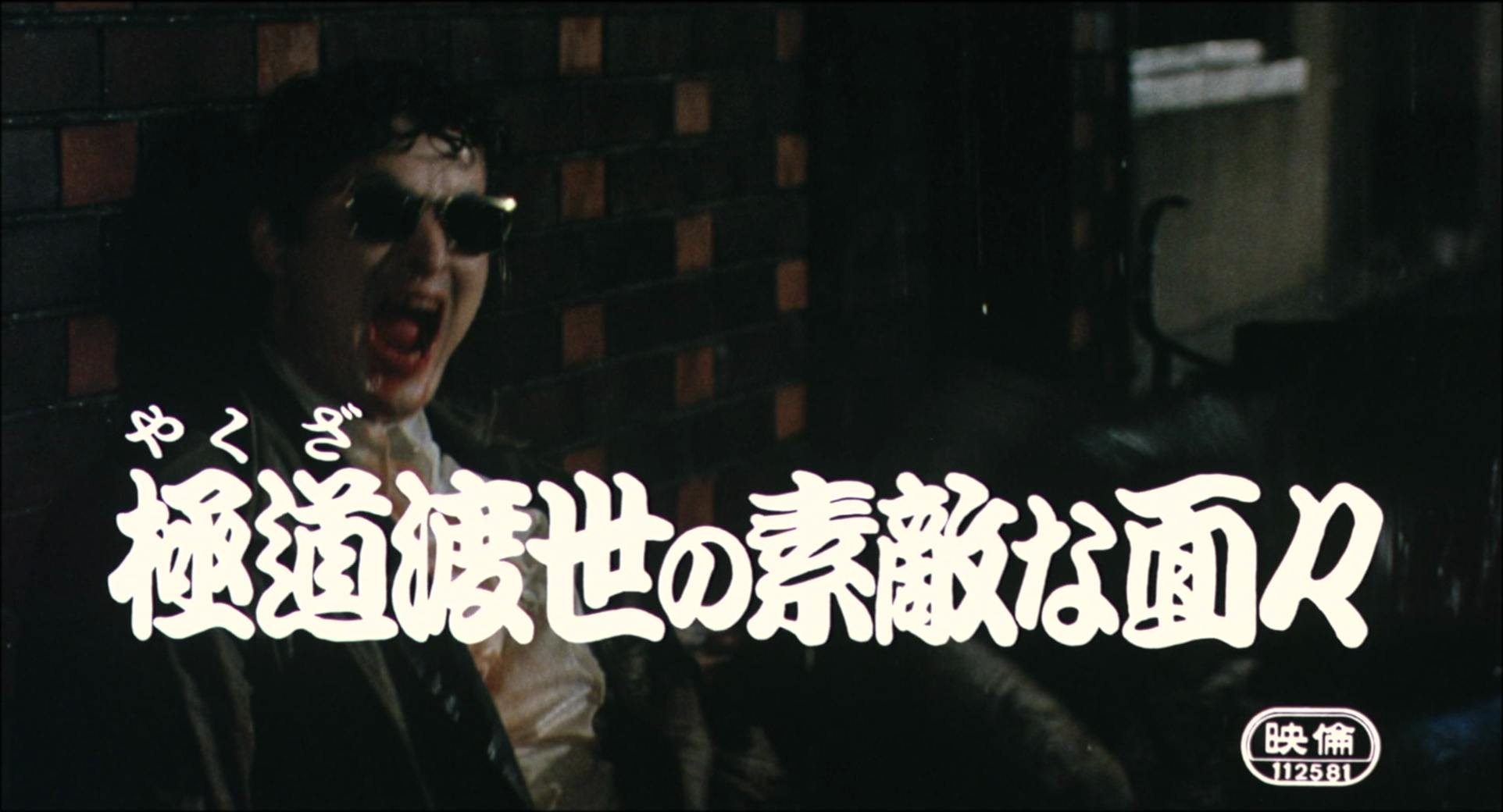
This might help to explain the ironic title of Seiji Izumi’s 1988 comedy Those Swell Yakuza (極道渡世の素敵な面々, Yakuza Tosei no Sutekina Menmen) which simultaneously presents a nostalgic view of gangster cool and a way of life which is more rooted in the everyday existence of a contemporary petty outlaw. The hero, 24-year-old Ryo (Takanori Jinnai), is a former banker who evidently rejected the heavily corporatised nature of the Bubble-era society and left his stable job to open a record store which subsequently went bankrupt leaving him with huge debts to yakuza loansharks. It’s these debts he’s trying to escape by wandering into a mahjong parlour and getting carried away with his early success despite the advice of steady hand Nakagawa (Takeshi Kusaka) who eventually covers his losses when it turns out that Ryo started playing without any stake money. A ageing yakuza, Nakagawa takes him outside to teach him a lesson explaining that the parlour is run by Taiwanese gangsters and he’s lucky to be leaving with his life. Nevertheless, Nakagawa is impressed by his hutzpah and leaves his business card in case Ryo has the desire to get in touch. 

Ryo’s decision to become a yakuza reflects both a sense of emptiness in the Bubble-era society and a nostalgic longing for post-war gangsterism and the theoretical “freedom” is represents to a man like Ryo though of course there’s not so much autonomy to be had in the life of a petty footsoldier who is always beholden to the whims of his boss. Nakagawa becomes to him a kind of father figure, though he’s also someone who has largely lost out in having achieved little in the realms of gangsterdom while his friend and contemporary Kanzaki (Hideo Murota) has successfully climbed the ladder to become a high ranking officer. Kanzaki takes him to task for visiting the mahjong parlour in part because the Taiwanese gang has gained a reputation for dealing with drugs of which their organisation does not approve and it would present a problem if his connections to them were to come out during any potential anti-drug action by the police. By the film’s conclusion, Nakagawa has become something of a tragic figure more or less excluded from the yakuza world while his body is ravaged by alcoholism and his finances by gambling addiction. 

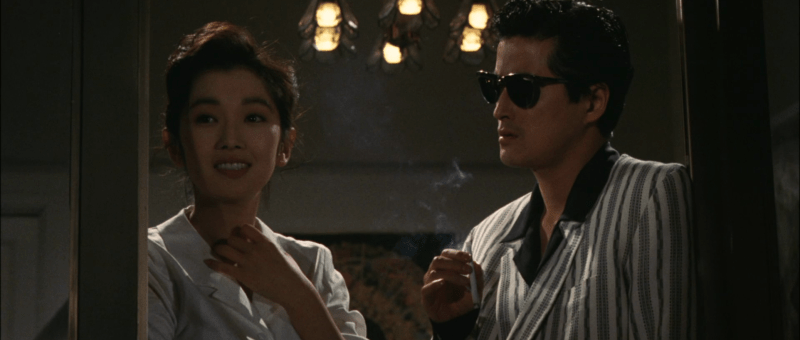
Ryo, meanwhile, seems to live the yakuza dream. He gets stabbed while defending a bar hostess from a yakuza from a different gang and then meets the love of his life, Keiko (Yumi Aso), who similarly rejects the constraints of the contemporary society by refusing the marriage arranged by her father for his own benefit to spend three years waiting for Ryo who goes to prison after shooting Kanzaki in the arm to avenge a slight against Nakagawa who also cuts off his finger to fulfil the codes of yakuza honour. Wandering around in sunshades and flashy suits, Ryo soon attracts a fiercely loyal band of followers of his own and despite the tragedy of losing one of his men to an assassin proves adept in navigating the yakuza world to present an idealised image of masculine cool perfectly tailored to the Bubble era.

Despite the shooting that landed him in prison and the mission of revenge he leaves his own wedding (after the ceremony) to complete in the film’s conclusion, Ryo’s yakuza existence is otherwise fairly non-violent and based in a kind of trickery that makes him seem clever rather than exploitative given that as Nakagawa had suggested the way forward for the modern yakuza is scams not drugs. As one of his prison buddies puts it, there are old school gangsters like Ryo ready to die for the clan, and then there are those like himself intent on filling their boots. Largely, most of these guys are old school yakuza who do obey the code and have some kind of scruples about how they make their money which adds to their aspirational allure as Ryo seems to lead a fairly charmed life of idealised masculinity with a pretty wife and fancy apartment seemingly free of the petty oppressions faced by workaday salarymen. Izumi makes frequent reference to classic Toei gangster pictures from a decade previously with appearance from from genre stalwarts such as Hideo Murota, Nobuo Ando, and Mikio Narita, but lends the action a contemporary spin in the ironic sense of cool even if the implications of ambiguous ending may be far less upbeat.