A Movie Capital (映画の都, Toshio Iizuka, 1991)

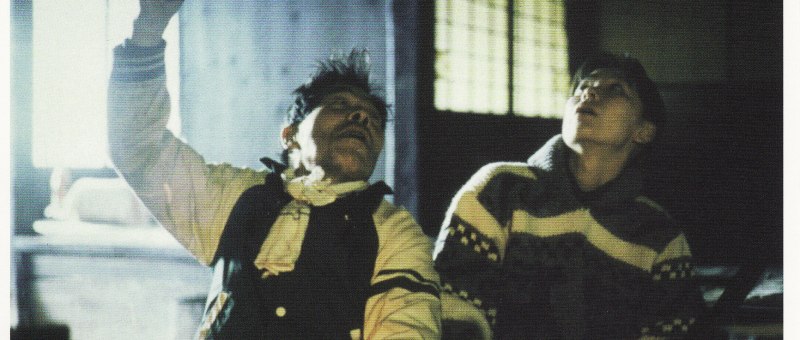
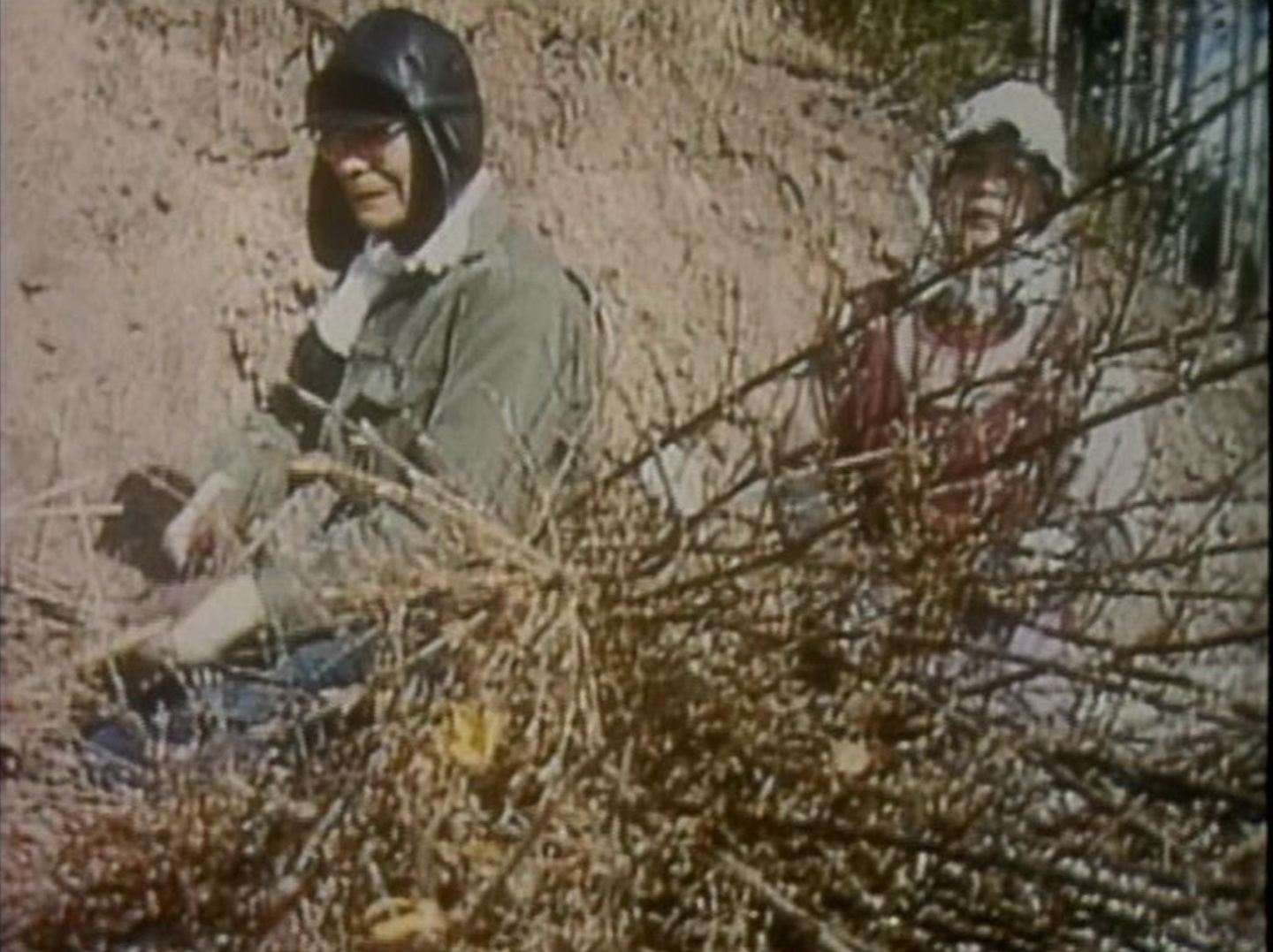
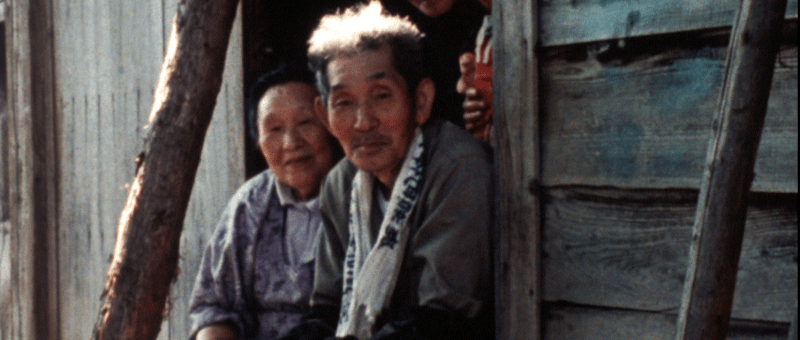
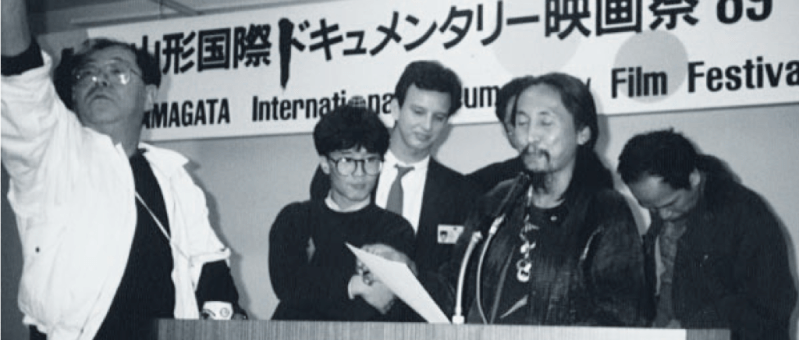
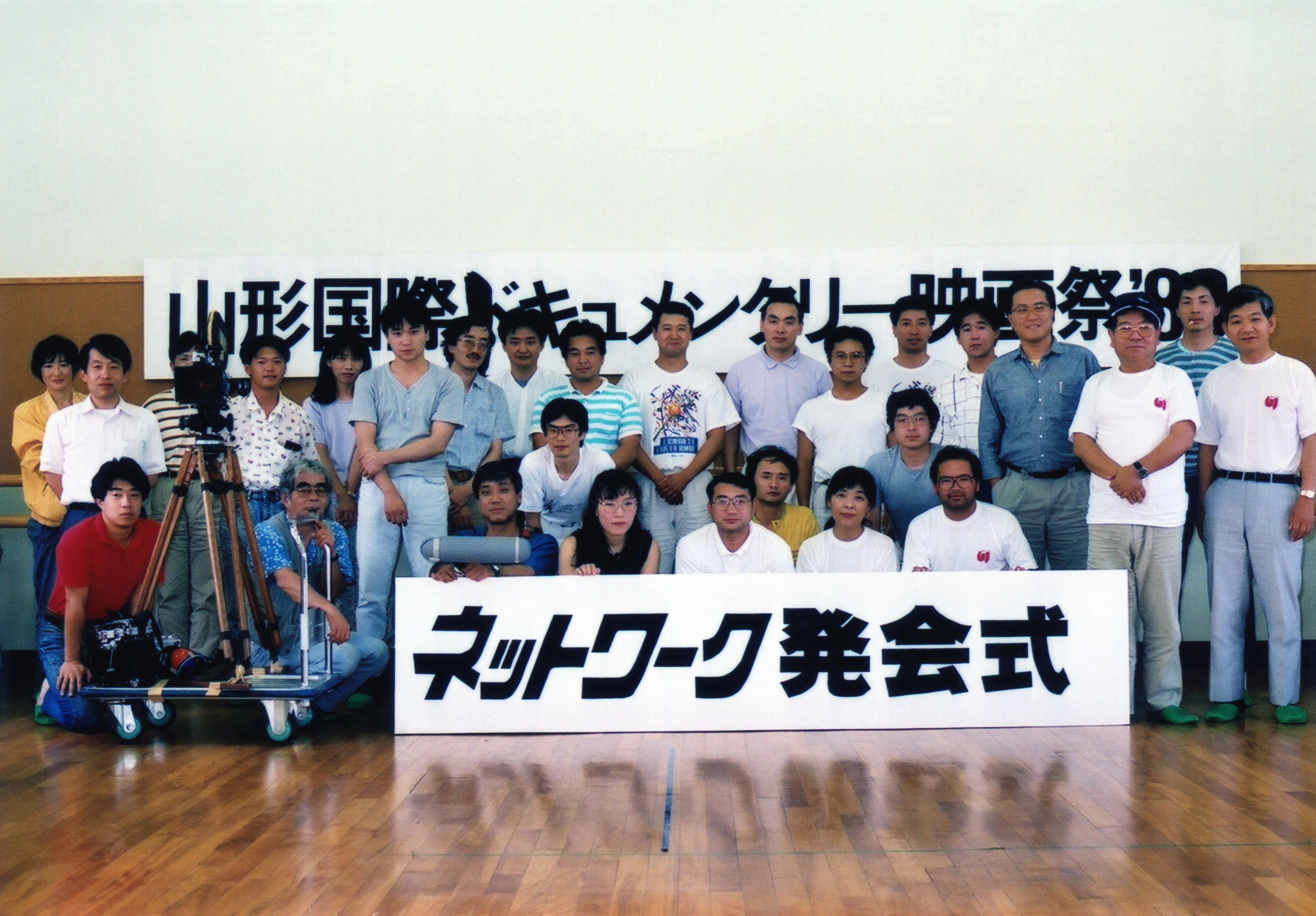
As the opening of Toshio Iizuka’s A Movie Capital (映画の都, Tokyo no Miyako) makes plain, 1989 was a year of turbulence all over the world but also perhaps also of hope as many of the directors invited to the very first Yamagata International Documentary Film Festival often insist in positioning their art as an act of resistance against authoritarianism. In essence a visual record commemorating the festival’s inauguration, Iizuka’s film also has its meta qualities interrogating not only what documentary is and what it’s for but its potential as a means of bringing disparate communities together in an exchange of truth and solidarity. 

In fact, the film opens with a brief prologue dedicated to Dutch documentarian Joris Ivens, who sadly passed away just before the festival opened, contrasting Ivens’ 1928 work The Bridge with the box office hit of that year in Japan, Shozo Makino’s Chushingura. Jumping into the film proper we witness something similar as the tranquility of the Bubble-era nation is directly contrasted with the events of Tiananmen Square as seen in a video sent to the festival by a Chinese associate living in Hong Kong. In actuality, the first Yamagata featured no films from Asia in its competition section provoking a symposium in which a number of Asian directors, producers, and critics discuss why that might be. Ironically enough, fifth generation Mainland Chinese director Tian Zhuangzhuang (The Horse Thief) was invited but unable to speak because, as his wife explains during an exasperating phone call, it’s not as easy for someone from China to travel abroad as it would be for someone elsewhere. The authorities haven’t granted him permission to leave and so he cannot even apply for a passport. 

Censorship and an element of personal danger to oneself or one’s family are otherwise cited as reasons documentary filmmaking has not taken taken off in Asia. The director of May 80 Dreamy Land which concerns the Gwangju Uprising is also unable to attend because he is currently on trial. Meanwhile, his representative Kong Su-Chang laments that he is among the older members of his small circle of documentary filmmakers who are of a generation without mentors having to teach themselves how to make films because there was no one there teach them. Filipino directors meanwhile cite the continuing influence of America along with wealth inequality as potential reasons the documentary has not flourished while asking if documentary and entertainment are in some way incompatible given that documentary is at its most popular at moments of crisis. 

Still as almost every interview states at one time or another, their primary goal is to make sure the voices of their subjects are heard and their faces seen determined to capture the everyday experiences of ordinary people as honestly as possible. While it’s obviously true that none of them were themselves included in the competition, many directors also claim that more important is the opportunity to meet other filmmakers in order to generate friendships and exchange ideas. They see their mission as making the world a better place to live hoping to challenge the status quo through their filmmaking while what Yamagata becomes to them is an opportunity to improve the fortunes of documentary filmmakers throughout Asia through mutual solidarity while the town of Yamagata itself also comes together as a community in order to celebrate documentary art even recruiting the marching band of a local primary school to help. 

One director’s suggestion that the future will become harder for dictators thanks to the democratisation of technology may in a sense be naive but in its own way true in the ability of ordinary people to record their own stories even if they face the same difficulties and dangers. Even so Iizuka’s assembled footage from the films which played that first edition alongside interview and Q&A footage not only help to give an impression of the open and enquiring nature of the festival, but also to interrogate itself and its art asking what it’s for and what purpose it can serve at a moment of geopolitical instability as the Berlin Wall falls and the echoes of Tiananmen reverberate while documenting not only a single event but its purpose and intention. 


A Movie Capital streams worldwide (excl. Japan) via DAFilms Jan. 17 to Feb. 6 as part of Made in Japan, Yamagata 1989 – 2021 (films stream free Jan. 17 – 24)

Crest of Betrayal (忠臣蔵外伝 四谷怪談, Kinji Fukasaku, 1994)

“I was trying to reform our times!” cries a man about to abandon his revolution at the moment of its inception. “The times have reformed us” his friend retorts, rejecting him for his self-interested cowardice before seconds later deciding to follow his example. Largely remembered for his contemporary jitsuroku gangster pictures, Kinji Fukasaku’s tale of rising individualism amid political turbulence and economic instability Crest of Betrayal (忠臣蔵外伝 四谷怪談, Chushingura Gaiden: Yotsuya Kaidan) hints at a perceived moral collapse in contemporary post-Bubble Japan defined by a sense of nihilistic impossibility in marrying the classic ghost story Yotsuya Kaidan with the noble tragedy of the 47 Ronin. 

The action opens the very concrete date of 14th March 1702 which as an early title card reminds us is at the close of the Genroku era which had been regarded as a “golden age” but its appearance of affluence had in fact been semi-engineered by the shogunate’s unwise decision to continue debasing the currency which later led to an inflation crisis (sounding familiar?). Meanwhile, in the samurai world Tsunayoshi, the fifth Tokugawa shogun, has deposed 38 Daimyo creating 40,000 masterless samurai each vying either for new positions as retainers in other clans or some other way to survive in a manner which befits their station. 

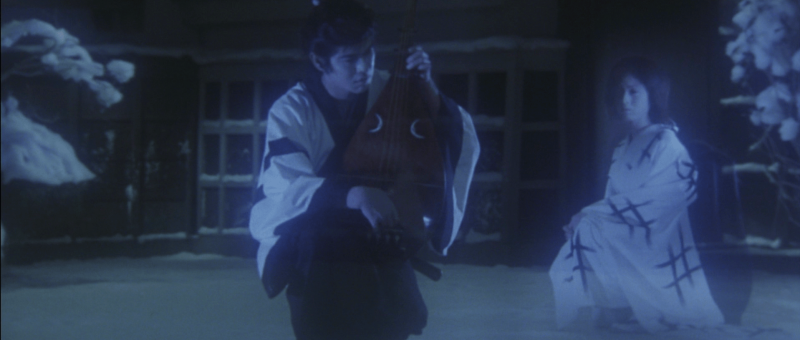
The 14th March, 1702 is a significant date in terms of the narrative in that it marks the first anniversary of the death of Lord Asano who was ordered to commit seppuku after offending another lord, Kira Kozuke-no-Suke Yoshinaka (Takahiro Tamura), leaving his house ruined and his retainers masterless. Samurai code dictates they seek revenge, but leader Oishi (Masahiko Tsugawa) suggests they bide their time leaving him and the clan open to accusations of cowardice or betrayal, mocked by peasants at the memorial service while Oishi decries their appetite for samurai drama. Enter Iemon Tamiya (Koichi Sato), antihero of the classic Yotsuya Kaidan, who had apparently joined the clan only two months before it was dissolved after years as a wandering ronin biwa player and alone has the courage to ask him if he truly has no appetite for vengeance moments after Oishi has scandalised his men by pointing out that it was Asano’s “short-temperedness” which destroyed their clan. His only answer is that it cannot be now, they must wait a year in order to prove their internal resolve. 

In marrying the two classic tales, Fukasaku directly contrasts the sublimation of the individual self into the samurai code as in the internecine nobility of the 47 ronin avenging the death of their lord knowing their own must shortly follow, and the self-serving individualism of (in this case) conflicted opportunist Iemon. Iemon has indeed been reformed by his times, becoming a thieving murderer out of desperation and misplaced filial piety after he and his father were forced into a life as itinerant biwa players on the dissolution of their clan. In most versions of the classic tale, Iemon is an ambitious sociopath who tricks his way into marrying up but loses interest in new wife Oiwa after she bears his child, later doing them both in to marry the daughter of a wealthy merchant who took a liking to him in a market square. Here, Oume (Keiko Oginome) is taken with him after he hacks the sword-bearing hand off an aggressor but unbeknownst to Iemon her father is a retainer of his sworn enemy leaving him with a double conflict, while Oiwa is a lowly bath house sex worker pregnant with a child he does not truly believe is his. 

The radical samurai had wanted to “reform our corrupt times”, but Iemon like his friend who drops out of the movement after being taken on as a successor to a hatamoto and becoming a direct retainer to the shogunate, comes to the conclusion that the times cannot be reformed and he must conform to them. If he chooses Oume, he betrays his loyalty to his lord by uniting with his rival to further his own prospects, a decision many will understand it is perhaps little more than leaving one firm for a better job at another, but it’s also an unforgivable subversion of the samurai code which drives him deeper even than the class conflict which sometimes informs his choices in Yotsuya Kaidan into a hellish spiral of greed and immorality. “The world hates your type” Oishi reminds him, “they’ll kill you, like a snake. Can you live fighting with the world for the rest of your life?” He asks, pitying Iemon for his self-destructive decision to turn away from “justice” for personal gain knowing that he will never reconcile himself to his choices nor will the world approve them. 

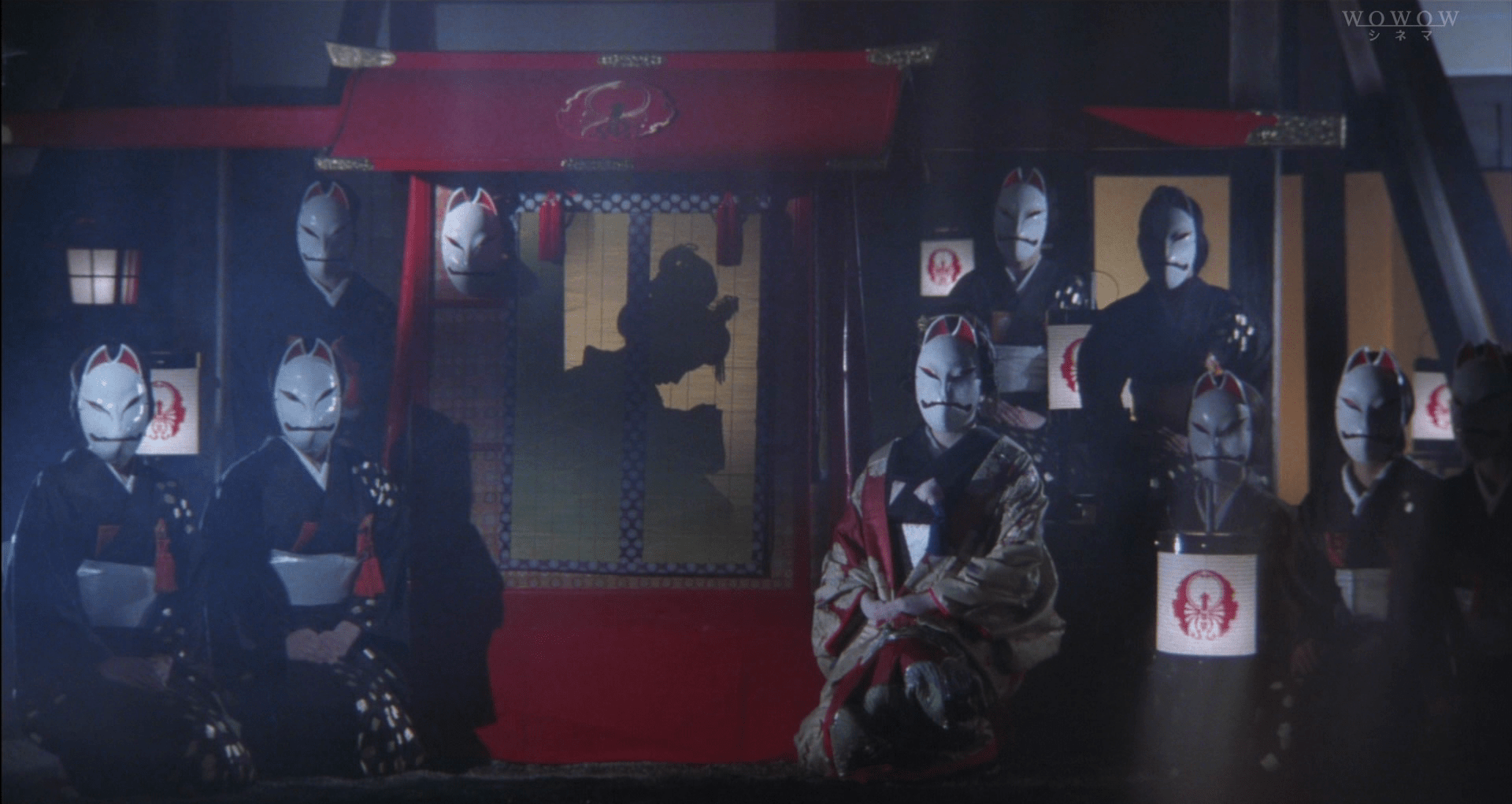
Yet as in Yotsuya Kaidan it’s not so much his latent sense of guilt that does for him as Oiwa’s curse, her ghost with its face ruined by his transgression taking its otherworldly revenge though interestingly only indirectly against him even as she provokes Iemon into destroying his chances for the secure, comfortable life he’d chosen for himself. The 47 ronin, meanwhile, continue with their righteous mission even if it’s a stretch to insist that their vengeance serves the cause of justice or is even intended to “reform these corrupt times”. Those corrupt times, Fukasaku seems to argue, forged a man like Iemon rather than the toxic masculinity, personal insecurity, or innate sociopathy which are generally ascribed to him to explain his dark deeds, and so these corrupt times of post-Bubble insecurity might create more like him. Finding the director in a noticeably expressionistic mood, opening with an ominous storm and climaxing in an unexpected, supernatural blizzard, Crest of Betrayal adopts a register of high theatricality and an etherial air of mystery culminating in a beautifully executed series of ghost effects overlaid with a watery filter but ends on a note of hopeful ambiguity in which Oiwa’s curse has perhaps been healed even if Iemon finds himself condemned, a wandering samurai for all eternity. 


Original trailer (no subtitles)

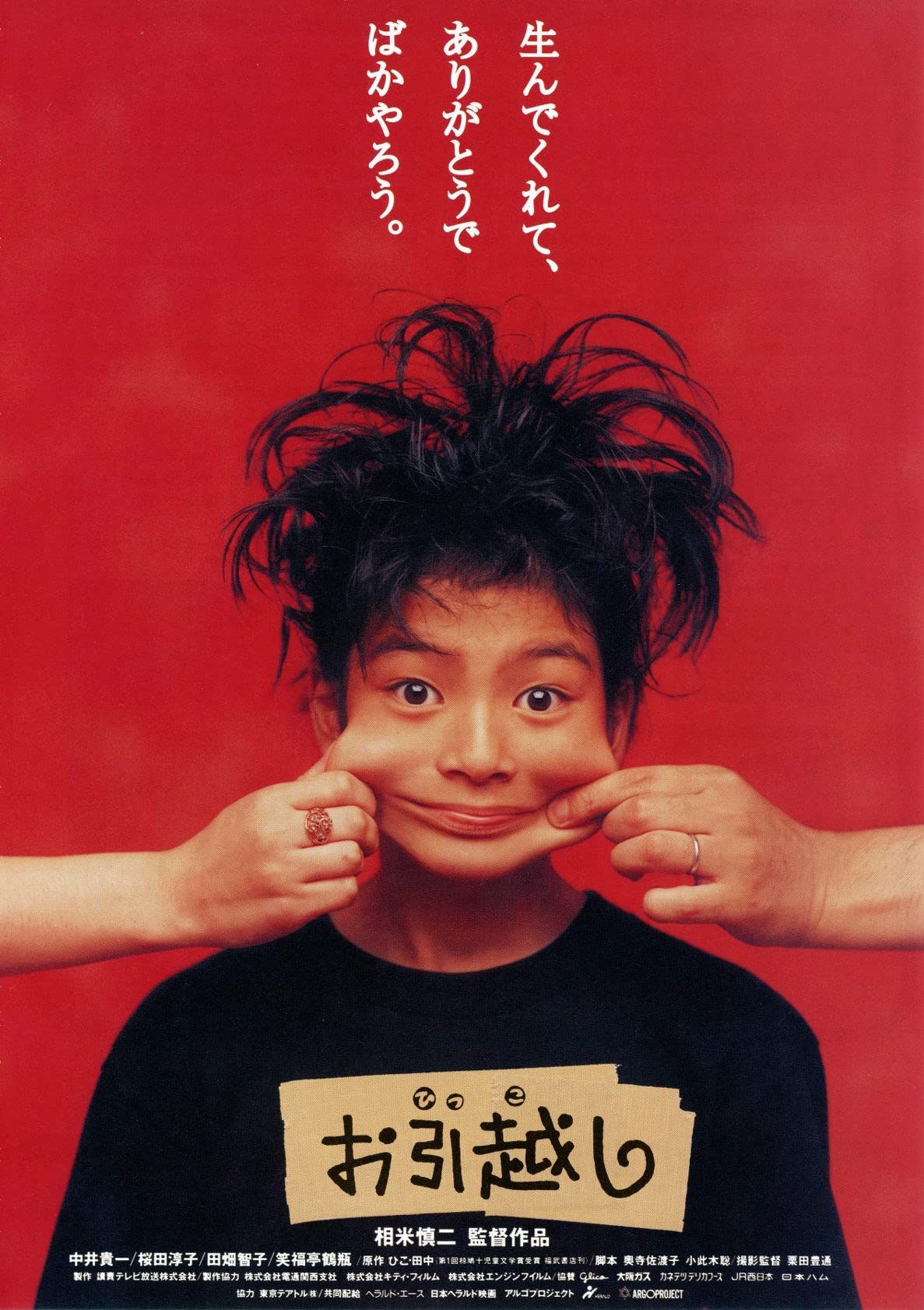
Moving (お引越し, Shinji Somai, 1993)

The title of Shinji Somai’s 1993 coming-of-age drama Moving (お引越し, Ohikkoshi) quite literally refers to the process of vacating one space in order to inhabit another but also to the heroine’s liminal movement into a space of adulthood while caught in the nexus of a recently destabilised society itself in a state of flux. Not only must she process the disruption of her father’s decision to leave the family home, but its wider implications that will one day leave her orphaned while coming to accept that such partings are only a part of life to borne with stoicism and sympathy. 

At around 12 or so, Renko (Tomoko Tabata) finds herself on the brink of change. Not only is she beginning to grow up, soon to be changing schools, but is also facing a further destabilisation of her home as her parents prepare to separate. The tension in the household is clear from our first meeting with the family as they sit around an almost violent, green triangular table the point aimed straight at us with Renko at the opposite end and her near silent mother and father on either side. As she often will, Renko attempts to parent her parents, repeatedly criticising her father for his poor table manners wondering if he’ll be able to take care of himself when living alone while later remonstrating with her mother for having had too much to drink while cautioning her to mind what the neighbours might think. 

Already unbalanced by the economic shock of the bubble bursting, the Japanese society of the early 90s was also changing evidenced in part by the separation itself. Divorce is still a minor taboo, even Renko herself had taken part in the shunning and bullying of another girl who’d transferred to their school after returning to her mother’s hometown following her parents’ separation, but this is perhaps the first era in which it becomes acceptable to end a marriage solely because one or both parties is unhappy rather than there being some additional pressure that endangers the family. “Marriage is survival of the fittest”, Renko’s mum Nazuna (Junko Sakurada) later exclaims during a heated exchange but we can also see that the marriage itself was already unusual perhaps uncomfortably suggesting an altered power balance and shifting gender roles led to its breakdown. Father Kenichi (Kiichi Nakai) had previously worked from home completing many of the domestic tasks while Nazuna had become the breadwinner with a successful career earning higher salary. She complains that when she was pregnant with Renko Kenichi sniped at her for not contributing to the household financially but changed his tune when her economic success undercut his sense of masculine pride. 

Despite apparently embracing her freedom Nazuna nevertheless seems to resent Kenichi for leaving, accusing him of deserting his family while he later floats the idea of trying again but only perhaps because he is feeling the ache of the loss of the home he previously hinted suffocated him in responsibility. Meanwhile, Renko is also forced to process the fact that a family friend, Yukio (Taro Tanaka), on whom she’d had an innocent childish crush, is engaged to be married. Overhearing their conversation she also learns that his fiancée is pregnant but unsure about having the baby. Given all of these changes, she begins to wonder why it is she was born, intensely anxious in potential parental abandonment while witnessing the remaking of her home. 

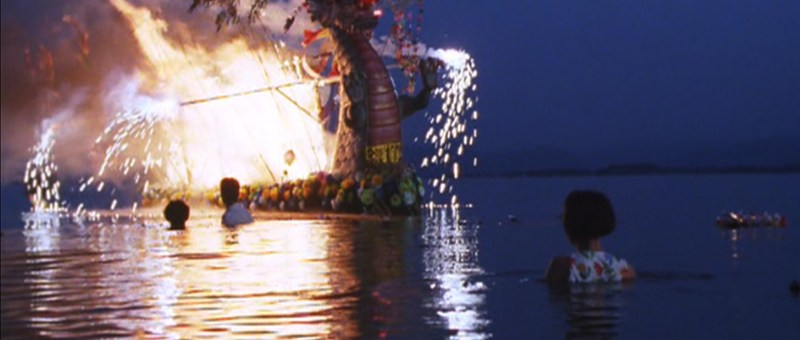
Yet to cure her of her anxiety Somai removes her from her environment, Renko once again taking on a parental role in borrowing her mother’s credit card to book a hotel and train tickets to a familiar destination they’d previously travelled to as a family. It’s in this liminal space that Renko begins roam, eventually encountering an old man with some important life lessons while undergoing a spiritual odyssey of her own as she weaves through a summer festival towards an ethereal encounter with her past self and the spectre of her future orphanhood. Somai’s characteristically lengthy tracking shots add to the sense of destabilisation, Renko’s world constantly in motion yet as she tells us herself she’s on her way to the future, moving on but on a more equal footing and discovering at least a sense of equilibrium in an ever shifting society.


Moving screens at the BFI on 29 December as part of BFI Japan.

Love Letter (ラブレター, Shunji Iwai, 1995)

“People are forgotten so easily” a widow laments after an insensitive comment from a family friend, yet there is perhaps a difference between forgetting and letting go as exemplified in the distance between two accidental pen pals in Shunji Iwai’s profoundly moving romantic melodrama, Love Letter (ラブレター). A huge hit and pop culture phenomenon throughout Asia on its 1995 release, Iwai’s first theatrical feature bears many of the hallmarks of his enduring style in its soft focus, ethereal lighting and emphasis on nostalgia as the two women at the film’s centre each restore something to the other through their serendipitous correspondence. 

Iwai opens with a memorial service for Itsuki, the late fiancé of the heroine, Hiroko (Miho Nakayama), who passed away two years previously in a mountain climbing accident. Hiroko has since started a relationship with his friend Akiba (Etsushi Toyokawa) who avoided attending the memorial out of misplaced guilt and gave up mountaineering soon after Itsuki’s death. Akiba is keen to move their relationship forward, but fears that Hiroko is still stuck in the past unable to let go of her love for Itsuki. On a visit to Itsuki’s mother (Mariko Kaga), she finds an old address in his middle school year book for a home that apparently no longer exists and decides to mail him a letter saying nothing more than “How are you? I’m fine” of course expecting no reply. What she didn’t know, however, is that there were two Itsuki Fujiis in her Itsuki’s class, the other being a woman still living at the same address to whom Hiroko has accidentally mailed her correspondence. Confused, the other Itsuki (also played by Miho Nakayama) mails back and eventually finds herself recalling memories of the male Itsuki as an awkward, diffident teen she may have entirely misunderstood. 

Played by the same actress the two women are each in a sense trapped in an eternal present, unable to move forward with their lives. While Hiroko is consumed by grief and fearful of committing to her new relationship with Akiba lest she betray the memory of Itsuki, Itsuki is still struggling to come to terms with the traumatic death of her father 10 years previously who passed away from pneumonia after contracting the common cold leaving her with persistent health anxiety. Meanwhile, she is also struggling to move on from her family home which is in an increasingly perilous state of disrepair. She and her mother (Bunjaku Han) want to move into a modern apartment, while her grandfather (Katsuyuki Shinohara) prefers to stay even though it seems that the house will soon have to be demolished. 

Through their accidental correspondence, both women are forced to deal with recent and not so recent loss, Itsuki in some senses having forgotten the boy who shared her name while Hiroko remains unable to forget. Through his trademark ethereal lighting and frequent use of dissolves, Iwai hints at a sense of perpetual longing for the nostalgic past. The letters may not have been from the late Itsuki in a literal sense but were perhaps a message from him, connecting the two women and eventually freeing each of them as the love letter of the title is finally delivered ironically enough hidden inside a copy of Remembrance of Things Past. 

This sense of grief-stricken inertia is perfectly reflected in the snowy vistas of the lonely northern town of Otaru, thrown into stark contrast with the intense heat of the furnace in Akiba’s glassblowing workshop, or the gentle warmth of the old-fashioned stove in Itsuki’s room as she types replies to Hiroko’s handwritten letters. As Hiroko eventually reflects, they each knew a different Itsuki and have each in a sense both lost him if restoring something one to the other through the exchange of memories that grants Hiroko the understanding she needs to let go and Itsuki the poignant realisation of a youthful missed connection. A bittersweet meditation on love, loss, grief, and memory, Iwai’s epistolary drama has its own sense of magic and mystery in the strange power of this serendipitous connection leading to a tremendous sense of catharsis as a long delayed message finally makes its way home bringing with it a shade of melancholy regret but also possibility in the new hope of forward motion.


Love Letter screens at the BFI on 22/28 December as part of BFI Japan.

Original trailer (no subtitles)

Shall We Dance? (Shall we ダンス?, Masayuki Suo, 1996)

If your life has gone pretty well and you’ve more or less achieved conventional success but you’re still somehow unhappy then what is it that you’re supposed to do? Sugiyama (Koji Yakusho), the hero of Masayuki Suo’s charming ballroom dancing dramedy Shall We Dance? (Shall we ダンス?) is beginning to wonder, after all he’s a “serious” man as his wife repeatedly describes him but is it really acceptable for a middle-aged husband and father to chase emotional fulfilment or would he be cheating on the salaryman dream in daring to nourish his soul?

As he later says, Sugiyama has followed a conventional path in life. He has a respectable job as an accountant, married at 28 and had a child at 30. By 40 he was able to buy a family home, but also acknowledges that he sold his soul to the company to do so seeing as with the mortgage hanging over his head he is now fully locked in to the corporate system and couldn’t leave even if he wanted to. Yet he’s not quite like his co-workers, an early scene sees the roles somewhat reversed as he, the boss, declines the invitations of a drunken subordinate to stay out longer after an effectively compulsory after work drinking session to return to his family home at only 9pm but going straight to bed when he gets there. He and his wife Masako (Hideko Hara) share a room but sleep in separate beds presumably so he doesn’t wake her when he gets up early to go to the office making his own breakfast before he leaves. 

“It’s not a matter of like or dislike, it’s work” Sugiyama tells his co-worker as she complains that the more glamorous sales department gets all the best perks and she’s sick of working in accounts, hinting at his inner malaise in his relentlessly corporate life. That’s one reason he’s captivated by the sight of a beautiful yet sad woman gazing out of a window from a building above on his train journey home. When he gets off the train to look for her, he in one sense leaves the salaryman rails breaking with the conventions that he is expected to fulfil in search of something more. Mai (Tamiyo Kusakari), a former ballroom dancer taking a temporary sabbatical from competitive sport teaching at her father’s studio, is just as unhappy as he is but for contrary reasons. She has lost the joy of dance, for her it has become as soulless a job as Sugiyama’s accountancy and she too struggles with the image she has of a dancer and what that means for her in terms of personal fulfilment. 

Yet as Sugiyama explains in his opening voiceover, ballroom dancing is viewed as something of a naff hobby mostly associated with sleazy old men only there for the opportunity of physical contact with women of varying ages. When he spots his co-worker Aoki (Naoto Takenaka) at the dance class it’s embarrassing for both of them, each promising not to say anything to anyone at work, the floor later erupting in laughter when someone finds a picture of Aoki taken at a competition in the newspaper. Developing an interest in the sport, Sugiyama buys a ballroom dancing magazine but interrupted by his daughter quickly hides it as if he had been looking at pornography or some other material he feels to be shameful. 

The irony is that Masako had wished Sugiyama would go out more, realising that he’s selflessly dedicated himself to the salaryman dream in order to provide for their family, but then becomes suspicious and resentful as he leaves her alone to pursue his new hobby which he cannot disclose to her out of embarrassment. She in turn sniffing perfume on his shirts fears he’s having an affair, but is unable to ask him about it directly preferring to hire a private detective (Akira Emoto) instead. Leaving aside that each of them ends up secretly spending money when they’re supposed to be saving for the mortgage, the oppressive social conformity of the salaryman existence is beginning to erode their relationship. Forced into the role of the conventional housewife, Masako too is lonely expected to find fulfilment only in home and family while preparing to re-enter the world of work now her daughter is old enough to care for herself because of the financial burden of the mortgage rather than her own desire to fulfil herself. Sugiyama isn’t having an affair, but still she feels betrayed because he left her behind to chase emotional liberation on his own rather than taking her with him never really noticing her loneliness. 

Yet as Sugiyama is repeatedly told, dancing, unlike the salaryman game, is about more than learning the steps, it’s about feeling the music and finding joy in movement. That’s something Mai has also lost sight of, finally realising that she too was a selfish dancer who’d been dancing alone all along unable to fully trust her partner rediscovering her joy in dance as she coaches not only Sugiyama but his classmates towards their own liberation. Sugiyama remains conflicted because the excessively corporatised society leads him to believe that it’s taboo to devote oneself to anything other than work or in essence to experience joy that is not directly related to productivity, that he should be wholly “salaryman” and nothing else, just his wife should be nothing more than that. It’s this oppressive conformity that undermines their conventional marriage rather than Sugiyama’s transgressive decision to get off the salaryman train, put down his briefcase, and embrace his desire for personal fulfilment. Only through this act of mutual emotional authenticity can they restore familial harmony. A minor meditation on the emptiness of the increasingly elusive salaryman dream in the economically stagnant ’90s, Suo’s charming drama insists on joy as a basic human need in a society which often trivialises personal happiness.


Shall We Dance? screens at the BFI on 21/30 December as part of BFI Japan.

Original trailer (no subtitles)

Suzaku (萌の朱雀, Naomi Kawase, 1997)

Changing times and economic malaise slowly encroach upon the lives of an ordinary rural family in Naomi Kawase’s Caméra d’Or winning feature debut, Suzaku (萌の朱雀, Moe no Suzaku). Previously known for her experimental 8mm documentaries, Kawase maintains a trademark naturalism in capturing both the beauty of the natural world and the incidental details of everyday life as the family finds itself at odds with its environment, facing a moment of extreme transience as they recognise the existential threat to their way of life that is caused by, perhaps ironically, a failure of modernity. 

The action opens in the early 70s as an ordinary family take breakfast in a remote rural cabin with a picturesque view of a verdant local mountain. Patriarch Kozo (Jun Kunimura) lives with his wife Yasuyo (Yasuyo Kamimura), mother Sachiko (Sachiko Izumi), daughter Michiru (Machiko Ono), and Eisuke (Kotaro Shibata), the son of his estranged sister whose continued absence already seems to hint at cracks in the family unit. Meanwhile, the village has been badly hit by an economic downturn causing many of the younger people to leave and seek their fortunes in the city. Hopes have been pinned on a controversial rail line with Kozo one of its foremost proponents, hoping that with greater infrastructure provision the town will be reinvigorated. Kawase then flashes forward 15 years during which a now grown Eisuke has become the family’s breadwinner with a job at an inn outside of the village while Kozo appears depressed and Yasuyo seems to be suffering from some kind of illness. The long delayed rail project is finally cancelled, much to the consternation of the local community who now seem to have universally come round to the idea. They fear that cut off as they are, the village will dwindle, they will find it harder to find spouses, and their children will have far fewer possibilities. 

The smallness of the community is both a strength and a weakness as Kawase plays with the less palatable sides of isolation in the awkward adolescent infatuation of Michiru for her cousin who has been raised more or less as her brother while he appears to have a not altogether maternal appreciation for his aunt who is nearing the end of her tether with stultifying rural life and her husband’s emotional absence, her mysterious illness perhaps a manifestation of her existential unease. She takes a part time job at the inn, moving further away from the family home, out of the village and towards the town while Kozo walks in the other direction, retreating into nature unable to step into the present let alone the future. 

Kozo’s camera reels may not contain any great secret but perhaps have their own profound truths, mimicking Kawase’s documentary practice as he captures the smiling faces of local farmers amid the natural greenery. It is precisely this, it’s implied, that he wanted to save, the traditional way of life with its tightly bound communities and local festivals, a life lived in concert with the natural world in all its glorious greenery. He watches the old couple next-door prepare to leave the village because their children have decided to put them in a nursing a home and the sight breaks his heart. He can’t bear to go on living in such a declining world. Pinning all his hopes on modernity he throws himself into the rail project, but in a slightly overworked metaphor the tunnel stops right in the middle. He cannot cross to the other side, and neither can Eisuke, permanently trapped by a painful sense of nostalgia but exiled from his natural habitat. 

Eisuke himself is already displaced as a foster child whose mother has abandoned him, apparently in the city but out of contact with her family. Michiru faces a similar dilemma when her mother finally decides it’s time to leave and return to her hometown. Grandma Sachiko sings a folksong sitting on her front porch which quickly gives way to the voices of children echoing those we heard in the opening sequence of 15 years previously in which the local kids played together happily making the most of a warm summer’s day. The family is scattered, divided along its natural fault-lines and trapped between tradition and unrealised modernity with only the melancholy comfort of transience to sustain them.


Suzaku streams in the US until Dec. 23 series alongside Naomi Kawase’s 2018 drama Vision as part of Japan Society New York’s Flash Forward series.

Hill of No Return (無言的山丘, Wang Tung, 1992)

Two orphaned brothers set out to find a literal goldmine, but discover only relentless exploitation and defeat in Wang Tung’s meditation on oppression and colonialism, Hill of No Return (無言的山丘, Wúyán de Shānqiū). The third in a trilogy of films exploring Taiwanese history, Wang’s tragic melodrama finds commonality if not solidarity among a collection of villagers living in a small town sustained entirely by the mine which produces riches only for the Japanese while those who risk their lives underground deprived of the light of the sun delude themselves that if they work hard they too can become rich only to discover each of their attempts to escape the constraints placed against them leading to nothing other than despair. 

As the film opens, brothers Chu (Peng Chia-Chia) and Wei (Huang Pin-Yuan) who have signed long-term five year contracts as farm labourers, are listening to an old man’s story about the grandfather of a local man who followed a frog to a mountain noticing its skin glowing gold and thereafter filling his pockets with gold dust he later used to buy up land and become rich. Chu thinks the man was foolish for not going back and becoming even richer, but the old man explains that he was reminded in a dream that excessive greed would only anger the gods and lead to his downfall. Fed up with their lives as labourers, the brothers take the story to heart and decide to look for their own mountain of gold, their backs too bathed in the light of the sun as they rest while looking for the goldmine town of Jiou-fen, later coming across a grisly and ominous scene shortly before they arrive. 

Both illiterate and speaking only Taiwanese, the brothers are each intent on becoming landowners partly in order to give their late parents, apparently killed by TB, a fitting resting place, but soon find themselves once again exploited, Wei becoming increasingly disillusioned with being trapped underground whereas in the fields at least he’d had the sun. The mine is of course a Japanese concern and its operators care little for the local Taiwanese workforce even if their treatment may not be as deliberately brutal as it might have been elsewhere. The new director is convinced that the miners are pocketing gold before it reaches the surface, instituting several new controls which threaten the local economy and especially that of the Japanese-style brothel which depends entirely on the mine for its survival. 

Like many, Hong-mu (Jen Chang-bin), a young man raised in the brothel by its madam following the death of his mother, looks up to the Japanese colonisers seeing them as innately “better” than the Taiwanese all around him. “People will respect me if I wear Japanese clothes” he tells the madam disappointed on receiving a new outfit in the local fashion. Having been told that his father, whom he has never met and was presumably a client of the brothel, was Japanese he speaks the language fluently and believes himself to be slightly superior by virtue of his birth but only too late learns his mistake in collaborating with the mine owners believing they would help him marry a young Japanese woman working at the brothel as a maid, Fumiko (Mayko Chen Hsien-Mei), and finding himself betrayed. As Fumiko is from the Ryukyu islands (Okinawa), the mine owner doesn’t quite see her as fully “Japanese” either and thinks nothing of using and abusing her in the course of his activities. 

The wily madam quips that you can’t call yourself Taiwanese if you haven’t figured out how to do illegal things legally finding ways of getting around the prohibition on accepting gold from the miners as payment, but that doesn’t stop the military police later raiding the brothel and brutally taking back “their” gold even though it has already changed hands albeit not entirely in good faith. The sex workers too are victims of this same vicious cycle, dependent on the custom of the miners for their livelihood while deprived any real possibility of escaping their desperate circumstances. Meanwhile, the brothers’ grumpy landlady, Ro (Yang Kuei-mei), is a twice-widowed single mother of numerous children left with no choice other than to engage in independent sex work, advertising herself as the more economical, local alternative to the Japanese-style “opulence” of the traditional teahouse. While Wei falls for the melancholy innocence of Fumiko singing Okinawan folksongs in a field of golden flowers, Chu takes a liking to Ro and her many children but though they both dream of the same thing, saving enough money to buy a farm, their tempestuous romance is later frustrated by Chu’s reckless decision to take advantage of chaos at the mine in an attempt to get rich quick by harvesting a mega load of gold while no one’s looking. 

He has perhaps been too greedy, ignoring the lessons from the old man’s story. The brothers are continually forced to pay for their transgressions, Chu cutting off his own fingers when cornered by thugs sent out by his previous employer to satisfy their literal demand for an arm and a leg in satisfaction of the broken contract, while Wei’s foot is later injured in a partial cave in when caught underground during an earthquake. Ro calls Chu foolish in his delusion that hard work will bring him a comfortable life, watching him slaving away to make the Japanese rich but what other choice do either of them really have? Only later does Wei begin to reflect on the possibility that the treasure of the mountain was the bright yellow flowers which covered it, a natural beauty soon destroyed by industrial exploitation. A melancholy chronicle of life in a small mountain town in the colonial era, Hill of No Return finds only despair and impossibility for its orphaned brothers whose eternal quest for ownership of their own land leads to nothing but continual disappointment. 


Hill of No Return streams in the UK until 31st October as part of this year’s Taiwan Film Festival Edinburgh.

Trailer (Traditional Chinese / English Subtitles)

The Personals (徵婚啓事, Chen Kuo-fu, 1998)

Looking for love in all the wrong places, a Taipei career woman suddenly decides to give up her life and place a personal ad stating that she’s looking for a husband, “Who knows, maybe I’ll find happiness” she unconvincingly explains. Chen Kuo-fu’s sophisticated dramedy The Personals (徵婚啓事, Zhēnghūn Qǐ Shì) sends its heroine on a dating odyssey through the contemporary capital but is at heart the story of a woman learning to see herself while grieving a failed relationship and the married ex who won’t return her calls. 

Tu Chia-wen (Rene Liu Ruo-ying) was a successful eye doctor at a Taipei hospital, explaining to a patient that some people lose the ability to produce enough tears after the age of 30, but abruptly quits her job later claiming that she wanted sever connections with her past which is another reason why she’s decided to place an ad rather than asking friends to set her up with eligible bachelors. Implicitly, it also seems that Chia-wen feels her status as a doctor may be intimidating to some men in the still patriarchal society, if also a clue to her true identity which she has otherwise chosen to keep hidden going instead by the name of Miss “Wu” which just happens to be the name of her lover’s wife. 

Of course, it’s illogical to use a false identity if your end goal is finding a life partner, a factor which later feeds in to Chia-wen’s half-hearted conclusion that it isn’t the fault of the men she’s been meeting that they didn’t hit it off but her own in that she’s so far failed to fully “open up” to any of them. Despite newspaper personal ads not featuring photos, Chia-wen receives 100 messages in the three days after her details are posted from a varied cross section of applicants some more suitable than others. One gentleman who unconvincingly claims to be in his 30s reels off his CV as if he were introducing himself at a job interview while wearing a cheerful farmer-style straw hat. A factory worker chews betel nut and smokes tobacco at the same time while exposing an insecurity over his financial situation in complaining that modern women are too materialistic. One suitor is a woman who struggles to explain her gender and sexual identity with the terminology of the time causing Chia-Wen a degree of consternation. Another potential date is a shoe fetishist with a large suitcase intent on some kind of cinderella role-play closely followed by an executive who enthusiastically explains his only hobby outside of drinking is an encyclopaedic knowledge of S&M porn, while a son brings his father as a potential match because his mum’s “gone abroad” and in a heartbreaking moment a worried mother tries to negotiate on behalf of her son who appears to have learning difficulties and might not be sure what’s going on, hoping to find someone to look after him when she’s gone. 

It may be a biased sample, but it doesn’t speak well for the men of Taipei and that’s without even getting into the guy trying to recruit Chia-wen as a high class call girl, the obvious married man after no strings sex, or the salesman trying to peddle women’s self defence equipment with a case full of tasers and pepper spray. Chia-wen pours out her frustrations in daily calls to her ex’s answering machine, leaving long messages she knows he won’t reply to but somehow it makes her feel close to him. Gradually through her monologues we begin to piece together the trauma that she’s struggling to accommodate while a late and unexpected twist keys us in to the cosmic tragedy of her frustrated romance. “Choose what you can endure” she’s advised by a professor friend who confesses to her that he’s chosen to suppress his homosexuality out of a desire for a “normal” life as a husband and father hinting at the still conservative nature of the contemporary society. 

It’s not until she’s caught off guard by a potential match seeing through her ruse that Chia-wen begins to reconsider her experiment, eventually captivated by a sensitive young man who’s not long come out of prison but has an endearingly awkward smile that reminds her of her own. She meets each of the men in the same cafe where she had her first date with her former lover, taking on a slightly different character as she attempts to interview them about their lives, getting to know their hopes and desires often tinged with a note of loneliness or despair. They seldom seem very interested in her, but instantly propose marriage or at least some sort of serious courtship without even finding out about her hopes and aspirations in life. Chia-wen’s often comical encounters from the teenage boys trying their luck to the old men taking their last chance each expose something of contemporary gender dynamics as well as hinting at increasing urban loneliness and romantic desperation but in the end it’s herself Chia-wen must face in learning to let go of past trauma in order to give herself permission to move on in her ever evolving quest for love.


The Personals streams in the UK 25th to 31st October as part of this year’s Taiwan Film Festival Edinburgh.

Trailer (Traditional Chinese / English subtitles)

Peony Birds (牡丹鳥, Huang Yu-Shan, 1990)

Two women struggle with inter-generational conflict and the changing Taiwanese society in Huang Yu-Shan’s melancholy familial drama, Peony Birds (牡丹鳥, Mǔdan Niǎo). Perhaps the love birds of the title, mother and daughter find themselves at odds partly through a series of misunderstandings but also in the strange reversals of their social outlook, the older woman eventually becoming a successful industrialist rejecting the patriarchal social codes of her upbringing while the younger remains prudish and resentful, unfairly blaming her mother for her father’s early death. 

The film opens with two children accidentally releasing a pair of caged birds before the camera lights on the melancholy figure of Ah-chuan (Su Ming-ming), absentmindedly embroidering beneath a large picture which appears to be of herself. The portrait, a source of contention with her husband Cheng, will follow her throughout her life a symbol of herself as a young woman with choices falling in hopeless love with a Japanese-speaking doctor, Kuo, who never gave her a second glance and later married someone else. Seemingly on the rebound, Ah-chuan consented to an arranged marriage to the wealthy son of a rice merchant who thinks himself a member of the local aristocracy, forever throwing around his money and reminding people of his good name, but the marriage is unhappy Cheng frustrated that his wife loves someone else and Ah-chuan unable to let go of her idealised image of Kuo. Soon enough, Cheng drowns, falling into the river stumbling around in a drunken stupor. As they pull his body out of the water, doting daughter Shu-chin remembers her father bitterly exclaiming that her mother loved someone else and, noticing the comforting arm of childhood friend Chin-shui on her shoulder, assumes it must be him.  

It’s this fundamental misunderstanding that continues to colour the frustrated relationship between the two women, the grown-up Shu-chin (Vivian Chen Te-Yung) childishly complaining that Ah-chuan failed in her wifely responsibilities and has never been a mother to her, blaming her for Cheng’s death while criticising her commitment to her career almost as a betrayal of womanhood. By this point, Shu-chin is in her 20s and has a job as a record producer, later attempting to push her mother towards retirement claiming her salary is enough to support both her and her artistic brother but eventually leaving home entirely after beginning an affair with an unsuitable man defiantly ignoring Ah-chuan’s attempts to convince her she is making a huge mistake. 

Meanwhile, Chin-shui resurfaces in their lives having become a wealthy real estate magnate, a career we saw him start back in the village by taking advantage of the post-war land reforms to buy up the redistributed estates of formerly noble families, some of it Cheng’s. In some ways, former sharecropper Chin-shui is a villainous Lopakhin intent on paving over the beautiful Taiwanese countryside with towering high rise buildings, a symbol of the nation’s transformation from agrarian economy to financial powerhouse and of the hollowness it implies. Yet Ah-chuan’s business is floundering partly she claims because of protectionist US trade laws leaving her at the mercy of men like Chin-shui who, though not the man in her heart, has long carried a torch for her despite knowing of her impossible, unrequited love for Dr. Kuo. Shu-chin finds herself in a similar position in her affair with free-spirited colleague Li Kang whose previous girlfriend attempted to take her own life, discovering the mutability of his affections after he becomes famous with one of his solo compositions, while also drawn to a more suitable match in the more traditional Yi-cheng who eventually pledges his love to her, offering to make her a home explaining that having a home is what gives the young confidence to wander. 

Yet “home” is what Shu-chin continually rejects, yearning for her childhood in a more rural, quasi-feudal Taiwan while misunderstanding the tragedy of her parents’ toxic romance, only latterly reawakening to her mother’s love for her and discovering a new sense of security in a changing Taiwan as Ah-chuan frees them both in literally setting fire to the frustrated hopes of the past, reminding her “It’s always been our home”. A touching story of two women finally coming to understand each other while learning how to live in a changing society, Huang Yu-Shan’s maternal drama eventually bridges a generational divide as mother and daughter finally flee the coop but choose to fly together. 


Peony Birds streams in the UK 25th to 31st October as part of this year’s Taiwan Film Festival Edinburgh.

Clip (English subtitles)

Gohatto (御法度, Nagisa Oshima, 1999)

Nagisa Oshima once said that his hatred of Japanese cinema extended to absolutely all of it, decrying the hackneyed nativism of “foggy beauty and stupid gardens”, yet his final film is filled with Mizoguchian mist and almost a paen to Japanese aesthetics which ends with a cherry blossom tree in full bloom cut down in its prime. Burdened by the slightly more salacious title “Taboo”, Gohatto is less about love between men in an intensely homosocial world even as it asks what it might mean by “forbidden” or “against the law” than it is about idealism and aesthetics as its band of contradictory conservatives unknowingly approach the end of their world in a coming modernity ushered in by dangerous beauty. 

Set in the Kyoto of 1865, a scant three years prior to the Meiji Restoration, the film opens with an audition of sorts as the Shinsengumi search for promising new recruits among talented swordsmen. Already a mess of contradictions, the Shinsengumi is, loosely, a kind of official police force dedicated to defending the Shogunate against the revolutionary forces set on restoring power to the emperor. Nevertheless, in an odd way and in contrast to the elite Mimawarigumi which was staffed only by direct retainers to the Shogun, the Shinsengumi was noted for its lowkey egalitarianism in that it made a point of admitting those of ordinary birth as well as lower level samurai and ronin. Of course, the notions of equality only went so far and perhaps only fuelled its reputation for merciless savagery, but also make it a strangely progressive force fighting against progress in defence of the feudal status quo. 

Only two of the hopefuls are thought to be any good, one a young ronin, Tashiro (Tadanobu Asano), and the other a beautiful boy, Kano Sozaburo (Ryuhei Matsuda), the third son of a wealthy merchant whose line were once samurai but are no longer counted among the noble retainers. A talented swordsman, Sozaburo’s dangerous beauty presents an existential threat to the Shinsengumi order, the steely Hijikata (Takeshi Kitano) looking on conflicted in witnessing the way his commander, Kondo (Yoichi Sai), looks at this vision of androgynous beauty remarking that he had not known him to be “that way inclined”.

Being that way inclined does not seem to be a particular issue within the Shinsengumi, it is not against their draconian rules and in fact appears to be tolerated at least as long as it causes no further problems. Kondo is however mindful of the chaos caused by a similar wave of homoerotic lust which took hold shortly before a climactic battle which would prove to be their last success. What Sozaburo seems to arouse in them is something more dangerous than the accepted patterns of love between military men which is in a sense sublimated as a mentor/student relationship, loyalty more than romance. Tashiro, who is of a similar age to the apparently 18-year-old Sozaburo, lets his desire be known, vowing to sleep with him before he dies ironically acknowledging Sozaburo for what he is, an angel of death. 

For his part, Sozaburo remains curiously passive in each of his encounters, aroused only it seems by the act of killing. Yet Hijikata discerns that he has indeed become Tashiro’s lover on witnessing them fight, Sozaburo losing clumsily despite being the more skilled in a dynamic that mimics their relationship in which Tashiro is the dominant partner. Aware of the danger in Sozaburo’s allure, Kondo suggests having a superior take him to the red light district to show him the delights of woman hoping to guide him back towards a less dangerous path, only the attempt backfires on several levels. Firstly, Sozaburo has no interest in women and continues to decline believing his commander is also hitting on him (like everyone else), thereafter determined to seduce him after all. Another retainer does indeed succeed in seducing Sozaburo, developing a mild obsession, but later ends up dead, Tashiro a main suspect in his murder with the motive of sexual jealousy though all of this additional violence is perhaps only an expression of Sozaburo’s dangerous beauty. 

As so often, sex if not love becomes the force which destabilises the social order only here it’s equated both with death and with an alternative mediation of male violence. Perhaps reflecting the way they look to the 18-year-old Sozaburo who makes a faux pas in accidentally suggesting at least one of them is of pensionable age, the ranking members of the Shinsengumi are played by actors already well into their golden years as if relics of a bygone era though in reality most were in their 30s. As Soji (Shinji Takeda), a filial figure like Sozaburo wearing long hair, puts it, there are no old men in their unit which is in essence an anti-revolutionary force. Nevertheless, the Shinsengumi is on the wrong side of history and already living in its end times, perhaps ushered towards its doom by the figure of the beautiful boy. “You were too beautiful”, Hijikata eventually laments as he finally perhaps understands the nature of the revolution he is witnessing. Perverse to the last, Oshima sets his ethereal finale in a stygian fog and pays an ironic tribute to the Mizoguchian classicism he so railed against in his youth, taking a sword to the cherry blossoms as he like Hijikata severs his own legacy in a moment of destructive beauty. 


Gohatto screens at Genesis Cinema on 25th September as part of this year’s Queer East

International trailer (English subtitles)