Visitor Q (ビジターQ, Takashi Miike, 2001)

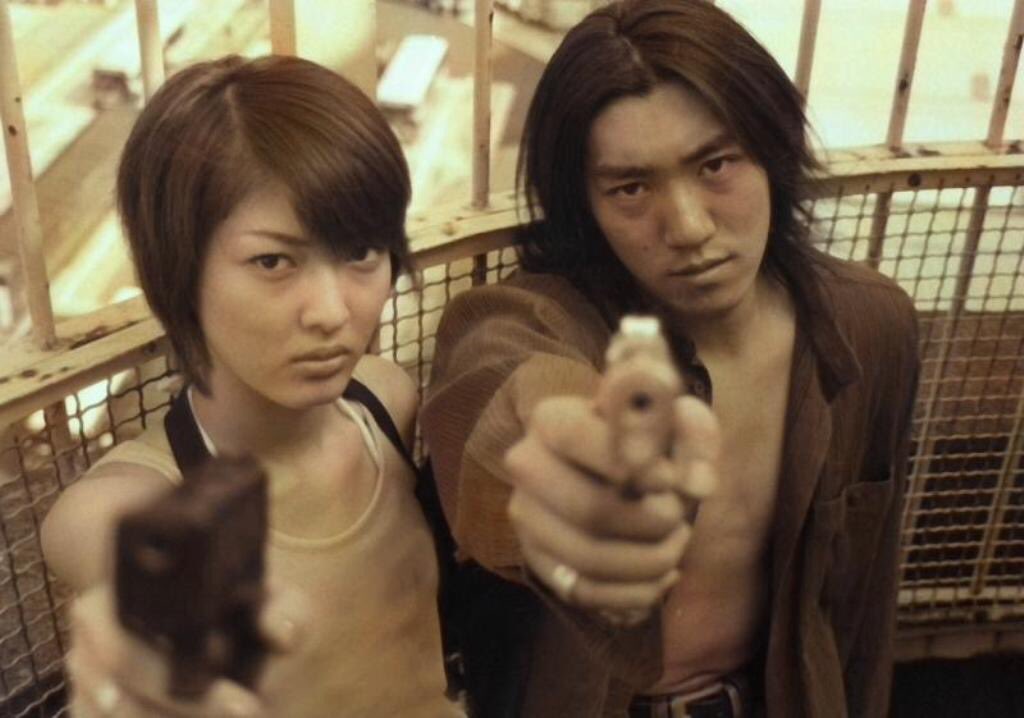
As Japan emerged from post-war privation into bubble-era comfort, the family underwent something of a reassessment. Remoulding Teorema, Yoshimitsu Morita’s The Family Game had punched a hole through the concept of the family in sending in a mysterious teacher who slowly proved to them all they were merely involved in a prolonged act of performance unpinned by social convention rather than genuine feeling. Sogo Ishii’s The Crazy Family did something much the same but ultimately opted to save the family unit by allowing them to find peace literally “outside” of the contemporary rat race. And then there comes Takashi Miike who, ever the ironist, runs the whole thing in reverse as Visitor Q (ビジターQ) comes to put the family back together again by giving them permission to bond through satisfying their previously unanswered emotional needs.

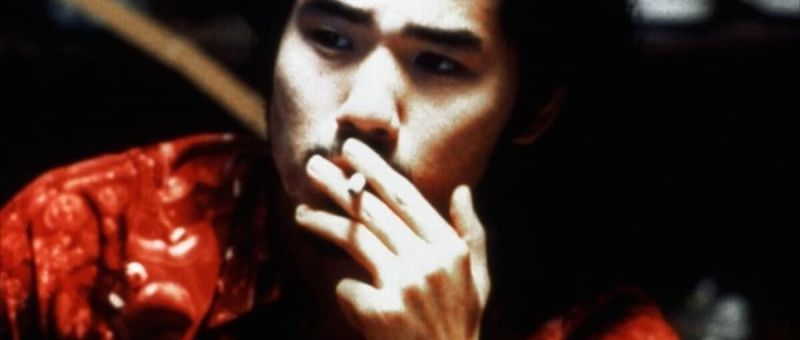
As the film opens, however, patriarch Kiyoshi (Kenichi Endo) is in a hotel room interviewing a young woman as part of a documentary investigating the youth of today. She replies only that what the youth can tell him about the future of Japan is that it’s hopeless, before getting back to business and elaborating on her price list for a menu of sex acts. Though originally unwilling, Kiyoshi ends up having apparently very exciting sex with her, but comes to his senses after climaxing too early. The girl, we later learn, is his runaway daughter, Miki (Fujiko), who has been living a life of casual sex work in the city. Kiyoshi determines to pay her in full, but explains that that he’ll give the rest of the money to her mother and she must keep everything that happened between them in that room a secret (a minor problem being Kiyoshi left the camera on and ended up documenting the whole thing, something that he will repeat later but quite deliberately). 

Stunned by his transgressive encounter, Kiyoshi looks on at a happy family with a degree of confusion while a strange young man leans through the window of the train station waiting room and whacks him on the head with a rock. Before he finally arrives home, the man hits him again just to be sure, but eventually follows him for dinner where he is introduced as an “acquaintance” who will be staying with him for an unspecified amount of time. 

Kiyoshi’s household is already falling apart, and quite literally seeing as the shoji are full of holes, partly because of the attacks of the “big bullies” who torment his teenage son Takuya (Jun Muto) by launching fireworks into his bedroom, but also because the boy takes his humiliated frustration out on his mother Keiko (Shungiku Uchida) who is covered in scars from previous beatings and has taken to using heroin to escape the misery of her family and doing part-time sex work to pay for it. 

Like the intruder of The Family Game, Visitor Q gradually infiltrates the family by usurping a place within it but begins to reawaken and reinvigorate each of the members as he goes. The first thing he takes hold of is Kiyoshi’s camera, literally observing the family and helping to document the Japan of today through the eyes of this very strange yet “ordinary” family. A man of the post-bubble era, he’s another failed provider whose career continues to flounder while his home spirals out of control, shorn of paternal authority. He feels insecure in his manhood, humiliated by his tendency towards premature ejaculation, and is raped with his own microphone by the “youth of today” while trying to interview them, which leaves him, according to his boss and former lover, looking like a fool. 

Kiyoshi is convinced he can get his mojo back through career success in making himself the subject of his own documentary, or more accurately his observation of his son’s bullying which he later reveals perversely turns him on. When his boss shuts his idea down, he rapes her, feeling humiliated again in complaining that she dumped him because of the premature ejaculation and vowing to prove himself but accidentally strangling her. Meanwhile, Visitor Q is back home getting busy with the under appreciated Keiko who describes herself as neither special nor pathetic but an ordinary woman, longing to be loved and wanted. Even one of her clients, exclaiming surprise to discover that a “nice woman” like her does stuff like this, appears to have a disability fetish remarking that is feels different with someone who has a limp. Visitor Q gets her juices running again, literally, reactivating her maternity and perhaps allowing her to reclaim her position within the household. 

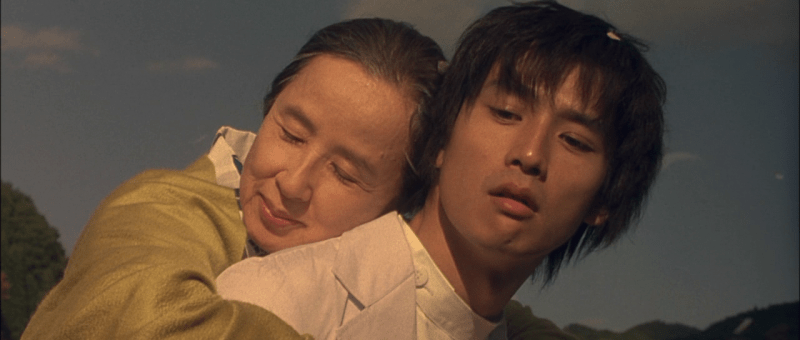
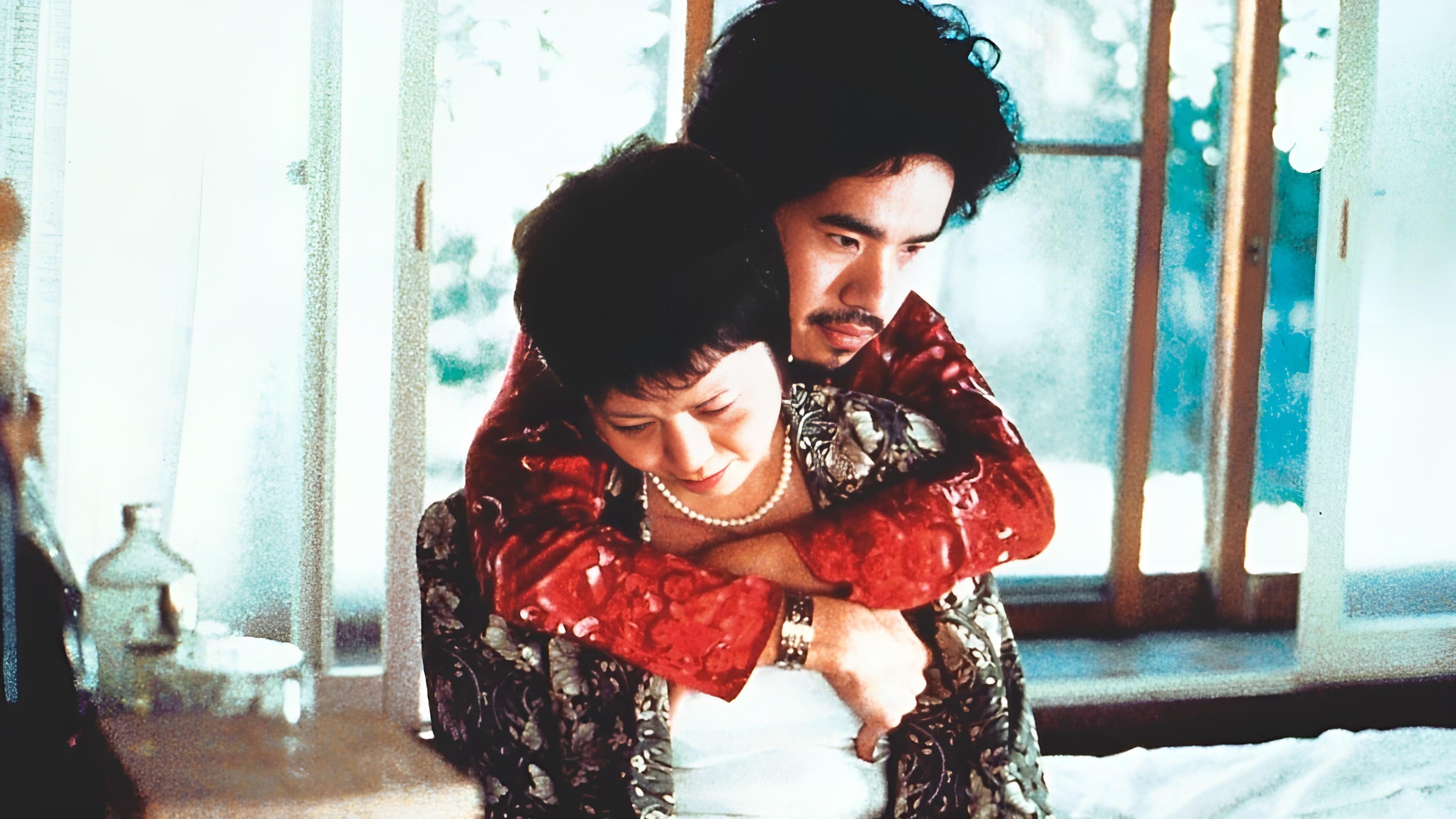
“I’ve never seen her so competent since we married,” Kiyoshi exclaims after she employs some top housewife logic to help him deal with his dead body problem, after which they take a rather more active stance against Takuya’s snotty bullies, pulling together to protect him in a way they never have before. Takuya may remain outside of the family hive, but he’s drenched in mother’s milk and perhaps the only one to truly recognise Visitor Q for who he is. Nevertheless, the Yamazakis are an “ordinary” family, just taken to extremes. Dad’s an emasculated salaryman broken in spirit by economic failure, mum’s an unhappy housewife lonely in repressed desire, son is an angry young man like his dad humiliated by the big boys, and daughter is a melancholy runaway who has tried to seize agency through using her body as a weapon but still feels that the future is hopeless and that her gesture may be one of self harm. Nevertheless, through the exposure of their myriad transgressions, they begin to bond in shared perversity. Thanks to Visitor Q, the family is “restored”, not “cured” but reaching its natural state of being as a collection of individuals assume their complete selves and in mutual acceptance rediscover a home.


Trailer (English subtitles)
Kakashi (案山子, Norio Tsuruta, 2001)

There’s a village in Japan that’s mostly inhabited by scarecrows. One of the last remaining residents began creating them to replace something that had been lost, fashioning effigies of those who had passed away and immortalising them as if clinging to a distant past long before the shadows of rural depopulation were cast over the village. In a way, it’s an expression of grief or at least a lament for a loss of community and a sense of increasing loneliness and isolation. 

Adapted from Junji Ito’s manga, Norio Tsuruta’s Kakashi is also in its way about grief and the way in which it can consume those left behind so that they too have no more desire to live. Dr Miyamori (Kenzo Kawarasaki) later explains that in the village they co-exist with death and he returned to his home town in the hope that he could save his daughter, Izumi (Ko Shibasaki), through its peculiar magic of resurrecting the deceased as human scarecrows. As he freely admits, he could not accept his daughter’s death and so has chosen to stay here in the village though alive himself rather than attempt to remake his life without her.

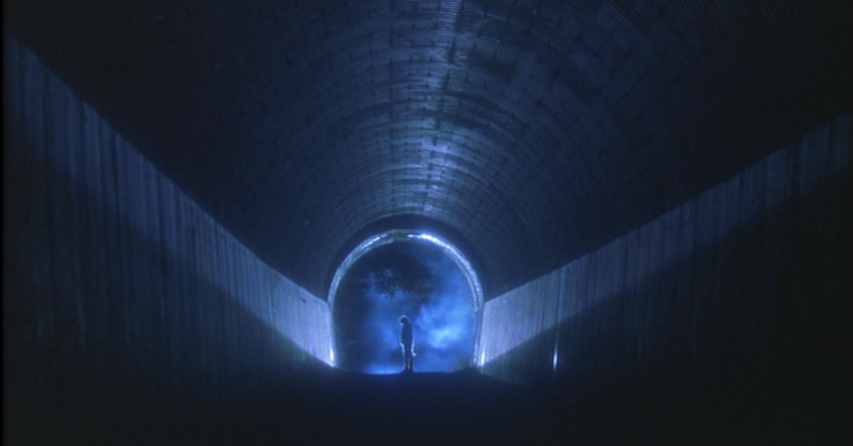
The village itself appears to exist slightly outside of the mortal realm as Kaoru (Maho Nonami) discovers on encountering the long tunnel that leads to its entrance. Her car breaks down half-way through signalling her liminal status as one who does not yet belong on either side. It’s not quite grief that’s brought her here but still a nagging sense of foreboding in that she’s come in search of her missing brother, Tsuyoshi, after discovering a letter from an old school friend, Izumi, next to his telephone. Kaoru appears confused as to why the letter should be there and travels to the village hoping for answers, assuming that Tsuyoshi (Shunsuke Matsuoka) may have travelled there in search of Izumi.

As the landlady lets her into his empty flat, Kaoru explains that she is his only family and there’s a suggestion that her attachment to him is unnatural, bordering on the incestuous. A policeman taking a look at the photo Kaoru hands him remarks that they look like a couple, which they do, leading her to stuff the photo back in her pocket as if she were embarrassed. To that extent, she’s come to reclaim Tsuyoshi, not just from death, loneliness, grief, and depression, but from Izumi or at least the spectre of her. In life, she feared that Izumi would take him away from her and at least in Izumi’s mind frustrated their romance out of romantic jealously. Dr Miyamori implies it was this sense of despair that contributed to her death and it’s clear that Izumi’s mother also blames Kaoru while Izumi accuses Kaoru of being forever in her way.

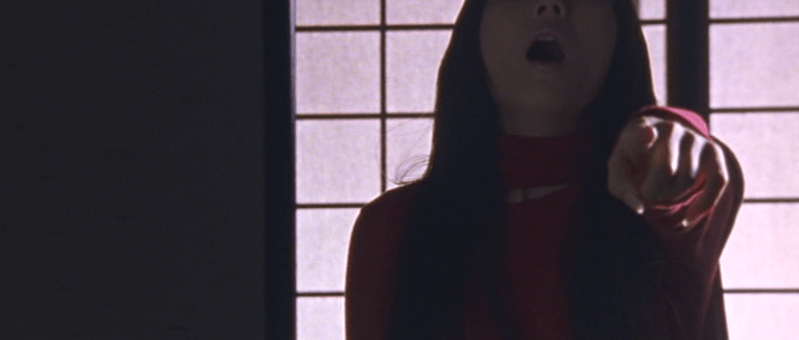
But then again, she did not bring Kaoru to the village and is not targeting her personally out of vengeance. Rather, she has moved beyond that as she finally’s about to become “herself” thanks to the village’s dark magic and the following day’s scarecrow festival, and therefore no longer needs to care about the resentments of her mortal life even if her father says that her evil spirit has empowered the town. There is definitely something quite creepy in this weird village with its shades of the Wicker Man in its strange ritual and humanoid effigies where improbable numbers of children softly blow pinwheels under a large windmill that seems to be moving time itself. Tsuruta even borrows a particularly eerie shot from Don’t Look Now and emphasises the liminal qualities of the village in Dr Miyamori’s advice that Kaoru leave as soon as her car is fixed otherwise she may no longer wish to.

The village is apparently full of those like him who are trapped but wilfully so because they no longer desire to leave. Kaoru attempts to help one of them, a young living woman from Hong Kong unable to let go of the memory of her late father whose scarecrow eventually tells her to go. It’s a place for those who have no other place to go to because they cannot let go of their grief and despair. Thus Kaoru is pulled towards the edge of the tunnel, not so much to free her brother as, in a way, herself by allowing her grief to consume her and consenting to live this empty life alongside death rather than allow herself to accept her loss.


Trailer (no subtitles)

Transparent: Tribute to a Sad Genius (サトラレ, Katsuyuki Motohiro, 2001)

What would life be like if your every thought were audible for miles? Adapted from the manga by Makoto Sato, Katsuyuki Motohiro’s Transparent: Tribute to a Sad Genius (サトラレ, Satorare) considers how ironically isolating such a talent may turn out to be as the sufferer finds themselves withdrawing from others in embarrassment while wider society begins to resent being unable to tune out of their every inane thought or avoid being hurt by hearing something no one would ever say out loud even if they thought it privately. 

The “Committee for the Preservation of the Specially Gifted” is dedicated to protecting the so-called “Transparents” whose thoughts are audible for a 10m radius though they have no control or even idea that it is happening. They’ve started an extensive public information campaign to reduce the stigma held against them because as they claim Transparents are a valuable natural resource mainly as they all have super high IQ and are at the forefront of technological advancement. Then again this extensive campaign seems like overkill as there are only currently seven confirmed Transparents on record, but in a minor twist the campaign is necessary because it’s essential that the Transparents never find out that their thoughts are public, the first apparently having taken their own life because of the intense embarrassment of trying to live without any kind of privacy. 

This is the first ethical problem with the Transparent program which is curiously contradictory in its approach. The government could easily have said that Kenichi (Masanobu Ando), the sole survivor of a plane crash at three years old plucked from the wreckage when rescuers heard his internal monologue begging for help, had died and raised him in a lab, but instead they choose to return him to his grandmother in a designated Transparent town where they provide him with the illusion of a “normal” life while simultaneously micromanaging his existence. Their problem now is that he’s qualified as a doctor and wants to practice, but clinical medicine is obviously an occupation which requires discretion. Patients overhearing his “real” thoughts might not be helpful to their recovery, while he can hardly claim patient doctor confidentially when he’s likely to leak private medical details simply in the course of his work. Meanwhile, it tuns out that he’s already invented a revolutionary cure for athlete’s foot which is another reason why the council want to manipulate him into shifting towards research rather than clinical practice. 

That’s why they’ve dispatched military psychologist Yoko (Kyoka Suzuki) who specialises in Transparents hoping that she can find a way to bend him to their will, but gradually she begins to come to a new understanding of what his life is like even while he has no idea everyone knows what he’s thinking. For example, no one wants to date a Transparent because they don’t want the intimate details of their love lives broadcast all over town, while the perfectly ordinary thoughts which should definitely stay in his head on catching sight of crush Megumi (Rina Uchiyama) can’t help but make her feel uncomfortable. The entire town is forced to pretend that they can’t hear him think, which seems somewhat unfair, leaving him at a disadvantage and more often at not at a loss as to why someone might seem hurt or upset by him when didn’t even say anything. Meanwhile, much of Yoko’s role lies in gently manipulating him, the entire committee decamping to a summer festival in a nearby town so they can let him down gently by leading him to believe Megumi already has a steady boyfriend who is kind to children and the elderly so he’s forced to be happy for her that’s she’s found such a great guy and can give up on his romantic aspirations. 

The tone is in general admirably progressive in that it ultimately argues for a greater sense of acceptance for all minorities, but it’s difficult to square the positive message with the ways the Transparents are also being uncritically manipulated, forced to live a simulacrum of a life in an engineered small-town Japan which grateful to have them only for the massive subsidies they receive for local development in return for making sure the Transparents are kept in the dark about their condition so that the committee can exploit their genius as they plan to do with Kenichi after getting him to the research institution. Even so what they discover is that Kenichi knew what his genius was and only through letting him follow his dreams can they truly unlock it, while the committee is forced to reckon with the various ways they’ve dehumanised him, the chairman eventually referring to him as a person as opposed #7 as he’d always called him before. Somewhat contradictory and more than a little uncomfortable in its implications, Transparent: Tribute to a Sad Genius is presented as heartwarming drama and it does indeed warm the heart with this its messages of equality and acceptance not to mention the right to follow one’s dreams whatever they may be but never really reckons with its central thesis in which the authorities pat themselves on the back for being kind and doing the right thing while simultaneously exploiting those they claim to care for without their knowledge or consent. 


Darkness in the Light (日本の黒い夏ー冤罪, Kei Kumai, 2001)

The summer before the sarin gas attack on the Tokyo subway in 1995, a similar incident had taken place in the small town of Matsumoto, Nagano. A panicked provincial police force quickly homed in on the man who had first reported that something was wrong as the likely culprit, though he was later proved innocent when, following the subway attack, Aum Shinrikyo claimed responsibility for the trial run in Matsumoto revealing that they intended to test out the gas while killing a series of local prosecutors they assumed were about to rule against them in a land dispute raised by townspeople who objected to the cult’s intention to set up a new branch in the area. 

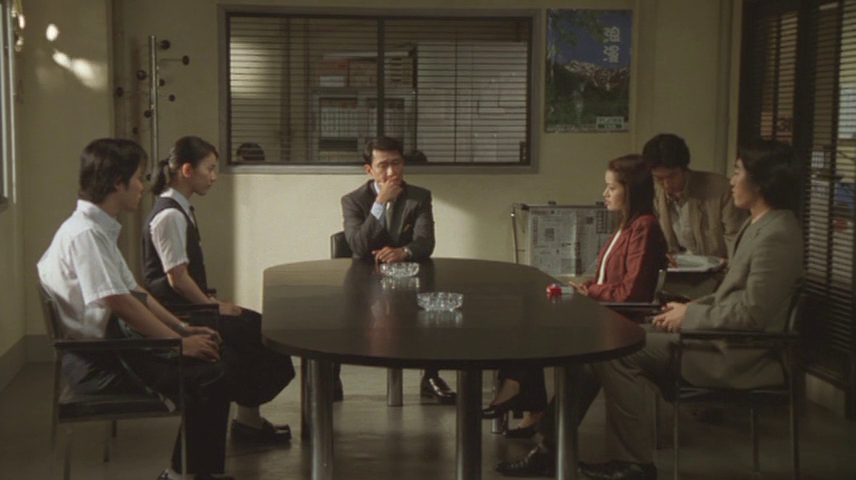
Kei Kumai’s films had often dealt with difficult subjects and particularly with those who suffered under a false accusation, but Darkness in the Light (日本の黒い夏ー冤罪, Nippon no Kuroi Natsu – Enzai) was also personal to him as he knew the man concerned, Kono renamed for the film as Kanbe (Akira Terao), and found it absurd that such an ordinary person could have planned and carried out a deadly chemical attack literally in his own back yard. Essentially putting both mass media and the police force on trial, he frames the tale through the eyes of two earnest high school students who are making a documentary about the way Kanbe was treated for their high school film club. 

The obvious point is that if the Matsumoto police force, which the film claims had become aware that Aum possessed sarin gas, had conducted a better investigation then there is the possibility that the subway attack might have been prevented. The teens want to know what went wrong and how an ordinary citizen can suddenly be made public enemy number one overnight with no physical evidence linking him to the crime. What they discover through interviewing the only local TV news outlet that did attempt to conduct an investigation and contradict the reports being issued by the police, is a dangerous collusion between police and media that is supported by the business interests that underpin the news industry. Most outlets simply print press releases or unofficial leaks from the police without fact checking them. Sasano (Kiichi Nakai), the TV station editor, no longer does this because a previous false report implicating a teenage boy in a murder he had not committed had resulted in his suicide.

Nevertheless, his junior associate, Koji (Yukiya Kitamura), has his mind less on the truth than the scoop. He thinks they should publish the information they get as quickly as possible otherwise other outlets will publish first. Koji is also the most certain that Kanbe is guilty, believing they are being overcautious in their reporting and will pay for it later. The station’s managers and sponsor committee feel much the same, directly telling Sasano that he should refrain from creating his own news and instead publish what everyone else publishes. They also imply that public opinion has now in a sense become “the truth” and his reporting should be in line with it, rather than the other way around with responsible media as an arbitrator of objective facts which have been thoroughly researched and confirmed. 

Sasano airs an alternative view but admits he does so more in the interest of ratings than he does for truth or justice realising that there is some currency in going against the grain and that if Kanbe turns out to be innocent after all they will come out of it much better than everyone else who published the police press releases unquestioningly. Even so, they too become subjects of harassment with relentless calls from locals decrying their irresponsible attempt to undermine the police and let a mass killer go free. Despite the care they had taken in investigating the information presented to them, they too had broadcast falsehoods such as the “expert” testimony that any old fool could make sarin gas by chucking some stuff in a bucket and standing back, only learning later from a university professor that it requires a high level of chemical knowledge, specialist equipment, and professional protective gear not available to a man like Kanbe who did have various chemicals in his home but only the kind easy to buy for use in harmless hobbies such as photography and ceramics. 

Even they have cultivated close relationships with people in the police who feed them information on investigations, Sasano having a personal connection with the officer in charge of the case, Yoshida (Renji Ishibashi). Appearing somewhat conflicted, Yoshida faces pressure from his superiors to pin the case on Kanbe despite beginning to believe he is likely innocent not least because he does not give in to their pressure tactics and confess. Kanbe asks to be allowed to speak to witnesses who have supposedly given the police information on him, as if aware the police may simply be making things up to prod him into confessing while they otherwise break an agreement to restrict interviews to two hours given that Kanbe was also injured in the gas attack and is in poor health. His original reluctance to talk to the police because he was seriously ill and incapable of answering their questions seems to have annoyed Yoshida and given him the impression he must be hiding something as does his sensible decision to consult a lawyer. As Kanbe is interviewed as a “witness” rather than a “suspect” his lawyer is not present in the room allowing police to get away with what is quite clearly an abuse of their power. 

Sasano points out that an Olympic ski event was also taking place nearby so the police were keen to keep the investigation under wraps, while their later reluctance to change tack when Kanbe refused to confess is nothing more than an attempt to protect their reputation fearing that they would look foolish in the press for having painted Kanbe as the villain when he wasn’t. Their plan was to arrest Kanbe anyway and suggest that he was involved with the cult while acknowledging that they had planned the attack to end the land dispute. Kanbe becomes a hapless victim of circumstance, an everyman misused by an authoritarian institution trying to maintain its own grip on power rather than fulfilling its responsibility to keep the people safe by ensuring the real culprits were prevented from committing further crimes. 

Kumai comes in hard for mass media, exposing the network that sees local information bounced back through Tokyo head offices, the collusion between police and the press that leaves reporters unwilling to rock the boat for fear of losing access, and a general indifference for the welfare of individuals caught up in the real events they report on. Despite the youthful eyes of his protagonists whose untainted idealism gives the newspaper men pause for thought, a slightly dated approach displays little of the intensity or visual flair present in some of Kumai’s earlier work while falling back on sentimental cherry blossom imagery if offering a poignant opportunity for reflection on a system in urgent need of repair as Kanbe prepares to go on with his life leaving the past far behind him. 


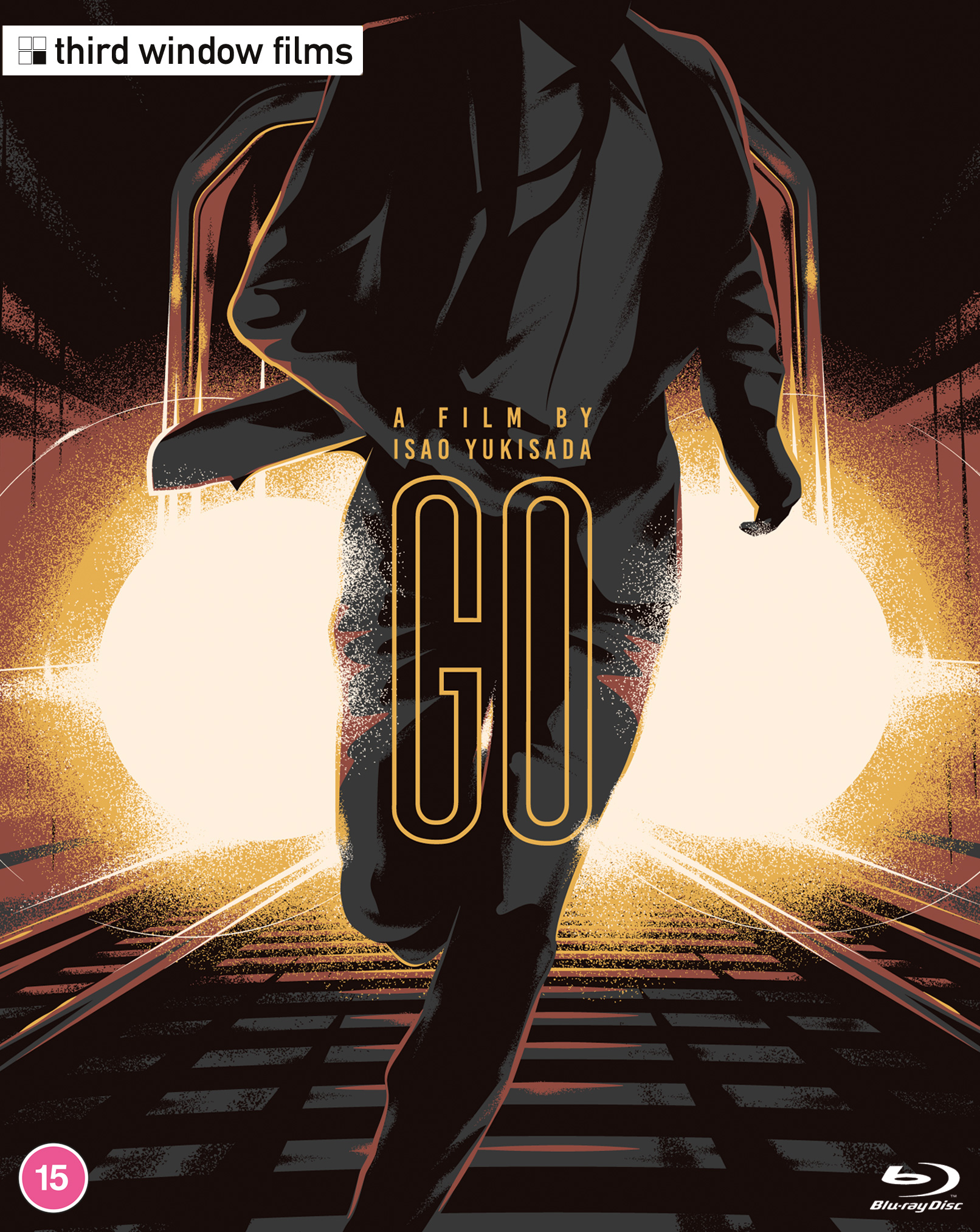
GO (Isao Yukisada, 2001)

“We never had a country” a student at a North Korean school in Japan fires back, hinting at his feelings of displacement in being asked to remain loyal to a place he never knew while the culture in which he was born and raised often refuses to accept him. The hero of Isao Yukisada’s Go is not so much searching for an identity as a right to be himself regardless of the labels that are placed on him but is forced to contend with various layers of prejudice and discrimination in a rigidly conformist society.

As he points out, when they call him “Zainichi” it makes it sound as if he is only a “temporary resident” who does not really belong in Japan and will eventually “return” to his “home culture”. In essence, “Zainichi” refers to people of Korean ethnicity who came to Japan during the colonial era and their descendants who are subject to a special immigration status which grants them rights of residency but not citizenship. Sugihara’s (Yosuke Kubozuka) situation is complicated by the fact that his father (Tsutomu Yamazaki) has a North Korean passport, making him a minority even with the Korean-Japanese community. He attends a North Korean school where speaking Japanese is forbidden and is educated in the tenets of revolutionary thought which are of course entirely contrary to the consumerist capitalism of contemporary Japan. 

His father eventually consents to swap his North Korean passport for a South Korean one mostly it seems so he can take a trip to Hawaii with his wife (Shinobu Otake) which seems to Sugihara a trivial reason for making such a big decision especially as it caused the lines of communication to break down with his bother who returned to North. Yet it seems like what each of them is seeking is an expansion of internal borders, the right not to feel bound by questions of national identity in order to live in a place of their own choosing. “I felt like a person for the first time,” Sugihara explains on being given the opportunity to choose his nationality even if it is only the “narrow” choice between North and South Korea. 

But on the other hand he wonders if it would make his life easier if he had green skin so that his “non-Japaneseness” would be obvious. Sugihara reminds us several times that this is a love story, but he delays revealing that he is a Zainichi Korean to his girlfriend because he fears she will reject him once she knows. On visiting Sakurai’s (Ko Shibasaki) home, it becomes obvious that she comes from a relatively wealthy, somewhat conservative family. Her father, who is unaware Sugihara is Korean-Japanese, immediately asks him if he likes “this country” but is irritated when Sugihara asks him if he really knows the meaning behind the various words for “Japan” again hinting at the meaninglessness of such distinctions. When he eventually does tell Sakurai that he is ethnically Korean, her reaction surprises both of them as she recalls her father telling her not to date Korean or Chinese men on account of their “dirty” blood. 

Such outdated views are unfortunately all too common even at the dawn of the new millennium. Even so, Sakurai had not wanted to reveal her full name because she was embarrassed that it is so “very Japanese” while conversely Sugihara takes ownership of the name “Lee Jong-ho”. He embraces the “very Japanese” tradition of rakugo, and hangs out in the Korean restaurant where his mother works dressed in vibrant hanbok. Given a book of Shakespeare by his studious friend, he is struck by the quote which opens the film which states that a rose by any other name would smell as sweet and wonders what difference a name makes when its the same person underneath it. 

Perhaps his father’s admission that he always found a way to win wasn’t so off base after all, nor his eventual concession that Sugihara may have it right when he rejects all this talk of “Zainichi” and “Japanese” as “bullshit” and resolves to “wipe out borders”. He insists on being “himself” or perhaps a giant question mark, and discovers that Sakurai may have come to the same conclusion in realising that all that really mattered was what she saw and felt. Yukisada captures the anxieties of the age in the pulsing rhythms of his youthful tale which keeps its heroes always on the run, but is in the end a love story after all and filled with an equally charming romanticism. 


GO is released on blu-ray in the UK on 22nd May courtesy of Third Window Films.

Original trailer (English subtitles)

Electric Dragon 80000v (エレクトリック·ドラゴン 80000V, Sogo Ishii, 2001)

“How do we repress the animal instinct to explode?” asks a narratorial voice (Masakatsu Funaki) in Sogo Ishii’s 50-minute cyberpunk fever dream Electric Dragon 80000v (エレクトリック·ドラゴン 80000V). The supercharged hero is indeed filled with a kind of rage, not least because society seems intent on trying to “regulate” him while he later comes into contact with an opposing force whose job it is to control the electric flow though in a curious way the two men perhaps free each other from their mutual oppression and regain the right to run on their own current. 

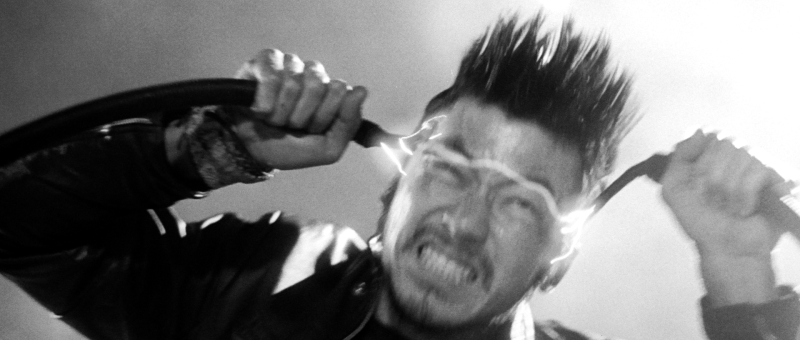
“Dragon Eye” Morrison (Tadanobu Asano), as he comes to be called, got zapped by a pylon when he was a child which altered his brain, awakening the dragon within by “damaging” the part of our neurology unchanged from our reptile ancestors that controls emotion and acts of desire. Doctors seem intent on “correcting” this “fault” in his circuitry through electro-shock therapy to force him to conform to mainstream society while he does admittedly seem to have some problems with violence and impulse control. He self-regulates by chaining himself to a table and “recharging” overnight while easing his frustrations through playing electric guitar, boxing, and hanging out with his calming lizard friends 

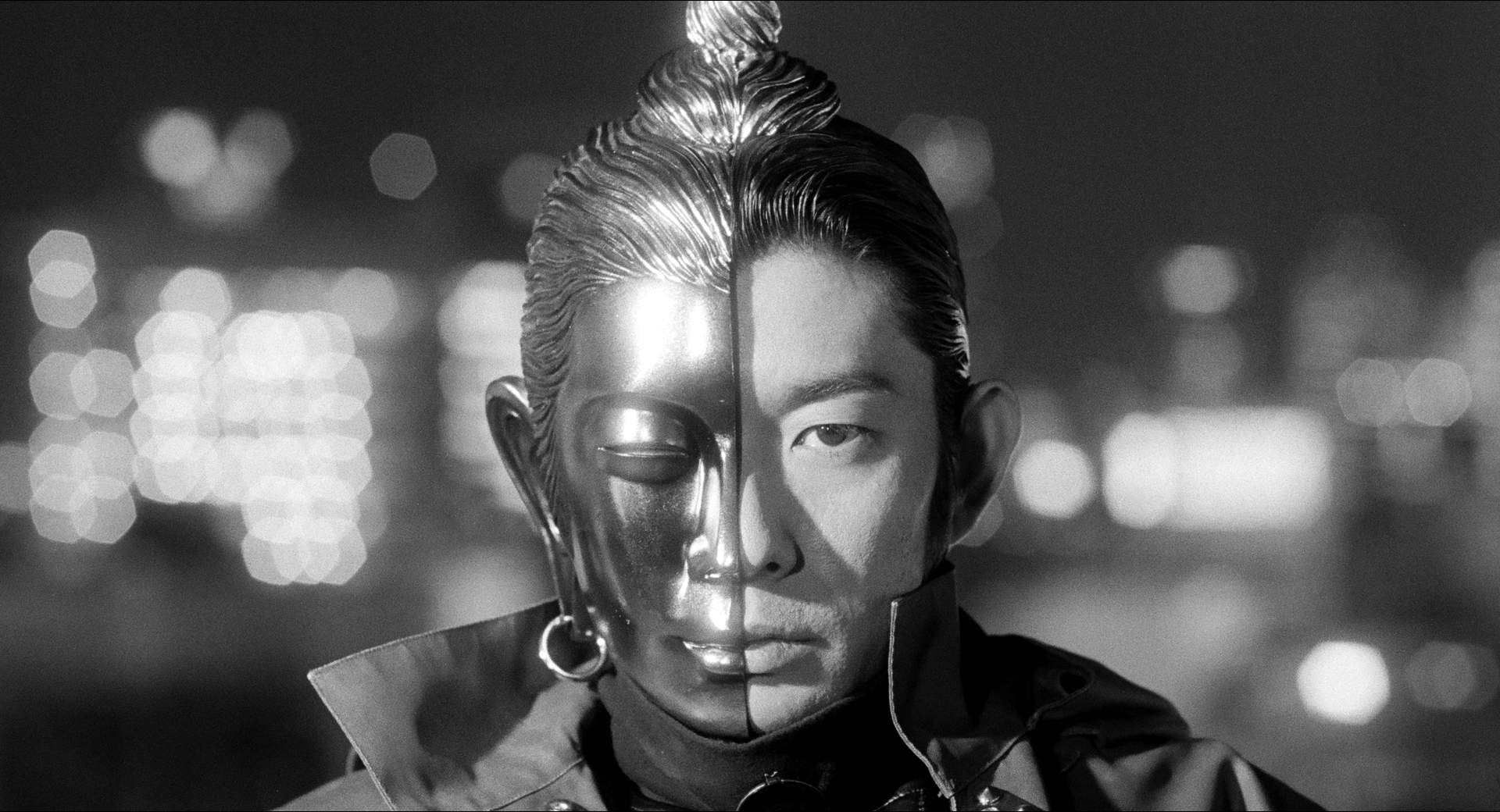
Meanwhile, Thunderbolt Buddha (Masatoshi Nagase) is literally divided in two, one half of his face covered in a metallic Buddha mask hinting at the inner duality which at times literally leaves him at war with himself while wandering around with an electric metre trying to control not just his own flow but everyone’s. “He’s the electricity man! All its wavelengths are his!” the narrator explains, while Thunderbolt Buddha turns his head to the Buddha side and an old lady prays to him in his infinite calmness. Not so long before, he’d been acting as a vigilante thief, like Dragon Eye in the ring only darkly exorcising his frustration through violence attacking the corrupting forces of the contemporary society. Perhaps jealous, or just seeking an escape, Thunderbolt Buddha gradually dismantles all of Dragon’s Eye’s means of self-regulation, disappearing lizards and chopping his electric guitar into a series of uniform triangles. Dragon Eye tries to put it back together, but the guitar doesn’t play the right tune anymore, now echoing Thunderbolt Buddha’s eerie discordance. “I just wanted to see you angry” Thunderbolt Buddha admits, trying to engineer a battle that will decide each of their fates. 

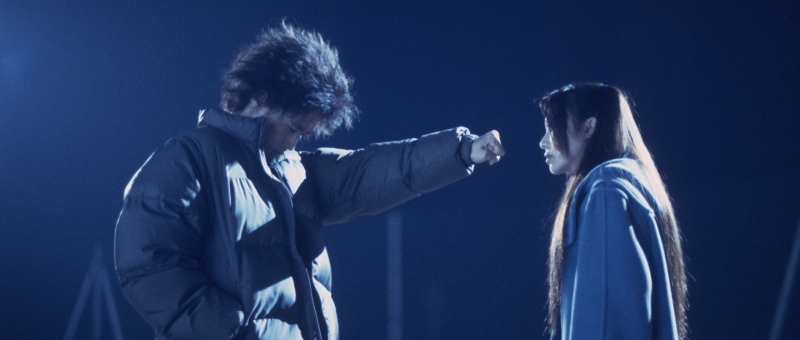
Dragon Eye’s power is in one sense manmade, he got he got it from a pylon which is after all an attempt to regulate natural energy into something useful to a modern society, whereas Thunderbolt Buddha was as his name suggests was struck by lightning and imbued with 20,000v of naturally generated pure electric charge. As the two men square off against each other on a Tokyo rooftop, Dragon Eye once again marshals the power of modernity, ripping open the electric power supply and using it to supercharge himself before turning it on Thunderbolt Buddha who has no such recourse to a greater power. In the end, they are perhaps both freed. Thunderbolt Buddha’s mask falls to the ground while a calmed Dragon Eye retrieves his lizard and returns home no longer locking himself into his electric table but freed of its restraints. 

Shooting in a crisp black and white, Ishii returns to the punk sensibilities of his earlier career in a tale of a free spirit seeking escape from a conformist society and rebelling against the forces quite literally intent on regulating his brain. Echoing the avant-garde cinema of the 1960s, Ishii uses anarchic title cards with strangely drawn, elongated figures accompanying the voiceover narration and aggressive guitar music as the two men spark in conflict each threatening to explode, already overloaded with the alternating currents of contemporary civility. “Let’s send them to hell, your demons and mine” Thunderbolt Buddha insists, ironically echoing Shinya Tsukamoto’s Tetsuo the Iron Man as the pair bend the electric city to their will and finally find release in a mutual explosion that catapults each of them free of the magnetic pull of social conformity towards a world of freedom in self-regulation and independent flow.


Electric Dragon 80000v is released on blu-ray in the UK on 6th March courtesy of Third Window Films.

Original trailer (English subtitles)

Millennium Mambo (千禧曼波, Hou Hsiao-hsien, 2001)

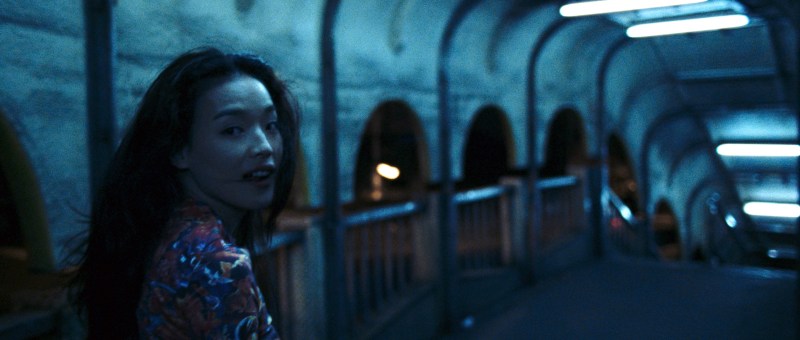
In the iconic opening sequence of Hou Hsiao-Hsien’s Millennium Mambo (千禧曼波, Qiānxī Mànbō), a young woman bounces enigmatically along a walkway, filled with joy and abandon and seemingly exultant in her freedom. Occasionally she glances back as if someone were actually filming her but then we start to wonder if this isn’t just her looking back at herself as she narrates her story in the third person, as if it happened to someone else because in a sense it did. “This happened 10 years ago,” she explains from the vantage point of 2011 looking back on the coming millennium and her own slow dance towards a new world. 

Then again, as she admits Vicky (Shu Qi) always seems to be drawn back into the orbit of Hao (Tuan Chun-hao), her no good, abusive boyfriend who is so controlling that he deliberately prevented her from taking her high school exams out of fear that she’d “move on”. Circling around Vicky’s memories, Hou often cuts to Hao in exactly the same position as he was before while Vicky has indeed moved on if not always in the direction she might have chosen such as the abrupt transition to her naked behind as a dancer at a nightclub where she is forced to work because Hao refuses to earn a living. When we first see her arrive at their apartment, Hao is sitting in the dark and we don’t even notice him until he gets up after Vicky enters the bathroom. Where her bedroom is colourful and cosy, bathed in soft light and demonstrating her ability to find small comforts in an otherwise harsh existence, Hao’s space is gloomy and ominous in its austerity. 

While Vicky tries to move into a more responsible adulthood, Hao extends Taipei clubland into their home frequently hanging out with friends while djing on the rig in his room. He takes drugs to keep his weight down to evade military service and gets into trouble with the law after pinching and pawning an expensive watch from his dad rather than trying to get job. He is the force which seems to keep Vicky trapped in a disappointing existence. By her own admission she finds herself returning to him as if she were in a kind a kind of trance, unable to escape though at times clearly despising him and perhaps herself too. Even Hao is fond of saying that they’re from different worlds, stuck on parallel orbits and otherwise incompatible. Even their apartment seems to be divided into night and day. 

Yet it’s also Taipei clubland that offers Vicky an escape route through the community she finds surrounding her amid the pulsing beats of millennial techno. A kindhearted gangster, Jack (Jack Kao), comes to her aid though he is later brought low by the recklessness of youth as his naive underlings bring their world crashing down around them. Jack takes her in and protects her with paternal affection, eventually inviting her to go on the run with him in Japan but immediately disappearing, just like the snowman she later describes Hao to have been in a moment imprinted on her memory. She carries Jack’s phone around with her unable to let go of him while recalling the scent of his abandoned jacket as she tries to make a decision in a snowy Tokyo just as she’d sworn to herself she’d leave Hao when she ran through her savings. 

Hou and cinematographer Mark Lee Ping-bing shoot all of this through the breeziness memory, following emotional logic rather than the literal as Vicki narrates to us events which are at odds with those occurring on screen and zig zags through the story of her youth before arriving at what seems to be a genuine moment of warmth amid heavy snow, perhaps finally “moving on” from the dissatisfying past to a future of her own choosing. Then again, her fleeting recollections amount to a constructed narrative, the story of the girl on the walkway who finally reaches the other side and disappears into the night either progressing into the new millennium or remaining trapped in a thousand year mambo of memory reliving the key moments of her life in a gentle oscillation, “as if under a spell or hypnotised” , unable to escape from the dangerous allure of nostalgia. 


Millennium Mambo is screening now at New York’s Metrograph and available to stream in the US via Metrograph at Home courtesy of Metrograph Pictures.

Trailer (English subtitles)
All About Lily Chou-Chou (リリイ・シュシュのすべて, Shunji Iwai, 2001)

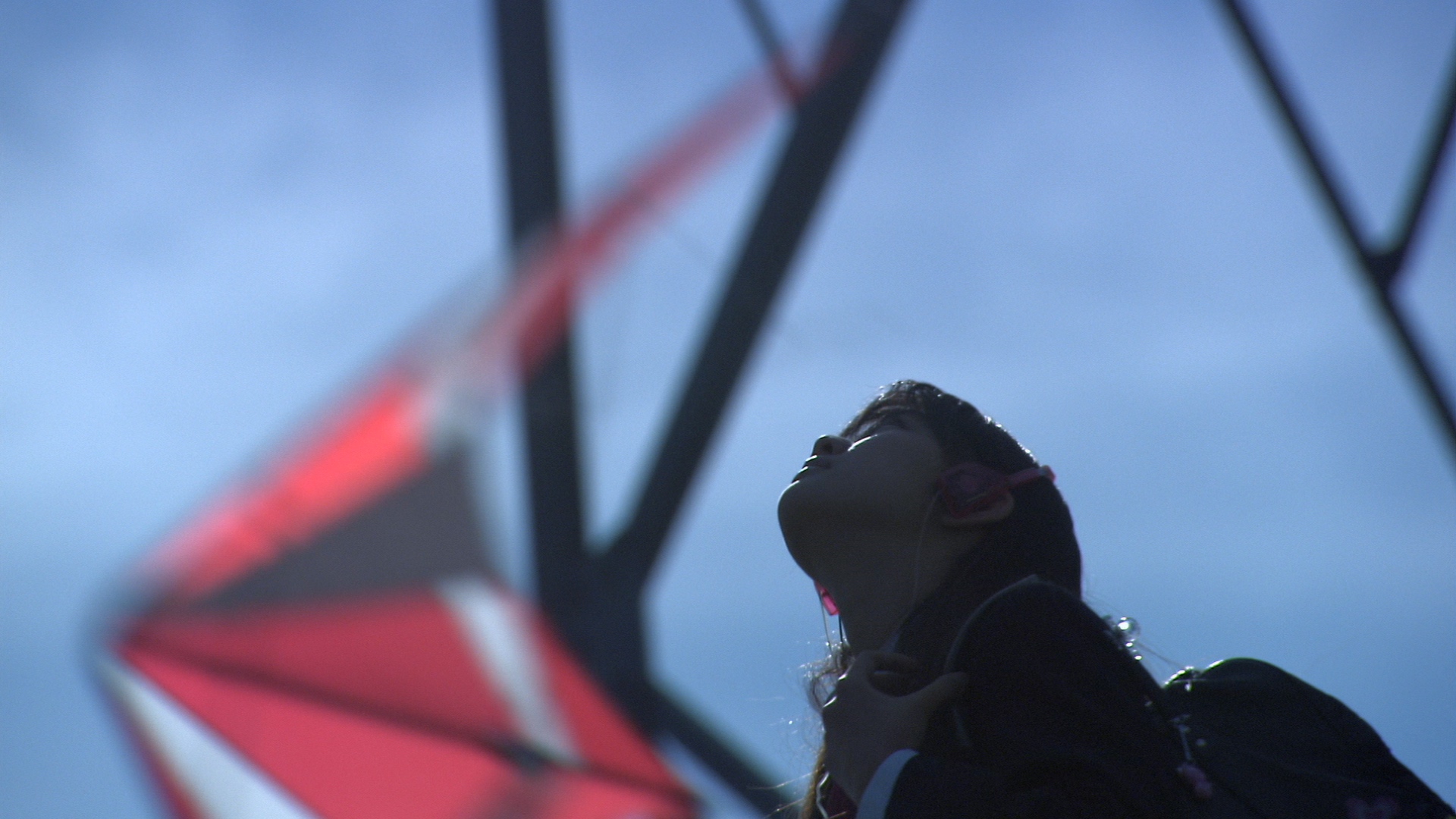
“For us the natural world is a playground. But for the things that live in it, it might be hell on earth.” a middle-aged stranger explains to a confused teenage boy elaborating on a metaphor about a strangler tree that wraps itself around its brethren and suffocates them to death. The contemporary society is indeed a hell on earth to the alienated turn of the century teens in Shunji Iwai’s plaintive youth drama All About Lily Chou-Chou (リリイ・シュシュのすべて, Lily Chou-Chou no Subete) who have found solace in “The Ether”, “a place of eternal peace” as discovered in the music of a zeitgeisty pop singer inspired by the ethereality of Mandopop star Faye Wong. 

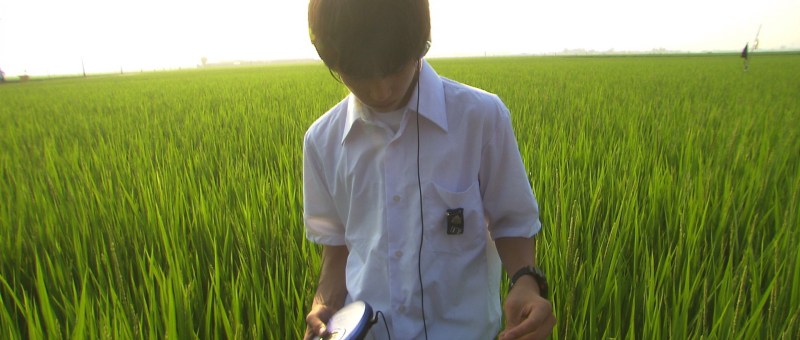
Filled with millennial anxiety, The Ether as mediated through message board chat is the only place the teens can be their authentic selves. “For me only the Ether is proof that I’m alive” one messenger types using an otherwise anonymous online handle unconnected with their real life identity. Iwai often cuts to the teens standing alone listening to music on their Discmans while surrounded by verdant green and wide open space with a bluer than blue sky above, but also at times finding that same space barren and discoloured, drained of life in, as Yuichi (Hayato Ichihara) puts it, an age of grey much like a field in winter. For Yuichi the world ended on the first day of school in September 1999 when his torment began at the hands of a previously bullied boy who decided to turn the tables after, of all things, getting hit in the head by a flying fish in Okinawa and almost drowning.  

Purchased with money stolen from some other bullies who had just stolen it from a well-off middle-aged man they were harassing in a carpark, the trip to Okinawa captured in grainy ‘90s holiday video style later subverted by the same use of contemporary technology to film a gang rape of a fellow student, is the event that finally reduces Yuichi’s world to ashes. Like the other teens he is also carrying a sense of alienation as his mother prepares to remarry while carrying his soon-to-be stepfather’s child which also dictates that Yuichi will have to change his surname lending a further degree of instability to his already shaky sense of identity. For Hoshino (Shugo Oshinari), his sometime friend, the instability seems to run a little deeper. “Nobody understands me” he tells Yuichi with broody intensity, irritated by the image others have of him as a top swat chosen to give a speech at the school’s opening ceremony and widely believed to have placed first in the exams. In truth he only placed seventh and is most annoyed that whoever really did come top probably thinks he pathetically lied about it for clout. 

We can see that Hoshino’s family appears to be wealthy, at least much more than Yuichi’s, though as we also discover they once owned a factory which has since gone bust amid the economic malaise of the ‘90s leading to the disintegration of his family unit. Like Yuichi he feels himself adrift, evidently bullied in middle school for being studious and introverted while rejected by the girls in his class who again attack him because of his model student image. Hoshino seems to have a crush on a girl who is herself bullied, Kuno (Ayumi Ito), apparently resented by the popular set for being popular with boys. “It’s amazing how women can ostracise someone like that” band leader Sasaki (Takahito Hosoyamada) reflects, one of the few willing to call her treatment what it is but finding no support from their indifferent teacher Miss Osanai (Mayuko Yoshioka), while entirely oblivious to the fact that the boys are just the same in Hoshino’s eventual reign of terror as a nihilistic bully drunk on his own illusionary power. 

Shiori (Yu Aoi), blackmailed into having sex with middle-aged men for money, questions why she and Yuichi essentially allow themselves to be manipulated by Hoshino and are unable to stand up to him even when they know they are being asked to do things that they find morally repugnant such as Yuichi’s complicity when tasked with setting Kuno up for gang rape by Hoshino’s minions with a view to videoing it for blackmail purposes. Whether or not he did in fact have a romantic crush on her, Hoshino’s orchestration of the rape signals his total transformation, forever killing the last vestiges of his humanity and innocence but for Yuichi, who can only stand by and cry, it signals the failure of his resistance that if he went along with this there is no line beyond which he will not go if Hoshino asks it. Yuichi asks Shiori why she didn’t agree to date the kindhearted Sasaki who would have been able to shield her from Hoshino but she knows it’s too late for that while suggesting Yuichi is in a sense protecting her though his inability to do so only further erodes his wounded sense of masculinity. 

Only online can the teens find the elusive Ether they dream of, ironically connected via a message board that Yuichi runs under the name Philia where the only rule is that you have to love Lily yet unknown to each other thanks to the alienating effect of their online handles. Someone has a point when they suggest all this talk of polluting the Ether sounds a bit like a cult, but does at least give the teens their safe space where they can share their pain free of judgement and find solidarity in adolescent angst. In any case all of this shame, repression, and loneliness is later channeled into nihilistic violence and cruelty provoked by millennial despair. The only way Yuichi can free himself is by killing the part of himself that hurts in an effort to quell the “noise” in his head. Broken by title cards accompanied by the reverberating sound of typing in emptiness, Iwai’s characteristic soft focus lends a trace of nostalgic melancholy to this often harrowing tale but also neatly encapsulates turn of the century teenage angst with the infinite sympathies of age. 


All About Lily Chou-Chou screens at Japan Society New York on Dec. 10 as part of Love Letters: Four Films by Shunji Iwai

Original trailer (English subtitles)

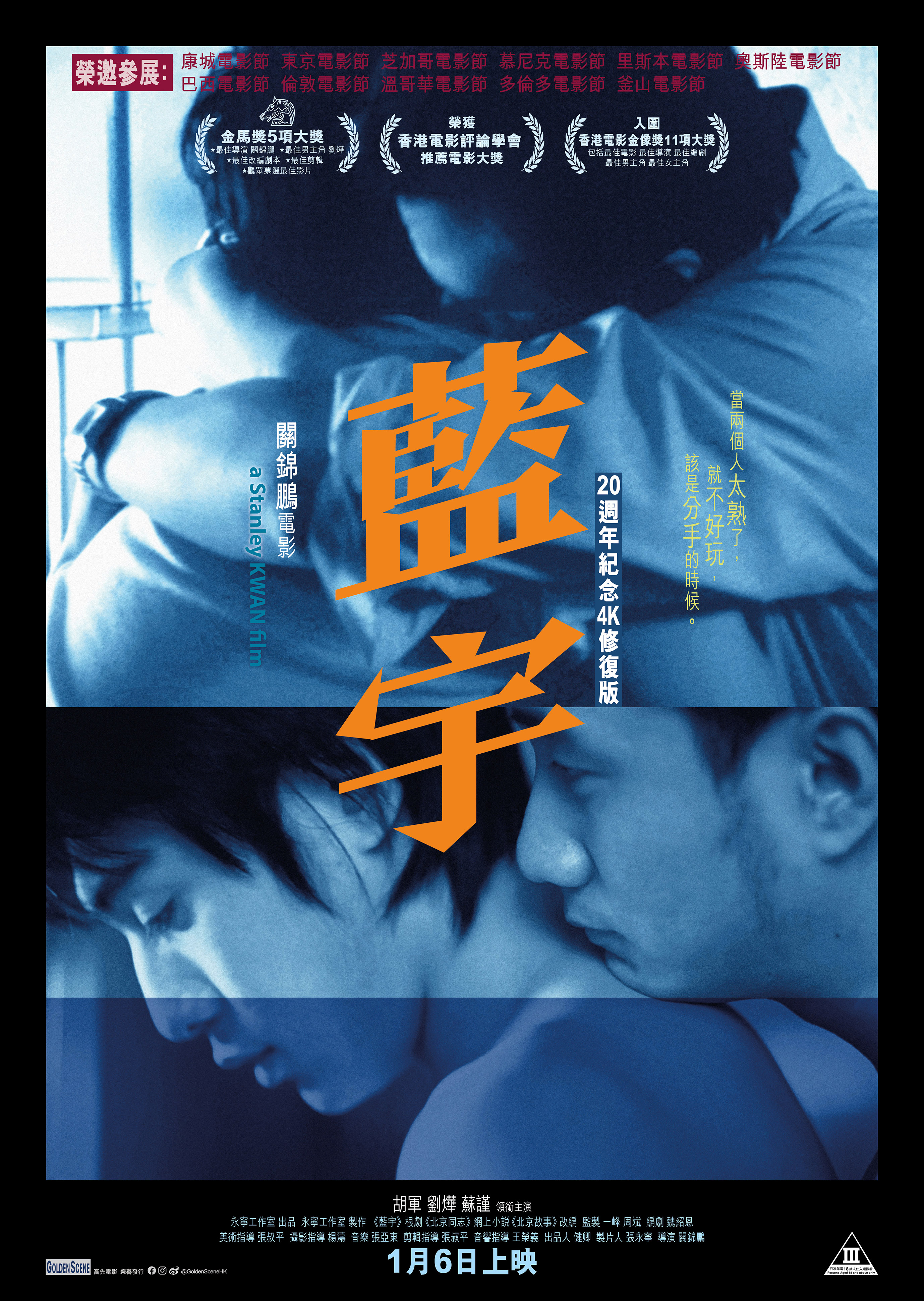
Lan Yu (蓝宇, Stanley Kwan, 2001)

“It’s not really over as long as there are memories” the cynical hero of Stanley Kwan’s haunting romantic tragedy, Lan Yu (蓝宇, Lán Yǔ), is reminded by his earnest lover only to find himself both immersed in and comforted by nostalgia, “because I feel you never really left”. Inspired by a subversive yet hugely popular erotic LGBTQ+ web novel thought to have been written by a Chinese woman in exile in the US Kwan’s aching melodrama is one of very few Mainland films to deal directly with the subject of homosexuality but is also a melancholy meditation of the frustrated liberations of post-Tiananmen China. 

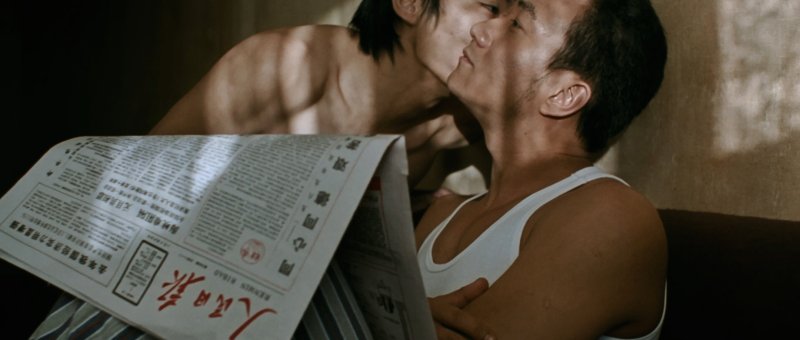
In 1988, hero Handong (Hu Jun) is perhaps the personification of an age of excess. In a sharp suit and sunshades, he plays the ladies man while repressing his homosexuality in an act of superficial conformity. His money can buy him anything, and to begin with it buys him Lan Yu (Liu Ye) a cash-strapped architecture student turning to sex work to make ends meet, only to discover himself drawn to this “weird” young man who doesn’t really care about his consumerist success save asking with a melancholy air if he’s ever been to America. As we later discover, Lan Yu had wanted to study abroad but travel was not such an easy matter in late ‘80s China while even some years later he has trouble organising a passport and visa. Handong as a wealthy businessman may have no such trouble, perhaps his money really can buy him anything after all even a superficial sense of liberty in what is still an oppressive and authoritarian society. 

For Handong, sex with men may be a way of expressing a freedom he does not really believe he has endangering his relationship with Lan Yu by picking up another random student in a park while reminding him that “this kind of stuff isn’t serious”. “So what is serious for you?” Lan Yu not unreasonably asks, but it may be a difficult question for Handong to answer. What’s serious for Lan Yu is the authenticity of his feelings. He is uninterested in Handong’s wealth, saving the money that he gives him rather than spending it, ironically making good on Handong’s joking suggestion “maybe you’ll bail me out if I’m broke one day”. 

In the pivotal sequence set against the backdrop of the Tiananmen Square protest, it is nevertheless Handong who finds a kind of liberty in accepting the reality of his feelings for Lan Yu overcoming his internal conditioning which convinces him that love is a weakness. Meanwhile, Lan Yu’s revolution evidently fails in the chaos of the protests, Handong cradling him as he weeps for all he’s seen. It’s this liberation that allows them to engage in a conventional romance, Handong buying a suburban villa he puts in Lan Yu’s name where they can live together as a couple albeit discreetly. But in the end Handong cannot let go of a sense of conventionality, eventually sacrificing his love for Lan Yu for a traditional marriage which later fails presumably because of its essential inauthenticity or at least Handong’s inability to accommodate himself with it. 

Torn in two, he makes his money through dodgy deals with Russian businessmen themselves perhaps also experiencing a degree of political confusion. They turn down Handong’s invitation for champagne hinting they’d rather go shopping for their wives. Yet Handong also aspires towards Japan, then at the height of its economic success, buying fancy clothes for country boy Lan Yu which lend him the air of a sophisticated Tokyoite. But Japan like China and Russia is also about to experience a moment of instability quite literally bursting Handong’s bubble while he is left to carry the can for his company’s not entirely above board business practices after his influential father dies. Saved by Lan Yu’s unwavering love for him, he abandons his consumerist conceits and immerses himself a world of simple comforts living in his small flat which is, ironically enough, rented at a preferential rate from Lan Yu’s Japanese boss. 

Through his various experiences, Handong rediscovers a sense of pure joy and contentment in his newly simple life of domesticity in which his relationship with Lan Yu appears to be accepted by his sister, brother-in-law, and best friend, but Kwan hints at sense of uncertainty in the anxious canted angles and frequent mirror shots that return us to the opening sequence. The men have in a sense exchanged roles, Lan Yu now guiding Handong in this changing society. Yet the bleakness of the ending suggests that these changes will never come to fruition, a literal construction accident resulting in a romantic tragedy that leaves Handong both trapped and comforted by the nostalgic past in the memory of Lan Yu and the idea of the better society he came to embody. 


Lan Yu screens in London at Prince Charles Cinema 12th May as part of Odyssey: a Chinese Cinema Season.

Trailer (English subtitles)
0&1 (Kei Nakata, 2001)

Filled with a sense of post-millennial ennui, Kei Nakata’s 2001 noir drama 0&1 is a familiar tale of fatalism and existential crisis but also a zeitgeisty capture of turn of the century Tokyo in which its heroes appear lost and in continual fear of displacement. Now digitally remastered, the meta quality of the film’s use of early DV ironically adds to the characters’ quest for proof of life through video while bearing out the mutability of physical recording which in itself can become inaccessible with terrifying speed. 

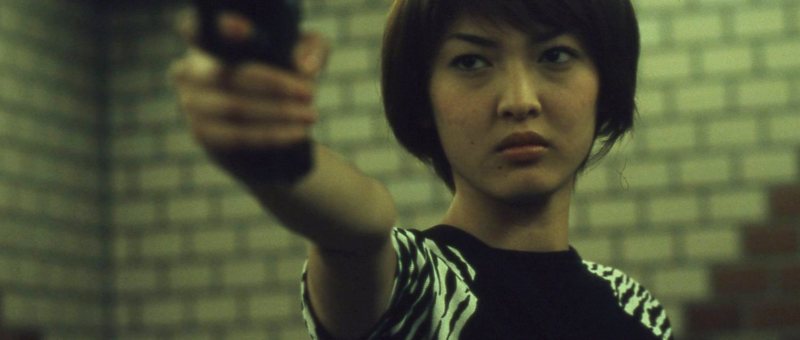
A young hitwoman ironically codenamed “0” is beginning to question her repetitive life of ceaseless killing, feeling in a sense as if she does not quite exist. In a quest to document her existence, she buys a handheld DV camera and begins recording herself and her thoughts as a kind of proof of life verifying that she does in fact live. “My memory will disappear someday. Will I disappear too?” she asks herself, stopping to capture cherry trees in bloom but disappointed to discover something at the harbour already gone. 

Her opposing force, a male hitman codenamed “1” is in the midst of a similar existential crisis feeling himself lost in a crowd as if it would make no difference to anything if he were to disappear. Unknowingly crossing paths with 0 in the chaos of the Shibuya scramble, he idly picks up a DV tape left behind in a cafe and, buying a DV camera for himself, is struck by 0’s existential musings. Taking up the camera he too begins to film himself because in this moment he wanted to exist even if describing his existence as “waiting to disappear slowly”. “We don’t know where to go” he laments, talking not just for himself and his opposing number but for the present generation trapped by post-Bubble malaise and millennial anxiety. Nakata frames his tale in terms of Y2K paranoia mired in the distrust of new technologies, but these two binary individuals look for salvation in the video screen for proof that they exist and that their reality has veracity.

Nevertheless, as the opening text informed us, 0 and 1 are numbers not meant to touch and their accidental meeting may spark its own kind of revolution in this case in the minds of two killers for hire otherwise trained neither to think or feel. Through their interactions, each begins to rediscover their sense of humanity while burdened by existential questioning but their newfound desire for emotional connectivity and individual identity is necessarily dangerous to their handlers who abruptly decide their broken robots must be destroyed before the contamination spreads. 

Yet the veteran they set on their tails, a refugee from old noir in crumpled trench coat, is facing much the same dilemma realising his end is near and in what form that end may likely come. Visiting an old school smokey jazz bar apparently after some time, he remarks on how nothing has changed inside but it too may soon disappear along with his own place to belong. Like the youngsters, he has grown tired of an existence of cynical repetition but given a new job he doesn’t quite like complains that in the old days things were fairer and had a kind or nobility rather than this rather sordid piece of housekeeping he’s just been asked to perform which could, he assumes, also be the end for him. His opposing number, however, is a pure survivalist living squarely in the moment who resents being saddled with a partner and insists on doing things her own way. 

Melancholy in its sense of fatalism, 0&1 ironically captures an early 20th century Tokyo which like its heroes has long since disappeared. The early DV aesthetic, while never quite beautiful, is the perfect evocation of the early 2000s while the medium itself has become largely obsolete, a digital halfway house now viewable only to those with the correct technology to unlock its secrets. Yet Nakata’s nihilistic prognosis is bleaker than it first seems, the heroine’s hopes of putting the camera down to make her own memories seemingly a forlorn hope while no refuge is available from the all pervasive sense of post-millennial emptiness, not even in dreams. 


 0&1 streamed as part of Yubari International Fantastic Film Festival 2021.

Original trailer (no subtitles)