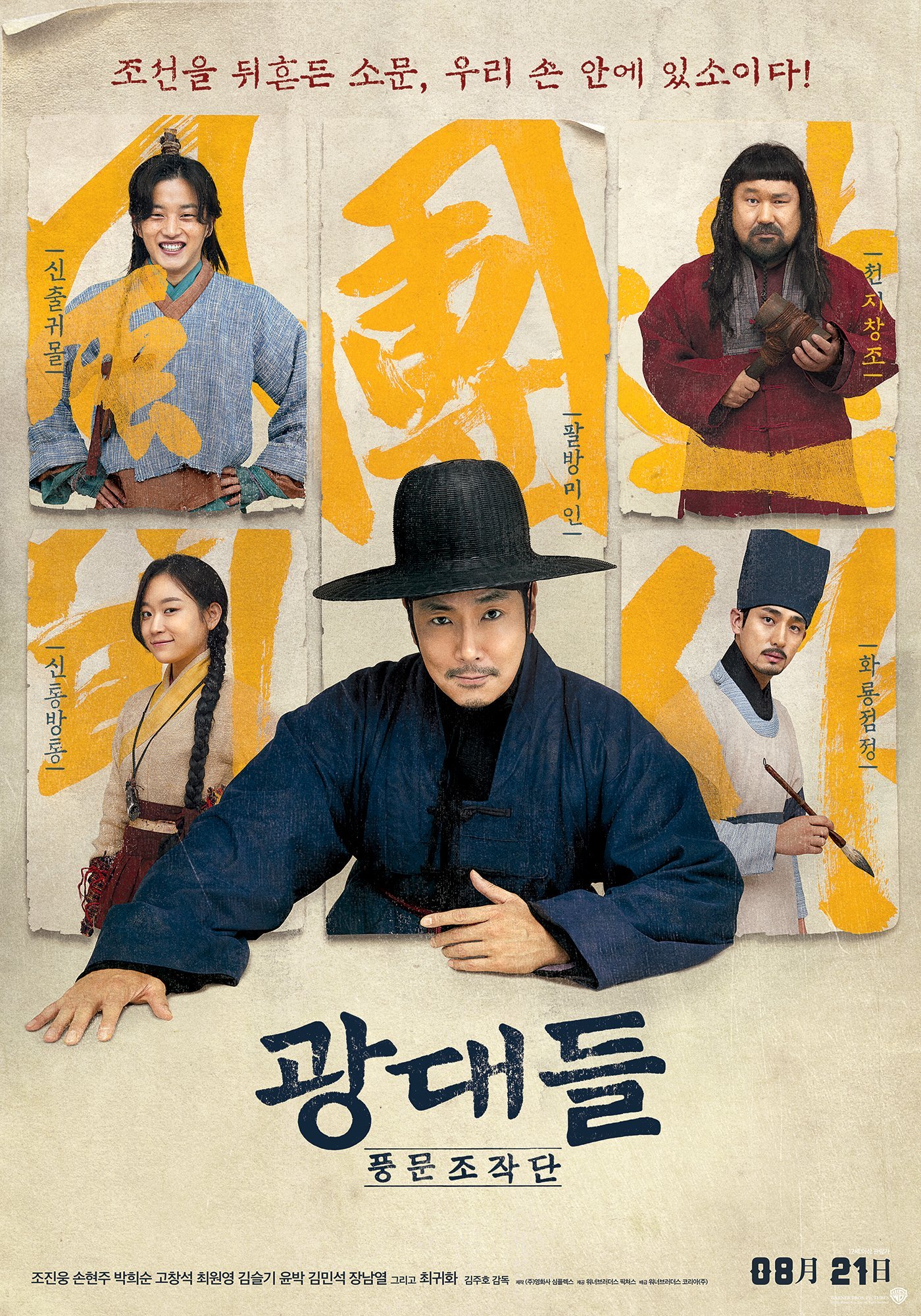
Jesters: The Game Changers (광대들: 풍문조작단, Kim Joo-ho, 2019)

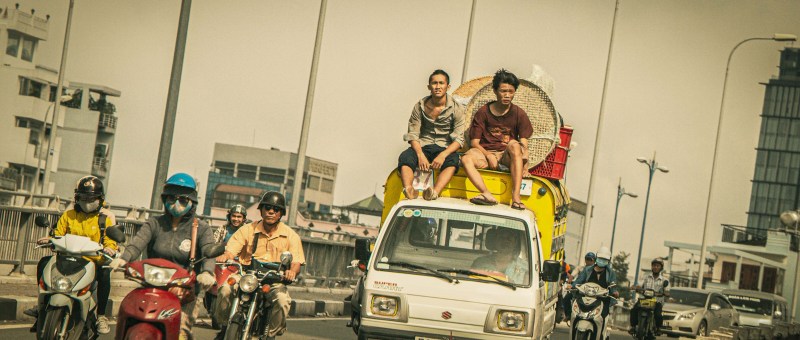
“Even with swords to our necks we say what we must!” a stage actor insists, though somewhat duplicitously as he wilfully says what he must to survive while simultaneously defending his artistic integrity. Oddly timely, Jesters: The Game Changers (광대들: 풍문조작단, Gwangdaedeul: Pungmunjojakdan) is an ironic exploration of the importance of art in engendering narrative proving once and for all that it really can remake the world. Our hero finds himself less torn than you’d expect him to be, only too keen to parrot the words of a regime he does not respect in return not only for his life but for material gain. 

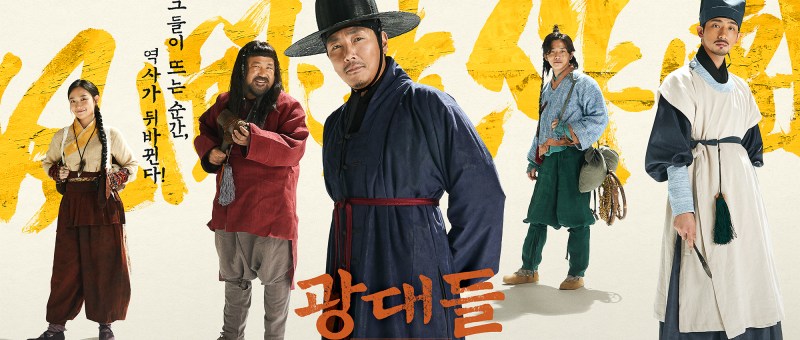
Our heroes are a band of “jesters”, itinerant street entertainers who belong to a kind of underclass and earn their living through their ability to change “reputations”. Petitioned by an ageing wife discarded in favour of a young and beautiful concubine, the gang blacken the other woman’s reputation by literally putting on a show with storyteller Ma Deok-ho (Cho Jin-woong) as the romantic hero sweeping her off her feet. The illusion is broken by a sudden spell of rain, but in any case the gang soon find themselves falling foul of prime minister Han Myeong-hoe (Son Hyun-joo) who makes them an offer they can’t refuse – counter the disadvantageous narrative that the king is a cruel tyrant who usurped the throne through murdering his brothers and nephew with tales of his magnificence, or die. Deok-ho points out that a good way of raising his reputation would be cutting taxes and getting rid of corrupt nobles but unsurprisingly as is rapidly becoming evident, he isn’t being hired to speak the truth. 

On the one hand, Jesters is the tale of Deok-ho’s slow path towards realising his responsibility as an artist to tell the “truth” even when it is inconvenient. His mentor Mal-bo (Choi Gwi-hwa) had come by a banned book, The Six Loyal Subjects, which recounted the real story of how the king came to the throne and was determined to promulgate it, merely changing the name of the king to that of Ming to protect himself against a censorious crack down on street entertainers spreading “fake news”. Deok-ho claims to believe only what he sees, rejecting the evidence of the book, cynically determined to do whatever it takes to escape his poverty. He’d rather not be threatened, but he has no particular objection to Han’s request, only using it to increase his social status by ensuring the gang are re-registered as “middle class” rather than lowly entertainers, later even angling for a position at court. For Han, he engineers miracles from a tree which bends to clear the way for the passing monarch to visitations from the Buddha and floral rain falling from golden skies, tales of which spread quickly through the gossip-hungry nation embellished as they go. 

As Han puts it “history is made by those with power” and to that extent he who controls the past controls the future. Han executes three street performers for spreading “fake news”, men who were literally prepared to die for their artistic integrity in the way Deok-ho was not, while employing Deok-ho to spread “propaganda” that glorifies a weakened king. Enjoying his new status Deok-ho does not really consider the implications of what he’s doing until he realises that Han is playing his own angle, improving his stunts for additional leverage, razing a village so that the nearby temple where one of Deok-ho’s “miracles” occurred might be expanded. Han claimed to be mounting an egalitarian revolution, deposing a “mad” king to hand power back to the people but of course only meant to manipulate regal power for himself. 

Power, as we see, belongs more or less to the storytellers who literally write the narrative. In old Joseon that’s those like Deok-ho, or in other times newspapers, TV shows, or social media feeds. Deok is only just realising he had power all along, if only he had listed to Mal-bo and used it more wisely rather than “rolling his tongue for fame and cheers”. A somewhat flippant satire on fake news/propaganda synchronicity, Jesters makes a passionate plea not only for the power of art to remake the world but for the responsibility of the artist to tell the truth even when it is not popular.


Jesters: The Game Changers screens at the Rio on 31st October as part of this year’s London Korean Film Festival.

International teaser trailer (English subtitles)

The Shepherds (牧者, Elvis Lu, 2018)

Among the most liberal of Asian nations, Taiwan became the first to legalise same-sex marriage in 2019 but that doesn’t mean that it’s always easy to be LGBTQ+ particularly if you come from a religious background and wish to maintain your faith. Elvis Lu’s documentary The Shepherds (牧者, Mùzhě) follows a small group of religious leaders who are or have been involved with a progressive church, Tong-Kwang, which was the first in Taiwan to expressly embrace the LGBTQ+ community on its foundation back in 1996. Unfortunately, however, the pastors have faced significant barriers in their personal and professional lives because of their views on homosexuality which face staunch opposition from mainstream religious organisations. The founder of Tong-Kwang Yang Ya-hui, a heterosexual female pastor, eventually took her own life because of the discrimination she later faced within the religious community which made it impossible for her to continue working and support herself without compromising her beliefs. 

Discrimination is also something which has affected pastor Huang Guo-yao and his wife who now work for Tong-Kwang but began their careers in Hong Kong. Huang was forced to give up his ministry after advocating for LGBTQ+ rights brought him into conflict with the more conservative local Churches, eventually making the decision to migrate to Taiwan while his children remained in Hong Kong. He laments that the situation in which he found himself may have had a negative effect on his now grown-up sons, the younger one he worries having become increasingly withdrawn and unwilling to talk about his feelings. 

Zeng Shu-min, meanwhile, is in a similar position unable to find employment with more conventional churches as an openly gay pastor. While officiating at same sex weddings, he’s had to look for other employment to support himself and generally lives an ascetic existence, dependent on the kindness of friends such as Hsiao-en, a lesbian advocate for LGBTQ+ Christians who was herself ejected from the seminary for her liberal views. Running the Light Up project, she provides a more positive religious presence at rallies where conservative voices loudly protest against the advancement of rights for LGBTQ+ people and the movement for marriage equality. Presenting a united front in their priestly outfits, conservative preachers openly commit to undermining the seats of local politicians sympathetic to LGBTQ+ issues, some advancing that they want to “protect” the LGBTQ+ community who must be living “very painfully”, while they refuse to compromise the “basic values” of their society. 

As part of her outreach, Hsaio-en also liaises with the parents of LGBTQ+ children who often find themselves ostracised from their church community solely because of their children’s sexual orientation. Like Shu-min, she also has to work a regular job to support herself while feeling guilty for not being able to devote herself to activism full time and lamenting that hard as she works it often feels as if she isn’t getting anywhere and her efforts don’t make much difference. Yet Tong-Kwang in itself provides a valuable safe place for LGBTQ+ Christians, running a hotline those in distress can call for relief when experiencing difficulty in their personal or religious lives and affirming that their sexuality need not conflict with their faith nor is it a barrier to God’s love. 

With a mixture of observational footage and talking heads interviews, Lu bookends the film with poetic black and white re-enactment featuring the words of pastor Yang Ya-hui taken directly from her autobiography, positioning her as a kind of martyr for the rights of LGBTQ+ people in Taiwan and particularly for LGBTQ+ Christians. The film ends with the passing of the marriage equality act, but is quick to point out that that does not mean that prejudice and discrimination evaporated overnight, Hsiao-en in particular worried that organisations such as hers will come under greater pressure from conservative religious voices intensifying their opposition. Nevertheless, despite the sometimes great toll on their personal lives and those of their families, each of the shepherds remains committed to defending the rights of LGBTQ+ people not only to occupy an equal place within their society but also within their faith as members of a compassionate and progressive religious community. 


The Shepherds streams in the UK 30th October to 5th November courtesy of Queer East and Taiwan Film Festival Edinburgh.

Original trailer (English subtitles)
Memories to Choke On, Drinks to Wash Them Down (夜香・鴛鴦・深水埗, Leung Ming Kai & Kate Reilly, 2019)

Neither as maudlin nor as ironic as its witty English title implies, Leung Ming Kai and Kate Reilly’s four-part anthology Memories to Choke On, Drinks to Wash Them Down (夜香・鴛鴦・深水埗) attempts to capture the flavours of a Hong Kong in transition. Imbued with a gentle nostalgia the four stories do not so much eulogise as celebrate the island’s unique culture while perhaps provoking questions about an uncertain future in the face of political instability and widespread protest. 

The first of the four shorts, however, looks back towards the past as an old lady suffering with dementia repeatedly tells the same handful of stories to her patient Indonesian helper, Mia. In an ironic twist, the tale takes the two women on a circular journey as Chi Yin, the old woman, becomes determined to reconnect with her history through visiting a reunion for those who came to Hong Kong from her village on the Mainland while Mia patiently tries to explain that her son has instructed her not to take his mother out. Eventually she relents, humorously videoing the old woman promising not to tell her son so she can show her later, but thinks better of it after realising Chi Yin’s real longing to visit him at his job in the city. Mia is of course separated from her own son while caring for Chi Yin, the commonalities between the two women becoming ever more clear as their stories mix, mingle, and repeat in the confused mind of the older woman herself a migrant to Hong Kong who came to the island in childhood, recounting a life of hardship thankfully long since past. 

The city’s economic development is also at the forefront of the second tale which sees two grown up brothers revisiting their mother’s toy store in a now rundown part of town where, as another store keeper puts it, everyone is old and so there is no more call for toys. That might be one reason why it seems that their mother has decided to sell up, but the loss of their history seems to weigh heavier on one brother than the other. While the older has married and has a child of his own with another on the way, the younger has lost his job and secretly wants to take over the shop himself only is uncertain how this news will read to his mother. While they reminisce and recover long buried treasures of their youth, the differences and dilemmas between the two men are perhaps emblematic of the push and pull of modern Hong Kong torn in two directions uncertain which parts of the past to discard and which to keep. Nevertheless, the two men eventually find common ground and mutual support even as their conflicting desires send them each in opposing directions. 

The two at the centre of Yuenyeung meanwhile were always destined to part, yet their separation has its share of confusion and awkwardness. The titular Yuenyeung is a local drink acknowledged as intangible culture which has, according to the knowledgable protagonist, a slightly dark history in that it was created in part to enable further exploitation of port workers under British colonialism and consists of super strong Ceylon tea and caffeine high coffee mixed with condensed milk. American teaching assistant Ruth is keen to try it as part of her total immersion in Hong Kong culture, but local economics teacher John isn’t much of a fan not just because of its slightly sour history but because he seems to have an internalised snobbery when it comes to being a Hong Konger. Nevertheless, with an obvious ulterior motive that Ruth either is oblivious to or chooses to ignore, he joins her on her voyage through the city’s lower end eateries where the locals choose to eat with the occasional visit to a “romantic” KFC which whatever else you might want to say about it has a lovely view of an idealised Hong Kong street scene. Tellingly, Ruth is already planning to move on to China, while a rebound John who perhaps misunderstood her has his eyes ironically set on an extended trip to the States on a kind of cultural odyssey of his own. 

Breaking entirely with the first three sequences, and in truth a little out of place, the last is the most direct in abandoning the dialogue heavy, two-hander focus for pure documentary following an eccentric young woman running as a candidate for political office in order to provide opposition for an otherwise unopposed incumbent during the fractious 2019 elections. Jennifer describes those who don’t support the protests as “weird”, but also affirms that ideally she wants a steady job in a bank and to live a dull, comfortable life as a “useless” person. When not out flyering she works as a barista/bar tender and later claims that she didn’t even want to be on the council because the local populace is quite annoying. In a strange way she provides the perfect encapsulation of a fractious political moment, a mix of surprisingly conventional thought patterns coupled with a real desire for freedom and lasting social change. Never quite as a maudlin as the title suggests, Memories to Choke On, Drinks to Wash Them Down is perhaps filled with a nostalgia for a Hong Kong that’s not quite gone but also has within it a quiet resilience if only in its insistence on memory as a political act. 


Memories to Choke On, Drinks to Wash Them Down streams in California until Oct. 31 as part of this year’s San Diego Asian Film Festival.

Original trailer (English subtitles)
Rom (Ròm, Trần Thanh Huy, 2019)

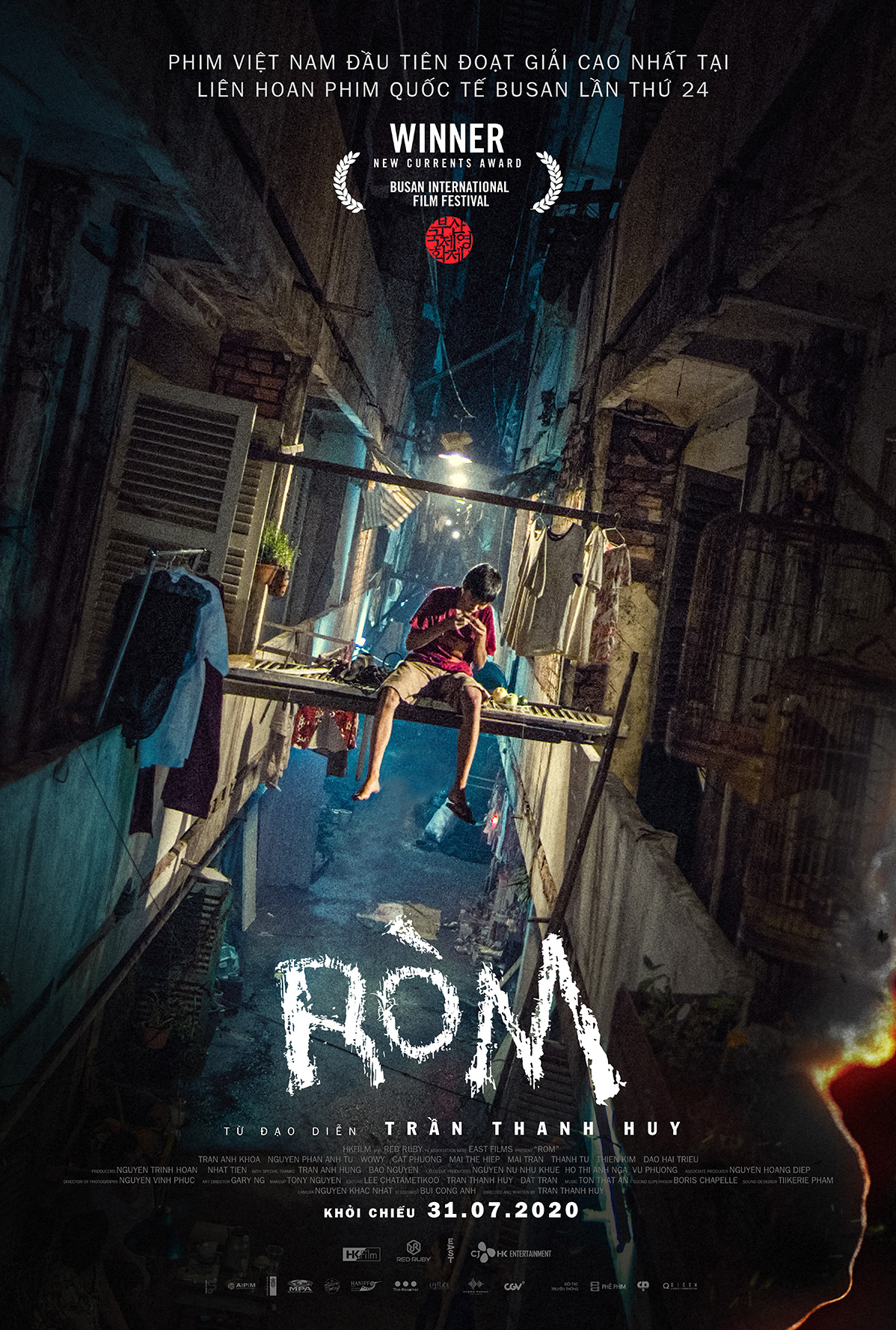
“Life is built out of a mountain of sorrow” according to an ironically cheerful drinking song in Trần Thanh Huy’s gritty coming-of-age drama Rom (Ròm). Set on the margins of an increasingly prosperous city, Trần’s debut feature which draws inspiration from his 2012 short 16.30 spins a dark tale of displaced children, the persistent unfairness of life, gangsters and games of chance, but ultimately finds little hope save the perfection of the art of survival as the variously troubled denizens of a Saigon slum quite literally bet their lives on a slim chance for a better life with only the false promise of a better tomorrow to make their lives worth living. 

At 14, Ròm (Trần Anh Khoa) has been living alone on the streets since he was four, left behind by his parents after the slum they were living in was demolished. Drawing childish family pictures, Ròm still waits opposite the place where he used to live for his parents to return, pledging to find them when gets enough money. He is grateful to the people of the slum who have “allowed” him to stay mostly because he once gave someone a tip for a winning lottery number. Numbers haunt him, always looking for signs as he is. Meanwhile, he makes his money as one of a small number of runners for the illegal underground lottery, ferrying orders between customers and middlemen brokers praised when numbers he recommends come up but beaten when they don’t as if it were really his fault. 

As Ròm tells us, the slum dwellers are obsessed with the lottery because it’s their one opportunity to change their lives. They bet everything, even writing out “loan agreements” to go along with the ticket request staking their whole apartments with sometimes tragic consequences, an old woman hanging herself after learning her numbers didn’t come up and she may have lost her home. The other residents, however, later pray to her spirit and petition it to give them some tips from the other side, aware of the risks but playing anyway because this fragile hope is all they have. Meanwhile, times are changing. The slum is to be cleared, but there appears to be an ongoing dispute with the developers as to proper compensation for their relocation with many irate that they’ve been cheated by men in sharp suits who think they’re too stupid to notice. 

Eventually the slum’s problems begin to converge, youthful thugs in league with the ruthless developers contributing to the destruction of the world in which they live. Ròm finds himself at the mercy of an athletic rival, Phuc (Nguyễn Phan Anh Tú), who considers himself lucky in that both his parents are already dead so at least unlike Ròm he has no need to wait around for a return to a different life and already has his own kind of freedom. Their desperation forces them against each other, running and cheating in order to survive but the cocky Phuc eventually finds himself falling victim to a suave older gangster who suckers him in a poker game and then forces him into a debt he can’t afford. Not much older than they are, the petty gangster is perhaps a sign of things to come, a symbol of possible corruption in the legacy of violence that traps both boys in a vicious cycle of hope and futility. 

They are all, in a sense, displaced. The slum will be cleared, but only because the land is valuable not because anyone is very interested in improving the lives of those living in extreme poverty. Ròm continues to yearn for his parents, prepared quite literally to burn the world in which he lives in order to find them while accidentally bonding with an unexpected maternal figure who takes him in while facing desperation of her own in caring for a son with a terminal illness only to offer him perhaps false hope in the possibility of reuniting with his family but only for a price. Life is indeed an insurmountable mountain of sorrow, every relationship a potential betrayal and every hope ripe for the shattering. Ròm caused some minor controversy on its release, fined for having submitted itself to the Busan Film Festival without having first cleared domestic censorship, eventually passed only after cutting a few scenes depicting “social evils” of which there are still a multitude. An unforgiving view of modern day Saigon, Ròm leaves its hero perpetually on the run, a lonely child without hope or direction fuelled only by self belief and rapidly running out of road. 


Rom streamed as part of this year’s New York Asian Film Festival.

Original trailer (English subtitles)

Sisterhood (骨妹, Tracy Choi, 2016)

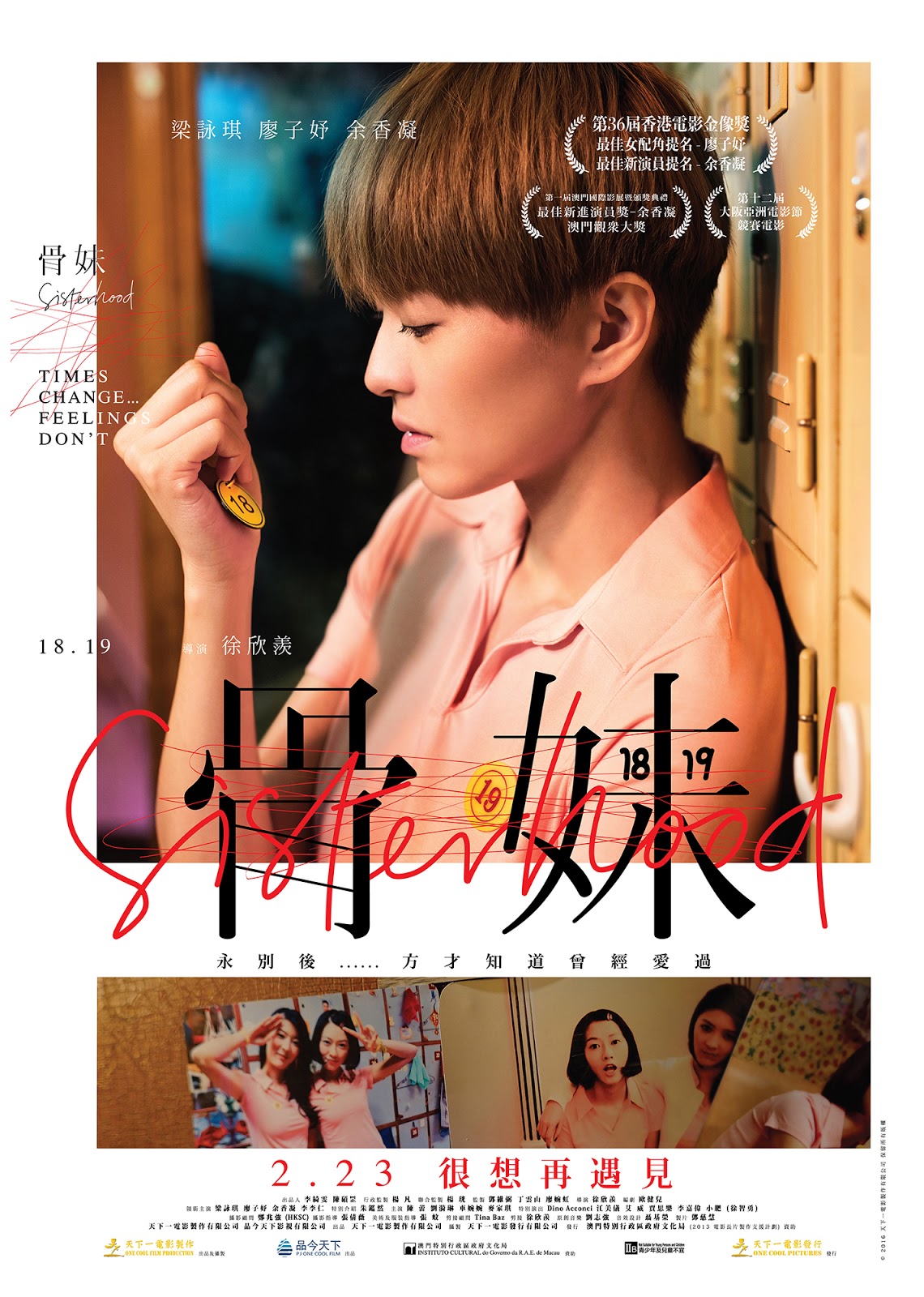
Middle-aged regret and irreconcilable loss bring one lonely woman home from exile in Tracy Choi’s melancholy exploration of impossible love and illusionary futures, Sisterhood (骨妹, Gwat Mui). Moving from present day Taiwan to pre-handover Macao, Choi’s emotionally complex drama is both a chronicle of changing times and not as the collection of women at its centre attempt to protect themselves from a relentlessly patriarchal society through female solidarity only to see their fragile bonds disrupted by a political sea change. 

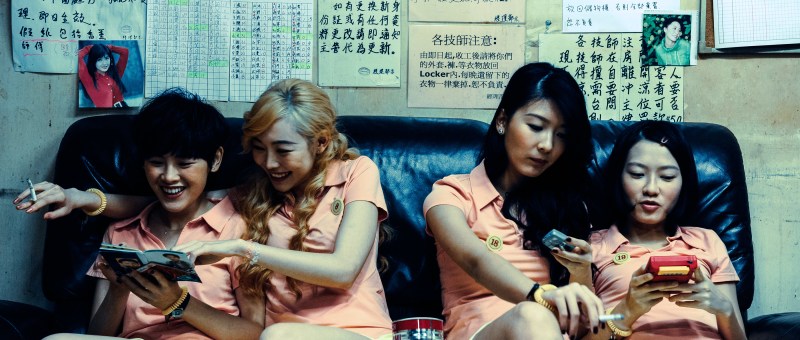
Choi opens in the present day with a now almost middle-aged Sei (Gigi Leung Wing-kei) visiting a doctor’s surgery after fracturing her wrist, apparently the result of an all too common drunken accident. Now living in Taiwan and running a small inn with her devoted husband who is perhaps overly supportive in his willingness to enable her drinking on the grounds that it keeps her “happy”, Sei appears to be quietly miserable. Spotting an ad in a newspaper telling her that an old friend, Ling (Jennifer Yu Heung-ying), with whom she’d long since lost touch has passed away jolts her out of her inertia, journeying back into the past as she finds herself travelling to a very different Macao to that of her youth in which the young Sei (Fish Liew) worked as a masseuse and was part of a quartet of close friends trying to survive the indignities of life on the margins through shared sisterhood. 

Sei’s “breakup” with Ling occurs on the very day that Macao returns to China, her friends seemingly thereafter scattering as she finds herself agreeing to a rebound marriage with an earnest Taiwanese customer who abruptly proposed on their very first date. We hear Ling tell her that she has found a man willing to marry her, but that her son Lok is an obstacle and so she plans to send him to the Mainland, cruelly ignoring the part that Sei has been playing in their lives as a co-parent even if, as we discover, the relationship between the two women goes largely undefined. Having moved in with her after losing her apartment, it is Sei who is there to support Ling when she becomes unexpectedly pregnant by a casual boyfriend/customer, eventually convincing her to have the baby by assuring her they’ll raise it together, but despite their pledges to stay together always the spectre of heteronormativity hangs over them constantly. Mocked in the street by a couple of old busybodies, Ling reacts with extreme sensitivity to the word “lesbian”, quickly moving her hand away from Sei’s as they push their son together in his pushchair lest conclusions be drawn from their closeness. Sei, by contrast, pays it no mind though this could easily be because she knows it isn’t “true”, at least in any concrete sense. The two women are evidently not lovers, if perhaps in love, but so impossible does their relationship seem to them that they lack the ability to recognise it let alone envisage its future. 

It is perhaps this degree of internalised shame that leads Ling to push Sei away, believing either that she will be “happier” in a heterosexual relationship, that she is in some way preventing her from living a more socially conventional life, or just afraid of her own feelings in assuming they are not returned and that she does not in any case deserve romantic happiness. The irony being that Sei’s married life seems to have been one of miserable emptiness and regret, stubbornly attempting to make the conventional work without quite knowing what the cause of her pain really is. On her return to post-handover Macao, she’s confronted with the failed futures of all her friends, one now a young grandmother owning her own business but forced to work herself to the bone to provide for her family, and the other near destitute and alone, floundering in the casino paradise of the upscale modern city. Meeting the now grown Lok she confides that she’s happy for him because lost as he is he has choices they never had in their young lives in which they did anything they could just to survive. 

The female solidarity which had enabled the four women to navigate a world in which they were encouraged to believe that their only option was to gain access to male economic power has thoroughly broken down in the post-handover society, and so Sei’s return is also a healing in helping to repair the broken bonds between her friends and restore the “sisterhood” which had been ruptured by the passing of an era. She can no longer repair her relationship with Ling and is perhaps left with a sense of longing and regret for an irretrievable past, but in coming to an understanding of her youth, her own feelings and desires, she gains the self-knowledge denied to her during her 15 years of exile, finally in a sense returning “home”. 


Sisterhood is available to stream in the UK 23rd October to 5th November via Barbican on Demand as part of this year’s Queer East Film Festival.

Original trailer (English subtitles)
Kiangnan 1894 (江南, Wu Xiaogang, 2019)

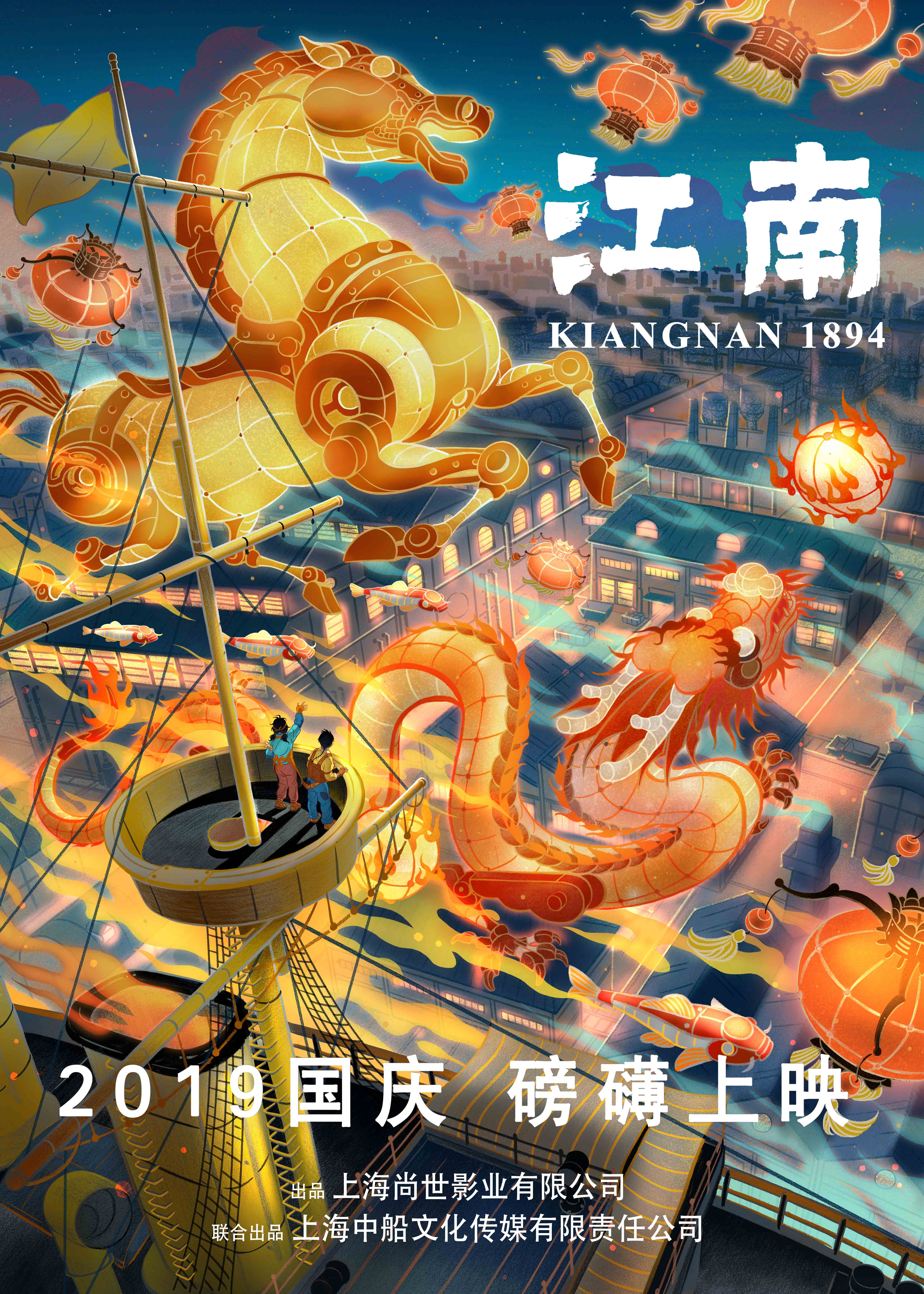
“Remain true to our original aspirations. In honour of China’s military industry” runs the dedication card at the end of the thrilling animated adventure Kiangnan 1984 (江南, Jiāngnán). Sponsored by Shanghai’s Jiangnan Shipyard (Group) Co Ltd, the modern successor of the Kiangnan Arsenal, the film is both an unabashed love letter to the city of Shanghai and a celebration of Chinese engineering that, albeit subtly, reinforces China’s status as a powerful, technologically advanced nation fully prepared to defend itself militarily if threatened. 

Set in the late 19th century at the close of Qing dynasty, the film opens in fantasy as mechanical engineering enthusiast Lang (Ma Yang) dreams himself a king in a steampunk land daringly flying a celestial aircraft above a platoon of walking houses. Of course, he soon wakes up in a less fantastical world but is fascinated by the iron warships in the harbour and gets himself into trouble sneaking into the Manufacturing Bureau to show his friends a cool steamboat he’s found in a warehouse. Challenged by a young girl, Yulan (Zhang Qi), whose dog he ends up accidentally kidnapping as he escapes, Lang knocks over a candle and burns the whole place down, earning himself massive debts for the warehouse’s repair. To help pay them off, Yulan suggests he join the Manufacturing Bureau as an apprentice but the master, Chen (Zhou Yemang), who turns out to be her father, is a hard taskmaster offending Lang’s pride in refusing to take him on as anything other than a lowly assistant. 

All of that is somewhat secondary to the main plot which begins two years later as a cohort of Japanese spies desperately attempt to prevent a set of blueprints for a gatling gun reaching the Manufacturing Bureau. The historical Kiangnan Arsenal was founded as part of the Self Strengthening Movement which aimed to bolster the nation’s defensive capabilities, producing both firearms and warships at the beginning of the first Sino-Japanese war. This Kiangnan is however slightly more fantastical in its steampunk futurism which sees the workers wearing biomechanical aids extending to metallic gloves on their hands. The “Flying Fish” which captured Lang’s imagination was a high tech steamboat unbeknownst to him piloted by Chen’s late son who fell in battle, bravely making use of his experimental technology to serve his country. “Ordinance is essential for the greatness of our nation” Chen avows when agreeing to attempt to build the gun even without the plans, “faced with a great war we should do our best in duty bound”. 

Yet Chen’s grief-stricken rejection of Lang despite realising his genius, along with his rather sexist sidelining of his talented daughter, perhaps undermines his statement in allowing his personal feelings to holdback progress. Lang, meanwhile, patiently hones his craft while continuing to hope that Chen will one day allow him to become a real mechanic as his true apprentice, eventually building on the legacy of the Flying Fish to craft his own high tech steamboat complete with gatling gun and sailing it into the heart of danger carrying fresh supplies. A dreamer, Lang’s vision of a more technologically advanced future is fulfilled in a coda taking place 60 years later in which Communist China launches its first submarine at the Jiangnan Shipyard, the scene then shifting to an image of the modern Shanghai with its distinctive towers and high-rise cityscape. 

Patriotic concerns aside, the film also provides several opportunities for Lang to show off his equally proficient skills in martial arts, sparring with Yulan, fighting off gangsters, and efficiently dispatching the Japanese spies one of whom actually dies by his hand in quite a calculated manner which though not violent or gory is perhaps out of keeping with the family friendly flavour even as it once again demonstrates his cool-headedness, ingenuity, and heroism, while the persistent militarism has an uncomfortable quality given that the target audience is younger children. Nevertheless, such concerns are likely to fly over their heads thanks to the frequently exciting fight scenes and derring-do as Lang and Yulan take on spies and conspirators while working hard to achieve their dreams, “stubbornly” as the closing suggests refusing to give up on their future. Featuring bold steampunk design and painterly backgrounds showcasing major Shanghai landmarks, Kiangnan 1894 is an action-packed historical drama which aside from a slightly unpalatable militaristic fervour is also an impassioned defence of the right to dream as a path towards technological innovation.


Kiangnan 1894 screens at Vue cinemas across the UK from 23rd October courtesy of The Media Pioneers.

UK release trailer (Mandarin with English subtitles)

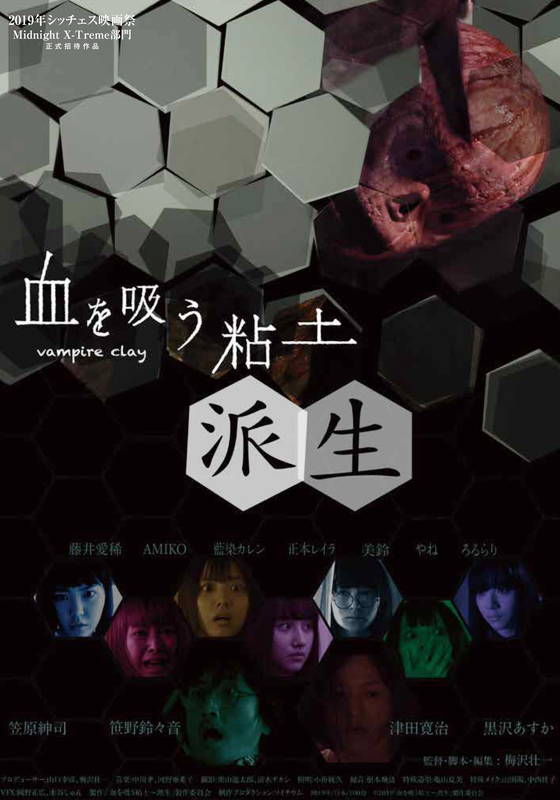
Kakame – Vampire Clay Derivation (血を吸う粘土~派生, Soichi Umezawa, 2019)

Kakame returns! Having been encased in concrete at the end of the previous film, it was perhaps inevitable that he would eventually break free to feed on the frustrated dreams of insecure artists everywhere. Kakame – Vampire Clay Derivation (血を吸う粘土~派生, Chi wo Su Nendo: Hasei) picks up shortly after the first film left off, but this time around the insecurities are less artistic than they are familial and social as those affected by the curse of Kakame find themselves wrestling with a sense of responsibility they must face alone to ensure that his bloody vengeance is contained lest he wreak more havoc on the wider world. 

After a short flashback, Aina (Asuka Kurosawa) sends the surviving student home and insists on going to the police alone but is involved in a car accident. Meanwhile, we’re introduced to the new heroine, Karin (Itsuki Fujii), the daughter of Fushimi (Kanji Tsuda) who fell victim to Kakame at the end of the previous film. His body has now been found in the art school and so the police contact Karin, who is his only living relative seeing as Karin’s mother committed suicide shortly after the marriage broke down, to identity him despite the fact they had been estranged for the last 12 years. The problem is that Karin didn’t want anything to do with her dad and so she is a bit lax dealing with his bones which still contain traces of Kakame. Meanwhile, as an aspiring artist herself, she enrols in a dodgy art project run by sleazy artist Kida (Shinji Kasahara) who makes a point of recruiting six young women in their 20s because he apparently wants to know what the women of Japan today are thinking, instructing them to unbalance the unbalanceable by disrupting the harmony of the hexagonal form. 

The strange apianism of the hexagonal theme is never developed further save a rerun of the events from the first film with the minor difference that is already “unbalanced” in the additional presence of Kida’s troubled assistant and the fact that he is the only male. Nevertheless, difficulties quickly arise among the girls and not least between Karin and her adoptive sister, also an artist though insecure in her abilities. Once again these tiny cracks between people are enough to let the murderous clay in, targeting first the melancholy assistant demeaned by her dismissive boss who refuses to let her participate in the project because the other girls are all students where as she is an aspiring ceramicist. Meanwhile, another suspect is provided in a young woman strangely fascinated with the bones of dead animals while Karin realises she is still in possession of one of her father’s lost in a tussle with her sister. It’s bone then, rather than blood, which condemns her but still she finds herself paying for her father’s sin in receiving a visit from Kakame as he makes swift work of the innocent artists. 

The sculptor’s curse refuses to die, the other Kakame apparently fusing with a worm and creating ructions underground which threaten to destabilise the world at large. As Aina had in the first film, venal artist Kida ponders using the clay for his own ends, ironically desiring to turn it into art, perhaps making good on the sculptor’s unfulfilled desires but also exposing his own less worthy goals of becoming rich and famous which is perhaps one reason why he’s busily exploiting six pretty young women rather than getting on with his work. Aina eventually reconsidered, but then finds herself facing a similar dilemma, targeted by the police who obviously don’t buy her story about demonically possessed clay turning murderous, while wondering if it might not be better to just dump the remaining powder in the river and be done with it. Maintaining his focus on practical effects, Umezawa shifts focus slightly heading into a different register of body horror as the strange clay worms work their way into the bones of our heroes before Kakame makes himself whole, but otherwise pulls back from large scale effects often switching to blackout and soundscape as in the opening car crash. Nevertheless, what we’re left with is a tale of shared responsibility as two women of different generations refuse to let the other carry the burden alone though neither of them is in any way responsible for the curse of Kakame save for the darker emotions which helped to birth him of which we all are guilty. 


Kakame – Vampire Clay Derivation screened as part of Camera Japan 2020.

Original trailer (no subtitles)

Vampire Clay (血を吸う粘土, Soichi Umezawa, 2017)

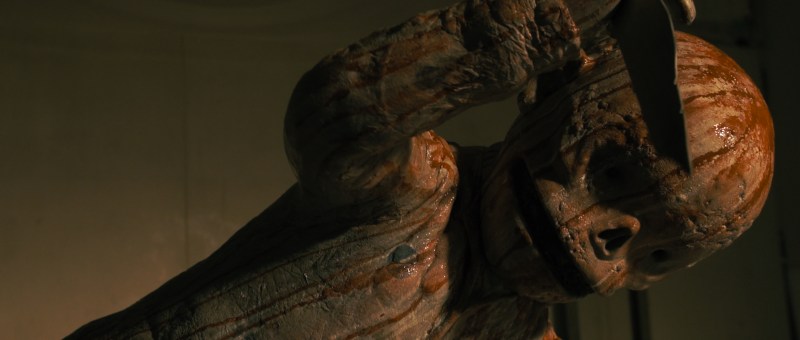
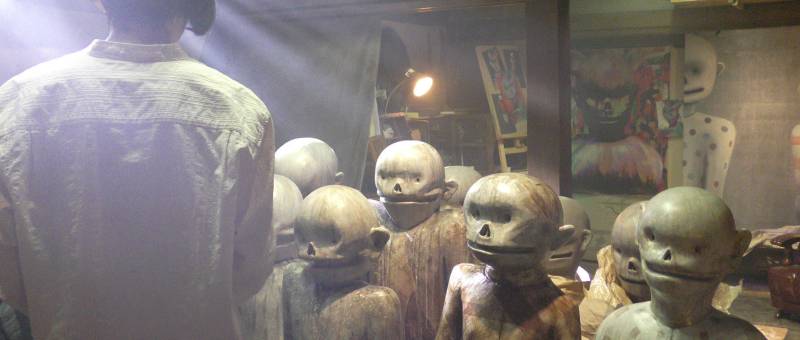
The artist consumed by their art is a potent motif, creation and destruction two sides of the same coin, but there’s rarely been a painter attacked by the canvas quite as literally as the sculptors of Vampire Clay (血を吸う粘土, Chi wo Su Nendo) are depleted by their material. The first feature from practical effects specialist Soichi Umezawa is refreshingly unpretentious, unabashed schlock designed to showcase Umezawa’s obvious skill in stop motion and prosthetics but it does perhaps have a point to make in the legacy of embittered artistry and frustrated dreams of those whose art is never recognised. 

Middle-aged sculptress Aina (Asuka Kurosawa) flees the duplicitous Tokyo art scene after being betrayed in love by her no good husband who also runs a studio specialising in training students to gain admission into one of Japan’s many exclusive art schools. In fact, Umezawa somewhat strangely opens with a title card revealing the comparatively small percentage of pupils each school accepts in contrast to the large number of applications, neatly setting up the desperation and sense of inadequacy that plagues most of our heroes, Aina included. Retreating to the country she sets up shop in a small shed which is later ravaged by an earthquake, leading to her discovery of a buried tin filled with mysterious clay and other artistic accoutrements left behind, she assumes, by the previous occupant. The trouble starts when errant student Kaori (Kyoka Takeda), who had been studying at a workshop in Tokyo, returns earlier than expected much to the chagrin of rival Reina (Ena Fujita) and discovers a new pupil has borrowed her clay. Predictably, she decides to use some from the mysterious bag, reviving the evil with water and discovering that somehow this magic substance seems to have upped her game. 

Umezama continues to flag the urban rural divide, the students beginning turn against Aina believing that it’s her time in Tokyo which has given Kaori a leg up, something that further wounds Aina in her sense of professional pride as she channels her rage and frustration into moulding her pupils into top candidates as a means of besting her ex. The sculptors knead their frustrated desires into the clay, it feeds on their misery and disappointment. This particular clay, however, is more cursed than most in that it is apparently infected by some kind of toxic disease which plagued the previous owner, symptomatic of the degree to which his art, or more pointedly the refusal of others to recognise it, destroys him. 

Aside from that there are a host of interpersonal problems between the students and their teacher. As the only male sculptor points out, they are both classmates and enemies as they are forced to compete against each other for the prize of recognition in the form of admission to an art school. Meanwhile, he is also the subject of a love triangle, refusing a homemade bento from an admirer in favour of one from another, this essential act of emotional betrayal later providing an in route for the murderous clay. 

Nevertheless, Umezawa is not so interested in the implications of the interpersonal drama as its potential for bloody action. The clay works its way into the bones of the sculptor, consuming and possessing them in a series of pleasingly retro, Cronenbergian practical effects. “I don’t want to lose my individuality to convention” Reina had snapped back in insisting that this small rural school suits her fine despite having just been given a dressing down for the “conventionality” of her final assignment. The clay, perhaps, attempts to rob them of their individuality, turning them into a mindless plastic mass fuelled only by negative emotions, thirsty for blood and hellbent on destruction. Somewhat incomprehensibly, a failed sculptor turned restaurateur convinces the original owner of the clay that his creepy creations will sell like hot cakes to hospitality establishments in the city, allowing his final humanoid legacy to become a kind of Frankenstein’s child carrying all his rage and resentment into the future but attacking, it seems, other marginalised artists rather than the hated Tokyo arts scene which is the real target of his ire. Aina, having for the moment neutralised the clay, considers unleashing it against her ex, bringing the grudge full circle in its own, ironic, way but also consumed by resentment and jealousy. The “toxic waste” of artistic disappointment refuses to die, burrowing its way underground even as the responsible attempt to bury it, lying in wait for the next tortured artist willing to sell their soul for illusory success.


US release trailer (English subtitles)
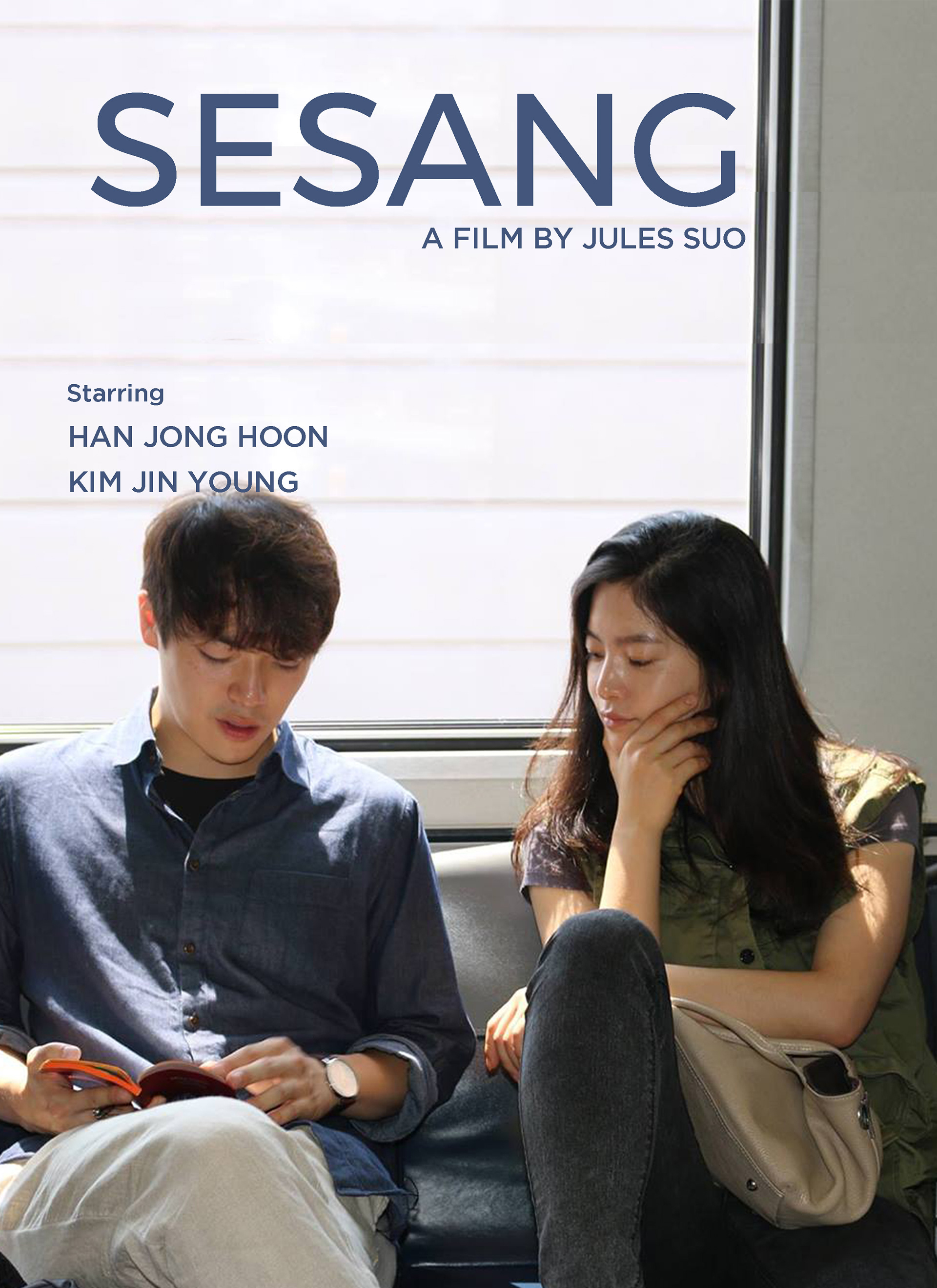
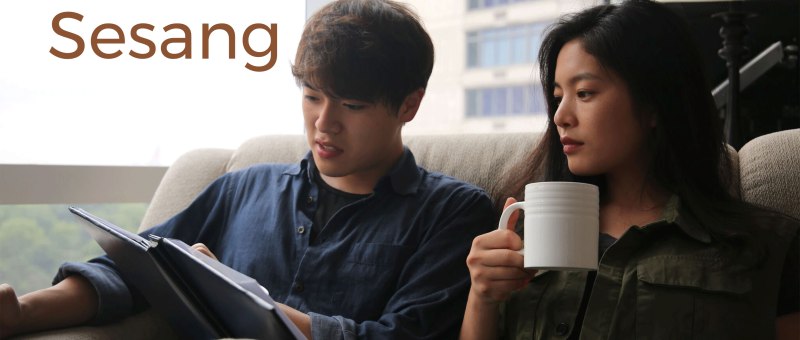
Sesang (세상, Jules Suo, 2019)

“Our life’s journey consists of both positive and negative. It teaches us to move forward and fulfil your dreams” according to Han-chul (Han Jong-hoon), a digital nomad waxing philosophical about the benefits of the unencumbered life. “Sesang” (세상) in one sense just means the world, but it can also mean “a life” or even a life’s journey, a passage through the world both a part of it and not. Han-chul, however, by the film’s conclusion is perhaps beginning to wonder if there are also costs involved in a life without connection, unanchored by his floating existence and imbued with a sense of existential loneliness as the world changes around him while he changes with it but perhaps not quite in step. 

The film opens in New York with aspiring actress Nari (Kim Jin-young) travelling to the airport to meet Han-chul, her long-distance boyfriend, at the airport. Han-chul has been working on a documentary in Japan about a divorcee who relocated there and is seemingly visiting Nari while waiting for another opportunity. Nari’s barbed comment that she isn’t sure they “share the same dreams” when Han-chul remarks on the similarity of her upcoming project about a long-distance couple to their real lives perhaps signals that she’s not entirely satisfied with their relationship, eventually sparking an argument that leads to a break-up when Han-chul reveals he’s been offered a job in Berlin annoyed with him for once again abruptly changing his plans, both in his abandonment of her and of his complete lack of consideration for the inconvenience he may cause her through breezing in and out of her life. 

Then again both Nari and Han-chul appear to be fairly self-contained. Each of them find themselves spending a lot of time home alone while living with roommates who are generally out. Nari’s New York life is spent largely within the Korean ex-pat community, often working on Korean productions, eating in Korean restaurants and going to noraebang with Korean friends. She is offended when her mother tries to send her money, resentful at the implication that she’s struggling but also finding herself at the mercy of a sometimes cruel industry that limits the kind of work available to her while normalising an abusive working environment. The one job we see her do which is presented in such a way as to mimic real life is also problematic in playing into several different unpleasant and racially charged stereotypes at once. Later she is invited to rejoin a production she apparently left because of the behaviour of a Korean producer who, she is assured, has since been fired. Her break-up with Han-chul is followed by a job offer back in Korea which sees her pursuing parallel careers, travelling back and forth working at “home” but living “abroad”. 

Staying on in New York, Han-chul too takes a room with someone who’s never in but takes the opportunity to rid himself of most of his possessions. In fact, even his hair becomes progressively shorter as time moves on to the point at which it doesn’t quite suit him, an old friend somewhat derisively commenting on his “edgy” new style. He tells a mutual friend, Eun-hye (Jina Nam), who is definitively settled in New York by virtue of owning a restaurant, that there are many things he may still want but attaining them cannot compare with the lightness of having nothing. Han-Chul’s philosophy may even extend to people as well as things. Perhaps he wanted Nari, or still wants her, but not enough to give up his life of freedom or indeed to deny her hers. He is happy to hear that she too is travelling the world, gaining new experiences and growing as a person, at this point at least convinced that life is about forward motion and the expansion of borders internal and external. 

Yet on his eventual return to Korea after experiencing a degree of disappointment, he seems lost rather than free, a man without a plan adrift without direction. His aloneness seems all the more obvious among the throng of travellers at the airport each heading somewhere or nowhere only they can know. He sees movies in empty theatres, lives in bare rooms, and wanders down empty streets. Often returning to transitory spaces such as airports and train stations, Suo’s preference for long takes with a degree of detachment hints at a cinema of loneliness asking us if this increasingly migratory existence has disrupted the natural rhythms of human relationships such as that of Nari and Han-chul who were, at least according to Eun-hye, once “so close” but now very far apart both physically and emotionally. Han-chul may be searching for the very thing that he has rejected in his floating life, but nevertheless remains on the move chasing his dreams if perhaps not quite sure what exactly they may be. 


Sesang streams in the US Oct. 23 to 31 as part of this year’s Korean American Film Festival New York.

Original trailer (English subtitles)

Haruka’s Pottery (ハルカの陶, Naruhito Suetsugu, 2019)

(c)2019 "Haruka's Pottery" Film Partners

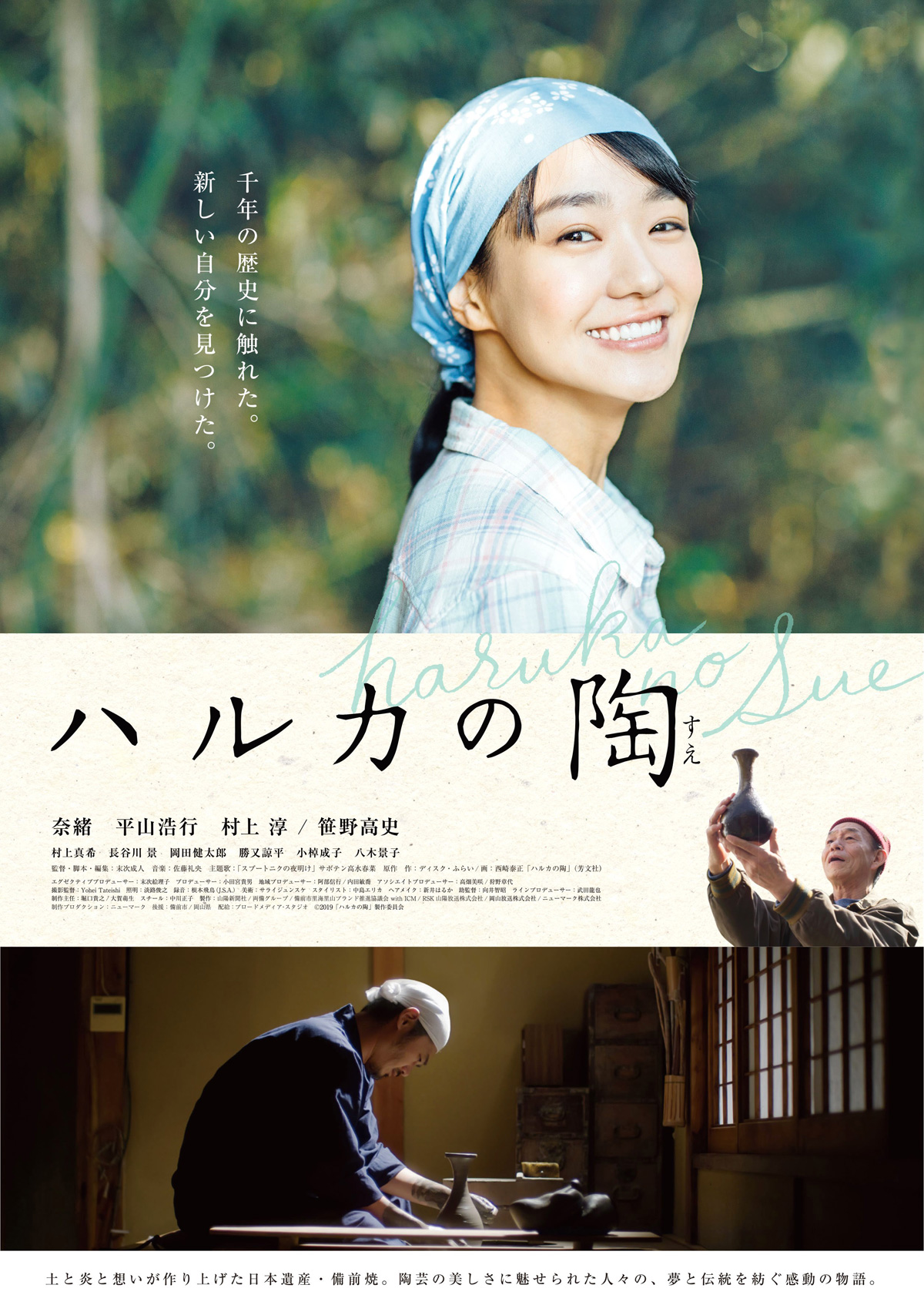
“Growth comes only through connecting with others” according to a master craftsman in Naruhito Suetsugu’s manga adaptation Haruka’s Pottery (ハルカの陶, Haruka no Sue). Japanese cinema has a long history of showcasing traditional crafts but this may be the first dedicated to Bizen ware, artisanal pottery which allows one lost young woman to find purpose in her life after being deeply moved by an oversize platter displayed in a department store exhibition. What she discovers, however, is that pottery is not an isolationist art and lives only in practical application which is in its own way impossible without interpersonal connection. 

A 20-something office worker, Haruka (Nao) laments that nothing exciting is ever going to happen to her. She has no dream or particular passion and sees nothing in her future other than an ordinary job and conventional marriage. Dragged into a department store exhibition by her boss who reminds her that she never has plans so she can’t refuse, Haruka is captivated by a large Bizen ware platter and finds herself heading to the library to find out all about this ancient craft. It’s not long before she’s made the decision to quit her job and try to become a potter herself, determined to train with the artist who made the platter, but when she arrives in the Bizen ware capital of Imbe, Okayama, she finds him cold and unresponsive. Only after bonding with an old man, Toujin (Takashi Sasano), who turns out to be a “national treasure” of traditional pottery does she manage to persuade Osamu (Hiroyuki Hirayama), the aloof and grumpy potter, to allow her to stay. 

Talking to Toujin later Haruka reveals that one of the reasons she was so struck by the platter was because her family is small and she’d always dreamed of a big gathering where everyone could eat off the same large plate. Toujin fires the same logic back at Osamu, that subconsciously he made the plate because he’s lonely. It’s not something he would ever use, in fact it’s too big to have much of a practical use at all, it was basically just a kind of beacon to summon someone to him, to express the depths of his solitude. Osamu lost both his parents as a child, his mother to illness and his father (Jun Murakami) to overwork brought on by grief, and has kept himself to himself ever since. He may have become a master potter, but according to Toujin at least he is somewhat lacking as a human which means, in essence, that his art will never progress not to mention that he’ll go on being lonely and resentful all his life if he fails to seize this opportunity to pass on his Bizen ware skills to a willing pupil.

For her part, Haruka is determined to learn and only from Osamu, the man who made the plate. While others in the town which is largely populated by other Bizen ware potters are supportive if somewhat surprised that Osamu has taken on an apprentice, Haruka finds herself at odds with Toujin’s daughter Yoko (Maki Murakami) who, according to her husband, has not exactly had it easy as a female potter. Yoko resents Haruka as an arriviste, unconvinced she’s really serious and assuming she’s another refugee from the city fed up with urban life and looking for something simpler which is to say she’s probably underestimated the commitment required to become a Bizen ware craftsman. Haruka is fond of cheerfully stating that she’ll persevere, but that’s rarely enough for Osamu or for Yoko who’d prefer to see some concrete results. Yet as Toujin had said, it’s as well to connect with as many people as you can and learning something from each of them she begins to grow in confidence, becoming a full part of the Bizen ware community and earning the respect of the other potters. 

As an old lady puts it, Bizen ware is designed to be used. Its harsh corners become soft and round through contact, and the same is true for people too. Having pushed himself too far trying to connect with his late father through their shared art, Osamu too softens assuring Haruka that pottery is not an exact science and it’s OK to fail every now and then as long as you learn something when you do. “The potter must have a strong will and be as unbreakable as the pottery itself” in order to “melt people’s hearts on the spot” Toujin had somewhat paradoxically told her, but Haruka perhaps learns that there’s truth in what he says, falling in love not only with traditional craft but with the small community of craftsmen accepted as one of their own in her unbreakable love for Bizen ware. 


Haruka’s Pottery screened as part of Camera Japan 2020.

Original trailer (no subtitles)