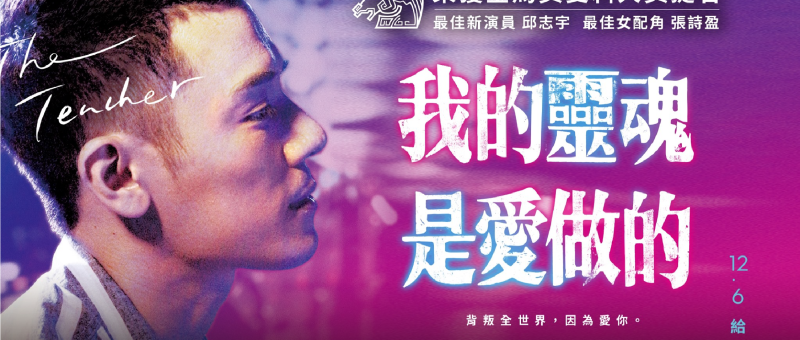
The Teacher (我的靈魂是愛做的, Chen Ming-Lang, 2019)

Taiwan became the first Asian nation to legalise same-sex marriage on 24th May, 2019. That does not however mean that the LGBTQ+ community is universally accepted or that entrenched conservative social attitudes simply evaporated over night. As Chen Ming-Lang’s The Teacher (我的靈魂是愛做的, Wǒ de Línghún Shì Ài Zuo de, AKA My Soul is Made of Love) makes plain, not even those within the community are entirely free of prejudice especially when comes to issues such as HIV and the complicated give and take of what it means to be “out” when personal concerns may conflict with those of an employer or industry. 

Those are perhaps questions that politically engaged civics teacher Kevin (Oscar Chiu) has largely resisted asking. On his off days, he campaigns for marriage equality and for gender equality in education as well as attending pride rallies, but is warned about including LGBTQ+ issues in his teaching programme for fear of offending parents. Director Lin (Lin Chin-Yu), the headmaster, makes offhand comments about Kevin’s perfectly respectable haircut while reminding him that while he works at the school he’s also its representative and he’d prefer it that he keep a low profile to avoid bringing its name into disrepute. Lin is careful to couch his complaints in neutral language, stressing that he personally is fine with Kevin’s sexuality, but is required to be mindful about the reactions of others, deflecting responsibility for at least failing to counter homophobic attitudes in and around the school. Nevertheless, Kevin tries to sidestep him by continuing to include the topics he’d like to talk about by framing them in less problematic terms, for example discussing the upcoming referendum on marriage equality by debating the vote itself, asking if it’s even ethical to give people the option to vote to deny a specific sector of their society the same rights that everyone else has that should be accorded to all without question. 

Kevin’s worldview is challenged, however, when he starts dating a slightly older man, Gao (Chang Chin-hao), whom he met in a gay bathhouse. Kevin tells him that he’s looking for a longterm relationship, wanting to settle down and eventually get married but is currently living with his hairdresser single mother. Moving in with him quite quickly after Gao went temporarily incommunicado following a minor illness, Kevin is later shocked to discover not only that Gao’s relationship with his ex-wife is not quite as over as he implied, but that he is also HIV+. Learning that Gao has HIV exposes Kevin’s rather shallow grasp of his sexual health. Not only does he not know where to go to get tested, but he conflates HIV and AIDS, convinced that he’s been given a death sentence after noticing that his gums are bleeding. 

While beginning to resent Gao for exposing him to the virus, Kevin is also confused by his admittedly complicated family situation. At some point in the past, Gao evidently opted for a heterosexual marriage to please his conservative family who still don’t seem to be aware that the relationship is over or that Gao is gay. At an awkward family gathering, Kevin is invited but introduced as Gao’s friend while his former wife, Wei, sits on the other side of him being quietly needled by her judgemental mother-in-law for failing to provide a grandchild. Gao apparently promised to father a child with Wei through IVF as a condition for dissolving the marriage which is why she’s still overly present in his life and in Kevin’s eyes laying claim to him. Yet Kevin’s major preoccupation isn’t so much with the results of everyone’s choices or how best to support his new partner and his extended family in this unusual situation but with his own reluctance to think of himself as a “home wrecker” the fact that the marriage ended two year’s previously seeming not to occur to him. 

It’s at school, however, where he faces the greatest challenges not only in the homophobic bullying from his immature students with whom he never seems to have much of a rapport, but from his colleagues when he becomes the subject of an internet rumour about a teacher with AIDS. Faced with a dilemma Kevin’s reluctance to confirm his sexuality while insisting that the rumour is false (despite suspecting it might not be) is more personal than political even as his female colleagues attempt to stand up for him by countering a belligerent, older male teacher who wants him sacked that no one should be expected to submit themselves to invasive medical procedures or be denied their right to privacy simply because of a malicious rumour. Lost and afraid, Kevin shuts down, giving in to passivity while succumbing to misplaced rage about his marginalised place in society as he’s denied access to a hospital where he believes Gao has been taken for treatment after an accident assuming they won’t tell him if he’s there because he’s not a legal relative. 

Chen closes with a brief coda explaining that same-sex marriage will be legalised later in the year, Kevin declaring that it will be on his syllabus as if confirming something has changed, yet it’s clear that attitudes may not have shifted as much as hoped while there is still a widespread lack of awareness about HIV issues combined with a social stigma compounded by homophobia. Nevertheless The Teacher presents a complex picture of LGBTQ+ lives at a moment of social transition in which the promise of a coming equality brings with it both anxiety and hope for those who’ve had to accommodate themselves to life on the margins of a now less hostile society. 


The Teacher is available to stream in the UK as part of the Iris Prize Film Festival in collaboration with Queer East.

Original trailer (no subtitles)
Between the Seasons (계절과 계절 사이, Kim Jun-sik, 2018)

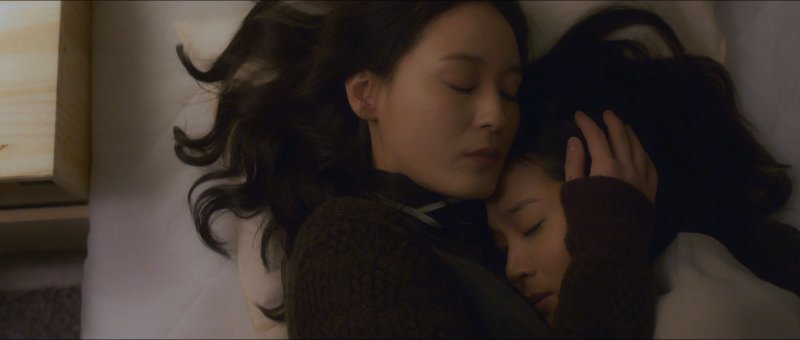
“To live the way I am” replies the reserved heroine of Kim Jun-sik’s Between the Seasons (계절과 계절 사이, Kyejeolkwa Kyejeol Sai Kaebongyejeong) when questioned about her dream, not quite able to answer when asked if she isn’t living that way now. An anti-romance and gentle meditation on the costs of authenticity, Between the Seasons finds two women at different stages of life unknowingly fighting a similar battle, perhaps identifying something in each other but unable to voice themselves fully though in fear and insecurity rather than shame even if they each internalise something of that too as they struggle to push past the barriers that prevent them from fully becoming themselves. 

In her mid-30s, Hae-soo (Rie Young-zin) has just moved from Seoul to a small town to open a bare bones coffee shop. She spends her spare time alone, and we quickly get the impression that she’s making an attempt to move on from something, eventually visiting a mobile phone shop to buy a new handset and instructing the salesman to delete all of her previous contacts and photos. Despite her attempts to discourage her, however, Hae-soo ends up forming an awkward friendship with bubbly high schooler Ye-jin (Yoon Hye-ri) who came into the coffee shop with an unusual order and then became a regular customer. Further bonding on a rainy night after the movies where Ye-jin was stood up by her boyfriend, the young woman starts randomly helping out just because she can see Hae-soo is overstretched eventually becoming an official part-timer spending most of her spare time with Hae-soo much to the consternation of her overbearing, grades-obsessed mother. 

Ye-jin quite literally begins to bring spring into Hae-soo’s life decorating the cafe with pretty cherry blossoms and floral motifs, lending it a cosier, more domestic atmosphere than the rather frosty, utilitarian vibe of Hae-soo’s original non-design. Questioned by Hae-soo about her dream she says she’d like to make things by hand, a dream that is perhaps in direct contrast with her mother’s obvious ambition for her. There’s not much money in paper cherry blossoms after all. That’s two reasons she might prefer being in the cafe rather than at home or studying somewhere else, Hae-soo both mysterious older sister and quasi-maternal figure, only the relationship is further complicated by Ye-jin’s growing romantic attraction to the older woman, becoming jealous as Hae-soo begins a tentative relationship with the sweet and goofy guy from the phone shop (Kim Young-min). 

For her part, Hae-soo remains either wilfully oblivious or simply unwilling to acknowledge Ye-jin’s obvious crush, awkwardly failing her as a friend and as a quasi-parental figure in refusing to engage with her complicated feelings in fear of having to reveal her true self. Instead she pushes the younger woman away without explanation, rejects her, and leaves her with only more shame and awkwardness despite having insisted that that there is nothing wrong in being different and that only by embracing your difference can you improve your life. Ye-jin continues to struggle with her feelings, observing her homophobic friends making fun of the supposed lesbian only to find herself semi-stalking the young woman confessing that if the rumours are true she too is the same. Despite eventually approving of her, the other girl tells her to keep her distance at school, lest they each fall victim to guilt by association. Eventually she gets all dolled up and heads to a gay bar where she furiously makes out with the bartender, mostly one assumes because she reminds her of Hae-soo doubly confirming her feelings. 

Hae-soo, however, is still conflicted, afraid to reveal her true self to anyone. The realisation she eventually comes to, symbolically removing the scarf from around her neck, is that she wanted to shine by herself, finding the confidence in authenticity rather than reflecting the light cast by the approval of others. Ironically that’s something she tried to encourage Ye-jin to do too but accidentally crushed in her brutal rejection of her feelings, costing her perhaps more than she realised in the process. Ye-jin had coyly asked her if she wasn’t making a rash decision, that so far she’d only shown her spring in her cheerful coffeeshop interior design, perhaps she’d like to take in the summer, even see her in winter too, truly thinking long term but the two women remain caught between the seasons, trapped by a sense of internalised anxiety that prevents forward motion. A gentle meditation on connection, authenticity, and self-acceptance Between the Seasons offers no easy answers for its conflicted heroines but motions towards a season of openness in which all are free to be who they are.


Between the Seasons streams in the UK until Oct. 11 as part of the Iris Prize Film Festival in collaboration with Queer East.

Original trailer (Korean subtitles only)

Beyond the Dream (幻愛, Kiwi Chow Kwun-Wai, 2019)

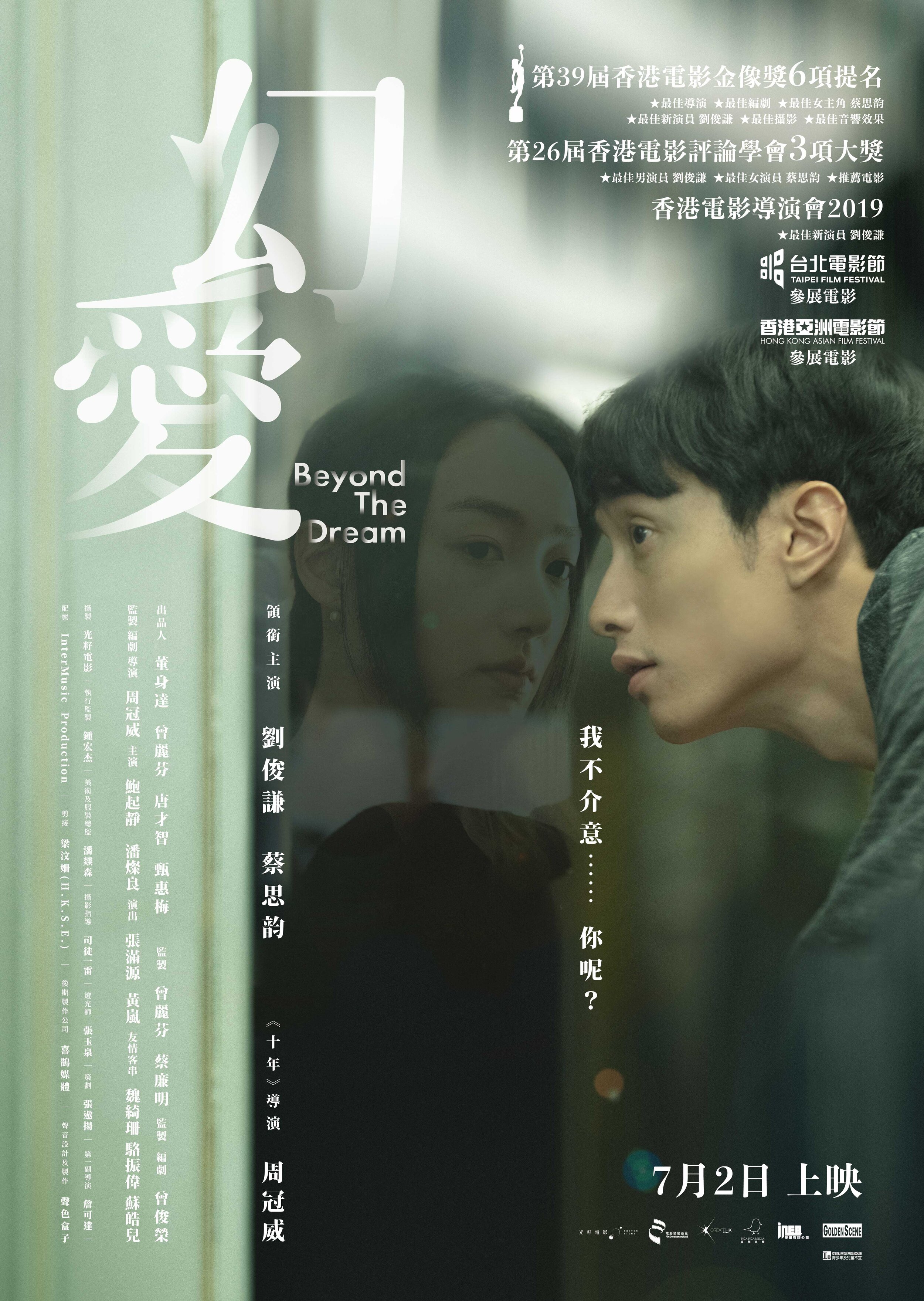
Two troubled souls battle illusionary love in Kiwi Chow Kwun-Wai’s existential romance, Beyond the Dream (幻愛). What is love when divorced from fantasy, and once you know do you have the courage face it? That’s a question asked by each of the mirrored protagonists who’ve convinced themselves they are unworthy of love while struggling to extricate themselves from past trauma and present insecurity as they find the sands of reality constantly shifting beneath their feet. 

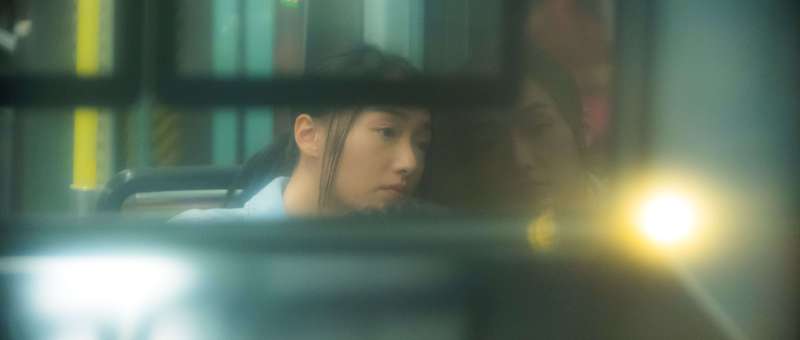
Chow opens with a street scene, the evening crowds gently parting to find a woman in distress, Ling (Wong Lam), who eventually begins to take off all her clothes. While passersby stare and film her public breakdown, a man, Lok (Terrance Lau Chun-Him), who recognises her from a support group for sufferers of schizophrenia, comes to her rescue as does a mysterious woman who wraps her cardigan around her giving her both modesty and warmth. Helping Ling into an ambulance, Lok ends up with the mystery woman’s cardigan somehow captivated by her, touched by the way she came to Ling’s rescue when everyone else was intent on ridicule. Sometime later he is surprised to realise that the woman lives on the floor above him on his estate. Returning her cardigan he discovers her name is Yanyan (Cecilia Choi Si-Wan) and she lives with her violent drunk of a father (Ng Kam-Chuen). The pair become a couple and Lok starts to wonder if he should tell her about his struggles with mental health only for his symptoms to begin resurfacing. Much to his horror he realises that his relationship with Yanyan is nothing but a vivid fantasy, a figment of his illness which exists only his mind. 

Yet even fantasy is built on a grain of truth as Lok later discovers when “Yanyan” turns up at one of his support group sessions only she’s a post-grad psychology student by the name of Yip Nam who is looking for volunteers to participate in her research into erotomania in those diagnosed with schizophrenia. Nam hopes to find out if lack of love is a causal factor in the condition through the stories of those who become consumed by romantic delusion. Unfortunately, her project is rejected by her supervisor, Dr. Fung (Nina Paw Hee-Ching), on the grounds that she has no viable subjects. Lok would seem to be the ideal patient, were it not for the awkward fact of which Nam is still unaware that she herself is the subject of his fixation, the “real” woman who came to Ling’s rescue all those months ago. 

“Relationships are always your problem” Nam is warned, herself carrying the burden of a traumatic past which, according to her mentor Fung, has also convinced her that she doesn’t deserve love, mirroring Lok’s fantasy of Yanyan and her imprisonment at the hands of the abusive father who eventually keeps them apart. In her role as his therapist, she counsels him to “find your true love in reality”, interpreting his recurring dream as a metaphor for his desire to lose himself in the comforting fantasy of his illusionary love for Yanyan rather than take the risks concurrent with seeking happiness in the “real” world. But she herself is also seeking wilful oblivion in other kinds of illusionary romantic distraction pursued perhaps as a form of self harm or at least a means of blaming herself for something for which she has no need to apologise. 

For Lok, meanwhile, romance is still more uncertain, his sense of reality permanently impaired as he finds himself pulled between his idealised love for Yanyan and the problematic relationship with Nam while convinced that no one could ever love him because of his mental illness. “No matter who you really are, you’ll all leave me in the end” he sadly affirms, later advising Nam that “it’s time we wake up from our dreams” ironically advocating for a return to “reality” while simultaneously running from it. Continually divided in Chow’s elegant composition, forever gazing through mirrors and seeing only the reflection of unfulfilled desire, the lovers struggle to overcome their psychological barriers to move beyond the dream of love into something more concrete if perhaps no less illusionary, chasing self-acceptance in the eyes of another as they surrender to romantic destiny as its own kind of “reality”. 


Beyond the Dream screens at Chicago’s Davis Drive-in on Oct. 10 as the closing night of the 11th season of Asian Pop-Up Cinema.

Original trailer (English subtitles)

Take Over Zone (テイクオーバーゾーン, Shinpei Yamasaki, 2019)

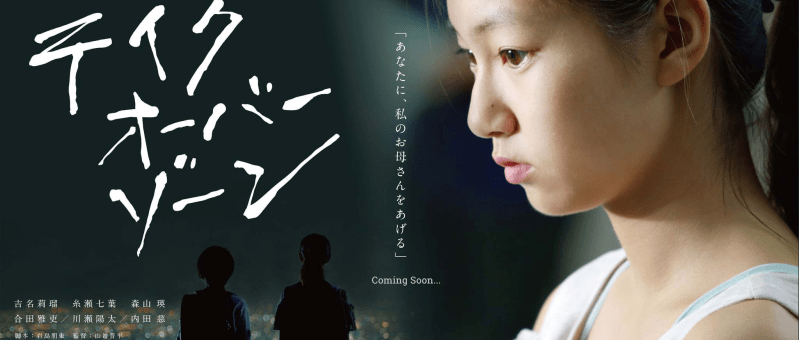
The Take Over Zone (テイクオーバーゾーン) is where the heroine of Shinpei Yamasaki’s coming-of-age drama finds herself trapped, resentfully mired in adolescent confusion torn between the childish delusion of familial reunion and an adult acceptance of change. Sari (Riru Yoshina) is indeed on the run, a lonely loner convincing herself that freedom lies only in total independence while simultaneously justifying her new found appreciation for a team sport in insisting that they need her, basking in their gratitude when they win only thanks to her. 

Running may be the only bright spot in Sari’s life, though she can hardly be bothered even with that anymore. Two years previously her parents divorced. Sari’s mother Fumi (Chika Uchida) left with her younger brother Toma while she stayed behind with her feckless father Kenichi (Yota Kawase), a construction worker with a gambling problem. Forced to grow up all too soon, Sari is more or less looking after herself. Finding only beer in the fridge and a betting slip in the bin which explains why the cash jar is empty, she’s forced to raid her piggy bank for food while the house is a permanent mess. Understandably resentful, Sari is rude and petulant, talking back not only to her dad but to her teachers too. At school she’s a bullying delinquent, hanging out with the cool kids and picking on the captain of her track team, Yukina (Nanaha Itose). Seeking escape from her disappointing life, she tells her teacher she’s no interest in high school and plans to get a job, arrogantly refusing to train with her teammates preferring to hang out with the boys playing cards in the shed. 

A chance encounter with Toma in a local supermarket, however, begins to change her perspective. Her polar opposite, Toma is quiet and polite, though his awkward formality perhaps upsets her in his wilful distance after two years apart. Before long she runs into her mother too, discovering not only that her father hid from her the fact that she had remarried and returned to the area, but that she is actually married to Yukina’s dad which is somewhat pouring salt on the wound. Not only is her mother apparently happy, leading the kind of life she wanted to lead as a middle-class housewife, but she has a replacement daughter in Yukina who is everything she currently is not, the archetypal good girl. Bonding with Toma who is overburdened by his mother’s well-meaning ambition for him and dejected that the other kids don’t let him play because he’s no good at sports, Sari decides to run away childishly believing that the two of them can simply move in with grandma to be a family in rejection of their “selfish” parents. 

Sari resented her mother because she was always hounding her to study, perhaps a reflection of her dissatisfaction with their working class existence wanting to ensure her children enjoyed a more comfortable standard of life. Economic pressures do indeed seem to have been the motivating factor in the breakdown of the marriage, Fumi irritated by the exact same qualities in Kenichi which are beginning to drive Sari away, convincing her she’s better off alone than with her irresponsible father who has only casual employment with no prospect of advancement. She yearns for independence, not only for practical freedoms but for the emotional to simply not need to be burdened by disappointment or hurt. “Teams just hold you back” she snaps at her teacher threatening to quit the relay in favour of the solo race. 

Yukina meanwhile has problems of her own, missing her mother who passed away from illness while struggling to accept Fumi’s intrusion into her family home. A climactic event sees her moving towards the centre, claiming Toma as her own little brother while positioning herself as Fumi’s rightful daughter leaving Sari feeling further exiled, unable to process her resentment towards her mother for her abandonment while struggling to accept that her childish belief her parents would get back together and the family would be repaired will not come to pass. Yet it’s their shared love of running which eventually brings the two young women together, no longer rivals but teammates, later perhaps friends and then sisters as Sari comes to acceptance of her complicated family circumstances while realising just how unpleasant she has often been to those around her out of a mistaken attempt to push them all away. “I always ran like I was all alone” Sari admits, no longer running away but passing through her own take over zone, ready to face herself and her grief as she steps into the next stage of the relay race that is life.


Take Over Zone screened as part of Camera Japan 2020.

Original trailer (no subtitles)

108: Revenge and Adventure of Goro Kaiba (108 海馬五郎の復讐と冒険, Suzuki Matsuo, 2019)

In Buddhism, there are said to be 108 earthly desires, 108 lies, and 108 human delusions. As he points out however, all that is merely coincidence to Goro Kaiba, his petty revenge is founded entirely on the fact that a Facebook status in which his wife, using a pseudonym, detailed an affair with a lithe young contemporary dancer, garnered 108 Likes. Waxing self-referential, Suzuki Matsuo’s surreal sex comedy 108: Revenge and Adventure of Goro Kaiba (108 海馬五郎の復讐と冒険, 108: Kaiba Goro no Fukushu to Boken) in which he also stars, finds a middle-aged screenwriter somehow still trapped in adolescent insecurity, intensely self-involved as he pursues a “revenge” which is also a strange kind of ironic self harm intended to prove his manhood but accidentally exposing the love’s sordid underbelly in the vacuousness of its inversion. 

As the film opens, successful screenwriter Goro Kaiba (Suzuki Matsuo) is overseeing auditions for the musical adaptation of his greatest hit, Dancing in the Mental Ward. He tells us that he’s bored with his work and somewhat disrespectfully is actually writing a column due in a couple of hours’ time, barely paying attention to the actress as she valiantly perseveres with the less than stellar material before rudely dismissing her performance and suggesting she dump the boyfriend who helped her come up with it. Goro claims that he carries on in a job he hates for three reasons: he loves money, his wife’s a spendthrift, and he loves her. It’s something of a shock therefore when a young actress comes up to him after the auditions to ask for a private chat which turns out to be about something slightly different than he’d assumed. She shows him a Facebook profile she believes belongs to his wife, Ayako (Miho Nakayama), in which she claims to have fallen in love with a “contemporary dancer” named “Dr. Snake”. 

Confronted, Ayako admits “everything”, but explains that the Facebook profile is nothing more than wish fulfilment, a romantic fantasy to distract from the emptiness of her married life. Predictably, Goro fails to pick up on the fact there are obviously problems in their marriage, fixating on the extent of Ayako’s relations with Dr. Snake of whom she now has a large tattoo on her shoulder, something which he hasn’t noticed because they have not been intimate in some time. Ayako assures Goro that she means to stay with him forever, but will be fantasising about Dr. Snake when they make love, further hinting at another problem undermining their relationship. Goro, however, is not convinced and starts talking to his friends about divorce only to be reminded Ayako will be entitled to half his savings if he splits up with her. Consumed by pettiness, he decides to spend all the money so she’ll be left with nothing by sleeping with 108 women as “revenge” for her infidelity. 

Of course, the problem is less Ayako than his wounded male pride and emotional immaturity. Perhaps he’s doing this because he can’t admit to himself how much he really does love his wife and how hurt he is by her “betrayal”, but in any case he makes it all about him, refusing to engage with the problems in his marriage or reflect on the fact Ayako is obviously unhappy and unfulfilled. He tries giving some of the money away to his ex-wife and 20-year-old son Michio (Louis Kurihara) from whom he has apparently been withholding alimony and child support, put out that his ex won’t take it because she has no need of him, a man who abandoned her. Not abandoned, he points out to his son, simply “ran away”. In an awkward conversation, he goes so far as to blame Michio for his family’s collapse, claiming that he left essentially because Michio didn’t love him enough while complaining that no one seems to appreciate him. 

Meanwhile, we also realise Goro has been hypocritically carrying on a casual affair with an old friend, Mitsuko (Natsuko Akiyama), perennially unlucky in love but planning to put an end to their “arrangement” to marry a much younger man she is fully aware is only after her money. As part of his sexploits, Goro hires a high class call girl, Azusa (Shiori Doi), but she is also romantically challenged in that despite being the number one herself, she’s only really doing this to make her host club boyfriend top dog at his establishment. In love, it seems there is always some kind of transaction, a misplaced desire. Edging deeper into his pointless and petty quest to bed 108 women, it’s not until late in the game as he’s overseeing a pool full of glistening, gyrating bodies that he perhaps begins to realise how vacuous and meaningless it all really is, sordid in its emptiness. By then, however, he’s gone too far to turn back. 

Better to him than he deserves, Ayako eventually confesses that she was “fighting the inevitability of ageing”, both facing and refusing to face the fears which informed the choice she made to retire from acting and become his wife, but Goro remains petulant and immature, indulging in a romanticisation of their early romance but unwilling to confront himself, his fears, and the real reason he’s embarked on this pointless and silly quest to vindicate himself through aggressive masculinity. Worryingly indulging in fantasies of sexualised violence against his wife which admittedly have an unexpected pay off, Goro struggles to identify what it is he’s really reeling from while pursuing not so much pleasure but misdirected pain in flight from adult vulnerability. In his usual style, Matsuo has ironic fun with Goro’s flights of fancy, suddenly breaking into song like one of his shows while simultaneously mocking them and undercutting Goro’s thinly veiled misogyny by having the leading actress abruptly walk out in protest against his childishly smutty song about the joys of sex. Nevertheless, we leave Goro exactly where we found him, all at sea torn between the risky rewards of honest romantic connection and the dubious pleasures of hedonistic conquest. 


108: Revenge and Adventure of Goro Kaiba screened as part of Camera Japan 2020.

Original trailer (no subtitles)

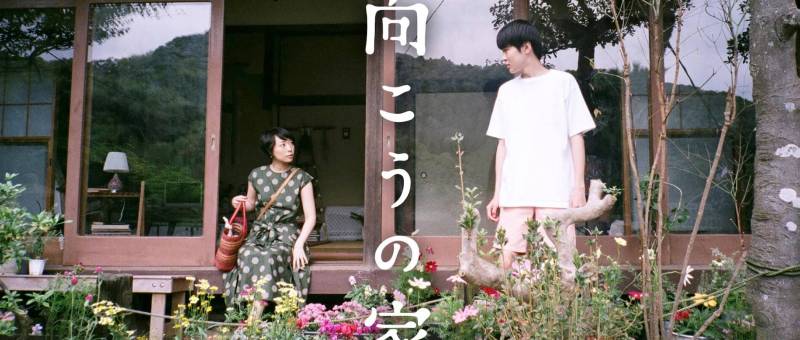
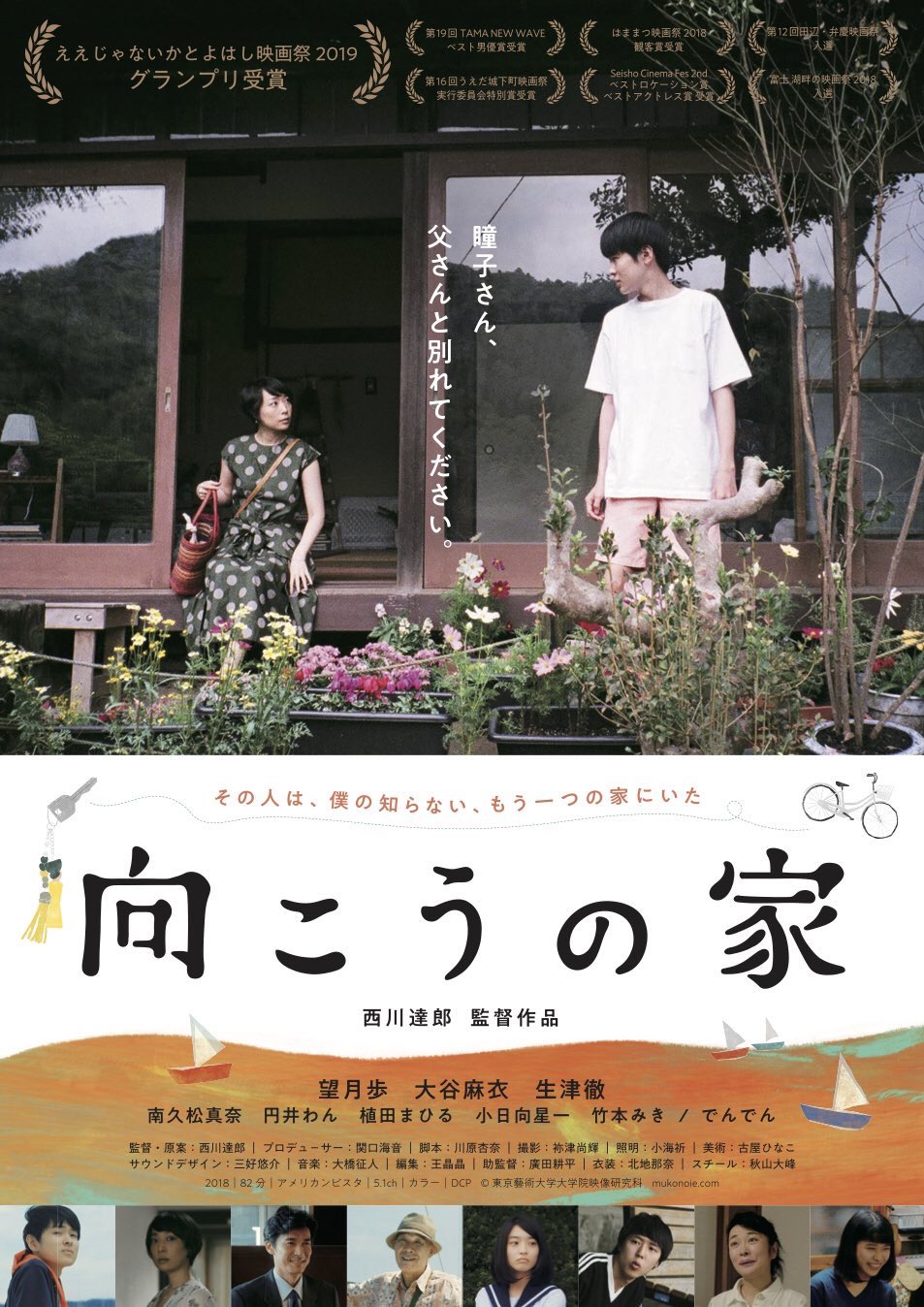
The Other Home (向こうの家, Tatsuro Nishikawa, 2018)

There comes a time in everyone’s life when they start to realise that things are not always as they appear and no matter how happy and settled your family life might seem, your parents aren’t perfect though they are probably doing their best. For Hagi (Ayumu Mochizuki), that moment comes at 16 when he gets fed up with school and takes some time off believing he might be able to learn more outside of the classroom than in. An unconventional coming-of-age tale, Tatsuro Nishikawa’s graduation project The Other Home (向こうの家, Mukou no Ie) is also a meditation on the modern family and the patriarchal order. 

Getting back to school after the summer break gets off to a rocky start when Hagi and his friend are told that the fishing club of which they are members is being shut down as the teacher who was in charge of it is scaling back her workload because she’s just got engaged and will eventually be leaving to get married. Hagi takes this in his stride, mostly at a loss over where to eat his lunch because his girlfriend, Naruse (Mahiru Ueta), for some reason thinks it’s embarrassing to eat alone in the classroom. In any case, Hagi reacts by deciding not to go to school at all. His parents don’t approve, but decide to give him some space to figure out what’s going on. Meanwhile, he’s beginning to wonder if it’s odd that his family never fight, his parents committed to talking things through peacefully rather than resentfully hiding their true feelings. 

Or, so he thought. There is something childishly naive in his conviction that because his parents never fight in front of him they never fight at all, though it’s true enough that he comes from a talking about things family in which his mother Naoko (Mana Minamihisamatsu), in particular, is keen that they share their thoughts and feelings honestly, looking forward to her husband Yoshiro (Toru Kizu) returning home each day after which they share a drink and make time to talk. It comes to something of a surprise to him then when his dad asks him to pick up a set of keys he’s forgotten and bring them to a cafe near where he works without letting his mother know. Hagi does as he’s told only to learn the keys are for a cheerful cottage by the sea which he’s been renting for his mistress, Toko (Mai Ohtani), with whom he now wants to break up preferably before the lease is due for renewal. Too cowardly to do it himself, Yoshiro enlists his teenage son’s help to break up with the woman he’s been cheating on his family with. 

Strangely, this revelation does not seem to sour him on his dad even if he realises the threat it poses to their happy family life. “Protecting the family peace. Men must uphold that promise” Yoshiro unironically tells his son, problematically implying that the way to do that is by covering up affairs rather than simply not having them. Dutifully Hagi heads over to “the other home”, only to be thrown out by Mr. Chiba (Denden), a friend of Toko’s who not unreasonably tells him that this is something his father should be dealing with himself rather than sending his teenage son to guilt his mistress into moving out of her house. Failing to engage with his father’s betrayal, Hagi nevertheless comes to sympathise with Toko who is about to be rendered homeless thanks to his father’s moral cowardice, staying with her in the cottage while lying to his mother that he’s doing an internship at his father’s company. 

Nevertheless, each of his parents is eventually found wanting as Toko teaches him the things they perhaps should have including how to ride a bike, an embarrassing oversight which had seen him deemed “uncool” by his exasperated girlfriend. The film has little time for Naoko’s talking about things philosophy, her husband merely lying to her while engaging in the same patriarchal double standards simultaneously insisting it’s a man’s duty to “protect family peace” while deliberately endangering it through an extramarital affair. Hagi too perhaps picks up these uncomfortably old fashioned ideas partly from his teacher who proudly shows off her engagement ring boasting that it cost her fiancé three months’ salary, the expense apparently proof that he intends to look after her well for the rest of her life as if she couldn’t do that herself. He begins to feel sorry for Toko as she outlines her life as a kept woman, a backroom full of unwanted presents from various men who too looked after her for a time, but in the end merely offers to look after her himself by quitting school to get a job so he can renew the lease to make up for his father’s moral cowardice.

The reason they were so happy, it seems, is that Yoshiro gave himself an escape valve. “Sometimes it’s hard for me to be dad” he admits, apologising for his inability to share his burdens honestly, his male failure neatly undercutting the tacit acceptance of the patriarchal authority which stands in contrast to Naoko’s ideal of a healthy relationship founded on emotional authenticity. Finally learning to ride a bike, Hagi finds himself entering a less innocent world as a young man now fully aware of the universe’s moral greyness if perhaps not quite so enlightened as he might feel himself to be.


The Other Home screened as part of Camera Japan 2020.

Original trailer (no subtitles)
Pakeriran (巴克力藍的夏天, Lekal Sumi Cilangasan, 2017)

Two lost youngsters reconnect with their roots over one idyllic summer in Lekal Sumi Cilangasan’s gentle exploration of culture and identity, Pakeriran (巴克力藍的夏天). Produced by the Indigenous Peoples’ Cultural Foundation, Sumi’s gentle drama finds a city boy quite literally thrown in at the deep end when he returns home to his indigenous community while bonding with an equally lost young woman chasing the legacy of a father who abandoned her. 

As the film opens, university student Futing (Matam Hidaw) is lost in thought, gazing a pretty classmate and hardly listening to his friends as they plan the road trip they’ll be taking over summer vacation. That evening, however, he gets a panicked phone call from his mother telling him that his grandfather has been taken ill and he’s to come home as soon as possible. Futing doesn’t get a chance to explain he’s made other plans, and so finds himself on the first available train, his friend taking off with the girl he likes on the back of his bike as they drop him at the station before setting off on their summer adventure. He’s quite annoyed therefore when he arrives and discovers his grandfather is fine, he just sprained his ankle, but the rest of the family have taken off on holiday and left him to look after grandpa who is quite keen that Futing take part in the upcoming Sacepo festival in his stead. 

Having spent most of his life in the city, Futing no longer understands the local dialect nor does he know very much about traditional customs. Hanging around shyly outside after being instructed to attend a meeting to discuss the festival, Futing is brought in by an older man, Kacaw, who becomes his mentor translating for him as the elders heckle, disappointed that he can’t understand them and exasperated that he has no manners, failing to realise that he as the youngest should be pouring them wine and doing it in ceremonial manner. Tripping up on his way home he’s rescued by Lisin (Ipun Kanasaw), a young woman taking a working holiday at a cafe where they showcase the local cuisine for tourists, but leaves abruptly when he’s recognised by an old friend of his mother’s who asks him to explain the Sacepo festival to the newcomer, too embarrassed to admit he really has no idea what it’s all about. 

Lisin, meanwhile, is also on a quest to reconnect with her history through following in the footsteps of her foodie father who apparently went out one day and never came back. She thinks he might have passed through his village, so she’s patiently absorbing all it has to offer while quietly learning to assume responsibility, eventually forced to take charge when her mentor, Mrs Jiang (Ilid Kaolo), is delayed on her way home. Predictably enough, Futing’s desire to rediscover his ancestral culture is spurred on by his growing attraction to Lisin whose interest in the local customs fuels his own. Suddenly, he becomes invested in the idea of seizing his manhood through completing the ritual, determined to learn how to catch a fish in the traditional way, cooking it in water heated with rocks warmed by the sun. 

The titular Pakeriran refers to a rock island on the far side of an inlet which, it was said, the young could prove themselves men by swimming to and warriors by swimming around. Later, Futing discovers there are other, easier ways to reach Pakeriran but then that isn’t really the point. Through reconnecting with his culture, Futing develops a new respect for the natural world, concerned by all the rubbish he finds floating in the water some of it irresponsibly dropped by non-indigenous fishermen. An attempt to confront one of them brings home to him his marginalised position within Taiwanese society when he’s not quite arrested by local police who accuse him of illegally fishing on his ancestral land without a proper licence after being tipped off by the petty fisherman. Originally resentful, watching the photographs of his friends having fun on their trip roll in over social media, Futing comes to embrace his heritage as a member of the indigenous community as he comes of age, gaining a new appreciation for his place in the world. Beautifully showcasing the traditional culture of the Amis people, Pakeririan offers a rare insight into an all too often hidden side of Taiwanese life through the eyes of the two youngsters as they discover new sides of themselves though reconnecting with their heritage.


Pakeriran streams in the US Oct. 2 – 4 as part of Asian Pop-Up Cinema & TACCGC’s @Home with Taiwan Cinema: Love & Hope

Original trailer (English & Traditional Chinese subtitles)

The Hardness of Avocado (アボカドの固さ, Masaya Jo, 2019)

“Reality might be bitter, but at least your coffee is sweet” according to the “gloomy” voiceover performed by aspiring actor Mizuki Maehara in Masaya Jo’s The Hardness of Avocado (アボカドの固さ, Avocado no Katasa). In many ways a tale of quarter-life inertia and youthful denial, Jo’s indie drama finds its struggling hero looking for the sweet spot, trying to grab the avocado at the opportune moment between rock hard and squishy mess but floundering in world which seems both continually confusing and perhaps inherently unfair. 

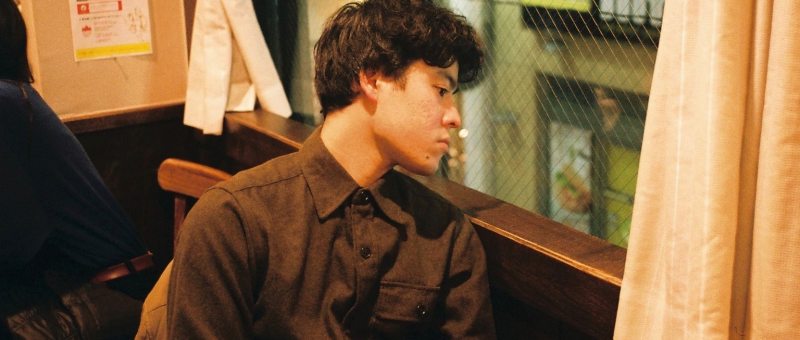
At 24, Mizuki (Mizuki Maehara) is a jobbing actor living with his sister (Zuru Onodera) in a small apartment. He’s been in a committed relationship with Shimi (Asami Taga) for the last five years and is already thinking about moving in together, asking her to help him pick out a sofa-bed after their date to the movies where she fell asleep and he ended up meeting a fan who recognised him from a previous film. Shimi, however, seems irritated, eventually answering Mizuki’s well meaning question about what she’d most like to do right now with the answer “break up”. In a pattern which will be repeated, Mizuki reacts somewhat petulantly, walking off with a “fine then” only to end up regretting it later. Unable to accept that Shimi is really ready to move on, he decides to give her (and himself) one month before, he assumes, they’ll get back together having each grown as people during their time apart. 

This baseless optimism and mild sense of self-centred entitlement are perhaps the very things that Mizuki is supposed to be outgrowing even as he struggles to get over Shimi. Having dated for five years, Mizuki took his relationship for granted, assuming it was settled and destined to go on forever. Shimi’s declaration comes as a complete surprise, shocking in its abruptness though we can see that she seems irritated by him and that it may be more than a temporary bad mood. She tells him that she needs “freedom” and time to herself, but it seems equally likely that, from her point of view, the relationship has simply run its course. Looking through his mementos, Mizuki finds a 20th birthday card from Shimi that promised she’d always be around to encourage him, but relationships entered in adolescence rarely survive the demands of adulthood and she, it seems, is after something more while all Mizuki seems to want is more of the same. 

Moping about the city, he engages in borderline misogynistic banter with his friends, occasionally irritating even them in his resentment towards a nerdy guy who has finally got a girlfriend. He finds himself applying for a job in a convenience store to make ends meet between auditions seated next to a pair of students who roll their eyes, mocking him for his lack of success as a man in his mid-20s still part-timing just like them. Meanwhile, he develops an unwise fondness for a woman he meets on a shoot, chatting her up at the afterparty but saying the quiet part out loud as he confesses his plan to have a fling while fully believing he’ll be getting back together with Shimi when the month is up. Despite the fact she has also told him she has a boyfriend, he suddenly declares his love to her, once again petulantly put out by her irritation as she points out how inappropriate he’s been seeing as all he’s done is talk about Shimi.

Shimi’s mother (Kumi Hyodo) can’t understand why she’d break up with someone as “nice” as Mizuki, and Mizuki is indeed “nice” if obviously imperfect, an earnest sort of man working hard to achieve his dreams, but she apparently wanted something less superficial, a more ”passionate and loving relationship” now that she’s outgrown adolescent romance. Mizuki is once again surprised when she brushes off his romantic overture, petulantly walking home while beginning to accept that something has indeed changed. Finally fastening the screws on his new chair (in lieu of the bed) he begins to regain some solo stability, a little more self-sufficient at least even if he still has some some growth to achieve on his own. A whimsical tale of millennial malaise and self-centred male entitlement, The Hardness of Avocado is a gentle advocation for learning to let go when something’s past its best while accepting that sometimes all you can do is set yourself right and start again. 


The Hardness of Avocado screened as part of Camera Japan 2020.

Original trailer (no subtitles)
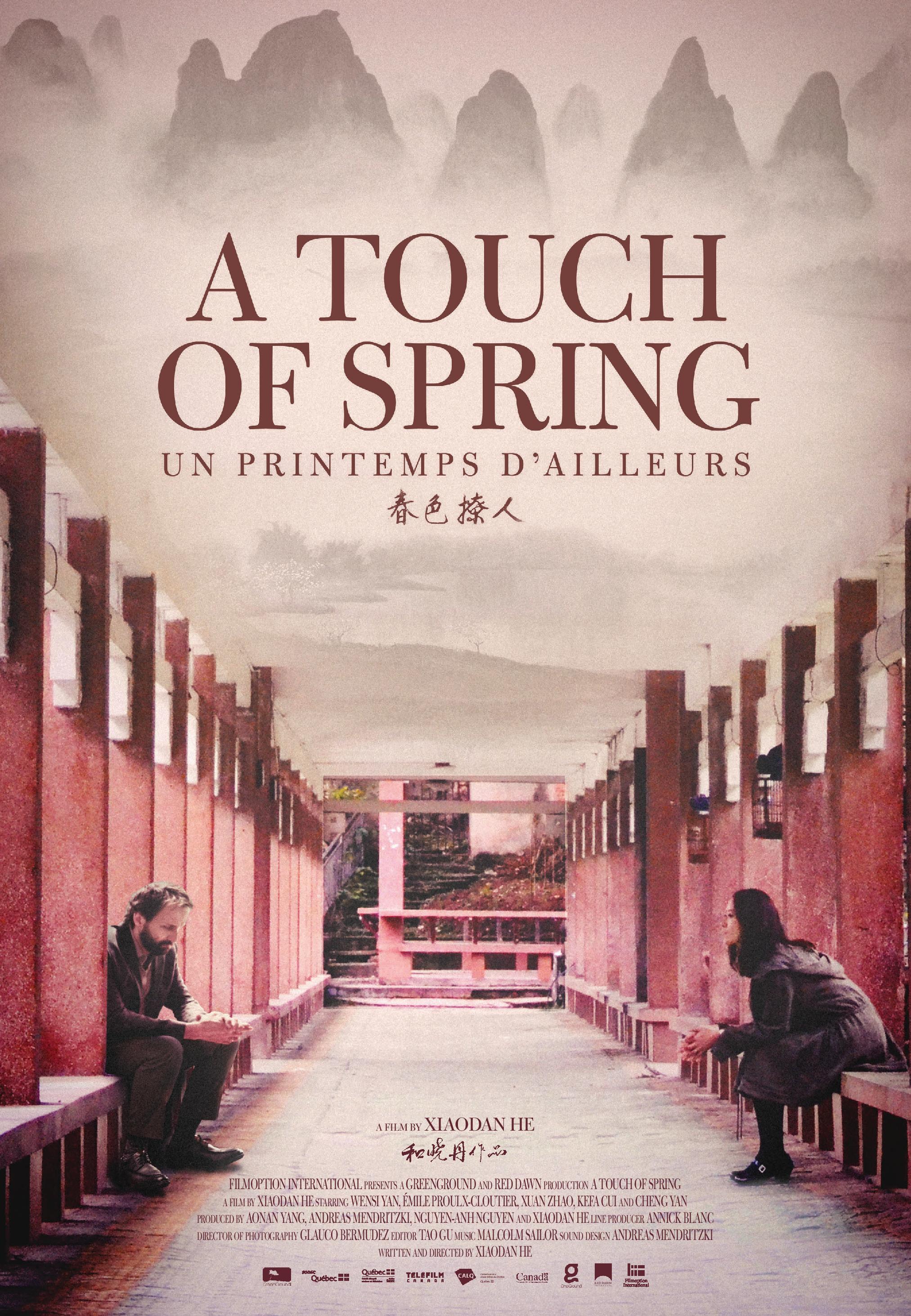
A Touch of Spring (Un printemps d’ailleurs / 春色撩人, He Xiao-Dan, 2017)

When you don’t know what to do, you go home, but what if home doesn’t quite exist for you anymore or trying to go back there only reminds you of all the reasons you chose to leave? Then again, perhaps “home” exists for just that purpose, a place you’re supposed to go to think things through before you ago back out into the world again. The heroine of He Xiao-Dan’s Chinese-Canadian co-production A Touch of Spring (Un printemps d’ailleurs / 春色撩人, Chūnsè Liáorén) is waiting for the thaw, trying to come to terms with the failure of her marriage and the unexpected directions her life may be about to take with or without her consent. 

Fang (Yan Wen-si) has been living in Montreal for the past 10 years, having married a French-Canadian man, Eric (Émile Proulx Cloutier). Her marriage, however, has become distant and she suspects Eric may be having an affair while a considerable strain has also been placed on the relationship because of their inability to conceive a child. When an attempt to confront Eric about his infidelity turns violent and counselling proves no help, it becomes obvious that the only option is divorce. Fang travels back to her hometown in Dazu which she hasn’t visited in the decade since she left and tries to figure things out while staying with her rather gruff grandfather (Cui Kefa). 

Immediately on her arrival, a taxi driver mistakes Fang for a tourist, but even on being told she’s a local quickly realises she’s been away a long time. Her home is not quite her home anymore. Fang’s grandmother has passed away and her grandfather has got married again to a cheerful, warmhearted woman who seems completely odds with the rest of Fang’s sad and grumpy family. The biggest issue is that Fang has not disclosed why she’s come back to China and so everyone is keen to ask about Eric, the lack of children, and her fancy ex-pat life in Canada. 

In fact, Fang is frequently described as the family’s most successful member precisely because she has moved abroad where she owns her own home and, they assume, lives a much higher standard of life. Meaning well, Fang’s new grandmother puts her foot right in it when she tells Fang that the highest success for a woman lies in marrying a good man. More in tune with modern Western values, Fang objects in part to the obvious sexism of her grandparents’ worldview, but it of course also touches a nerve as she finds herself trying to process the failure of her marriage while being too ashamed to admit that her “perfect” life in Canada wasn’t quite so perfect after all. Having separated from Eric, she’s determined to prove that she can make it on her own and doesn’t need a man to get by but is also lonely and feeling lost. Grandma provides some unexpected wisdom when she reveals that she lost her first husband in the Cultural Revolution and came to the same conclusion as Fang resolving never to rely on a man ever again, but is grateful to have met Fang’s grandfather who, despite his gruff appearance, is gentle and caring and has always looked after her. 

Meanwhile, in the therapist’s office, Eric struggled to come up with something good about his relationship with Fang other than that she loved him, supported his work, and took care of their relationship. Eric doesn’t seem to have been a very good husband, self-involved in the extreme, but the therapist is quick to ask somewhat insensitively if it wasn’t Fang’s inability to have children that has destroyed the marriage, a claim Fang rejects because she hasn’t yet accepted that she may be infertile. Despite her rejection of her grandmother’s patriarchal sexism, Fang craves motherhood, bonding with the lonely little girl of her cousin who has “abandoned” her with her parents to work alone in Chongqing. Fang has ambivalent feelings towards Hong who apparently “fell” into a life of drugs and backstreet gambling after a traumatic street attack and the rejection that followed it from her policeman father too embarrassed to report that his own daughter had been the victim of a crime. Something in Fang admires Hong’s subversive independence and wants to help her, especially if it helps her quit gambling, but she also resents that she has given up the thing Fang most wants in deciding not to raise her daughter but leave her with her parents. 

Reconnecting with an old friend who’s become a Buddhist and learned to respect simplicity in life begins to shift her perspective. “How can I stop this endless suffering?” she screams into a ravine. He tells her Buddha has a plan for that, but she might not like it. She repllies that she only believes in the reality right before her eyes. According to grandpa, young people suffer because they think relationships are all romance when the reality is “tolerance”. Grandma, by contrast, tells her that the secret of life is learning to see the beauty in every thing. “It’s good to be alive”, she sighs, “It’s a pity life is so short”. Spring finally comes to Fang’s life as she begins to clear up the literal mess of her failed relationship, no longer feeling like a powerless passenger on the great train of life but finally in charge of its direction. 


A Touch of Spring streams in the US Sept. 29 – Oct. 3 as part of the 11th season of Asian Pop-Up Cinema.

Original trailer (English subtitles)

Seven Days War (ぼくらの七日間戦争, Yuta Murano, 2019)

“Youth is the liberated zone of life” according to the voice of experience in Yuta Murano’s impassioned anime adaptation of the cult novel by Osamu Soda, Seven Days War (ぼくらの七日間戦争, Bokura no Nanoka-kan Senso). Featuring a number of meta references to the ‘80s original and live action movie, Murano’s stylistically conventional adaptation shifts the action to Hokkaido and the present day encompassing such themes as economic strife, systemic political corruption and small town nepotism, migration and exploitation, but is most of all a coming-of-age story as the rebellious teens meditate on the costs of adulthood, resolving not to become the vacuous and resentful adults they see all around them who have traded emotional authenticity for a mistaken ideal of civility. 

Obsessed with 19th century European military history, high schooler Mamoru (Takumi Kitamura) complains that no one takes any interest in him and remains too diffident to confess his feelings to the girl next door, Aya (Kyoko Yoshine), with whom he has been in love for the past six years. Hearing that Aya and her family will soon be moving away because her authoritarian politician father has been offered the opportunity to take over a relative’s seat in Tokyo gives him the boost he needs, nervously suggesting that he and Aya run away together so they can at least celebrate her upcoming birthday the following week. Aya surprises him by agreeing, but rather than a romantic getaway for two she decides to invite several not particularly close friends from school, holing up in a disused coal refinery on the edge of town. Once there, however, they realise someone has beaten them to it. Marret (Makoto Koichi), the child of undocumented migrant workers from Thailand, has been hiding in the building after being separated from their parents when the building they were living in was raided by immigration authorities. 

Though the group is not universally in favour, they quickly find themselves deciding to protect Marret while trying to help find the kid’s family using both their ingenuity in fortifying the coal refinery and their youthful know how in weaponising the internet and social media to win sympathy and fight back against the oppressive ideology of the authorities. Yet Marret finds it difficult to trust them because they occupy a liminal space between the idealism of childhood and the cynicism of maturity. Marret’s family came to Japan on the false promise of finding good employment only to be ruthlessly exploited, convincing the idealistic youngster that all adults lie and can never be trusted. Mamoru, whose name literally means “protect”, does his best to save everyone but temporarily gives in to despair, confessing that he is just an “optimistic child” lacking the power to do any real good, only later coming to a revelation that the problem with the duplicitous adults they’re rebelling against is that they continue to run from their emotions and the pain of not being able to be fully themselves for fear of not fitting in has made them cruel and cynical. 

Honda (Takahiro Sakurai), the conflicted assistant to Aya’s authoritarian father, tacitly approves of the teens, affirming that the young always fight for the things they believe in but then rebels against himself in doxxing them, exposing both their identities (sans Aya’s) and dark secrets online in an attempt both to intimidate and to drive them apart. But the kids run in another direction. They elect to share their truths and in the sharing neutralise the threat while gaining the confidence that comes with deciding not hide anything anymore. The sharing is it seems what matters, a collective unburdening which paves the way for emotional authenticity but sidesteps the need to consider the fallout from the concurrent revelations. A heavily telegraphed confession of same sex love, for example, is accepted by all though there is no explicit indication as to whether or not is reciprocated save that is in no way rejected. 

In any case, the kids decide that being their authentic selves is more important than conformity and make a mutual decision to respect the same in others, something which is eventually mirrored in those like Honda among the duplicitous adults touched by the kids’ pure hearted rebellion. Necessarily, that leaves the weightier themes such as the plight of undocumented migrants, the casual cruelty of the authorities, small-town corruption and persistent nepotism relegated to the background, perhaps superficially considered seen trough an adolescent lens, but nevertheless products of the inauthenticity of the cynical adult world the kids are rebelling against. A heartfelt advocation for the idealism and universal compassion of youth carried into a more open adulthood that comes with emotional authenticity, Seven Days War leaves its heroes with the spirit of resistance, defiantly themselves as they step into an adult world uncorrupted by cynicism or prejudice.


Seven Days War screened as part of Camera Japan 2020.

Original trailer (no subtitles)