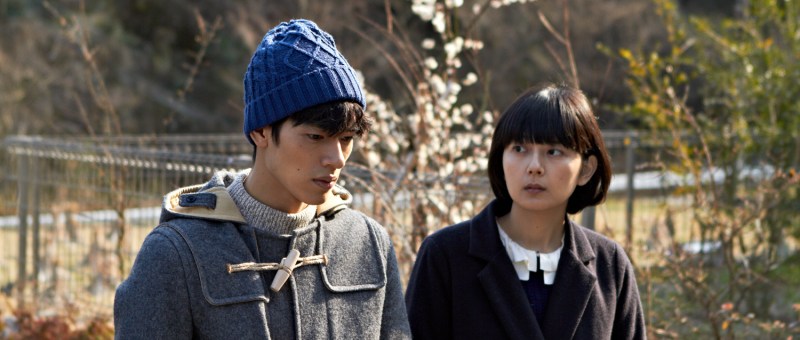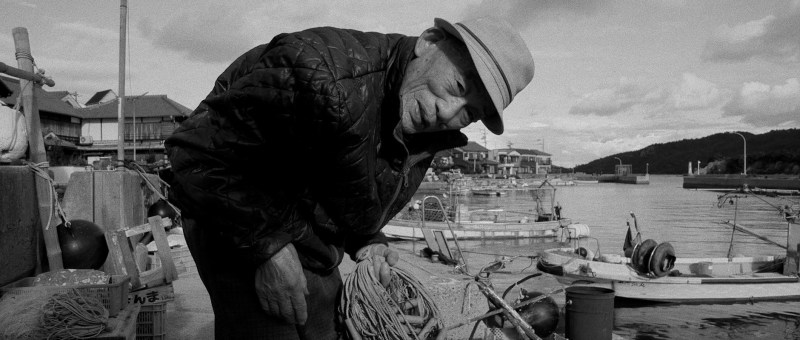
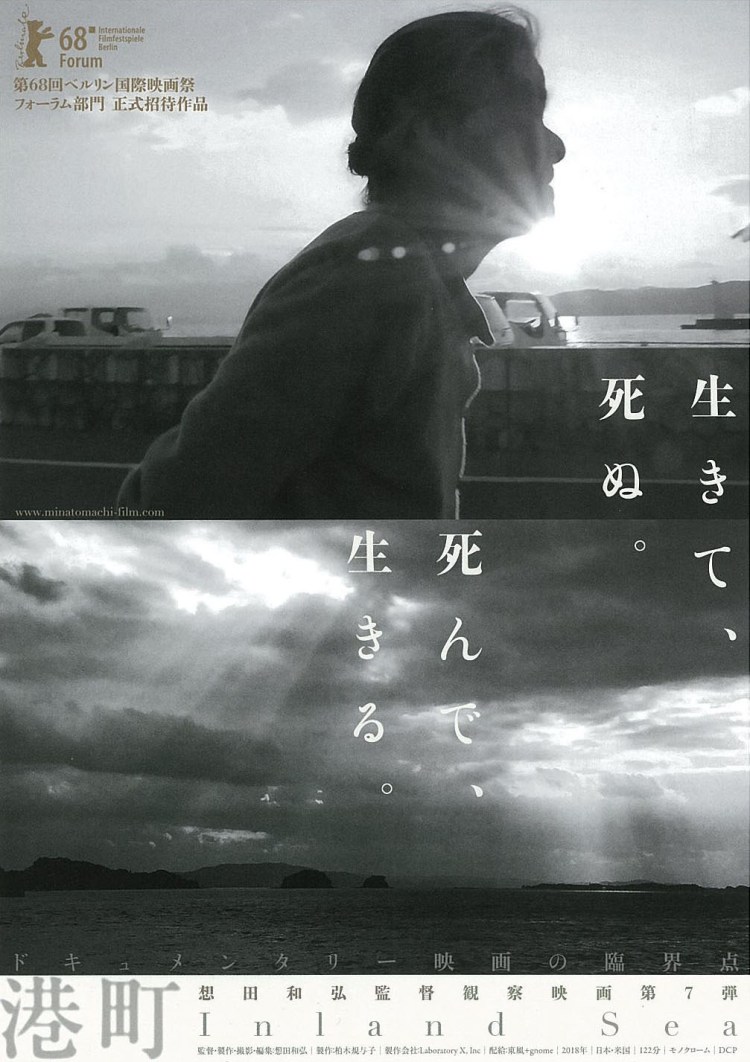
Inland Sea (港町, Kazuhiro Soda, 2018)

Inland sea posterJapan’s ageing population continues to provoke shifts in the social fabric, not least in small rural towns where the elderly now dominate and have been largely left to fend for themselves as if time had simply left them behind. Following his previous documentary Oyster Factory, documentarian Kazuhiro Soda returns to small town coastal Japan with Inland Sea (港町, Minatomachi). Focussing on the village of Ushimado, he observes those still clinging on to an archaic way of life despite advanced age and increasing hardship.

The first of Soda’s primary subjects, Waichiro, is now 86 years old and hard of hearing yet he still takes his boat out every day to fish in the hope of returning home with a prime catch. His living is, as he explains, precarious given that his equipment is now expensive while the price of fish has severely declined. A later meeting with fishmonger Koso makes plain that not every catch is equal – live(ly) fish fetch the most money, while dead ones bring in in only half and like everything else the price of fish is also dependent on demand.

Koso refuses to tell us her “real” age outside of amusingly describing herself as a “late stage elderly” which sounds like something she probably read on a well meaning but somewhat patronising government leaflet. In any case, she is a sprightly, energetic woman who seems far younger than her years and is something of a neighbourhood hub as she makes her rounds delivering fresh seafood to the mostly elderly residents who eagerly await the next tasty catch.

Most of the other residents are, however, more like Waichiro in advanced old age and mostly left to their own devices now that their children have left for the cities never to return. Kumiko, an 84-year-old widow who still works by the waterside preparing fish is just one such woman with a heartbreaking post-war story she later relates in a typically matter of fact fashion. Becoming a kind of guide for Soda and his producer as they explore the small village, Kumiko often attempts to steal the spotlight – bad mouthing her neighbours live on camera while they stand right behind her as in the case of her apparent bestie whom, she insensitively tells us, has “no friends” and a poor relationship with her family despite having eight children which most of the other lonely older people might consider as something of a luxury.

Relating her sad life story in which she laments a feeling of disconnection from the place in which she lives owing to having lost her family in the war and been adopted at age four by a fisherman and his wife who denied her an education (as was the thinking in those days), Kumiko lays bare a melancholy underside of the post-war boom which seems to have left towns like these (the ones that survived at all) almost untouched as if frozen in time. The world has pulled away, leaving Ushimado behind like a rock pool filled with water long after the tide has gone out.

Soda’s decision to regrade the film in black and white after shooting in colour adds a poignant touch to his casting of Ushimado as a place somewhat out of time. Wandering around, Kumiko begins to point out empty houses, mostly belonging to the recently deceased, which make up the bulk of the town and it’s true that the vast majority of the people we meet are older save perhaps for a younger woman helping at a cafe and a middle-aged one who takes care to feed the many stray cats who are the area’s other main residents with leftover fish offal. There is, however, perhaps fresh hope for towns like Ushimado as evidenced by the mild surprise expressed in discovering the range of dishes on offer at the local coffee shop seeing as technological advances and better transport links may help to draw some of those who left for the city back to the country even if not to fishing. At the very last, colour returns to the screen reminding us that there is life in this place still and that its stillness should not be mistaken for transience.


Streaming almost globally via Mubi until 1st April 2019.

Original trailer (English subtitles)

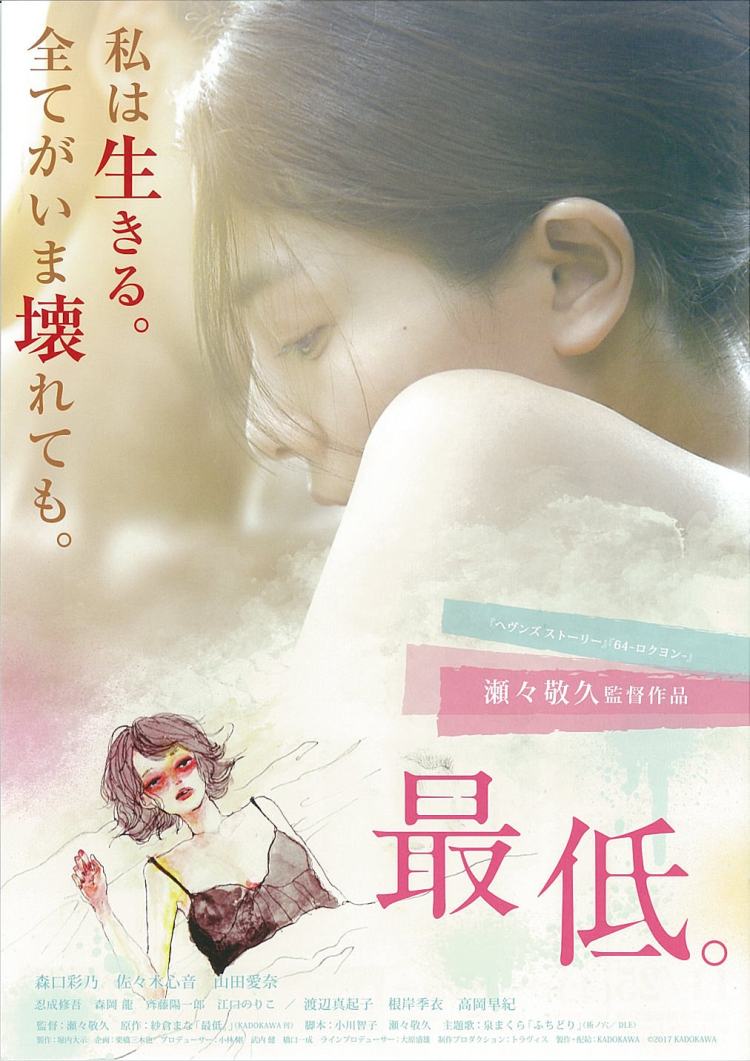
The Lowlife (最低, Takahisa Zeze, 2017)

The Lowlife 2017In terms of the mainstream cinema industry, the AV (“adult video”) world is viewed with suspicion and distain. AV is where unlucky women end up after having the misfortune to encounter unscrupulous yakuza or be born to feckless parents whose debts they are forced to pay with their bodies. However, mainstream cinema perhaps has a reason to demonise its rival on top of reflecting persistent social stigmas relating to the expression of sexuality. Takahisa Zeze began his career in “pink film”, which is to say softcore pornography, and casts a non-judgemental eye over the modern hardcore porn scene in The Lowlife (最低, Saitei), adapting a novel by AV actress and gravure model Mana Sakura which explores the lives of three women who each have been impacted by the industry.

The first two of our heroines – college dropout Ayano (Kokone Sasaki), and melancholy housewife Miho (Ayano Moriguchi), have made a free choice to enter the AV industry mostly out of loneliness and insecurity. Ayano, who claims to be the only “ugly” one among her many sisters, is convinced to take part in a porn shoot by an unscrupulous boyfriend but finds herself reassured in being adored by the camera and appreciated on set, if only briefly. Miho, meanwhile, is trapped in an unsatisfying marriage to a man who has begun sleeping in his study and continually puts off the discussion of starting a family despite Miho’s intense desire to become a mother. Checking on her husband one morning she is dismayed to find a porn DVD in the open tray of his laptop which feels like a double betrayal in that he has obviously not been “working” all night and has avoided intimacy with her while finding release somewhere else. Irritated, Miho takes the extreme decision of becoming a porn star herself as a strange kind of revenge and motion towards personal fulfilment.

Our third heroine, Ayako (Aina Yamada), however, is looking at the same problem from a different angle in that she is daughter of a single-mother who had previously worked in the porn industry before returning home to her own single-mother to start again and raise her daughter. Takako (Saki Takaoka) is a difficult, flighty woman who still likes to live the high life drinking with random guys and rolling in late or sometimes not at all to the constant worry of her anxious daughter. A gifted artist, Ayako is a shy, gloomy girl who finds it hard to connect with her peers and resents her mother for her unconventional lifestyle. Her problems intensify when she wins a prominent art prize and irritates a classmate who seems to be stalking her causing him to spread the rumour of Takako’s past all over the school.

Social stigma is indeed one of the main problems each of the women face. Ayano, who seems to be otherwise happy enough with her life AV, gets an unexpected visit from her concerned mother and scornful sister when someone presumably spots her in a video and decides to have a word. As Ayano points out to her annoyingly judgemental sister, that means whoever told them just outed themselves as an AV-watcher so perhaps she should ask her boyfriend about that before making sarky comments. Nevertheless, nobody really says anything about the men who consume pornography, only about the “immoral” women who star in them. Ayano’s mother Izumi (Makiko Watanabe) blames herself, complaining that Ayano was the only one of her daughters she never quite bonded with, by turns angry with her for “shaming” the family and concerned that she has “thrown her life away” by becoming forever tainted with the stigma of having been involved in the sex industry.

Corrupted maternity becomes a somewhat uncomfortable theme as each of the women assesses their relationships with other women in the context of the traditional family. Having given up work and become a housewife as society expects, Miho has done everything right but is intensely unhappy because her husband will not move to the next step by starting a family. At 35, she feels her life stagnating, that everything is already settled and nothing will change from now until the time she dies. Neglected by a husband who seems to have lost interest in her as a woman as well as in their shared endeavour of building a home, she finds herself drawn to AV as a path to sexual fulfilment which isn’t really infidelity while also subverting her image of superficial perfection and embracing another identity outside of the home. She remains, however, conflicted as she gazes jealously at a happy family out on holiday at the pleasant mountain lodge where they’ll shoot the movie away from prying eyes. Her involvement in AV is, in a way, also an act of self harm as she punishes herself for her inability to become a mother, while also getting back at her disinterested husband.

Even so, Zeze is careful to frame the AV industry in a positive light. On arrival at the agency, Miho is greeted by an extremely sensitive and sympathetic manager who does his best to ease her concerns while making her feel safe at her most vulnerable. Having felt so neglected and lonely at home, the AV world provides her with a place that she is appreciated, desired as a woman and treated like a star. Similarly, Ayano who had believed herself “ugly” and unlovable begins to gain confidence in herself thanks to being appreciated by the camera, eventually striking up a relationship with a nice guy journalist in a bar which seems like it might develop into something more. While some might argue that the industry is merely exploiting feminine insecurities, it cannot be denied that both women find in it a path towards self acceptance and actualisation.

Despite the fiercely non-judgemental tone, a late plot twist further casts Miho’s transgression as a fall rather than a rise while an eventual connection with Ayako further deepens the maternal subtext as she completes the circle by mothering the lost young woman trying to come to terms with her atypical family situation. Ayako’s grandmother too seems to prescribe motherhood as the answer to all life’s mysteries even if the answer is often that they can’t be solved and all that remains is the urgency of living. Zeze’s depiction of the porn industry might be a rosy one glossing over the seamier side in favour of presenting a world built on empowerment rather than exploitation, but its infinitely sympathetic eye makes plain that porn is just a job like any other and the women who work in it do not deserve the scorn that society often chooses to heap on them.


Original trailer (no subtitles)

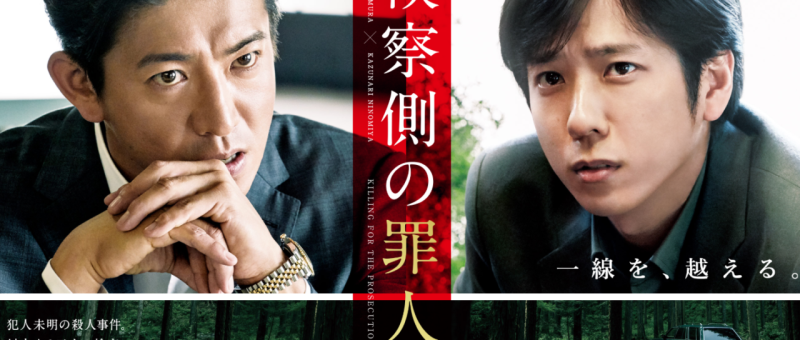
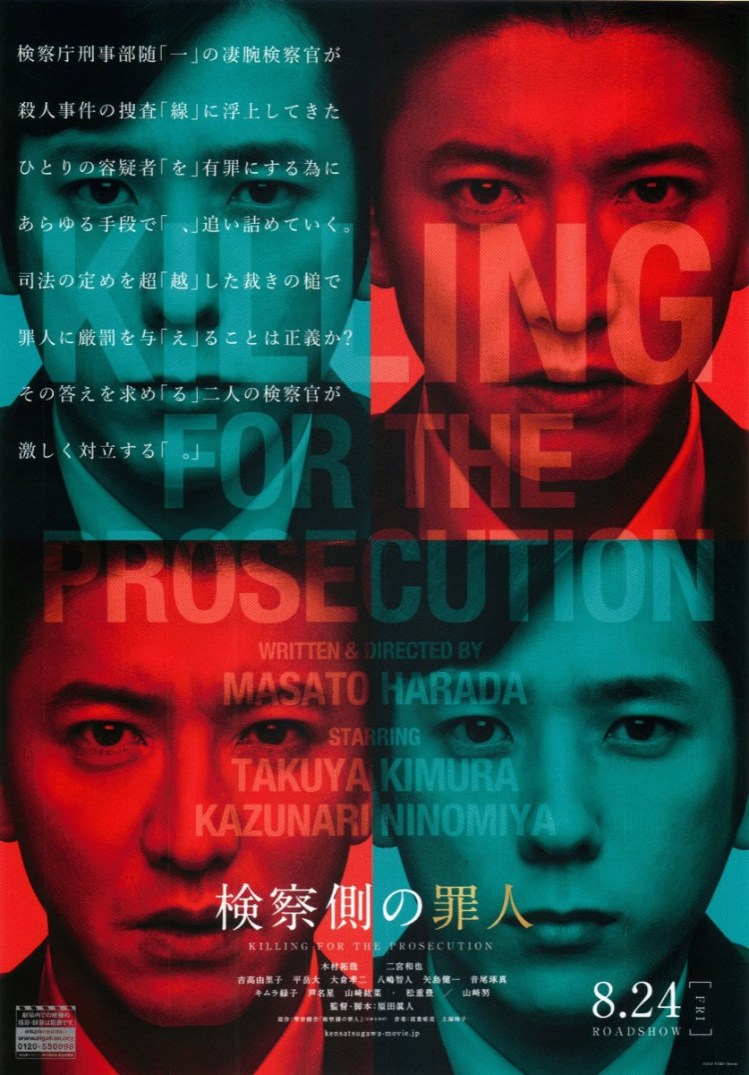
Killing for the Prosecution (検察側の罪人, Masato Harada, 2018)

Killing for the Prosecution posterThe vagaries of the Japanese legal system have become a persistent preoccupation for anxious filmmakers keen to interrogate the continuing rightward shift of the contemporary society. Stretching right back into the post-war world, filmmakers from Yoji Yamada and Yoshitaro Nomura to the more contemporary Masayuki Suo and Gen Takahashi all had their questions to ask about the courts system before Hirokazu Koreeda pushed the dialogue in a slightly different direction with the probing The Third Murder. Killing for the Prosecution (検察側の罪人, Kensatsugawa no Zainin) picks up Koreeda’s baton and brings with it all the baggage of the aforementioned films in asking similar questions about the nature of justice and most particularly within the context of Japan under the conservative government of Shinzo Abe.

In the contemporary era, rookie prosector Okino (Kazunari Ninomiya) gets a prime Tokyo job working for his mentor Mogami (Takuya Kimura) which begins with investigating a bloody double murder of an elderly couple who were apparently running an illicit side business in usurious loans. The suspect list includes a series of shady characters, but one catches Mogami’s eye – Matsukura (Yoshi Sako), a man arrested and subsequently released in relation to a brutal murder of a school girl Mogami had known and liked while he was a student. Unable to let the case rest, Mogami finds himself fixated on the idea of nailing Matsukura for the pensioner murder in order to get justice for the previous killing which has now passed the statute of limitations.

Meanwhile, Mogami himself is also embroiled in a conspiracy surrounding an old friend, Tanno (Takehiro Hira), now a senator accused of corruption. Harada opens with a brief prologue set during Okino’s final pre-graduation briefing in which Mogami offers a somewhat cynical lecture on the role of the prosecution and the nature of justice. Like the lawyers at the centre of The Third Murder, he is keen to emphasise that the truth is rarely relevant in the face of the law and that justice is a game won by constructing impenetrable narrative. He insists that “there is no such thing as rain which washes away guilt”. Yet his love of justice is so fierce that he collects and displays gavels – a complicated symbol seeing as Japan doesn’t use them but like many other countries has internalised an association with them thanks to American movies.

America, in itself, becomes a complicated facet of Mogami’s judicial confusion as he finds himself pulled between left and right. In his meetings with Tanno, we originally find him complicit with the regime, presumably acting to protect his friend and thereby enabling his corruption but we later come to realise that the opposite is true – that the pair of them are complicit in the system in order to undermine it. Tanno, apparently disillusioned with right wing politics and committed to pacifist ideals, attempted to blow the whistle on systemic political corruption and has been hung out to dry. Lamenting that there is no press freedom in Japan, he has been unsuccessful in his attempts to frustrate a persistent shift towards remilitarisation (apparently hastened by his own wife who has embarrassingly enough been photographed at a neo-nazi rally) but coldly cuts off Mogami’s offer of further assistance by reminding him that he too is “part of the system”.

Mogami goes rogue, but he does so more for reasons of personal vengeance than pursuit of justice. Desperate to nail Matsukura he begins to bend his narrative while his earnest rookie underling, Okino, remains conflicted about his boss’ increasingly suspicious behaviour. Yet the possibility remains, if Matsukura didn’t do it someone else did. If Mogami has Matsukura pay for this crime rather than another one, perhaps a kind of justice is served but a dangerous man would still be out there. In the end, Mogami transgresses in pursuit of his own kind of justice becoming the kind of “criminal” prosecutor he cautioned Okino against becoming in his already cynical opening speech.

That aside, Mogami ties his crimes to a long history of injustice and oppression in allusion to his grandfather’s accidental survival of the battle of Imphal thanks to a kind of purgatorial space known as “Hotel Tanang” to which he returns in an oddly surreal dream sequence which places himself and Tanno as descendants of men who refused to die for oppressive imperialistic concerns. The “Skeleton Road” buys him an uneasy alliance with a genial yakuza (Yutaka Matsushige) who provides another source of temptation to turn to the dark side, but the question he seems to be left with is whether it’s acceptable to pursue one’s own kind of justice in the knowledge that the justice system is inherently corrupt.

Okino, who might ordinarily be our hero, seems to say no but lacks the courage to resist – unlike his steadfast assistant, Saho (Yuriko Yoshitaka), who is combating injustice in her own though perhaps no more ethical (and still less than altruistic) ways. “People die, things break, all the same”, Matsukura rambles as if to lay bare the film’s nihilistic leanings as it points out a litany of seemingly irreparable social ills. Mogami breaks cover for an instant when meeting with a police officer after overhearing a woman trying to press a rape charge and being rebuffed, stopping briefly on his way out to encourage her to keep pressing her case in solidarity with her solitary quest against a seemingly impenetrable wall of indifference, while the mild foreshadowing of a contemporary preoccupation about what to do with the problem of elderly drivers in an ageing society becomes an odd kind of punchline in a bleak existential joke. Dark and cynical, Killing for the Prosecution sees little cause for hope in the increasing murkiness of its constantly declining moral universe, finding release only in its final, frustrated scream.


Original trailer (no subtitles)

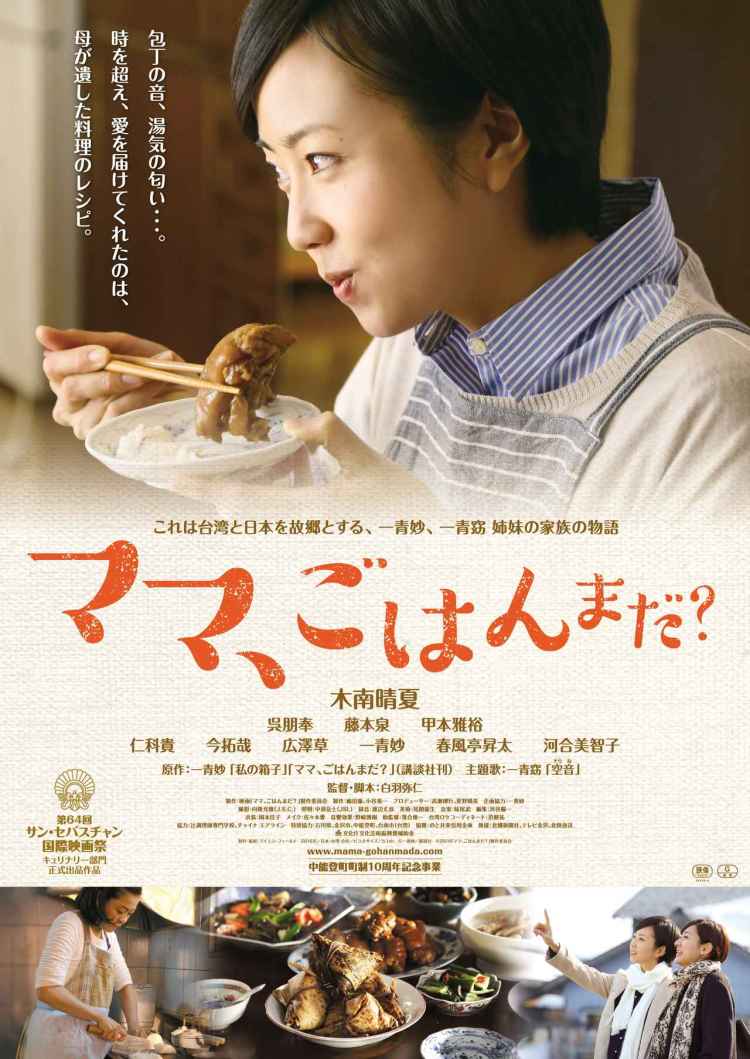
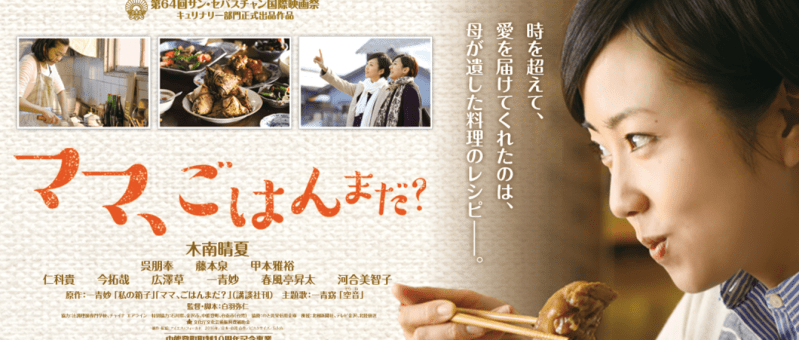
What’s For Dinner, Mom? (ママ、ごはんまだ?, Mitsuhito Shiraha, 2016)

What's for Dinner Mom posterJapanese cinema has a preoccupation with mothers and the nature of motherhood, but the mothers of the typical “hahamono” tend to be either saintly, self sacrificing figures whose selfless love often goes unrecognised, or problematic matriarchs whose fierce love and desire to protect their children has caused them to transgress and perhaps lose their children’s love. The mother at the centre of What’s For Dinner, Mom? (ママ、ごはんまだ?, Mama, Gohan Mada?) falls into a more realistic category – loving, self sacrificing, imperfect and perhaps sometimes misunderstood but always doing the best for her two daughters even in difficult circumstances. Where What’s For Dinner, Mom? differs from the accepted pattern is in its use of the domestic world to ask questions about culture and identity, and about all the various ways one never quite knows one’s family.

Tae (Haruka Kinami) and Yo (Izumi Fujimoto), sisters and now middle-aged women, are preparing to clear their family home 20 years after the death of their mother (Michiko Kawai). What’s taken them so long to make the decision is never revealed but both are as happy as possible about the idea and it seems Tae and her husband plan to knock the house down and build their own on the same plot – not quite so radical a thing as it might sound, Japan has no real housing market and “modern” houses are often knocked down and rebuilt every 20 to 30 years. Whilst packing things away, Tae finds a small box full of her mother’s keepsakes – chiefly letters and photographs along with a handwritten recipe book she began keeping in 1972.

Though Tae has lived in Japan for all her adult life, she was born in Taiwan and is half Taiwanese. Tae’s father passed away from lung cancer when she was small, but was a depressed, sometimes difficult man with ambivalent feelings towards his home nation. His own family had come from the mainland, but he’d lived in Taiwan under Japanese rule and attended university in Japan. He felt himself to be Japanese and was constantly upset and angry about the turbulent political situation of the post-war nation, facing its own series of identity crises and a protracted period of oppressive martial law.

Nevertheless, after their unpredictable whirlwind romance, Tae’s mother Kazue moved to Taiwan to live with her husband’s family and became determined to adapt to the local culture – chiefly through food. After her husband died in Japan, Kazue kept Taiwan alive for her daughters through continuing to cook the dishes she’d learned from her friends and family in Taiwan (even though her intensely “Japanese” husband only ever wanted to eat yudofu). Though Tae at one point urged to her mother to stop cooking Taiwanese and give her stereotypically cute high school bento, she quickly realised her mistake and Kazue’s unusual Taiwanese cooking became a local hit (even boosting the availability of the previously unobtainable pig’s trotters).

Despite her love of the food, Tae has all but forgotten her Taiwanese roots since her mother’s death and doesn’t know how to cook any of the dishes herself. Tae’s mild identity crisis comes to the fore in the second half of the film, though it’s an oddly under developed plot strand given the centrality of the cuisine. When she eventually makes the decision to visit her father’s remaining family, Tae seems to understand Taiwanese Mandarin but usually replies in Japanese (her uncle, accompanying her, is fluent). Like Kazue’s diary, Tae’s reminiscences are accompanied by on screen intertitles written in Chinese characters drawn childishly (even the characters which are identical to those used in Japanese are somewhat awkwardly rendered), which points to a kind of duality but is never really resolved even if Tae is able to explain a strange childhood memory and bring a piece of her past home with her.

Through her food odyssey and return to source, Tae is able to appreciate her mother’s love and sacrifice from an adult perspective, no longer left with teenage resentment and unfair anger over her early death but reclaiming her happy memories and appreciating the hardship her mother must have faced as a single mother in pre-bubble Japan. Despite its warm and fuzzy tone, What’s For Dinner, Mom? occasionally seems as if it wants to do something bigger by briefly introducing larger themes – Tae’s father’s depression, illness, the difficult political situation of post-war Taiwan, and the complex interplay between the two nations, but is content to settle back into a comforting “hahamono” tale of selfless motherhood finally appreciated only when it’s too late. Nevertheless it does what it set out to do in telling the story of a warm and loving family anchored by a kind yet determined woman and tables full of wholesome home cooking offered with an open, internationalist, heart.


Original trailer (English subtitles)
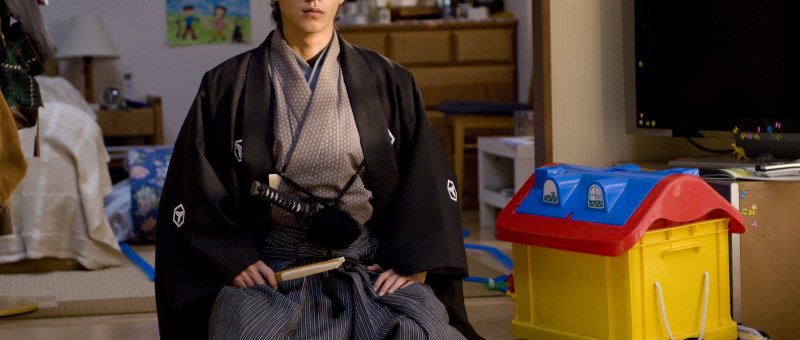
A Boy and His Samurai (ちょんまげぷりん, Yoshihiro Nakamura, 2010)

Boy and his samurai poster 1Edo/Tokyo – what difference can a name make? A lot, it seems, but then perhaps not so much as you’d think. “Edo” was the seat of power in Japan from 1603 until it was renamed “Tokyo” during the Meiji Restoration, heralding a brand new era of modernity following more than 200 years of self-imposed isolation. Logically, there must have been people who went to sleep in Edo and woke up in Tokyo, but most of them didn’t nap for nearly 200 years. The hero of A Boy and his Samurai (ちょんまげぷりん, Chonmage Purin) didn’t exactly nap either, but he’s fetched up 200 years in the future, which, you have to admit, is very disorientating.

Divorced single mother Hiroko (Rie Tomosaka) is late getting her 6-year-old son Tomoya (Fuku Suzuki) out of the house and on his way to school so she’s less than interested when he suddenly stops in the street to stare at a severe man in samurai dress standing outside a supermarket. Assuming it’s some kind of advertising stunt, Hiroko drags her son away, but the man turns up again later wandering around their apartment block and seemingly very confused. Hiroko tries to help him, but he is extremely rude and intimidating, eventually demanding to be taken back to her apartment almost at sword point. Nevertheless, once everyone has figured out the man, who says his name is Kijima Yasube (Ryo Nishikido) and he’s a samurai retainer, is either quite mad or a time traveller, the trio being living together and trying to bridge their very different social values.

Those values have obviously changed a lot, but in many ways not enough. Hiroko has a regular job at an advertising agency but is disrespected by some of her colleagues because she can’t work overtime and has to leave early to make sure someone picks up Tomoya. We learn that the reason she divorced her husband two years ago is that while he pretended to be modern and progressive, he was unwilling to share his portion of the domestic burden and secretly wanted his wife to quit work and look after the house despite superficially encouraging her with her career. Hiroko figured it made no difference if he was around or not, so she left him and took Tomoya with her. Hiroko likes her job, but working also reinforces her individual identity (even if blending into the corporate) aside from that of wife and mother which has all too often been all that a woman is in a rigid and conformist society.

Indeed, when Yasube first arrives he adopts a superior tone and refers to Hiroko only as “woman”, viewing her as necessarily inferior by reason of sex while also reasserting himself as a samurai communicating with someone he assumes to be of the lower orders. Yasube is stunned to learn that Hiroko has a surname – a reminder that those of the lower orders did not (officially) have surnames until the Meiji Restoration. He now thinks she must be very noble, adopts a suitably humble tone, and resigns himself to accepting her hospitality in the absence of other options. He can’t get his head around her family situation or process the various motions towards sexual equality the modern world has produced. To him women manage the house and men protect it from outside. He finds Hiroko’s desire for independence strange and this new world uncivilised.

Nevertheless, he decides to give the Tokyo way a go by stepping briefly beyond himself – in return for room and board, he’ll effectively become Hiroko’s “wife”, managing all the domestic chores while she concentrates on her career. Yasube finds a strange affinity for domesticity, quickly getting to grips with white goods and taking recipe notes from cooking TV (to write them down with ink and a brush using classical Japanese script). Despite never tasting them before, he finds himself a natural baker providing sweet treats for all. However, Hiroko perhaps disappoints herself by accidentally slipping into the role of workaholic salaryman, suddenly embracing the art of overtime and leaving everything at home in the capable hands of Yasube without really considering his feelings even if he never seems to resent it.

Trouble brews when Yasube gets the opportunity to build a career of his own as a pastry chef. Hiroko, true to her word, is encouraging and obviously wants to give him the opportunity to fulfil himself, but the same situation recurs – Yasube becomes obsessed with his professional development leaving little Tomoya brokenhearted and missing his surrogate dad. The problem isn’t so much gender roles as a reluctance to fully commit by agreeing to share domestic responsibilities equally in recognition of equal commitment to a mutual endeavour. Then again, Yasube disappoints – his Edo ethics reassert themselves. he answers Hiroko’s pleas that he spend more time with Tomoya by suggesting she quit her job so he won’t be lonely while his wages can support them as a family. He thinks he’s saying something nice, confirming his loyalty to them as a father figure who will protect and provide, but it’s the wrong the thing to say and only goes to show that his “ancient” way of thinking is sadly not quite archaic enough.

Likewise, his old-fashioned parenting style of fatherly authority advanced with shouts and stares would likely not be approved by most today but it does uncomfortably seem to be accepted by the film, as if Tomoya needs male parental input rather than just benefiting from having a mum who’s less tired and stressed out for having someone to share her life with. He does, however, soften on exposure to Tokyo liberality, willingly embracing modern equalities in realising that there’s nothing wrong with a man supporting a woman and a child in ways other than the financial even if he eventually goes back on it when presented with the opportunity to reassert his male pride as a provider, declaring that domestic matters “no longer concern” him now that he has “other duties”. “Tokyo” still has a ways to go (where doesn’t?), but it’s moving in the right direction even if there are some who are content to be slow in catching up.


Original trailer compilation (no subtitles)

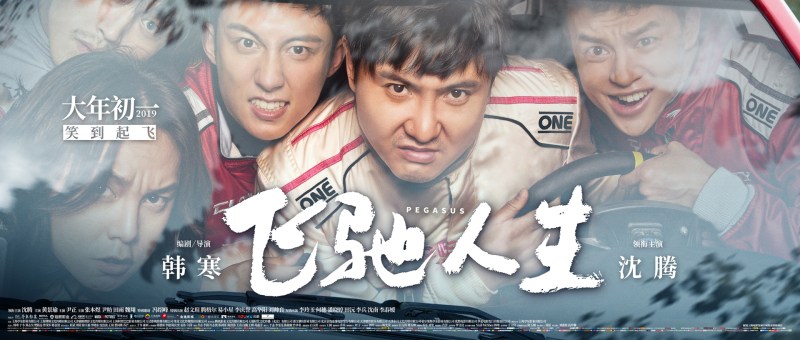
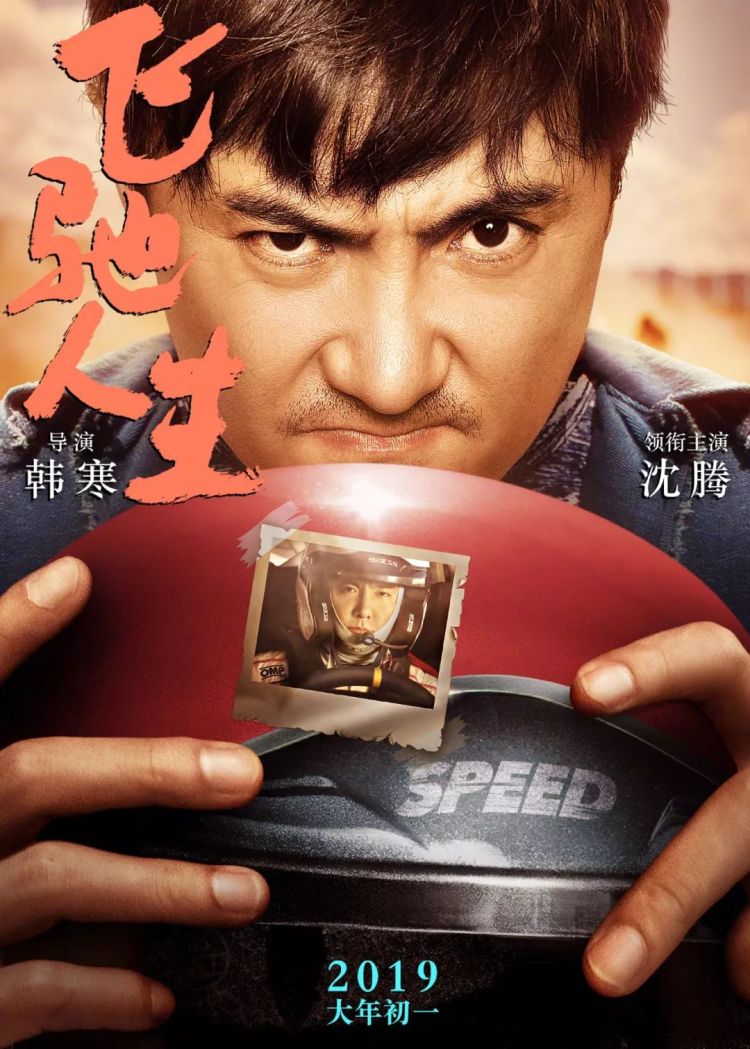
Pegasus (飞驰人生, Han Han, 2019)

Pegasus poster 1Traditionally speaking, New Year has often been a time for reconsidering one’s life choices, but can it ever really be too late to make up for past mistakes and charge ahead into a better future? The hero of Han Han’s New Year racing drama Pegasus (飞驰人生, Fēichí Rénshēng) is determined to find out as he tries to bounce back from disgrace and failure to prove to his young son that he was once a great man and not quite the hangdog loser he might at first seem. His battle, however, will be a tough one even with his best guys by his side.

Zheng Chi (Shen Teng) dreamed of racing glory and won it. He was a champion, the face on billboards across China, but a minor scandal put paid to his success and his driving and racing licenses have been suspended for the last five years during which time he’s been humbled and lived a workaday life as a fried rice stall vendor raising a young son alone. Now that his suspension is up for reconsideration, he’s beginning to wonder if he might be able to return to his rightful place at the centre of the podium but he’ll have to eat a considerable amount of humble pie if he’s to convince anyone that he’s a person worthy of respect now that he has nothing.

Director Han Han is, among other things, also a rally driver himself though his positioning of the sport within his tale of middle-aged loserdom is a slightly awkward fit. Racing is an expensive hobby, it quite literally relies on the involvement of those who have vast resources of disposable cash they can use to sponsor drivers so they can improve their equipment. Though a driver’s skill, and their relationship with a co-driver, are not insignificant parts of the equation, it is nevertheless true that money rules all when it comes to buying advantage (perhaps much like life).

Chi’s problem isn’t just his age, but that he’s up against extremely rich young guys with inherited wealth like his rival Zhengdong (Huang Jingyu) – a pretty boy with celebrity following and seemingly infinite resources. Han sets Chi’s struggle up as one of the chastened everyman – someone who came from nothing and made it only to crash and burn but still has the desire to get up and try again. He struggles on through various obstacles including bribing a driving instructor to get his licence back and charming a suspension board into letting him back in the game but discovers that friendships formed when successful might not survive a fall from grace. He can’t get the same kind of access as he could when he was riding high and no amount of chutzpah will make up for the disadvantage incurred through not having the kind of wealth that enables Zhengdong’s ongoing rise to glory.

Nevertheless, perhaps Zhengdong is simply a realist when he advises those looking for absolute fairness not to bother getting involved with racing. He’s not a bad guy, if somewhat insecure in feeling as if his own success has been enabled only by Chi’s fall from grace and perhaps he wouldn’t be top of the podium if the best driver hadn’t been hounded off the track. What we’re left with is an awkward admission that what makes the difference is men like Zhengdong deciding to feel philanthropic, though in this case he does so out of a sense of sportsmanship and a not entirely altruistic desire to prove himself by ensuring the participation of a worthy rival. Given this boost, Chi’s quest necessarily leaves the realm of the everyday loser and returns to the rarefied one of success enabled by privilege.

The final messages are also somewhat ambivalent in their death or glory, live full throttle intensity as Chi’s lectures on driving become lectures about life, affirming that those who win are the ones who drive fastest while making the fewest mistakes. Chi is not unencumbered, he has his son and therefore a responsibility to another which is sometimes forgotten in his own quest for glory which, we are reminded, carries risk and danger. Perhaps what we’re asked is if the gentle pleasures of a simple life selling fried rice for decades are worth giving up the hyper acceleration of a life measured in seconds following a dream. Chi might have found his answer, but it comes at a cost and he’s not the only one who’ll be paying it. As New Year messages go, it’s a decidedly mixed one which might not offer much positivity for the average middle-aged loser longing to relive their glory days in service of a dream which might long have flickered out in an increasingly unequal society.


Currently on limited release in UK cinemas.

Original trailer (English subtitles)
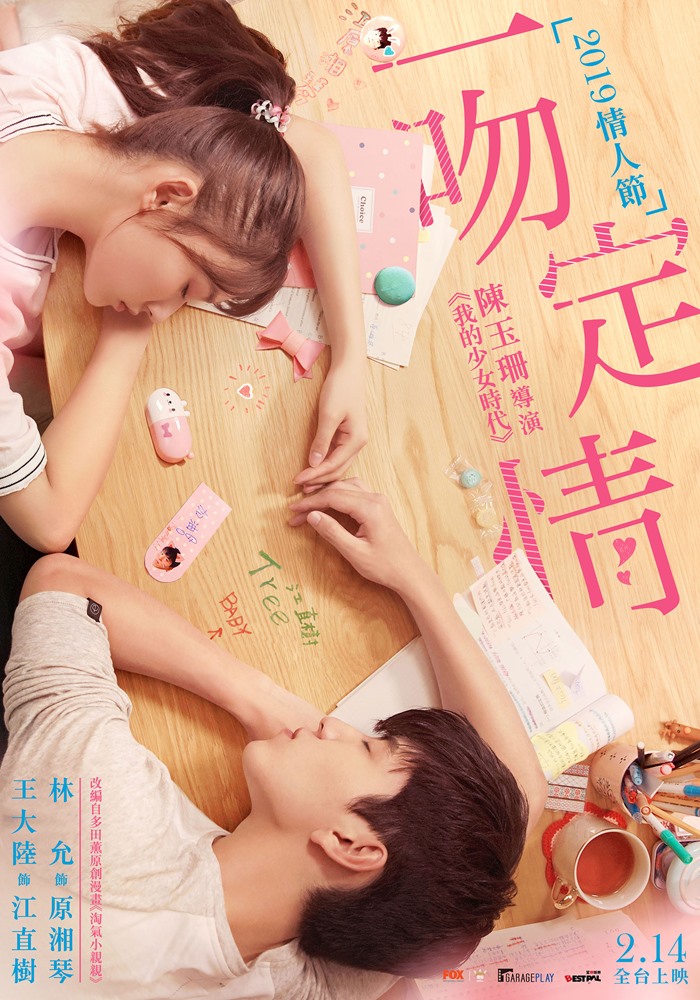
Fall in Love at First Kiss (一吻定情, Frankie Chen, 2019)

Fall in love at first kiss poster 2Our Times’ Frankie Chen Yu-Shan returns to the tricky world of high school romance with an adaptation of the perennially popular ‘90s manga, Itazurana Kiss. Fall in Love at First Kiss (一吻定情, Yī Wěn Dìngqíng) is in fact the third time the manga has been adapted in Taiwan following a hit 2005 TV drama and a remake in 2016. Updated for the present day, Chen’s adaptation retains the manga’s trademark zany humour and often questionable approach to romance but imbues it with characteristic warmth and mild social commentary.

Our heroine, Xiangqin (Jelly Lin Yun), falls hopelessly in love with high school superstar Jiang Zhishu (Darren Wang Talu) when she accidentally trips and kisses him on her first day. Zhishu is, however, somewhat untouchable to a Class F no hoper like Xiangqin – Class A students like him have their very own building inaccessible to those without the proper credentials. Despite outsmarting the system in order to hand him her letter of confession, Xiangqin is cruelly rejected with a video of Zhishu’s cool response going viral among her friends. However, when Xiangqin’s house is demolished thanks to an extremely localised earthquake, she finds herself moving into Zhishu’s family home (it turns out their dads are old friends) where she might perhaps be able to get to know him better.

Like the original manga, Fall in Love at First Kiss revolves around Xiangqin’s lovelorn existence as she becomes increasingly obsessed with her apparently unrequited love for the sullen Zhishu whose behaviour is often hard to read. Zhishu’s mother (Christy Chung), a highlight of any adaptation, is a woman much like Xiangqin which is to say extremely cute and cheerful. Having long wanted a daughter she is delighted to have Xiangqin move in with the family and is virtually painting a nursery in the hope that Xiangqin and Zhishu might one day end up together. This is however partly because she knows both her sons are objectively awful – a pair of self-centred, emotionless hyper rationalists and overachievers who might be popular thanks to their successes but have few friends owing to not being very nice. She hopes some of Xiangqin’s unsophisticated cheerfulness might help open them up to the pleasures of being alive.

Zhishu, however, blows hot and cold. He ignores Xiangqin’s attentions until the point she vows to move on, at which time he kisses her to prove that despite everything he is still the sun in her mad little solar system. This is obviously not a very healthy relationship dynamic even as it insists that Zhishu’s arrogance is part of his “cool” rather than a symptom of his insecurity. Even his final declaration of love is shot through with “you know you want me” logic rather than a heartfelt explanation of his reasoning for having been so cavalier Xiangqin’s feelings. Nevertheless, like every other “difficult” romantic hero, we eventually discover that Zhishu is just awkward rather than actually cruel as he finds himself continually conflicted in wanting to be nice to people but somehow thinking it would be inappropriate to do so.

This is largely because he and his brother are snobbish elitists who’ve been led to believe that social inequality is the proper order of things. Xiangqin, a proud Class F sort of girl, wants to show him that they are all “on the same page”, equals despite what the “rankings” might say. Nevertheless she does this in a rather odd way by remaining deferent to his supposedly admirable qualities and following him around despite his constant rejections. In any case, Zhishu’s class conflict is at the heart of his emotional repression as he struggles with his filial duty to inherit his father’s company when what he’d really like to do is become a doctor to be able to help people – a choice he doesn’t quite feel he has the freedom to make and one which feels too warm and fuzzy for the ultra-capitalist, success at all costs philosophy he seems to have been brought up with by everyone except his cheerful mother. 

Sadly Zhishu does not undergo much of a humbling and remains annoyingly successful and prince-like, while Xiaoqing does not suddenly discover her own worth or another purpose in life, but they do perhaps begin to find happiness in acknowledging their fated connection. Chen keeps the increasingly absurd action grounded as time moves on at frantic pace from high school first love to awkward grown up confession but manages to find the sweetness in a sometimes problematic romance as her lovestruck heroine does not much of anything at all other than remain true to herself in order to win her man.


Currently on limited release in UK cinemas.

Original trailer (English subtitles)
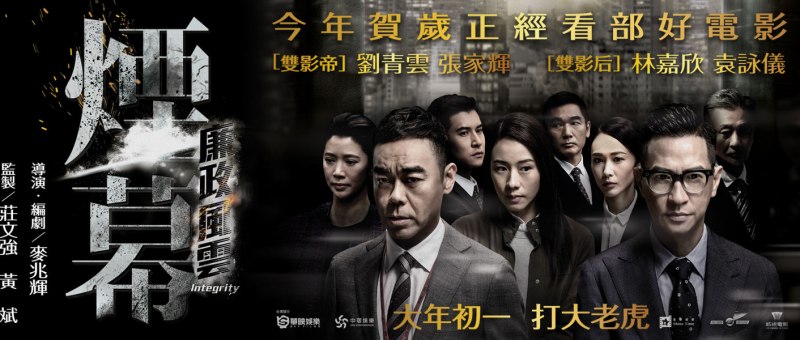
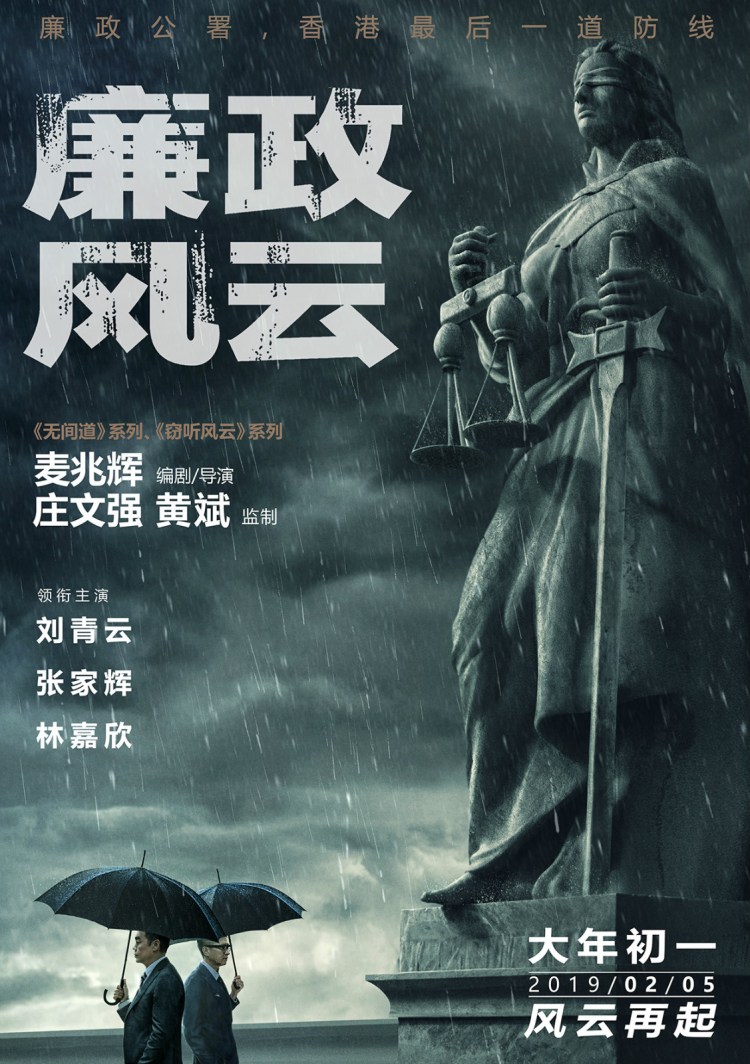
Integrity (廉政風雲 煙幕, Alan Mak, 2019)

Integrity poster 1Alan Mak made his name with the phenomenally successful Infernal Affairs (co-directing with Andrew Lau) which later blossomed into a trilogy – a pattern he repeated with the Overheard series, making time for a few standalones in between. 2019’s Integrity (廉政風雲 煙幕), released as gritty alternative to the saccharine and silly fare usually on offer for Lunar New Year, finds him in similar territory and is once again touted as the first in a projected trilogy this time revolving around the ICAC who have become a Hong Kong movie favourite as of late. Drawing inspiration from classic ‘70s thrillers and American New Cinema, Integrity has a few questions to ask about the nature of corruption and the limits of control.

The drama begins with ICAC officer King (Sean Lau Ching-wan) briefing star witness Jack Hui (Nick Cheung Ka-fai) on their upcoming court case. Shortly after Jack has handed over a USB stick containing new evidence, he slips his protective detail and disappears leaving King’s case with a giant hole in the middle, especially considering one of the two defendants has also skipped town. Given a seven day recess, King reluctantly allows his wife, fellow ICAC officer Shirley (Karena Lam), to travel to Sydney to chase Jack while pressing his available leads in the form of defendant two and the rest of the USB stick.

Eschewing action in favour of intricately plotted conspiracy, Mak keeps the tension high as he slowly reveals the ambiguities of the case, reminding us that no one is quite as innocent as we might assume. We find out the relationship between Jack and King (pregnant names indeed) may not have been as straightforward as we first assumed while we’re also made aware of the extremely lucrative trade in black market cigarettes and the backhanders to the customs bureau that make it possible. Then again we have to ask ourselves why it is a top accountant like Jack might suddenly decide to turn whistleblower when he’s been perfectly content with his complicity in corruption for the last 20 years.

King is intent on catching “The Puppet Master” by following their financial trail, convinced that taking down the middlemen in the tobacco smuggling scam will eventually flush them out. He thinks he holds all the cards but isn’t quite aware what game it is he’s playing. Desperate to catch his quarry, King is in danger of crossing the line as he convinces defendant two to tell all by (falsely) promising her immunity as a prosecution witness. She eventually spills the beans, but warns him that people will die – something that tragically comes to pass when the Puppet Master starts taking care of loose ends.

Obsessed as he is, King isn’t quite sure he cares who might get hurt in his quest for justice. Then again, King’s need to catch the bad guy, as his boss (Alex Fong) tries to point out as kindly as possible, is a kind of displacement activity designed to get his mojo back so he can patch things up with his put-upon wife. Despite talk of divorce, the pair are still wearing their wedding rings and have romantic photos as their smartphone wallpaper while they continue to bicker (somewhat) affectionately via text message. The awkward romantic subplot is most likely intended to set up a series motif though it seems wholly out of place with Mak’s more serious themes, especially when tipping into unwelcome clichés such as Shirley’s impromptu shopping trips paid for with King’s card when she gets fed up with his persistent sexism.

The central theme of King’s own fracturing “integrity” gets lost in the shuffle but is dealt a killer blow by the extremely unwise ‘90s flashback and its eventual ‘80s counterpart which undercut almost everything that’s gone before, creating a series of inconvenient plot holes in the process. Mak isn’t quite sure where he wants to go and presents us with a series of trick endings, the final of which is a step too far even if it perhaps plays into his themes of karmic justice and the costs of betrayal (not to mention making it 100% clear for the mainland censors’ board that crime never pays). Though managing to nail the the tense ‘70s conspiracy thriller vibe in its early stretches Integrity’s ridiculous third act plot twists ruin an otherwise promising tale of greed and suspicion while perhaps reinforcing the idea that no one can be trusted and all connections are, to a point at least, mercenary.


Currently on limited release in UK cinemas.

Original trailer (English subtitles)
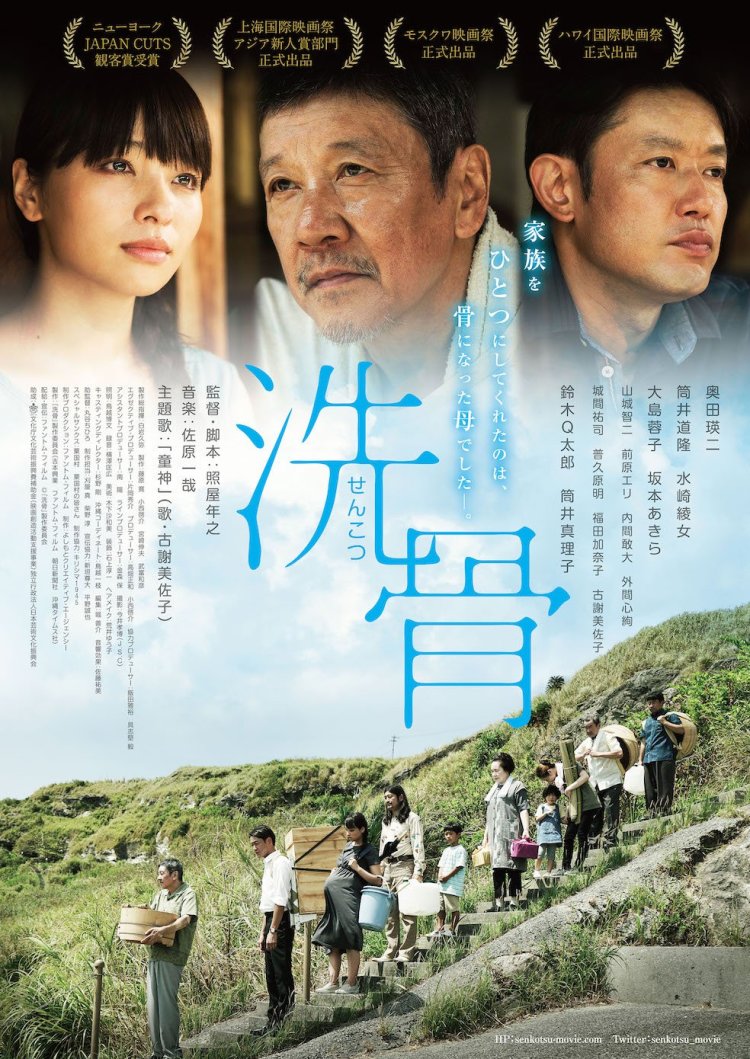
Born Bone Born (洗骨, Toshiyuki Teruya, 2018)

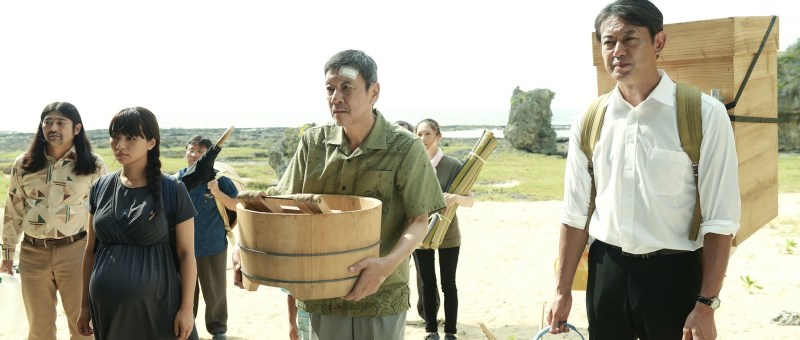
Bone Born Bone poster“Is this really Japan?!” asks the bemused boyfriend of the protagonist of Born Bone Born (洗骨, Senkotsu), only to be met with the reply “on paper, at least”. Comedian Toshiyuki Teruya, better known as Gori, returns to his native Okinawa for his second feature but to an island culture of which he was completely unaware. Aguni is one of the last on which the ancient ritual of “Senkotsu” or “bone washing” still takes place.

Beloved matriarch Emiko (Mariko Tsutsui) died four years ago. Now the time for her “senkotsu” is approaching. Daughter Yuko (Ayame Misaki) has come home, but with a secret. She is heavily pregnant and as yet unmarried, a fact she knows will scandalise the still conservative island community. Meanwhile, her her father Nobutsuna (Eiji Okuda) has retreated into drunken reverie, unable to accept his wife’s death or the many disappointments of his life. Yuko is waiting for her brother, Tsuyoshi (Michitaka Tsutsui), to arrive before explaining any further about the baby, but he even he is much less supportive than she hoped he might be and seems to be dealing with some troubles of his own which might explain why his wife and daughter have not accompanied him on this very difficult family occasion.

The island of Aguni practices open air burial, which is to say the bodies are enclosed in a wooden coffin and entombed in cave. Four years later the relatives return, retrieve the body and wash the bones before re-enclosing them in a smaller casket which will then be interred on the island’s “other world”. It is, of course, a difficult and frightening prospect to consider seeing one’s loved ones in such an altered state – so much so that many cannot bear to do it without getting roaring drunk which at least ameliorates the solemnity of the occasion. The human terror is in a sense the point as an exercise not only in memento mori but in acceptance of total loss and the finality of the physical.

Before all that, however, you still have to live and the Shinjos are having a fairly hard time of it. A small island somewhat trapped in the past, Aguni is intensely conservative and so the local old ladies can’t get their heads around Yuko’s unwed pregnancy. Yuko of course knew this would be the case but could hardly refuse to come and has braced herself for the worst of it. However, after the initial shock has worn off, she finds an unexpected ally in her stern aunt Nobuko (Yoko Ohshima) who assures her that if she finds it hard to raise the child on her own she can always come back to the island where she and Nobuko’s daughter will help if needed. Her father Nobutsuna, in boozy fog as he is, is also broadly supportive even if her brother shows little sign of coming round, engaging in unexpected small town conservatism as he accuses his little sister not only of shaming the family but of becoming a burden on it too.

In a motif that will be repeated, it’s the men who struggle to cope with loss while the women get on with life with stoicism and fortitude. Nobutsuna has remained unable to come to terms with Emiko’s death, drinking himself into oblivion while blaming himself for placing undue strain on her after their family business went bust. Nevertheless he is a good hearted man who wants the best for everyone even if his mild-mannered deference has Tsuyoshi sniping at the sidelines for his supposed fecklessness. He too blames his father for his mother’s death, but is also struggling with the elders’ expectation that he will return home to the island to take over as head of the family while there is evidently something else going on in his life which has left him irritable and judgemental.

If nothing else the Senkotsu ritual forces each of them to accept the fact of Emiko’s death, but also of her life and their own place within a great chain of humanity stretching both forward and back. In a sense, as Tsuyoshi puts it, it’s their own bones they’re washing in honour of the undying part of Emiko that exists in all of them and something of her kindly spirit certainly seems to be present on the beach that day as the family slowly repairs itself, emerging from their deep seated grief back to the friendly island solidarity as they resolve to treasure what they have in acknowledgement of what is to come.


Born Bone Born was screened as part of the 2019 Japan Foundation Touring Film Programme.

Original trailer (no subtitles)

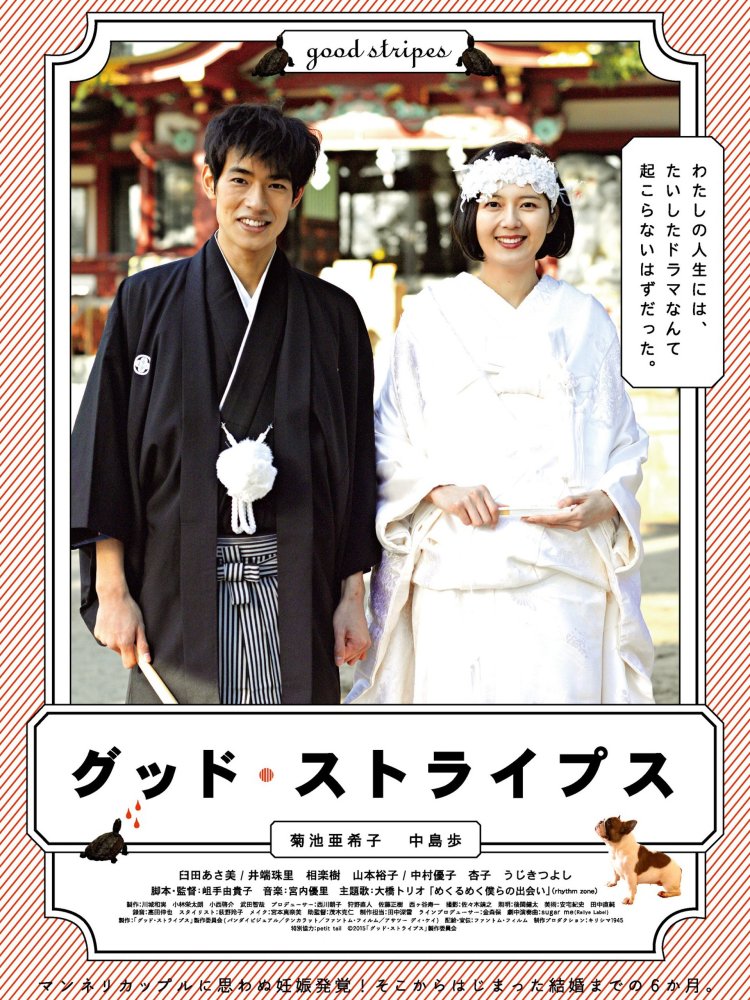
Good Stripes (グッド・ストライプス, Yukiko Sode, 2015)

Good stripes posterThe international media has become somewhat obsessed with the idea of Japan as a land of wilfully lonely singletons who’ve rejected the idea of home and family either in favour of the easier pleasures of one way virtual romance, or simply because a series of economic and social problems have made married life an unaffordable luxury. This is of course an exaggeration, but it is true enough that younger people have more choices which can, in some cases, lead to more worries and confusion. The young couple at the centre of Yukiko Sode’s Good Stripes (グッド・ストライプス) are in this sense a perfect encapsulation of their generation as they find themselves vacillating in the face of an unexpected crisis.

Midori (Akiko Kikuchi) and Masao (Ayumu Nakajima) have been together four years and truth be told the relationship seems to have run its course. Masao is about to jet off to India for three whole months yet Midori hardly seems bothered. While he’s away she stops responding to his messages, leaving him feeling even more isolated and alone so far away from home. Just when it seems the time has come to part, Midori realises she is pregnant, and as she’s already five months gone the most important decision has already been made for them. Wanting to do the “right” thing, Midori and Masao decide to marry and raise their baby in the conventional fashion yet they do so rather reluctantly and with a degree of mutual resentment.

The more we see of Midori and Masao, the more difficult it becomes to figure out how they got together in the first place. He is a typical middle class boy from a professional home (albeit a somewhat atypical one) and she a free spirit who grew up in the countryside. Midori doesn’t fit with Masao’s supercilious friends, one of whom is extremely rude and often makes a point of making fun of her while Masao eventually joins in rather than defend his girlfriend from what is really a little bit more than good natured banter. Reaching their late twenties they’re at the age where most of their friends are settling down, but they remain somewhat diffident, apparently not planning to stay together forever but not quite getting round to breaking up.

Things being the way they are, it’s all a little unplanned which is perhaps why Masao bristles when Midori finally moves into his well appointed apartment. He doesn’t have anywhere to put her things and is unwilling to shift any of his own, claiming putting up additional shelving would disrupt the balance of the room. Inviting someone else into your life must necessarily unbalance it, requiring at least a period of recalibration until a new equilibrium is reached, but Masao’s brief moment of resentment is perhaps understandable as he wrestles with being railroaded into a decision he isn’t sure he wanted to make.

Nevertheless, he tries to make the best of things by keeping quiet to keep the peace. Later when we meet Masao’s strangely “cute” doctor mother, she wonders if she made a mistake in the way that she chose to raise him. Having left Masao’s father when he was only five, she vowed to raise her son to be chivalrous – always carry the bags, be the first to apologise after a fight etc, but now wonders if she taught him to be superficially polite while inwardly seething with repressed anger and terrified of confrontation. Supportive to a point, Masao’s mother is also perhaps a little exasperated by the youngsters’ halfhearted attempt to embrace responsibility while quietly doubtful if they can really stay the course.

A meeting with Midori’s rowdy country family including her “difficult” spinster older sister and the equally free spirited younger one who makes fireworks for a living, proves eye opening for Masao as the only child of a sophisticated home but it’s an unexpected reunion with his own long absent father which eventually sets him on a course towards addressing his feelings of rootlessness and issues with intimacy. Resentful of his circumstances he begins having an affair with a pretty college friend only to come to hate himself during a torrid night in a hotel in which he suddenly realises what he’s getting up to is “all a bit animalistic”. Reconnecting with his father and realising that while they share certain similarities with each other they are all but strangers perhaps allows him to let go of his longstanding issues of abandonment and pursue his own desires which he’s fond of claiming to have abandoned altogether after discovering in childhood that nothing turned out the way he expected.

Midori and Masao may be two people railroaded into a future neither of them is quite sure they wanted, but in the end being forced to deal with a shared crisis does eventually bring them closer together if only in being forced to address their very separate issues both independently and as a couple. “Why take it out on me?” Midori snaps by accident, sensing Masao’s discomfort in dealing with some surprising revelations from his father, before thinking better of it and reverting to a more supportive position but her words do perhaps get through to her conflicted boyfriend even if he only really comes to accept his responsibility when forced to fish her out of a drainage ditch, reassured by her claims that there’s no need to worry because she’s the 100% boring sort of person that nothing ever really happens to. Giggling at the strangeness of it all, the pair vow their commitment to each other in the presence of the god of overcoming obstacles, together at last just as they prepare for their lives to be “unbalanced” all over again.


Good Stripes was screened as part of the 2019 Japan Foundation Touring Film Programme.

Original trailer (no subtitles)