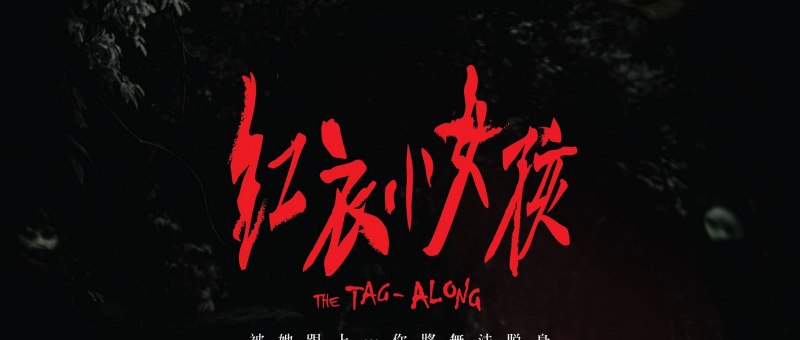
The Tag-Along (紅衣小女孩, Cheng Wei-hao, 2015)

The Tag-Along posterWhy are little girls in red dresses such a frequent figure for fear? From the cheerfully naive little red riding hood and her unavoidable association with unscrupulous wolves to the murderous spectres of Don’t Look Now, we don’t seem to be able to abandon our strange anxiety on seeing little girls incongruously alone and distinctively dressed. A little girl in red became a national meme in Taiwan in 1998 after accidentally photobombing an ordinary family out on a mountain hike, notably appearing behind a family member who later passed away though no one was able to remember having seen the little girl on the day. Truth be told, our little girl in red does not actually feature as much as you’d expect in Cheng Wei-hao’s The Tag-Along (紅衣小女孩, Hóng yī Nǚhái), but she does become the embodiment of the “mosien” – an ancient monster appearing in the form of a child or a monkey who bewitches and feeds on guilt.

Cheng opens in the mountains with an old woman, Shui (Pai Ming-hua), wandering. Shui is subsequently reported missing and much missed by her friend, grumpy grandma Shu-fang (Liu Yin-shang). Everyone seems to be worried that ancient spirits may have dragged her off to the mountains, but Shui does eventually return, albeit not quite as she left. Meanwhile, Shu-fang’s grandson Wei (River Huang) is an overworked real estate agent in a committed five year relationship with radio DJ Yi-chun (Hsu Wei-ning). While Wei is keen to get married and start a family, Yi-chun is not convinced partially for financial reasons but also perhaps because she simply is not ready to give up her individual freedom to become a member of Wei’s family.

Indeed, Yi-chun asks her radio listeners if marriage isn’t “the tomb of love”, but shows no other signs of wanting to break up with Wei only emphasising that she does not envisage marriage as part of her life plan – something later contradicted by a message she scrawled on the back of a photo five years previously. In a touch of disappointing conservatism, The Tag-Along makes Yi-chun its ostensible hero who alone battles against  preternatural horror to reclaim her rightful relationships, but frames her mission as a gradual process towards conforming to conventional social norms in which she learns that her qualms over marrying Wei are nothing more than commitment phobic selfishness and pointless guilty self obsession – something which she needs to abandon in order to fulfil her proper role as a woman by marrying and making a home even if she is also allowed to continue her radio career.

Meanwhile Wei, who has a strong desire to start a family of his own precisely in order to forge his own identity, treats his loving granny with contempt and irritation, eventually mortgaging the family home in order to buy a fancy apartment he hopes will help convince Yi-chun that he has the means to marry. Yi-chun, again, is not convinced partially because she fears Shu-fang may think it was all her idea and use it as evidence of her gold digging. The rot has already set in at home. Shu-fang feels sad for Wei who seems to have lost his parents young but also for the burden he feels himself under because the family lost their money, while Wei resents being shackled to an old woman who still cares for him as if he were a child, nagging him about getting married when she herself is one of the obstacles in its way.

Yet “civilisation” is perhaps the force that each of them are fighting, living as they do in ultramodern, always aspirant Taipei. The mountains represent something older and earthier, filled with atavistic passions and the dark fear of the unknown. One of the more supernaturally inclined elderly residents of Wei’s apartment block speculates that the forest spirits are angry with the encroachment of modernity, that persistent tree cutting has destroyed their natural habitat and sent them into the cities in search of souls to devour like foxes hungry for human suffering. Another forest dweller adds that every time a tree is removed, the spirits steal a body to “plant” in its place in an ironic act of restitution. An encounter with dark nature however sends each of our conflicted souls reeling back to the comforts of urbanity, suddenly no longer quite as afraid of the things which frighten them and now convinced that their salvation lies in each other and in repairing the bonds of the traditional family. Socially conservative as it may be, The Tag-Along’s spectres of moral decay are all too real in the increasingly indifferent city plagued by greed and selfishness where competition is key and human feeling merely an afterthought in a rabidly acquisitive society.


The Tag-Along screened as part of the Taiwan Film Festival UK 2019.

Original trailer (English subtitles)
Four Springs (四个春天, Lu Qingyi, 2018)

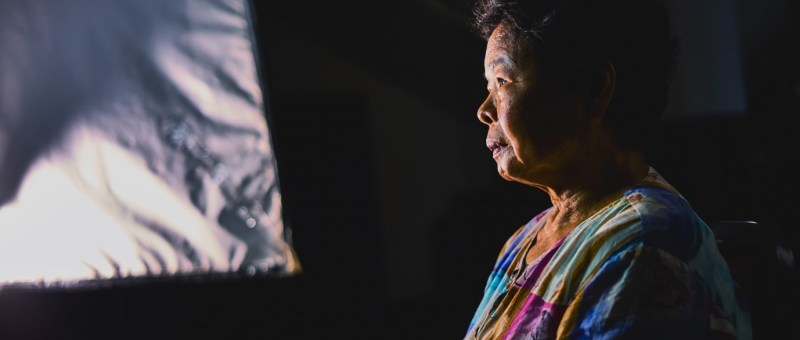
Four Springs poster“Time flies. Life is so short, isn’t it?” a cheerful relative remarks lamenting that the family only comes back together once a year during the first of Lu Qingyi’s Four Springs (四个春天, Sì gè Chūntiān). Rather than follow his family through four seasons for one year, Lu Qingyi observes his ageing parents at yearly intervals as time both moves on and doesn’t delivering joy and sadness in equal measure.

Beginning in the spring of 2013, Lu Qingyi returns home to the remote small town of Dushan where his parents have lived for decades. The family comes together again, if only briefly, to ring in the New Year much as they always have. During the second New Year, Qingyi is joined by his sister Qingwei but there is sadness on the horizon as we discover she is coping with serious illness though the family once again celebrate joyously recalling the past more than dwelling on the future. Subsequent reunions are born both of joy and sorrow as family illnesses take hold, bringing people back together again if only to unite them in sadness and anxiety. Yet life, as always, rolls on just the same.

Briefly including shots of himself, Qingwei focusses on the figures of his parents – retired teacher Yunkun and mother Guixian. Though they must have lived through some turbulent times, the couple are blissfully happy in each other’s company and used to taking pleasure in the simple things such as the swallows which occasionally nest in their roof, or making a new hive for some migratory bees come to visit. The natural world is very much a part of their existence as they make time for hiking out in the mountains, tending graves and enjoying the scenery singing always as they go.

Music, indeed, seems to be an important part of life in Dushan and song is never far away from the lips of of Qingwei’s parents who find themselves humming folk tunes or stretches of traditional opera. Yunkun makes use of his computer to listen to and edit tracks while the rattling of his wife’s manual sewing machine echoes from the next room. Though many things here are “traditional”, the couple are not so much trapped in the past as happy with what they have. Yunkun has embraced his computer, but a later attempt to introduce the couple to smartphones and teach them to use the WeChat app ends in hilarity as they attempt to process the extreme modernity of instant communication.

Technology is both a privilege and a curse, as the family discover one New Year in being deprived of watching the spring gala thanks to an ill timed power cut which also leaves them inside in the cold but perhaps makes the fireworks a little brighter. As the New Year becomes marked by its absences – the empty chairs and increasing silences, technology also provides a path back to happier times through the home videos filmed in previous years by Qingyi and his father which provide a record of ordinary family life both happy and sad in recalling past springs never to come again.

Time itself becomes a theme as it marches on invisibly. Qingyi’s cheerful parents are thankfully in good health, though his mother wishes they could dance again like they did in the old days and worries what will become of the one left behind when the inevitable happens. Nevertheless, the New Year arrives as it always does, preparations are made, too much food is cooked, the family eats, and sings, and remembers. Lu Qingyi’s Four Springs is a touching evocation of the joys and sorrows of being alive in his loving tribute to his goodhearted parents who have learned to find the tiny happinesses in the every day even in the midst of unbearable sadness.


Four Springs screens as part of the eighth season of Chicago’s Asian Pop-Up Cinema on April 7, 2pm & 5pm, at Heritage Museum of Asian Art, 218 West 26th Street.

Original trailer (English subtitles)
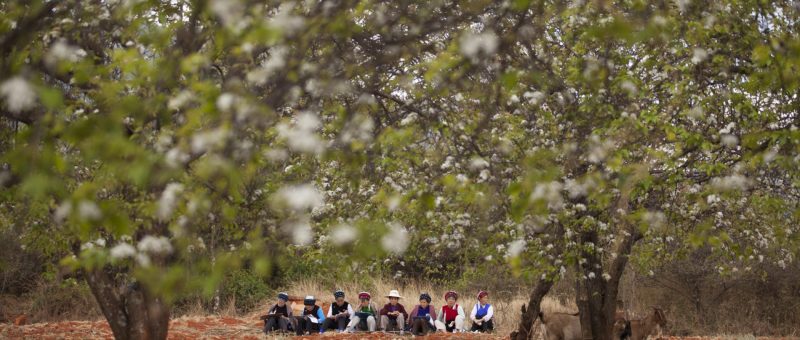
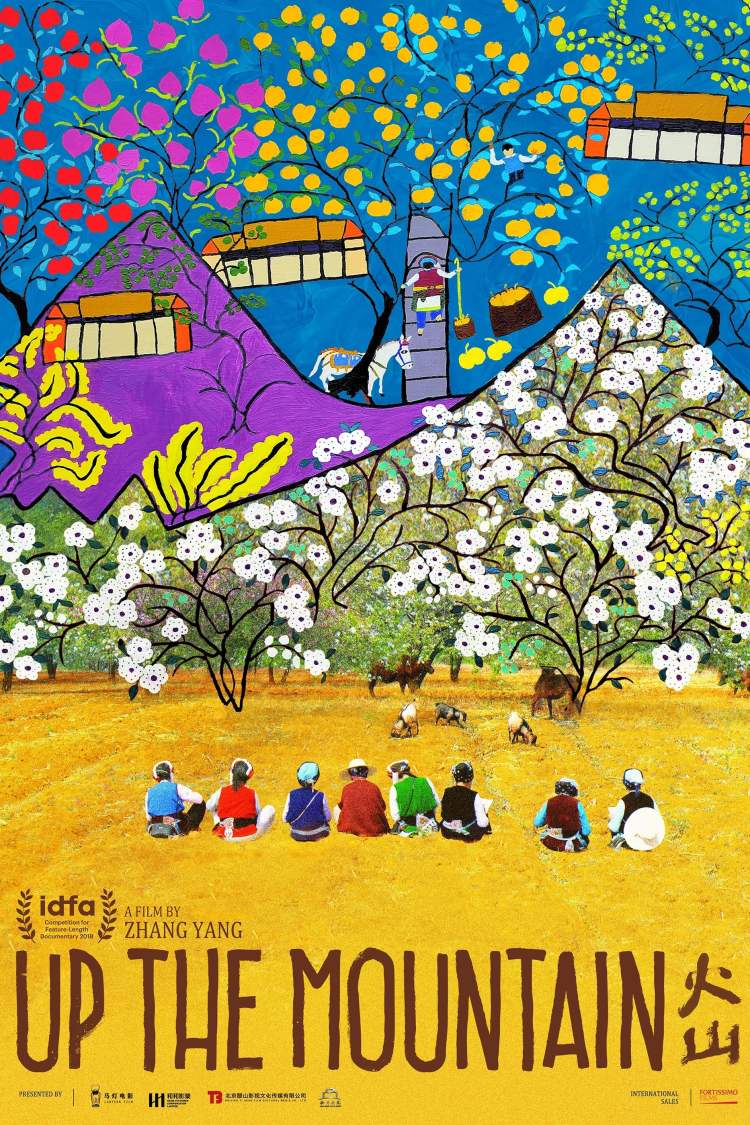
Up the Mountain (火山, Zhang Yang, 2018)

Up the Mountain posterThe story of modern China has often been one of migration as the young find themselves pulled towards the cities, sending their children back to the countryside to be raised by relatives while they earn what they can away from home. As the economic situation improves, however, there may be motion the other way. Successful artist Shen Jianhua moved from the bustling metropolis of Shanghai to a remote mountain village where he practices his art and opens his home to all who have an interest in learning from him.

Shen’s mountain home is an interesting exemplification of a blend of old and new. Though he seems to prefer the simple life, the renovated property is decorated in a modern, though fairly minimalist, style and the family do not appear to want for anything. Their living is not austere and Shen does not object to the idea of modernity, as the toys bought for his baby son seem to testify while his apprentice chats on an iPhone and his teenage daughter listens to music while she runs.

Nevertheless, life in the mountains is lived slowly and there are things which must be done which is why we see apprentice Dinglong continually chopping firewood while the gaggle of old ladies who make up the majority of Shen’s pupils come back and forth with vegetables preparing tasty food to be shared communally by the small family that has grown up around Shen’s art practice. It does not appear that the ladies pay anything for Shen’s instruction or that he draws much of an income for it, but all seem to benefit from a shared sense of creative community. One old lady describes her life before art as “stagnant, like old water”, but now she feels reenergised and happily gives away her finished paintings to her bemused children as something to remember her by when she’s not around.

Not everyone is as happy for the old women as they seem to be for each other, however, as we notice in the persistent discord between one older bickering couple. Dinglong too remains conflicted. Still young, his parents are beginning to pressure him to give up painting and the mountains to settle down. Dinglong, like many young men, doesn’t really want to and so is surprised and dismayed when Shen’s advice is more conservative than he might have expected, encouraging him to obey his parents’ wishes and reminding him that good art is founded on a wealth of life experience. Truth be told, Dinglong has a girlfriend already and is perhaps edging towards marriage but the snag is that her parents are from a nearby city. They’d rather their daughter marry nearby and would worry about her living in a remote village they perhaps assume is much more rustic than it really is. The other problem is that artists don’t earn much and Dinglong admits he only paints one picture a year with no guarantee it will sell. As a son-in-law, he’s not a particularly good catch.

Dinglong’s dilemma is perhaps unusual, most of the other youngsters are desperate to leave the country for a better life in the cities no matter how illusionary it might turn out to be. Then again, his resistance is perhaps more understandable as he complains to Shen that he is being given almost no choice in his future as everything is being sorted out by his fiancée and the parents with him the only one in favour of his staying in the mountains. His future wife has a point, however, when she objects to raising children in the village without access to a good school. Shen and his wife are educated people and they’ve been able to teach their teenage daughter at home but Dinglong is a rural boy and they won’t have the resources to give their children the best start in life unless they travel to a place those resources might be found.

Reluctantly, Dinglong is forced away from the simple, traditional life which seems to suit him best while his wife remains unsympathetic to his attachment to the village and its guardian god. Meanwhile, Shen’s life carries on much as before even after the birth of his baby son who put in an appearance a month early to be born in the middle of New Year. Zhang captures the ancient rhythms of the traditional village through its rowdy, colourful festivals filled with joy and excitement but also sees the ways in which it is changing. One older lady enlists Shen’s help to build a bathroom on her property because her daughter was too embarrassed to bring a prospective husband home to a house without one (and a daughter getting married is after all the most important thing), creating a beautiful space dedicated to modern ideas of relaxation and serenity rather than the efficient austerity usually associated with rural life. The young might not be able to stay, but given time they may return and the mountain will be waiting for them with patient warmth.


Up the Mountain (火山, Hshān) screens as part of the eighth season of Chicago’s Asian Pop-Up Cinema on April 6, 2pm, at Heritage Museum of Asian Art, 218 West 26th Street.

Original trailer (dialogue free)

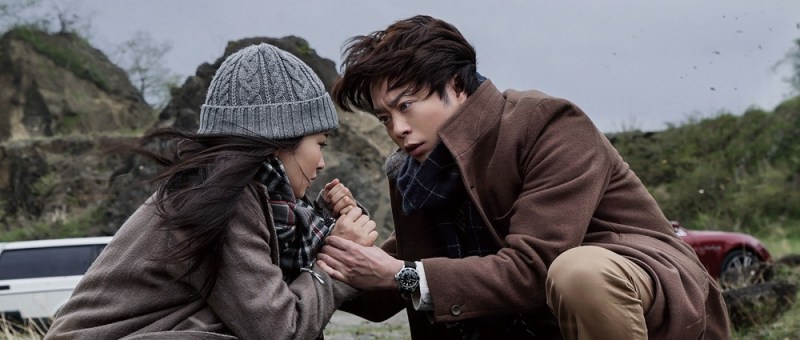
Laplace’s Witch (ラプラスの魔女, Takashi Miike, 2018)

Laplace's Witch poster 2Takashi Miike, among Japan’s most prolific of directors, teams up with one of the nation’s most prolific authors, the often adapted Keigo Higashino, for a dose of scientific mystery in Laplace’s Witch (ラプラスの魔女, Laplace no Majo). Responsible for the international smash hit The Devotion of Suspect X and the Galileo series, Higashino too has worked across several genres ranging from the detective novels for which he is best known to children’s books and fantasy. Perhaps in contrast to the director, however, Higashino’s novels tend towards the socially conservative, occasionally cynical if at times perverse. Nevertheless, there is something a little ironic in Miike choosing to adapt this particular title which revolves around the idea of authenticity in art and meaningful legacy.

The unlikely hero of the tale, climate scientist Shusuke Aoe (Sho Sakurai), is called in to investigate the mysterious deaths of a film producer and an out of work actor who appear to have died of hydrogen sulphide poisoning at separate hot springs resorts. Dying of hydrogen sulphide poisoning outdoors is considered a scientific impossibility and Aoe has no real explanation for how it might have occurred but is stunned by policeman Nakaoka’s (Hiroshi Tamaki) assertions that foul play may have been involved.

Nakaoka is not exactly a bumbling policeman, but his certainties – born of policeman’s instinct, are held up for ridicule as he rapidly switches suspects, knee-jerk accusing the film producer’s widow of conspiracy to murder before deciding there must be more involved than a simple attempt at financial gain. He is however eventually correct, quickly figuring out the surprising connection between the two dead men is a famous film producer, Amakasu (Etsushi Toyokawa), who lost his own family in ironically similar tragic circumstances some years earlier and seems to have dropped off the radar ever since.

All of which means, Aoe’s scientific knowledge is increasingly irrelevant. His major contribution to the case at hand is in his strange friendship with a mysterious teenage girl who is engaged in her own missing persons case which may have some overlap with the murders. Aoe quickly notices that Madoka (Suzu Hirose) appears to have preternatural powers which she later alludes to in branding herself the “Laplace Demon” in honour of a scientific theory which suggests that if someone were to know the exact location of each and every atom in the universe then it would be perfectly possible to calculate their courses and trajectories with mathematical certainty and thereby possess absolute knowledge of the future.

Whether one might want such all encompassing knowledge is a bigger question. As one character later puts it, the ability to discern the future may impede one’s ability to dream and therefore hinder the progress of human society. The central message is, however, somewhat banal in pointing out that we are each of us connected, essential parts of a cosmic machine in which each has a specific role to play. By such logic, murder is then not so much a moral failing as one of over engineering in which attempts to tweak the system may lead to its destruction.

Then again, we hear from the depressed Amakazu that what he fears is that life is essentially meaningless and that many go to their deaths without leaving a mark. His central theory is that objective truth is a matter of record, that whatever is shot is “real” because that is what will be “remembered” long after the fact. Through his films, which are amusingly described in a piece of meta irony as dealing with edgy themes which don’t pander to audiences, he attempts to reorder his world by recreating it, improving on its many disappointments by envisioning it differently. Yet he still yearns for authenticity in his work and may have gone to great lengths to get it in a seemingly pointless piece of behind the scenes theatre.

Perhaps it is this sense of fatalistic ennui that Miike is attempting to capture through Laplace’s continually listless aesthetics but it has to be said that the central mystery, filled with plot holes and contradictions as it is, is particularly unengaging and despite the cheerful we’re all one narrative also carries some decidedly unpleasant undertones. Never quite finding the register to unlock its central philosophy, Laplace’s Witch proves a curiously flat outing for the famously out there director which may very well be the point but then again perhaps it’s a strange point to be making. 


Singapore release trailer (English subtitles)

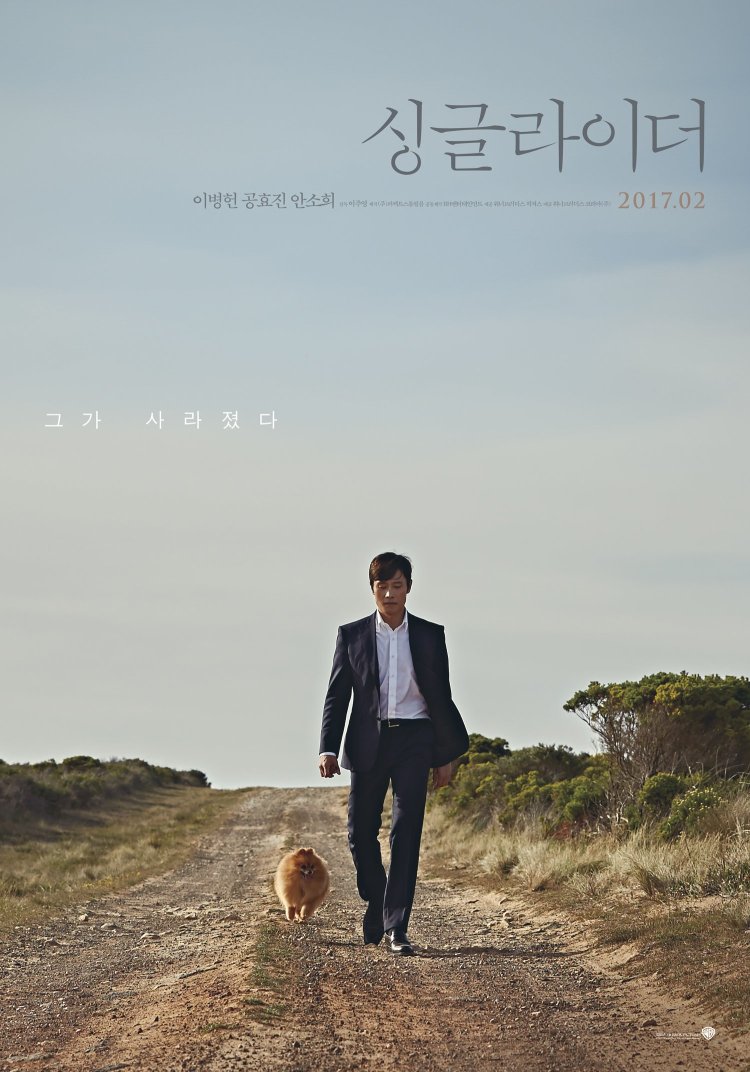
A Single Rider (싱글라이더, Lee Zoo-young, 2017)

Single Rider posterAs the old adage goes, you don’t know what you’ve got ’til it’s gone. Having sacrificed it all for “conventional success”, an emotionally repressed salaryman loses everything when his company is exposed for its immoral business practices only to discover that he’s left it all too late and those he meant to keep close have begun to draw away from him. Quietly contemplative, Lee Zoo-young’s debut A Single Rider (싱글라이더) is a gentle meditation on the way life can get away from you. Brainwashed into the salaryman dream, our financier “hero” allows himself to be swept along by the confidence of his superiors, taking friends and family with him, when he knows deep down that if something seems too good to be true, that’s because it is. Sometimes, it really is just too late, and then sometimes, tragically, it isn’t but you miss your chance anyway.

Kang Jae-hoon (Lee Byung-hun) is a broker at a securities company. Buttoned-down and near silent, he cuts a geeky if reassuringly dull figure but there’s a storm brewing under his calm exterior. His top rated company is in a lot of trouble. They’ve all been breaking the rules, and now they’re about to go under taking the savings of hundreds of ordinary, innocent people with them – people that Kang personally assured that their money would be safe because the company would never declare bankruptcy. Not quite as morally bankrupt as he seems, Kang has been depressed for some time and is on some pretty heavy duty medication. Sending what looks eerily like a suicide note to his bosses, Kang appears to rethink. He sent his wife and son to Australia to “upgrade” them through adding English functionality but hasn’t exactly paid much attention to them since. Searching for the address of the house where they live on Google Maps, he spots them captured together outside and makes an abrupt decision. Before he knows it, he’s bought a plane ticket for Sydney, heading straight to the airport with no luggage and leaving his phone behind so his boss can’t bother him.

Far from a joyful reunion, however, what Kang finds is a visual guide to all the ways he has been erased from the lives of his family. Though Kang’s wife Soo-jin (Gong Hyo-jin) and son Jin-woo (Yang Yoo-jin) have been in Australia for a couple of years, Kang does not appear to have visited before and has trouble finding the house. When he eventually locates it, he knocks at the door and gets no answer, only to find his wife laughing and joking with a neighbour – apparently the father of a friend of Jin-woo’s. Unable to bring himself to knock again, or even to find a call box and explain, Kang begins “haunting” his family, creeping around the house while they’re out, spotting pictures of the Australian neighbour, Chris (Jack Campbell), everywhere and none at all of him.

Watching them from afar, Kang is forced to reevaluate his choices. The smallest details trigger memories of his life in Korea – a flapping kitchen door left ajar when his wife had insisted on a deadlock in Seoul because she felt so afraid with him gone so often even though they lived in an upscale high-rise with an electronic entry pad, the violin she gave up for him but now apparently has taken back up, the papers on the kitchen table which imply she wants to stay rather than go “home”. Like many men who work away from their families, Kang forgot that time was passing for them too and assumed they would be waiting for him like toys put away in a box, sleeping until he’s ready to wake them. Now he wonders how close she really is to Chris, if she wants to stay for him, if she’s grown away from her husband, or simply enjoys the wide open breeziness of their spacious Sydney home with its comparatively relaxed rhythms and friendly laid-back way of life. The only thing he can be sure of is that he doesn’t seem to belong in this house anymore and this is very much not his world.

Then again perhaps Australia is not all good – Kang hates the way everyone seems to call his wife “Sue” to make her foreign name easier to remember. He runs into something similar with a young girl he noticed at the station whose name is “Ji-na” (Ahn So-hee) but everyone in Australia seems to call “Gina”. Ji-na’s problems turn out to be bigger than a misremembered name. Despite his obvious familiarity with financial scams, Kang does nothing when he overhears Ji-na on the phone to some dodgy people who want to do a “personal currency exchange”. He doesn’t see them convince her to get in their car, but does catch sight of her coming back the same way later limping and bloody having been deprived of the money she’d carefully been saving up while her labour was exploited as she lingered on after her visa had expired (which is why she can’t go to the police, as her abusers are well aware). Ji-na, like him, made a series of bad decisions though perhaps for “better” reasons and has paid dearly for her mistakes.

To be fair, Kang thought he was making his decisions for good reasons – he convinced himself he was working to provide for his family, even sending them away “for their benefit”, but now he regrets it. He regrets everything – his workaholic lifestyle, the way he allowed his principles to be compromised in pursuit of “success”, the way he bought his swanky Seoul apartment and a middle-class suburban home in Australia through defrauding people who trusted him, and the way he lost his family through a misplaced desire to “better” them rather than simply allowing them to be happy. He thinks it’s too late, that he’s ruined himself and that his family have already moved on. He may be wrong, but he won’t find out by snooping around the house and following Chris about all day to figure out how close he is to his wife.

Kang’s tragedy is that he made a series of bad decisions in which the last was the worst and the most sad. Lee Byung-hun invests Kang with an air of utter defeat, as if the air itself were crushing him while he remains unable to reconcile himself to his new circumstances or bring himself to make contact with his family. A final revelation (or perhaps confirmation of an obvious fact) makes plain why exactly it is that he seems to wander invisibly through the city streets, using public transport but miraculously disappearing from one place to appear in another as if in a trance. Kang’s only option is, perhaps, to learn to be glad that his wife and son finally have a chance to be happy even if it’s without him and be grateful that his son has found another man who’d run until his feet were sore just to keep him safe. Sometimes it really is just too late, but, tragically, sometimes you accept defeat too early when what you thought you’d lost is already on its way back to you only you’ve already given up, not on it, but on yourself.


Original trailer (no subtitles)

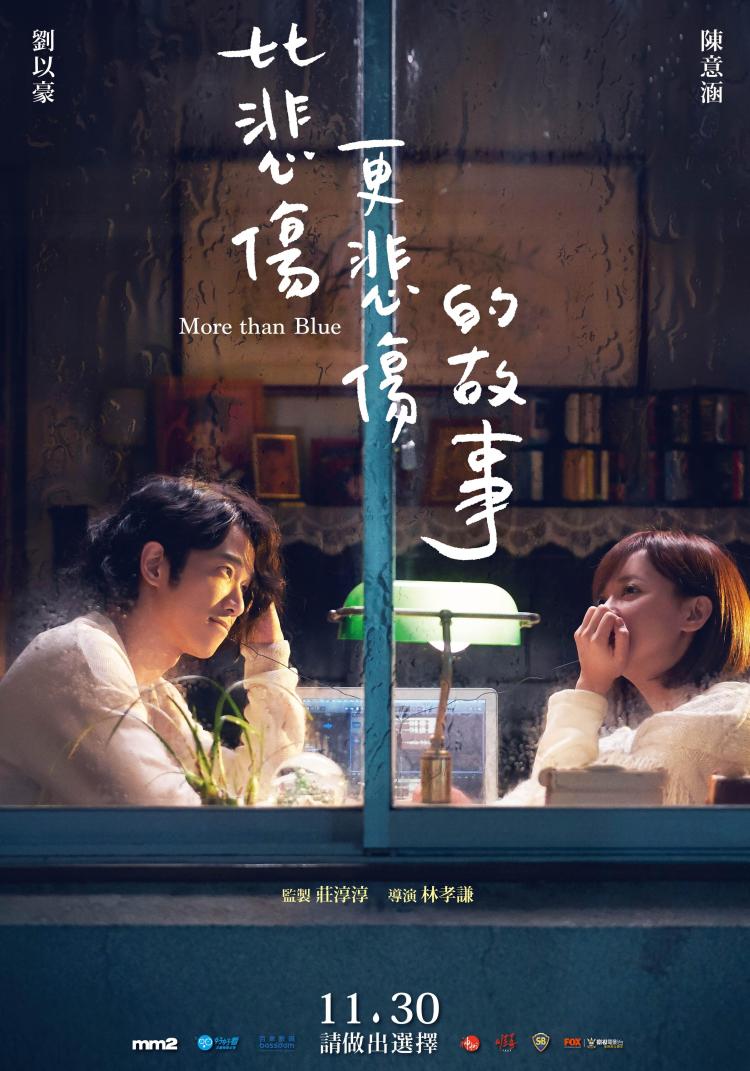
More than Blue (比悲傷更悲傷的故事, Gavin Lin, 2018)

More than blue poster“What’s so romantic about eternity?” asks the heroine of Gavin Lin’s remake of the 2009 Korean film More than Blue (比悲伤更悲伤的故事, Bǐ Bēishāng gèng Bēishāng de Gùshì). As the title, which literally translates as “a sadder than sad story”, implies More than Blue is another addition to Taiwanese cinema’s growing roster of melancholy romantic melodramas though this time one which rips a page from the “jun-ai” notebook as its selfless pair of lonely lovers engage in acts of mutual self sacrifice in an attempt to make each other “happy” while remaining quietly miserable as they contemplate a future which may not actually exist.

The hero, nicknamed K (Jasper Liu), lost his father to leukaemia when he was 16. His mother left shortly afterwards on learning that he too had the same disease, unable to cope with the pain of watching her son fade in the same way her husband had. Resigning himself to a life of loneliness, K eventually met “Cream” (Ivy Chen Yi-han), a cheerful and outgoing girl who lost her entire family in a traffic accident. The pair become friends, go to the same university, and eventually move in together but despite a brief fumble and innocent kiss their relationship remains entirely platonic. 10 years later, they’re working for the same record company where Cream is a lyricist and K in promotion. K’s illness is worsening and there’s no sign of a transplant. He has never told Cream about his medical history and now fearing that the end is near, he decides that the best thing to do is to push her towards a nice guy who can look after her after he is gone.

As someone else later points out, K’s decision is a little chauvinistic. Not only has he made it entirely alone, but he’s done so on fairly mercenary terms which imply Cream is not capable of looking after herself rather than solely of hoping to cushion the blow for the time when she must eventually lose him. After all, all relationships end one way or another and it’s impossible to live a life without loss without isolating yourself entirely from the rest of the human race. Then again, that had been K’s original reaction to his mother’s abandonment. Only Cream was able to bring him back into the world again through her goodhearted cheerfulness. K wants to spare her the pain of losing him and of being left behind alone, but perhaps that isn’t his decision to make.

Echoing the title of the movie, K affirms that it’s getting used to loneliness that is “sadder than sad” while also insisting that if anyone could understand the nature of love then no one in the world would suffer because of it. What K has is the wounded nobility of the jun-ai hero who has decided that it is his duty alone to suffer and that by suffering himself he can prevent his loved one from feeling the pain, but of course his emotional aloofness only makes things worse for everyone. Determined to make a brighter future for Cream, he smiles through the tears but neglects to consider that she may prefer a shorter present with him than a long life without. All his pointless romantic engineering amounts to is a silly waste of time during which they might both have been happy if only someone had found the courage for emotional honesty in the face of eventual heartbreak.

Lin wastes no time in letting us know this will be a tragic story through the slight disconnect of a framing sequence which casts the central romance as a lengthy flashback narrated by a peripheral figure to a frustrated music producer and her A-list idol star (played by real life singer A-Lin) who have fallen in love with an unrecorded track, “A Kind of Sorrow”, penned by Cream and performed by K. The song itself references the “darkness” within the pair born of their mutual losses, but also the light that love has brought into their lives. Cream gets into an argument with a poppy idol (who proves more astute than she at first seems) over the use of the world “eternity” within a love song. She doesn’t believe in the idea of eternity because love only lasts until one of the lovers is gone. Eternity, as we later discover, is found in the moment or more precisely in the moment of togetherness which is something both K and Cream have rejected in their escalating attempts at selfless nobility which have made them both individually miserable.

The lesson seems clear – just make the most of the time you have without worrying about the future and live honestly in the moment without regrets. Sadly, it’s a lesson the lovers of More than Blue fail to learn until it’s too late. Melodrama to the max it may be, and the strangely comic tone somewhat out of sync with the eventual destination, but there is real dark heart in More than Blue’s belief in the eternity of love even if also in its inherent tragedy.


Currently on limited release in UK cinemas courtesy of China Lion.

Original trailer (English subtitles)
A Kind of Sorrow as performed by A-Lin

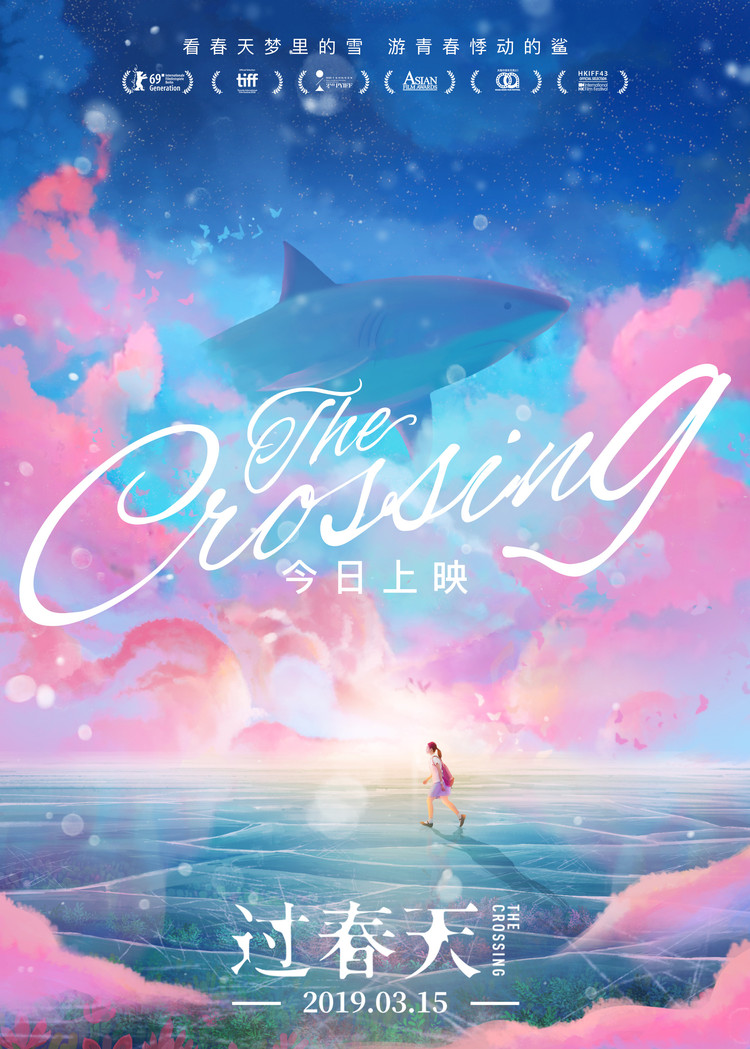
The Crossing (过春天, Bai Xue, 2018)

The Crossing posterReally, when it comes right down to it, a border is not much more than an imaginary line drawn across a piece of paper intended to bring order to a formless world. People have fought and died over the positioning of such lines for centuries, but then when all is said and done the boundaries which matter most are the internal ones and everybody has their lines they will not cross. An internal war over the nature of that line is very much at the centre of Bai Xue’s melancholy coming of age drama The Crossing (过春天, Guò Chūntiānin which a young girl living a life on top of borders geographical, emotional, and legal, begins to discover herself only through transgression.

It’s Peipei’s (Huang Yao) 16th birthday, but the most important fact about that for her is that she is now of legal working age and can get a part-time job. Peipei’s parents split up some time ago and now she lives with her flighty mother (Ni Hongjie) in Shenzhen while attending a posh high school in Hong Kong where she doesn’t quite fit in considering her comparatively humble background. This is brought home to her by her insensitive best friend Jo (Carmen Soup) who wants the pair to go on holiday together to Japan at Christmas while full-well knowing that there is no way Peipei can get the money together in time. Desperate to go, Peipei has been selling cellphone cases at school and now has her part-time job but it’s all very slow going. When Jo convinces her to bunk off and party with a bunch of ne’er-do-wells she ends up getting herself involved in a cellphone smuggling operation thanks to Jo’s no good boyfriend Hao (Sunny Sun). 

Peipei’s problem is the time old one of falling in with the wrong crowd, but then we most often catch her alone and it’s a lonely figure she cuts through the busy streets of her bifurcated world. Young but tough and angry, Peipei thinks she knows what she’s doing but is caught on the difficult dividing line between adolescence and adulthood and her attempts to claim her independence are filled with determined naivety. Resentful of her mother’s seeming indifference and parade of useless boyfriends, she wants to grow up as soon as possible but it’s not so much the daring and adventure that draws her into the orbit of Sister Hua’s (Elena Kong may-yee) gang of thieves as the camaraderie. Peipei likes being part of a “family”, she likes the maternal attentions of the spiky Sister Hua, and she likes being valuable even if on some level she realises that her usefulness will fade and that her growing loyalty to the gang is largely one sided.

“The big fish eat the little fish. Never trust men” Sister Hua later advises her, and it is indeed good advice if offered a little too late. Peipei knows she’s a little a fish, which is perhaps why she sympathises so strongly with the miniature shark trapped in a tank at the palatial mansion owned by Jo’s absentee aunt. Nevertheless, she tries to swim free only to find herself sinking ever deeper into a murky underworld she is ill-equipped to understand. Her first anxious crossing with a handful of iPhones in her backpack is a fraught affair, but carrying it off without a hitch an oddly empowering experience. Even so, when Sister Hua considers swapping the phones for a gun Peipei hesitates. In essence it’s the same – perhaps it doesn’t really matter what the cargo is, and Sister Hua’s “love” is indeed dependent on a job well done, but the stakes here are sky high. It’s not such a fun game anymore, as Peipei realises spotting a badly wounded gang member hovering outside having apparently received punishment for some kind of transgression.

Meanwhile she finds herself in another kind of interstitial space altogether when caught between best friend Jo and bad boy Hao. Jo, spoilt and self-centred, assumes her family will send her abroad to study and is later shocked by the realisation that her sexist dad thinks she’s not worth it, expects her to marry young in Hong Kong, and intends to invest all the money in her brother instead. Jo didn’t care much for Hao before and even jokingly offered to bequeath him to Peipei when she left, but now all her dreams are crumbling and she suspects he’s losing interest it’s a different story. Playing with fire, Peipei finds herself drawn to Hao who becomes something between white knight and big brother figure in the confusing world of crime until his protective instincts begin to bubble into something else. The pair bicker flirtatiously but also shift into a shared space born of their mutual dissatisfaction and desire to gain access to the Hong Kong inhabited by the likes of Jo whose vast wealth has left her blind to her own privilege.

Peipei crosses lines with giddy excitement, but only through burning her bridges does she begin to discover her own identity caught as she is between Hong Kong and China, between rich and poor, between the going somewheres and not, and between innocence and experience as her exciting adventure in the world of crime eventually blows up in her face. A rather strange title card informing us that efforts to limit smuggling at the border have been redoubled (seemingly ripped right out of the Mainland censor’s notebook) finally gives way to something calmer and more meditative as Peipei awakens to a new understanding of herself and the world in which she lives, looking out instead of up and ahead rather than behind as she resolves to keep moving forward as if there were no more lines to be crossed.


Currently on limited release in UK cinemas.

International trailer (English subtitles)

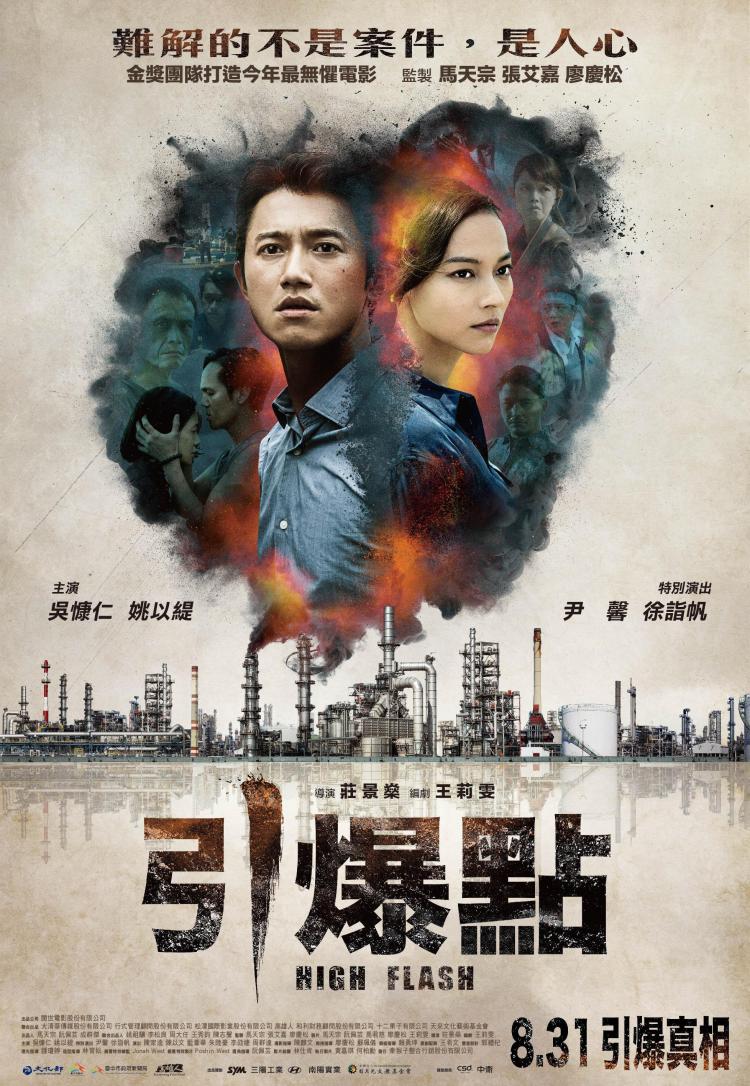
High Flash (引爆點, Chuang Ching-shen, 2018)

High Flash posterThe little guy is often at the mercy of big business, but the conspiracy runs still deeper in Chuang Ching-shen’s high stakes thriller High Flash (引爆點, Yǐnbàodiǎn). Set in the relatively unglamorous world of a small fishing village, High Flash begins with a mysterious death but quickly spirals outwards to ask questions about the connections between industrial conglomerates and the political establishment both local and national. Those who seem keenest to root out corruption may in fact be no less self serving than those who take advantage of it but perhaps there’s nowhere free of greed and selfishness when there are such gains to be made.

The action opens with a fierce protest by the local fishing community towards the large scale Tonglian petrochemical plant which they believe has been polluting their waters, ruining their health and livelihoods. While the newly elected mayor, Chen (Lan Wei-hua), is giving his best at the megaphone, a commotion breaks out when a burning boat collides with protestors and is later found to be harbouring the body of one Ah-hai (Bokeh Kosang / Hsu Yi-Fan) who is assumed to have committed self immolation in protest of the plant’s continued intransigence.

Earnest medical examiner Chou (Chris Wu Kang-Ren) isn’t sure that’s the case. His evidence suggests Ah-hai, who was already terminally ill with liver cancer, did not die of burns or smoke inhalation while his kidneys also exhibited strange florescent spots later identified as copper sulphate. Chou’s findings are music to the ears of jaded prosecutor Jin (Yao Ti-Yi), who also happens to be Chou’s former fiancée. She too is convinced there’s more to this than the elaborate suicide of a man whose life had been ruined by the heartlessness of big business.

Chuang quickly sets up the expected contrast between the scientifically minded Chou who claims to assess only hard evidence without emotional baggage, and the passionate Jin who is desperate to expose the truth at any cost though the romantic drama between the pair never quite ignites even as the past continues to inform their present relationship and the case at hand. Despite his insistence on hyper-rationality, Chou is not is a cold or unfeeling man as he proves by tenderly introducing himself to Ah-hai’s body and asking for his cooperation in investigating why he died, but his rigidity is perhaps to have unexpected consequences despite his best intentions which see him taking a special interest in Ah-hai’s unfortunate wife and son.

Ah-hai’s illness and that of his little boy who is suffering from a brain tumour are not explicitly linked to the illicit activities of Tonglian but the implication is clear. Industrial pollutants have destroyed not only the local fishing industry but with it a community which is now suffering with a large number of serious and unexplained illnesses. Tonglian, as might be assumed, is not particularly bothered, assuming it can rely on friends in high places and a complex web of thuggery and corruption to deal with any more serious opposition. Meanwhile, Ah-hai’s death is already being repurposed for political gain. The village regards him as a hero and a martyr who sacrificed himself in the most painful of ways in order to bring attention to their plight and the evils of Tonglian. None of which, however, is much use to his wife and son who are now unable to claim on his life insurance and are left without an income.

Vested interests exist on both sides – those keen to uphold Ah-hai as a hero and a martyr at the cost of his wife and son, and those keen to minimise the effects of his death in ensuring Tonglian is able to go on doing its (extremely dodgy) business with the same bottom line. While top execs boast about making a killing on the fluctuating company stocks and spending it on yachts, horses, and vintage wine, Ah-hai’s wife and son are left at the mercy of prevailing forces and fearful for their futures. The village might well feel that seeing as Ah-hai is dead anyway making a martyr of him whether he was one or not might be worth it if it helps expose Tonglian’s various transgressions but then again they may have overestimated the extent to which anyone really cares about big business corruption and the complicity of the state.

Nevertheless, in true conspiracy thriller fashion getting too close to the truth can prove dangerous and Chuang perhaps missteps in the case of whom he allows to pay the price, but his anti-corruption messages and warning about the cynical hypocrisy of big business eager to claim it cares about the little guy and his environment are sadly universal, as are his world weary implications regarding the eventual corruption and diminishing efficacy of longterm protests.


High Flash screens as part of the eighth season of Chicago’s Asian Pop-Up Cinema on March 28, 7pm at AMC River East 21 where director Chuang Ching-shen & actor Chen Chia-kuei will be present for a Q&A.

Original trailer (English subtitles)

Sen Sen (生生, An Bon, 2018)

Sen Sen poster 1“The rules are dead but we are not” jovial granny Lili (Nina Paw Hee-ching) insists as she shows some young whippersnappers how pool should be played. An Bon’s Sen Sen (生生, Shēng Shēng) offers more than a few life lessons along its merry way as it wanders through the grieving process from both ends – an elderly woman deciding to live her best life in her last days, and a young boy trying to come to terms with the death of his older brother, but for all of its melancholia affirms that life should be lived without regrets or rancour and with as much understanding as it’s possible to have while remaining firmly rooted in the present.

An begins with an ending – Lili’s middle-aged daughter sadly dealing with her late mother’s effects, before winding back a few months to young Sen Sen (Wu Zhi-xuan) who has inherited his older brother’s smartphone. A lonely child, Sen Sen spends his evenings in fast food restaurants to avoid to going home to an empty house while his mother works nights in a convenience store. Not quite understanding how smartphones work, he is struck by the enormity of his friend’s explanation that if he wants to go on using it he will need to delete some of his brother’s files to make more space. While scrolling he gets a notification that “Live 100 Days” is currently streaming and discovers that his brother had been an avid fan of Lili’s popular web channel via which she livestreams her everyday life as she deals with her terminal cancer diagnosis.

Sen Sen and Lili are of course dealing with a similar problem but from very different positions. Lili has fully accepted her terminal prognosis and decided against chemotherapy, preferring to live out her final days as fully as possible rather than spend them in hospital suffering with the effects of the treatment. Her daughter, Yi-an, however, does not approve of her mother’s choice and keeps nagging her to keep up with her doctor’s appointments which has only placed further strain on their positive yet perhaps distant relationship. Like Sen Sen, Lili is often alone at home, her husband having passed away some years ago and Yi-an now living in the capital, which is perhaps why she gets so much out of sharing her everyday life with strangers online.

Sen Sen, meanwhile, struggles to accept his brother’s death and his mother’s way of coping with her grief. He fears that he will eventually forget him and that his mother seems indifferent to his memory. Perhaps in an effort to ease the feeling of absence, the pair will be moving to a new, smaller apartment and Sen Sen has dutifully sorted out his brother’s things but his mother has all but ignored them. Like Sen Sen, his mother doesn’t like being in the apartment surrounded by a sense of incompleteness and so she throws herself into work to avoid thinking about her loss, leaving Sen Sen feeling neglected and unloved as if she’d forgotten about him too while consumed by her own grief.

Making friends with Lili, Sen Sen begins to understand a little about his mother’s grieving process just as Lili channels some of the things she’d like to say to Yi-an into the videos she gets Sen Sen to film for her. As Lili later puts it, everybody needs to learn to let go – of past resentments, of life, and of loss that can’t be avoided. Sen Sen becomes a surrogate grandson for Lili who admits that no one really knows what happens in life and she doesn’t quite know what advice to leave behind for her daughter, while she becomes a substitute maternal figure him as she gently tries to explain that his mother isn’t rejecting him or his brother but only attempting to deal with loss in her own way.

A gentle tale of learning to enjoy life while it lasts while recognising what it is that’s really important, Sen Sen is a strangely uplifting look at life in the shadow of death seen both by those approaching the end and by the ones who are left behind. Filled with warmth and humour, An’s whimsical screenplay is as cheerful as it’s possible to be just like its openhearted heroine keen to pass on the joy of being alive even as she prepares to say goodbye.


Sen Sen screens as part of the eighth season of Chicago’s Asian Pop-up Cinema on 27th March, 7pm at AMC River East 21 where director An Bon and Nina Paw Hee-ching will be present for an introduction and Q&A.

Original trailer (English subtitles)

Show Me Your Love (大手牽小手, Ryon Lee, 2016)

Show Me Your Love posterIs it ever really too late to make up for lost time? Malaysian-born director Ryon Lee explores dislocations familial and geographical between a conflicted son and the guilt ridden mother who left him behind. Show Me Your Love (大手牽小手) shifts from frenetic, ambitious Hong Kong to sleepy, laidback Malaysia and from the ‘80s to the present day as two generations reprocess the idea of family in the wake of their own fears and disappointments both afraid and eager to put the past behind them while there is still time to make amends.

In the Hong Kong of 2016, Nin (Raymond Wong Ho-yin) is a successful teacher with a high-flying estate agent wife Sau-lan (Ivana Wongwho’s trying to convince him to give up his teaching job and movie to Guangzhou to invest in property. Home life is somewhat strained with Sau-lan working overtime and Nin worrying about a move he doesn’t really want to make, all of which means it’s the worst possible time to get an unexpected long-distance phone call informing him that the aunt that helped to bring him up when he lived in Malaysia has passed away. Travelling alone to the funeral, Nin is encouraged to reconnect with his estranged mother Sze-nga (Nina Paw Hee-ching) who has apparently started to behave strangely much to the consternation of Nin’s cousin who had been looking after her but is due to move to Australia to be close to her own children. Sze-nga angrily insists that she doesn’t want to return to Hong Kong with Nin and so he has little choice other than to place her in an old persons home at least until he can sort things out.

Nin’s melancholy voice over relates to us the various reasons he chose not to stay in contact with his mother. After abruptly moving them from Hong Kong to Malaysia when he was a boy, Sze-nga was continually evasive about her personal life and frequently told him minor lies which left him with longstanding trust issues and a lingering fear that she would soon abandon him. Sze-nga eventually did just that, depositing him with her sister while she went abroad again to work only to resurface 10 years later when her son was almost a man, taking him back and accidentally ripping him away from the surrogate family he’d formed with his aunt.

Truth be told, Nin never quite felt as if he belonged in his aunt’s family either despite her best efforts. A nosy a relative made sure he was pulled out of the family wedding photos in case someone thought he’d been officially adopted, somehow signalling his liminal status like a stray cat given temporary refuge. Perhaps for that reason he never managed to keep in contact with his aunt, either, forgetting to send her a New Year card as he’d promised he would. Broken promises become something of a theme from Sze-nga’s constant attempts to smooth things over with a comforting lie to the guilt and resentment that stands between mother and son.

Failure to communicate honestly continues to cause problems for the pair as well as for Nin individually whose longstanding fear of confrontation has led him to avoid telling his wife he’d rather not move to Guangzhou or to explain what’s going on in Malaysia. Eventually joined by his wife and daughter, Nin begins to repair his familial wounds by coming to understand a little about his “difficult” mother in that she always wanted the best for him but had a funny way of (not) showing it. Before it’s too late, he decides to make up for lost time by making good on some of those long forgotten promises as seen on a cute homework assignment he made as a 10 year old in which he was tasked with figuring out his mother’s hopes and dreams.

Despite the fierce sentimentality, Lee makes space for some typically Hong Kong verbal humour to lighten the mood while Nin’s melancholy childhood reminisces take on a rosy, whimsical tone even as he relates his own heartbreak in feeling abandoned and rejected by his often absent mother. Show Me Your Love is a warm and funny tale of putting the past to rest before it’s too late, making the most of the time you have left with the people that you love before it runs out with too much left unsaid.


Show Me Your Love screens as part of the eighth season of Chicago’s Asian Pop-up Cinema on 26th March, 2019 at AMC River East 21, 7pm where actress Nina Paw Hee-ching will be present for an introduction and Q&A.

Original trailer (English subtitles)

Canadian-Hong-Kong actress and Cantopop star Ivana Wong also sings the same titled main titles theme