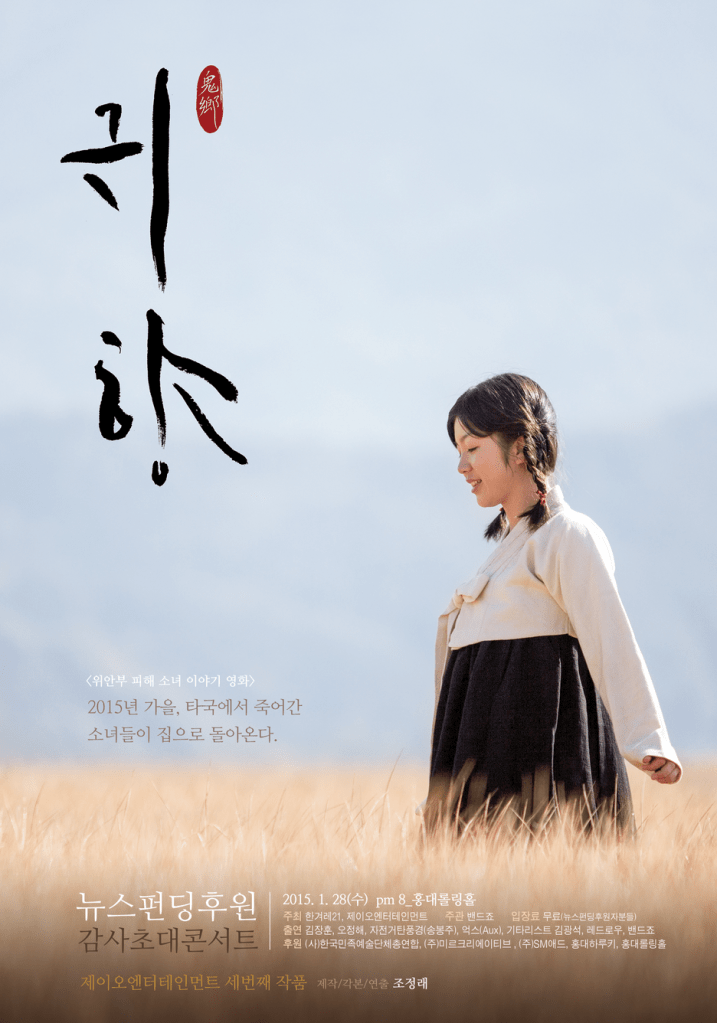
Spirits’ Homecoming (귀향, Cho Jung-rae, 2016)

sprits-homecomingOf all the awful things that happened in the middle part of the 20th century, the trafficking, incarceration, enslavement and forced prostitution of women and girls from across Asia (including at least 65 Dutch women in what is now known as Indonesia) who were abducted for use as “comfort women” by the Japanese military remains one of the least discussed and most controversial. The issue (arguably) runs most deeply in Korea which had been experiencing a prolonged and often brutal era of colonial rule even prior to the intensification of hostilities in the early 1940s. The torment these women faced did not end with the ceasefire as entrenched social attitudes left them not only with a lifetime of physical and psychological trauma but also internalised shame which made it difficult for them to talk about their experiences even to those closest to them. Now more than ever, it is important that this story be told and the long suffering of these women, many of whom are no longer with us, is finally acknowledged.

In 1943, fourteen year old Jung-min (Kang Hana) is an only child living with her cheerful father and stern mother somewhere in rural Korea. Energetic and headstrong, Jung-min thinks it sport to take a handmade amulet from one of her friends in a game despite her friend’s obvious distress. This earns her another switch beating from her disappointed mother who, regretfully, later makes her a similar amulet of her own. However, the amulet does Jung-min little good in the short term as the soldiers finally arrive and take her away with them to an uncertain destination.

Packed into a freight train with other similarly aged girls in the same situation, Jung-min is able to keep her cool and bonds with the girl next to her, Young-hee (Seo Mi-ji), who is already physically ill aside from the additional stress. Far from the shoe factory one of the girls had imagined, this collection of children is bound for a military brothel where they will be required to speak only Japanese, remaining within their tiny rooms which store only a mattress and water bucket, and endure repeated rape and violence at the hands of their captors.

Running parallel to the 1943 narrative is a jump forward to 1991 around the time in which the government finally decides to address the comfort woman issue with calls for registration so that all women affected may apply for any available compensation. Young-ok (Son Sook), now an older woman making a living from textiles and sewing amulets just like Jung-min’s, is only one of these women. Through her friendship with a shaman and her protege Eun-kyung (Choi Ri), Young-ok finds her thoughts returning to the past once again.

The younger Koreans of 1943 had known only the Japanese occupation, were educated in Japanese, and had been taught that they were “true countrymen” as one Jung-min’s friends puts it. Jung-min’s carefree, rural town is almost untouched by politics as Korean is spoken freely, folk traditions permitted, Arirang sung in the fields, and teenage girls wander around freely with no one to say to much about it. All this ends one day when the soldiers arrive, forcibly abducting Jung-min and any other young woman in the area without even a word of explanation to their parents or families. Despite the gradual erosion of their cultural identity, these women are now members of a subjugated nation so far below those of mainland birth that they barely qualify as people at all.

The treatment that these women undergo, many of them only children, is truly horrific from repeated rape to physical violence, starvation, and the ever present threat of death. Only Japanese is to be spoken in the camp which houses women and girls from both Korea and China, watched over by a Korean middle man and a Japanese madam. Allowed out of their fetid rooms for brief periods of respite (or later different kinds of work) the girls attempt to make the most of things, singing folk songs and remembering happier times. There is no real possibility of escape other than that found by one of the girls who has already gone mad after one of the visiting troops brought her own brother with it.

Indeed, there is no true escape even after the war’s end. Seeing the testimony of another former comfort woman on the television and hearing news of the programme to register women affected by wartime atrocity both for purposes of research and possible compensation, Young-ok is motivated to speak out. When she approaches a young man at the post-office to ask for the relevant forms, her nerves fail her, only to overhear the behind the counter conversation about the comfort women programme. It seems, there have been no claimants so far. The man behind the desk is unsurprised but also childishly amused. “You’d have to be some kind of loony to come out with all that kind of thing” he says, “it’s a bit…well…isn’t it?”. Not only have these women suffered immense physical and psychological trauma, they’ve also been forced into internalised shame thanks to conservative social attitudes regarding purity and surrender.

In this way, Spirits’ Homecoming (귀향, Kwihyang) stops being about Japan and Korea but becomes a wider commentary about the place of women in society and, more specifically, what happens to women in time of war. Many of the soldiers remark that the girls remind them of their sisters, yet they still go ahead with the things they do, treating these women as little more than receptacles for the fluids of their lust and rage, not much more sentient than a metal bucket. The Japanese soldiers are fairly one dimensional in their evilness, save for one who has the courage to say no, but his decision to help the girls brings only disaster for all, himself included. Berated as “bitches” for the Japanese army, the girls are denied any kind of agency and, should they outlive their usefulness, are taken off to a “better place” which smacks of the old lie told to children whose beloved dog has been taken to live a happier life “on a farm”.

Nothing can be said or done to repair what was done to these young women or return any of the things which were taken from them, but at least in telling their story there can be a kind of restitution and an end to the ongoing shame which continues to engulf their lives even though they themselves were always blameless. In reality many of these girls never got to come home, a fact which the shamanistic rites at the film’s conclusion intend to rectify, allowing Young-ok a chance to reconnect with a fallen friend whose spirit is finally guided homeward to the peaceful family life of the pre-war years. A necessarily difficult watch, Spirits’ Homecoming is a sensitive treatment of its horrific subject matter which, even if edging towards the sentimental, is resolutely unafraid to lay bare the degree of suffering inflicted on these women not only during the wartime years but throughout the rest of their lives.


Reviewed at the 2016 London East Asia Film Festival.

International trailer (English subtitles)
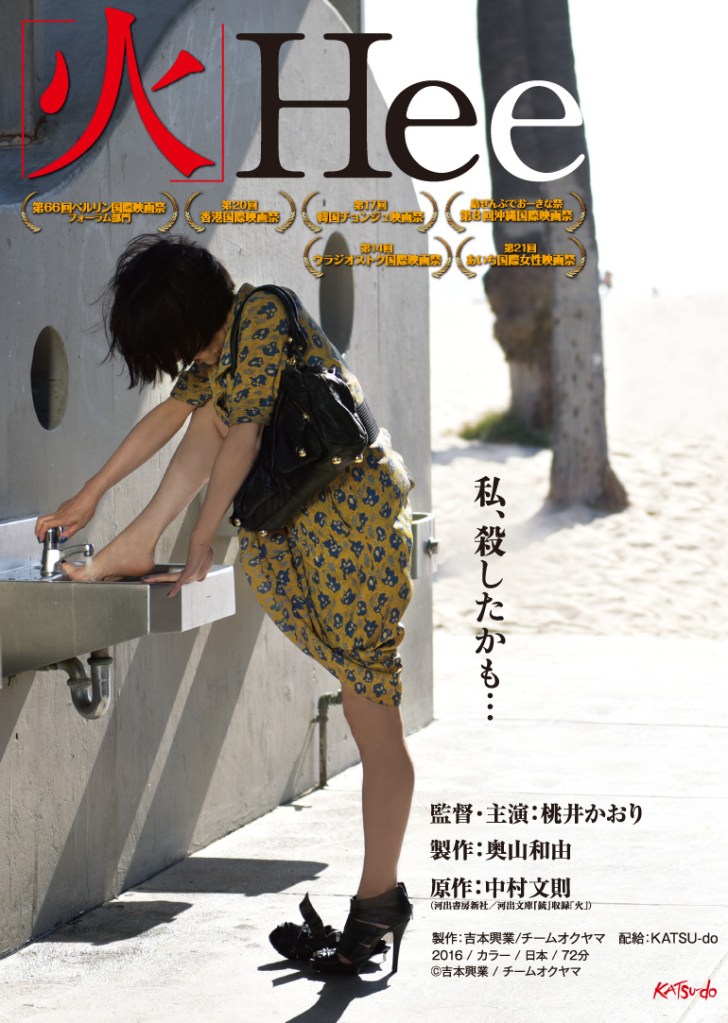
Hee (火, Kaori Momoi, 2016)

heeOne of Japan’s best known actresses with a career spanning over forty years, Kaori Momoi is perhaps just as well known for her outspoken and refreshingly direct approach to interviews as she is for her work with such esteemed directors as Akira Kurosawa, Kon Ichikawa, Yoji Yamada, and Shohei Imamura. One of the few Japanese actors to have made a successful international career starring in Hollywood movies such as Rob Marshall’s Memoirs of a Geisha and international art house fare in Alexander Sukurov’s The Sun, Momoi currently lives in LA and is even reportedly preparing to play Scarlett Johansson’s mother in the upcoming US live action adaptation of Ghost in the Shell. It’s perhaps less surprising then that in choosing to adapt a short story by one of Japan’s best young writers, Fuminori Nakamura, Momoi has chosen to shift the story to LA whilst maintaining its Japanese characters.
We first meet Azusa (Kaori Momoi) as she’s washing her foot in a public sink near a beach. A strange conversation with an American man implies that she’s involved in some kind of sex work and the pair head into a hotel where they’re stuck in a crowded lift with a collection of noisy strangers. Aside from this lift scene which is replayed with slightly different emphasises throughout the film, the narrative, such as it is, is provided by Azusa’s two sessions with passive psychiatrist, Dr. Sanada (Yugo Saso). In the first of these she discusses her feelings of guilt over the death of her family, killed in a fire started (perhaps not) by accident as she carelessly played with matches as a child. Later sessions see her accompanied by an official looking American man, seated in the corner but unable to understand much of what’s going on. Now Azusa is suspected of a violent crime but finds herself confessing to various other moral and criminal transgressions, but then again perhaps “confessing” is the wrong word.

Transposing the story from Japan to LA brings an additional layer of alienation to Azusa’s story as she finds herself alone and set adrift far from home. The slightly rundown, beachside faded glamour of the outside world contrasts neatly with the cool, ordered interior of the psychiatrist’s office where Sanada appears almost indifferent to Azusa’s monologue as he makes coffee in a vacuum pot and stares blankly straight ahead. It’s little wonder why Azusa remarks that perhaps he’s just not suited to this kind of work during her first session and even later states that he’s really just a sounding board for her – she’s monologuing for real, applying the talking cure to herself.

Intercut with Azusa’s monologues and the reoccurring lift scene in which Sanada also appears, Sanada is seen with his own, not quite happy, family. Married to a fellow doctor working at the same clinic, Sanada seems a little uncomfortable with his confident, dominant wife. Conversing in English at home the couple share extravagant meals prepared by their housekeeper with their little daughter but as Azusa’s monologues continue the family scenes become ever more strange and disjointed and Sanada is even seen wolfing down a plate of high grade beef in his pyjamas whilst sitting next to a bright burning fire inside a patio chimney heater. Azusa maintains control, both in the room and out, with Sanada left behind as passive observer.

Expertly played by director and lead actress Momoi, Azusa is a necessarily unreliable narrator as she offers her series of sad stories each of which leads towards a fire. Betrayed by men from her father onwards leading to a failed marriage, inappropriate relationship with another Japanese man in the US, and an ill fated assignation with an American possibly more interested in her daughter, Azusa’s only constant has been the fire but it also seems to spark her madness. It’s impossible to tell how much of what Azusa is saying is “true” at any given time as her oddly circular narratives fracture off yet return to the same point but what she appears to crave from Sanada is the simple act of acknowledgement – of being seen, understood, and respected as a human being.

Reportedly shot in just ten days for a minuscule budget, Hee is anchored by a strong performance from its leading lady but is occasionally undercut by Sanada’s passivity which leaves her without the necessary pushback. The English language actors offer their lines in a slightly surreal manner which adds to the heightened atmosphere of the piece but does not always gel with the other theatrical elements and, at times, proves jarring. Though sometimes too obtuse for its own good, Hee takes an interesting, experimental approach to its material and displays a nice flair for composition even if the cinematography itself remains more conventional. A frustrating, if sometimes fascinating, experience, Hee is the story of woman trapped in flames with only the last remaining hope that we will be able to see through the smoke and heat haze to finally acknowledge her presence.


Reviewed at the 2016 London East Asia Film Festival.

Original trailer (no subtitles)

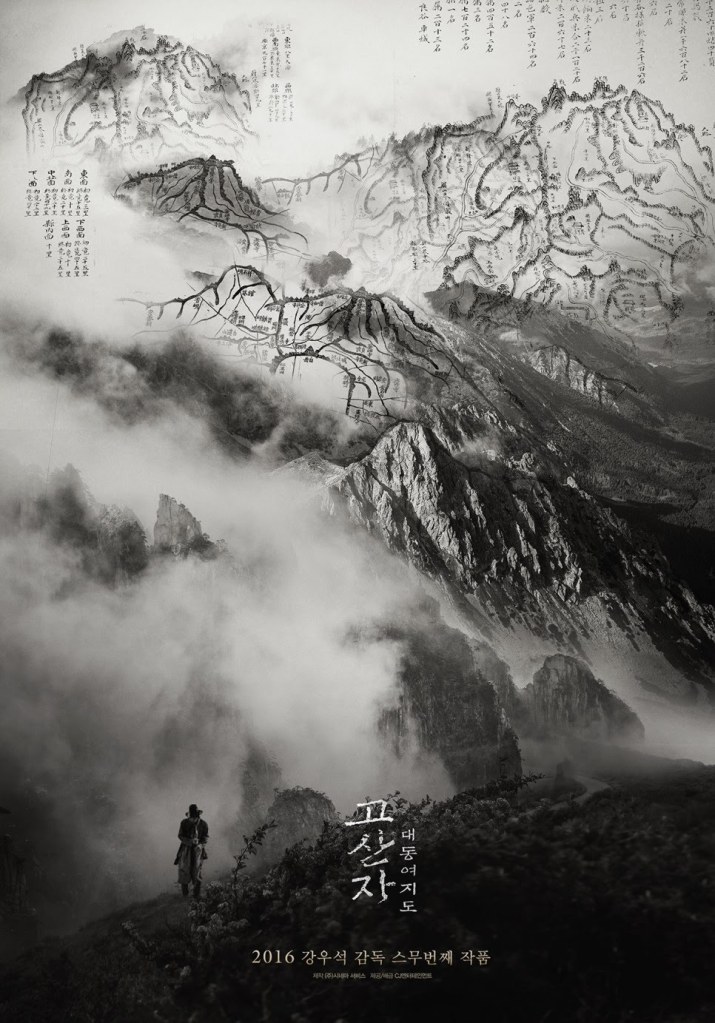
The Map Against the World (고산자, 대동여지도, Kang Woo-suk, 2016)

map-against-the-worldThe map is not the territory – as the old adage goes. There’s always a difference between the thing itself and the perception of it but, as the “hero” of The Map Against the World (고산자, 대동여지도, Gosanja, Daedongyeojido) points out, if you’re about to set off on a long journey it’s a good idea to not to rely on a linear map else you’ll run out of good shoes long before you reach your destination. Kim Jeong-ho (Cha Seung-Won) was, apparently, a real person (though little is known about him) who set out to make a proper map of the Korean peninsula after a cartographic error led to the death of his father and many other men from his village when they ran out of resources crossing what they thought was one mountain but turned out to be one mountain range.

The difficulty here is that The Map Around the World pivots around a man who is so crazed and obsessive in his quest that he causes serious problems not only for himself in a difficult political climate, but also for those close to him whose lives he ruins through neglect and abandonment. Is he a hero for following his dreams even though they cost others so dearly? The film seems to say yes, but it’s a difficult message to swallow.

Ever since Kim Jeong-ho’s father died, he’s been obsessed with the idea of creating an accurate map of the Korean peninsula from end to end including the “Dokdo” (or which ever name you wish to use) islands. Consequently, he spends much of his life wandering around on his own which has made him a bit strange. Returning home after a four year absence, Jeong-ho does not seem to be aware that time has been passing even in Seoul and his little daughter, Soon-sil (Nam Ji-hyun), is now all grown up. Jeong-ho also has a kind of relationship with his neighbour, Mrs. Yeonju (Shin Dong-mi), who has been looking after Soon-sil but it’s all a bit awkward.

Aside from Jeong-ho’s terrible performance as a family man, the main intrigue centres around his big philosophy – open access to information for everyone from the nobleman to the peasant. In order to make sure maps remain as accurate as possible, he’s hit on the idea of producing woodblocks so they can be reproduced en masse with fewer errors and then sold to anyone who wants one so that people are free to travel wherever they wish. This is an extraordinarily destabilising idea in the increasingly paranoid world of the late Joseon era under the Regent Heungseon Daewongun (Yu Jun-sang). The woodblocks are dangerous because the elites do not wish the common man to possess that kind of knowledge, would rather people did not travel very much, and there is always the old “national security” fear in which the rulers assert the danger of spies and invaders getting their hands on such an accurate guide to the terrain.

Of course, Heungseon Daewongun ruling as a Regent for his young son means there is also a simmering battle for power running in the background as second tier nobles snap away at each other trying to increase their status in the hope of making a bid for the big chair. Heungseon Daewongun has reason enough to be paranoid but his rule is an austere one in which all foreign elements are to be eliminated in their entirety.

Kim Jeong-ho’s world is difficult and often frightening but Jeong-ho cares for nothing but maps aside from the idea of the free exchange of information. The early part of the film is, broadly, a quirky comedy about an amiable eccentric laughing his way out of trouble whilst evading debt collectors and trying to earn the forgiveness of the women he’s abandoned with nary a word for the last four years.

Jokes about Jeong-ho’s awkward relationship with his neighbour, mild irritation with the idea that his now grown up daughter has a boyfriend, and buddy comedy with the guy helping him carve the woodblocks suddenly seem out of place when the film descends into a morass of cruelty and horror with no apparent warning. Jeong-ho himself is beaten by authorities determined to obtain his maps by underhanded means seeing as Jeong-ho wants them to be available to the people and therefore refuses to surrender them into the “care” of the state. When that doesn’t work, he places himself in line for more harassment, but that’s nothing compared to what happens when a secret sect of Christians (banned for fear of foreignness) is uncovered in the village. Brutally tortured and instructed to denounce others, the villagers are then publicly beheaded. Suddenly, maps don’t seem so important any more.

Nevertheless, Jeong-ho quickly gets over the stubbornness that has cost him the things he held most dear (aside, it seems, from maps) to get right back out there and do some hardcore cartography. The film ends on an oddly upbeat note as Jeong-ho ventures forth on another adventure, edging ever closer to completing his mission, but even if he is about to make his “dream” come true, that same dream has just got a number of people killed. Jeong-ho’s quest to make the maps available to all could be seen as resistance to the oppressiveness of the state, but it isn’t, he just really likes maps and thinks you should too. The Gangchi (otherwise known as “Japanese” sealions, apparently hunted into extinction by Japanese fishermen in the 1970s) frolic happily off the waters of Dokdo as Jeong-ho approaches, but it hardly seems like a cause for celebration.

Over long and tonally inconsistent, The Map Against the World is a frustrating and often dull experience. Hold the map against the world and see what you see, errors and imperfections everywhere. Yet fighting oppression through cartography is a difficult task, and when it comes down to it a map against the world is not enough on its own. Filled with picturesque shots of Korea’s natural beauty, The Map Against the World displays generally high production values but can’t decide if it’s the story of a valiant revolutionary waging a cultural war for freedom of information in the middle of a paranoid dictatorship, or just a film about a madman trying to map ever changing terrain. Jeong-ho’s quest may be a noble one, but his single minded determination and willingness to sacrifice other people’s lives in its service is far from heroic leaving the film’s bittersweet finale feeling very hollow indeed.


Reviewed at the 2016 London East Asia Film Festival.

Original trailer (English subtitles)

Harmonium (淵に立つ, Koji Fukada, 2016)

harmoniumKoji Fukada first ventured into the family drama arena with the darkly comic satire Hospitalité in 2010 in which frequent collaborator Kanji Furutachi played the decidedly odd “family friend” who quickly took over the household and exposed all of its weaknesses before departing as mysteriously as he arrived. This time Furutachi plays the man of the house, though like his counterpart in Hospitalité, has not been telling the whole truth. Unlike much of Fukada’s previous work, Harmonium (淵に立つ, Fuchi ni Tatsu) abandons the comedy overtones for a truly bleak and tragic atmosphere which seems to speak of the death of the family unit itself.

On a morning just like any other, Toshio (Kanji Furutachi), Akie (Mariko Tsutsui), and their small daughter Hotaru (Momone Shinokawa), take breakfast together around the kitchen table. Akie leads grace while Toshio reads his paper before Hotaru moves on to a story about the baby spiders in the garden and how they collectively eat their mother. After his wife and daughter have left for the day, Toshio lifts the shutter on his workshop only to see a familiar, if long forgotten, face standing behind it.

The two men talk and it’s clear they’re old friends but have not seen each other in a long time. Fresh out of prison, Yasaka (Tadanobu Asano) is dressed in an odd looking suit without a jacket, the top button of his pristine white shirt neatly buttoned up. Toshio offers Yasaka a job in his workshop and a room in his house – all without a word to Akie, but somehow there’s something other than an altruistic desire to help an old friend who’s fallen on hard times at play.

Yasaka moves in and is permanently on his best behaviour but it isn’t until it’s discovered that he has a talent for the harmonium and begins to help Hotaru improve her playing that Akie starts to warm to him. It also helps that he’s interested in her spiritual life at the local protestant church, unlike her husband, and is generally around and available to her. Learning how Yasaka ended up in prison and how he now feels about his crime, Akie comes to feel this melancholy man must be especially worthy to God, and sure enough a mutual attraction begins to arise between the pair.

There’s a kind of debt implied in the relationship between Yasaka and Toshio which has Toshio running scared, trying to keep his old friend sweet lest he call it in. Yasaka’s intentions remain unclear, has he come for revenge or for comfort, to restart his life or to rehash the past? There’s something inescapably odd about his presence with his identical black suit trousered, white shirted figure which simultaneously makes him look like someone who just came out of prison and has been given one outfit to help them get a job, and like a dodgy TV evangelist or cult leader – ever so slightly too buttoned down and contained. At one point he tells Toshio he’s starting to wonder why Toshio has all of this ordinary success and he doesn’t, he could take it if he wanted to. Toshio, it has to be said, is not trying very hard to protect his place at the head of the table.

Like Yoshimitsu Morita in that other landmark of the family drama turned inside out by an unscheduled visitor, The Family Game, Fukada also makes the dinner table the centre of the conversation. We can see right away that this is not a “harmonious” household through the unbalanced seating arrangements – Toshio on one side, barely speaking and reading his paper, while Akie and Hotaru sit together opposite him reciting grace before they eat. There’s an ugly, empty space at the expected fourth position which is soon to be filled by Yasaka, but his presence does little to alleviate the anxiety of three people sitting at a table meant for four. Notably, after an unexpected tragedy occurs in the second part of the film the table itself has been rotated ninety degrees and only half of it is ever used as the lower part is cut off with a small TV showing live footage from another room. The family no longer take meals together, the kitchen is no longer a warm and organised place but a cold and chaotic one.

The sins of the father are visited upon the child. Everyone thinks they’re guilty of something, and that someone else is paying for their wrongdoing (and by implication forcing them to suffer by proxy). The presence of the harmonium – a staple in small churches and parlours of the 19th century, has a strangely religious resonance that perfectly tallies with Akie’s adherence to her Protestant faith which infuses the house even in the absence of crosses or other forms of iconography. Yasaka carries with him a sense of malevolence, like a visiting demon tempting and provoking as he goes, though it ultimately remains unclear if he is even to blame for the tragedy which befalls the family or is simply another victim of it.

Retaining his elegantly composed, static camera, Fukada makes use of unusual and high impact cuts as well as a daring, unannounced jump forward in time. Red becomes a recurrent theme as it alarmingly cuts through the otherwise subdued colour scheme whether as a T-shirt hidden behind a calm white boiler suit, or the reflections of a car window as a particularly dark thought passes through a passenger’s mind. Filled with mismatched pairs and asymmetrical setups, the family find themselves locked into a wheel of repetitions until the final scene which sees them recreate a “happy” family photo in a kind of grim tableau as neglectful father Toshio desperately fights to revive his family. Darker in tone and filled with an almost supernatural malevolence, Harmonium is a tense and unpredictable drama probing at the status of the traditional family in an increasingly uncertain world.


Reviewed at the 2016 London East Asia Film Festival.

UK release trailer (English subtitles)

Worst Woman (최악의 하루, Kim Jong-kwan, 2016)

movie_imageKim Jong-kwan’s award winning unexpected indie box office hit has been given the rather odd English title of Worst Woman (최악의 하루, Choeakui Haru) in contrast with the original Korean which simply means “The Worst Day”. In fact, the film is about two people – an aspiring Korean actress with problems in her personal life, and a Japanese writer visiting for the launch of the Korean translation of his novel, each of whom is indeed having an exceptionally unlucky day. Part walking and talking, part split focus romantic comedy, Worst Woman is a polished piece of indie filmmaking anchored by quality performances and an interesting approach to its material.
Eun-hee (Han Ye-ri) is supposed to be rehearsing for a play but somehow she’s not really into it, much to the consternation of her coach. Heading off to meet up with her vacuous soap star boyfriend, Hyun-Oh (Kwon Yool ), Eun-hee runs into a hopelessly lost Japanese man who asks her for directions but mangles the pronunciation of the address leaving her with little idea of the destination. Nevertheless, Eun-hee eventually helps the mysterious traveller, Ryohei (Ryo Iwase), find the place he’s looking for only to realise he’s been given the completely the wrong time and there’s no one there to meet him. The pair then decide to have coffee together in a nearby cafe before Eun-hee leaves to track down Hyun-oh.

At this point their paths diverge but each is in for a disastrous day. Eun-hee argues with Hyun-oh about a previous (married) boyfriend before teasing him about his decision to wear a face mask and sunglasses “in case someone recognises him” (hilariously, he still gets snapped when a passing woman realises only a celebrity would be wearing such an attention seeking disguise). The playful argument suddenly turns ugly when Hyun-oh calls Eun-hee by another girl’s name leading her to dump him on the spot and leave as quickly as possible. Moping around, she posts a picture of the view from the park on Twitter which “concerns” the aforementioned married ex-boyfriend, Woon-Chul (Lee Hee-joon), who also wants to take Eun-hee for coffee in an attempt to rehash the past.

Meanwhile, Ryohei has finally met up with his publisher but quickly discovers his book launch is not all that it seemed to be. Not only has the venue changed, but only two people have turned up (and even that was an accident). Making the best of things, Ryohei takes the “guests” to a nearby coffee shop and attempts to talk to them about literature with mixed results. The apologetic publisher is Ryohei’s biggest supporter, translating the book himself and determined to share it with his fellow countrymen, but has problems of his own which mean that the Korean edition of Ryohei’s novel is set to remain on the shelf a little longer.

Chatting awkwardly in English in the cafe, Eun-hee asks Ryohei what he does for a living to which he jokingly replies that he “lies”. His job is, in essence, to make things up – he’s a novelist, albeit one with only a single book to his name. Eun-hee laughs and says she’s same, only she’s an actress, and like Ryohei she is not yet famous or even particularly successful. In fact, Eun-hee has been giving the performance of her life off stage where lying has become something of a bad habit. Though she had told Hyun-oh about her relationship with Woon-chul, even explaining that he was a married man, it appears that perhaps she hadn’t been sharing the whole truth with either man. Needless to say, her taste in men has not served her well and the choice between the petty and self obsessed Hyun-oh and the possessive, persistent and obsessive Woon-chul may not be worth making.

If Eun-hee’s romantic difficulties undermine her sense of self confidence, Ryohei gets a professional dressing down from a bilingual journalist (Choi Yu-hwa) who claims to be a fan of his work but has serious questions about his approach to character. Why, she asks him, does he create such violent and sadistic scenarios and then allow his characters to suffer within them. If the writer is god, does he not owe it to his creations to show a little benevolence? Ryohei is a put out to receive such an underhanded criticism during an interview, especially as he doesn’t consider himself to be a cruel person, but now realises that perhaps his world view is a little bleaker than he’d previously thought.

Both having experienced one of those days which throw everything else into stark relief, the pair run into each other again at twilight in the picturesque Namsan Park. Eun-hee revisits the opening monologue from her play, now managing to breathe life into the lines informed by her recent experiences, before reuniting with Ryohei and making another surprising suggestion – that they set off on a long walk along the park trail which she has never managed to complete. The opening narration from Ryohei told us that he’d been dreaming a lot of his home town and had, unusually, come up with a story idea whilst travelling. Smarting from the criticisms of the journalist and realising many of the characters he’s denied a happy ending to are slightly lost, essentially nice women just like Eun-hee, Ryohei decides that it’s time to make an exception. He imagines the same place he is right now, only it’s snowing and a woman is looking nervously back along the path. This time there is no need to worry, he doesn’t know all the details yet, but this woman is definitely going to be happy, at least someday.

Featuring a light jazz score and indie-style straightforward direction, Worst Woman recalls both the distant irony of Hong Sang-soo and other recent cross-cultural romances such as A Midsummer’s Fantasia (which also starred leading man Ryo Iwase) and Hong’s own Hill of Freedom. A tale of city serendipity, the film makes use of constant reoccurring motifs from coffee shops and national parks to professional insecurity and confused relationships but even if Eun-hee has been playing the role of herself with both of the men in her life, her connection with Ryohei seems to have a more authentic quality. Light yet poignant and filled with sophisticated comic touches, Worst Woman is a delightful late summer romance which ends on a refreshingly upbeat, open ended, note careful to leave the door open for these two frustrated artists to make the best of their worst day.


Reviewed at the 2016 London East Asia Film Festival.

Original trailer (English subtitles)

The Handmaiden (아가씨, Park Chan-wook, 2016)

handmaiden.jpgPark Chan-wook has something of a track record when it comes to bending literary sources in unexpected ways – who else would have thought of adding vampires to Thérèse Raquin and actually managed to make it work? In The Handmaiden (아가씨, Agasshi), his first return to Korean filmmaking after Stoker’s foray into American Gothic, Park adapts Sarah Waters’ Fingersmith – a Dickensian tale of love and the multilayered con, and relocates it to 1930s Korea under Japanese rule.

Ambivalent attitudes to the Japanese is a key element exploited by a ruthless conman posing as “Count Fujiwara” (Ha Jung-woo) in order to seduce a lonely heiress. To complete his elaborate plan, he needs the help of pickpocket extraordinaire, Sook-hee (Kim Tae-Ri), whom he will install as a maid in the household so she can subtly sell the virtues of the dashing nobleman to the innocent flower trapped in a well of opulence.

On arriving at the curiously constructed mansion which is an elegant architectural mix of Korean, Japanese, and English country estate, Sook-hee is quite literally out of place in the upperclass environment a world away from her home in a den of petty of thieves doubling as a baby farm. Another thing she had not quite banked on was that her new mistress, Hideko (Kim Min-hee), would be quite so pretty. A serious spanner is thrown in the works as a mutual attraction builds up between the two women who, for reasons which become apparent, are being pulled in separate directions by other desires.

Park retains Waters’ tripartite structure even if he jettisons the final plot reveal for a less intricate tale of liberation and escape. Beginning with Sook-hee’s narrative he introduces us to the first layer of the con but also to Sook-hee and her down and dirty home in the criminal underworld. Chosen by the Count for her supposed lack of intellect and innocent naivety, Sook-hee is not quite at home among her family either. Both believing the promise that the babies they collect and sell in Japan will be going on to better lives and lamenting the cruelty of the whole business in wanting to mother the lot of them, Sook-hee is soft presence yet she also wants to prove herself as adept at criminality as her legendary, now deceased, mother.

It’s this essential warmth which eventually attracts Hideko’s attention. The much talked about tooth filing scene in which Sook-hee takes out a thimble to soften a lacerating sharpness in her mistress’ mouth is not just notable for the oddly erotic quality born of the obvious suggestive motion, unavoidable intimacy created by the closeness of bodies, and the growing desire of fleeting, furtive glances, but for its essential kindness. Moving into Hideko’s perspective for the second chapter, more is learned about her damaged past filled with cruelty and abuse. Orphaned and brought to Japan as a small child by her pornography obsessed uncle so that he might train her to entertain him with readings of erotic literature before he eventually marries her to inherit the family fortune, Hideko has never known anything as simple as unguarded goodness.

Caught up in a long con, the choice remains whether to blow cover and declare one’s hand or play the thing through to the end, however painful it may be. Park takes a different route than in the original novel which makes both of its heroines the victims of someone else’s avaricious plot of revenge against the cruelty of an unequal world, eventually reinforcing their bond by a shared rejection of their victimhood, but even when their passions eventually erupt the lovemaking begins as a another “con” where Sook-hee takes on the role of the Count, “educating” the assumedly “innocent” Hideko in the ways of desire.

Trapped within an oppressive gilded cage of a prison, Hideko has become the embodiment of desire for her cruel and eccentric uncle and the groups of men he invites to listen to her read erotic literature as if reciting a classical play. Complete with sideshows of sex dolls and theatrical scenery, Hideko is forced to act out the scenes from the books as an actress on the stage for an audience rapt in silence. Unable to escape alone, Hideko is offered new hope by Sook-hee’s straightforward outrage which allows the pair to destroy or repurpose the instruments of their oppression for their own pleasure. This is, in essence, their form of revenge in which they simply remove themselves from an abusive environment leaving the men behind to wonder at what’s gone wrong and later to destroy themselves without any additional help.

Filled with a gothic sense of impossible desires and uncertain judgements, The Handmaiden is unafraid of the genre’s melodramatic roots but is all the better for it. Beautifully photographed, this opulent world of swishing ball gowns and gloved hands is undercut by the ugliness of quisling collaborator Kouzuki and his basement of horrors. Erotically charged but ultimately driven by love, The Handmaiden is another unconventionally romantic effort from Park albeit one coloured by his characteristic sense of gothic darkness.


Reviewed at 2016 London East Asia Film Festival.

Original trailer (English subtitles)

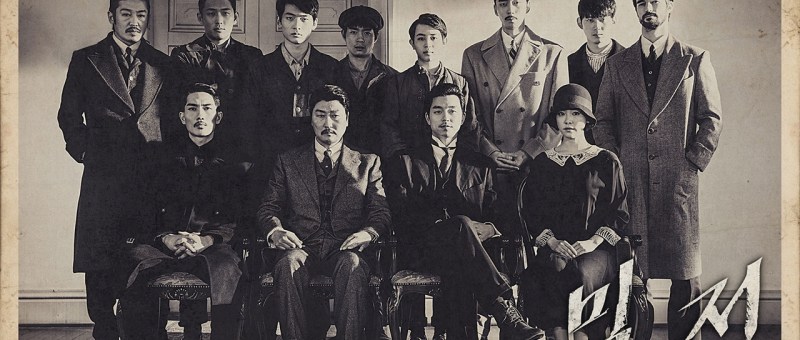
The Age of Shadows (밀정, Kim Jee-woon, 2016)

age-of-shadowsWhen the country of your birth has been occupied by another nation, what do you do? Do you fight back, insist on your independence and expel the tyrants, or quickly bow to your new overlords and resign yourself to no longer being what you once were? Kim Jee-woon becomes the latest director to take a look at Korea’s colonial past with the Resistance based thriller Age of Shadows (밀정, Miljung) which owes more than a little to Melville’s similarly titled Army of Shadows, as well as classic cold war spy dramas The Third Man and The Spy Who Came in From the Cold.
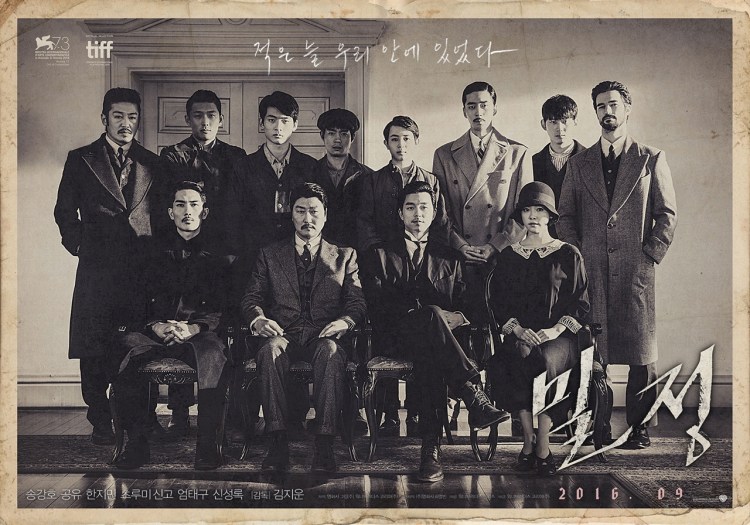
The film opens with an impressive set piece in which two Resistance members, Jang-ok (Park Hee-soon), and Joo (Seo Young-joo) are betrayed whilst trying to sell a Buddhist statue. Joo is captured but Jang-ok makes a run for it as what looks like the entire Japanese garrison of Seoul chases him, running gallantly over the picturesque Korean rooftops. Cornered, Jang-ok is confronted by Korean born Japanese policeman Jung-chool (Song Kang-ho), once a Resistance member himself and a former comrade in arms of Jang-ok. This is the point Jung-chool’s carefully crafted collaboration beings to fracture – his friend, rather than allow himelf to be captured, shouts “Long Live Korea” and blows his own brains out.

His mission a failure, Jung-chool is then moved onto the next investigation which aims to dig out the Resistance top brass in the city. Jung-chool’s Japanese boss Higashi (Shingo Tsurumi) wants him to infiltrate the cell headed by antique dealer and photographer Woo-jin (Gong Yoo) in the hope that it will lead them to head honcho, Jung (Lee Byung-hun). However, Higashi also saddles him with a very young but high ranking Japanese official, Hashimoto (Um Tae-goo), to “help” him bring in Woo-jin.

In Jung-chool’s final conversation with Jang-ok, his friend berates him for the decision to turn traitor and work for the Japanese rather than against them. Jung-chool asks him if he thinks independence is a credible aim, implying he’s long since given up believing in the idea of the Japanese ever being overthrown. Jang-ok evidently believed in it enough to sacrifice his own life, but other comrades have also abanoned the cause and actively betrayed the movement in much more serious ways than Jung-chool’s pragmatic side swapping.

Even if Jung-chool has decided that if you can’t beat the Japanese you may as well join them, he’s coming to the realisation that his superiors, even if they’ve previously treated him warmly, will never regard him as equal to the Japanese personnel. Hashimoto’s sudden arrival undercuts Jung-Chool’s career progress and reminds him that he serves a very distinct purpose which may soon run out of currency. Higashi, having seduced Jung-chool with promises of a comfortable life and praise for his skills, does not trust his Korean underling enough to send him out on his own. This personal wound may do more to send him reeling back to the other side than anything else, especially as his “replacement” Hashimoto is a crazy eyed psychopath who has half a mind to burn the entire city just to be sure of getting his man.

A man who’s been turned once can be turned again and so mastermind Jung decides to prod Jung-chool in the hope that he’ll become an asset rather than a threat. As he puts it, what’s more frightening than feeling your heart move and Jung-chool’s certainty has already been shaken. Song Kang-ho perfectly inhabits Jung-chool’s conflicted soul as his old patriotic feelings start to surface just as he begins to truly see his masters for what they are. Always keeping his intentions unclear, Jung-chool is the ideal double agent, playing both sides or maybe neither with no clear affiliation.

Like Army of Shadows, the final nail in the coffin is delivered by a sentimental photograph. In this chaotic world of betrayals and counter betrayals, there can be no room for love or compassion other than loyalty to one’s comrades and to the movement. Yet against the odds Woo-jin comes to trust Jung-chool implicitly, certain that he will finally choose the side of freedom rather than that of the oppressor. The relationship between the two men provides the only real moments of comic relief, though others members of the group are less well defined including an underwritten part for Woo-jin’s Chinese love interest (Han Ji-min) who isn’t permitted to do very much other than model some elegant twenties outfits.

Maintaining tension throughout, Kim intersperses psychological drama as betrayal piles on betrayal, with intense action sequences including a particularly claustrophobic train based game of hide and seek. Inspired by real historical events, Kim does not claim any level of authenticity but sets out to tell the story of the double dealing inside a man’s heart as he weighs up duty and self interest and asks himself how far he’s willing to go for the sake of either. The age of “shadows” indeed, these are hollow men whose identities have been eroded, living only for today but in certainty of the bright tomorrow. Kim’s examination of this turbulent period is both a big budget prestige picture with striking production values, and a tense, noir-inflected thriller in the mould of Melville, but also a nuanced human drama unafraid to ask the difficult questions which lie at the heart of every spy story.


Reviewed at the 2016 London East Asia Film Festival.

Original trailer (English subtitles)

Mission Milano (王牌逗王牌, Wong Jing, 2016)

mission-milanoDespite its title, Mission Milano (王牌逗王牌, Wángpái Dòu Wángpái) spends relatively little time in the Northern Italian city and otherwise bounces back and forth over several worldwide locations as bumbling Interpol agent Sampan Hung (Andy Lau) chases down a gang of international crooks trying to harness a new, potentially world changing technology. Inspired by the classic spy parodies of old, Wong Jing’s latest effort proves another tiresome attempt at the comedy caper as its nonsensical plot and overplayed broad humour resolutely fail to capture attention.
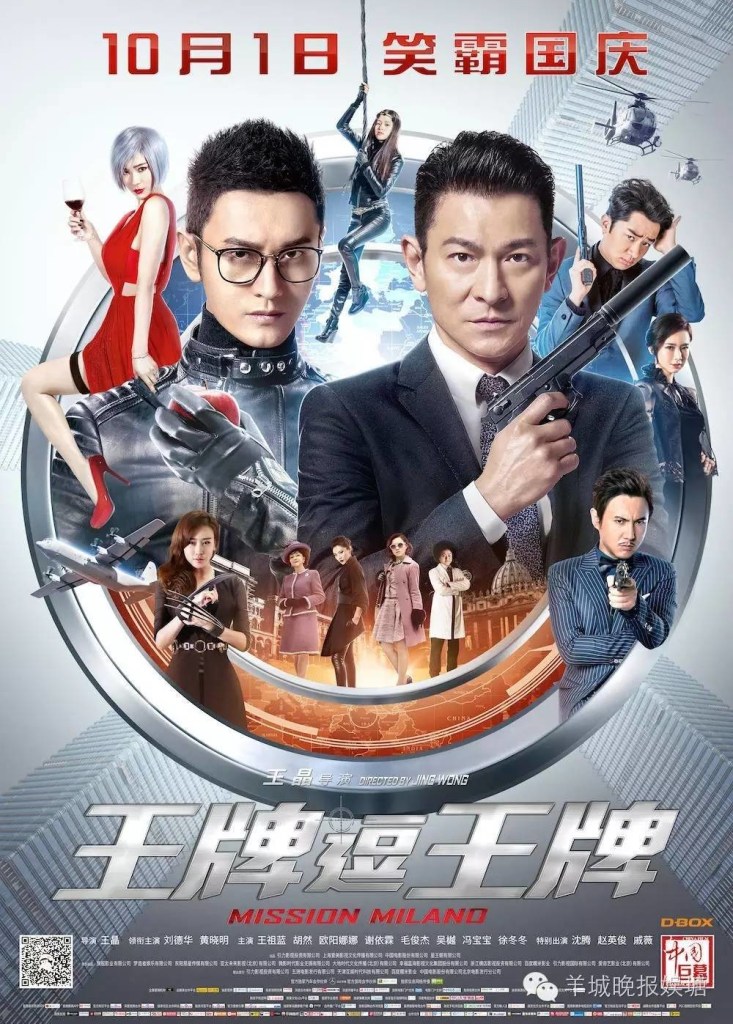
The film opens with its strongest scene as Andy Lau’s bumbling Interpol agent Sampan Hung escapes from a Parisian hotel room after being attacked by a machine-gun wielding, cross-dressing French maid. Like much of the rest of the film this sequence is not particularly connected to the subsequent goings on, but on his return to China Hung begins investigating reports that a top technology firm run by the descendants of a famous Robin Hood inspired criminal is about to unveil a new bio product known as Seed of God. During the meeting, the Swedish professor presenting the research is kidnapped by a Japanese vigilante group known as Crescent which Hung believes is working for the evil worldwide organisation KMAX. Teaming up with the tech firm’s CEO Louis Luo (Huang Xiaoming), Luo’s sister (Nana Ouyang), and sidekick (Wong Cho-lam), Hung sets out to retrieve the technology before it falls into the wrong hands.

Seed of God is a bioengineered crop which can flower even if thrown on stony ground. All it needs is water and away you go – instant mango tree wherever and whenever you want. This discovery could end world hunger, but it would also be very bad news for anyone involved in traditional agriculture. Hung and Luo recognise the danger and neither want to see this new technology end up with KMAX who would not be particularly interested in applying it ethically.

Originally reluctant teammates, Hung and Luo build up a buddy buddy relationship through competitive games before eventually agreeing to work together. Luo does most of the hardline fighting while Lau’s Hung backs him up with splapstick-style comic relief. Though often mildly exciting, the action sequences have a comedy vibe dominated by Hung getting thrown into ladies’ bathrooms or knocked back on his behind by a skilled lady assassin while Luo keeps losing his glasses to a particularly mean opponent. Unfortunately, Wong relies heavily on CGI for many of the action set pieces beginning with the obvious rooftops of Paris backdrop, right up to the sports car meets heavy duty lorry incident in the middle and aeroplane based finale.

The humour itself has a heavily retro feel filled with sexist jokes such as Hung crashing into hotel bedroom containing a confused topless woman in the opening sequence and a seduction section in the middle in which a key asset is wooed using her teenage love of Alain Delon and supposed desperation for male attention. Hung is clearly modelled on Bond and even has the agent number 119 though in truth he’s more like Maxwell Smart meets Inspector Gadget with his clean cut nerdiness and ubiquitous trench coat. He even has a Q-style tech specialist (named Bing Bing so we have the “classic” Li vs Fan joke) who’s made him a killer phone with every kind of spy feature conceivable including lightsaber, but can’t actually make a phone call. Add in genre tropes of unusual weaponry and laser filled corridors, and Mission Milano is looking very uninspired.

Despite its Italian destination, Mission Milano employs a frequent musical motif that it is distinctly Spanish – another clue to how all at sea the film is in terms of coherence. A minimal stab at romance between Luo and a friendly agent on the other side, and Hung’s ongoing pining for his ex-wife who left him because his world saving habit was just too stressful, attempt to add some character drama to the piece which remains lukewarm in approach to its cast. Lau turns in an uncharacteristically large performance, grinning and gurning his way through the lacklustre script,  but not even his presence can heal the many problems plaguing the film. Never as funny as it desperately wants to be Mission Milano is a trying experience which, although intermittently amusing, (thankfully) proves instantly forgettable.


Original trailer (English/Traditional Chinese subtitles)

The Fallen Angel (人間失格, Genjiro Arato, 2010)

fallen-angelThe Fallen Angel (人間失格, Ningen Shikkaku), based on one of the best known works of Japanese literary giant Osamu Dazai – No Longer Human, was the last in a series of commemorative film projects marking the 100th anniversary of the author’s birth in 2009. Like much of Dazai’s work, No Longer Human is semi-autobiographical, fixated on the idea of suicide, and charts the course of its protagonist as he becomes hopelessly lost in a life of dissipation, alcohol, drugs, and overwhelming depression.
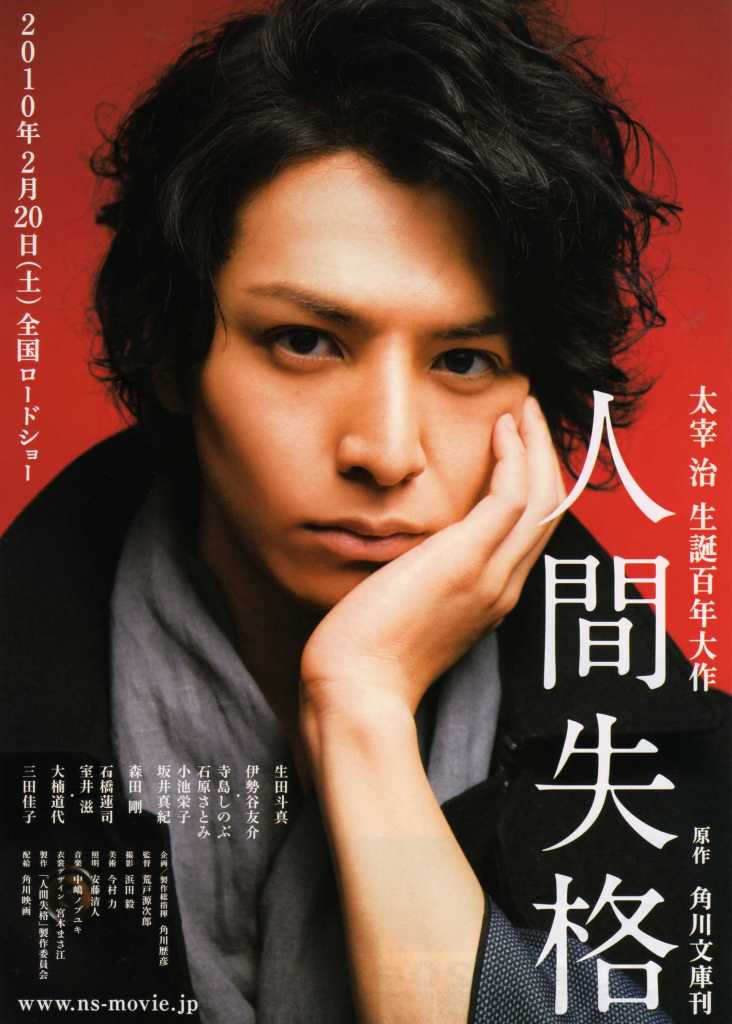
Even when we meet him as a small child, Yozo Oba (Toma Ikuta), feels himself set apart from his peers. Unable to connect fully with the people around him, Yozo gets through life by playing the clown. As a teenager, he meets another boy, Takeichi, who can see straight through his mask and encourages him in his artistic pursuits. Eventually, Yozo moves to Tokyo where he meets another artist, Horiki (Yusuke Iseya), who introduces him to the seedier pleasures of the city including drinking and hostess bars.

Yozo still feels adrift and is unable to cement his new found friendship with true connection. After asking Horiki to die with him (which he laughingly refuses to do), Yozo begins an ill-starred romance with a melancholy bar hostess with whom he does actually attempt double suicide. She dies, he doesn’t but his life is changed when he loses access to his familial wealth and is kicked out of university because of the scandal. Yozo has another shot at conventional happiness by briefly forming a family with a single mother and her little girl before leaving them because of problems resulting from his alcoholism. Eventually marrying a kind hearted woman, Yozo kicks the booze for a while and builds a career in manga but sure enough Horiki finds him and ruins his marital bliss by setting him back on the road to dissipation.

Arato makes a few changes to Dazai’s novel, mostly streamlining the book’s tripartite structure by eliding two events into one, but perhaps because of the well known nature of the story, he feels comfortable in making abrupt cuts and wide ranging shifts in terms of time. Dazai’s novel is much more focussed on the mental condition of its protagonist, whereas Arato has opted for a more overt display of the increasingly tense political environment with soldiers lurking in the background, later occupying a train shortly before the scene turns into a surreal segment in which Yozo reacquaints himself with all those he’s wronged throughout the course of the film.

Yozo’s tragedy is his inability to connect with other people even though he leads an ostensibly successful social life. Making himself an amiable presence, Yozo keeps people around him by making himself a figure of fun – a mask which gradually becomes far too heavy to wear. This buffoonish aspect of his personality is not very much in evidence in Arato’s film which focusses much more on his underlying depression than the joviality he uses to try and prevent anyone noticing just how broken he is inside. For this reason it becomes harder to see why everybody lets Yozo get away with his extremely bad behaviour for so long. Toma Ikuta captures Yozo’s listlessness and despair but without the necessary intensity to back them up and, ironically, without his sad clown routine Yozo does not always seem like someone anyone would want to hang out with for any great length of time.

Arato has recreated the novel’s pervading sense of numbness and despair to the letter with the consequence that his film remains resolutely cold. As appropriate as that may be, it makes it harder to achieve the kind of connection forged through Yozo’s first person narrative in the book. This approach brings out Yozo’s unpleasant qualities – his selfishness, weakness, cowardice, and propensity to addiction, but fails to display his better ones which lead to him being characterised as the ruined “angel” of the title. In distancing us from Yozo, Arato encourages us to see him either as a metaphor for the political turmoil taking place in his country during his lifetime, or simply as a someone whose intense self loathing eventually destroys his sense of self. What it does not encourage us to do is see that Yozo’s struggle is our own struggle, his despair is our despair felt to a greater or lesser degree. Too obtuse to be affecting, The Fallen Angel fails to capture the overwhelming nihilism of Dazai’s novel and ironically remains far too distant to achieve true connection.


Original trailer (no subtitles)

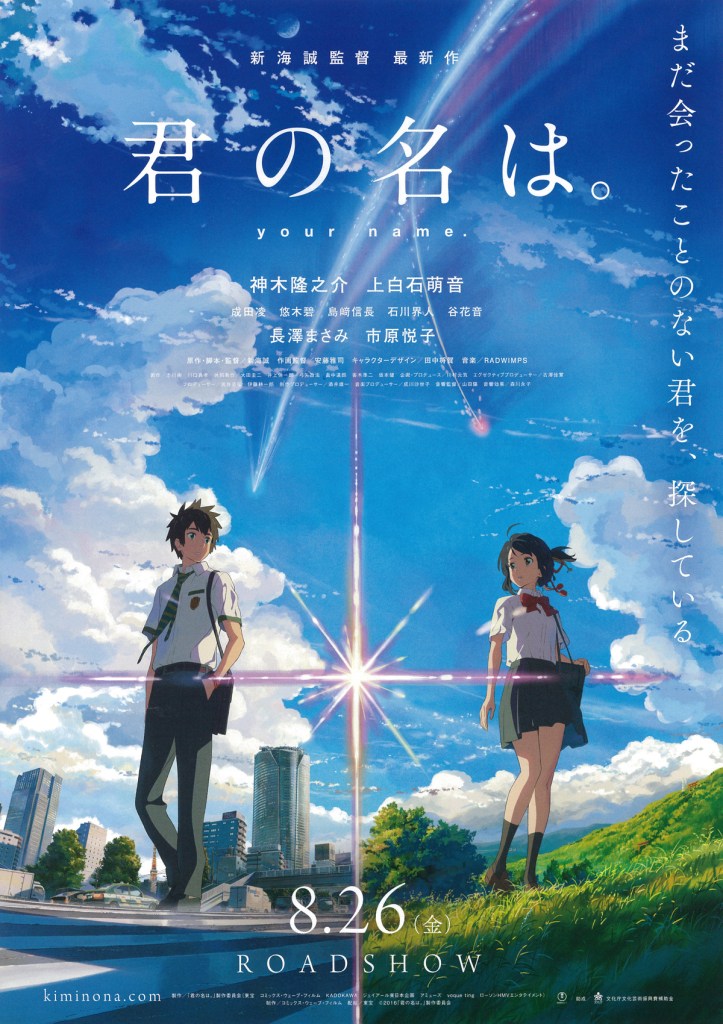
Your Name (君の名は, Makoto Shinkai, 2016)

your-nameIndie animation talent Makoto Shinkai has been making an impact with his beautifully drawn tales of heartbreaking, unresolvable romance for well over a decade and now with Your Name (君の名は, Kimi no Na wa) he’s finally hit the mainstream with an increased budget and distribution from major Japanese studio Toho. Noticeably more upbeat than his previous work, Your Name takes on the star-crossed lovers motif as two teenagers from different worlds come to know each other intimately without ever meeting only to find their youthful romance frustrated by the vagaries of time and fate.

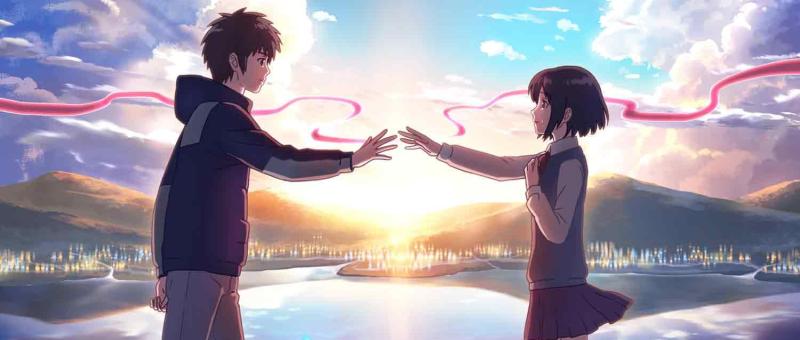
Mitsuha (Mone Kamishiraishi) is a typical country girl and daughter of a Shinto temple family who dreams of the urban sophistication of the big city. Taki (Ryunosuke Kamiki), by contrast, is a typical city boy living in Tokyo and taking full advantage of its cafes and mass transportation systems. One fateful day, each wakes up in the body of the other and must quickly adjust to living in someone else’s skin. Though each originally believes the events to have been merely a dream, friends and family members are quick to point out the strange behaviour of the two teenagers. Neither Mitsuha nor Taki maintains a clear memory of their time in the other’s world though they are able to keep in a kind of contact through their respective diaries (his on a smartphone, hers in a more traditional notebook). Beginning to develop a degree of mutual affection through their strangely acquired intimacy, Mitsuha and Taki each have a profound effect on the other’s life but fate seems content to keep them apart.

Body swap comedy is not an unusual genre in Japan (Obayashi’s similarly themed I Are You, You Am Me being a notable example which was even remade by the director himself thirty years later as Switching, Goodbye Me), nevertheless Shinkai mines the situation for all of its awkward comedy as Mitsuha and Taki get used to living as the opposite gender. Beginning with the obvious repeated joke of Taki waking up and squeezing “his” breasts, there are other issues to contend with from which pronoun to use to remembering to avoid slipping into a rural dialect. Taki, obviously at sea with how to get on as a girl, causes consternation by turning up late for school with messy hair and subsequently behaving in an unacceptably masculine way. Conversely when Mitsuha is playing Taki, she helps him sort out various things in his life through her feminine influence including getting him a date with his workplace crush.

The pair are indeed “star-crossed” as their romance is heralded by the arrival of a rare comet, watched by both at the same time, as it splits in two. The comet strike turns out to have a much more pressing importance than simply as a symbol of romantic destiny but neatly represents the central dynamic of Mitsuha and Taki as two halves of the same soul. The two are connected by the “red string of fate” visualised through Mitsuha’s long red hair ribbon which later makes a reappearance in Taki’s sake based dream sequence and serves to bind the two together. Mitsuha’s family also make traditional braided bracelets which, as her grandmother tells us, represent the flow of time itself, weaving narrative into dramatic knots.

The knot, in this case, is the comet strike which later threatens to keep the tragic lovers apart rather than bring them together. Recalling the devastating earthquake of 2011, the destruction wrought by such a catastrophic event does not stop at loss of life but becomes a great ongoing loss – things left unsaid, opportunities missed, lives unlived. If it were only possible to turn back time and somehow save all those people from harm. Mitsuha and Taki have been given just such an opportunity thanks to their usual connection.

Like many Shinkai heroes, Taki and Mitsuha later find themselves burdened with a sense of incompleteness, as if they’re continually searching, trying to regain something they’ve lost but are unable to put a name to. The memories of their shared past fade, dissipating like a dream upon waking leaving a only faint trace behind them, just enough to know that something is missing. Yet, journeys end in lovers meeting, and even in a metropolis as vast as Tokyo recognition is powerful force.

Shinkai takes his trademark aesthetic beauty to all new heights with his idyllic country landscapes, realistic cities, and the visually striking (if potentially deadly) fracturing of a comet. Much less deliberately downbeat than Shinkai’s previous work which often emphasised the impossibility of true love satisfied, Your Name is no less emotionally affecting even if its melancholy sense of longing persists until the very last frame.


Reveiwed at the BFI London Film Festival 2016

Original trailer (English subtitles)