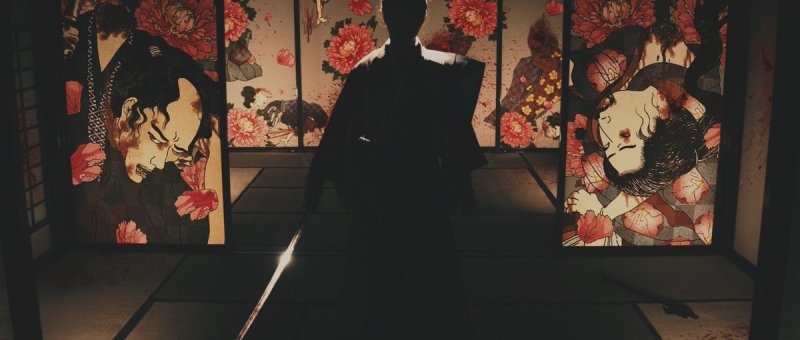
 All life is suffering, and all suffering is caused by desire. Ninko, the titular monk at the centre of this entertaining oddity from Norihiro Niwatsukino, seems to have taken this to heart and is suffering more than most in his attempts to reach Nirvana. Suffering of Ninko (仁光の受難, Ninko no Junan) takes its cues from the Hyaku-monogatari classical Japanese tales of ghosts and the supernatural as its seemingly comic story of a pretty monk and his ironic talent for attracting the wrong kind of attention gradually darkens until its unexpectedly strange finale. Visually striking if a little rough around the edges, Suffering of Ninko has a pleasantly organic quality as if its narrator were really making it up as she goes along only to tire of it a little by the end and give us a suitably spooky conclusion to send us on our way.
Ninko (Masato Tsujioka) is the most assiduous monk at his temple. His desire for asceticism knows no bounds as he spends his days cleaning, polishing the artefacts, reciting sutras and meditating. The problem is, Ninko is just too damn pretty. Every time he ventures into town the womenfolk go crazy, even getting upset if they discover he isn’t among the monks despatched on the daily alms harvesting mission. In fact, Ninko has also attracted the attention of the two gay monks at the temple which he seems to find a little irritating but unlike some of the others this is a very real problem for him as he’s decided to keep his mind and body pure though total celibacy. This unfortunate and quite ironic talent of his which makes him some sort of magnet for the repressed sexual desires of just about everyone actually makes him feel quite bad, arousing all this lust but ultimately unable to satisfy it.
After a strange encounter in the woods provokes a kind of spiritual crisis in the earnest Ninko, filling his world with bared breasts and erotic visions, the chief monk sends him off on a pilgrimage, reminding him that a denial of his baser emotions is not the same the same as facing them and will only result in additional suffering. Whilst on the road, Ninko meets up with violent ronin Kanzo (Hideta Iwahashi), and gets pulled into the strange goings on in a mountain village where the men have been gradually going missing. The locals have laid these disappearances at the feet of Yama-onna (Miho Wakabayashi) – a ghostly forest bound presence who seduces wayward men only to feast on their vitality.
Beginning almost like a rakugo tale, the central joke of Ninko’s ongoing, largely self imposed, suffering is in his ironic talent for arousing sexual desire in places which he does not want it (which is to say everywhere). More than just good looks, Ninko seems to have some kind of magnetic power which sends almost everyone he meets wild with insatiable lust which is quite the problem seeing as he’s committed to remaining celibate. He may think that he does not feel desire but as Kanzo later tells him, this denial is a kind of self deception masking the fact that he feels it all too much. The strange and mystical encounter with a noh mask wearing woman (?) in the forest leads to a bizarre sequence of beautifully choreographed visions of erotic ecstasy accompanied by Ravel’s Bolero after which Ninko has some kind of breakdown resulting from sexual frustration.
This first encounter with the supernatural leaves him with a burnt hand and a burning mind but also with the lingering suspicion that his curse may not be of entirely mortal origins. Thus he originally declines to accompany Kanzo on his quest to end Yama-onna’s days of wild abandon in the woods to enter a period of introspective questioning in wondering if he and Yama-onna are of a piece in their mirrored need for and denial of sexual pleasure. When he finally meets her he gets a kind of answer to his question which relegates the monkish Ninko to the realms of the forgotten as the newly born legend of Ninko-bo assumes his form.
Inspired by the classical nature of the tale, Niwatsukino makes striking use of animation inspired by scroll paintings, ukiyo-e prints, and shunga all accompanied by the gentle voice of the narrator to add to the mythic atmosphere. In keeping with its inspiration, the narrative has a suitably throw away quality as if it were all being made up on the spot which of course means that it drags here and there and ends somewhat abruptly but then that is the nature of the tale. A psychedelic oddity which revels in a sense of playfulness undercut by dark spirituality and existential dread, Suffering of Ninko is a story for a stormy night, strange and a little bit scary but with its tongue tucked firmly in its cheek.
Available to stream online from Festival Scope until 20th February 2017 in conjunction with International Film Festival Rotterdam.
Original trailer (English subtitles)
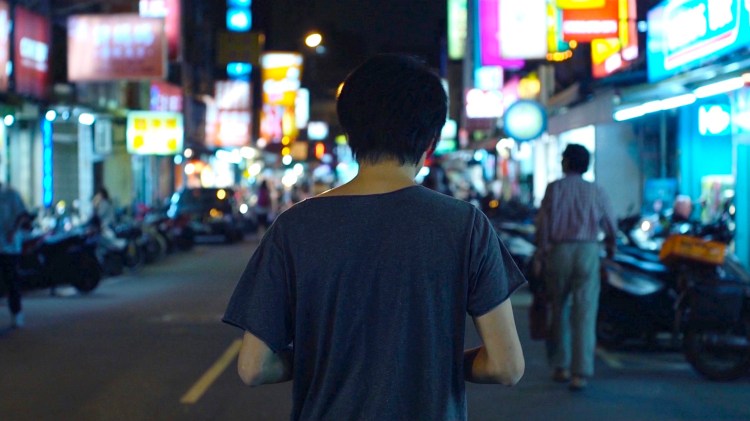 We don’t move forward in this dance, comments the lady currently being waltzed by a charming lost soul. Don’t worry, he says, that’s not a bad thing. Indeed, Out There, the first independent feature film from director Takehiro Ito exists in a fixed yet liminal space, here and not there as its protagonist finds himself without the proper place to be. Conceived as a way of salvaging some of the material collated for a documentary on the late Taiwanese director Edward Yang, Out There takes more of its cues from Tsai Ming-liang or even Lav Diaz in its preoccupation with the intersection between time, existence, and place. If that all sounds to weighty, there’s a little whimsy in here too, but the intent is a serious one as nationhood (or the lack of it), drifting cultures, love and history all conspire to confuse and distract the course of a young man in search of an identity which is entirely his own.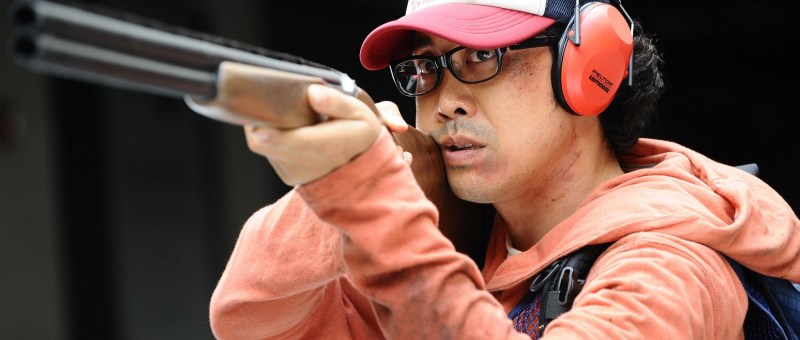
 Japan has never quite got the zombie movie. That’s not to say they haven’t tried, from the arty Miss Zombie to the splatter leaning exploitation fare of Helldriver, zombies have never been far from the scene even if they looked and behaved a littler differently than their American cousins. Shinsuke Sato’s adaptation of Kengo Hanazawa’s manga I Am a Hero (アイアムアヒーロー) is unapologetically married to the Romero universe even if filtered through 28 Days Later and, perhaps more importantly, Shaun of the Dead. These “ZQN” jerk and scuttle like the monsters you always feared were in the darkness, but as much as the undead threat lingers with outstretched hands of dread, Sato mines the situation for all the humour on offer creating that rarest of beasts – a horror comedy that’s both scary and funny but crucially also weighty enough to prove emotionally effective.
 Terra Formars – Terror for Mars? It’s all about terror in the quest for terra and reform in Takashi Miike’s bug hunt extravaganza adaptation of Yu Sasuga and Kenichi Tachibana’s manga. In fact, much of the plot is more or less the same as Aliens, but our motley crew is not a crack team of space marines headed by a recently awoken from stasis super survivor who proves unexpectedly dextrous in a robotic forklift exoskeleton, but a collection of human “bugs”, parasitical criminals who’ve each been made an offer they can’t refuse. High budget and boasting a starry cast, Terra Formars (テラフォーマーズ) definitely falls into the throwaway Miike category and proves curiously dull despite its ridiculous set up, but then if you happen to be into bugs there’s really a lot to like here.
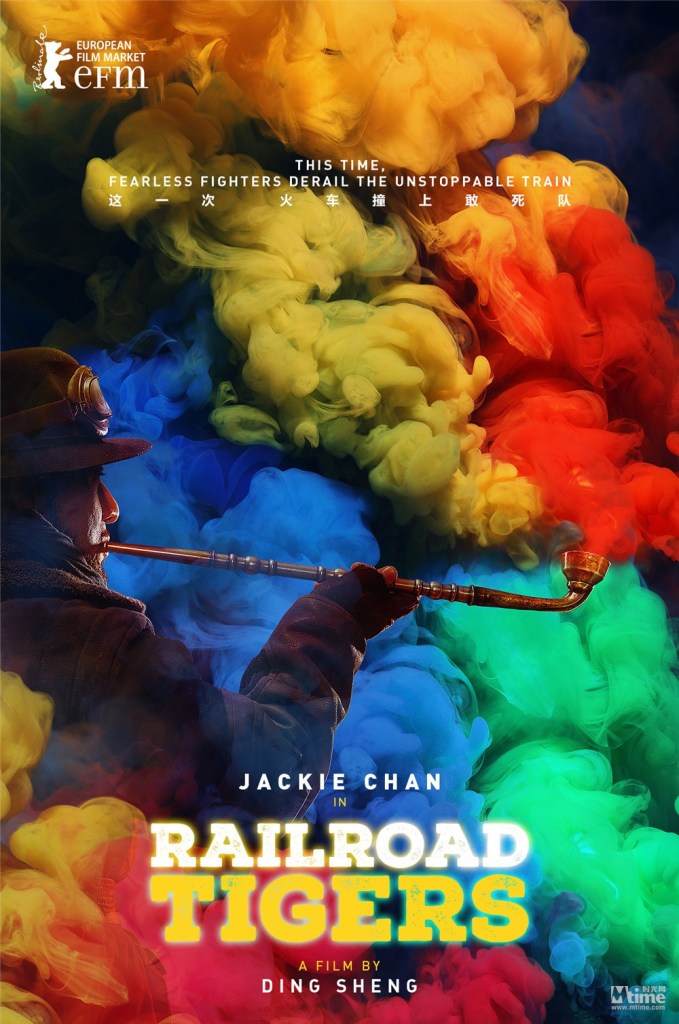 Trains! They seem to be the latest big thing in Chinese cinema, but at least Railroad Tigers (铁道飞虎, Tiědào Fēi Hǔ) has more rolling stock on offer than the disappointingly CGI enhanced effort which formed the finale of
  Prolific as he is, veteran director Yoji Yamada (or perhaps his frequent screenwriter in recent years Emiko Hiramatsu) clearly takes pleasure in selecting film titles but What a Wonderful Family! (家族はつらいよ, Kazoku wa Tsurai yo) takes things one step further by referencing Yamada’s own long running film series Otoko wa Tsurai yo (better known as Tora-san). Stepping back into the realms of comedy, Yamada brings a little of that Tora-san warmth with him for a wry look at the contemporary Japanese family with all of its classic and universal aspects both good and bad even as it finds itself undergoing number of social changes.
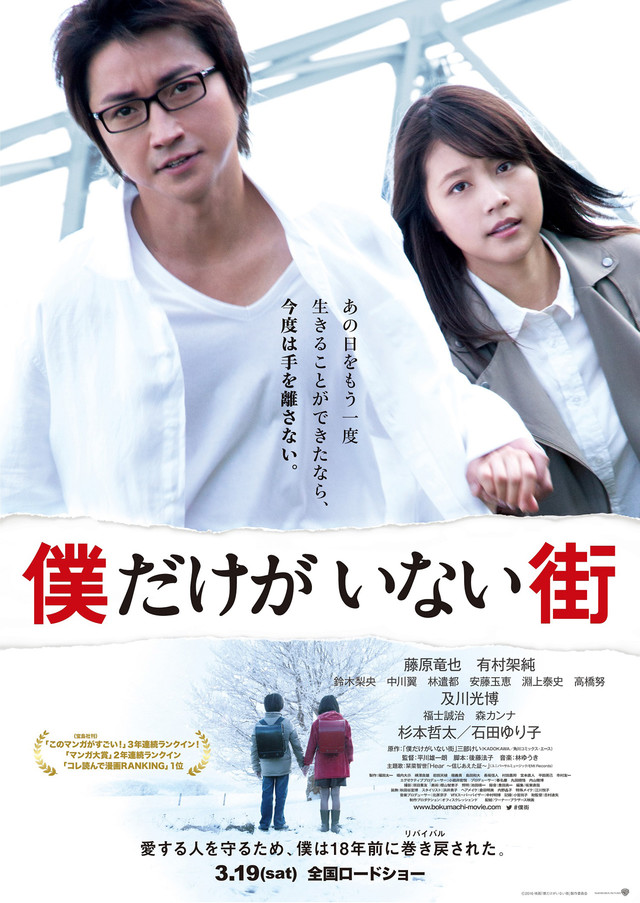 Erased (僕だけがいない街, Boku Dake ga Inai Machi), a best selling manga by Kai Sanbe, has become this year’s big media spectacle with a 12 episode TV anime adaptation and spin-off novel series all preceding the release of this big budget blockbuster movie. Directed by TV drama stalwart Yuichiro Hirakawa, the live action iteration of the admittedly complicated yet ultimately affecting story of a man who decides to sacrifice himself to ensure his friends’ happiness, acquits itself well enough for the most part but changes two crucial details in its concluding section which unwisely undermine its internal logic and make for an unsatisfying conclusion to the ongoing puzzle.
 Review of Hur Jin-ho’s The Last Princess first published by
  The history of LGBT cinema in Korea is admittedly thin though recent years have seen an increase in big screen representation with an interest in exploring the reality rather than indulging in stereotypes. The debut feature from Lee Hyun-ju, Our Love Story (연애담, Yeonaedam), is among the first to chart the course of an ordinary romance between two women with all of the everyday drama that modern love entails. A beautiful, bittersweet tale of frustrated connection, Our Love Story is a realistic look at messy first love taking place under the snowy skies of Seoul.
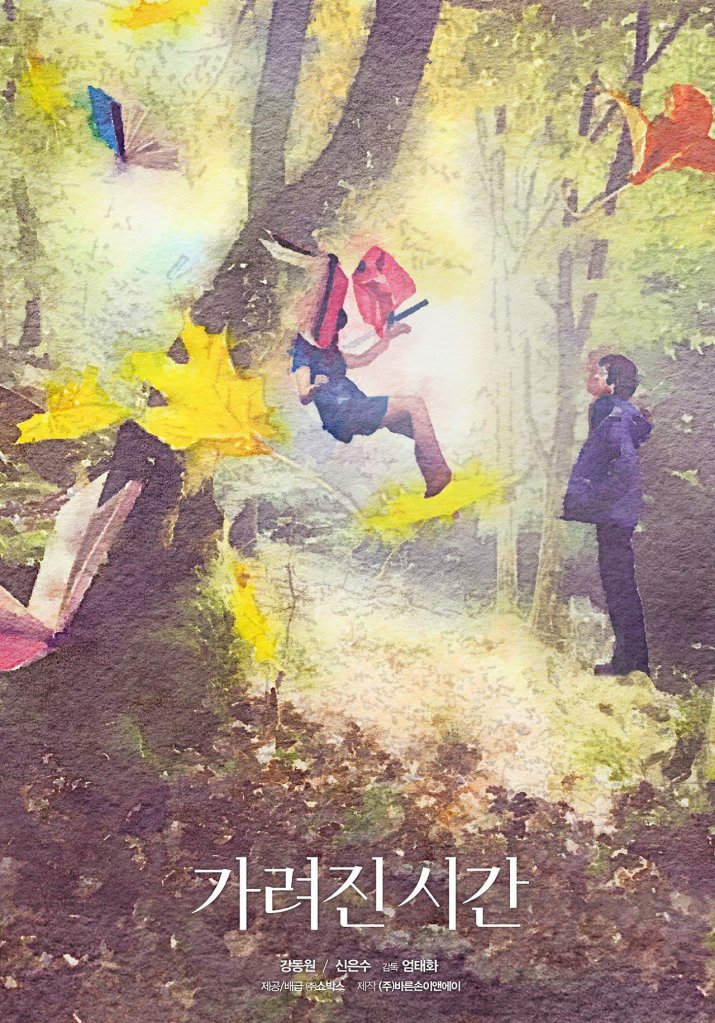 When no time passes, does anything change? Yes, and then again, no, if Um Tae-hwa’s Vanishing Time: A Boy Who Returned (가려진 시간, Garyeojin Shigan) is to be believed. Dealing with the nature of time, connection, and faith Um’s film is a supernaturally tinged fairytale which never seriously entertains the more rational explanation offered by the naysayers, but is filled with the innocence of childhood and the essential naivety of adolescence. Melancholy, though somehow uplifting, Vanishing Time neatly avoids the pitfalls of romantic melodrama for a genuinely affecting coming of age story as its heroine is forced to make peace with her traumatic past through accepting the loss and sacrifice of her present.
 Windows on Worlds