The Villagers (동네사람들, Im Jin-soon, 2018)

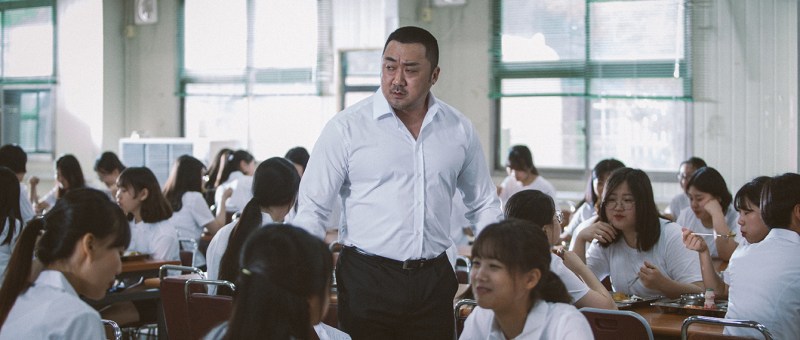
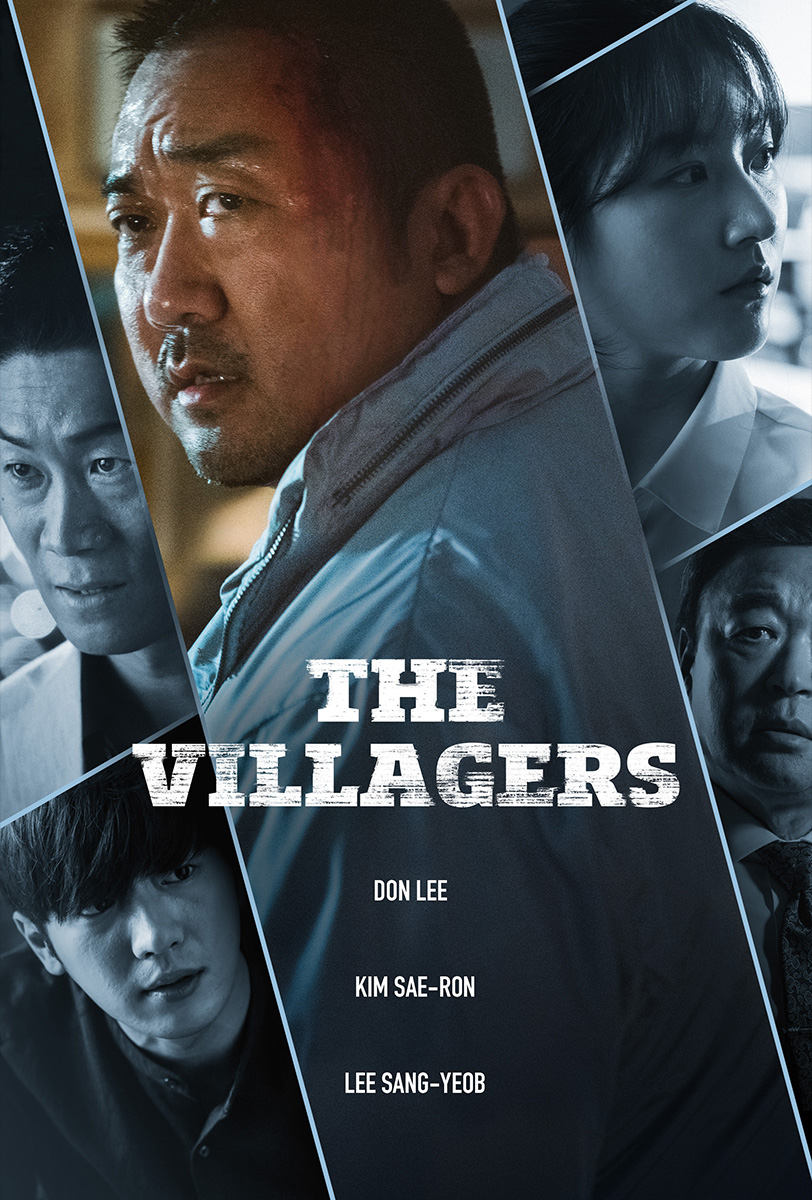
Trying to make a fresh start after being fired as a boxing coach in Seoul for challenging match fixing practices, a rookie teacher finds himself embroiled in small-town conspiracy in Im Jin-soon’s Ma Dong-seok vehicle, The Villagers (동네사람들, Dongnesaramdeul, AKA Ordinary People). Unlike the big bad city, this rural backwater is mired in feudalism and corruption as if it were stuck in the authoritarian past in which everyone keeps their head down and minds their own business rather than challenging injustice or trying to improve the lives of those around them.

What Ki-chul (Ma Dong-seok) and high schooler Yu-jin (Kim Sae-ron) have in common is that they’re both outsiders. Yu-jin transferred to the high school from Seoul and has been branded a troublemaker by the judgmental teachers. But despite the school’s seeming authoritarianism, the pupils have little respect for the school system and openly flout the rules by smoking on school premises and being rude to the staff. It transpires that Ki-chul has basically been hired as a kind of muscle, charged with getting students who haven’t paid their fees or dinner money to cough up ahead of an upcoming audit of the school’s finances. Many of the students he approaches brush him off as if they simply don’t intent to pay, but the school doesn’t seem to be interested in finding out why they might not be able to or if there are problems at home. Yu-jin too rolls her eyes he asks her, but in her case she’s unwilling to finance an institution that’s not doing anything for her even if as Ki-chul advises her they won’t let her graduate if she doesn’t.

Ki-chul seems uncomfortable with his new role and tries to do what he can to help, but encounters resistance from the teachers who tell him there’s no point worrying about kids like these. If they skip school, they’re branded runaways and no attempt is made to look for them. The teaching staff lowkey threaten Ki-chul by reminding him his job’s to get the money and he doesn’t want to make trouble for himself when he was lucky to be employed here in the first place. And so he finds himself conflicted when he spots Yu-jin in town getting herself into dangerous situations trying to find out what’s happened to her friend Su-yeon (Shin Se-hwi) who’s been missing for days but the police won’t seem to do anything. Yu-jin tells him that adults can’t be trusted, especially not the police, but he thinks it’s teenage alienation before trying to report the case again himself through a friend on the force and having it rejected.

The fierce resistance to even mentioning Su-yeon ought to tip them off that’s something bigger’s going on, but everyone is focussed on the upcoming election in which the headmaster of the school is standing for governor that nothing’s getting done at all. Ki-chul tries to report another teacher for harmful behaviour towards students, but is yelled at for exposing the school’s business by going to the police “over some runaway”. He’s reminded to keep his head down and mind his own business, even while Yu-jin continues to be in danger and Su-yeon is still missing. An orphan whose parents had massive debts to loansharks, Su-yeon was forced to work in a bar to support herself and her grandmother. She dreamed of being beautiful and free as an adult, but was badly let down by many of those around her including the school who decided that girls like her weren’t worth helping.

Of course, Ki-chul can’t help standing up for justice through the medium of his fists and smashing his way to the truth while trying to keep Yu-jin safe. If someone disappeared Su-yeon, they won’t think twice about doing the same to Yu-jin, though she of course thinks she’s invincible and is too young to think sensibly about her own safety while desperate to find out what’s happened to her friend. They are both, however, trapped by the legacy of an authoritarian era in which the police works only for the powerful and dirty local politics taints everything around it as everyone desperately tries to ingratiate themselves with the new regime while avoiding stepping out of line and endangering themselves. Ki-chul, however, has not much interest in that and is determined to smack some sense into gangsters and law enforcement alike in an effort to show that the world doesn’t necessarily need to be this way if only more people were willing to stand up to cronyism and exploitation.


The Villagers is released Digitally in the US Oct. 7 courtesy of Well Go USA.

Trailer (English subtitles)

Three Adventures of Brooke (星溪的三次奇遇, Yuan Qing, 2018)

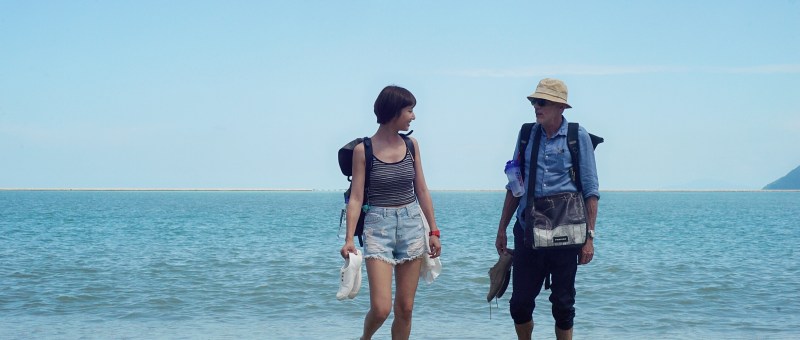
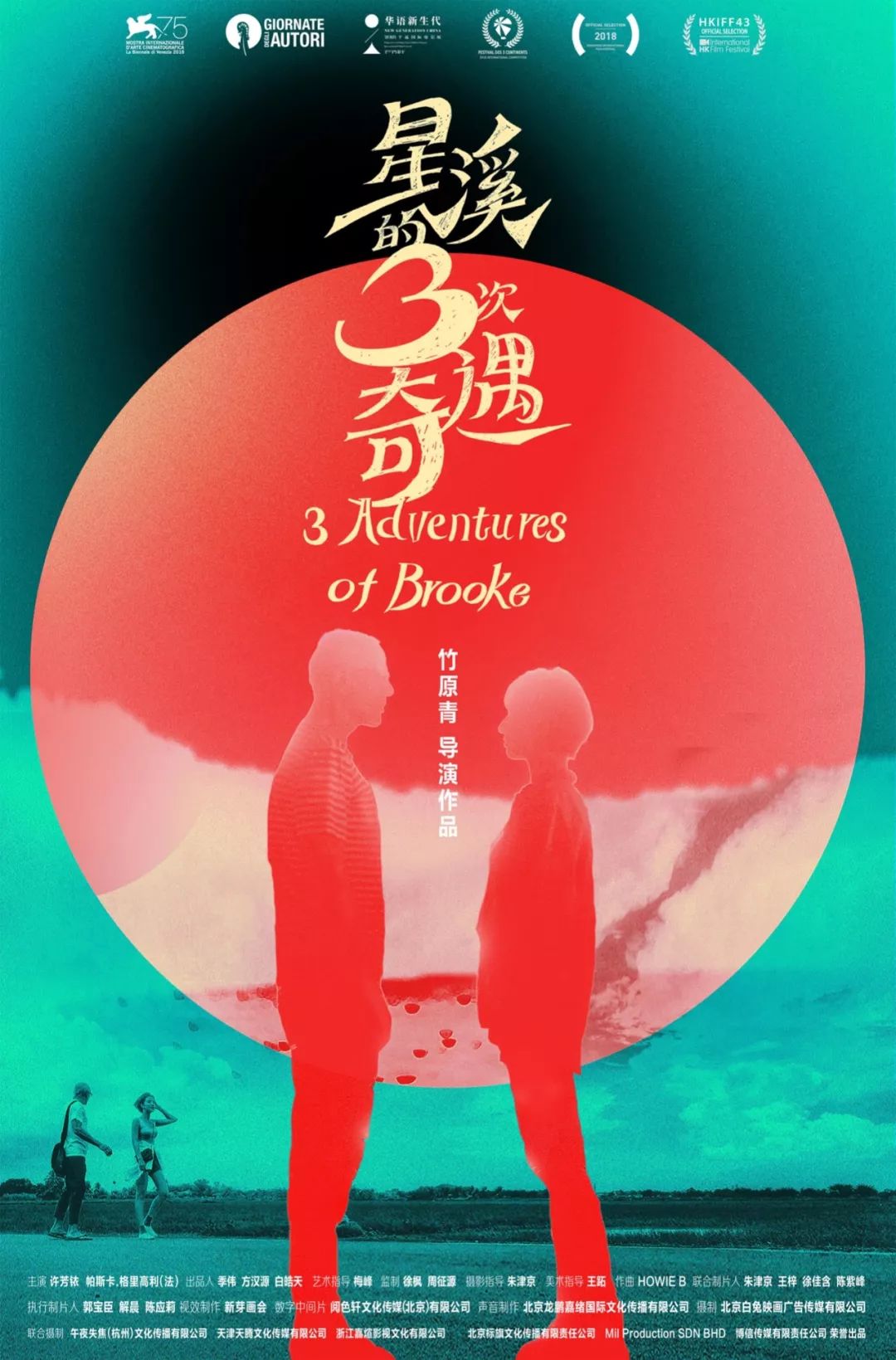
“The people you meet are only reflections of your own state of mind” according to a sympathetic tarot reader in Yuan Qing’s Three Adventures of Brooke (星溪的三次奇遇, xīng xī de sāncì qíyù). Perhaps that’s why she herself is slightly different each time we meet her, experiencing three sets of parallel encounters as she searches for meaning in a foreign land. Echoing Rohmer’s The Green Ray, Brooke’s three encounters allow her to examine more of herself until she learns to open her heart, no longer suspicious or afraid but ready to see the world’s beauty even in its sadness. 

20-something Brooke (Xu Fangyi) has come to Alor Setar in Malaysia from Beijing. This appears to be a concrete fact, though many other things about her will change, at least in our perception of her. On June 30, her bicycle gets a puncture and she’s stuck, alone, in the middle of a country road without knowing who to ask for help. A series of strangers come to her rescue beginning with Ailing (Ribbon Ooi), a local girl who can speak Mandarin as well as Malaysian and Hokkien, who happens by Brooke looking distressed and takes her home where she shares some handy bicycle repair tips while explaining that her tyres were too pumped up for the head local climate and likely to explode. 

Brooke tells Ailing that she came to Alor Setar to visit her researcher father, but that he preferred to hang out with his colleagues, all geeky middle-aged men, playing mahjong and singing karaoke, so she got bored and decided to go travelling. The central crisis occurs when Brooke ventures into a shop selling crystals and is convinced to buy an extremely expensive one which is apparently something of a unique item. Brooke shows the crystal off to Ailing, but she’s quietly outraged, sure that Brooke has been taken advantage of by the unscrupulous salesman. Ailing takes it upon herself to try and get some of the money back, while Brooke assumes that Ailing has tricked her and made off with her “extremely valuable” piece of rock which the salesman assured her would help her find all the things she desires. In a strange way it does. Making her first enquiry with the tarot reader, she’s told that her own suspicious nature is to blame, the stone isn’t missing only in the wrong place and will be found again. She realises that she was wrong to suspect Ailing who has become a genuine friend, while regaining the stone for a much lower price only makes her question its value. 

It’s value and fear that concern her in second adventure which is taken with three chatty part-time council workers apparently working on a regeneration project designed to “accentuate” historical culture to make it more desirable to the young, though their intentions ma perhaps destroy the peculiar tranquillity of Alor Setar, turning it into just another anonymous town of glass and steel. This time around, Brooke tells them that she’s an anthropologist interested in the relationship between people and cities, but spends the day desperately trying to get away from the three guys who are both boring and perhaps mildly threatening in their determination to railroad her into doing as they please. 

The second encounter proving hugely satisfactory, on the third iteration of June 30, Brooke finds herself desperately pushing her bike towards somewhere that might be able to help her, eventually arriving at a garage where she meets melancholy blocked writer, Pierre (Pascal Greggory). This Brooke is a wounded widow, though unlike her previous two incarnations she already knows the secret of “Alor Setar” and has come because of it. Asked what “Alor Setar” meant, Ailing could only reply that it was just a place name and otherwise unimportant, while the guys had made a point of having a plaque made in English explaining that it means “starry brook” which happens to be the same as Brooke’s Chinese name. She’s come hoping to see this titular waterway, but is repeatedly told that it doesn’t exist before being guided towards it by a rather snarky “god”, only to be disappointed on its discovery. Pierre, meanwhile, is on a search for Blue Tears, on which she decides to accompany him, unburdening herself on her recent trauma to quiet, ironically fatherly older man on his own quest for meaning. “It’s a sad and beautiful world” he murmurs, accidentally or otherwise quoting Jarmusch’s Down By Law. The Blue Tears burn out bright, lighting the way as they go. Age has taught Pierre that it’s enough to live peacefully surrounded by the people you love, while Brooke is learning something similar in opening her heart to small moments of beauty and the fleeting joy of serendipitous meetings.


Trailer (English subtitles)

Red Flowers and Green Leaves (红花绿叶, Liu Miaomiao & Hu Weijie, 2018)

“They do things their way. We do ours our way” according to the rapidly maturing young husband at the centre of Liu Miaomiao & Hu Weijie’s touching marital romance, Red Flowers and Green Leaves (红花绿叶, hónghuā lǜyè). Shining a light on the under-explored culture of the Hui Muslim minority in China’s northwest, Liu and Hu’s heartfelt drama has some questions to ask about the potentially destructive effects of traditional culture, but ultimately allows its young couple to discover their own kind of happiness as they learn to understand each other while embracing their own senses of natural goodness.

The hero, Gubo, was diagnosed with a mysterious illness, apparently similar to epilepsy, some time in childhood, and has been written off by those around him ever since. Because of a deep sense of shame and inadequacy stemming from his condition which threatens but does not often interfere with the quality of his everyday life, he has long convinced himself that he will never marry or be very much of anything at all because he has “nothing to offer”. His well-meaning mother keeps trying to marry him off, but Gubo is convinced she does it to assuage her feelings of guilt in blaming herself for his illness (he does not blame her, but does harbour resentment towards the village’s irritating doctor, Li Feng). In a surprise development, Gubo’s aunt appears to have found the ideal match in an improbably beautiful young woman, Asheeyen, but his mother remains uncertain that Gubo can be talked into it. A conversation between the two older women makes plain that the reason the beautiful Asheeyen has not yet married has something to do with an incident in her past which has made her unsuitable in the eyes of some for marriage. Though the older generation are aware, they decide that it’s better the youngsters do not know of the other’s “issues” and that they rush the marriage through as soon as possible to prevent it potentially breaking down. 

Despite himself, Gubo is smitten and allows himself to be swept into marriage but their early relationship is indeed as awkward as one might expect. Gubo, a kind and sensitive person, is keen to stress that he means to put no pressure on the nervous Asheeyen who spends most of their wedding night crying, but the distance between the pair even as Asheeyen blends seamlessly into the household, arouses the suspicions of the nosy aunt whose gentle prodding (secretly removing the second duvet to force them to share) begins to have the desired effect. But the central problem remains that each remains ignorant of the other’s “secret” and worried what will happen when it is eventually revealed. For Gubo that occurs when he’s turned down for social support after being unfairly usurped by Doctor Li who swipes it for his own disabled wife by wielding his social status against the mild-mannered Gubo who’d rather not have to deal with him anyway. 

Doctor Li does indeed seem to do more harm than good, even if Gubo’s father later dismisses everything he says as “bullshit” not to be taken seriously. Li feels Gubo blames him for his condition because of some treatment he gave him as a child, while Gubo appears to resent him for constantly harping on about the limitations of his illness which seem to be far exaggerated. Doctor Li doesn’t quite think people like Gubo should marry at all, let alone have children. Even Gubo’s haughty brother Shuerbu, preparing to enter the military academy, writes him off a useless idiot while intensely jealous of his beautiful wife. When the couple eventually conceive a child, Doctor Li goes so far as to suggest that it shouldn’t be born because Gubo’s condition may be hereditary and he finds it distasteful for him to have a child, while Shuerbu thinks it’s unfair because Gubo will not be able to look after it and the burden will fall disproportionately on Asheeyen. 

Asheeyen, by contrast, is mildly ambivalent to her circumstances in view of the mysterious past but is also struck by Gubo’s goodness. Her sister-in-law, while openly criticising her brother as a husband, agrees that Gubo is a “decent” man, the criteria being a mix of the ability to provide material comfort with a genuine intention to care. Realising that they both have secrets the other was not aware of reawakens Gubo’s sense of inferiority, reminding him that they’ve been paired off together because they were each viewed as somehow “damaged”. Discovering Asheeyen’s past sends him into a petulant, depressive funk that threatens to ruin everything in a mistaken bout of destructive male pride, but eventually love wins out. Asheeyen and Gubo may have been railroaded into a traditionally arranged marriage not quite against their wills, but that doesn’t mean that they have to go on doing everything traditionally, taking their elders’ advice at face value and always falling victim to the unpleasant Doctor Li who reacts to Gubo’s grudging agreement to buy his scooter even though Doctor Li is always telling him he’s too disabled to ride one because Asheeyen could use it with a surprised “I suppose we even have women driving trains these days”. Coming together, the couple are resolved to do things in their own way and make their decisions together, no matter what the future might bring.


Trailer (English subtitles)

Homestay (ฮมสเตย์, Parkpoom Wongpoom, 2018)

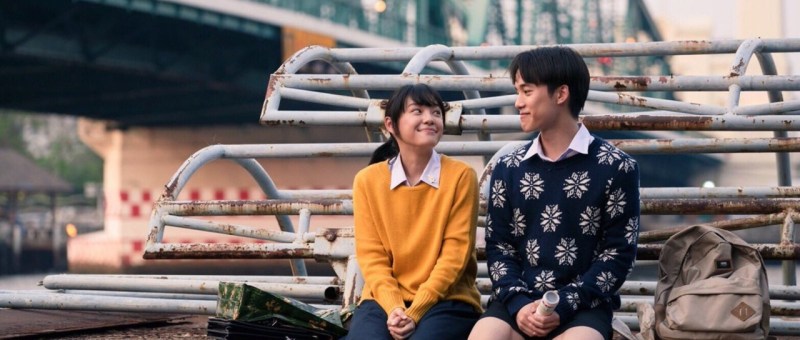
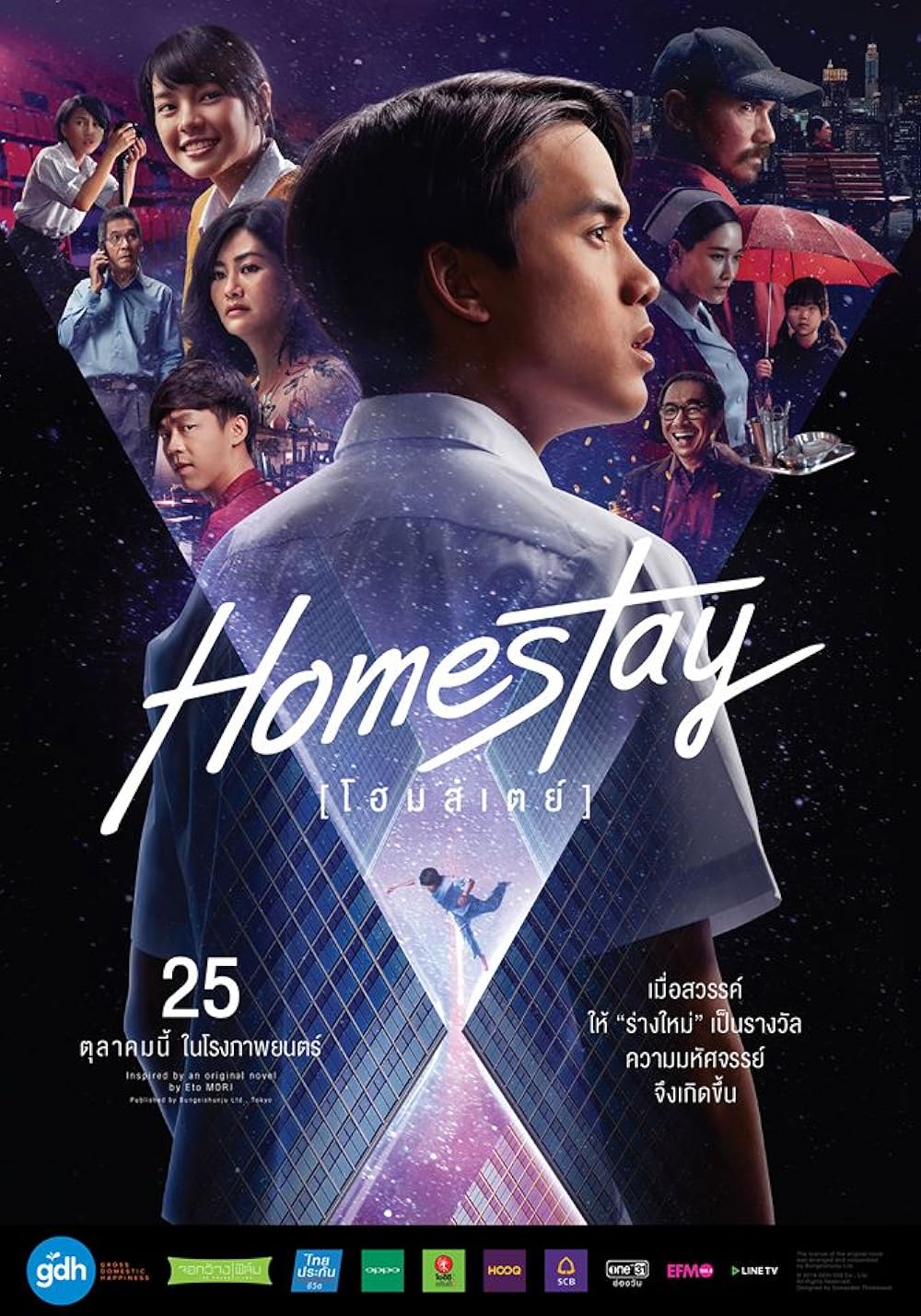
“You got a prize!” the hero of Parkpoom Wongpoom’s spiritually-tinged existential drama Homestay (ฮมสเตย์) is told, though he won’t really realise the kind of gift he’s been given or that in reality he had it all along until the end of the picture. Based on a Japanese novel, the film is part mystery, part psychodrama as the hero is charged with finding out who caused the young man whose body he’s taken over to take his own life and why. If he manages to figure out the answer within the 100-day time limit, he can extend this “homestay” indefinitely and win the chance at a new life. If he fails, he’ll die and won’t even be reborn.

Taken another way, this Min (Teeradon Supapunpinyo) trying to understand why he did what he did having apparently lost his memories after his traumatic experience of being clinically dead for an entire day. In any case, he’s helped and hindered by a collection of “guardians” who appear to taunt him and issue reminders about his time running out. Though no one suspects Min is not Min, they all remark that seems like a different person from his new ability to eat durian fruit to his outward cheerfulness. As for why he hasn’t been attending school and even missed a set of important exams, they’ve been told he had “the flu” and seem to believe it. But even as this fresh soul seems to ease into Min’s life and originally finds it not bad enough to want to die to escape, he soon begins to discover fracture points in Min’s reality.

The biggest of those would be friction with unsympathetic brother Menn (Natthasit Kotimanuswanich) along with animosity towards his father who apparently gave up a steady job as a teacher to join a multi-level marketing scam peddling vitamins. The other Min was apparently embarrassed by him, as is new Min when he turns up at school and tries to recruit his classmates while giving him a bag of samples for one of the teacher’s which turns out to be a trick to get him to see a child psychologist. Old Min also resented him for the way he treated his mother who works at a factory in another city while he reduces the family to financial ruin even going so far as to sell her wedding ring. 

But as much as he wants to know about Old Min, New Min is also determined to start again. He gets a fancy haircut and starts dressing in a snappier fashion in part in hope of getting together with Pi (Cherprang Areekul), his crush before and after, while less than kind to old friend Li (Saruda Kiatwarawut) who also seems to have a crush on him. The more he finds out about how Old Min lived, the more his world darkens. He begins to understand why he might have wanted to end his own life and feels as if it’s everyone else’s fault or the essential corruption of the world. But what he gradually comes to understand is that it was a choice he made himself. Having turned too far inward, old Min lost the ability to see that others around him were also suffering. He couldn’t see how unhappy his mother was in her marriage, nor his father’s humiliation, or how hard and lonely it must also have been for his brother who dreamed of studying abroad solely to escape. “Stop thinking that no one loves you,” Menn eventually tells him in admonishment of his tendency to take it all on himself.

To that extent, life itself is the prize and that was something Min already had though his vision had been clouded by his intense pain and sense of futility. Guided by his post-death experiences, Min awakens to the suffering all around him and in an odd way feels both less alone and a greater responsibility not to cure it but simply to be present and more compassionate towards others. Parkpoom Wongpoom reflects his dilemma in the ever present tonal incongruity. New Min’s school life is shot like a typical rom-com complete with jaunty score only for him to suddenly find himself confronted by one of his Guardians and reminded his time is running out, as it is for us all. Strangely uplifting even in its touches of existential horror, the film has a genuine empathy for its embattled hero in his moments of selfishness and self-obsession as he begins to find his way back towards a less bleak existence through discovering the power of mutual compassion and forgiveness.


International trailer (English subtitles)

Mechanical Telepathy (メカニカル・テレパシー, Akiko Igarashi, 2018)

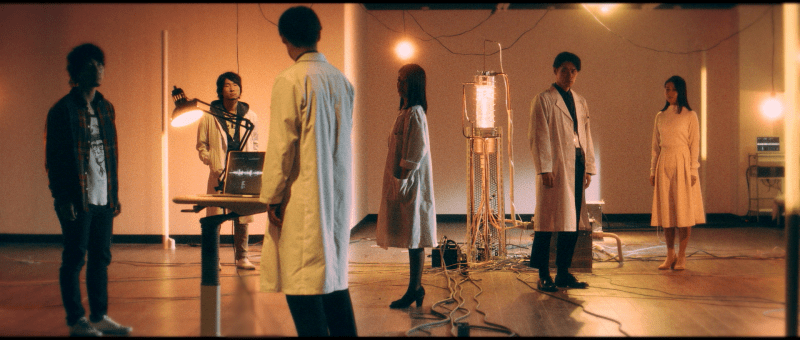
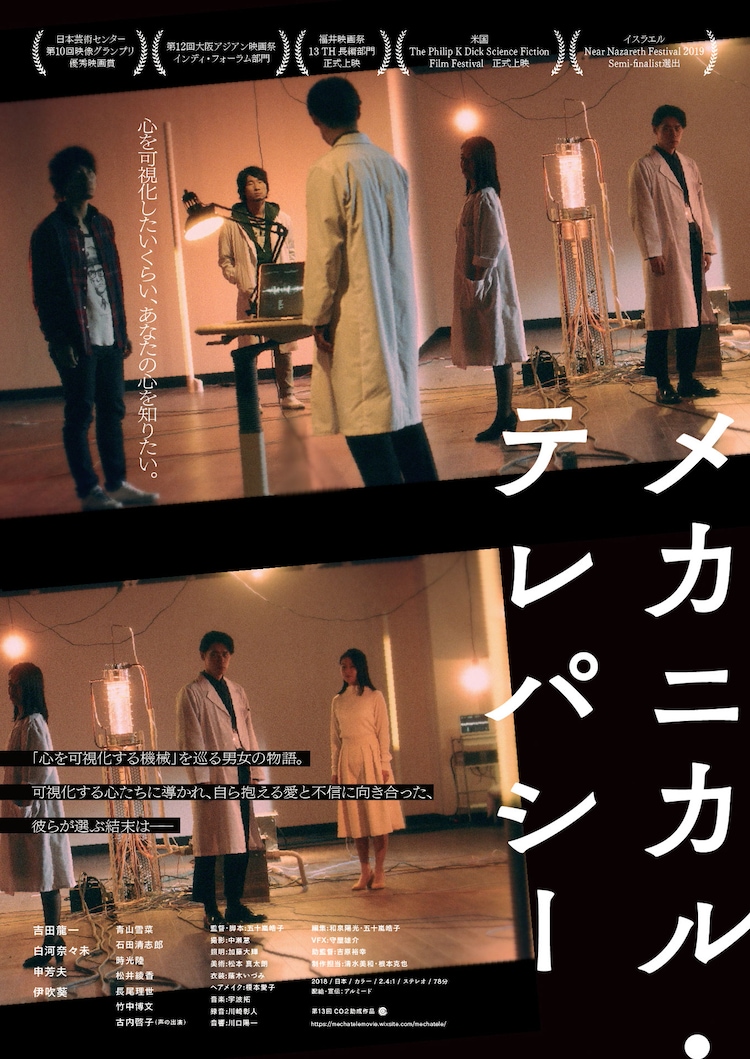
Many, though not all, people have an interior monologue but what if you could converse directly with an image of yourself, a mental avatar who could talk and move around and might have opinions you would not expect to hear yourself say out loud? The scientists at the centre of Akiko Igarashi’s Mechanical Telepathy (メカニカル・テレパシー), a re-edited version of her 2017 feature Visualized Hearts, are working on a machine that can create a physical simulacrum of a mental image. No concrete reason is given for their research save that of one assistant who suggests its capacity to help those who can no longer communicate physically have a voice, but what quickly becomes apparent is that a self-created image may not be entirely reliable while the images of it held in other minds may differ in interesting ways. 

Each of these philosophical questions begin to occur to scientist Mazaki (Ryuichi Yoshida) when he’s seconded to a research project as a kind of corporate spy on behalf of the business-minded boss who wants to put the product on the market as soon as possible despite the reservations of lead researcher Dr. Midori Mishima (Nanami Shirakawa) whose husband Soichi was injured in a previous experiment and is currently in a coma. Midori’s interest in the machine is then in its capacity to save her husband either by retrieving his bodily consciousness or preserving the image of him captured inside, improving and enhancing it until the point of communication. 

But then as Mazaki comes to realise, perhaps the image of Soichi (Yoshio Shin) in the machine isn’t coming from his mind at all but from Midori’s in which case he doesn’t know anything she doesn’t know already and is in a sense inaccurate, composed only of her memories of him and necessarily limited in possessing the information she does not have even of this man whom she obviously knew intimately. Meanwhile, Mazaki also begins seeing an avatar of Midori, but is unsure if it originates from her mind, that of the comatose Soichi, or indeed his own as a means of confronting him with the desire he may feel for her. His image of himself meanwhile is scathing and self-loathing, challenging him over his various acts of moral cowardice in his essential inability to communicate his true feelings. Only assistant Asumi (Ibuki Aoi), harbouring a decidedly obvious crush on him, is brave enough to take him to task looking her own avatar in the eye and explaining that she has nothing to fear from herself. “If you don’t say it out loud no one will hear you” she explains though it’s a lesson that Mazaki in particular finds difficult to learn. 

As for the avatars themselves, are they representations of particular people or indeed something new and different subject to influence and interference? The mind is supposedly free of time and space but that may not be an entirely good thing. What the machine posits is the separation between mind and body as if a soul could be sheared while it becomes difficult to say if the loss of corporality is liberation or imprisonment while Mazaki wonders if it’s right for a mind to exist without a body. If we can’t trust these images we have of others can we really trust those we have of ourselves which may be largely created through the way that others see us and we them? Complaining he can no longer distinguish whose mind he’s looking at, Mazaki finds himself caught in a moment of existential confusion amid several differing realities his own mind can no longer order. 

This sense of dissociation is perhaps replicated in Igarashi’s detached camerawork set amid the clinical glass and steal environments of the Kobe research institute where the experiments take place, the muted colour palette reflecting a sense of emptiness in the hearts and minds of the scientists who ironically remain incapable of direct communication. The near future production design similarly lends an air of sleek modernity to the otherwise vacant space while perhaps creating a sense of the supernatural in the lightning crackle inside the machine, its tangling wires a digital recreation of an analogue nerve system. A philosophical examination of the representation of the self, its projections literal and metaphorical, and the impossibility of knowing oneself or others Igarashi’s sci-fi drama eventually suggests that perhaps we are all in an empty room talking to ourselves incapable of understanding let alone expressing our true feelings. 


Laughing Under the Clouds (曇天に笑う, Katsuyuki Motohiro, 2018)

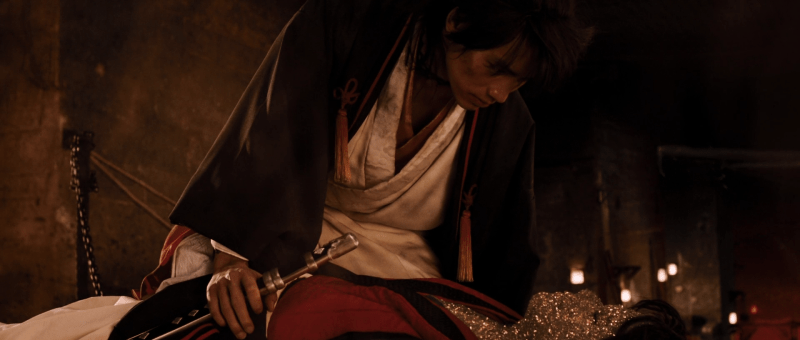
A cheerful former samurai chooses laughter as the best weapon against existential anxiety in Katsuyuki Motohiro’s big budget adaptation of the manga by Karakara-Kemuri, Laughing Under the Clouds (曇天に笑う, Donten ni Warau). Set amid the chaos of the late Meiji social revolution in which the samurai are no more, Motohiro’s supernatural drama is in some ways uncomfortably reactionary even as it takes as its heroes the defenders of a burgeoning new democracy who, our hero aside, seem to have a tendency towards authoritarianism in their insistence on the kind of order only they can bring. 

Indeed, prisoners brought to “prison island” are coldly informed that “hope, freedom and peace. These are things of the past” because “once you’re in here you’ll never get out”, “you have no rights in here”. Most of the prisoners are here it seems because of their opposition to the new regime including the mysterious Fuma Kotaro former leader of a ninja clan wiped out by imperial forces now held in solitary confinement. The man we first see dragged in is apparently a former samurai struggling to adjust to his loss of privilege and unable to find new ways of living in a world of superficial equality. 

Yet it’s not this destabilisation of the social order which presents the moment of chaos so much as a prophecy that Orochi, a vengeful snake spirit, is due to make his return to Earth and wreak even more havoc. As the legend goes, Orochi brought clouds and rain which provided humanity with a bountiful harvest yet humanity resented him for his ugliness and so Orochi took revenge for their ingratitude by creating chaos. Tenka (Sota Fukushi), a former member of the Nile imperial Wild Hound squad, sees his familial legacy as the duty to combat the vicious cycle of hate through the power of laughter. His decision to leave the Wild Hounds after his parents were murdered by ninjas in order to care for his orphaned brothers is another indication of his essential humanity as is his determination that he will protect not only his town but whoever it is that has been selected as a vessel for Orochi’s return. 

These humanitarian concerns stand in direct contrast with the unfeeling authoritarianism of the Wild Hounds or the innate cruelty of the existence of a place like prison island where those who threaten the new regime are exploited as slave labour. On the other hand, the anger of the disempowered ninja clans is perhaps understandable even if their opposition to the regime, intending to harness the power of Orochi to overthrow the government, is an attempt to hang on to their privilege as a path back to the way things used to be. As such it’s they rather than Orochi who become the central villain though one could also read Orochi as an expression of the intense anxiety of the age especially as it invades the body of a young man himself feeling resentful and confused while looking for a sense of direction in a rapidly changing society. 

Tenka’s opposition is rooted in cheerfulness, in learning to laugh even under the clouds and becoming stronger for it though his otherwise openhearted nature stands in direct contrast with his oft repeated catchphrase “I am the law” as he enforces order in his small provincial town willingly delivering criminals and fugitives to prison island but also making a point of befriending a former ninja, Shirasu (Ren Kiriyama), he rescued after the raid which killed his parents in acknowledging that Shirasu himself was not responsible for their deaths only the chaotic world in which they live. 

Boasting some impressive special effects as Tenka and the forces of order team up for some spiritual magic to send Orochi back where he came from, Laughing Under the Clouds ultimately sells a positive message casting Tenka’s revolution as an ideal world of love, laughter, and happiness while simultaneously ignoring the oppressive qualities of new social model such as its shady prisons, lack of tolerance for opposing political views, and failure to make good on the promises of a classless society. Nevertheless with its fantastical production design and inherent cheerfulness it does perhaps suggest that laughter may be the only real salve for internal darkness.  


Original trailer (no subtitles)

When I Get Home, My Wife Always Pretends to be Dead (家に帰ると妻が必ず死んだふりをしています。, Toshio Lee, 2018)

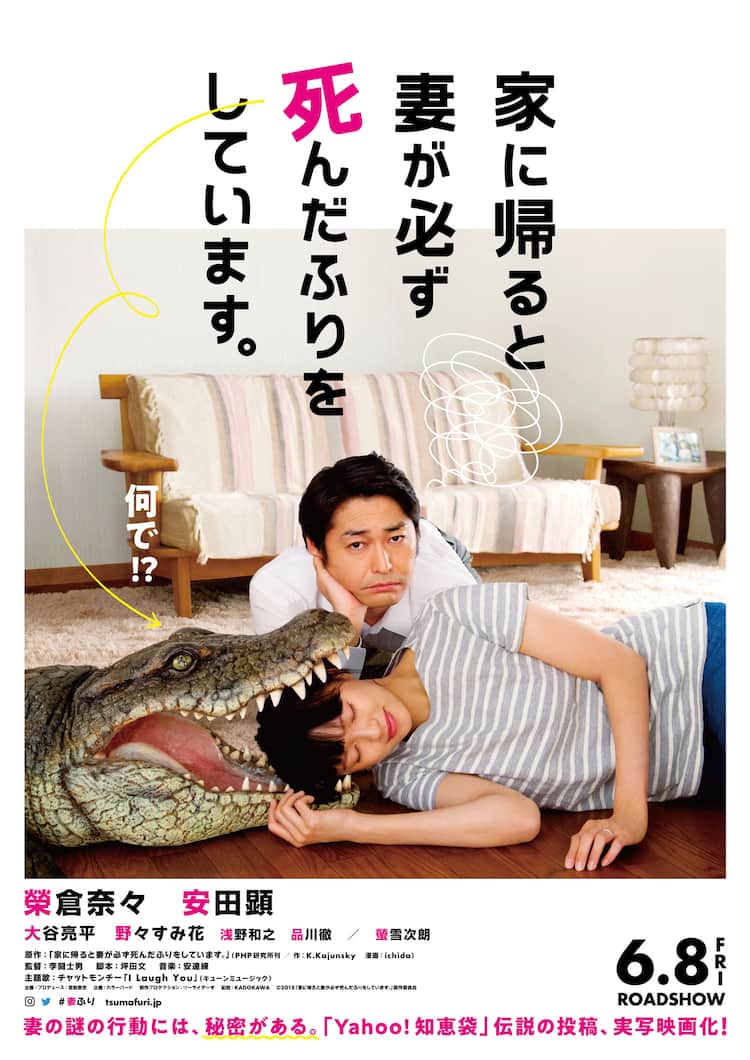
“If you give it some time it becomes just right,” according to the eccentric wife in Toshio Lee’s quirky contemplation of the modern marriage, When I Get Home, My Wife Always Pretends to be Dead (家に帰ると妻が必ず死んだふりをしています。Ie ni kaeru to tsuma ga kanarazu shinda furi wo shite imasu.). A more cheerful take on Harold and Maude, Lee’s not quite newlywed couple are heading out of their honeymoon phase and perhaps harbouring twin anxieties as they face the three year itch and start to wonder what marriage is all about and if they have what it takes to go the distance. 

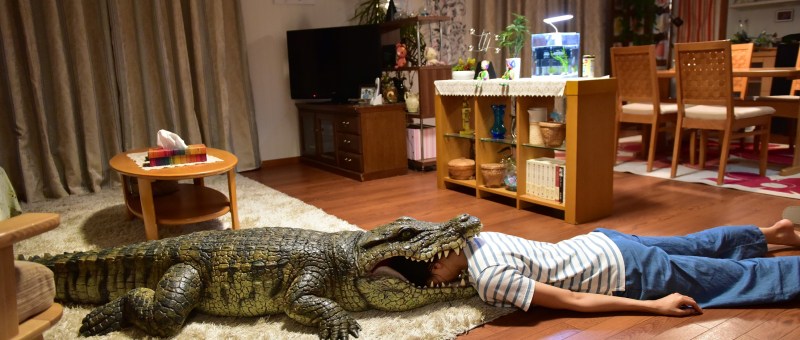
Regular salaryman Jun (Ken Yasuda) is particularly preoccupied with the “three year wall” because he was married once before and the relationship failed at the three year level which is, coincidentally, when many small businesses and restaurants fail. Perhaps unusually he has a friend at work, Sano (Ryohei Ohtani), with whom he discusses his marriage who ironically points out that Jun is essentially thinking of his marital status in the same way as a “contract renewal” as if worried he’s about to be let go. Around this time, however, he gets a nasty shock on returning home discovering his wife Chie (Nana Eikura) lying on the living room floor covered in blood. Distraught, he struggles to remember the number to call an ambulance only for Chie to suddenly burst out laughing. The same thing begins happening to him every time he goes home with the scenarios becoming increasingly elaborate such as being eaten by an alligator, for example, or being abducted by aliens. All things considered, Jun is quite a dull man, too embarrassed even to let his wife kiss him goodbye on the doorstep lest it scandalise the neighbours, so all of this fantasy is doing his head in but his rather blunt hinting that he’d prefer it Chie stop with the playing dead stuff only seems to hurt her feelings while she shows no signs of abandoning her strange hobby. 

Part of the problem is that Jun is also intensely self-involved and perhaps the product of a conformist, patriarchal society. He never reveals the reasons why his first marriage failed, only that his wife abruptly left him without much of an explanation. It never seems to occur to him that Chie may be fixating on death because she lost her mother young, possibly around the same age she is now, and is in a sense role playing demise to ease her anxiety probably grateful each time he returns home and “saves” her. For his part he insists he doesn’t “need excitement” and wants “a normal wife”, desperate to appear conventional and paranoid that Chie is going out of her mind. Rather than fully see her he keeps trying to “fix” the problem by encouraging her to take a part-time job and make new friends, worried she’s bored at home and lonely after moving away from her family home in Shizuoka.  

His friend Sano, seemingly happily married for five years, has a much more relaxed attitude to the mysteries of marriage but as the two wives begin to bond the cracks in their respective relationships are gradually revealed. Like Jun, Sano is also a conventional salaryman with traditional ideas about marriage which he somewhat rudely exposes in thinking he’s doing Jun a favour by “explaining” to Chie that her hobby is offensive to Jun because men work hard all day and want to sit down quietly without any bother when they come home. His quiet word provokes an outburst in his own wife Yumiko (Sumika Nono) who can no longer bear the irony, asking him why it is that she’s supposed to tiptoe around because he’s “tired” as if she does nothing at all day just waiting for him to come home. It’s as if they think their wives go back in the box until they ring the doorbell in the evening and wake them up again, as if the only value in their existence lies in supporting their husbands. Sano is mildly shocked on witnessing Yumiko suddenly brighten and embark on a mini lecture of crocodile facts after catching sight of Chie’s prop (bought on sale, making the most of her thrifty housewife skills), totally unaware she was into reptiles and equally stunned to learn she’s also a karate master. Five years, and it’s like they’re strangers. 

“Thinking won’t give you answers, when you don’t know, ask,” advises Jun’s boss, constantly carping about his ungrateful wife but later revealing that his deep love for her is what’s kept him going all these years. Miscommunication lies at the root of all their problems, Jun even failing to identify the most common if poetic of cliched idioms in his wife’s tendency to remark on the beauty of the moon seemingly at random. Clued in a little by Chie’s patient father, Jun begins to wake up himself, finally seeing his wife and understanding that she’s been trying to tell him something all this time only he was too self-involved to notice. “You can always find me if you look,” Chie was fond of saying, indirectly hinting that marital bliss is a matter of mutual recognition aided by empathy and a willingness to be foolish in the pursuit of happiness. 


When I Get Home, My Wife Always Pretends to be Dead is available to stream in the UK via Terracotta

Original trailer (English subtitles)

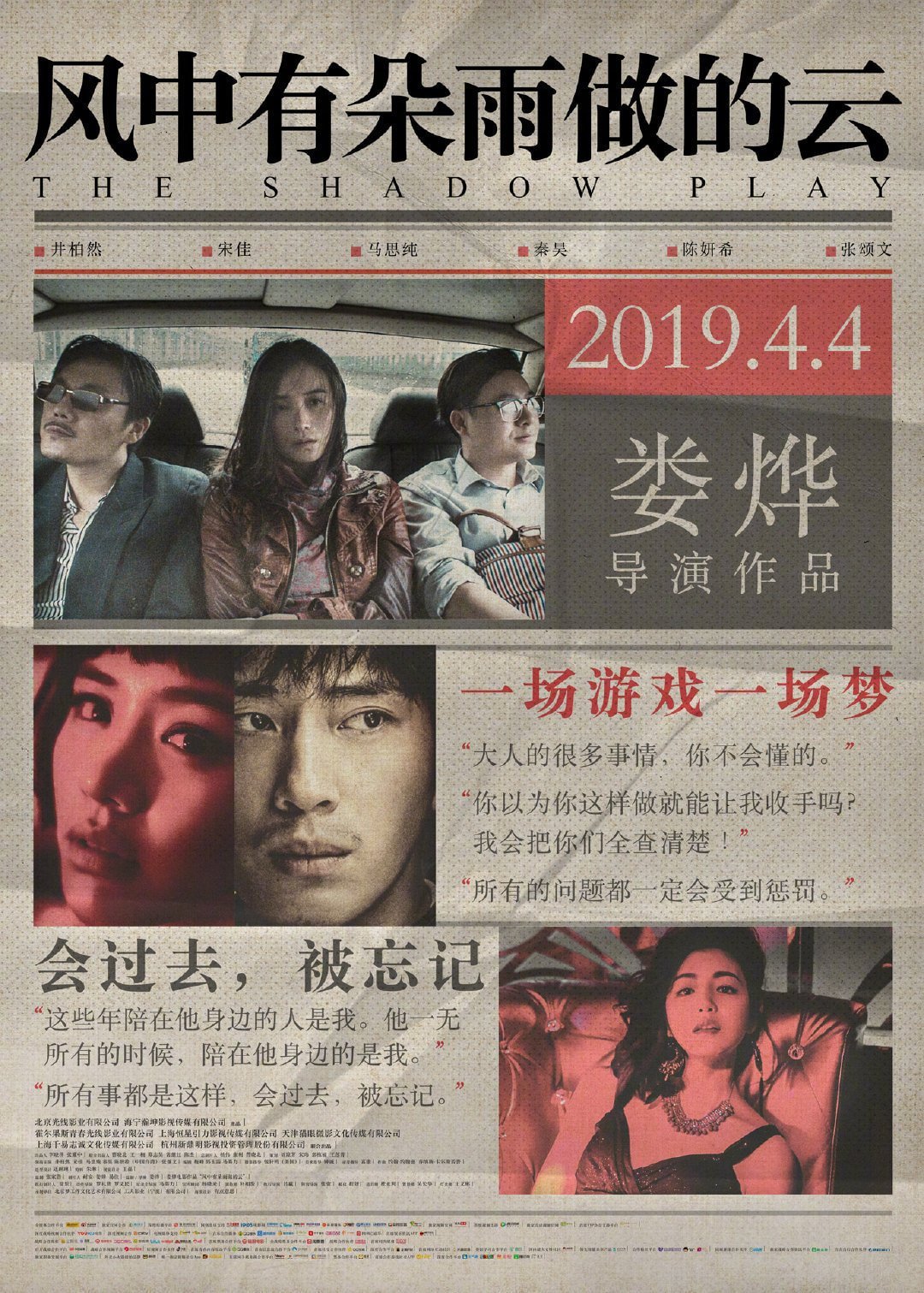
The Shadow Play (风中有朵雨做的云, Lou Ye, 2018)

The forever rebellious Lou Ye has had his share of troubles with the Chinese censors board. Suzhou River was banned on its release, while he received a five-year filmmaking sanction for screening his provocative Tiananmen Square drama Summer Palace in Cannes without clearing official permission first. Stuck in censorship limbo for two years, the aptly named The Shadow Play (风中有朵雨做的云, fēng zhōng yǒu yù zuò de yún), taking its title from characteristically well-placed retro pop song, sees Lou steeping into the increasingly popular genre of Sino-Noir once again critiquing the the corrosive corruption of the Modern China through the prism of crime. 

Many of Lou’s films pivot narrative around a single implosion from which everything radiates like cracks in a pane of shattered glass. The Shadow Play is no different only there are perhaps three distinct, interlinked points of fracture each connected in a complex web of corruption and frustrated desires. He opens therefore with a moment which occurs in the mid-point of the narrative, the accidental discovery of decomposing body by a young couple venturing into the wilds of nature for a little privacy. The action then moves to the “contemporary” present of 2012 in which a small village is engulfed by “rioting” as residents attempt to protest the demolition of their community by the Violet Gold Real Estate Company. CEO Tang (Zhang Songwen) turns up to do some ineffectual damage control, slipping into Cantonese as he reminds them he’s a local boy too and only wants to bring about “the transformation of our community” insisting that the “beautiful future” is possible only by tearing down the old. As he’s speaking, however, protestors manage to knock down the neon sign bearing his company’s name from the building behind him and later that night Tang himself is found dead, impaled its framework after apparently “falling” from the rooftop. 

Young and idealistic policeman Yang (Jing Boran) was assigned to the detail that night and thereafter to the investigation into Tang’s death, quickly growing suspicious over his ties to shady property tycoon Jiang (Qin Hao). As a brief montage sequence explains, Tang and Jiang who met at university in 1989 each prospered from the capitalist explosion of China’s ‘90s reforms but their complicated relationship is founded on resentment and dependency partly connected to their mutual love for campus sweetheart Lin Hui (Song Jia) who first dated Jiang but as he was apparently already attached later married Tang. Many suspect that Jiang has something to do with Tang’s death even as others point out that he needed him to preserve his access to government bureaucracy, but the investigation is further complicated by witness sightings of a third person thought to be Jiang’s Taiwanese former lover/business partner Ah-yun whose mysterious disappearance in 2006 Yang is convinced is connected to the traffic accident which left his veteran policeman father in a catatonic state. 

The Shadow Play is in some respects unusual in its strong yet often implicit hints of police corruption perhaps mitigating its mild attack on the mechanisms of state through Yang’s idealistic, though flawed, goodness. Seduced by the lonely Lin Hui, he finds his name blackened but refuses to give in even when forced on the run after being framed for murder. Like Lin Hui’s daughter Ruo (Ma Sichun) however he is also representative of the post-90s generation who have grown up in the world created by men like Jiang and Tang. He is obviously uncomfortable in being introduced as his father’s son but also carries with him a desire for justice that lies adjacent to revenge. Ruo, meanwhile, though now an adult, longs for the restoration of her family despising her father Tang while obviously close to Jiang who has been supporting her financially by funding her education, using his wealth to game the system. “She’ll be happier than we are,” Jiang insists, ironically echoing Tang’s insistence that the village must be destroyed so they can give their children better futures. 

Tang meanwhile is a representative of China’s resentful petty bureaucrats forced into a middle-man existence unwilling to admit that he owes everything to Jiang, the man he knows to be sleeping with his wife. His toxic sense of male inferiority sees him take out his frustrations those with the least power, subjecting Lin Hui to years of domestic abuse before eventually having her locked up in a psychiatric institution claiming that she self-harms and is mentally unbalanced. The facade of the elegant, prosperous middle class family is well and truly imploded while it becomes difficult to tell if Tang is just a sleaze, exposing his misogyny in bringing up Ah-yun’s bar girl past, or his ill-advised pass at her is an attempt to get back at Jiang for his relationship with his wife while undercutting his rival’s manhood by sleeping with his woman. There is widespread impropriety in this incestuous world of corporate politics, but there’s also personal pettiness, hurt, and heartbreak that eventually blossoms into an ugly violence. 

In characteristic non-linear fashion Lou zips between the three points of fracture from the trio’s meeting in a 1989 through the disappearance of Ah-yun and the death of Tang, the layers of corruption deepening as the two men make themselves rich taking advantage of the unregulated capitalism of the modern China while slowly destroying themselves in their mutual unhappiness. It’s no surprise that the film found itself on the wrong side of the censors with its brutal footage of anti-redevelopment riots, hints of political corruption, and the depiction of the destruction of a body though we get the now customary title cards appearing at the end reminding us that the guilty parties have been caught and punished outlining exactly how long for everyone went to jail even if Lou subtly undercuts the sense of the State in action the card is intended to portray. Elliptical and somehow hard, ending like Summer Palace on the innocent image of the trio dancing back in 1989, The Shadow Play is cutting indictment of a morally bankrupt society and the corrosive effects of corruption but perhaps implying that the younger generation will in one way or another have its revenge for the ravages of their parents’ greed. 


Original trailer (no subtitles)

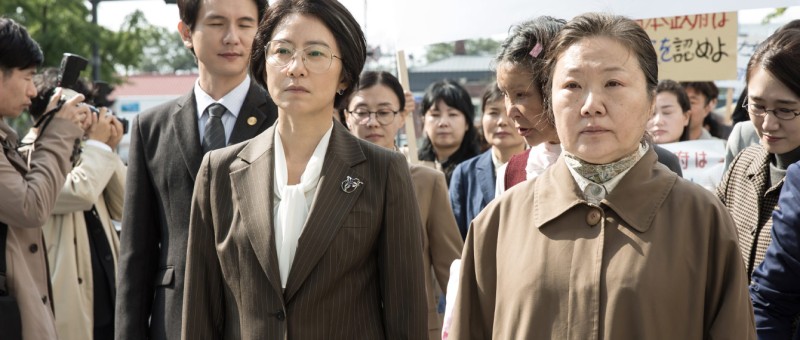
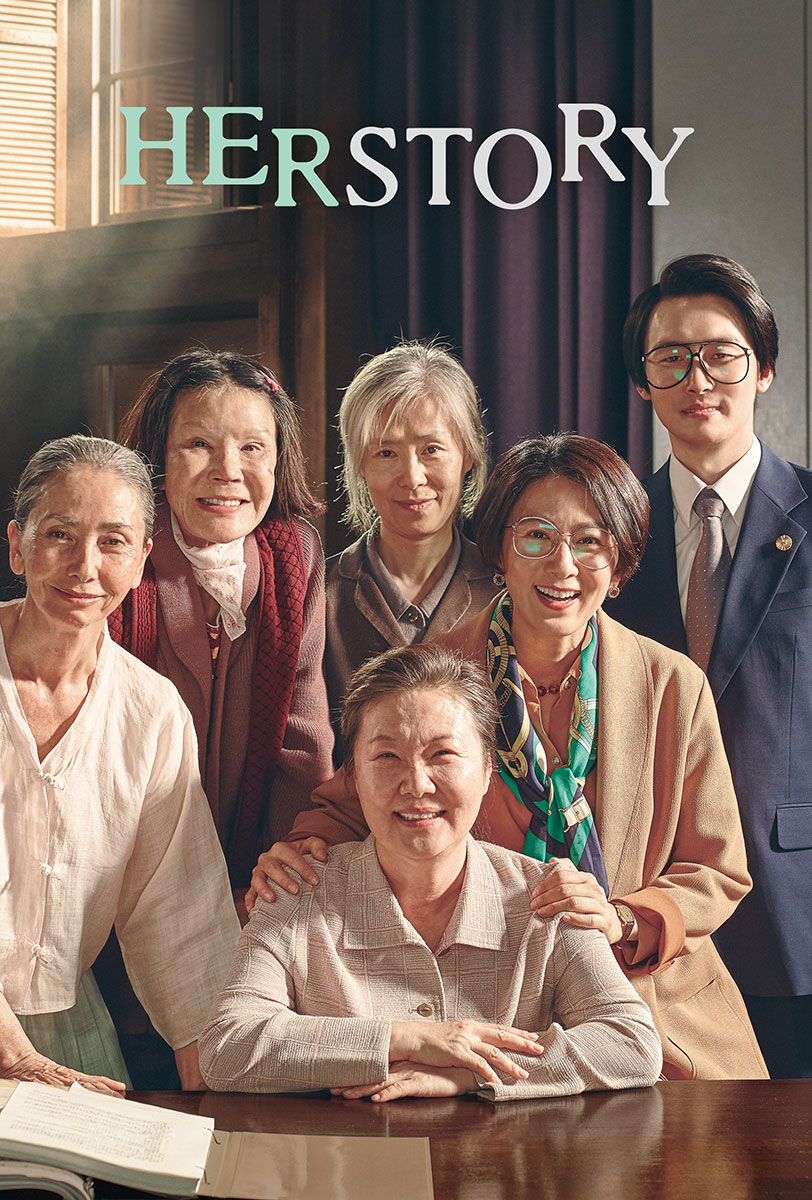
Herstory (허스토리, Min Kyu-dong, 2018)

When Kim Hak-sun held a press conference and offered her testimony as a former comfort woman following a statement in the Japanese Diet in which the government rejected any responsibility for wartime sexual slavery, it brought an issue into the public consciousness that many had been unwilling to reckon with. One of many films focussing on the same subject released in the last few years, Min Kyu-dong’s Herstory (허스토리) dramatises the events of the Shimonoseki Trials which took place between 1992 and 1998 and resulted in the first admission from the Japanese authorities that the basic human rights of women had been breached but nevertheless found it not incumbent on the government to offer a direct apology. 

That the trial takes place in Shimonoseki is itself somewhat symbolic, given that this was the harbour from which boats to Korea and China departed and at which the women who were trafficked to Japan would have arrived. The film begins, however, in Busan where successful travel agent Moon Jung-sook (Kim Hee-ae) has ironically been accused of breaking the prevention of prostitution laws when a Japanese man is found dead after visiting a sex worker and it is revealed one of her employees had been running tours specifically geared towards sex tourism. Struck by Kim Hak-sun’s testimony, the association she leads of female business owners wants to do something to help and seeing as her company has been suspended, Jung-sook sets up a call centre on her premises for other victims of wartime sexual slavery and forced labour to come forward. 

Unlike some of the recent dramas dealing with the same issue, Min focusses on the resistance towards the former comfort women coming from within Korea itself. A taxi driver Jun-sook gets a lift from goes off on a rant describing the women as former sex workers out for a paycheque who should be ashamed of their sordid pasts while in any case all of this happened decades ago so why bring it up now? He is far from alone, even the Mayor describes them as “filthy women” when Jung-sook approaches him for help, and it’s obvious that many find the subject so embarrassing that they simply do not want to discuss it and blame the women for breaking the peace by speaking out. 

It’s also true that in the peculiarities of the political landscape of Korea, conservative elements tend to hold a more favourable view of Japan and the colonial era than might be expected. Economically, there are strong ties and Jung-sook, a fluent Japanese speaker, has close business relationships with Japanese clients which are endangered by her involvement with the comfort women cause. Her friend in the women’s association who runs a traditional-style hotel can be seen warmly greeting Japanese guests, at one point as she expresses her admiration for Kim Hak-sun in Korean to the television as they pass behind her. It’s clear that some would rather not rock the boat because this kind of politicking is often incompatible with running a successful business. 

Jung-sook is minded to buck the trend because she sympathises with the women’s suffering and with their rejection by mainstream society. She has the confidence to do this in part because the wealth she has accrued through business success gives her an unusual amount of power in a male-dominated, capitalistic society. Still she too struggles with contemporary notions of proper womanhood in being accused of neglecting her daughter through her workaholic lifestyle especially as she is considering leaving education claiming that studying isn’t for her. Even so, the women’s association seems to have female solidarity at its heart, collecting money to support single mothers even before taking up the cause and trying to help elderly women who have no remaining family members or means to support themselves. 

As she later comes to realise, the trial has meaning outside of winning and losing in allowing the women to express their trauma and regain some of their dignity. Even so, they are subject to further rejection in Japan, not least from a hotel which asks them to leave because other guests are unwilling to share the space with former sex workers. The Korean-Japanese lawyer also relates having faced racism in his life in Japan because of his Korean ethnicity while his mother’s restaurant is later graffitied because of their support of the case. Right-wing nationalists also hold protests outside the court and in Seoul accusing the women of lying, insisting that they are just “sex workers” as if sex workers weren’t worthy of human consideration anyway. In interpreting the testimony, Jung-sook becomes a kind of everywoman speaking for all women in her emotionally charged translation while inwardly conflicted in realising the toll the process is taking on some of the witnesses who are all in advanced age and often poor health. Min depicts their struggle with as much empathy as possible, avoiding the temptation to demonise while instead presenting a more nuanced perspective focussing on the women themselves and the rejection they continue face even within their own society.


Herstory is available digitally in the USA courtesy of Well Go USA.

Punk Samurai (パンク侍、斬られて候, Gakuryu Ishii, 2018)

Gakuryu Ishii began his career under the name Sogo as a representative of the youth voice, in fact still a college student when invited by Nikkatsu to film a feature-length version of his Panic High School short though they paradoxically saddled him with the more experienced Yukihiro Sawada as a co-director in case his voice turned out to be more youthful than anticipated. In any case, he went on to make his name with a series of anarchic punk films such as Burst City and The Crazy Family before retreating from filmmaking in the early 2000s. When he returned in 2012 with Isn’t Anyone Alive?, he did so under a new name, Gakuryu, as if signalling a new phase in his artistic career that seemed to have left punk behind.

Like 2015’s That’s it, Punk Samurai is billed as a kind of return to Ishii’s anarchic roots while also harking back to surreal samurai movie Gojoe. Even so, Punk Samurai isn’t really a punk samurai film even in its irreverence towards the genre so much as an ironic jidaigeki comedy which eventually positions its hero’s nihilistic outsider status as his saving grace in a “fake” world where nothing has true meaning. “This world might be fake, but I’m alive” he insists, claiming not to ask anything of it, simply stating that he is “different” because he belongs to no group and has been a lonely a wanderer.

Nevertheless, Kake (Go Ayano) had wanted to join a clan so desperately that he spun a tale of dangerous cult rebellion to a naive retainer of a useless lord whose inability to rule has ruined his fiefdom. After killing a pilgrim he believed to be a member of the Bellyshaker Party, Kake is taken in by the Kuroae where he is enlisted by duplicitous councillor Naito (Etsushi Toyokawa) who seizes on the idea of the Bellyshaker threat as a means of undermining his rival, Ohura (Jun Kunimura), to seize the reins from overly serious lord Kuroae (Masahiro Higashide). 

The Bellyshaker cult believes that this “fake” world exists within a giant tapeworm and seeks escape though being excreted by it into the “real” world as a means of achieving some kind of spiritual enlightenment. Their furious belly shaking is deliberately meaningless in an effort to antagonise he tapeworm to such a degree that it gives it spasms to “spew” the believer into a more authentic existence. Not even the cult leader believed this to be true, and as Kake later suggests the appeal lies in a kind of Manichaeanism that allows the believer to believe nothing is their fault it’s just that this “fake” world is wrong. In the end, the conflict comes down to a battle between “monkeys and idiots”, while even an enlightened ape (Masatoshi Nagase) finds his revolution failing and is left with no option other than to retreat to the Heavens. 

The world is indeed in disarray, Kuroae is constantly plagued by his own poor decision making, or failure to make decisions at all, while there are constant allusions to the decline of his clan from persistent famine to military weakness after having made most of his foot soldiers redundant as part of an austerity programme. Many of the recruits to the “fake” Bellyshaker cult resurrected by Naito with the assistance of former devotee Chayama (Tadanobu Asano), who has two telepathic servants who speak for him, are in fact refugees from Kuroae who fled its disorder. Kake prides himself on being an outsider but in reality had wanted to join the clan, and there is perhaps something in the sudden collapse of the world around him along with a return to blue skies the moment his rebellion is ended. 

Yet for all its weirdness and incomprehensibility, for much of is running time Punk Samurai is a typical jidaigeki comedy about a useless lord, his clever underlings, and a chaotic ronin if one that also hints at the absurdist meaninglessness of the hierarchical samurai society. Only in its closing moments does the film truly embrace its punk spirit with psychedelic kaleidoscope backgrounds, electric swords, and the true slash down of the social order as Kake’s life comes full circle proving that even in this “fake” and meaningless world there are some things from which there is no escape.


Punk Samurai is released on blu-ray in the UK on 13th March courtesy of Third Window Films.

Original trailer (English subtitles)