Song Lang (Leon Le, 2018)

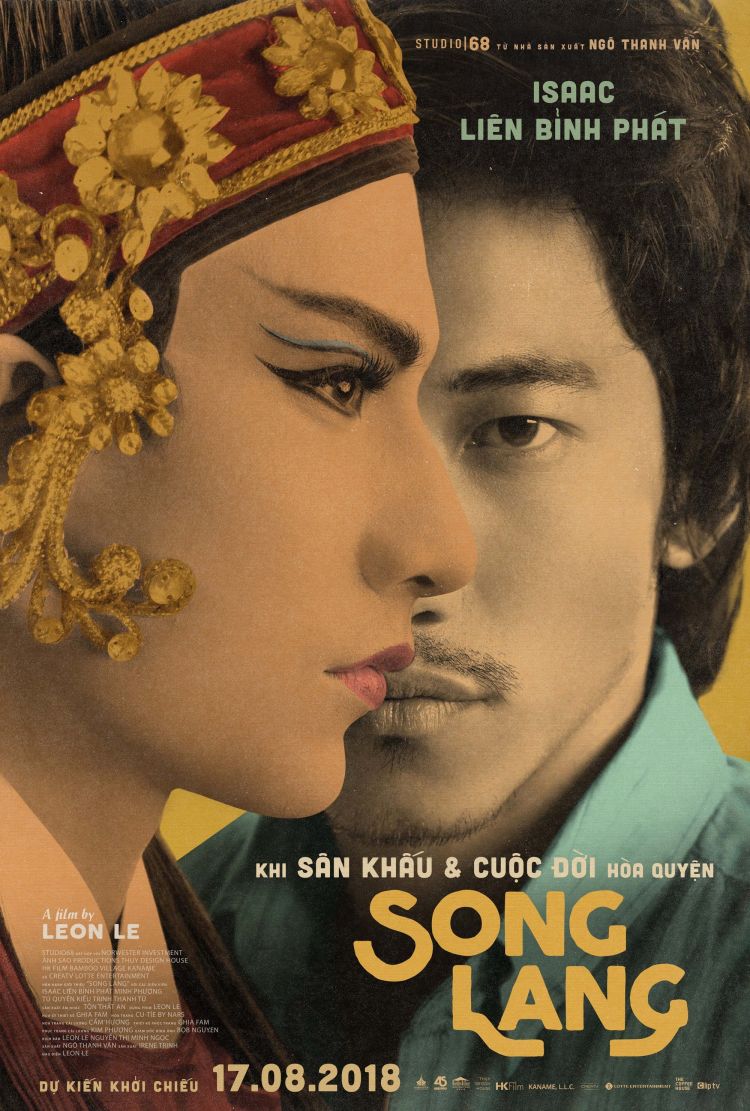
Song Lang poster 1“How could the gods be so cruel” a ci lương performer intones, “Allowing us to be together yet worlds apart”. An achingly nostalgic return to the Saigon of the 1980s, Leon Le’s melancholy debut Song Lang is a lament for frustrated connections and the inevitability of heartbreak, taking its lonely heroes on a slow path towards self realisation only to have fate intervene at the worst possible moment.

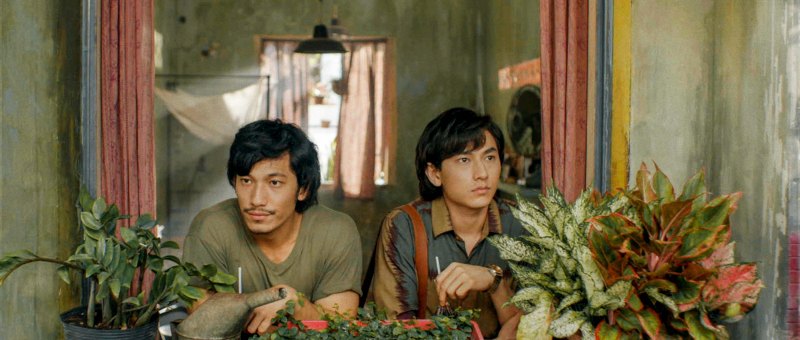
An enforcer for the steely “Auntie Nga” (Phuong Minh), Dung Thunderbolt (Lien Binh Phat) has long been trying to take revenge on his unhappy life through the intense act of self-harm which is his way of living. A routine job, however, jolts him out of his inertia when he wanders into a theatre where a ci lương opera company is preparing for a performance. There he finds himself catching sight of the famous performer Linh Phung (Isaac), only to run away, in flight from the intensity of being woken from his reverie. Later he returns to claim the debt, threatening to burn the company’s precious costumes until Linh Phung arrives and interrupts him, proudly insisting he will pay the balance after the first performance. Dung leaves confused, refusing to accept the watch and necklace that Linh Phung offered in partial payment.

A second chance meeting confirms that the two men might have more in common than they’d first assumed. The lonely Linh Phung, eating alone in a nearby cafe, gets into a fight with some drunken louts who wanted him to sing a few tunes, but as surprisingly handy as he turns out to be quickly gets himself knocked out at which point Dung steps in to rescue him, eventually taking him home to sleep it off where they later bond through a shared love of violent video games. An opportune power cut allows the two men to enter a greater level of intimacy during which Dung begins to re-embrace his ci lương childhood through the instrument his father left behind.

The Song Lang, as the opening informs us, is an embodiment of the god of music delivering the rhythm of life and guiding musicians towards the moral path. That’s a path that Dung knows all too well that he has strayed from and is perhaps looking to return to. The central theme of ci lương is “nostalgia for the past” – something echoed in Linh Phung’s peculiar philosophy of time travel through people, objects, and places which seems to be borne out in Dung’s constant flashbacks to a more innocent age before his happy childhood ended in parental betrayal and sudden abandonment.

Linh Phung, meanwhile, is nursing his own wounds. His mentor tells him that though he is popular his performance lacks depth because he lacks life experience while his co-star mocks him for never having been in love. Rooting through Dung’s belongings, he discovers a book he’d loved in childhood about a lonely elephant taken away from his jungle and sold to a circus. Both men are, in a sense, exiles from their pack walking a lonely path of confusion and despair but finding an unexpected kindred spirit one in the other as they search for new, more fulfilling ways of being. Bonding with Dung opens new emotional vistas for Linh Phung which allow him to perfect his art, while reconnecting with his childhood self through Linh Phung’s music gives Dung the courage leave his nihilistic life of shady moral justifications behind.

Fate, however, may have other plans and karma is always lurking. Linh Phung’s claim that an artist must know great grief proves truer than he realised, but it’s another passage from the book with which he eventually leaves us, affirming that it’s best to learn to enjoy these present moments rather than lingering in an unchangeable past. Yet the art of ci lương is itself steeped in nostalgia, perfect for a “time traveller” like Linh Phung returning to his sadness through his art, proving in a sense that the past is always present and wilfully inescapable. A melancholy, romantic evocation of Saigon in the 1980s, Song Lang is also a beautifully pitched paen to a fading art form and an  “unfinished love song” to lost lovers in which two lonely souls find an echo in each other but discover only tragedy in the implacability of fate.


Song Lang screened as part of the 2019 New York Asian Film Festival.

Original trailer (Vietnamese subtitles only)

Sub-Zero Wind (영하의 바람, Kim Yu-ri, 2018)

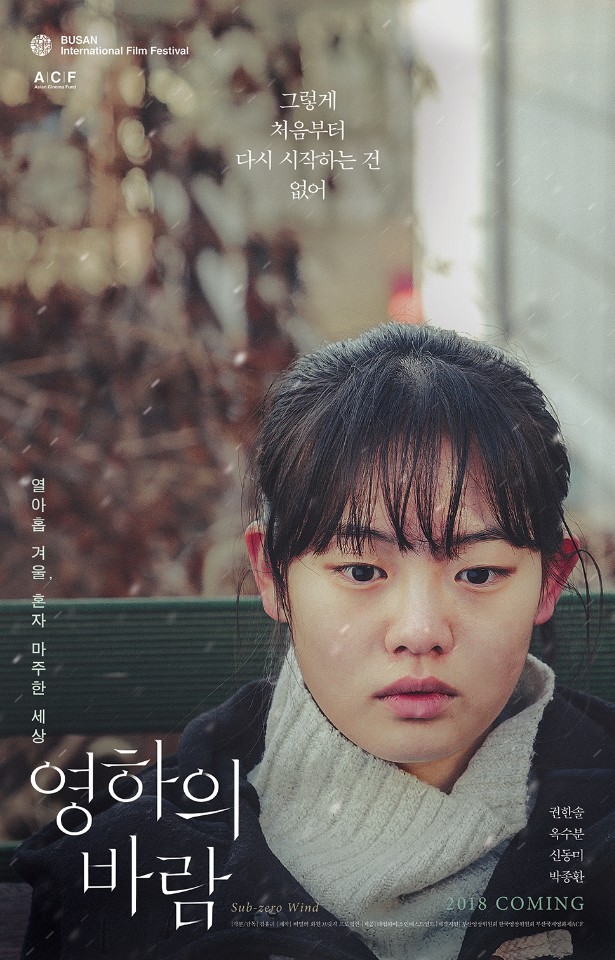
Sub-Zero Wind poster“Life is something you have to get through alone” the mother of the heroine of Kim Yu-ri’s debut Sub-Zero Wind (영하의 바람, yeonghaui balamcoldly claims. In South Korean society, few things are more important than family bonds but when familial connection becomes weaponised it leaves the vulnerable out in the cold. Badly let down by bad luck and irresponsible parenting, Kim’s heroines have only each other to rely on but find even their unbreakable bond strained by the self-centred, unfair, unequal and hypocritical world in which they live.

Kim follows the girls over seven years beginning with the 10-year-old Young-ha’s traumatic introduction to her step-father (Park Jong -hwan). Young-ha’s mother Eun-suk (Shin Dong-mi), big in the Church, has divorced her dad and now that she’s going to have a new “housemate” has decided that Young-ha should go and live with him. With everything packed into a moving van including her bed, Eun-suk sends her off with the removal man and a cheerful goodbye as if she were seeing off a guest who’s outstayed their welcome. Unfortunately, Young-ha’s dad has done a moonlight flit and so the removal man has no option but to take her back home, only her mother has gone out to celebrate and isn’t answering her phone. Eventually Young-ha is abandoned on the side of the road along with all her possessions, waiting for Eun-suk to come home and sort all of this out.

Some years later, Young-ha appears to have integrated fairly well into her new family, a large portrait of which hangs above their sofa in the elegantly decorated apartment. In fact, despite her original dislike of him, Young-ha seems much closer to her step-father whom she calls “dad” than to her frosty mother. Meanwhile, her best friend and cousin Mi-jin is having a tough time. Both her parents have died, and Eun-suk was supposed to be looking after her but has left her to live with her elderly grandmother and is secretly embezzling her parents’ life insurance payments to put towards her religious education in the hope of founding a church of her own. For this reason, she is terrified that Mi-jin’s grandmother will die and her other relatives will find out about the stolen money.

The truth is the Eun-suk is one of those people obsessed with the church rather than its teachings. Kim opens the film during a sermon in praise of love throughout which Young-ha has her eyes wide open, staring at her mother and her new boyfriend in the knowledge she is soon to be ejected from her mother’s new life. Despite going on about leading people to God and practicing Christian virtues, Eun-suk is often judgemental and extremely self-centred. All she cares about is being a member of the organisation and increasing her status with in it though she has obviously not kept to its teachings in that she has divorced her first husband and is now living with a man she is not not married to who is actually still married to someone else. All of this will, if it is discovered, quite obviously prevent her from becoming a minister but Eun-suk remains undeterred.

Meanwhile, she emotionally neglects her daughter and is sometimes jealous of her close relationship with her step-father. Truth be told, there is something a little inappropriate in how close they remain as Young-ha transitions into adolescence. One could assume her step-father has over invested in his new family because he misses the daughter he left behind, or that father and daughter have bonded through each being pushed out by Eun-suk’s cold hearted pursuit of her goal, but the fact remains that the family unit is quietly disintegrating under the pressure of her emotional absence and eventual slide into the hypocritical selfishness which sees her keen to adopt her boyfriend’s daughter for appearance’s sake or because she fears his leaving her while keeping her sister’s daughter Mi-jin at a distance.

When it becomes impossible for Young-ha to continue living in the family home, she turns once again to Mi-jin and the two girls try to make a go of things in Busan as soon-to-be high school grads. The main problem that they face is not so much finding employment as a place to live. Getting a room requires a running start – key money, deposit, rent payable in advance. The girls have savings, but not quite enough for starting a new life on the minimum wage when you don’t have anywhere to go back to or people you can ask for help. Eun-suk is always telling her daughter that they can “start over”, but there are times when you can’t or at least not in the same way. When the girls are cut loose, abandoned finally and completely, it may actually be a kind of relief. “Starting over” released from a destructive cycle of familial disappointment may be a real possibility but all they are left with is each other in the cold winds of an unforgiving city as they try to find a way to live as independent young women with no firm ground on which to take hold.


Sub-Zero Wind screens on 6th July as part of the 2019 New York Asian Film Festival.

Wushu Orphan (武林孤儿, Huang Huang, 2018)

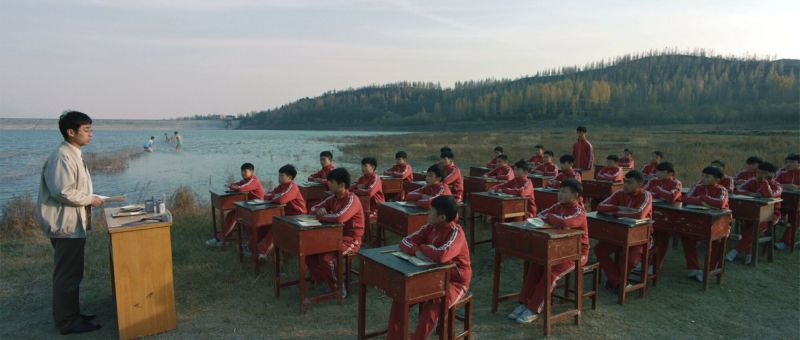
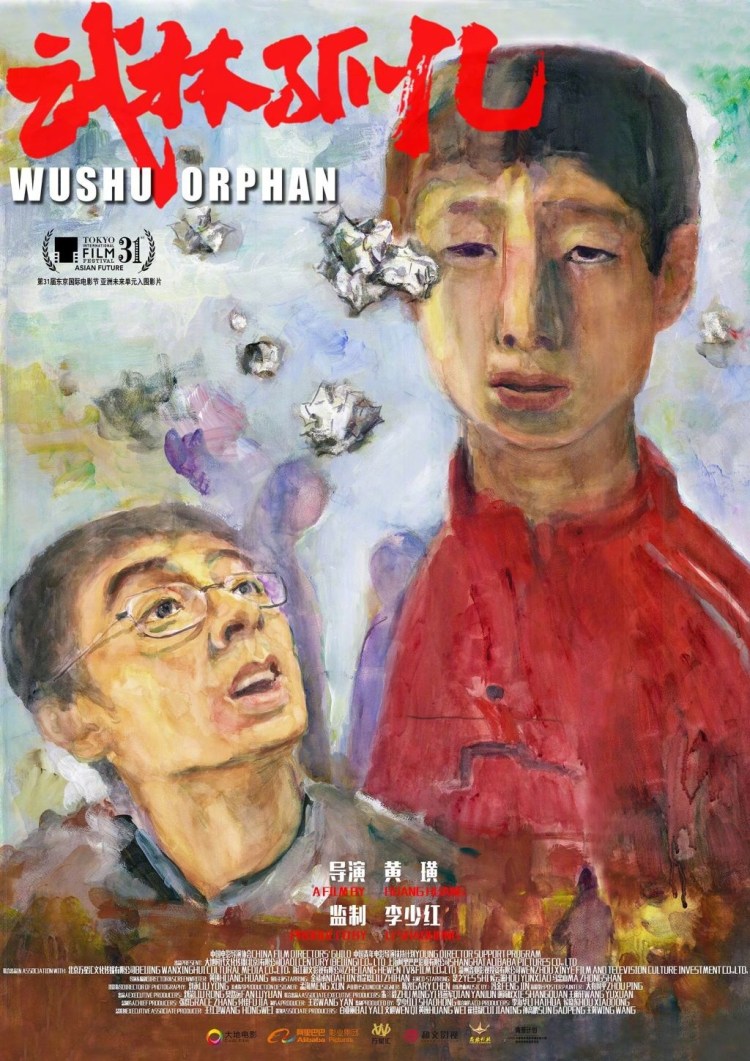
Wushu orphan poster 1Anti-intellectualism comes in for a subtle kicking in Huang Huang’s whimsical ‘90s drama Wushu Orphan (武林孤儿, Wǔlín ér). Less a tale of martial arts, Huang’s poetic debut suggests that perhaps brawn is always going to win over brain, but as brain has the moral high ground it needs to keep fighting all the same even if all it can do is mentally resist. Set in the modernising China of the late ‘90s, Wushu Orphan conjures an achingly nostalgic picture of sleepy rural life, burdened as it is by visions of the past as the next generation pin their hopes on becoming the new Bruce Lee, Jackie Chan, and Jet Li all while neglecting their studies in expectation of martial arts glory.

Our hero, Lu Youhong (Jin Jingcheng), has just transferred to Zhige Wushu Academy to take up a post as their new Chinese teacher. In actuality, Youhong doesn’t have much of an education himself. He has no degree and is almost entirely self-taught which is why he’s wound up here after being turned down by everyone else. In fact, he only got this job because his uncle (Ma Zhongshan), who works at the school, has brought him in as a “catfish” to stir up the otherwise stagnant educational environment which is mainly inhabited by meat headed martial arts fanatics.

Unfortunately for Youhong, no one is very interested in education. All the kids just want to be the next Bruce Lee, and you don’t need to memorise the story of Mulan to become a martial arts master. Zheng Cuishan (Hou Yunxiao), however, has already memorised Mulan, and all the other poems in their reader too. He read them in their entirety when they were first assigned. The problem is, that Zheng Cuishan has been labelled a “special case”. With no aptitude for wushu, he’s mercilessly bullied by his classmates and is forever trying to run away. All he wants is to go home to his family, but they’re fishermen and Zheng Cuishan is afraid of the water so they can’t take him with them on their boat.

As might be assumed, the nerdy, bespectacled Youhong quickly notices an affinity with the obviously bright Cuishan who effortlessly aces all his tests and outright refuses to engage in violence. During one of his earliest lectures, Yuhoung breaks down the character in the name of their school which means “wushu”, explaining that it’s made up of the characters for “stop” and “weapons” because the point of martial arts is to preserve “peace”. His rationale provokes only bored stares from boys who’d rather be outside and a cynical laugh from feckless headmaster’s son Qin (Shi Zhi), lurking outside the window, while he struggles to impress upon his pupils the importance of knowledge as a compliment to physicality.

Going through their tests one day, after being unexpectedly asked to teach maths (and English) after the other teachers quit, Youhong notices that one of the boys got all the questions right but erased his answers before turning in the paper. Confused, he turns to his uncle for an explanation only to be told not to press the issue. This is a martial arts school. It’s considered deeply uncool to be seen succeeding in anything that’s not wushu, as if that were somehow a betrayal or a sign that one has not dedicated oneself entirely to martial arts. That’s one reason Cuishan is so mercilessly bullied, because he’s the intellectual holdout in a school full of meat headed cowards too afraid to buck the system or too brainwashed to know why they should.

In a moment of madness, Youhong snaps, cruelly crushing the dreams of his young charges when he tells them that martial arts are useless in the modern world. They’ll never be the next Bruce Lee, all they can hope for is a life of petty crime and street performance. Predictably he’s silenced by a fist headed straight for his face as if to say that violence is always going to win over rational thought, but Youhong refuses to be beaten. Even if he cannot “fight” these ideas he can still resist them by sticking to his principles and refusing to go along with the inherent weirdness of the school.

In this Cuishan follows him, no longer quite so afraid of the water and one step closer to achieving his dream of learning to swim. Perhaps if Youhoung has encouraged one mind away from the groupthink he’s done enough, emerging with a new conviction as he bravely stands up to a rude woman and her son “threatening” him with a toy gun on the train. Meanwhile, a 70-year-old martial arts master gets of out prison and pointlessly tracks down his geriatric rivals in order to prove himself the master of masters. Filled with nostalgic ‘90s Mandopop and an evocative retro score, Huang Huang’s debut is a visually striking tribute to the solidarity of outsiders swimming against the tide as they strive to keep hold of themselves in the oppressive groupthink of a relentlessly conformist society.


Wushu Orphan screens as part of the 2019 New York Asian Film Festival on June 30.

Original trailer (English subtitles)

The Gun (銃, Masaharu Take, 2018)

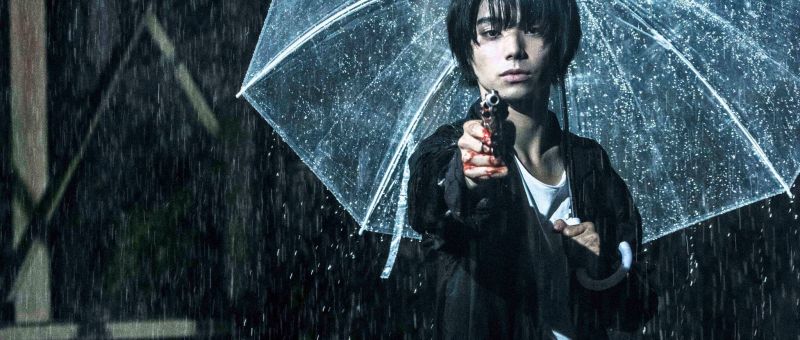
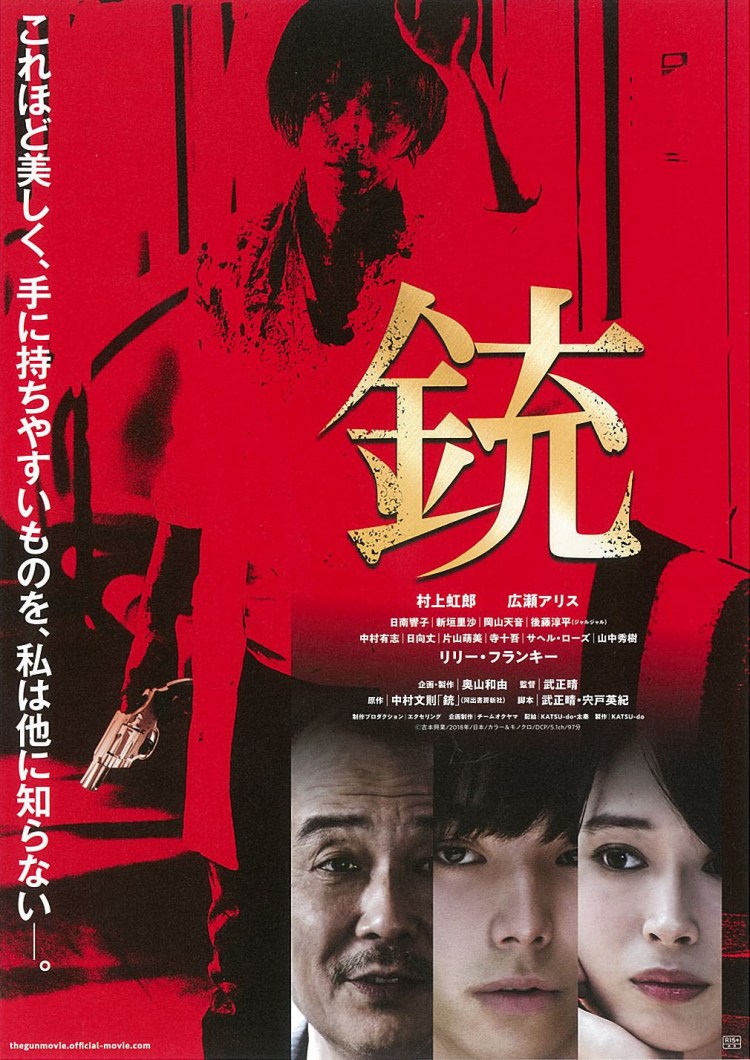
The Gun poster 1Much as Haruhiko Oyabu had in the post-war era, Fuminori Nakamura is fast becoming the go to voice for nihilistic noir in Japanese cinema. Several of his famously dark novels have already been adapted for the screen, most recently the grisly mystery Last Winter We Parted, but it’s only now that his lowkey debut The Gun (銃, Ju) is getting a suitably detached adaptation from 100 Yen Love’s Masaharu Take.

Like many of Nakamura’s “heroes”, Toru Nishikawa (Nijiro Murakami) is a disaffected youngster who thinks “it’s completely worthless to live”. His life changes one day when he comes across the body of a middle-aged man with a pistol lying next to it. For reasons he doesn’t quite understand, Toru picks the gun up and takes it home with him. Gradually its presence begins to obsess him as if he were literally being seduced by it. Believing he can communicate with the gun through touch, he lovingly caresses it, buys it trinkets, and lingers over thoughts of all they could do together.

Even when he takes a casual hookup (Kyoko Hinami) to bed, all Toru can think about is the gun. In the morning he tries to make her hate him by coming on strong, but it backfires because it appears to be what she likes, at least she suggests they hook up again, possibly on a regular but casual basis because she already has a boyfriend. Meanwhile, another prospect walks onto the scene – Yuko (Alice Hirose), a young woman Toru may or may not have forgotten meeting in the past. With Yuko Toru decides to do everything “properly” in a quest to win her heart rather than just her bodily submission.

Detached and very possibly a sociopath, Toru does indeed begin to show something of a more sensitive side in dealing with the similarly depressed Yuko. His gentlemanly act may be just that (and as one might expect, it largely works) but does at least display an acute emotional intelligence even if it’s being wilfully misused. Similarly, his first reaction to hearing alarming sounds suggesting the woman next door is mistreating her child is to turn his stereo up and ignore them, but he later finds himself trying to talk to the little boy in the street and eventually even calling the police only to have his mistrust of authority confirmed when they admit they’re aware of the situation and will send someone but probably not until the next day.

The woman next door, a bar hostess who rolls in late and kicks her kid out of bed to sleep on the porch so she can entertain her gentlemen callers, drags up unwelcome memories of the woman who abandoned him to an orphanage. To be fair, Toru does not seem any more misogynistic than his sleazy friends but has a fairly utilitarian idea of “romance”, viewing it as a game of conquest either fast and loose like with the casual hookup or slow and deep as in his careful pursuit of Yuko. Gradually his separate pursuits of the two women become confused, leading Yuko to confront him over whatever it is that’s so obviously “wrong” with him. Upset as she is, Yuko sees the darkness in Toru but must also see the light, affirming that she has her darkness too but is willing to help him with his if only he gives her a little time and waits for her forgiveness.

Toru, meanwhile, is still fixated on his beloved gun which he has begun to carry about with him in a little bag for added frisson. Living largely without feeling, the thrill of carrying such an illicit object becomes a peculiar kind of drug, as does the intoxicating thought of the act of actually firing it and finally of taking a life. A wily police detective (Lily Franky) cuts straight through Toru’s smug facade to the gaping void beneath, trying to prevent him from jumping straight into the abyss but confident he will fail. As the detective predicted, Toru’s sense of reason continues to fragment leaving him unsure of what is real and what isn’t while he obsesses over the gun and what he might do with it but in a purely intellectual sense without considering the real world consequences of his actions. An exercise in style, The Gun is a noirish tale of existential ennui and dark obsession filled with nihilistic dread as its soulless hero commits to living his “worthless” life only to wilfully rob himself of the possibility of salvation.


The Gun screens as part of the 2019 New York Asian Film Festival on June 30.

Original trailer (no subtitles)

Jinpa (撞死了一只羊, Pema Tseden, 2018)

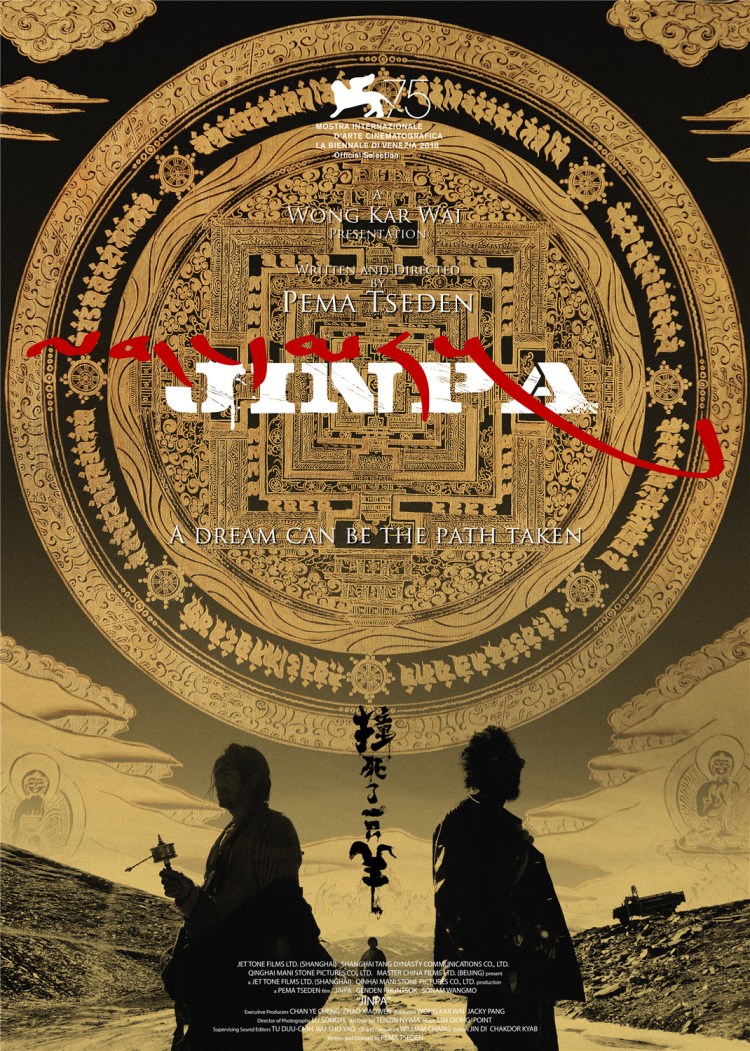
Jinpa poster 1Dreams, reality, and memory intertwine in Pema Tseden’s surrealist Tibetan western Jinpa (撞死了一只羊, Zhuàng le Yī ZYáng). Cycles of revenge and regret, killings accidental and deliberate, lost love, and inescapable karma bind two men or two parts of one whole as two travellers meet each other on the road, part, and then are perhaps reunited if in a more spiritual sense than literal. Moving away from the realism of Tharlo into mystical abstraction, Pema Tseden’s sixth feature is as obtuse as it is beguiling.

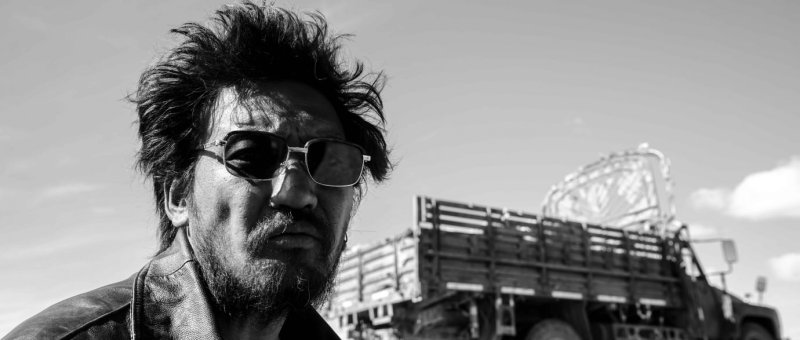
The titular Jinpa is an ultra cool truck driver in black leather and sunshades whose main jam is, incongruously enough, a Tibetan cover of O Sole Mio. Out on the road one day and distracted by the swooping flight a nearby bird, he accidentally hits and kills a sheep. Remorseful, Jinpa bundles the poor creature’s body into his cab, only to have to shift it into the back when he gets another passenger – a young wanderer (Genden Phuntsok) who later abandons his silence to explain that his name is also “Jinpa” and he’s on a quest for revenge against the man who killed his father 20 years ago. A decade long search has led him to Sanak where he hopes to find the man he’s looking for.

The men part company at the next turning, but the older Jinpa can’t seem to forget about his strange encounter. He takes the sheep for a proper funeral (before stocking up on lamb from a street stall), and pays a visit to lover where he unable to perform to anyone’s satisfaction. Jinpa hits the road again to look for his hitcher, either eager to prevent a crime which may add to his own karma, or simply to discover the end to the mystery.

Jinpa’s accidental slaughter of a sheep and the younger man’s quite deliberate quest for blood become somehow linked. Tracking the other Jinpa he finds himself at a tavern with a flirtatious barmaid (Sonam Wangmo) who gives him a few more clues, most particularly a possible identification of the man the other Jinpa might have been looking for but her tale is a strange one. The tavern goers’ background conversation is identical to the present moment, implying this is either one very boring spotlight hogger or that events are somehow occupying the same temporal space.

Shifting into hazy black and white for his flashbacks, Pema Tseden hints at the malleability of memory – as if one figure could easy be swapped out for another, past and present uncomfortably overlapping with memory as the unstable glue at their centre. The younger Jinpa’s prospective target, we discover, also has a son. Would he grow up to seek revenge against the man who killed his father? One circle closes, but another envelopes it just as quickly. A man kills a sheep, by accident, but perhaps there’s more that he’s atoning for than simply inattentive driving.

“If I involve you, it becomes your dream too” the opening text tells us citing a Tibetan proverb. Could the older Jinpa simply be dreaming a version of himself, or are the two men somehow inhabiting the same dreamscape? Events repeat, the two men walk the same path at different times, diverging and reuniting as they make their way towards whichever realisation is lying in wait for them.

Played by real life poet and actor himself called “Jinpa”, the eponymous hero oozes cool in his edgy rockstar getup and ever present sunshades, embodying the stranger in town a little too consciously as he wanders in search of his younger self. Produced by Wong Kar-wai and adapting Tsering Norbu’s novel The Slayer, as well as the director’s I Ran Over a Sheep, Jinpa is an unabashed exercise in style and mood, swapping the washed out iciness of the road for the colourful warmth of taverns, stores, and temples while memory remains a blur of radiating black and white frustratingly difficult to see in its entirety. Jinpa’s circular travels mimic his life, caught between cycles of violence and regret but hoping for forgiveness and eventual release. Abstract and inscrutable, Jinpa’s mythic fable nevertheless retains its strange power as its hero(es) attempt to free themselves from an inescapable spiral of existential despair.


Jinpa screens as part of the 2019 New York Asian Film Festival on June 29.

Original trailer (no subtitles)

https://www.youtube.com/watch?v=vB4DjlyQPZ8

Liz and the Blue Bird (リズと青い鳥, Naoko Yamada, 2018)

Liz and the Blue Bird poster 1If you love it, set it free. For most accepted wisdom, but hard to practice. The heroine of Liz and the Blue Bird (リズと青い鳥, Liz to Aoi Tori) finds herself facing this exact dilemma as she puts off facing the inevitable changes in a childhood friendship with adulthood lingering on the horizon. A Silent Voice’s Naoko Yamada returns with another delicate examination of teenage relationships, this time a spin-off to the popular Sound! Euphonium franchise, in which her fragile heroines struggle to address their true feelings as they subsume themselves into the titular piece of music but fail to master it even as it strikes far too close to home.

Our heroine, Mizore (Atsumi Tanezaki), nervously waits outside the school as if too shy to head in alone, eventually trailing along behind the comparatively more extroverted Nozomi (Nao Toyama). The two girls have been tasked with playing a movement known as Liz and the Blue Bird, inspired by a storybook of which Nozomi is particularly fond. Liz, a lonely young woman living alone in the forest, bonds with a mysterious girl who arrives one day and seems to be the human incarnation of the blue bird she longingly gazed at in the sky. Though the two women bond and live together in blissful happiness, Liz begins to feel guilty that her love has trapped the blue bird on the ground and forces it away to fulfil itself in the sky.

To begin with, it’s difficult to tell if Mizore and Nozomi are really friends at all or if Mizore’s painfully obvious longing is a completely one-sided affair. Mizore herself remains hard to read, either intensely shy and anxiously self-conscious or wilfully aloof as she rejects overtures of friendship from some of the other girls and devotes herself to Nozomi alone. Nozomi, meanwhile, is outgoing and gregarious, a natural leader well liked by the other band members and with plenty of (superficial at least) friends though perhaps lonely and confused in her own way. There is a kind of awkwardness between them, a tension neither seems quite able to address, which finds expression in the failure of their musical performance as it continually fails to find its proper harmony.

The story of the blue bird takes on extra significance for each as they cast themselves, perhaps mistakenly, in their respective roles from the fairytale. Talking things over with a sympathetic teacher concerned that she hasn’t turned in her career survey, Mizore declares herself unable to understand the story, not comprehending how Liz could have brought herself to release the blue bird rather than cage it to ensure it would be hers, and hers alone, forever. Fearful that Nozomi will fly away, she wants to tether her close but again does not quite know how. Nozomi, meanwhile, is conflicted. She feels a responsibility towards her friend’s feelings, but is insecure in her own talents and unsure she could follow Mizore on her chosen path even if that was her independent will. In fear of disappointing each other, they begin to pull away rather than face the inevitable end of their peaceful high school days.

Yamada’s camera is painstakingly astute in capturing the awkwardness of adolescent interaction from the slight tension in Mizore’s shoulders as Nozomi draws too close to the way she plays with her hair when nervous, glancing plaintively at hands and calves or the swishing motion of Nozomi’s ponytail, but always hanging back. Unlike Mizore, Nozomi understands the moral of the story but feels the ending is too sad, convincing herself that if the blue bird is free to fly then it’s also free to return. Having been forced to confront their individual troubles, the girls are better placed to see themselves in relation to each other, breaking the tension but perhaps with melancholy resignation as they commit to enjoying their remaining time together in the realisation that they may soon part. A beautifully observed portrait of teenage friendship and awkward adolescent attraction, Liz and the Blue Bird is an infinitely subtle exercise in emotional intensity as its heroines find the strength to accept themselves and each other in acknowledging that they were each made to fly through perhaps not quite yet.


Liz and the Blue Bird was screened as part of the 2019 Nippon Connection Film Festival.

US trailer (Japanese with English subtitles)

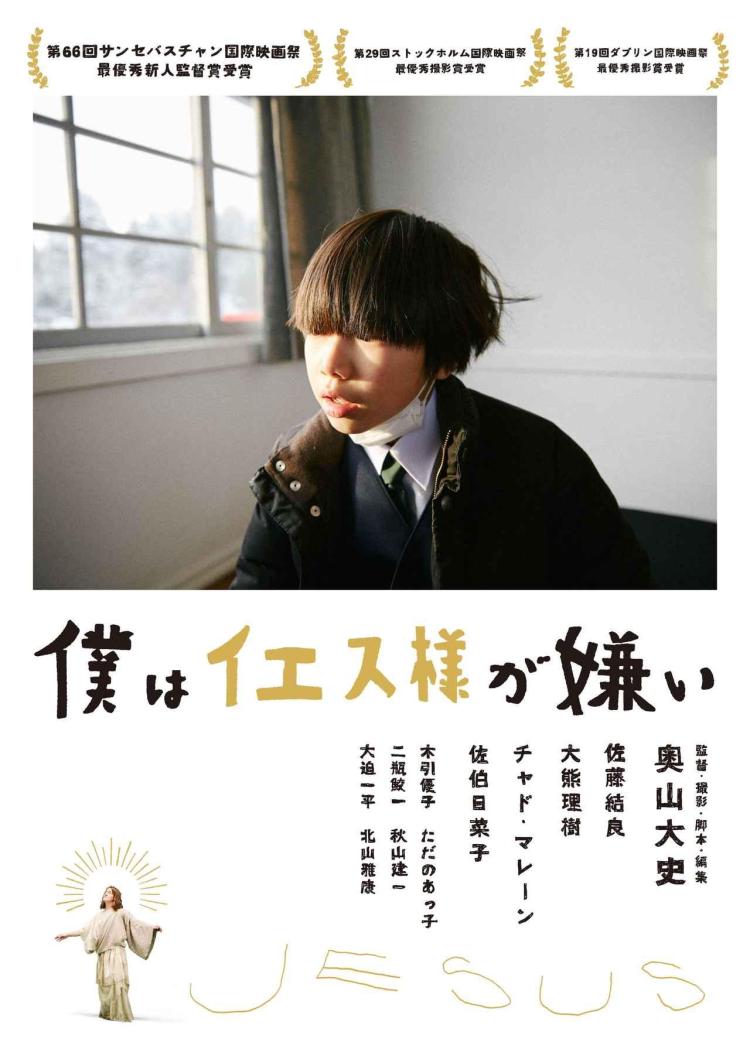
Jesus (僕はイエス様が嫌い, Hiroshi Okuyama, 2018)

Jesus posterIt’s tough being a kid. You have no control over anything and everyone always insists they know best, dismissing resistance as childish rebellion. Yura, the hero of Hiroshi Okuyama’s Jesus (僕はイエス様が嫌い, Boku wa Jesus-sama ga Kirai), has things harder than most as his peaceful days are disrupted by the abrupt announcement that the family will be moving from the bustling metropolis of Tokyo to the sleepy Nakanojo where he doesn’t even get his own room and has to share with grandma! To make matters worse, his new school is going to be a little “different” in that it’s a religious institution.

Yura’s (Yura Sato) family are not themselves Catholic and so the choice of a religious school adds an additional layer of displacement to his already irritated sense of alienation. Bored and lonely, even more of an outcast than solely being the new kid in town as a confused non-Christian suddenly dropped into an unfamiliar environment, Yura prays for a friend to make his days less dull and subsequently gains the constant companionship of a tiny Jesus (Chad Mullane) who follows him around and occasionally grants wishes. Eventually, Tiny Jesus gifts him a real friend in the form of Kazuma (Riki Okuma) – one of the most popular kids in school and a star footballer. Tragedy, however, lingers on the horizon leading to Yura to reconsider his relationship with Tiny Jesus who seems to have betrayed him in granting his trivial wishes only to break his heart.

In fact, the film’s Japanese title translates to the more provocative “I hate Jesus” which might give more of an indication of the film’s final destination as Yura first flirts with and then rejects the religiosity of his new environment. Confused by the zeal with which his classmates seem to run off mass and embarrassed that he doesn’t have a bible or hymnbook to join in, he nevertheless goes along with his teacher’s constant prayer meetings. Through the offices of Tiny Jesus, he comes to associate the power of prayer with asking and receiving. He asks Tiny Jesus for money, and suddenly his grandma comes up with 1000 yen, he asks for a friend and finds one, but just as he’s starting to have faith in his possibly imaginary friend doubt enters his mind. What is Tiny Jesus up to, and why won’t he help when it really matters?

Suddenly angry and resentful, Yura rejects his teacher’s kind yet insensitive attempts to comfort him with the affirmation that all that praying turned out to be completely pointless. Despite not being a Christian and only being a small boy, he is suddenly asked to give a eulogy for someone important to him that he has just lost. The adults might think this is a nice gesture, one that will bring a kind of closure while honouring the memory of the deceased, but it’s also a big ask for a child facing not only loss and grief on an intense scale for the first time but also trying to process his complicated relationship with a religion which is not his. Thoroughly fed up with Tiny Jesus, Yura brings his fist down on the good book as if to crush the false promise of misplaced faith in accepting that there are no real miracles and sometimes no matter how hard you ask your wish will not be granted.

Yura’s disillusionment with religion is swift as he realises you cannot get what you want merely by asking for it. He feels betrayed, not only by Tiny Jesus, but the entire religious institution which led him to believe he could change the world around him through prayer and positivity. Nevertheless, his disappointment does at least begin to bring him some clarity which, ironically, helps him to accept his new surroundings through bonding with grandma and coming to feel at home with his family even if his new environment is likely to be one tinged with sadness as he remembers better times before Tiny Jesus ruined everything. Whimsical if perhaps slight, Okuyama’s debut provides a rare window into Japan’s minority Christian culture as it celebrates Christmas in the Western fashion and seemingly exists in its own tiny little bubble, but subverts its religious themes to explore childhood existential angst as its adolescent hero is forced to deal with loss at a young age and discovers that there is no magic cure for death or eternal life (on Earth at least) for those who believe, only the cold reality of grief and bittersweet memories of happier times. 


Jesus was screened as part of the 2019 Nippon Connection Film Festival.

Original trailer (no subtitles)

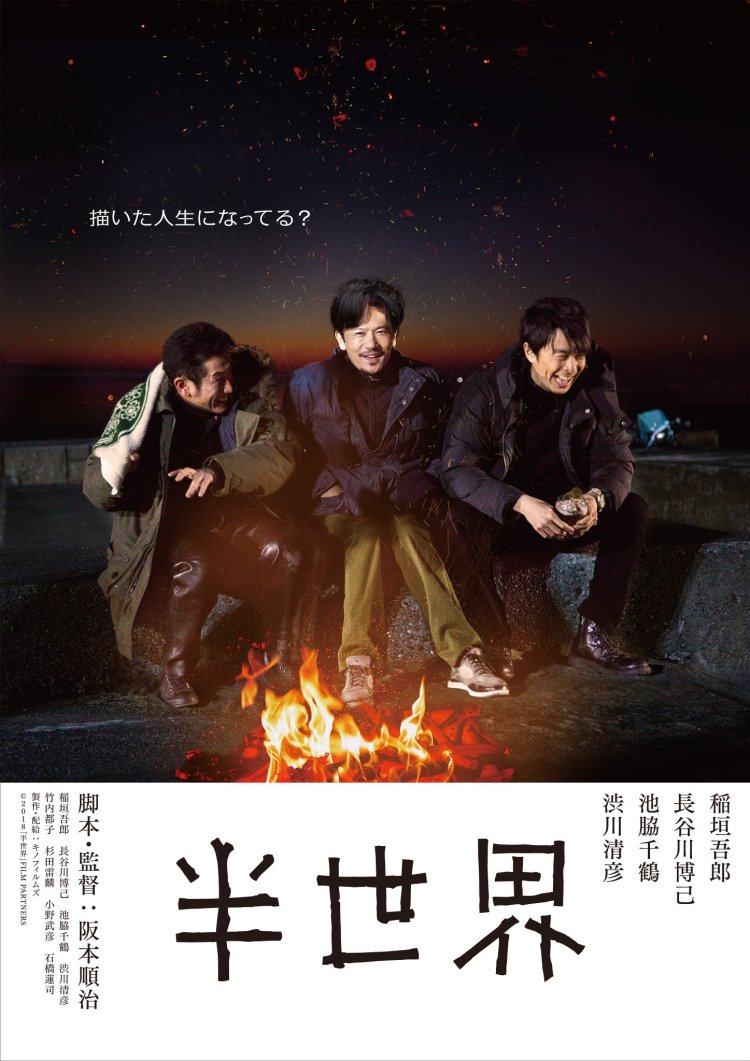
Another World (半世界, Junji Sakamoto, 2018)

Another World poster 2Director Junji Sakamoto’s career has been more meandering than most. Shuttling between hyper masculine fighting dramas, issue movies, and broad comedies, Sakamoto has always displayed an intense interest in the depth of male friendship which where his latest feature, rural drama Another World (半世界, Hansekai), takes him. A deceptively gentle story of small-town homecoming eventually broadens into a meditation on fathers and sons, frustrated dreams, and middle-aged malaise as its three dejected heroes attempt to bridge the gulf of years between them in order to rekindle the simple, innocent friendship they forged as naive teenagers more than 20 years previously.

The drama begins when Koh (Goro Inagaki) spots childhood friend Eisuke (Hiroki Hasegawa) unexpectedly hanging around his old home, now sadly abandoned following the death of his mother. Eisuke, unlike his friends, left his hometown to join the self defence forces and see the world. He has not returned home in some years and his sudden appearance is a pleasant, if perhaps concerning, surprise. Koh calls the other leg of the triangle, Mitsuhiko (Kiyohiko Shibukawa), and the trio of teenage buddies reunite, but Eisuke still seems distant and remains holed up in his family home rarely venturing outside, reluctant to confide in his old friends about whatever it is that he’s going through.

Meanwhile, the small town guys have problems of their own. Koh made the stubborn decision to take over his father’s charcoal business mostly to spite him, but times have changed and not only is demand dwindling but his product is unfavourably compared to his dad’s. Despite a seemingly happy marriage to the supportive Hatsuno (Chizuru Ikewaki), his home environment is also tense with resentment high between father and son as Koh struggles to relate to sullen teen Akira (Rairu Sugita) who is, unbeknownst to him, being bullied by the local delinquents. Unique among the three, Mitsuhiko has never married and still lives at home where he helps out with the family’s struggling car dealership, but remains cheerful in himself and is the most invested in maintaining the relationship between his two best friends in place of forging new relationships of his own.

Eisuke brings a new dynamic back with him as he struggles to readapt to small town life. As Koh suggests, he likely came back because he didn’t know where else to go but to his old friends even if he doesn’t quite want to let them help him. Now divorced and struggling with PTSD from his time in service as well as guilt over the death of a colleague, Eisuke provides an unexpected source of support for the conflicted Akira as he teaches him how to fight in order to defend himself while imparting what he knows of Koh in order to smooth the path between father and son. Koh, he tells him, had a bad relationship with his own violent dad who forbad him from the charcoal business which is exactly why he rebelled and did it anyway. Still fighting the ghost of his father, Koh has not found a way to connect with his son other than to let him be.

In a sense, each of these now middle-aged men is living in their own individual worlds as they push back against the forces of desperation but as Koh tells Eisuke, this small town existence is the “real world” too. Eisuke longs for escape, eventually retreating to a life on the sea after exposing his barely suppressed rage through an ill-advised show of violence which was itself in service of friendship. He superficially rejects the attempts of his friends to bring him back into the intimacy of their younger days as if fearing he no longer belongs in this ordinary world of wholesome small-town pleasures, but continues to search for the time capsule they buried all those years ago as if longing to recover their buried innocence.

Yet there is hope for the younger generation at least. Akira, coming to understand his father, accepts that he has a choice and eventually decides to honour both his father’s legacy and his own desires as he ponders the lonely life of a charcoal maker while putting on the boxing gloves that will allow him to fight for a freer future. Tragedies strike, life doesn’t turn out liked you hoped, but it goes on all the same with or without you. A warm if melancholy tribute to the healing power of friendship and its capacity to endure despite the weight of ages, Another World puts middle-aged malaise in perspective as its three disappointed heroes begin to find accommodation with where their choices, informed by those who came before, have led them, finding both peace and resignation in their in their ordinary small-town existence.


Another World was screened as part of the 2019 Nippon Connection Film Festival.

Original trailer (no subtitles)

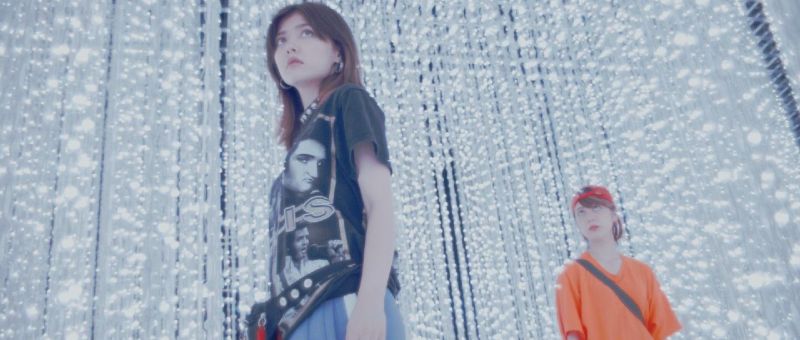
Tourism (Daisuke Miyazaki, 2018)

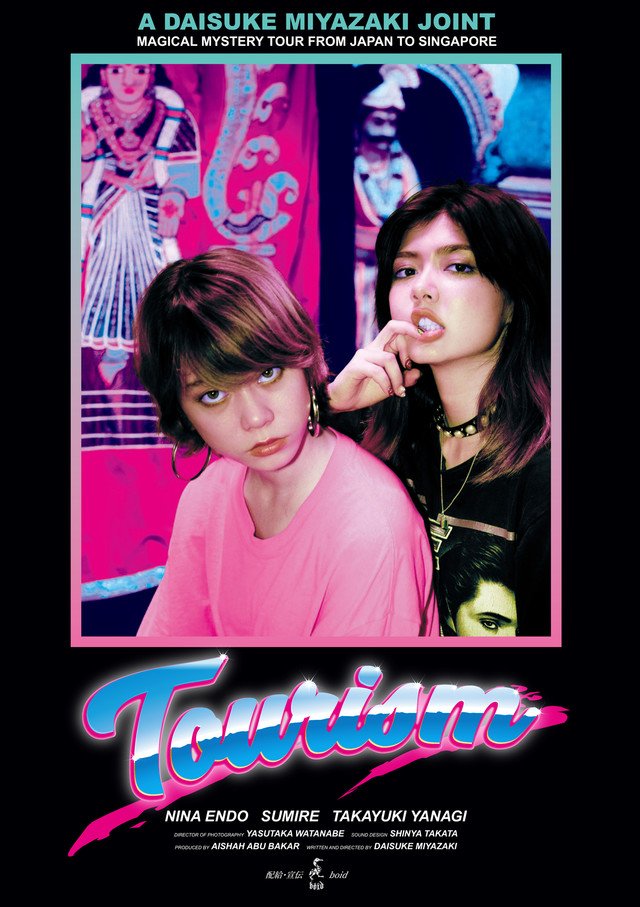
Tourism poster

Travel, as they say, broadens the mind but in this rapidly globalising society what is there to be gained in going to a place for “real” rather watching someone else go there online? Following his edgy feature Yamato (California), Daisuke Miyazaki takes a detour from the problems of modern Japan with a piece commissioned by ArtScience Museum and the Singapore International Film Festival. Tourism takes two regular small town girls and sends them to the gleaming metropolis of the famously upscale city state only to upend our expectations by following one of them through the otherwise hidden backstreets familiar only to the regular locals.

Nina (Nina Endo) shares a small apartment with friends Su (Sumire) and Kenji (Takayuki Yanagi) who are also living a precarious hand to mouth existence in small town Japan. Worrying about being able to make this month’s rent, none of the three is in regular full-time employment and all of them are working one or more part-time jobs split with studying and hanging out doing nothing much of anything seeing as there’s no money to spare for entertainment. Asked about their dreams for the future, Kenji replies that he wants to make the world a more caring place while Su just wants a car and Nina isn’t at all sure but knows she doesn’t want to just grow old and die in her hometown.

Unexpected opportunity arrives when Nina discovers she’s won a competition for a pair of tickets to anywhere in the world. Not very worldly, she can’t decide where to go and tries sticking a pin in the map only to land on a series of “unsafe” places before hitting on the idea of Singapore which, as Kenji explains, is “just like Disneyland”. Given the rarity of the prize, you might wonder if Nina and Su wouldn’t have been better to be a bit more adventurous and venture further afield but as Kenji says Singapore is a fairly safe, if perhaps dull, choice for two directionless young women taking their first steps in international travel.

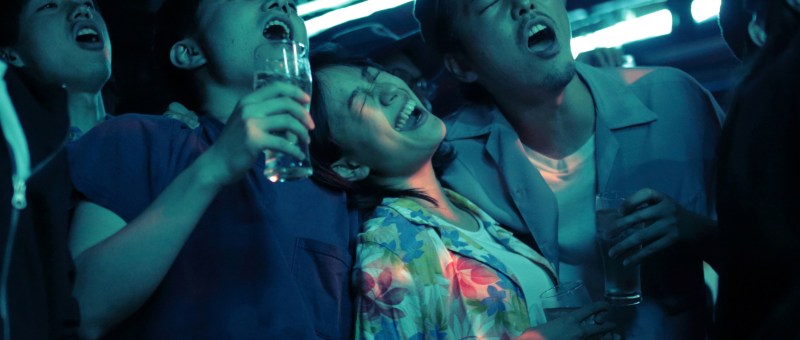
The Singapore that they originally discover is the one that Kenji described and the image of itself that the city wilfully projects all around the world. The girls wander around generic shopping malls near identical to those in Japan filled with high end fashion stores well out of their reach and bizarre centrepieces including gondola rides right next to the food court. After taking in the Merlion and other nearby tourist spots recommended by Siri, Nina and Su begin to venture a little further into the local culture with trips to markets and hawker spots but become separated when Nina leaves her phone behind after using it to live stream their dinner. Extremely lost and very alone, Nina, who can’t speak English and seems to have forgotten the name of her hotel, becomes dependent on the kindness of ordinary Singaporeans as she tries to find her way back to her friend.

Mistakenly guided to a random part of town by a well meaning woman who decided not to take offence to Nina’s potentially dangerous “please come to a hotel with me” pleas, Nina finds herself exploring the “real” Singapore – the one that doesn’t exist in the tourist guidebooks and largely belongs to the often underrepresented muslim community. Thanks to a kind man who invites her into his home to share dinner with his family and then takes her out to show her the places the locals go, Nina discovers not only a more authentic side to the city but that there are kind people everywhere and the world isn’t such a bad place after all.

Commissioned to push the charms of the city, Tourism certainly works as an extended PSA from the tourist board in its presentation of Singaporeans as universally kind and generous while demonstrating that there’s more to the island than expensive shopping malls and “disappointing” local landmarks. Despite its ironic name, however, the film is also at pains to emphasise that tourism and travel are not necessarily the same thing and that there’s much to be gained by going off map and interacting with ordinary people rather than just checking things off on a list so you can tell people about them later. Shot on low-grade, “tourist”-style cameras and largely on the move, Tourism is an unexpectedly uplifting ode to the re-energising qualities of travel which illuminate new paths towards the future while brightening the present.


Tourism was screened as part of the 2019 Nippon Connection Film Festival.

Original trailer (English subtitles)

And Your Bird Can Sing (きみの鳥はうたえる, Sho Miyake, 2018)

And Your Bird Can Sing poster 1Yasushi Sato, an author closely associated with the port town of Hakodate who took his own life in 1990, has been enjoying something of a cinematic renaissance in the last few years with adaptations of some of his best known works in The Light Shines Only There, Over the Fence, and Sketches of Kaitan City. And Your Bird Can Sing (きみの鳥はうたえる, Kimi no Tori wa Utaeru), taking its title from the classic Beatles song, was his literary debut and won him a nomination for the prestigious Akutagawa Prize in 1981. Unlike the majority of his output, And Your Bird Can Sing was set in pre-bubble Tokyo but perhaps signals something of a recurring theme in its positioning of awkward romance as a potential way out of urban ennui and existential confusion.

Sho Miyake’s adaptation shifts the action back to Hakodate and the into present day but maintains the awkward triangularity of Sato’s book. The unnamed narrator (Tasuku Emoto), the “Boku” of this “I Novel”, is an apathetic slacker with a part-time job in a book store he can’t really be bothered to go to. After not showing up all day, he wanders past the store at closing time which brings him into contact with co-worker Sachiko (Shizuka Ishibashi) who appears to be leaving with the boss (Masato Hagiwara) but blows him off to come back and flirt with Boku who makes a date with her at a cute bar but falls asleep after getting home and (accidentally) stands her up, drinking all night with his unemployed roommate Shizuo (Shota Sometani) instead. Luckily for Boku, Sachiko forgives him and an awkward romance develops but their relationship becomes still more complicated when Boku introduces Sachiko to Shizuo with whom she proves an instant hit.

This is not, however, the story of an awkward love triangle but the easy fluidity of youth in which unselfishness can prove accidentally destructive. Boku, for all his rejection of conventionality, is more smitten with Sachiko than he’s willing to admit. He counts to 120 waiting for her return, refusing to make a move himself but somehow believing she is choosing him with an odd kind of synchronised telepathy. She pushes forward, he holds back. Boku encourages Shizuo to pursue Sachiko, insisting that she is free to make her choices, and if jealous does his best to hide it. Shizuo, meanwhile, is uncertain. Attracted to Sachiko he sees she prefers Boku but weighs the positivities of being second choice to a man dressing up his fear of intimacy as egalitarianism.

Boku tells us that he wanted the summer to last forever, but in truth his youth is fading. Like Sachiko and Shizuo, he is drifting aimlessly without direction – much to the annoyance of an earnest employee at the store (Tomomitsu Adachi) who prizes rules and order above all else and finds the existence of a man like Boku extremely offensive. Sachiko, meanwhile, has drifted into an affair with her boss who, against the odds, actually seems like a decent guy if one who is perhaps just as lost as our trio and living with no more clarity despite his greater experience. Like Boku, Shizuo too is largely living on alienation as he strenuously resists the fierce love of his admittedly problematic mother (Makiko Watanabe).

“What is love?” one of Sachiko’s seemingly less complicated friends (Ai Yamamoto) asks, “why does everybody lie?”. Everybody is indeed lying, but more to themselves than to others. Fearing rejection they deny their true feelings and bury themselves in temporary, hedonistic pleasures. Boku reveals that he hoped Sachiko and Shizuo would fall in love so that he would get to know a different side to Sachiko through his friend, as if he could hover around them like transparent air. The problem is Boku doesn’t quite want to exist, and what is loving and being loved other than a proof of existence? Sachiko prompts, and she waits, and then she wonders if she should take Boku at his word and settle for Shizuo only for Boku to reach his sudden moment of clarity at summer’s end. A melancholy exploration of youthful ennui and existential anxiety, And Your Bird Can Sing is a beautifully pitched evocation of the eternal summer and the awkward, tentative bonds which finally give it meaning.


And Your Bird Can Sing was screened as part of the 2019 Nippon Connection Film Festival.

Original trailer (English subtitles)