
Adoring (宠爱, Larry Yang, 2019)

Adoring poster 1Pets can often be a point of contention in your average romance. As often as they bring people together, they can also drive them apart which is perhaps why the tug of war over an unexpectedly orphaned dog has become such a trope in bitter divorce narratives. Cheerful New Year movie Adoring (宠爱, chǒngài), however, is 100% pet positive, showing us that shared love for an adorable little critter only brings people closer even if it takes a little while to get there.

Each of our animal loving heroes is connected through a network of friendship or simply by using the same, very cheerful, vet’s. Teenager Nan (Zhang Zifeng) uses her pet golden retriever Zha as an aid while looking after her best friend, Leyun (Leo Wu Lei), who has recently lost his sight through illness. Illustrator An Ying (Kan Qingzi) has a crush on a handsome reporter who lives in her building but is both extremely shy and incredibly germaphobic which poses a small problem for her when he suggests co-parenting a little kitten they rescue from under a car. An Ying’s boss Zhao Le (William Chan Wai-ting) has just married beautiful air hostess Fang Xin (Zhong Chuxi), but her beloved dog Seven is both extremely jealous and aggressively territorial making the start of their married life somewhat stressful. Fang Xin’s friend Fay (Yang Zishan) has been dating smartly turned out fund manager Li Xiang (Wallace Chung Hon-leung), but is concerned that they always meet in hotels. Fearing he has another woman at home, she barges into his swanky townhouse but is surprised to discover that his big secret is a pampered pretty pink pig called Bell that occupies his basement in the height of luxury. Meanwhile, divorced dad Gao Ming (Yu Hewei) has become overly attached to the family cat and fears his daughter Mengmeng (Li Landi) will take it back to the US with her, and rookie delivery driver Ah De (Guo Qilin) bonds with a stray dog who helps him navigate a complex housing estate.

Much as everyone loves their pets, the animals are in some way also conduits for love between people. Leyun has been struggling to accept the loss of his sight and the feeling that the world he’s always known is slipping away from him, which is why he takes it so badly hearing that Nan’s parents are thinking of moving to be closer to her new high school. Nan wants to help him, and chooses to do so by training Zha to be a guide dog, but Leyun only sees the ways in which his friend is trying to fob him off with a dog rather than embrace the warmth that was meant by her gesture. Likewise, Gao Ming, has become so attached to the cat, Hulu, because he sees it as the last remnant of his family, his wife having left him and taken their teenage daughter to the US. Mengmeng Skypes him to talk to the cat, and he worries about losing touch with her if she no longer needs to, but misses the fact that perhaps she merely lets him use the cat as an excuse because she knows he’s an awkward man who doesn’t know how to talk to her. Zhan Le, meanwhile, is understandably irritated by Seven’s jealously, but does his best to make friends with him because he loves his wife and she loves her dog. An Ying too begins to become less afraid of human contact thanks to unexpectedly bonding with the kitten, allowing her to grow closer to her crush.

Bell, however, continues to be a problem for Fay who can’t get her head around why her handsome, stylish boyfriend keeps a “dirty” farmyard animal in the basement, let alone why he lavishes so much luxury on her. Jealous of the pig, she misses all the ways that Bell is actually rooting her human’s love story and just trying to make friends with her while protecting the household like any good pet should, leading her to make a potentially disastrous decision only to realise her mistake just in the nick of time. Darkness also invades the tale of delivery driver Ah De who finds out his new friend is under threat from vicious gangs who apparently round up stray dogs and sell them to restaurants (!). Somewhat uncomfortably, the “gangsters” following Ah De have Korean names, but ultimately turn out to be the good guys and part of the rescue team when all the pet lovers come together to save the independent pup and convince him that it’s OK to love again. As Ah De said, people think they take care of their pets, but sometimes it’s them taking care of you.


Currently on limited release in UK/US/Canadian/Australian/New Zealand cinemas courtesy of CMC Pictures.

International trailer (English subtitles)

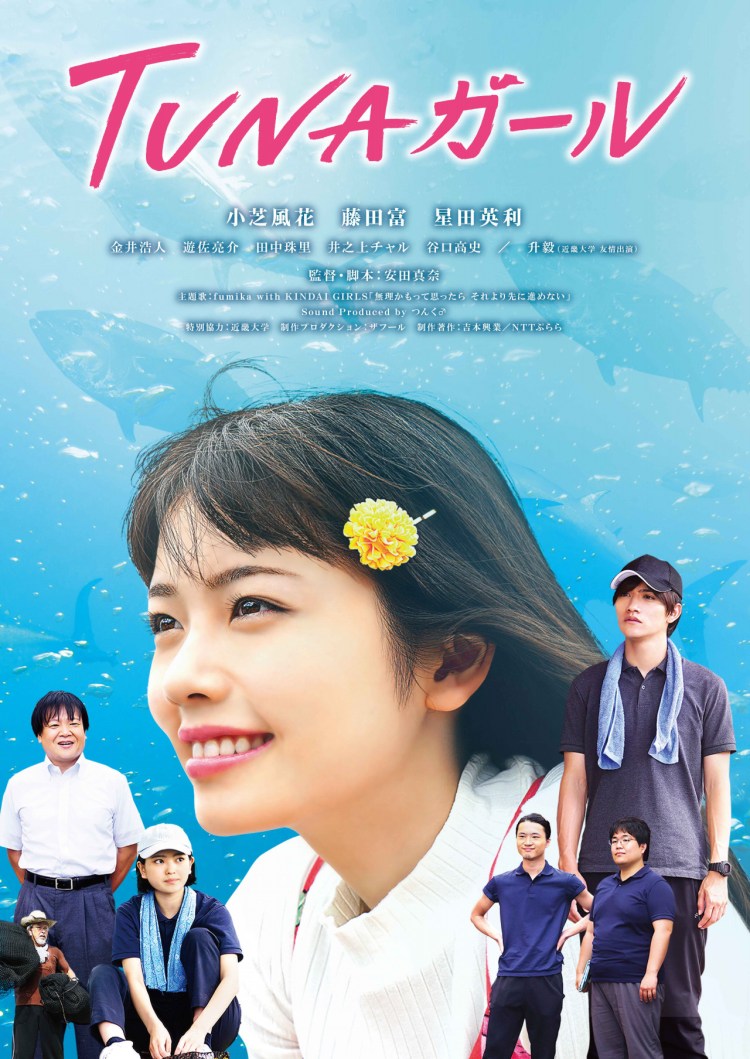
Tuna Girl (TUNAガール, Mana Yasuda, 2019)

Tuna girl posterIn perhaps the greatest book review ever written, a young girl in 1944 remarked “This book gives me more information about penguins than I care to have”. After viewing Mana Yasuda’s Tuna Girl (TUNAガール) which is equal parts docudrama about the growing tuna farming industry in contemporary Japan and coming-of age tale about a plucky young girl who, just like the famously impetuous fish, has a habit of rushing headlong into things she doesn’t understand fuelled only by unstoppable enthusiasm and a good heart, you may feel something similar about the titular fish.

Minami (Fuka Koshiba), an excitable young woman, is a fisheries student from Osaka on a short course at a research facility where they pioneer tuna farming. Minami’s big problem is that she hasn’t figured out what her speciality should be which means she’s been put on general fish farming duties but is beginning to think perhaps she’s not cut out for this after all seeing as she’s extremely squeamish when it comes to the real blood and guts of animal husbandry.

Meanwhile, she’s become a little smitten with the handsome but geeky Sudo (Tom Fujita) who gets a bit teary eyed every time he mentions tuna which he describes as the “diamonds of the sea”. Unlike Minami, most of the other students are of the serious sort and all have their particular reasons for attending the facility. Kuroda, an earnest young woman, becomes increasingly fed up with Minami’s thoughtless antics, resenting the extra work and potential for ruin involved with someone like her permanently overexcited friend. As she later reveals, however, that’s largely because she comes from a much more conservative family in which most believe that a woman’s education is a pointless extravagance. Her comparatively progressive grandfather felt differently and left money in his will to make sure she could study to become whatever she wanted to be, only she’s obsessed with fish and it’s difficult to sell a career in fish farming as being of great importance to the future of the human race so she needs to make sure she doesn’t mess this up and risk giving her judgemental relatives additional ammunition.

Kuroda therefore is somewhat unsupportive when Minami goes way over the top in characteristic fashion and ends up on TV introducing the school to a film crew who seem to have some kind of ecological agenda. Dressed in a cheerful summer outfit and plush tuna hat, Minami actually proves quite a capable host providing easily accessibly explanations of the running of the facility and various facts about tuna but tragically makes a huge mistake when she trips and spills valuable specimens live on air, trending on Twitter as a fish killer in the process. Unfortunately, her mistake could have serious consequences for everyone in that the facility, though operating as a commercial venture selling their farmed tuna, is largely reliant on grants which may be revoked if they come under ill repute.

As another student tearfully explains, classmates ought to be supporting each other not acting like bullies when one of them messes up. Kuroda later regrets her actions, explaining that she hates herself for being so serious with other people and secretly wishes she could be more like Minami. They are, after all, all quite unusual people who are passionate about something most people would find strange. Sudo thinks that their mission of perfecting tuna farming in Japan is akin to a sacred duty which lends the whole thing an uncomfortably nationalist bent, while parasite specialist Hosoda is told that by eliminating diseases in fish they can prevent conflict over fishing rights and somehow bring about world peace. Which is all to say that, though this is a bloody business entirely geared towards the efficient consumption of living creatures, everyone has their heart in the right place even if it might take a beat or two to figure it out.

Despite repeated failures and getting dumped by her selfish long distance boyfriend Minami remains steadfast and enthusiastic. She might never figure out her speciality, but learns a valuable lesson from her mentor who tells her that there is no “goal” in research, merely an intention to keep moving forward, much like a tuna rushing endlessly towards the future. Filled with fish facts and possibly too authentic detail of fish farming in Japan, Tuna Girl is far from original but cheerful enough as its enthusiastic heroine gets a few humblings but never gives up on herself or her friends as she charges forth towards her own bright future as a champion of Japanese tuna.


Currently available to stream on Netflix in the UK (and possibly other territories)

TV spot (no subtitles)

Ip Man 4: The Finale (葉問4:完結篇, Wilson Yip, 2019)

Ip Man 4 poster 1Superhero movies may be undergoing something of a complex reevaluation of late, but you can’t deny that they often come in unexpected forms. Ip Man, the man who made Bruce Lee, has himself become a mythical figure, a kind of kung fu saint defending ordinary Chinese people from oppressors and bullies. All heroes, however, must eventually meet their end. Ip Man 4: The Finale (葉問4:完結篇) brings the Donnie Yen starring series to a bombastic close with Ip seemingly facing off against the rising populism of the present day by kicking back against racist aggression in the San Francisco of 1964.

Why would Ip be in San Francisco, you ask? Because Bruce Lee (Danny Chan Kwok-kwan) invited him. Rewinding a few minutes, we discover that Ip has recently been diagnosed with throat cancer which is why he politely declines Bruce’s offer to pay for him to fly to the US to see him in a karate tournament. Personal matters, however, change his mind. His wife now passed away, Ip is struggling to connect with his increasingly rebellious son Jin (Jim Liu) who has been expelled from school for fighting. All Jin wants is to study kung fu like his dad, but Ip doesn’t approve. The headmaster advises him that unruly kids might do better abroad and so Ip decides to visit Bruce and check out schools in the US in the process, but he quickly runs into trouble on learning that the elite private institutions of the area require a recommendation from the Chinese Benevolent Association. The CBA are of the opinion that Chinese martial arts are for the Chinese people and are very angry about Bruce Lee’s determination to teach them far and wide. They were hoping Ip could talk some sense into his former pupil, but Ip is firmly on Bruce’s side. He too believes that martial arts should be a bridge between peoples, not a secret weapon preserving its mystique to intimidate.

This central divide becomes the film’s axis with head of the CBA Wan (Wu Yue) gently reminding Ip that he does not live in the city and is ill qualified to comment on local politics while advocating a gentle path of quiet appeasement. Wan clashes with his feisty daughter, Yonah (Vanda Margraf), who wants to be a cheerleader but faces constant micro aggressions from the openly racist rich kids at the same elite high school Ip wants to send Jin to. Yonah disagrees with her father’s turn the other cheek philosophy and longs to use the martial arts she didn’t particularly enjoy learning for their real purpose, later bonding with Ip after he steps in to frighten a group of posh thugs who attacked her on instruction from her rival on the cheerleading team.

The anti-racism theme slowly dovetails with the mirrored threads of failing fatherhood as Ip realises that he has made all the same mistakes as Wan. Yonah is impressed by Ip’s aura of quiet authority and spiritual power, instantly striking up a kind of paternal relationship with him, but offers cutting critique in casually echoing Jin’s words in complaining that her father has never supported her. Facing his mortality, Ip wanted to ensure his son’s independence as quickly as possible, but refused him the independence of deciding his own future. Eventually he realises that the only way to atone for his failure as a father is to pass his knowledge on while he still can, but a key part of that is that a martial artist must stand up to injustice wherever they see it, which is pretty much everywhere in San Fransisco in 1964.

Somewhat incomprehensibly, the great evil this time around is a group of massively racist karate enthusiasts who like to shout racial slurs at the practitioners of Chinese kung fu. Granted massive racists are not known for their critical thinking abilities, but no one seems to have told them that karate was not born in America which makes their animosity towards kung fu all the stranger. Yet, just as Ip and Bruce had suggested, martial arts can indeed be a bridge as Bruce discovers in besting a promising challenger in an alleyway and getting a big thumbs up in return.

Not everyone is as easily won over, however. Ip’s final battle against a crazed marine instructor (Scott Adkins) plays out as if he really has defeated racism in America by punching out a meat headed bigot with fatherly righteousness which is, however you look at it, a little on the flippant side. It also, of course, plays into the persistent “just stay in China” message of contemporary Chinese cinema, but nevertheless presents a slightly subversive front in clumsily uniting the oppressed population of the city under Ip’s revolutionary banner in opposition to entrenched racism, classism, corruption, and nepotism. Awkwardly delivered perhaps, but you can’t argue with the broadly positive plea for cultural exchange and international co-operation as the best weapons against injustice.


Currently on limited release in UK/US cinemas courtesy of Well Go USA.

International trailer (English subtitles)
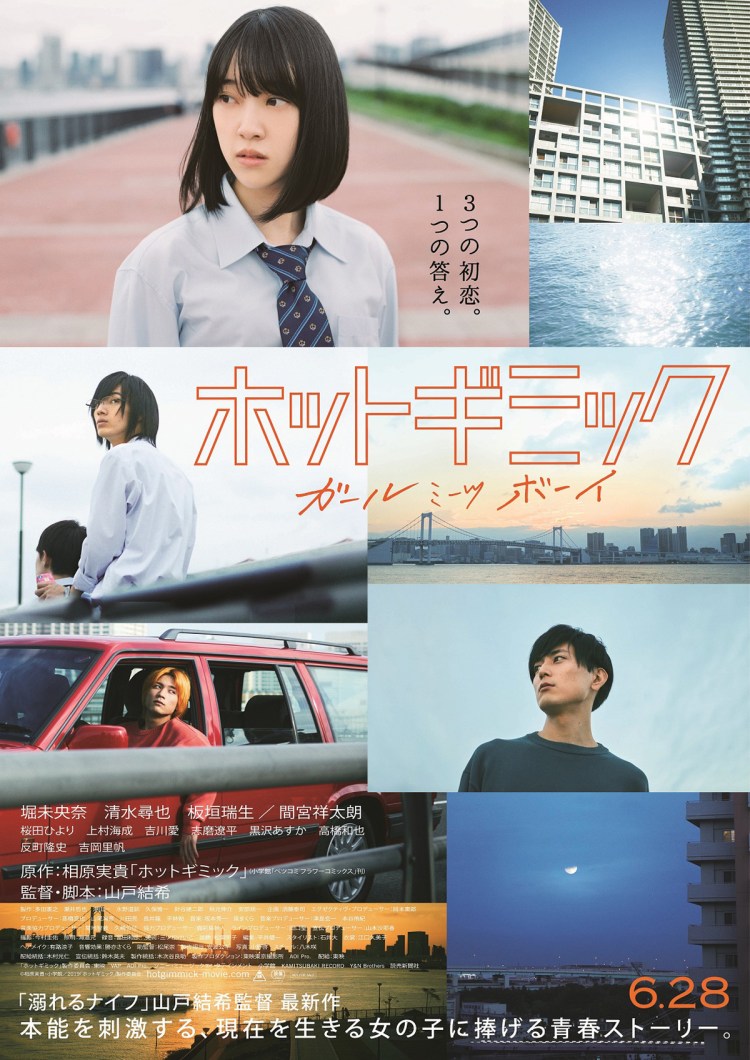
Hot Gimmick: Girl Meets Boy (ホットギミック ガールミーツボーイ, Yuki Yamato, 2019)

Hot Gimmick posterStrangely enough, shojo manga adaptations can in fact be among the most problematic exercises in contemporary Japanese cinema. Targeted very specifically at adolescent girls, the romantic world that they present is often consumed by its own sense of blind innocence as the shy heroine eventually finds love with a “handsome prince” who, though sometimes an inappropriate figure, is either improbably gentlemanly or a “difficult” Mr. Darcy type who more or less bullies her into submission. Yuki Yamato’s adaptation of Miki Aihara’s Hot Gimmick, given the subtitle “girl meets boy” (ホットギミック ガールミーツボーイ), however, seems to be well aware of the genre’s uncomfortable tendency to reinforce conservative social norms and normalise unhealthy relationship dynamics, even if it perhaps fails to entirely reject it in its broadly positive yet ambivalent conclusion.

Innocent and naive high schooler Hatsumi (Miona Hori) has been charged with secretly picking up a pregnancy test for her younger yet much more worldly sister Akane (Hiyori Sakurada) who ends up losing it on their way home from school. Unfortunately, it’s found by a schoolmate, Ryoki (Hiroya Shimizu), who uses it to blackmail her, forcing her to become his “slave” or he’ll send the test straight to her mother. For reasons not entirely clear besides her natural diffidence, Hatsumi goes along with it but is still carrying a torch for a childhood friend, Azusa (Mizuki Itagaki), who has since gone on to become a top idol. Unbeknownst to her, Azusa has in fact returned, apparently missing them all at the estate where he used to live. Increasingly terrorised by Ryoki, Hatsumi is more worried that Azusa will get the wrong idea and assume she is romantically involved with him. Meanwhile, her brother Shinogu (Shotaro Mamiya) is worried about both guys, overprotective in a disappointingly patriarchal way.

This is indeed a very patriarchal world. Unlike her sister, Hatsumi is romantically naive and terrified of the consequences of someone finding out about the pregnancy test even if Akane is fairly unfazed, simply brushing off questions from her mother by implying that someone is probably playing tricks on them. Hatsumi is preoccupied with the nature of “cuteness” and intensely insecure, which is perhaps why she allows herself to go on being manipulated by Ryoki even while knowing that is exactly what he’s doing. “I’m just stupid and unattractive” she’s fond of saying, fully believing that she has no right to her own agency because she is unable to see her own worth.

That essential insecurity seems to make her a magnet for all the creepy guys in a 10 mile radius. Talking to another somewhat imperfect boy, Akane tells him that guys like girls like Hatsumi who seem “vulnerable”, lamenting for a moment that that’s something she definitely is not (ostensibly, at least), but stopping short of reflecting on how dark a comment that might actually be or how the whole concept of “kawaii” is built on the idea of disempowered femininity. Azusa, who is originally posited as the “innocent” love interest, later turns out to be anything but, while Ryoki is later redeemed (to a point) in leading Hatsumi towards an awareness of an agency over her own body, while she, again problematically, turns to her protective brother rather than engage with the various ways in which all three guys have continually misused and manipulated her.

A intense subplot concerning the legacy of illicit romantic relations in the previous generation binds all of the troubled teens inside a net of moral resentment in which they embrace a kind of conservatism they reject their parents for rejecting. They are all, in a sense, attempting to break free of familial legacies, but find themselves paying for their parents’ mistakes while the parents themselves remain more or less absent, occasionally resurfacing to enforce obedience through shame. What Hatsumi comes to realise, however, is that the lesson they were teaching her was not quite wrong but misguided. Where they told her that she should guard her body because not to do so was shameful, she discovers that there is power in owning herself, that she is free to decide what she does and does not do with her body and has the right to grant or refuse access to it.

Nevertheless, her final sense of empowerment is undercut by her continued relationship with Ryoki who, while perhaps growing to accommodate a less misogynistic world view, is still a boy who tried to make her his slave and repeatedly calls her stupid even if eventually agreeing that the whole world turns in her. Yamato’s stylish visuals add to the sense of absurdity which defines the closing moments as Hatsumi at once affirms an awareness of herself as a being with worth and agency, yet also embraces her “stupidity” as she takes her first few diffident steps towards an assurance of adulthood.


Currently available to stream via Netflix in the UK (and possibly other territories)

Original trailer (no subtitles)

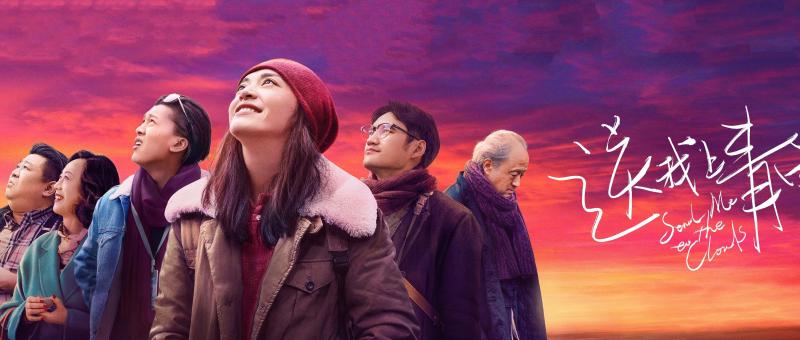
Send Me to the Clouds (送我上青云, Teng Congcong, 2019)

Send me to the clouds posterWomen hold up half the sky, Chairman Mao once said, but in contemporary China sexual equality is an unrealised dream of a previous era. The debut feature from Teng Congcong, Send Me to the Clouds (送我上青云, Sòng Wǒ Shàng Qīngyún) follows one “left-over” woman as she attempts to assert her independence in a world which still expects her to accept her subjugated position in a male dominated society by marrying and subsuming herself within a man’s career.

Ageing investigative journalist Shengnan (Yao Chen) whose name literally means “surpass men” has a cynical eye and fiercely independent nature but is struggling to make a living while protecting her integrity in an increasingly acquisitive culture. Getting kicked in the stomach by a “nutcase” while looking for evidence to support her theory that a local wildfire was started by a politician hoping to capitalise on successfully putting it out forces her to make a long delayed trip to the doctor who tells her that the pain in her abdomen is a result of advanced ovarian cancer and that she needs expensive surgery as quickly as possible.

As she’s been keen to ensure she acts ethically, ready money’s something Shengnan doesn’t have a lot of. Confiding in her cynical, ambitious best friend Simao (Li Jiuxiao) who has no such scruples, Shengnan finds him unwilling to help because, after all, there’s a chance Shengnan might die anyway which would mean it’s a bad investment because she won’t be able to pay him back. He does, however, offer her a job ghostwriting an autobiography for the eccentric father of the local official she was just in the business of exposing for shady double dealing. Understandably she doesn’t want to take the job and decides to try asking her parents without disclosing what the money’s for. Shengnan’s skeevy industrialist father (Shi Qiang), however, is currently losing out in the precarious Chinese economy and actually deigns to ask Shengnan for a loan before she can even broach the subject leading to a spiky father daughter argument. Shengnan has to take the job and throw her lot in with Simao even if she doesn’t feel quite right about it.

Simao cynically affirms that a problem which can be solved with money isn’t a problem, but unlike Shengnan he has no qualms about bowing before power if he feels there’s something to be gained by it. Shengnan nearly blows the gig when she takes offence to the official’s extremely condescending attitude but does after all have little choice given that her life is on the line. Meanwhile, the job is further complicated by the unexpected arrival of her mother (Wu Yufang) who decides to tag along while feeling neglected seeing as her now estranged husband is having yet another affair leaving her entirely alone in a culture which expects women to go back in their boxes until the menfolk want to take them out.

Shengnan and her mother come from very different generations, but in essence not much has changed. Shengnan’s mother married young and had her only daughter at 19 only to see her husband tire of her and the deeply entrenched idea that a woman’s career is a home and family exposed as a fallacy. Shengnan meanwhile was born during China’s reformist period and told that she had total equality only to be frequently criticised for her “manliness” in her desire to assert her independence. On visiting the doctor she displays worryingly little awareness of her health in her confusion regarding the cause of her cancer, stating that her love life ended years ago, but even if she’s quick to roll her eyes at Simao’s insensitive story about a woman who had the surgery and found it ruined her sex drive eventually decides she’d like to have one last hurrah with someone she really likes only to have her proactive stance on female desire rejected as unfeminine.

Yet this hyper capitalistic, intensely sexist environment is also harming men as Shengnan discovers in her unsatisfying encounters both with Simao and with a philosophical photographer she meets on a boat. Shengnan develops an attraction for Guangming (Yuan Hong) because of his softness and seeming desire to see further than others but eventually he disappoints her, trapped as he is by a hierarchal system to which he can offer only token resistance while hating himself for his cowardly complicity. Simao meanwhile has jumped headlong into the consumerist dream, obsessed with getting rich and not particularly caring what he has to do to make that happen.

The most meaningful connection Shengnan makes turns out to be with the subject of her biography, a randy 80-year-old poet (Yang Xinming) who quickly sets about romancing her mother with a series of cryptic text messages. The old man knows his son is a “complete moron” and even changed his name to something bland and commonplace so that the police might arrest someone else by mistake if he got caught while committing a crime, but has a sort of exasperated love for him and for the world that transcends his failing body and worldweary philosophy. Thanks to his refreshing earthiness, Shengnan starts to see a way forward, once again claiming her independence and resolving to live her life in the way she chooses for as long as it lasts while the men around her largely crumble under the weight of social expectations and a rampantly capitalist society.


Send Me to the Clouds  was screened as part of the 2019 London East Asia Film Festival.

International trailer (English subtitles)

12 Suicidal Teens (十二人の死にたい子どもたち, Yukihiko Tsutsumi, 2019)

12 Suicidal Teens posterJapan has a relatively high suicide rate, but even so the number of people taking their own lives had been steadily decreasing, hitting a 22-year low in 2016. Conversely, youth suicide rates peaked, hitting a 30-year high. Inspired by Tow Ubukata’s novel, 12 Suicidal Teens (十二人の死にたい子どもたち, Juni-nin no Shinitai Kodomo-tachi), as the title implies, sees a dozen high school students forming a kind of club in which they will take the decision to live or die as a group, ironically undercutting the sense of powerlessness which has led them to the conclusion that they have no other choice other than death.

Ringleader Satoshi (Mahiro Takasugi) has recruited 11 likeminded souls and furnished them with complicated instructions involving a series of secret codes granting them access to a basement meeting room in an abandoned hospital. The 12 dutifully make their way into the building, but a surprise is waiting for them. When the first guest arrives, a young man is already lying in one of the 12 beds arranged around the edges of the room, apparently having jumped the gun, dead or dying after taking a large amount of sleeping pills. Everyone concludes he must be the event’s organiser, only for Satoshi to suddenly arrive and attempt to “open” the meeting at which they’re supposed to discuss the issues thoroughly so they can be sure they’re making the right decision. Because of the unexpected 13th guest, a decision is taken to postpone the discussion until after they figure out what’s going on.

Part of the reason for that is less curiosity than a kind of resentment. The teens are worried that their own deaths maybe misunderstood or misused if they’re discovered with this randomer in their midst. What if he’s the victim of a serial killer and everyone thinks they are too, never getting the message that each of them was desperate to send with their deaths? One young man who is dying to get back at a neglectful mother by denying her a life insurance pay out is worried it might backfire and she’d end up quids in if the police decide he’s a murder victim and not a suicide. He decides to live (for the moment at least) almost all out of spite.

Spite is, it seems, a powerful motivator in one sense or another. What most of our teens want isn’t really death but freedom, an end to pain or suffering. Suicide rates spike in September because bullied students can’t bear the thought of returning to school. Bullying is indeed the reason one of our teens wants to die, only the instigator was a teacher who led his class to victimise an innocent student solely for the crime of being an “annoying” person. Another teen, meanwhile, was bullied until he finally snapped, pushing his aggressor down a flight of stairs. Unable to live with the guilt, he too feels he can’t go on.

For the girls, the lack of control is all the more obvious. One young woman walks around with a surgical mask covering her face, not because she’s hideously burned but because she’s fantastically beautiful. One of Japan’s many celebrity idols, she’s on the cover of a thousand teen magazines but doesn’t recognise herself in the images that she sees and resents the way in which her existence is micromanaged by others. She wants to die as a means of seizing her own agency, to prove that her life and her individuality were valid and mattered as distinct from the fake persona created by her managers. Her fame endangers the mission of the group’s most emo member who declares that the mass suicide should be bomb detonated under an indifferent society, that she’s dying to reject her existence and rebelling against having been born.

Like some of the others, she’s a survivor of abusive parenting and resents having been given a “meaningless” life. A few of the other teens feel the same but for different reasons, they are suffering longterm or terminal health conditions and resent both their fates and being forced to live on without hope. They choose death now to prove they have a choice and are leaving on their own terms, not those of the universe.

Eventually the conclusion that they come to is that to live is also a choice. Working together to solve the mystery of the unexpected guest, they begin to understand a little of each other’s lives and their own, bonding in a shared sense of futility that slowly drifts into a rejection of the nihilism that had convinced them that their only choice was death. A strangely uplifting experience, 12 Suicidal Teens is a dark celebration of life that makes a virtue of endurance and finally finds meaning in commonality and the simple joy of empathic connection.


Original trailer (no subtitles)

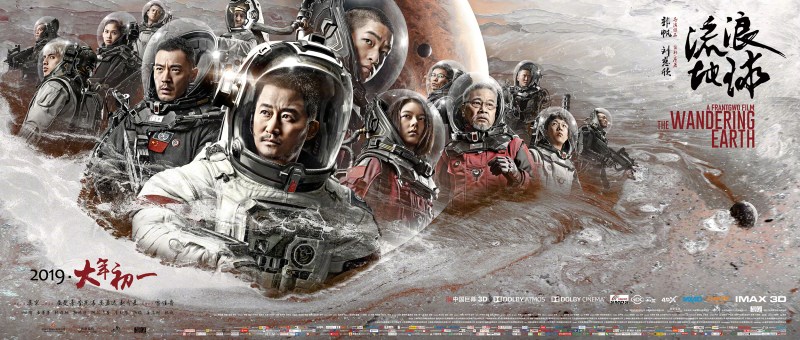
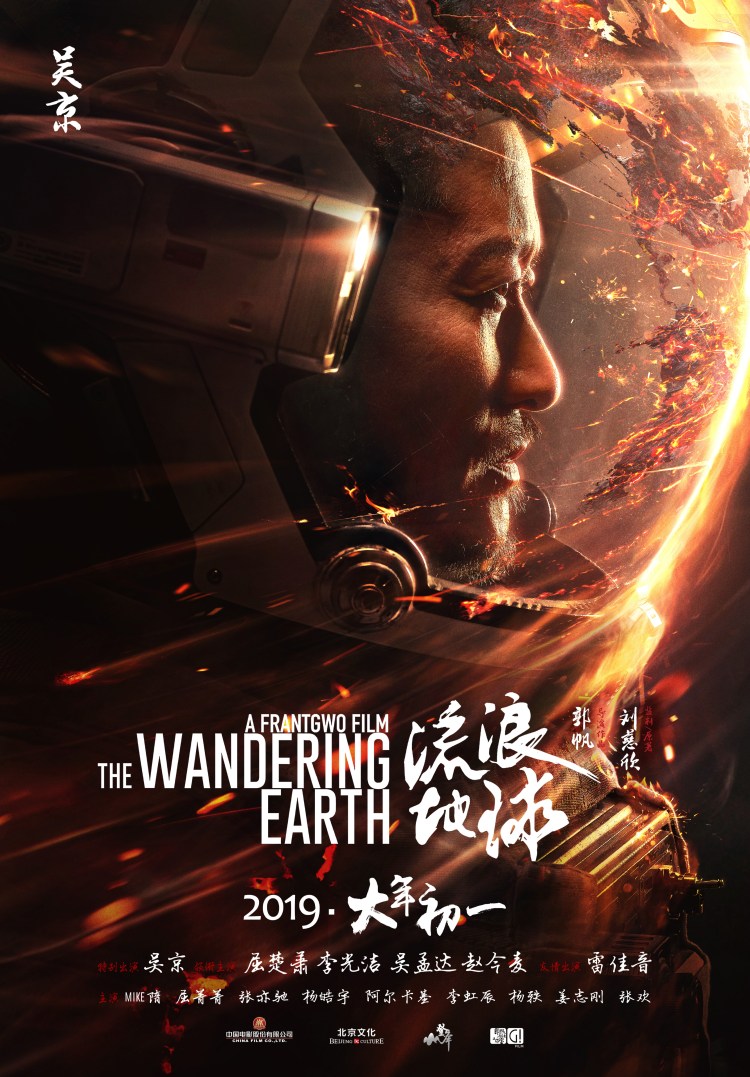
The Wandering Earth (流浪地球, Frant Gwo, 2019)

Wandering Earth poster 5Chinese cinema has not been as averse to science fiction as some would have it, but it’s true enough that The Wandering Earth (流浪地球, Liúlàng Dìqiú) marks a bold new chapter in its ambitious attempt to take Hollywood on at its own game. Adapting the novel by China’s premier sci-fi author Liu Cixin, Frant Gwo’s third feature is an interesting take on the New Year movie in which new beginnings are sought and families desperately try to reunite to see them in, only this time they do so against the backdrop of impending apocalypse as the universe threatens to swallow us whole.

Far in the future, the vast expansion of the sun will soon consume the Earth. The Wandering Earth project aims to save humanity by attaching jet thrusters to the Earth’s surface to push it out of harm’s way yet this safety measure has also had grave effects on the planet’s climate rendering the surface uninhabitable. 17 years previously, astronaut Liu Peiqiang (Wu Jing) left his 4-year-old son behind in the care of his father (Ng Man-tat) to take up a position on the space station intended to safeguard the Earth’s future. Now 21, Liu Qi (Qu Chuxiao) has grown up into a resentful, rebellious young man intent on seeing the surface for himself if only not to be home when Peiqiang finally returns to Earth. A natural disaster, however, leaves him stranded with his adopted teenage sister, Duoduo (Zhao Jinmai), just as the Earth is inconveniently drawn into a fatal collision course with Jupiter.

As much about fatherhood as it is about survival of a species, The Wandering Earth centres itself on the angry figure of Liu Qi who has been forced to live his entire adolescence underground and has come to deeply resent the memory of the father who allowed his sickly mother to die and then abandoned him. Peiqiang, meanwhile, has spent 17 years on the space station solely in order to save his son’s future, dreaming of the day they will finally be reunited. He cares little for his own life and has already spiritually handed the baton on to the next generation whose descendants, he hopes, may finally see a kinder sun rise over a new Earth.

This kind of selflessness is also reflected in the film’s refreshingly globalist outlook in which the world, no longer divided, has learned to act as one in order to combat the extreme threat from its own sun. The resistance may be China led, but depends on common endeavour and personal sacrifice. When a last ditch effort is required, the government cannot order its forces away from their families but can offer them the individual choice to keep fighting for survival, bringing teams from all corners of the Earth together as they descend on Indonesia where there just might be a one in a million chance to strike back at Jupiter and escape its gravitational pull.

Meanwhile, Peiqiang is up still up on the space station all alone and powerless while the annoyingly efficient operating system MOSS attempts to frustrate his efforts to save the Earth in service of its own mission to preserve humanity’s legacy. MOSS has made a series of calculations and given up, but giving up is not a very human trait and Peiqiang won’t do it. He makes impassioned speeches to the French-accented global authorities and ponders the best way to ensure his son’s survival even at the cost of his own but finally can only resist by literally attacking the system in overruling MOSS and acting on his own initiative.

A New Year tale through and through, The Wandering Earth is a celebration of family, togetherness, and home but is careful to dial down the patriotism for an insistence on the importance of mutual cooperation between peoples in order to combat existential threat with the spectre of climate change always on the horizon. The point, however, is that it is important to keep hope alive, if not for yourself then at least for others rather than give in to nihilistic despair. The Wandering Earth, grand and ambitious in scale, marks a new dawn of its own in terms of Chinese blockbuster sci-fi and does so with refreshing positivity as it places its hopes in human solidarity and individual sacrifice over jingoism and self-interest.


Currently available to stream on Netflix in the UK and possibly other territories.

Netflix trailer (English subtitles)

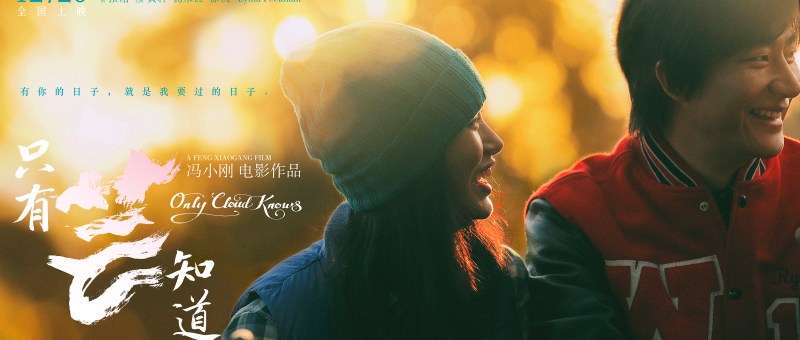
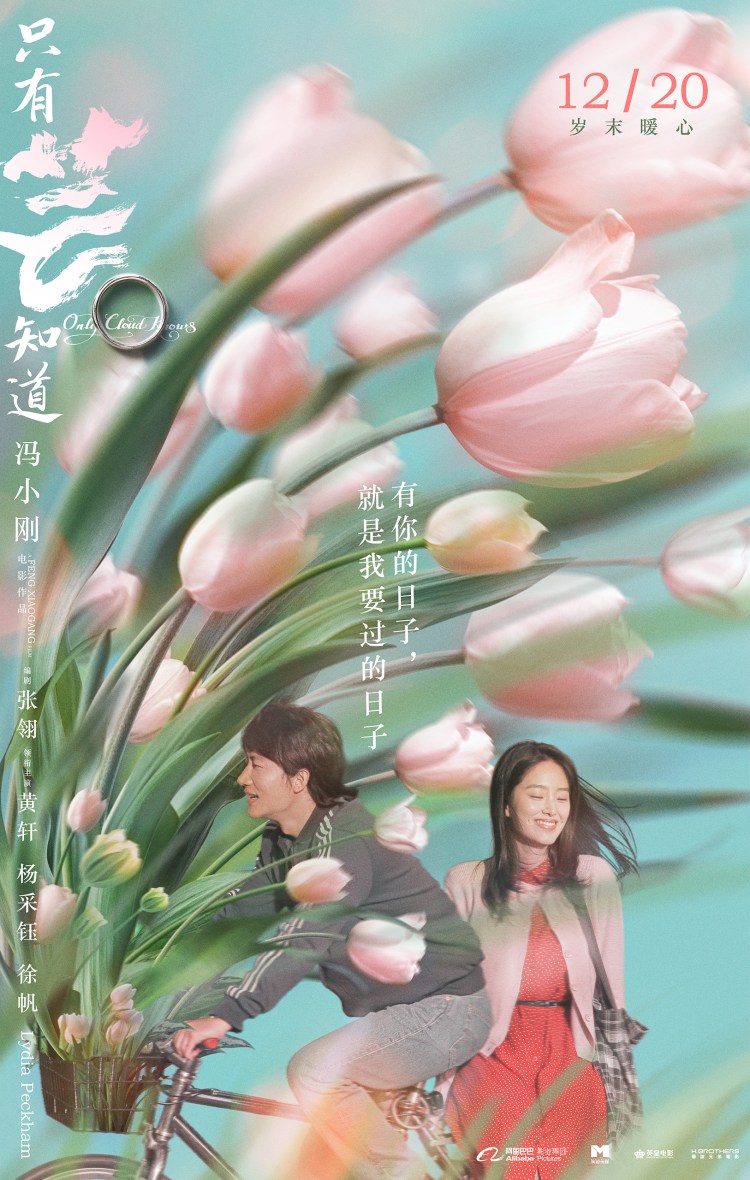
Only Cloud Knows (只有芸知道, Feng Xiaogang, 2019)

930161b9ca654d4cac056b550c6d0542If contemporary Chinese cinema has one message, it’s come home to China. Feng Xiaogang, however, has never been keen to go with the flow for all of his occasionally problematic affection for the nation as it was before the ‘80s reforms. A co-production with New Zealand, unabashed romantic tearjerker Only Cloud Knows (只有芸知道, Z Yǒu Yún Zdào) seems primed to speak directly to the diaspora audience, asking if perhaps the meaning of the word “home” has changed, less place than people and, therefore, infinitely portable.

In the present day, recently widowed Dongfeng/Simon (Huang Xuan) prepares to say goodbye to his late wife, Yun/Jennifer (Yang Caiyu), by travelling back through their long years together facing many ups and downs as they strove to make a life for themselves in the laidback greenery of the New Zealand countryside. Dongfeng travels first to the small town where they started a humble restaurant, cooking the kind of food Westerners expect rather than the authentic Chinese dishes they fear no one will try, and using their English names “for convenience”. While there they employ a friendly waitress, Melinda (Lydia Peckham), who is something of a free spirit saving up money to travel to distant lands, touring Asia and Africa.

Though they are blissfully happy, life is not without its difficulties. Working so hard to make the restaurant a success leaves them with time for little else and wondering if they’ve perhaps lost sight of something important. Dongfeng no longer plays his flute, and Yun worries that he’s sacrificed a part of himself to provide for her, becoming a slightly different person in the process. Obsessed with blue whales, Yun craves protection and security, the kind of things many associate with a building a stable home, but she also yearns for freedom and for something more than ordinary happiness. Minor resentment creeps in born of that central contradiction. Dongfeng wants to give Yun the kind of security he assumes she needs by betting everything on the restaurant, but all she really wants is him.

Nevertheless, protection and security were the things which attracted her to Dongfeng in the first place as symbolised by her obsession with blue whales. Somewhat improbably, his hotheaded decision to start a fight with a man who cut them up in a carpark and then insulted Yun only endears him to her further and also gets him a commendation from a local policeman who even tells him he might be cut out for life on the force, but to ease back on the violence because New Zealand is a peaceful place. There are things, however, that one cannot be protected from and as much as fate gives it also takes away. Yun craves protection because she feels insecure in an existential sense, convinced that she is “unlucky” and originally reluctant to agree to Dongfeng’s proposal in fear that she is destined to make him unhappy.

Sadly, that prediction eventually proves correct though through no fault of her own. Lucky in love, the couple face their share of hardships from an inability to start a family to losing beloved pets and dealing with illness, but there’s no joy without sadness and if your time together is shorter perhaps it is equally sweet. In his opening monologue, Dongfeng muses, quoting poetry, that time moved slower in the past and there was only enough of it to love one person before telling us that his life has been about one woman. Only Cloud Knows is the story of how he learned to say goodbye, but also of a 20-year love that endures to transcend time.

Apparently inspired by the true life love story of one Feng’s friends and collaborators, Only Cloud Knows has a rare kind of authenticity in its deeply felt romance which somehow seems all the more real for its clichéd genesis. Foreshadowings of partings echo throughout, reminding us that all love ends one way or another and it’s the ones left behind who mind it most, but rather than dwell on the maudlin, Feng shows that life goes on even in the midst of heartbreak. Houses change hands, old owners with teary eyes making space for bright-eyed youngsters full of hope for the future, while those who are leaving bequeath their unlived years to those they love with hopeful generosity. What Dongfeng discovers is that home is where the heart is, even if the heart is forever in the past.


Currently on limited release in US/UK cinemas courtesy of China Lion.

Original trailer (English subtitles)

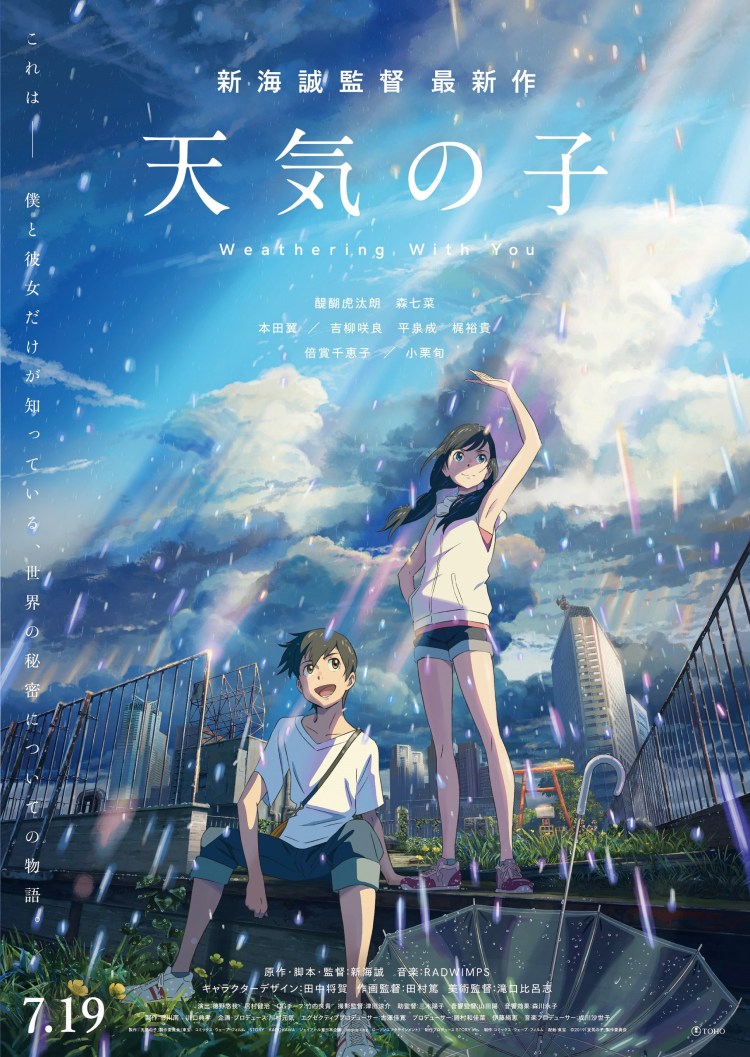
Weathering with You (天気の子, Makoto Shinkai, 2019)

weathering with you poster 2Some might say much of life is learning to weather the storm, but when the storm is literal as well as metaphorical it’s easier said than done. Following his 2016 mega hit Your Name, Makoto Shinkai’s Weathering with You (天気の子, Tenki no Ko) opts for much of the same but grafts an additional layer of anxiety onto the lives of his precarious teen heroes who are left largely adrift, betrayed by corrupt adult society and plagued by doubt and despair in a world which, it seems, is trying to drown them in existential hopelessness.

16-year-old Hodaka (Kotaro Daigo) has run away from his parochial island home for the bright lights of Tokyo. Beyond disconnection from his parents and small-town ennui, he never gives much of a reason why he’s so determined not to go back, but tries to make a go of it in the city with all the prideful naivety of an adolescent young man. What he discovers is that, because of laws in place to protect him, he can’t support himself honestly as an independent teen, ironically placing him firmly at risk in shady Kabukicho but it turns out that you can’t even get a job as a host in a sleazy bar without proper ID. Just when he’s hit rock bottom, Hodaka is given new hope when a friendly employee at McDonalds decides to gift him a burger just because she can see that he’s hungry.

Hodaka describes the BigMac as the best meal he’s ever tasted, because he’s tasting kindness in an environment which has turned out to be far more hostile than he’d anticipated. He tries to repay that kindness when he spots the girl out in Kabukicho being manhandled by a gangster trying to coax her into a love hotel, threatening him with a gun he picked up from the rubbish bin outside a club. The girl, Hina (Nana Mori), ends up saving him again, but the rescue originally backfires because of Hodaka’s problematic adoption of the gun. He regains Hina’s sympathy by throwing it away, allowing a genuine connection to arise between them, especially when he discovers that Hina has an unusual power – she can stop the rain with the power of prayer.

It’s the height of summer, but it hasn’t stopped raining since Hodaka arrived in Tokyo. In fact, it’s just about time for Obon when the departed souls of long gone relatives are able to return. Hina apparently became linked with the sky after praying at a shrine during her mother’s illness, but if the gloominess of the heavy skies and constant rain is a reflection of her unhappiness, it’s one belied by superficial cheerfulness even though her life is just as hard as Hodaka’s. In addition to trying to support herself on the kind of money you can make as a teenage part-timer, she’s also responsible for her younger brother Nagi (Sakura Kiryu) which is why, perhaps, she was tempted by that gangster’s offer of big bucks to be made in Kabukicho.

Hodaka too looks for familial connections, moving in with a middle-aged man who saved his life during the storm that brought him to Tokyo. Like Hina, Keisuke (Shun Oguri) is also drowning in grief, in his case for a beloved wife killed in an accident, while dealing with separation from his daughter who has been taken in by her grandmother in disapproval of Keisuke’s scrappy lifestyle. It’s working for Keisuke’s occult-themed magazine that leads Hodaka to recognise Hina as a “Sunshine Girl”, but also to learn that such “weather maidens” were once common in ancient Shinto Japan and mostly met a bad end. A fortune teller makes it clear that exercising the kind of power that Hina has is likely to deplete her capacity for life, a mild irony in that it’s the inability to feel alive that these rains seem to symbolise.

Ironically enough, both teens met their destiny because they were chasing the light – Hina drawn to a rooftop shine illuminated by an improbable ray of sunshine in the rain, and Hodaka longing to find his place in the sun and resolving to live inside the light that Hina casts. Eventually, Hodaka is forced to make a decision and comes to the conclusion that he can accept Hina for all that she is, that she doesn’t need to be the “Sunshine Girl”, she can feel what she feels and the world will cope. He will weather the storm along with her.

Meanwhile, the spectre of real world climate change looms in the background. Hodaka’s decision necessarily means he has chosen to drown the world to save his love. Faced with the gradual submergence of the city of Tokyo, an old woman waxes philosophical, remembering that back in Edo most of this land was underwater so perhaps it’s just going back to the way it’s supposed to be. Hodaka is swayed but unconvinced. Still young, he is very invested in the idea that he has changed the world, for good or ill, seizing his agency as path out of his despair. But Shinkai’s messages are mixed. Hina continues to pray, but Hodaka comes to the conclusion that the world has always been messed up so perhaps all you need to do is learn to live in it and the rest will figure itself out. As much as it’s true that the problems of climate change should not rest on the young, who are blameless, it is perhaps irresponsible to advocate cautious indifference. Hodaka remains wedded to the idea that he’s made a choice and his choice has changed the world, while beginning to realise that changing the world is not his responsibility, or at least not his alone and not in that way. He has, however, found a way at least to live with all his choices, undefeated by the rain.


Original trailer (English subtitles)

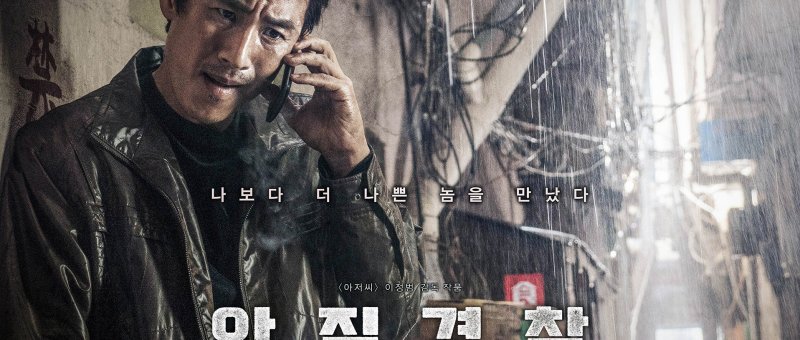
Jo Pil-ho: The Dawning Rage (악질경찰, Lee Jeong-beom, 2019)

Jo Pil-ho- The Dawning Rage posterThe Man From Nowhere’s Lee Jeong-beom returns five years after No Tears for the Dead with another retro crime thriller, though this time one with additional bite as he digs into a nation quite clearly failing its young. Another of the recent films set in the post-Sewol world, Jo Pil-ho: The Dawning Rage (악질경찰, Akjilkyungchal) is a noirish voyage through an intensely corrupt society in which Chaebols act with impunity while goodhearted schoolgirls are branded delinquents and left to fend for themselves by the “adults” who seem to have abandoned all sense of social responsibility.

Our hero and the titular “bad cop” of the Korean title, is Jo Pil-ho (Lee Sun-kyun) – a corrupt police officer who abuses his position to force criminals to commit crime on his behalf. Recently, he’s teamed up with a teenage safecracker, Gi-chul (Jung Ga-ram), and is also involved in an ill-advised business relationship with a petty gangster. IA are all over him, but they don’t have anything yet. Everything is about to change, however, when an angry Pil-ho decides it would be a good idea to rob the police warehouse. The gangster’s minion makes a mistake and the place blows up with Gi-chul trapped inside. Suddenly it’s not looking so rosy for Pil-ho who is now implicated in a series of crimes only to discover that there is far more going on than he could have anticipated. The warehouse fire appears to be connected to an ongoing corruption case involving one of Korea’s biggest conglomerates and Pil-ho may have just destroyed key evidence without realising in an attempt to save his own skin.

Despite himself, Pil-ho is not such a bad guy. He’s corrupt and greedy, but he has a moral compass and probably sees himself as kicking back against the system rather than abusing it seeing as he only seems to take money from sources he feels could stand to lose. This is perhaps why he finds himself increasingly shaken by his investigations, eventually forced to pick a side – surrender to Chaebol influence as a willing underling or expose the corruption possibly at the cost of his own life.

In true noir fashion his own past comes back to haunt him as he re-encounters the father of a young woman (Im Hyeong-gook), Song Ji-won (Park So-eun), who died in the ferry tragedy and had wanted to become a policewoman when she grew up. Pil-ho was the officer charged with the empty gesture of presenting him with a police uniform with his daughter’s name on it. In an unlikely coincidence, the girl Pil-ho needs to find, Mina (Jeon So-nee), was Ji-won’s best friend. Alone and without family, Mina has been living by her wits on the streets but as Mr. Song points out she’s not a bad kid at heart and goes to great lengths to protect those close to her.

Despite their original mutual distrust, a kind of camaraderie eventually builds up between the cynical cop and the jaded teen who views the so-called “adults” around her with nothing more than contempt. Her admiration for Pil-ho begins when he beats up a sleazy backstreet doctor who tries to swap treatment for sexual favours and then continues as Pil-ho, against the odds, begins to look out for her in ways no one else ever has. Mina, like many kids, is simply trying to survive in a world which is often actively hostile to her existence, but unlike Pil-ho she has avoided becoming cynical and remains committed to protecting those weaker than herself even if others may write her off as a lost cause delinquent.

Set in Ansan which, as an ironic sign tells us before falling to the ground, is the “city of happiness”, Dawning Rage locates itself in a haunted land in which the lingering effects of the ferry tragedy are impossible to ignore. Pil-ho begins catching sight of teenagers everywhere but their presence only seems to highlight absence while providing a kind of chorus watching and observing the adults around them in order to learn how to live. The corrupt Chaebol cites his provision of scholarships as evidence of his commitment to building a fairer society, all while knowing that by doing so he is really buying influence and loyalty. He spins a yarn about his humble origins and makes a show of inspiring the next generation, but thinks nothing of silencing those who stand in the way of his selfish aims.

The corruption rains down from above – the Chaebols make their money and they cut corners, leaving ordinary people squeezed. Fear and deference are the primary contributors to the societal decline which placed innocent young people directly, if unwittingly, in harm’s way. This is Pil-ho’s “dawning rage” as he awakens himself to the depths of injustice within his own society with which he had blindly gone along thinking only of himself. With a distinctly 1970s aesthetic, Dawning Rage is a dark conspiracy thriller in which the system is so hopelessly corrupt as to be beyond saving. Pil-ho is a “bad cop” who turns out to be acting for the public good after all but finds himself pushed towards the dark side by the intransigence of his society and forced into an act of violent revenge both personal and social.


Currently available to stream online via Netflix in the UK and possibly other territories.

Original trailer (English subtitles)