Idol (우상, Lee Su-jin, 2019) [Fantasia 2019]

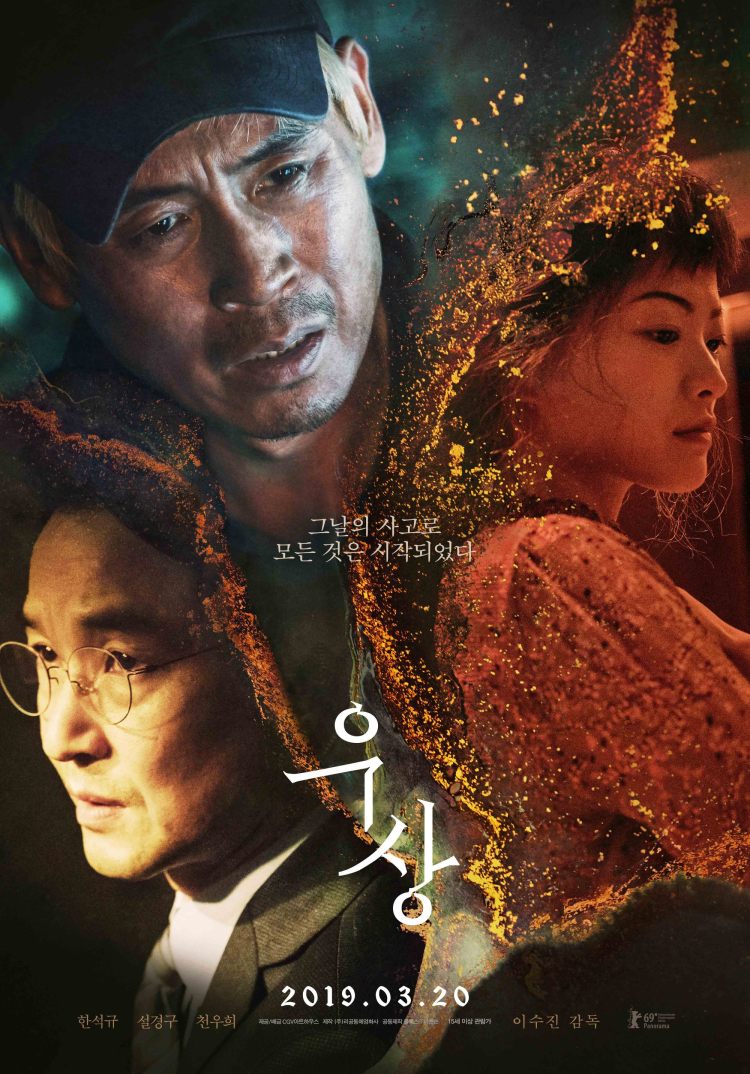
Idol poster 1“Getting others to trust something is more important, not what they choose to believe” advises a cynical politician a little way into Lee Su-jin’s Idol (우상, Woosang). Image is indeed everything. Who are you more likely to believe – the slick, seemingly upstanding politician who’s done everything “right”, or an ageing, inarticulate aircon repairman with bleach blond hair? Two fathers go to bat for their sons, if in very different ways, but only one can emerge “victorious” in their strangely symmetrical endeavours.

Lee opens with a voice-over taken from a speech later in the film belonging to bereaved father Yoo (Sol Kyung-gu) in which he confesses that as his son Bu-nam (Lee Woo-hyun), who had severe learning difficulties, grew older, he found himself having to masturbate him to prevent him harming himself trying to calm his sexual urges. Yoo’s words play over his opposite number’s return home from a research trip to Japan. Koo (Han Suk-kyu) is a politician and former herbalist with a special interest in nuclear power. Ambitious, he spends much of his time travelling for business while his wife (Kang Mal-geum) cares for their wayward adolescent son, Johan (Jo Byung-gyu). A panicked text message warning that Johan has got himself into trouble again gets ignored, but when he arrives home Koo knows he has to act. Johan has knocked someone over and rather than take them to hospital, he’s brought the body back home.

A series of quick calculations tells him that the “best” option is for Johan to turn himself in, despite his wife’s insistence that they simply get rid of the body. He drives the corpse back to the scene and dumps it, gets rid of the original car, and then drives his son to the police station before expressing contrition in front of the cameras. That would have been that if it weren’t for Yoo’s dogged determination to find out what happened to his boy, and the fact that Bu-nam’s “wife” Ryeon-hwa (Chun Woo-hee), an undocumented former sex worker from China, managed to escape meaning there are loose ends Koo knows he needs to tie up.

“This rotting smell” Ryeon-hwa exclaims on putting a number of things together. There is something undoubtedly corrupt in Koo’s superficially smooth world of neatly pressed suits and sharp haircuts. Stagnant water swells around him, along with a murky swirl of blood, as he contemplates the best way out of his present predicament. Everything here is stained, marked, or scarred as if hinting at the darkness beneath gradually seeping through.

Yoo, meanwhile, perhaps knows he lives in a “dirty” world and though he never claims to be completely clean himself, is fully aware of the implications of his actions. A widowed father, he tried to do the best for his disabled son. He offered him relief in ways others would find perverse in a strange gesture of fatherly love, finally deciding to get him a wife in the hope of putting an end to such degradation for them both only to regret his decision when he realises Bu-nam may not have died if he’d just stayed home. Koo, meanwhile, tries less to protect his son than himself, weighing up that the boy will most likely get a slap on the wrist and he’ll come out of it looking better because he behaved “honestly” and in line with the law. To get elected he will stop at nothing to preserve the image of properness, even if it means he must get his hands “dirty”.

In that essential ruthlessness, he may have something in common with the jaded Ryeon-hwa whose sister warns Yoo not to trust her because “her nature is different”. Like Koo, she has done terrible things but done them to survive rather than to prosper. Her marriage to Bu-nam might seem like no prize, but it was better than the life she was leaving behind and, crucially, a guaranteed path to Korean citizenship assuming Yoo eventually filled in the marriage papers properly.

Yoo just wants “justice”, but ruthless men like Koo who care about little other than image are not about to let him get it, which is why he finds himself trotted out as a superficial ally to bolster Koo’s appearance at the polls in return for Ryeon-hwa’s “assured” safety. In the end, all Koo’s scheming blows up in his face, but, Lee seems to say, the image always survives and men like Koo know how to spin it to their advantage while men like Yoo will always be at the mercy of the system. A bleak, often confusing, noirish thriller, Idol plunges a knife deep into the heart of societal corruption but finds that truth often matters less than the semblance of it in a society which idolises the superficial.


Idol was screened as part of the 2019 Fantasia International Film Festival.

International trailer (English subtitles)
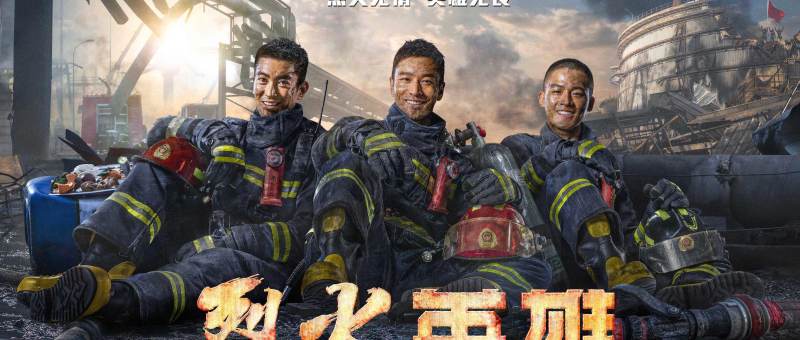
The Bravest (烈火英雄, Tony Chan, 2019)

The Bravest poster 12019 is an important year for China’s Communist Party. Not only is it the 70th anniversary of the founding of the People’s Republic, but it’s also the centenary of the May 4th Movement which saw Chinese students protest against increasing foreign influence. To mark the occasion, Bona Film Group is set to produce what it calls the “China’s Pride Trilogy”, or as the less generously minded might see it, a trilogy of propaganda movies of which The Bravest (烈火英雄, Lhuǒ Yīngxióng) is the first. While China’s military has frequently taken centre stage in the nation’s increasingly jingoistic action movies, The Bravest is the first to focus on the heroic efforts of the fire service, which in China is operated by the army.

Inspired by a real life fire which broke out in Dalian, Liaoning Province in July 2010 and adapted from Mongolian author Bao’erji Yuanye’s book “Tears Are the Deepest Water”, The Bravest follows a collection of differing brigades who come together to battle a raging fire which has engulfed a coastal oil refinery. When we first meet our heroes, the Special Squadron, they’re in the middle of rescuing a little girl from a fire in hotpot restaurant. Though the operation is initially successful with the girl rescued and the fire extinguished, the owner has neglected to inform the fire fighting team that the back room is full of propane tanks, which is something he probably should have mentioned. One of the team is killed in the ensuing explosion while captain Liwei (Huang Xiaoming) is knocked out and thereafter removed from active duty while he deals with PTSD related to the incident.

Flashing forward, we’re told that if the wrong quantity of chemicals are added to the oil running through the refinery then it could catch fire, which it eventually does. The problem isn’t just the potential economic effects or even the possibility of a large scale explosion causing widespread infrastructure damage and loss of life, but that there is a possibility that the fire will release cyanide gas which has the potential to kill everything within the surrounding area. In the immediate aftermath of the fire breaking out, the harbour brigade, Special Squadron, and the tinpot rural team Liwei has been demoted to are all summoned to help but, unusually considering this is a propaganda film designed to praise the emergency services, are largely ill-equipped to deal with such a large and potentially hazardous incident.

Nevertheless, they live up to the movie’s name, bravely wading into harm’s way to minimise the damage. Meanwhile, mass panic is quickly overtaking the city as people begin to become aware of the potential danger through their smartphones or messages from someone connected to the refinery which is, after all, the economic centre of the area. Economics are partly what’s on the mind of the refinery’s chief who is often less than truthful with staff at the command centre, deliberately keeping information from them in an effort to control the situation and avoid being the guy who plunged an entire province into poverty. He does however give himself brownie points for sticking around when similar big wig villains in disaster movies usually get on their private jets and leave the emergency services to it. He’s joined by a selection of party officials who also break with cinematic tradition by standing next to the firefighters, a little way back from the frontline but very much still in harm’s way as they attempt to ensure a satisfactory outcome for all. In the hospitals too, doctors and nurses remain at their posts treating the injured rather than tending to their own wellbeing.

The focus is, however, the heroically altruistic actions of the firefighters who disregard their own safety in order to ensure that of others. Thankfully, in the real life incident no one was killed but in Movieland no one is that lucky and The Bravest remains remarkably unafraid to indulge in obvious foreshadowing such as poignant scenes of familial discord and even one pair of firefighters rushing to the scene still dressed in their outfits from getting their wedding pictures taken. Sad salutes and moments of silence are the order of the day while the firefighters divide up the hazardous duties by volunteering those with siblings so parents will be protected should the worst happen. Unashamedly melodramatic, there’s no denying the sheer spectacle of The Bravest’s cleverly crafted fire effects or its mammoth scale, even if it never manages to escape its nakedly propagandistic genesis. 


Currently on limited release in UK/US/Canada/Australia/NZ cinemas.

Original trailer (English subtitles)

No Mercy (언니, Lim Kyoung-tack, 2019) [Fantasia 2019]

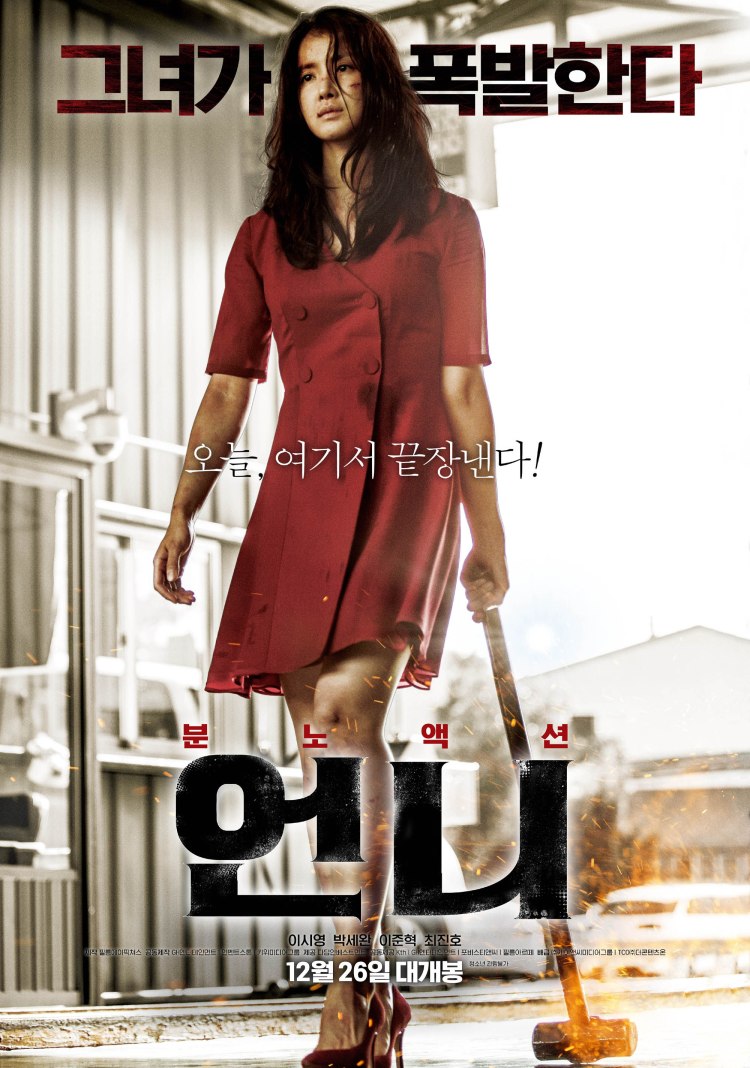
No Mercy poster 2Sad as it is, there will always be those who prey on the vulnerable. Even sadder is the way the world seems to reward them. There can be No Mercy (언니, Eonni) for the wicked, however, in Lim Kyoung-tack’s old school B-movie. Though tastefully appointed, Lim’s action drama harks back to the exploitation movies of old as its lady in red cuts through a host of sleazy misogynists, hoping to rescue her little sister from a life of lifetime of cruelty and abuse at the hands of unscrupulous men.

When we first meet her, In-ae (Lee Si-young) is being released from prison with no one waiting. She is, however, ecstatic to be reunited with her little sister Eun-hye (Park Se-wan) who has mild learning difficulties. In-ae misinterprets Eun-hye’s reluctance to go to school as the normal teenage rebellion, little realising that her sister is being mercilessly bullied by delinquents who have already passed her on to their sleazy friends. Forced to participate in a scam to lure salarymen to hotels then rob/blackmail them, Eun-hye just wants to go home but ends up being kidnapped by an amoral gangster they mistakenly target.

Worried when Eun-hye doesn’t return home or answer her phone, In-ae puts on the pretty red dress and shoes she bought her and goes out looking, quickly realising that something quite untoward has befallen her sister. In this situation she does what anyone would do – call the police, but the police won’t help. Teenage girls run away and usually they come back on their own, the policeman’s logic says, little caring that Eun-hye is a vulnerable teen and In-ae has evidence to suggest she has been kidnapped by thugs. If In-ae wants her sister back, she’ll have to go get her herself. Which is exactly what she does.

A full throttle action fest, there’s little point trying to pretend that No Mercy has serious intentions but it does, in true exploitation movie fashion, highlight a series of pressing social concerns, chief among them Eun-hye’s constant misuse at the hands of unscrupulous men who regard her disability as an excuse to do what they like with her on the grounds that she almost certainly cannot tell on them and is unable to resist. Molested by convenience store owners, photographers, mechanics, and finally an all powerful politician, Eun-hye silently bears all while longing to go home to her sister. In-ae, meanwhile, a talented martial artist, ended up in prison for going too far trying to protect her. Now that she’s out, she can’t find a job thanks to the stigma surrounding her conviction and worries about what’s been going on in the 18 months she’s been away.

Aside from being misused by sleazy men Eun-hye is also targeted by those like the delinquent girls in her class who think it’s OK to mock and humiliate her because she’s somehow “less” than they are. Aside from In-ae, no one seems to consider that Eun-hye is a real person with her own hopes and desires, they only see her as a strange and inconvenient girl. This kind of mentality is itself informed by the hierarchal society and sense of superiority it allows some to assume. Eun-hye finds herself passed to the sleazy politician by those hoping to curry favour. He in turn regards his right to rape her as proof of his status, that his position makes him untouchable and entitled to break the strongest of taboos without fear of repercussions.

Of course, In-ae isn’t having any of that. She wants her sister back, yes. But she also wants to teach these awful men a lesson so they stop treating women like identical faceless objects while perhaps showing other women they don’t need to let the guys get away with this. Giving them a taste of their own medicine, In-ae puts her martial arts skills to good use as she plows on running after Eun-hye while dragged back into the past despite herself. In-ae has no mercy for those who exploit the vulnerable, or for hypocrites, or for the self involved. All she wants to get her sister home and safe and she’ll do whatever it takes to make that happen. A charmingly retro B-movie throwback, No Mercy revels in its sense of anarchic violence as its enraged heroine takes her revenge against an unjust society while protecting what is most precious to her.


No Mercy was screened as part of the 2019 Fantasia International Film Festival.

International trailer (English subtitles)

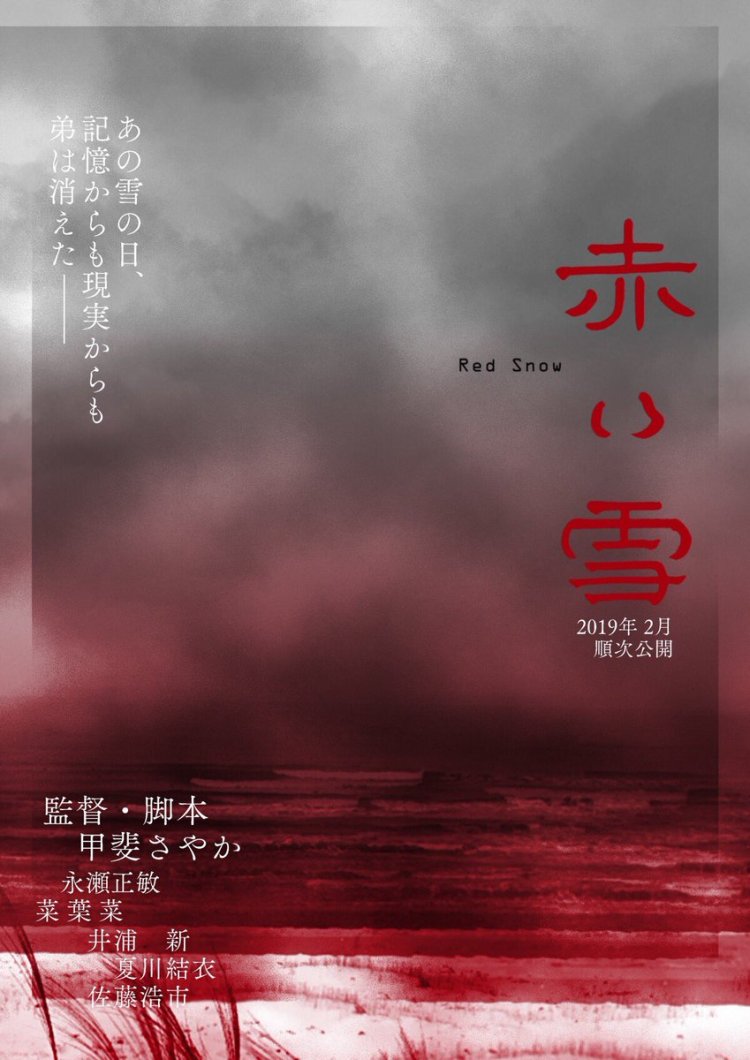
Red Snow (赤い雪, Sayaka Kai, 2019)

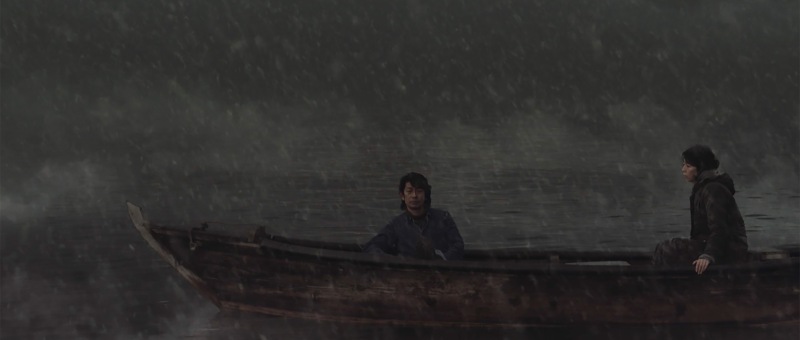
Red Snow poster 2“We’re just pieces of a puzzle” a temporarily deranged woman exclaims to a gloomy seeker after truth in Sayaka Kai’s eerie debut Red Snow (赤い雪, Akai Yuki). Truth, as it turns out is an elusive concept for these variously troubled souls trapped in a purgatorial tailspin on their gloomy island home. When a stranger comes to town intent on unearthing the long buried past, he stirs up deeply repressed emotion and barely concealed anger but finds himself floundering in the maddening snows of a possibly imaginary coastal village. 

30 years previously, a young boy, Takumi, went missing on the way to a friend’s house accompanied by his brother Kazuki who claims he simply disappeared from view in the heavy snow. Sometime later, a child’s remains were found in a burned out building. The prime suspect was a strange woman with a young daughter who escaped the fire in the middle of the night in a suspiciously elegant outfit. Nevertheless, the woman was later exonerated and the truth behind Takumi’s disappearance remained shrouded in mystery.

In the present day, a reporter, Kodachi (Arata Iura), arrives in town with the intention of writing some kind of exposé on the case. He interviews the detective involved and makes contact with Kazuki (Masatoshi Nagase), now a broken middle-aged man who has dedicated his life to perfecting the art of lacquerware. A secondary lead takes him to Sayuri (Nahana) – the daughter of the prime suspect now, in a tragic piece of circularity, an outcast herself and possibly a sex worker in a violent relationship with an older man (Koichi Sato) who may or may not be her pimp.

Each of them has tried to move on from the unresolved tragedy of Takumi’s disappearance, but all appear to have failed. Kazuki dreams of the day his brother vanished right in front of his eyes, seeing a little red jumper lost in the snow but unable to remember anything more. He fears he will never know what happened unless his memory somehow returns, though as his mentor tells him what actually happened and the way you remember it are often different. Waxing philosophical, Kodachi muses that memory is what links the past and future but memory, and therefore life itself, is ambiguous. The “truth” may be unknowable and known at the same time to those who refuse to confront its various contradictions. 

Like the young Sayuri watching through a tiny crack in the wardrobe door where her abusive mother has placed her out of the way of all her “fun”, nobody sees the whole of anything. The young Sayuri morphs into the adult Sayuri and into her mother whom she fears she has become. The only witness to the incident, Sayuri refuses to speak of it though perhaps there’s more kindness in her silence than it first seems even if her unwillingness to remember may also be a kind of self preservation. She too is a victim, but is blamed all the same despite being only a small child powerless to intervene or be held complicit in whatever it is her mother might have done or not done in her quest for survival.

Sayuri remains trapped within the orbit of her now absent mother, herself an outcast in another abusive relationship this time with a sociopathic old man, while Kazuki struggles to accommodate his sense of guilt for something he can’t quite remember. Emotions briefly bubble to the surface, petty resentments and jealousies that pass between all small children but might perhaps have had terrible consequences one snowy night. Sayuri may be right when she insists that they are pieces of a puzzle, each holding tiny fragments of truth that might be assembled into a coherent whole, but also aware that if they did so they may not like the picture that they see.

Eerie and ethereal, the snowy coastal town almost may not exist at all haunted as it is by traumatised souls trapped in a purgatorial cycle of guilt and confusion as they try to piece together the past. Sayaka Kai’s dreamlike, poetic debut is a visually impressive existential mystery in which past and present intertwine leaving our troubled heroes lost in a fog of falling snow unable to access the future through the corrupted pathways of memory.


Red Snow was screened as part of Japan Cuts 2019.

Original trailer (English subtitles)

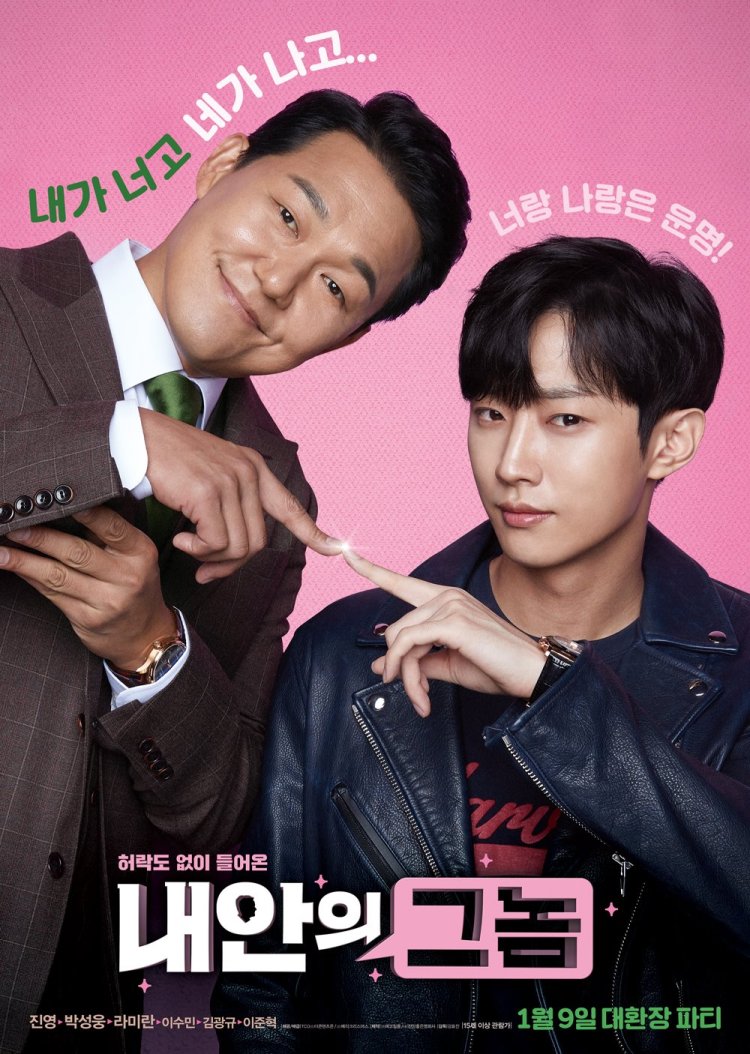
The Dude in Me (내안의 그놈, Kang Hyo-jin, 2019) [Fantasia 2019]

Dude in Me poster 3“What’s more important than being with your family?” – A cynical crime boss is forced to reconsider his life choices following a series of crises which see him inadvertently swap bodies with a dimwitted high school boy in Kang Hyo-jin’s take on the classic genre, The Dude in Me (내안의 그놈, Naean-ui Geunom). Less a story of two men from different generations learning from each other, Kang’s film leans heavily into patriarchal myths as its jaded hero is given a second chance at youth and discovers he may have made a grave error in choosing to reject love in favour of advancement.

17 years after breaking up with high school sweetheart Mi-sun (Ra Mi-ran), Pan-su is a high flying “businessman” in the newly corporatised world of suited gangster thuggery. Old habits die hard, however, as his current problem is his minion’s failure to put sufficient pressure on the last holdout in an area they’ve earmarked for redevelopment – Jong-gi (Kim Kwang-kyu), the earnest owner of a carpentry firm intent on holding on to the family business. It’s during a visit to Jong-gi’s that Pan-su stops off at a ramen joint he used to go to in his youth, only to discover that the young woman who owned the restaurant all those years ago has moved on which is why his favourite dish doesn’t taste like it used to.

Inside, he gets into a heated debate with the new owner while a portly high school boy, Dong-hyun (Jung Jin-young), who needs to leave in a hurry, discovers he’s lost his wallet. The old lady bamboozles Pan-su into paying for the kid’s (unusually large) meal, assuring him that she has “something in store” for him. That “something” turns out to be Dong-hyun falling from a nearby roof and landing on Pan-su’s head. When Pan-su wakes up, he realises he’s in Dong-hyun’s body while Dong-hyun is presumably still inside his which remains in a coma.

Such is the force of Pan-su’s personality that he’s able to convince his chief underling of his real identity pretty quickly, but it remains a serious problem for him that a once serious gangster is humiliatingly trapped in the body of a misfit high schooler ostracised by all but the equally bullied Hyun-jung (Lee Soo-min) for his pudgy physique and dimwitted cowardice. Pan-su makes little attempt to blend into Dong-hyun’s life, behaving much as he has before and seemingly oblivious to the commotion his newfound boldness provokes in those around him. Though Dong-hyun’s new crazy backbone could be written off as a bizarre side effect of his head injury, the contrasts between the diffident teenager and unpredictable gangster do not end there. Where everything about Pan-su screams control from his obsession with straightening other people’s ties to habitually wiping down surfaces, Dong-hyun is the sort of boy who doesn’t think too far beyond his belly. Indeed, Dong-hyun’s vast appetite does not sit well with Pan-su’s uptight concern for his health even as his new body finds it almost impossible to resist the lure of tasty junk food in truly staggering proportions.

Nevertheless, Pan-su gradually begins to take ownership of Dong-hyun’s body, doing him the “favour” of “improving” it by shedding all that weight and revealing the hot guy trapped inside. Part of the reason he decides to do that is realising that the mother of Dong-hyun’s childhood friend Hyun-jung is none other than love of his life Mi-sun, who seems to have remained single since they broke up around the time in which Hyun-jung must have been conceived. Wielding his newfound hotness as a weapon, he vows to protect Hyun-jung in the most fatherly of ways – by teaching her to protect herself through shared self-defence classes. He will, however, need to sort out a few other problems on his his own, going up up against an entrenched system of delinquency and a dangerously predatory high school prince who likes to invite vulnerable girls to his parties as a form of entertainment.

Meanwhile, he’s still dealing with the ongoing gang war and a series of personal problems relating to his treacherous wife and austere father-in-law who praises “family values” above all else. Living as a high school boy again and realising that he’s got a daughter whose life he has entirely missed out on because of a choice he has always on some level regretted forces Pan-su to wonder if his ill-gotten gains were really worth the lonely, loveless years. Strangely, perhaps only Dong-hyun is brave enough to admit for him that perhaps they weren’t and what he really wants is a warmer kind of “family” than the cold obligation of gangster brotherhood. A quirky tale of softening bad guys and toughening soft ones, The Dude in Me eventually locates a happy medium in the merger of the professional and personal as a new family rises up in Mi-sun’s homely new restaurant filled with warmth and possibility in having rediscovered the simple joys of true human connection.


The Dude in Me was screened as part of the 2019 Fantasia International Film Festival.

International trailer (English subtitles)

The Gangster, The Cop, The Devil (악인전, Lee Won-tae, 2019) [Fantasia 2019]

81745_1000“Two bad guys will catch the worst man” according to irritated gangster Jang Dong-su (Ma Dong-seok) in Lee Won-tae’s The Gangster, The Cop, The Devil (악인전, Akinjeon). He doesn’t quite know how right he is, even as he forms an unlikely alliance with a maverick cop himself highly irritated because his lazy colleagues won’t listen to his theory that a spate of unsolved murders are the work of a serial killer. More alike than they’d care to admit, the two “bad guys” team up to do what they have to do in order to make the killing stop but at what price?

A vicious killer (Kim Sung-kyu) has developed a habit of rear-ending solo drivers on lonely roads, stabbing them repeatedly and then leaving them for dead. Maverick cop Tae-seok (Kim Mu-yeol) has become convinced that the killings were carried out by the same perpetrator and that they have not yet been identified as a “serial killer” partly because the crimes took place in different districts and there is insufficient co-operation between precincts, and partly because his colleagues think serial killers are something you see in American movies. His superiors just want to close cases, they aren’t particularly concerned with upholding justice or protecting the innocent and so Tae-seok starts thinking outside of the box when he hears that the killer’s latest target was none other than top mob boss Jang Dong-su.

Dong-su got rear-ended after running an errand to have a word with a wayward underling, Hur (Yoo Jae-myung), who has forgotten his place. The killer made a serious mistake going after Dong-su who is a big, handy kind of guy and therefore manages to fend him off, even wounding him in the shoulder despite being badly injured himself. Though the obvious conclusion is that Hur sent someone after him, Dong-su is unconvinced seeing as he had never seen his assailant before and is pretty sure he’s not a member of the gangster underworld. Still, he’s very annoying because a gangster only has power in being respected and right now Dong-su looks a fool. If he wants to get his “professional” life back on track, he needs to get his revenge but to do that he’ll have to cross the floor and work with law enforcement, temporarily teaming up with rogue cop Tae-seok whose heart is in the right place even if he’s not averse to bending the rules.

One of the things which most bothers Tae-seok about amoral killer “K” is that, unlike most serial killers, he kills indiscriminately and purely for pleasure. He has no “type” and generally goes up against those most likely to fight back, unlike your average pattern killer who targets the vulnerable. Like Tae-seok and Dong-su, he is however quite annoyed – this time because someone has “framed” him for a murder he didn’t commit in order to further their own ends. Hugely overconfident and cooly psychopathic, he sits in the dock and asks what makes his crimes different than the state’s if the state is fixing to execute him without proper evidence. Pointedly looking at law enforcement, he affirms that the real villains are those who commit crime with kind faces (say what you like, but at least K looks the part).

When it comes to Tae-seok he might have a point. Conspiring with Dong-su to “kill him with law”, Tae-seok gleefully manipulates the system while giving Dong-su tacit permission to take his revenge as long as “justice” has been properly served. K doesn’t believe in anything, Tae-seok believes in a particular kind of “justice” if not quite in the law, while Dong-su mourns the sense of self-belief that allows you to rule the roost as an all powerful gangster. The three men are a perfect storm, each angry, each resentful, each vowing a particular kind of revenge against the forces which constrain them be they corrupt and lazy superiors, gangsterland disrespect, or the “injustice” of being accused of a crime you did not commit but not being properly credited for the ones you did. Bathed in a garish neon, Lee’s anti-buddy-cop drama embraces its noirish sense of fractured morality with barely suppressed glee as its similarly conflicted heroes pursue their violent destinies, true to their own but dragged to hell all the same.


The Gangster, The Cop, The Devil was screened as part of the 2019 Fantasia International Film Festival.

International trailer (English subtitles)
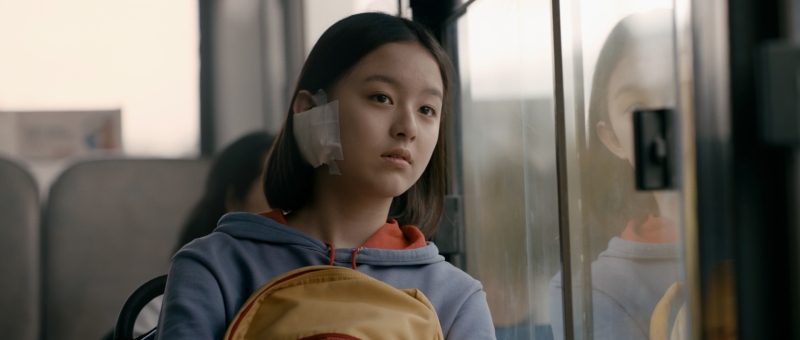
House of Hummingbird (벌새, Kim Bora, 2019) [Fantasia 2019]

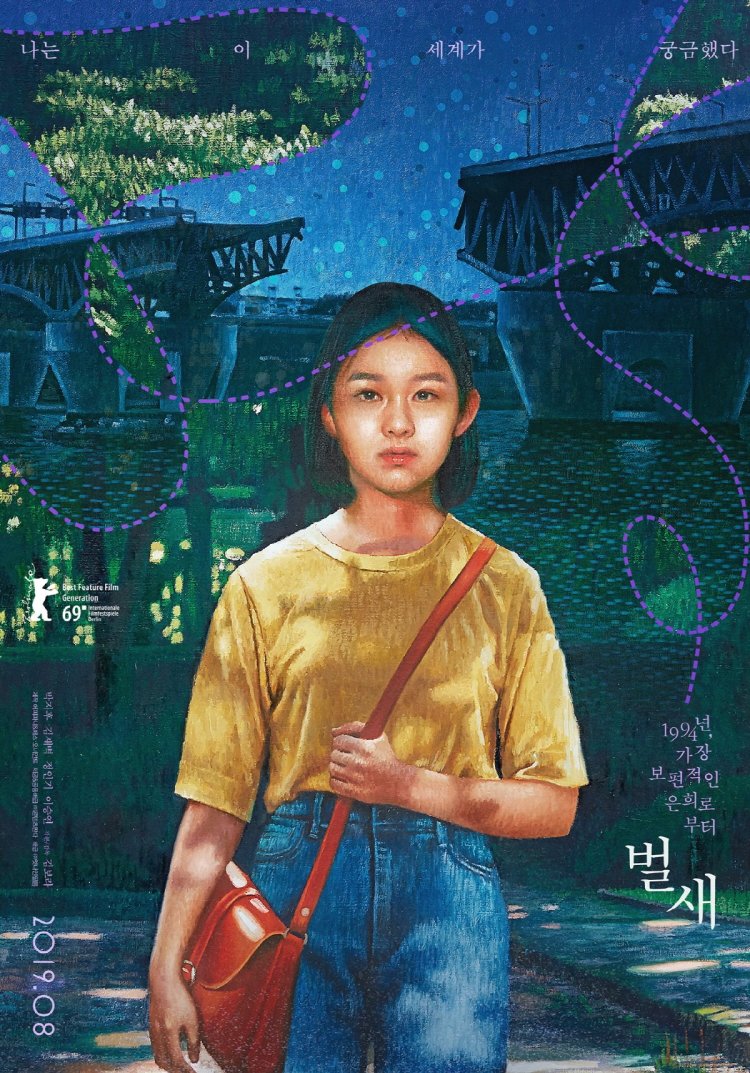
House of hummingbird poster 1“The world is fascinating and beautiful” the teenage protagonist of Kim Bora’s House of Hummingbird (벌새, Beolsae) is told in an especially poignant letter recited in the film’s closing moments. It’s a lesson that she’s longing to learn, but finds few willing to teach her in a society whipping itself up into a frenzy of aspiration perhaps at the cost of true human connection. A chronicle of one surprisingly traumatic summer in the newly democratised Korea of 1994, Kim’s film charts its heroine’s gradual progress towards a kind of self acceptance with a melancholy ease as she begins to find her own way despite the toxicity of the world all around her.

14-year-old Eun-hee (Park Ji-hu) is one of three siblings living in a cramped apartment with her harried, emotionally distant parents who run a small rice cake shop. A mediocre, disinterested student she falls asleep at school where the other kids cruelly exclaim that dozy girls like her never make it to college and are destined only to become housemaids to the “successful” adults they assume they’ll be. Meanwhile, Eun-hee’s hardline dad (Jung In-gi) makes her go to Chinese cram school where she “studies” along with her best friend, Ji-suk (Park Seo-yun), spending most of their lesson time making fun of the teacher in hastily written notes.

Previously purposeless, her world begins to widen when the Chinese teacher abruptly quits and is replaced by the infinitely cool, enigmatic university student Young-ji (Kim Sae-byuk) whom she first glimpsed smoking a melancholy cigarette by an open window on the stairs. Strangely captivated by this “odd” young woman, Eun-hee suddenly has the urge to study, especially as Young-ji turns out to be unique among the adults that she knows in that she seems to genuinely care about her and is interested in hearing all about her troubles, which, as we will find out are many.

In the mid-90s, Korea was a newly democratised and rapidly modernising society keen to claim its place on the economic world stage. Where Eun-hee’s parents are defeated, disappointed figures, they want better for their children in the new society but struggle as to how to get it for them. Eun-hee’s mother (Lee Seung-yeon), as we find out from her dejected brother, was bright but had to leave school to pay for his tuition (a promise he seems to think he has not fulfilled). Consequently, the parents are convinced “education” is the way out but fail to realise that their obsession with academic grades is slowly destroying their family home. While Eun-hee is sullen and withdrawn, pushed out by her rowdy family, her older brother’s exam stress often turns violent and her sister skips school to go clubbing in an attempt to escape adolescent anxiety.

Even when Eun-hee discovers a lump on the side of her neck, her mother sends her off to the doctor’s alone though he can’t actually treat her without parental consent which Eun-hee fears they won’t get round to giving. Though they visit her once, they don’t bother to pick her up from an extended stay in hospital and are not home when she returns. Not even an accusation of shoplifting rouses them from their busyness. Eun-hee’s father rudely tells the shopkeeper to stop bothering him and call the police, causing the shopkeeper to feel so sorry for her that he lets her go.

Meanwhile, Eun-hee looks for intimacy in other places. She tries innocent teenage romance with a feckless but good-looking boy, Ji-wan (Jeong Yun-seo), whom truth be told she perhaps likes more as an abstract idea than in himself. The unexpected gift of a bright red rose from a bashful girl (Seol Hye-in) sends her thoughts in another direction but leaves her more confused than ever when that too betrays. Through it all she idolises the mysterious figure of Young-ji with whom she seems to share some kind of affinity and the sense of connection so painfully absent in her frenetic family home.

Eun-hee’s difficult path towards an acceptance of adulthood mirrors that of her nation, finding itself in one particularly traumatic summer marked by a dangerous sense of anxiety in the end of eras as the North’s Kim Il-sung passes away, provoking fears of a disturbance in carefully won political equilibrium. Meanwhile, a literal bridge collapse threatens to destroy Eun-hee’s new path towards maturity once and for all, taking her only source of solace with it. Yet what she learns is that though bad things happen, good things happen too and there are always new people to share them with. She may feel herself to be alone, lost in a confusing landscape and uniquely indifferent to her nation’s relentless pursuit of consumerist success, but she does finally perhaps have herself and new hope for the future found in the security of her own hands.


House of Hummingbird was screened as part of the 2019 Fantasia International Film Festival.

Festival trailer (English subtitles)

The Journalist (新聞記者, Michihito Fujii, 2019)

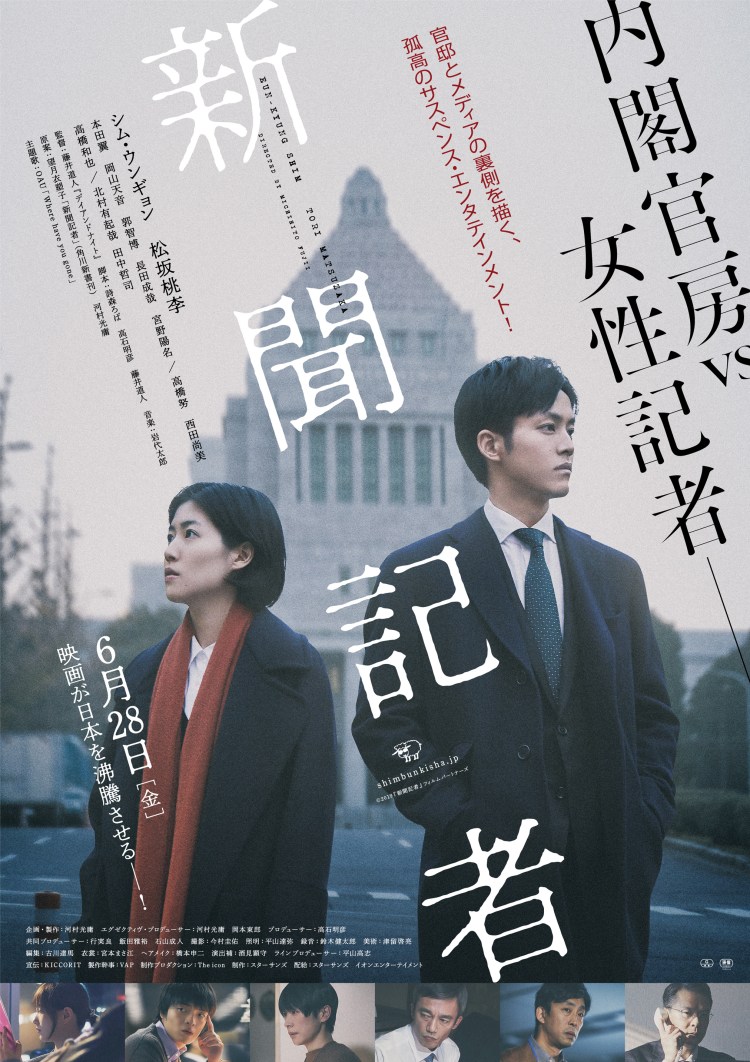
The Journalist poster 2In these days of “fake news” and misinformation, a robust press is more important than ever. In Japan, however, the news media institution has long been decried as toothless, if not actually in league with the ruling regime. A timely and appropriately exasperated conspiracy thriller, Michihito Fujii’s The Journalist (新聞記者, Shinbun kisha) is inspired by the non-fiction book by newspaper reporter Isoko Mochizuki who makes a brief appearance at the beginning of the film and has herself been singled out as “problematic” by politicians unused to being held to account and objecting to her intensive interview technique.

Mochizuki’s fictionalised stand in, Erika Yoshioka (Shim Eun-kyung), is a rookie reporter who grew up in America with her Japanese journalist father and Korean mother. Following her father’s “suicide” she returned to Japan and is currently working for Toto News where she receives a mysterious fax containing information about a suspicious government plan to found a new medical university.

Meanwhile, idealistic former international diplomat Sugihara is on temporary secondment to CIRO (Cabinet Intelligence and Research Office) – a secretive organisation set up under the occupation to mirror the US’ CIA but often criticised for acting like a secret police force and expending too much effort on spying on ordinary Japanese citizens on Japanese soil rather than gathering useful international intelligence. Sugihara (Tori Matsuzaka) finds himself conflicted in his new work, the first assignment of which is handling a smear campaign against a young woman (clearly inspired by the Shiori Ito case) who has accused a high ranking journalist close to the government of rape. A married man with a baby on the way, he fears rocking the boat but resents his complicity with such obvious government finagling and failure to counter the misogynistic narrative that passes for office banter.

When his former mentor, Kanzaki (Kazuya Takahashi), commits suicide, no longer able to live with his compromises, Sugihara begins to reconsider his decision not to go against his superiors but finds it difficult to countenance “betraying” his organisation even in the knowledge that they are no longer working in the best interests of the people. Yoshioka, with whom he eventually bonds after witnessing her sympathetic treatment of Kanzaki’s bereaved daughter, may in some senses be better placed to resist given her overseas upbringing. Where Sugihara and the news media at large struggle with the idea of standing up to authority, Yoshioka is keen to sell the ideals of journalistic integrity, insisting that a robust press is essential in holding power to account.

Meanwhile, she finds herself a lone voice adrift in the largely patriarchal world of Japanese news media. Leaving the press conference called by the woman accusing the government crony of rape, she stops to tell off a pair of journalists making sexist comments but receives only a brief eye roll before they walk away laughing. She also finds herself resented by her colleagues for pointing out that their hounding of Kanzaki’s bereaved wife and daughter at his funeral is insensitive and inappropriate, but refuses to back down in fierce determination to do what is right even if it is not popular.

Meanwhile, Sugihara’s odious boss Tada (Tetsushi Tanaka) is desperately trying to keep a grip on power from the shadows. He uses Sugihara’s conflicted loyalties against him, subtlety reminding him that he has a wife and newborn daughter to whom he has a greater responsibility, and insisting that there is no “shame” in complicity when it comes to maintaining “the illusion of democracy”. CIRO, it has to be said, does not come out of this well as it wilfully does the government’s dirty work – covering up the indiscretions of “valuable” politicians and their relatives in order to avoid the unpleasant chaos of unwelcome political scandals. Kanzaki’s compromises left him a broken and defeated man, Sugihara wonders what kind of man his daughter would think him to be if he too just went along with the government line and enabled their subversion of democracy solely for personal and economic security.

The press may be waking up, but The Journalist’s chief takeaway is that change comes when enough people find the courage to keep saying no. As the ending implies, the battle is far from over but it has perhaps begun thanks to the efforts of those like Mochizuki and her filmic counterpart Yoshioka as well as the courage of whistleblowers like Sugihara who risk personal ruin merely for speaking out. A timely, urgent defence of press freedom in the face of tightening authoritarianism, The Journalist is an all too plausible conspiracy thriller in which the last guardians of liberal democracy are the nails which refuse to be hammered down.


The Journalist screens in New York on July 27 as part of Japan Cuts 2019.

Original trailer (English subtitles)

Stare (シライサン, Hirotaka Adachi, 2019) [Fantasia 2019]

Stare 3If you’re attacked by a bear, the advice is not to run, but to stand your ground before backing away slowly while calmly explaining to the bear that you mean it no harm and would like to go home now. Similar advice will serve you well if you’re unlucky enough to be cursed by “Shirai-san” (シライサン), the vengeful ghost of an all-powerful shamaness who, for some reason, really doesn’t like for people to know her name. One crucial difference, however, is that Shirai-san demands a different kind of respect. She can’t abide deference, and will kill all those who look away from her extremely large eyes.

This three young people learn to their cost after indulging in an ill-advised scary story session in a quiet inn. An oft repeated piece about a creepy wedding photo invites a visiting liquor store delivery boy, Watanabe (Shota Sometani), to recount a tale of pure horror he was told as a boy about a man chased by a strange woman who claimed to know him and wanted to take her revenge for his supposedly knowing her name (which he apparently didn’t until she told it to him). The man tells her to pick on someone else who knows her as “Shirai-san” which is how the story ends, with fingers pointing at the horrified listeners. Of course, it’s just a silly campfire story, but before long all three of the students are dead of supposed heart attacks of such magnitude that they caused their eyes to explode.

Meanwhile, the left behind – friend Mizuki (Marie Iitoyo), and brother Haruo (Yu Inaba), begin an investigation which will eventually see them too cursed by the figure of Shirai-san. Later they are joined by equally dejected reporter Mamiya (Shugo Oshinari), still grieving for his young daughter killed in a traffic accident some time ago. All modern people, none of the three really believes that their loved ones died because of an ancient curse, but their investigation leads them to just that conclusion, leaving them to ponder how exactly they might be able to survive if not actually break it.

In any case, Shirai-san’s wrath is directed at all those who know her name no matter how they came to learn it. Like many a J-horror ghost, what she feeds on is fear. As Haruo’s father told him, perhaps in cold comfort, there is one upside to death – that by dying you lose your fear of it. Thereby you can come to accept the idea of death and pass peacefully with no need for further anxiety about the end. It’s an ironic statement, but not without its truth. Picking apart the mystery, Mizuki wonders how exactly you might write the name “Shirai”, working under the assumption that it’s the most normal way which means “white well” (白井) only to wonder if it’s not a way of saying “death coming” (死来) rather than actually her name.

Shirai-san might be, in that sense, merely the evocation of mortality, stalking dark corners and striking seemingly at random. One victim thinks they find a way to placate her, that if you can bear to stare her in the eye long enough she will eventually disappear, but you cannot escape “death” by facing it down only meet it with dignity. Our heroes are plagued by visions of the people they’ve lost, haunted by possibly imagined grudges and irresolvable guilt over human failings, the way they fear they may have made people feel or otherwise let them down. Shirai-san plays on their mortal insecurities, luring them to their doom with a mix of relief from suffering and guilt-ridden atonement.

Well known horror maestro Hirotaka Adachi (AKA Otsuichi) injects new vigour into the classic J-horror ghost with Shirai-san seemingly unafraid to strike in broad daylight and public places while her presence is eerily felt in the most tranquil of locations, echoed in the innocent tinkle of bicycle bells. A cruel curse spread by resentment and negativity, Shirai-san’s revenge is one which offers only an ironic escape and remains frustratingly inscrutable even at the very end. Nevertheless, she does, perhaps, come for us all in one way or another. The least you can do is look her in the eye.


Stare was screened as part of the 2019 Fantasia International Film Festival.

Original trailer (English subtitles)

Erica 38 (エリカ38, Yuichi Hibi, 2019)

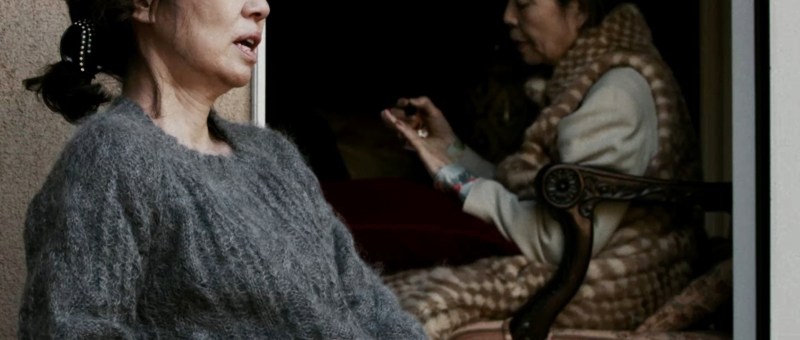
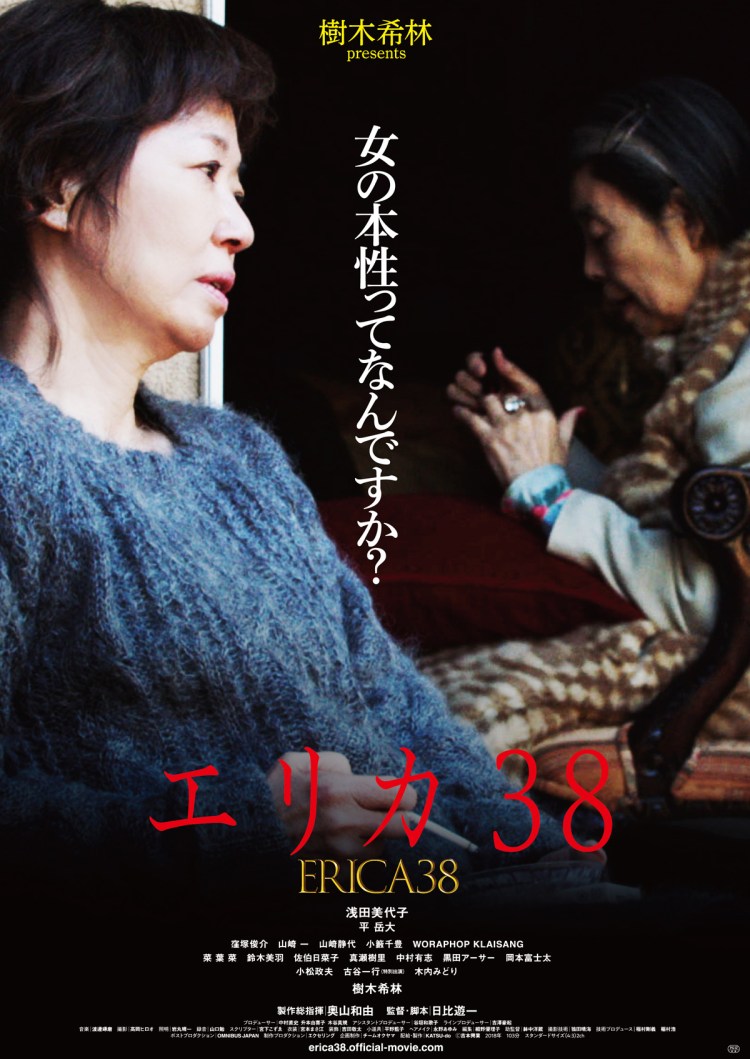
Erica 38 poster“Everybody’s life is in someway unfulfilling”, admits the philosophical victim of a con woman in ripped from the headlines tale Erica 38 (エリカ38). “It’s like a crutch” he adds, without a little fantasy you can’t go on. Like the “Erica” of the title, her victims are also looking for escape from an unsatisfying reality, and unfortunately for them already have what she feels would make her life more bearable – vast wealth. Returning to Japan after three decades abroad, director Yuichi Hibi does his best to humanise the figure of the coldhearted grifter, painting her as just another disappointed, lonely old woman desperately trying to recapture the sense of possibility so cruelly denied her in youth.

Later rebranding herself as “Erica”, a 38-year-old woman of means, our “heroine” is Satoko Watanabe (Miyoko Asada), an ageing bar hostess supplementing her income by peddling a dodgy multi-vitamin pyramid scheme to bored housewives eager to make a few extra bucks. Her sales pitch, however, gets her noticed by a refined old woman sitting close by in an upscale hotel during in one of her sessions. The woman, Mrs. Ito (Midori Kiuchi), introduces her to a “friend”, Hirasawa (Takehiro Hira), who cuts in with a sales pitch of his own in branding himself as a paid up member of the global elite who works with the Pentagon on important international matters. Hirasawa heavily implies his business is not quite on the level, but Satoko, captivated by his suave sophistication, fails to realise just how dodgy he really is. Before long, she’s joined him in his “consultation” business, selling fraudulent investment opportunities in the emerging market of Cambodia.

It is surprisingly easy to sympathise with the dejected Satoko as she falls under Hirasawa’s spell. Already well into her 50s when the film begins and clearly over 60 when she rebrands herself as the 38-year-old Erica, Satoko has led an unhappy life beginning with a traumatic childhood lived in the shadow of an abusive, adulterous father. The only memory of joy from her youth is when she and her mother (Kirin Kiki) giggled together after accidentally tipping rat poison into dad’s miso soup. Life since then, it seems, has been one disappointment after another spent in the hostess bars of Kabukicho. What all of that means, however, is that she’s become skilled in the art of selling fantasy. All that time invested in extracting cold hard cash from lonely men has set her in good stead for selling unrealistic investment opportunities to the already comfortably off.

Unrepentant, Satoko tells herself that she bears no responsibility towards those who lost money in her scams because they were chasing exactly the same thing she was – escape, and they both found it at least for a moment. Her victims made the decision themselves, she never forced anyone, and so it’s their own fault that they fell for her patter while she perhaps laments only that she’s been foolish and profligate in not planning better for the eventual implosion of all her schemes.

“There’s a thin line between real and fake”, she tells a party guest admiring one of her paintings, “if someone sees it as real then real it is”. Satoko’s cons are, in essence, an extension of the paradox of the hostess business. Anyone with an ounce of sense would have seen that the business isn’t legitimate, but like a salaryman in a hostess bar they invest in the semblance of connection while knowing in a sense that isn’t “real”. Ironically enough, Satoko is forced to realise that the first victim of her subterfuge is herself. Chasing a dream of love, she fell hard for Hirasawa without thinking him through. Hirasawa succeeds in his schemes because he’s scrupulously careful in maintaining his persona – he operates out of hotels, has no fixed address, and uses several cellphones. As Satoko later finds out, he is effectively running a harem, romancing several women all like herself bringing in the big bucks while he sits back relatively risk free. She has been used, once again.

The implosion of her dream of romantic escape is what sends her to Thailand where she ponders a reset, rebranding herself as the 38-year-old Erica of the title and beginning an affair with a young and handsome Thai man she rescued from gangsters with her ill-gotten gains. Porche (Woraphop Klaisang) later describes her as “My Angel”, of course realising that she was much older than she claimed but claiming not to care. It may be that he really did love her, but you can’t ignore the corruption of all that money and the power that it buys. In the end, money can’t buy you love, or a path out of loneliness, or a cure for disappointment.

Satoko was, like many, just another lonely, disappointed old lady trying to escape an unsatisfying present through a fantasy of returning to the past, rebooting herself as a successful business woman, loved and in love, as someone with a brighter future to look forward to. Her sales patter worked because it was “true”, the similarly dejected could sense in her the desperation for escape and as they wanted to escape too they let her take them with her. A melancholy tale of delusion and disillusionment, Erica 38 has immense sympathy for the scammer and the scammed painting them both as victims of an often unfair, conformist society in which freedom is the rarest commodity of them all.


Erica 38 screens in New York on July 25 as part of Japan Cuts 2019.

Original trailer (English subtitles)