Ora, Ora Be Goin’ Alone (おらおらでひとりいぐも, Shuichi Okita, 2020)

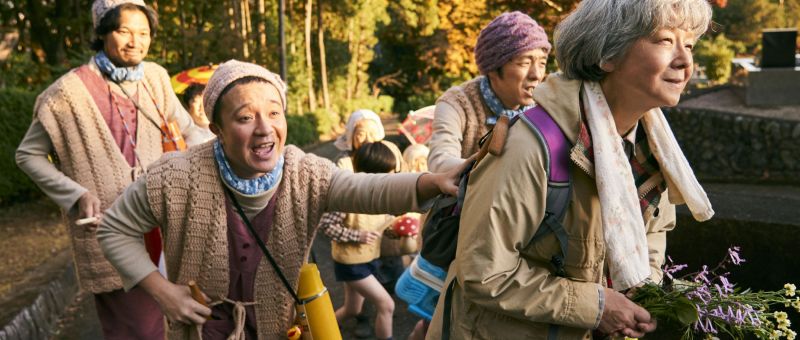
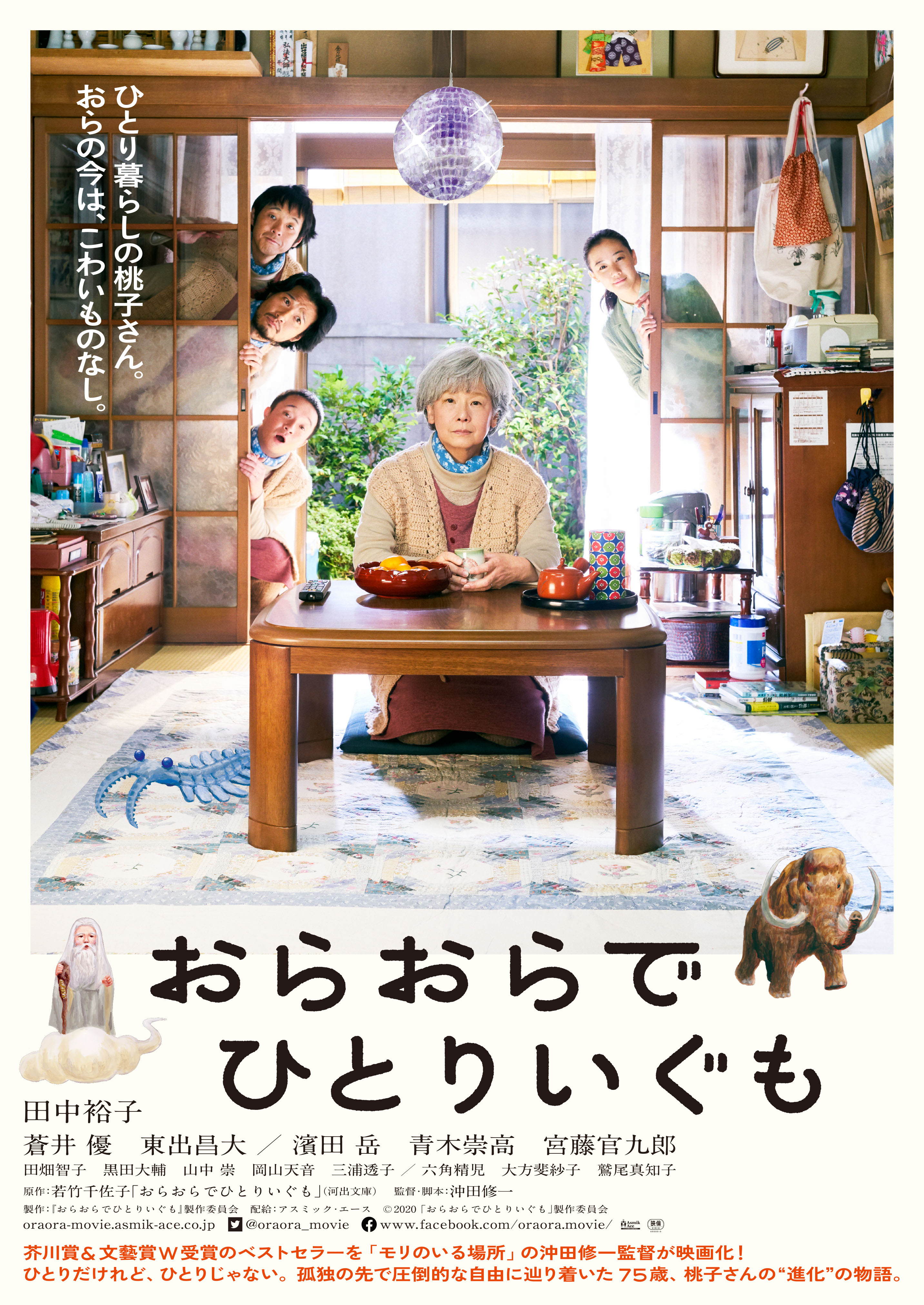
“I never thought my life would come to such a lonely autumn” an old woman laments in Shuichi Okita’s touching adaptation of the novel by Chisako Wakatake Ora, Ora, Be Goin’ Alone (おらおらでひとりいぐも, Ora Ora de Hitori Igumo), her husband now gone, a son so estranged he may as well be too, and a daughter (Tomoko Tabata) who only stops by to ask for money. What’s it all for? In an increasingly ageing Japan, later life loneliness has become a pressing issue, but for Momoko (at 75: Yuko Tanaka, at 20 – 34: Yu Aoi) the problem may be that she’s beginning to find her own company oppressive mainly because she’s become plagued by a trio of mental sprites dressed in regular old lady clothes who speak to her in her native Tohoko dialect and force her to think about the realities of her life. 

And then there’s the other guy who looks really like the guy she was briefly engaged to before running out on an arranged marriage only dressed in her pyjamas and telling her there’s no point getting out of bed because every day is the same and she doesn’t have anything to do anyway. Meanwhile, she finds herself pulled back towards memories of happier times when her children were small. All of this has Momoko wondering if she’s sliding into dementia, or if perhaps she’s merely beginning to go out of her mind with grief, loneliness, and existential futility. 

It’s also clear that like everyone else her age despite having led a happy life, Momoko has doubts and regrets. When she ran out on her arranged marriage inspired by the Olympic buzz of Tokyo in 1964, she thought she was striking out for freedom and independence, that she was a “new woman” of the post-war era and she was going to live her own life the way she wanted it. Yet in Tokyo the first friend she makes is someone from the same area who’s managed to completely shed their regional accent, and then she met a man who refused to lose his (Masahiro Higashide) and fell in love with him. She doesn’t regret her life, but feels in a sense disappointed that she ended up falling into the same patriarchal patterns she tried so hard to escape as a conventional housewife and mother dedicating herself to supporting the man she loved. Her friend, Toko (Toko Miura), points out that she always hesitates when she refers to herself as “watashi” rather than the familiar “ora” in the Tohoku dialect as if shamed by the inauthenticity and resentful that her accent, her essential identity, is something she has to lose in order to blend in to Tokyo society. 

Heartbreakingly, we witness her bamboozled into leasing a new car, a symbol of freedom and independence, from a young man who seems nice but is obviously intent on leveraging her loneliness, addressing her as “mother” (not an unusual way to refer to the woman of a house but definitely a deliberate avoidance of “granny”) and encouraging her to think of him as a son. Ironically, while he’s there the phone rings but it’s an “ore ore” scam claiming that her son’s in trouble and needs money. She laughs it off and tells the salesman she’s not silly enough to fall for something like that just as she signs on the dotted line, but later we discover that she did indeed fall prey to it sometime earlier in desperation for the son who, as she had, left home young and never looked back. Her daughter meanwhile, stops by after hearing about the car but mostly so she can ask for money to pay for art lessons for her son. 

Thinking back on their days as a family, Momoko can’t reconcile herself to this sense of parental rejection but meditates on her relationship with her own grandmother realising she too must have been desperately lonely but she was “young and stupid” and didn’t understand. Her interior monologue with her trio of sprites is recited entirely in the voice of her younger self, and at one point she even tries throwing beans at them like demons during Setsubun, but eventually accepts them enough to talk out loud which is either a sign that she’s really losing it or a kind of liberation. “How will I carry on by myself?” she asks, meditating on this new kind of “independence” which might itself soon be taken from her whether she wants it or not. Nevertheless, what she discovers is that she might not be as alone as she thought she was and more has been passed on than she assumed but if you have to go alone then that’s alright too.


Ora, Ora Be Goin’ Alone streams in the US Dec. 3 to 23 series alongside Shuichi Okita’s debut Chef of South Polar as part of Japan Society New York’s Flash Forward series.

Original trailer (no subtitles)
The Story of Southern Islet (南巫, Chong Keat Aun, 2020)

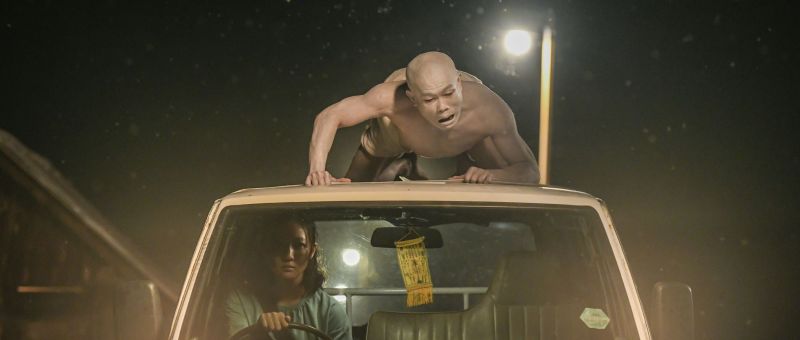
A wife finds herself thrown into a complicated world of spiritual confusion when her husband is struck down by a mysterious illness he himself attributes either to black magic or divine wrath. Set in 1987 (a year which saw a series of authoritarian crackdowns), Chong Keat Aun’s autobiographically inspired tale A Story of the Southern Islet (南巫) is partly a treatise on the absurdity of national borders but also one of cosmological ambiguity in which the acceptance of that which cannot be explained provides the only hope of cure for those burdened by the sin of transgressing against the gods. 

The gods are a constant source of tension in the marriage between Yan (Jojo Goh), a Westernised educated woman from another village, and her husband Cheong (Season Chee), a superstitious Chinese-Malaysian who makes a living selling seafood at the local market. Yan wants to have the statue of local deity Datuk Gong moved, finding it inconvenient in front of their house while Cheong chastises her for potentially offending the god by disrespectfully hanging her washing out to dry right next next to him. All the trouble starts however when Cheong chases a poisonous snake away from the statue and accidentally damages the fence of the man opposite, Nam (Kuan Kok Hin). Cheong already feels conflicted, worrying that the snake was a manifestation of Datuk Gong and he may have made a grave mistake in being so unwelcoming when a an extremely upset Nam comes over late at night and bangs on their door insisting on compensation. Nam is then killed on his way into town to get repair supplies leaving Cheong feeling extremely guilty and later collapsing with a mysterious illness that among other things causes him to vomit rusty nails. 

To Cheong, that sounds like black magic, a mild degree of suspicion falling on devastated widow Keaw (Pearlly Chua). Yan first takes him to a regular hospital where he’s diagnosed with “food poisoning” and sent home with a few pills, Yan’s attempt to convince a nurse by showing her the nails backfiring as the young woman backs away in horror insisting that she have some respect, they are doctors not shamans. An attempt to ask a local hardware store to help her identify the nails ends in a similar fashion, the salesman offended by the implication that the nails he sells are rusty. Out of her depth, Yan finds herself progressing through each of the spiritual systems in place in the local area, turning then to a shaman who is offended that she hadn’t come to him earlier her local friend Loy (Ling Tang) explaining that she’s from another village and didn’t know shamans did healing only for the shaman to express incredulity not only that there are places where no one worships Datuk Gong but that Yan is a Malaysian woman who cannot speak Malay and needs Loy to interpret for her. 

Yet this village is on the border between Thailand and Malaysia, many of the local people speak Thai while the boys are prone to knock the TV onto a (not really suitable) Thai broadcast in an attempt to avoid the endless speeches about national unity and patriotism. Then again the boys attend a Chinese school where pupils are discouraged from speaking their home dialect and one girl’s mother has even changed her name in the hope of giving her an easier future (as part of Operation Lalang teachers not educated in Chinese were parachuted into Chinese-medium schools giving rise to fears of an attempt to undermine the language). No one at the market seems to want the local seafood, everyone wants the “better” quality, if apparently more expensive, catch from Thailand leaving Cheong with a minor business problem. The shaman tells Yan that Cheong’s condition was caused by accidentally urinating on sacred land but when she ventures into a cave in the hope of praying directly to the mountain deity a disembodied voice tells her that Nenkan Keriang is not so petty, and not only that neither is she Malay meaning the gifts Yan has been told to bring of betel nut and a sarong are also inappropriate. 

Nenkan Keriang’s sad story is in one sense a historical echo of female subjugation, Keriang apparently a Chinese princess who became the victim of an evil shaman after turning down his romantic overtures. If anyone would be motivated to help Yan, it is most likely Nenkan Keriang (and it may well be to her she eventually owes her salvation). Nevertheless, after Malay shamanism fails, Chong courts (further) controversy by sending Yan to ask a Muslim spiritual leader instead who first insists he no longer dabbles in Shamanism before agreeing to help giving Yan instructions and the equipment she needs to rid herself of an unwanted demonic presence squatting on her land. 

It remains unclear if Cheong’s affliction is self-delusion, that in his guilt over Nam and also a series of other minor transgressions including “stealing” fish from a paddy field that belongs to another deity he’s made himself ill and can only be cured psychologically through the reassurance of ritual, or if Yan, who may or may not believe herself, actively cures him by exorcising their demons with the assistance of a transplanted animist deity. Beautifully shot with a lingering ethereality, Chong’s mystical tale places gods and demons amid the everyday while demonstrating the ebb and flow of deeply held cultural beliefs in a border community where harmonious coexistence has long been the norm. 


The Story of Southern Islet streams in Poland until Nov. 29 as part of the 15th Five Flavours Film Festival.

Trailer (English subtitles)

Climbing (클라이밍, Kim Hye-mi, 2020)

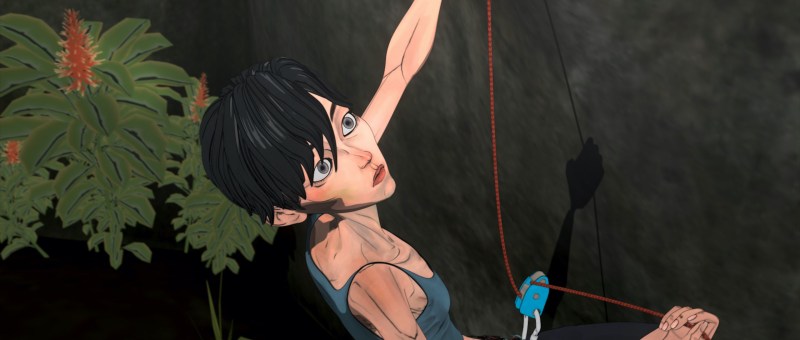
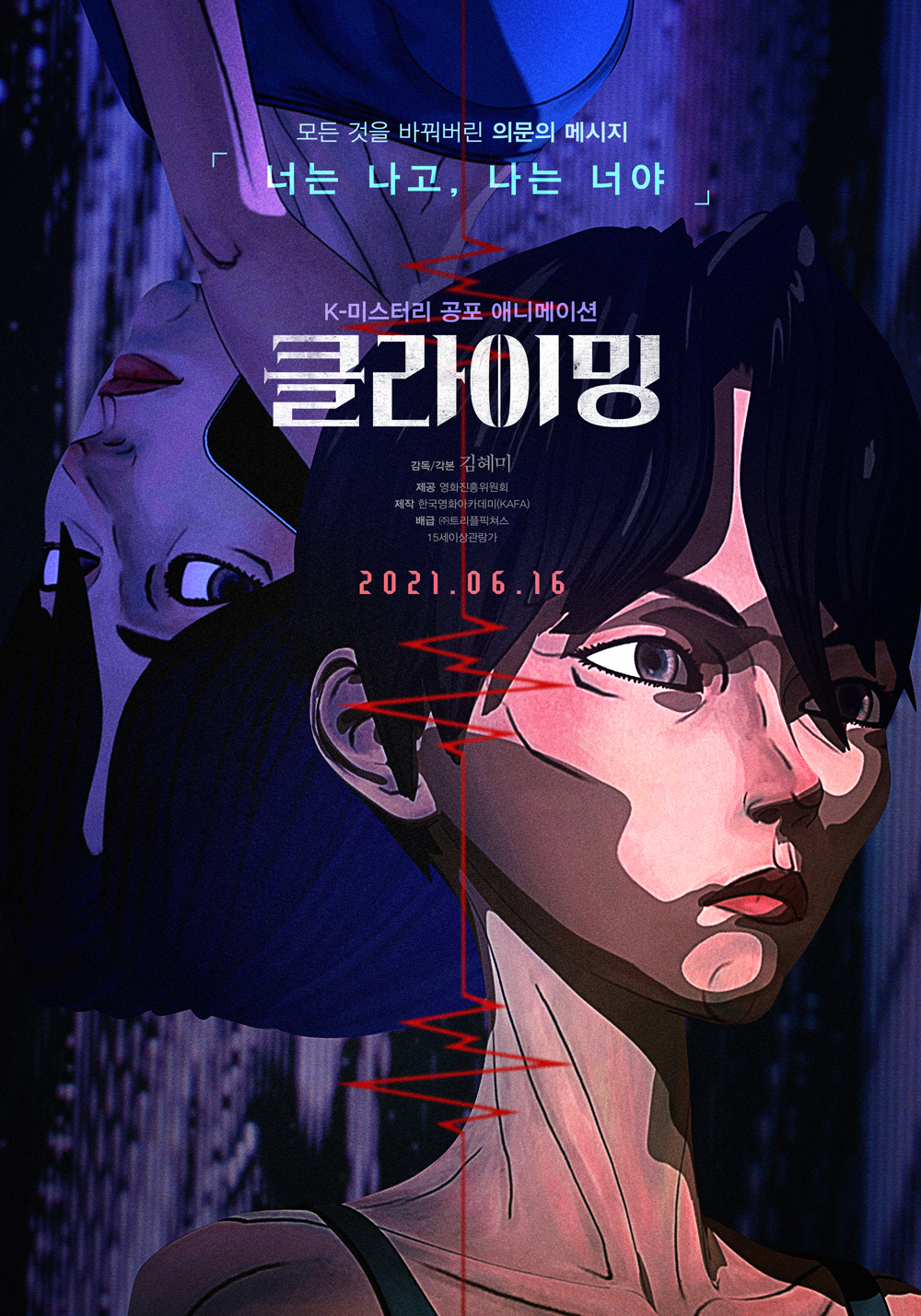
Maternal anxiety destabilises a young woman’s sense of reality in Kim Hye-mi’s animated psychological horror, Climbing (클라이밍). Impending motherhood has it seems forced Kim’s heroine to confront a series of uncomfortable questions about the direction of her life, the ways in which it must inevitably change over time, and what it is she really wants all the while contending with a loss of control over her physical body mastery over which has in a sense been her life’s work. 

Professional indoor climber Se-hyeon (Kim Min-ji) has begun having strange dreams that her sympathetic boyfriend Woo-in (Goo Ji-won) attributes to possible PTSD following a nasty car accident some months previously which left her in a lengthy coma and led to a miscarriage after which Se-hyeon was cared for by Woo-in’s mother (Park Song-yi). Hearing of the dreams Woo-in is excited to think they may have another child on the way, only for Se-hyeon to coldly snap at him that the only “accident” was getting pregnant in the first place because she never wanted the baby. 

This is partly as we discover because of her determination to succeed as a professional climber which of course requires intense mastery over her physicality. The one reality she cannot dispute, however, is that she is ageing and that her body will necessarily change in ways over which she does not exercise full control. This is brought home to her by the perky presence of a slightly younger rival, Ah-in (also Park Song-yi), who pips her to the top spot in a minor competition. Greeted by Woo-in, it’s clear they’ve both known the young woman for some years, Woo-in’s talk of taking her out for pizza or hamburgers suggesting he still thinks of her as a child, implying that Se-hyeon has become acutely aware of the age difference between them while also jealous sensing danger in their accidentally flirtatious banter. Woo-in may be supportive of her career, but he too is perhaps feeling that it’s time to move on from competitive sports, presenting a ring over dinner and suggesting they finally get married while Se-hyeon could take up a steady job as a coach. Again she finds it hard to discern if this is genuine solicitous care or potentially abusive controlling behaviour, he petulantly suggesting they go home after she expresses reluctance to drink the expensive wine he’s ordered with their celebratory meal.

Meanwhile, she’s begun receiving mysterious text messages apparently from “herself” via a phone broken during in the accident. Her alter ego is still under the care of Woo-in’s mother, but unlike herself is a much more conventional figure of traditional femininity continually pining for Woo-in and apparently still carrying their child. As implied by the rather gothic family photo in Se-hyeon’s flat, just as she has begun to resent Woo-in, her other self suspects his mother, convinced that Woo-in is dead and that she is keeping it from her because she wants to take the baby as her own. Her two selves reflect her sense of ambivalence in response to motherhood, the other Se-hyeon literally forced into a frumpy maternity dress by her mother-in-law but determined to keep her baby, while Se-hyeon is intensely uncomfortable about the idea of a “foreign body” inside her own. Suspecting that the other Se-hyeon’s desires are beginning to bleed into her reality she takes drastic action in order to regain bodily control, but also finds herself fighting an uphill battle just to be allowed to continue competing on an international level while fearing literal and symbolic displacement by the next generation. 

There is perhaps a slight discomfort in the insistence that Se-hyeon is wrong to reject motherhood or that she has lost the right to an active choice over whether or not to bear a child even as she appears to tear herself apart internally attempting to accept not only the idea of maternity and the weight of the new responsibilities it brings, but also that of transition, that she must necessarily become something new through this process of bodily transformation. Kim’s body horror psychodrama plays out entirely within the confines of Se-hyeon’s mind, the heavily stylised quality of the animation perhaps reflecting the inner alienation and intense anxiety which undermine her sense of reality while she struggles to reorient herself in a world changing all around her.


Climbing screens 18th November as part of this year’s London Korean Film Festival.

Trailer (English subtitles)

Limecrime (라임크라임, Lee Seung-hwan & Yoo Jae-wook, 2020)

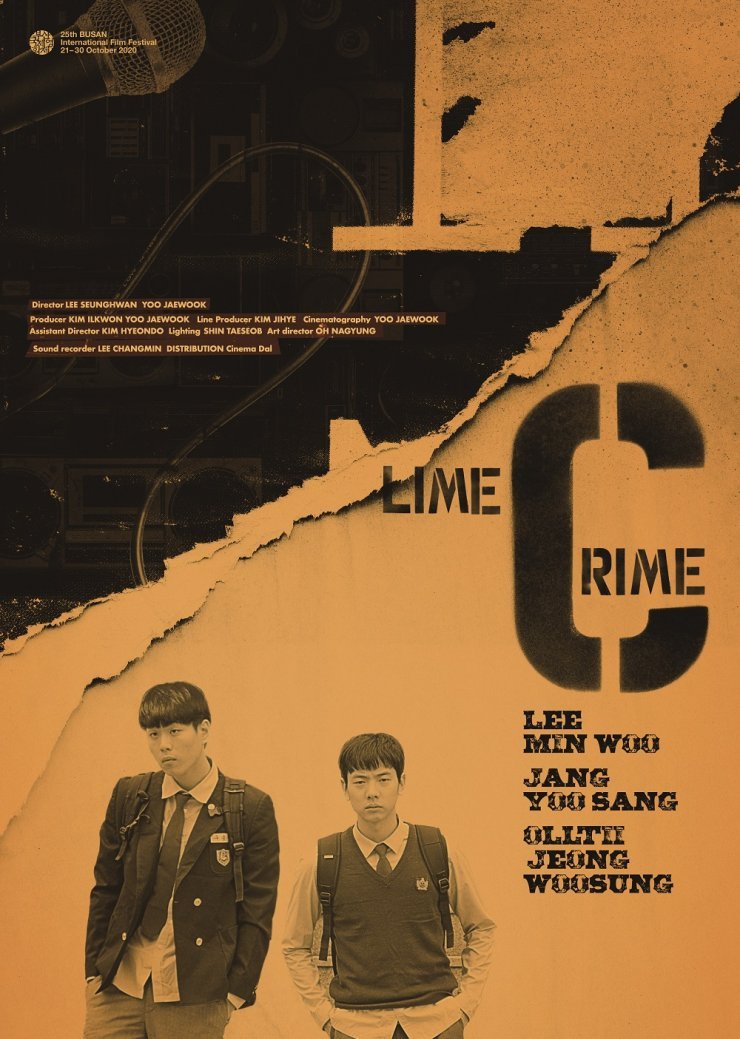
Two teens from across the class divide form an awkward friendship through a shared love of hip hop but find their connection undermined by their differing circumstances and opportunities in Lee Seung-hwan and Yoo Jae-wook’s indie coming-of-age drama Limecrime (라임크라임). Loosely inspired by their own life experiences, Lee and Yoo once performed as a rap duo under the name Limecrime, the directors eventually find unexpected positivity in the boys’ life trajectory as they each reach a point of understanding and thereafter overcome their differences while pursuing their musical aspirations. 

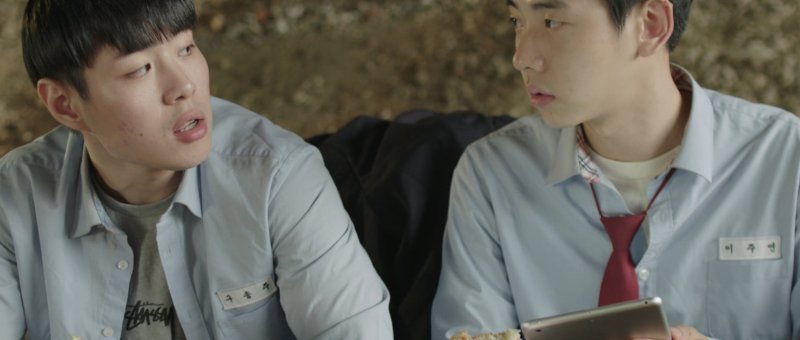
16-year-old Songju (Lee Min-woo) is a struggling middle school student with hip hop dreams currently working part-time in his father’s auto repair shop. He attracts the attention of the well-off, academically successful Jooyeon (Jang Yoo-sang) when performing a classic rap during a vocal evaluation underneath a sign stating that hip hop is forbidden. Being something of a hip hop geek, Jooyeon immediately makes contact lending a mystified Songju a retro discman and some of his favourite tracks before suggesting they team up as a hip hop duo and enter an online competition. 

The duo’s name, Limecrime, is taken from an accidental misreading of “rhyme crime” which eventually sticks and becomes in a way ironic. Nevertheless, it demonstrates an early divide between the boys, Jooyeon mocking Songju for his rookie mistake while insisting that the art of rhyme is central to rap, demanding precision while Songju prefers the anarchy of freeform improvisation. To begin with they bond over their shared love of music, but over time the differences between them become increasingly obvious with Songju often uncomfortable among Jooyeon’s wealthier friends. Though they are mocked by some of their classmates at an early performance, a graduating hip hop club from a local high school offers to befriend them, but their rappers are much more intellectual than either of the boys sitting down to discuss philosophy while Songju feels left behind having no real idea what’s going on. He gets up to fix a broken mic stand, only for Jooyeon to tell him off insisting the repairman will take care of it while rolling his eyes as if implying he thinks Songju has shown himself up in front of their new friends. 

Jooyeon is indeed the sort used to having everything done for him, regarding it as somehow inappropriate to fix something yourself. His parents do not appear to be physically present in his life, heard only via infrequent telephone calls, while leaving the housekeeper to watch over him though she later quits abruptly having reached her limit when Jooyeon and Songju thoughtlessly trash the kitchen and leave the mess for her to clean up. Cleaning up after himself is not something Jooyeon has ever been taught to do and given his family’s wealth he’s also got the idea that all problems can be solved with money. Wanting Songju to attend the high school with the best hip hop club he crassly offers to pay for cram school classes, little realising how his suggestion makes Songju feel or how he’s effectively using and manipulating him to achieve his own aims. Irritated by his practicality, he finally relegates Songju to the space recently vacated by the housekeeper after he kindly fixes up his bike for him. 

Songju meanwhile is both attracted and repelled by Jooyeon’s upperclass world while finding his existing friendships strained when his buddies fall in with a local petty gangster and are pulled towards small scale street crime ironically selling counterfeit fashion from hip hop brands. Given Songju’s example some of the other boys dare to dream of different futures, even the most delinquent revealing he’d like to become an actor, but each is later forced to face the crushing reality that no matter their ambition they do not have the same opportunities as boys like Jooyeon whose family can afford to pay for fancy schools and private tuition. 

Matters finally come to a head when Songju ends up in trouble with the law and Jooyeon gets his father to pull strings on his behalf only to abruptly abandon him when he expresses anxiety over his less well-connected friends. There is something quite ironic in Jooyeon’s love of hip hop, declaring that he wants to “change what’s absurd in this world” through the power of music but later having no answer when asked if he wouldn’t be better to become a politician or activist than an indie musician reliant on being able to generate a platform. After deciding to give up, Songju nevertheless comes into his own and finds his voice but at the same time refuses to leave Jooyeon behind even when discovering solo success. Though the leads may be a little past convincingly passing for 16 (Jang Yoo-sang is 30, Lee Min-woo is 28), Lee and Yoo nevertheless craft a refreshingly positive coming-of-age tale which allows the boys to salvage their friendship and their musical dreams even if perhaps only by sidestepping the issues which initially divided them. 


Limecrime screens 15th November as part of this year’s London Korean Film Festival.

Trailer (no subtitles)

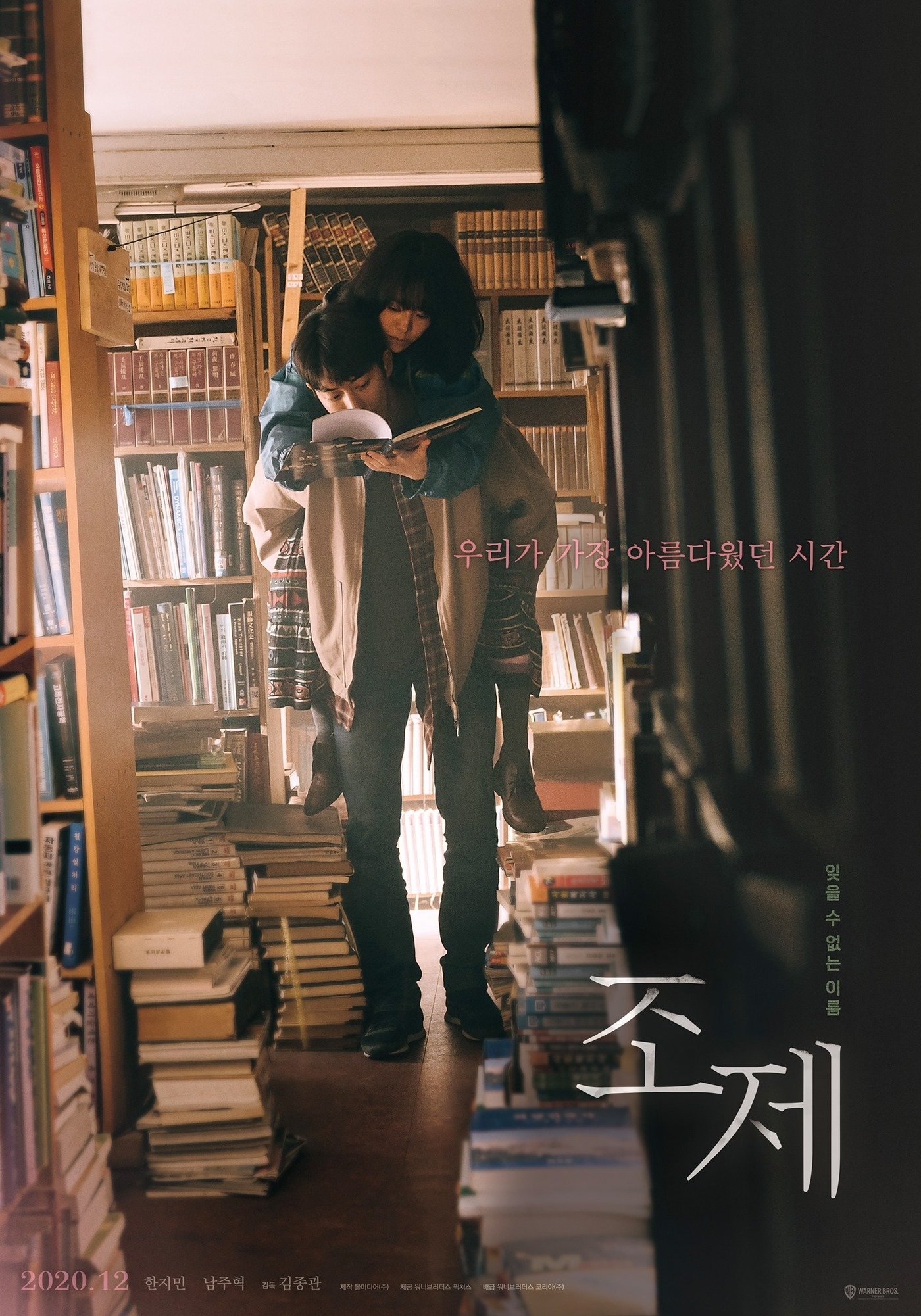
Josée (조제, Kim Jong-kwan, 2020)

When Isshin Inudo’s adaptation of the 1984 short story by Seiko Tanabe Josée, The Tiger and The Fish was released back in 2003, it quickly gained popularity across Asia and is fondly remembered by many as a melancholy love story neatly anticipating the junai boom that would arrive a year later. Nevertheless, almost 20 years on the film’s depiction of disability might seem very of its time while its heavy focus on the male hero’s internal conflict realising that in the end he wasn’t strong enough to fight for love may also seem misplaced. Very loosely inspired by the same short story, Kim Jong-kwan’s Josée (조제) while still largely told from the hero’s point of view does its best to redress the balance in returning agency to the heroine as she resolves to live a freer and more independent life if still to a degree confined by an internal sense of ableism. 

As the film opens, Josée (Han Ji-min) is lying in the road having been thrown out of her electric wheelchair. Student Young-seok (Nam Joo-hyuk) comes to her rescue, grabbing a nearby stool while inspecting the chair only to discover the wheel is broken and the power is out. Thinking quickly he borrows a wheelbarrow from a storeowner and takes both her and the wheelchair back to her home where he’s treated to a meal but also endures Josée’s scorn, she feeling quite ambivalent thinking that she should repay his kindness but also not really wanting to engage with him. Young-seok meanwhile is somewhat captivated by her mystery, later helping her grandmother out after spotting her struggling with a heavy cabinet in the street and thereafter becoming a regular fixture in the young woman’s home. 

Unlike the earlier version, the reasons for Joseé’s largely self-imposed isolation are internal rather than to do with social stigma towards disability or a history of abuse. Nevertheless she harbours a degree of trauma owing to having been abandoned as a child and is reluctant to form close relationships with others which is one reason why she rebuffs Young-seok’s attempts at friendship believing he too would one day leave her while there is also a rather large age gap between them, Young-seok still a student in his early 20s while it appears Josée is at least 10 – 15 years older. Through Young-seok’s intervention Josée discovers that there are systems in place she could go to for support along with community organisations that are keen to help her live independently as an integrated member of society the only reason she had not found them before being her desire for isolation partly caused by the mistaken belief she is wanted by the police. 

Young-seok meanwhile despite his earnest desire to help her is still somewhat immature, naively asking his sometime college girlfriend insensitive questions about her rent and living arrangements while unable to understand the consequences of his actions in carrying on an affair with one of his professors and being exploited by another. Josée accuses him of pitying her which he perhaps does but is also drawn to her because of her sense of mystery discovering that little of what she says of herself is true, merely the expression of the escapist fantasies she uses to overcome the inertia of her life. The irony is that Young-seok is attracted to her precisely because of this quality of otherness and unknowability, while through forming a relationship with him she grows to know and love herself, finally accepting that she is worthy of love if also perhaps viewing herself as a burden as if she would trap Young-seok with her in world of isolation unfairly denying him the right to the fullness of the life. 

Because of her isolation Josée experiences the world differently, living vicariously through books travelling the world in spirit if not in body. Her marginalisation is compounded by her poverty, unable to afford the things that would make her life easier and unaware that there is help available because of her distrust of of authority figures born of her previous experiences which contributes to her desire for solitude. Yet through her relationship with Young-seok she begins to develop a sense of possibility, embracing her independence in driving an adapted car at the film’s conclusion while reconnecting with a childhood friend and his partner not to mention having a little cat to take care of at home. “I’m OK now, I’m not lonely” she offers, if a little sadly, romanticising the memory of love if not its actuality. Imbued with a deep sense of romantic melancholy, Kim’s richly textured drama nevertheless hands agency back to Josée who finally comes to love and accept herself through loving and being loved by another person seizing her independence to live a full and active life but ready to accept the help and support of others as she does so. 


Josée screens 14th November as part of this year’s London Korean Film Festival.

International trailer (English subtitles)

Hold Me Back (私をくいとめて, Akiko Ohku, 2020)

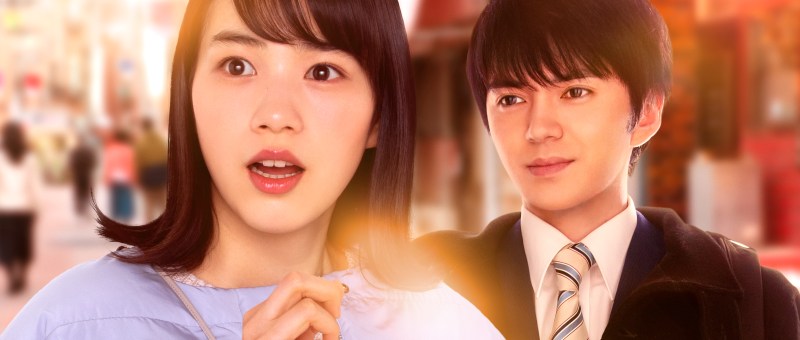
“Humans fly solo from the day we are born. You need to make an effort to be with someone” the heroine of Akiko Ohku’s latest chronicle of the contemporary woman’s inner loneliness, Hold Me Back (私をくいとめて, Watashi wo Kuitomete), is reminded. Like the heroine of Ohku’s mega hit Tremble All You Want, 31-year-old office worker Mitsuko (Non) is an introverted lonely soul through unlike the slightly older protagonist of My Sweet Grappa Remedies she is clearly much less happy with her single life than she likes to pretend often talking over her existential worries with an inner voice she refers to as “A” for “Answers”. 

As we first meet Mitsuko she’s taking part in a weekend workshop making fake food samples out of wax, later stopping off to pick up take out tempura on her way home because it saves stinking out her kitchen frying for one. She spends her free time thinking up things to do on her own on the weekends, but always seems to carry a degree of anxiety about her culturally taboo singledom. Having decided to try out a popular sandwich place, she finds herself leaving a nearby park because she feels awkward taking up a picnic table for four surrounded by couples and families on a day out. For similar reasons she nixes an idea to go to the beach, frightened she’d stand out as a lone woman. She finds herself asking A what she could do to make people like her more, clearly hungry for company but also afraid of it admitting it’s much easier to relax when she’s on her own and presumably free from the pressures of potential judgement.  

It’s potentially because of this awkwardness that she ends up in an ill-defined non-relationship with an equally diffident salaryman who often visits her office. The perfectly pleasant Tada (Kento Hayashi) is a young bachelor surviving off cutlets from a food stand in the neighbourhood where they both coincidentally live. Mitsuko tells a few fibs about her gourmet lifestyle but is actually a good cook though her probably made out of politeness invitation to make Tada dinner somewhat backfires as she finds herself cooking him “takeout”, preparing a meal while he waits awkwardly in her hallway before taking it home to eat on his own. A conversation with A reveals she does indeed have a crush on Tada and would like to ask him to stay but is fearful of ruining the non-relationship they already have if he should suddenly mention a girlfriend or refuse her invitation. 

Unrevealed even with her conversations with herself is a potential history of personal trauma, recalling a bad date with middle-aged dentist who told her he didn’t want to date a patient in public but had already booked a hotel room while getting handsy in the bar. On an onsen getaway she’s gifted by a friend who got it at wedding she doesn’t want to spend time thinking about, Mitsuko witnesses a comedian stage rushed by a pair of creepy guys and desperately wants to say something but finds herself unable. Talking it over with A she berates herself for her internal complicity with a patriarchal society, remembering all the times she let it go when a sleazy boss grabbed at her, an older co-worker who tried to convince her that it wasn’t OK eventually forced out of her job. She takes refuge in the fact her supportive female boss has managed to carve out a career for herself, believing she will eventually triumph over sleazy and incompetent men who take credit for the work done by their talented female subordinates but also assumes that Ms. Sawada (Hairi Katagiri) must be a lonely workaholic who sacrificed her personal life for the professional. 

An invitation from uni best friend Satsuki (Ai Hashimoto), meanwhile, who married an Italian and moved to Rome further deepens her sense of early life crisis, especially on discovering that Satsuki had neglected to mention that she was pregnant in any of their correspondence. It’s telling in a sense that A seems to desert her when she has someone “real” to talk to, absenting himself for the entirety of her time in Italy during which she realises that happy as she is Satsuki is also lonely living in an unfamiliar country and understandably anxious about the birth of her first child so far from home. Yet A’s frequent absences only exacerbate her fear of abandonment, after all if even her inner consciousness is jumping ship what possible hope is there for anyone else? 

But then as he tells her “You cannot escape being you”, her inner voice will always be there even if she doesn’t really need him anymore. “It was easier fighting loneliness alone” she exclaims in panic, suddenly getting cold feet about a possible step forward in terms of human intimacy, only later calming down after a final pep talk with A convinces her it’s worth the risk. Less surreal than Tremble All You Want while less rosy than My Sweet Grappa Remedies, Hold Me Back embraces its heroine’s internal vulnerabilities with a relatable realism as she tearfully asks the absent A “I’ll be OK this time, right?” before daring to find out come what may. 


Hold Me Back screens in Brisbane (Nov. 14), Melbourne (Nov. 20/24), and Sydney (Nov. 27 / Dec. 3) as part of this year’s Japanese Film Festival Australia.

Teaser trailer (English subtitles)

Collectors (도굴, Park Jung-bae, 2020)

“Grave Robber” is ordinarily not a nice thing to call someone, let alone to be, yet the heroes of Park Jung-bae’s Collectors (도굴, Do-gul) are just that if in effect more like cultural Robin Hoods robbing the dead to reclaim the past than heartless thieves interested only in profit. Operating with a “this should be in a museum!” mentality, these grave robbers have a variety of motives, among them revenge both personal and national, as they take aim at lingering historical betrayals stemming back to the days of Japanese colonialism. 

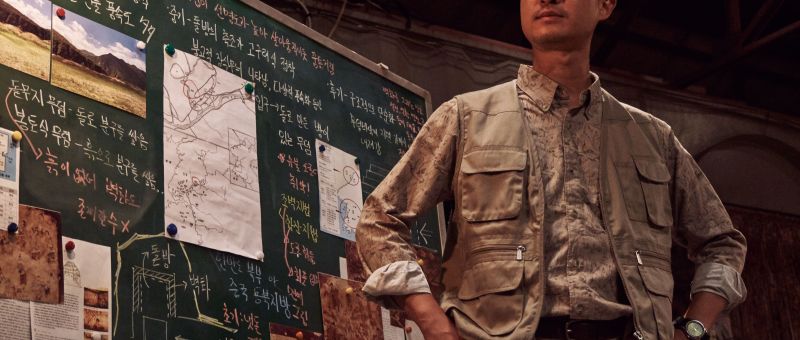
As the film opens, intrepid thief Dong-gu (Lee Je-hoon) manages to trick a pair of Buddhist monks suspicious on the grounds that he’s a bit handsome for the religious life into letting him “guard” a pagoda that’s set for imminent dismantling in order to nab a precious miniature Buddha located inside. What puzzles the authorities is that Dong-gu leaves obvious evidence of the theft along with a trademark chocopie wrapper which suggests he wants everyone to know how clever he is. This may be true, Dong-gu is quite smug about his obvious abilities as a tomb raider, but he may also have ulterior motives in play. As a duplicitous broker points, out, however, it’s surprisingly difficult to make money trafficking artefacts because they are simply to famous to be sold openly meaning thieves and fences are all dependent on a small pool of super rich “collectors” with whom they have personal relationships or else are stealing to order. 

Stepping back a little, what this means is that not only are those like Dong-gu robbing the dead and selling their affects on the black market, but that they are in a sense traitors to their nation often selling these precious historical artefacts to foreigners and most problematically to the Japanese, ironically enough grave robbers themselves in having looted half the country during the colonial era. It will come as little surprise that the main villain Jin Sang-gil (Song Young-chang), a hotel entrepreneur and head of the Korea Cultural Asset Foundation, in fact owes his inherited wealth to his family having sold artefacts to the Japanese from 1910 onwards, and himself is keeping a large selection of plundered treasures in an ultra secure vault underneath his offices. 

The Buddha brings Dong-gu into Jin’s orbit, first made an offer by his gangster underling Gwang-chul (Lee Sung-wook) who is, perhaps conveniently, Chinese-Korean hailing from Yanbian, and then by his smart assistant Sae-hee (Shin Hye-sun) who is fluent in English, Chinese, and Japanese acting as a broker for wealthy Japanese clients which is how she finances Dong-gu’s upcoming operation to steal an ancient frieze from a grave located in what is now technically China but was then Korean. Dong-gu, meanwhile, despite claiming he got into grave robbing because he realised he’d never be able to buy a house working “like regular people do”, is remarkably uninterested in the money refusing Sae-hee’s “gift” of a fancy car, and instantly losing his fee in the hotel casino. As we later realise, what he seems to want is for the artefacts to be returned to their rightful owners, the Korean people. 

To complete his heist he recruits a series of “experts” including the slightly nerdy souvenir peddler nicknamed “Dr. Jones” (Jo Woo-jin) who even dresses like Indy himself, as well as a former miner recently released from prison renowned for his tunnelling abilities. Dong-gu’s methods are traditional in the extreme, locating the entrance to a burial mound by tasting the soil looking for traces of decomposing flesh, while his sister Hye-ri (Park Se-wan) is much more technologically advanced making frequent use of drones and angering her father and brother by drilling a tiny hole in the Buddha to insert a GPS tracker hoping to figure out what Jin is doing with the artefacts. In a touch of irony, the vault has itself been designed to mimic the security features of an ancient tomb if updated with biometric eye scanning and fingerprint technology topped off with a good old-fashioned key, but as it turns out there’s no security system that can protect you from betrayal especially if you’re generally unpleasant and no one trusts you anyway. 

Dong-gu’s target, however, is a royal tomb located in the centre of Gangnam from which he intends to steal the “Excalibur of Joseon” appealing to Jin’s sense of hubris, leaning into a kind of mythical prophecy in which he’d become a contemporary hero ruling over all Korea as the wielder of the sword. Taking in some additional social commentary in which the government has chosen to improve their approval ratings through spending money buffing up a tomb while when the guys try to rent a subbasement the flirtatious realtor admits the rents are low in this area because it often floods only to shake off some of her disapproval when they tell her they’re part of the restoration team, the central message is that the historical relics of Korea’s past belong to the Korean people, not to the shady businessmen further corrupting an already compromised economy, nor to former colonial powers. Sometimes, it seems to say, digging up the past is a necessary act of national reclamation. 


Collectors screens 13th November as part of this year’s London Korean Film Festival.

International trailer (English subtitles)

Awoke (복지식당, Jung Jae-ik & Seo Tae-soo, 2020)

“Please let me live with dignity” the hero of Jung Jae-ik & Seo Tae-soo’s Awoke (복지식당, Bogji Sigdang) eventually pleads as a sole judge looks down on him from on high, advocating for himself but seemingly finding little support. Co-directed by Jung who is disabled himself and employing a mixed ability crew, Jung & Seo’s kafkaesque drama explores the vagaries of disabled life in the contemporary society in which there is still a degree of stigmatisation towards those with differing needs while the expanding welfare system also presents its own barriers preventing those with disabilities from leading full and fulfilling lives. 

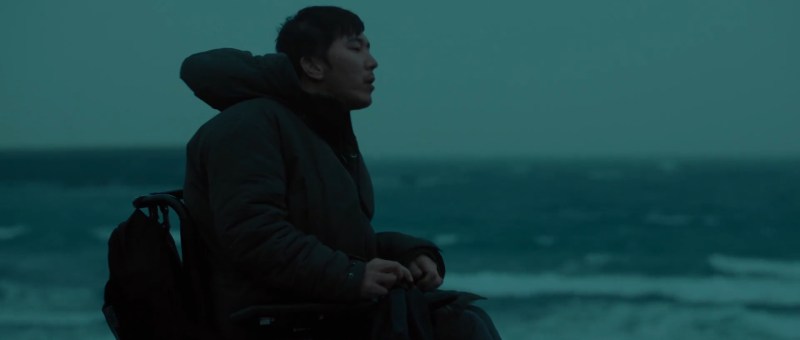
This 34-year-old Jae-gi (Jo Min-sang) discovers when he suddenly becomes disabled after a traffic accident. As his mother died while he was in the hospital, he has only his cousin Eun-ji, who is a single mother to a teenage son, and an elderly landlord to look after him while it seems no one has fully explained the options he now has. His hospital roommate, Bong-su, seems to be an old hand, visited by a man in wheelchair, Byeong-ho whom he calls brother, who has evidently explained to him how to game the system which is why he is later rated level 2, the second most severe category of disability, despite being fully able to walk and perform everyday tasks with relative ease. Being an honest person, Jae-gi fully co-operates with the civil servant sent to assess his level of disability and as he is able to stand and make a few steps to transfer into a wheelchair independently he is put down as able to walk, and as the assessor is able to move his left arm which constantly tremors and has low functionality he is graded level 5 or “mildly disabled”. 

To anyone’s eyes, this is plainly ridiculous. Jae-gi needs an electric wheelchair in order to get around and can only manage basic every day tasks such as housework and laundry with assistance. He is also forced to move out of the flat his mother left him because it’s a walkup, meaning he has to rent an accessible room. He tries to apply for various schemes intended to help people like him so that he’d be able to use subsidised accessible taxi services and have access to a personal carer but is repeatedly told he doesn’t “qualify” because of his level five designation. Unable to claim for disability living allowance, Jae-gil wants to get a job but again on visiting a specialist service designed to help those with disabilities get into work finds himself falling between two stools. The first interviewer simply looks at him and explains he wants someone who can walk and lift heavy objects, which is incongruous with advertising jobs to people with physical disabilities. The second wanted to hire him right away only to rescind the offer on looking at his welfare card explaining her company only hires levels one to three. Byeong-ho, who happens to work there too, explains that’s because companies are given subsidies for hiring the “severely” disabled which on paper Jae-gil is not. 

Time and again, Jae-gil becomes the victim of officious bureaucracy. The services needed to help him exist, but he is prevented from using them because an over officious assessor was too literal with his form. He’s told that it’s difficult, perhaps impossible, to get one’s level changed, a claim which seems doubly unfair given that disability can of course change over time. Intensely vulnerable, he comes to over rely on Byeong-ho’s advice, little knowing that Byeong-ho is also exploiting him despite being aware that he has no money and is in danger of being evicted from his flat if he is not able to get his level changed to enable him to work, claim the assistance he is entitled to, and live a fulfilling independent life. 

Encouraged by Byeong-ho, Jae-gil is certain that he’s going to get his rating overturned, assuring his cousin there’s no need to sell his mother’s flat in which she is currently living after losing her house when her husband passed away from cancer because he’ll soon have a job and can pay the rent. Perhaps to a certain extent you can’t blame Byeong-ho for being the way he is given the way he has also experienced exploitation and discrimination not to mention violence at the hands of a father who couldn’t accept having a disabled son, but his almost sadistic glee in fleecing Jae-gil of the little he has is plainly unforgivable, reaching out in solidarity as one disabled person to another only to pass on his sense of oppression to someone even more vulnerable. Forced into a kafkaesque bureaucratic nightmare, all Jae-gil can do is repeatedly state his case only for those in positions of power to claim they are prevented from helping him because his card says level five despite the obvious evidence of their eyes. Nevertheless, through his traumatic experiences of betrayal and exploitation, he perhaps awakens to the injustice inherent in the contemporary society and is resolved to advocate for himself though the jury is it seems out on whether anyone is finally going to listen. 


Awoke screens 9th November as part of this year’s London Korean Film Festival.

Original trailer (English subtitles)

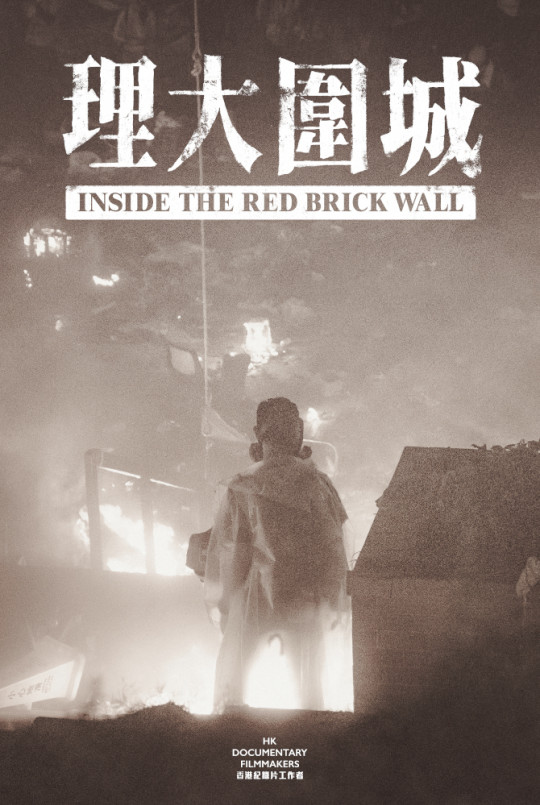
Inside the Red Brick Wall (理大圍城, Hong Kong Documentary Filmmakers, 2020)

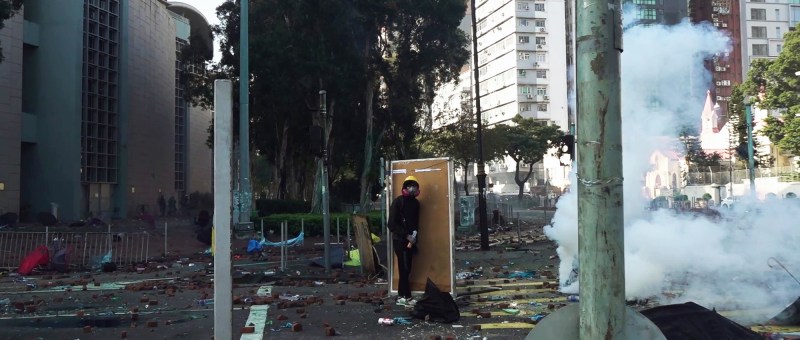
“We can’t afford to be afraid” insists a protestor trapped inside the siege of Hong Kong Polytechnic University during the 2019 protests sparked by opposition to the Extradition Law Amendment Bill. Credited only to the Hong Kong Documentary Filmmakers collective, its directors for obvious reasons choosing to remain anonymous, Inside the Red Brick Wall (理大圍城) is a visceral exploration of life behind the barricades as the trapped youngsters, some of whom are under the age of 18, grow increasingly frustrated and afraid, desperate for escape but fearful of police violence. 

The police, it has to be said, do not come out of this well. While the protestors blast local hip hop highly critical of law enforcement, the officers negotiating via loud speaker repeatedly troll them with ironic pop songs with titles such as “Surrounded” or “Ambush From Ten Sides” while otherwise taunting them with ridiculous insults and talking about going out to kill cockroaches. Such deliberate provocation at least giving the impression that they are merely looking for an excuse to storm the university does not endear them to the protestors trapped inside most of whom already want to leave but not if it means walking out into the arms of the police. With the mounting hysteria, it isn’t even the immediacy of the threat that causes the most anxiety but the possibilities of its aftermath, many fearing not just police brutality but sexual violence and that their mistreatment will not end with their arrest. This is one reason that many struggle to trust a cohort of high school principals who are permitted to enter the university in order to lead out some of the school-aged protestors, promising to protect them from the police batons in order to deliver them to their homes safely and directly. In return the protestors are asked to provide their IDs, leading many to fear they will simply be arrested the following morning. 

Nevertheless, as the situation inside begins to decline it becomes clear to many that they must leave by whatever means possible, some engaging in potentially dangerous escape attempts such as abseiling from a bridge to be met by friends on motorbikes, or exiting through the sewers. Others debate the wisdom of leaving at all, correctly as it turns out surmising that the police will eventually be forced to end the siege because allowing it to continue is simply far too expensive. Even so, these are extremely young people under intense strain, mentally and physically exhausted while also fearing for their lives. Remarking that many have made their wills, one young man insists it’s not death he fears, he’s prepared for that, but that he may die in here and no one would know.  

The necessity of hiding their faces, the documentarians are scrupulous in blurring even the faintest trace of identifiable features, adds to the sense of the collective which becomes in the eyes of some at least their best weapon of defence. Yet through repeated attempts to break through the blockade and the gradual shedding of those who cannot endure any longer deciding to accept the threat of arrest and surrender, the group necessarily weakened causing many to fear their reduced numbers leave them increasingly vulnerable. Some protestors loudly harangue their friends for leaving, while others offer only comfort as their fellow protestors tearfully apologise but can clearly remain no longer. A few pledge to wait it out while debating the ethical dimensions of leaving if it means abandoning those who are already too injured to make their own way out. 

In the midst of the action, the documentarians hover over blood-stained helmets and the aftermath of violence but are also relatively free to record police brutality seemingly ignored by officers otherwise pinning protestors to the floor and in some cases recklessly firing rubber bullets in close proximity even at one point appearing to fire directly at the back of a fleeing protestor’s head. Interrupting these scenes with shots of empty corridors – discarded clothing, a lone shoe inches away from the fire, all those battered umbrellas – the filmmakers evoke an almost apocalyptic atmosphere of total desolation offering little hope for the future in a society dominated by fear and authoritarianism. 


Inside the Red Brick Wall screened as part of this year’s San Diego Asian Film Festival

Trailer (dialogue free)

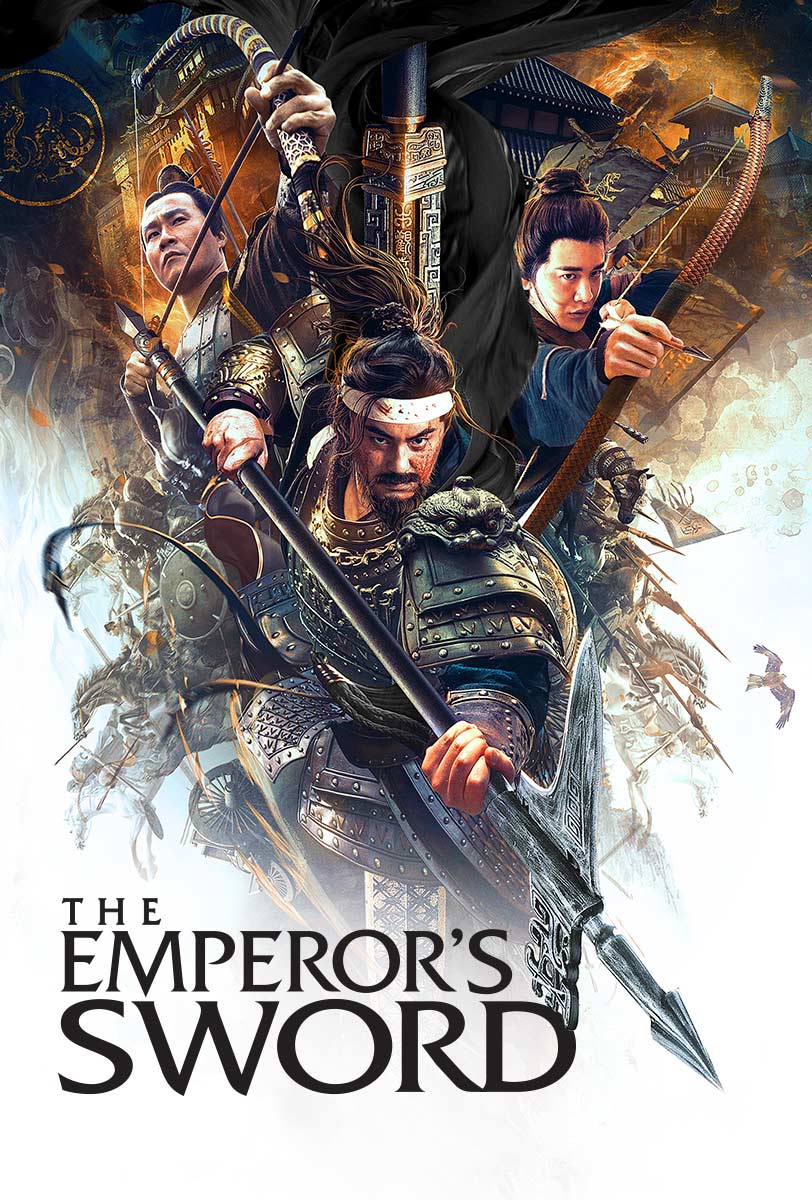
The Emperor’s Sword (乱世之定秦剑, Chen Hao-nan & Zhang Ying-li, 2020)

Can you ever truly preserve peace peacefully or will human greed and envy always triumph over a simple desire for comfort and safety? Chen Hao-nan and Zhang Ying-li’s wuxia drama The Emperor’s Sword (乱世之定秦剑, Luànshì zhī Dìng Qín Jiàn) situates itself at a moment of historical chaos in which the Qin Emperor, having ended the Warring States period through universal unity ten years previously, has died. In order to ensure peace throughout the land, his sword was melted down and recast as two with one residing in a palace and the other with trusty general Meng. Ambitious courtier Zhao Gao, however, has his mind set on usurpation having wiped out most of the previous regime hellbent on retrieving both of the swords in order to secure his grip on power. 

Unfortunately for him, Meng managed to send his daughter Xue away from the falling castle with the sword in hand instructing her to take it to the Tomb Keepers of Qin. Luckily for her, she runs into Jilian, one of the famed “Seven Gentlemen” who were once students of her father’s most of whom retreated to the Red Valley once the wars ended hoping to live lives of peace. Xue’s father brought her up to be kind and considerate, always thinking of others first, but she wonders if there’ll ever be a day with no more war when everyone is free to live happily together. The remainders of the Seven Gentlemen find themselves conflicted, some wanting to help Xue while others are reluctant to involve themselves in worldly conflict having had enough of war, but their belief that they could isolate themselves from external chaos turns out to be an illusion even if it were not also a contravention of their moral code not to stand for justice when the kingdom is threatened. 

A secondary dilemma is that the man hunting them down is in fact one of their former brethren who entered the service of usurping lord Zhao. Conflicted himself, Tian meets with Jilian each essentially asking the other to back off, not get involved in this particular fight, but that’s not something either of them can do leading to a series of emotional showdowns filled with tragic romance, betrayed brotherhood, and divided loyalties. In an echo of Xue’s advocation for a kinder world if one informed by the values of jianghu, Jilian claims he serves the Meng because they really care about the people, unlike Zhao it’s implied with his authoritarian lust for power. Yet in essence the two men have the same mission, not wanting anyone else’s life to be ruined by the chaos of war, only Tian has chosen the iron fist as a means of preserving peace while Jilian has opted for a less oppressive vision of a settled future. 

Still our heroes find themselves in a precarious position as they attempt to stop Zhao Gao completing his evil mission by getting his hands on both the swords. Making the most of their meagre budget, Chen and Zhang choreograph some impressive action sequences as Jilian becomes a veritable one man army taking on hordes of Zhao’s minions while making his way towards the man himself. Xue meanwhile does perhaps become something of a damsel in distress, largely unable to defend herself and reliant on the assistance of Seven Gentlemen foster son Han Jue, appointed to protect in a compromise measure though the expected romance never quite materialises even as she begins to push him towards a more mature contemplation of a better world of peace and justice. She is however pursued by a dogged female assassin with brotherhood issues of her own who remains hot on her trail despite the fecklessness of her evil middle manager boss Lord Wei who is every inch the cowardly wuxia villain. In true jianghu fashion, the good guys don’t always win and are heavily punished for the contraventions of their codes but eventually permit good to triumph over evil in successfully conveying the sword to a more just custodian. 


The Emperor’s Sword is released in the US on Nov. 9 on digital, blu-ray, and DVD courtesy of Well Go USA.

US release Trailer (English subtitles)