Number 1 (男儿王, Ong Kuo Sin, 2020)

“What I don’t understand is your so-called rules and traditions. Just what good does it do?” a newcomer ironically asks of a veteran drag artist, having perhaps shed but not yet quite acknowledged his original prejudice towards those different from himself. Ong Kuo Sin’s cheerful drag dramedy Number 1 (男儿王, Nán’ér Wàng) examines attitudes to the LGBTQ+ community in the comparatively conservative nation of Singapore where sexual activity between men remains illegal even if the law is not heavily enforced, while subtly undermining oppressive group think as to what constitutes a “successful”, “normal” life. 

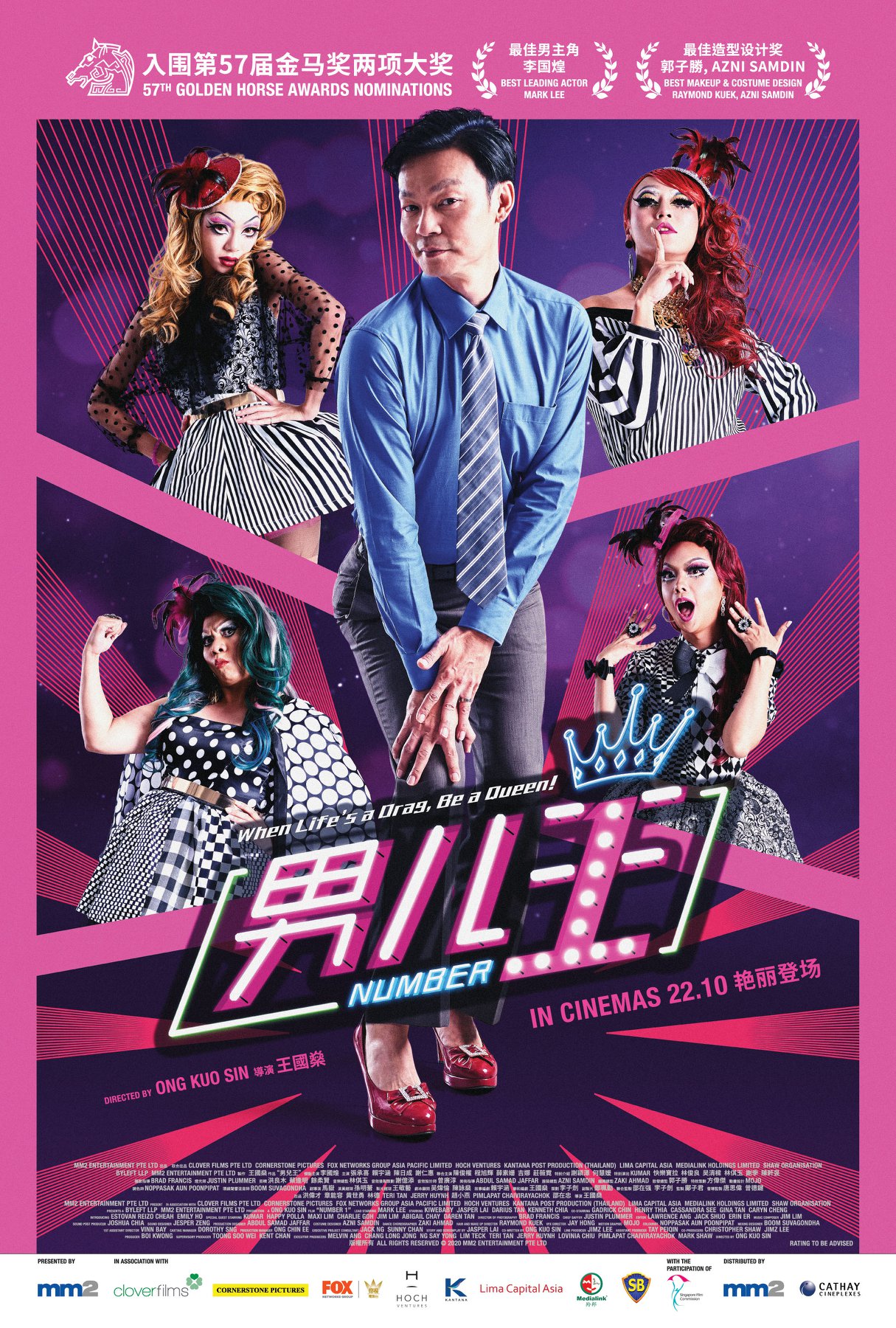
44-year-old Chow Chee Beng (Mark Lee Kok Huang) is a successful general manager at a construction firm where he’s worked for the last 17 years which is the entirety of his working life. It comes as quite a shock to him therefore when he’s unceremoniously let go, passed a letter of termination seconds after entertaining everyone with a song at the office New Year party. Given his experience, he perhaps feels that getting another job won’t be too difficult, but as various employers tell him he’s either “too old” or “too expensive” for the competitive Singapore job market. Faced with the prospect of telling his wife they’ll have to sell their luxury detached home because he can’t make the mortgage payments, Chee Beng is forced to accept the last resort offer from his recruitment advisor which happens to be as an AGM at local drag bar Number 1. 

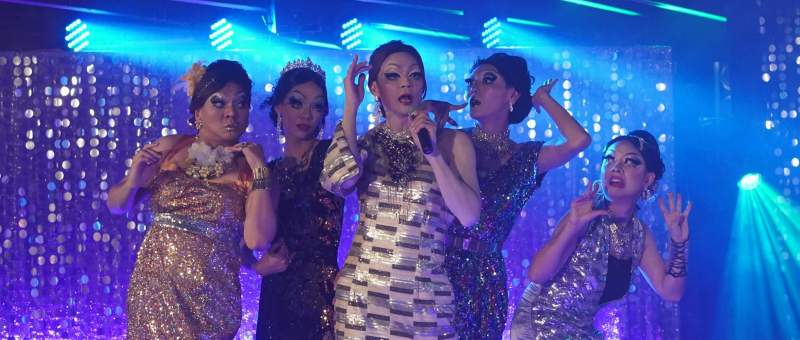
Like many men of his age, Chee Beng has a rather conservative mindset and had been living a very conventional life of suburban, middle-class success. His wife Marie (Gina Tan) even complains to her sister-in-law that their new swimming pool is a little on the small side and she’s thinking of swapping it for a bigger one. Yet as his performance stint at the company party implies, he is perhaps holding a part of himself back thinking that his love of singing is frivolous or even a little taboo given his wife’s mild embarrassment. The drag bar is therefore firmly outside his comfort zone. Not only does he lack experience managing an entertainment venue, but finds it difficult to overcome his sense of discomfort with those living lives so different from his own. When one of the drag artists turns out to be a deserter from the army and is carted off by the military police, Chee Beng finds himself press-ganged into performing and discovers that he is something of a natural though he doesn’t understand why they have to lip-sync to pre-recorded tracks rather than singing live. 

Chee Beng’s point seems to hint at a concern about the ability to completely embody the performance and fully express himself, yet he’s also a straight man wading into a predominantly LGBTQ+ community he knows nothing about and insisting on having his own way. That brings him into an additional conflict with former number one Pearly (Kiwebaby Chang) who dragged him on stage in the first place because with only four performers she wouldn’t be able to stand in the middle. Pearly might feel that lip-syncing completes her performance because she lacks the ability to sing in a feminine register, yet Chee Beng ironically accuses her of mandating a no singing rule in order to mask her own weakness while simultaneously attempting to mandate live singing in order showcase his strength as a performer. 

But even if he’s come to feel at home in the drag community, Chee Beng continues to keep his new life a secret from his socially conservative wife. When a video of him singing at the club goes viral, Chee Beng’s wife and sister-in-law react by taking the children’s phones away as if seeing it is in some way harmful. Later on seeing a poster for the Queens she irritatedly tells Chee Beng they should be banned by the government for giving children “wrong ideas”. Meanwhile their son Mason is conflicted in being a boy asked to play the part of Mulan in the school play, claiming he dislikes the character of Mulan because she “lies” about who she is while his father can only sympathise offering the justification that sometimes people have to lie in order to protect those they love. When Chee Beng’s identity is exposed, little Mason begins receiving vile hate mail online and all his friends stop playing with him. Yet he doesn’t see anything wrong in “wearing a dress” and can’t understand why everyone, including his mother, seems so upset. Marie complains that Chee Beng’s new life is “confusing” for Mason, but he doesn’t seem confused at all because he hasn’t yet had time to absorb the “wrong ideas” from the conservative world around him. 

That conservative world has been a very dark place for some of the Queens, Pearly revealing that she believes her coming out drove her parents in Taiwan into an early grave, while bar owner Fa’s brother took his own life, and the gang experience homophobic harassment from a man who turns out to be the high school bully who made one of their live’s a misery. Nevertheless, the sudden and otherwise unexplained reversal in the attitudes of some seems more than a little contrived for an otherwise uncomplicated happy ending despite Chee Beng’s defiant message that he wants his son to grow up “different” in that he learns early on not to be prejudiced against those different from himself and goes on to be happy with whoever he is rather than blindly following the rules of social conformity. Drag is for everyone, and becoming a member of the supportive drag queen community even helping out fundraising for a local LGBTQ+ friendly nursing home, Chee Beng begins to see a different way life that opens his eyes to the constraints of the way he lived before swapping the trappings of extreme consumerism for personal fulfilment and compassion for others. 


Number 1 screens at London’s Genesis Cinema on 18th September as part of this year’s Queer East.

Original trailer (English subtitles)
Gift of Fire (太陽の子, Hiroshi Kurosaki, 2020)

“What can we do? It’s for the victory of our country” one woman stoically laments as her family home is demolished in an attempt to mitigate the damage from potential aerial bombing in Hiroshi Kurosaki’s wartime drama, Gift of Fire (太陽の子, Taiyo no Ko). A co-production between Japanese broadcaster NHK and American distributor Eleven Arts, Kurosaki’s ambivalent interrogation of the price of progress asks some difficult questions about scientific ethics while simultaneously suggesting we may have been stoking a fire we cannot fully control in a bid for a technological evolution which has become unavoidably politicised. 

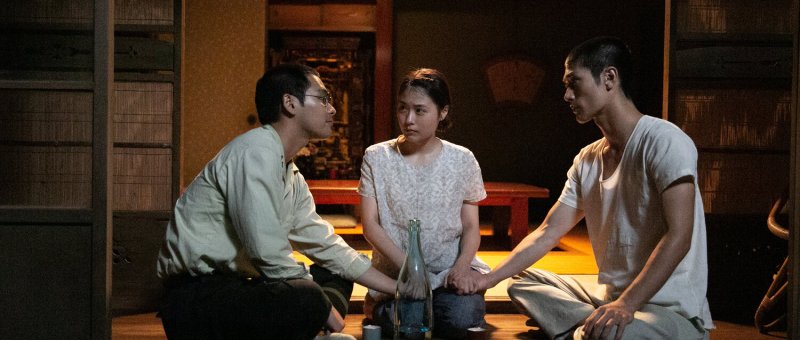
The hero, Shu (Yuya Yagira), is an idealistic young man who excels at running experiments. He has been spared the draft because his work has been deemed essential for the war effort as he is part of the research team at Kyoto University working on the development of an atomic bomb. A theoretical thinker, Shu has not fully considered the implications of the project and largely views it as a problem they are trying to solve in the name of science rather than a concerted attempt to create a super weapon with the potential to bring death and destruction to the entire world. 

Others meanwhile are beginning to question the ethical dimensions of their work. The team is equipped with a shortwave radio receiving the American broadcasts and is fully aware that Japan is losing the war. There are frequent power outages which interfere with their research, while food shortages are also becoming a problem. The potter Shu has been visiting in order to acquire Uranium usually used for a yellow glaze tells him that he rarely needs to use colour anymore because the vast majority of his output is plain white funerary urns for boys who come back as bones. Some of the scientists feel guilty that they are living in relative safety while other young men their age are fighting and dying on the front line, while others wonder if working on the bomb, which will almost certainly not be finished in time, is the best way to help them. They also wonder if scientists should be involved in the creation of weapons at all, but their mentor Arakatsu (Jun Kunimura) justifies the project under the rationale that they aren’t just trying to make a bomb but to unlock the power of the atom and harness its intrinsic energy to take humanity into a brave new world. 

As it turns out, Arakatsu may not have expected the project to succeed but was in a sense using it in order to protect his students by ensuring they would be exempt from the draft. Another senior researcher meanwhile points out the Americans are also working on a bomb, and if they don’t finish it first the Russians will. Arakatsu claims this war, like most, is about energy but nuclear energy may be infinite and therefore its discovery has the potential to end human conflict forevermore. Still, it’s difficult for Shu reconcile himself to the reality of what he was working on seeing the devastation inflicted on Hiroshima. The scientists are plunged into a deep sense of guilt and despair that they failed to prevent this tragedy, but also perhaps relief in knowing they were not responsible for inflicting it on the city of San Francisco as had been the plan. 

Arakatsu claims he wants to change the world through science, a sense of purpose that appeals to Shu even while he remains firmly in the present moment. His childhood friend, Setsu (Kasumi Arimura), however is looking far ahead already thinking about what to do when the war is over. Seeing through the wartime propaganda disturbed by the answers the high school girls co-opted to fill-in at her factory give when asked about their dreams that all they want is to marry as soon as possible and raise children to serve the nation, she aims to educate. Shu’s brother Hiroyuki (Haruma Miura), meanwhile, is a conflicted soldier filled with guilt for having survived so long crying out that he can’t be the only one not to die. The theory that nothing is ever created or destroyed becomes an odd kind of justification, yet Shu is also forced to admit that destruction can be “beautiful” while claiming that scientific progress is a body already in motion which cannot be stopped. “The nature of science transcends humanity” Shu is told by an accented voice speaking in English, insisting that the bomb is merely another stop on the inevitable march of progress in the great chain reaction of history. Kurosaki’s melancholy drama preserves both the beauty and wonder of scientific discovery as well as its terrible ferocity but offers few answers as to the extent of its responsibilities. 


Gift of Fire screens in Chicago on Sept. 16 as part of the 13th season of Asian Pop-Up Cinema before opening at cinemas across the US on Nov. 12 courtesy of Eleven Arts.

US trailer (English subtitles)

Breakout Brothers (逃獄兄弟, Mak Ho-Pong, 2020)

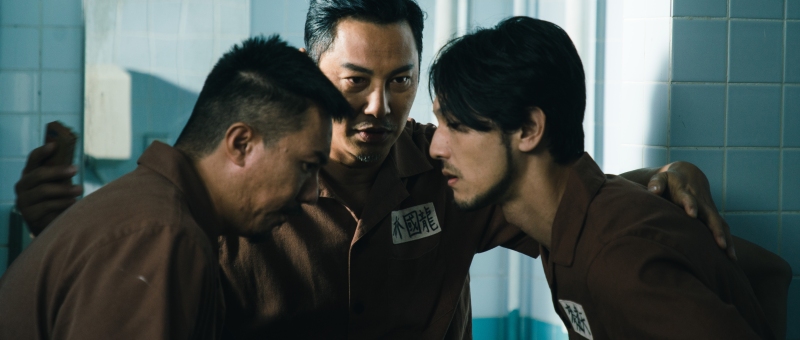
“I’m treating this as a vacation” says affable triad Chan (Louis Cheung Kai-Chung) of his three month prison term, after all it’s rent free and three meals a day who could say no to that in the difficult economic environment of pre-handover Hong Kong? Nevertheless, it’s hardly a vacation if you can’t cut it short and Chan, along with two buddies, will eventually find reasons to want to leave. Mak Ho-pong’s genial prison break comedy Breakout Brothers (逃獄兄弟) takes occasional subversive potshots against an increasingly corrupt social order but eventually discovers that you can’t escape social responsibility while the real reward is indeed the friends you make along the way. 

That is at least the conclusion that newbie prisoner Mak (Adam Pak Tin-Nam) comes to after being pulled into an escape plan formulated by petty gangster Chan who decides to make a break for it after learning that his dear mother has been taken ill and needs a kidney transplant which only he can give her. Thinking of his prison time as a vacation from the pressures of everyday life, Chan has been a low maintenance prisoner and therefore assumed the warden would agree to a temporary release to let him help his mum, but Warden Tang (Kenny Wong Tak-Ban) who has already served a “life sentence” of 30 years in post has recently been promised a promotion and doesn’t want anything to mess it up like a prisoner turning fugitive while on hospital leave. Spotting a workman disappearing from a storeroom and emerging Mario-style from a manhole on the other side of the fence Chan gets an idea and enlists Mak, an architect inside after being framed for taking bribes, to help him figure out the logistics, and Big Roller (Patrick Tam Yiu-Man), leader of the prison’s second biggest gang, for access and protection. 

The guys’ predicaments are perhaps embodiments of the age, Chan wanting out for reasons of filial piety while for Big Roller it’s in a sense the reverse in learning the daughter he was told had died is in fact alive and about to be married. Mak meanwhile wants out because he’s a sitting duck inside, the shady construction CEO who framed him for signing off on lax safety procedures which led to a fire in a prominent building having enlisted the services of rival gangster Scar (Justin Cheung Kin-Seng) to intimidate him into dropping his appeal. Hints of institutional corruption extend to the colonial prison system with guards quite clearly intimidated by prisoners and often turning a blind eye to cellblock violence while it’s also implied that Warden Tang has in a sense facilitated the rise of Scar at the expense of Big Roller as a means of maintaining order. He, like the colonial authorities, will soon be on his way but anticipating his own freedom is keen there be no trouble which is why he refuses Chan’s compassionate leave and extends little sympathy to new boy Mak. 

In any case, the real draw is the bumbling crime caper of the guys planning a heist-style escape which is, in the history of prison escapes, not an especially elaborate one. The prison is not exactly max security, and as they plan to escape during the celebrations for the Mid-August festival none of them are anticipating much difficulty in making it to the outside though as expected not quite everything goes to plan. Mak, meanwhile, eventually takes Big Roller’s advice and decides to stay inside to clear his name properly while the gang ensure his safety rather than try to live as a guilty fugitive and possibly be caught only to end up with more time. The other two have more pressing temporary goals and have not perhaps considered what to do after they’ve completed them, believing only that their lives are untenable if they cannot fulfil their duties as father and son respectively. 

Perhaps for this reason, the Mainland-friendly conclusion has each of the men recommitting themselves to paying their debts to society, Chan even insisting that he’s going to use his time wisely to improve his education in order to be a better husband and son while Big Roller promises to become a carpenter for real. Mak gets a partial vindication in that the shady CEO is finally forced to face justice while also realising that his slightly elitist, individualist stance has been mistaken thanks to the warm and genuine relationships he’s discovered inside. More comedy crime caper than tense prison break thriller, Breakout Brothers remains true to its name in prioritising the unconventional friendship that develops between the trio as they bond in a shared sense of existential rather than literal imprisonment. 


Breakout Brothers screened as part of this year’s New York Asian Film Festival.

Original trailer (English / Traditional Chinese subtitles)

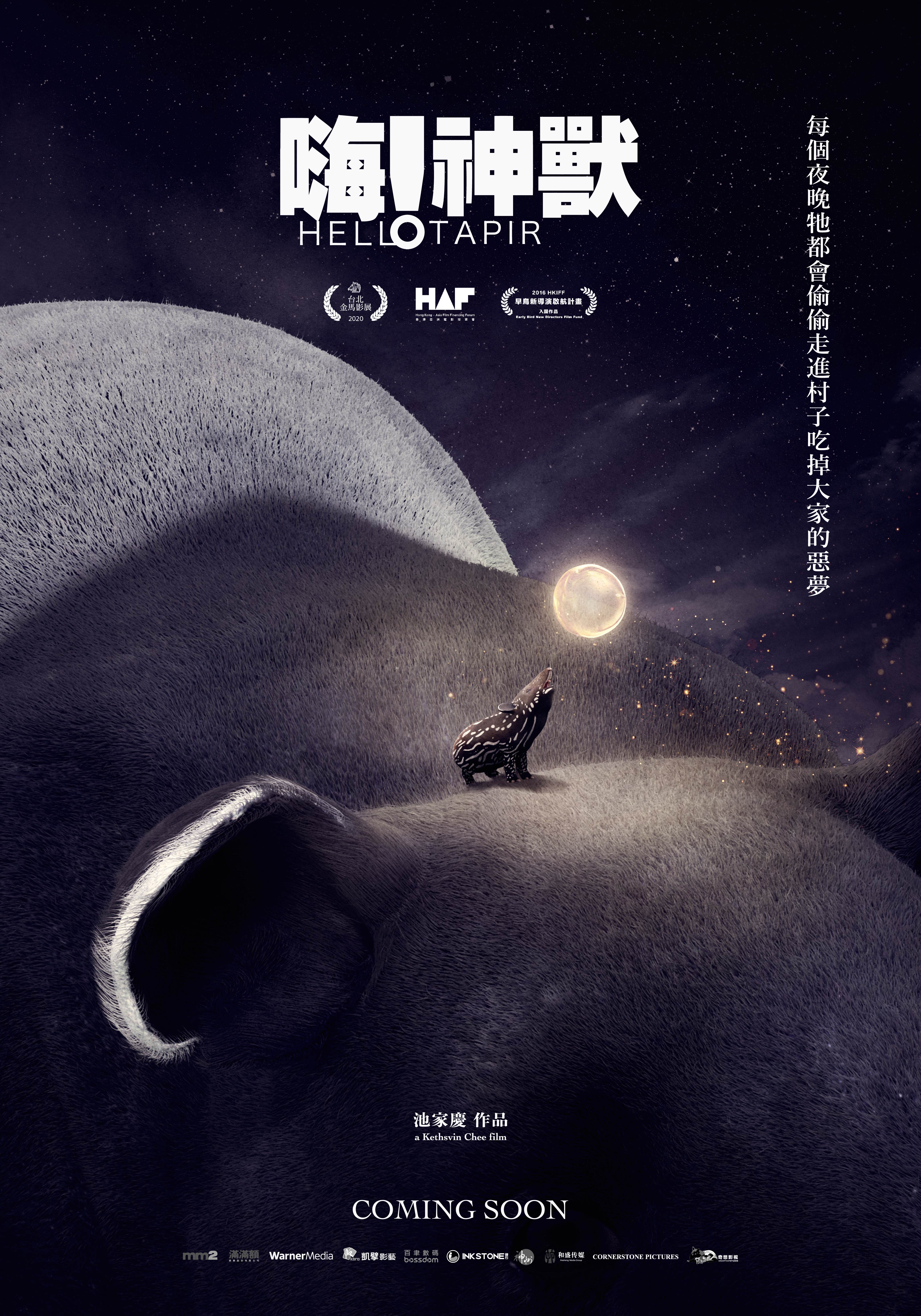
Hello! Tapir (嗨!神獸, Kethsvin Chee, 2020) [Fantasia 2021]

“In this world, everything disappears eventually” according to the prophetic words of the absent father of young Keat in Kethsvin Chee’s charmingly retro children’s fantasy adventure Hello! Tapir (嗨!神獸, Hāi Shénshòu). At heart a tale of grief and a small child’s acceptance of death, Hello! Tapir is also one of gentle adventure as the hero and his two friends search for tapirs in the undergrowth but eventually discover an accommodation with loss in the knowledge that nothing’s ever really gone even if you can’t see it. 

Keat (Bai Run-yin) lives in a small fishing village with his fisherman father (Lee Lee-zen) and grandma (Lü Hsueh-feng) who sells seafood at the market. Captivated by his father’s improbabe tale of having encountered a tapir who eats people’s nightmares in the forest, Keat implores his dad to take him to see it too but Keat’s father Sheng is always too busy and often reneges on his promises. Ominous winds start to blow when news of a typhoon is broadcast over the radio while Keat is angry that no one woke him before his father left on the boat as he had asked them to do. Sure enough, not long after Keat discovers a commotion at the harbour and gathers there has been some kind of accident at sea. His father hasn’t come home and his grandma is frantic but he’s just a little boy and no one is telling him anything. 

Told from a child’s point of view, Chee’s melancholy tale perfectly captures the confusion and resentment of a small boy in the midst of crisis. Keat cannot conceive of the idea his father may never come home again, replying to his friend’s questions that he’ll be back maybe tomorrow or the day after that. After all, he was supposed to take him to see the tapir. Because he’s sure his dad’s coming back, he grows resentful towards his recently returned mother (Charlie Yeung Choi-Nei) who left the family some time previously and had been living in Taipei and his grandmother for taking his father’s place away by boxing up his clothes and preparing to sell the fishing boat which came back empty on its own for scrap. 

Meanwhile he attempts to secure his father’s legacy by searching for the tapir on his own, encountering a baby which later leads him into the forest and towards its giant parent sucking on golden nightmare orbs all the way. Tapirs are obviously not native to Taiwan and so their presence is as decidedly unexpected as their unusual appearance. You would’t expect to see one wandering through town unless it had recently escaped from a zoo, but they are perhaps Keat’s way of processing the loss of his father the adult tapir gently showing him what it was he most wanted but feared to know while comforting him with its reassuringly warm presence. 

On the cusp of adolescence, Keat finds himself squarely between two sets of overlapping worlds caught between the fantasy of nightmare-eating tapirs and the reality of his grief while also remaining firmly in the realms of childhood having innocent adventures with his two friends as they try all sorts of tricks to draw out the mystical creatures just as his mother deals with the difficulties of planning a funeral and making plans for the future without overburdening her son with impending change. Nobody tells Keat anything because he’s just a child and they think he won’t understand, but he understands that they’re not telling him and the knowledge further increases his sense of loneliness and alienation left entirely alone with his grief and anxiety. 

A beautifully drawn magical realist fable, Chee’s charmingly old fashioned kids fantasy adventure makes the most of its idyllic seaside setting replete with a warm and friendly atmosphere despite its concurrent tragedy. Keat is forced to face the reality of his loss, but does so while maintaining a sense of wonder for the natural world secure in the knowledge that all things disappear in the end, but it isn’t the end of the story and death is merely another part of life. Warm and empathetic, Hello! Tapir paints its coastal setting with an uncanny sense of magic coupled with a cosmological sense of security as its young hero begins to come to terms with his loss thanks to the gentleness of sleeping creatures. 


Hello! Tapir streamed as part of this year’s Fantasia International Film Festival

Original trailer (English subtitles)

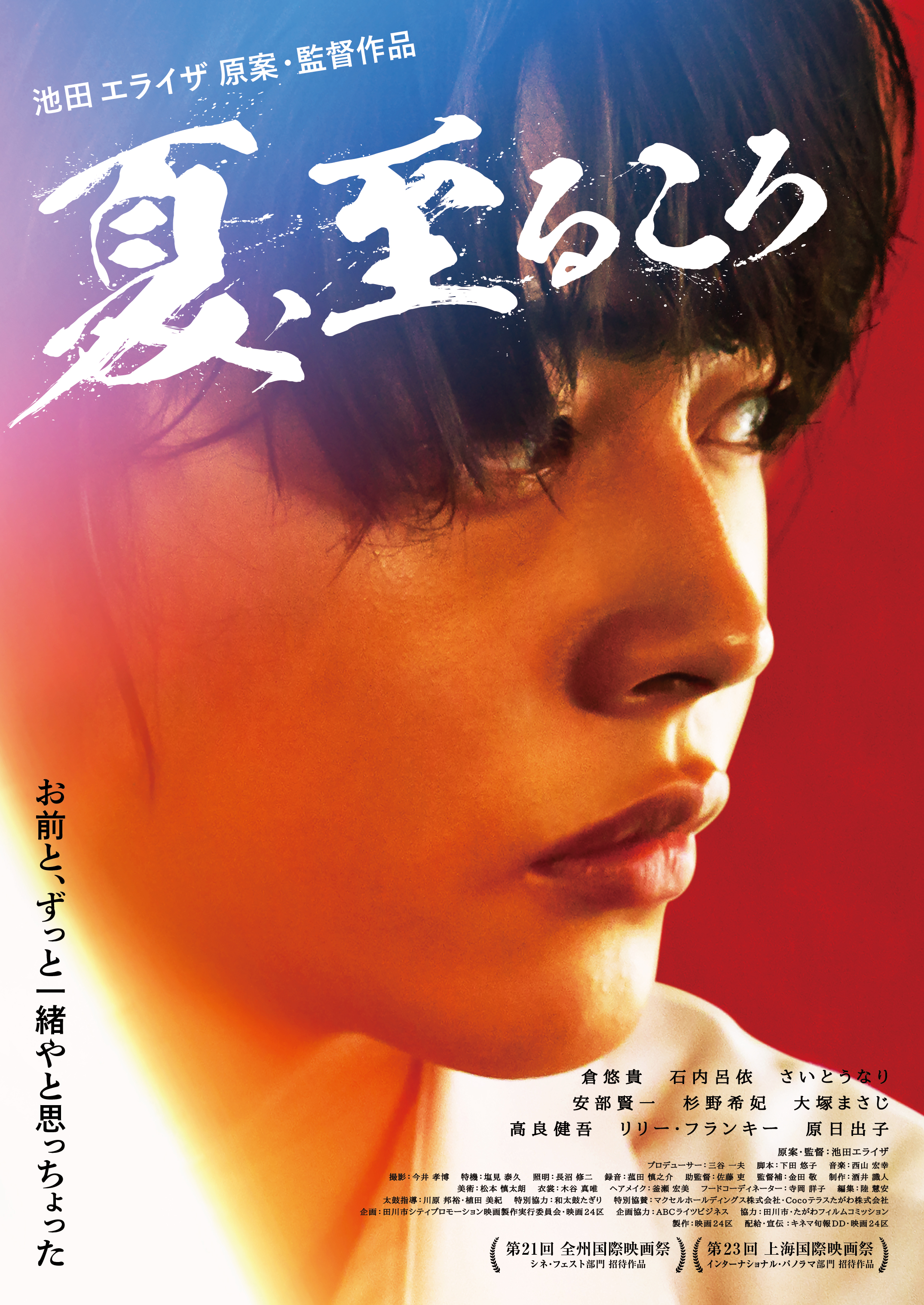
Town Without Sea (夏、至るころ, Elaiza Ikeda, 2020)

“Happiness is something you don’t notice even if it’s right next to you” the hero of actress Elaiza Ikeda’s directorial debut Town Without Sea (夏、至るころ, Natsu, Itaru Koro) is told by a strangely perceptive small child. The nature of happiness is something that seems to be bothering him while he contends with adolescent anxiety little knowing what to do with the further course of his life while fearful in the knowledge that his relationship with his childhood best friend must necessarily change. 

Approaching the final year of high school, taiko-enthusiast Sho (Yuki Kura) has no dreams or aspirations and has been avoiding thinking about what to do after graduation. Pressed by his teacher, all he can offer is that he’d like to become “air”, which is in its own way slightly alarming though it hints at his sense of emptiness and despair. His childhood best friend, Taiga (Roi Ishiuchi), meanwhile has a clearly defined, extremely sensible life plan which is why he’s abruptly giving up taiko so he can attend cram school and get into uni with the aim of becoming a civil servant. As we discover, Sho has been something of a follower making most of his existing decisions based on whatever Taiga was going to do, but he can’t merely follow him this time and will have to come to some sort of decision about his individual future. 

“I can’t walk alone. I don’t know what to do” he confesses to a surprisingly sympathetic teacher (Kengo Kora), while as it transpires Taiga is having similar thoughts. The two boys are much more co-dependent that they assumed, but that very co-dependency begins to drive them apart when coupled with their adolescent anxiety. Taiga fears that he is simply too “boring”, giving up taiko because his carefully honed technique cannot measure up to Sho’s anarchic power. According to him he took up taiko after spotting Sho playing at a festival thinking he looked so “free and cool”, yet Sho equally thinks he’s not as a good a drummer and cannot match Taiga’s meticulous training. Taiga is shifting away from their friendship because he secretly feels inferior and wants to leave before being around Sho makes him feels miserable, a logic Sho is not fully equipped to understand. 

“Why does everybody quit?” he asks in exasperation, meeting a strange young woman who like them wants to pull away from something before she ends up hating both it and herself. Likened by Taiga to the kind of manic pixie dream girl who frequently turns up during the last summer of high school in manga, Miyako (Nari Saito) does not quite come between the two boys in the expected way but does bring out their contradictory qualities before abruptly disappearing from the narrative, ahead of the pair in suddenly deciding that she’ll figure something out on her own. Having decided all he wants is a future of ordinary happiness, Taiga can’t help resenting his friend feeling that whatever decision he makes, getting a job or going to uni, he’ll wind up happy whereas he presumably will not with his unexciting yet sensible life as a civil servant. 

There is an undeniably homoerotic quality to the boys’ friendship, their brief falling out almost like a lovers’ tiff in its melancholy intensity. Sho necessarily fears the loss of his friend, perhaps instinctively knowing he’s chosen a path he likely cannot follow and feeling rejected because of it. He obsessively meditates on the meaning of “happiness” unable to settle on a means of achieving it while unsure of what exactly it means. He asks his friends and family but discovers that happiness means different things to different people, may change over time or not quite be what you first thought it was, or be as simple as a sunny day in your hometown. He does however begin to accept that even if separated, his relationship with Taiga will not necessarily change they will still be “together” if more in spirit than body. Recalling something Taiga had said about the sea which he has never seen, he makes his choice defiant in its independence. Hailing from Fukuoka herself, Elaiza Ikeda’s remarkably assured directorial debut crafts a warm, empathetic coming-of-age tale centring on the intense friendship between two men but discovering a sense of wonder and contentment in the everyday as its conflicted hero finds a sense of rootedness in the strength of his relationships that grants him the freedom to roam. 


Town Without Sea streamed as part of this year’s Japan Cuts.

Original trailer (English subtitles)

My Sorry Life (愛のくだらない, Kozue Nomoto, 2020)

A dejected, self-involved TV producer is forced into a moment of introspection when dealing with relationship breakdown and career setback in Kozue Nomoto’s ironic character study My Sorry Life (愛のくだらない, Ai no Kudaranai). Examining a number of social issues from women in the workplace to attitudes to LGBTQ+ people in contemporary Japan, Nomoto’s unflinching drama never lets its abrasive heroine off the hook even as she begins to realise that her own less than admirable behaviour has contributed to her present sense of despair and impossibility. 

Kei (Maki Fujiwara) has been in a relationship with former comedian Yoshi (Akiyoshi Okayasu) for the last five years, but it’s clear that she is beginning to tire of him. The couple are supposedly trying for a baby, but Kei has been taking contraceptive medicine behind Yoshi’s back while complaining that she doesn’t understand why he insists on getting pregnant before getting married when he hasn’t even met her parents. At work meanwhile she’s beginning to feel left behind, secretly jealous when a slightly younger female colleague reveals she’s been promoted to become the lead producer on a variety show and a little resentful when her idea for a programme focusing on the lives of ordinary people as opposed to celebrities is turned down by her bosses. The idea does however bring her to the attention of indie exec Kinjo (Takuma Nagao) who wants to bring her on board to produce a web series he’s about to launch along the same lines. And then, Yoshi drops the bombshell that he thinks he’s pregnant which is, to say the least, unexpected. 

Yoshi’s surprise announcement signals in a sense a reversal of traditional gender roles within their relationship with the man the nester and woman reluctant commitmentphobe. Kei is also the main financial provider, but on some level both resents and looks down on Yoshi for his lack of conventional masculinity having given up his comedy career to work part-time in a supermarket, obsessing over discount produce like the pettiest of housewives but often indulging in false economies such as reduced price yet still extravagant sake. Strangely, Kei goes along with Yoshi’s delusion taking him to a fertility clinic where she assumes they’ll set him straight but thereafter begins staying with a friend who ironically has an infant child and may be experiencing some difficulties in her marriage to which Kei remains entirely oblivious. 

Despite her journalistic desire to witness everyday stories, Kei is often blind to those around her never stopping to wonder if Yoshi is trying to tell her something through his bizarre pregnancy delusion or if her friend might need someone to talk to. She does something similar on spotting the office courier (Yukino Murakami) whom many of the ladies have a crush on using the ladies’ bathroom. Assuming the delivery guy is a lesbian she asks him about coming on the webshow, becoming even more excited when he explains that he’s a transman after inviting Kei to an LGBTQ+ friendly bar where he works part-time. Kei doesn’t realise that her throwaway comment that “that sort of thing is popular now” hurts Shiori’s feelings and leaves him feeling exploited as much as he would like to appear on the programme to raise awareness about LGBTQ+ issues. 

For her part, Kei is obviously not homophobic but does undoubtedly treat Shiori and his friends with a degree of exoticism, declaring that she’s never met anyone like them before while staring wide eyed in wonder as if these concepts are entirely new to her. Kinjo, the producer of the web series, is squeamish when Kei raises the idea, introducing her to a male scriptwriter who obviously already has his own concepts in mind, rudely ignoring Kei’s input while dismissively allowing his drink to drip on her proposal. The studio turn the idea down on the grounds that LGBTQ+ topics are “inappropriate” because there may be children watching and parents won’t want to explain words like “gay” or “lesbian” to their kids. Kei is rightly outraged, but she’s also a hypocrite because her intentions were essentially exploitative and self-interested. She wasn’t interested in furthering LGBTQ+ rights, she just wanted to chase ratings. 

Kinjo dresses up his personal distaste as a dictate from above but it’s clear that he doesn’t really value Kei’s input and continues to treat her poorly for the entirety of the project, blaming her for everything that goes wrong and expecting her to fix it on her own. There’s even an awful moment when Kei’s friend Tsubaki (Sayaka Hashimoto) shows up with her baby and one suspects they may be about to rope her in as a replacement guest, but the result is even worse as Kinjo stares into the pushchair and then throws the pair out while embarrassing Kei in the process. 

“Being busy’s no excuse for being unreliable” Tsubaki sympathetically tells her though it takes a few more setbacks before Kei begins to realise that she’s been unfair and to be honest generally unpleasant to those those around her. Feeling inferior, she makes a point of bumping into an elderly male janitor, treating him with contempt even when he stops to try and help her after she collapses in the office. Only through an ironic moment of emotional honesty which allows her to come to an understanding of her relationships does Kei begin to piece things together, reflect on her own mistakes and anxieties, and realise what it is she really wants. A contemplative reconsideration of accepted gender norms, Nomoto’s gently humorous drama never lets its heroine off the hook but does allow her to find new direction if only through confronting herself and the world in which she lives. 


My Sorry Life streams in the US until Sept. 2 as part of this year’s Japan Cuts.

Original trailer (English subtitles)
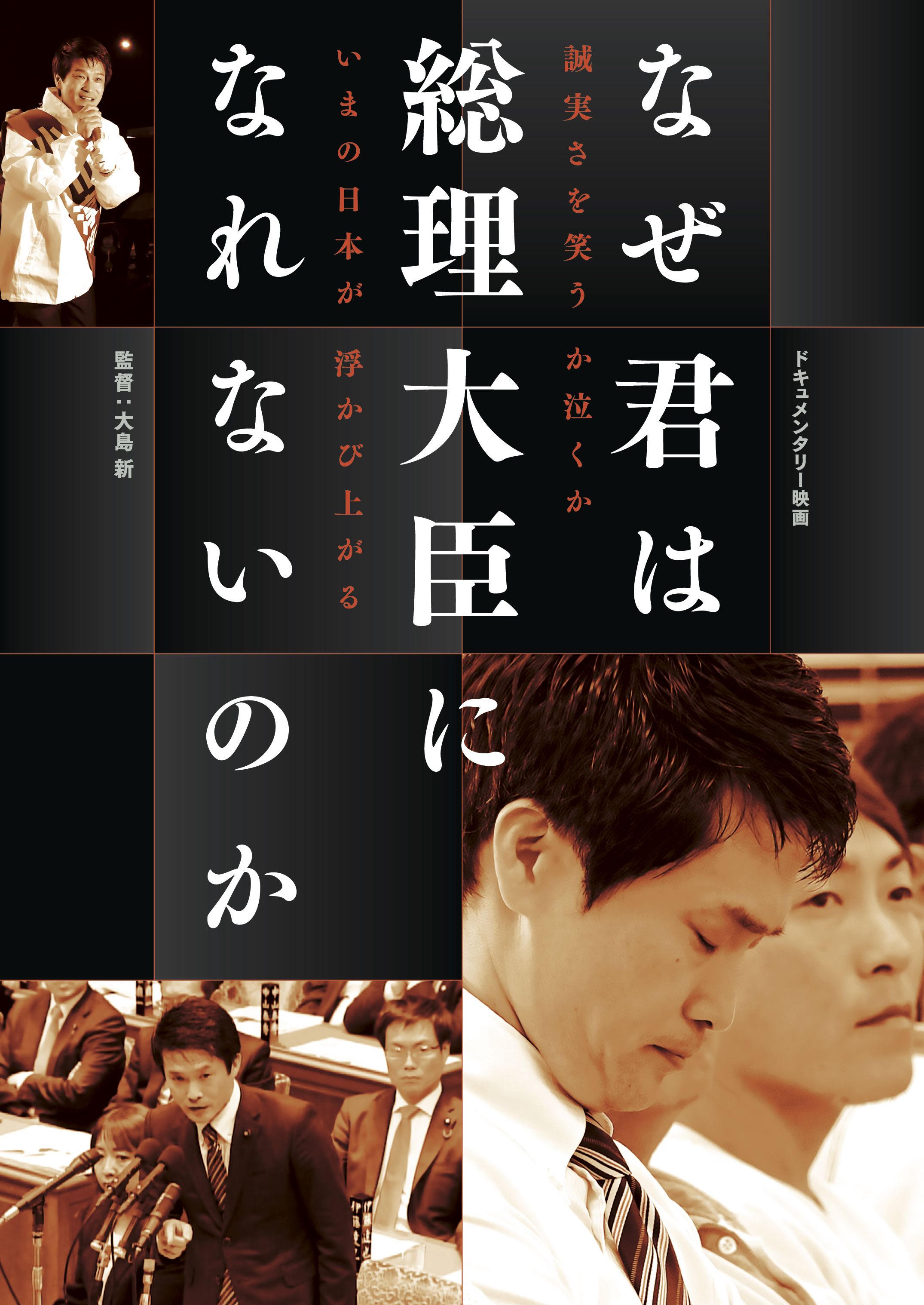
Why You Can’t Be Prime Minister (なぜ君は総理大臣になれないのか, Arata Oshima, 2020)

When Shinzo Abe stepped down in September 2020 citing a recurrence of the chronic illness which had caused him to resign from the same position in 2007 he did so as Japan’s longest serving prime minster having held the post since 2012. The centre-right Liberal Democratic Party has rarely been out of power since its foundation in 1955 though the opposition Democratic Party of Japan did achieve a minor breakthrough in the 2009 election only to lose out again in 2012, its reputation tarnished by a perception that it had not done enough during the 2011 earthquake and tsunami crisis. 

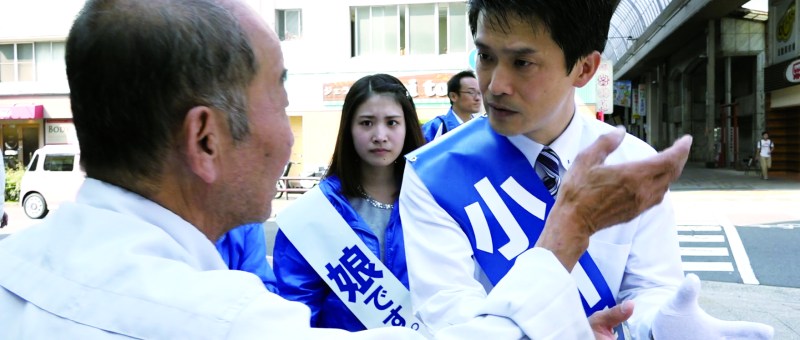
This is the background which informs Arata Oshima’s probing documentary Why You Can’t Be Prime Minster (なぜ君は総理大臣になれないのか, Naze Kimi wa Soridaijin ni Narenai no ka) which follows idealistic politician Junya Ogawa over 17 years from his beginnings as a 32-year-old former bureaucrat standing on a platform of integrity in politics, to a no less idealistic yet perhaps weary middle-aged man now sitting as an “independent” representative. Oshima perhaps partly answers the central question in a lengthy series of opening titles attempting to explain Japan’s rather complicated electoral system which operates both first past the post and proportional representation components. Although mitigated by the additional proportional representation list seats, just as in the UK Japan’s political system remains biased towards the centre-right by virtue of the fact that the leftwing vote is split between a number of different parties. As Oshima also points out, Ogawa’s rival for a first past the post seat is a dynastic candidate whose family is prominent in the local area. 

The other problem, if you want to call it that, is Ogawa’s essential personality and (near) unshakeable idealism. He stands on a platform of integrity in politics in which politicians should be accountable to the people they serve believing that the government has become overly complacent and forgotten about the lives of everyday citizens, the Abe regime famously focussing on their key concerns such as constitutional reform and the military. As such he watches as his more ruthless colleagues surge ahead of him, local rival Tamaki always managing to secure a first past the post seat by playing the political game while he scrapes through on the reserve list. Yet later he makes a fatal mistake, allowing himself to be persuaded to join Yuriko Koike’s Party of Hope after the proposed merger with the DP during the 2017 election. Current governor of Tokyo, Koike is a prominent figure on the conservative scene and member of the ultra-nationalist Nippon Kaigi. It’s not surprising that many of Ogawa’s supporters felt disappointed and betrayed on his decision to follow his mentor Maehara, on the right of the DP, and join the new party which could not credibly claim to reflect the values he’d hitherto espoused while even those accepting his logic that he was simply lending his voice to a unified anti-Abe coalition were put off by Koike’s duplicity in immediately walking back on earlier promises by announcing she would not accept all DP members into the Party of Hope.

“Your face is pretty but your heart is black” is just one of the many comments he receives from disappointed voters while out canvassing, another actively distancing herself from him before angrily remarking that he should have joined the CDP, a rival leftwing party set up by a former DP member Edano which promised to accept anyone who wanted to join. Yet the problem might not be so much the party as Ogawa’s inner conflict, wrestling with himself that he should have stood as an independent even if acknowledging he would have had a much harder time campaigning with no party backing him. His decision obviously conflicts with his pledge of integrity, a broken promise it will prove extremely hard to overcome while his secondary battle is and always will be legacy of the DP’s failure in government leaving many to assume only the LDP is qualified to govern. Following the party’s electoral defeat he does indeed sit as an independent but obviously acknowledges that he has far less influence even than he had as a less powerful list seat representative. 

Ogawa himself attributes his inability to become prime minster by an arbitrary date he’d thrown out after the 2009 opposition win engendered a false sense of hope for long lasting political change to his lack of personal ambition unwilling to do whatever it takes to climb the ladder, preferring to pursue his political goals ahead of his own position. He describes himself as an “otaku of making Japan a better place” and brands himself a centrist while advocating for socialist policies such as a welfare state modelled on that seen in Scandinavia. His parents who along with his wife and children are very much involved in his campaigning wonder if he’s too “pure” for politics, that his inability to compromise is the reason he can’t gain a foothold in the political establishment yet he refuses to give up, later telling Oshima in an otherwise unnecessary Covid-themed coda that if he didn’t think he could be PM he’d stand down right away. Politics needs men like Ogawa, Oshima seems to say, but the electorate isn’t so sure.


Why You Can’t Be Prime Minister streams in the US until Sept. 2 as part of this year’s Japan Cuts.

Original trailer (English subtitles)

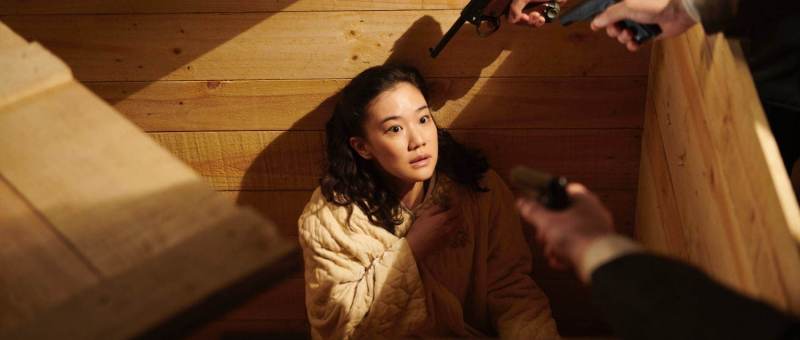
Wife of a Spy (スパイの妻, Kiyoshi Kurosawa, 2020)

“If the times have changed you, couldn’t you have changed the times?” the spy’s wife not unreasonably asks of a man she knew to be good and kind yet has done terrible things, perhaps, as has she, out of a misplaced love. Travelling from death is eternal loneliness to love is our salvation, Kiyoshi Kurosawa’s Wife of a Spy (スパイの妻, Spy no Tsuma), co-scripted by Ryusuke Hamaguchi and Tadashi Nohara, picks up a thread from Before We Vanish TV companion Yocho (Foreboding) to suggest that love can in fact be as destructive as hate in its all encompassing single-mindedness as an ordinary housewife uninterested in politics is caught between her progressive, compassionate and aristocratic husband and a childhood friend with an unrequited crush who has since become an ardent militarist. 

Set in Kobe in 1940, the film opens with a portly British textile merchant, Drummond, dragged from a silk inspection centre by the military police on the suspicion of being a foreign spy. This is appears not to be the case, but as in much of the narrative little is as it seems. The British merchant is a friend and associate of Yusaku Fukuhara (Issey Takahashi), the chairman of a family-owned textile company whose main objection to the idea that Drummond is a spy seems to be that a man of such copious proportions hardly fits his mental image of the word. Yusaku is nevertheless questioned by the local squad leader, Taiji (Masahiro Higashide), who happens to be a childhood friend of his wife Satoko (Yu Aoi), and later risks implication by paying Drummond’s bail. Satoko approves of this decision even if it may be politically unwise, confessing that she thought it “heartless” that Yusaku was messing about making a silent movie in which she starred as a femme fatale spy eventually killed by her lover/rival while his friend was in custody. “You’re always looking so far ahead of me, I feel like a fool” she reflects though as we’ll see she’ll soon be taking him on at his own game, the couple dancing around each other in a deadly waltz of love and betrayal. 

When Yusaku declares that he’s planning to visit Manchuria, partly for adventure and partly on behalf of a doctor friend, Satoko’s main concern is his impending absence though his return brings her little peace. After a woman he and his nephew Fumio (Ryota Bando) had apparently befriended and then brought home is found dead, Satoko makes a dark discovery driven at once by jealousy in Taiji’s vague hints that Yusaku may have been romantically involved with the dead woman, and resentment in realising he is keeping something from her. That something turns out to be his intention to expose the atrocities he witnessed in Manchuria committed by doctors connected to the Kwantung Army. 

Yusaku’s motives for this are rather naive, believing that it will bring the Americans into the war and hasten a Japanese defeat bringing an end to the militarist folly. Nevertheless, the discovery forces the couple into an ideological confrontation, Yusaku insisting that he is a “cosmopolitan” whose allegiance lies in “universal justice” rather to than any nation. To him happiness founded on injustice is an impossibility, while Satoko declares herself able to unsee the inconvenient truth in order to preserve the status quo reasonably pointing out that Yusaku’s “justice” will necessarily result in the deaths of thousands of innocent people. It’s at this point, however, that the tables turn, Satoko setting in motion a series of machinations which at first appear naive and counterproductive but are in fact infinitely ruthless. 

“I’m not afraid of capture or death, I’m only afraid of being separated from you” Satoko insists, willing to burn the world to save her love if also later moved on “seeing” for herself the reality of Japanese abuses in Manchuria. Taking on the role she had played in their silent movie, Satoko becomes the spy revelling in her ruthlessness yet this spy game revolves around the ability to correctly read the emotional lives of others. Having been “warned” by the austere Taiji that she and her husband were too Westernised for the times with their expensive foreign whiskey and international fashions, Satoko puts on kimono in order to curry favour with him hoping to leverage his unrequited love for her. Yusaku meanwhile perhaps banks on something similar, each of them ironically manipulating the apparently conflicted militarist in the conviction that his love is pure and he will therefore continue to protect Satoko, and by extension her husband, as a means of protecting himself. 

Early on, Taiji had confessed to Yusaku that he disliked arresting people which may have been a thinly veiled threat, but also bears out Satoko’s conviction that he is at heart a gentle person though we’ve not long seen him rip out one man’s fingernails in order to present them to another as a warning. Unrequited love has perhaps thrown him into the arms of militarist austerity, hardening his heart while his ardour is sublimated into a misplaced love of country that allows him to justify such heinous acts of inhumanity.  “Hard choices must be made to achieve greet deeds” Satoko herself had said in order to excuse her own act of injustice in sacrificing another man on Yusaku’s behalf, only to later face the same fate in an ironic turn of events either vengeful betrayal or protective act of love depending on how you read the emotional intentions behind them. 

Just as in the silent movie, incongruously scored with a poignant Japanese cover of Jerome Kern & Oscar Hammerstein II’s Make Believe, everyone is playing a role, engaging in an act of deception if only self-directed, yet their act perhaps exposes the truth they were attempting to hide, the spy’s wife becoming the spy but beaten at her own game unable to see the entirety of the board. Commissioned as an 8K feature for a Japanese TV channel, the incongruity of the hyperreal digital photography deepens the sense of the uncanny in the unexpected naturalism of the period setting, a world of constant anxiety with soldiers on the streets and the feeling of being forever watched in the oppressive atmosphere of authoritarian militarism, while standing in strong contrast with the unreality presented by the films within the film both that made by the couple and the brief yet ironic inclusion of Sadao Yamanaka’s Priest of Darkness, another tale of infinite duplicities, given that the director had himself become a casualty of war on the Manchurian front two years previously. Ironically titled, Wife of a Spy situates itself in a state of permanent paranoia in which nothing and no-one is as it seems and love may in its own way be the most destructive force of all while containing within itself the only possible source of salvation no matter its veracity.  


Wife of a Spy  screens on Aug. 27 as part of this year’s Japan Cuts.

International trailer (English subtitles)

Karisome no Koi (“fleeting love”) – Chiyoko Kobayashi (1936)

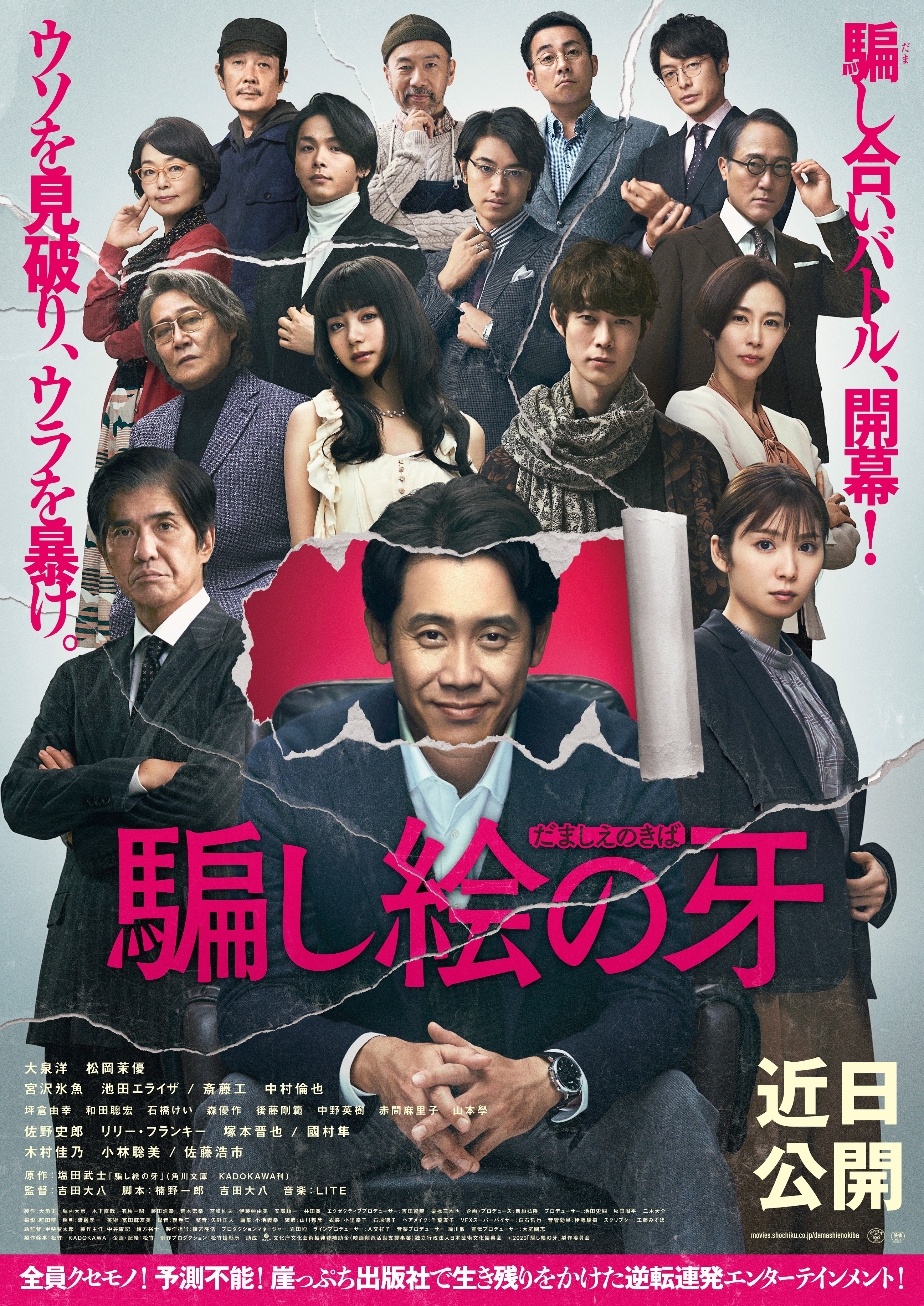
Kiba: The Fangs of Fiction (騙し絵の牙, Daihachi Yoshida, 2020)

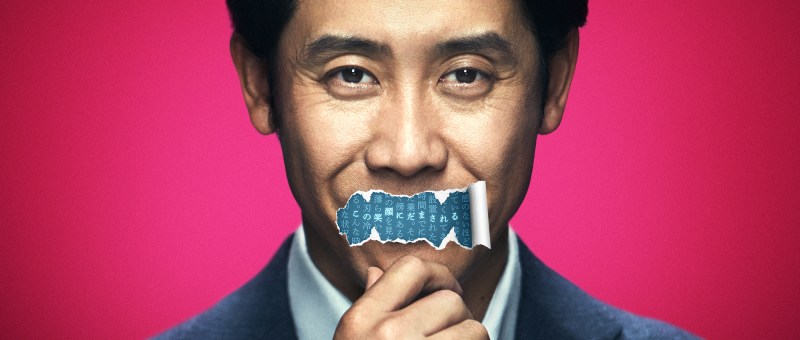
“Landscapes don’t stay the same” laments a young woman in Daihachi Yoshida’s slick corporate drama, Kiba: The Fangs of Fiction (騙し絵の牙, Damashie No Kiba), though the more things change the more they stay the same and the push and pull of traditionalists and modernisers seems set to be an unending battle. If someone were brave enough to think of it, there may be a third way, but one thing is clear – it’s adapt or die for the printed word and the real war is over who makes it onto the page and how they do it. 

When the CEO of a major family-owned publishing house dies of a heart attack while walking his dog, it throws the entire industry into disarray and even makes it onto the national news where pundits discuss who might be most likely to succeed while pointing out that publishing is already in crisis seeing as most novels are serialised in literary journals and magazine readership is on its way out. Earnest editor Megumi (Mayu Matsuoka) is forever told that old and new is a false dichotomy and in some ways it may be, but century-old literary journal Kunpu Review is quite clearly mired in a traditionalist past woefully out of touch with contemporary society. 

This Megumi learns to her cost when pulled straight from the CEO’s funeral to a 40th anniversary event marking the debut of their best-selling author Daisaku Nikaido (Jun Kunimura). Encouraged by rival editor Hayami (Yo Oizumi), she gives her honest opinion on Nikaido’s work pulling him up on the latent sexism in his novels by suggesting his sexual politics are at best old-fashioned. This is of course a huge faux pas and a moment of minor embarrassment for all concerned, though it will also become a repeated motif Megumi again trying to bring up a younger author on his subpar portrayal of women but finding her concerns falling on deaf ears. 

Part of the problem is that authors, and particularly well-established ones, rarely undergo a rigorous editing process such as they might outside of Japan. Kunpu is so desperate to keep Nikaido on side that they treat him as a mini god, wasting vast amounts of their budget expensing him for “research” holidays and a healthy interest in fine wines. They simply wouldn’t have the courage to tell him that his drafts are improvable or that elements of his writing may cause offence. 

Hayami, the tricky editor of rival culture mag Trinity, is by contrast deliberately looking for the modern but in other ways is not so different from Kunpu. Poaching an up and coming author Megumi had pitched but was rejected, Hayami embarks on an elaborate PR campaign casting the young and handsome Yajiro (Hio Miyazawa) as a literary idol star. But Yajiro seems to be uncomfortable with the attention, unprepared to deal with demands of being a prominent writer and resenting Hayami’s attempts to manipulate his image by forcing him into photoshoots dressed in outfits he would never wear. Hayami also engineers a publicity stunt implying Yajiro is in a relationship with his other protege, a young model and unexpected firearms enthusiast (Elaiza Ikeda) who is later arrested after shooting a stalker with a homemade pistol. 

What happens to Saki Jojima is either an unintended consequence or direct result of Hayami’s inability to fully control the situation, but it also creates both crisis and opportunity for Trininty when Hayami breaks protocol and decides to run Saki’s issue rather than pulling it entirely with an apology as is usual in Japan when a celebrity is the subject of scandal. This places him in direct opposition to the traditionalist Kunpu, horrified and insistent that his decision stains the integrity of the publishing house. Like Hayami, however, new CEO Tomatsu (Koichi Sato) is determined to do things differently and prepared to take a gamble, secretly working on his own plan to streamline the business and build their own production/distribution facility in Yokohama. 

Everyone is so absorbed in their own plotting that they fail to notice others plotting around them. Megumi, meanwhile, is preoccupied with the survival of her father’s old-fashioned book shop which itself badly needs another literary hit because half the customers are kids who come in to browse the manga and then download the good ones when they get home. One young woman looking for a particular novel even explains that she only wants to read it because there’s no movie or drama adaptation. With all this finagling, it’s easy to think everyone’s forgotten about the books while Megumi desperately tries to get someone to let her do some actual editing because they’re all too busy mollycoddling their authors. Nevertheless there’s more to the Kunpu vs Trinity battle than it first seems as they vie for the future of Japan’s publishing industry little suspecting that there may be another contender with a less acrimonious solution. “If something could be updated it should be” Megumi insists, a sentiment which apparently goes both for dinosaur writers unwilling to reckon with their latent misogyny and the book business itself. 

Once again adapting a literary source, Yoshida’s gentle farce quietly builds the tension with courtly intrigue as the wider society remains rapt over the succession crisis at a publishing firm while its ambitious courtiers plot amongst themselves in order to steal the throne. Casting Yo Oizumi in the role he apparently inspired in the book is another masterstroke of meta commentary as his thrill-seeking manipulator plays the long game but even if the prognosis for Japan’s publishing industry may be bleak there is unexpected glee to be had in the eventual triumph of a righteous underdog over a thoroughbred plotter. 


Kiba: The Fangs of Fiction screens on Aug. 26 and 28 as part of this year’s Japan Cuts.

Original trailer (English subtitles)

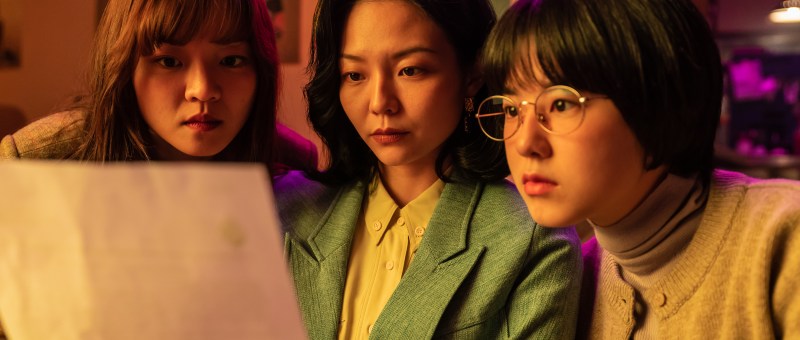
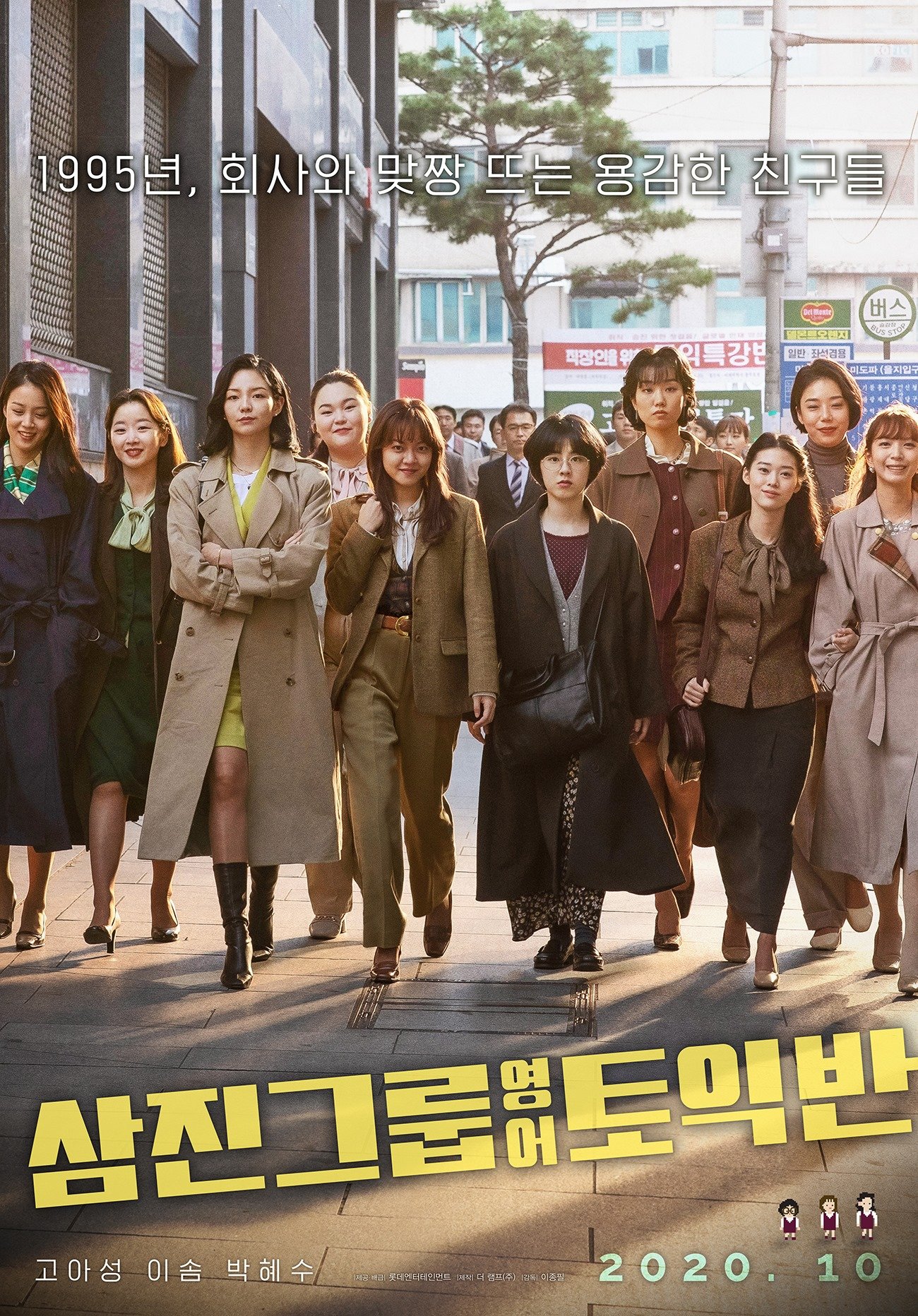
Samjin Company English Class (삼진그룹 영어토익반, Lee Jong-pil, 2020)

“The year of 1995 will mark the first year of our globalisation” according to the opening stock footage in Lee Jong-pil’s tale of tempered feminism and corporate anxiety, Samjin Company English Class (삼진그룹 영어토익반, Samjingeurup Yeongeotoikban). Partly a nostalgia fest for a mid-90s sense of aspiration which would come to a crashing halt with the financial crisis just two years later, Lee chronicles a society in flux as a new generation of women find themselves kicking back against the ingrained patriarchal attitudes of a conservative society while at the same time experiencing a gradual sense of disillusionment with growing internationalism that ironically sends them straight back into the arms of the chaebol. 

Set concretely in 1995, Lee frames his Working Girl-esque drama around the lives of three office ladies each beginning to age out of their potentially dead end jobs. An evolution of the secretarial pool, office ladies are treated more or less as domestic staff in the corporate environment often assisting the, largely but not exclusively, male workers with admin tasks such as teaching them how to use the fax machine or operate IT software while otherwise expected to perform traditionally feminine roles keeping the office clean and tidy or fetching drinks and cigarettes for their bosses. As such they are largely invisible, the men often talking indiscreetly in front of them because they don’t really matter. No one takes an office lady seriously even while they are perceived as essential, if interchangeable, in the functioning of the office. 

All very capable women, Ja-young (Go Ah-sung), Yuna (Esom), and Bo-ram (Park Hye-su) are looked down on by the few female members of the regular salaried staff because, largely for socio-economic reasons, they have no university degrees. Still, beginning to age out of office lady life they are faced with a conventional choice of finding a husband or attempting to gain a promotion into the ranks of permanent workers. It’s for this reason that they begin taking the company’s English classes, hoping a high TOEIC score will as they’ve been promised smooth the path towards employment. Women coming of age in a newly democratised Korea with its eyes on the rest of the world, they want more out of life than perhaps the previous generation would have done though Ja-young in particular is noticeably ahead of her time wanting not just career success but personal fulfilment. She was glad to work for Samjin because she thought they made products that enriched people’s lives and thinks her work should have a value to society aside from providing personal material comfort. 

That’s one reason she’s determined to do something when she discovers a Samjin factory has been spewing industrial waste into the waters surrounding a small rural village. As office ladies, the three women occupy a liminal space within the company that in a sense makes it easier for them to investigate but gives them little power to affect real change. Conflicted, Ja-young witnesses the company reach a settlement with the villagers assuring them the leak has been small, will have no lasting affect on their health or livelihood, and has been dealt with effectively. Her niggling doubts lead her uncover the cover up, but in this version of the story the enemy turns out not to be large corporations or chaebol greed but duplicitous foreigners taking advantage of the situation to facilitate their own goals of dominating Korean business, in this case by engineering a merger with a Japanese company brokered by an improbably handsome Korean-American corporate mole (David Lee McInnis). 

In fact, the solution that is found in one sense empowers the ranks of the office lady as Ja-young marshals the resentment of her cohorts towards challenging the corrupt status quo, but also makes an awkward defence of chaebol culture as the point of resistance lies in forcing the elderly chairman to reassume personal responsibility over his company. “Yankee go home!” he unsubtly exclaims before discovering that he no longer has much control because he runs a “corporation” in which the shareholder is king. The fact that the industrial pollution is entirely the fault of the chairman’s feckless son promoted above his abilities for dynastic reasons is quietly forgotten as if he were merely a bad apple later forced to face justice for his corporate misconduct while the system largely remains unchanged. Meanwhile, the parallel progress of the three Tess McGill’s eventually hints at a sea change in work culture that allows them to smash the unfair barriers to corporate success but in reality only grants them an unequal access to a patriarchal social order which otherwise remains the same as it ever was. 

Of course, the male members of staff are also in themselves constrained by this oppressive working culture, portrayed largely as spineless corporate drones blindly following orders for the sake of their careers only later given courage to do the right thing by the office ladies’ rebellion. Nevertheless, there is something pleasantly aspirational in the idealistic determination of Ja-young and her friends to succeed on their own terms even if their progress is ultimately undercut by a thinly veiled nationalism that repositions chaebol culture as force for good while forcing the women back into complicity with an inherently oppressive, patriarchal society defined by corporate success. 


Samjin Company English Class screened & streamed as part of this year’s New York Asian Film Festival.

International trailer (English subtitles)