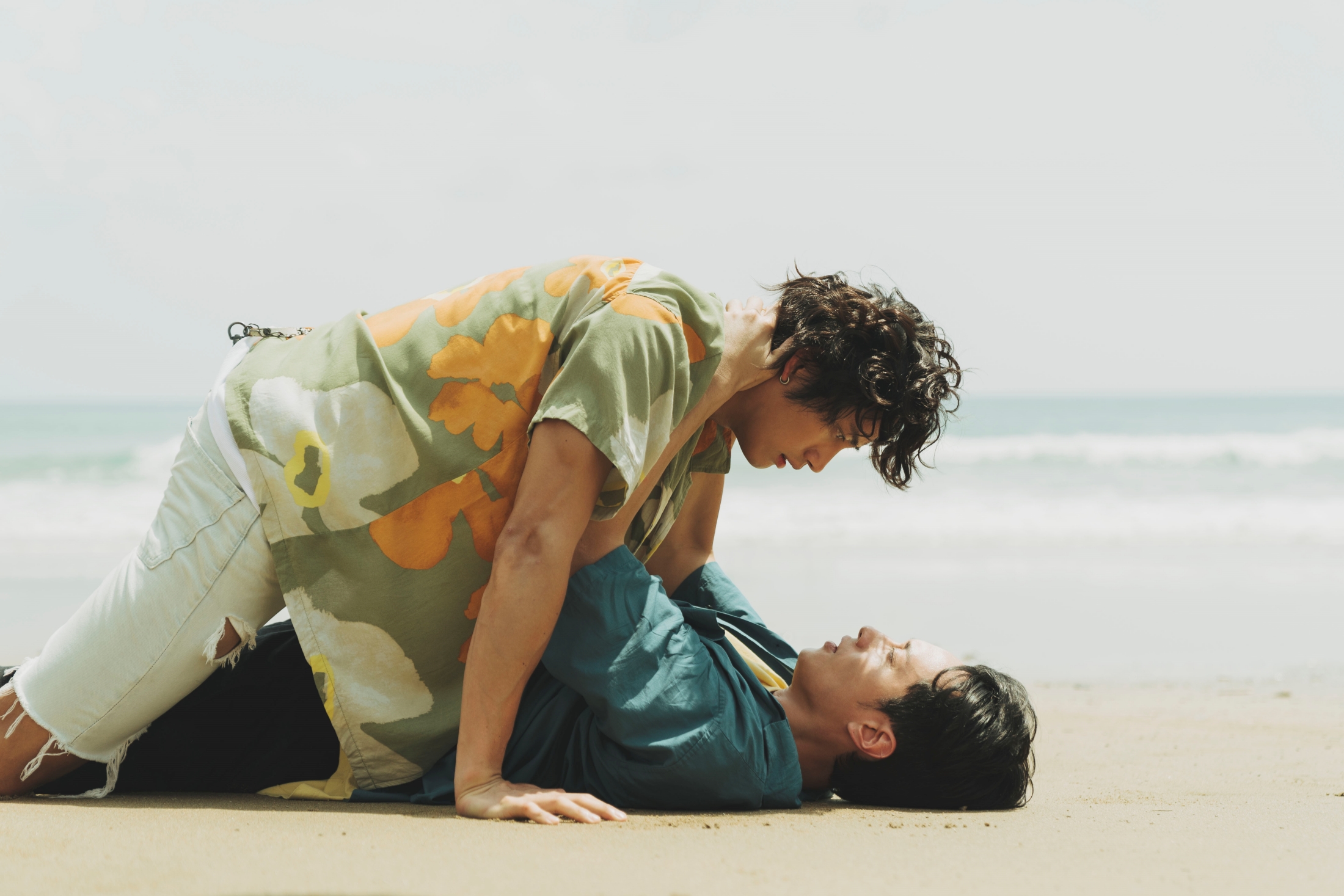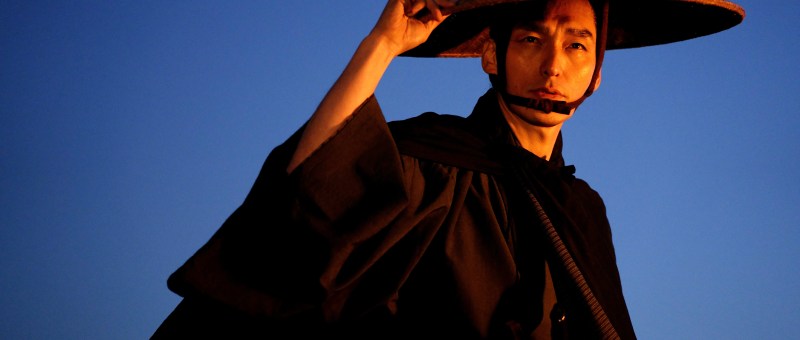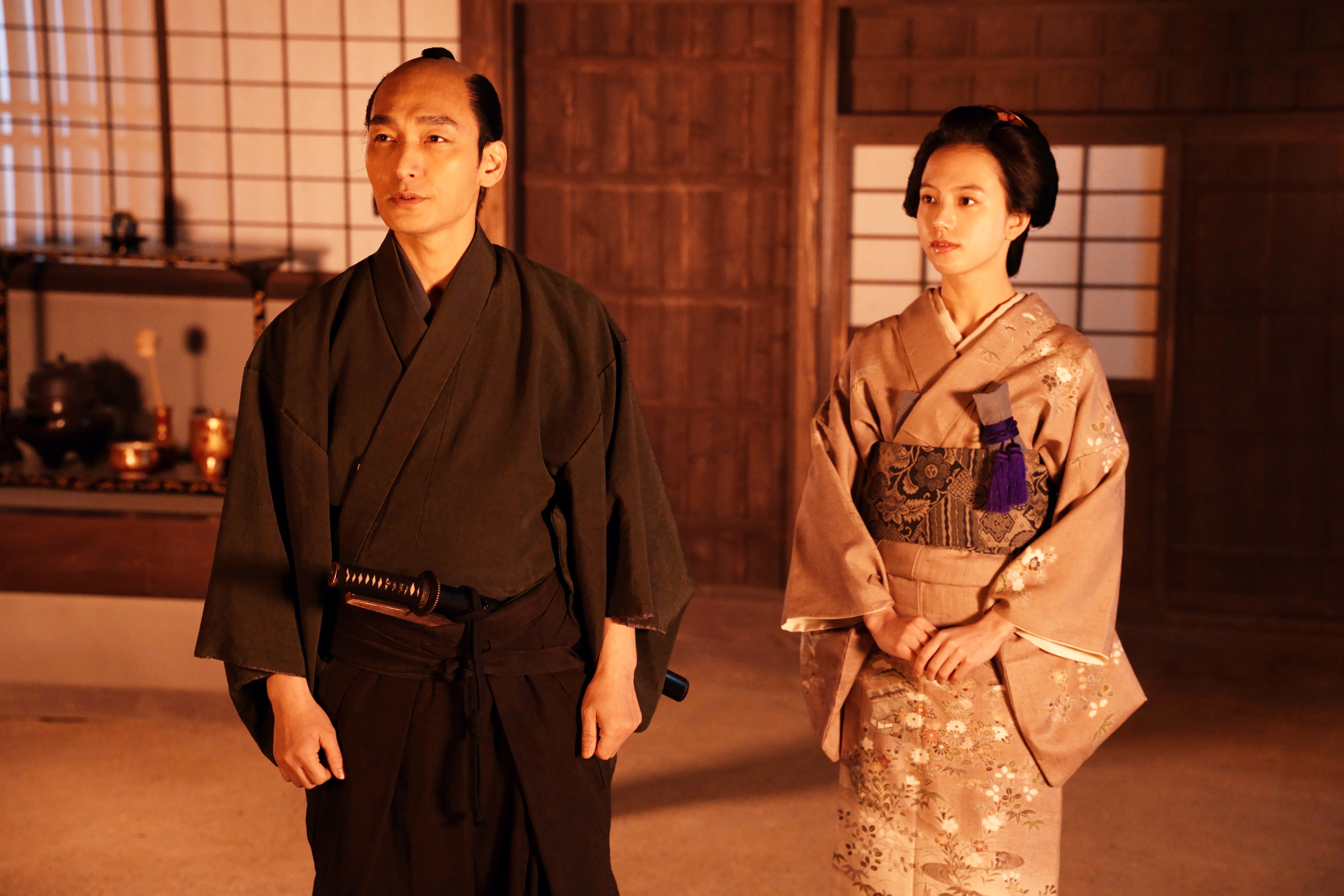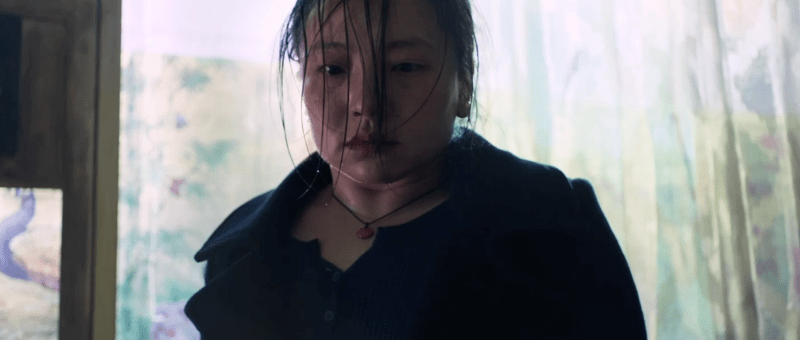
Dreaming in Between (逃げきれた夢, Ryutaro Ninomiya, 2023)

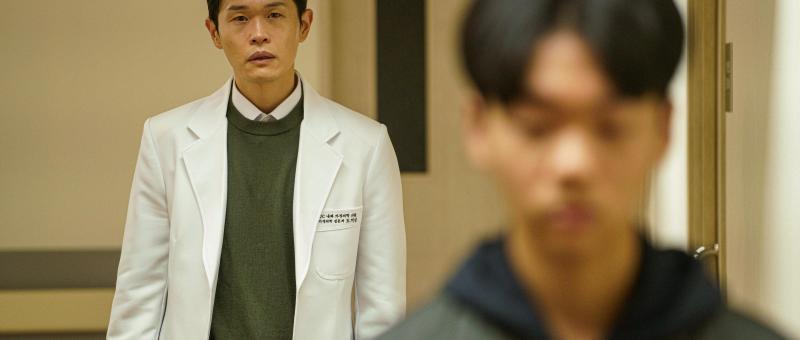
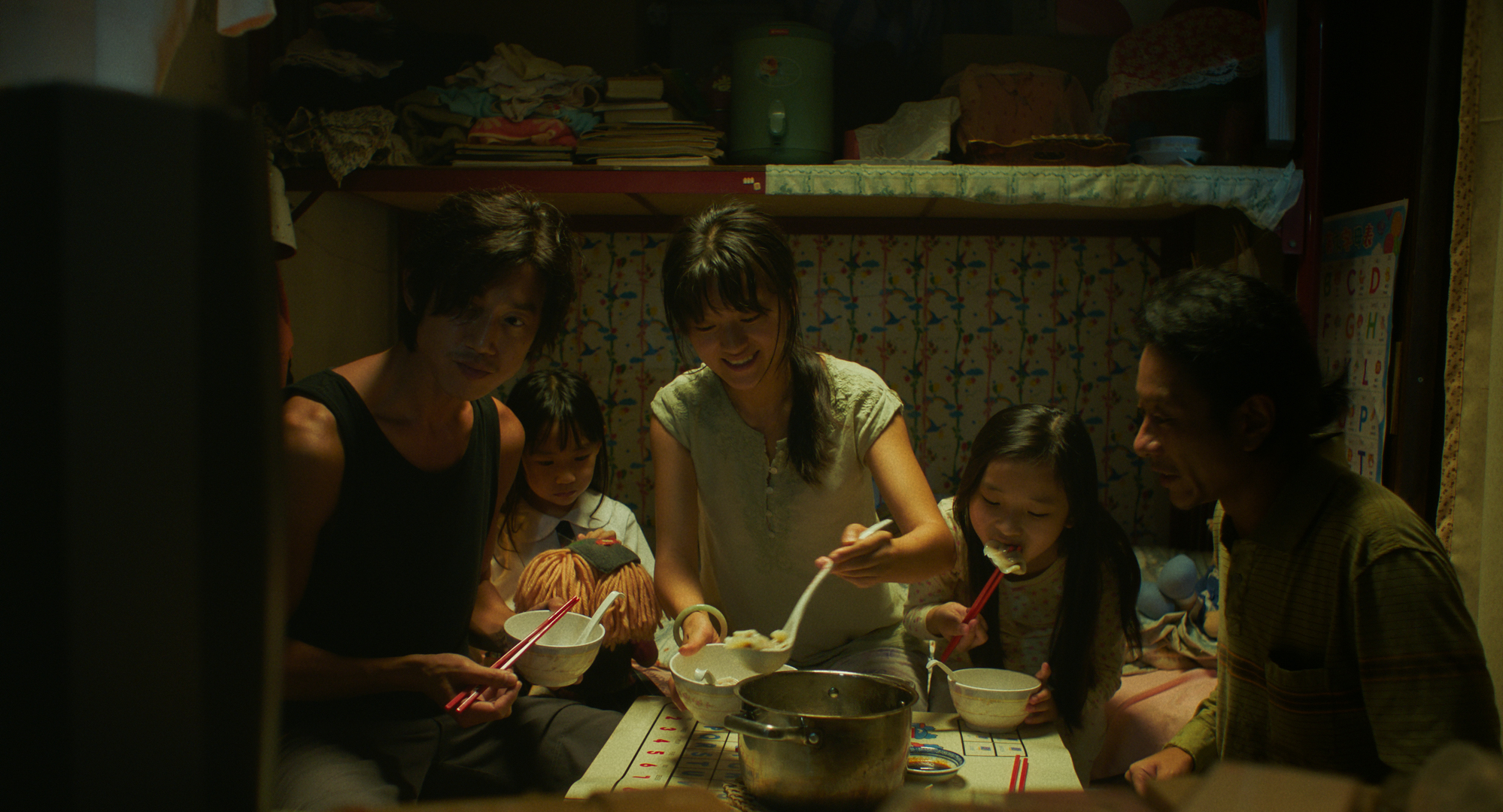
Everyone keeps asking Suenaga (Ken Mitsuishi) is if he’s okay. He has these tiny moments in which it looks like he’s on pause, sudden instances of stillness in which he stares vacantly into space. We start to wonder if he’s experiencing some kind of mental distress, having a stroke or developing dementia as those around him seem perplexed about his his behaviour which to us seems cheerful and pleasant. In fact, it seems confusing and unfair that he’s held in such contempt by his wife and daughter not to mention the pupils at his school and sullen young woman at the cafe he often frequents. 

A man of a certain age with a once overbearing father now mute and living with dementia in a retirement home, Suenaga is indeed undergoing a crisis of life. A year away from retirement, he begins to wonder what it was all for and how his relationship with his family became what it is today. He asks his wife Akiko (Maki Sakai) if they somehow gradually became estranged from each other in an impassioned speech in which he begs for love that neither she or his daughter are very minded to give him. Perhaps we can infer from the surprised reactions to his cheerfulness and attempt to take an interest in his daughter’s life that he hasn’t always been this way, though he too seems confused and perhaps not so much trying to make a mends but only to be his real self at what he fears may be the close of his life. 

When he surprises the waitress at a local cafe he goes to frequently by sitting in a different seat and then neglecting to pay the bill, it’s not really clear whether he actually forgot or did so deliberately as an attempt to assert himself. Likewise when he makes a clumsy attempt to embrace his now emotionally estranged wife or calls in sick to work it seems like more examples of his strange behaviour, yet Suenaga claims he’s becoming more of himself and on looking back over his life so far feels dejected and unfilled.

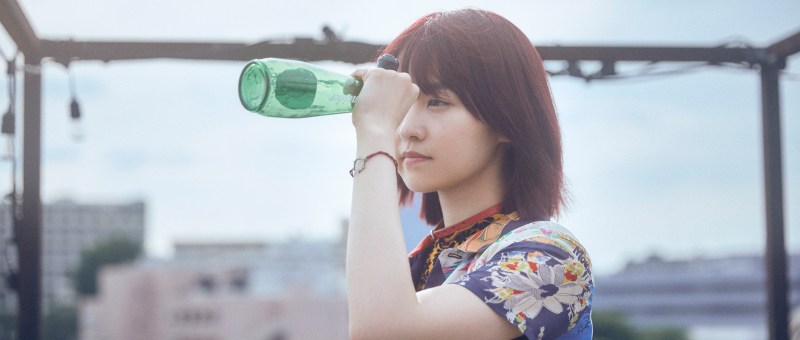
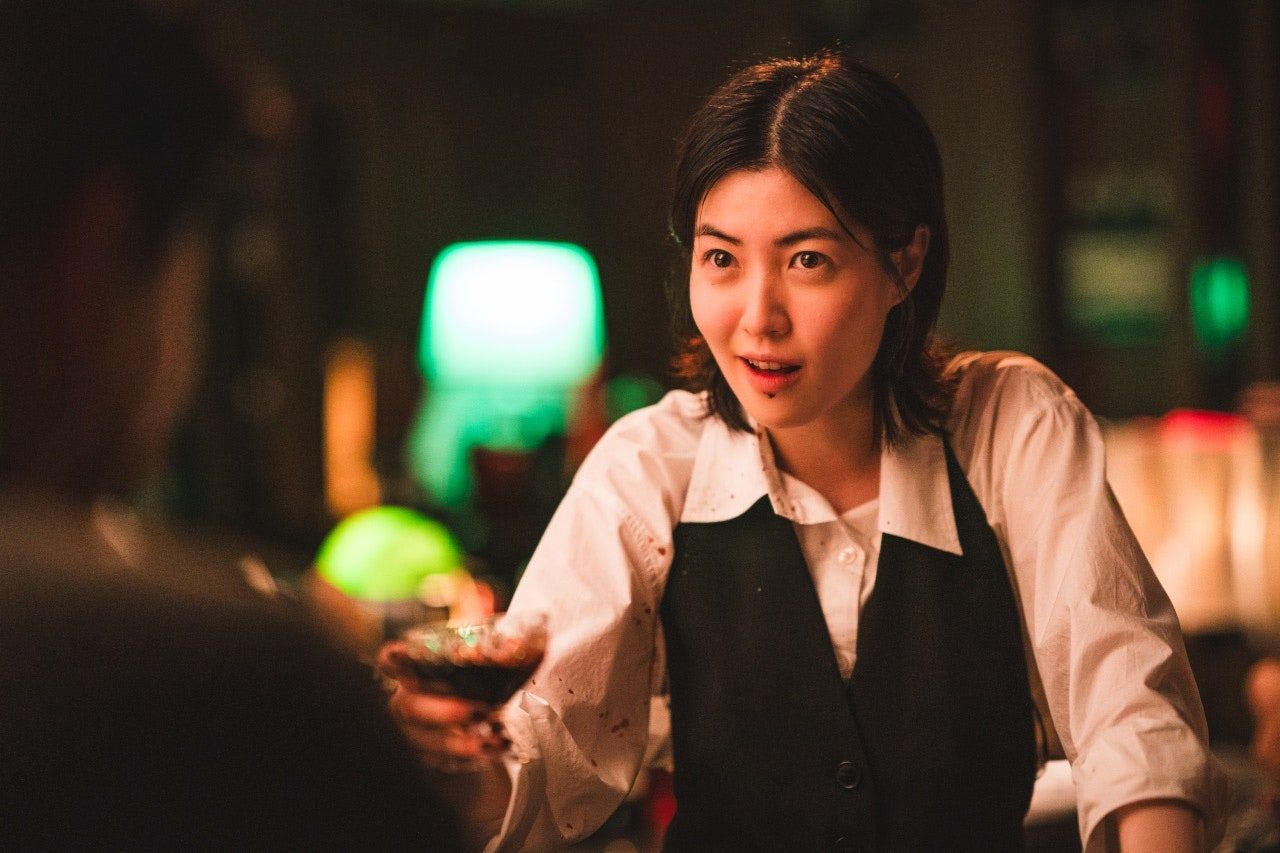
This  sense of mid life crisis is exposed in his conversation with Minami (Miyu Yoshimoto), the waitress at the cafe and an former pupil. He reveals that he wanted to become a head master but didn’t make it, and thinks he was only appointed deputy head because of picking up so many cigarette butts dropped by his rebellious charges, Minami is in many ways his opposite number, young and grumpy yet also grateful to him in another way restoring meaning to his life when she tells him that his words once saved her when he told her that she was fine the way she was. Even so she goads him a little, joking and maybe not really that he should give her his retirement money so she can have a better life. Echoing the opening conversation with his father, Minami hints she may soon quit the cafe to become a bar hostess or sex worker to save up before eventually emigrating Greece.

For all his teacherlyness, Suenaga seems to be a man who wants to be more understanding. He takes an interest in his pupils though they assume he doesn’t and again tells Minami that people should live the way they choose. In the rawness of their final parting, he tells her not to do anything she’ll regret but then adds that maybe she should, as if a life with no regrets is not really lived or perhaps reflecting that despite his own unhappy circumstances he does not really regret the life he’s lived. 

Filming in 4:3, Ninomiya makes great use of closeups, not least of Mitsuishl’s cheerful expression which somehow carries with it a great sorrow amid his own disappointments and yearnings. False or otherwise, there is something touching the connection of these dejected souls, the ageing teacher and the former pupil looking for permission to move on with her life but also teaching something to Suenaga in her sullen defiance and the eventual drive to keep going. Quiet and gentle if suffused with melancholy, Ninomiya’s poignant drama does indeed seem to argue that people in general are alright as they are but false acts jollity are as likely to confuse as console.


Dreaming in Between screens 1st June as part of this year’s Nippon Connection

Original trailer (English subtitles)

Drive Into Night (夜を走る, Dai Sako, 2022)

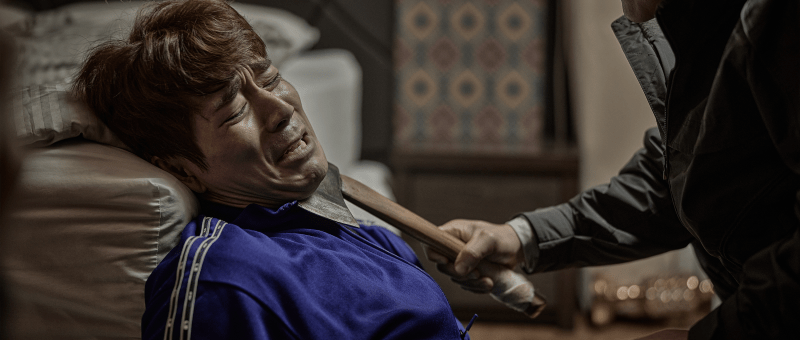
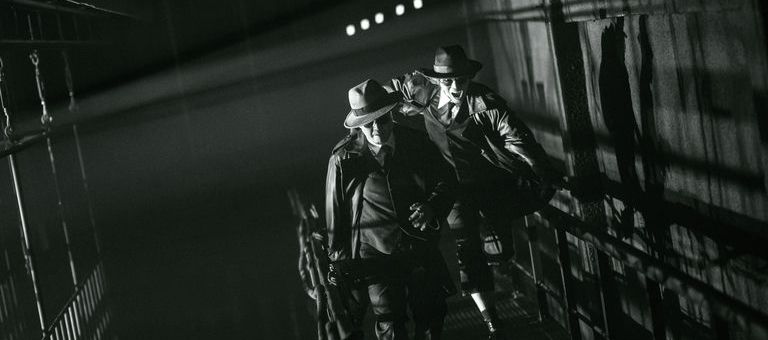
Small-town futility leads to tragedy when two frustrated scrapyard workers attempt to cover up a crime in Dai Sako’s dark psychological drama Drive into Night (夜を走る, Yoru wo Hashiru). Oppressive in its atmosphere, the film situates itself in a world of constant humiliations where life is cheap and reputation everything. Its heroes seek escape from their disappointing existences through consumerism and extra-marital affairs, but no longer see much of a future for themselves while even the dissatisfying present seems to be ebbing away from them. 

Asked what makes his life fun, Akimoto (Tomomitsu Adachi) replies “not much”. A classic mild-mannered guy, he’s regarded as the office dogsbody and at the beck and call of his abusive manager, Hongo (Tsutomu Takahashi). When a new female sales representative, Risa (Ran Tamai), visits the yard, Hongo runs Akimoto down in front of her apologising for having such a useless employee who does nothing other than drive around all day. His sense of masculinity is also wounded by an older colleague who tries to sell he and his friend Taniguchi (Reo Tamaoki) some kind of aphrodisiac but reflects that Akimoto is too “tame” to ever make use of it, while even Taniguchi needles him about being a 40-year-old man who’s never had a girlfriend and still lives at home with his parents. In many ways he’s the classic “nice guy”, but there’s also something a little dark about him that makes it seem as if he may snap any moment. That may have been what happened when he and Taniguchi went to a bar with Risa shortly after she’d been coaxed into a works drink with Hongo. Something obviously went dreadfully wrong in the night, because Risa is soon reported missing and both Akimoto and Taniguchi begin behaving oddly. 

It is true enough that both men, and many of their colleagues, also consider themselves to be on the scrap heap. Akimoto is tempted to quit his job to put distance between himself and the scrapyard but reflects that he’s unlikely to find another job even if quitting so suddenly might arouse suspicion as Taniguchi warns him. Meanwhile, he knows the yard is in trouble. They have him running round doing cold calls but returning empty handed, while office workers are constantly fielding calls about unpaid invoices. His irritation is palpable when he spots the boss, Miyake, leaving one morning soon after he arrives, loading expensive golf clubs into his fancy car. Hongo bullies him, but later says he does it out of respect because Akimoto is the only one who bothers to do his job properly. But then again even Hongo concedes that hard work gets you nowhere. Most of his paycheques go on child support and he often sleeps in his car in the car park. The only reason he’s not been fired is that he has a personal connection to Miyake.

Even so, this fairly tenuous relationship does not really explain why Miyake goes to such great lengths to protect Hongo when he becomes the prime suspect in Risa’s disappearance and is framed by Taniguchi and a guilty Akimoto. It may be in a way that he really does think of the company as a kind of family, as perhaps do the loan sharks who keep calling them after Akimoto ends up in debt having joined a weird cult encourages him to think there is nothing wrong with him and the fault is all with an unaccepting world. The cult leader tells him that he is “full of anger”, which perhaps he is. This being in the immediate aftermath of the coronavirus pandemic, Akimoto is often questioned about still wearing a mask long after most people have abandoned them and part of the reason is as an attempt to hide his true self. After joining the cult he takes it off, but soon adopts another disguise in dressing in Risa’s clothes as his mental state continues to decline. 

Taniguchi meanwhile makes an effort to continue with his “normal” life which includes visiting his mistress. Unbeknownst to him, his wife Misaki (Nahana) is also having an affair with the consequence that neither of them is able to fully devote themselves to their young daughter Ayano who eventually ends up in a potentially dangerous situation because of her parents’ various transgressions. Nevertheless, despite discovering that her husband may have been involved in a murder it’s Misaki who decides that he has to “protect our family” above all else. Amid all of this, Risa becomes almost literally lost before later being unceremoniously dumped like so much scrap. After framing Hongo, Taniguchi tries to convince Akimoto that Risa isn’t their problem anymore as they each struggle to hang on to the previously disappointing realities they had been so desperate to escape. 

It has to be said that aside from the misogyny of its worldview, there is also an uncomfortable quality in the film’s characterisation of a shady Chinese businessman who of course knows how to get rid of bodies along with the fact his chief associate is Korean-Japanese gangster. Though the film’s strongest character may in fact be the Filipina bar hostess, Gina (Rosa Yamamoto), on whom Akimoto fixes most of his hopes who defiantly tells the cult leader that she’s happy with her life and has no reason to join his organisation, Akimoto exposes himself by telling her she’s wrong because he doesn’t see why a “foreigner”, “a woman”, who works in a “dirty” bar, could be happy or averse to being “saved” by him. Still he insists that he hasn’t “changed”, it’s the world that’s changed around him. Taniguchi later says something similar, and they each may have a point. In any case, this world is largely one of resentment and futility in which there is no release. Sako captures the drudgery of his protagonists lives with crushing naturalism but also perhaps little sympathy.


Original trailer (no subtitles)

ROLL (Daichi Murase, 2020)

“Change the world!” a stranger yells, perhaps ironically, from a passing pickup truck as the hero of Daichi Murase’s debut feature Roll, pelting hell for leather to rescue a trapped a soul. An unconventional coming-of-age tale, Murase’s experimental drama follows a young man from innocence to experience as he becomes determined to discover the secrets of an earlier age while discovering also that genies don’t go back inside their bottles and in fact may prefer to expire in the light of the sun rather than survive an eternity of vicarious darkness. 

The hero, Yoshihiro is a strange and aloof young man as we gather from the first scenes which find him alone in his room while his dormmates engage in drunken socialising. Yoshihiro’s chief obsession seems to be with disassembling abandoned gadgets into their component parts, sleeping surrounded by neatly grouped collections of various nuts and bolts. His understanding boss at his part-time job as a removal man often allows him to keep bits of interesting junk that would otherwise be disposed of and it’s during one particular house clearance that he makes an unexpected discovery on being charged with investigating a possible haunting of an external annexe. Removing the chains which block the door and wandering inside, he’s confronted by a series of television screens featuring calming scenes of water and then by a frightening apparition. Looking a little like Oogie Boogie, a young woman in a white hazmat suit and black goggles eventually reveals herself and gifts him a strange device of a kind he has never seen before. 

The device, which turns out to be an 8mm camera as his bespectacled roommate reveals to him, sparks a sense of curiosity about the world he did not appear to have in his constant need for disassembly. Yet while his new friend takes him to a worryingly abusive filmset (the director slaps and then randomly licks the face of his leading man) for advice later suggesting they use it to make movies along the themes of “Mushroom, Explosion Festival!”, or “Psychopath Signal”, Yoshihiro is equally preoccupied with mysterious young woman who appears to be being kept captive by her father afraid to let her experience the light of the sun. As ignorant youngsters, the pair are unsure whether Nazuna’s father is earnest in his overprotectiveness and the outside world really is toxic to her, or merely selfish and possessive wishing to keep her locked up forever a secret to himself alone. 

Nazuna, as the young woman is called, of course turns out to be a metaphor for film something which is destroyed on exposure to the light. Strangely, Yoshihiro’s friend mistakenly tells him that the camera needs to be opened once a day to let the air in, apparently little knowing it will erase whatever is inside. A kind of fairytale of enlightenment, Yoshihiro becomes a kind of promethean rescuer literally busting Nazuna out of her jail in an attempt to free her just as he tries to steal the arcane knowledge of analogue technology from a generation apparently unwilling to teach him. She perhaps knows how dangerous her journey may be, but chooses to go anyway insisting that she doesn’t want to grow up which is perhaps to be overburdened with sophistication. Yet does her desire to see the ocean for real negate the idea of truth in celluloid, implying that some things can only be fully experienced by venturing out into the world for oneself, or make the case for it in Yoshihiro’s clumsy filming of her moment of rebellious defiance towards the curse of obsolescence? 

Making full use of the technology himself, Murase shifts from digital into 8mm and then into 16 for the pair’s final adventure as they transition through a tunnel into another world, emerging on the other side perhaps somehow changed. Yet even so, burdened by his ignorance, Yoshihiro fails to bring the message home with him discovering nothing but a blank screen in place of an essential truth. Less about films and medium than perpetual motion, Murase’s enigmatic fable rolls its way towards an inventible conclusion as its hero edges his way towards maturity having discovered an appetite for connection in place of deconstruction. 


Original trailer (no subtitles)

Space Sweepers (승리호, Jo Sung-hee, 2021)

If we’re content to ruin one world, why do we assume our salvation lies on another? Billed as Korea’s first blockbuster science-fiction extravaganza, Space Sweepers (승리호, Seungriho) finds a ragtag gang of junkers quite literally cleaning up humanity’s mess while ironically marginalised into outer space by internecine capitalist consumerism which in insult to injury offers to sell you a cure for the disease it has caused but only to those whom it deems worthy of its dubious promises. 

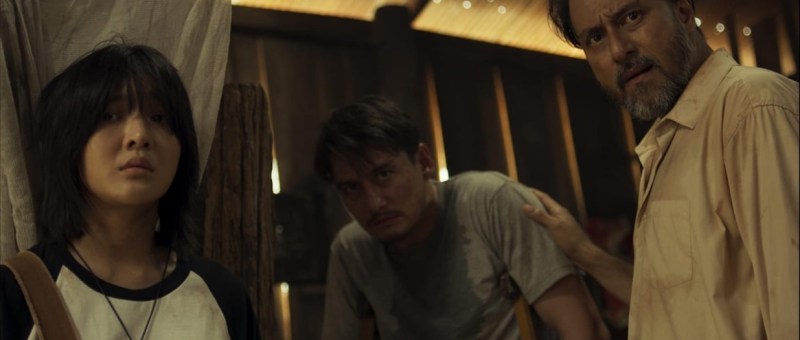
By 2092, the Earth has become all but uninhabitable. Led by 1952-year-old messianic scientist Sullivan, UTS Corporation has prepared a new artificial orbiting home but only the elite are invited while the remaining 95% linger on the poisoned ground below or else, like the crew of the Victory, wander in space attempting to make a living from clearing the debris left behind after countless sattelltes and space station launches. Yet as jaded space sweeper Tae-ho (Song Joong-ki) remarks, the more you work the more debt you earn. The Victory is a well equipped ship and you’d think that would mean greater earning potential but all it means is that it costs more to maintain while the initial outlay has landed them with unsustainable debt not to mention constant random fines and official interference. All of which is why when they find a little girl hidden in a storage compartment of an abandoned vessel and realise she’s the missing android that’s all over the news, they decide to play off the Black Foxes “terrorist” organisation who kidnapped her and UTC who want her back for all they can get. 

As might be expected for all his claims that “humanity is dirty” in its failure to protect the planet, Sullivan is no pure hearted saviour but an amoral elitist intent on terraforming Mars as some kind of authoritarian “utopia” populated only the “best” of humanity. He claims not to care about money, but cites the false equivalency that those with the deepest pockets must necessarily be those with the greatest capability while privately describing those left below as expendable and not really worth saving. Dressed like a cult leader, even at one point appearing as a giant hologram, Sullivan’s appearance owes a significant visual debt to Neon Genesis Evangelion’s Gendo Ikari, leaving little doubt as to his megalomaniacal intensions as he wilfully sells a solution to a problem he himself helped to cause while continuing to exploit the Earth and the people still on it to hasten its demise and his own enrichment. 

While the central message reinforces the idea that large corporations are not to be trusted while the capitalistic system they uphold is inherently destructive, it also perhaps undercuts that of the impending environmental crisis with which we are faced if we can’t mend our ways fast enough. Even so, it falls to the space sweepers to mount a unified global resistance against the wilful destruction of their homeland in protecting the android, Dorothy / Kot-nim (Park Ye-rin), who of course holds the key to saving the world. Despite having taken in her in with a view to ransoming her, the crew soon bond with the adorable little girl as unofficial daughter while Tae-ho alone remains reluctant in grief over child for whom he continually searches while internalising a sense of resentful failure in the knowledge that he lost her because of his own self-absorbed sense of hopelessness. 

Even so, there may be something a little uncomfortable in the final resolution in which the crew coalesces into a recognisable family unit each of them somehow “improved” as they accept their responsibility for Kot-nim whether in giving up drinking or erasing tattoos. Nevertheless, the film is refreshingly progressive in its depiction of a transgender character who gains the confidence to be their authentic self thanks to the unconditional solidarity among the crew members, though the sudden reversal of UTS from cult-like evil corporate entity to remorseful force for good seems rather optimistic as if the only problem was Sullivan and not the system that gave rise to him.  While the overall aesthetic may be somewhat televisual, Space Sweepers does feature some interesting production design and impressive CGI though its greatest strength lies in the jaded idealism of its space bandit protagonists as they band together to resist their marginalisation with mutual solidarity and compassion.


Original trailer (English subtitles)

Tiger Stripes (Amanda Nell Eu, 2023)

There’s a moment in Amanda Nell Eu’s Tiger Stripes in which a teacher writes a sentence in English on the board for the students to fill in the blanks. “The father ___ to work,” one reads. Another, “The mother ___ at home.” It’s within these blanks that the girls live their lives, contained by rigidly held patriarchal norms supported by a religious environment that turns resistance into heresy, something demonic and evil that must be rooted out so the afflicted individual can be returned to society without their parents being ostracised.

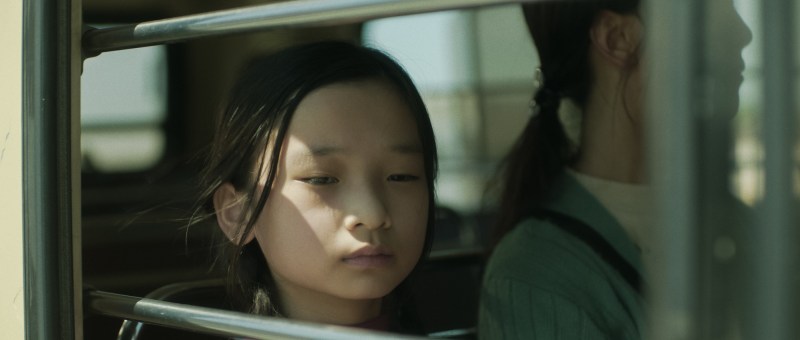
A bright and talented student, Zaffan (Zafreen Zairizal) is shown to flaunt these rules by wearing a bra and commandeering the toilets to record tiktok dance videos with the help of her friends Mariam (Piqa) and the more conservative Farah (Deena Ezral). Perhaps the most transgressive thing about them is that she’s removed her hijab and in fact much of her clothing, defiantly assuring herself with a cheekiness that seems almost naive. After getting her school uniform wet in a local pond, she cheerfully runs home hair exposed in only her smalls. Her father barely bats an eyelid, but her mother is incensed. Somewhat counter productively, she drags her outside and shouts at her in front of all the neighbours about bringing shame on their family. 

Time and again, it’s other women that cause Zaffan the most trouble. After her classmates discover that she’s got her period and is therefore a woman, they beat her up and call her names suggesting that she’s unclean and no longer wanting to associate with her. It doesn’t help that her new status is known to all because girls on their period cannot participate in some of the religious practices at the school which similarly reinforce the idea that menstruation is a pollutant and womanhood itself is toxic. It’s indeed womanhood which been activated in Zaffan along with a natural desire to resist her oppression and be who she is. She begins to undergo a transformation that even she barely understands, snapping and snarling those who challenge her while otherwise catching and eating wild animals which she tears apart with her teeth. 

The girls tell each other a story of a woman, Ina, who apparently went feral and escaped to live in the forest. They tell it as a cautionary tale, but Zaffan begins to see and identify with Ina who has found a kind of natural freedom outside of the oppressive patriarchal social codes of the contemporary society. Yet it’s precisely this freedom that must tempered ad women kept in their place. The school later calls in some kind of spiritualist, Dr. Rahim (Shaheizy Sam ), who pedals snake oil treatments and claims to be able to exorcise the young women who have similarly come down with shakes and shivers in the wake of Zaffan’s metamorphosis. Earlier on, Zaffan had seen a wild tiger filmed by a man who walked slowly behind it, menacing but unwilling to engage. Her friends tell her they probably mean to kill it, but there’s also an ineffectuality in this male timidity that is essentially afraid of an independent woman. Having transformed herself into a tigress, Zaffan too is followed by a crowd of men but all they do is stare at her back.

Meanwhile, in the background her teachers make ironic comics that the students won’t amount to anything while the Malay pupils seemingly trail behind their Chinese classmates. Zaffan becomes the embodiment of monstrous femininity, a dangerous and transgressive womanhood that rejects all of the constraints placed upon it. Though she does not understand what is happening to her and is hurt that her former friends, still on the other side of adolescence, now view her as something other and unpleasant, Zaffan longs for the freedom of the forest and to dance to her heart’s content no longer willing to submit herself to the strictures of the patriarchal society. Her rebellion earns its followers among girls of her age, themselves longing for freedom but too afraid to ask for it. Tinged with supernatural dread, the film nevertheless presents Zaffan’s progress as a gradual liberation found in the natural world, nature red in tooth and claw but alive and unconstrained as free as a tigress in a world without man.


Tiger Stripes is in UK cinemas now courtesy of Modern Films.

UK trailer (English subtitles)

Twilight of the Warriors: Walled In (九龍城寨.圍城, Soi Cheang, 2024)

In Kowloon Walled City, you give help, you get help. Sometimes described as a colony within a colony, by the late 1980s the settlement was largely ungovernable and literal law unto itself save for the triads who maintained what little order there was. Yet in Soi Cheang’s Twilight of the Warriors: Walled In (九龍城寨.圍城) it’s a place of comfort and security, a well functioning community that as its leader Cyclone (Louis Koo Tin-lok) points out may be unpalatable for “normal” people but provides a point of refuge for the exiled and hopeless.

It’s difficult not to read it and Cyclone himself as embodiments of Hong Kong that is slowly disappearing. Dying of lung cancer, Cyclone is aligned with the fate of the walled city as someone whose time is running out, tired and world weary but still hanging on. In the opening sequence set 20 or so years before, we see Cyclone stand up to an apparent dictatorship and institute what seems to be a more egalitarian form of government though one obviously defined by violence. Nevertheless, when refugee Lok (Raymond Lam Wui Man) lands up there originally suspicious of Cyclone having been duped by local gangster Mr Big (Sammo Hung Kam-bo), he discovers him to be a stand up guy looking after those in his community and generally keeping the peace. Nevertheless, Lok’s arrival is the fatalistic catalyst for the opening of old wounds amid the free for all of the mid-80s society in which the Walled City, sure to be bulldozed, has just become a lucrative property investment.

Mr Big and his crazed henchman King represent this new order, amoral capitalistic consumerists who care little for the conventional rules of gangsterdom. Their bid to seize the Walled City has its obvious overtones as they seek to replace the (generally) peaceful egalitarian rule of Cyclone with something that appears much more authoritarian and ruthless. Believing himself to be a stateless orphan, Lok tries to keep his head down saving everything he can to buy a fake Hong Kong ID card which is also in its way a quest for identity not to mention a homeland and a sense of belonging. He finds all of these things, along with a surrogate father figure, in the Walled City only to have the new home he’s discovered for himself ripped out from under him because of a twist of fate. When he teams up with a trio of other young men who all owe their lives to Cyclone and the Walled City to attempt to take it back, it’s also an attempt to reclaim an older, more autonomous Hong Kong that exists outside of any kind of colonial control as evidenced by his final statement that no matter what happens some things don’t change.

This sensibility extends to the casting of the film which includes a series of Hong Kong legends including a notable appearance from the legendary Sammo Hung not to mention Louis Koo alongside a generation of younger stars such as Tony Wu and Terrance Lau Chun-him. Adapted from the manhua City of Darkness by Andy Seto, the film opens with a flashback to the original war for control of the Walled City that hints at deeper, extended backstories otherwise unexplored though equally mythologised by those who impart them to them Lok, a prodigal son and eventual inheritor of the City’s legacy. Even so, the comic book elements sometime distract from Soi Cheang’s otherwise evocative if hyperreal recreation of the Walled City slum or the political subtext that can be inferred in the presence of supernatural abilities such as those which seem to grant King near invincibility.

In any case, Soi Cheang looks back equally towards the history of heroic bloodshed in particular in his tale of brotherhood and loyalty in which the secondary antagonist is literally imprisoned by his own futile desire for a pointless vengeance on the descendent of a man who had wronged him but was already long dead himself. As he’d said, the future of the Walled City is in the hands of the younger generation who choose to end the cycle by setting him free rather than imprison themselves along with him while defending their home as well as they can. With some incredibly well designed action sequences including one that make its way onto a double-decker bus, Soi Cheang’s beautifully staged action thriller as its name suggests has a rather elegiac quality but also the spirit of resistance in its gentle advocation for the importance of supportive communities.


Twilight of the Warriors: Walled In is in UK cinemas from 24th May courtesy of CineAsia.

UK trailer (Traditional Chinese & English subtitles)

During the Rains (つゆのあとさき, Shinpei Yamazaki, 2024)

At several points during Shinpei Yamasaki’s indie drama During the Rains (つゆのあとさき, Tsuyu no Atosaki) we encounter someone whose life has been disrupted by the economic effects of the coronavirus pandemic. The danger is, of course, that the pandemic itself becomes the problem which is also a way of glossing over all the problems that existed before and will likely survive whatever kind of sickness they encounter. Chief among those problems and impacting the lives of the women at the film’s centre is problematic men and the generalised disregard for women.

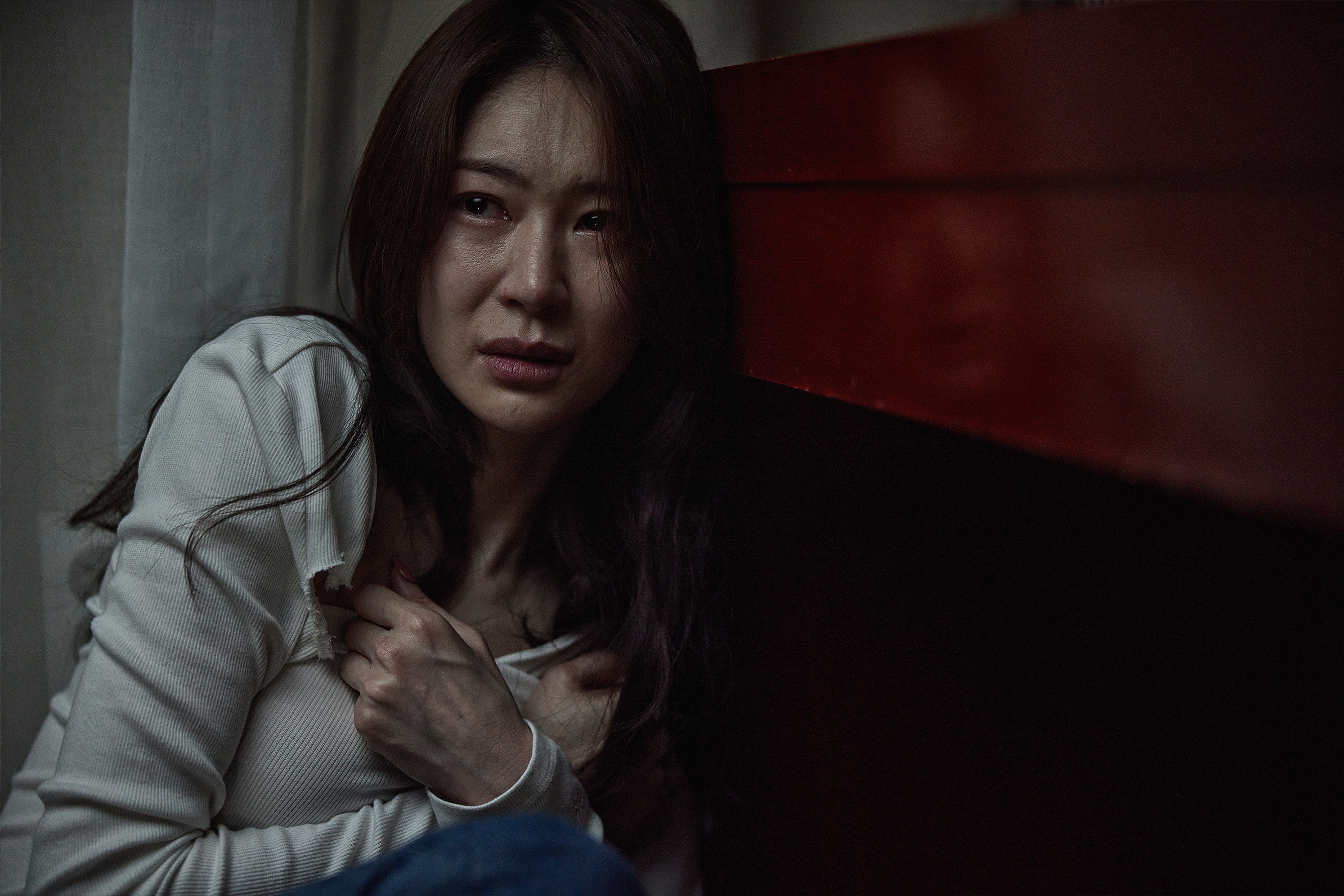
It seems that Kotone was working in hostess bar that closed because of the pandemic while her no good boyfriend ran off with a necklace a customer had given her. Left with nowhere to go she’s noticed on the street by Kaede, a young woman who promises her a room in a love hotel but does so in order to recruit her for a threesome. Sometime later Kotone is working in a “cafe” where young women sit behind a glass window in numbered booths for male customers pick out and select though she also has a “daddy”, Kiyooka, who pays the lease on her flat and would be annoyed to discover she was still frequenting the cafe.

It’s the at the cafe that she meets Sakura, a naive young college student who was pushed into sex work when the place she was working before closed down because of the pandemic. Kotone at one point snaps back at her that she wouldn’t even be at the cafe if it weren’t for the pandemic as if suggesting she were in some way better than the other girls after she reacted with horror to Konone’s plan to find a “hardcore daddy” who’ll pay more for the right to break a few bones and cause other kinds of harm.

This might be ironic in a sense as Sakura is a Christian who carries around bible verses to calm herself down including the ones about turning the other cheek and blessing those who persecute you which don’t seem to be particularly good advice for the situations she finds herself in especially as the lesson she’s learned from them is that you should accept whatever abuse comes your way without complaining. Ironically that might be what Kotone has been doing in her almost total indifference to her circumstances. The Roomba in her apartment gets stuck in her hallway and shuffles in confusion between the walls after constantly butting its head unable to find a way out. Yet according to Kiyooka what separates Kotone and Sakura is that Sakura seems desperate in a way Kotone does not which is a quality he appreciates presumably because it gives him more control over her, something he knows he doesn’t have over Kotone who point black tells him she has no strong feelings about whether he dumps her or not after he discovers she’s still seeing other men and engaging in casual sex work.

The lollipops she’s always sucking on give Kotone a slightly childish edge as perhaps does her moodiness but she’s also cynical beyond her years and seemingly living the way she does almost as an act of self harm. She’s being relentlessly trolled by someone who accuses her of having a sexually transmitted disease while even the other girls at the cafe resent her, ironically calling her a slut and other misogyinistic insults. Later she’s even knocked down some stairs by a previous client who is resentful that she doesn’t really remember him while another of her regulars, Yata, paws at her insultingly as if feeling himself entitled to her body. Another customer whose wife and daughter left him after his business failed asks her why she does this, adding that he’s worried about his daughter which seems to be an incredibly ironic comment given the situation.

Even the girls at the cafe complain that they’re getting les work because of the influx of women showing up there after being pushed towards sex work out of desperation, but it’s almost as if the film would like to believe the pandemic was the problem rather than attitudes society has towards these women and indeed all women. Nevertheless, through her growing friendship with Sakura and an unexpected tragedy Kotone comes to realise that she can perhaps change her circumstances and does not necessarily have to continue turning the other cheek to a society that had largely turned its back on her.


The Singer (소리꾼, Cho Jung-lae, 2020)

A Pansori singer shames the world into giving him his miracle in Cho Jung-lae’s musical fable, The Singer (소리꾼, Sorikkun). If there’s one thing you can bank on in old Joseon it’s that there is intrigue in the court, yet the rot seems to have penetrated even more deeply into the fabric of society as the hero discovers while looking for his kidnapped wife only later realising that the people who are supposed to protect you from violent criminals are in fact violent criminals themselves.  

Set in 1734, the 10th year of King Yeongjo’s reign, the film opens with a cheerful scene as singer Hak-gyu (Lee Bong-geun) performs in the marketplace while his wife Gan-nan (Lee Yu-ri) and daughter Cheong (Kim Ha-yeon) watch from the sidelines. As the opening voiceover reveals, however, this is also a time of increasing chaos in which the accepted social order has broken down following successive incursions from China and Japan. The King has appointed a special courtier, Kim Tae-hyo, to investigate the so-called “Ja-mae gang” suspected of running a human trafficking ring while in collusion with corrupt lords. Of course, the king doesn’t know that Tae-hyo is one of the corrupt lords, but then there are so many of them to choose from. In any case, disaster strikes when Hak-gyu is late home after being accosted by a fan while returning some of the clothes Gan-nan had been mending to a nobleman and discovers his wife and child missing when he gets back. Gan-nan and Cheong have been kidnapped by the gang along with several others from the area. Cheong manages to escape thanks to her mother’s quick thinking but is badly injured and in a coma for some time eventually waking up to realise she has lost her sight. Hak-gyu along with his drummer friend Dae-bong (Park Chul-min) decides to take his daughter and search for his wife all over Korea if necessary. 

As the opening and closing titles remind us, Pansori gained popularity precisely because it told the stories of the common people and was often transgressively frank in its attacks on the class system, social inequality, and even the monarchy. Belonging to the lowest class of entertainers, Hak-gyu’s “lowborn” status is often used against him, the gang deliberately targeting those from the lower orders to enslave because they do not really think of them human, yet it is also in a sense his salvation in his innate ability to connect with ordinary people as he retells his life as fable gathering large crowds around him as he anxiously asks if anyone has seen his wife. He is joined in his travels by a “corrupt monk” he saves from drowning in a river, along with bumbling lower aristocrat supposedly bumming around too afraid to go home and tell his father he’s failed the civil service exam (again), providing an accidental microcosm of the current society. 

Yet what Hak-gyu didn’t know was that the gang is merely an extension of government oppression, corrupt lords flexing all of their muscles to fully exploit their subjects. Tae-hyo’s mentor reminds him that “politics is all about money” as the pair of them try to game the king pretending to hunt the gang that they are themselves running. A skilled seamstress, Gan-nan is firstly placed in the home of a local dignitary but later moved on to the mines for making too much trouble. She tells everyone she meets that she’s been kidnapped, but the nobles are all in on it and everyone else is too frightened to resist. Meanwhile, Tae-hyo and his fellow conspirators are also it seems in collaboration with the Japanese, buying up smuggled rifles to use in a potential insurrection. 

Drawing inspiration from his own life story, Hak-gyu re-imagines the gang as Chinese pirates and his daughter as a displaced princess determined to do whatever it takes to save her blind father, always leaving his audience wanting more with his cruelly positioned cliffhangers. He finds himself in an odd kind of trial by combat, given the opportunity to win back his life and his wife if only he make the heartless lords laugh or cry eventually saved only by his ability to move the hearts of others through the power of his sincerity. A Pansori fable in and of itself, Cho’s meta musical drama is fitting tribute to power of art to speak truth to power revealing its own truths in falsehoods and by it handing back the means to the people to demand justice and freedom.


Original trailer (English subtitles)

I Love You, to the Moon, and Back (穿过月亮的旅行, Li Weiran, 2024)

The economic realities of a changing mid-90s China conspire against a young couple who find themselves stranded in different cities and only able to meet up once a month for a night of passion in a hotel in Li Weiran’s wholesome romantic dramedy, I Love You, to the Moon, and Back (穿过月亮的旅行, chuānguò yuèliang de lǚxíng). Based on a novel by Chi Zijian and themed around the Mid-Autumn Festival, the film has a quirky, nostalgic quality but also a degree of poignancy amid the absurd journeys the lovers make in pursuit of their love.

Gradual flashbacks reveal that Wang Rui (Hu Xianshu) and Lin Xiushan (Zhang Zifeng) married in their home village but like many youngsters of the day left soon after for the city in search of work. Forced to leave school by his farmer father who saw no point in education, Wang Rui quickly finds works in construction but Xiushan, who was also forced to leave school early, is unable to find anything in Shenzhen and eventually takes a job in a dumpling factory in Guangzhou where she lives in workers dorms. Their plight reflects the economic reforms which were taking place throughout the 1990s giving rise to a new, much more capitalistic society as embodied by the employers who give Wang Rui an extra day off for lying on TV that they’re not exploiting him, and an obnoxious businessman Xiushan has the misfortune to sit opposite on the train who talks loudly on his mobile phone about an important deal and even drips cigarette ash all over the old lady next to him justifying himself that he doesn’t want to damage his expensive suit. 

By contrast, Xiushan and Wang Rui are incredibly frugal shopping mainly at markets with Wang Rui padding a fancy pair of shoes that are too big for him but available at a large discount. They save all their money for their monthly meetups which, as they’re both living in communal dorms, take place in cheap motels. Xiushan tries to ameliorate their grimness by covering the stained mattresses with her own sheets featuring a pattern of large sunflowers and blue skies that help her feel as if they’re back in the village lying down together in a pretty garden. To this extent it’s clear that living in the city in addition to so far apart has corrupted the innocence of their romantic connection. Xiushan was warned by her brother that if she wanted to hear Wang Rui’s harmonica playing she should put off going out with him because the romance will die once he’s won her, and it’s true enough that Wang Rui never plays the harmonica for her anymore in part because they’re now quite expensive and he’d rather save up his money for another cross-country visit. 

Xiushan’s decision to buy one for him with some money from an unexpected windfall is then an attempt to rescue their romantic connection which is now under threat because of their geographical displacement and economic oppression. On the train, however, she runs into another man who plays harmonica and has apparently been arrested for an undisclosed crime. Out of compassion she asks the policeman escorting him to allow the condemned man to play a song which he does and reduces the entire carriage to tears hinting at other sad stories of separated lovers in modern China. Wang Rui encounters something similar in a one armed man caring for a wife from whom he was separated who has since become ill and is apparently in love with someone else. His cynicism causes Wang Rui to doubt Xiushan, so paranoid that another man may take a liking to her that he puts back the pretty dress he’d intended to buy as a present and gets the much more temporary gift of a bunch of roses instead.

These respective choices of items might signal where they are in their relationship, but there’s still a pureness to their love that can’t be destroyed completely. Both unexpectedly given an extra day off for the Mid-Autumn Festival they decide to make surprise visits to other’s cities only to perpetually miss each other, stuck travelling back and forth by train and only able to make contact via “their” set of payphones for as long as their phonecards would allow before fate finally, if briefly, smiles on them under the light of the autumn moon. Charmingly quirky and hopelessly innocent, the film nevertheless captures something of the chaotic undulations of the mid-90s society in which youth is on the move but love it seems is standing still.


Original trailer (Simplified Chinese & English subtitles)

Dead Fishes (僕らはみーんな生きている, Tomoaki Kaneko, 2022)

Fearing he knows nothing of the world, a young man comes to Tokyo in search of experience but finds his horizons broadened a little more than he might have liked in Tomoaki Kaneko’s bleak indie drama Dead Fishes (僕らはみーんな生きている, Bokura wa Minna Ikiteiru). Legacies of poor parenting, either from an overabundance of love or.a lack of it, continue to cast a shadow over the futures of the young while love otherwise makes people do funny things that defy both logic and humanity.

One of the key reasons Shun (Yutaro) leaves his rural hometown is to get away from his parents and their tempestuous marriage though it’s also true that his mother has become more than a little possessive and he clearly does not want to end up trapped by her all his life. He dreams of becoming a writer, but tells new friend Yuka (Noa Tsurushima) that writing for him was more of an escapist than artistic exercise. Most of his books are of the kind where nothing really happens, a kind of wish fulfilment writing stories about the happy family he never had in which parents and children enjoy cheerful days out at the beach or the zoo, which is why he suspects publishers aren’t biting.

But Yuka has parental resentments too, explaining that her mother took her own life after her father abandoned them before she was born. She has a healthy distrust of adults and the in-built cynicism of someone twice her age but also resents herself for having been unable to enact revenge on her absent father. Nevertheless, she feels sympathy for the old people living in the local care home who have also been, according to her, “abandoned” by their families who no longer wish to care for them. Their boss, Yuriko (Maki Kuwahara), is currently caring for her mother who is suffering with dementia and occasionally becomes violent or refuses food though as the pair discover she is also mixed up with her much older boyfriend’s heinous scheme to help overburdened children knock off their elderly relatives through slow poisoning or an “accident” in return for a portion of their life insurance money.

The scheme both bears out the corrupted relationship between parent and child and the darkness of the contemporary society in which, as the Chairman (Hiroyuki Watanabe) says, the elderly can benefit their families only by dying. Despite having become aware of the goings on at the bento shop, neither Yuka nor Shun are particularly motivated to do anything to stop them, simply living on in resentment or disapproval. Yuriko tells him that he can’t understand her actions because he’s too young and has never been in love, but it’s also true that she was supposed to get a healthy payout for the slow poisoning of the man the Chairman made her marry for appearance’s sake who is likewise aware they’re planning to kill him but basically allowing them to because of love. Love is also the justification Shun’s mother gives when she arrives unnanounced and ends up talking to Yuka, explaining that she’s never thought Tokyo was right for her son so she’s found him a job back home which is after all not really her decision to make. 

But then again even Shun’s writing dreams become corrupted by the city when he’s hired to write a column for a pornographic magazine that’s only distributed in local brothels. Even the editor who hires him appears beaten down and desperate, explaining that he was once a writer too but seemingly ashamed of his current profession later decided to cut his losses and return to his hometown stopping to warn Shun only not to turn out like him or to let himself be changed by the environment he now finds himself in.

By contrast, Yuka’s flighty roommate Mika (Haruka Kodama) says she’d rather die than live with dead fish eyes escaping from her own despair and disappointment through casual sex work to supplement her income from working at a black company. Claiming that all you need in life is a money and good reputation, she’s planning to string this out until the end of her 20s in the hope of meeting a nice man to settle down with for a traditional housewife existence. Bleak in the extreme, Kaneko leads this moribund small town a sense of futility and emptiness and sees little way out for an orphaned generation other than to surrender themselves to the indifference of the world around them.


Original trailer (no subtitles)