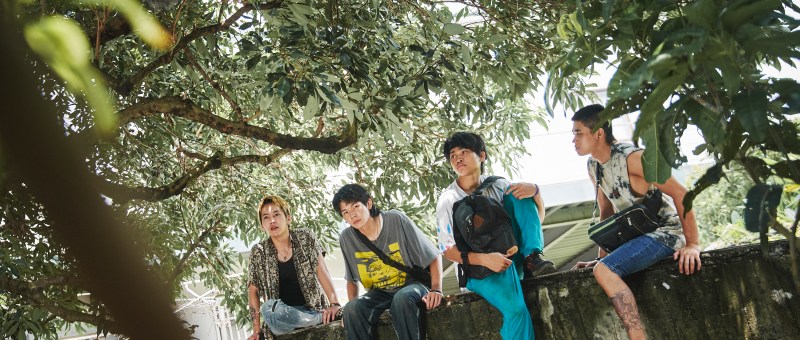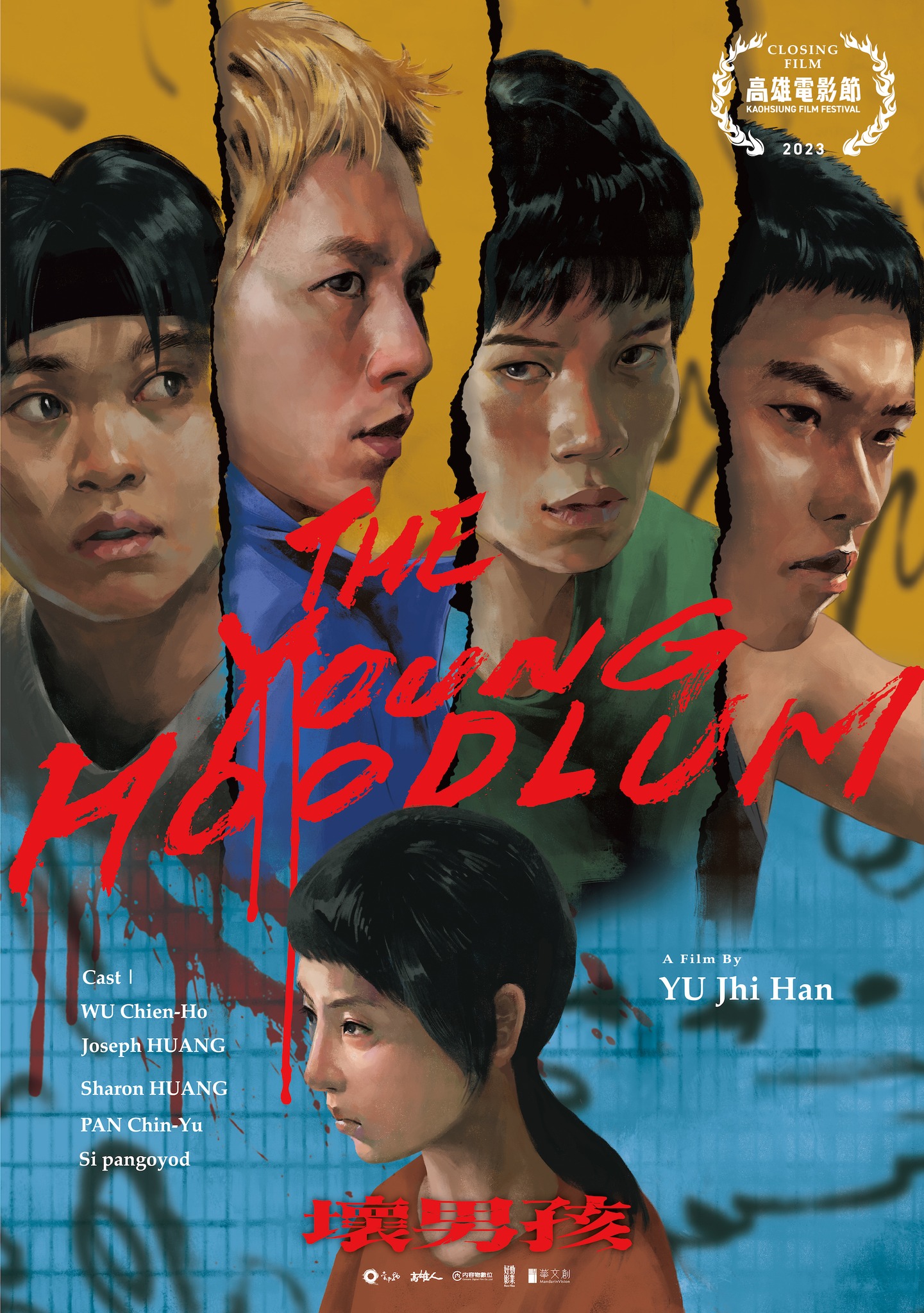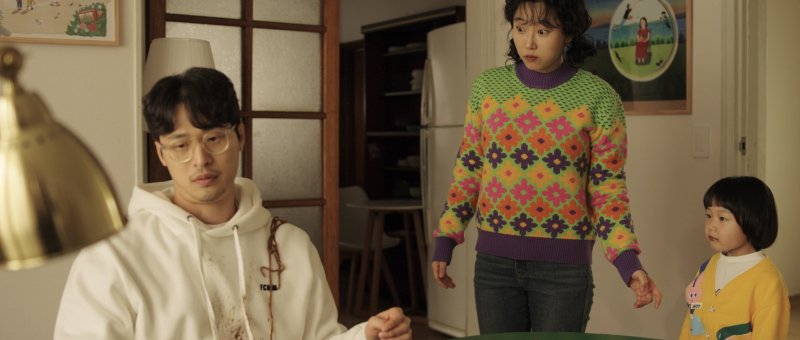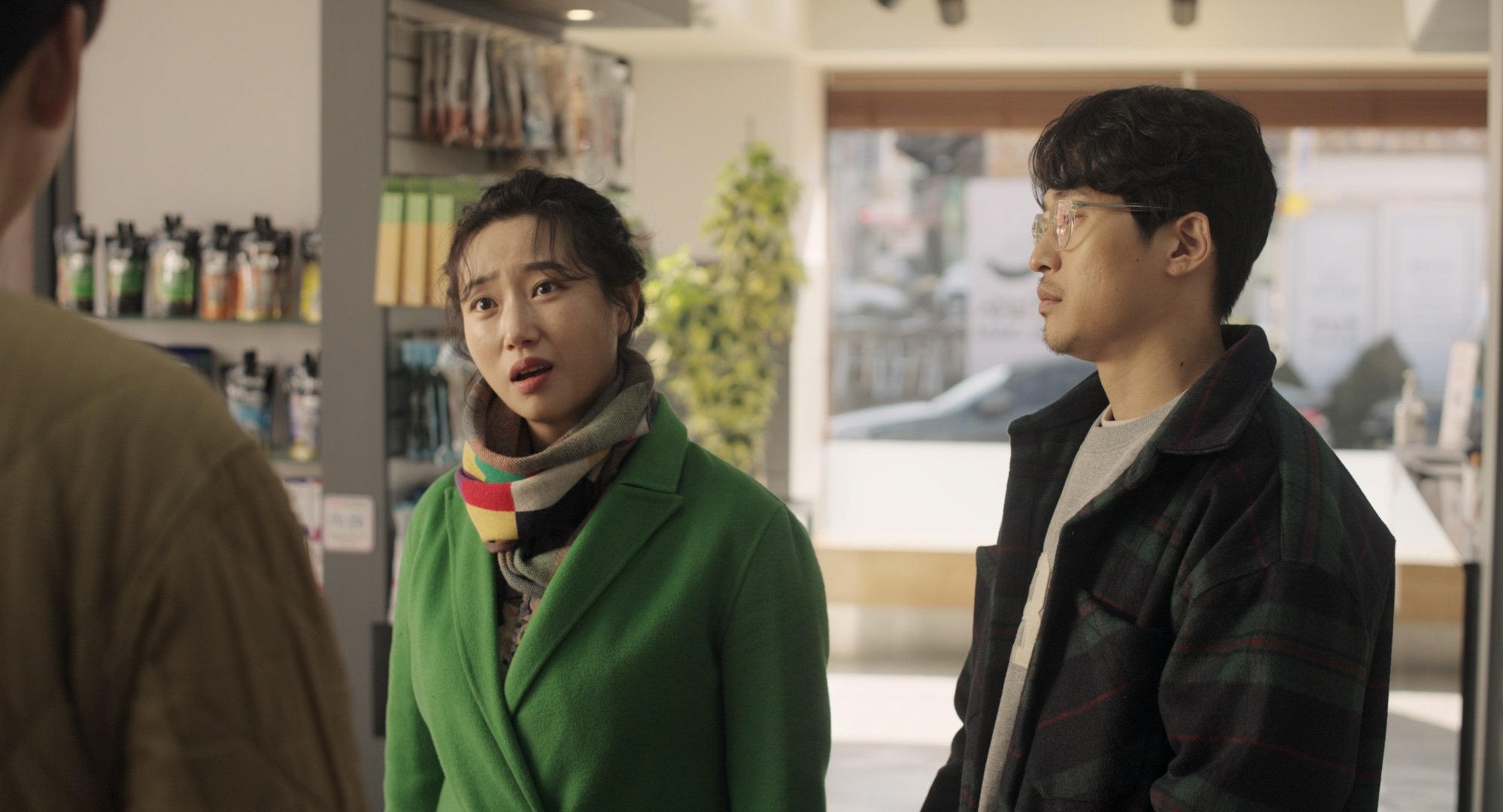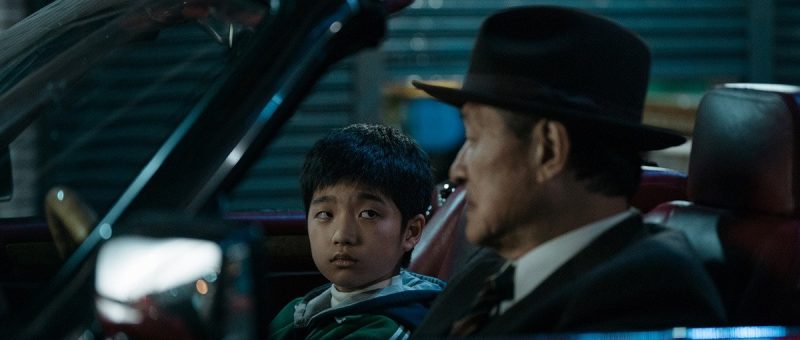
The 8th Night (제8일의 밤, Kim Tae-hyoung, 2021)

“But even the most trivial moments of our predetermined fate are meaningful as pieces of the whole” according to embittered former monk Jin-su having reached a moment of philosophical epiphany after bringing his karmic retribution full circle. Another in the recent series of Buddhist supernatural thrillers from Korea, Kim Tae-hyoung’s The 8th Night (제8일의 밤, Je8ileui Bam) once again turns apocalyptic as an ancient evil is set for accidental revival thanks, largely, to the wounded pride of a bitter old man. 

As the opening voice over explains, thousands of years ago the world was threatened by a powerful demon. Luckily, Buddha managed to vanquish him, tearing out his two eyes, one black one red, and burying them on opposite sides of the Earth in order to prevent them ever being reunited. Some people, however, just can’t resist chaos which is presumably why Professor Kim (Park Hae-joon) insists on retrieving the canister containing the Red Eye from its desert resting place, thereafter releasing its power when his discovery is rejected by both Buddhist and scholarly authorities. Sensing a disturbance in the equilibrium of the world along with the upcoming Blood Moon, priest Hajeong (Lee Eol) realises the prophecy of which he has been a guardian is about to come true. His big, somewhat unethical plan, is to kill off one of the seven pre-ordained victims of the Red Eye which he plans to possess in order to reunite with its partner in and stop it body hopping towards the apocalypse. 

You can make a case for greater good, but murdering an innocent person to put an end to a curse seems at best unfair, not to mention not very Buddhist. Hajeong sends young monk Cheong-Seok (Nam Da-reum) to track down his former pupil, Jin-su (Lee Sung-min) then known as Seonhwa to give him the instruction to assassinate the “Virgin Shaman” with a holy axe to stop Red Eye in its tracks. Jin-su is seemingly unconflicted about the murder but is carrying his own baggage, now living as a resentful construction worker. As it turns out, he and Cheong-seok are also linked by a karmic circle of guilt and trauma that the boy doesn’t remember and Jin-su has been running away from since leaving the temple. Meanwhile, he is also plagued by voices of departed spirits he for some reason refuses to help cross over to the other side. 

Meanwhile, over on the side of the rational, two policemen mirror the monks’ movements as they investigate the strange paper chain of mummified corpses turning up all over the city. Veteran cop Ho-tae (Park Hae-joon) feels responsible for his feckless associate Dong-jin, blaming himself for an accident which has left him physically impaired while resisting instructions from his boss to fire him. Yet the pair are entirely ill equipped to investigate this case of spiritual malevolence, confused by its religious connotations but perhaps filled with suspicion on realising that all of the victims belong to the same “meditation group” for people with suicidal thoughts which has been offering “free” blood tests and apparently paying for attendance. Described by one as more like a cult, the shady meditation group might be one kind of evil but what they’re currently facing is on an entirely different level. 

The irony is that it’s Jin-su who must learn to save the world by finding closure with his own traumatic past, generating a paternal bond with young monk Cheong-seok who is so excited by the world beyond the temple that he accidentally breaks his vow of silence and then can’t stop talking. Cheong-seok’s sense of wonder and confusion, unsure what to do about the meat he keeps finding in his food but also slightly bemused by Jin-su’s willingness to eat it for him, stands in direct contrast to Jin-su’s embittered cynicism as he attempts to resist his destiny only to receive a ghostly reminder that you can’t escape your fate and, in any case, his duty would simply fall on the successor, Cheong-seok. In order to save the world, he has to free not only himself but also Cheong-seok too from the cycle of karmic retribution which binds each of them in the “agony and anxiety” of the monster’s separated eyes, determining to set them to rest once again to restore a sense of balance in a destabilising world. A buddhist procedural, Kim’s supernatural horror may rediscover that hell is a place on Earth but eventually allows its heroes the possibility of escape if only in the willingness to free themselves from the shackles of the traumatic past. 


Original trailer (English subtitles)

The Missing (Iti Mapukpukaw, Carl Joseph E. Papa, 2023)

The title of Carl Joseph E. Papa’s meta animation The Missing (Iti Mapukpukaw) most obviously refers to the hero’s uncle with whom his mother has lost contact, but in a deeper sense refers to the protagonist himself and the various things he too is missing which notably includes his mouth. Shot in a rotoscope style, Eric’s (Carlo Aquino) mouth is literally blurred out as if it had been erased and smoothed over. He can no longer speak but uses a dry erase board to communicate with those around him.

His troubles start just he’s about to go on a sort of date with coworker Carlo (Gio Gahol) which ends with them discovering the body of his uncle who has apparently passed away in a lonely death. It’s it at this point that Eric is plagued by an alien who keeps trying to abduct him claiming that they have unfinished business. Eric later asserts that he’s afraid the alien is trying to take over his body, hinting at a deeper childhood trauma and anxiety over bodily autonomy and intimacy. The alien’s attacks seem intensify as he grows closer to Carlo, frustrating their tentative romance as if it actively trying to obstruct it. 

The alien’s presence leads to what may seem to others like strange or inconsiderate behaviour. He disappears on Carlo, locks him out of his flat, and seemingly drops out of contact for days on end causing him not an inconsiderate degree of worry given he’s just lost his uncle and appears to be in a state of emotional distress. Yet the most surprising thing is even on being told about the alien Carlo decides to just go with it, taking Eric’s explanation at face value and trying to help him evade it for as long as possible. He eventually admits that he can’t see what Eric sees and they aren’t where he thinks they are but otherwise provides a safe and non-judgmental presence that quietly supports him while he battles his internal demons. His mother Linda (Dolly De Leon) does something similar apparently aware of the alien’s existence, but not what lies behind it or what it really might mean.

Just as reality and fantasy begin to blur for Eric, Papa uses the medium to express his mental state as the world seems to literally crumble around him. The alien steals parts of his body and they literally disappear, a missing ear and blurred out eye along with a blankness where his hand should be. When Eric begins to recall his childhood memories, the animation style switches from the sophisticated rotoscoping of the rest of the film to something much simpler echoing a child’s drawings. In these sequences, the face of Eric’s uncle is always scribbled over in black pen echoing his more literal refusal to see and accept the past. He has been literally silenced by his trauma but now finds it banging on the doors of his mind demanding to be let in.

Yet the reason he is able to overcome it is precisely because of the love an acceptance he receives from his mother and Carlo who never question his reality or attempt to break him out of it, instead deciding to join him there and help him in his quest to get rid of the alien that has plagued him since his childhood. Only this way can he begin to reclaim the parts of himself that were missing, digging through the buried past to retrieve what was taken from him and eventually recovering his voice. 

His quest has a gently absurd quality as parts of him suddenly detach themselves and run away, leaving it unclear for much of the film if Eric’s alien is “real” in a more concrete sense or merely a representation of his childhood trauma and very much inspired by logics and aesthetics of a small child who has been forced to keep a secret out of fear and shame and thereby unable to communicate his pain. In the end it’s love that brings him out of it, a gentle, patient and unconditional love that takes him as he is and gives him the space to find his own way out his trauma. Filled with a sense of warmth despite the darkness of its centre Carl Joseph E. Papa’s strangely poignant film for all its talk of aliens and destruction is remarkably human allowing its protagonist to finally begins to recover himself thanks to the loving support of those around him.


The Missing screened as part of this year’s Osaka Asian Film Festival.

Original trailer (English subtitles)

Not Friends (เพื่อน (ไม่) สนิท, Atta Hemwadee, 2023)

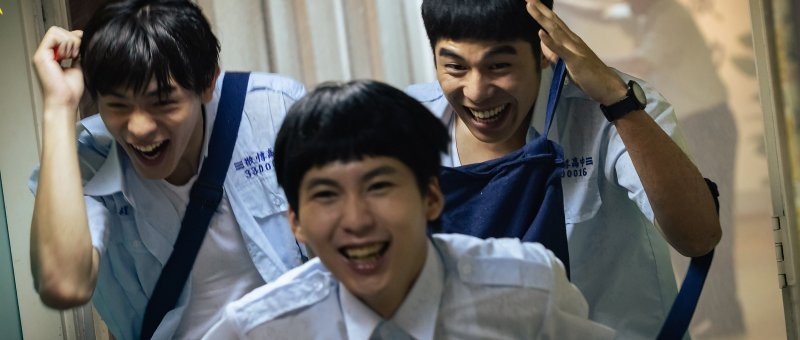
There’s a gentle sense of loss that runs through Atta Hemwadee’s quirky Thai dramedy Not Friends (เพื่อน (ไม่) สนิท), not only for those who are now absent and exist only in our memories but for missed opportunities and things left unsaid. Then again, its hero, Pae (Anthony Buisseret), takes a while to warm up to the benefits of friendship, like many teenage boys resentful and alienated, unable to accept the hand extended to him by his infinitely cheerful new deskmate, Joe (Pisitpol Ekaphongpisit), who walks around with a beatific smile permanently plastered across his face. 

Before he can make amends, however, Joe is hit by a car after returning from a school trip sending the school into a period of shocked mourning that for some reason includes a talent contest. After hearing of a competition that offers entrance to film school as a prize, Pae decides to enter and to make his late “best friend” Joe the focus of the film only to immediately be caught out in his duplicity by Joe’s former best friend Bokeh (Thitiya Jirapornsilp) who resents his intention to exploit Joe’s death for his own ends. 

It has to be said, that Pae does not come out of this well though his predicament does highlight a social stigma towards working class boys in his intense desire to escape having to take over his dad’s flour mill having been teased by his former classmates about his “stinky shirt” because he has to air dry his clothes in an area adjacent to the factory. A similar sense of lonely alienation is found in a short story Joe had submitted to a story contest which is about a boy who feels hopelessly ordinary and looks up to the stars thinking about all the other versions of himself on other planets who are “special”, top athletes or super spies or dim but loved by those around him. The boy wants his other selves to see him and know that he is special too, but seems not to feel it himself. 

Coming late to the idea, Pae slowly realises that Joe is special because “Joe is our friend” though he’d mostly ignored his attempts at friendship while he was alive. In any case, he doesn’t really notice the friendships he’s making with Bokeh or the others working on the film either but remains focussed on his own goal of winning the contest and escaping the flour mill. In the end the film he’s making ends up becoming less about Joe himself and more of an ode to absent friends, something echoed in Bokeh’s valedictory speech in which she bids goodbye to her “best not friends” and hopes that though they may not meet, they’ll miss each other every now and then. 

It comes down to a question of what friendship really is and whether Pae can be persuaded to abandon his sense of self interest to defend it. He realises that Joe had a lot of dreams too, ones he never got to fulfil and a couple that could be fulfilled for him if not in reality than in fantasy imagining how their lives might have turned out if Pae had been less self-involved and Joe had lived. Still, on finding out something unexpected he’s forced to confront the idea that perhaps you don’t really know anyone. Everyone knows a slightly different version of the same person but friendship is really about shared intimacy and a willingness to be open and vulnerable while simultaneously respecting the boundaries of others.

To that extent it really is about the friends we make along the way. Pae slowly comes to realise that he’s accidentally become friends with the crew on the film and lets go of some of his resentment becoming less self-centred and more willing to interact with others even warming to his father and family business he’d previously been ashamed of while also gaining the courage to pursue his dream of a career in film. Cineliterate, Atta Hemwadee breaks the action with a filmmaking rap and makes frequent references to popular film but invests the high school movie with a wistful sense of loss and nostalgia for the absent friends of youth whom we miss once in a while but are in another sense always with us. 


 Not Friends screened as part of this year’s Osaka Asian Film Festival.

Trailer (English subtitles)

The Clinic (ဆေးခန်း, Midi Z, 2023)

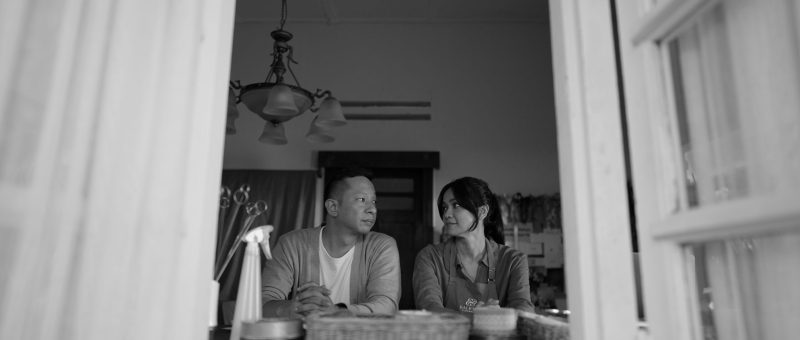
The title of Midi Z’s documentary The Clinic (ဆေးခန်) most obviously refers to that run by the two doctors at its centre providing a safe haven in the midst of chaos, but the director apparently envisaged secondary meaning in which the entire nation is a clinic filled with those in desperate need for treatment. It does seem that there is a lot of sickness and despair in this small corner of Yangon, the husband and wife doctors largely treating conditions related to alcohol and mental illness while otherwise powerless to do much more than treat their symptoms. 

It’s clear that there is little medical provision otherwise available in the local area. One woman has brought her sister from several towns over, explaining that there aren’t many doctors as kind as these ones are. They even invite their patients to return for dinner. The woman’s sister, however, has picked up head lice after a stay in hospital and seems to be under what they assume is a delusion of having been tried by the army for joining the Rohingya and rebelling against the Burmese state despite living in completely the wrong part of the country to have any contact with the conflict. Later the doctors sit in a cafe and listen to a speech by Aung San Suu Kyi about the Rohingya crisis which ends with an announcement for the delegates to head to a post-conference party. Doctor Aung Min quips that apparently they are not invited.

Aung Min is not invited to the party in many ways as he discovers when a film he’s made is screened at a human rights film festival but he’s harangued by a pro-military audience member who found his work offensive. A filmmaker as well as a doctor, he’s planning a film about an actor with fractured cultural identity as a Buddhist Rakhine taken to Bangladesh by the Rohingya. The actor is conflicted while considering whether to accept a film role that requires him to have a beard knowing that he may be mistaken for a Rohingya and will face social censure. In a meta touch, Aung Min’s film is like this one somewhere between documentary and narrative, incorporating photographs of the felling Rohingya in anguish and agony.

Meanwhile, Aung Min and his wife San San Oo treat similar ailments in their clinic, notably one middle-aged man with an infected leg wound originally caused by a drunken accident. Aung Min tells the man he might have to cut his leg off, but struggles to convince him when he says he’ll have to avoid alcohol for a few months to try to save it. San San Oo also answers the phone to reports of people in severe mental distress threatening to harm themselves or others. In quieter moments they offer art therapy to some of their patients and otherwise attempt provide a safe and comforting space. Both artists themselves, San San Oo is a keen painter while Aung Min has his film career. 

The film follows them in the midst of the military coup, the famous video of the woman filming a yoga session as the soldiers head towards the seat of government, during which the doctors and the clinic seem to stand firm while overseas radio reports reflect on the dire situation in the nation. Yet they are largely powerless to treat the wider sicknesses around them, the fear, the anxiety, guilt or indifference in a divided society. Instead, they take solace in their art but also in its capacity to heal while keeping the clinic open as a beacon of hope for wounded locals and those from further afield. 

Midi Z films with a detached naturalism that sometimes adds to a sense of absurdity echoing the outside chaos of the society mired in anxiety and confusion. “What’s in a film isn’t real,” Aung Min and a potential actor reflect, but even if this were not a documentary that is never quite true. Midi Z hints at the wider sicknesses in the society but in the end finds only powerlessness to treat it if tempered by the resilience of the doctors who keep their clinic open even in the darkest hours allowing the illumination of their signage to stand as a small beacon of hope amid so much despair.


The Clinic (ဆေးခန်း, Midi Z, 2003) screens in New York 17th March as part of this year’s First Look.

Trouble Girl (小曉, Chin Chia-hua, 2023)

The sad thing about Xiaoxiao’s life is that everyone is so intent on making her just like everyone else rather than trying to find ways to allow her to be more of herself. The film’s English title, Trouble Girl (the Chinese being simply her name, 小曉, xiǎo xiǎo), might hint at the external attitudes towards her in which she is seen only as a disruptive troublemaker while largely friendless and bullied by the other kids in her class.

The irony is that it’s only her teacher, Mr Chen (Terrance Lau Chun-him), who is actively trying to help her but he does so from a place of corrupted paternity in that he’s been having an affair with her mother, Wei-fang (Ivy Chen Yi-han), which began as a consequence of their meetings to discuss Xiaoxiao’s ADHD diagnosis and how to manage it at school. Seemingly under stimulated, Xiaoxiao ignores her classes and plays video games instead while Mr Chen doesn’t really say anything before gently taking her aside to suggest it’s not a good idea. He’s a proponent of positive reinforcement but is also a regarded as a soft touch by some of the other parents who increasingly turn against Xiaoxiao, regarding her as a disruptive presence damaging their kids’ education. 

Then again, it’s mostly these kids who are bullying Xiaoxiao for being not quite like them. Mr Chen has started some kind of secret program in which kids can get stickers for being nice to her, but it’s largely backfired as they alternately provoke Xiaoxaio because they think it’s funny when she loses her temper and act friendly when the teachers are around. Rather than attempting to make some accommodations for her, the school is only capable of trying to force her to behave in exactly the same way as everyone else. On an awkward camping trip with her mother and Mr Chen, he suggests capturing a frog but despite her fascination with them Xiaoxiao rejects the idea. She wouldn’t want the frog to be trapped in a bottle, and later attempts to free an owl from a cage symbolising her own desire to be free to be herself. After being suspended from school, she heartbreakingly tells her mother that she just wants to stay home and learn not to take pills anymore.

But then Wei-fang has problems of her own. She’s trapped too. Her husband has been living abroad for some time and it’s clear the marriage is all but over while she struggles to bond with Xiaoxiao and is ill-equipped to deal with her needs, perhaps on some level ashamed that she isn’t living up to the middle class ideals professed by the other mothers. She even may even resent her for trapping her in a dissatisfying domestic arrangement but is alternately frustrated that Xiaoxiao does not really want to play with her and prefers her father or Mr Chen. We see her struggle with her emotions too, sometimes slapping Xiaoxiao and shouting at her for doing something wrong or getting into trouble. 

Her affair with Chen may be a kind of escapist fantasy, but he seems to take it seriously and provides a positive, paternal presence in the absence of Xiaoxiao’s father who though he seemed caring later offers quite a harsh critique of his daughter that suggests he regards her as a disappointment. Nevertheless, it’s quite troubling that her sort of friend Xiaoshan calls Mr Chen “Paul” and is friendlier with him than seems appropriate but then her parents are involved with running the school so perhaps she simply knows him on a more personal level. Even so, the connection seems to arouse an odd kind of jealously that interacts with her disapproval of her mother’s betrayal of her father in having the affair. 

When Xiaoxiao tries to free the owl, she is surprised to discover that it simply flies back to its porch as trapped as both she and her mother though no longer with any desire for escape. Sympathetic towards the film’s twin heroines, Chin shoots with a down to earth naturalism though through the eyes of Xiaoxiao who is really just looking to be accepted for who she is while observing that her mother is much the same but even approaching middle-age seems no closer to finding accommodation or fulfilment.


Trouble Girl screened as part of this year’s Osaka Asian Film Festival.

Original trailer (English subtitles)

Mimang (미망, Kim Tae-yang, 2023)

Part way through Kim Tae-yang’s Mimang (미망, Mimang), a woman giving a talk about a classic Korean film the ending of which is lost to time remarks that the audience will walk out onto the same Seoul streets the protagonists of the film once trod in 1955. They are literally the same streets, but of course they aren’t. On her way there, she’d talked to an old friend she’d bumped into along the way about the imminent redevelopment of the area which will lead to the cinema she’s on her way to being torn down. A statue of Admiral Yi they frequently refer to as a meeting point and landmark will be moved to accommodate the new road structure leaving them even less certain of direction than they were before.

In fact, the statue itself is compromised in that it depicts Yi holding his scabbard in his right hand which implies he was left handed in contrast to all the other statues of him that suggest otherwise. The woman claims her friend, the man, told her this before a long time ago and insisted that this sculptor did his homework and got it right though another woman he later meets, his current girlfriend, claims the reverse is true. A man the woman later meets, the organiser of the event she was appearing at, offers another interpretation which insists the only answer is uncertainty. There’s no historical record as to whether Yi was right or left handed, and in any case given the stigma towards left-handed people he may have been forced to behave as if he were right-handed even if he were not.

The conversations themselves are meandering and circular, offering no real conclusions and like the classic film missing an ending. The word “Mimang” can have many connotations some of which are outlined by title cards appearing throughout the film though all echoing a sense of being lost, wandering in a literal but also intellectual sense unable to reconcile oneself to an ever changing world that in other ways never changes. The man complains that everything repeats itself and that life is just a cycle that revolves from noon to midnight which is indeed what happens in the parallel conversations of the man and woman as they travel through the city in the company of their respective partners each revolving around the shortly to be (re)moved statue of Admiral Yi. 

In any case, we can feel a sense of loss between them that perhaps they were once together and then parted or almost but never were. In the third arc of the film which occurs some years later they re-encounter each other at the funeral of a university friend, someone their age who has passed away though as another friend points out they’re all still too young to see each other only at funerals. They make an arrangement to visit a bar they used to go to, near the statue of Admiral Yi, though something comes up, someone leaves, and they part again without really having said anything much at all. Moments pass without noticing, and as the song the man sings in memory of his friend suggests, were really “nothing special” after all. 

The organiser of the event the woman takes part in has a habit of saying “that happens” as if nothing really surprises him amid the mundanity of an ordinary life. As the film opened, the man had got off the bus at the wrong stop which is how he meets the woman to whom he explains that often finds his way by getting lost, a sentiment echoed in what he tells her learned in drawing class that things which seem like mistakes can actually be interesting diversions which take you somewhere new. A less comfortable motif sees both men confidently give the woman directions, assuming they know where she wants to go and somewhat unwilling to let her walk her own way though she in turn seems lost for direction and unsure which way to turn. We too can see the passage of time in the differing quality of the photography, the ADR’d dialogue and gentle ageing even the various ways the man and women dress though obviously more formally in the final sequence. Like the classic film this one has no ending either, just a gentle fade in which we can’t be sure if the man the woman will ever meet again or what might pass between them if they do only that they will continue to wander these ever-changing yet familiar streets in search of something they know not what.


Mimang screens in New York 17th March as part of this year’s First Look.

Trailer (English subtitles)

Monster (怪物, Hirokazu Koreeda, 2023)

Part-way through Hirokazu Koreeda’s probing drama Monster (怪物, Kaibutsu), a distant headmistress tells one of her teachers that “What actually happened doesn’t matter.” As in The Third Murder, the truth, so far as it can be said to exist at all, is an irrelevance. We need narrative to serve a purpose. Confronted by a worried mother, a teacher accused of using violence against a student claims there’s been a “misunderstanding,” but in many ways there has. We’re so often prevented from speaking our truth by the social conventions that govern us, because of shame, or fear, or simply because when all is said and done is it often easier not to speak.

In may ways this is the internal battle Minato (Soya Kurokawa) finds himself fighting. He sees another boy being bullied, mostly just for being different, and he wants to do something about it but he’s different too and so he’s afraid. He befriends the boy, Yori (Hinata Hiiragi), but also tells him to not speak to him in front of their classmates because he doesn’t want to end up being a target. In the midst of futility all he can do is flail randomly, trashing the schoolroom not to mention his bedroom at home solely because he is unable to voice himself clearly or communicate in any other way.

Because of these lapses in communication, a series of misunderstandings arise. The language we use is often thoughtless and arbitrary. Well-meaning words can still wound. Minato’s mother, Saori (Sakura Ando), tells him that she promised his late father she’d take care of him until he had a wife and family of his own but perhaps that not something Minato will want. Similarly their teacher, Hori (Eita Nagayama), described by one of his colleagues as “shifty-eyed and creepy”, makes a series of throwaway remarks that the boys should act let men, filling their heads with an idea of toxic masculinity echoed in Saori’s insistence that girls prefer boys who don’t know the names of flowers. 

Minato is reminded that the bottom layer of the pyramid holds everything else in place, but it’s a responsibility he doesn’t think he can bear. He knows he can’t be the kind of man his father apparently was, a rugby player who may have been with another woman when he died, and feels an acute sense if failure and inferiority in being unable to live up to the expectations of others. He later tells the headmistress (Yuko Tanaka) who is carrying a burden of her own that he knows he can never be happy and believes himself unworthy of it only to find an unexpected source strength in her advocation that happiness is something anyone can have, otherwise it wouldn’t be happiness at all.

Yet for all that Yori seems to be happy, or at least to affect cheerfulness in all things despite his dismal circumstances living with a troubled father who drinks and refers to him as monstrous and diseased. One of the teachers also brands the parents of his pupils as monsters feeling they unjustly “torture” them while shifting the blame for their own bad parenting. Minato too feels himself to be a monster because he senses that he’s different from those around him and is afraid of them and of himself. Throw away remarks hint at buried prejudice, such as in Hori’s dig at single mothers stating that his own mother was one and exposing a degree of insecurity masked by an outward conservatism.

We judge him for this remark, but it’s also true he’s merely parroting something that was said to him. We can never know all of the truth, and Hori suffers in part because of his “shifty-eyed and creepy” appearance that contributes to our conviction the accusations against him are likely to be true in the same way he misunderstands Minato because of his confusing behaviour and inability to communicate. Gossip weaves itself into a kind of folk truth that becomes difficult to unravel no matter the degree of veracity within it, while we discover we can never know the whole of something only the facets of it that are presented to us and might well result in “misunderstandings.”

Koreeda shifts our perspective and exposes the flaws in our assumptions, illuminating with empathy a sense of a more objective truth that was hidden from us but equally the various reasons we cannot always be truthful even with ourselves nor can we see what others see of us. Obsessed with the idea of rebirth, the boys discover their own kind of paradise in private world in the midst of nature free of social conventions or expectation and free to be exactly as they are. The ambiguity of the ending may subtly undercut its seeming utopianism but nevertheless suggests that the only objective truth may be that happiness is something anyone can have if only they can free themselves from the prejudices and petty social conventions which govern our world.


MONSTER is out in UK and Irish cinemas on March 15th. For more information, go to https://monsteruk.film/ 

Uk trailer (English subtitles)

A Weather Report (胴鳴り, Yu Kajino, 2024)

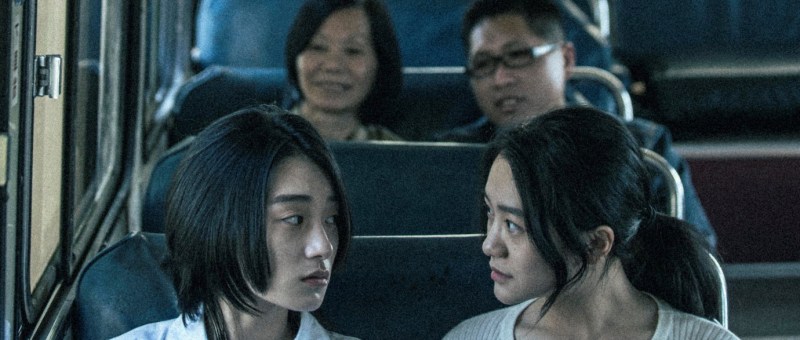
A successful television writer is confronted with the mistakes of his past when the teenage daughter he abandoned before birth suddenly tracks him down in Yu Kajino’s indie drama, A Weather Report (胴鳴り, Donari). The film does indeed feature several storms of the more literal kind, but dances around the fallout of the writer’s unexpected reconnection along with his ongoing inability understand himself or the nature of his relationships.

This is in a sense ironic, as Omori’s (Ryuta Furuya) big hit show Cliffs of Love is a poignant romantic drama about two people who are too shy to reveal their feelings openly and consequently can only behave in ways which seem bizarre. Omori later has a similar moment to the lovers from the show when he attempts to take his relationship with casual girlfriend Satsuki further only to find her on a completely different page and explaining to him that they are both people who don’t know how to love or be loved so they were never really destined to be together for the long term. 

Even so, the man we see now, if perhaps a bit of a sleaze, does not really seem like the “human shit” his former partner Mayumi describes him to be. It’s difficult to know what brought the relationship to an end with such apparent recrimination, though the reappearance of his daughter Hikari confronts him with the possibly questionable decision he made to stay out of her life having been told by Mayumi that she intended to raise the child alone and didn’t need his input. He abandoned her with a sense of relief born of parental anxiety, yet now begins to act like a father protecting and nurturing her after she comes all the way from Niigata on the train to find him having fallen out with her mother who has taken up with a smarmy business man, Numata. 

Hikari later ironically remarks that she was never really interested in her mother until they were separated and is getting to know other sides of her thanks to talking to others that knew her. In another way, it might have been the reverse with her father who was otherwise absent from her life leading her to create her own image of him which meeting threatens to shatter. Omori dreams of attending a theme park with his now teenage daughter who is clearly too old for such things, only to suddenly realise she wasn’t with him any more and feel unexpectedly anxious for her. 

It seems that Hikari was hoping he’d be able to do something to oppose her mother’s relationship with Numata though for obvious reasons he is reluctant to do so, politely listening to Numata’s conservative political ranting without saying a word. She sees them float up like ghosts in a hotel corridor and is somehow haunted by their presence though she says she doesn’t mind her mother dating only taking a personal dislike to Numata who was a frequent customer at the bar her mother ran. As for Mayumi herself she too seems to struggle with loving and being loved, still incredibly angry with Omori all these years later while otherwise drinking heavily and playing Momoe Yamaguchi’s Last Song For You on repeat.

In any case, though the unexpected reconnection with her father may strain the relationship she has with her mother it eventually seems to give her a new kind of strength and maturity even as she contends with a self-centred boyfriend who simply rides off on his bike when she challenges him about sleeping with her friend and tries to adjust to the ironic role reversal of her mum moving on by getting a boyfriend leaving her largely home alone. Omori continues to narrate his life while researching his next drama and getting suckered by the bizarre claims of a potential subject just as he begins to interrogate himself and the regret and failures of his life. Set in picturesque Niigata with the fabulous home in which Hikari and her mother live surrounded by the nature, the film has an elemental quality in which a change in the weather can signal calamity or liberation but also a sense of peace amid the serenity of unexpected reconnections.


A Weather Report screened as part of this year’s Osaka Asian Film Festival.

Original trailer (English subtitles)

Momoe Yamaguchi – Sayonara no Mukougawa (Last Song for You)

Swimming in a Sand Pool (水深ゼロメートルから, Nobuhiro Yamashita, 2024)

As the film’s title implies, the teenage girls at the centre of Swimming in a Sand Pool (水深ゼロメートルから, Suishin Zero Meter Kara) each find themselves pushing forward but meeting with resistance in Nobuhiro Yamashita’s deadpan teen comedy. Inspired by a high school play, the drama has a timely quality as each of the girls reconsiders what it means to be a woman while simultaneously insisting that gender doesn’t matter. In this case, however, it seems to matter a great deal as they’re forced into the “meaningless” and Sisyphean task of sweeping their swimming pool free of the sand that drifts over from the boys’ baseball game.  

As one of the girls, Chizuru (Mikuri Kiyota), suggests, the boys probably don’t realise (or care) how their actions are inconveniencing them. It’s the middle of summer and the pool is supposed to be undergoing maintenance in August which makes this pointless task seem even more absurd yet after trying to complain to their equally frustrated teacher Yamamoto they’re told they’ve got an attitude problem and it’s only “meaningless” because they’ve decided so in heir heads. As an adult woman, you’d think Yamamoto would have more sympathy or at least some kind of advice for the girls but only seems to want to drum mindless obedience into them, insistent that if she’s told them to do something then it must in fact have meaning. At the end of her tether she snaps that perhaps she doesn’t really like having to conform to the idea of what a teacher should be either, but seems clear that one must do it anyway. Still when a friend from home expresses surprise she’s staying in town over the summer to supervise students, Yamamoto bristles when she remarks that she now seems very like a teacher and is later seen having a covert smoke round the back of the school. 

Obsessed with rules and conformity, one of the chief reasons she’s disliked by the girls is a sense of treachery in having made one, Kokoro (Saki Hamao), humiliate herself by forcing her to participate in a swimming lesson while menstruating. Yamamoto complains that she didn’t ask for an exemption via the appropriate protocols, adding that some girls use it as an “excuse” for getting out of things. Repeatedly the girls accuse each other of using their gender to make excuses for themselves in backing down in front of the boys or allowing themselves to be constrained by social ideas of femininity. Gender is indeed something they seem to think about and dwell on, Kokoro constantly insecure in her appearance while insisting that a girl must be cute in order to count and this is the way she strives for equality with men while simultaneously insisting that gender equality is a myth.

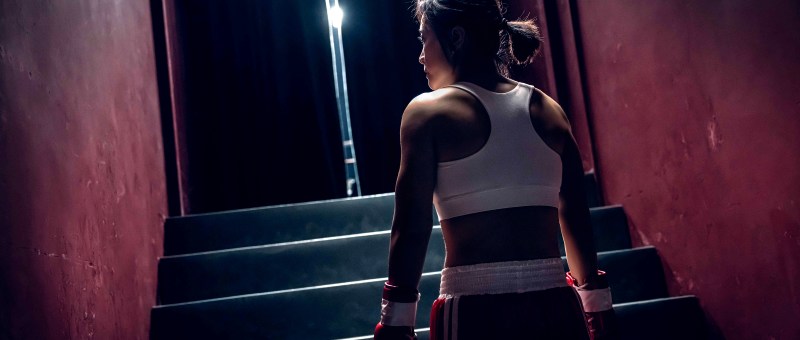
For Miku (Reina Nakayoshi), meanwhile, the opposite maybe true in that she dances the male version of the local folk dance and has done since she was little though now wears a chest binder while she does. Miku seems hurt by Kokoro’s picking at her, eventually walking off and bumping into another girls, Rika, whom it appears she may have a crush on and is a sort of rival of Kokoro’s having beaten her to become manager of the boys’ baseball team. Another girl, Yui, seems to have a similar admiration for swimmer Chizuru but is frustrated by her having experienced a moment of existential crisis being beaten in a race by baseball team star Kusonoki with whom most of the other girls are in love.

What’s true, however, is that none of the girls can do much of anything while desperately trying to sweep up all the dust the boys chucked at them so they can get their pool back and finally swim again. “Don’t take high school girls lightly,” one insists, while another decides to make a “declaration of war” but only seems to elicit snickers from the boys. Nevertheless, through their time shovelling the sand, the girls seem to have come to their own conclusions about the role of gender in their lives and generally discovered a new kind of liberation both from their own self-imposed ideas and the sometimes repressive nature of education that reinforces them. A charming teenage summer comedy, Yamashita nevertheless captures an inspiring sense of rebellion from the students who will no longer be bound by outdated notions of what everyone else tells them they should be.


Swimming in a Sand Pool screened as part of this year’s Osaka Asian Film Festival.

Original trailer (no subtitles)

Wash Away (うぉっしゅ, Ikunosuke Okazaki, 2024)

A disconnected young woman begins to rediscover herself while caring for her ageing grandmother who is largely bedridden and has advanced dementia in Ikunosuke Okazaki’s lighthearted indie drama, Wash Away (うぉっしゅ, Wash). In a sense, the heroine is attempting to wash away loneliness but is ironically unable to scrub away her own while filled with a sense of shame and aimlessness in the city working at a soapland and dreaming of a career in real estate.

Soaplands are are legalised form of sex work in which generally male customers can pay pretty young women to give them a wash. Kana has been working at one for some time under the shop name Koyuki and has made a nice life for herself with a swanky apartment but has avoided returning to visit her family and has led them to believe she’s an estate agent. Despite having a maid visit three times a week, her flat is strewn with rubbish and empty fast food containers which hint at her inability to look after herself along with a sense of internalised shame. She looks to her housekeeper, Mrs Natori, as a kind of surrogate mother and is forever giving her expensive gifts and inviting her to stay for dinner in an attempt to circumvent the loneliness she feels in the false connections of her work in which the customers either become over invested in her Koyuki persona or completely forget her once the appointment is over.

As Mrs Natori later points out, it was Kana herself who had largely forgotten about her grandmother Kie whom she had not seen in at least eight years. When her mother, Sanae, has to be hospitalised for a hip operation she asks Kana to watch Kie during the day to which she reluctantly agrees. Despite not having had any recent contact with her, Kana is still disappointed when Kie cheerfully introduces herself on her arrival as if they were complete strangers meeting for the first time, something she continues to do each day that Kana arrives at the house. The irony is that part of Kana’s job is to wash her grandmother in the same way as she washes customers at the soapload though she encounters the same kind of frustrated connection unable to get through to Kie who is lost in time and often incredibly anxious that she’s late for some kind of event where everyone is waiting for her. 

Though she approaches the responsibility seriously, the truth is that Kana is fed up after the first few setbacks and decides to subcontract her care responsibilities by outsourcing to a professional carer telling herself that her grandmother would probably prefer that anyway. Her friend Sumire seems disappointed in her, remarking that perhaps Kie is in a way lucky to get to experience so many things for the first time again and meet the world with a sense of childish wonder such as in her fascination with colourful plastic balls. In an odd way, caring for her grandmother encourages to Kana to start caring for herself, gaining the confidence to speak honestly with someone she assumes won’t remember anything she says but reassured by Kie’s surprising outburst that work is work and she’s no need to feel ashamed of herself if she approaches it with pride whatever her occupation might be. 

This simple act of interest begins to reawaken something in both of them, Kie’s memory and energy seeming to improve in the light of Kana’s determination that she won’t be forgotten much as she hopes she won’t be either in a constant search for connection. Though she may have thought her grandmother had forgotten her, that she was in a sense invisible and faceless to the customers who bought her services, Kana washes away her misconceptions and learns to see herself again in repurposing her work as an act of care. Okazaki lends the world around her an off kilter quirkiness that is at odds with the despair Kana feels and while never shying away from the difficulties of caring for someone with advanced dementia allows the two women to recover both something of themselves and each other through the simple act of reconnection.


Wash Away screened as part of this year’s Osaka Asian Film Festival.

Original trailer (no subtitles)