Art College 1994 (艺术学院, Liu Jian, 2023)

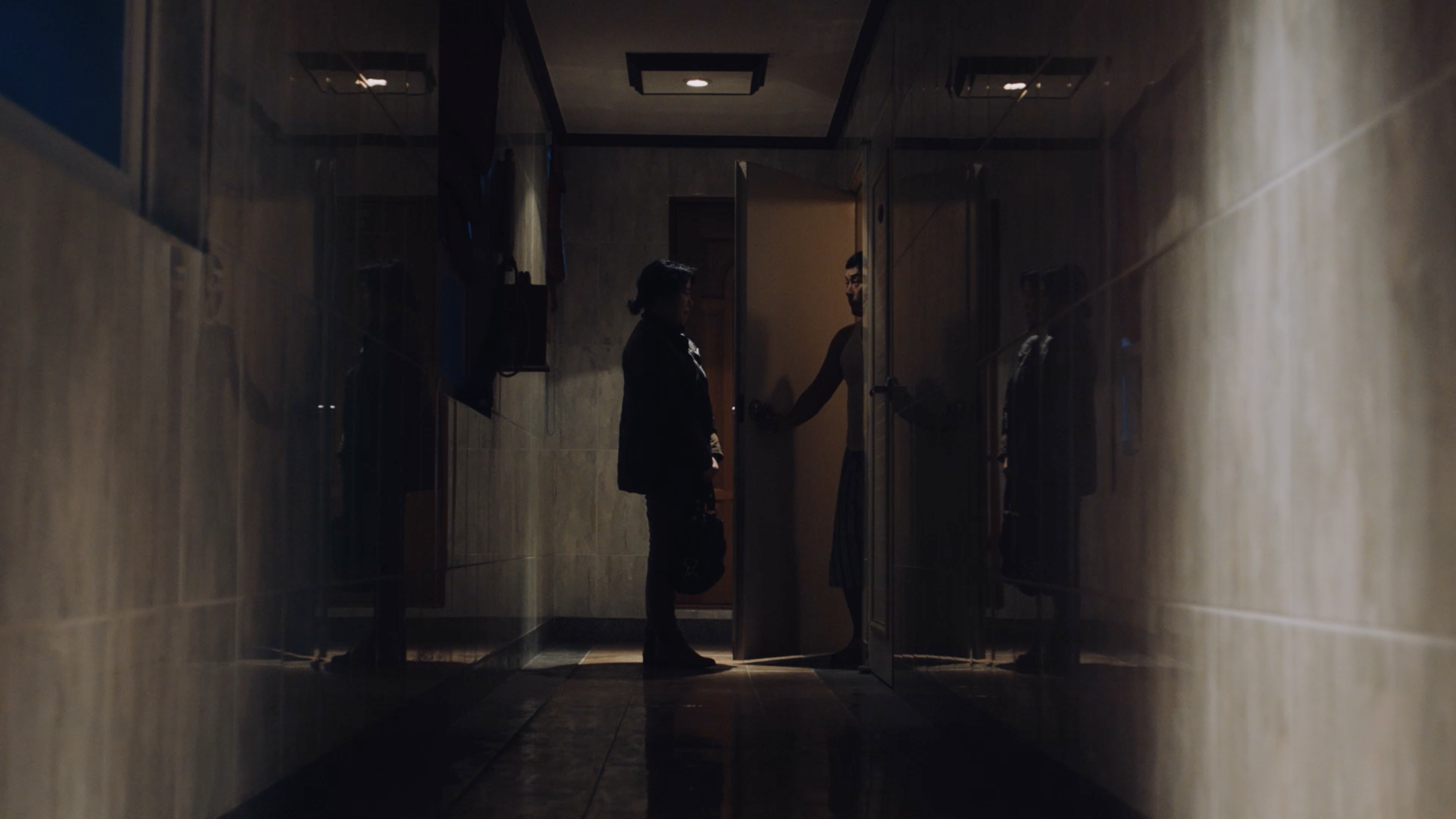
In the opening title sequence of Liu Jian’s animated dramedy Art College 1994 (艺术学院, yìshùxuéyuàn), a beetle tries to climb a decaying wall but repeatedly fails until it falls on its back and flails wildly trying to right itself. It might in a way stand in for Liu’s protagonists, each of whom are floundering in various ways amid the contradictions of the rapid social changes of mid-90s China. A potent sense of place lends weight to what is obviously an autobiographically inspired tale of youth’s end coloured by rueful nostalgia. 

The rebellious Xiaojun clashes with his tutors who think he’s overly influenced by Western art movements and lacks the maturity to understand that there is also truth in traditionalism, while his best friend Rabbit begins to worry about more practical matters and their future in a changing society. The boys eventually develop a friendship with music students Lili and Hong who find themselves similarly at odds. Brash and brimming with false confidence, Hong dreams of becoming a famous opera singer and resents the patriarchal social mores of a still conservative China. “Sooner or later we all have to marry someone.” Lili sighs as if feeling the walls closing in on her, only for Hong to ask why no one ever realises they’re “someone” too. 

They have grand conversations about the nature of art, beauty, tradition and modernity, conservatism and social change, belying their naivety but still filled with a sense of freedom and curiosity that is only beginning to be coloured by a concurrent anxiety. “I thought I knew everything. The truth is I know nothing.” Hong finally concedes after a failed romance, arguing with Lili with whom she may always have been on a different page. Shy and bespectacled, Lili is a realist amid a group of dreamers. She nurses a nascent crush on Xiaojun but is courted by a condescending bore who comes with her mother’s approval. Perhaps she’s merely afraid of the risks involved when real feeling is in play, but for all her talk of “freedom” makes her choices intellectually and leans towards the pragmatic. Xiaojun is a penniless painter, but her suitor is a wealthy man who can take her to Paris to study. Amid the contradictions of mid-90s China, who could really blame her for making a “sensible” choice even it means the sacrifice of her emotional fulfilment? 

Xiaojun lets his chance slip away from him, failing to say anything meaningful before revealing he’s going away on a study trip for an extended period of time. But like Lili he meditates on art and the soul while romanticising a poverty he may never really have experienced. The boys hang out with eccentric drifter Youcai who repeatedly failed the entrance exams but hangs around on campus anyway soaking up the atmosphere while prone to sudden attacks of performance art. After a stint living in the artist community in Beijing he returns in the company of crooks and conmen, working as a sign painter to get by while lamenting his own lack of talent. He says he makes money in order to make art, while Xiaojun disapproves of his moral duplicity insisting that it’s right for an artist to be starving because suffering fosters art.

Youcai asks him how you can make art if you can’t eat while insisting that art is one big business, just like everything else it too is suspect because it is dependent on money. Xiaojun disagrees, claiming that that art is the only escape from reality that can bring people spiritual satisfaction. Ironically enough, he says this while sitting directly underneath a billboard advertising Michael Jackson’s Bad, while we’ve already seen him ride his bicycle past a conspicuous piece of graffiti featuring the characters for CocaCola in Chinese. When Lili’s suitor says he’ll buy them dinner, Liu ironically cuts to the two girls sitting outside a McDonald’s eating ice cream. This does seem to be a very dubious sense of “modernity”, mediated through Western consumerism that in contrast to the values Xiaojun places in “art” is spiritually empty. 

Even so his disapproving teacher reminds him that great art is born of sincerity, hinting at a degree of affectation in his insistence that art should change with the times when not all truths need to be revolutionary. In any case, each of the students learns a few hard lessons about life and disappointment as they too succumb to unavoidable realities and accustom themselves to an uncertain society. Liu ends the film with a series of title cards that feel very much like those often added to placate the censors, usually detailing that wrongdoers were caught and punished for their crimes but this time conjuring more wholesome futures for the students that undercut the sense of the frosty melancholy in the closing scenes which leave Xiaojun all alone as he takes up brush and ink. Yet in Liu’s achingly potent sense of place, there is both a poignant nostalgia and an inescapable sense of loss and regret for the missed opportunities of youth. 


Art College 1994 screened as part of this year’s Red Lotus Asian Film Festival.

Trailer (English subtitles)
Jeong-sun (정순, Jeong Ji-hye, 2022)

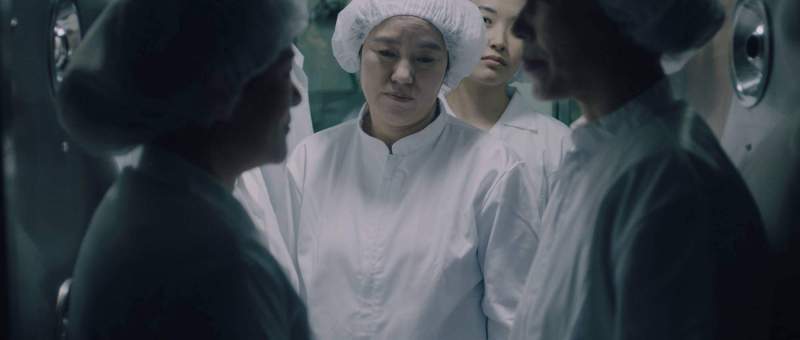
“Is it a crime to be old?” a middle-aged woman asks after finding herself the centre of scandal in Jeong Ji-hye’s timely drama, Jeong-sun (정순). Surrounded by an ageist and misogynistic society, Jeong-sun has always bided her time and played by the rules but is acutely aware of her predicament as an older woman knowing that if she loses her factory job no one else will hire her and therefore submits herself to all the petty microaggressions of life on the margins. 

Chief among them would be her obnoxious floor manager Do-yun, little more than a teenager with a clipboard and an inflated sense of his own importance. She and the other women gossip about Do-yun’s dubious love life which partially relies on abusing his authority to date factory girls whom he gives preferential treatment and then discards once he’s bored. There’s also a rumour going around that the managers plan to fire some of the older workers like Jeong-sun after hiring permanent employees while a generational divide is developing between the full timers and the college students who turn up for the summer and secretly think they’re better than this. Jeong-sun accidentally offends one of them by playfully making fun of her putting on makeup in the changing room given that they’re all about to put on identical white uniforms and go through decontamination to head to the factory floor. 

The irony is that she begins to bond with new employee Yeong-su out of their shared sense of alienation as marginalised middle-aged people. Around her age, Yeong-su previously worked casual jobs in construction but has switched to the factory because of knee damage caused by years of manual labour. His physical injury has further damaged his sense of masculinity leaving him deeply insecure and desperate for approval from other men including that from the continually obnoxious Do-yun. When Do-yun asks him if he has a girlfriend, Yeong-su sheepishly replies that he’s too old for all that only for Do-yun to insultingly add that he doubts he has the time or money considering he just works on the shop floor. When Jeong-su’s daughter Yu-jin (Yoon Geumseona) and her fiancé ask her if she might have a boyfriend, Jeong-sun gives a similar reply seemingly feeling a degree of shame about being an older woman daring to date. She tells Yeong-su that they should slow down because she’s embarrassed to hear the other workers gossiping about them, but Yeong-su takes it the wrong away assuming that she too looks down on him for being a penniless factory worker with not much to his name.  

It’s this combination of ageism and sexism that gradually destroys their relationship. Mocked by Do-yun who calls him a “naive” man, Yeong-su shows him a video Jeong-sun had allowed him to take of her singing in her underwear in a moment of empowerment. Soon, it’s leaked online and Jeong-sun becomes the talk of the town, a figure of fun just for being a middle-aged woman embracing her sexuality. While the younger women laugh at her, Jeong-sun’s daughter and friends are universally sympathetic as is the policeman Yu-jin reports the incident to, but she later finds that not even the police really take the case seriously despite Jeong-sun’s increasingly precarious mental state. “I’m sorry to say this, but younger females are usually the victim” the policeman adds as they push Jeong-sun to settle, implying that no one’s all that interested in Jeong-su’s video and the taboo incident is somewhat embarrassing even to him. Yeong-su meanwhile offers a pleading “apology” before trying to convince Jeong-sun not to press charges because he’ll never work again with bad knees and a criminal record. 

Yeong-su said he’d move away and that it would all blow over, but Jeong-sun later catches sight of him laughing and joking with Do-yun and the other guys from the factory very much one of the boys. Her life has been ruined, but they’ve got off scot free. “Why should I stay put?” Jeong-sun finally asks in directly standing up to Do-yun who is after all a cowardly boy who bullies other men to bolster his fragile sense of masculinity. He responds by calling her a “crazy bitch” while she destroys his false authority and plays him at his own game, somehow taking something back if only in a moment of self-destruction. Where she finds herself is literally in the driving seat of her own life, seizing the opportunity for freedom and independence that comes with age but also the breaking of a spell that had been designed to keep her in her place. 


Jeong-sun screened as part of this year’s Red Lotus Asian Film Festival.

International trailer (English subtitles)
Say I Do to Me (1人婚禮, Kiwi Chow, 2023)

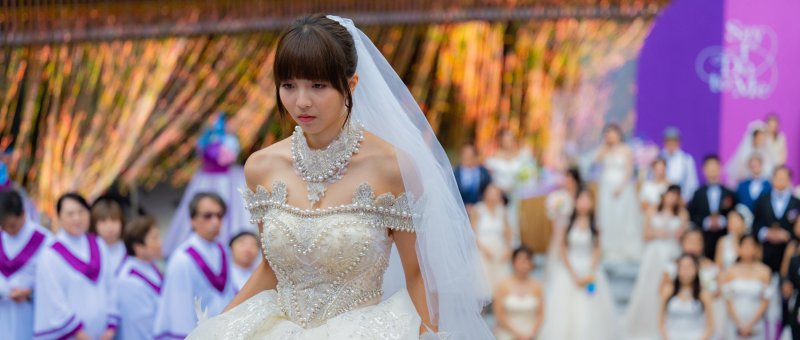
A struggling influencer’s bid for internet fame through marrying herself soon goes dangerously awry in Kiwi Chow’s anarchic take on contemporary social media mores and the need for authenticity, Say I Do to Me (人婚禮). Ping (real life YouTuber Sabrina Ng Ping) swears that she’s done with changing herself for others and is determined to enjoy life on her own terms, but the irony is she’s anything but honest with herself as she attempts to bury her abandonment issues and ambivalence towards marriage beneath her friendly clown persona. 

Despite telling all her followers that she sees no need to wait around for someone else to make her happy so she’s going to marry herself, Ping is in a longterm relationship with middle-school sweetheart Dickson (Hand Rolled Cigarette director Chan Kin-long) who handles the tech side of their YouTube channel. When their clown-themed videos failed to win an audience or pay the bills they started looking for something edgier, shifting their focus to their own relationship. When that too failed to set netizen’s hearts aflame, they started engineering fake romantic drama including a “real fake” wedding and Dickson cheating scandal. To get themselves out of the hole they’d dug, Ping comes up with the idea of “sologamy” in which she’ll get back at “cheating” Dickson with a solo wedding on the day they would have got married, while Dickson mounts a counter campaign wearing a giant monkey head to promote his “solo funeral” movement railing against fake affirmation of Ping’s embrace of “authenticity”.

Of course, authenticity is the one thing Ping isn’t selling. She’s telling everyone else they should be true to themselves, but has based the whole thing on a lie in still being in a relationship with Dickson while adopting a fake influencer persona of a woman who has herself together and is fully ready for commitment. The duplicity begins to eat away at her as she witnesses its effects on others including a middle-aged woman (Candy Lo Hau-Yam) she’d assumed to be in a perfect marriage who suddenly reveals she’s been unhappy for decades because she couldn’t accept her sexuality. Thanks to Ping, she’s decided to divorce her husband and live a more authentic life all of which leaves Ping with very mixed feelings. Meanwhile, she’s relentlessly pursued by a devoutly religious man who seems to be in love with her on spiritual level, and also comes to the attention of “Hong Kong’s last Prince Charming” who has hidden anxieties of his own. 

The film seems to ask if it really matters if Ping was “lying” when her example has made a “positive” difference in people’s lives in enabling to them to accept themselves and find true happiness even if in doing so they might necessarily hurt someone close to them. Dickson seems certain that the internet isn’t really real and you really don’t need to be “authentic” in your online persona, but is all too quickly addicted to the false affirmation of likes and shares and willing to compromise himself morally to get them, all while justifying his actions in insisting he’s only doing it to make Ping’s dreams come true. In the end, he is also playing a role for Ping but as she says coopting her dreams as his own just as her other suitors do. “No one here cares how I feel” she declares, realising her “fake” persona has become a kind of prop for others to hang their unfulfilled desires on. 

The problem is only compounded by the reckless actions of the solo funeral crew who quickly escape from Dickson’s control demonstrating the dark side of internet tribalism and accidental radicalisation. But Ping’s own worst enemy is herself, afraid to really look in the mirror and face her insecurity while simultaneously peddling the message that everyone’s lives will improve as long as they make a superficial gesture of self-love. What she discovers during a surprisingly violent cake fight, is that she’s not the only one battling internal insecurity to become her authentic self and there might be something in “sologamy” after all if it forces to you to confront the parts of yourself you don’t like and accept them too. Part absurdist treatise on the corrupting qualities of online validation and part surreal rom-com, Chow’s quirky comedy nevertheless comes around to its heartwarming message in allowing its heroine to make peace with herself and the world around her.


Say I Do to Me is in UK cinemas now courtesy of Haven Productions.

Original trailer (Traditional Chinese / English subtitles)

Switch (스위치, Ma Dae-yun, 2023)

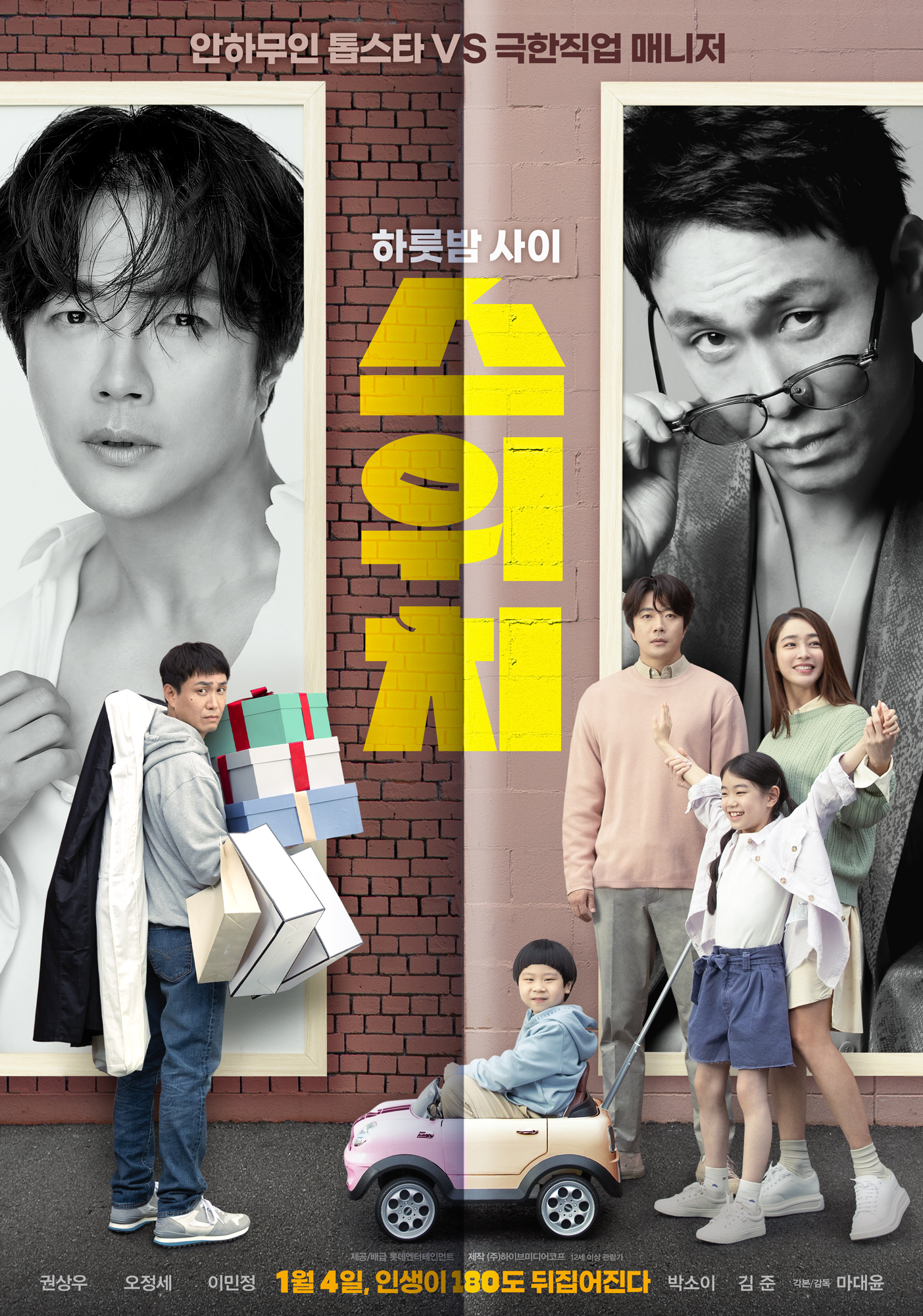
An egotistical actor is given an unexpected lesson in what it is that makes life worth living when he’s suddenly transported to a parallel world in Ma Dae-yun’s charming Christmas dramedy, Switch (스위치). Rather than the body swap comedy the title might suggest, Ma’s warmhearted morality tale is a more a meditation on what might have been and may be again while contemplating the emptiness of a life of fame and riches when there’s no one to share it with. 

“What matters more than money?” top star Park Kang (Kwon Sang-Woo) chuckles after telling his manager he’ll accept a job he just described in quite insulting terms after being informed it comes with a hefty paycheque. Kang is currently riding high. He’s become enormously successful and even a recent sex scandal involving his co-star in a TV drama has only boosted his profile. Yet he tells his analyst that he can’t sleep and attributes it to “depression and anxiety”. He treats those around him poorly and most particularly his long suffering best friend from his fringe theatre days, Joe Yoon (Oh Jung-Se) who now works as his manager, while struggling to accept his loneliness and meditating on lost love in the memory of the woman he broke up with in order to chase stardom. 

After getting into a weird taxi one Christmas Eve, he’s suddenly granted the “wish” of getting to find out what would have happened if he’d made a different choice. After waking up in an unfamiliar house he discovers that he’s married with two children and slumming it fringe theatre while Joe Yoon is now the superstar having aced the audition Kang ran out on to chase Soo-hyun (Lee Min-Jung) to the airport and convince her not to leave. Of course, Kang is originally quite unhappy about all of this. He doesn’t understand why no one recognises him anymore and resents that he’s suddenly subject to the rules of “ordinary” people again after a decade as a pampered star. In his acceptance speech after winning an award, he’d stated his intention to “forget” his roots as a humble actor and embrace his new role as a member of the showbiz elite fully demonstrating his sense of alienation and insecurity along with his intense loneliness. As the taxi driver had said, Kang has “everything”. He’s achieved his dreams and lives the high life he’d always dreamed of, yet he’s deeply unhappy.

But his “new” life immediately challenges his sense of masculinity in realising that he has little power without money and is in fact financially dependent on Soo-hyun whom he may also have robbed of a bright future by preventing her from studying abroad and achieving success as an artist. Meanwhile he looks down on himself for continuing to follow his artistic dreams in fringe theatre when his plays attract few audiences members and make little money. Just as Joe Yoon had become his manager, so he ends up getting a taste of what it’s like trying to manage a “star” while coming to appreciate that Joe Yoon may be feeling just as lonely and unfulfilled as he once had. 

Yet even as Kang settles into his new life as a husband and father while slowly rebuilding his acting career though a combination of talent, supportive friendship, and good luck, he fails to learn the right lessons continuing to yearn for external validation through material success. He spends money on fancy dinners and tries to move the family into a swanky apartment in Seoul without realising that he’s already got a “home” in the quaint little provincial house he and Soo-hyun set up together filled with memories (that admittedly he doesn’t actually have) of the children when they were small. Slowly, he begins to look beyond himself while developing a new sense of security that means he doesn’t need to chase status-based affirmation in empty materialism but now has a new sense of what’s really important. A charming season morality tale with a little more than a hint of A Christmas Carol, Ma’s gentle drama never suggests that success itself is wrong or that Kang must give up his movie star persona to become a happy everyman but only insists that true happiness is brokered by treating others well and being treated well in return much more than it is by consumerist success.


Switch screens at UltraStar Cinemas Mission Valley April 22/24 as part of this year’s San Diego Asian Film Festival Spring Showcase.

International trailer (English subtitles)
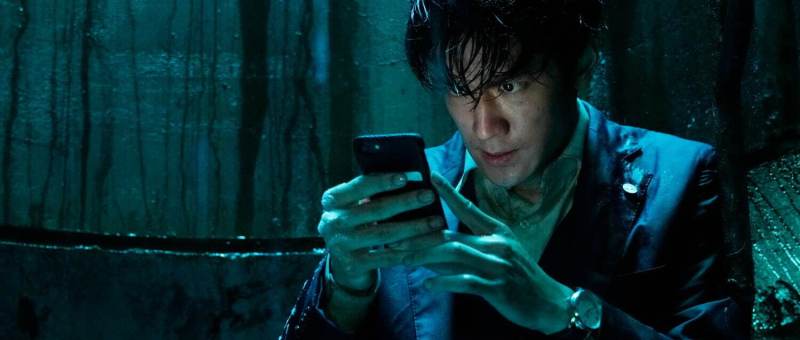
#Manhole (#マンホール, Kazuyoshi Kumakiri, 2023)

“Who are you? Why are you here?” both questions that might occur to anyone at any point in their lives, but don’t seem to bother the hero of Kazuyoshi Kumakiri’s off the wall B-movie thriller #Manhole (#マンホール) until he’s been trapped underground long enough to realise that his literal fall from grace might not be an accident after all. An existential journey deep into the soul of a seemingly blessed salaryman, Kumakiri’s defiantly absurdist drama is part social satire revolving around fluctuating identity in the social media age and meditation on the inevitability of karmic retribution. 

Shunsuke (Yuto Nakajima) does indeed seem to have it all. A successful estate agent, he’s about to get married and even has a baby on the way, only on his way home from a “surprise” party hosted by his work colleagues the night before his wedding he somehow manages to fall down an open manhole in the middle of Shibuya and becomes trapped there. His attempts to simply climb out are frustrated by a nasty gash on his thigh and a broken ladder while no one seems to be able to hear his cries for help. Though his phone still works, the only person who picks up when he calls is a former girlfriend, Mai (Nao), whom he threw over to court the boss’ daughter five years previously which makes it somewhat awkward to ask for help. 

As we can gradually gather, Shunsuke is not really a great guy and is in part in a hole of his own making. Even so, you can’t really confine someone to a hole just for being one. To begin with he busies himself with trying to solve various hole-related problems such as a leaking gas pipe with the salaryman tools at his disposal like the tiny of roll of sellotape in his pencil case or the cigarette lighter he was gifted by suspiciously aloof colleague Kase (Kento Nagayama) as a wedding present though there’s not much he can do about the weird foam or various animal corpses that surround him. 

It’s at this point he decides to enlist the help of the internet in setting up a profile on Twitter-like social media app Pecker where he identifies himself as “Manhole Girl” under the rationale that people are more likely to rush to the rescue of a pretty young woman than a 30-year-old salaryman who had too much to drink and fell in a hole. His readiness to do this hints at his internal duplicity and a confident sense of entitlement. It doesn’t seem to occur to him that whoever comes to his rescue might decide not to bother on discovering the truth. In any case, he soon becomes Pecker’s main character with engaged netizens keen to help him figure out where he is and, once it becomes clear it might not be an accident, who put him there. But claiming to be his own sister he’s also confronted with sordid speculation about his personal life and character that reveal there might be quite a few people who privately hoped he’d someday disappear down a hole in the ground and never come back up again.

Even before his ordeal, Kumakiri often frames Shunsuke looking at his own reflection hinting at a lack of self-recognition in the images that he sees of himself. Of course, he doesn’t know who any of the helpful netizens are either because most of them don’t use their “real” names or profile pictures that are actually of “themselves” just as he pulled a picture of a cute girl off the internet to create the Manhole Girl persona. He can’t even be sure of the identity of the people he speaks to on the phone, and wonders if Mai really did come to look for him when she says she’s been all over Shibuya and couldn’t find any open manholes. 

For a while it really does seem like he’s in “a completely different place”, some alternate dimension of existential purgatory. The sense of eeriness is only deepened by the strong blue-green lighting and ominous clouds above the hole that obscure the image of the full moon which, in the urban absence of stars and the disruption of his GPS seemingly caused by an unknown force, are all he has to go on in trying to figure out where exactly he is. Few will be prepared for the answer, though as some may expect Shunsuke knew all along for as much as it’s a “real” place it’s also a part of himself he sought to deny. Kumakiri excels in capturing the claustrophobic otherworldliness of Shunsuke’s near literal hell hole while mining a deep seam of cynical dark humour and anarchic absurdity culminating in an incredibly ironic and deliciously wry use of cheerful 1960s hit Sukiyaki. 


#Manhole screens at UltraStar Cinemas Mission Valley April 20/21 as part of this year’s San Diego Asian Film Festival Spring Showcase.

International trailer (English subtitles)

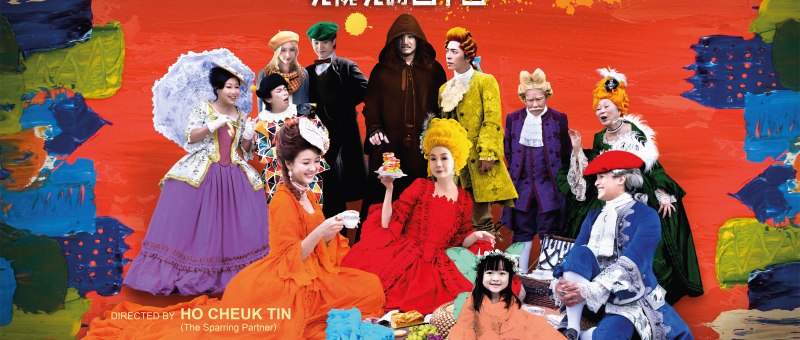
Over My Dead Body (死屍死時四十四, Ho Cheuk-Tin, 2023)

As the opening voiceover of Ho Cheuk-Tin’s darkly comic farce Over My Dead Body (死屍死時四十四) points out, the world is already quite an absurd place. A lot of us know that it’s absurd, but somehow we just roll with it without really asking why. If you stop to think about it, it really is absurd to spend every waking minute scrabbling for money to pay a mortgage on a flat you barely occupy because you’re always at work, but at least it’s less absurd than living with the constant uncertainly of arbitrary rent rises and sudden eviction. 

At least that’s the way it’s always seemed to the residents of 14A Seaside Heights, a swanky apartment block with all the mod cons and a touch of European sophistication. Technically the flat is owned by Ms. So (Teresa Mo Sun-Kwan), though home to daughter and son-in-law Yana (Jennifer Yu Heung-Ying) and Ming (Wong Yau-Nam) plus their small daughter Yoyo and Yana’s paranoid brother Kingston (Alan Yeung Wai-Leun) who is in the process of launching a “brand” selling a special “stealth suit” that can make you invisible to surveillance cameras. The obvious fact is, the flat is far too small for all these people and Ming and Yana want to move out not least so they stop having to sneak around like teenagers to get a little personal time. 

They have each, however, suffered amid the precarities of the post-pandemic economy with Yana losing her job as an air hostess when the airline she worked for went bust, while Ming’s removals business has taken a serious hit and is unlikely to recover as Mrs So points out with so many people leaving Hong Kong due to the ongoing political uncertainty. The young couple propose mortgaging Mrs. So’s flat for the downpayment on their own which they’d be paying a second mortgage on, which is why it’s incredibly bad news when they discover the naked corpse of a random man propped up against their door. 

The film plays with a minor pun in which the word for male corpse sounds like that for “Blue Ribbon”, a name for pro-government supporters during in the protests, the implication being you wouldn’t want one of those turning up on your doorstep either. In any case, any idea of calling the police or an ambulance is quickly abandoned on realising the flat would become known as a “murder house” and dramatically drop in value. The only thing to do is drag the unfortunate man to a neighbour’s door instead and let them deal with it. This goes about as well as could be expected with the whole floor eventually involved in the plan to move the body until they eventually hit on the idea of dumping it on a rundown social housing estate where people often go to commit suicide because no one’s going to notice one more corpse and no one owns those flats anyway so it doesn’t really matter if they ruin their property value. 

It is an incredibly dark and cynical sense of humour, but in its own cheerfully absurd in all the farcical shenanigans trying to remove the body from the building with no one really stopping to ask how it got there in the first place beyond connecting it with the mad streaker the security guard has been desperately trying to catch. Ho’s previous film, stylish true crime drama The Sparring Partner, had similarly had an absurdist vein of dark comedy running underneath it but Over My Dead Body does eventually rediscover a sense of hope if only in irony as it leans in to a New Year comedy-style celebration of family and community as the neighbours find themselves having to work together to protect their property investments. Even the materialistic Mrs So is forced to reflect that actually she’s lucky to be able to feel tired and frustrated, giving her blessing to her daughter and son-in-law to move out, while they in turn reflect that maybe it’s not that bad if they have to stay a little longer. It might seem like an overly saccharine conclusion for a biting satire about the rabid capitalism of a status obsessed, consumerist society but then again as an equally cynical ironic twist reveals maybe the residents are the ones who haven’t quite woken up despite their newfound solidarity. 


Over My Dead Body opens in UK cinemas on April 21 courtesy of CineAsia.

UK trailer (Traditional Chinese / English subtitles)

I Love You, Beksman (Mahal Kita, Beksman, Percival M. Intalan, 2022)

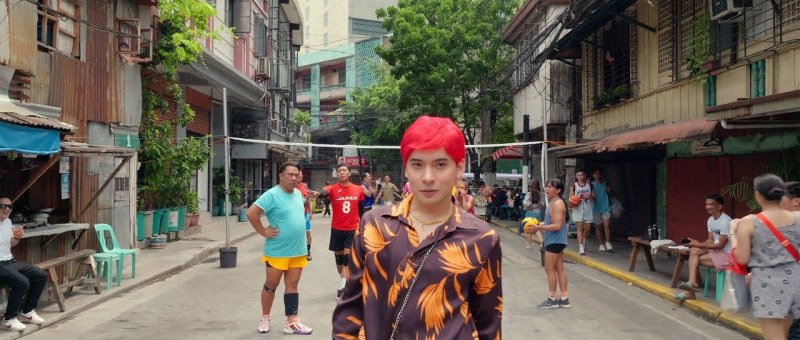
“What is the essence of being a real man?” The hero of Percival M. Intalan’s reverse coming out drama I Love You, Beksman (Mahal Kita, Beksman) finds himself questioning his own identity when confronted with the weight of social expectation and prejudice yet discovering that the question is meaningless when the key to happiness lies in self-acceptance and authenticity. Scripted by Fatrick Tabada (Chedeng and Apple), the film tears apart conventional notions of gender and sexuality in a hyper-masculine patriarchal culture while allowing its hero to gain the courage to define himself in order to chase his romantic destiny. 

Everyone just assumes flamboyant hairdresser Dali (Christian Bables) is gay. He dyes his hair red, dresses in a less masculine fashion than other men his age, and has an effeminate manner. Yet Dali has a secret he doesn’t even really realise is one in that he is actually straight as he is forced to reveal after falling for beauty queen Angel (Iana Bernardez) at a pageant. The more he tries to explain to people that he isn’t gay and is serious about romantically pursuing Angel, the less they seem to understand him. It simply doesn’t make sense that someone so “obviously” gay could be attracted to women. They ask him if he’s sure or if it might be a phase or if he’s developed some kind of internalised homophobia but never really consider that it’s a possible for a man to be both effeminate and exclusively attracted to women. 

Even Dali begins to subconsciously change himself in order to better conform to their expectations. Having lost her mother at a young age, Angel is surrounded by hyper-masculine men in her father and brothers who all rather hilariously have the same moustache and enjoy manly pursuits such as weightlifting and basketball. Dali, meanwhile, was surrounded by queerness all his life, raised in the salon by a father who now lives openly as a gay man in a platonic marriage with his mother. Despite having seemingly been very happy as a part of a big gay family who all just assumed him to be gay too, Dali begins to reject his father and his own femininity in believing that he must adopt a more stereotypical masculinity in order to convince Angel of his heterosexuality and eventually win her heart (along with those of her conservative father and brothers). 

It might be true to say that Dali’s original presentation as a flamboyant hairstylist and fashion designer is also a kind of performance and an attempt to conform to parental expectation just as his rejection of it is an attempt to conform to the demands of a hyper-masculine society, but only by embracing both extremes can he learn to define himself outside of the images others project onto him. In adopting the traits of traditional masculinity, he becomes boorish and insensitive asking his father to hide his “gayness” to avoid embarrassing him in front of Angel’s dad while later becoming jealous and violent after seeing Angel hanging out with an ex. He can’t see that his adopted persona makes it even harder to form a genuine romantic connection with Angel, not just because he’s actively erasing the sides of himself she first became attracted to in his skill in makeup and fashion but because as she eventually tells him it’s difficult to trust someone who is being dishonest with themselves. 

The realisation he comes to is that he has to be “himself” rather than being what other people expect him to be while those around him come to understand that outdated ideas of stereotypical gender presentation are harmful to everyone. A gentle tale of broadening horizons and mutual acceptance, Intalan’s ironic comedy neatly subverts the coming out trope while situating itself in a world of relative safety in which Dali is free to explore his own identity and means of self-expression encountering opposition only from those who fear he is not being true to himself. The reality may not be so kind as the classic rom-com conclusion may suggest but the film nevertheless neatly takes aim at the ridiculousness of conventional ideas of “masculinity” in a hyper-masculine and patriarchal culture in making a heartfelt advocation for the right to just be oneself.


I Love You, Beksman screens at the BFI Southbank on 18th April as the opening night gala of this year’s Queer East.

Original trailer (English subtitles)
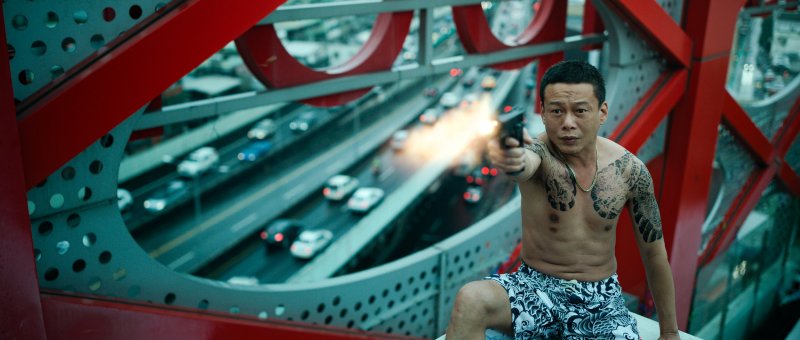
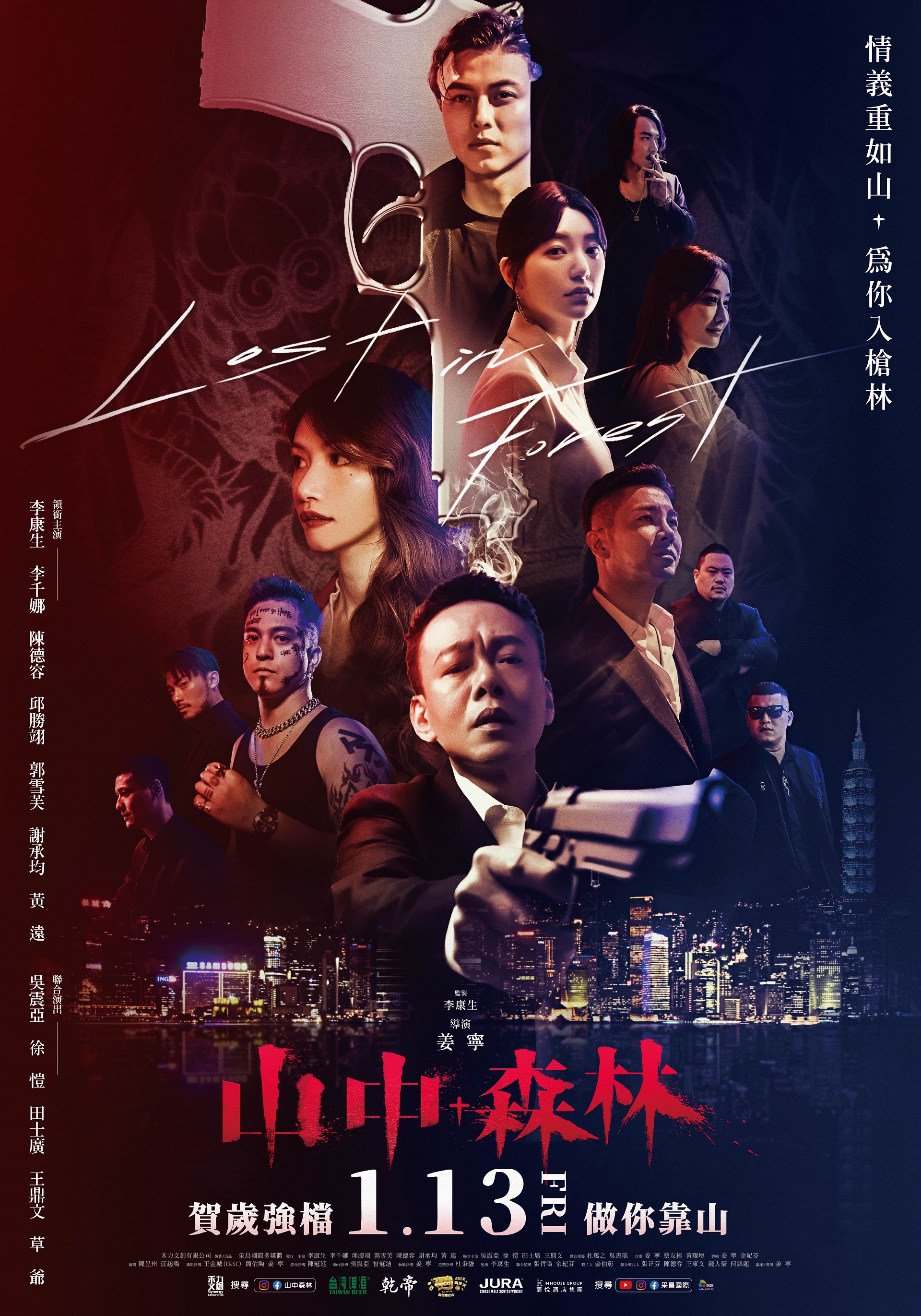
Lost in Forest (山中森林, Johnny Chiang, 2022)

History repeats itself for a former gangster recently released from prison in Johnny Chiang’s melancholy neo-noir, Lost in Forest (山中森林, Shān Zhōng Senlín). Set in a neon-lit Taipei, Chiang’s moody crime drama finds its hero displaced in the modern society unable to look either forward or back while meditating on all he’s lost and another less corrupt vision of his home city as symbolised by his late father’s missing sausage bike and the changing back streets where it was once parked.

This Taipei is however a less wholesome place as suggested by Chiang’s frequent cuts to Christian churches and the giant neon crosses that sit above them as if looming in judgement on the chaos below. 12 years previously, Sheng (Lee Kang-sheng) opened fire on rival gang members who’d kidnapped his best friend and comrade Seagull (Angus Hsieh) who has now taken over the outfit while he’s been inside. Customarily, Seagull should have had someone come to meet him on his release, but Sheng exits the prison alone and is given a lift back into the city by the entourage collecting his prison buddy Ji despite the fact they are headed to an entirely different part of the country. Without a phone and not knowing where the gang even is anymore, all Sheng can do is hole up in a hotel until he finds out what’s going on. All of which suggests that despite his sacrifice, Seagull may not be particularly glad to reunite with him.

The conflict exists on three levels. Sheng must necessarily doubt his old friend Seagull, especially on realising that his new business model involves exploiting vulnerable women by pressing them into debt via high interest loans and then forcing them into sex work, while simultaneously worried about his guys who claim they have not been well treated while Sheng was away. But then it also becomes clear that much like many contemporary Taiwanese crime dramas, the real villain is institutional corruption as Seagull’s alliances with corrupt politicians and shady businessmen continue to destabilise the underground society thanks to the machinations of anarchic street punk Monkey (Sean Huang) who engineers a gang war by giving the businessman’s son a kicking as leverage in a dodgy land deal. 

On the one hand, Sheng watches history repeat itself as a handsome foot soldier, Chenghao (Prince Chiu), vacillates over leaving the gang for his respectable girlfriend Alice (Puff Kuo), while on the other Sheng becomes attached to sex worker Jing (Lee Chien-na), one of Seagull’s exploited women working for him to pay for her father’s medical bills. Sheng’s former lover tells him that if he really cared about her, he shouldn’t have sacrificed himself for Seagull just as Chenghao shouldn’t put himself in harm’s way out of a pointless sense of loyalty for a gang that has no real loyalty to him. Before his release, the prison warden had advised Sheng not to let his sense of loyalty get the best of him, but as he says Sheng no longer has much of anything else. His parents died while he was inside, the woman he loved married someone else, and Seagull can’t even remember what he did with Sheng’s dad’s sausage bike which is his only path back to a more wholesome existence. 

In a certain sense he’s powerless, unable to escape the inexorable pull of gangland karma until finally forced to reckon with the destabilising force that is Monkey to restore some kind of order and undermine the system of corruption that has arisen between underworld thuggery, local politics, and big business. The warden had also pointed at the fish in his tank and asked Sheng if it was happier in there or back in the sea but Sheng had merely said that it’s up to the fish to decide, hinting that in a certain sense it’s all the same and it’s just that one prison is bigger than another. At least the fish gets fed and is kept safe from predators even in its lonely isolation, which might be more than can be said for Sheng who can never truly escape his past even as he tries to free Chenghao and Jing from a similar fate. A melancholy mood piece, Chiang shoots night-time Taipei as a land of neon emptiness set against a classic jazz score that echoes Sheng’s deadpan ennui in a modern world of electronic smoke and rueful nihilism in which there is no escape from karmic retribution. 


Lost in Forest screens in Chicago April 16 as part of the 16th season of Asian Pop-Up Cinema.

Original trailer (Traditional Chinese / English subtitles)

Ride On (龙马精神, Larry Yang, 2023)

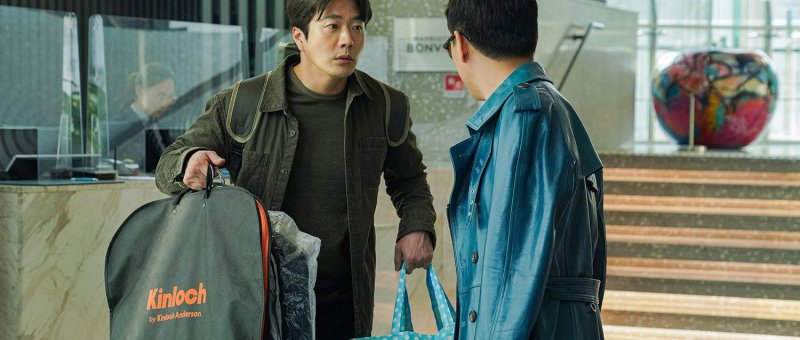
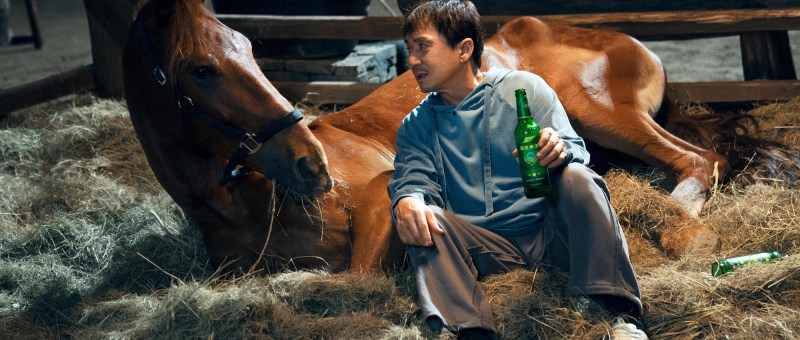
“Jumping down is easy, stepping down is hard” an ageing stuntman reflects in Larry Yang’s meta Jackie Chan vehicle Ride On (龙马精神, lóngmǎjīngshén). The Chinese title, like the English, may hint at late career resurgence but the film at times feels more like a swan song for Chan himself as it lovingly looks back at some of his greatest action hits while gently suggesting that his era may have passed in this new age of CGI and greater awareness of health and safety regulations. 

That does certainly seem to be the case for his stand-in, Luo, who has fallen on hard times following serious injury and financial ruin. These days he mainly works as an extra and supplements his income posing for photographs with his beloved horse Red Hare whom he saved from being euthanised at birth and has raised since he was a foal. When the twin forces of vicious loansharks and a weird, wealthy businessman who collects horses come calling for Red Hare it’s like they want to take the last dregs of Luo’s legacy away from him all of which forces Luo to reconnect with his estranged daughter Bao (Liu Haocun), a law student engaged to a rookie lawyer. 

The familial themes play into those of celebrating the brotherhood of stuntmen (and one woman) as one large family who must necessarily take care of each other given that their line of work is incredibly high risk. Yet it’s also true that Luo’s reconciliation with Bao seems to come too easily given her original animosity towards him for being unable to play the role of father to her seeing as her parents separated when she was an infant and she’s met him only a handful of times in her life. Nevertheless, she’s quickly won over by Red Hare even if perhaps identifying a little with him as Luo refers to the horse as his “son” only to belatedly realise that he may have been mistreating him by forcing him to perform dangerous stunts pretty much against his will despite his obvious affection for him. 

Likewise, Bao comes to a new appreciation of her father after watching videos of his old stunts many of which show him incurring serious injuries. The clips are all famous scenes from Chan’s movies such as the shopping mall jump from Police Story or the bus and umbrella stunt which are posited as the glory days of action cinema, yet from a modern perspective we might ask ourselves if all this risk is worth it for simple entertainment even if as Luo later suggests it’s the risk that makes the action entertaining. After getting back on the horse, literally, Luo is offered a series of new stunt jobs one of which requires him to perform a dangerous jump on a badly designed set, while on another he’s told he doesn’t need to perform the dangerous part because they’ll fill in the rest with CGI. Luo is outraged and insists on performing the stunt in camera only to think better of it when considering that he’s making a decision on Red Hare’s behalf that he might not have the right to make. 

The film laments the passing of the age of daredevil stuntmen, but there is a minor irony in the fact that Ride On makes fair use of CGI itself as it fully admits in the closing outtakes which feature several stagehands dressed in green to be erased later. It’s also less a celebration of stunt people than it is of Chan himself and his legendary career as an action star which may be nearing its end which would be fair enough seeing as Chan is now 69 years and clearly making (occasional) use of stunt doubles. Nevertheless, there’s an undeniable sweetness in the relationship between Bao and her fiancé Mickey (Guo Qilin) as they commit themselves to saving Red Hare and forge new familial bonds with the rough and ready Luo that echo the themes of familial reconciliation even if letting Luo off the hook a little too easily for his absence from his daughter’s life. “Stepping down” might be hard, but it doesn’t necessarily mean walking away completely only entering a new phase of compassion and solidarity and not least for a wily horse in search of a loving home.


Ride On is in UK cinemas now courtesy of CineAsia.

UK trailer (English subtitles)
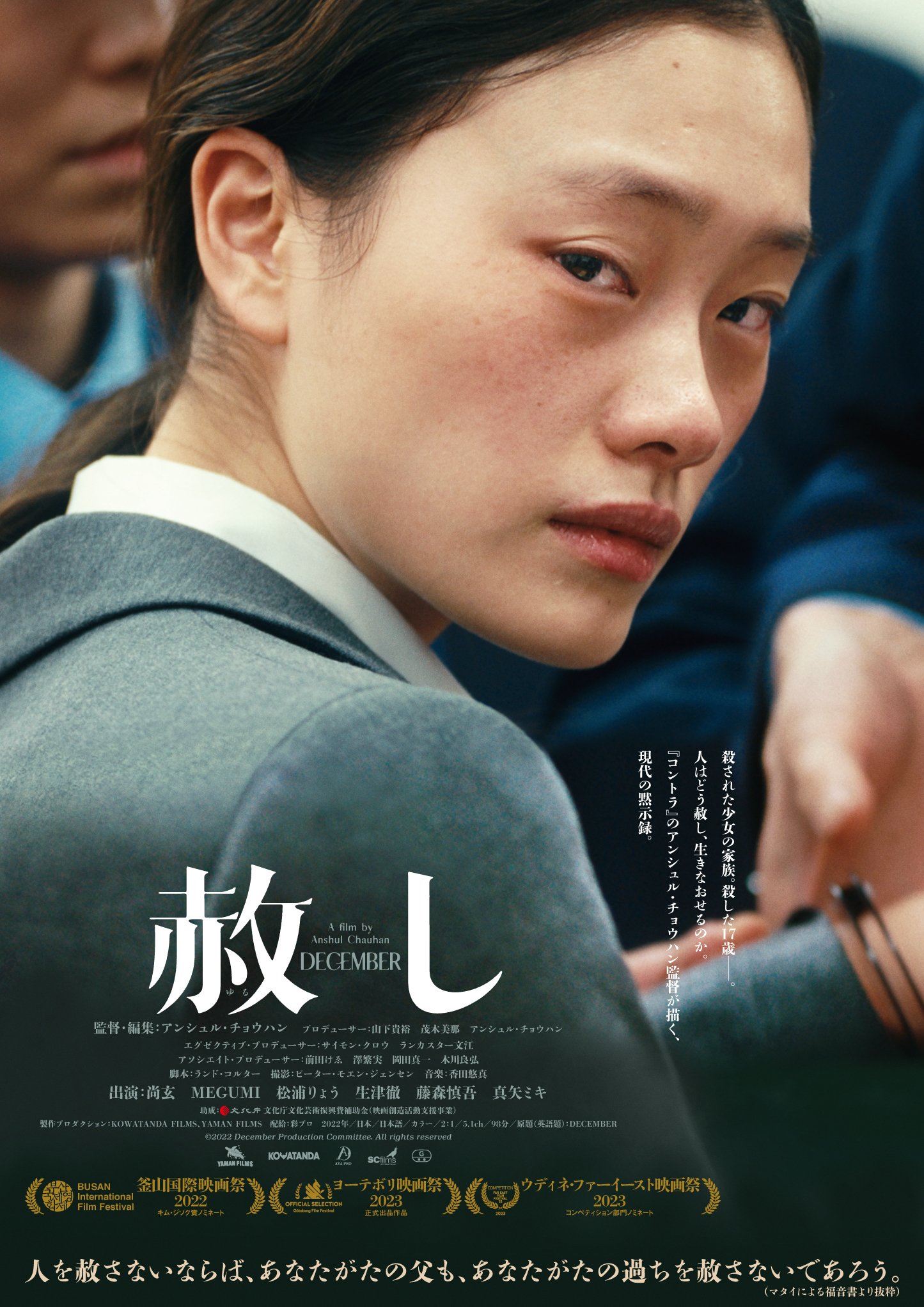
December (赦し, Anshul Chauhan, 2022)

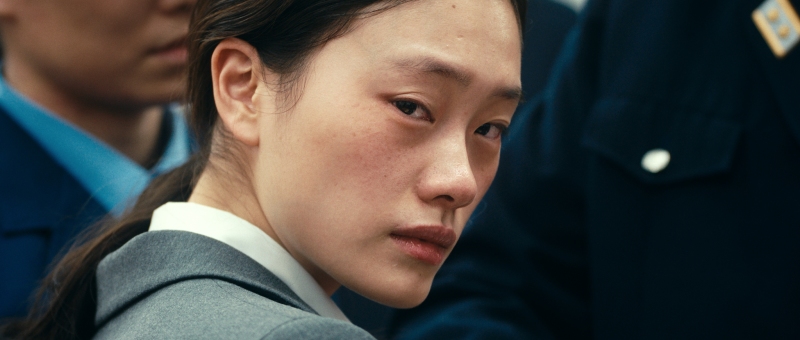
Where is the line between justice and vengeance? The grieving father at the centre of Anshul Chauhan’s December (赦し, Yurushi) is determined that the teenage girl who stabbed his daughter to death should never leave prison, but what he wants is a kind of equivalent exchange in that the person who stole his future along with his child’s should have no right to one herself. A more mainstream effort than either of his previous films Bad Poetry Tokyo and Kontora each of which dealt with similarly thorny themes, Chauhan’s unusually tense courtroom drama is the latest to put the legal system on trial while asking difficult questions about grief, guilt, and what exactly it is we mean when we talk about “justice”.

Seven years previously, 17-year-old Kana (Ryo Matsuura) stabbed her classmate Emi (Kanon Narumi) multiple times in a frenzied attack that resulted in her death. She was sentenced to 20 years in prison and has never attempted to deny her crime. It isn’t she who has asked for her sentence to be reviewed but an independent lawyer, Sato (Toru Kizu), who claims he’s doing it for “justice” though as Kana points out might have half an eye on compensation money she’d be able to claim for wrongful imprisonment if the case were successful. Sato seems to think it will be on the grounds that Kana was unfairly tried as an adult, mitigating circumstances were never brought to the defence’s attention, and the judge’s sentencing was swayed by personal feeling placing it outside of conventional guidelines that should be applied in cases like these.

For Emi’s parents, Katsu (Shogen) and Sumiko (Megumi), the appeal is a slap in the face. The couple have separated and while Sumiko has attempted to move on with her life, marrying a man she met in a support group for bereaved parents, Katsu has become a bitter alcoholic living a purgatorial existence of almost total inertia. Outraged, he is determined to make sure that Kana never leaves prison and is only sorry that she could not receive the death sentence because of her age, while Sumiko would rather not be involved at all, uncertain that she would be able to endure the emotionally draining process of another court case. They settle on presenting a united front, but discover that to do so is also to put themselves on trial while being confronted by a past neither has ever really faced.

The strain on Sumiko is evident as she walks along along a bridge at night and peers over the edge as if about to jump. She later learns that Kana had a mother too who did in fact take her own life after selling everything she owned to pay the compensation money that is used against them in court to imply that they’ve already been served “justice” in the form of monetary recompense from the defendant’s family which ought to declare the matter closed. Unlike Katsu, Sumiko had said her goal wasn’t vengeance but only to make sure that no other mother suffers as she has done, yet another mother already has for she lost a daughter too. Kana meanwhile has no one left to turn to even if she were released, she will have to make a new life for herself alone. Kana is herself victimised by an unforgiving society, the subtext suggesting that she was bullied for being the daughter of a single mother who was unable to fully care for her or provide the kind of material comfort children like Emi receive. The “happy family home” Katsu accuses her of destroying is also a symbol of everything Kana was denied but she did not kill out of jealousy or resentment only, ironically, to escape a kind of imprisonment and free herself of an oppressive bully.

Katsu says he’d kill her himself if he had the chance, but as Sumiko points out then he’d just end up in prison for the rest of his life with only his “righteousness” to comfort him. How could he claim to be any better? As Sato says, emotion has no place in a court of law. That’s why the law the exists and we mediate “justice” through a dispassionate third party to ensure the sentence is fair and not merely “vengeance”. Katsu certainly sees himself as a righteous man. In a repeated motif, Chauhan shows him taking the long way round by walking on the pathways of the grid-like forecourt leading to the courthouse while others hurriedly take the direct route crossing the squares at a diagonal angle. For him the answer is only ever black and white and he is very certain of his truths, but also blinded by his pain and unable to see that his desire for vengeance is more for himself than it is for Emi.

Only by accepting a painful truth can he begin to move past his grief, despite himself moved by Kana’s quiet dignity in which she admits her responsibility and suggests that she will never really be “free” even if she is released. What she offers, in her way, is peace allowing the bereaved parents to bring an end to their ordeal or least enter a new phase in their grief which allows them to move forward in memory rather than remaining trapped within the unresolved past. Perhaps in the end that’s what we mean by “justice”, a just peace with no more recrimination only sorrow and regret with renewed possibility for the future.


December screened as part of this year’s Osaka Asian Film Festival.

Original trailer (no subtitles)