Schemes in Antiques (古董局中局, Derek Kwok, 2021)

Two very different men square off in the race to find a precious Buddha head and reclaim their family honour in an old-fashioned tomb raiding mystery from Derek Kwok, Schemes in Antiques (古董局中局, gǔdǒng jú zhōngjú). The key to the future seems to lie in the past as the heroes approach from opposing sides, one keen to expose a truth and the other seemingly to conceal it but both otherwise unable to escape a problematic family history and be rehabilitated as a member of one of the top five antiquing families in the China of 1992. 

Now a middle-aged drunkard, down on his luck Xu Yuan (Lei Jiayin) lays the blame for his present circumstances solely with his immediate forbears. A member of the Plum Blossom Five, five families who are the ultimate authorities on the authenticity of historical artefacts, Xu Yuan’s grandfather was executed as a traitor during the war for having gifted a precious Buddha head to the Japanese. In a fairly traumatic childhood, Yuan was abandoned by his his dad whom he believes to have been too badly damaged by seeing his grandfather die to be any sort of father while somehow even kids his own age called him scum in the streets because of the shame his grandfather’s transgression had placed on the family. Now running an electronics store which is in its way the opposite of antiques, Yuan has a fairly cynical view of the artefacts trade but is dragged back into it when the granddaughter of the Japanese soldier who received the Buddha head (Lili Matsumoto) insists on returning it to a direct descendent of the Xu family. 

Perhaps surprisingly, the issue isn’t really with the Japanese but the current status of the Buddha head which, after a duel of detection with well dressed rival Yao Buran (Li Xian) who is also trying to redeem his family honour, Yuan quickly realises is a fake suggesting his grandfather wasn’t really a traitor after all while giving rise to the question of what actually happened to the “real” one. When it comes to the antiques trade, perhaps there’s a question mark over the degree to which “authenticity”, whatever that might mean, really matters and if all the Plum Blossom Five are really doing is attempting to assert their authority over an unruly market as the accusation that one head of family in particular has long been knowingly authenticating fakes when it suits them to do so bears out. In something of a plot hole, Yuan is revealed to be an antiques expert despite having been abandoned by his father at a young age but his ability is for some problematic even if admired by his main rival in its ability to expose the hidden truth or as the film later puts it the real within the fake. 

In any case, it’s true enough that the battles of the past are still being fought by the grandchildren of those who started what they couldn’t finish. Yuan is joined in his quest by the feisty granddaughter of another Plum Blossom family (Xin Zhilei) who is also battling her grandfather’s sexism in his refusal to trust her with anything important in the antiques trade. She and Yuan end up squaring off against Yao who is largely playing his own game as they embark on a good old-fashioned treasure hunt in which they solve a series of puzzles set down by Yuan’s father to lead them towards the truth.

Discovering another father figure along the way, Yuan learns to accept his complicated legacy while redeeming his family honour and along with it his self worth in outsmarting just about everyone else to solve the final mystery. There is something refreshingly innocent in these well constructed, defiantly analogue puzzles which rely on cultural knowledge and mental acumen along with a spirit of curiosity, while there’s also a fair amount of running away from bad guys and escaping from collapsing tombs filled with artefacts that might in a sense be cursed even if not quite literally. There are definitely a lot of schemes in antiques, something of which Yuan himself takes full advantage, but they’re also in their own way pieces of a puzzle in which the fakes are less red herrings than gentle pointers towards other truths some of them buried under layers of subterfuge and obfuscation only to be dragged into the light by those with dangerously curious minds.


Schemes in Antiques streams in the US Sept. 10 – 16 as part of the 15th season of Asian Pop-Up Cinema.

International trailer (English subtitles)

Back to Love (带你去见我妈, Lan Hongchun, 2021)

Change comes slow to rural China in Lan Hongchun’s lighthearted drama, Back to Love (带你去见我妈, dài nǐ qù jiàn wǒ mā). Shot largely in the local Chaozhou dialect, the film explores the increasing distance between the kids who left for the city and their small-town parents whose views are often more conservative especially given the fluctuating local hierarchies which are often defined by successful marriages of the children. True love may be hard-won in a sometimes judgemental society but it is in the end the older generation who will have to make a shift if it’s really their children’s happiness that they care about most. 

Xian (Zhong Shaoxian) runs a backstreet butcher shop in a small rural town and lives with her retired husband, who is also a performer of traditional opera, her elderly mother, and her youngest son. Engaged in a sort of competition with another local old lady, Xian is forever trying to organise blind dates for her older son who works in a warehouse in the city. Unbeknownst to her, Zekai (Zheng Runqi) already has a girlfriend, Shan (Lu Shan), and the pair have been living together for some time. Though his uncle who works with him already knows about the relationship, Zekai has been reluctant to tell his family back home because not only is Shan not from their local area but has also been married once before which he knows will not play well in his hometown where divorce and remarriage are still taboo subjects. As his uncle advises him, his diffidence is unfair to Shan who deserves a little more commitment along with the possibility of starting a family before the chance passes her by. 

Having thought it over, Zekai proposes and talks about becoming a father while suggesting they visit his family en route to her hometown for a wedding but still hasn’t explained to his parents about Shan’s marital status. Their immediate problem with her, however, is simply that she isn’t from the Shantou area and does not understand their local dialect while, living as they do in a fairly isolated community, they do not understand standard Mandarin. Xian and the grandmother who is otherwise more accepting of the situation continue to refer to Shan as “the non-local” while she does her best to pitch in, learning little bits of dialect and helping out as much as she can with the family’s ancestral rites while getting on well with Zekai’s already married sister. 

Gradually Xian warms to her, but the divorce may still be a dealbreaker given Xian’s preoccupation with her status in the local community reflecting that the family would become a laughing stock if people find out their already old to be unmarried son stooped to marrying a divorcee. Most people don’t mean any harm, but there are also a lot of accidentally hurtful comments about a wedding being a once in a lifetime affair and that a woman should stick by the man she married no matter what else might happen. But then it’s also true that Zekai has been keeping secret from his mother and she can’t help but feel deceived. If he’d told her earlier, she might have just got over it after getting to know Shan personally. At the end of the day, perhaps it’s Zekai’s own internalised anxiety that’s standing in the way of his romantic happiness rather than the outdated social codes of small-town life.  

As Zekai points out, he’s always done what his mother told him to. He wanted to study fine art and she convinced him to switch to general sciences but in the long run it hasn’t made a lot of difference to his life and he might have been happier doing what he wanted. The couple could of course choose to just ignore Xian’s resentment and continue to hope she’ll change her mind in the future, but then Shan is also carrying some baggage in internalised shame over her failed marriage. She didn’t think she’d marry again not because of the bad experience but because of the stigma surrounding divorce, fearing she’d never have the opportunity. In any case, it’s Xian who finally has to reconsider her actions, accepting that she may have unfairly projected some of her own feelings of disappointment onto her son while accidentally denying him the possibility of happiness solely for her own selfish reasons in fearing a change in her status in the community. Filled with local character, Lan’s gentle drama doesn’t necessarily come down on either side but advocates for compromise while clear that the youngsters should be free to find their own path to love with nothing but gentle support from all those who love them. 


Back to Love streams in the US Sept. 10 – 16 as part of the 15th season of Asian Pop-Up Cinema.

Original trailer (Simplified Chinese / English subtitles)
Embrace Again (穿过寒冬拥抱你, Xue Xiaolu, 2021)

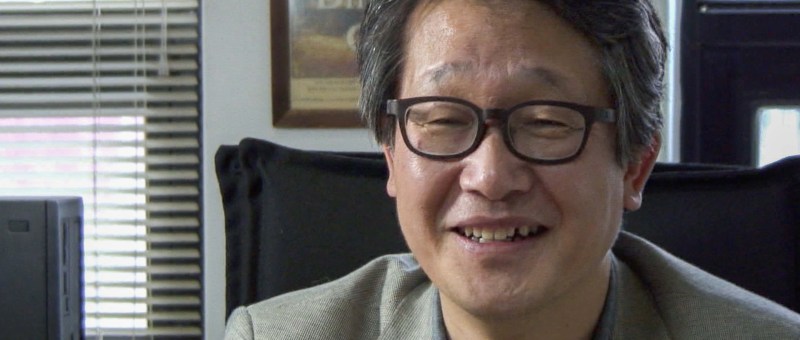
Another in the recent line of “Main Melody” features celebrating ordinary heroism during the extraordinary period of the pandemic, Embrace Again (穿过寒冬拥抱你, chuānguò hándōng yōngbào nǐ) is dedicated to the volunteers who risked their own safety to support frontline workers in the early days of the Wuhan lockdown. Though sometimes bittersweet, the film is noticeably lighter in tone and somewhat rosy in comparison to other similarly themed dramas such as Ode to the Spring but it is in its own way prepared to concede that the initial response was not handled perfectly and that fear, chaos and panic were the defining features of New Year 2020 even if it does so to throw the heroism of those who stepped up to help in stark relief. 

Like other pandemic films, Embrace Again is comprised of a series of interlocking stories connected by the volunteer effort helmed by A-Yong (Huang Bo) who has something of a hero complex and is caught in a mini war with his feisty wife who is quite understandably upset with him seeing as he’s left her all alone with their son during these difficult times while he runs around helping other people having decided to stay elsewhere so as not to expose them to further risk of disease. As he ferries people around, it becomes clear that there were not so many people like him in the beginning with most preferring to keep to themselves out of fear leaving the medical staff who were risking their own lives to protect those suffering from the virus with nowhere to turn for support.

A-Yong’s heroism is contrasted with the indifference of wealthy businessman Li (Gao Yalin) who rudely tells him where to go when A-Yong rings up trying to organise food donations for hospitals. Li is at odds with his wife (Xu Fan) whose successful tourist business has been all but destroyed by the virus, unable to understand her decision to keep her staff on payroll with full salaries and resentful of her insistence on calling in a longstanding loan from an old friend of his. Yet like so many his attitude is gradually changed by witnessing responses to the pandemic, allowing him to regain his social conscience becoming a volunteer himself and agreeing to donate a significant proportion of his stock to frontline workers while rediscovering his love for his wife who started her own business not for the money but for her dignity after being called a “stupid housewife” by their daughter now soon to be a mother herself and trapped overseas in New Zealand by the lockdown. 

Nicknamed Brother Wu (Jia Ling) because of her forthright character and robust frame, a female delivery driver associate of A-yong’s experiences something similar as she firstly befriends a cheerful young nurse, Xiaoxiao (Zhou Dongyu), working at the hospital and engages in a tentative romance with a sensitive divorcee, Mr. Ye (Zhu Yilong), she picks up prescriptions for. In a pleasantly progressive plot strand, Wu is forever telling people she’s trying to lose weight but both Xiaoxiao and Mr. Ye make a point of telling her that she’s fine as she is and has no need to. When Xiaoxiao gifts her lipstick, it’s not a suggestion that she is unfeminine but the reverse allowing her a means to reclaim her femininity for herself and believe that she is both beautiful and desirable exactly as she is. 

Similarly, an elderly woman (Wu Yanshu) living with her widowed son-in-law and grandson is given permission to begin moving on with her life when when she’s called out of retirement to return to the hospital as a midwife. While telling her son-in-law that he shouldn’t feel guilty about seeking new happiness, she too finds love with a Cantonese chef (Hui Shiu-hung) who ends up becoming a volunteer solely so he can deliver her lovingly prepared meals direct to the hospital. Each of these tales are essentially about people finding love in unexpected places while rediscovering their ties to the community, setting greed and self-interest to one side as they risk their own safety to preserve that of others. Wuhan is cut off from the rest of the world, but receives support in the form of external supplies celebrated by A-Yong and the small core of volunteers pitching in to keep the city running. Ending on a bittersweet note acknowledging a sense of loss but also that of a new beginning, the film closes with touching scenes of community in action before giving way to the now familiar stock footage of the real volunteers celebrating Wuhan’s reopening with a sense of joy and relief that might in retrospect seem premature but is also a perfect encapsulation of the view from April 2020.


Embrace Again screens in Chicago on Sept. 10 as part of the 15th season of Asian Pop-Up Cinema.

International trailer (English subtitles)

I Am What I Am (雄狮少年, Sun Haipeng, 2021)

A diffident young man learns to unleash the lion inside while battling the fierce inequality of the modern China in Sun Haipeng’s heartfelt family animation, I Am What I Am (雄狮少年, xióngshī shàonián). With its beautifully animated opening and closing sequences inspired by classic ink painting and the enormously detailed, painterly backgrounds, the film is at once a celebration of tradition and advocation for seizing the moment, continuing to believe that miracles really are possible even for ordinary people no matter how hopeless it may seem. 

The hero, Gyun (Li Xin), is a left behind child cared for by his elderly grandfather and it seems regarded as a good for nothing by most of the local community. Relentlessly bullied by a well built neighbour who is also a talented lion dancer, Gyun finds it impossible to stand up for himself but is given fresh hope by a young woman who makes a dramatic entrance into the village’s lion dance competition and later gifts him her lion head telling him to listen to the roar in his heart. 

The young woman is presented as an almost spiritual figure embodying the lion dance itself, yet later reveals that her family were against her practicing the traditional art because she is female exposing the persistent sexism at the heart of the contemporary society. Gyun’s heart is indeed roaring, desperately missing his parents who were forced to travel to the city to find work while leaving him behind in the country hoping to earn enough for his college education. Part of the reason he wants to master the art of the lion dance is so that he can travel to the city where his parents can see him compete, while privately like his friends Kat and Doggie he may despair for his lack of options stuck in his small hometown. 

But even in small towns there are masters of art as the boys discover when directed to a small dried fish store in search of a once famous lion dancer. Perhaps the guy selling grain at the market is a master poet, or the local fisherman a talented calligrapher, genius often lies in unexpected places. Now 45, Qiang (Li Meng) is a henpecked husband who seems to have had the life-force knocked out of him after being forced to give up lion dancing in order to earn money to support his family, but as the film is keen to point out it’s never really too late to chase a dream. After agreeing to coach the boys, Qiang begins to reclaim his sense of confidence and possibility with even his wife reflecting that she’s sorry she made him give up a part of himself all those years ago. 

Then again, Gyun faces a series of setbacks not least when he’s forced to travel to the city himself in search of work to support his family taking his lion mask with him but only as an awkward burden reminding him of all he’s sacrificing. Taking every job that comes, he lives in a series of squalid dorms and gradually begins to lose the sense of hope the lion mask granted him under the crushing impossibility of a life of casual labour.  The final pole on the lion dance course is there, according to the judges, to remind contestants that there are miracles which cannot be achieved and that there will always be an unreachable peak that is simply beyond them. But as Gyun discovers sometimes miracles really do happen though only when it stops being a competition and becomes more of a collective liberation born of mutual support. 

In the end, Gyun can’t exactly overcome the vagaries of the contemporary society, still stuck in a crushing cycle of poverty marked by poor living conditions and exploitative employment, but he has at least learned to listen to himself roar while reconnecting with his family and forming new ones with friends and fellow lion dancers. While most Chinese animation has drawn inspiration from classic tales and legends, I Am What I Am roots itself firmly in the present day yet with its beautifully drawn backgrounds of verdant red forests lends itself a mythic quality while simultaneously insisting that even in the “real” world miracles can happen even for lowly village boys like Gyun when they take charge of their destiny not only standing up for themselves but for others too.


I Am What I Am screens in Chicago on Sept. 10 as the opening movie of Asian Pop-Up Cinema season 15.

Original trailer (English subtitles)

Seire (세이레, Park Kang, 2021) [Fantasia 2022]

A new father finds himself plagued by strange dreams and an unquiet dread in Park Kang’s eerie paternal horror, Seire (세이레). Seire refers to the first three weeks of a baby’s life in which the family is expected to limit external contact and avoid any taboos especially those having to do with death. Such superstition might seem out of place in the modern society but then when you think about it it makes sense, limiting the number of people interacting with your medically vulnerable newborn helps protect it from illness or infection while dealing with grief in the wake of new life is necessarily difficult. 

Even so, Woo-jin (Seo Hyun-woo) is beginning to get fed up with his wife Hae-mi’s (Shim Eun-woo) obsession with ritualistic superstition. “Don’t engage in anything unusual” she ominously instructs him as he leaves to run an errand after a night of fevered dreams sleeping on the sofa. That Woo-jin is tired isn’t surprising, he’s the father of a newborn after all, but he seems to be weighed down by something more than bodily fatigue and has been having strange visions featuring fruit knives, rotten apples, and a woman who is not his wife. When he receives a text informing him that an old friend from university, Se-young (Ryu Abel), has passed away, Hae-mi tries to talk him out of going to the funeral advising him to send money instead rather than risk breaking a taboo during the baby’s Seire but Woo-jin doesn’t really believe in any of this stuff and not going to the funeral’s not really an option for him especially, as we later realise, as he may have had unfinished business with the deceased. 

Superstition becomes an odd kind of fault line in the couple’s relationship not so much in a matter of belief but of commitment. Hae-mi reads Woo-jin’s reluctance to abide by the superstitious practices she’s been taught as an early paternal failure, a sign that he wasn’t interested enough in his son’s welfare to follow a few simple rules for a period of three weeks while Woo-jin equally sees Hae-mi’s insistence on them as a personal rejection which is on one level fair enough when she’s literally pelting him with salt and refusing to let him into their bedroom let alone near the baby. To divert the misfortune born of attending the funeral, Hae-mi asks Woo-jin to commit three acts of theft, telling him that it won’t harm anyone and then they’ll be able to stop worrying except that it will definitely harm someone and perhaps everyone if Woo-jin gets caught and ends up losing his job. 

Despite claiming not to believe in any of this superstition, Woo-jin is very into traditional medicine and it seems there may be a connection to the strange events around him though it might not explain his fractured state of mind or increasing inability to tell dream from reality. He is quite literally haunted by the manifestation of a previous transgression which is already playing on his mind given his recent fatherhood. Paternal anxiety is indeed at the root of all his troubles, though we can also see that he feels belittled by his wealthy brother-in-law who makes a show of buying all the fancy meat for a family dinner while it later becomes clear that his relationship with Hae-mi is newer than we might have assumed and cemented by the birth of a baby Woo-jin may perhaps on some level resent. But it’s his own guilt that haunts him in the end, failing to deal with the implications of his past actions and their result whether by accident or design. 

Drifting between dream, memory, and a confused reality, Park imbues the everyday with a sense of dread and eerieness defined by an ever-present evil which must be constantly warded off though as it turns out Woo-jin’s darkness very much lies within. Some things you think are just superstitions really aren’t, Hae-mi’s sister annoyed by her superstitious mother’s instruction not to eat lettuce while pregnant which is probably more to do with E. coli than fear of a supernatural curse, though there seems to be no real reason why you shouldn’t eat apples at night save the superstition they cause unrestful sleep. Is this all happening to Woo-jin because he broke a taboo? In many ways yes, and his self-haunting seems set to continue in the impossibility of gaining forgiveness for the unforgivable. 


Seire screened as part of this year’s Fantasia International Film Festival

Original trailer (English subtitles)

Reclaim (一家之主, CJ Wang, 2022)

An ordinary middle-aged woman begins to wonder what it’s all been for when dealing with her insensitive, authoritarian husband, distant children, and the sacrifices she continually made to make others happy in CJ Wang’s touching family drama, Reclaim (一家之主, yījiāzhīzhǔ). The Chinese title, master of the house, is in its way ironic in the various ways in which Lan-xin (Nina Paw Hee-ching) is expected to shoulder all of the domestic responsibility with none of the control, though she is indeed attempting to reclaim something of herself as a woman and an individual as distinct from being someone’s, wife, mother, friend, or teacher. 

Lan-xin wanted to study art in Paris, but she got married young and started family and ever since then has led a conventional life doing what she thought to be right thing. Now, however, with her husband David (Kou Hsi-Shun) recently retired and both her children grown up she’s wondering a little what it’s all been for especially as David is a chauvinistic throwback who belittles her work as an art teacher while harping on about ways to make money patiently waiting for his collection of antique teapots to rise in value. Now that her mother’s dementia has intensified and she keeps escaping from her nursing home, Lan-xin wants to bring her to live with them but David is both dismissive and disinterested talking about it in the same way one would to a child who wants to get a dog asking if they really have the space and making it clear that looking after her will be Lan-xin’s responsibility. 

While David holds on to a substantial cheque with the intention of investing it in a series of harebrained schemes from luxury tombs to VR cafes, Lan-xin’s desire is essentially to try and repair her fracturing family by buying a larger apartment where they could all live together. David complains that no one tells him anything, but that’s largely because he’s continually dismissive of their dreams and aspirations blowing a hole in his daughter’s new project designing eco-friendly homes that prioritise individual comfort by telling her that she should just extend the living area into the balcony to trick people into thinking they’re getting more for their money. Jia-ning (Ko Chia-yen) in particular is feeling lost in her life unsure of what role it is she’s supposed to be playing while clearly disillusioned with the nature of the relationship between her parents in which her mother is expected to sacrifice her desires in service of her father’s. It’s clear that neither of the children want the kind of futures their parents envisaged for them, their professor son also preparing to return from the US to live a simple life in the Taiwanese countryside. 

Both of the children, however, take their mother for granted and often treat her poorly. The son orders her to book his plane tickets for him and abruptly hangs up after asking her to clean his room and make his favourite food, while Jia-ning also snaps at her expecting her to handle domestic tasks and locate missing items. Lan-xin forms a quasi-maternal relationship with a former student who has returned from America (Mason Lee) and now works in finance but is faced with the implosion of all her hopes firstly in her daughter’s more immediate needs to claim independence in her working life while avoiding the same compromises she was forced to make, and then by the illusionary nature of her home owning dream buying one home for fragmenting family rather than enduring her dissatisfying living arrangements while investing in separate homes for each of her children. 

There may be a degree of personal myth making in her meditating on the lost opportunity of a Parisian education as implied in an imaginary conversation with her mother, though as her miniature-making hobby implies perhaps she played the role she wanted to play but lost sight of herself somewhere along the way. A voyage into her own memory reunites her with her essential self and allows her to reclaim her name no longer willing to be subservient to her husband’s desires but prioritising her own. As in her dream, all her sacrifices will eventually be repaid while Jia-ning too comes to a better understanding of her mother and grandmother along with her own place in a changing society. Lan-xin is finally a master of herself no longer afraid to take up space in her own home and in full control of her own aspirations and desires. 


Reclaim screened as part of this year’s New York Asian Film Festival. It is also available to stream in many territories via Netflix.

Netflix trailer (English subtitles)

Images: ©2022 Rong Gwan Productions ALL RIGHTS RESERVED

#LookAtMe (Ken Kwek, 2022)

The unequal authoritarianism of contemporary Singapore conspires against an aspiring YouTuber in Ken Kwek’s surreal drama #LookatMe. Opening with a title card explaining that 2015 prominent activists have jailed for breaking arbitrary laws relating to obscenity and illegal assembly, the film throws its progressive hero into a kafkaesque quest for justice after he’s arrested for publishing a video mocking a homophobic religious figure simultaneously asking why it’s alright for a pastor to spout hate speech but illegal to challenge him and pitting the hero’s desire for fame against that for genuine social change. 

Sean (Yao) does indeed want fame, running an unsuccessful YouTube channel while alternating between mocking more successful stars and emulating them by playing cruel pranks on his understanding mother in the hope of going viral. His life changes when his girlfriend Mia (Shu Yi Ching), whose parents are religious, invites him, and his gay twin brother Ricky (also Yao), to attend an evening service at her church in an attempt to curry favour. The church turns out to be of the evangelical variety, opening with a Christian rock performance before showman pastor Josiah (Adrian Pang) arrives on stage and embarks on a homophobic rant insisting that he has no problem with gay people but is dead against them overturning Singapore’s colonial era law criminalising homosexual sex. Ricky is obviously upset, unsure why Mia whom he assumed to be progressive would have invited him to such an event, and leaves abruptly upsetting Mia’s father in the process. 

Sean is so outraged by the whole thing that after noticing that Josiah gets a lot more hits than he does with his hate speech, he makes a video mocking his messaging and satirically accusing him of bestiality which eventually goes viral but also gets him arrested after the church’s many followers ring the local police en masse. Sean can’t understand why he’s in trouble with the law for publicly insulting a religious leader while Pastor Josiah is seemingly free to spread dangerous and hateful ideas with no fear of challenge or dissent. Banned from social media, he’s picked up again for making an apology video and is then eventually sent to prison for 18 months while facing a defamation trial in his absence. 

Even his new cellmates can’t quite believe he’s been put away for something as ridiculous as a YouTube video yet his plight exemplifies the authoritarianism of the contemporary society in which there is no guarantee of free speech nor safe path to protesting injustice. Ricky is later arrested too for “illegal assembly” when he and three friends hold up a banner protesting the case because four people outside together is apparently prohibited by law. As he points out, how are you supposed to hold up a giant banner with only three people? Sean tried to stand up for Ricky, and Ricky does the same for Sean deciding to come completely out of the closet as an LGBTQ+ activist with the support of their mother Nancy (Pam Oei) as they fight for justice but then faces random violence on the streets from homophobic vigilantes while she is later fired from the primary school where she works after refusing to sign an apology or renounce her political views. 

The film takes aim at social hypocrisy as Sean is sexually abused by the prison warden while inside, and the pastor seeks to preserve his business interests calmly telling Nancy that he bears her no grudge but won’t drop his defamation suit because he has to protect the Church from similar forms of attack. He says this while lounging around on his yacht while servants bring him drinks, clearly incredibly wealthy from the proceeds of his religious life which whichever way you look at it is not a good look. In any case the film’s ironic conclusion which vindicates Sean and the place of video in social protest cannot but seem a little flippant in its implications which reduce the pastor to the position of hypocritical villain while Ricky’s conversion to Christianity feels like too much of a concession even if making clear that it is not religiosity that is being demonised only those like Josiah who would seek to profit from hate and repression. Nevertheless, Kwek presents an alternately heartwarming and harrowing vision of a close family torn apart by outdated and irrational laws and in the end left only with violence as a potential motivator for change. 


#LookAtMe screened as part of this year’s New York Asian Film Festival.

NYAFF trailer (English subtitles)

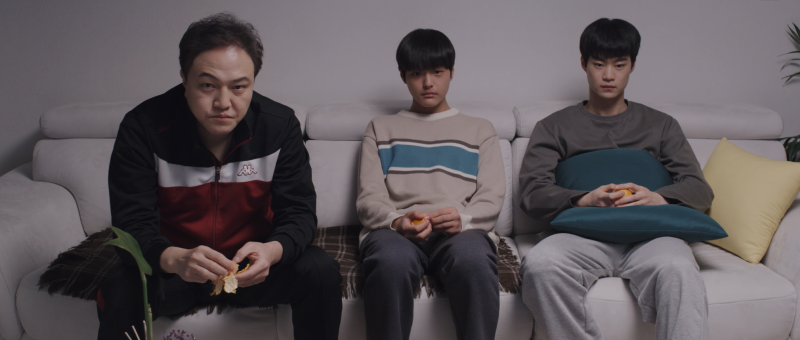
Next Door (옆집사람, Yeom Ji-ho, 2021) [Fantasia 2022]

How much do you know about what’s going on with your neighbours? Chan-woo (Oh Dong-min) thinks he knows quite a bit because they never seem to stop arguing and the walls in this building are surprisingly thin, but as it turns out he didn’t really know very much at all nor to be honest did he really care. Yeom Ji-ho’s graduate film Next Door (옆집사람, Yeop Jib Salam) is a tense mystery farce in which an aspiring detective tries to investigate his way out of trouble and somehow ends up coming out on top almost despite himself.

Chan-woo has been unsuccessfully studying for the police exam for the last five years and hopes that his run of miserable failure is about to come to an end, that is as long as he can get himself together to submit the application by 6pm the following day. One of the many problems with that is that Chan-woo has a cashflow problem and there’s not enough in his account to pay the fee so he has to ring a friend who agrees to lend him money but only if he comes out for a drink. Reluctantly agreeing, Chan-woo fails to correct his friends when they assume he’s already passed the test and become a policeman only to get blackout drunk and create some kind of disturbance before waking up in an unfamiliar environment next to what seems to be a corpse surrounded by blood. After a few moments of confusion, Chan-woo realises he must have crawled in next-door in a drunken stupor and returns to his own apartment but discovers that he’s left his phone behind which is inconvenient in itself but especially as it’s now evidence that he was present at a crime scene which won’t look good on his police application form. 

To be honest, Chan-woo is not the sharpest knife in the drawer and it’s not until he’s been in the apartment, where he is trapped because the hallway is currently full of religious proselytisers, for some time that he remembers about fingerprints and DNA while deciding to do some investigating to figure out what might have been going on the previous evening. His friend’s messages suggest he has a history of becoming violent and aggressive while drunk and may have gotten into some kind of altercation all of which has him worried that he actually might have been involved in the corpse’s demise. 

Meanwhile all he ever did was complain about the noisy woman in 404 who was frequently heard arguing with a man. As an aspiring policeman perhaps he should have checked in on her to make sure she hadn’t become a victim of domestic violence rather than blaming his neighbours for his poor performance. To begin with, he assumes the body must be that of the woman’s boyfriend, but also makes a series of sexist assumptions while looking around the apartment and finding evidence that the person who lived there was a tech wiz immediately assuming that all the computer equipment must belong to the boyfriend. Similarly he decides the girl is probably an airhead after finding photos of her on the corpse’s phone because she is pretty and fashionable. When she finally turns up with bin bags and cleaning supplies, Hyun-min (Choi Hee-jin) first challenges Chan-woo on discovering him hiding in her closet but then changes her tune to appeal to Chan-woo’s vanity playing the helpless young woman looking to him for protection and in effect welding his sexism against him. 

His desire to play the hero may be behind his intention to become a police officer but then he’s not exactly a paragon of virtue himself. On discovering the body, we see him raid a piggy bank and pocket a note from the corpse’s wallet to solve his financial problems before thinking better of it and putting everything back where it belongs. He agrees to help Hyun-min deal with the body partly to protect her and partly to protect himself from his proximity to the crime all while trying to make sure he gets back to his own apartment to send the application form before the deadline. Even the landlady eventually offers him a discount on his rent in return for keeping quiet so the murder in the building won’t affect her business. “They were terrible people” he tells her when she repeats a rumour that Hyun-min got into a fight with a jealous boyfriend over money which might not be completely unfair even though he knows the rumour isn’t true and is not entirely blameless himself. A masterclass in blocking and production design, Yeom’s deliciously dark farce suggests it might be worth keeping a better eye on your neighbours in all senses of the term. 


Next Door screened as part of this year’s Fantasia International Film Festival.

International trailer (English subtitles)

Fast & Feel Love (เร็วโหด..เหมือนโกรธเธอ, Nawapol Thamrongrattanarit, 2022) [Fantasia 2022]

A 30-something couple find themselves pulled in different directions by their conflicting desires in Nawapol Thamrongrattanarit’s post-modern comedy, Fast & Feel Love (เร็วโหด..เหมือนโกรธเธอ). As the title implies, the self-involved hero is eventually forced to accept that his success is founded on the support of those around him while belatedly stepping in to adulthood in undergoing a baptism of fire learning basic life skills along with the confidence to look after himself in a new world of grownup responsibilities. 

Jay (Urassaya Sperbund) and Kao (Nat Kitcharit) met as outsiders in high school, she excelling in English but not much else aside from her love of plants, and Kao obsessed with the art of sport stacking and dreaming of becoming a champion. 10 years later the pair are still a couple, kind of, living in a well-appointed home which they technically co-own though its clear Jay is shouldering the mortgage along with all the other domestic responsibilities. Kao is technically arrested in childhood, spending all of his time shut up in his room practicing sport stacking oblivious that others in his life have sacrificed themselves on his behalf. Jay used to think that it was all worth it as long as Kao achieved his sport stacking dreams but now she’s reached a crisis point realising that for everything she’s done for Kao she’s got very little back and if she waits much longer her own small dream of becoming a mother and having a conventional family life may pass her by. 

There is something of an irony in the fact that all of Kao’s major challengers are young children though as he points out sport stacking is an egalitarian sport in which things like age, gender, and nationality are irrelevant. Having successfully broken a record, Kao begins receiving creepy phone calls from a new rival, Edward, a little boy in Colombia who complains to his mother asking why people can’t go on stacking forever only for her to point out that adults have other things in their lives they have to attend to though Edward simply doesn’t understand. To begin with, Kao doesn’t either because he’s been lucky enough to be surrounded by people who supported his dream and went out of their way to make it easy for him by relieving him of basic tasks so that he could devote himself entirely to sport stacking. Because it had always been this way, it never really occurred to Kao that he needed to grow up and begin taking some responsibility for himself or at least acknowledge the sacrifices others were making on his behalf. 

When Jay eventually leaves him fearful that she’s wasted too much time and he’s never going to change, Kao is suddenly confronted by the frightening world of adulthood in which he must finally learn to look after himself while simultaneously accepting that it’s alright to ask for and receive help while helping others in return. What appealed to him about sport stacking was that it could be done alone, yet he failed to use the sport to block out everything else but was perpetually bothered by the intrusions of ordinary life his concentration ruined by the slightest noise. What he learns is that he cannot, and does not want to, win alone but only thanks to the support he receives from those around him while accepting that perhaps it’s time to move on from competitive sport stacking. 

Nawapol Thamrongrattanarit throws in plenty of meta references as Kao breaks the fourth wall or laments that he thought this was supposed to be an action movie but he’s hardly done any stacking at all and people might be disappointed. An extended running gag directly references Bong Joon-ho’s Parasite, while one of the kids Kao teaches at the sport stacking club talks like a gangster because she’s apparently watched too much John Wick. Even so, the relationship between Jay and Kao is drawn with a poignant naturalism rather than rom-com superficiality that allows Kao to accept that it’s time for them both to do what makes them happy even if that means they may not be able to stay together while little Edward seems to come to the same conclusion, ahead of the game in realising that a prize you don’t really want may not be worth winning. 


Fast & Feel Love screened as part of this year’s Fantasia International Film Festival.

International trailer (English subtitles)

Images: ©2022 GDH 559 Co., Ltd.

Alienoid (외계+인 1부, Choi Dong-hoon, 2022)

According to the strangely warmhearted AI robot at the centre of Choi Dong-hoon’s Alienoid (외계+인 1부), the universe is already finished, destined only to tear itself apart in destructive instability. According to him, his society evolved, became compassionate and forgiving, yet like many others sought to avoid a problem it did not want to deal with in exiling its most dangerous prisoners to the minds of oblivious Earthlings who apparently rarely realise they’re sharing body and soul with an alien killing machine until that is one decides to escape. 

Thunder (Kim Dae-myung), an AI unit accompanying the sullen Guard (Kim Woo-bin) who is also a kind of guardian, paints the aliens as dangerous mutants who live only for violence yet it might be worth considering that their rebellion may be justified as members of an oppressed minority apparently considered harmful to mainstream society were it not for the fact their plan involves poisoning the Earth’s atmosphere to free their brethren while suffocating humanity in the process. Guard is fond of saying that he cares nothing for humans and does not involve himself in human affairs, yet it’s obvious that as much as his duty is to ensure the aliens stay captive he feels a responsibility to protect humanity, coming to care for an infant child Thunder spirited away in compassion after its mother died when the alien hosted inside her tried to escape. 

There is something a little curious in the fact these alien beings have chosen to live in what is our present day when according to them time is not linear but happening all at once and they appear to have the ability to travel through it at will, even stashing mutant criminals back in the 14th century where a Taoist dosa magician, “The Marvellous Muruk” (Ryu Jun-yeol) is on the hunt for the Divine Blade and a young woman who “shoots thunder” (Kim Tae-ri). Alien technology may seem like magic even if rooted in “science”, but feudal Korea is a place of majestic fantasy in which wizardry is apparently very real to the extent that a pair of powerful sorcerers tour the land hawking magical supplies such as random sutra stickers and mirrors that enlarge whatever passes through them to mysteriously masked warrior monks. Yet as we can see the girl who shoots thunder is merely welding a pistol, a kind of halfway house of technology which seems like strange magic to the people of Goryeo but nothing more than a child’s toy to the laser-wielding robotic aliens. 

In any case, Choi eventually connects these two worlds bridged by temporal conspiracy as if implying that the future’s salvation lies only in the past. Guard is forced to reflect that their strange act of colonial imperialism in secretly implanting alien prisoners in human minds may have been misguided when challenged by his plucky little girl (Choi Yu-ri) who has already realised there’s something a little different about her distant dad while the fact she’s effectively being raised by two men passes as incidental detail even as the Guard is stalked by her best friend’s apparently smitten aunt (Lee Honey). 

This being the first instalment in a two part film, there is a notable lack of resolution in its closing moments though Choi excels in world building running from hard sci-fi to feudalistic fantasy imbued with the strange magic of technology and underpinned by an interrogation humanity as the heroes battle through time looking for a way to repair an “unstable” world ruled by greed and violence and largely find it in each other. While the chief thrill may come from the incongruity of a young woman firing a pistol in the age of the crossbow (not to mention blasting her way out of a coffin), Choi packs in a series of innovative action sequences shot with a knowing irony as Muruk faces off against the masked monks in the past while the Guard and Thunder try their best to keep the aliens at bay with their high tech weaponry, shooting electric pulses from their palms and dodging lasers but still making a last ditch attempt by leaping at the enemy spaceship and trying to stab it in the heart. Whether this disordered world can be stabilised through a moment of cosmic connection will have to wait for part two, but this opening instalment at least is quite literally a charming affair.


Alienoid is in US cinemas from Aug. 26 courtesy of Well Go USA.

US trailer (English subtitles)