Sunday League (선데이리그, Yi Sung-il, 2020)

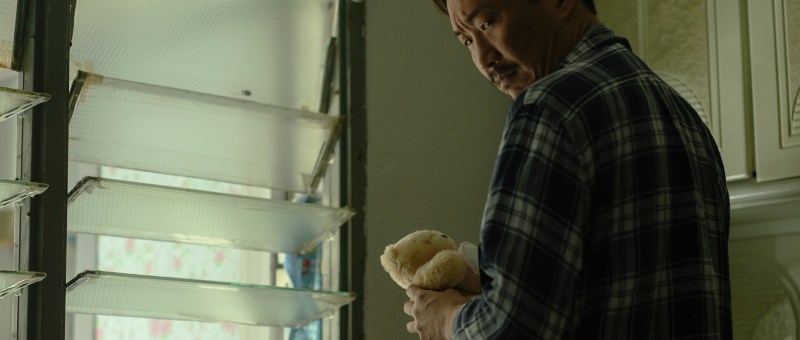
A dejected middle-aged former footballer rediscovers both a love for the game and his self respect while coaching a trio of hopeless amateurs towards competition glory in Yi Sung-il’s underdog sporting drama, Sunday League (선데이리그). A testament to the restorative power of team sports, Yi’s gentle comedy allows each of its troubled heroes to discover a positive outlet, gaining a sense of confidence that isn’t about winning or losing but mutual support and community spirit. 

As a young man, Joon-il (Lee Seong-uk) had been primed for sporting success but an injury soon brought his career on the pitch to an end. Sullen and embittered, he is a now middle-aged man with a drinking problem and a part-time job working for an old friend coaching a kids’ team while in the middle of an acrimonious divorce. As will become apparent, he is temperamentally unsuited to coaching young children, his coaching style somewhere between drill sergeant and dictatorial PE teacher essentially amounting to little more than bullying. His ill-tempered rant even reduces one small boy to tears proving the last straw for head coach Sang-man who has to field the complaints from understandably upset parents. Otherwise at a loss, he fires Joon-il from the kids team but asks him to help out on a new sideline coaching amateur players, an offer he originally turns down but later reconsiders when faced with the realities of his impending divorce and desire to maintain contact with his son. 

Each of the new students is like him in their own way stuck, looking for a way forward while blowing off steam through team games. While Bok-nam’s fried chicken shop is struggling in a difficult economy, the otherwise superrich Mr Kim is considering running for public office but privately insecure, while the last recruit Hyun-su is a shy and fragile man recently diagnosed with bi-polar who has been signed up by his wife after losing his job. It has to be said that Hyun-su’s mental health is sometimes treated as the butt of a joke in which he is often simply told to “man up” while his tendency to burst into tears on the field becomes a running gag, yet through training with the other guys he does at least begin to find a sense of purpose and contentment both on the field and off through working in Bok-nam’s chicken shop with his wages paid by the ever generous Mr Kim. 

As for Joon-il, meanwhile, he struggles both as a coach and as a father unable to get over his own sense of regret and resentment in the loss of his sporting career while his son goes quietly off the rails. Though originally reluctant and irritated by the dilettantism of his pupils, Joon-il is finally forced to face himself in realising that his own stubbornness has been the cause of all his problems and that his tendency to run away from unpleasantness rather than face it head on has only made his life more difficult. Picking up a series of innovative new coaching techniques such as using videogames to demonstrate otherwise confusing strategies while rediscovering the power of positive reinforcement he begins to coach himself back towards his best self finding a new sense of purpose on the pitch. 

Meanwhile, Yi throws in a series of of surreal gags including a lengthy sequence in which the team square off against the squad from the local church led by a football-mad pastor while a chorus of hallelujah rings out over the match as the guys finally begin to find their footing. Joon-il only took the job on the promise of a full-time salaried position if he managed to get them into the finals of a local competition, but in the end it isn’t really about winning or losing so much as self-improvement and gentle camaraderie, the guys each facing themselves while playing the game and discovering a new sense of pride in their progress Bok-nam cheerfully exclaiming that they are all footballers simply by virtue of playing the game. A warmhearted sports dramedy about positive male bonding and positivity for the future, Sunday League discovers new sides to the beautiful game in its restorative abilities affording each of the guys a new lease on life as members of a small team of plucky underdogs less interested in the winning than the taking part.


Sunday League screens in Chicago on March 13 with director Yi Sung-il in attendance as part of the 14th Season of Asian Pop-Up Cinema.

International trailer (English subtitles)
Inu-Oh (犬王, Masaaki Yuasa, 2021)

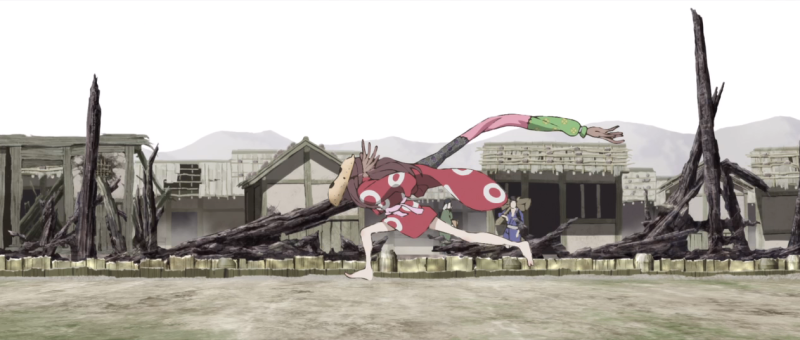
“Unity demands order” according to an ambitious politician near the end of Masaaki Yuasa’s stunning anime prog rock opera, Inu-Oh (犬王). Inspired by Hideo Furukawa’s novel Heike Monogatari Inu-Oh no Maki, Yuasa’s spirited drama is as much about the liberating power of artistic expression as it is about the danger it presents to those in power, while reclaiming the stories wilfully hidden in history or as the narrator puts it “stolen and forgotten” in order to exorcise a degree of historical trauma lingering in the cultural aura.

Set in the Muromachi period in which two imperial courts contested hegemony, the tale opens with the retrieval of a set of cursed remnants buried at the bottom of the sea after the battle of Dan-no-ura in which the Heike clan were famously defeated. Ashikaga Yoshimitsu (Tasuku Emoto) is convinced that possessing imperial treasures would lend credence to his claim, but their resurfacing creates nothing but misery leaving the boy who discovered them, Tomona (Mirai Moriyama), blind and his father dead. Setting off for Kyoto in search of revenge, Tomona is taken in by an elderly Biwa player and eventually runs into a strange creature wearing a gourd mask and behaving like a dog, striking up a friendship that later leads to the realisation that the boy is also cursed, haunted by the spirits of fallen Heike warriors desperate for their stories to be told. 

In true fairytale fashion, curse later begins to dissipate as the pair exorcise the ghosts by telling their stories never singing the same song twice but always in search of new songs to be sung. Tomona changes his name several times, adopting that of “Tomoichi” in keeping with the requirements of his Biwa school and later choosing for himself that of “Tomoari” in his partnership with Inu-Oh in emphasis of the fact that “we are here”. Yet as the ghost of his father reminds him, changing his name makes him difficult to find literally losing touch with his roots in becoming invisible to friendly spirits. He and the cursed boy Inu-Oh are interested in a new kind of Biwa that is opposed by the Biwa priests for its transgressive modernity some feeling that Tomona’s transformation with his long hair and makeup brings the profession into disrepute though the act proves undeniably popular with Inu-Oh the biggest star of the age. 

Having begun in the classical register with images resembling ink painting and a score inspired by traditional noh, Yuasa introduces electric guitar as the film shifts into rock opera, the pair’s stagecraft incredibly modern as they adopt all kinds of elaborate staging to add atmosphere to their tales including at one point a large lantern silhouette mimicking the big screen graphics of the present day. Yet Inu-Oh’s fame comes with a price. His popularity threatens both the pride of a jealous rival and the ambitions of the Ashikaga clan who fear his tales of the Heike are simply too bold and radical, later condemning them as an affront to the glory of the shogun and insisting that their official version must be the only record of the Heika warriors. 

The sense of freedom the pair had felt in their ability to express themselves through music and dance is quickly crushed by cultural authoritarianism, Inu-Oh reduced to a kind of court jester performing only for the lord while as the closing credits tell us becoming the biggest popular star of his age though now too forgotten along with his songs while his more elegant counterpart, Fujiwaka, is remembered for shaping the art of contemporary noh though there is perhaps something in Tomona’s defiant reclaimation of his name along with the essential right to choose it for himself that grants him a greater liberty in simply refusing to allow himself to be subjugated by feudal power. A psychedelic rock opera set in 14th century Japan that remembers even noh was once new and malleable, Inu-Oh insists on art’s danger in its capacity to challenge the status quo not only directly but through a series of internal revolutions born of the masks we choose to wear and those we choose to remove in the radical act of self-expression which is in its own way the truest form of liberty. 


Inu-Oh screened as part of this year’s Glasgow Film Festival 

International trailer (English subtitles)

Yuni (Kamila Andini, 2021)

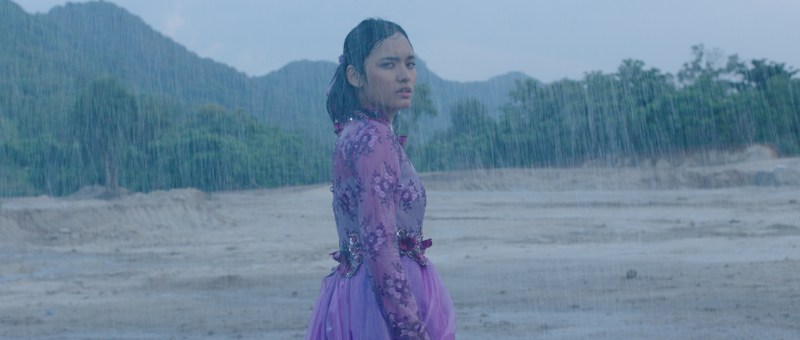
“Marriage is a blessing”, according to a wise old grandma, “we shouldn’t refuse a blessing, no?” expressing a commonly held belief in the traditional small town where the titular Yuni (Arawinda Kirana) resides in Kamila Andini’s melancholy social drama. Yuni meanwhile isn’t so sure, if marriage is a blessing then why does it feel like a trap and how can you call something a blessing if as it seems to have been for some of her friends it only results in violence and misery? 

At 17 Yuni is a talented student, her progressive female teacher urging her to consider going to college while offering various pamphlets about applying for scholarships which Yuni feels might make it easier for her parents to accept. Yet in addition to the academic criteria, the rules are clear that married women are not eligible which is a problem because Yuni has just received her first marriage proposal from a man recently relocated to the village who is handsome enough and thought a catch because he has a good job in a local factory. 

While everything in Yuni screams no, she finds it difficult to articulate her resistance constantly second guessing herself wondering if she’s doing the right thing or if as some of the other girls suggest she is lucky to have received such a generous offer and ought to accept it. Her obsession with the colour purple, the colour both of a wedding dress and according to another girl widow’s weeds, which causes her to steal any purple item she sees is an expression of her alienation yearning for colour and vibrancy in a culture which seems to deny her both. Dressing in purple under her green school uniform, she rejects the idea of marriage and wants to continue her education, spending time with an older woman who takes her to clubs to dance enjoying the illicit freedom of a modern society which has otherwise been kept from her. 

Even at school, her freedom begins to shrink. The Islamic Club seems to dominate everything, planning to introduce virginity tests for the female students to prevent the inconvenience and shame of teenage pregnancy though it does not seem as if the boys are given the same talk. The girls are all convinced that one of their classmates is pregnant because she wears a baggy jacket and has become withdrawn, but later wonder if she may have been raped no one seemingly very interested in helping her. Later after embarking on an escapist romance with diffident and sensitive classmate Yoga (Kevin Ardillova), Yuni is also asked if was raped when confessing that she is no longer a virgin in order to escape a second marriage proposal to become the second wife of a wealthy old man who not so subtly tries to buy her from her grandmother while implying that she might be considered damaged goods as a woman who’s already rejected a suitor. 

Yuni is warned that turning down a second proposal is bad luck and struggles with herself in her decision, her internal confusion ironically interfering with her studying making it harder for her to escape through education. Meanwhile she hears of a woman who married young but experienced domestic violence after her husband blamed her for a series of miscarriages only to be disowned by her family following a divorce they again telling her she ought to have counted herself lucky that her husband still put up with her despite her “condition”. Another friend’s husband has abandoned her with a young son and she isn’t sure if she should divorce him and look for someone else, while one of Yuni’s classmates ends up having to marry a teenage boyfriend when a gang of blackmailers threatens to ruin their reputations after discovering them taking photos at a well known hookup spot. 

With most of the other women largely complicit, Yuni feels she has no one to talk to or turn to for advice eventually pouring her heart out to the sensitive Yoga who offers to run away with her knowing that nothing will change as long as she stays in the conservative environment of their hometown. Even the teacher whom she’d once admired, Mr. Damar (Dimas Aditya), proves no ally attempting to use her to escape his own sense of impossibility after she catches him trying on women’s clothes at a local department store. Mr. Damar’s own desperation causes him to act in the most insidious of ways, in effect barring Yuni’s path out of her repressive life in inappropriately wielding his power as a teacher against her. Having lost all confidence, Yuni no longer knows what she wants out of life and is growing weary of fighting the same battles in attempting to struggle free of the constraints of traditional patriarchy but is left with little choice once all her dreams are shattered. A tragedy of modern day Indonesia, Yuni sees its heroine’s spirit gradually crushed by the world in which she lives in which she has only the choice of lonely exile or resigned misery. 


Yuni screened as part of this year’s Glasgow Film Festival and is available to stream in the UK until 8th March.

International trailer (English subtitles)
Love, Life and Goldfish (すくってごらん, Yukinori Makabe, 2021)

An emotionally repressed salaryman discovers that it really is all about connection in Yukinori Makabe’s absurdist musical, Love, Life, and Goldfish (すくってごらん, Sukutte Goran). Adapted from the manga by Noriko Otani, the Japanese title is itself a minor pun in that it could be translated either as “please try to save me”, or “please have a go at scooping” as in goldfish which is a popular activity at Japanese summer festivals. A fish out of water, former top banker Makoto (Matsuya Onoe) is in a sense saving himself, biding his time until he’s scooped back up again, but discovers his true purpose may be to save someone else in this strange, goldfish-obsessed tranquil country town. 

Defiantly aloof, Makoto arrives a wounded man resentful that one mistake could have derailed his career to the extent that he’s gone from a cushy job in the Tokyo head office to a regular clerk in a rural branch of a nationwide bank. Viewing himself as an elite, infinitely better than all these country bumpkins with their weird goldfish obsession, Makoto is scrupulously polite but abruptly deflects the attempts of his new colleagues to make him feel welcome. He does however, develop a fascination for a melancholy young woman dressed in kimono, Yoshino (Kanako Momota), whom he firstly mistakes for a geisha running a house of ill-repute only to realise that her establishment caters to a different clientele in that she runs a goldfish scooping emporium. Meanwhile, he also becomes an object of fascination for Asuka (Nicole Ishida), a young woman running a bar with her brother. 

Makoto is fond of saying that “numbers don’t lie”, devoting himself entirely to work and insisting that he has no need of things like love or friendship but is in fact deeply lonely and trying to fill the void with industry. Though we never see much of his previous life, it’s easy to assume that he has at some point been deeply hurt and has affected this impervious persona as a means of self defence. Nevertheless, bottling up his emotions is apparently what caused his career to implode leading him to break with salaryman protocol and tell his boss what he actually thought in a less than polite manner. In a repeated motif, Makoto is no longer sure if and when his interior monologue has become exterior with the unwanted consequence that some of his less than charitable thoughts and inner insecurities accidentally leak into the outside world. 

More self aware than he seems, Makoto is moved to tears on hearing a heartfelt song from Asuka who, like him, is a Tokyo “reject” having come back after failing to achieve her dreams of becoming an actress. Overwhelmed by the sight of someone expressing their emotions without embarrassment he can’t help crying but continues to struggle with his feelings for Yoshino who is herself perhaps also feeling something similar. Once a promising pianist, she now only plays alone too afraid of judgement or rejection to risk playing for others. 

Tellingly Makoto’s Tokyo outburst had been over a business plan for an AI robot massage parlour which his boss dismissed on the grounds that it’s human warmth and kindness which are essential for healing. Of course Makoto didn’t want to hear that because he wants to live in a cold world of order ruled by the unassailable logic of numbers, but through gradually bonding with the townspeople comes to accept that it’s human connection that’s most important after all. “Sometimes you have to face reality even if it’s painful”, he remarks eventually realising that “you can’t save anyone if you obsess over numbers” after failing to scoop an arbitrary number of goldfish with a broken paddle. 

Realising life’s not a numbers game gives Makoto the courage to sing with his heart no longer quite so repressed as he prepares to escape this strange holding tank for the oceans of the metropolis. An old-fashioned integrated musical, the whimsical score skips through several genres from j-pop to rap though it’s true enough that some of the melodies stray uncomfortably close to popular hits from recent musical theatre and family animation. Nevertheless, the quirky production design and absurdist direction make Love, Life, and Goldfish difficult to resist as the repressed salaryman its centre learns to open his heart while swimming in a different river to realise that it really is all about feeling after all. 


Love, Life and Goldfish screened as part of this year’s Glasgow Film Festival.

Original trailer (no subtitles)

Masked Ward (仮面病棟, Hisashi Kimura, 2020)

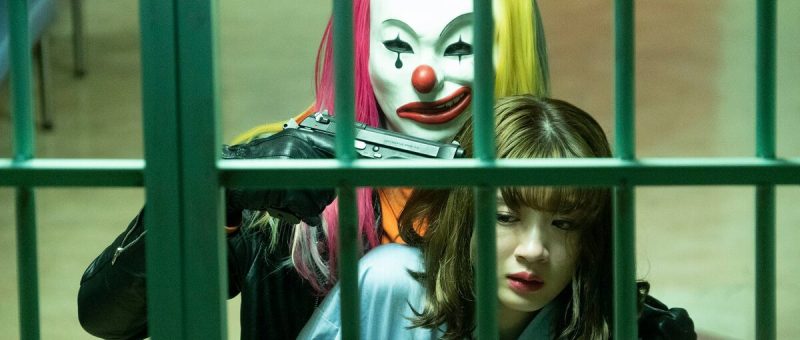
“This hospital is…abnormal” according to locum doctor Hayami (Kentaro Sakaguchi) as he begins to discover dark goings on while trapped in a former psychiatric home after being taken hostage by a man in a clown mask. Based on the medical mystery novel by Mikito Chinen, Masked Ward (仮面病棟, Kamen Byoto) is partly a meditation on guilt and grief and partly an attack on backroom eugenics in an often judgemental and potentially corrupt society, if wrapped up in a wilfully silly B-movie crime thriller. 

Still on a temporary sabbatical following a bereavement, Dr. Hayami is recruited by an old friend, Kosakai (Ryohei Ohtani), to cover a night shift at a long term care hospital mostly catering to patients living with dementia. It has to be said the hospital itself has an instantly creepy aura, the police who later arrive describing it as looking like a prison which is apt because no one ever thought to remove the bars from the interior intended to keep “dangerous” patients from escaping. Even so, Hayami is repeatedly assured that nothing ever happens here and most likely he won’t need to come out of his room. Unfortunately that proves to be bad advice because not long after he settles in, a man in a clown mask turns up with a young woman he apparently himself shot but now wants patched up thereafter taking everyone present hostage while hiding out from police who have instituted a manhunt after he robbed a convenience store at gunpoint. 

You’d have to admit it looks a bit suspicious that all of this happened the very night that Hayami is in charge, especially as it’s suggested he may bear a grudge towards head doctor Tadokoro (Masanobu Takashima) as he was the one who refused to admit Hayami’s late girlfriend Yoko (Izumi Fujimoto) who was killed in a car accident in which Hayami was driving. Then again, as Hayami says, what would be the point in that? Suffering frequent flashbacks he subconsciously links the young woman, Hitomi (Mei Nagano), with Yoko determined in a sense to save her instead while trying to figure out what exactly is going on in this very weird medical institution and what the clown is trying to achieve with his random siege. 

The creepiness of the hospital is already well established with its former psychiatric institution vibes, something only enhanced on the discovery of an apparently disused operating theatre which is no grimy basement filled with rusty equipment but appears to have been refurbished recently and is sparklingly clean. It doesn’t really take a genius to figure out what’s been going on in there or why evil head doctor Tadokoro doesn’t want to call the police, but it does call into question not just his own ethics but those of the wider medical profession as he advances a series of eugenicist justifications for his decisions insisting that some lives are not worth saving while those of the elite who “can’t bear to wait” obviously are. Many of those in their beds have no names, taking those only of the area in which they were found supposedly with no identification, and are receiving only basic care otherwise forgotten by an indifferent society while hypocritical politicians offer platitudes about equality, superficially insisting that every citizen should have the right to live, to be protected, and to have a future.  

Even so Kimura can’t quite decide how seriously he wants to treat the darkness at the film’s centre, embracing the outlandishness of the material through a series of B-movie cliches from eerie handheld photography in the creepiness of the of the empty hospital corridors to literal lightning effects and foreshadowing so heavy it almost feels ironic. Yet the tone is at the same time earnest and slightly naive, the police apparently minded to cover the whole thing up due to pressure from above while Hayami is otherwise free to blow the whistle by getting the media involved with a press conference beamed directly onto a big inner-city screen in the middle of a presidential campaign speech all of which seems faintly unlikely given how far they were prepared to go keep the conspiracy secret while one wonders if he’d really be able to get so much attention so quickly even having recovered the secret documents proving his claims are true. In any case, his speech is only really intended for an audience of one as he says pretty much the same thing as the duplicitous politician only he really means it while urging those who’ve been irreparably harmed to give up their hate and try to move on sharing feelings and hopes rather than anger and resentment which is a nice message but perhaps also not especially helpful in holding those who’ve misused their power to account. 


Masked Ward streams until 27th February in several territories as part of Japanese Film Festival Online 2022.

Original trailer (English sutbtitles)

Awake (Atsuhiro Yamada, 2020)

Japanese cinema has gone shogi mad in recent years with biopics such as The Miracle of Crybaby Shottan and Satoshi: A Move for Tomorrow emphasising the intense toll the famously fiendish game can take on the lives of those who are determined to turn pro often studying from a young age to the exclusion of all else while at the risk of losing everything if not making the required standard before reaching the age cap after which it becomes impossible to progress. Inspired by the real life match between an AI shogi system and a professional player in 2015, Atsuhiro Yamada’s Awake is in someways no different but also suggests that true victory may lie in not giving up while progress is possible only through a process of mutual collaboration. 

After opening with a brief flash forward to the climactic match between shogi prodigy Riku (Ryuya Wakaba) and his childhood friend turned programmer Eiichi’s (Ryo Yoshizawa) new AI system, the film flashes back to find the pair enrolling in the same shogi club but with very different approaches to the game. While Riku is bright and open, relishing the challenge of facing a strong opponent, Eiichi is sullen and defensive spending all his time memorising shogi strategies while failing to embrace the spirit of the game in his unwillingness to accept defeat. The pair eventually become rivals, Eiichi apparently the only player to beat Riku but losing out in the crucial game that decides who is promoted to the next rank and thereafter quitting in a huff realising that his rigid thinking is no match for Riku’s intuitive play style. Yet as their mentor suggests, Riku’s game has only improved through playing a worthy challenger like Eiichi, players learn through experience and cannot progress solely by studying the game alone. 

Like The Miracle of Crybaby Shottan, Awake is clear on the toll shogi failure can take on a life as Eiichi finds himself too embarrassed to explain why he’s a couple of years late entering university though most assume it’s likely because he chose to resit his exams in the hope of getting into a more prestigious uni only to settle for this one. A socially awkward young man there appears to be little else in his life to fill hole left by his abrupt rejection of shogi itself caused by an inner insecurity that prompts him to give up rather than persevere after an unexpected setback. That’s one reason he gets hooked on the idea of programming a virtual shogi game, at once captivated by the calming sound of the voice components on the basic online version played by his dad and mystified by its seeming random play style. 

In this Eiichi comes to realise that he can’t do it alone, working closely with fellow AI enthusiast Isono (Motoki Ochiai) who introduces him to open source software and explains that the code is public so that others can build on it. Riku meanwhile still a shoji prodigy struggles with everyday life and didn’t even have a PC until offered the opportunity to become the challenger to Eiichi’s Awake system. His sister had to set it up for him while he was so preoccupied that didn’t quite recognise the name of his own nephew. What he’s looking for is a kind of vindication following a setback of his own along with the novelty of another real challenge though he bears no animosity towards Eiichi and makes it clear he’s playing the robot not the man who built it. 

Rather than a technophobic panic over AI, the film seems to insist it too may have its uses and that the challenge it presents to human thinking is only another opportunity for improvement even if the machine is imperfect while the player has to resort to trickery in order to beat it. The message that Eiichi gets is that failure isn’t always such a bad thing and that nothing’s ever over ’til it’s over so there’s no need to give up so easily in pure petulance. Rather than setting one player against another as villain and hero, Yamada allows the two men to rediscover a sense of mutual admiration, finally allowed to play shogi somewhere more “relaxed” remembering that it’s supposed to be “fun” as they pass the game down to the next generation in another process of mutual evolution. 


Awake streams until 27th February in several territories as part of Japanese Film Festival Online 2022.

Original trailer (English subtitles)

Trans (트랜스, Do Naeri, 2021)

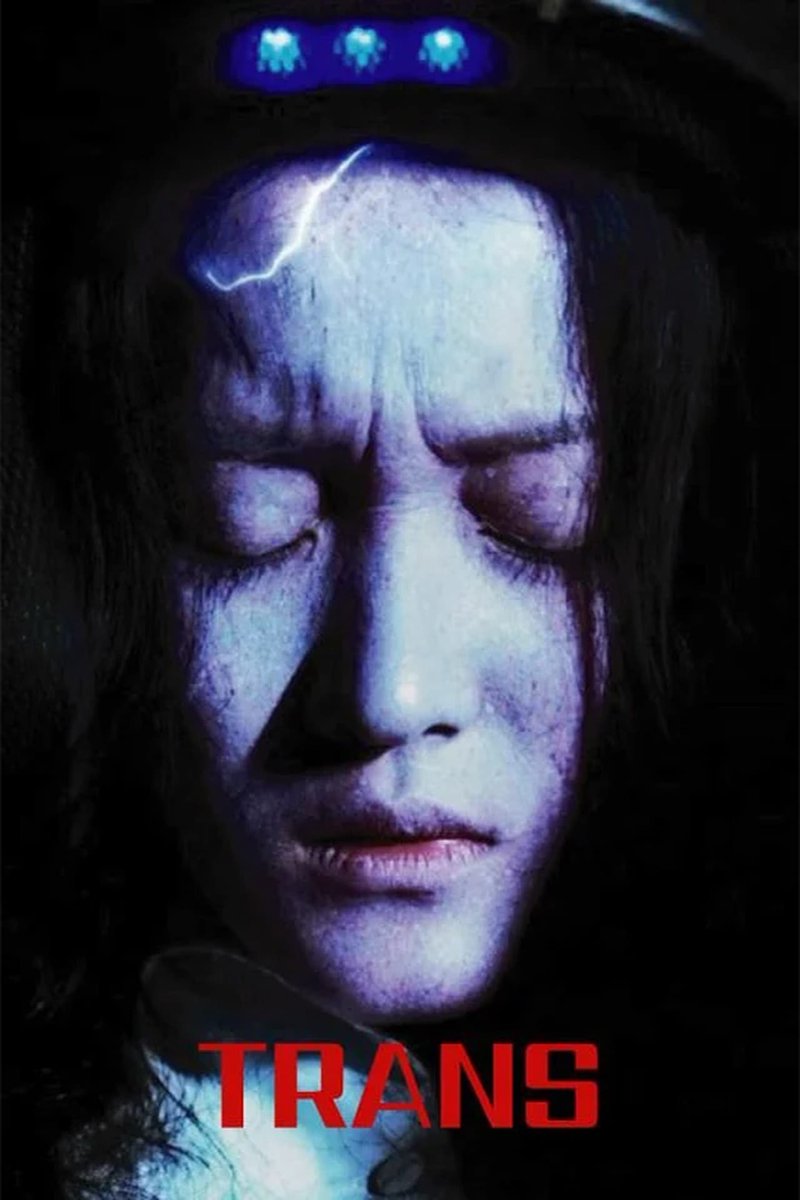
The troubled heroine of Do Naeri’s sci-fi psychodrama Trans (트랜스) finds herself quite literally “stuck in a deep loop” while attempting to transcend herself and escape her teenage angst. Playing with new religion imagery, Do’s elliptical drama sends the young woman on a quest for self-apotheosis through physical transformation, a literal obliteration of the self in order to be reborn as something more than human, yet internally conflicted in the costs and implications of such a “rebirth” even while her consciousness seemingly fractures under the weight of its demands. 

Then again, perhaps all of this is just fantasy returning us repeatedly to the opening scenes in which high schooler Minyoung is awoken from her reverie by a woman’s scream that might in some sense be her own. A classmate’s body has been spotted draped over a tree, his face and torso marked with what seem to be electrical burns. According to the police, Minyoung was the last person to be in contact with Taeyong which in itself seems odd as we’re immediately shown flashbacks of him bullying her because of her bulimia, attempting to shove junk food into her face. On one such occasion she’s rescued by fellow student Itae, wearing a mask and firing some sort of laser gun. Itae later takes her to his secret lab where he researches the concept of transhumanism believing that the next step in human evolution lies in hacking the brain, enhancing human physicality with technological augmentation such as the chip he has implanted on his chest apparently given to him to “cure” his OCD. 

Taeyong’s quasi-fascist ramblings take on the language of new religion, talking of electrical “baptism”, death and resurrection, eventually directing a mystical prayer to the sky as if requesting divine blessing for his transcendence of the human form. Such language may be perfectly tailored to Minyoung whose only other interaction we see is with a dubious online church in which she questions her mentor on the nature of evil, asking why God could not have just made humanity “perfect” to begin with only for her mentor to suggest that evil is a choice that proves free will ensuring that humans are not just mindless robots following divine orders. Mindless robots is however what Taeyong believes humanity to be, his quest for transcendence apparently also one of revolution hoping to obliterate humanity as it is once and for all. He may in some sense reflect Minyoung’s alienation, a desire for revenge against a society by which she feels rejected, while fellow classmate Nochul perhaps reflects her concurrent anxiety. 

Yet there is something dangerous in Itae’s insistence that Minyoung is merely “stuck in a loop” and that certain behaviours or aspects of personality regarded as “disorders” are all the fault of faulty wiring and can simply be “fixed” by rebooting the system through electronic shock without ever considering the reasons those feelings or behaviours may have come to exist. He prays on Minyoung’s desire for control and dangles the promise of empowerment while merely using her in his plan to bring about the destruction of humanity while implying she may have already entered a state of “trans” which is why her world keeps repeating itself with details slightly altered until finally reaching the source of her trauma and uncovering the “truth” of her reality as defined by her own consciousness.  

This may all indeed be in her head to one extent or another as she looks for a way to transcend herself, her sense of alienation, dysphoria with her surroundings, and spiritual despair led astray by some worryingly fascististic philosophy advanced by a teenage mad scientist hellbent on the destruction of “low class robots” and the creation of a new superman through engineered evolution apparently using little more than a MacBook Air and a series of TV screens, his chief piece of equipment a modified motorcycle helmet. Careering through transhumanism to teleportation, invisibility, parallel universes, and time travel there is much that makes little literal sense as Minyoung constructs and deconstructs identities while repeatedly remaking her world if not quite to her liking then at least to her satisfaction only perhaps to wish she could return to a state of ignorance, human once again. 


Trailer (English subtitles)

Body Remember (ボディ・リメンバー, Keita Yamashina, 2021)

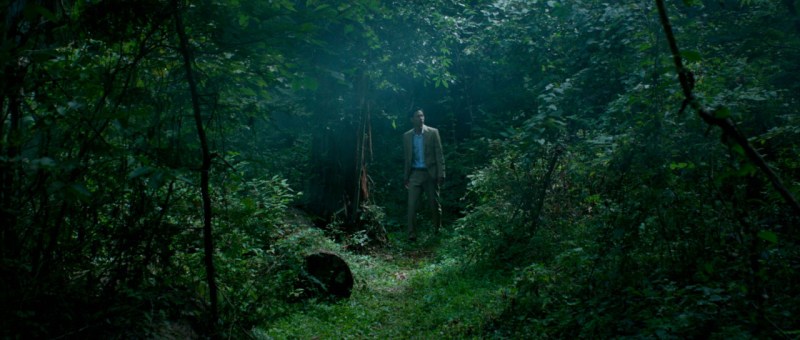
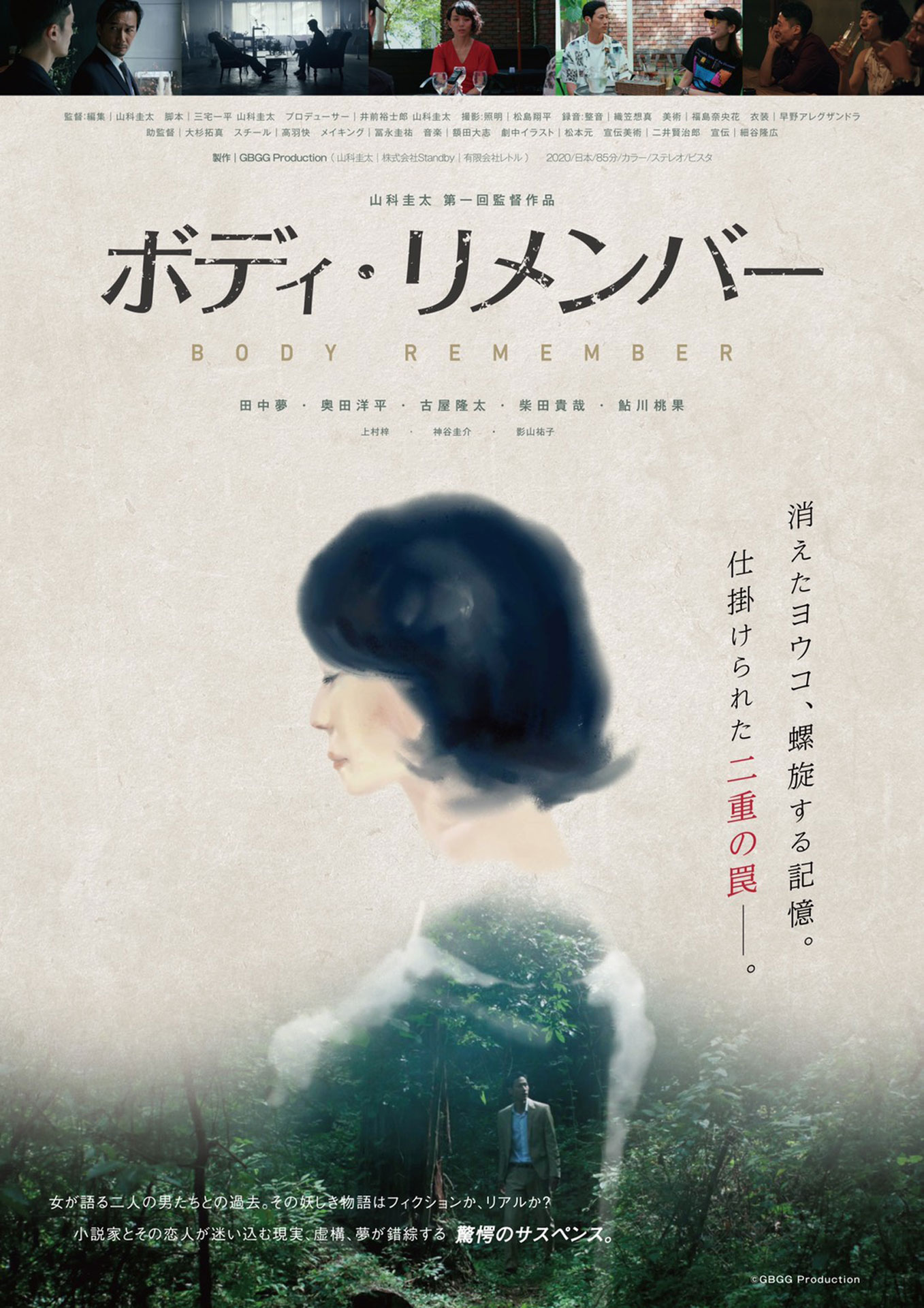
“It’s hard to tell what’s true and what’s not.” according to the hero of Keita Yamashina’s twisty take on meta noir, Body Remember (ボディ・リメンバー). For him, the superficial, literal truth is perhaps less important than that which it conceals, hoping to expose the buried reality hidden between the lines in the novel he is attempting to write inspired by a story narrated by his infinitely unreliable femme fatale cousin Yoko (Yume Tanaka). Shifting between an apparently concrete “reality” that is perhaps exposed as anything but by the final scene, dreams, memories, and the act of creation, Yamashina hints at collective fantasies and the essential truth of sensation as his artist hero attempts to turn an enigma into art. 

An unsettling presence, Yoko strides into a cafe dressed in a vibrant red and proceeds to explain to novelist Haruhiko (Takaya Shibata) and his artist girlfriend Ririko (Momoka Ayukawa) that she has long found it difficult to distinguish reality from dream, believing in a sense that the “truth” is irrelevant. Her story seems to be a rather ordinary if tawdry one of finding herself at the centre of a love triangle but also feeling like a third wheel as if she were a puzzle piece hovering over empty spaces unsure where to land while the men are comfortably installed in their rightful places. When lawyer Jiro (Ryuta Furuya) turns up at the bar she has been running with husband Akira (Yohei Okuda) and mournfully explains he suspects his wife is having an affair, the trio reassume an intimacy from their uni days which is later broken by a passionate embrace between Jiro and Yoko accidentally witnessed by the betrayed Akira. 

Playing with images of sex and death, Yoko also recounts that seeing Jiro loosen his tie provoked in her a powerful urge to strangle him with it. Yoko apologises for scaring Haruhiko, but on the contrary he seems to find it arousing later openly telling Ririko that he too is captivated by Yoko while she complains that Jiro and Akira, now (or perhaps always) characters in a novel, are underwritten foils who exist only for Yoko. Haruhiko in a sense agrees, but also pulls focus and makes his potential story, in fact the story we have been watching, about the two men, foreseeing a conclusion which is all manliness and honour tinged with a frisson of homoeroticism that joins them both in the inevitable death foreshadowed in the opening scene. 

Yet Ririko wants to know the truth of it, investigating the bar where Yoko claimed to work and discovering that no such establishment ever existed though the location was recently used by a shady cult. Perhaps jealous, she dreams of an intimate encounter between the smitten Haruhiko and his “sexy” cousin, yet later reflects on her own tendency to run away from reality in flights of fancy. Her revelations perhaps provoke a deeper intimacy with her conflicted boyfriend who finds himself attempting to construct an “authentic” narrative from unreliable testimony, but then again we can’t be sure everything we see is real as the couple engage in a surreal game of beach volleyball with two men resembling Akira and Jiro whose behaviour is strange and childlike if displaying a similar intimacy to that which they appear to share in Haruhiko’s nascent “novel”. 

Challenged by Ririko, Haruhiko merely disappears his heroine, avowing that in the end she was never important in his story about the ambiguous relationship between two men turning her into a mythical femme fatale while Ririko continues to sketch her rival in an attempt to figure her out. Yoko herself tells us that she sees no real distinction between dream and reality that one is no more true or important than the other while insisting that while her mind may forget the facts, the sensation is recorded in her body which will always “remember” if indistinctly. 

Using a cast of mostly theatre actors, Yamashina crafts an unsettling atmosphere founded on tactile sensuality that belies the frequent unreliability of verbal communication while the jazz score and shadowy photography contribute to the sense of noirish dread complete with wafting cigarette smoke and a fatalistic, morally ambivalent conclusion. Further disrupting our sense of reality with a final self cameo, Body Remembers nevertheless reminds us that the truth is less important than our perception of it just as it returns us to where we started even less certain than before. 


Original trailer (English subtitles)

Elisa’s Day (遺愛, Alan Fung Chi-hang, 2021)

The legacy of abandonment visits itself on a trio of displaced Hong Kongers in Alan Fung Chi-hang’s melancholy crime drama, Elisa’s Day (遺愛). Set over 20 years from the Handover to the contemporary era, Fung draws inspiration from a real life crime while casting his ambivalent policeman, himself an orphan, as an ironic hero whose single act of compassion ends in a tragedy for which he feels he may not even have the right to atone. 

Fung begins, however, in the present day as Inspector Fai (Ronald Cheng Chung-Kei) prepares to collect his daughter who is shortly to be released from prison. Flashing back, we’re introduced to Daisy (Carol To Hei-Ling), a pale and distant young woman picked up for suspected drug trafficking while momentarily captivated by a familiar song and carrying a bunch of roses. From there we head further back, all the way to 1996 when 15-year-old Elisa (Hanna Chan Hon-Na) discovers she is pregnant by her bad boy boyfriend Man-Wai (Tony Wu Tsz-Tung). Each abandoned by their parents, the pair decide to run away together and find solace in a family of three, but as expected economic impossibility disrupts their search for happiness. Man-Wai joins the triads and eventually agrees to become a hitman, temporarily separated from Elisa and their daughter while lying low in Thailand. A then Sergeant Fai remains hot on his trail, keeping tabs on Elisa who unwittingly brings her young baby to the cinema where his adoptive mother Auntie Bo (Anna Ng Yuen-Yee) runs the box office, the pair of them becoming surrogate parents to the lonely little girl while Elisa is forced to turn to sex work when Man-Wai’s triad bosses fail to uphold their end of the bargain. 

“Everyone’s gone leaving only me behind” Elisa laments, learning that her estranged mother plans to move to the UK with her second family abandoning her once again in another, more complete sense. Trapped behind in a rundown area of the city, she finds herself caught between conflicting realities. Man-Wai pledges to stay with her forever but is soon gone eventually returning with promises of taking her to Thailand their dream of a better life symbolised by the red roses he brings with him that he claims reminded him of her. Man-Wai meanwhile is constantly told by his triad bosses that the future lies in Mainland China, a place he is originally so reluctant to travel that that he thinks killing is a better option only to later submit himself once again leaving Elisa alone in Hong Kong with no money and only a dwindling hope of ever achieving the familial bliss she longed for when she decided to run away with Man-Wai. 

For his part, Fai is also an orphan though his fate his was different in that he was found by Auntie Bo who gave him a loving home. Even so he has his share of guilt, feeling responsible for Auntie Bo’s spinsterhood fearing that she never married or had children of her own because taking him in made it impossible in the more conservative Hong Kong of 70s and 80s. Ironically enough they become a surrogate family for the infant Daisy, but it’s Fai’s sense of empathy that eventually provokes tragedy in his decision not to arrest Man-Wai on his return seeing how much he loves his family and wanting to give him a chance to put things right rather than take a little girl’s father away from her. Unable to forgive himself, he abandons his responsibilities only to be reminded of them later finally ending the cycle by being willing to accept the responsibility which has been left for him. 

Transitioning through the Hong Kong Handover, Fung evokes a sense of continual displacement, Elisa’s life destroyed firstly through abandonment and then through conflicted desires torn between a potential Thailand paradise and Mainland reality while longing only for a stable home(land). Daisy is offered something similar, her drug trafficker boyfriend to promising to take her to Thailand on their next run, the drugs ironically concealed in a bouquet of red roses just like those her father once brought for her mother. Her only salvation lies in the arms of Fai, a literal authority figure, reassuming his paternal responsibility and thereby restoring a sense of familial and political stability. Told in fragmentary, non-linear fashion, Fung’s melancholy tale of the legacies of abandonment and an innocent love eroded by economic and social realities eventually finds hope in familial repair and the remaking of a home in self-defined family.


Original trailer (English / Traditional Chinese subtitles)

Recalled (내일의 기억, Seo Yu-min, 2021)

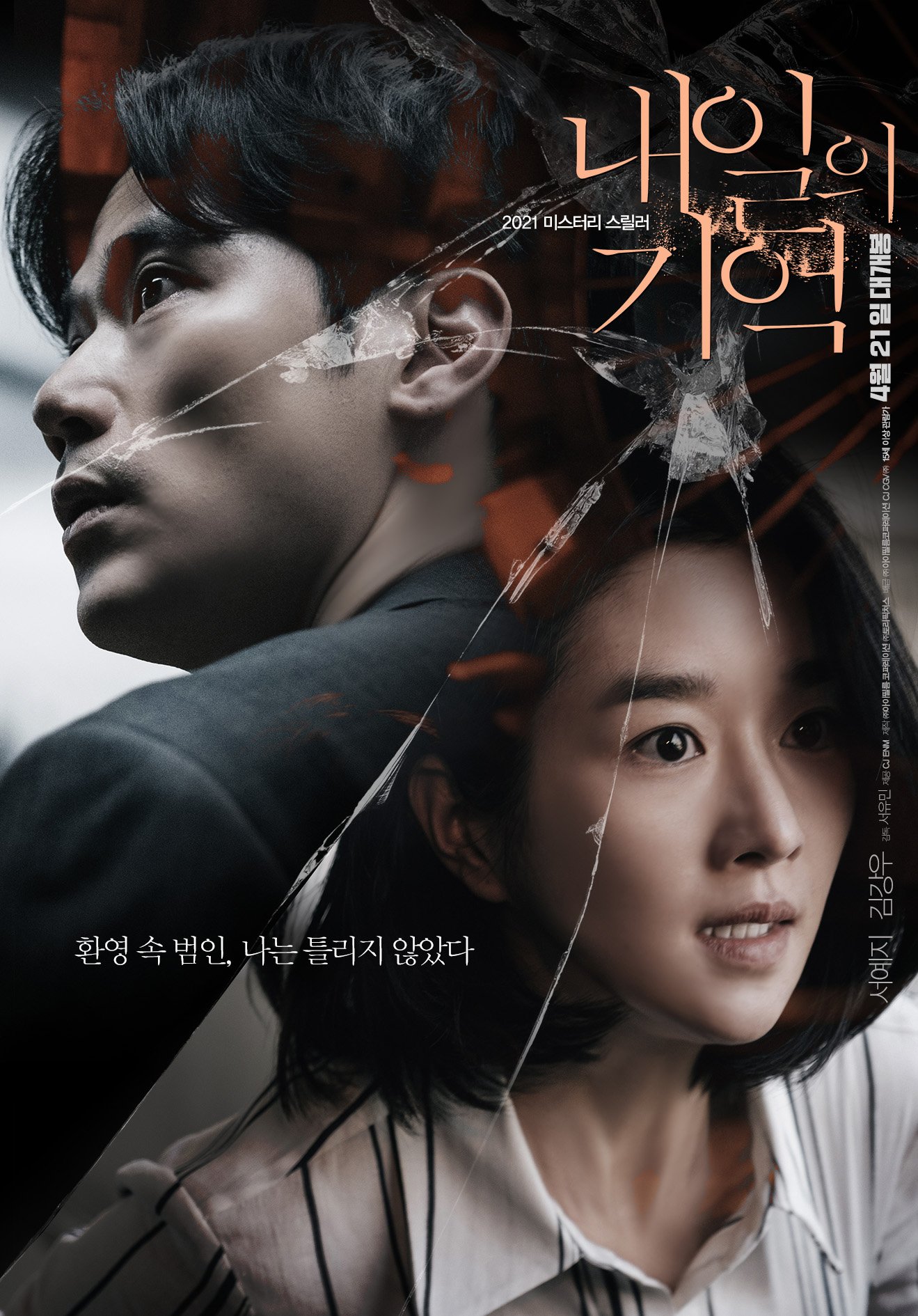
A traumatised woman finds herself trapped in an uncertain reality in Seo Yu-min’s puzzle box neo noir, Recalled (내일의 기억, Naeileui Gieok). Situating itself in a world of future ruins, Seo’s tragic tragic tale of existential mistrust is as its sci-fi-inflected Korean title “Memories of Tomorrow” might imply also a paradoxical exploration of the importance of dreams and the belief that other lives are possible while the heroine struggles to piece together the shards of her fractured identity only to realise there are some truths it may be better never to learn. 

30-something Soo-Jin (Seo Yea-ji) wakes up in hospital after an accident she has no memory of to realise that she has no idea who the extremely upset man at her bedside could be, or who she herself is for that matter. The nurses ask her if she recognises her husband, Ji-hoon (Kim Kang-woo), which she doesn’t but evidently does feel some degree of closeness to him as he continues to care for her with the utmost devotion. On leaving the hospital, he takes her home to a well-appointed flat in an affluent area and though she tries to restart her life from zero she can’t escape her sense of anxiety and begins having what she regards as premonitions of impending disaster centring on two other apartments one with two small children and the other a teenage girl and an intense middle-age man. Her doctor tells her that she is most likely hallucinating because of her brain injury, while even Ji-Hoon snaps at her that she’s obviously unwell and ought to take things easy. Nevertheless, Soo-Jin can’t simply ignore the increasing uncanniness of the world around her especially when she begins to discover discrepancies in the backstory she’s been fed by Ji-Hoon and the evidence presenting itself about her former life. 

Perceptive policeman Ki-sang (Park Sang-wook) himself hints that there might be something not quite right with Soo-jin’s life in remarking that her apartment looks like a model home seconds after walking in and then noticing a few other details that set off alarm bells in his admittedly suspicious mind. Meanwhile, he’s investigating the theft of materials from a nearby abandoned building site for a never completed block of luxury condos suggestively titled “Dream Town”, a project cancelled when the architecture firm Ji-hoon worked for went bust. The foreman who reported the theft remarks that the apartments pre-sold like hotcakes, but even in the building where Soo-jin lives a banner outside advertises a “big sale on unsold units” hinting at a kind of economic hubris or perhaps suggesting that the “dream” they’re offering of luxury living is either unrealisable for most or simply undesirable. According to Ji-hoon, Soo-jin wanted to emigrate to Canada for a quiet life surrounded by nature hoping to escape the unsatisfying present for an ironic return to the pastoral past. 

Soo-jin meanwhile struggles to orient herself having only Ji-hoon as an arbiter of truth but unable to trust him, doubting not just his identity but her own, while burdened by prophetic visions which may be less missives from the future than intrusions from the traumatic past. As she later puts it, her Canadian dream became a memory which sustained, both beacon of hope and escapist fantasy in its promise of idyllic peace and happiness. There is however a cruel irony in the suggestion that good and bad all this is happening to her because of love and its competing desires for salvation and destruction, while she only blames herself consumed with misplaced guilt and confused by an imperfect grip on objective reality. “Our memories await us there” she’s ironically advised of her Canadian dream, urged to abandon this failing reality for a new one exchanging her traumatic memories for those not yet made which in a sense already exist and have only to be attained. The final revelations may therefore be somewhat cruel as Soo-jin gathers the shards of her broken past to come to a long delayed understanding of herself, but Seo’s finely crafted puzzle box mystery does at least afford her the opportunity of reclaiming her identity while resolving the multi-layered trauma of her life in a patriarchal society ruled by personal greed. 


Original trailer (no subtitles)