
A Writer’s Odyssey (刺杀小说家, Lu Yang, 2021)

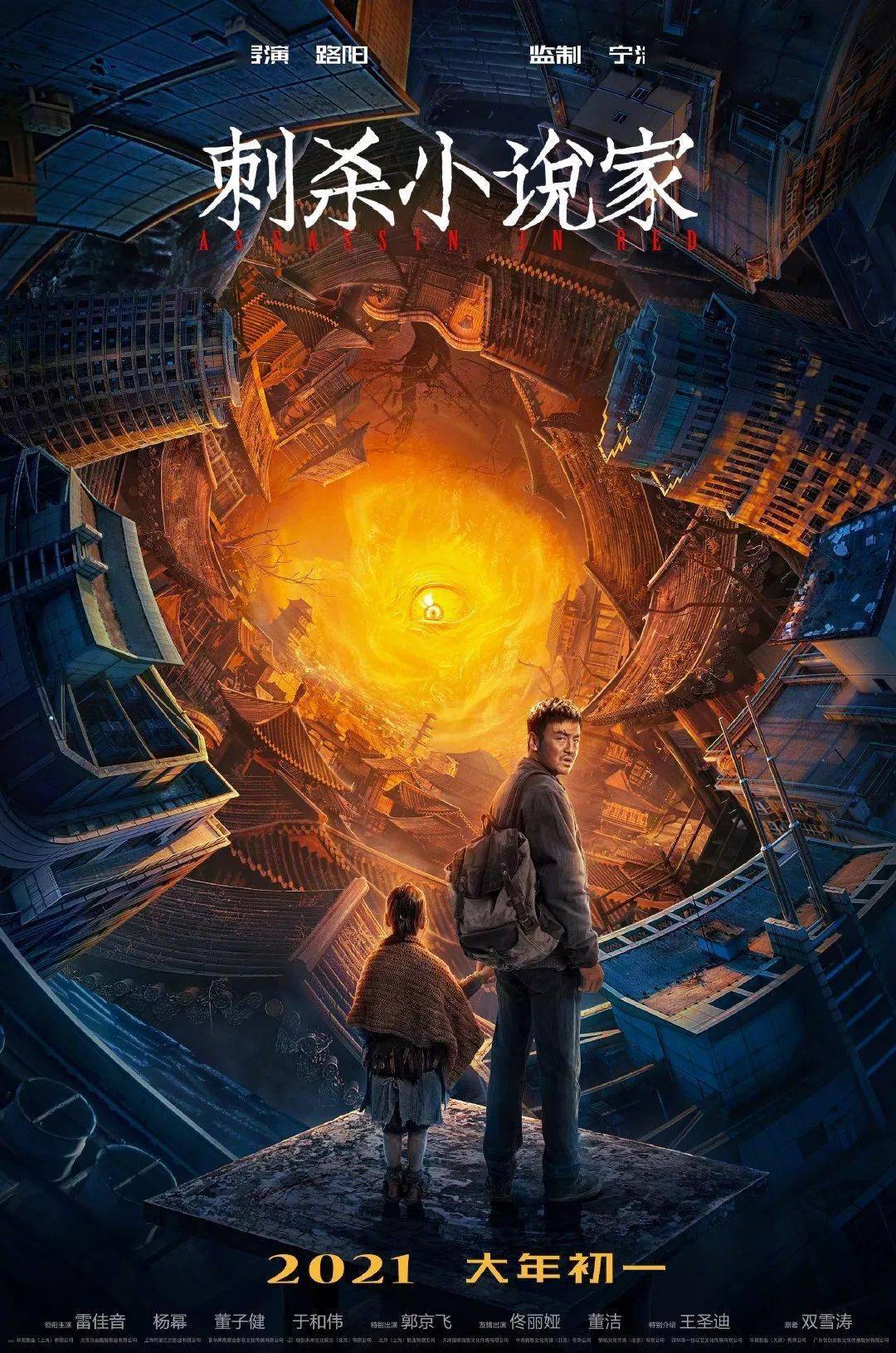
“As long as I keep writing, my existence has meaning,” according to the titular writer at the centre of Lu Yang’s action fantasy, A Writer’s Odyssey (刺杀小说家, cìshā xiǎoshuōjiā). His art, though derided as trivial, is it seems the best form of resistance to the feudalistic capitalism that has overtaken the authoritarianism of the communist past. Broken father Guan Ning (Lei Jiayin) desperately searches for his daughter Tangerine who has been missing six years, assumed to have been swallowed by China’s child trafficking network, only to find himself plagued by bizarre dreams of a fantasy city.

The city is, it seems, that of Kongwen’s (Dong Zijian) fantasy novel series which he live streams over the internet. Whenever something bad happens to the evil despot at the story’s centre, Lord Redmane, it’s visited on the CEO of vast corporation Aladdin (read: Alibaba), Li Mu (Yu Hewei), which has just launched the Lamp App which will they claim “resculpt time” so that time and distance are no longer an issue. Li Mu is panicked because Kongwen has said he’s going to end the series in three days and it doesn’t look good for Lord Redmane, so he’s fearful for his life. Noticing that Guan Ning has some sort of super power in which he can hurl rocks with unusual accuracy, he leverages Tangerine’s disappearance to convince him to knock off Kongwen in exchange for his daughter’s location.

Of course, the fantasy world and the “real” are connected in more ways than one with Ranliang conjuring visions of the Cultural Revolution in which the despotic leader is literally protected by hordes of mindless “Red Guards” while pitting one district against another and seemingly destroying all art. Li Mu, meanwhile, is destroying human innovation with his apps and treats the lives of others with callous disregard. His right-hand woman Tu Ling (Yang Mi), originally resentful of Guan Ning in blaming him for losing his child having been abandoned by her own parents, becomes disillusioned with his tactics on realising that he lied to Guan Ning and the candidates he picked for Tangerine are five random girls none which is likely to be her. Figuring out that she’s probably next after Li Mu knocks off Kongwen, who is also the son of his former business rival that he seemingly betrayed to take control of the company, and gets rid of Guan Ning for good measure, her allegiances begin to change creating a kind of parallel with Tangerine and the mysterious boy hanging around with her.

Meanwhile, in the fantasy world, Kongwen teams up with a demonic suit of armour that feeds on his blood but is also a near unbeatable killing machine that may or may not be evil. Guan Ning comes to believe that the fantasy world may be the only place he can find Tangerine and switches side from agreeing to kill Kongwen to deciding to protect him so that he can finish the story and possibly write a better ending for his fantasy character who as yet remains undefined. He’s later revealed to be a member of the brainwashed Red Guard, which may be appropriate as his former job was a banker which is to say a soldier of capitalism. Only art can break his programming in the form of Tangerine’s flute playing which reawakens his humanity and memory. 

The implication seems to be that China cannot escape either its communist past or capitalist future except through the liberation that comes with artistic endeavour. When Guan Ning is tasked with killing Kongwen, he follows him about town and hears his neighbours run him down as a “parasite”, a man of almost 30 with no real job and no income who is still being financially supported by his mother. This information might be offered to make it seem less bad to kill him, as if in this hyper-capitalistic society his life is worth nothing because that’s what he contributes. Kongwen feels this a little himself and has suicidal thoughts, but also insists that his life has meaning precisely because he writes and expresses all of this frustration with the contemporary society along with his buried resentment towards Li Mu for the death of his father and theft of his birthright. Shot like a video game, the film’s sprawling fantasy-esque world hints at still more adventures to come in this David and Goliath competition in which Kongwen and Guan Ning attempt to overthrow this cruel and corrupt order to find a way to free themselves from its authoritarian cruelties if only in their minds.


Trailer (English subtitles)

The World of You (麻希のいる世界, Akihiko Shiota, 2021)

A girl with a chronic illness becomes fixated on a traumatised classmate in Akihiko Shiota’s meditation on the self-destructive effects of obsessive love, The World of You (麻希のいる世界, Maki no iru Sekai) . It is not, however, the heroine that primarily experiences them, as her own romantic obsession is in one sense a purer love, but in another is a way of making her mark on the world before her short life comes to an end. 

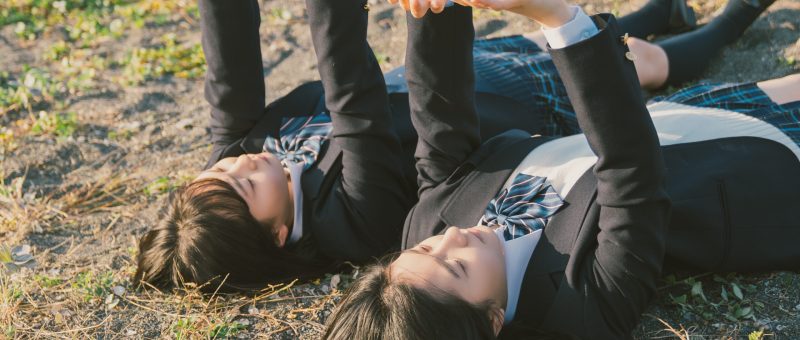
Yuki (Yuzumi Shintani) spots Maki (Marin Hidaka) leaving a local shack and locking the door behind her preceded by a shady-looking young man. She later recounts that she once stayed in this same shack for three days after running away from home following her parents’ divorce which she thinks her illness may partly have been responsible for her. The shack represents different things for each of them, but is also a space of their otherness and isolation from which neither of the girls is able to escape. It’s clear that Yuki’s growing obsession with Maki who is ostracised at school and resented by all is romantic, yet Maki appears to reject her attentions and reminds her she’s the type of girl who sleeps with guys.

Yuki sighs and she says knows as if she’s already resigned herself to the impossibility of her romantic desires being fulfilled, but Yuki continues to behave flirtatiously and otherwise uses the desire she knows Yuki feels for her as a means to manipulate her. Even so, on some level, she too has genuine feelings for Yuki and repeatedly tries to push her away in fear that she will only cause her trouble and pain. She tells her that her father is a convicted paedophile, which is why she is shunned by the local community. Though people are sympathetic at first, they often come to reject and resent her which is why she alternately responds to and then refuses Yuki’s insistence on connection. Though she never says so, her behaviour hints her father may have abused her too or at least that was she sexualised at an early age now and has a self-destructive attitude to sex in which she engages in potentially dangerous relationships with older men and uses her desirability to manipulate her male classmates.

Among them is Yusuke (Airu Kubozuka), who has a one-sided crush on Yuki that she continually rejects but he seemingly cannot take no for an answer. The situation between them is further complicated in that Yusuke’s father is also Yuki’s doctor. After her parents’ divorce, Yusuke’s father entered an affair with Yuki’s mother and eventually left his wife for her, breaking up their family. It’s already a messy situation, though Yusuke’s obsessive love is seemingly more possessive, whereas Yuki’s has taken on a passive quality. She does not really expect that Maki will ever return her feelings and seems to be aware that she uses them to manipulate her, but makes it her remaining life’s purpose to ensure that Maki’s musical talent is appreciated by the wider world. 

In some senses it’s a classic tale of an incredibly toxic love triangle in which Maki plays off both Yusuke and Yuki though may not actually care for either them as all romantic desires are effectively processed through her. Each of the teens is unfairly made to pay for the sins of their parents and effectively left without proper guidance or more positive examples of healthy romantic relationships. Though they all lose something, Yuki’s loss of her voice is especially ironic given that she’d barely talked to begin with but had bared her soul to Yuki who is then in fact reborn, possibly as the “even more wonderful Maki” that Yuki hoped she be though she no longer remembers her. Nevertheless is there is something that seems more hopeful in Yuki’s insistence that they will meet again when pitted against Yusuke’s repeated claims that he knows Yuki will come to love him eventually, especially considering the destructive actions they ultimately lead him to. Yuki’s love, meanwhile, is only self-destructive or in its way life giving in allowing her to sacrifice herself for the world that has Maki in it but that she may never see.


Trailer (no subtitles)

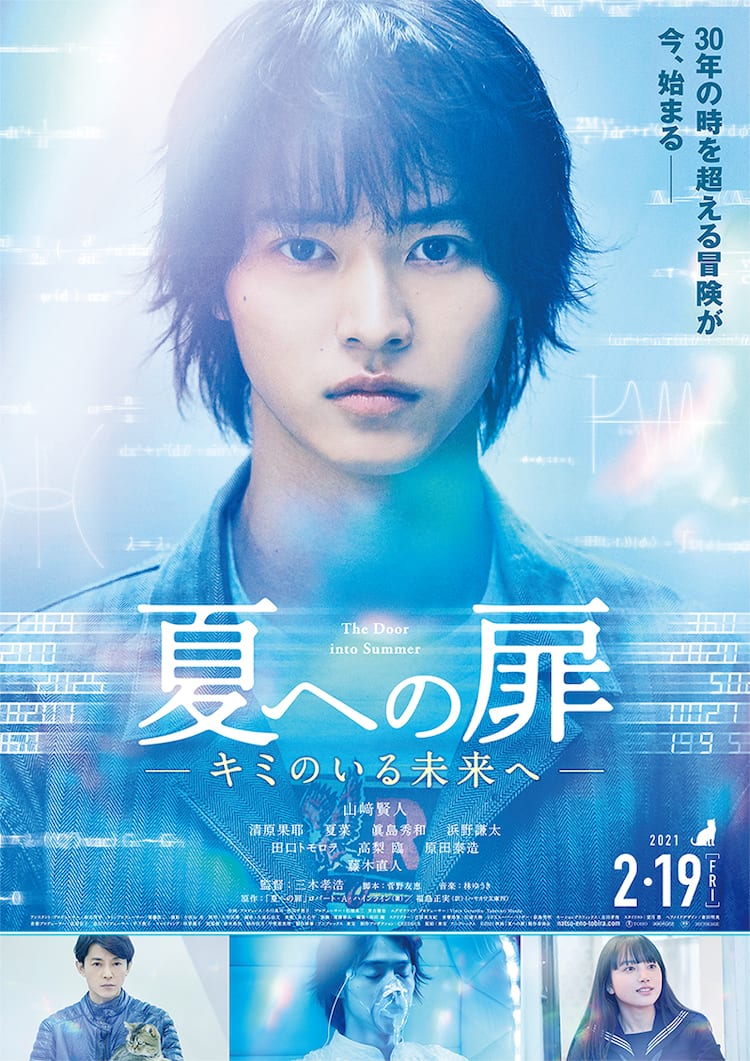
The Door into Summer (夏への扉 ―キミのいる未来へ―, Takahiro Miki, 2021)

Takahiro Miki has made something of a name for himself with a particular brand of bittersweet youthful romance often featuring a fantastical element such in Girl in the Sunny Place, or My Tomorrow, Your Yesterday. Adapted from a novel by Robert A. Heinlein, The Door Into Summer (夏への扉 ―キミのいる未来へ―, Natsu e no Tobira: Kimi on iru Mirai e) is in many ways more of the same, repurposing a sci-fi-inflected, slightly uncomfortable love story as an inspirational tale of never giving up and learning to overcome personal trauma in order to seek true happiness. 

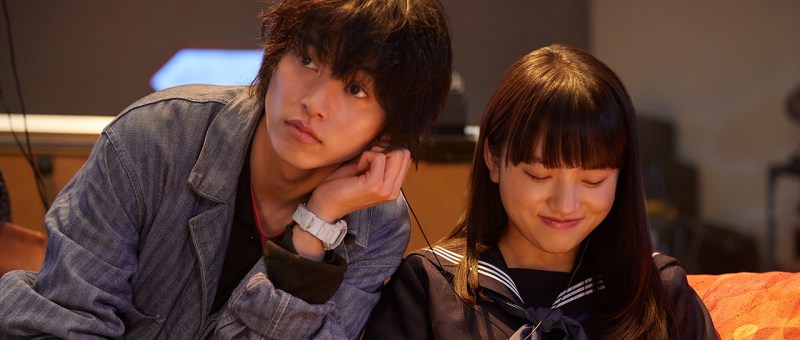
In 1995, 27-year-old Soichiro (Kento Yamazaki) has experienced a lot of loss in his life. His mother passed away soon after he was born, followed by his father when he was 17. He was then taken in by a family friend and became a big brother to then 7-year-old Riko (Kaya Kiyohara), but his adoptive parents then died in a plane crash. While Riko went to live with her uncle Kazuto, Soichiro became a robotics prodigy with an internalised sense of despair that prevents him making lasting connections, believing that his fate is always to lose everything he loves. His prophecy is in a sense fulfilled when he’s duped into signing away some of his shares in the robotics company founded by his adoptive father by an unscrupulous colleague. Filled with despair, he decides to enter a cryostasis programme for 30 years intending to transfer his remaining stocks to Riko, in part avoiding the inappropriate crush she has on him and hoping to escape from reality along with his best friend/cat Pete to start again in another time when the programme promises his investments will have matured leaving him with a good quality of life. Before he can do that, however, an attempt to confront his wrongdoers backfires when he’s placed into their proprietary cryosleep programme to ensure he’s out of the way for the next three decades. 

To that extent, you’d have to wonder why they’d bother rather than just getting rid of him for good. In any case, when he wakes up he realises that the shady company that housed him, Mannix, went bust years ago leaving him with no savings and also no cat because his enemy didn’t give much thought to poor Pete. In the future, however, he gets a fancy new rogue robot companion, also called PETE, who supports him as he tries to adjust to the digital world his inventions helped create before realising that he must have at some point time travelled back to 1995 to put things “right” (to a certain extent) so that could happen and starting in on that. This accidental paradox is never really addressed, Soichiro travelling to the past because he knows he already has, but not giving himself very much time to complete the magic plasma battery that powers the future while remaining in hiding until ready to disrupt his tormentors’ dastardly plan, rescue his beloved cat Pete, save Riko, and return to the future to make sure that nothing else changes in the new 2025. 

It is indeed Pete that inspires the film’s title in his revulsion of winter weather, always insisting on checking all the internal doorways in the hope that one magically leads to summer which is a roundabout metaphor for film’s secondary message in the insistence on perseverance, never giving up or losing hope in a brighter future even it seems impossible. Nevertheless, it can’t be denied that there’s something slightly uncomfortable in the relationship between 27-year-old Soichiro and his 17-year-old adoptive sister Riko even as he repeatedly reminds her she’s still a child and should live her life with people her own age, especially given the implications of the romantic resolution which attempts to smooth over this awkwardness by placing them on a more equal footing if somewhat artificially. In the end, however, the most important tool for saving the future turns out to be companionship and unconditional support of the kind that Pete offered the orphaned Soichiro, a quality he later programs in to his over-curious robot “son”, PETE. Miki doesn’t do much with the hard sci-fi trappings of the original novel, but does in his best tradition craft an innocent romance as the hero learns to look for his eternal summer in the present rather than the past while overcoming his internalised despair in his cursed fate to embrace love and happiness. 


Trailer (no subtitles)

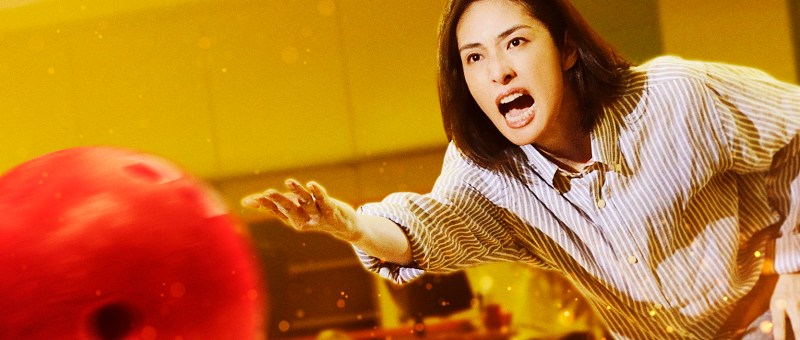
What Happened to Our Nest Egg!? (老後の資金がありません!, Tetsu Maeda, 2021)

A minor controversy erupted in Japan in 2019 when then finance minister Taso Aso issued a statement recommending that couples should have 20 million yen (£104,620 total at the time of writing) saved for their retirement on top of the state pension in order to live a comfortable life in old age. All things considered, 20 million yen actually sounds like quite a low sum for two people who might live another 30 years post-employment. Nevertheless, Atsuko (Yuki Amami) and her husband Akira (Yutaka Matsushige) are now in their mid-50s and don’t have anywhere near that amount in savings. They’re still paying off their mortgage and though their children are grown-up, neither of them seem to be completely independent financially and both still live at home. 

Tetsu Maeda’s familial comedy What Happened to Our Nest Egg!? (老後の資金がありません!, Rogo no shikin ga arimasen!) explores the plight of the sandwich generation which finds itself having to support elderly relatives while themselves approaching retirement and still needing to support their children who otherwise can’t move forward with their lives. Seeing an accusatory ad which seems to remind her personally that even 20 million yen isn’t really enough when you take into consideration the potential costs of medical treatment or a place in a retirement home, Atsuko has a sudden moment of panic over their precarious financial situation. The apparently sudden death of Akira’s 90-year-old father acts as a sharp wake up call especially as Akira’s apparently very wealthy but also selfish and materialistic sister Shizuko (Mayumi Wakamura) bamboozles him into paying for the entirety of the funeral while pointing out that they’ve been footing most of the bill for the parents’ upkeep over the last few years.

There was probably a better time to discuss the financial arrangements than with their father on his deathbed in the next room, but in any case Shizuko doesn’t pay attention to Atsuko’s attempt to point out they’ve been chipping in too. Akira’s mother Yoshino (Mitsuko Kusabue) also reminds them that their family was once of some standing and a lot of people will be attending the funeral so they need to make sure everything is done properly. The funeral arranger is very good at her job and quickly guilts Atsuko into spending large sums of money on pointless funeral pomp to avoid causing offence only to go to waste when hardly anyone comes because, as she later realises, all of the couple’s friends have already passed away, are bedridden, or too ill to travel. 

Yoshino is however in good health. When Shizuko suddenly demands even more money for her upkeep, Atsuko suggests Yoshino come live with them but it appears that she has very expensive tastes that don’t quite gel with their ordinary, lower-middle class lifestyle. Having lived a fairly privileged life and never needing to manage her finances, Yoshino has no idea of the relative value of money and is given to pointless extravagance that threatens to reduce Atsuko’s dwindling savings even more while in a moment of cosmic irony both she and Akira are let go from their jobs. Now they’re in middle age, finding new ones is almost impossible while their daughter suddenly drops the bombshell that she’s pregnant and is marrying her incredibly polite punk rocker boyfriend whose parents run a successful potsticker restaurant and are set on an elaborate wedding.

The film seems to suggest that Atsuko and Akira can’t really win. They aren’t extravagant people and it just wasn’t possible for them to have saved more than they did nor is it possible for them to save more in the future. Instead it seems to imply that what they should do is change their focus and the image they had of themselves in their old age. One of the new colleagues that Akira meets in a construction job has moved into a commune that’s part of the radical new housing solution invented by his old friend Tenma (Sho Aiwaka). Rather than building up a savings pot, the couple decide to reduce their expenses by moving into a share house and living as part of a community in which people can support each other by providing child care and growing their own veg. Yoshino too comes to an appreciation of the value of community and the new exciting life that she’s experienced since moving in with Atsuko. It may all seem a little too utopian, but there is something refreshing in the suggestion that what’s needed isn’t more money but simply a greater willingness to share, not only one’s physical resources but the emotional ones too in a society in which everyone is ready to help each other rather than competing to fill their own pots as quickly as possible. 


What Happened to Our Nest Egg!? screens as part of this year’s Japan Foundation Touring Film Programme.

Trailer (English subtitles)

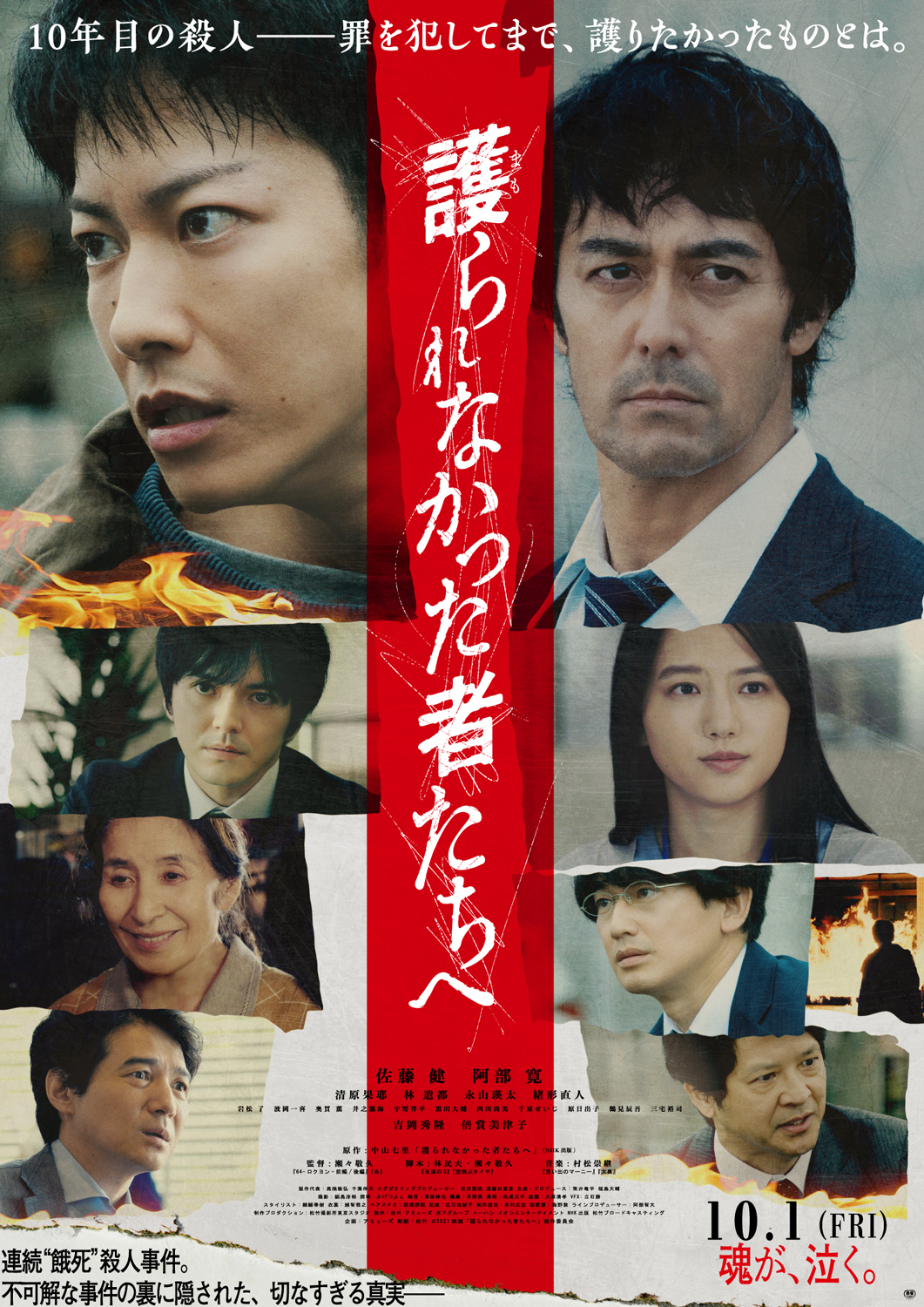
In the Wake (護られなかった者たちへ, Takahisa Zeze, 2021)

According to a young woman at the centre of Takahisa Zeze’s In the Wake (護られなかった者たちへ, Mamorarenakatta Monotachi he), natural disasters are monsters that devour humans with no rhyme or reason, but people close to her have died by human hands while left at the mercy of a hypocritical social welfare system. Though the social workers insist that benefits are something everyone is entitled to when they need support, others go to great lengths to stop anyone getting them. “That’s the country we live in,” one explains with a tone that implies he thinks this is exactly as it should be.

That social worker is the second to be found dead in suspicious circumstances nine years after the devastating 2011 earthquake and tsunami. The police obviously suspect a grudge, that someone who was turned down for benefits got fed up and killed him in revenge. But as assistant Mikiko (Kaya Kiyohara) says, it’s unlikely to be any of them because they are all “too busy trying to survive,” so they don’t have time to waste on things like vengeance. Zeze then switches to the welfare office where a social worker is trying to explain to an elderly applicant all of the different forms and documentation he’ll need to prepare for his claim. These people already have to jump through hoops to prove their “neediness,” while most of them feel defeated and humiliated in even having to ask and would prefer not to have to depend on the government. 

But a lot of Mikiko’s work involves challenging those suspected of committing benefits fraud. The first of two people she talks to is a single mother with mental health issues (Chika Uchida) who’s had to start working full-time and consequently gone over her allowance meaning her benefits should stop and she should pay back what was “wrongfully” claimed. The woman insists she needs the extra money because her daughter was being bullied for being on benefits so she wants to send her to cram school and be able to buy educational supplies, but Mikiko remains unsympathetic. The second is a man who it’s admittedly harder to sympathise with as he appears to have bought quite a fancy car which again takes him over the limit as a car is classed as a luxury item rather than a necessity. Mikiko doesn’t think they should pay out when he could easily sell the car. Of course, it’s not that simple. The man may need the car in order to work and without it would have no choice but to rely on benefits to a greater extent. In any case, he gets on Mikiko’s nerves because to her it’s people like him that prevent them helping more “genuinely” needy cases. 

But on the other hand, when they could and should have helped they refused and effectively blackmailed an old lady into revoking her application even though she had only 6000 yen (£30) left in the bank and was on the brink of starvation with no one else to turn to. Another of the social workers insists that good neighbours are the most effective way of tackling poverty which is equal parts unreasonable and unrealistic. Then again, there was a kind of solidarity that arose in the wake of the earthquake in which an old woman’s kindness saved a young man and little girl from being dragged away by the weight of their despair, giving them a new home and surrogate family along with proof of the fact that there is always someone there to help and that kind of compassion can be a kind of salvation. 

Even so, Mikiko’s insistence that you have to ask to receive, along with the welfare officer’s almost vampiric obsession with getting the applicant themselves to clearly state they need help, seems contrary to her philosophy in which it should just be provided with no questions asked. They know how difficult asking for help can be and deliberately leverage the social stigma of being on benefits to discourage people from applying for them. Citing increased demand and government cut backs in the wake of the earthquake, the social worker confusingly suggests that by declining more cases they can help more people in the long run which doesn’t make a tremendous amount of sense while his eerie grinning hints that he has begun to enjoying sadistically humiliating these vulnerable people who’ve been brave enough to come forward and ask for that to which they are otherwise entitled. 

They are all living in the wake of this disaster, something of which aloof yet empathetic detective Tomashino (Hiroshi Abe) is all too aware having lost his wife and son in the disaster. As his son’s body was never found, he too lives in a state of limbo but through investigating the killings begins to find a kind of closure along with an unexpected sense of understanding with a gloomy young man, Yasuhisa (Takeru Satoh), himself a suspect and struggling to make sense of the past, his survival, and the ongoing injustice of the world around him. The film takes its Japanese title, “those who were not protected”, from a note Mikiko writes about the importance of empathy in social work encouraging her colleagues to rebel even if their bosses tell them not to, but also hints at the grief and guilt felt by those left behind that in the end there were those they were not able to save but they can perhaps make their peace with that by continuing to help those around them even if their society largely refuses to do so.


In the Wake screens as part of this year’s Japan Foundation Touring Film Programme.

Trailer (English subtitles)

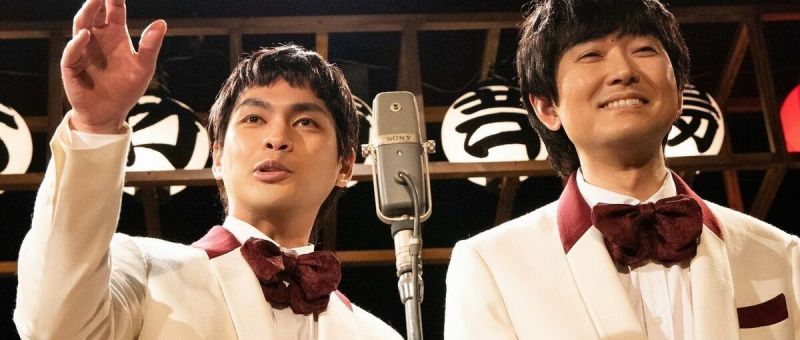
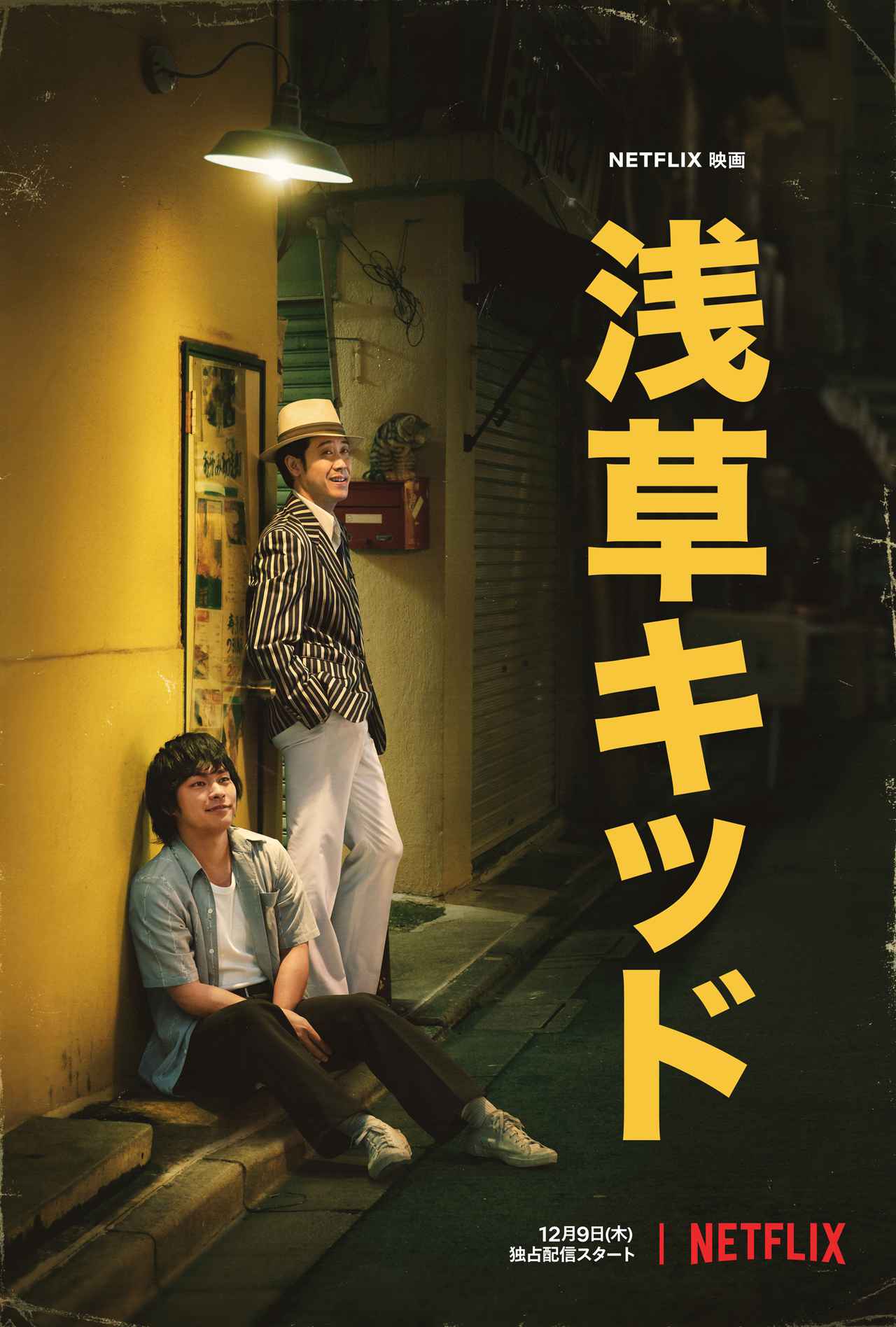
Asakusa Kid (浅草キッド, Gekidan Hitori, 2021)

To international audiences, Takeshi Kitano has a very specific profile associated most closely with arthouse drama and violent gangster movies yet in Japan he’s best known as a comedian and TV personality. Inspired by Kitano’s memoir, Asakusa Kid (浅草キッド) charts his earliest days from entertainment district elevator boy to manzai star while lionising his earnest mentor Sozaburo Fukami (Yo Oizumi). Yet it’s also a nostalgic look back to a late Showa pre-bubble Japan as Kitano’s idol finds himself falling foul of a changing entertainment industry. 

As the film opens in 1974, “Take” (Yuya Yagira) is one half of a struggling manzai comedy double act touring the country in various variety and cabaret establishments fearing his career may die out on the road before beginning to edge towards success and a high profile TV gig. Two years earlier, however, he’s an awkward college dropout working as an elevator boy at France-za comedy bar burlesque theatre. A local boy, Take has chosen France-za because of his admiration for “Fukami of Asakusa”, longing to make his way into the entertainment world while captivated by Fukami’s cool style, even copying his trademark tap dancing. Fukami soon sees talent in Take and tries to nurture it, but as the pair of them are repeatedly reminded, this kind of comedy is already old-fashioned. Audience numbers at France-za continue to decline while as one of the other girls later reminds him the men who come to these shows are there to see women take their clothes off, not random skits or singing. 

This is brought home to Take when he tries to encourage one of the strippers, Chiharu (Mugi Kadowaki ), to chase her dreams of becoming a singer by convincing Fukami to allow her to fill a 15-minute spot. As Fukami had attempted to warn him, the men appear to enjoy her song and offer rapturous applause but think it’s part of her act and soon resort to catcalls expecting her to take her clothes off. Take’s well-meaning gesture backfires, convincing Chiharu her dreams of singing are over, while Take is also poked into action by the other stripper’s retort that the comedy is only really “filler” between the burlesque acts which is what the customers have come to see. 

Even so, there’s less drama than one might expect in Take’s eventual decision to betray his mentor by choosing manzai and its opportunities for TV success over his by then old-fashioned sketch comedy. The father/son relationship somewhat falls by the wayside as even as a triumphant Take later returns “home” to present Fukami with the prize money for a TV award like a child with a report card full of As, while he gracefully accepts it but is privately filled both with a sense of pride and personal disappointment in being forced to accept that the heyday of Asakusa is over and there is no future in his vaudeville-style comedy acts. Nevertheless, Take appears to attribute much of his success to things he learnt from Fukami from his tap-dancing to his uncompromising attitude. “Don’t be laughed at, make them laugh,” he recalls Fukami telling him, “don’t suck up to the audience, tell them what’s funny,” later refusing to soften his inappropriate jokes about ugly girls and suicide for a more conservative TV audience and finding his edgy comedy an irreverent hit. 

Then again, not everyone is able to achieve their dreams from Fukami who lost the fingers on one hand in the war and finds himself forced off the stage, to Chiharu apparently a regular housewife with showbiz regrets, and Fukami’s wife Mari (Honami Suzuki) exhausting herself trying to help him save his dream of Asakusa. As much as Take might have admired Fukami, others too describing him as a father of contemporary entertainment, he can’t get away from the fact the press is only interested in his funeral if Take attends it. Filled with the nostalgia, the ethereal one shot closing sequence in which the older Take returns to Asakusa and to the past surrounded by the friends of his youth is genuinely poignant in the sudden juxtaposition of a lost world with the contemporary present but perhaps elegises nothing so much as nostalgia in its lament for late Showa breeziness. 


Original trailer (English subtitles)

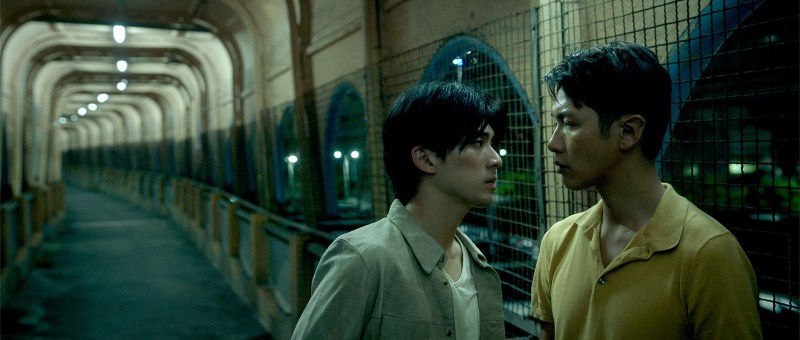
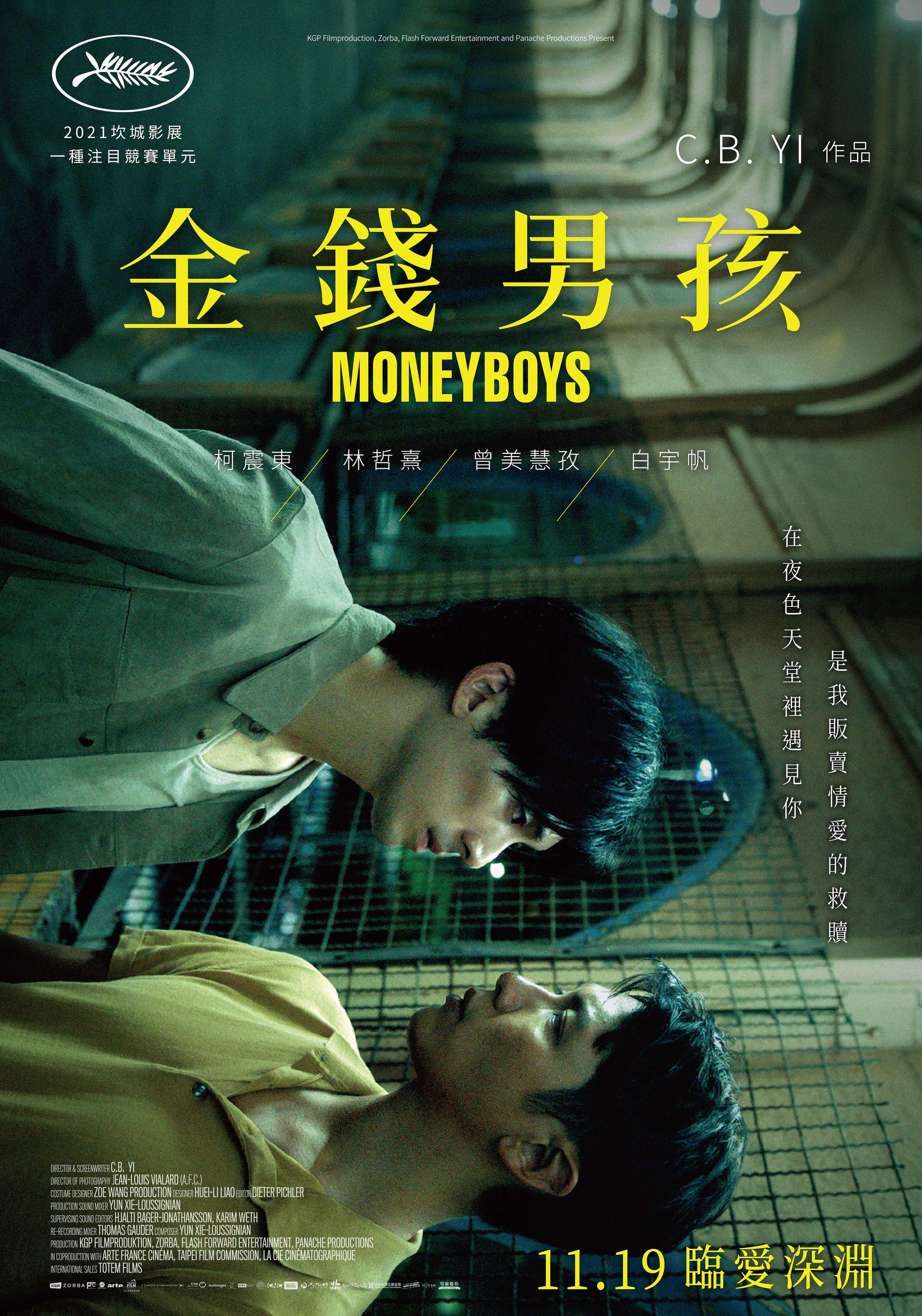
Moneyboys (金錢男孩, C.B. Yi, 2021)

“Who doesn’t sell themselves to make money?” a young man asks in C.B. Yi’s melancholy mainland-set drama Moneyboys (金錢男孩, Jīnqián Nánhái) relating the story of a relative who worked as a tanner all his life, became ill from the effects of the chemicals, and died alone far from home. He may suggest that the exploitative nature of contemporary capitalism will eventually consume you, but it’s an older set of social codes that do for Fei (Kai Ko) who consumes himself in a pathological desire for self-sacrifice as if constantly trying to prove himself worthy of acceptance.

As we first meet Fei he introduces himself as “Jackson”, a naive country boy in the city seeking a means to support his struggling rural family which he finds in sex work. Through his job, he encounters the swaggering Xiaolai (JC Lin) who introduces himself as “Max” and takes him under his wing. Soon they fall head over heels in love, but Xiaolai fears Fei’s desperation and lack of judgment in his choice of client, an anxiety which is later borne out when Fei is badly beaten by a local gangster. Filled with rage, Xiaolai attacks him with a metal bar but ends up badly beaten himself and thereafter sought by the police. Not wanting any trouble, Fei skips town and five years later has started a new, apparently much more successful life, in another city. 

“You’re always living for others” he’s later told by a childhood friend, Long (Bai Yufan), whose long-term crush on him Fei seems to be wilfully ignoring, “the way you sacrifice yourself, you constantly hurt yourself and sometimes others too”. Fei’s self-sacrificing nature does indeed seem to have a masochist component as he wilfully puts himself in dangerous situations to get money to provide for his family. His family, however, reject him precisely because of the nature of the sacrifices he is making. Returning to his home town after being unjustly hassled by local police who attempt to entrap him by getting an undercover officer to pose as a client and searching his home for drugs, Fei is physically attacked by a belligerent uncle who can’t stop ranting about Fei’s marital status beginning by berating him that his family is embarrassed because he has no wife before revealing that they all know about “what you did in the city” and are shamed by it. His father barely looks at him, though his sister appears to know and encourages him to find the right person and hold on to them because life is long and she doesn’t want him to be lonely. 

Later, another woman reassures him that he is “someone who deserves love” though he struggles to accept it. He feels indebted to Xiaolai because he lost a leg for him, unable to move past the transactional nature of love to accept it from someone who wants only the same in return. Consumed by internalised shame he struggles to let go of outdated traditional social codes and unlike Long is unwilling to abandon them in order to live the life he wants. One of his sex worker friends in his new city eventually enters into a sham marriage with a woman who is fully aware of the realities and later pledges to move back to the country and raise a child as a conventional husband and father while tearfully explaining that six years with the gay community have been the best of his life. He too has made a sacrifice of himself for his family but is already torn apart with disappointment and resentment. 

Fei’s tragedy is that he tries to please everyone but himself, revelling in his self-sacrificing suffering and barely noticing when others are caught in the crossfire. Unable to let himself go, he is left only with the memory of the one time he was happy, which wasn’t the one he originally thought it was, and the simultaneous knowledge that he has lost It forever through his own thoughtlessness. Trapped in the past both by the traditional social codes and his thwarted romance with Xiaolai he envisions an ironically progressive compromise but is unable to see the selfishness in his desires perhaps for once putting himself first in failing to consider the feelings of those around him. A neon-lit vista of loneliness, C.B Yi’s melancholy tale of self-imprisonment and the commodification of love discovers only unhappiness in the midst of a repressive social culture defined by the twin poles of rampant consumerism and the filial imperative. 


Trailer (English subtitles)

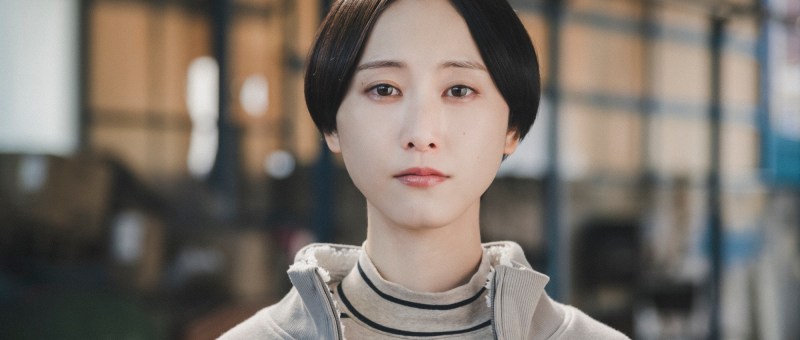
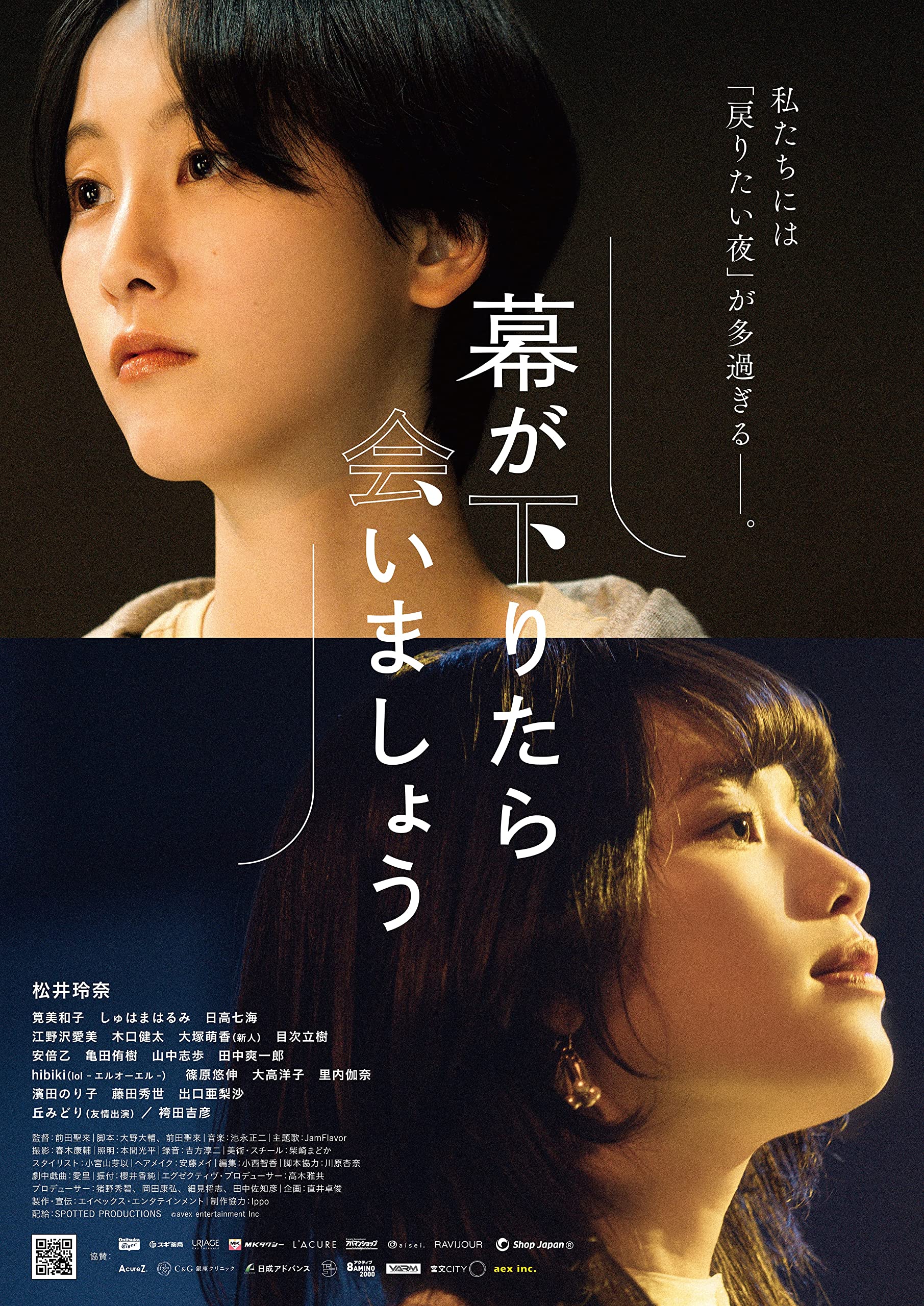
Back To That Day (幕が下りたら会いましょう, Seira Maeda, 2021)

A young woman facing a life crisis is forced to reevaluate her relationships with art, friends, and family after learning that her estranged younger sister has suddenly passed away in Seira Maeda’s indie drama, Back to that Day (幕が下りたら会いましょう, Maku ga Oritara Aimasho). Facing a patriarchal society, the young women at the film’s centre wonder if it’s better to chase your dreams even if they won’t come true or contend with the unfair demands of contemporary salaryman culture in the hope of achieving conventional success and a comfortable life. 

At around thirty, Manami (Rena Matsui) is beginning to lose patience with herself feeling that she’s achieved little in her career as a theatre director in the last 10 years while continuing to work part time at her mother’s hair salon. Her younger sister, Nao (Miwako Kakei), left abruptly for the city some time previously and the pair have hardly spoken since partly as we discover because of a high school falling out that continues to play on Masami’s mind in undermining her sense of confidence in her art. 

The two women have in many ways chosen different paths, Nao striking out by heading to the city and getting a regular office job and Manami staying at home trying to make it work in theatre but finding herself treading water. On the night that Nao dies, the sisters mirror each other each black out drunk collapsed in the street but only one of them is alone which in the end perhaps makes all the difference. Out to dinner with members of her theatre troupe celebrating an engagement, Manami has far too much to drink, much more than than anyone else or than is really appropriate becoming embarrassing in her belligerence as she lays into even her closest friends while others wonder why they bother with the troupe at all now that most of them are ageing out of their carefree days, have full-time paying jobs and growing familial responsibilities to take of. 

Nao, meanwhile as we discover, was pressured into drinking more than was wise by her boss at a semi-compulsory work do, an all too common form of power play in the contemporary working culture. Carrying her own share of guilt, Manami is alerted to this hidden source of her sister’s suffering by one of Nao’s colleagues, Mihashi (Manami Enosawa), who alone attended the funeral. Facing the same continued harassment, Mihashi is determined to confront her boss with the help of Niiyama (Kenta Kiguchi), an activist working on behalf of employees experiencing workplace bullying, but is later blamed herself with the implication that Nao drank on her behalf while she perhaps should have stayed to make sure she was alright before leaving for the last train. Her colleagues insist that Nao seemed cheerful and engaged with the party, while Manami and her actress friend Sanae (Nanami Hidaka) wonder if she wasn’t just playing the part, that in feeling disconnected from her family she wanted to feel accepted by those around her. 

In an unexpected turn of events, however, Manami decides to not to take Nao’s employer to task or attempt to change a dangerous and outdated workplace culture but to try and make peace with difficult relationship they had through restaging the high school play that set them apart which as it turns out was actually written by Nao but for which Manami had taken credit. Along the way she’s led towards a more commercial path by the duplicitous Niiyama who turns out to be a bit of a sleaze and not much better than those he claimed to be challenging. What she discovers is that restaging Nao’s play may not be the best way to honour her, gradually working through her grief and guilt by writing an original piece inspired by their relationship while reconsidering herself and her life up to that point. Of course, in one sense, she reduces Nao to a plot device in the mere motivation for her own creative rejuvenation while partially letting herself off the hook in discovering a family secret that explains a lot about her difficult relationship with her mother but does at least allow her come to terms with her sister’s death in letting her burn out bright just as in the alternate ending she’d crafted for Anna Karenina as a woman driven to extremes by the strictures of her society. 


Original trailer (no subtitles)

Hotel Iris (艾莉絲旅館, Hiroshi Okuhara, 2021)

You can check out any time you like, but you can never really leave the titular Hotel Iris (艾莉絲旅館) at the centre of centre of Hiroshi Okuhara’s Taiwan-set erotic mystery drama adapted from the novel by Yoko Ogawa. At least, so it seems to be for heroine Mari (Lucia), a youngish woman stultified by a dull existence and controlling, possessive mother while haunted by the memory of her late father murdered when she was still a child. The goddess Iris, so we’re told, could fly to any place she wanted on her rainbow wings as perhaps does Mari, in a sense, in her circular, sado-masochistic, and largely epistolary romance with a middle-aged Japanese translator of Russian literature (Masatoshi Nagase). 

On an otherwise dull if stormy night, Mari is alerted by the sound of a woman screaming while manning the front desk. On investigation she finds an older gentleman violently beating a sex worker who manages to escape down the stairs while he calmly walks his way out. Despite this violent, dangerous episode Mari is intrigued rather than frightened, handed a crumpled note and drawn to the malevolent presence. Spotting him in the town she follows him to the beach where he explains he lives on a near by island across a makeshift bridge cut off at high tide which he likens to that of Iris’ rainbow connecting the worlds of the living and the dead. 

Mari may in a sense be chasing death in the figure of the middle-aged man who also obviously recalls the image of her absent father, she taking him on a kind of date to ice cream (which he does not appear to enjoy) by the sea as her father had done when she was a child. Yet the relationship that develops between them is erotic rather than romantic, Mari discovering a sense of empowerment in submission to the older man’s sexualised violence as he strips and binds her, tearing her clothes while watching himself in the mirror.

The presence of mirrors is central to their relationship, or perhaps to Mari’s fantasy as she reflects on the multiplicities of self it offers her along with a sense of endlessness as if she and the middle-aged man had begun to inhabit a world of two behind the glass. When she questions his true identity he replies only “I am You” which she later returns to him, “You are me”, signalling the selflessness which now exists between them if also leading us to question how much of this is happening merely in Mari’s mind bored behind the counter of the Iris and longing for escape. She borrows the name of an absent childhood friend, “Mary”, for her correspondence with the middle-aged man in order to keep her relationship with him secret from her mother while the main character in his book is also co-incidentally named “Mari” giving her at least three mirrored personas in this already complicated relationship one of which actively controlled by the middle-aged man and another by her mother. 

Meanwhile Mari begins to doubt him, witnessing a display of irrational violence and later hearing that the body of another sex worker has been discovered in the town. He told her he had no family since his wife passed away but turns out to have a mute nephew who later claims to be his stepson said to have lost his tongue to cancer though we later wonder if that is really case. In seducing the nephew/stepson she takes on a more dominant, masculinised role while he is later feminised by the middle-aged man if also becoming an embodiment of the triangular griefs that bind them, the boy for his mother, Mari for her father, and the middle-aged man for the wife is rumoured to have killed. 

Okuhara is not so much interested in solving the literal mystery of the middle-aged man’s potential as a covert serial killer as exposing Mari’s inner psychodrama as she attempts to process the unanswered questions of her father’s death, literally haunted by the image of him wondering whether or not she as loved as a child while straining to break free of her mother’s controlling impulses but otherwise trapped within the oppressive atmosphere of the Hotel Iris. Caught between Taiwan and Japan, Mari occupies a liminal state of constant inertia while spreading her rainbow wings in search of danger and excitement. Shot with a moody ethereality, Okuhara’s poetic psychodrama captures an almost gothic sense of intensity as the heroine investigates the mystery of herself through transgressive relationships with the living and the dead on permanently shifting sands. 


Original trailer (no subtitles)

A Family (ヤクザと家族 The Family, Michihito Fujii, 2020)

“No one can survive as a yakuza in this world” according to another orphaned son playing the long game of a crime adjacent existence in Michihito Fujii’s melancholy gangster drama, A Family (ヤクザと家族 The Family, Yakuza to Kazoku The Family). The yakuza, or at least yakuza in the movies, has long been a relic of the Showa era rendered increasingly irrelevant in a society no longer in need of its dubious claims of protection. In truth, it’s hard to mourn the passing of organised crime, but Fujii at least finds a kind of pathos and infinite sympathy for these men for whom the gangster brotherhood took the place of a family even if one with a self-destructive legacy. 

To begin with, petty street punk “Li’l Ken” (Go Ayano) wants nothing to do with the yakuza, seemingly the only guest at the funeral of the drug dealer father he resented other than a corrupt cop from the organised crime squad, Osako (Ryo Iwamatsu), who expresses regret that had he simply arrested him perhaps Ken’s father would be still be alive. Visiting another “familial” environment, a Korean barbecue run by the maternal Aiko (Shinobu Terajima) herself the widow of a gangster currently with a baby on her back, Ken gets himself noticed by local mobster Shibasaki (Hiroshi Tachi) by taking on some punks who stormed into the restaurant and attacked his guys. Explaining that his guys don’t associate with drugs, Shibasaki offers him a job which he refuses but having his card in his pocket literally saves his life when he’s pickup by rival gang leader Kato (Kosuke Toyohara) after having stolen and then destroyed some of their stash after stumbling across a drug deal. The course of Ken’s life is set, he joins the Shibasaki gang along with his two delinquent friends and accepts Shibasaki as his “oyabun” or “father”. 

In Shibasaki, Ken finds a father figure more palatable than the one he lost. As in many a yakuza movie, the Shibasaki clan is positioned as “good yakuza” of the old school kind who believe in things like duty and honour and are apparently pursuing the path towards becoming “true men”. The rival Kyoyo, by contrast, are “bad” new yakuza who no longer play by the old rules and make their money through destructive vices such as drugs. The expected turf war does exactly materialise though the uneasy truce between the rival gangs becomes increasingly strained as the economic situation of millennial Japan begins to shift, the local town council apparently set on demolishing the red light district as part of their plans for redeveloping the city. Kyoyo would rather take over its entirety, pushing Shibasaki to retreat in exchange for a small amount of monetary compensation while shady cop Osako tries to play the situation to his own advantage. 

Yet it’s also clear that the yakuza as an institution is on its way out. After a 14-year prison term, Ken emerges into a very different world in which organised crime has been hounded further into the margins thanks to effective, though the film would also argue inherently vindictive, legislation. No one can make any money anymore, and the slightest slip up can lead to arrest. The Shibasaki gang is now a handful of old men, most of the guys having moved on only moving on from the yakuza life is not easy as Ken’s old friend Hosono (Hayato Ichihara) explains. In order to rejoin regular society, a former yakuza must endure five years in the wilderness unable to open a bank account or get a regular job leaving them with few possibilities for basic survival that enable them to leave a life of crime. Now with a young daughter and job in waste disposal, Hosono is nervous and reticent, reluctant to be seen in public with Ken lest he be tarred with the criminal brush and lose access to the new life he’s managed to build for himself as a responsible husband and father. 

Urged by Shibasaki, Ken eventually leaves one family for another in reuniting with a woman he loved before prison who has since made a respectable life for herself as a low level civil servant but once his life of crime is exposed by a thoughtless colleague at his new job in deconstruction, he discovers that there is no place for a “reformed” yakuza in the contemporary society because in a sense there can be no such thing. Once gangster always a gangster, there is no path forward. Complaining that Osako has stolen his right to life, Ken is told only that the yakuza lost human rights long ago. 

“They’re my family. No reasons are needed” Ken replied when asked why he became a yakuza, but he continues to find himself torn between the various concepts of family and the inheritances of his two very different father figures. “Your time is over old man”, Aiko’s fatherless son Tsubasa (Hayato Isomura) tells an unrepentant Kato attempting to hang on to his territory in the face of a younger generation operating on an entirely different level, rejecting the codification of gangsterdom but seemingly embracing its romance. Tsubasa too is later sucked in by the hyper masculine revenge drama of the yakuza way, seeking vengeance for the death of his father and apparently prepared to ruin his life in order to gain it. It’s for this surrogate son, now a kind of father figure himself, that Ken will eventually make a sacrifice. A sad tale of dubious paternal legacies, frustrated fatherhood, life’s persistent unfairness, and a perhaps uncomfortable lament for a bygone Japan defined by giri/ninjo conflict ruled by manly men, the ironically titled A Family has only sympathy for those trapped by an inescapable spiral of manly violence but also reserves its respect for those who know their time has passed and elect to end the cycle in order to set their “sons” free. 


Original trailer (no subtitles)