Treat or Trick (詭扯, Hsu Fu-Hsiang, 2021)

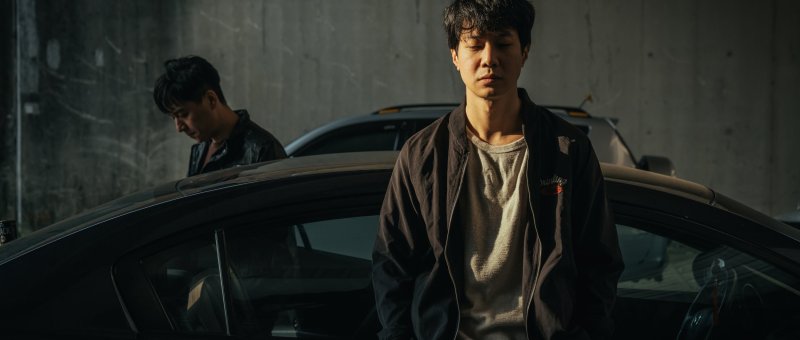
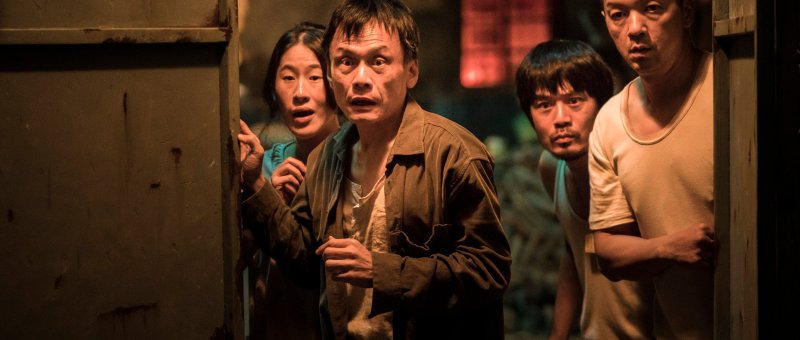
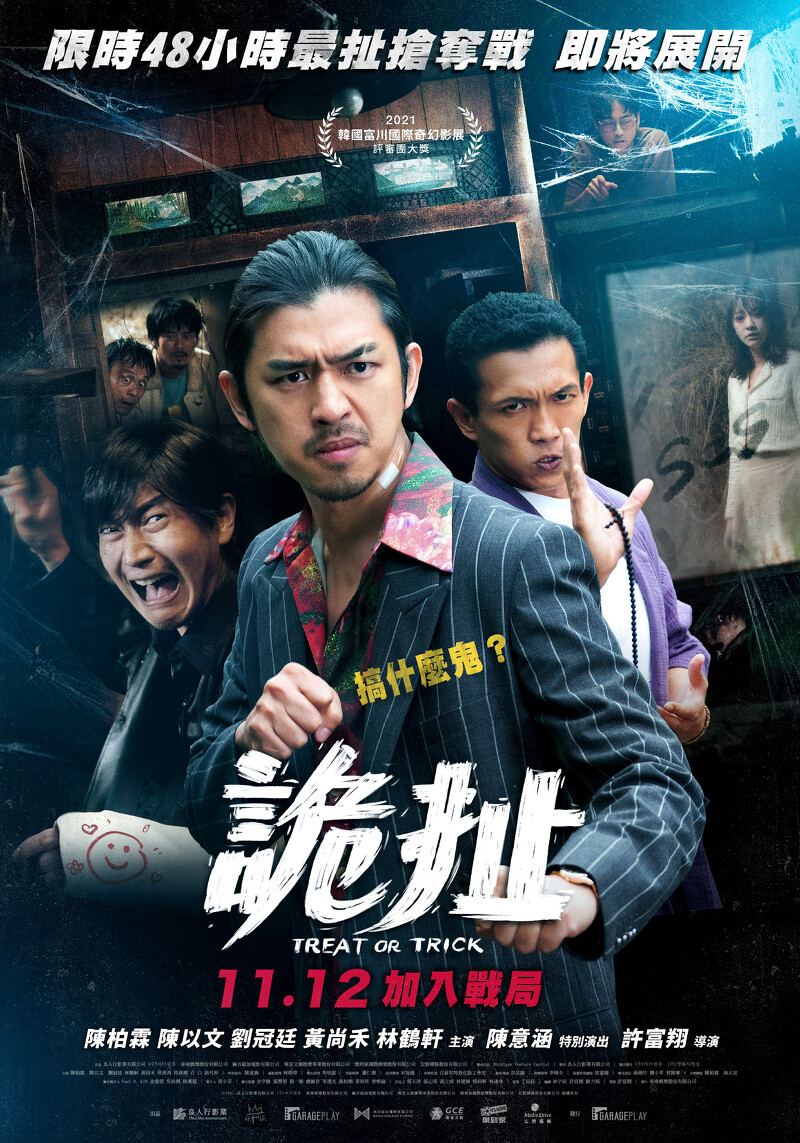
Diamonds, What it is it about them that makes everyone crazy? A bag of the elusive gemstones leads a series of corrupt cops towards a purgatorial hellscape deep in the mountains in Hsu Fu-Hsiang’s remake of the 2004 Korean film To Catch a Virgin Ghost, Treat or Trick? (詭扯, guǐ chě). The title could stand in for diamonds themselves which after all have little intrinsic value outside the illusionary desirability they evoke, but also hints at the “trickster” nature of its duplicitous hero. 

Corrupt cop Feng (Chen Bolin) admits that he didn’t join the police out of a fierce sense of justice, but because it was more convenient for his gangster lifestyle as he demonstrates in arresting a bunch of crooks only to stage a secondary robbery, getting his best friend Chiang (Yen Sheng-yu) to pose as a thief taking him hostage and running off with a bag of diamonds. Only, unbeknownst to Feng, Chiang has been picked as a fall guy for Boss Lin (Yu An-shun) to whom they were supposed to deliver the diamonds and has taken off with them. This is obviously a problem for Lin who takes cop Psycho hostage and charges Feng, his buddy Monk, and a guy from the gang Yang (Liu Kuan-ting), to track him down and bring the diamonds back. The trouble is that Chiang got into a car accident swerving to avoid the ghostly presence of a young woman and has wandered into a very weird village where everyone seems to be acting suspiciously. 

In many ways, you could see the village as a kind of purgatorial space inhabited by those trapped between two worlds towards which the gang of corrupt cops is beckoned to answer for their transgressions. Meanwhile, they’re also haunted by the figure of the mysterious woman whose presence is both help and hindrance hinting at dark goings on in this very remote area where visitors are a rarity. Having found out about the diamonds, the villagers are obviously keen to keep hold of them but then there are only so many to go round and it’s not as if you can cut a diamond in half, so the dilemma remains exactly who is going end up with the loot and how creating division on both sides. 

You couldn’t really say that either of these groups are the good guys, but it’s true enough that the villagers variously end up paying a high price for their greed usually caught out by their attempts to get one up on the cops, injured by backfiring weapons or caught in their own traps. Meanwhile, even Chiang falls victim to the essential weirdness of the village in succumbing to a freak accident which leads some to believe that he is dead though in a running gag he turns out to be more or less unkillable as if the eeriness of the place will not allow him to die no matter how many times he’s thrown off a hill, nailed in the head, crushed under falling objects, or set on fire. Yet Feng and his buddies remain largely untouched, outsiders in this strange world and completely by accident occupying some kind of murky moral high ground in trying to rescue their friend (along with diamonds which they need to get Psycho back and save their own lives by smoothing things over with Lin).

Hopping from the gangster movie to supernatural horror, martial arts, and mystery Hsu’s absurd morality farce throws in a series of running gags from “unlucky” Chiang’s strange ability to survive the unsurvivable to frequent allusions to the diamond sutra while possessing its own sense of karma as the greedy find themselves victims of their own scheming, but then perhaps not as the final twist might imply. Even so in this weird place, natures and destinies perhaps possess the ability to change, eccentric thug Yang getting far too into his role as a cop and finally deciding he’d like to be a “good guy” after all while guided by their brotherhood Feng and Monk too find themselves rediscovering a sense of justice in accidentally helping to solve a long dormant cold case. It’s all curiously circular, which is perhaps fitting for this farcical morality tale, but the jury seems to be out on whether even the brotherhood between Feng and his buddies not to mention their newfound sense of justice can survive the cursed allure of the stolen diamonds. 


Treat or Trick screens in Chicago April 9 as part of the 14th season of Asian Pop-Up Cinema.

Original trailer (Traditional Chinese / English subtitles)
Increasing Echo (修行, Chienn Hsiang, 2021)

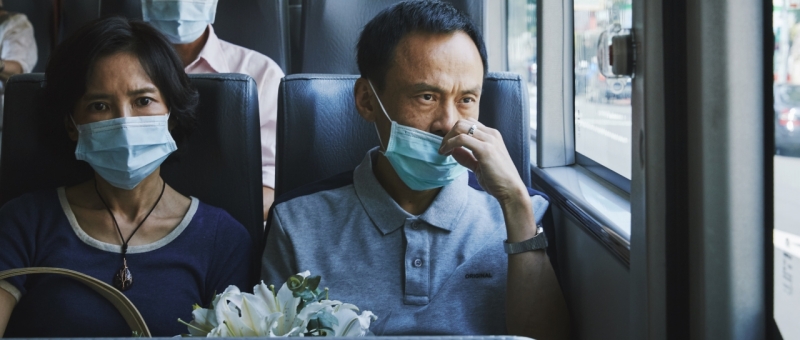
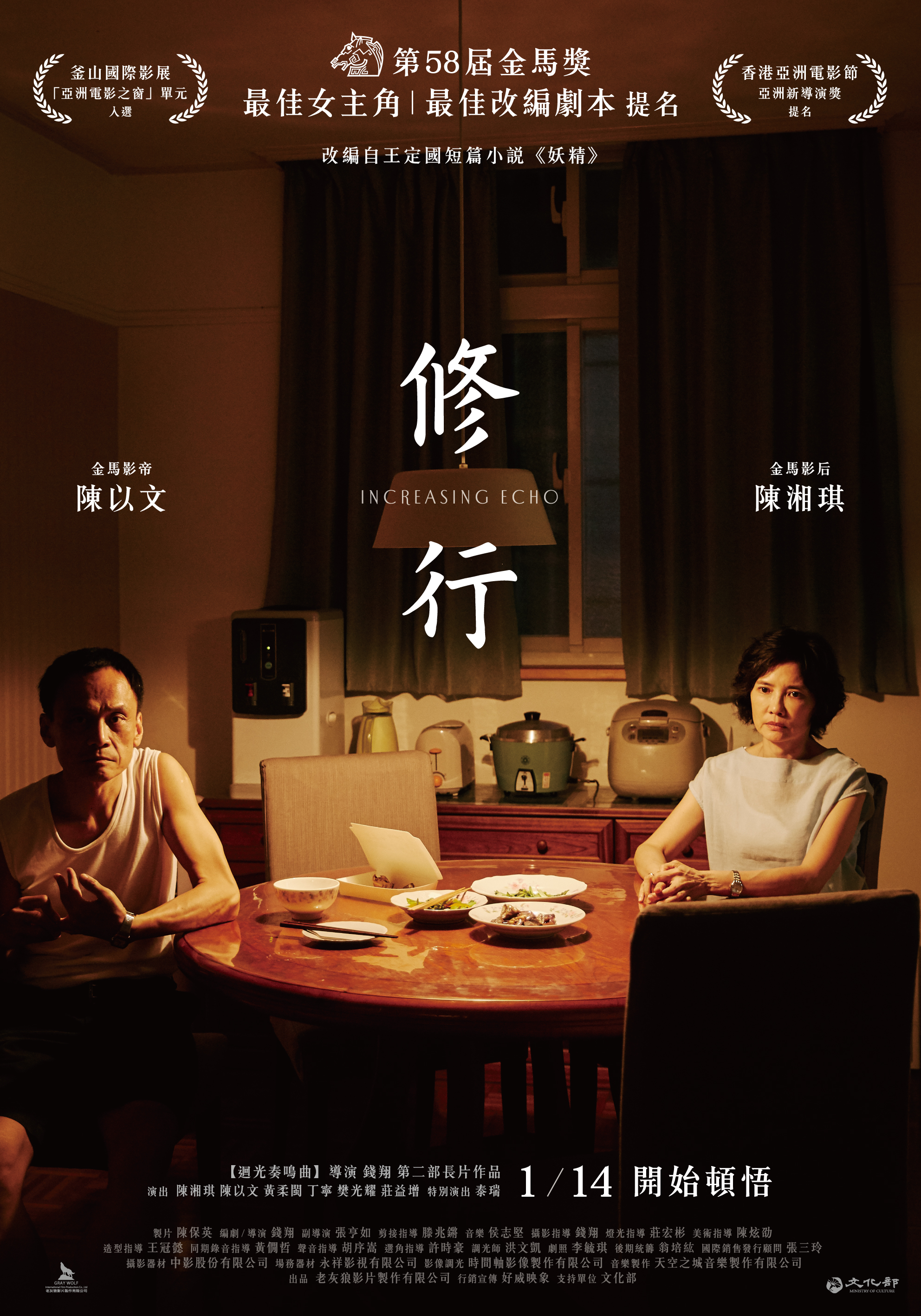
Marriage is a curse from which there is no cure in Chienn Hsiang’s horror-inflected pandemic-era social drama Increasing Echo (修行, xiūxíng). Though the English-language title may hint at the spiralling quality of the shared resentment between a husband and wife no longer, if they ever had been, happy with each other, the Chinese reflects on the heroine’s spiritual journey as she searches for a release from her internalised imprisonment but finds it increasingly difficult to “become a little bird and fly away”. 

Reuniting with Exit’s Chen Shiang-chyi, Chienn opens the film with a surreal scene of a collection of people dressed in white stumbling around zombie-like in a park while some kind of guru instructs them to listen to the voice inside which will guide them towards their own tree. One of the blindfolded devotees, Mrs Yan (Chen Shiang-chyi) eventually embraces a trunk but subsequently faints after a cicada lands on her arm. Encounters with the natural world will prove increasingly ominous, yet we can infer from Mrs Yan’s distress that even if she has managed to find her own tree or at least a solid trunk to hang on to it has not given her the sense of release that she is seeking. With her son about to be married, she finds herself trapped in a loveless relationship with her equally depressed husband Fu-sheng (Chen Yi-Wen) who sips from a hip flask all day at the office, ignores his wife’s calls, and sits in a depressing convenience store cafe every evening to delay having to go home. 

As we later discover the major source of discord between the pair is Fu-sheng’s infidelity, Mrs Yan having discovered his affair with his secretary, Ke-yun (Huang Rou-Ming), some years previously after hiring a private detective. Never really healed, the wound is reopened when Mrs Yan receives a surprise phone call from Ke-yun’s sister who is stuck abroad due to COVID-19 and wants Fu-Sheng to visit his former mistress who has been living in a nursing home for some years having sustained some kind of brain injury that has left her largely unable to communicate. Though originally outraged, Mrs Yan pays a visit to Ke-yun herself and then goads Fu-Sheng into accompanying her though whatever it was she intended the event only forces Fu-sheng into revolt taking off with the dog in tow leaving her all alone in the family home. 

For his part, Fu-sheng quite clearly identifies with the family dog, Terry, surreptitiously feeding him junk food in the park after being admonished for giving him salty table scraps. Where Mrs Yan would prefer to keep him safely at home, Fu-Sheng keeps letting Terry escape to wander freely with the result that he ends up with a canine venereal disease. The vet advises Mrs Yan have him neutered, but this is obviously something Fu-sheng can’t countenance himself feeling fairly emasculated and trapped within his marriage. In this the film perhaps leans uncomfortably leans into patriarchal social codes in implying that Mrs Yan is at fault for limiting her husband’s sexual freedom with even the private detective she hires to find him telling her that it’s good to let him stay out a little and that he’ll come home once he’s got bored and had enough which sounds like statement more applicable to a randy dog like Terry or a child who’s wandered off in a huff than a cheating husband indifferent to his wife’s feelings and willing to risk his relationship with his son by not showing up for any of the wedding prep. 

The implication that Mrs Yan has brought this on herself is further deepened by her gradually fracturing sense of reality born of the array of pills we see her taking each morning and her investment in a cult-like new age religious practice which is later betrayed when she returns to her spiritual home and discovers someone’s put it up for rent. Her world is full of eeriness and ominous symbols from the pigeons which seem to follow her around, to the ghostly corridors at the hospital to which Ke-yun has been consigned with Mrs Yan perhaps also harbouring a sense of guilt though each of them is themselves imprisoned if in an obviously different sense. In this age of social distancing, Mr and Mrs Yan appear to have had a lengthy head start, their alienation from each other later leading towards an act of violence which provides no sense of release only further constraint. Broken by the anxious knelling of Buddhist prayer bells, Increasing Echo hints at the radiating legacies of emotional betrayal but paints the marriage of Mr and Mrs Yan as a kind of maddening curse for which there is no cure only perpetual misery amid the impossibility of separation. 


Increasing Echo screens in Chicago April 9 as part of the 14th season of Asian Pop-Up Cinema.

Original trailer (Traditional Chinese / English subtitles)
You Have To Kill Me (我是自願讓他殺了我, Chan Chun-Hao, 2021)

An earnest policeman discovers nothing is quite as he thought it to be in Chan Chun-Hao’s adaptation of the novel by Feng Shi, You Have to Kill Me (我是自願讓他殺了我, wǒ shì zìyuàn ràng tāshā le wǒ). Drawn into a dark web of intrigue which eventually points to abuse of power and a low regard for human life, he is forced into a realisation that even as a law enforcement officer he can never be certain of what is real and what is not while caught in the middle in a battle of between parents each trying desperately to protect their sons. 

About to propose to his live-in girlfriend Kai (Janel Tsai), Shing’s (Cheng Jen-shuo) world comes crashing down when he and his partner Ye-ze (Xue Shi Ling) are dispatched to the mountains and discover that she is the victim of the homicide they’ve been sent to investigate. Shing apprehends the apparent killer, Li Zi-jian (Snoopy Yu), running away from the scene, but the situation is complicated when it turns out that Zi-jian is the son of a local politician, Chairman Li (Yin Chao-Te), and while he admits to the killing claims that he did it at the instigation of Kai who was suffering from terminal cancer and wanted him to help her escape her suffering. A look at Kai’s medical records bears out his story, but on closer examination Shing realises the documents don’t add up. His suspicions are confirmed when Kai’s parents, whom he had seemingly never met, arrive and fail to identify the body claiming instead that it is another woman who had been harassing their daughter, Lin Jing. 

Shing is forced to accept that he might not have known the woman he wanted to marry and that their relationship was founded on a lie, uncertain how much of any of it might have been real. Meanwhile he runs into a series of bureaucratic roadblocks as the chairman continues to disrupt the investigation in order to protect his son, eventually having Shing taken off the case leading him to investigate all alone discovering even more uncomfortable truths that cause him to question his reality. Leaving aside the minor plot hole that it seems unusually easy to live under an assumed name in contemporary Taiwan even if you’re involved in activities which would generally require an extensive background check, Shing has good reason to be confused as he dives ever deeper into an amoral morass in which those with power are prepared to manipulate it for their own ends without much thought for the lives of others. “That’s how much a person is worth” the chairman baldly states signing a settlement agreement over something else his son may or may not have done, later claiming that it doesn’t matter if he caused someone’s death “accidentally” and he’d do it all again to save his son. 

Even so, the chairman may have limits in that his attempts to manipulate the system are bureaucratic in nature and seemingly unnecessary at least it seems as if there would be easier ways to achieve his aims without directly harming others even if they would risk lives indirectly. Meanwhile his accomplice is also seemingly involved in order to protect their family, willing to compromise themselves morally to protect their elderly relatives while believing nothing that bad would come of their actions. Then again, Shing finds himself on the receiving end of further recriminations accused of having failed to protect the woman he knew as Kai from herself leaving her with only a dark path to ensure that justice would be done and corruption exposed. 

While Zi-jian feared he was a burden to his father feeling himself unloved even as he went to such drastic lengths to protect him, Kai/Jing was also afraid to fully trust Shing fearing she’d one day disappoint him unable to move on from her traumatic past without putting it to rest. Taking aim firmly at the societal corruption that allows the rich and powerful to misuse their position for their own gain while ordinary people suffer Chan’s noirish drama situates itself in a murky world of constant uncertainty in which even an earnest policeman can be largely oblivious of the lives of those around him while the purest of motivations can lead to only darkness and misery.  


You Have To Kill Me streams in the US April 4 – 10 as part of the 14th season of Asian Pop-Up Cinema.

Original trailer (English subtitles)

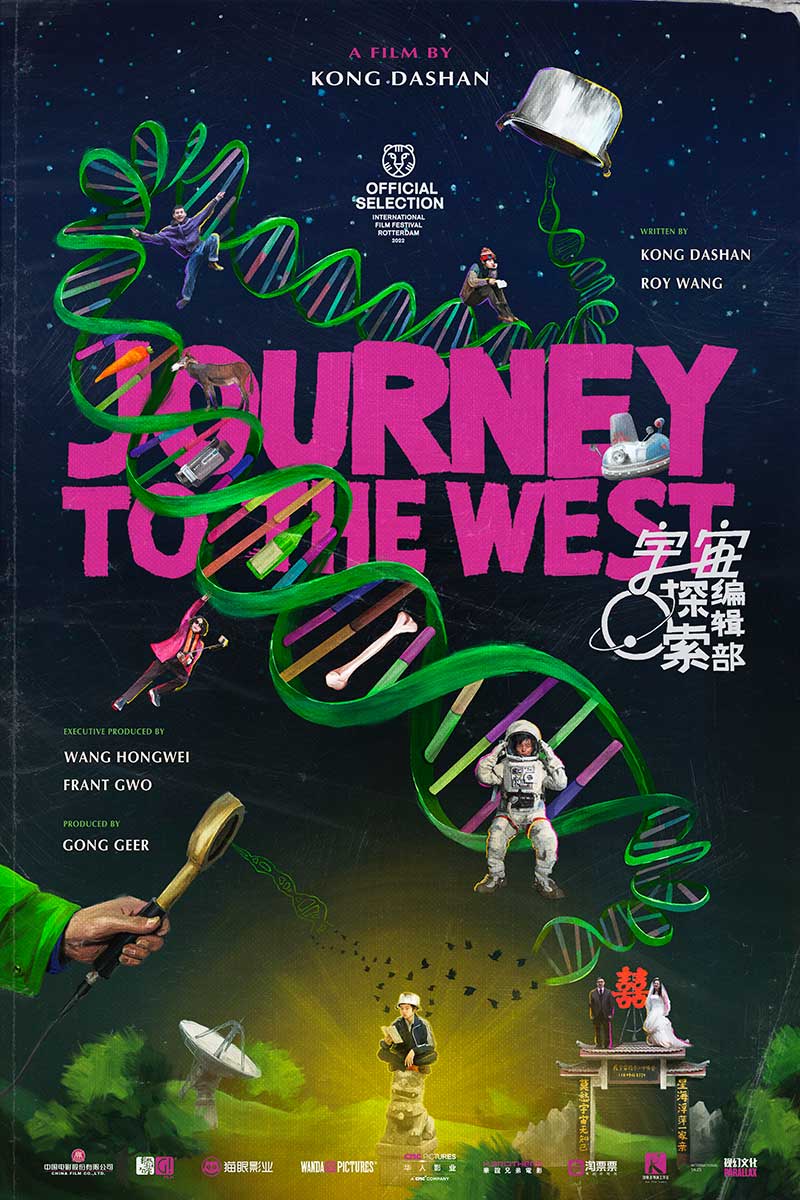
Journey to the West (宇宙探索编辑部, Kong Dashan, 2021)

An eccentric middle-aged man’s search for alien contact sends him on a quest for enlightenment in Kong Dashan’s deadpan epic Journey to the West (宇宙探索编辑部, Yǔzhòu Tànsuǒ Biānjí Bù). Inspired by the classic Chinese tale of the monk Tang Sanzang who journeyed west in order to bring true Buddhism to China in the company of the anarchic monkey king Sun Wukong, Kong’s comical adventure finds its awkward hero longing for connection in contemporary China his search for the extraterrestrial a means of provoking the next great human evolution in the belief that on the discovery of alien life humanity would immediately abandon its petty disagreements and live in perpetual harmony. 

Kong opens however with some VHS footage from 1990 in which UFO-obsessive Tang (Yang Haoyu) is interviewed for a documentary before flashing forward 30 years to the present day in which Tang has made little progress. The magazine which he edits, Universe Exploration, is on the brink of bankruptcy with his exasperated boss Mrs Qin (Ai Liya) already holding tours for prospective sponsors none of which go particularly well. As we later discover, Tang’s obsession has dominated his life resulting in the breakdown of his marriage while his daughter later died by her own hand it seems in part because of the same despair he too feels in his inability to understand the purpose of human existence. His quest is partly one for answers, though his theories often sound unhinged as he patiently explains about messages in the white snow of a detuned analogue television or pays visits to psychiatric institutions believing that psychopaths whose brains are wired differently may be better able to receive extraterrestrial signals. 

On the other hand, his way of life is not perhaps that different to that of his namesake Tang Sanzang in his wilful aestheticism insisting that the desire for better food along with sex for reasons other than procreation is merely a consumerist trap actively blocking the path towards human evolution which he believes he will discover in contacting extraterrestrial life. In his theory, if the Earth is like a grain of sand in the desert of the universe then it’s illogical to assume there are not other beings out there whom he assumes will be far advanced not only in technological terms but also in morality. But then, as a poet he later meets on his journey west into the mountains eventually asks him what if the aliens don’t have any answers either and have in fact come to Earth in order to ask the exact same question for which Tang seeks the solution?   

Inevitably, the conclusion that he comes to is that the answer lies within, that humanity is the universe and each person a single word in a great poem centuries in the making that might in its conclusion allow us to understand why we live if only we can go on connecting with each other to form new sentences in the great unfinished journey towards enlightenment. Then again, Mrs Qin hints at the mean spiritedness of the contemporary society in her conviction that if there are aliens out there who want to come to Earth it’s probably to rob it, while out on the road Tang is taken in by a bizarre scam involving the body of an alien in a freezer you can only see if you are the chosen one which requires the willingness to pay $99.99 to man running the alien embassy on Earth though it does at least result in Tang receiving a mysterious bone which does seem to be crucial to his quest once he runs into monkey king stand in Sun Tiyong (Wang Yitong) who wears a saucepan on his head and claims to have received a mission to retrieve a stone ball stolen from a lion statue’s mouth from a mysterious alien entity. 

Ever mindful of the contemporary realities, Kong throws in several ironic nods to the censors board Tang repeatedly reminded that he must always find a “scientific” explanation for bizarre phenomena rather than succumbing to “superstition”. Travelling west with Sun and a small team including his drunken friend and a young woman the same age as his daughter would have been if she’d lived, Tang does indeed undergo a kind of vision quest culminating in the apotheosis of Sun into Wukong while a strange man in a red hat riding a tiny UFO-like cart always seems to be one step ahead of them. Shot in a faux documentary style complete with direct to camera interviews and occasional breaking of the fourth wall, Kong’s hilariously deadpan, absurdist epic sees Tang journeying west in search of the meaning of life only to be confronted by the vastness of the universe and discover himself, and the answer he seeks, already in its embrace. 


Journey to the West screened as part of Osaka Asian Film Festival 2022

Clip (English subtitles)

Arc (Arc アーク, Kei Ishikawa, 2021)

Does something have to have an ending to be meaningful or could eternity be the point? Inspired by Ken Liu’s short story, Kei Ishikawa’s near future tale Arc (Arc アーク) envisages a world without death if perhaps not for all in which bodily immortality has been achieved, but what would that mean for humanity no longer faced with mortal anxiety, how should it reorient itself in the absence of sickness or old age while the possibility of endlessness for the self has removed the urge for immortality through childbirth? These are all of course questions which have no one answer, though what the heroine finally discovers is that in the end it may be the choice itself of when to live or when to die that may lend her life at least its meaning. 

Even so, hers is a particular anxiety bound up with frustrated maternity having abandoned a baby she gave birth to at 17, too afraid of the responsibility to accept it. At 19, Rina (Kyoko Yoshine) is spotted at a club by a mysterious middle-aged woman, Ema (Shinobu Terajima), who runs a revolutionary cosmetics company which has pioneered a new way of preserving the bodies of the dead turning them into uncannily lifelike mannequins with a new process known as plasticisation. To Ema’s mind, true liberation comes from accepting transience, that once life has left it the body is just an object which might be repurposed for her art but then at the same time perhaps she is attempting to hold on to something that should be released, interfering in a natural process and while intending to offer comfort to those bereaved preventing them from letting go or moving on with their lives. Her much younger brother Amane, meanwhile, actively wants to stop time while alive utilising a similar technology to halt the ageing process and overcome the tyranny of death. 

In a strange way, Ema’s desire to restore a body which is no longer alive to ideal condition is also an acknowledgement of death which she believes is not the opposite of life but a necessary part of it. In overcoming the fear of death, she claims, a transcendental beauty will reveal itself. Amane meanwhile seeks to overcome death physically, but as Rina is warned his health revolution may not bring happiness to mankind not least because it exposes a persistent inequality in which eternal youth is available only to those with the means to acquire it, creating a new underclass not only of the poor but those whose bodies are not able to accept the treatment. Amane sees his creation as a dividing line in human history which will necessarily divide humanity into two groups, those who choose to join his revolution and those who do not (though interestingly he does not consider a third group who actively opposite it). Even so he sees it as a choice and accepts the right to reject immortality even going so far as to build a dedicated centre where those who choose to live a “natural” lifespan can do so in dignity and comfort. 

The concept of personal choice appears to be key, Ema too replying that her decision to stick with plasticisation rather than Amane’s treatment is her right though she too eventually hits a wall in the imperfection of her craft and the depths of her grief. She tells Rina to live her life freely encouraging her to live fully in the moment, while she too is quick to remind others that the decisions are theirs to make as regards their life and death. It’s not death nor the fear of it that are the problem, but the inability to choose as Rina finally acknowledges in remarking that the ability to decide its end point gives her the means to carve the arc of her life overcoming death through full existential control having in a sense closed a circle in facing her own sense of maternal failure. Shifting from the warmth and natural beauty of a beach in summer to the dark and brutalist environments of the BodyWerks lab, and from the muted colour of Rina’s youth to the black and white of her youthful old age, Ishikawa’s near future sci-fi-inflected tale suggests it’s not so much death that frightens you but helplessness and as in all things the answer lies in autonomous choice. 


Arc screens in Chicago on April 3 as part of the 14th season of Asian Pop-Up Cinema.

Original trailer (no subtitles)

Musicophilia (ミュジコフィリア, Masaaki Taniguchi, 2021)

What is “music”? Adapted from the manga by Akira Saso, Masaaki Taniguchi’s Musicophilia (ミュジコフィリア) finds its heroes grappling with a series of conceptual insecurities attempting to draw lines around what the what word might mean while torn between conservation and innovation as they struggle to find their own voices. Yet as the hero comes to realise, you can’t make music on your own letting go of his resentment and childhood trauma to remember his natural love of sound while repairing his relationship with his estranged half-brother in the wake of his father’s death. 

Gifted the talent of synesthesia in the ability to perceive shape and colour in the sounds of nature, Saku (Kai Inowaki) harbours a deeply held resentment towards “music” which he believes destroyed his family life, his mother (Misuzu Kanno) having been seduced by well-known composer Kishino (Kanji Ishimaru) as a student and thereafter forced to give up her dreams of becoming a professional cellist. Though he had contact with his father in his childhood, his stepmother never missed the opportunity to make him feel inferior while her own son, Taisei (Ikusaburo Yamazaki), became his father’s protege. Saku was not even allowed to touch his piano as if he were somehow unworthy of his artistic legacy. Having enrolled in art school in Kyoto, he nevertheless ends up being adopted by the contemporary music club which practices avant-garde and experimental techniques only to re-encounter his brother who is now in the third year of a PhD and an unpleasant elitist privately insecure about his musical talent. 

Everyone agrees that Taisei’s playing is technically perfect, but somehow dull lacking the individual spark of a true creative genius merely a carbon copy of his father’s teaching. Saku’s new friend Nagi (Honoka Matsumoto) compares Taisei’s skill unfavourably with the untrained talent of his brother, insisting that Saku’s music has the colour of joy and shape of kindness while Taisei’s sounds like notes arranged by a machine. Taisei is indeed cold and arrogant, snapping back at Saku’s question “what is music?” with the reply that music is what he’s played, as if he owned it and it only belongs to him. He even breaks with protocol and insults his professor claiming that his criticism is down to “internal politics” because he and his father did not get on, publicly criticising his translation of a German textbook on music telling him to “grasp the fundamentals of language” while his professor urges him to master the fundamentals of composition rather than arrogantly insisting his playing is unimprovable because it is the definition of “music”. Of course, some of this is his own insecurity afraid he can’t match up to his father and worried that in the end all he is is a poor imitation. For his part, Saku is often less than kind to Taisei, Nagi trying to point out to him that he’s better that but simultaneously finding him heading in the same direction as he tries to overcome an internal insecurity in order to rediscover his musical voice while unfairly lashing out at those around him. 

Taisei sucks the joy of out music, and indeed everywhere else, through his arrogant perfectionism his treatment of violin-playing girlfriend Sayo (Noa Kawazoe) approaching the abusive as he consistently runs her down and blames her for his own sense of dissatisfaction, while Nagi meditates on how freedom can make you lonely, herself seemingly the only one who thinks she’s in a musical, as the youngsters find themselves isolated by their own desire for artistic expression. Yet what the two men discover is that their father may have intended something else for them and that his desire was that they’d rediscover the innocent connection they’d had as children able to help each other should they become stuck either in life or in music. Saku’s natural talent is born of being immersed in the world around him realising that this too is “music” while Taisei struggles to move forward too obsessed with technical perfection to allow his music to breathe only rediscovering his humanity after an immense humbling that allows him to re-immerse himself in the natural world. At heart a coming-of-age tale in which two young men learn to put their differences aside and rediscover their childhood bond, Taniguchi’s gentle drama also offers a mild critique of academia and the tendency of institutions to exploit and manipulate talent only to wash their hands of it if something goes wrong placing funding above ethical concerns but eventually discovers that music is everywhere if only you’re willing to listen.


Musicophilia streamed as part of the 14th season of Asian Pop-Up Cinema.

Trailer (no subtitles)

The Girl on a Bulldozer (불도저에 탄 소녀, Park Ri-woong, 2021)

“Everyone just takes it” the heroine of Park Ri-woong’s Girl on a Bulldozer (불도저에 탄 소녀, Bulldozere Tan Sonyeo) is advised by her partly well-meaning uncle, urging her to know her place, stop fighting and become complicit with the injustice that pervades their society. Already beaten down by life, he has come to the conclusion that there is no other way out other than to submit himself to the quasi-feudalistic social codes of contemporary capitalism, but Hye-yeong (Kim Hye-Yoon) is still naive enough to think that she’s entitled to fairness and that she has the capacity to resist if not exactly for the good of society then in standing up for herself and her family. 

Family is however something about which she feels conflicted, disappointed in her feckless father (Park Hyuk-Kwon) fearing his gambling and drinking problems may have got the better of him yet again. As the film opens, 19-year-old Hye-yeong is in court charged with assault after intervening in a convenience store dispute. She already has a criminal record but the judge is lenient with her in reflection of the fact that she stepped in to defend someone weaker than herself, sentencing her to community service and vocational training rather than prison but reminding her she is now old enough to receive a custodial sentence should anything like this happen again. It’s immediately obvious that Hye-yeong is a very angry young woman who has already lost any real hope for the future, staking everything on saving enough money from her part-time jobs to rent a flat so she can move out and take her younger brother Hye-jeok with her. 

What little stability she has disappears when her father leaves early one morning and does not return, Hey-yeong receiving a call from the police informing her he’s a wanted man having apparently committed an assault and stolen a car from his former employer which he later drove off a bridge harming two pedestrians in the process. Meanwhile she also discovers that her father may have lost the restaurant where they live and work, a couple turning up to make alterations as if they already owned the place, the woman claiming that her husband is the nephew of Chairman Choi (Oh Man-seok) her father’s former boss and the owner of the car which he is accused of stealing. Part of Hye-yeong’s problem is her liminal adolescent status. It’s obvious her father had been keeping a lot of things from her while she’s constantly asked when her mother is coming to sort everything out though her mother died years ago and even the aunt she later approaches for help is less than sympathetic partly as we discover because her father dragged his brother into his money problems by making him a witness to a deal with the increasingly shady Choi. 

Choi is an embodiment of corrupt chaebol culture, adopting a quasi-feudalistic authority that allows him to wield his authority over those lower than himself in the complicated class hierarchy of the contemporary society as if he were a lord and they merely serfs. Also in debt to him, Hye-young’s uncle tries to talk to her about the way the real world works, that she should stop resisting Choi whom she blames one way or another for her father’s accident and know her place, acknowledging that when you’re nice to men like Choi they’re nice to you blaming his brother not for his foolish decision to trust him but for his eventual rebellion in insisting on getting what he was promised rather than submitting himself to Choi’s whim. The fact that Choi is currently running for political office promising to “never surrender to injustice” while making this small corner of backstreet Incheon great again through almost certainly corrupt construction contracts is only another expression of the insidious links between business and politics that once again work to oppress young women like Hye-yeong. 

Meanwhile, she finds herself constantly at the mercy of shady insurance companies one working for the victims of her father’s accident who turn out to be, as she thought, scammers playing up their injuries in the hope of cash amid the compensation culture that defines the modern society. Then again on the other hand, she discovers that her father had reactivated a series of insurance policies of his own, some suggesting the accident may have been a suicide attempt in that he hoped to take his debts with him while providing his children with financial security through the payout. The dragon tattoo on Hye-yeong’s arm which she has to hide with a sleeve in mainstream society marks her out as someone not to be messed with, but also exiles her from conventional success making it difficult to get a regular job or walk around without the implication of violence following her while even the vocational training she chooses of learning how to drive heavy vehicles also rejects her the instructor flat out saying that he’s “not being sexist” but thinks the course is unsuitable for a woman and she won’t find work as one in the construction industry. Young, reckless, and naive Hye-yeong opts for short-term vengeance literally attempting to take a bulldozer to the comfortable lives of men like Choi whose wealth is founded on the exploitation of those like her in counting on their desperate complicity, but discovers that his position is already far too entrenched to be turfed out by a single mechanism alone. “We at Korea Insurance will always be a source of strength for you” she’s ironically told after finally receiving a payout rather than an invoice left with little other choice than to try and make her way free of the control of the Chois of the world in rejecting her complicity. 


The Girl on a Bulldozer screened as part of Osaka Asian Film Festival 2022

Clip (English subtitles)

Will I Be Single Forever? (ずっと独身でいるつもり?, Momoko Fukuda, 2021)

If you can achieve financial independence in the contemporary society, then what is or should be the primary purpose of and motivation for marriage, what does it mean, should you want it at all or is it merely an outdated institution designed to keep women in their place by making them dependent on men? Adapted from the manga by Mari Okazaki, Momoko Fukuda’s Will I Be Single Forever? (ずっと独身でいるつもり?, Zutto Dokushin de Iru Tsumori?) finds a series of young women asking just these questions wondering why it is everyone themselves included is still intent on viewing marriage and motherhood as the only markers of success as if none of their other achievements really matter if they’re going to write spinster of this parish on their headstone. 

10 years previously the now 36-year-old Mami (Jun Hashizume) shot to stardom penning a best-selling book about how it isn’t a sin to be single and the worst thing isn’t to be alone but to settle for less solely to escape loneliness. These days, however, she’s beginning to wonder, growing fearful of what it might mean to spend the rest of her life alone and worrying she’s about to miss the marriage boat witnessing it pass by passively without making a concrete decision of her own. Expressing her views on a talk show where “the troubled women of today are slapped with harsh reality”, Mami disappoints some of her longtime fans who found validation in her book reassured that there was nothing wrong in their desire to live independently rather than get married right after college and become regular housewives. Yet they are also ageing and facing the same dilemma, wondering if their life choices are really OK or if they’re missing out on a family life by refusing to settle for Mr. Almost-Right. 

The film’s English-language title flips the Japanese as if the question is self-directed, the women asking themselves when Mr. Right’s going to come along or worrying about the consequences if he never shows up, while the Japanese is more like the dreaded question every young woman is asked by an invasive female relative at a family gathering reminding her she’s not getting any younger and will end up alone if she’s not careful. Meanwhile, Mami is reminded that women who’ve bought their own apartments seldom marry, men aren’t interested in women who can be financially independent and don’t need to rely on them for economic support as Yukino’s (Miwako Ichikawa) longterm boyfriend explains breaking up with her immediately before moving in together as it turns out right next to Mami though she doesn’t know it as she takes out her frustrations online through an embittered anonymous Twitter account. 

For her, the point of marriage is supposed be escaping loneliness yet as her school friend Ayaka (Eri Tokunaga) will testify marriage can be the loneliest thing of all. Her husband is happy to play with the baby but hands it back every time it cries or needs changing unwilling to engage with the less fun sides of marriage or parenthood. Husbands are emotionally absent and rarely help at home, Ayaka’s trying to be helpful by taking the baby to the park so that she can focus on her chores both leaving her out of their fun and reinforcing the idea the home is all her responsibility and none his. “Don’t end up like me” Mami’s mother (Mariko Tsutsui) advises instantly seeing that her decision to marry casual boyfriend Kohei (Yu Inaba) just because he asked is doomed to end in failure, warning her that you have to “be ready to live alone” even if you marry, “no good comes of being a slave to a husband” she adds uttering the unthinkable in trying to warn her daughter of the realities of a patriarchal marriage. 

And as it turns out though five years younger vacuous rich kid Kohei is a patriarchal man whose friends all praise him for being brave and understanding in marrying an older woman while he pats himself on the back for being progressive in granting her permission to continue using her maiden name professionally after they marry. When they go to meet his conservative parents he criticises her outfit for making her look “old” while he’s worn shorts to a fancy restaurant and then orders a ridiculous green soda drink, forcing Mami to go along with his mother’s prodding that she’ll give up work when they marry to devote herself to childrearing though he’d also refused to attend a fertility/genetic screening session Mami had recommended on the grounds that it’s unnecessary because he’s a man as if childbirth is only a female concern and only women can have fertility issues or potential problems in their medical history. The more she tries to voice her worries the more he overrules her, the final straw coming as he refuses to listen to her anxiety about getting behind the wheel of a car, generally unnecessary in Tokyo, having previously been involved in an accident. She begins to wonder why it’s so important to follow the “correct path” even if it brings you no happiness solely in order to avoid people asking you with barely suppressed pity if you’re going to be single forever. 

The question comes from an older era in which it was it was near impossible for a woman to survive without a husband, but now that she can why should she put up with poor treatment and restrictions on her freedom if she is perfectly capable of supporting herself? Much younger than the others, sugar baby / professional socialite Miho (Sayuri Matsumura) meanwhile has gone the other way in trying live off men without the constraints of marriage only to find herself hamstrung by patriarchal expectations once again in having failed to realise that her lifestyle has an expiration date while she’s painted herself into a corner with no qualifications or work experience at the age of 26. The bulk of her business model is already rooted in the selling of other younger, prettier women as party guests for wealthy men and the consequences of continuing down that path are largely unpalatable to her. 

Touched by a further TV update from Mami, each of the women has a kind of epiphany that allows them to move forward into happier lives reassuring them that it’s alright to ask for more and they don’t have to hold any part of themselves back to meet the outdated expectations of traditional femininity, even Miho finding another way of harnessing the skills she does have to achieve true independence. The answer is not a total rejection of marriage or committed relationships but a reacknowledgment that to marry or not should be their own choice based on their own happiness rather than something you have to get over with to avoid the social stigma of becoming an old maid. A relatable exploration of the lives of young women in the contemporary society Fukuda’s empathetic drama eventually advances that in the end the best cure for loneliness is female solidarity in the face of a still overwhelmingly patriarchal society. 


Will I Be Single Forever? streams in the US until March 27 as part of the 14th season of Asian Pop-up Cinema

International trailer (English subtitles)

Skeleton Flowers (かそけきサンカヨウ, Rikiya Imaizumi, 2021)

The increasingly prolific Rikiya Imaizumi has become most closely associated with zeitgeisty youth romance accurately capturing the fears and anxieties of 20-somethings in contemporary Japan but brings his characteristically mellow touch to the classic coming-of-age tale in adapting Misumi Kubo’s short story Skeleton Flowers (かそけきサンカヨウ, Kasokeki Sankayo). In contrast to the gloominess of the title, teenage angst is never where you’d expect it to be as the variously pre-occupied pair at the film’s centre strive to deal with their problems with maturity and mutual compassion. 

You might for instance expect Yo (Sara Shida) who has been raised by her father, Nao (Arata Iura), since her mother left the family when she was three to feel jealousy or resentment when he sits her down and tells her that he’s fallen in love and wants to get married, especially as the woman he’s fallen in love with, Yoshiko (Akiko Kikuchi), has a small daughter of her own, Hinako. Attempting to be sensitive, Nao frames the new arrangement in a positive light in that Yo will be have more free time to be a regular teen and hang out with her friends rather than skipping out on after school clubs to take care of the household chores, a spin which could backfire in that Yo has obviously been used to being the lady of the house and might feel as if a responsibility she was proud of carrying is being taken away from her or that she’s being displaced by the new maternal presence of Yoshiko. She may in fact feel a little of this, but rather than lashing out or rebelling against the change in her familial circumstances she does her best to accept it with good grace while simultaneously prompted into a reconsideration of the relationships between parent and child meditating on the absence of her birth mother and wondering how and why she could have come to leave her behind. 

Riku (Oji Suzuka), her sometime love interest, had started a discussion in their friendship group about their earliest memories Yo unable to come up with anything on the spot but later remembering her mother carrying her into the forest and showing her the skeleton flowers of the title which appear bright white when dry but gradually become transparent as they absorb water. Later she remembers something else unsure if it’s a memory or a dream, a feeling of being suspended in mid-air as her parents argued as if everyone had forgotten she existed. Riku too frequently states that he’s “nothing at all”, feeling himself lost and directionless after being diagnosed with a heart condition later forced to accept that his life will never be the same as it was and his choices are now limited in ways they might not have been before. His health anxiety ironically leaves him emotionally numb, unable to identify let alone express his feelings as he becomes close not only to Yo but another, much more direct, girl in his class Saki (Tomo Nakai) who later does him the favour of explaining exactly what his problems are hoping to jolt him out of his emotional inertia while taking him to task for having been unintentionally condescending in his innate kindness. 

It’s this innate kindness that eventually sees both the teens through, each approaching their various worries with a mature compassion. Riku had felt uncomfortable in his familial home and jealous of Yo’s “real family” as she comes to accept her new relationships with Yoshiko and Hinako, but himself comes to understand the complicated relationship between his overbearing grandmother and lonely mother as one of mutual support getting another tip from Yoshiko that even if he feels has no particular talents, also jealous of Yo’s artistic prowess, his ability to support those around him is a talent in itself and an important part of the whole. A robust emotional honesty and the willingness to think things through calmly eventually lead stronger bonds between all concerned, Yo forgiving her birth mother while also embracing a new maternal relationship with Yoshiko, while Riku gains a new perspective of his own and even if he still hasn’t quite learned to identify his feelings is more comfortable with expressing them directly. A gentle, empathetic coming-of-age tale Imaizumi’s teenage drama roots itself in a world of fairness and compassion that allows each of the teens the space to figure themselves out while helping others to do the same no longer transparent in the rain but whole and fully visible not least to themselves. 


Skeleton Flowers streams in the US until March 27 as part of the 14th season of Asian Pop-up Cinema

Original trailer (English subtitles)

Far Far Away (緣路山旮旯, Amos Why, 2021)

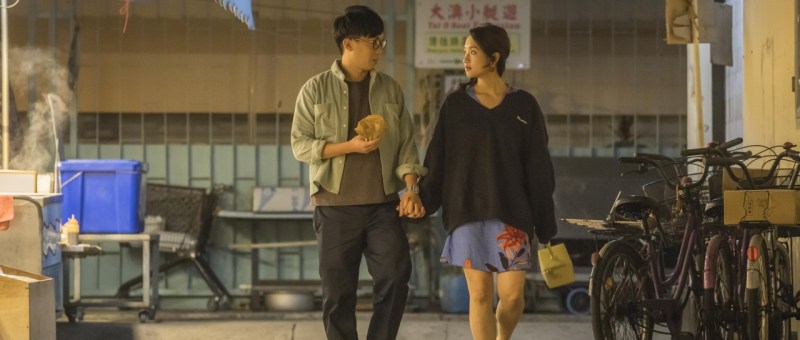
An introverted IT specialist gets a crash course in romance when he accidentally ends up dating a series of women from the far flung corners of the land in Amos Why’s charming romantic comedy, Far Far Away (緣路山旮旯). An occasionally subversive love letter to a disappearing Hong Kong, Why’s elegantly scripted romance also presents a snapshot of the contemporary society in exploring the various reasons each of the women has rejected the high status, consumerist lifestyle of the cities in favour of a more bespoke happiness elsewhere. 

At 28, Hau (Kaki Shum) has had only one relationship and is still unsure why his previous girlfriend, a former co-worker, broke up with him. His sympathetic hometown friends are forever trying to set him up while he nurses a gentle crush on another woman from the office, A Lee, but is too shy to say anything and worried that her reluctance when colleagues suggest he drive her home after a night out implies that she finds his company uncomfortable. That is not as it turns out quite the case, the reason she didn’t want him to drive her home is that she’d moved from an upscale, prestigious area to a small rural town far out of the city because she broke up with her boyfriend and couldn’t afford the rent but didn’t want anyone to know. 

The constant obsession with men driving women home becomes a minor plot point with several of the women actively questioning why it’s necessary and occasionally even offended while forcing Hau to admit that in most cases he’s offering because he wants to spend more time with them rather than out of a general concern for their safety or simple convenience. Having abandoned the dating app he was working on at work to concentrate on a delivery/map service, he ends up bouncing all around Hong Kong visiting various women even venturing to places so far out he needs to apply for a separate permit to enter while beginning to rethink his life choices realising that the reason he’s so set on stubbornly occupying his family’s flat in the city is rooted in his childhood trauma of having lost his mother to illness and his father to the Mainland in a symbolic orphanhood that hints at the anxieties of contemporary Hong Kong. Hau’s recently married friends discuss the possibility of having children but admit that they don’t really want to do it unless they can move abroad, Hau later speculating they will go to Taiwan while his friend who goes by the ironic name “Jude Law” has a British National (Overseas) Passport. Hau himself admits that he’d never really given it much thought until recently when a prospective partner asks him if he’d ever considered moving abroad mostly to confirm he won’t suddenly announce he’s leaving once they start dating seriously because almost no one can see a future for themselves in a changing Hong Kong.

Meanwhile, each of the women has made a decision to prioritise something else rather than join the city rat race from a youthful young woman living in an idyllic coastal town while determined to marry at 29 to Hau’s college friend Melanie (Jennifer Yu Heung-Ying) who chose to work for an NGO because of the better work/life balance that meant she wouldn’t be pressured into endless overtime. Then again another of Hau’s suitors appears to be just as ambitious as any other city dweller while viewing herself superior because her family bought a flat in a provincial area 25 years previously at a preferential rate and then sold it to her at below market value but more than they paid originally which strikes Hau as an odd arrangement between parent and child but speaks to the penny pinching mean spiritedness that leads her to blow up at him because he left a nice tip at a restaurant where service was included in the bill. An artist friend is willing to put up with primitive conditions in a remote mountain village because she’d rather have the stars than city lights, while each of the women also worry that any attempt at romance is always doomed to failure because no matter how keen they are or claim to be sooner or later the guys all ask them to move back to the city prioritising their own convenience while ignoring all of the reasons they chose to live in these very specific places. 

Eventually Hau becomes the exception, realising that the where isn’t the most important question acknowledging that perhaps he’s the one who ought to move in deciding to let go of the childhood trauma in his family home in order to make a new one of his own having figured out what he wants out of life and who he wants to spend it with which in the end dictates the where. Sometimes, love is just around the corner if you’re willing to go and have a look. A gentle celebration of a disappearing Hong Kong both literally and metaphorically, Why’s charming rom-com sends its hero on a roundtrip to love figuring out his place in the world in finding that home really is where the heart is. 


Far Far Away screened as part of Osaka Asian Film Festival 2022

Original trailer (English subtitles)

Images: (C)2021 DOT 2 DOT CREATION LIMITED