Satoshi Kon: The Illusionist (Satoshi Kon, l’illusionniste, Pascal-Alex Vincent, 2021) [Fantasia 2021]

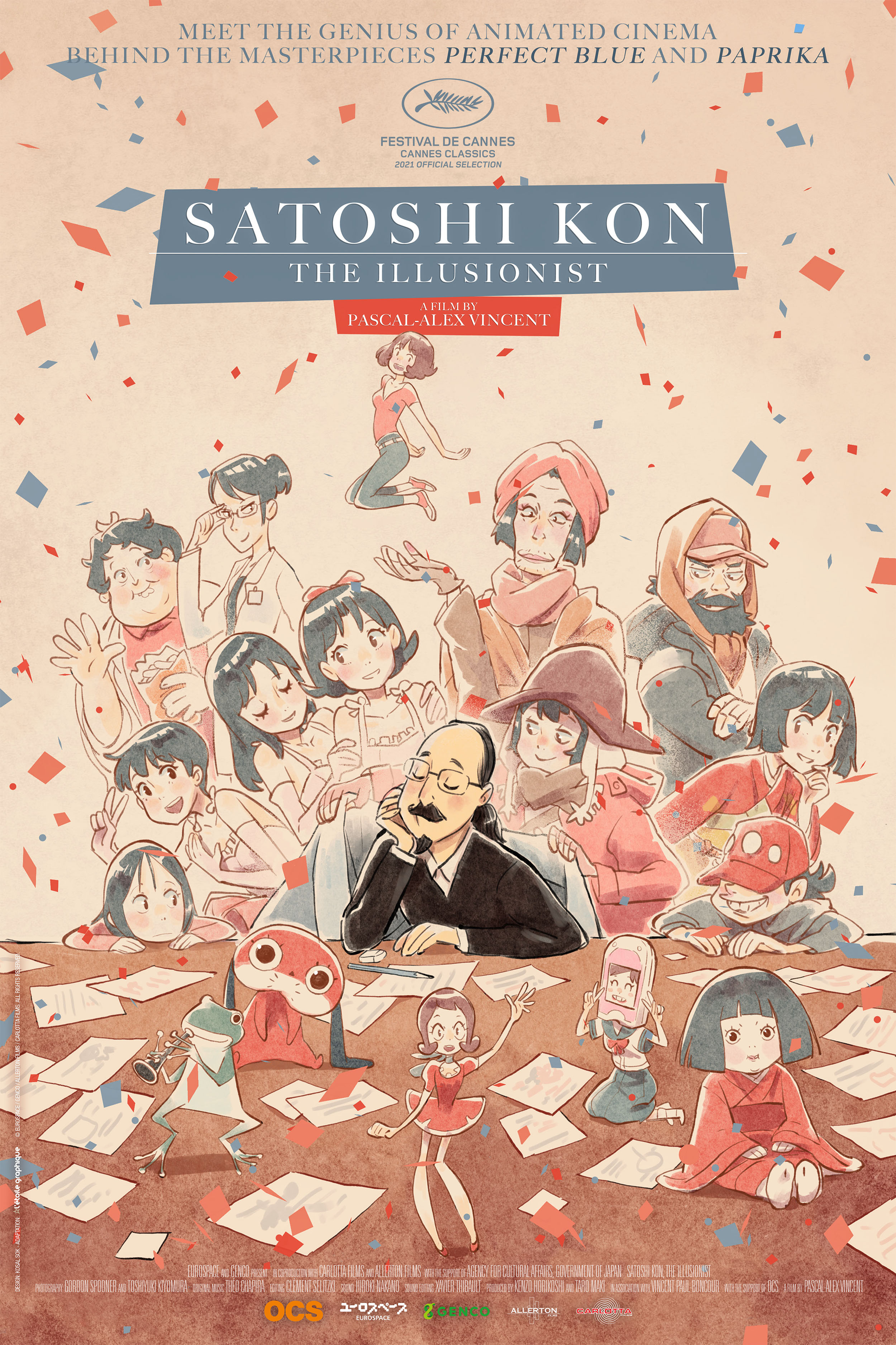
“A genius but a nasty guy” is the way a former collaborator describes the late director Satoshi Kon, a sentiment echoed by others who’d worked alongside him though many also describe him as gentle if reserved remarking on his seeming impenetrability. Pascal-Alex Vincent’s documentary Satoshi Kon: The illusionist (Satoshi Kon, l’illusionniste) is less interested in illuminating the man than briefly sketching an overview of his career yet nevertheless seems to content to present him as an enigmatic figure filled with contradictions which his work, in some way, was intended to resolve. 

Skipping over Kon’s early life and beginnings as a manga artist, Vincent begins with Perfect Blue before proceeding through each of his features chronologically finishing with the incomplete Dreaming Machine. In essence a talking heads doc, he interviews a series of well-known figures in the anime world such as fellow directors Mamoru Oshii, Mamoru Hosoda, and Jin-Roh’s Hiroyuki Okiura, as well as those who had worked with Kon directly, the international filmmakers who’d found inspiration in his work such as Darren Aronofsky, Jeremy Clapin, Marc Caro, and Rodney Rothman, and experts in anime and manga history. 

In a sense, Vincent is less interested in Kon as a man than in the lasting impact of his oeuvre, which does in a sense lend an uncomfortable imbalance in implying Kon’s work is of greater importance because of the influence it went on to have on Western, particularly Hollywood, cinema. Kon’s impact on contemporary anime for example is not addressed in any real depth save for implying that it gave the art form permission to deal with more mature concepts and ideas which in itself implies that it up to that point had not done so. 

Yet even if Kon is described as “prickly”, an intense perfectionist unable to tolerate failure or resistance, he is also regarded as another kind of innovator in his determination to change the notoriously difficult, often exploitative working culture of the contemporary anime industry. Despite facing financial hardship, he ensured his crew members and animators were paid fairly while also determined to support the next generation of anime creatives. His goodbye letter published the day after he passed away similarly expresses concern for his animators now left adrift with Dreaming Machine destined to remain incomplete. A former colleague remembers Kon as a patient mentor and teacher, gaining a new appreciation for him when she dared to challenge some of the attitudes she found unpalatable in his work including his depiction of women only for Kon to reveal that the women in his films are often reflections of himself. Thus Mima’s torment is an expression of his own in dealing with the fractious politics of the anime and manga industry. 

According to others, the desire to address these issues was born of that to resolve the things he did not understand, Kon again describing the heroine of Millennium Actress’ quest to retrieve a lost key as like that of a director pursuing the idealised vision in his mind, finally arriving at the conclusion that what he loved was the chase itself. His work was frequently concerned with the interplay between dream and reality, yet his vision could sometimes be at odds with others’ describing Paprika as his “Sailor Moon” movie intended as a piece of commercial cinema about a dream hopping “magical girl”. Despite his perfectionism, his universe was anything but black and white, a space which held no place for those who embody evil and sought only to understand. According to an archive interview, Dreaming Machine would have marked a break with his persistent themes, aimed at children as well as adults though apparently also dealing with some darker ideas as mankind’s children attempt to survive their orphanhood. It’s this sense of contradiction which gives Kon’s work its power, at once a man who “radiated gentleness” but was unafraid to speak his mind, bluntly berating a colleague for not pulling his weight but hurt and confused when the colleague declined the opportunity to continue working together because of his intense management style. “He had two sides to him. He could be a nasty guy. A really nasty guy, OK? But I loved him” according to Madhouse’s Masao Maruyama, “He’ll always be in our hearts” a contradiction to the last.


Satoshi Kon: The Illusionist streams in Canada until Aug. 25 as part of this year’s Fantasia International Film Festival.

Original trailer (English subtitles)
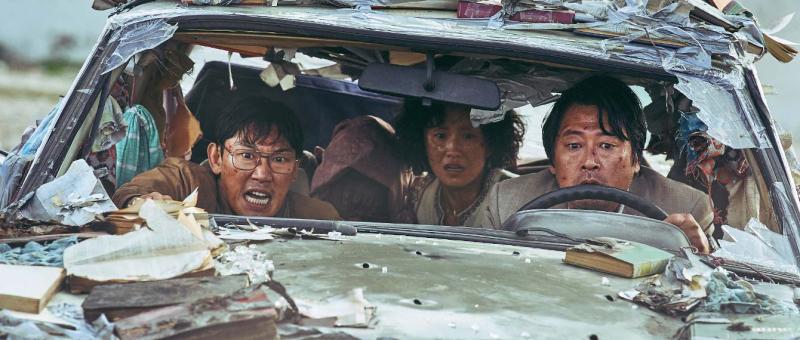
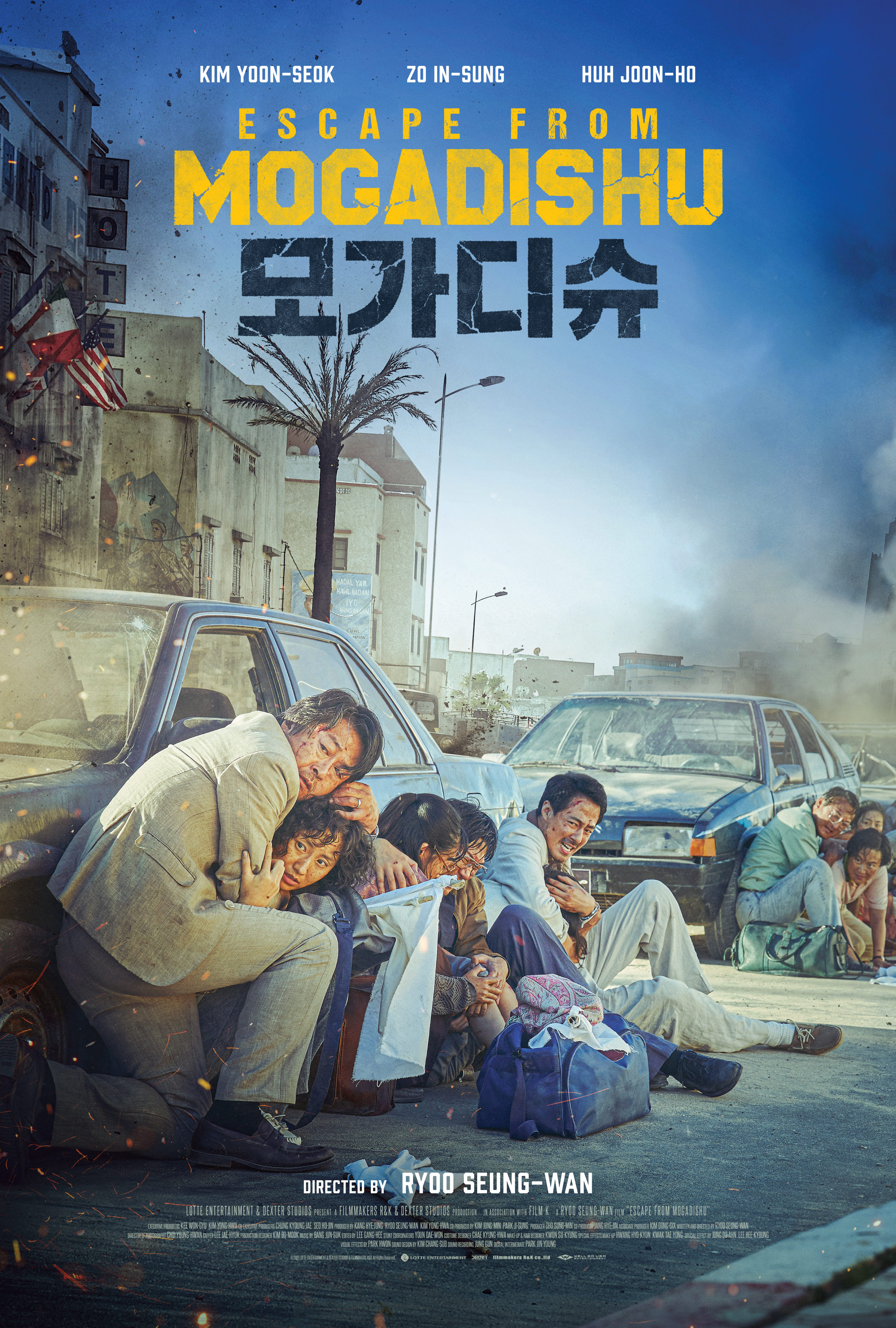
Escape from Mogadishu (모가디슈, Ryoo Seung-wan, 2021)

“You think we can accomplish more together?” the North Korean ambassador incredulously asks of the South, realising that if they’re to escape their desperate situation they will temporarily have to put ideology aside. Ryoo Seung-wan’s latest big budget action drama Escape from Mogadishu (모가디슈, Mogadishu) finds the diplomatic staff of a newly democratic South Korea ironically caught up in another nation’s much less peaceful revolution while perhaps confronted by the duplicities of their globalising ambitions even as they realise the North may already have the upper hand when it comes to cultivating relationships with authoritarian regimes. 

As the opening title cards explain, having successfully transitioned into democracy and fresh from its Olympic success the South Korea of 1991 was keen to claim its place on the global stage by joining the UN. Knowing that African votes are important in the process, the ambassador to Somalia, Han (Kim Yoon-seok), is determined to ensure he has that of President Barre in the bag before he finishes out his term. Unfortunately, his attempts are frustrated firstly by a lack of cultural knowledge in his home nation as witnessed by the inappropriate gifts they’ve prepared for the president which include expensive alcohol despite the fact Somalia is a muslim nation, and secondly by the North Koreans who seem to have cultivated a closer relationship with the ruling regime and are keen to ensure South Korea does not get its seat at the UN. 

Meanwhile, it becomes increasingly clear that there is unrest in the country with rebel forces intent on deposing the despotic regime of a military dictator and installing full democracy. The circumstances are in a sense ironic, the rebels and the ordinary citizens who later stage an uprising are only doing the same thing South Korea itself has recently done only they are of course doing it in a much less defensible way with widespread violence culminating in an entrenched civil war. The staff at the embassy therefore find themselves in a difficult position. “At home they turn innocent students into communist spies, think they can’t do that here?” a conflicted staff member advises uncertain as to what to do on realising they may unwittingly be harbouring a rebel soldier while diplomatically unable to declare a clear side. All they can think to do is play a tape from their welcome event describing themselves as friends of the Somalian people in the hope of deflecting rebels’ the anger. 

Nevertheless, the rebels have declared all foreign presences as their enemies for their tacit support of Barre’s regime. Han is certainly guilty of that in cosying up to the government in the hope of winning their vote, while the North Koreans fare little better despite being accused of secretly trafficking weapons to the rebel army while the rebels complain that foreign aid has only been used to facilitate Barre’s ongoing oppression. When the North Korean Embassy is destroyed and the Chinese have already left, the North Koreans are left with no choice other than the unthinkable, asking the South for help. The South, however, is conflicted. If they let them in they’re in danger of breaking the National Security Law and in any case they aren’t sure they can trust the North. “I hear they’re trained to kill with their bare hands” one of the ladies exclaims even doubting the children. But if they refuse to open the gate it means certain death for those who are, if not their fellow countrymen, then in a sense fellow Koreans. 

Based in historical fact, Ryoo’s high tension drama is in essence a division film which makes a strong case for the united Korean family even as the two sides remain somewhat distanced despite making the practical decision to trust each other in order to survive and escape. To do so they each have to make unpalatable political decisions, the South Koreans allowing others to believe the Northerners intend to defect in the hope of additional help from their own side and the wider diplomatic community. Given the opportunity to leave alone, Han nevertheless insists on making space for the North Koreans too unwilling to simply leave them behind. The North Koreans, meanwhile, reveal the reasons they could not defect even if they wanted to in that many of them have been forced to leave children behind in Pyongyang as hostages to ensure their continued obedience to the regime. Han may have gained a degree of enlightenment in realising there are sometimes “two truths” but there’s also an undeniable poignancy on realising that however much they’ve shared, the two men will never again be able to acknowledge each other in public, escaping Mogadishu but forever divided. Shooting in Morocco, Ryoo fully recreates the terror and desperation of being trapped in an unpredictable, rapidly devolving situation while allowing his divided Koreans to find a sense of commonality as they band together in order to escape someone else’s civil war.


Escape from Mogadishu opens this year’s New York Asian Film Festival on Aug. 6 and will thereafter screen at cinemas across the US courtesy of Well Go USA

International trailer (English subtitles)

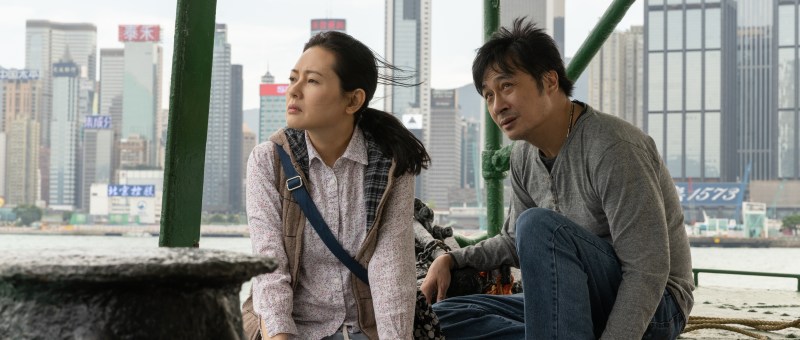
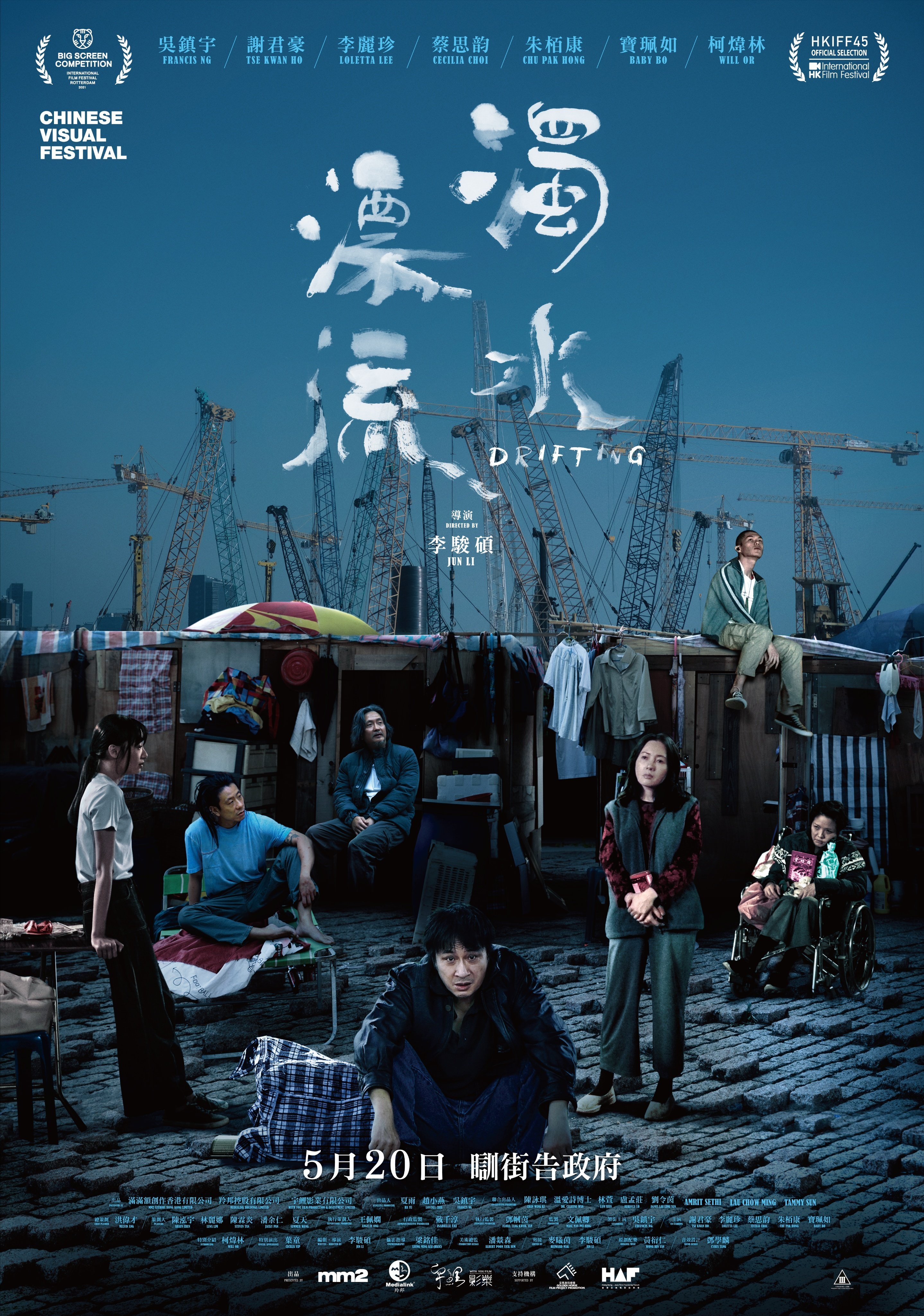
Drifting (濁水漂流, Jun Li, 2021)

“It’s just a bigger prison out there anyway” a prisoner tells his jailer surprised by his lack of enthusiasm for “freedom”. Following transgender drama Tracey, Jun Li continues his exploration of the marginalised citizens of contemporary Hong Kong with Drifting (濁水漂流), in this case the growing numbers of the unhoused who find themselves unfairly victimised by an increasingly authoritarian regime all while the city’s famous housing problem sprouts new blocks of luxury condos daily further displacing those without the means to live in them. 

Released from prison Fai (Francis Ng Chun-yu) has nowhere else to go but back to the streets where he is welcomed by a ritualistic shot of heroin gifted by street godfather Master (Tse Kwan-ho), a refugee from Vietnam occupying a liminal status neither able to leave or remain owing to a criminal conviction which prevents his asylum in this or any other country. Fai’s attempts to rebuild his life are however frustrated when the community he is a part of falls victim to “street cleaning” in which uniformed officers turn up without warning to move them on, taking what little possessions they have and disposing of them as rubbish. This proves too much of an indignity for Fai who, along with the others and the help of social worker Ms Ho (Cecilia Choi Sze-wan), launches a law suit against the city both for damages against their stolen property and for an apology for the way in which they have been treated. 

“I am homeless. I am not worthless” runs the chant the small band of protestors recites outside the offices of government, but it’s a feeling that many of them find hard to internalise. Shing (Chu Pak-hong), a long time drug user, is originally afraid of the lawsuit because of the shame of people finding out about his drug use, relenting only when reminded he can file anonymously and thereafter wearing a medical mask just to be sure he can’t be identified. Fai, by contrast, agrees to be the face of the campaign but is frustrated by the approach of the media who, he feels, are not truly interested in publicising his case only in his “sob story” which he refuses to give them. Time and again, the homeless community is exploited by well-meaning do-gooders including a large number of students who either patronise them with ironic tasks or romanticise the homeless “experience”. 

Social worker Ms Ho is the only one who genuinely tries to help but even she finds her interventions sometimes cause more harm than good. While a friend of Fai’s darkly comments that her wheelchair gives her an advantage applying for public housing, Fai struggles to see a future for himself on the streets lamenting that no one’s going to hire him anyway and explaining that his drug use is a self-destructive way of killing time in an attempt to escape the boredom and despair of his futile existence. During the court case, he voluntarily enters rehab to try and come off drugs but also finds himself suffering with a serious illness for which he is afraid to get treatment because “hospitals are not a place for the living”. 

Echoing Fai’s distaste for the fetishisation of poverty, Li offers only sparse details of what brought these men and women to the streets save that many of them have been imprisoned which gives them a healthy scepticism when it comes to dealing with the justice system. Offered a settlement, most of the community want to accept but Fai is minded to hold out. The money is not so important to him, he’s replaced the things he needs, what he wants is his dignity in being given a proper apology and an acknowledgement as a human being. “Where can poor people live?” he asks, peering from the scaffolding on a half-completed luxury condo building witnessing gentrification in action as it towers over a slum knowing that its presence only means more “street cleaning” while people like him are pushed further into the margins, continually displaced by an economic prosperity to which they are not invited. “No one can save anyone” Fai finds himself admitting, the solidarity of the homeless community eventually shattered by their conflicting goals even as they continue to care for each other as best they can. Anchored by a standout performance from Francis Ng Chun-yu as the weary, defeated Fai battling his own traumas in addition to those of the world around him, Drifting paints a bleak picture of an increasingly unequal society seemingly content to abandon its most vulnerable citizens to the vagaries of a marginal existence. 


Drifting screens at the BFI Southbank on 15th July as the opening night gala of this year’s Chinese Visual Festival.

Original trailer (English subtitles)
As We Like It (揭大歡喜, Chen Hung-i & Muni Wei, 2021)

“It’s the crazy madness we call love” according to a series of bemused bystanders in Chen Hung-i and Muni Wei’s modernist take on the Shakespeare play, As We Like It (揭大歡喜, Jiēdàhuānxǐ). As the reframing of the title implies, no longer pleasing “you” but “we”, Chen and Wei’s all-female adaptation is an attempt to reclaim the stage taking a swipe at the Elizabethan prohibition on actresses while undermining the notion of a gender binary as the various lovers pursue their romantic destiny in defiance of heteronormative ideas of sex and sexuality. 

Rather than palace intrigue, however, the force which sends Rosalind (Puff Kuo) into the forest is romantic failure coupled with filial and financial anxiety. Her father, the Duke, has been missing for seven years and will shortly be declared dead at which point his company will be divided between the father of her best friend, Celia (Camille Chalons), and a random young man named Orlando (Aggie Hsieh) she was previously unaware of. Hoping to locate him, she winds up at a street fight in which she becomes Orlando’s eyes and he falls in love with her at first sight. For unclear reasons and drawing inspiration from traditional Taiwanese opera, Rosalind then decides to pose as a man, taking the name of Roosevelt, and later teaming up with Orlando in the hope of finding the Duke. 

Despite its best intentions, the awkward irony at the centre of As We Like It is that it accidentally ends up re-inforcing the patriarchal ideology it otherwise seeks to critique in that Rosalind’s romantic adventure turns out to be a series of manipulations at the hands of her long absent father. A romantic exile, it is she who remains unsure of her feelings, unwilling to admit the possibility that she is finally in love with Orlando and hiding behind the mask of masculinity in order to test her would-be-lover’s sincerity. The strange scavenger hunt the pair are forced to follow in order to find their way to the Duke amounts to a forced courtship, each of the pitstops another level up in terms of romantic intimacy culminating in an oddly eroticised ear cleaning date. While Orlando vacillates over whether it’s OK to fall for a boy because he reminds you of a girl, Rosalind is tasked with rediscovering her faith in romantic love which she does but only after talking to her father first. 

Celia, by contrast, seizes her own agency by defiantly seducing sometime antagonist Oliver (Joelle Lu) and becoming pregnant by him even before marriage. In this instance, Oliver is still the villain attempting to steal the business, even going so far as to send his thugs to chase Orlando down, the implication being that Celia’s love softens and then corrects him so that he might reconcile with his brother. Yet the final showdown introduces a new villain in the figure of Charles (J.C. Lei), Oliver’s chief thug apparently harbouring an unrequited crush on his boss and therefore extremely resentful of Celia. Yet her taunting of him asserting that hers is the final victory because she has done what Charles never could in conceiving Oliver’s child seems to fly in the face of the film’s otherwise egalitarian views on love, negating not only same sex love but also love between those unable to produce children uncomfortably heading back into a gender binary which makes maternity the essence of womanhood. This message is perhaps undercut by the closing moments in which Oliver and Celia argue about whether to buy boy clothes or girl clothes for the baby only for the shop assistant to advise a neutral white and cede the “choice” to the child in time but nevertheless seems an odd means of defeating the spectre of the unexpected antagonist driven to a dark place by the “madness” of love. 

Love’s “madness” may be the central theme though the sense of a world turned upside down is undermined by Celia’s maintenance of her position as a princess rather than relegation to the role of a peasant even as it affords her unexpected agency over the surprisingly pliable Oliver. The world’s uncanniness is fulfilled by its unreachability, set in an “internet-free” district of near future Taipei enhanced with frequent onscreen graphics where people send each other “slo-express” letter-pressed telegrams in place of “text messages” delivered by the human touch, implying perhaps that our increasingly depersonalised society is actively frustrating the path to love even while the idea of the idyllic and utopian Forest of Arden seems to have been co-opted by venal developers. Nevertheless, journeys end in lovers meeting to quote another play and love’s madness is eventually cured in its fulfilment. 


As We Like It screens on July 8 and streams online in Switzerland until July 10 as part of this year’s Neuchâtel International Fantastic Film Festival (NIFFF). Readers in London will also have the opportunity to see As We Like It at Genesis Cinema on 16th July courtesy of Chinese Visual Festival & Queer East

Original trailer (English subtitles)
Hail, Driver! (Prebet Sapu, Muzzamer Rahman, 2021)

“Big city, small people, tough life” a jaded sex worker commiserates, slowly bonding with an illegal taxi driver trying to find a way to live in contemporary Kuala Lumpur. The ironically titled Hail, Driver! (Prebet Sapu) casts its cosmically unlucky hero adrift, literally roaming the city and coming in a sense to a new understanding of it thanks to his impromptu conversations with fares many of whom are only slightly more lucky than he is. Yet while his radio constantly updates him on the upcoming elections, he struggles to believe that real change is possible or that he will ever find a way out of his itinerant poverty. 

Aman (Amerul Affendi) was once a writer, but times have changed and no one buys magazines anymore. He’s been living with his sister in the city, but his brother-in-law makes no secret of his unhappiness with the situation, arguing with his wife about Aman’s inability to contribute economically to the household. Hoping to make some extra cash, he decides to make use of his sole inheritance from his late father, a rundown but reliable and recently serviced vehicle, to become a driver with ride hailing app Toompang. The only problem is that Aman has no official driver’s licence and is unable to get one because of his colour blindness, while the car is technically not of a sufficient standard to be used as a taxi. Paying a middle man for fake documents, he begins working but is quickly made homeless when his brother-in-law changes the locks while he’s out one day and announces he’s bringing his own brother to live with him instead forcing Aman to make the car his home, using public conveniences to wash and occasionally sleeping in 24-hr establishments such as laundromats. 

Aman’s plight is an encapsulation of the problems of the modern city, the radio explaining that house prices are a major point of interest in the upcoming elections. He searches for affordable accommodation but finds nothing suitable while quizzing his various fares about their living conditions, whether they rent or own their homes and how much they pay. One woman with a young son explains that of course she rents, there’s no way she could buy on her low salary while starting a business of her own is, she claims somewhat crassly, a no go because of the “flock of immigrants” in the city. Another of Aman’s fares reveals he came from Bangladesh some years ago, works in a hotel, and shares a reasonably priced apartment with his brother. Meanwhile Aman ferries sleazy politicians and their much younger mistresses to just such establishments. 

It’s his innate kindness, however, which eventually allows him to move forward after accidentally bonding with Chinese-Malaysian sex worker Bella (Lim Mei Fen) who came to the capital from Penang in search of a better future. She offers to let him use her spare room in return for his services getting to and from her clients, but even as they begin to develop a kind of mutual solidarity Bella confesses that she’s never felt a sense of belonging in the capital while her abandonment issues, her mother apparently living in the US after leaving her behind at five years old, have left her feeling spiritually homeless. “Not all dreams can be achieved” she advises Aman, each of them united in a sense of defeat as they reflect that nothing ever changes hearing the news that the party in power has again won the elections despite the ongoing problems in the city. 

Filmed in a crisp black and white, reflecting both Aman’s colour blindness and sense of hopelessness, Hail, Driver! paints an unflattering portrait of life on the margins of a burgeoning metropolis but eventually finds a degree of possibility in the unexpected, perhaps in its way transgressive, connection between the Malay taxi driver and Chinese sex worker who eventually find a sense of belonging, of home, in each other even as they bond over shattered dreams and urban disappointment. A striking debut feature Muzzamer Rahman’s empathetic drama captures the elusive city in all its unobtainable beauty, apartment blocks literally towering oppressively over the kindhearted Aman, but finally suggests that freedom may lie only outside of its repressive borders. 


Hail Driver! streamed as part of this year’s hybrid edition Udine Far East Film Festival.

Original trailer (English subtitles)
The Fable: A Contract Killer Who Doesn’t Kill (ザ・ファブル 殺さない殺し屋, Kan Eguchi, 2021)

Appearances can be deceptive. A case could be made that everyone is in a sense living undercover, pretending to be something they’re not in order to survive in a conformist society and most do indeed have their secrets even if they’re relatively benign. Others, meanwhile, are on a kind of sabbatical from a life of meticulous violence such as the hero of Kan Eguchi’s sequel to smash hit action comedy The Fable, The Fable: A Contract Killer Who Doesn’t Kill (ザ・ファブル 殺さない殺し屋, The Fable: Korosanai Koroshiya) or like his antagonist living a double life with his apparently genuine concern for the lives of disabled and disadvantaged children balanced by his business of targeting wayward youngsters for the purposes of extortion. 

Some months on from the previous action, “Sato” (Junichi Okada), formerly a top Tokyo assassin known as The Fable, is successfully maintaining his cover hiding out in Osaka as an “ordinary” person with a part-time job in a print and design shop. His cover is almost blown, however, when his colleague Etsuji (Masao Yoshii) is targeted by Utsubo (Shinichi Tsutsumi), ostensibly the leader of a local organisation advocating for the rights of children but also a shady gangster who finances his “philanthropy” by extorting the parents of young people who’ve in someway gone off the rails. Etsuji’s crime is, as was exposed in the previous film, his spy cam habit and in particular his planting of hidden cameras in the home of colleague Misaki (Mizuki Yamamoto) with whom he has an unhealthy obsession stemming from her time as an aspiring idol star. Blaming Misaki for his misfortune, Etsuji turns to violence but is shut down by Sato who risks blowing his cover in order to protect her. Realising he has a previous connection with Utsubo, Sato makes the gang an offer they can’t refuse in order to get Etsuji back but quickly finds himself drawn into another deadly battle with bad guys endangering his still in progress no kill mission. 

Focussed this time much more on action than the fish out of water comedy of Sato’s attempts learn the rules of polite society having been raised in the mountains as a super efficient killing machine, The Fable 2 nevertheless wastes no time in exposing the murkiness of the “normal” world Sato is intended to inhabit. Utsubo is a hit with the local mothers, taken with his smart suit and professionalism as he gives “inspirational” speeches about park safety while making time to converse in sign language with a deaf little girl explaining to another mother that it’s important to “listen to every voice”. As part of his patter he implies his assistant, Hinako (Yurina Hirate), who uses a wheelchair, was injured in a freak park-related accident as a child when in reality she sustained the injury while trapped in the back of a car which veered off a roof after The Fable took out its driver. Vaguely recognising her in the local park, Sato takes an interest out of guilt as the young woman attempts to rebuild her strength in the hope of walking again though that might in itself be contrary to Utsubo’s desires. 

As in the first film, Sato may be a ruthlessly efficient killing machine but at heart he’s still childishly innocent, hoping to help the young woman he unwittingly hurt but also keen not interfere with her ability to help herself. Misunderstanding the situation, Hinako asks Utsubo to lay off Sato, explaining that he gives her confidence as she begins to realise that she can stand alone, as the sometimes uncomfortably ablest metaphor would have it, and no longer needs to be complicit in Utsubo’s nefarious schemes nor need she continue to punish herself in guilt over her traumatic past. While Sato and his handler Yoko (Fumino Kimura) pose as a pair of siblings watched over by their benevolent if absent boss (Koichi Sato), Hinako and underling Suzuki (Masanobu Ando) similarly pose as brother and sister only with the comparatively dubious guidance of Utsubo who affects kindness and generosity while burying problematic youngsters alive in the forest in order to extort money from their “protective” parents. “It’s always the villain who tells the truth” Utsubo explains, insisting that it’s shame and humiliation which build self-esteem in direct contrast to the gently invisible support which seems to have re-activated Hinako’s desire for life.

Sato has at least discovered the benefits of a well functioning and supportive “family” network thanks to the, as we discover, equally handy Yoko, and his still largely oblivious workplace friends. Amping up the action value, Eguchi careers from set piece to set piece culminating in a high octane chase through an apartment block and its eventually unstable scaffolding while making space for slapstick comedy such as two guys trying to move a piano at a very inconvenient moment. A gently wholesome tale of a pure-hearted hitman kicking back against societal hypocrisy while figuring out how to be “normal” in a confusing society, The Fable 2 more than builds on the promise of its predecessor while allowing its hero the space to grow as he begins to adjust to his new and very “ordinary” life.


The Fable: A Contract Killer Who Doesn’t Kill screens on July 7 as part of this year’s Neuchâtel International Fantastic Film Festival (NIFFF)

Original trailer (English subtitles)
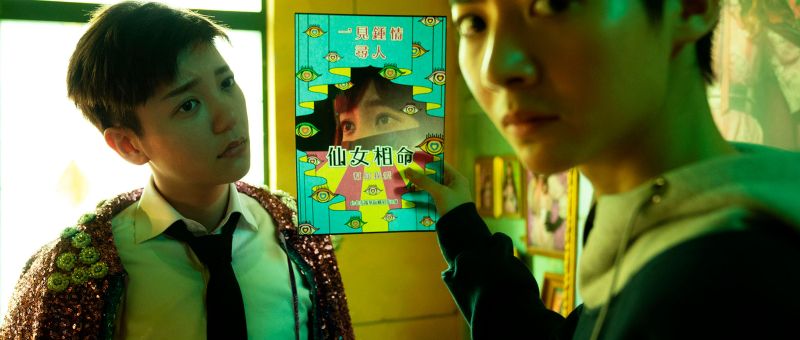
Son of the Macho Dancer (Anak ng macho dancer, Joel Lamangan, 2021)

“How many have you buried? Why?!” asks the hero of Joel Lamangan’s Son of the Macho Dancer (Anak ng macho dancer), a quasi sequel to the 1988 Lino Brocka classic. Set during the early days of the pandemic, Lamangan’s salty drama hints at the radiating effects of an authoritarian culture for those living on the margins of the contemporary society but does so with a dose of trashy telenovela camp in its eventually redemptive tale of frustrated futures, sexual exploitation, drugs and murder in a time of increasing sickness. 

19-year-old Inno (Sean De Guzman) is in a casual relationship with a woman whose tendency to refer to herself as his girlfriend clearly irritates him, especially as their sex life seems to be frustrated by her fear of his apparently giant penis. When his father Pol (Allan Paule) who has become addicted to drugs after a car accident is arrested by the police and he needs money to bail him out, Inno’s mother (Rosanna Roces) seizes on his oversize appendage as a means of saving the family by dragging him straight to a local gay club to become a go-go dancer. While reluctant at first, Inno soon takes to his new life and decides to milk it for all its worth, latching on to VIP procurer Bambi (Jaclyn Jose) and her sidekick Roldan (Emilio Garcia) in the hope of being invited to one of their elite parties all of which later drags him into the orbit of sadistic gay drug dealer Jun (Jay Manalo). 

All the while, we see Duterte on TV giving updates in the corona virus crisis and the various measures to mitigate it which threaten the survival of gay bar Mankind as well as the illicit business enterprises operated by Jun, Bambi, and Roldan. A police officer reconfirms his warning to drug dealers that they shouldn’t expect an easy ride during the pandemic because they will “destroy all of you”. The police force is shown to be resolutely corrupt, firstly in its refusal to investigate the causes of the car crash which caused Pol’s descent into addiction because, he believes, the driver was a judge and the cops have been paid off, and lastly in its complicity with criminal activity as evidenced in their cooperation with Roldan to cover up his crimes. 

Obsessed with social media clout, Inno constantly documents and uploads his existence online marvelling at his new circumstances as a kept man of Jun only latterly reflecting on the ironies of his life in discovering that his father was once also a “macho dancer” while his mother was forced to turn to sex work to feed the family after Pol’s accident. Seduced by the lifestyle of the rich and powerful that Jun can give him he doesn’t stop to consider its wider implications even when warned by predecessor Kyle (Ricky Gumera) of the dangerously oppressive regime within the house. It’s not until he finds himself burying the body of a friend murdered by Jun after unwittingly failing to play along with his voyeuristic sexual fantasies that he begins to ask why, not only why he’s living this life but why Bambi has been living it all this time enabling Jun’s predatory violence in burying the bodies of unlucky young men who fell foul of his sadistic desires. 

For Kyle at least the answer may be a lifetime of violent abuse which which has left him too traumatised to believe escape is possible. Inno vacillates between resentment towards his father for his irresponsible drug use and mistreatment of his long-suffering mother, and the filial desire to protect him which led him to become a macho dancer in the first place. Bambi and Pol, meanwhile, the heroes of Brocka’s film have been consistently brutalised by an oppressive society apparently only awakened to the possibility of changing course by Inno’s corrective questioning. 

In any case, there’s a minor irony even in the wilful subversion of positioning the young hero as a sex object valued only for the size of his penis while the frequent full frontal male nudity often feels gratuitous and the final swing towards heteronormativity can’t help but align homosexuality with the psychopathic cruelty of Jun as something dark and perverse even while ending on a joyous if tempered moment of resilience in returning to Mankind with the house full of masked clubbers continuing to shove their notes into the dancers’ briefs. Though the final resolution may in a sense be too neat, a family restoring or remaking itself in the wake of trauma, Lamangan allows the sense of unease to continue in the callback to societal corruption as the ongoing pandemic seems to stand in for other kinds of increasing sickness. 


Son of the Macho Dancer streams worldwide until 2nd July as part of this year’s hybrid edition Udine Far East Film Festival.

Original trailer (English subtitles)

Sugar Street Studio (糖街製片廠, Sunny Lau, 2021)

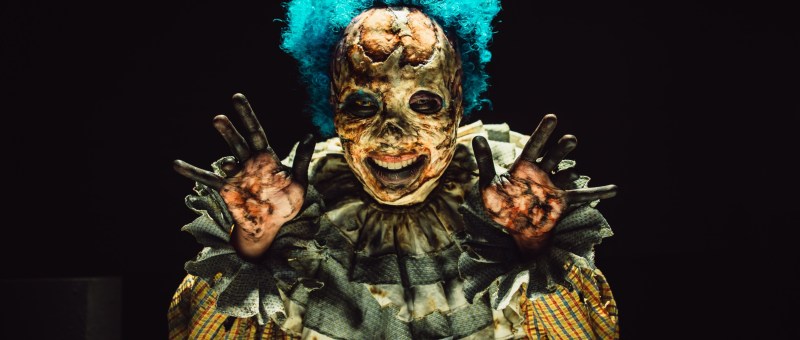
“People have always been scarier than ghosts” according to the hero of Sunny Lau’s retro horror comedy, Sugar Street Studio (糖街製片廠). He is not in a sense wrong, the gang of down on their luck filmmakers unexpectedly uncovering a minor historical injustice while operating an “authentic” haunted house, and while the ghosts may be scary they are merely attempting to connect and right an old wrong. Filled with cynical humour, Lau’s witty screenplay is often disparaging of the contemporary Hong Kong film industry and an increasingly cutthroat society but finds unexpected pathos in the romantic tragedy at its centre. 

As the film opens, fast talking producer Pierre (Matt Chow Hoi-Kwong) has been hauled in front of mob boss Choi (Eric Kot Man-fai) who wants to know what the holdup is on their mutual film project. Boss Choi meanwhile has another problem in that the hotpot restaurant he’s just bought isn’t doing so well owing to the place being haunted. Ever enterprising Pierre comes up with a new idea: opening an “authentic” haunted house on the same site featuring real ghosts while shooting a movie in the same location. Getting the green light, Pierre enlists prosthetics guy Gary (Yatho Wong) to design the interiors for a horror show inspired by the real life studio fire of 30-years previously supposedly started by a clown in resentment after being turned down by the leading lady. 

Hoping to get more information, the guys talk to surviving actor Uncle Cheong (Chan Kwok-pong) who spins them a tale of his own heroism, claiming that he tried to intervene when the clown attacked his girlfriend and co-star but had to step out only to return after getting a pager message about the fire and attempt to save what lives he could. Perhaps unexpectedly, Cheong is all for their haunted house endeavour even making an appearance on opening night, but the gang can’t help but feel there must be more to this strange tale of arson and revenge. 

Mildmannered in the extreme, Gary finds himself conflicted in running Pierre’s unusual enterprise, wondering if it’s corrupting him or then again “Maybe to survive in Hong Kong, being mean is a basic necessity”. “Conning people diligently in Hong Kong is the path to success”, according to his friend even as they ironically prepare to open their “authentic” haunted house where encounters with “real” ghosts quickly find an audience who believe screaming in supernatural terror has therapeutic effects that can ease the depression and anxiety they feel as young people in contemporary Hong Kong. 

Pierre sells the haunted house idea partly on the strength that no one makes horror movies anymore because, famously, you can’t sell them on the Mainland and so co-productions aren’t interested. He describes Gary as the “tumour that’s killing the Hong Kong film industry” while constantly talking a big game, like a stereotypical producer willing to say everything and everything in order to get ahead, even hobnobbing with triads. “Hong Kong Cinema is all about discipline” he ironically claims despite being massively behind on all his projects, giving Gary a dressing down for being a few days late with his designs. 

“Some things don’t need to be completely understood” a zany medium claims, somewhat duplicitously, but it’s not until their own encounter with the ghost that the gang start to pick up on the dark legacy of the studio fire making use, possibly, of an unfair prejudice against clowns to sell the idea of a madman killer driven insane by lust and resentment towards a woman who had rejected him. What they discover is a sad tale of frustrated love, wounded male ego, and bitter regret that has perhaps manifested itself as a deeply held grudge as the guilty party holds on to their guilt and shame despite themselves. “It’s never too late to turn back” the villain is cautioned by a now elderly shaman, but in some ways it is, especially if you’ve already donned the clown suit of vicarious violence, “all debts must be paid”.  

Making the most of its whimsical premise, the increasingly surreal tale doesn’t skimp on the horror imagery with its scarred ghosts and scary clowns but also harks back to the horror comedies of old with its sutras and seals as the gang attempt to solve the mystery and right a historical injustice. Filled with amusing meta references to the contemporary Hong Kong film industry, ironic satire, and absurdist gags Lau’s charmingly off the wall comedy has only sympathy for its lovelorn ghosts of a bygone era and the hapless film crew attempting to navigate the vagaries of an often absurd industry.


Sugar Street Studio streams worldwide until 2nd July as part of this year’s hybrid edition Udine Far East Film Festival.

Original trailer (English subtitles)

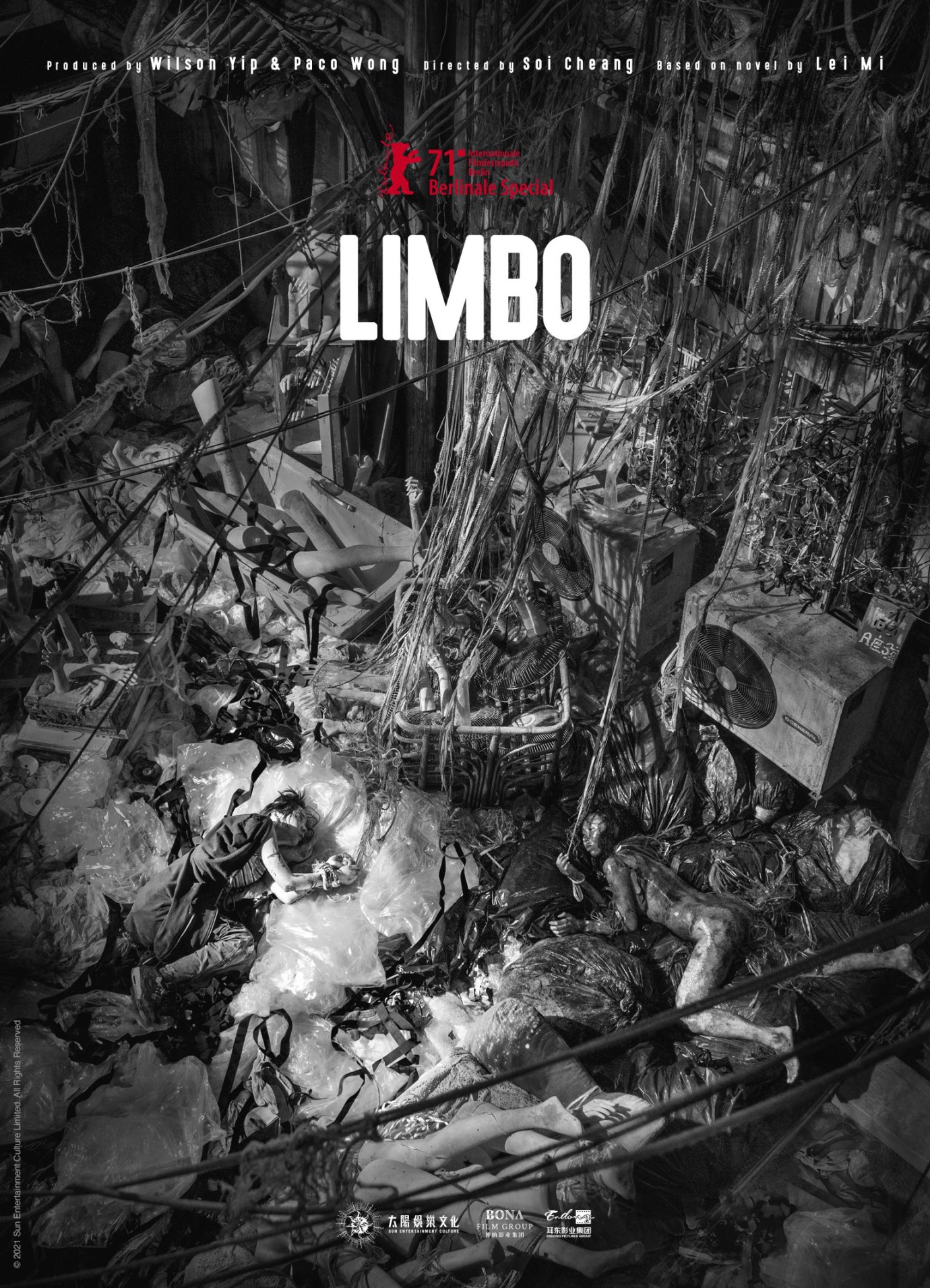
Limbo (智齒, Soi Cheang, 2021)

“I forgive you. Please live well”, a final message from the dying to one attempting to survive the junkyard hellscape of contemporary Hong Kong. Soi Cheang’s stylish thriller Limbo (智齒), shot in a high contrast monochrome lending the city state the rain-soaked aesthetic of cyberpunk noir, is in many senses a purgatorial odyssey as its pregnant title implies sending its duo of morally compromised cops into a world of the dispossessed inhabited by those “thrown away” by their society and thereafter left to rot among the detritus of an uncaring city. 

Hong Kong’s homeless may occupy a liminal space, trapped in an inescapable limbo, but it’s grizzled cop Cham (Gordon Lam Ka-tung) who is the most arrested, unable to move on from the accident which left his pregnant wife suspended in a coma. To escape his own sense of purgatorial inertia, he seeks closure in chasing down petty criminal Wong To (Cya Liu) whom he holds responsible for his fate on discovering she has been granted early parole for good behaviour. As fate would have it, Wong To’s release back into the underworld (after all, where else was she to go?) has unexpected connection to the case Cham is currently investigating in the mysterious appearance of random severed hands each belonging to “social outcasts”, as Cham’s slick rookie partner puts it, they fear may hint at the existence of a serial killer growing in confidence. 

Adapted from a novel by Lei Mi, the film’s Chinese title is simply “Wisdom Tooth”, a tongue in cheek reference to the ongoing toothache which places cop two Will Ren (Mason Lee) in his own kind of purgatorial pain, the offending molar eventually knocked out during his climactic fight with the killer during which he will in a sense transgress, passing from innocence to experience in gaining the wisdom that police work’s not as black and white as he may have believed it to be. “Cops are human too” his boss reminds him as he takes the controversial step of reporting his new partner for inappropriate use of force while pursuing a personal vendetta not exactly connected with his current case. He doesn’t disagree, but points out that police officers have guns and are supposed to uphold the law, not abuse their authority and take it into their own hands. 

But then, who is really responsible for the junkyards of the modern city and their ever increasing denizens abandoned by a society which chooses to discard them along with all their other “rubbish”, little different from the dismembered mannequins which people the killer’s eerie lair. Soi frequently cuts back to scenes of the dispossessed often looking stunned or vacant as they sit on mattresses or abandoned sofas surrounded by the pregnant disrepair of a city in the midst of remaking itself as if they were sitting on skin in the process of being shed by a slow moving snake. It would be tempting to assume the killer has a vendetta against “social outcasts”, his victims sex workers, drug users, and criminals though in truth these people are simply the most vulnerable even if there is no clear motive provided for the crimes save a minor maternal fixation and possible religious mania. A drug dealer ensnared by Cham’s net remains loyal to the killer, “We’re not as crazy as you. We are rubbish, so what? In this world, he’s the only one who cares.” she tells him, unwilling to give up her one source of connection even while aware of her constant proximity to death and violence. 

Cast into this world, Wong To too is trapped in an individual purgatory longing for forgiveness for her role in the death of Cham’s wife, a forgiveness he cruelly denies her even while making use of her desperation to force her to risk her life for him in betraying her underworld contacts to edge towards the killer. “Why are you treating me like this?” she asks, “I don’t want to die”, well aware that denied his direct vengeance by Will Cham is attempting to kill her by proxy. Wong To keeps running, keeps fighting, refuses to give up while seeking atonement and an escape from this broken world of violence and decay. It is she who eventually holds the key to an escape from purgatory, the cycle is ended only in forgiveness. Soi’s stylish drama may paint the modern society as a venal hellscape neglected by corrupt authority, but nevertheless permits a final ray of light in the possibility of liberation through personal redemption. 


Limbo streams in Europe until 2nd July as part of this year’s hybrid edition Udine Far East Film Festival.

Original trailer (English subtitles)

Blue (BLUE/ブルー, Keisuke Yoshida, 2021)

“Let me walk on my own feet” a defeated boxer insists, reminding us that his victory is in getting up even if he always loses. The heroes of Keisuke Yoshida’s Blue (BLUE/ブルー) are by and large “losers”, though the act of winning lies not so much in knocking out your opponent as in continuing to show up for the fight. Blue is not only a state of mind, but also the colour of the challenger’s corner, the spiritual home of these dejected underdogs who refuse to lie down even when seemingly defeated. 

Urita (Kenichi Matsuyama), for example, stays in boxing because there’s nothing else he wants to do though in truth he’s not much good at the sport. What he is good at is encouraging others and even if he’s a bust in the ring he’s an excellent coach and warmhearted mentor. His friend, Ogawa (Masahiro Higashide), meanwhile, is on track to take the national title but is also in denial about a medical condition that could end his career in the ring. And then there’s Narasaki (Tokio Emoto) who only took up boxing because of an offhand comment from a girl he fancied at the pachinko parlour where he works after he got beaten up by a teenager while feeling his masculinity challenged by a handsome coworker. 

Narasaki rocks up at the gym and refuses to do anything very strenuous because he only wants to look like someone who boxes, not actually box. Nevertheless, he discovers a genuine aptitude for the sport, gradually overcoming his fear of getting of hurt as he begins to enjoy the discipline of training. His journey directly contrasts with that of one of the other young hopefuls at the club who originally knocks him out during their first sparring match but later falls victim to his own egotism, insisting that he doesn’t need to take advice from a “loser” like Urita and has his own way of doing things. In his characteristic way, Urita just smiles and reminds him it’s important to master the basics but the hotheaded youngster won’t listen, blaming his lack of success on everyone else before getting himself seriously injured trying to prove his own way is superior. 

It’s the basic moves which later prove valuable to Narasaki as he attempts to take on a powerful rival, a reminder that there’s no substitute for nailing the fundamentals. Talking over their respective differences, Ogawa wonders if he really loves boxing as much as Urita does but has then to accept that “passion and talent are different” which is why he’s succeeding where Urita failed. In any case, it’s less about winning in the ring than it is about hard work and mastery of a craft. Smarting from his own early defeat, Narasaki also snaps back that he doesn’t want a loser’s advice only to bitterly regret it afterwards, realising that Urita’s strengths lie at the side of the ring rather than inside it. 

While Ogawa battles his illness, Narasaki also finds himself conflicted caring for his elderly grandmother and feeling guilty that his newfound love for boxing has led him to neglect her. Urita battles a sense of resentment and despair he covers with good humour in being fully aware that he doesn’t have what takes while attempting to encourage others only latterly confessing that a part of him always hoped Ogawa would lose. The demands of a sporting life may have endangered familial and romantic relationships but the guys do at least have each other and the familial camaraderie of the gym.

The important thing, the film seems to say, is to keep fighting, win or lose. Experiencing various setbacks, the guys each find themselves inhabiting their own internal rings, unable to let go of boxing glory no matter how elusive it may prove to be. Yoshida plays with genre norms such as training montages and ring-set climaxes, but also undercuts them in his frequent allusions to defeat allowing the heroes to lose and sometimes repeatedly solely so that they can get right back up again, on their own feet, ready to fight for something be that mastering the art of boxing or simply gaining a new sense of personal empowerment born of determination and self belief as they recommit to learning the “basics” of a fulfilling life. 


Blue streams in Europe (excl. Spain/Andorra) until 2nd July as part of this year’s hybrid edition Udine Far East Film Festival.

Original trailer (English subtitles)