yes, yes, yes (Akihiko Yano, 2021)

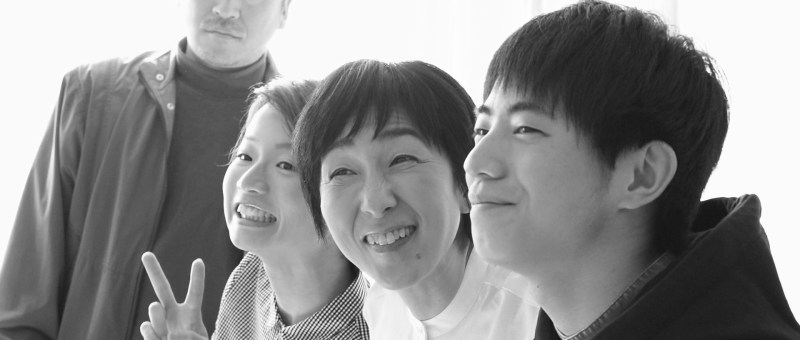
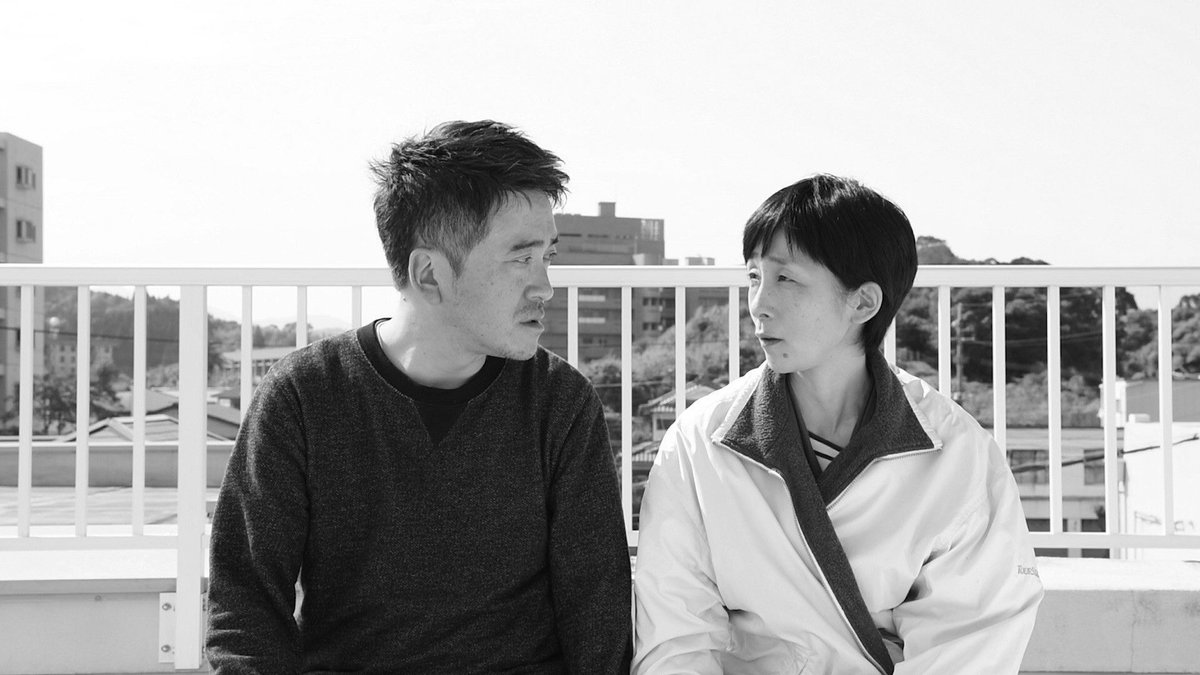
“If everything goes, then why are we even alive?” the young hero of Akihiko Yano’s yes, yes, yes asks himself as his family finds itself struggling under the weight of intense grief. Yet it’s in family that he finally finds his solace and the will to continue living even if life is meaningless or hard or sad. Hard and sad is an accurate description of their life at the present time as each of the family members tries to process the imminent loss of their mother who has recently entered a hospital she seems to fear she may not leave.

To begin with, the family are trying to remain cheerful as they move mother Sayuri (Nahoko Kawasumi) into her new hospital room, but youngest son Takeaki (Kazuma Uesugi) finds he cannot stomach the false jollity especially after his mother attempts to say a prayer for him. Walking off in a huff, he returns home only to take out his frustrations on a patch of flowers before dramatically taking a pair of scissors to his hair which he then dyes blond much to his father’s consternation. Meanwhile, oldest daughter Juri (Minami Inoue), ironically a hairdresser and pregnant with her first child which she plans to raise alone, does the family shopping, her father Masaaki trying to keep it together waiting in the car. 

There are perhaps already cracks in the family structure, patriarch Masaaki (Kazunari Uryu) seemingly a violent authoritarian who physically attacks his son after spotting his improvised new hairstyle, sending him running up the stairs to barricade himself in his room by jamming the door with his bed in a manoeuvre which seems somewhat practiced. Masaaki also doesn’t like it that his daughter plans to have a child out of wedlock, angrily reexplaining that he won’t stand for it though this is clearly not the the time. Juri reiterates that she’s made her decision, but takes offence at his apparent reasoning that he somehow blames her and the baby for his wife’s death as if only so many places are available in their family and they’re awarded on a first in first out basis. For him it’s as if the baby is here to replace Sayuri, kicking her out in a peculiar slice of cosmic irony. 

Yet as she tells Takeaki who asks her a similar question, he should be happy that their family is expanding. She resents the way the men seem to have monopolised their grief, feeling that it’s hardest of all for their mother and for her part she’s made up her mind not to cry. Sayuri meanwhile is struggling to accept her terminal diagnosis on her own, brought to a sudden realisation during an emotional phone call with Takeaki in which she tries to reassure him that she won’t die while he insists that if it’s come to this immense grief he’d rather that they’d never met at all. He can’t bear that his mother’s existence will be reduced to mere objects, the old voicemails and photos, the gifts and heirlooms. If all that’s left of us is stuff, he asks, what was the point of any of it?

Nevertheless, it’s in transitory human warmth that he eventually finds his reason. Chastened by his wife who tearfully apologises for having married him and subjected him to this grief, Masaaki begins to reassume his role as the father, taking responsibility for his family in finally deciding to welcome Juri’s child as one of his own while embracing his wounded son even as the ghost of the still living Sayuri inhabits their living room looking on at their fierce battle of grief. Shooting in a crisp black and white, somehow detached from the intense emotions at the film’s centre, Yano contrasts the family’s disparate sense of existential loneliness with brief pillow shots of cherry blossom in bloom, the rolling seas on the beach where the family took their last happy photo, and blinking fireworks as if to signal the brevity but also the force, joy, and colour of an ordinary existence. As Sayuri comes to accept death, her son comes to accept life, determined to live to the full so that he can be grateful he was born. A moving tale of learning to live with grief, yes, yes, yes, eventually makes makes the case for life even if it’s hard or sad but also for the saving power of human warmth however transitory it may be.


yes, yes, yes screened as part of the 2021 Osaka Asian Film Festival.

Original trailer (English subtitles)
I Still Remember (二次人生, Lik Ho, 2021)

“I didn’t want to be left alone” admits the hero of Lik Ho’s sporting drama I Still Remember (二次人生) as he watches others his age pull relentlessly ahead of him while he languishes behind drained of all energy and sense of forward motion. Yet reuniting with an equally disillusioned father figure and a young woman battling a different sort of malaise, he eventually comes to realise that he’s never really been “alone” at all but has perhaps suffered a kind of self abandonment, standing on the sidelines cheering for everyone else but failing to cheer for himself or realise that others are in fact attempting to cheer for him only he couldn’t hear them. 

Now around 30, Lee Chi-hang (Tony Wu Tsz-Tung) has an unsatisfying job in real estate working for his childhood best friend (Johnny Hui) which is just as well because he’s regarded by many as the office dead weight and most of his colleagues are running bets on when he’ll eventually be fired. Raised by a single mother (Michelle Lo Mik-Suet), his father having passed away before he was born, Chi-hang was brought up to believe an “ordinary life” was good enough but also feels guilty that he hasn’t made good on his mother’s hopes for him and despite having attended university has no real sense of ambition in life. “How can you be so useless?” his exasperated girlfriend (Sofiee Ng Hoi Yan) eventually asks him, abruptly exiting his life as she leaves to pursue her own personal growth and fulfilment tired of waiting for Chi-hang to step up. 

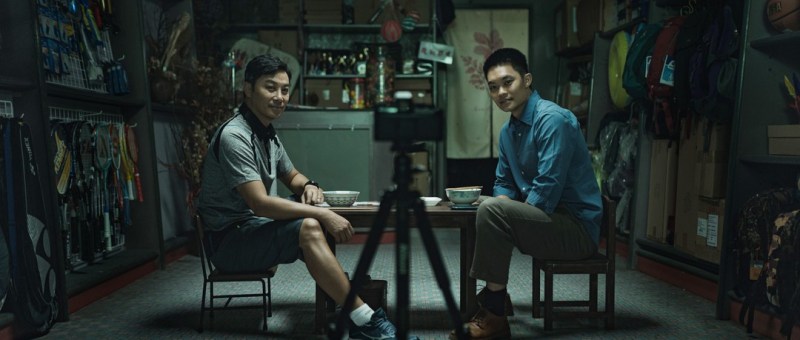
Attending a reunion for his primary school class brings him back into contact with Mr. Wong (Patrick Tam Yiu-Man), his former PE teacher who had also been something of a surrogate father as he and his wife often looked after him while his mother worked. Mr. Wong it seems has troubles of his own in that his wife Wai-Ying (Isabel Chan Yat-Ning) is suffering with a longterm illness which is why he’s given up teaching and opened a sporting goods store which is itself floundering. Bamboozled into taking part in Mr. Wong’s camping trip, Chi-hang finds himself enlisted to help mentor a young woman, Tin-sum (Toby Choi Yu-Tung), who wants to lose weight and triumph in a 5k race in the hope of winning a trip to Japan to meet her idol, a handsome Japanese pop star (Alston Li Ka-Ho). 

Unlike Chi-hang, Tin-sum is not “alone” in that she appears to have a pair of extremely loving and supportive parents who let her know that whatever happens in the race they’re proud of her all the same. Yet she also finds herself on the receiving end of social prejudice, rejected by the mean girls in her idol fan club who arbitrarily introduce a weight limit for race entrants in order to “preserve the image of Hong Kong” while the competition also provokes a falling out with her best friend (Jocelyn Choi Zung Sze) who ends up siding with the bullies. Chi-hang meanwhile admits that he doesn’t really take his mentoring duties very seriously, too busy “running away” from his own problems to be much use in tackling anyone else’s.  

Yet through picking up the pace, each of the beleaguered runners begins to find direction in the finish line. Rediscovering the sense of joy and possibility he had as a small boy in primary school, Chi-hang realises that he’s never been as alone as he thought he was, all of the people in his life have been running at his side all along rooting for his success. While Tin-sum gains a new sense of self-confidence in finishing out her 5k without being pressured to lose weight or give up her appetite for life, Mr. Wong finds a sense of relief in being able to pass on the baton to a surrogate son in the now more self-assured Chi-hang finally figuring himself out and taking control over his future. Atmospheric shots of the nighttime city filled with a sense of melancholy alienation give way to poignant flashbacks of cherry blossom in bloom outside the primary school where Mr & Mrs Wong first met and bonded with little Chi-hang, while he realises that he does indeed “still remember” the sense of security, positivity, and energy he had as a child as he steps up the pace building the “ordinary life” his mother had envisaged for him. 


I Still Remember streams in the UK 31st March to 6th April as part of Focus Hong Kong. Readers in Chicago will also have the opportunity to catch it at Lincoln Yards Drive-In on April 17 as part of Asian Pop-Up Cinema’s Season 12.

Clip (English subtitles)

The Asian Angel (アジアの天使, Yuya Ishii, 2021)

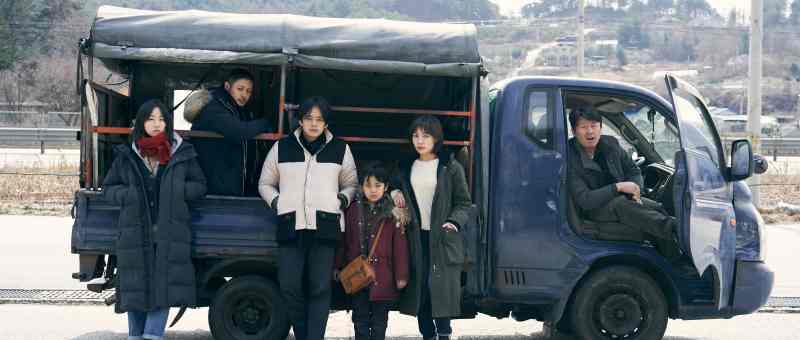
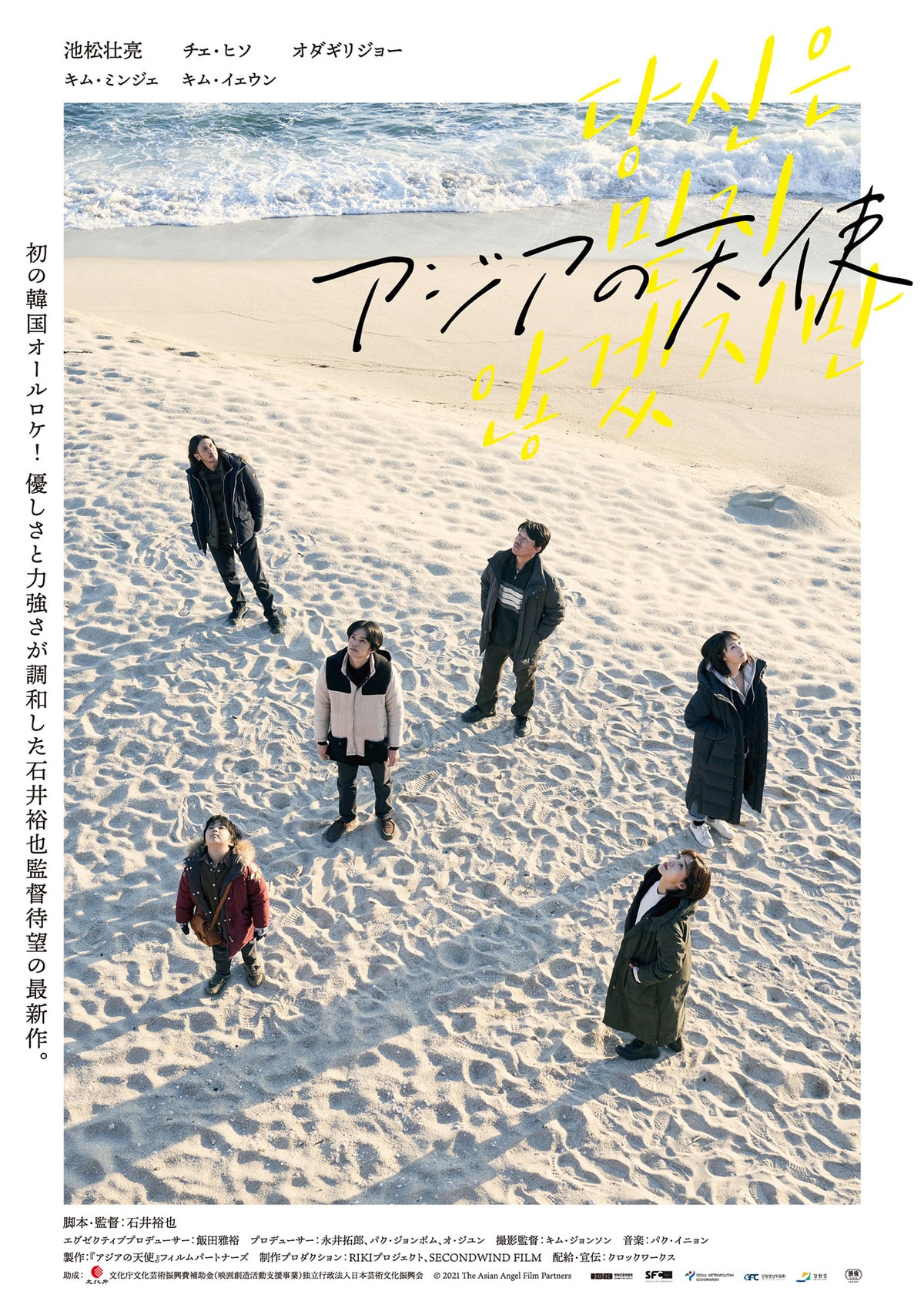
A collection of lonely souls is brought together by angelic intervention in Yuya Ishii’s grief-stricken appeal for “mutual understanding”, The Asian Angel (アジアの天使, Asia no Tenshi). Brokering the sometimes difficult subject of Japan-Korea relations, Ishii makes a plaintive case for a pan-Asian family while his wounded protagonists each search for meaning and possibility in the wake of heartbreak and disappointment. Yet what they discover is less the urge to move forward than the gentle power of solidarity, bonding in shared sense of displacement and forging a new home from an apparently fated connection. 

Displacement is a feeling which immediately hits struggling author Tsuyoshi (Sosuke Ikematsu) as he struggles to make himself understood to a grumpy Seoul taxi driver after taking his brother up on an offer to relocate to Korea with his young son following the death of his wife some time previously. Toru (Joe Odagiri), however, has not quite been honest about his life in the Korean capital, housed above a church where they always seem to be rehearsing the hymn Angels We Have Heard on High. Wandering into the apartment, Tsuyoshi is physically thrown out by Toru’s grumpy business partner (Park Jung-bum) obviously unaware they were coming as even Toru himself seems to have forgotten inviting them. In any case, the trio eventually find themselves on the street after Toru’s Korean friend with whom he’d started an illicit business smuggling cosmetics betrays them. 

Meanwhile, across town melancholy songstress Sol (Choi Moon) has been supporting her brother and sister with her music career which seems to be on the slide with a faintly humiliating gig in a shopping mall which briefly brings her into contact with Tsuyoshi, apparently captivated by her sadness. Abruptly informed her contract has been terminated, she tries to take the matter up with her manager/lover but gradually realises she’s merely one of several ladies on his books. Feeling lost, she agrees to follow up on a suggestion from her brother Jun-woo (Kim Min-jae) to pay a visit to the grave of their parents who passed away while she was only a child. 

Running into each other on the train after Toru talks Tsuyoshi into a possible seaweed venture in Gangwon, the two trios end up travelling together if originally struggling to find the “mutual understanding” that Tsuyoshi had been looking for. The first message Tsuyoshi sees on his phone on after arriving informs him that Korean-Japanese relations are at an all time low, though perhaps one would think national tension might not descend to the interpersonal level even if he appears to feel slightly awkward as a Japanese man in Korea aside from his inability to speak the language, but after a few too many drinks at a Chinese restaurant Jun-woo starts in on how 69.4% percent of Koreans apparently disapprove of Japan while 61% of Japanese apparently disapprove of Korea which is one reason he wouldn’t be keen on his sisters dating a Japanese guy. Describing himself as a “progressive”, he claims it’s the relatives who wouldn’t accept it but ends the conversation by cheerfully looking forward to when they can finally “part from these Japanese forever”. 

Yet, they do not part despite several opportunities and in fact end up travelling together for a significant distance during which they begin to bond, discovering that they have much in common including the loss of loved ones to cancer and the improbable sighting of angels who appear not like those on the Christmas cards but a weird old Asian man with a tendency to bite. Several times they are told they shouldn’t be together, Toru lamenting that love between Japanese and Koreans is as impossible as that between angels and humans while a police officer later bemusedly remarks that they don’t look like a family but family is in a sense what they become as they each sort out their respective traumas and resentments to reach a healthy equilibrium. Perhaps you couldn’t quite call it love, but almost and it might be someday if only you let it. “Seeing the world through your eyes I might come to like it a little more” Tsuyoshi admits, while Sol too begins to awaken to a new sense of freedom and possibility brokered by an angelic intervention. Marrying the melancholy poetry of The Tokyo Night Sky is Always the Densest Shade of Blue with the gently surreal sense of humour of his earlier work, Ishii’s deeply moving drama makes a quiet plea for a little more “mutual understanding” between peoples but also for the simple power of human connection as evidence of the divine. 


The Asian Angel screened as part of the 2021 Osaka Asian Film Festival.

Images: (c) 2021 The Asian Angel Film Partners

A Summer Trip (川流不“熄”, Feng Keyu, 2021)

Societal change and rising economic prosperity threaten the foundations of the family in Feng Keyu’s charmingly nostalgic intergenerational adventure A Summer Trip (川流不“熄”, Chuān Liú Bù “Xī”) elegantly lensed by Mark Lee Ping-Bing and boasting a typically whimsical score from Joe Hisaishi. In the run-up to the Beijing Olympics, the nation is in a celebratory mood but in a society where everybody works all the time something may be in danger of getting lost. Young Xiaosong (Hu Changlin) is going off the rails (in a fairly minor way) with both the school and grandpa, often left with childcare duties he feels might not quite be his responsibility, leaning towards blaming the parents who are simply not present enough in his life to be able to offer much in the way of guidance. 

A Korean War veteran, grandpa Zhang Dachuan (Yang Xinming) is beginning to feel as obsolete as the discontinued parts he needs to repair his ancient jeep. He can’t get his head round mobile phones, forever pressing hang up when he means to press answer and causing accidental offence in the process. Resenting the implication that he’s not got much to do all day, he finds himself enlisted by his overworked son to represent the family when his wayward grandson Xiaosong gets into trouble at school. This particular time, it’s apparently because he’s been bothering a female student by taking photos of her with a professional DSLR camera (the teacher later gives Dachuan an envelope to pass to his son and daughter-in-law which turns out to contain a love letter Xiaosong attempted to pass to the object of his affection). Slightly annoyed to be seeing Dachuan again instead of the boy’s parents, the teacher makes herself clear that the cause of Xiaosong’s poor behaviour and declining grades is most likely a lack of parental attention. Chastened, the parents discuss finding a cram school but nothing is really done about his problematic approach to romance, especially as they each need to return to work soon after dinner leaving grandpa sitting alone at the table. 

Perhaps strangely, Xiaosong seems to have forgotten that his grandpa even has a name, hanging up on a caller thinking they’ve got the wrong number only to realise they wanted grandpa and redial upon which Dachuan discovers that his greatest wartime friend has passed away in Beijing and the funeral is in a few days’ time. Though Xiaosong had technically been “grounded” for the summer, the idea was that grandpa was supposed to supervise him while he stayed home and studied. So begins their awkward road trip, passing first through the home of Dachuan’s daughter Ling (Dai Lele) in a town closer to the capital and a lengthy train ride away before pressing on to the city. 

As his opening voiceover explains, Xiaosong never really understood his grandfather thinking of him as a grumpy, stubborn old man stuck in the past. Yet as grandpa later sadly laments reflecting on his friend’s final days, people talk about the past a lot when they’re unhappy in the present. Everyone is always keen to pay respect to Dachuan and his wartime generation, though not all of them have good intentions such as the overfriendly young man they meet on the train who enthusiastically listens to his stories, or the older woman (He Zaifei) who reminds Dachuan of his late wife but leverages his desire to show off by getting him to pay for an expensive lunch. For his part, Dachuan resents his declining capacity and finds himself at odds with the modern world, unable to access technology or understand the changing nature of society. His quest to get to Beijing under his own steam is a way of rebelling against his age, proving he’s still capable and independent though his slightly narcissistic can-do attitude often backfires, his offer to fix a broken-down bus exposing his lack of acumen while his petulant decision to leave finds him stubbornly insisting on walking the remaining 30km to the capital. 

Highlighting the corporate obsession, meanwhile, another stranded bus passenger makes constant phone calls to his less than understanding boss to explain the delay. While Dachuan and his grandson experience set backs on the road, the boy’s father Jianguo (Tu Songyan) chases a reluctant client who won’t sign a contract and returns late to a dark and empty home while his wife (Yang Tongshu) works the nightshift as a surgeon at the hospital. Unbeknownst to Dachuan, Ling and her husband (Gong Zheng) are about to split up apparently because he spent too much time at work and the relationship has fallen apart as a result. Young Xiaosong says he wants to be a photographer to “document all the beautiful things and moments” lamenting that they never took a family photo with his late grandmother. In the absence of his father and son and forced to humiliate himself repeatedly at work, Jianguo comes to regret having deprioritised his family life and recommits himself to repairing their fractured bonds perhaps with a family holiday lamenting that they never got round to it while his mother was alive. The Olympics Opening Ceremony becomes, its own way, a second New Year with the TV broadcast taking the place of the Spring Gala as the family finally come back together again having gained new understandings of themselves and others through their various summer adventures. Society might have changed, those exciting KFC “family buckets” from the city apparently not going quite as far as you’d think, but the family can apparently still be saved with a little mutual understanding and a dose of self-reflection.


A Summer Trip screened as part of the 2021 Osaka Asian Film Festival.

Original trailer (Japanese subtitles only)

Ito (いとみち, Satoko Yokohama, 2021)

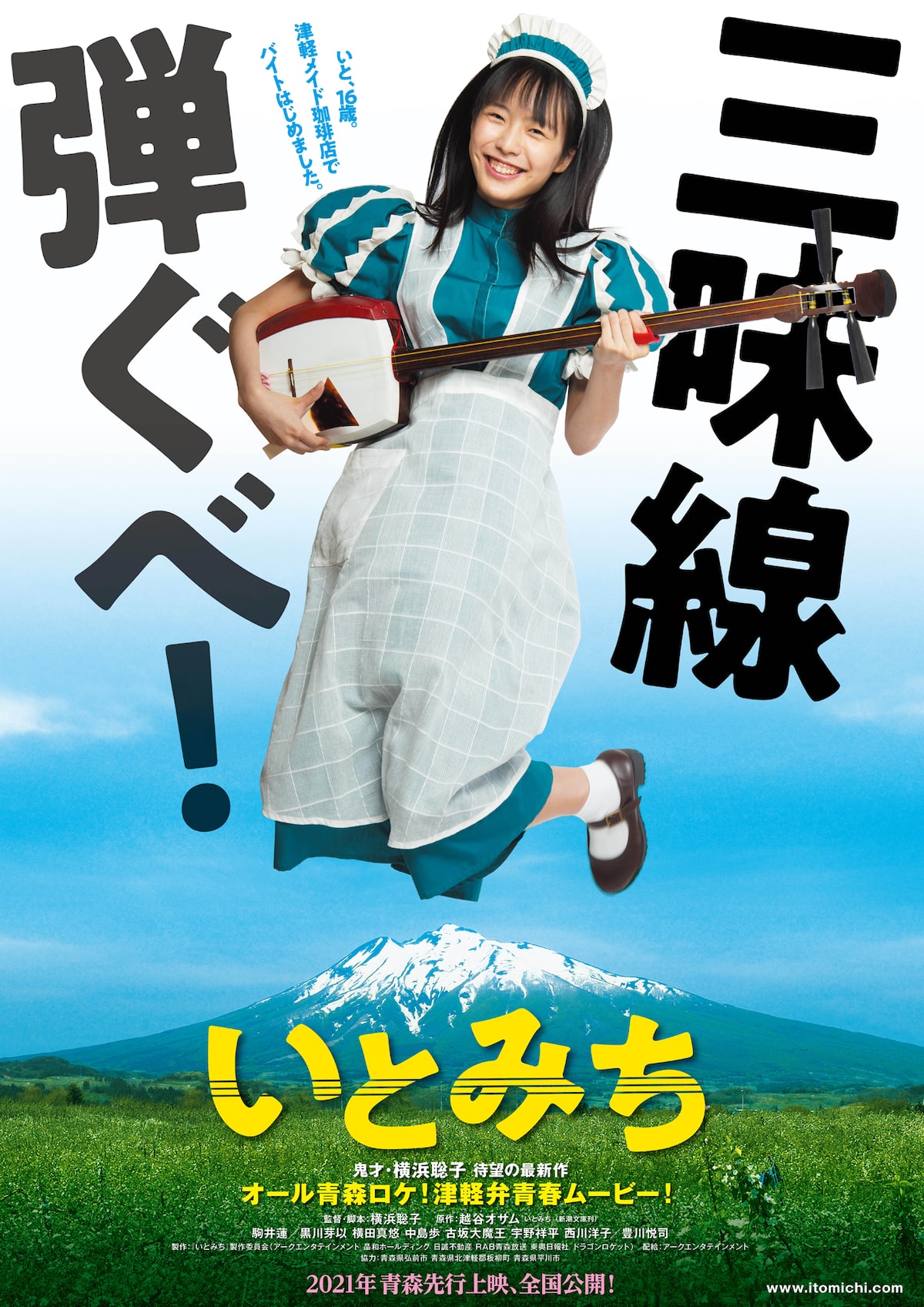
“Ye can’t hear my silence!” the timid young heroine of Satoko Yokohama’s Ito (いとみち, Itomichi), an adaptation of the Osamu Koshigaya novel, finally fires back, reminding us that silence too is means of communication. The film’s Japanese title, Itomichi, refers to the groove in shamisen player’s nail caused by the friction of the strings, but also perhaps to the path of the heroine of the same name as she makes her way towards self actualisation, figuring out the various ways there are of connecting with people as she begins to step into herself while coming to terms with the past. 

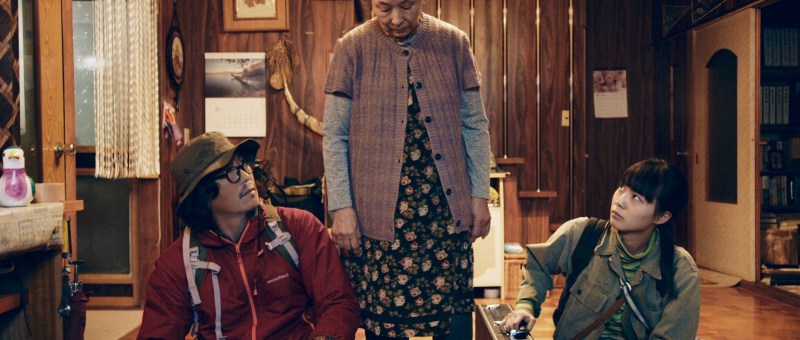
As we first meet Ito (Ren Komai) she’s trapped in a boring history lesson about local famines, reminded by the teacher to raise her voice while reading from the textbook but reluctant to do so firstly because she has an unusually strong local accent and often speaks in dialect and secondly because she is intensely shy. When she’s finished, the teacher even jokes that listening to her read is a little like classical music though it doesn’t seem much like a compliment. Even so, it’s particularly apt as Ito, like her late mother, has a talent for playing the Tsugaru shamisen and has even won numerous competitions yet she’s barely touched her instrument recently, perhaps developing a slight complex about the bumpkinishness of her intensely local way of life, especially as her father Koichi (Etsushi Toyokawa) is a university professor researching the traditional culture of the local area. 

Pointing out that talking is Ito’s weak spot, Koichi reminds her that she can communicate with others through her music even if he later admonishes her to use her words if she has something to say. Her refusal to pick up her shamisen is then a kind of withdrawal if of a particularly teenage kind. Hoping to get over her shyness, she finds herself quite accidentally applying for a part-time job at a maid cafe in the city, an incongruity in itself but one that helps her begin to open up to others. Then again, a maid cafe might not be the best environment selling as it does an outdated conception of sexual politics. Koichi later makes this argument pointing out that a maid cafe is not so different from a hostess bar while another maid, Tomomi (Mayuu Yokota), takes issue with the false chivalry of some of the middle-aged men who frequent the establishment who set up a club to “protect” Ito after she is inappropriately touched by a belligerent customer. To Tomomi the very idea that women need “protection” from men against men is inherently sexist and wrongheaded while the fact that they all rally round to protect the shy and vulnerable Ito also speaks volumes about their ideals of womanhood explaining why it is they’re in a maid cafe where the waitresses call their customers “master” and indulge their every whim in the first place. Even so, Ito’s colleagues are also quick to reassure her that she is in no way at fault, the customer’s behaviour was unacceptable and against the spirit of their establishment.

Yet as the manager points out “moe moe” is also a “means of communication” not perhaps intended to be taken literally. Ito does not exactly discover how to use her words, but through interacting with her colleagues at the cafe begins to come into an acceptance of herself no longer seeing her accent and dialect as uncool or old fashioned giving herself space to breathe as she makes new friends guided by her cafe mentor Sachiko (Mei Kurokawa) and finally getting up the courage to speak to another lonely young woman whom she’d been on awkward nodding terms with seeing as they catch the same train home from school. As Ito’s grandmother (Yoko Nishikawa) reveals, she learned how to play the shamisen with her eyes and ears proving that communication comes in many forms. Ito’s name which she had previously found old-fashioned and embarrassing appropriately enough means threads or here strings of a shamisen which become in their own ways channels to connect with other people which as the slightly dubious owner of the cafe (Daimaou Kosaka) points out is the most important thing of all. 

As Ito rehearses her maid routine with a video of her mentor, grandma outlines her thoughts about shamisen on camera for Koichi’s eager students, handing her knowledge down for the next generation. Literally finding her groove again, carving a niche in her fingernail, Ito rediscovers her love for music while gaining the confidence to stand on stage and be herself encouraged by all her friends and family. A beautifully pitched coming-of-age tale celebrating the local culture of Yokohama’s hometown Aomori, from which leading actress Ren Komai also hails, Ito is a warm and loving tribute not only to Tsugaru shamisen but to friendship and community brokered by a wealth of communication and a willingness to listen even to silence. 


Ito screened as part of the 2021 Osaka Asian Film Festival.

Images: (C)2021『いとみち』製作委員会

Green Jail (綠色牢籠, Huang Yin-Yu, 2021)

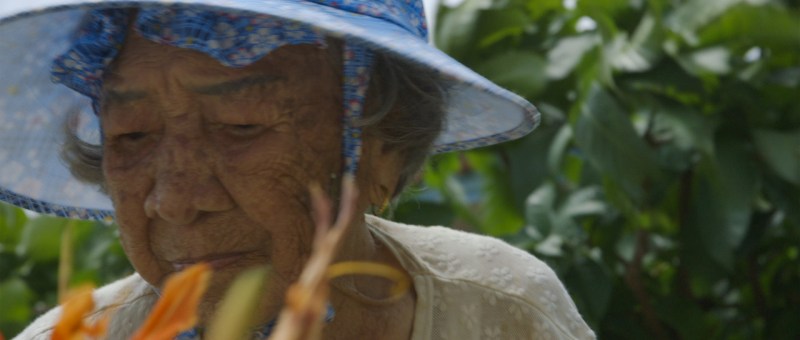
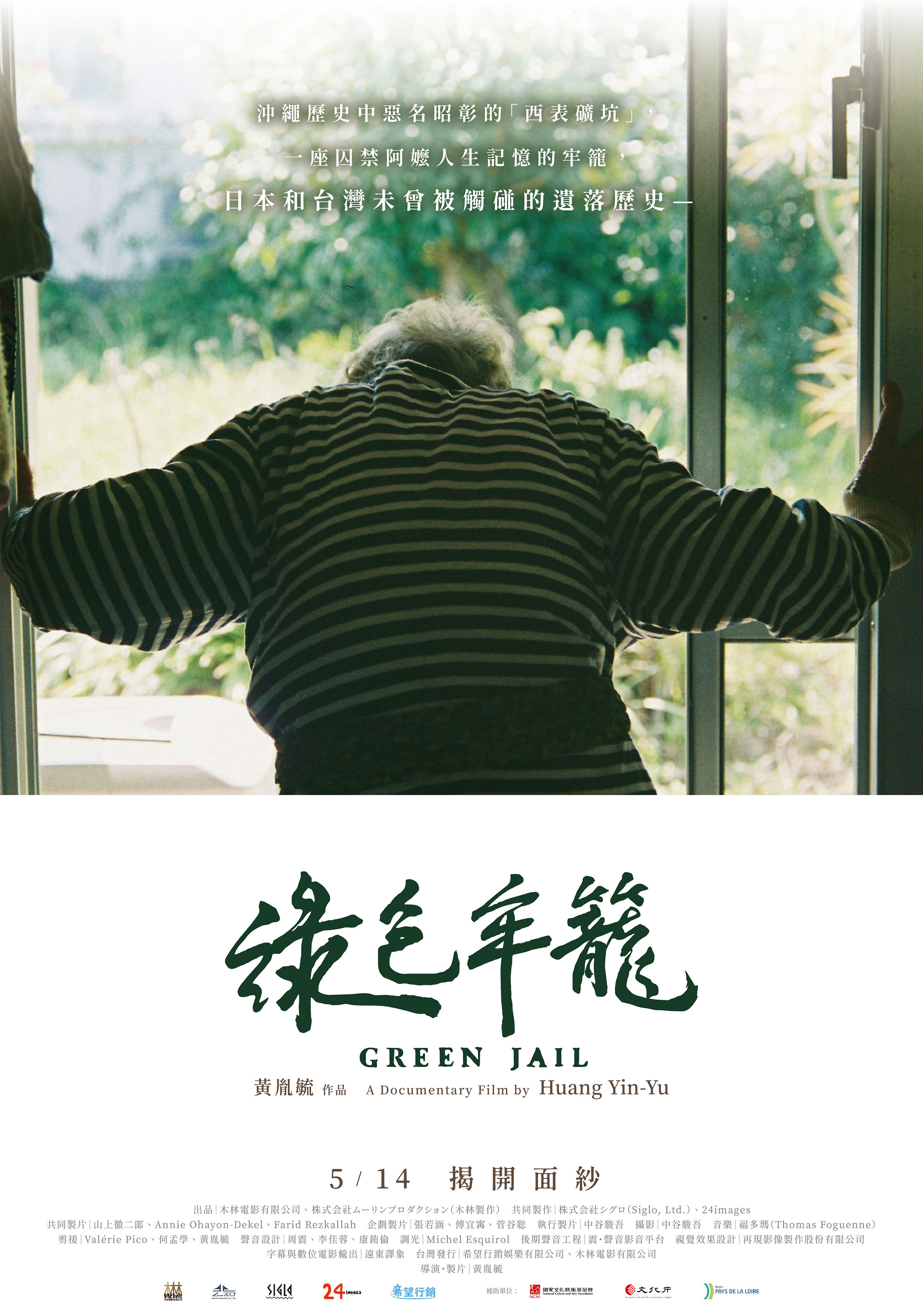
The legacy of Japanese imperialism continues to haunt a small Okinawan island once home to a sprawling network of coal mines but now mostly to ghosts of its troubled past at least according to Huang Yin-Yu’s beautifully lensed, elegiac documentary Green Jail (綠色牢籠, Lǜsè Láolóng). So named for its thick forests of mangrove trees, the island’s Iriomote Coal Mine ceased production in 1960 but from the late 19th century to the fall of the Japanese Empire at the end of the war, lured workers from not only from the Japanese mainland but from Korea, China, and Taiwan with false promises of tropical climes and plentiful fruits failing to disclose the harsh and exploitative working conditions they would later prove unable to escape. 

Possibly the last witness to these times, grandma Yoshiko Hashima (her name naturalised from the original Yang) travelled to the island with her adopted father, Yang Tien-fu who worked for the mines and was responsible for recruiting other workers, at the age of 10 leaving briefly after the war but soon returning. The last of the Taiwanese settlers, she recalls little regarding the running of the mines save witnessing frequent beatings by Japanese soldiers but does recall the discrimination she faced as a foreign worker from the local community who by far made up the smallest percentage of those employed at the mines finding herself with few friends as locals often even declined to eat their food or accept their hospitality. 

Yet in a strange way history perhaps repeats itself. Now elderly and alone, her children all having left the island returning only infrequently, she rents out her spare room for extra money to an American traveller, who, like her, came to Japan as a teenager. Though Luis tells us that he hadn’t intended to stay long on the island but likes being able to help Yoshiko who is elderly and alone, she tells us that she regrets her decision to rent to him which she claims she made in the belief he had a wife. She describes him as “‘messy”, claims he has lice, and that his slovenliness has attracted an influx of ants while the pet dog that he keeps on a leash outside disturbs her with its constant whining. Later we see him again having returned to Kansai revealing that he felt that people disliked him and found it difficult to fit in, but that his time in Okinawa has perhaps brought him clarity in the further direction of his life. 

Luis was at least able to leave the island at a time of his own choosing, but as the ghostly voice of Yoshiko’s late father reminds us those who worked in the mines were not so lucky. He tells us that he once slept on a pile of bones and the remains of workers who attempted to flee but ended up starving to death in the jungle were a frequent sight in local caves. Exploited and manipulated, workers were often hopped up on morphine, for which they had to pay, in order to up their productivity but also to make them dependent on their employment to avoid withdrawal aware that they would be unable to obtain a such substances in their home country. They also found themselves borrowing on their wages, especially if they contracted malaria and were unable to work, leaving them essentially indentured and therefore unable to leave without satisfying their debts. Yoshiko tells us that few wanted to come to “Dead Man’s Island” yet Tien-fu declares himself uncertain why some miners remained unhappy with the arrangement eventually needing to organise a specialised police force to enforce discipline complaining that workers who were in debt and therefore earning almost nothing often shirked and only worked when the police were around. 

Travelling around the otherwise idyllic landscape with its verdant green forests and peaceful rivers, Huang finds occasional ghosts of the departed miners hovering on the horizon dressed only in their white fundoshi underwear, slipping into brief scenes of reconstruction set amid the now ruined structures of the industrial mining complex. The last survivor, Yoshiko hangs on alone yet perhaps not quite reflecting on the implications of her father’s role in the development of the mines or particularly of their legacy. Her own life has evidently been hard, adopted as an infant and then married to her “brother” only to see her children desert her left behind alone in the Green Jail a guardian of a dark history few wish to remember. Juxtaposing the island’s traumatic past with the beauty of its verdant scenery Huang’s elegantly composed documentary poses some serious questions about the imperial legacy but always mindful of its wandering ghosts. 


Green Jail screened as part of the 2021 Osaka Asian Film Festival.

Original trailer (Japanese subtitles only)

The festival will also be screening Huang Yin-Yu’s accompanying short film Green Grass, Pale Fire: an elliptical, ethereal dramatisation of three men’s attempt to escape the mines only to find themselves trapped by the beautiful yet maddening landscape.

Images: (c) Moolin Films, Ltd./ Moolin Production, Co., Ltd.

Dreams on Fire (ドリームズ・オン・ファイア, Philippe McKie, 2021)

“A dancer must always be careful” the heroine of Philippe McKie’s Tokyo odyssey Dreams on Fire (ドリームズ・オン・ファイア) is warned, though her passage may prove smoother than that of many small town girls coming to the big city in search of fame and fortune. Nevertheless, her progress will take her through the unseemly underbelly of the entertainment industry rife with exploitation and duplicity to the relatively comforting world of fringe subcultures where mutual support is a way of life and failure merely another kind of opportunity. 

As a young girl, Yume (dancer and model Bambi Naka in her first leading role), whose name literally means “dream”, is captivated by an avant-garde dance performance and determines to become a dancer herself though her authoritarian father (legendary butoh dancer Akaji Maro) does not approve of her artistic ambitions and attempts to forbid her from leaving for Tokyo but she defies him and leaves anyway. Once there, however, she finds herself struggling to survive living in tiny cubical rooms and able to support herself only by working on the fringes of the sex trade in a cosplay hostess bar dressed as a schoolgirl. She pursues her dancing dream by visiting underground hip hop clubs but receives the first of many setbacks when she’s voted out of a dance off in the first round in favour of a talented child in an improbably snazzy outfit. 

Nevertheless, as the first of her teachers, who happened to see and admire her performance, tells her the humiliation of losing only smarts so much because you care which is the kind of pain you can easily repurpose for motivation. This is a motif which will be repeated in Yume’s life which proves nowhere near as dark or depressing as one might assume though it’s true she continues to experience setbacks and disappointments while occasionally doubting her vocation as a dancer in the face of seemingly constant failure but always rescued by another hopeful who saw and liked her performance even if the judges might have preferred someone else. 

Yet as she finds out, dance talent isn’t all it takes in the contemporary arts scene. An audition she might otherwise have booked is lost at the last moment when she confesses she’s not got many followers on social media, the interviewer patiently explaining that she might be a better dancer than anyone in their current troupe but their business is built on “image” and dependent on their online reach so someone with no profile is of not much use to them though they’d love to see her again once she’s successfully built her “brand”. Conversely, a client at another job working the floor show at an S&M-themed bar gets her a job coaching an aspiring underground idol who apparently can’t dance for toffee, but once she gets there Yume quickly realises the young woman’s lack of aptitude is a result of her exploitative treatment at the hands of the idol industry. Apparently not allowed to change her outfit even if it smells she’s been instructed not to eat to keep her weight down which of course leaves her lightheaded and low in energy, an unhelpful combination for learning complicated dance routines. On the way out, Yume hears the other members of the band bullying her though there’s nothing she can do to help. 

Meanwhile, she finds it increasingly difficult to weigh up the degrees of exploitation she’s willing to accept from her increasingly manipulative boss at the hostess bar (Masahiro Takashima). Her first friend, Sakura (AV actress Okuda Saki), had taught her the ropes cautioning her never to let anyone touch her in ways that make her uncomfortable but herself quits abruptly in embarrassment after a customer brings up her past as an AV star thereafter disappearing without trace. Sakura had explained in an ironic paradox that she wasn’t in hostessing for the money but was essentially lonely, introducing Yume to the first of her experiences of the more unusual aspects of the Tokyo subculture scene in a metal bar where she fondles a lizard over drinks but is herself perhaps slightly lost in an internalised and unwarranted shame because of her past in the porn industry. This seems to be a fate Yume is keen to avoid, eventually telling her exploitative manager where to go rather than consent to his control after narrowly escaping a dangerous encounter with “important” yakuza clients. 

Going by “Asuka” at the club and eventually assuming the dancer name of “Karasu” (crow), Yume searches for an identity while continuing to pursue her dream but perhaps unrealistically meets only good and supportive people outside of the exploitative Kabukicho bar world discovering in her various subcultures from fetish clubs to the dance studio only dreamers like herself eager to see others succeed. Capturing the neon night life of the contemporary city, McKie’s camera perhaps leans too far towards the ethnographic in its slight exoticisation of the underground Tokyo scene even if admittedly seen through the eyes of country girl Yume but also allows her to find within it freedom and self-actualisation while her talent takes her in new, sometimes unexpected directions, as she continues to pursue her dream in an atmosphere of positivity and mutual support.


Dreams on Fire streams from 6th March as part of the Glasgow Film Festival.