Wolf Pack (狼群, Michael Chiang, 2022)

A disillusioned doctor quickly finds himself in over his head when he’s kidnapped by Chinese mercenaries in Michael Chiang’s oddly positioned action thriller, Wolf Pack (狼群, láng qún). Once again, the action takes place in a completely fictional Middle Eastern/Central Asian country with the mercenaries playing mysterious spy games in which their heartless amorality is at least heavily implied to be an affectation and that they are ultimately interested in “more than money” while covertly protecting Chinese interests abroad.

The film heavily implies that they are in fact in some way working for the Chinese authorities with a lengthy focus on the Chinese flag outside the place of government in this foreign nation given the unlikely name of Cooley (in fact, most of the names given for various people and places seem mildly inappropriate). The photograph sullen doctor Ke Tong (Aarif Rahman) carries around also features his father in a Chinese military uniform which might be why he is so reluctant to believe that he may also have been a member of this “private army” as his new boss Diao claims. Though Ke Tong is originally very hostile to Diao’s gang who have after all kidnapped him he later undergoes an entirely unexplained change of heart accepting that his father must have had his reasons for whatever he did so Diao is probably OK anyway. 

In any case, their current mission involves defending Chinese energy interests against a local warlord who is working with European businessmen to disrupt a gas deal by placing faulty regulators designed to engineer an explosion which will apparently domino all the way back to the Mainland. Largely kept in the dark, Ke Tong is unable to see the big picture and keeps trying to help by doing righteous things such as shooting at a soldier hassling a young girl whose father he’d just killed but unwittingly making everything worse. Eventually he realises that the end client must be the Xingli group who are running the China-Cooley collaborative gas field, though even the energy official they’re later asked to protect seems to be prepared to die in order to ensure the project’s success and prevent a mass explosion. 

Diao’s selflessness is also well signalled thanks to his tendency to listen to a recording of a baby crying and meditate on “all he’s lost” to be a mercenary which again reinforces the idea that they have a greater cause than simply money along with Diao’s position as a surrogate father not just to Ke Tong but to the other soldiers who are all, it is said, looking for a place to belong. The gang apparently also have some kind of role funding orphanages in China to prove that they aren’t just in it for the cash. Ke Tong too comes to feel a kind of brotherhood that makes the mission more than just mercenary activity and gives him an excuse to chase the evil war lord even though that is not part of their mission and really the villagers, including a small child who has been forced to do their bidding, are not their concern. 

Despite starring two prominent martial arts stars, the film is much more focussed on technical wizardry and gunplay than it is on physical fights save for a late in the game confrontation between female mercenary Monstrosity and her opposing number as they try to liberate the gas field. Diao’s incredibly well equipped crew appear to be almost all-powerful, even if Ke Tong manages to play them at their own game, using fly-shaped drones to assist them in their work though the final mission involves an improbable plot device of the local government needing to sign a document by retinal scan within 60 seconds complete with an onscreen countdown via an encrypted briefcase computer in the middle of a firefight. 

Chiang does indeed bring action with a series of high impact sequences one involving a large petrol tank explosion which results in several of the warlord’s men being engulfed in flames. It does however leave a thread of mystery hanging over Ke Tong’s quest to solve the riddle of his father’s death with the suggestion that not all of his body parts were collected hinting that there may be further conspiracies in store for a potential sequel though what seems clear is that Ke Tong has discovered his place to belong alongside a surrogate father figure doing quite questionable things but apparently working for the national good. 


Wolf Pack is released on blu-ray in the US on 23rd January courtesy of Well Go USA.

International trailer (English subtitles)

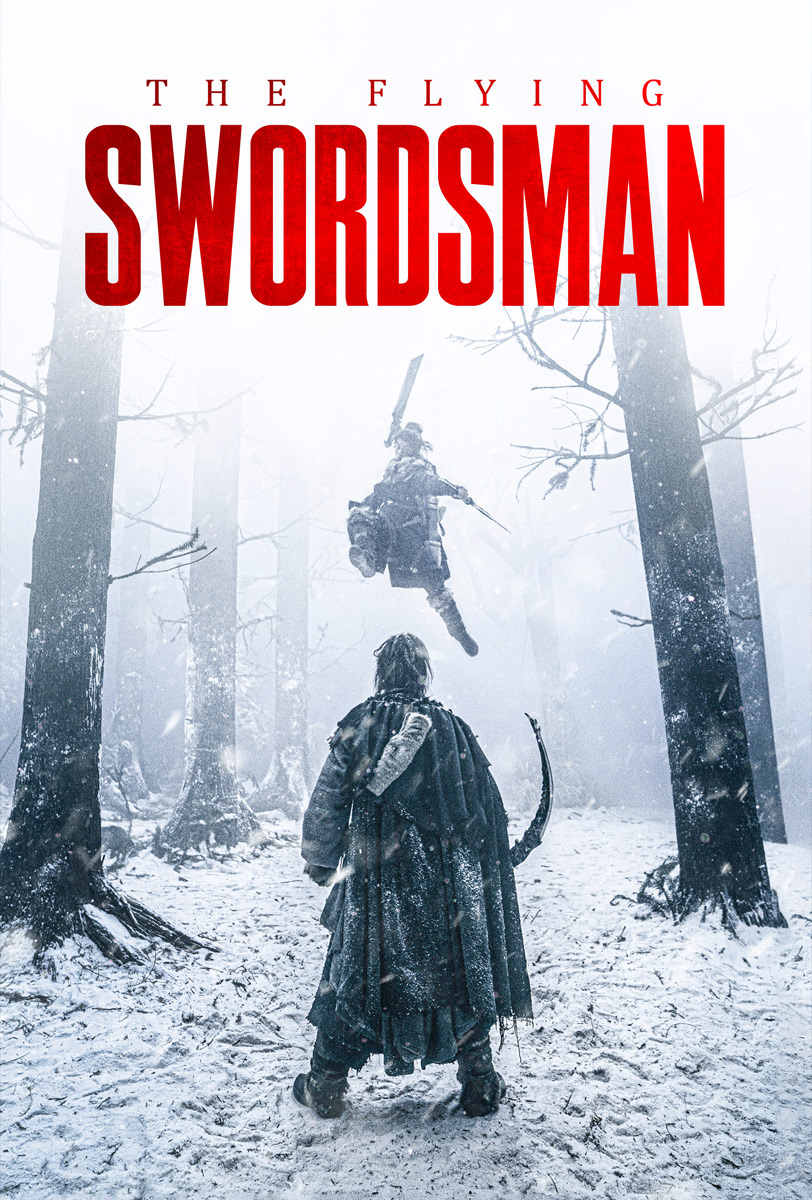
The Flying Swordsman (雪山飞狐之塞北宝藏, Qiao Lei, 2022)

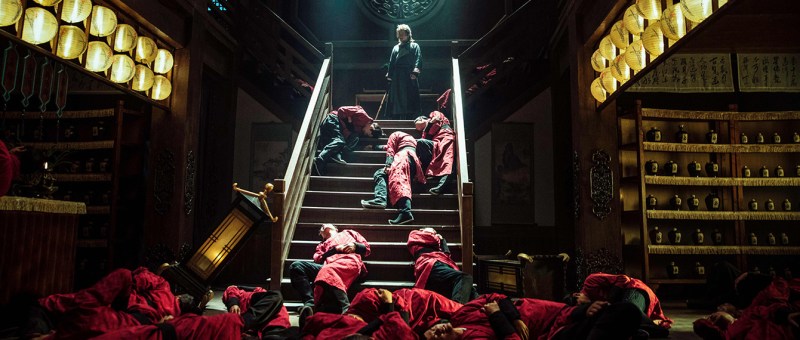
Close to the conclusion of Qiao Lei’s The Flying Swordsman (雪山飞狐之塞北宝藏, xuěshān fēi hú zhī Sàiběi bǎozàng), the latest adaptation of Jin Yong’s classic wuxia novel Fox Volent of the Snowy Mountain, the villain is reminded that his quest for treasure is a headlong plunge into an abyss and it is indeed greed that eventually seals his fate. In any case, the karmic wheel is very much in motion as the sins of the past will soon catch up to him.

In a brief prologue, Lord Tian hopes to get his hands on some treasure buried deep beneath a land of cold and so engineers a duel between the treasure’s guardian Hu Yidao and the only swordsman who can match him. The two men end up killing each other, but largely due to the machinations of ambitious underling Baoshu (Chunyu Shanshan) who has poisoned their swords with arsenic. Additionally he’s massacred a local village, something of which the head of their group Tao Baisui (Raymond Lui Leung-wai) does not approve, but still didn’t get his hands on an iron box containing a map to the treasure nor the key needed to open it.

The box then turns up 10 years later but causes nothing other than chaos and discord among Baisui’s followers as they all jockey to get their hands on both the map and the key though the clever part of the plan is that no one has both at the same time ensuring the continuation of infighting and betrayal. The sad thing is that both Baisui and Baoshu are childless and have come to regard their underlings as children though they are quickly sacrificed during the internecine plotting. Gui Yu (Zhao Huawei), a mercenary picked up by Baoshu’s henchwoman Qingwen (Chen Yusi) after escaping enslavement at a coal mine, seems to vacillate, playing advantages against each side but also manipulated by both and left to die after being poisoned. Apparently each of the other eight villains has a special talent, though Gui Yu appears to have none and often claims to be doing only what he needs to survive which fair enough given the vagaries of the feudal era. 

This world is indeed quite grim, as we can see from the guy hacking up some suspicious looking meat on the way into the fort. An assassin is fond of asking if the target thinks villains never face retribution, hinting at the degree of hubris in Baoshu’s ambition and his lack of thought for the future or the various ways the karmic wheel may turn against him. His downfall is caused by greed, but then there’s also a degree of tenderness in his relationship with adopted daughter Qingwen who is often dismissed as a “little beauty” even if he at times seems willing to sacrifice her life for relatively little gain. 

In any case, the treasure becomes something of a MacGuffin, merely an unattainable object that drives the villains mad and turns them against each other or alternately can be used to manipulate them. In this supernaturally tinged world, the band come up against strange monsters including a pack of wild hyenas amid the freezing cold and otherwise have managed to keep their special powers more or less secret from each other despite their long association giving Qiao frequent opportunities for plot twists and unexpected returns. He adds to the mythological fantasy aesthetic through the forest-bound vistas of trees in bloom along with the endless snowscapes that reflect the moral and emotional emptiness of men like Baoshu. 

Karma does indeed come back to bite him, a victim of a poetic revenge destroyed by his own greed and immorality. Amid all the infighting there is a genuine degree of solidarity to be found at least among those robbed by the evils of feudalism and hoping to avenge themselves through tricking the gang into destroying itself. Qiao’s wire-heavy action sequences hint at a poetic beauty of wuxia martial arts even if close combat is necessarily brutal though mostly relying on trickery rather than simple skill with the sword. Told over a series of flashbacks, the tale eventually straightens itself out to reveal the tragic legacies that provoke the fate of all long after those who caused them have forgotten their dark deeds and believed themselves free from guilt or consequences.


The Flying Swordsman is released in the US on Digital and DVD on Jan. 9 courtesy of Well Go USA.

US trailer (English subtitles)

Black Night Parade (ブラックナイトパレード, Yuichi Fukuda, 2022)

According to the opening voiceover of Yuichi Fukuda’s seasonal comedy Black Night Parade (ブラックナイトパレード), we’ve all got Christmas wrong. It’s not completely true that Santa only gives presents to the nice kids for there are in fact two Santas, the other one, the anti-Santa, making sure that bad children have a very unhappy Christmas receiving gifts ranging from the traditional lump of coal to offal. The Santa dressed in black is described as being a little more egalitarian, but does indeed pedal in disappointment and the opposite of the holiday spirit though in another way perhaps he’s just an embodiment of a sense of resentment towards to the unfairness of the contemporary society. 

Miharu (Ryo Yoshizawa) is very definitely grown up and a good example of someone who regards themselves as earnest but is becoming fed up with seeing those he regards as acting inconsiderately prosper. Still working part-time at a convenience store having repeatedly failed to get into university or find a full-time job, he’s irritated by his loudmouth slacker colleague Kaiser (Taishi Nakagawa) who just seems to constantly fall up in life while Miharu ends up being the responsible one doing most of his work for him. When Kaiser asks him to cover his shift Christmas Eve so he can go on a date with his pretty girlfriend seconds after telling him he’s actually had a full-time job offer, it obviously stings more than a little. But when Miharu takes a leaf out of his book and tries to take home one of the expired Christmas cakes, he’s immediately caught and threatened by his boss not to mention being deemed a bad boy by the Santa in black. 

Though in his case, it results in an ironic job officer to become one of Santa’s helpers at a gloomy Santa centre where they run a virtual surveillance state to figure out whether the kids that send in letters to Santa have really been as good as they claim to have been. Surveillance queen Shino (Kanna Hashimoto) decides one little lad hasn’t on catching him cheating on a test despite having emphasised how hard he’d been studying in his letter. Cheating on a test is obviously not “good”, but perhaps it’s not innards in your stocking bad either and Miharu’s moral compass is going haywire trying to understand the strange world he finds himself in while participating in a contest to join the elite Reindeer division of Christmas shock troops. Meanwhile, he’s also confronted by a conspiracy in which the red Santa has already been murdered by rats controlled by a mysterious group who hate Christmas and are trying to eradicate it. If they don’t find a new red Santa soon, the magic will be broken forever.

Despite the zaniness of the concept, the humour is a little less grating than the broad variety style generally employed by Fukuda in his other films even if several of the performances are on the larger side. Rather than rediscovering the true meaning of Christmas or coming to an accommodation with the unfairness of the contemporary society, Miharu is guided towards dealing with his own unresolved childhood trauma which repurposes the empty consumerism of a contrived holiday tradition as a means of signalling of a lack of something or the roots of unhappiness. Even if most most kids are asking for the latest toys it may be because they want others to play with with them, while some just want company because their parents have to work long hours and they’re lonely at home. 

Despite making the astute observation that the best way to disappoint a naughty child is to get them what they asked for but not quite right, Miharu eventually discovers a calling in making sure no child is left empty-handed on Christmas Day spreading the spirit of the season wherever he goes even while being chased by packs of evil rats out to destroy the joy of Christmas forever. Then again, there is some mildly satirical humour in the likening of Santa Claus House to a “black company” ruthlessly exploiting its employees while engaging in some very dubious corporate shenanigans in its use of customer data and clear invasion of privacy in its all-seeing surveillance network. In any case, it does appear that Christmas is safe from the rat race for the moment and children good or bad will wake up to a surprise equally so on Christmas morning for years to come.


Original trailer (no subtitles)

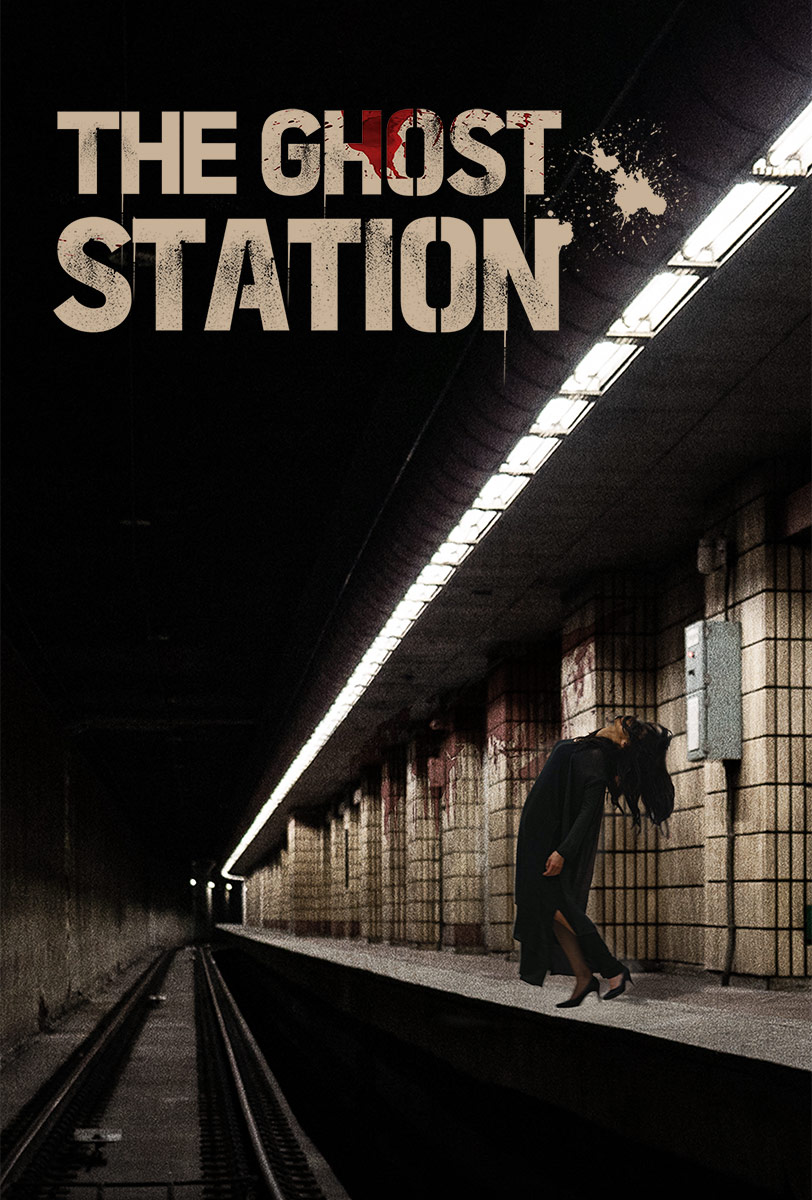
The Ghost Station (옥수역귀신, Jeong Yong-ki, 2022)

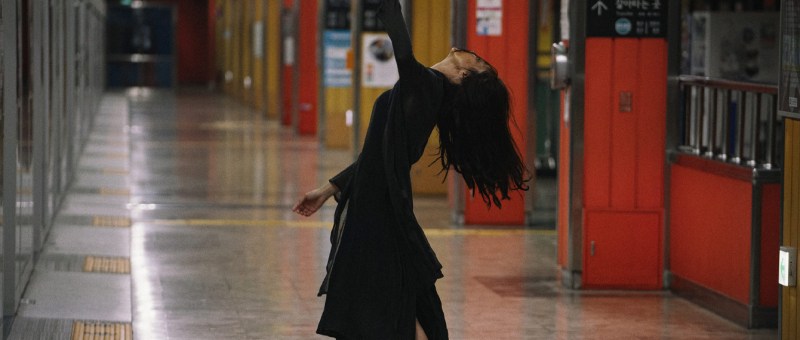
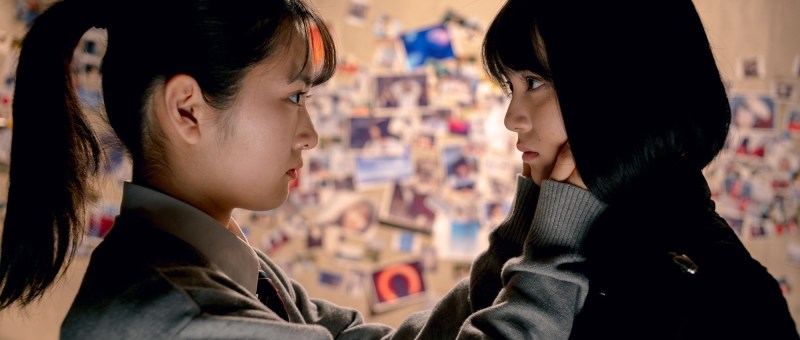
The biggest evil at the centre of Jeong Yong-ki’s homage to classic J-horror The Ghost Station (옥수역귀신, Ogsuyeog Gwisin) is perhaps capitalism or more simply modernity. At least, it stands to reason that those covering up a great evil for financial gain could be deemed even worse than the person who actually committed the crimes in turning a blind eye to injustice. It’s in the midst of this paradox that jaded rookie reporter Na-young (Kim Bo-ra) finds herself while beginning to uncover the dark secrets buried beneath a supposedly “haunted” station though mostly lured by the desire for easy clickbait to appease her hardline boss (Kim Su-jin). 

The reason that Na-young is in trouble, is that she was at the station snapping photos for social media without bothering to get a written release from her subjects. The person she took photos of turned out to be transgender and was accidentally outed by Na-young’s story for which she feels little remorse, mostly feeling sorry for herself on realising her job’s on the line and she’ll have to bring in some powerful scoops if she wants to make sure the paper has her back and will cover the compensation money if the woman sues her. 

It has to be said that, in the English subtitles at least, the film has a strongly transphobic vibe in which the photographed woman is constantly described as “a man” , using male pronouns and otherwise treated as a figure of fun, just another “weird” thing going on at the station. Even so, there’s clearly a mild rebuke intended against the contemporary trend of mocking strangers online with a young man falling victim to the station curse in the opening sequence after uploading a video of a woman he first assumes to be drunk or mentally distressed before noticing that in the video he can see a pair of bloody hands attacking her. 

Na-young has been doing pretty much the same kinds of things with her clickbait even while resentful of herself and the loss of her journalistic integrity working at a low level tabloid only interested in viral articles that will generate ad income. But she’s also slightly proud on spotting people reading her pieces on the station ghost as they ride, feeling like she’s doing real investigative journalism even if no one in the office really cares about the dark secrets lurking in the station. Even she later realises that she lost sight of the victim in the case and hadn’t even thought about contacting his family or trying to find out who he was and why he died. 

What she eventually discovers is that her paper may have been involved in a coverup operation which is why her boss becomes hostile as her reports become a little too “real”. It was in the interests of powerful people that the station be built, so anything that might delay its construction was quietly swept under the carpet. Na-young wants to drag it into the light, but finds herself frustrated and then at the centre of a supernatural curse while hoping to give voice to those who were denied any of their own. 

The quietly oppressive, haunting nature of these unseen forces is brought home by the ominous tapping of the ice blue fingernails of Na-young’s ever impatient boss perhaps embittered by her own decision to abandon journalistic integrity for the lure of easy money peddling gossip and distraction to an already apathetic readership. Though adapted from a web toon, the film is co-scripted by Hiroshi Takahashi and bears many of the hallmarks of classic J-horror including the presence of a well implying the contamination of the groundwater that feeds the contemporary society which the station itself in someways represents, along with the uncanny movement of living ghosts in the contemporary environment.

Like J-horror it finds otherworldly spirits trying to communicate through modern technology, in this case saying what first seem to be fragments of a phone number but turn out to have a different meaning indicating a desire to be heard and recognised, reprieved from the hell in which they’ve been placed by a cruel and heartless tormentor. Na-young thinks she can give them that but is perhaps naive, if already corrupted, overestimating the power of the press to offer corrective justice and end a curse by throwing the truth into the light. In the end, she too decides to pass the buck escaping the curse by passing it on as an ironic act of vengeance and liberation thrown like a bomb at an infinitely corrupt social system but more out of spite than retribution. A little shallow and cynical, the film never quite lands its punches or achieves the eeriness it’s looking for but does nevertheless point the finger at the literal skeletons in the closet of the contemporary society.


The Ghost Station is out now in the US on Digital, DVD, and blu-ray courtesy of Well Go USA.

US trailer (English subtitles)

Mayhem Girls (メイヘムガールズ, Shinichi Fujita, 2022)

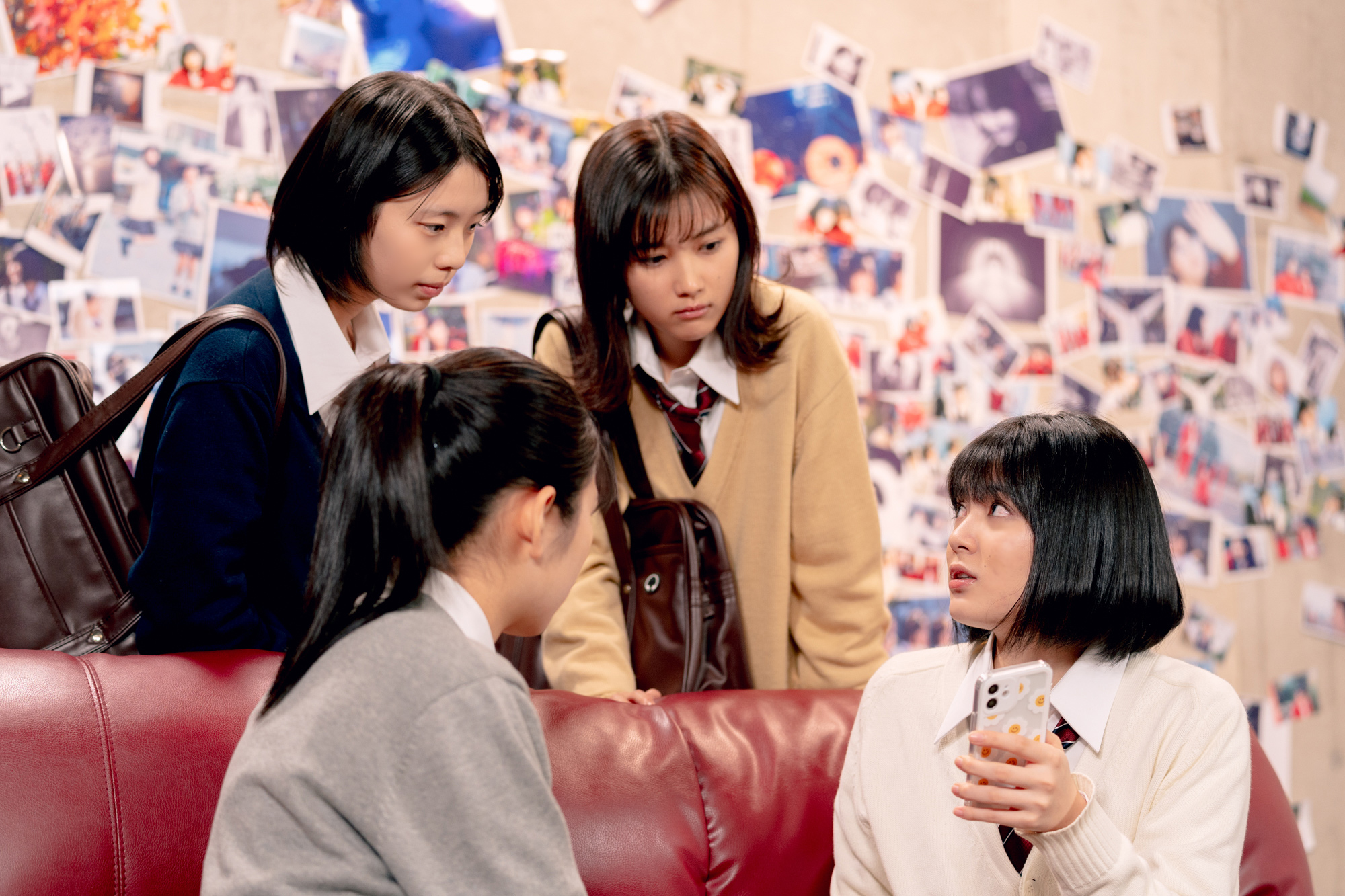
Four teenage girls unexpectedly find themselves with superpowers during the Covid-19 pandemic, but largely struggle with just the same problems as everyone else in Shinichi Fujita’s sci-fi-inflected high school dramedy Mayhem Girls (メイヘムガールズ). Despite the implications of the title, mayhem is not exactly the girls’ vibe though they each in their own way challenge the oppressive social norms of those around them later depressed by the realisation that they’ll soon have to go back to being “normal” and lose this brief respite they’ve been given from the rigours of high school life. 

The girls are already close to boiling point with the pressures of the pandemic as the teachers (ironically) yell at them to use hand sanitiser and social distance. The final straw seems to be the announcement that the Cultural Festival will be going online. That might be one reason why popular girl Mizuho (Mizuki Yoshida) suddenly snaps when her teacher catches her reading Twitter on her phone rather than studying. Miss Sawaguchi (Maako Miwa) is young and somewhat timid, unable to exert her authority over the class which is largely uninterested in her attempt to read out articles from English-language magazines. What’s the point, Mizuho wonders, in learning English if you can’t go abroad anyway? Sawaguchi takes this opportunity to reprimand Mizuho as a means of asserting her control but it backfires as something strange happens when she confiscates the phone. Sawaguchi’s hand stops mid-air allowing Mizuho to simply reclaim it while she runs out of the room as if in pain. 

This is only the first inkling that Mizuho has gained unexpected powers of telekinesis though she struggles to understand what happened, certain that she didn’t touch Miss Sawaguchi and confused that she seems to be talking about “violence” and displaying bruises on her wrists. In any case, the event loses her her phone which is akin to a kind of social death for a teenage girl. Her powers have, however, brought her to the attention of Tamaki (Amane Kamiya) who is a telepath, or more accurately given her an excuse to make contact for as it turns out Tamaki has long been carrying a torch for the oblivious Mizuho who is hung up on the student who was her tutor in middle school, Yusuke (Taisei Kido). Soon they are joined by two more girls, Akane (Manami Igashira) who can teleport, and Kei (Hina Kikuchi) who can read the minds of machines, in a kind of after school superpower club. 

Though they eventually become good friends, the relationship between the girls is strained by their differing views on their powers and by Mizuho’s concurrent obsession with Yusuke who is now a part-time delivery rider struggling to find a full time job in the middle of the pandemic. Using Kei’s powers to track him down she waits outside his house for him to come back and inserts herself into his life. Though he seems as if he’s about to remind her that her behaviour is inappropriate, Yusuke eventually goes all in on Mizuho after learning of her powers and asks her to use them to rob a bank so he can forget about his employment woes. 

There are many things you shouldn’t do for a boy and robbing a bank is very high on the list, though perhaps merely a more extreme version of a lesson typically learned in adolescence. In any case, this is far as Mizuho is pushed to the dark side. Other than that, none of the girls really consider using their powers for evil ends with even Tamaki admitting that she has thought about poking around in Mizuho’s head but feels it would be wrong to do so. It’s Tamaki who draws the short straw in being largely unable to articulate herself even by using her powers before eventually trying to communicate in images only to be robbed of the power to do so at the very last second when she’s reduced to being “normal” once again. 

“Normality” does seem to resume for them, each of the girls heading back to their own individual cliques having seemingly learned little from their experiences save Tamaki who is left with a lingering sadness. Perhaps what they’ve been through is a kind of mayhem, a period of chaos provoked by the pressures of the pandemic along with oppressive teachers and the regular teenage issues of unrequited love and romantic disappointment but they’ve returned to “normal” all too quickly leaving precious little time to meditate on the results of their flirtation with superpowers and psychic abilities in a world in which normality itself is both somewhat illusionary and infinitely oppressive.


Mayhem Girls screened as part of this year’s New York Asian Film Festival.

Original trailer (no subtitles)

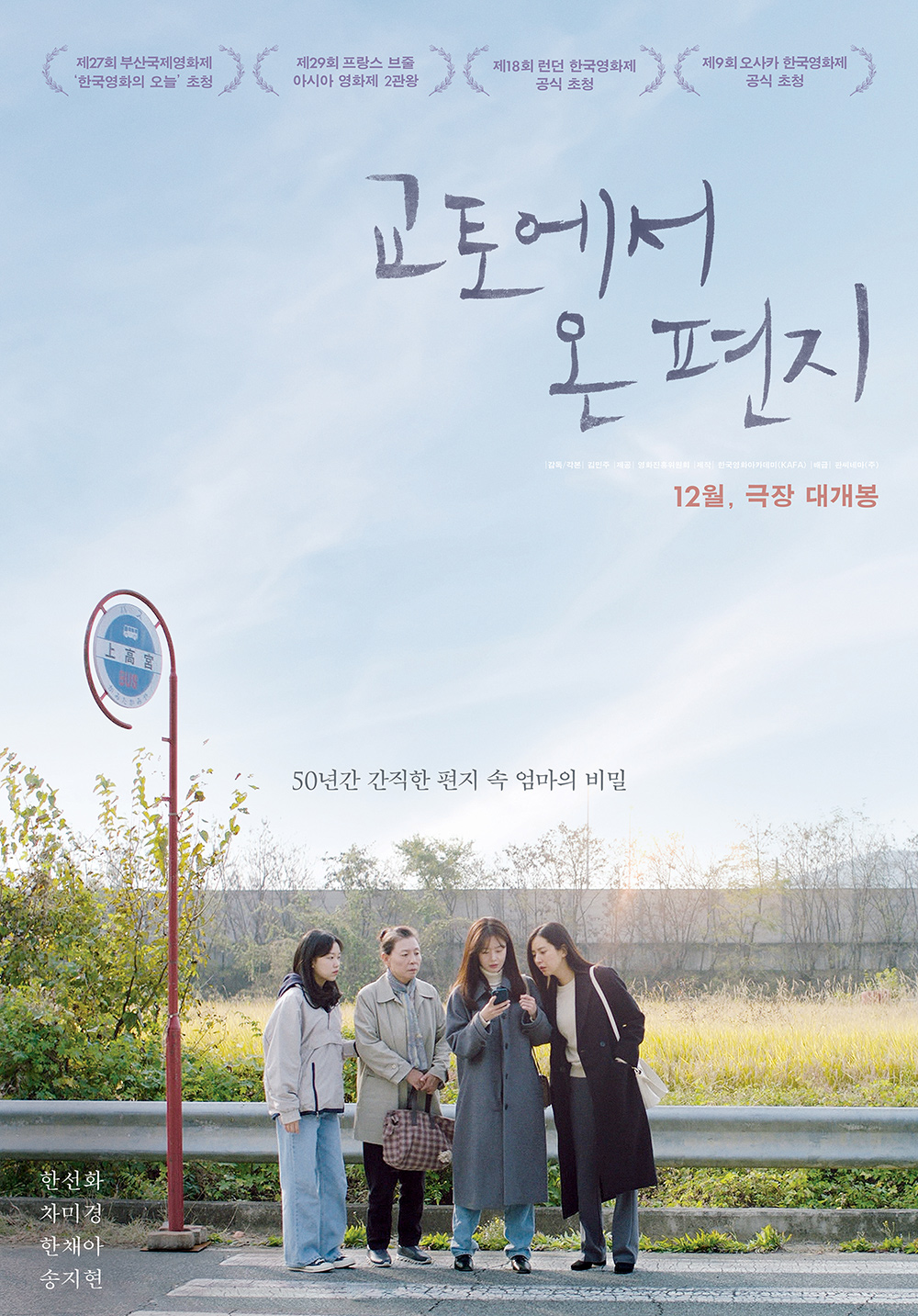
A Letter from Kyoto (교토에서 온 편지, Kim Min-ju, 2022)

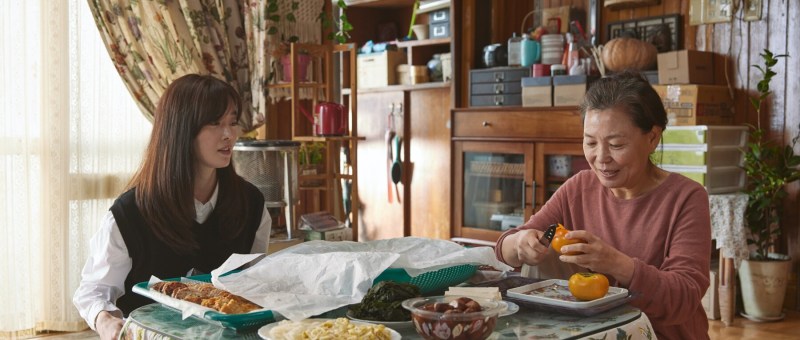
A disillusioned young woman returns to her hometown in search of healing but finds it in a state of disrepair in the fracturing relationship between her two sisters, one approaching middle age and the other yet to graduate high school, and her ageing mother entering the first stages of dementia in Kim Min-ju’s poignant debut feature A Letter From Kyoto (교토에서 온 편지, Gyoto-eseo on Pyeonji). As the title implies partly a story of dislocation, seeking both an escape from and return to the safety and comfort of a hometown, the film explores the destructive effects of secrecy and miscommunication between those who ought to share a greater intimacy.

Hye-young (Han Sun-hwa) couldn’t wait to get out of Yeongdo and has been living in Seoul for the past several years with the aspiration of becoming a writer but has been earning her living working for a TV station making educational programmes. It’s clear that something has gone wrong for her in her sudden and unannounced visit home, though she only explains that she’s taking break. Meanwhile, she begins to notice that her mother, Hwa-ja (Cha Mi-kyung), has become forgetful and easily confused. Not only is she overstocking her fridge with multiple purchases of persimmons but habitually picking up the leftover kimchi from the kitchen where she works despite reminders from her otherwise sympathetic boss not to. 

The ages of the three sisters, like those of the Chekhov play marooned in the provinces, seem to be representative of the passage of a life. The youngest, Hye-joo (Song Ji-hyun), is boisterous and full of dreams keeping her hopes of becoming a hip hop dancer a secret on remembering all the fuss surrounding Hye-young’s announcement that she wanted to become a writer. Oldest sister Hye-jin (Han Chae-ah) by contrast is cynical and worldweary. She supports the family with her job in a mid-range handbag shop where she once dated the manager only he decided to break up with her because she didn’t want to leave Busan and had no interest in money. 

Hye-jin later tells unexpected love interest Polish sailor Piotr that she has never been abroad perhaps because she’s in a sense afraid to leave while constrained by her sense of duty owing to being the older sister, mildly resentful of Hye-young for abandoning them and shifting all of the burden onto her. A sense of displacement floats around the family home in part because of Hwa-ja’s childhood past, born in Japan and then brought to Korea by her Korean father without her Japanese mother’s knowledge. The film’s title comes from a series of letters the daughters find that are written in Japanese, a language that Hwa-ja claims to have forgotten though is perhaps slowly returned to her as they begin to translate in an attempt to retrace and reclaim the past that been hidden from them.

Though she recounts a fear of discrimination because of her Japanese ancestry, Hwa-ja had never particularly hidden her past answering Hye-young’s questions as to why she never mentioned it with the reasonable reply that she never asked. A sense of secrecy and miscommunication continues to divide the sisters with Hye-young reluctant to discuss the reasons behind her desire to return home, Hye-joo keeping her dancing dreams a secret, and Hye-jin not saying much at all in her disappointment and resentment. It frustrated Hye-young that her mother never throws anything away, but to her it would be like throwing away a part of her past self and another act of forgetting aside from that she no longer has any control over.

Yet the film seems to suggest that Hwa-ja need not remember everything when her daughters can remember it for her, adopting her orphaned memories into their own stories while she too is able to make a kind of peace with the past on reclaiming the memories of her own mother that were otherwise lost to her through linguistic and geographical displacement. Exposing the secrets and repairing the fracturing past frees each of the sisters to follow a path that more suits them, accepting that there’s a time to leave your hometown, and a time to return, whether or not or one eventually decides to stay. Poignant and somewhat elegiac, the film eventually celebrates maternal and sisterly connections extending beyond the immediate family in the presence of Hwa-ja’s staunchly loyal childhood friend along with a sense of serenity in rootedness to a particular place that represents a home.


A Letter from Kyoto screened as part of this year’s London Korean Film Festival.

Trailer (no subtitles)

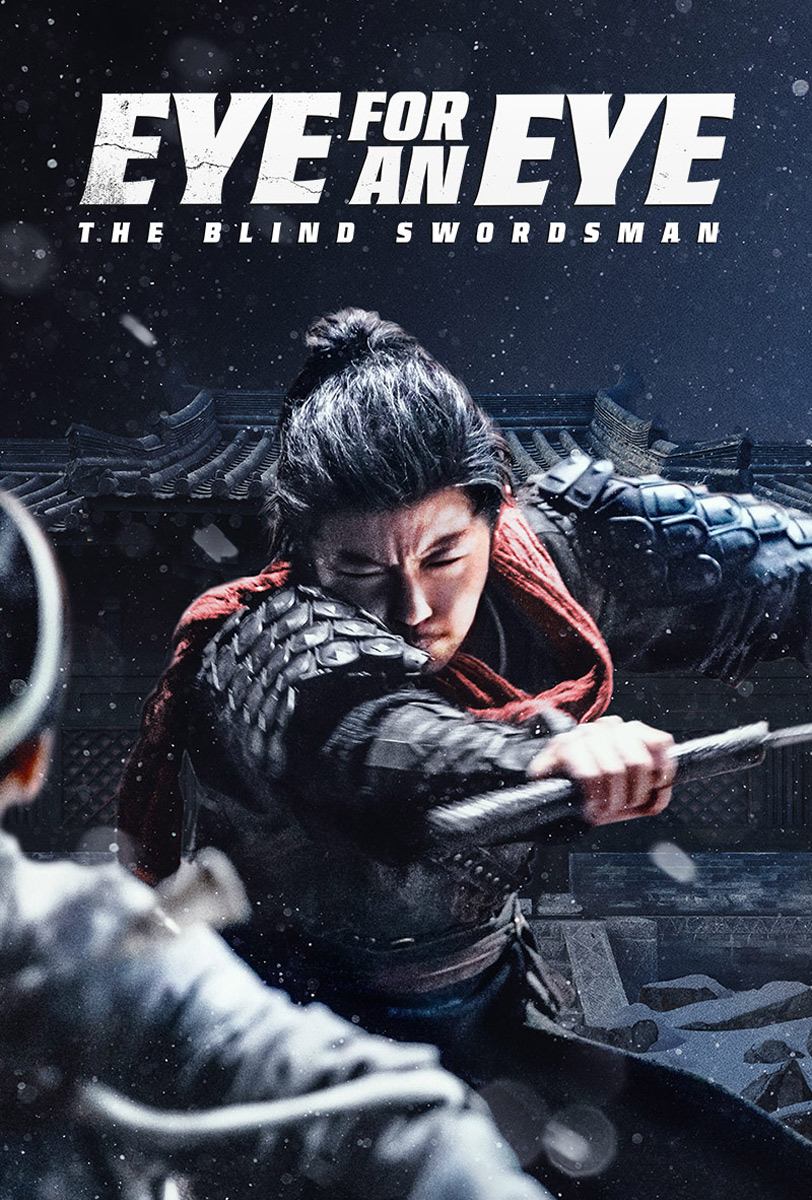
Eye for an Eye: The Blind Swordsman (目中无人, Yang Bingjia, 2022)

A blind swordsman takes revenge against the evils of feudal society in Yang Bingjia’s impressively helmed action drama, Eye For An Eye: The Blind Swordsman (目中无人, mùzhōngwúrén). Set in the “lawless” society of the Tang era following the Tianbao rebellion, the film has a western sensibility with its twanging guitar score and dusty roads not to mention jumped up gangsters trying to get a foothold in the legitimate order simply because they have become too powerful and no one is willing to resist them. 

Ni Yan (Gao Weiman), a young tavern woman who lost her brother and husband when her wedding was attacked by the Yuwen clan asks for nothing more than “justice” but that’s something no one can give her. Wandering swordsman Cheng Yi (Mo Tse) who’d taken a liking to her because she offered him some of her wine and even gave some to his horse reports the crime to the local magistrate after claiming the bounty on a fugitive, only he tells her directly that he will do nothing because the Yuwen clan have already moved beyond justice and not even he will touch them. 

In a way, Cheng is depicted as a failed revolutionary and his blindness a symbol his despair in a world he no longer cares to see. A bounty hunter by trade, his work is facilitated by old comrade Lady Qin (Zhang Qin) who, in contrast to him, seems to live a cheerful life repairing musical instruments while much loved in the town around her. Though they pretend to be saving money for an operation to restore Cheng’s sight, their line of work is perhaps cynical in taking advantage of the times while accidentally outsourcing a justice the authorities can no longer provide in the weakened Tang society. The Yuwen have infiltrated most institutions and cultivated relationships with important people that allow them to ride roughshod over ordinary citizens who are now completely at their mercy.

There might be something quietly subversive in these references to a corrupt and authoritarian institution which tries to brand Ni Yani the criminal in her pleas for justice, insisting that she admit to killing her brother herself in resentment of his criminal past while he is also hunted by the Yuwen because he knows to much about their dodgy dealings including raiding tombs to get precious gems to use as bargaining chips in a dynastic marriage negotiation. Cheng Yi did not originally want to get involved, himself too cynical and having given up hope of “justice” in this “lawless” society, but finds himself sympathetic towards Ni Yan because of the kindness she showed him and the obvious suffering her ordeal has inflicted on her. 

In a sense, his eyes are opened to the injustice of the society around him to which he had been wilfully blind if ironically accepting that he will never see again. He alone is willing to stand up to the Yuwen while even within their ranks petty resentments are growing as a princeling grows ambitious to escape his own oppression at the hands of an authoritarian brother who berates him for his weakness. 

Despite the budgetary issues which often plague straight to streaming cinema, Yang’s elegantly lensed drama brings a real sense of place to the dusty provincial towns where Cheng plies his trade along with the ornate elegance of the realm of Lady Qin whose flowing robes belie her military past. Drawing inspiration from the western as well as Japanese genre classics such as Yojimbo the film presents a world in decay in which the wandering swordsman becomes a moral authority, delivering justice if for a price. The irony is that it isn’t money which opens his eyes, but the reclaimed ability to see with his heart in deciding to help Ni Yan in her quest to avenge the deaths of those close to her. A series of excellently choreographed and well-shot action scenes along with Yang’s post-modern take on the material lend this tale of wandering swordsmen and feudal abuses a sense of the legendary that hints at further adventures for wandering sword for hire Cheng Yi bringing his own brand of justice to a lawless place. 


Eye for an Eye: The Blind Swordsman is out in the US on Digital, blu-ray, and DVD on 28th November courtesy of Well Go USA.

US trailer (English subtitles)

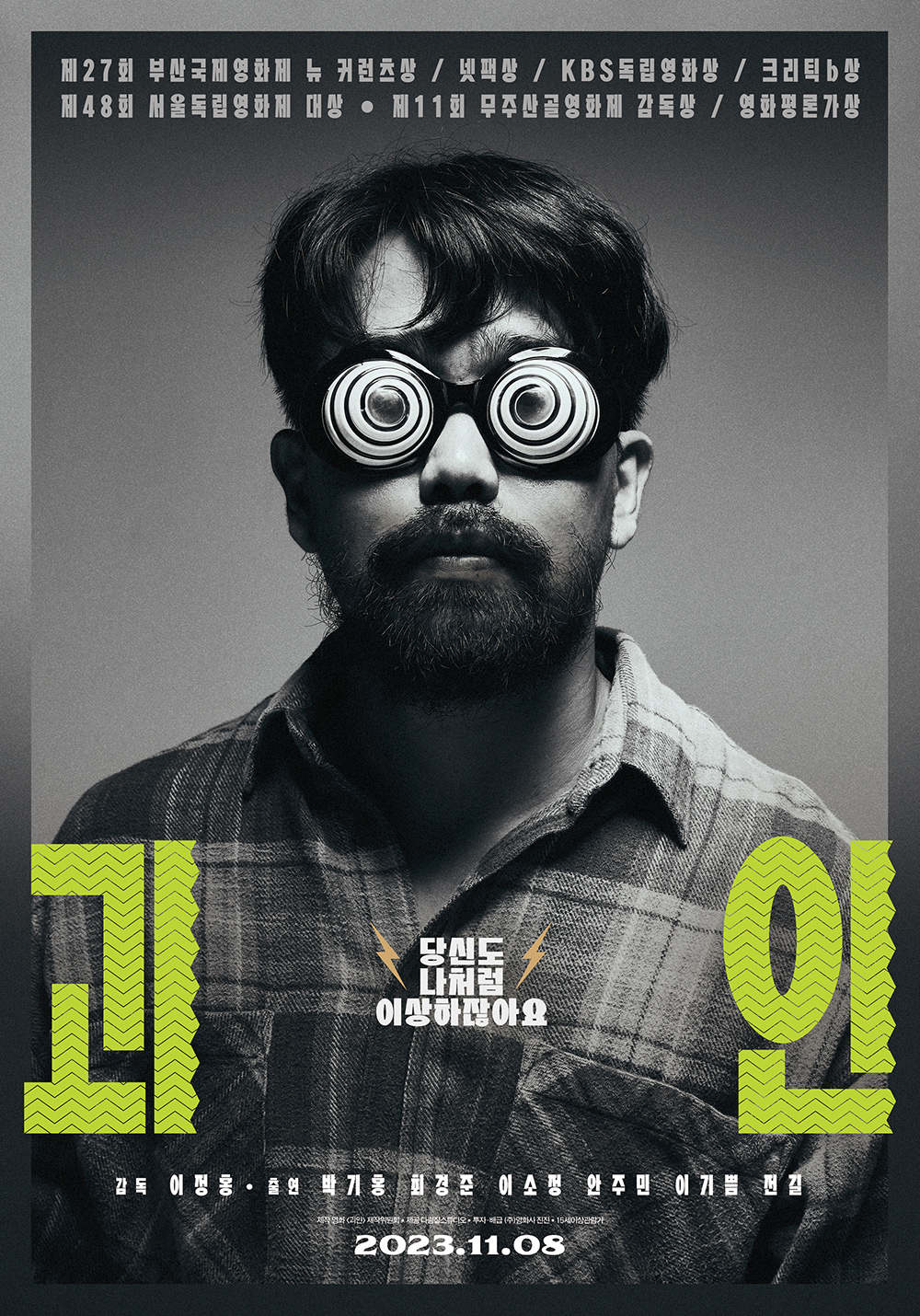
A Wild Roomer (괴인, Lee Jeong-hong, 2022)

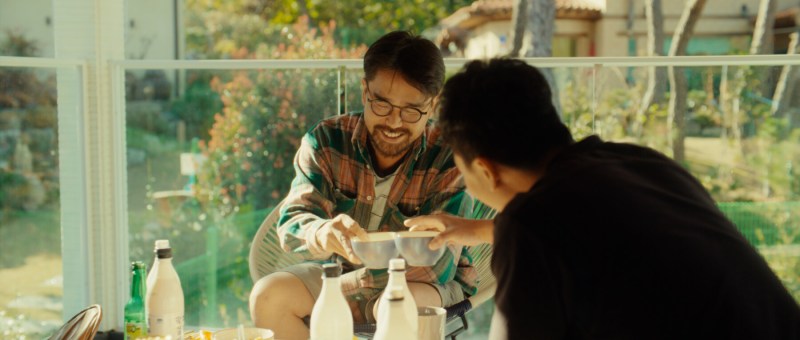
“Separation and connection” is apparently the architectural theme of the well-appointed home where not completely qualified carpenter Gi-hong (Park Gil-hong) takes up residence in Lee Jeong-hong’s quirky drama, A Wild Roomer (괴인, Goein). It’s not quite clear if Gi-hong is the strange person of the Korean title or if it refers to the young woman he subsequently encounters, to all of us, or someone else entirely but what does seem to be true is that Gi-hong lives a kind of separated life from those around him.

Ironically enough, Gi-hong’s job is as a joiner though as a conversation with a friend he’s hoping to recruit for his moribund business makes clear he may not actually have finished his apprenticeship and has jumped the gun setting up on his own. The way he tells it, people these days don’t hire interior design firms for small jobs but entrust them to a carpenter, such as himself, who can subcontract the other services involved. But it seems Gi-hong is not a particularly considerate boss, looking down on his employees while complaining that labourers are money grubbers and it’s alright for him to be rude to them because that’s how working men talk to each other. He criticises an elderly electrician who asked about his pay because he has medical expenses for not having planned better for his old age but appears to be doing little to plan for his own while keen to give everyone the impression that his struggling business is actually doing big numbers. He also doesn’t appear to care very much about finesse either, using the cheapest materials possible and doing a slapdash job that even loyal colleague Kyoung-jun (Choi Kyung-june) thinks is not really up to scratch. 

What’s also clear is that Gi-hong has an inappropriate crush on the piano teacher whose studio he’s refitting and a lack of understanding about personal boundaries. At several points he encounters doors that don’t open for him, while ironically his landlord doesn’t seem to believe in them. Though he rents the annex which has a separate entrance, Jung-hwan is keen for Gi-hong to treat the main house as his own entering and exiting through the front door which is all very well but also means that Jung-hwan (Ahn Ju-min) could presumably also wander into Gi-hong’s space whenever he feels like it. Jung-hwan is also living a “separate but connected” life with his enigmatic wife Hyun-jun (Jeon Gil) who he says doesn’t actually like him and never has. For reasons not entirely explained, Jung-hwan is home all day and seemingly lonely hoping he can adopt Gi-hong, who is also home a lot because there’s no work coming in, as a kind of surrogate little brother. 

Yet for all that Gi-hong seems, as his friend describes him, “irresponsible” and self-interested, there’s childlike vulnerability in him that finds an outlet when he unexpectedly encounters a young woman he assumes is responsible for the sizeable dent in the roof of his van. Skittish in nature, Hana (Lee So-jung) is in someways earnest and others helpless. She has no home or family and is in that sense separate and in search of connection while Gi-hong seems to feel guilty about asking her to take responsibility for what happened to his van considering she has no means to do so though is doing her best. She assumes that Gi-hong, Jun-hwan, and Hyun-jun must be “family” considering that they share the same space and seems to want to join them in a separate but connected existence. 

The mechanic they contact about fixing the van goes off on a minor rant about the younger generation, or more accurately those now approaching middle age in their 30s or early 40s, who he claims have been given false expectations because of Korea’s unexpected success in the 2002 world cup which has led them to assume that dreams come true on their own and things will just work out without the need to really do anything to make them. The irony is that he’s pretty much describing Gi-hong who seems to have an insecurity and baseless hope that his business will pick up while terrified it won’t. But then everyone seems to be living a life of quiet separation, privately anxious and dependent upon the loose connections that have replaced the certainties of a blood family. Gi-hong, whose attempts to construct pleasant spaces for others are often imperfect, may have found himself a home of separate connection. “It feels so weird” a woman exclaims on looking at a precariously balanced rock, but like so many things in Lee’s strange world it seems to work even if you think it shouldn’t.


A Wild Roomer screens 11th November as part of this year’s London Korean Film Festival.

Origina trailer (English subtitles)

I Haven’t Done Anything (좋.댓.구, Park Sang-min, 2022)

The central irony of Park Sang-min’s meta comedy I Haven’t Done Anything (좋.댓.구, Joh.Daes.Gu) is that a man who remains defiantly silent generates much more interest than the one desperately chasing YouTube success. Adopting a “screen life” aesthetic in which much of the action is told through social media and video screens, the film asks a series of questions about our petty obsessions, online authenticity, media manipulation, and the impossibility of escaping a predetermined image as its embattled hero strives to reinvent himself by his inhabiting most famous role.

Actor Oh Tae-kyung plays a version of himself who is struggling to maintain his career as an actor having begun as a child star with his most high profile roles including that of the younger Oh Dae-su in Park Chan-wook’s Oldboy. With work thin on the ground, he turns to YouTube but fails to make an impact with content that commenters describe as old hat such as “mukbang” eating videos and unboxings. It’s then that he comes up with the idea of rebranding as “Li’l Oh Dae-su”, dressing up as the protagonist of Old Boy and accepting viewers’ challenges which at one point include him taking revenge on a gang of class bullies by hitting them on the head with a plastic mallet while mimicking the famous corridor fight scene from the landmark drama.

But then, someone else has already shared their screen with us. Going under the name “Bulldog”, a viewer asks Tae-Kyung to solve the mystery behind a man who’s been standing silently in the square with a large sign reading “I Haven’t Done Anything”. Tae-kyung reasonably wonders why Bulldog didn’t just ask the guy himself, but as he explains “Picket Man” refused to answer him. Given the large amount of money Bulldog has pledged for this seemingly simple request, Tae-kyung accepts the challenge but Picket Man continues to ignore him no matter the silly stunts he pulls an attempt to break his concentration. 

Bulldog’s apparently strong desire to know the truth, willing to offer up vast sums of money just to satisfy his curiosity, hints at our own petty obsessions. After all, the cryptic quality of the sign is intriguing. What exactly is Picket Man trying to say, what didn’t he do and who says he did it? Of course, in another way, Tae-kyung also feels he hasn’t done “anything” with his life and stuck in a career morass unable to shed the image of himself as a child actor and young Dae-su in particular. Every time someone offers him another role, he worries that the baggage of his early career follows him and he’s simply not credible as a hardened gangster, for example, if everyone only sees him as the eldest of six siblings in a much loved TV drama or the little boy who grow up to become the schlubby captive Oh Dae-su. 

When the skit becomes an accidental viral hit, Tae-kyung begins to worry that perhaps he’s doing Picket Man a disservice and this kind of publicity isn’t really what he was after though it’s puzzling that he himself refuses to speak about what it is he hasn’t done. What he realises is that Picket Man is much like himself and he’s done to him what others have done to Tae-kyung in reducing him to a single image. How will anyone ever see this otherwise anonymous person as anything other than “Picket Man” now? Tae-kyung has unwittingly exploited him for his own ends and possibly ruined his life in the same way that anyone who becomes a meme is robbed of an identity. 

Then again, in this very meta tale not everything is as we think it is and we ourselves, like the YouTube commenters, are being manipulated by unseen forces. As Picket Man becomes the latest social media phenomenon, other content creators start arbitrarily jumping on the hashtag, randomly mentioning Picket Man to boost their own views while unscrupulous forces also exploit the meme potential to run scams featuring Picket Man’s image. Park carries the meta quality through to interrupting the film with fake YouTube ads and product placement from sponsors that remind us we are being sold something whether we realise it or not and that we might not even realise what the product is or who’s selling to us as the final reveal implies. Nevertheless, there’s a sense of triumph in the success of this heist that’s been pulled on us in the winning self-deprecation of dejected former child star Tae-kyung and his great master plan to shed himself of an otherwise inescapable image. 


I Haven’t Done Anything screens 5th November as part of this year’s London Korean Film Festival.

Original trailer (English subtitles)

Sabakan (サバカン SABAKAN, Tomoki Kanazawa, 2022)

A melancholy middle-aged writer looks back to a climactic summer of his youth and the ghost of fractured friendship in Tomoki Kanazawa’s heartwarming nostalgia fest, Sabakan (サバカン SABAKAN). A classic summer adventure movie, the film finds a sense of warmth in childhood memory but also reflects on all that at the time it was impossible to understand along with a sadness in the inevitable end of summer as two boys chase the spectre of dolphins in an otherwise tranquil seaside town.

In the present day, Takaaki (Tsuyoshi Kusanagi) is a struggling author and divorced father already behind on his child support. When he mentions working on another novel, his agent laughs at him that books like that don’t sell while trying to convince him to take a job ghostwriting for an Instagram influencer going viral for her dieting tips. Perhaps because the agent had described his writing as “quick and easy to read”, essentially anonymous and empty, he begins meditating on his childhood self repeatedly praised for his writing by a teacher who is perhaps a little easily moved. 

The summer of 1986 was the beginning of the Bubble era and Takaaki’s memories are indeed filled with a series of cultural touchstones such as the idol Yuki Saito whose poster the young Takaaki sometimes kisses after dancing around singing her hits. All of which is one reason why the poverty of his classmate Kenji (Konosuke Harada) has made him even more of an outcast bullied by the other kids who follow him home and make fun of the rundown house with tarp covering the roof that he lives in with his mother (Shihori Kanjiya) and several siblings. His fisherman father died some years ago and his mother works in the local supermarket doing her best to support five kinds on a part-timer’s salary. Kenji takes a liking to Takaaki because he’s the only kid who didn’t join with the others when they laughed at him, more or less blackmailing him into a summer adventure looking for dolphins in a cove over the mountain. 

Even the younger Takaaki reflects there probably weren’t any dolphins in the first place, Kenji just wanted to go on adventure with him and didn’t otherwise know how to ask. A careless word from his otherwise warm and supportive mother provokes a minor rift in the boys’ relationship that despite himself the younger Takaaki didn’t quite understand causing him to pull away from Kenji in an unwarranted sense of rejection unable to recognise that he is simply awkward and has low self-esteem which caused him to question the reality of their friendship. In any case though they are later separated by unexpected tragedy, their connection becomes a touchstone for each of them reminding them that they are not alone even if no longer together. 

Kanazawa captures an impish sense of fun the boys’ adventure as they find themselves in a tricky situation with a trio of thuggish delinquents and meet an equally melancholy teenage girl at the shore who stares mournfully at a washed up can of Korean soda and explains sadly as she looks out over the sea that she herself has not been there yet. The Yuki Saito poster comes down, signalling the arrival of a coming of age and the putting away of childish things as Takaaki moves into a more concrete adulthood while still floundering in adolescent confusion and the inability to fully understand his new friendship or its growing importance in his life. 

The adult him understands only too well, meditating on his memories and triggered by nostalgia on seeing a can of mackerel and remembering the carefree summer of his youth. The rediscovery of a childhood bond begins to open him up both artistically and in his relationship with the wife and daughter from whom he is separated. Told with humour and warmth, the film is filled with a sense of childhood wonder and the comfort of the everyday largely undimmed by the entrance of tragedy and the essential sadness of summer’s end. Even so it allows its melancholy hero to find a kind of salvation not only in childhood memories of dolphins and canned mackerel but in the enduring quality of a friendship that itself may have become distant.


Sabakan screened as part of this year’s Camera Japan.

Original trailer (no subtitles)