Gosh!! (THE オリバーな犬、(Gosh!!) このヤロウ MOVIE, Joe Odagiri, 2025)

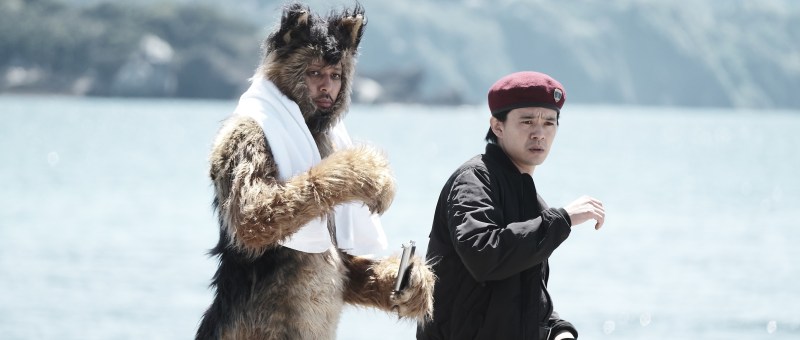
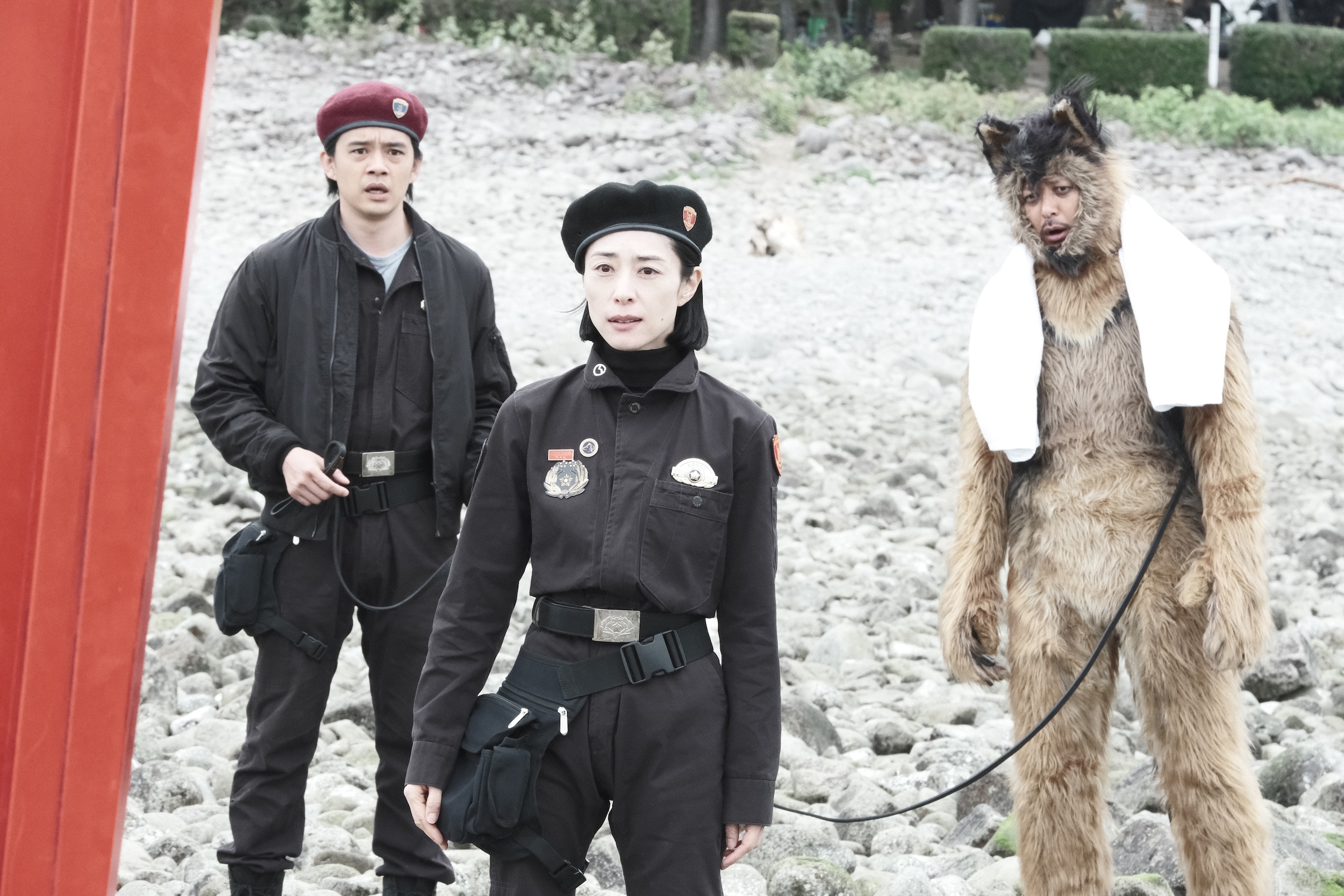
The world is full of strange things, according to the canine hero of of Joe Odagiri’s surreal comedy. GOSH!! (THE オリバーな犬、(Gosh!!) このヤロウ MOVIE, THE Oliver na Inu, (Gosh!!) Kono Yaro MOVIE) Edited down from a TV series, the film takes place in a kind of Lynchian dream space in which once can embrace one’s inner desires, while in the ostensibly “normal”, everyday world, Odagiri himself stars as a foul-mouthed, lecherous police dog burdened by the legacy of his legendary father whose disappearance remains unsolved. 

In another way, perhaps Oliver’s animalistic antics are a mirror for his handler Aoba’s (Sosuke Ikematsu) repressed desires or rebellion against his straight-laced personality. Describing himself as someone with a strong sense of justice, Aoba’s initial attempts to find his feet as an ordinary street cop were hamstrung by his clumsiness. He became a police dog handler hoping to find the perfect partner with whom he could find the “firmest trust,” only to be saddled with Oliver. Nevertheless, his ability to see him as a middle-aged deadbeat in a dog suit he can converse with in human language suggests a kind of synchronicity between dog and handler as is later praised by trainer Hagoromo (Eri Fukatsu).

The disappearance of Oliver’s father Rudolph, however, is one of the film’s central mysteries and linked with that of “Super Volunteer” Konishi (Koichi Sato) who has gone missing while looking for missing persons. Konishi seems to have been a regular salaryman before being struck by some kind of cosmic force that linked him with Rudolph and causes him to occasionally behave like a dog, in contrast to Oliver’s behaving like a human. He also ends up lost in a kind of other world with Rudolph’s former handler Mizoguchi (Masatoshi Nagase) who has become a freelance reporter and is recruited by his niece to investigate a sighting of a “little old man fairy” a boy she runs into is trying to catch. 

Each of these incidents is linked by the sound of glass smashing which echoes that in the Red Room-like cabaret of the dream space and acts as a means of breaking the spell. Playing out as a series of surreal episodes connected by the presence of strange red doors leading to other worlds, there is a definite blurring of the real world and that of dreams along with a meta dimension that allows those trapped within it to question their reality. A policewoman (Kumiko Aso) wonders why the whole room suddenly embarked on an elaborate dance routine when she arrived to confront her father but has no real answer, abruptly returning to a more concrete reality. 

Her father, meanwhile, had wanted to share a part of himself hitherto hidden from her that we later see fulfilled in the dream space. While this dream world appears to be somewhere that repressed desires are fulfilled, it seems that it may not have a wholly positive effect and as Oliver warns us at the film’s conclusion, there may be some doors that are best left closed. Nevertheless, making several homages to David Lynch including the discovery of a severed ear, Odagiri conjures an atmosphere of strangeness and mystery that goes beyond the weirdness of humanoid of dogs and alternate realities in which everything is the same but everyone is obsessed with takoyaki.

To that extent, Aoba becomes a kind of straight man frustrated by all this weirdness but unable to restore order to the world around him or accept the parts of himself that Oliver reflects. In his opening interview, he refuses to accept his fate, disrupting the interviewer’s questions by stating that he does not believe that his destiny is to be a dog handler, not because he is being modest about his abilities, but fundamentally because he resents his present reality and thinks he deserves better than being shackled to Oliver. There is, however, more to this world than we can fully understand with its various absurdities in which everything is strangely connected and “distortions in spacetime” can have profound effects on us all. Though some of its obscurity may stem from the film’s TV series origins with several seemingly pivotal characters appearing only for a few moments, there is a genuine sense of mystery and unease to be found within the noirish world that exists beyond a door some may wish they had never opened.


Gosh!! screened as part of this year’s JAPAN CUTS.

Trailer (no subtitles)
Mayhem Girls (メイヘムガールズ, Shinichi Fujita, 2022)

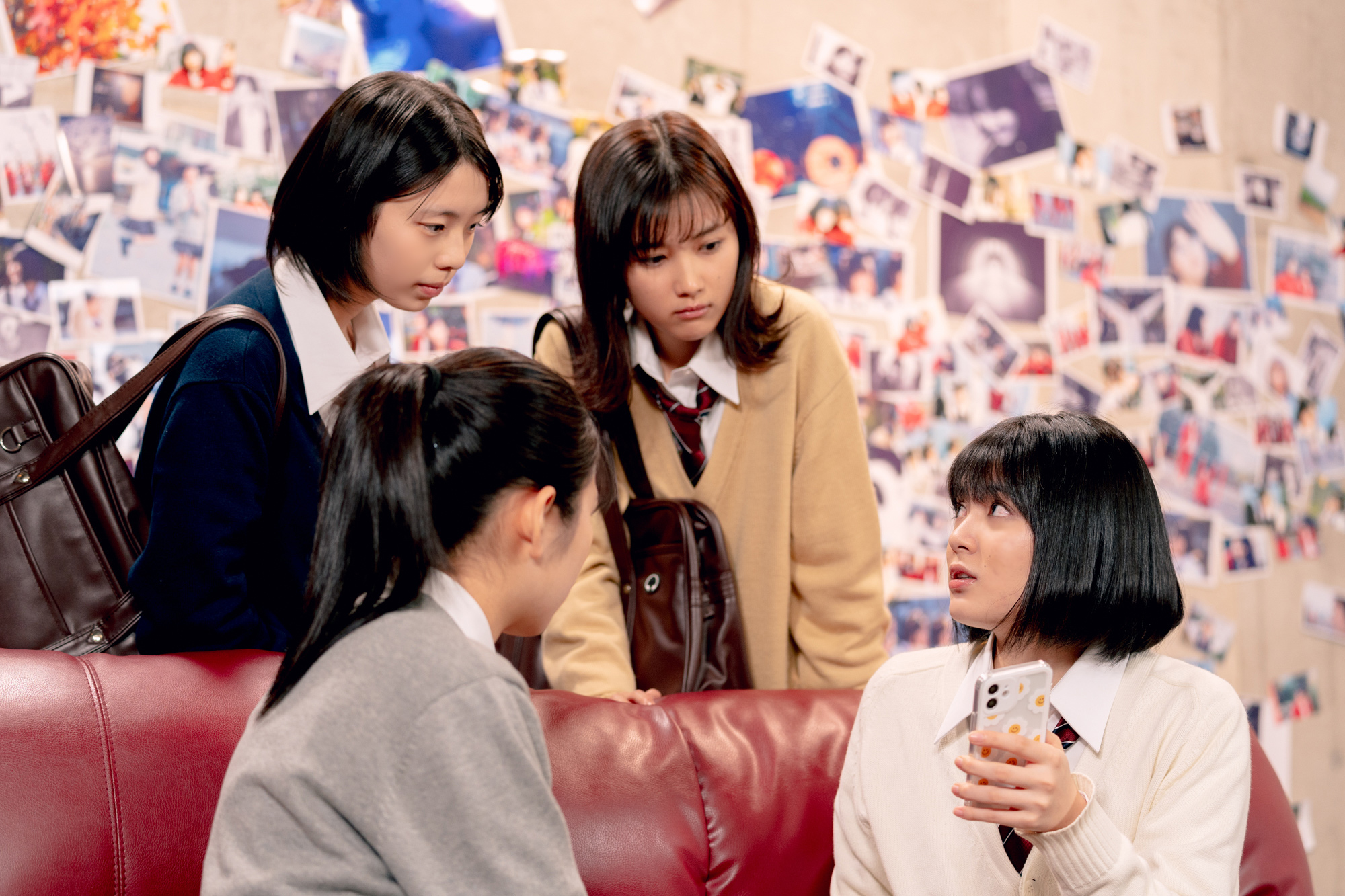
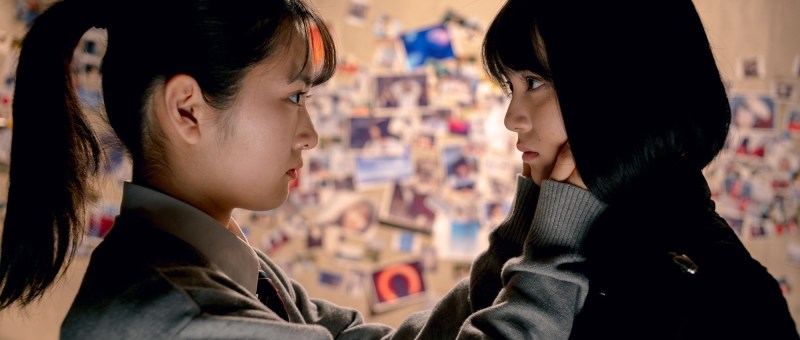
Four teenage girls unexpectedly find themselves with superpowers during the Covid-19 pandemic, but largely struggle with just the same problems as everyone else in Shinichi Fujita’s sci-fi-inflected high school dramedy Mayhem Girls (メイヘムガールズ). Despite the implications of the title, mayhem is not exactly the girls’ vibe though they each in their own way challenge the oppressive social norms of those around them later depressed by the realisation that they’ll soon have to go back to being “normal” and lose this brief respite they’ve been given from the rigours of high school life. 

The girls are already close to boiling point with the pressures of the pandemic as the teachers (ironically) yell at them to use hand sanitiser and social distance. The final straw seems to be the announcement that the Cultural Festival will be going online. That might be one reason why popular girl Mizuho (Mizuki Yoshida) suddenly snaps when her teacher catches her reading Twitter on her phone rather than studying. Miss Sawaguchi (Maako Miwa) is young and somewhat timid, unable to exert her authority over the class which is largely uninterested in her attempt to read out articles from English-language magazines. What’s the point, Mizuho wonders, in learning English if you can’t go abroad anyway? Sawaguchi takes this opportunity to reprimand Mizuho as a means of asserting her control but it backfires as something strange happens when she confiscates the phone. Sawaguchi’s hand stops mid-air allowing Mizuho to simply reclaim it while she runs out of the room as if in pain. 

This is only the first inkling that Mizuho has gained unexpected powers of telekinesis though she struggles to understand what happened, certain that she didn’t touch Miss Sawaguchi and confused that she seems to be talking about “violence” and displaying bruises on her wrists. In any case, the event loses her her phone which is akin to a kind of social death for a teenage girl. Her powers have, however, brought her to the attention of Tamaki (Amane Kamiya) who is a telepath, or more accurately given her an excuse to make contact for as it turns out Tamaki has long been carrying a torch for the oblivious Mizuho who is hung up on the student who was her tutor in middle school, Yusuke (Taisei Kido). Soon they are joined by two more girls, Akane (Manami Igashira) who can teleport, and Kei (Hina Kikuchi) who can read the minds of machines, in a kind of after school superpower club. 

Though they eventually become good friends, the relationship between the girls is strained by their differing views on their powers and by Mizuho’s concurrent obsession with Yusuke who is now a part-time delivery rider struggling to find a full time job in the middle of the pandemic. Using Kei’s powers to track him down she waits outside his house for him to come back and inserts herself into his life. Though he seems as if he’s about to remind her that her behaviour is inappropriate, Yusuke eventually goes all in on Mizuho after learning of her powers and asks her to use them to rob a bank so he can forget about his employment woes. 

There are many things you shouldn’t do for a boy and robbing a bank is very high on the list, though perhaps merely a more extreme version of a lesson typically learned in adolescence. In any case, this is far as Mizuho is pushed to the dark side. Other than that, none of the girls really consider using their powers for evil ends with even Tamaki admitting that she has thought about poking around in Mizuho’s head but feels it would be wrong to do so. It’s Tamaki who draws the short straw in being largely unable to articulate herself even by using her powers before eventually trying to communicate in images only to be robbed of the power to do so at the very last second when she’s reduced to being “normal” once again. 

“Normality” does seem to resume for them, each of the girls heading back to their own individual cliques having seemingly learned little from their experiences save Tamaki who is left with a lingering sadness. Perhaps what they’ve been through is a kind of mayhem, a period of chaos provoked by the pressures of the pandemic along with oppressive teachers and the regular teenage issues of unrequited love and romantic disappointment but they’ve returned to “normal” all too quickly leaving precious little time to meditate on the results of their flirtation with superpowers and psychic abilities in a world in which normality itself is both somewhat illusionary and infinitely oppressive.


Mayhem Girls screened as part of this year’s New York Asian Film Festival.

Original trailer (no subtitles)