Little Blue (小藍, Lee Yi Fang, 2022)

Mother and daughter find themselves in eerily similar situations when dealing with a social double standard in Lee Yi Fang’s pointed drama, Little Blue (小藍). At heart refreshingly sex positive, the film nevertheless asks why some people seem to be hung up on what is a perfectly normal part of life while simultaneously exploring how sexuality can be misused or exploited and mostly particularly that of the young and naive. “I sometimes feel like my body’s not mine,” the titular Xiaolan (Wang Yu-xuan) confesses to a befuddled teacher who explains to her that she’s gone “astray”, while she might as it happens have a point. 

The opening sequence is witness to the transformation Xiaolan subsequently undergoes. Describing herself as incredibly confused, unable to understand what the teacher is getting at when he asks her why she didn’t come to him when it started, this Xiaolan is wearing makeup and has a fashionable hairstyle. But flashing back a few weeks, the Xiaolan we then encounter is shy and mousy. She has long, lank hair and glasses in contrast to her more glamorous friend Kyueiyu who needles her about hair removal techniques and the realities of contemporary dating. 

This Xiaolan is mildly resentful of her mother whom the other kids brand as “hot” when she turns up with a lunch box Xiaolan had forgotten. Vivi (Helena Hsu) is an estate agent who works late and leaves Xiaolan to get her own dinner but also has a very active sex life and an annoying boyfriend who keeps sexting her and sending videos of questionable taste at inappropriate moments. There’s probably something in the fact that aside from Xiaolan’s high school boyfriend Wu Miao (Ye Ting-qi), the otherwise unavailable men all have Western names. Vivi’s sleazy boyfriend goes by Matt, while she later starts an affair with a married client, Kris, and Xiaolan finds herself drawn to a slightly older guy she hooks up with on a dating app who tells her that he has a girlfriend and his name is “Tim” (Roy Chang). 

Just as Wu Miao had after seducing her on a beach, Tim soon starts ignoring Xiaolan’s messages. After all, he has a girlfriend and probably doesn’t want to be bothered by a genuine connection with a dating app hook up. Xiaolan experiences a kind of breakdown after handsome footballer Wu Miao shares an explicit photo of her with a friend who then “accidentally” posts it on the class chat if only to delete it seconds later. Wu Miao isn’t visible in the photo even if everyone knows he’s on the other side of it, but in any case it’s only Xiaolan who suffers a repetitional loss and is shamed by her classmates. It’s in the wake of his shunning that Xiaolan turns to dating apps, hoping to satiate her curiosity and desire but in the end discovering only more loneliness. Taking her to task, Vivi claps back that at least she gets a “thrill” from her otherwise painful love affairs whereas Xiaolan doesn’t seem very happy at all and gives the impression that her dating app odyssey is at least in part an act of self harm. 

Nevertheless, mother and daughter eventually begin to bond over the irony of their parallel crircumstances if only in the knowledge that it doesn’t really get any better and in the end female solidarity may be all there really is. Lee shoots the changing Xiaolan in melancholy shades of blue that of course eco her name but also lend her world an isolating quality that traps her within her own shame and uncertainty. Even the teacher who attempts to talk to her about her waywardness ends up becoming inappropriately aroused. Xiaolan tells him that he’s “very normal” and hasn’t done anything wrong in a moment that seems both a mic drop and somehow transgressive, allowing Xiaolan to offer the sex positive message she should have received while ironically highlighting that the teacher’s response, as unconscious as it may have been, is necessarily problematic. 

In any case, Xiaolan is finally able to reclaim herself and sexuality as perhaps is Vivi as something that belongs to her alone rather than for others. She’d begun to change herself to be accepted, getting contacts, stealing her mum’s makeup and following her friend’s beauty techniques but still found herself rejected and reduced to a mere body much as Vivi is described as a spare time girl realising that Kris only sees her as a temporary escape from his familial responsibilities. Maybe Vivi saw it the same way, too wrapped up in her own problems to deal with her daughter’s, but what emerges between them seems to be healthier kind of emotional honesty that, ironically, neither found in the arms of their duplicitous men. 


Little Blue screened as part of this year’s London East Asia Film Festival.

Original trailer (Traditional Chinese / English subtitles)

Polan (ポラン, Kota Nakamura, 2022)

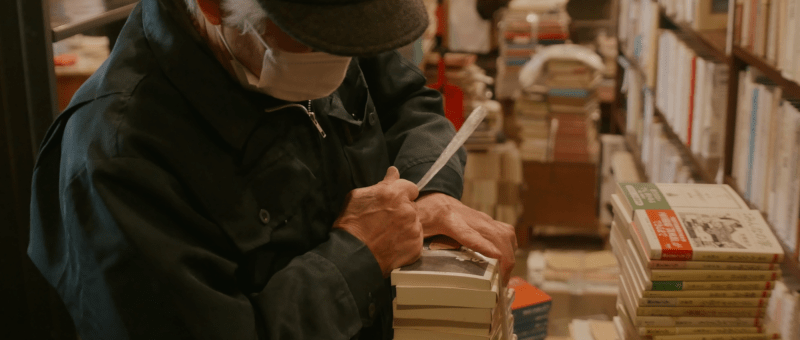
The closure of a second-hand bookshop leaves a gaping hole at the centre of a community in Kota Nakamura’s warmhearted documentary, Polan (ポラン). Driven to close their physical shop because of the ongoing economic effects of the pandemic, an elderly couple contemplate changing times but still hope to save something of paper culture and the organic pleasures of offline browsing from unexpected discoveries to serendipitous friendship and the comfort to be found in having a familiar place you can be certain of returning to. 

As he explains, Kyosuke Ishida found himself disillusioned when most of his fellow student protestors ended up getting regular salaryman jobs. He wanted to prove he was different, so he dropped out and started working as a tutor at cram schools before eventually deciding to open a small second-hand bookshop. The shop was so successful that they later moved to larger premises, but footfall began to fall during the pandemic while online sales remained constant. With his wife Chiseko who runs the bookshop with him already feeling the physical strain of their work and the landlord upping the cost of their lease, the pair eventually decide to close up though Kyosuke has mixed feelings and would have liked to continue a little longer. 

More than the books, what the shop offers is a sense of community. Some customers tearfully remark that they’ve grown up with the store and feel themselves bereft while others share happy memories of browsing the shelves. The store itself is like a place out of time, decorated in a whimsical, antique style from the fretted front window to the antique clock on the wall and old-fashioned dolls sitting on the cases. As they’re fond of pointing out, everyone is welcome at the store and they pride themselves on providing a diverse selection of books rather than just the things they particularly like or know will sell well. Kyosuke devotes whole shelves to each genre and keeps them all well stocked rather than prioritise sure sellers ensuring that rare books are always available. 

As he says, part of what he’s trying to save is paper culture. If you know what you’re looking for, then of course you can find it online right away and have it delivered quickly and cheaply. But perhaps something’s been lost in the drive towards convenience. Kyosuke remembers taking a lengthy train journey as a child during which they had to temporarily disembark in an unfamiliar place but that doesn’t happen with the Shinkansen where you can’t even open a widow or see much of the world around you as you rocket through it. As he sees it, you might have a happier life taking a more difficult path, much as he has opening a bookshop, discovering small things along the way rather than opting for easy convenience. He wants people to experience the thrill of the inconvenience of turning a page, along with “the joy of searching and pleasure of encountering” that can only be found with a physical experience in a real world bookshop. 

Nevertheless as he admits times have changed and we’re entering a new and unknown post-pandemic world. He regrets that the bookshop can’t go too but consoles himself with the knowledge it’ll exist online. There is however continuity as their employee, Minami, decides to open a bookshop of her own taking some of the same sentiments with her in providing another community hub open to a diverse collection of book lovers in pleasant surroundings. Revisiting the location a year later, Nakamura discovers the shop space still vacant. Its bare industrial walls are somehow devoid of life. It’s difficult to believe the bookshop with its whimsical old world charm once existed there. It takes just 20 days to demolish it with the shelving and other furnishings taken by other store owners such as Minami and a distant relative in another town suggesting that the shop itself lives on, moving in a cycle much the books though some of those are unfortunately pulped as last resort. A gentle tribute to a disappeared local institution, the film ponders on what we’re losing in the post-pandemic world along with what our love of convenience may be costing us in a warmth and sensation otherwise unavailable in our rapidly digitising world.


Polan screened as part of this year’s Camera Japan.

Original trailer (no subtitles)

The Boys (소년들, Chung Ji-young, 2022)

A “mad dog” policeman uncovers a miscarriage of justice but finds that his faith in his institution may have been misplaced in Chung Ji-young’s pressing judicial drama, The Boys (소년들, Sonyeondeul). Like much of Chung’s previous work critiquing the power imbalances of the contemporary society, the film is one of several recent dramas taking aim at the justice system and the utter contempt of those in power for those without most notably for the titular boys exploited by a failure of the system.

In 1999, a trio of teenagers is picked up and arrested for the robbery of a convenience store in which an old woman died. Newly transferred to the district, “mad dog” policeman Joon-cheol (Sol Kyung-gu) receives a tip off that actually someone else did it. The informant says he’d previously told the investigating officer, Choi (Yoo Jun-sang), but was ignored. Joon-cheol might assume that’s because he didn’t think there was anything in it and didn’t find the informant credible, but something nags at him and he begins to look at the case only to realise too much of it doesn’t make sense. He soon discovers that Choi and his underlings beat the suspects, who were terrified and naive due to their youth, into a false confession in order to get a promotion by solving a prominent case.

Chung switches back and fore between 1999 and 2016 when the boys’ retrial finally takes place and discovers Joon-cheol a somewhat broken, defeated man who has served out the past few years on a peaceful rural island never receiving any further promotions. With his retirement looming, he’s been offered a return to the mainland, but apparently only thanks to Choi which leaves a sour taste in Joon-cheol’s mouth. Like pretty much everyone else, he is haunted by a sense of guilt that in the end despite his promises he was powerless to help these innocent young men escape their false imprisonment. 

Then again, Joon-cheol is also a product of the system. The “mad dog” beat suspects too, and there’s something chilling in his justification that he only beat the “guilty” and never the “innocent”. He got his promotion after being stabbed on the job, a strange sacrifice that seems the inversion of Choi’s greedy venality. Choi really thought nothing of these boys, one whom had learning difficulties and was illiterate so could not have written his statement on his own, because they were poor and defenceless and is unrepentant even when confronted with the truth. He himself could have caught the real culprits but simply chose not to because it was easier and more convenient to him to destroy the lives of three innocent boys instead. 

Choi’s reach seems to be eerily extensive though the police force’s reluctance to correct a miscarriage of justice because it would make them look bad is obviously an institutional flaw along with the use of violence to elicit confessions. The older version of Choi with slick backed hair and an arrogant manner behaves as if he’s untouchable, giving an answer for everything and leaving no room to be challenged while others are only too keen to support his version of events with equally smug manipulations of the law. 

The boys find themselves powerless. They cannot challenge Choi and though they’ve served their sentences and paid a debt to society that was never theirs to begin with cannot move on with their lives because they are still branded murderers meaning no one will hire them. Meanwhile, at least one of the real killers has had to opportunity to start again and is reluctant to help because they do not want their new family to find out about their past. Everyone is harbouring some kind of guilt or desire to bury the truth for a quiet life, Joon-cheol too not wanting to get involved and cautioning the boys against applying for a retrial because it will only cause them further pain. 

Though the truth is eventually revealed and the boys’ names cleared, the overwhelming implication is that you cannot really win against men like Choi. The sentiment is rammed home by a final title card explaining that nothing happened to any of the policemen involved in framing the boys while Joon-cheol only has the satisfaction of having helped to free them neither vindicated as a police officer or successful in undercutting the corruption inherent in the police force and embedded in the society itself. Nevertheless, Joon-cheol’s righteousness and the the unexpected support he receives from those around him for doing the right thing add an inspirational quality that simultaneously suggests justice is a distant dream but also that it can be achieved if enough people can be persuaded to chase it even while against their own interests.


The Boys screened as part of this year’s London East Asia Film Festival.

Original trailer (no subtitles)

A Mother’s Touch (桜色の風が咲く, Junpei Matsumoto, 2022)

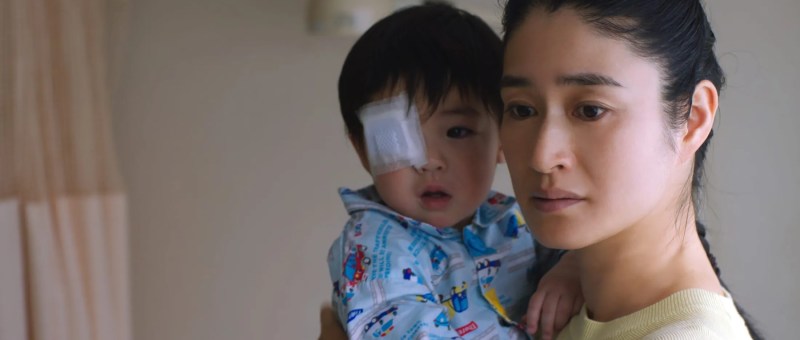
A young man begins to ponder the meaning of his life while losing both his sight and hearing in Junpei Matsumoto’s heartwarming biopic, A Mother’s Touch (桜色の風が咲く,Sakurairo no Kaze ga Saku). The English title aptly hints at the maternal devotion that kept Satoshi (Taketo Tanaka) part of the world even as he feared becoming isolated from it, though the Japanese “when the pink wind blooms” leans towards the poetic in echoing the ways in which he is able to open himself to a different kind of sensory experience. 

Satoshi Fujisawa would later go on to become the first deaf blind university professor in Japan though the films opens with a toddler Satoshi discovering that he has a rare condition that causes the pressure in his eyeball to increase endangering his vision. Though he undergoes various treatments, he eventually loses the sight in one eye and then the other several years later. While in high school he then discovers that he is also beginning to lose his hearing which, along with braille, had been his primary way of experiencing the world around him. 

Matsumoto’s film does not really go into the various ways in which Satoshi is inconvenienced by a largely ableist society aside from his having to leave home and go to Tokyo to attend a school for the blind. Satoshi does, however, experience bullying as a child particularly from an obnoxious gang of boys who egg him on to remove his glass eye in front of them while otherwise isolated by the constant need to rest his eyes with only rakugo to listen to on the radio. Introduced to braille, he is immediately fascinated remarking that the person who came up with it must have been a genius and explaining that he has not given up on his sight but it doesn’t hurt to learn. 

It’s braille that eventually becomes his lifeline as his mother figures out a way to communicate with him by pressing his fingers as she were typing on a braille keyboard while he replies vocally. Her adhoc solution has apparently gone on to provide an important means communication for other deaf blind people across the world and reminds Satoshi that though he may feel as if he as been marooned in deep space he is not alone and is able to interact with the world around him. While still trying to save his hearing, he had decided to try an alternative treatment method which emphasised heavy exercise and bland food designed to boost the immune system though he discovered that it only robbed him of an additional sensory input and a resultant longing to eat something sweet. Though he is unable to see or hear, he can still taste and smell the world around him welcoming the spring in unexpected ways while embracing his potential and independence.

That said, his major philosophy is that life is full of voids designed for other people to fill in the ways that we can all help each other. The film doesn’t shy away from exploring the strain placed on Satoshi’s family as they try to cope with his medical needs which leave his mother feeling guilty that she is often away from her other two children caring for him at the hospital, and his father lonely and overburdened while trying to balance the demands of his working life with that of taking over the domestic space. In any case, they resolve to get through it as a family doing what they can to support Satoshi without robbing him of the opportunity to lead as independent a life as possible. Satoshi comes to believe that his disabilities may be the price for his purpose, that there must be something he is uniquely supposed to do with his life along with places only he could discover. The film eventually finds him in a space of possibility, recalling happy times with his family as a child but also looking forward towards a new potential for pushing the boundaries and moving beyond the limitations others might have placed on him. 


A Mother’s Touch screened as part of this year’s Camera Japan.

International trailer (English subtitles)

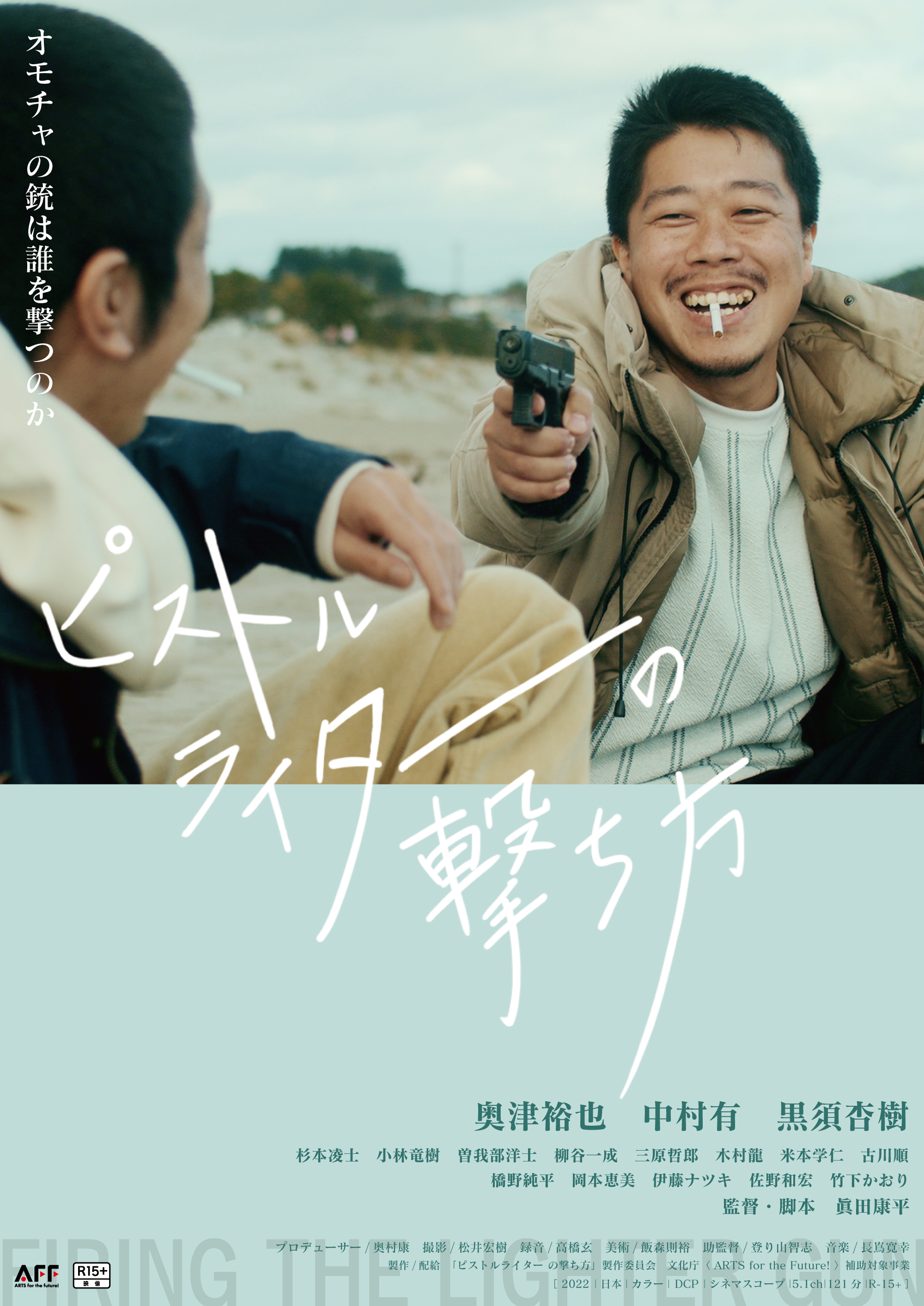
Firing The Lighter Gun (ピストルライター の撃ち方, Kohei Sanada, 2022)

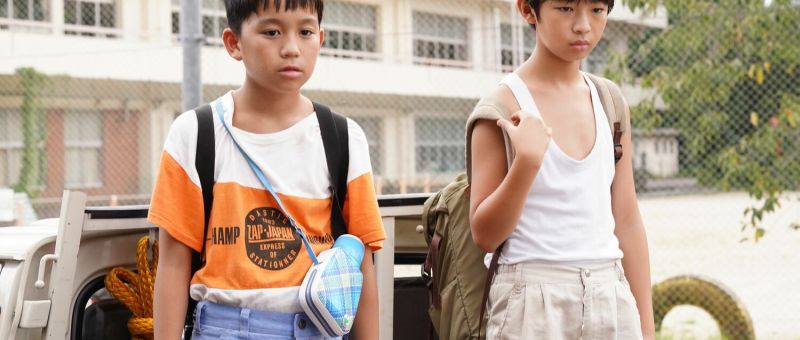
“Whatever got you here, it can’t be any good” a resident of a flophouse reflects on their moribund circumstances suckered to into debt bondage by exploitative yakuza who force them to risk their lives doing clean up in a nuclear exclusion zone. Kohei Sanada’s bleak indie drama Firing the Lighter Gun (ピストルライター の撃ち方, Pistol Lighter no Uchikata) takes place after second nuclear disaster has left even more of the land unsurvivable. The heroes have been quite literally displaced, left without a place to return to or call a home, but are also emotionally alienated unable to envisage an escape for themselves from this otherwise hopeless existence.

Having recently been released from prison, Ryo (Yu Nakamura) remarks that the area has changed since he’s been away but his friend Tatsuya (Yuya Okutsu) counters that he doesn’t really think so. In any case, Tatsuya lives with a huge inferiority complex most evident on his attendance at a school reunion he didn’t want to go to where he sits sullen and dejected among those who’ve moved up in the world not least his ex, Shoko (Emi Okamura), who left him for a guy with a steady government job but still drops by to care for his ageing mother who suffers from dementia and the legacy of domestic abuse. Tatsuya is not a yakuza but his work is yakuza adjacent in that he drives a van full of equally hopeless men recruited for a dodgy operation offering cleanup services in the nuclear exclusion zone. 

Though the jobs are supposed to pay well with a bonus for the hazardous nature of the work, most of it is being skimmed by the yakuza bosses who deduct vast amounts from the men’s pay-packets for “expenses” such as the right to sleep in a communal flophouse where they charge them exorbitant amounts for snacks and drinks which they have to buy because they aren’t allowed to go out. Nor are they allowed to quit the job, trying to run incurs a 50,000 yen fine on top of any debts they’re supposed to be working off. An unexpected addition to Tatsuya’s van one day is Mari (Anju Kurosu), a sex worker, who’s been forced to work for the gang to pay off a debt incurred by an ex who’s since run off. 

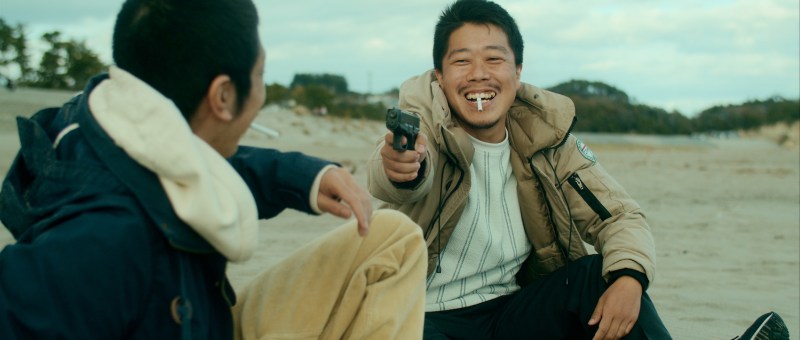
As she later says, it’s a waste of time dreaming about a home, life is easier when you no longer expect one. But despite themselves a gentle bond soon arises among the trio of dispossessed youngsters who each feel trapped by their circumstances but are uncertain if they still have the strength to contemplate escape. Tatsuya’s sense of impotence is embodied by the cigarette lighter he carries around which is shaped like a pistol and realistic enough to cause a yakuza bodyguard a moment of concern but of course of no real use to him. As Ryo puts it, Tatsuya’s problem is that he still cares about those around him and is not heartless enough to treat the flophouse men like the “disposable tools” others regard them to be. He is constantly belittled by grinning boss Takiguchi (Ryoji Sugimoto) who blames him for everything that goes wrong and calls him useless and ineffectual, while the flophouse boss also regards him as soft for refusing to beat one of the men who had tried to escape. 

Ryo meanwhile swings in the opposite direction, giving in to a sense of hopelessness that sees him shift towards yakuza violence but perhaps eventually allows him to bounce back and take a chance on escape even if it maybe short-lived or spent in constant hiding. Tatsuya may feel trapped by responsibility to his mother, but is otherwise psychologically unable to move forward staking all his hopes on the rumour of a new power plant hoping it will ignite the town in the way the construction of the last one did despite knowing its attendant risks. Unlike Ryo, he says there’s no point in running, despite himself still yearning for a home. The flophouse men are no different, the few who escape are soon drawn back to other similar kinds of work because there is no other hope for them. Still, once the final shots have been fired there is a kind of clearing of the air and the light of a new dawn even if few seem to be able to see it. 


Firing The Lighter Gun screened as part of this year’s Camera Japan.

Original trailer (no subtitles)

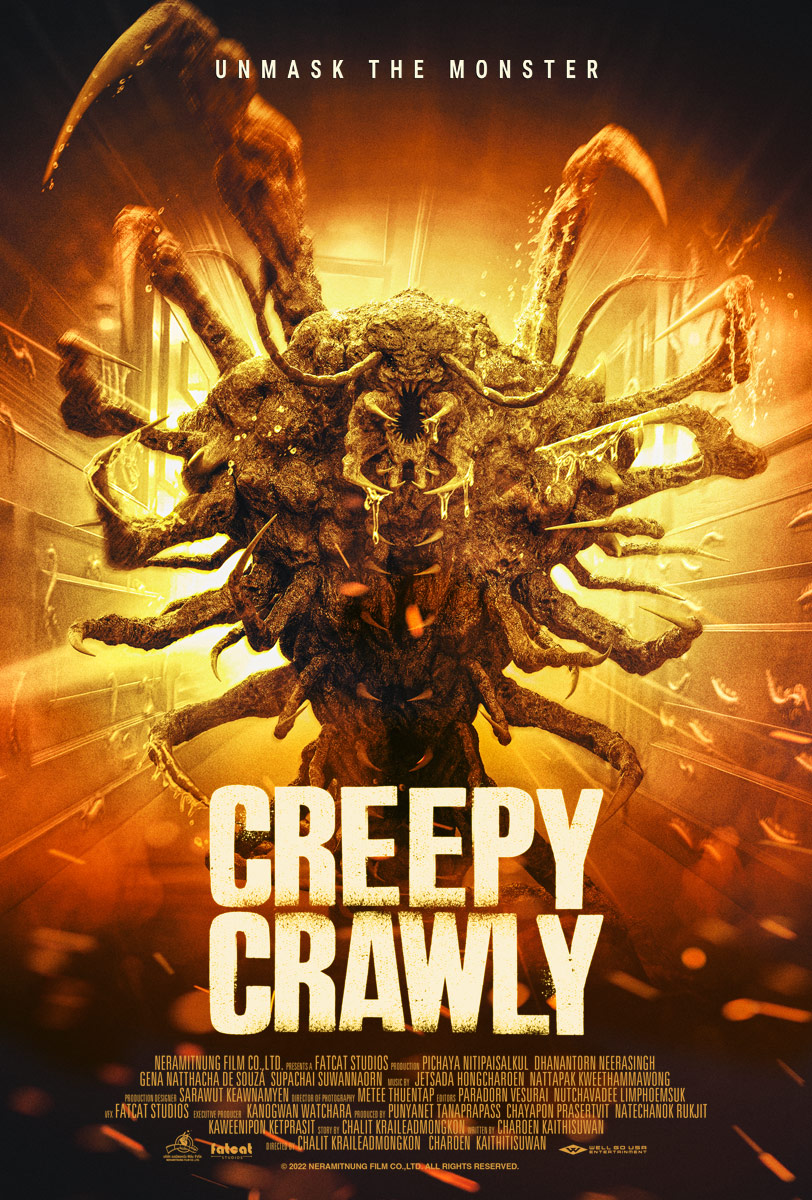
Creepy Crawly (๑๐๐ ร้อยขา, Pakphum Wongjinda & Chalit Krileadmongkon, 2022)

While everyone’s busy thinking about a high profile threat of infection, an unexpected aggressor raises its ugly head in Pakphum Wongjinda and Chalit Krileadmongkon’s insectile horror Creepy Crawly (๑๐๐ ร้อยขา). Centipedes in themselves are little creepy given the undulating motion of their many legs and tendency to crawl out from places where you’d least expect them, but this particular bug seems to have undergone a mammoth evolution to become a bloodsucking parasite capable of threatening the human race!

The film opens with a naive vlogger getting lost in the Thai countryside and deciding to pitch a tent in the middle of nowhere while unable to locate her campsite despite having encountered an elderly person bleeding profusely from the mouth whom she does nothing to help. During the night she’s bothered by giant centipedes and then has some kind of altercation with the elderly person. Some months later, an emergency order has been placed on the country due to the arrival of the coronavirus pandemic. Another YouTuber, Fame, who is well known for uploading videos criticising hotel accommodation, arrives at a hotel which has been turned into a quarantine facility along with her brother, Fiew, and a family of three, adult Taekwondo champion Leo, his naive sister Lena, and their father who is deaf. 

Obviously, the centipede, which is later described as a Tablongplum which can possess a human body and feast on its blood, has somehow made its way to the hotel and is particularly interested in Fame because she suffers from a rare disease which means that her blood would enable the Tablongplum to live a very long life. However, the bugs aren’t the only threat in the hotel even if they’re first discovered by the only remaining maid, Pond, feasting on a dead rat in a vacant room. The sleazy manager, Wit, is paranoid about the fortunes of his hotel during the pandemic considering it has already been dealt a reputational blow after being identified as the source of a covid cluster. It’s implied that he’s only got permission to re-open as a quarantine facility thanks to a dodgy deal with an important person who has also turned up, ironically belittling Wit for wearing a mask while describing covid as a “just a cold”, for a completely free and very discreet overnight stay with his mistress. 

Those are just a few of the reasons that Wit refuses to listen when Fame and Leo discover a body at the end of a blood trail, accusing them of being in cahoots doing a bit for the YouTube channel to further discredit his hotel which even on the surface of things seems not to be particularly well run. With the hotel technically in lockdown and patrolled by an armed guard, the tension begins to increase once it’s realised that the Tablongplum can possess and take on the form of any of the guests meaning no one can trusted and the bug could be anywhere. Somewhat improbably, not only is it able to fully understand human language even independent of its human hosts but also seems to have some knowledge of culture and is aware of how various things work rather than just being a giant blood sucking parasite apparently able to control vast armies of much smaller but admittedly nasty bugs especially when they appear in large numbers. 

The solution seems to be “kill it with fire”, though just the pandemic the bugs prove hard to stamp out with the infection seemingly continuing even after the big bad is supposedly eliminated as the centipedes continue to dominate human society. The film seems to be making a minor point about silly YouTubers who endanger themselves or thoughtlessly ruin the lives of others for clicks while also laying the blame on sleazy managers like Wit along with the political corruption that enables a health hazard to continue long after it should. Meanwhile, tiny bugs eat away at the surface, undermining the foundations as they go. Seeing an entire hotel covered in horrible insects is undoubtedly creepy though perhaps there was something rotten there all along. In any case, it seems there’s no escape from nature’s revenge or its bloodsucking tendrils. 


Creepy Crawly is released in the US on Digital, blu-ray, and DVD on Oct. 3 courtesy of Well Go USA.

International trailer (English subtitles)

Harvest Moon (Эргэж ирэхгүй намар, Amarsaikhan Baljinnyam, 2022)

A young man who left for the city is forced to reckon with his childhood self and the nature of paternity when called back to his rural home in Amarsaikhan Baljinnyam’s touching directorial debut Harvest Moon (Эргэж ирэхгүй намар). The melancholy title may hint at the short-lived nature of the central relationship but also reflects the slowly disappearing traditional culture of the Mongolian Steppe and the loneliness of those who find themselves in one way or another orphaned amid its vast and empty landscapes.

Tulgaa’s (Amarsaikhan Baljinnyam) dilemma is that he’s just received a voice message from a woman he’s been seeing explaining that she has a son she had not previously disclosed and wants to know if it’s a dealbreaker before the relationship becomes more serious. Meanwhile, he receives a call from his home village letting him know that the man who raised him, but was not actually his biological father, has been taken ill and may be close to death. Though reluctant, Tulgaa begins the long journey to say goodbye and then finds himself agreeing to stay a little longer to finish his father’s last harvest. 

While there, he meets a little boy, Tuntuulei (Tenuun-Erdene Garamkhand), who is like he was a child without a father though currently living with elderly grandparents while his mother works in the city. Older than his years, Tuntuulei too is bullied and ostracised by the other villagers who gossip and disapprove of the manner of his birth which apparently occurred after a one night stand. Neither Tulgaa nor Tuntuulei ever knew their biological fathers and are each looking for something to soothe their loneliness, eventually developing paternal relationship even in the knowledge that Tulgaa will return to the city once the harvest is done whether or not he eventually decides to accept becoming a father to his girlfriend’s son. 

In many ways Tulgaa is bonding with his childhood self and processing his paternal anxieties through the lonely, abandoned child he once was which is perhaps a little unfair given that he essentially taking a test run with Tuntuulei in preparation for becoming another boy’s father. Tuntuulei’s grandparents meanwhile contemplate sending him to the city to be with his mother, conscious that he’s bored with only the elderly couple for company and takes no interest in schooling. Tulgaa’s discovery that the boy cannot read provokes a rift between them in his insensitive reaction though Tuntuulei has already taught him a series of essential life skills for living on the Steppe from fishing to how to salve the blisters on his hands from cutting grass with a scythe. Tulgaa’s father had finally accepted that there was nothing he could have done to prevent him from leaving, but Tuntuulei seems so perfectly in tune with this landscape that it may not be possible for him to find happiness in the city even as this way of life continues to decline with other youngsters increasingly choosing urban civility over nomadic freedom.

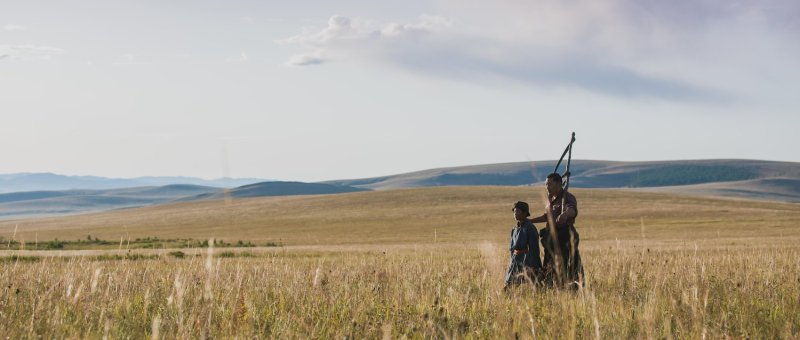
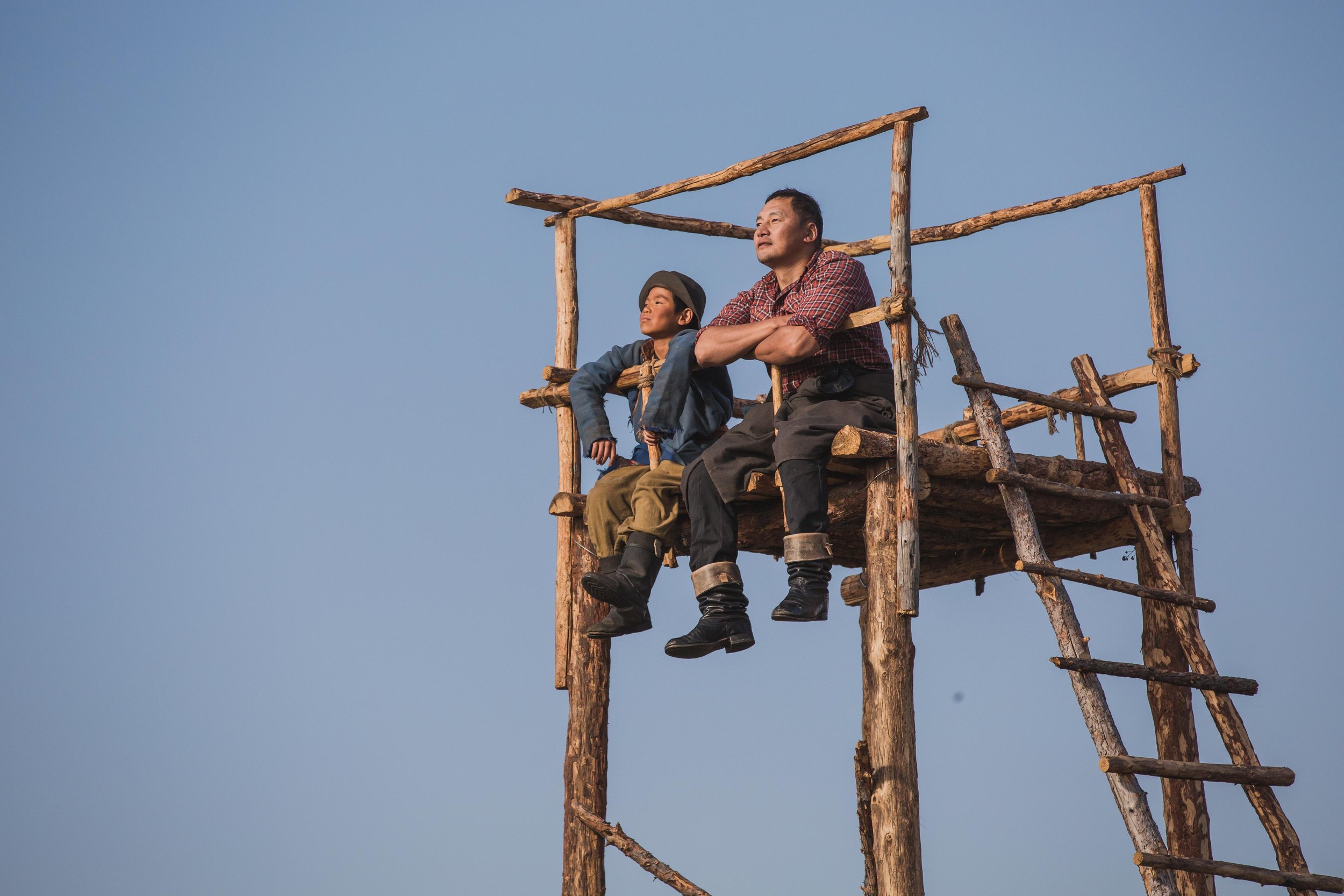
As Tulgaa is eventually told, the age of harvesting by hand may be over as his stay in the village is quite literally cut short leaving Tuntuulei all alone a tiny figure amid heaps of drying grass. The once verdant field now seems sad and empty, a sign that autumn has arrived and not only for the two men but for the village as a whole. The film had opened with a group of men desperately trying to get a phone signal by attaching a mobile to a pole and standing on a horse, shouting up at the receiver and barely able to understand the reply. Tuntuulei suggests building tower so people could climb up and make a call whenever they want which in part symbolises his own desire for connection along with the community’s isolation from the outside world. But when he tries to use it himself he discovers only disappointment. After all this effort, his mother is too busy to speak to him and blithely asks that he call back later cruelly crushing his fantasy of being able to contact someone any time he wants and reinforcing his sense of aloneness. Even so through his relationship with Tulgaa who is after all an older version of himself he is able to find another connection which may endure even in its absence. Beautifully lensed to take advantage of the majesty of the Mongolian landscape, Amarsaikhan Baljinnyam’s poetic debut is a quietly affecting affair in its own way melancholy but also filled with warmth and a sense of future possibility.


Harvest Moon screens in Chicago Sept. 23 as part of the 17th season of Asian Pop-Up Cinema where Pinnacle Career Achievement honouree Amarsaikhan Baljinnyam is scheduled to attend the award ceremony before the film and Q&A after.  

Original trailer (English subtitles)

Motherhood (母性, Ryuichi Hiroki, 2022)

Is love ever really unconditional or are we all just chasing a sense of parental approval even after we become parents ourselves? According to a reporter late into Ryuichi Hiroki’s adaptation of the Kanae Minato novel Motherhood (母性, Bosei), there are only two types of women, mothers and daughters, and it is in some ways a confusion of roles that frustrates the relationship between two women who are never fully able to form a maternal connection. 

Asked by a colleague if she felt her parents loved her, the reporter answers that they were the kind who made her wear a frilly blouse with a big collar for the school play and got her new shoes for Sports Day suggesting that their love was in its way performative and they cared more about how other parents would judge them than they did about her feelings seeing as she actively hated filly blouses with big collars. Alternatively, it may have been another kind of misunderstanding in they got her these things because they thought they should make her happy and took her rejection of them as resistance. 

The little girl at the film’s centre, Sayaka whose name is only spoken in the film’s closing scenes, encounters something similar when she asks her grandmother for a Hello Kitty bag having been presented with one featuring a beautifully embroidered bird. Her mother, Rumiko (Erika Toda), finds this highly offensive thinking that Sayaka has rejected her grandmother’s lovingly handmade gift in asking for something shop bought featuring a popular character, but Sayaka treasured her grandmother’s embroidery and just wanted her to sew Hello Kitty instead. 

In her voiceover, Rumiko implies that her annoyance is also born of shame in that Sayaka has forgotten everything she taught her about consideration for the feelings of others, while in her own the pain in Sayaka’s eyes is clear. She feels slighted, almost threatened by her mother’s hushed reaction advising her that it’s better to stick with birds because then people will realise that’s what she likes and go out of their way to give her bird-themed presents. The irony is that, at least in the way Rumiko tells it, her mother Hanae (Mao Daichi) believed they were such a happy family because she accepted their love “straightforwardly” when really it was anything but. Fixated on Hanae, Rumiko lives her entire life to make her mother happy even down to her choice of husband despite warnings from all sides that they are otherwise not particularly well suited. 

The reporter makes a point of commenting on another diner’s poor table manners in a restaurant with the result that he gets up and leaves, feeling uncomfortable in the wake of her rude intrusion. She explains that she was brought up to feel as if she always had to get everything right as if being loved depended on being good much as Rumiko had felt. Little Sayaka is more or less the same, constantly chasing maternal affection though receiving little in return as Rumiko struggles to transition from the role of daughter to mother and continues to fixate on Hanae caring little for anything else. When the family are forced to vacate their cute forest cabin of a home to move in with father Satoshi’s (Masaki Miura) harridan of a mother (Atsuko Takahata), Rumiko tries the same tactic believing that if she can become “good” in her mother-in-law’s eyes then she will eventually accept her little realising that she is simply a difficult woman who will never be like her own mother and only finally embraces her as a daughter as she lovingly mothers her long after she has become bedridden and appears to be suffering from dementia. 

Then again, perhaps the constant nagging, a tendency to run people down and push them away, are also frustrated ways of showing love and ironically what the mother-in-law might have wanted was someone to fight back as Sayaka tried to do much to Rumiko’s chagrin as she accused her of ruining her attempt to curry favour. Sayaka finds a diary belonging to her father, Satoshi, which recounts memories of domestic violence which he rebelled against indirectly through taking part in the student protests little caring about the cause only channeling his rage and disillusionment into something that didn’t really matter to him so would make no difference if it failed. She calls him a weak man who hides behind women, forcing Rumiko to take care of his mother while otherwise unwilling to stand up for himself or take responsibility for his family. 

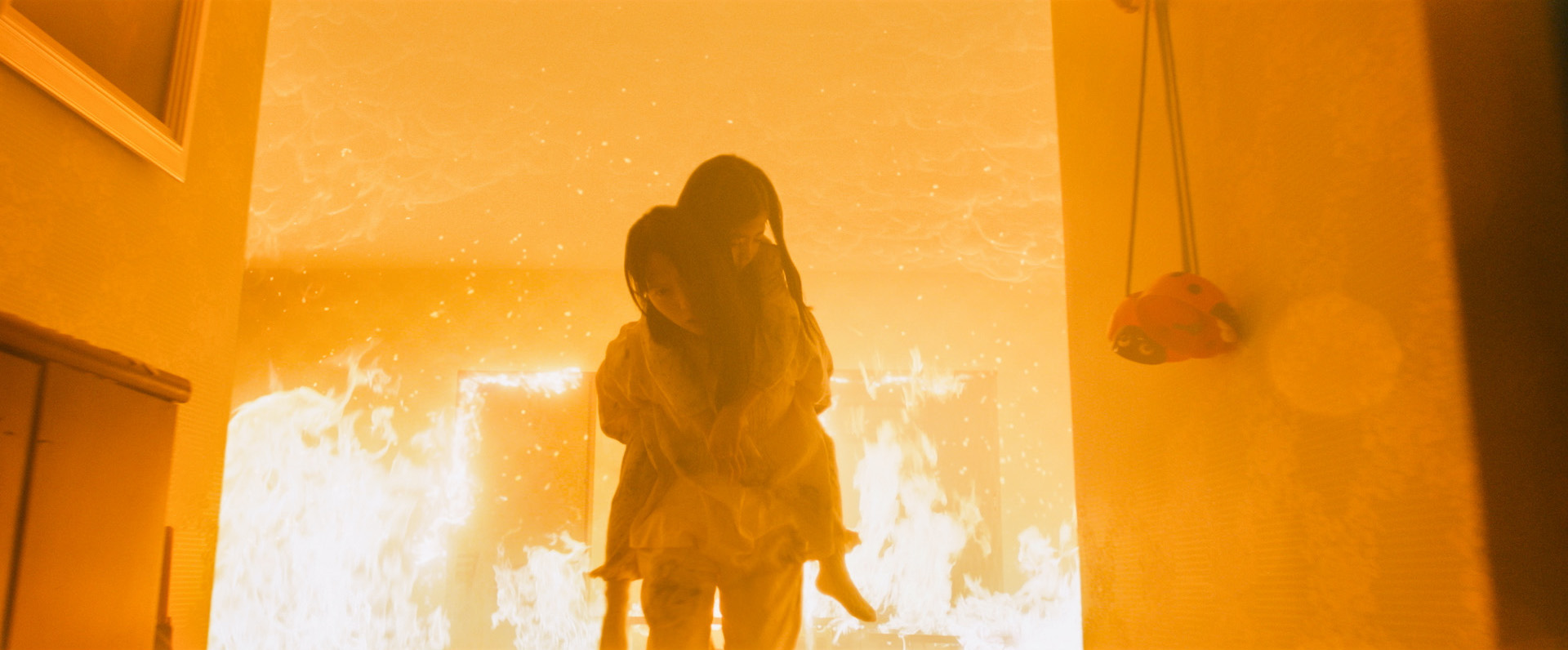
Perhaps men are only fathers or sons too and this one had little idea what to do with a daughter. Naively proposing on the third date, he said he wanted to build a “beautiful home” presumably to escape the one he grew up in attracted as much the genial atmosphere of Hanae’s upper middle class mansion as to Rumiko herself. Hiroki paints the forest-bound “dream home” in nostalgic shades of pastel, lending it almost an uncanny sense of fairytale bliss that the family can never live up to despite Rumiko’s Stepford-esque attempts to become the perfect housewife by essentially becoming her mother. Offering her version of events mainly through a confession to a priest, it’s clear that Rumiko has not been entirely honest before God, but neither of our narrators are really all that reliable even if relating how they felt something happened at the time leaving us less with one concrete version of the truth than a tragic tale of love frustrated by the codified roles of mother and daughter along with maternal jealously and anxiety. 

Nevertheless, they are united by a maternal legacy and the act of ensuring the line will continue connecting all of them to the future through the chain of motherhood. The reporter’s thinking may have a degree of internalised misogyny as she remarks on the societal prejudice that regards an unmotherly woman as hardly a woman at all while giving no recognition to women who are neither mother nor daughter in her contemplation of the maternal instinct which she otherwise regards as learned rather than innate. Asking for definitions, she comes up with the need to protect one’s child which is perhaps something her mother may have lacked when it counted but did not necessarily mean she had no love for her at all despite her fits of resentment. Shot with a degree of eeriness that dissipates in favour of a darkening realism in the later stages, Hiroki’s heightened drama nevertheless suggests that an equilibrium can be found in the maternal relationship even if it is painfully won.


Motherhood screened as part of this year’s New York Asian Film Festival

Original trailer (English subtitles)

Images: ©2022 “MOTHERHOOD” FILM PARTNERS

The Cord of Life (脐带, Qiao Sixue, 2022)

“The flowers of the Steppe can’t bloom forever,” an old woman explains somewhat cheerfully though not really knowing to whom she is speaking in Qiao Sixue’s deeply moving Mongolian drama, The Cord of Life (脐带). A young man struggles to find the balance between embracing his traditional culture and the desire for modernity, but begins to discover new direction after taking his elderly mother who is suffering with dementia back to the grasslands in search of the place she calls “home”.

Naranzug has several “homes” throughout the film though none of them are perhaps exactly what she means which maybe more a feeling than a physical location. In any case the first of them is the home of her eldest son, a flat in the city where they’ve installed a door with bars on it on her room to stop her wandering off. Apparently the neighbours have been complaining and it’s already led to a physical altercation which has serious financial implications for the family. Younger brother Alus (Yidar) has long been living in Beijing where he makes a living as a musician combining electronica with the Morin Khuur fiddle he learned to play as a child. When he’s called back to help, he’s shocked both by the progression of his mother’s condition, she no longer recognises him, and the way his brother and his wife treat her though as Naranzug later says herself they are quite clearly exhausted and are doing the best they can with the resources available to them. 

Alus particularly objected to the prison cell-style door and the practice of locking his mother up which seemed so undignified, though he later resorts to something similar himself in the titular cord, a literal rope that he uses to tie her to him so that she won’t get lost or injure herself. At one point he loops the rope around her waist and pulls her as if she were a stubborn cow unwilling to leave the paddock, coaxing her back inside the house with his music. Several times Naranzug is liked to a wandering animal who should be free upon the Steppe, firstly the lost cow but also a mother sheep to a lost lamb she later delivers to a paddock where she sings a folk song to encourage a ewe to feed it in a metaphorical allusion to her inability to recognise her own lost son who is also a lost lamb searching for his mother. 

She repeatedly asks Alus to take her “home” but he struggles to understand what she means because to him he already has, reminding her that their house on the Steppe is also “home” before realising that she pines for her childhood and long dead parents who lived by a long forgotten tree. The rope between them becomes a surrogate umbilical cord that allows them to an extent to reconnect as Alus becomes more familiar with life on the Steppe as its atmosphere pours into him in much the same way the sheep drank from the ewe or the farmer transferred fuel from one bike to another. “It shouldn’t all be Morin Khuur and throat singing” the comparatively traditionalist Tana encourages him, “we’re not living in the past”, giving him freedom and permission to embrace both the new in electronica and the traditional in the sounds of the plains. It’s not for no reason that Naranzug is always telling him to “listen”, for music is everywhere. 

Qiao Sixue’s roving camera captures a real sense of poignancy along with mysticism in the moving final scenes in which Alus must say farewell to his mother, letting her go or perhaps return to the embrace of others in the “home” that she was always seeking. She thanks him for returning her to this “happy place” of music, fire, and dance that seems like something from another time or perhaps out of time. As she reminds him, the river never stops flowing though the flowers on Steppe cannot bloom forever. Through a series of surreal adventures, mother and son begin to reconnect while Alus quite literally rediscovers his roots and then like the river keeps going moving forward under the Mongolian skies taking the past with him into a new future on a journey towards a new home.


The Cord of Life screened as part of this year’s New York Asian Film Festival

Original trailer (Simplfied Chinese subtitles only)

12 Weeks (Anna Isabelle Matutina, 2022)

“Not all women want to be mothers” according to the heroine of Anna Isabelle Matutina’s 12 Weeks, yet this is apparently largely what society expects of them. Faced with an unexpected pregnancy at 40, Alice decides on abortion though it is technically illegal in the fiercely Catholic Philippines and she finds herself having to offer justification for her choices while trying to process her complicated relationship with her own mother who often tells her that she too wanted an abortion but obviously did not go through with it and left shortly after Alice was born to become a domestic worker in Hong Kong. 

The irony is that Alice (Max Eigenmann) works for an NGO supporting people displaced by natural disaster or civil unrest but is to an extent displaced herself in her estrangement from her mother, Grace (Bing Pimentel). In a poignant moment after having been made aware of the pregnancy by Alice’s violet ex Ben (Vance Larena), Grace brings out a box of baby clothes that once belonged to Alice only she never got to wear them because her grandmother who was raising her told Grace not to send anything but money because she had no way of knowing what size her daughter was. Grace is excited about the prospect of becoming a grandmother because it gives her a second chance at the motherhood she was denied by economic circumstance especially as the implication is she could play a larger role in their upbringing while Alice continues with her career. 

But even considering the strained relationship between them, Grace is far from supportive more or less taking over booking doctor’s appointments on her daughter’s behalf without really consulting her. Aside from the awkwardness and upset of the situation, Alice cannot discuss the abortion with her mother because of its illegality and the risks it might cause to herself and those otherwise involved in it. To be able to access an abortion safely, she has to undergo a counselling session and is then told that her operation will take place at 11pm hinting at its illicitness that it must take place under cover of darkness. The counsellor is sympathetic and clear that she isn’t trying to change her mind even if some of the questions seem invasive or patriarchal. Asking if Alice has been subject to domestic violence she offers help making sure that she’s not being pressured into an abortion she might not want by violent partner or the necessity of escaping them. 

Ben is indeed violent and it’s a fact that if she changes her mind and keeps the baby it will become much more difficult to keep him out of her life. Slightly younger than she is, he is moody and insecure while financially supported by Alice and living in a home she owns. He is not a responsible person with whom to raise a child though places extreme pressure on her to have the baby and manipulatively leaks the pregnancy news to Grace knowing she’ll do the same. Alice discovers that in reality everyone else is making her decisions for her, including a colleague who suddenly cancels a trip she was supposed to make to a disaster area on the grounds that his own wife has recently had a miscarriage and in his opinion it’s not safe for her to go. 

Set during the imposition of martial law on Mindanao in 2017, the film implies that a kind of martial law already exists for women who are unable to make their own decisions about their reproductive health or exercise their own autonomy. Alice is repeatedly told that she should have the baby because she is already 40 and the chance won’t come again though little thought is given to whether she wanted the chance or not while her own thoughts surrounding motherhood are clouded by the relationship she has with Grace which was largely affected by the economic realities that forced her to become a migrant worker. In part she rejects becoming a mother out of anxiety worrying that she is not suited to it, but is also conflicted in its inextricable ties to Ben and with wider patriarchal violence in general depriving her of the ability to choose from all angles. In the end a choice is made for her in the cruellest of ways leaving her more or less powerless with only the small comfort of female solidarity. 


12 Weeks screened as part of this year’s New York Asian Film Festival