December (赦し, Anshul Chauhan, 2022)

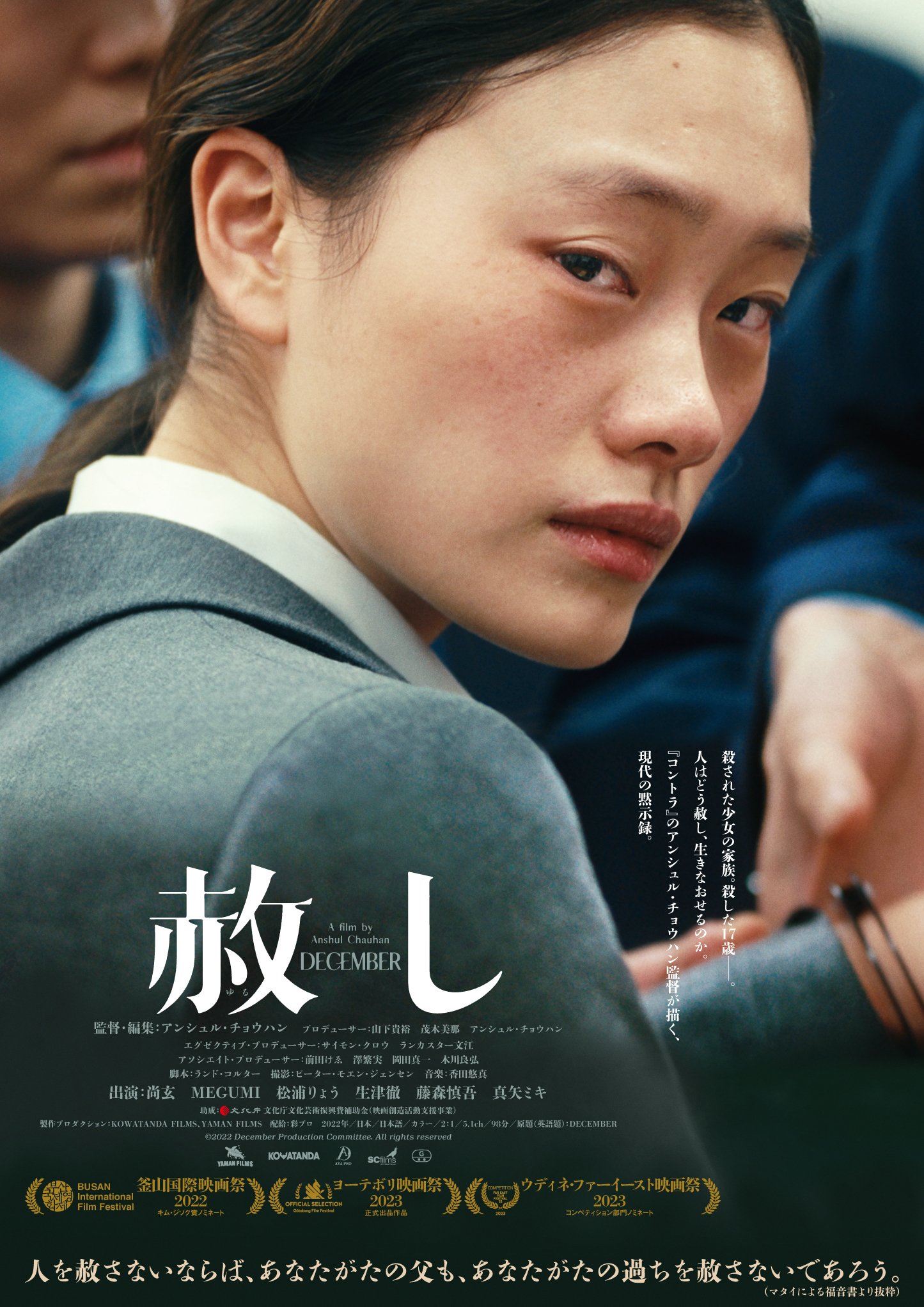
Where is the line between justice and vengeance? The grieving father at the centre of Anshul Chauhan’s December (赦し, Yurushi) is determined that the teenage girl who stabbed his daughter to death should never leave prison, but what he wants is a kind of equivalent exchange in that the person who stole his future along with his child’s should have no right to one herself. A more mainstream effort than either of his previous films Bad Poetry Tokyo and Kontora each of which dealt with similarly thorny themes, Chauhan’s unusually tense courtroom drama is the latest to put the legal system on trial while asking difficult questions about grief, guilt, and what exactly it is we mean when we talk about “justice”.

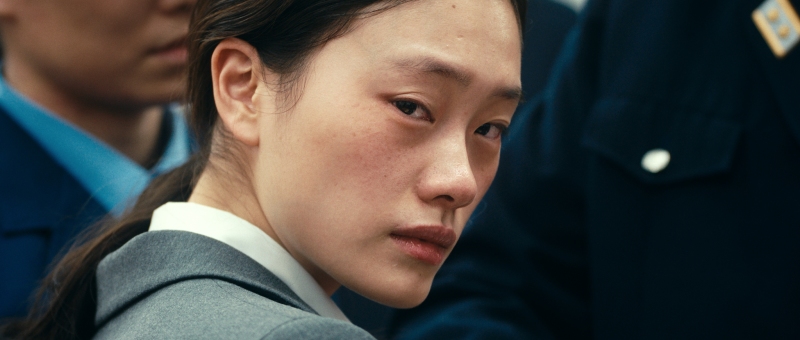
Seven years previously, 17-year-old Kana (Ryo Matsuura) stabbed her classmate Emi (Kanon Narumi) multiple times in a frenzied attack that resulted in her death. She was sentenced to 20 years in prison and has never attempted to deny her crime. It isn’t she who has asked for her sentence to be reviewed but an independent lawyer, Sato (Toru Kizu), who claims he’s doing it for “justice” though as Kana points out might have half an eye on compensation money she’d be able to claim for wrongful imprisonment if the case were successful. Sato seems to think it will be on the grounds that Kana was unfairly tried as an adult, mitigating circumstances were never brought to the defence’s attention, and the judge’s sentencing was swayed by personal feeling placing it outside of conventional guidelines that should be applied in cases like these.

For Emi’s parents, Katsu (Shogen) and Sumiko (Megumi), the appeal is a slap in the face. The couple have separated and while Sumiko has attempted to move on with her life, marrying a man she met in a support group for bereaved parents, Katsu has become a bitter alcoholic living a purgatorial existence of almost total inertia. Outraged, he is determined to make sure that Kana never leaves prison and is only sorry that she could not receive the death sentence because of her age, while Sumiko would rather not be involved at all, uncertain that she would be able to endure the emotionally draining process of another court case. They settle on presenting a united front, but discover that to do so is also to put themselves on trial while being confronted by a past neither has ever really faced.

The strain on Sumiko is evident as she walks along along a bridge at night and peers over the edge as if about to jump. She later learns that Kana had a mother too who did in fact take her own life after selling everything she owned to pay the compensation money that is used against them in court to imply that they’ve already been served “justice” in the form of monetary recompense from the defendant’s family which ought to declare the matter closed. Unlike Katsu, Sumiko had said her goal wasn’t vengeance but only to make sure that no other mother suffers as she has done, yet another mother already has for she lost a daughter too. Kana meanwhile has no one left to turn to even if she were released, she will have to make a new life for herself alone. Kana is herself victimised by an unforgiving society, the subtext suggesting that she was bullied for being the daughter of a single mother who was unable to fully care for her or provide the kind of material comfort children like Emi receive. The “happy family home” Katsu accuses her of destroying is also a symbol of everything Kana was denied but she did not kill out of jealousy or resentment only, ironically, to escape a kind of imprisonment and free herself of an oppressive bully.

Katsu says he’d kill her himself if he had the chance, but as Sumiko points out then he’d just end up in prison for the rest of his life with only his “righteousness” to comfort him. How could he claim to be any better? As Sato says, emotion has no place in a court of law. That’s why the law the exists and we mediate “justice” through a dispassionate third party to ensure the sentence is fair and not merely “vengeance”. Katsu certainly sees himself as a righteous man. In a repeated motif, Chauhan shows him taking the long way round by walking on the pathways of the grid-like forecourt leading to the courthouse while others hurriedly take the direct route crossing the squares at a diagonal angle. For him the answer is only ever black and white and he is very certain of his truths, but also blinded by his pain and unable to see that his desire for vengeance is more for himself than it is for Emi.

Only by accepting a painful truth can he begin to move past his grief, despite himself moved by Kana’s quiet dignity in which she admits her responsibility and suggests that she will never really be “free” even if she is released. What she offers, in her way, is peace allowing the bereaved parents to bring an end to their ordeal or least enter a new phase in their grief which allows them to move forward in memory rather than remaining trapped within the unresolved past. Perhaps in the end that’s what we mean by “justice”, a just peace with no more recrimination only sorrow and regret with renewed possibility for the future.


December screened as part of this year’s Osaka Asian Film Festival.

Original trailer (no subtitles)
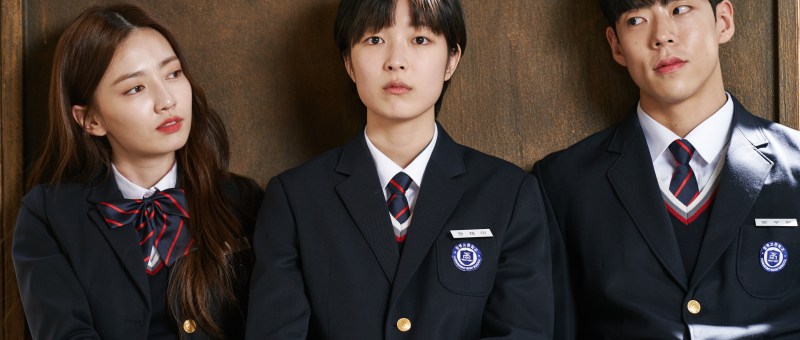
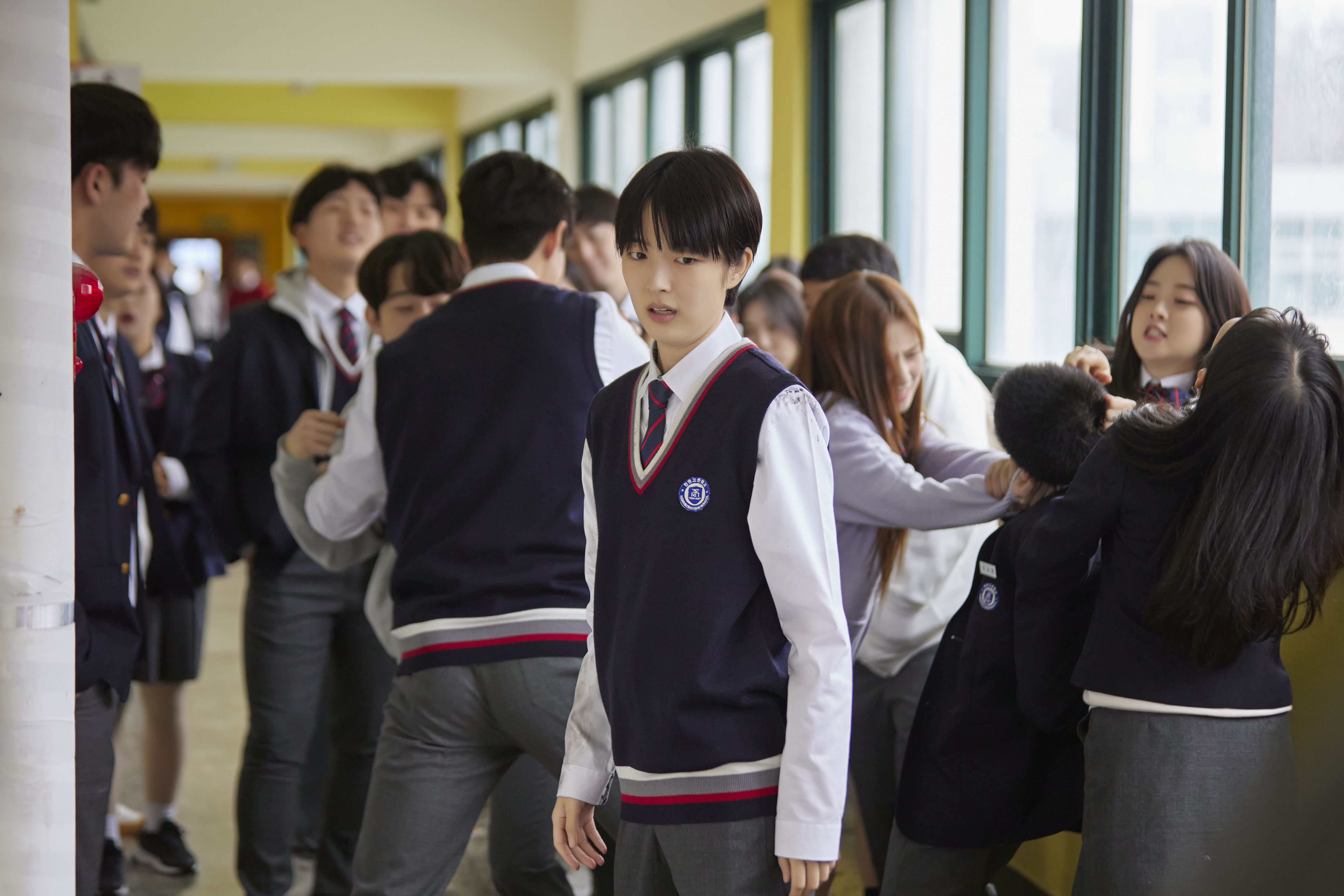
XX+XY (Lee Soh-Yoon, 2022)

According to the voiceover narration that opens Lee Soh-yoon’s lighthearted teen drama XX+XY, we live in an age of choices yet sometimes choice can itself be a burden. At least that’s how Jay comes to see it having been born intersex but encouraged to think that at some point they’re going to have to choose whether to live as a man or a woman as if those are the only options or the choice to continuing living just as they are is not available to them. 

In essence many of their problems could be solved by reducing social dependence on the gender binary. Having been mainly home schooled, Jay has decided to attend a regular high school in part to help them figure out who they are through interacting with other teenagers who, they discover, are also struggling with many of the same questions in trying to decide who they’ll be. Yet for Jay, there’s also the issue of social stigma surrounding the reality of their life as an intersex person which is little understood by the world around them. When their identity is exposed by a malicious person, Jay’s teacher sighs and asks “Why didn’t you hide it better?”, prompting their response that their identity is not something shameful that needs to be concealed while suggesting that the school is on one level at least failing in their duty of care in refusing to protect them from the fallout of being outed which is in part their fault in stemming from the indiscretion of a teacher. 

The idea that they have something to hide is also particularly hurtful to Jay because of their unusual family circumstances given that they were adopted by a couple in a happy marriage of convenience between a closeted gay man and a woman otherwise uninterested in marriage. Their father’s partner now also lives with them and is very much a part of the family as can be seen in cheerful family photo they have hanging on their living room wall. Jay’s father tells them that he wants them to live in a world where they can love freely without fear of judgement or of feeling forced into the kind of arrangement he and their mother have made, their happy partnership not withstanding. On the other hand, it’s also he who first raises the potentially problematic idea that Jay should decide their binary gender based on their sexual orientation only to be firmly slapped down by their mother. 

This is partly the thesis of the film, that Jay is figuring themselves out based on their feelings towards two potential suitors in childhood best friend Sera who’s always known that Jay is intersex and the smitten Wooram who fell for Jay thinking they were a girl and then confused by their more masculine presentation on arrival at school. As Sera later points out, Jay never directly states they are a boy but everyone assumes them to be one because they are wearing a boy’s school uniform and have short hair. It is the school that force Jay to make a concrete choice because of its persistent gender segregation which extends from uniforms, single sex bathrooms, and classroom cliques to different activities for boys and girls in PE. Jay has to make a choice because they have to pick a bathroom, only using the men’s means there’s no bins to dispose of sanitary pads forcing Jay to carry them around until they can find a place to discreetly dispose of them. The boys in Jay’s class are jealous of their popularity with girls, while immaturely gossiping about another boy they regard as effeminate and possibly gay because he is “small” and hangs out with the girls a lot. 

Meanwhile, the conservative attitudes towards sex and romance held by the school and society at large are also in themselves counterproductive. Teens try to buy condoms to be responsible but are turned away because they don’t have ID or a note from their parents and are even shouted at by a nosy old lady at the checkout all of which has them wondering if they should just go ahead without protection rather than giving up on the idea. When Jay’s intersex identity is revealed online, the teachers are more concerned about the concurrent rumour that they and Sera have slept together rather than the breaching of Jay’s privacy, only interested in what the other parents might say or that Jay’s identity on its own may negatively affect their reputation aside from the developing sex scandal. 

In any case supported by their new friends, Jay gains the confidence to believe that they, and everyone else, are good enough as they are and that there isn’t any point in worrying about the people who won’t accept them as they are now. The film may still imply that there’s a binary choice to be made and that whoever Jay decides to pursue romantically has a large impact on it, but nevertheless affirms Jay’s identity as it is and makes clear that it’s they who have a free right to define themselves independently of any social mores or commonly held beliefs. Warmhearted and generous of spirit, Lee’s teen drama finds that largely the kids alright treating each other with kindness and respect when given the opportunity to do so and only waiting for the adult world to catch up. 


XX+XY screened as part of this year’s BFI Flare.

International trailer (English subtitles)

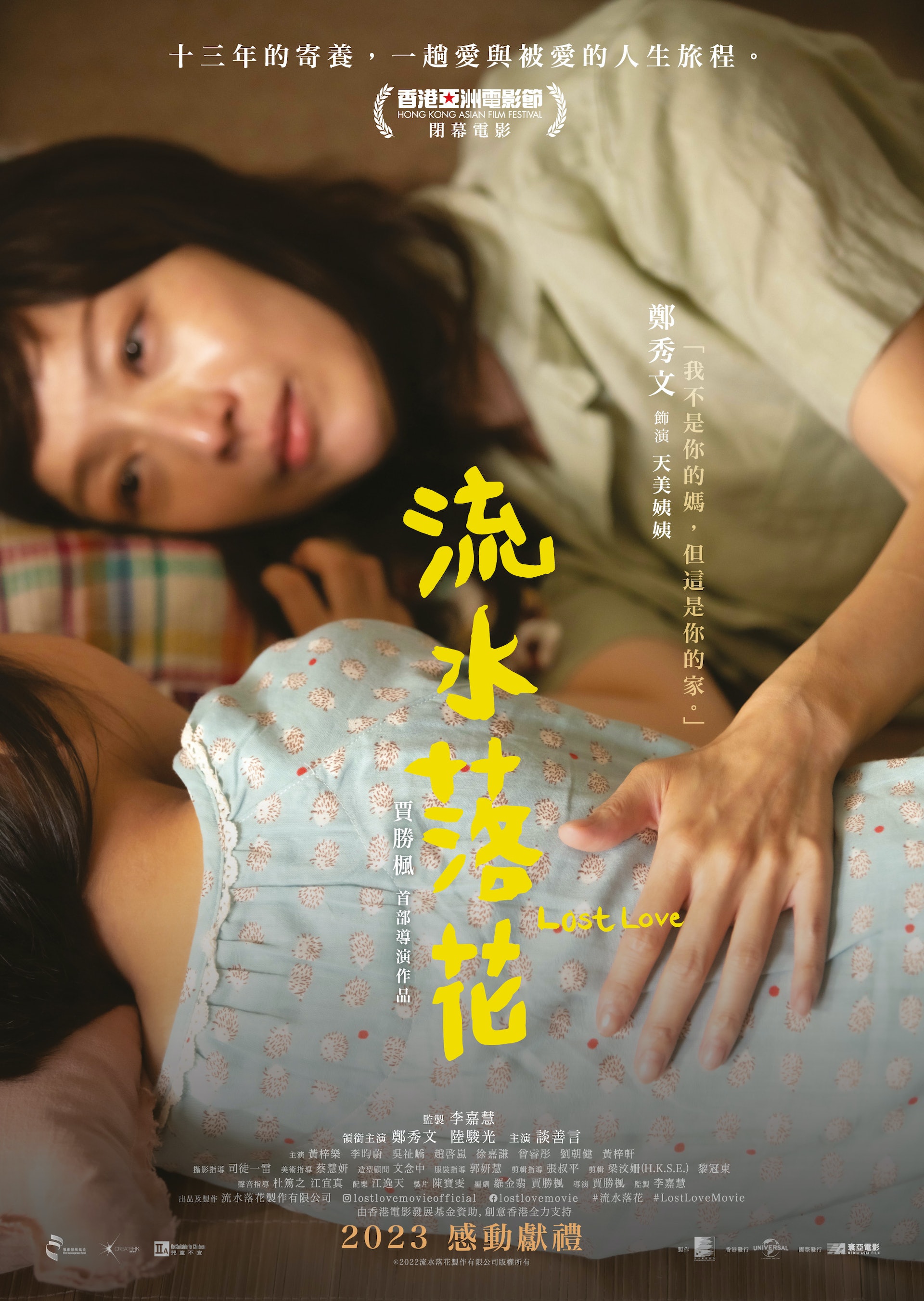
Lost Love (流水落花, Ka Sing Fung, 2022)

A grieving mother attempts to redefine her life by caring for the children of others in Ka Sing Fung’s poignant maternal drama, Lost Love (流水落花). Filled with boundless compassion, the film in part explores the sense of otherness felt by lonely children often rejected by the society around them, while allowing the wounded heroine to find a way to love again in the midst of her heartbreak, even if what she’s signed up for amounts to a cycle of perpetual loss. 

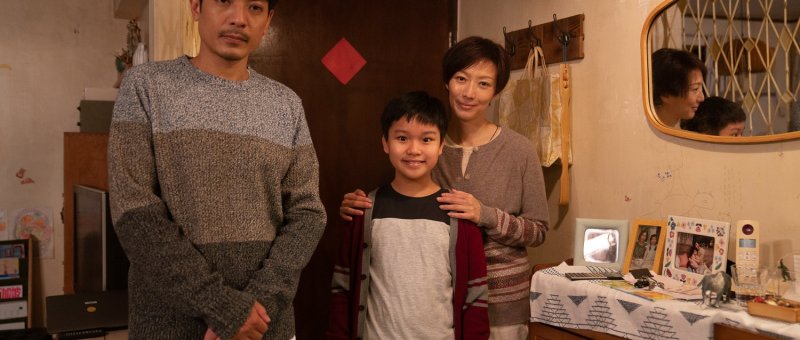
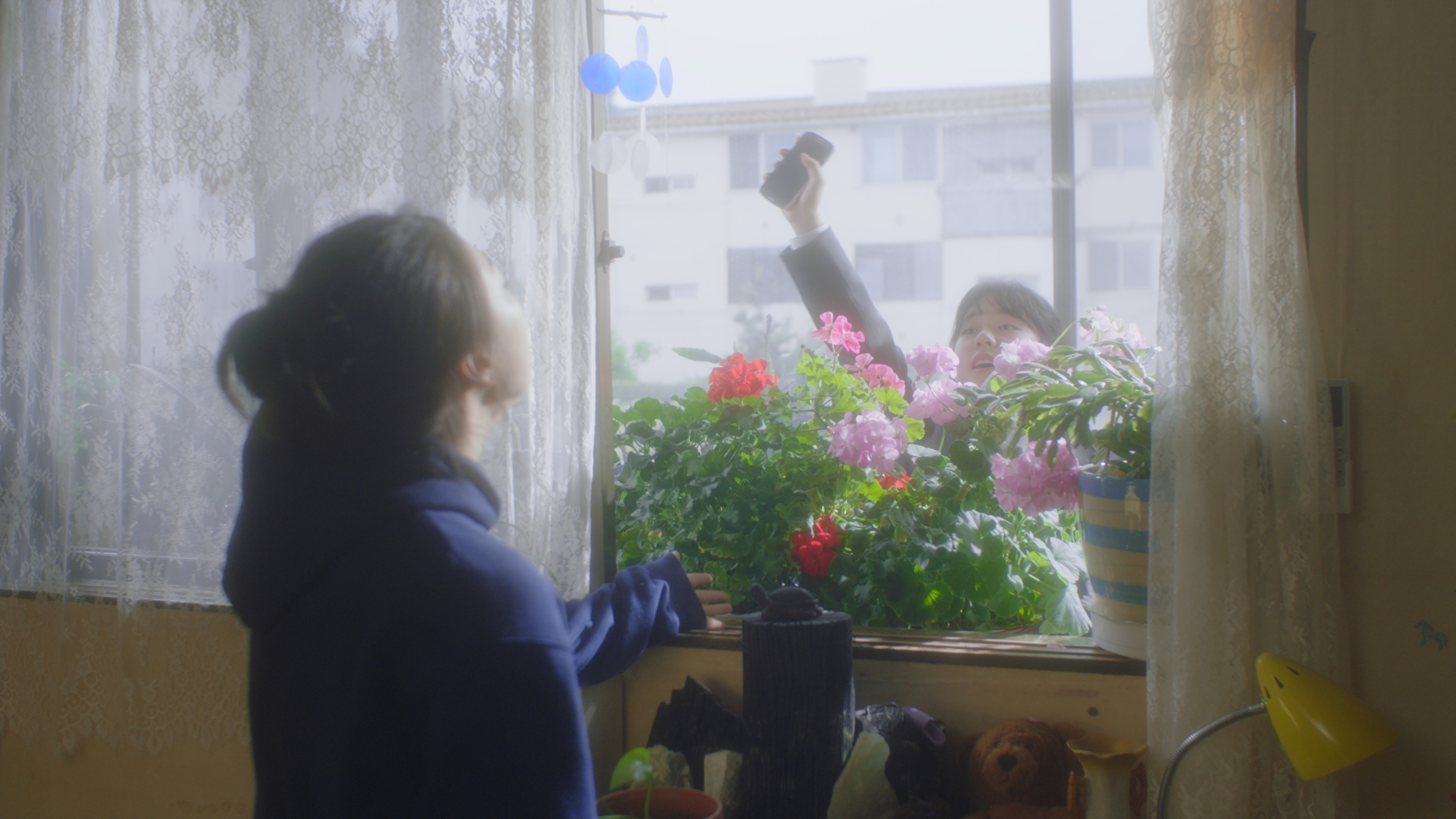
Mei (Sammi Cheng Sau-Man) lives an ordinary life working a series of unsatisfying and poorly paid jobs while her husband Bun works as a driver. Gazing at an empty room that might once have belonged to a child, we can feel a sense of loss and absence in the couple’s apartment while another young woman, Miss Mok (Hedwig Tam Sin-Yin), takes a cursory look around and seems to find everything in order pausing only to advise they give up smoking, at least in front of the children. Mei has decided that she wants to become a foster mother, but Bun does not seem entirely onboard complaining that he’s only really been “advised” of her decision rather than actively asked for his opinion. 

As is later revealed, Bun and Mei lost their three year-old son to illness and though Bun would have preferred to continue trying to have another child of their own, Mei is afraid to in case the same thing happens again. Yet the irony is that in becoming a foster mother she has signed herself up for repeated loss. The children who come to her do so temporarily and only until such time as they can be returned to their guardians or adopted by other families. After bonding with one little girl, Mei considers adoption but is told that it is not really permitted within the fostering system and she will have to resign herself to letting the child the go. 

Meanwhile, many of the children have specific needs and are often struggling to deal with the circumstances which led to them needing foster care. The first little boy Mei takes in, Sam, barely says a word and wets himself in stressful situations. When he stands up to a bully in school, he’s the one who gets into trouble with the teacher who makes prejudicial statements about “these kinds of kids” as if he’s already written him off. Sam poignantly reveals that the other kids were making fun of him for not having any parents leaving him additionally isolated and further damaging his already disrupted education. Another little girl, Hana, says something similar unwilling to go to school as the other children reject her because she has cleft palate. Ching, by contrast, is rejected by her own mother who seems to have remarried and had other children, palming her off on a grandmother who is unable to care for her while hospitalised. Two other children stay with Mei while their father is in prison, later describing Bun as the kindest man they’ve ever met while explaining that they were previously pushed from pillar to post bounced around between relatives who grew tired of caring for them. 

Even so, the foster care arrangement places a further strain on the couple’s marriage. Bun is at times resentful of the attention Mei gives to the children while still on the fence about fostering even at one point suggesting they simply get a dog instead. Yet despite everything Mei remains committed to caring for the children who come her way some of whom have no one else to care for them, helping them to gain the strength to keep living in the world and to feel less alone even in the face of unfair social prejudice. Ka tells her tale in elliptical fashion, pushing forward over a number of summers as different children occupy Mei’s spare room while she herself grows old but still determined to continue looking after kids in need. A repeated motif of falling petals hints at the temporality of all things, but also as they fall into the river a poignant sense of generational flow as Mei gently supports the children until they can support themselves and she can give no more leaving love behind her even in her absence.


Lost Love screens in Chicago April 1 as part of the 16th season of Asian Pop-Up Cinema.

Original trailer (Traditional Chinese / English subtitles)

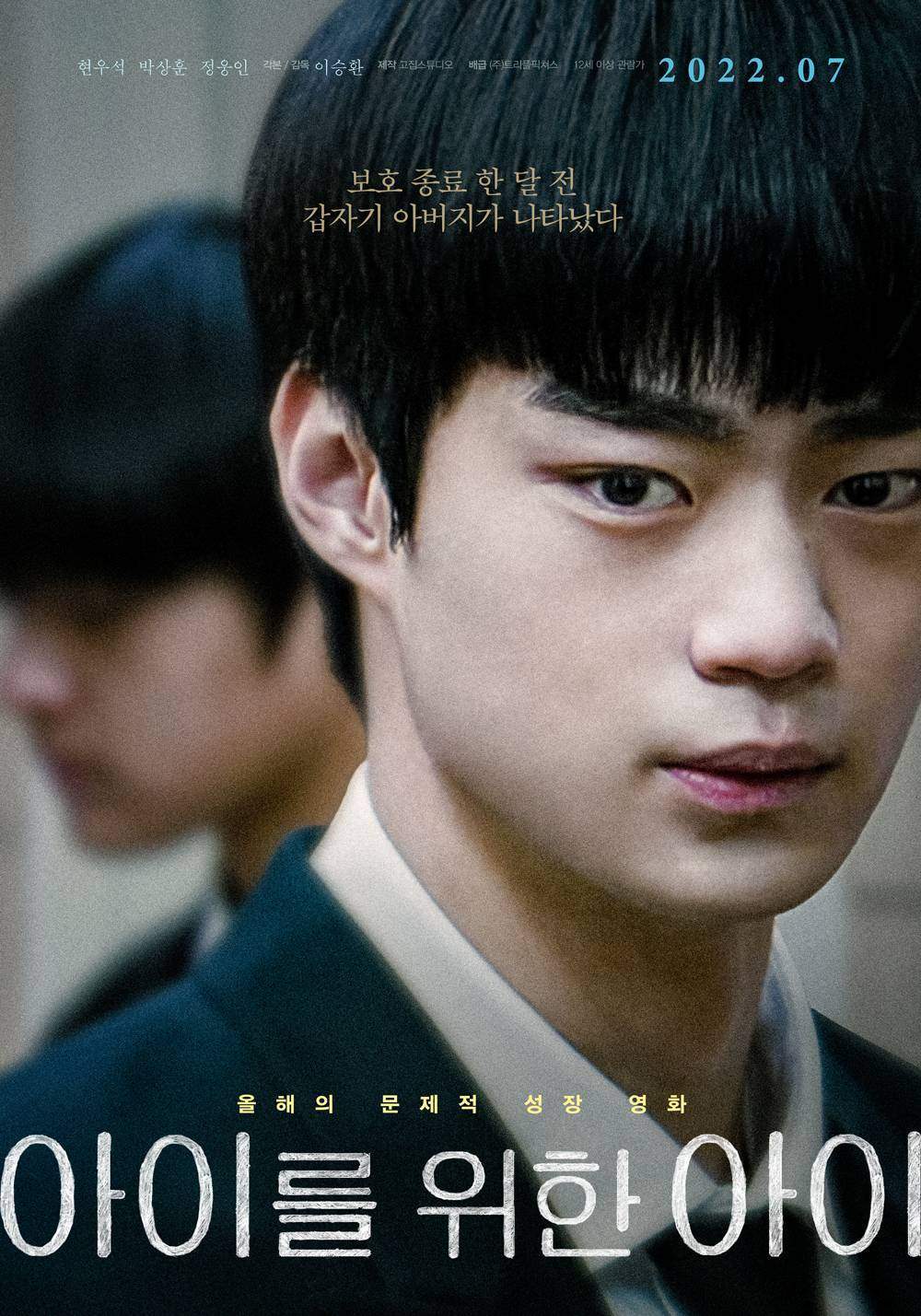
A Home from Home (아이를 위한 아이, Lee Seung-hwan, 2022)

Unexpectedly reunited with his estranged father, a young man is confronted with a series of choices on leaving the care system in Lee Seung-hwan’s darkly comic coming-of-age drama A Home from Home (아이를 위한 아이, Ayireul Wihan Ayi). The Korean title may mean something more like a child looking after a child, but the English also neatly encapsulates the hero’s dilemma on being ejected from the orphanage where he has lived for most of his life into a new “family” home with two strangers he hardly knows at all. 

Do-yun (Hyeon Woo-Seok) is about to come of age. In less than a month he will have to leave the orphanage where he lives and has nowhere else to go. Working as a takeaway delivery driver, he is acutely aware of the prejudice directed towards those who have no families with both his boss and unreasonable customers making jibes about how they expect no better from someone who “wasn’t raised properly”. Prejudice is one reason he longs to leave Korea for the promise of Australia, explaining that there he’ll simply be “Korean” rather than an “orphan” and will be able to build an independent life for himself. All his plans are scuppered, however, when a man turns up at the orphanage claiming to be his estranged father and offering to take him in. 

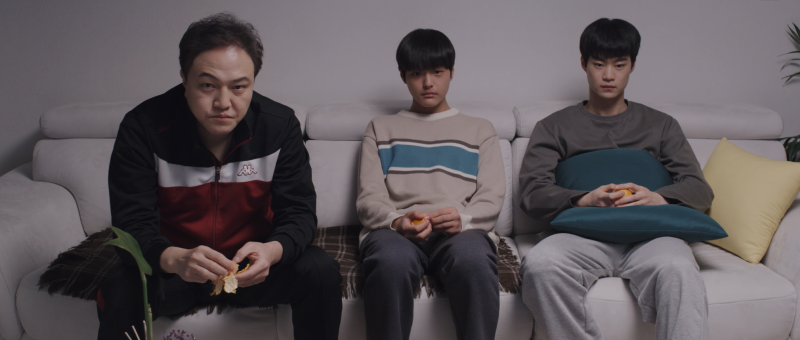
Understandably resentful, Do-yun is persuaded to accept the offer and discovers that he has a younger half-brother, Jae-min (Park Sang-Hoon). Seung-won (Jung Woong-In), his father, claims that he gave up Do-yun for Jae-min wanting to remarry after his first wife died but apparently unable to take his first son with him. That might be reason enough to resent Jae-min, but Do-yun doesn’t particularly only wanting to save enough money to get to Australia and leave the family behind. The problem is that Seung-won soon passes away leaving Do-yun with a still deeper sense of loss and resentment while wondering if Seung-won only returned to claim him because he needed someone to look after Jae-min in his absence. Only 20 years old, he ends up becoming Jae-min’s guardian and despite himself decides to put his Australian dreams on hold to look him. 

Becoming an accidental “father” so young does indeed force Do-yun to grow up quickly, learning to cook (well, divide a microwave dinner onto plates) and keep the apartment Seung-won left them tidy. Perhaps he’d have had to figure all that out for himself alone on leaving the orphanage and having to manage on his wages from the delivery job, but there is also a lingering resentment that he’s putting his life on hold for a “brother” he didn’t know until a few weeks previously wondering what sort of responsibility he really bears for him even as he begins to ease into a sense of familial comfort he had never known before. Even so, an unexpected revelation sees him questioning himself further and trying to figure out whether he really belongs with Jae-min at all or should cut his losses and go to Australia anyway. 

In an odd way, he comes to view his new familial relationship as “just another prison” while jealous of Jae-min’s opportunities and yearning for independent freedom. Meanwhile, he finds himself targeted once again by exploitative adults in the form of a gold-digging aunt and her obnoxious husband intent on getting their hands on Jae-min’s inheritance, and scammed out of money he’d saved for his new life abroad by another “brother” he’d grown up with in the orphanage. What he wants is to make a decision that’s his own rather than being railroaded by the circumstances of his life or manipulated by forces beyond his control but also begins to develop a genuine familial connection with Jae-min even while remaining mildly distrustful and trying to figure out where it is that he truly belongs. Exploring the effects of a societal prejudice against orphanhood as well as the practical and emotional difficulties faced by those who are abruptly ejected from the care system into an uncaring world, Lee’s strangely cheerful drama finds two young men searching for support but finally discovering they may have only themselves to rely on. 


A Home from Home streams in the US until March 31st as part of Asian Pop-Up Cinema Season 16.

International trailer (English subtitles)

The Grass is Greener on the Other Side (野草不盡, Crystal Wong, 2022)

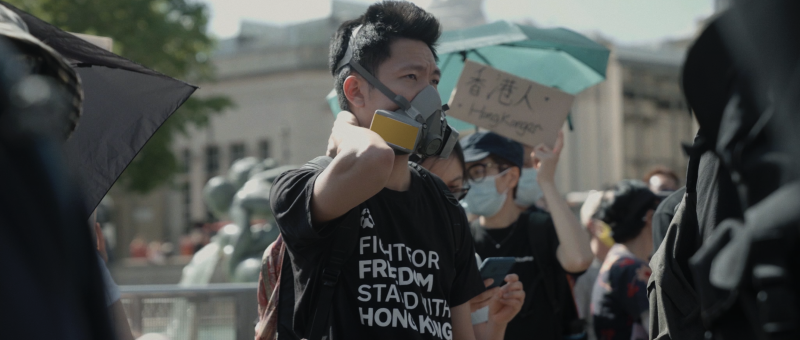
Following the crackdown on the protest movement, many Hong Kongers began to think about seeking freer futures abroad, but what was it that those who decided to leave found there? Crystal Wong’s documentary the Grass is Greener on the Other Side (野草不盡) follows a collection of Hong Kongers who moved to the UK and explores the emotional complexity of life in exile as they attempt to hang on to their cultural identity in a society largely ignorant of their struggle. 

Wong mainly follows two protagonists, one a graphic designer about to become a father and the other a young student still fearing repercussions from his role in the protests whose friend is currently awaiting trial in Hong Kong. Both are clear that they reject a “Chinese” identity and defiantly describe themselves as Hong Kongers. Yet in the UK they are repeatedly asked to fill in forms asking for their ethnicity which generally offer only the choice of “Chinese” or a nebulous “other”, each time they write in Hong Kong as an alternative answer. One of the reasons the expectant father chose to leave is that he didn’t want his child growing up speaking Mandarin (both men are also ironically greeted with “ni hao” before explaining that they speak Cantonese in Hong Kong) but others ask him if he won’t end up losing his language to English instead, a removals man bringing up the case of his Australian niece who now refuses to answer her grandparents in Cantonese even when she understands what they’re saying. He and his wife insist they won’t let that happen, but even in job interviews they seem more interested in his ability to speak Mandarin than his design skills.  

Before he left, he attended a housewarming party for another friend who decided to stay and was able to buy a home thanks to a motivated seller emigrating in a hurry. Everyone seems to be leaving, even a shop attendant guesses that the student she’s serving is probably leaving soon when he mentions that he’s not sure if his card’s topped up enough. Yet another of the older men had said that it’s mainly those of their age who are planning to go abroad, the student protestors are deciding to stay and fight some of them resentful that the previous generation is dropping the ball by abandoning ship. The student, however, has taken the opportunity to study abroad to protect himself from repercussions from participating in the protests in Hong Kong heading to the UK while his friend prepares to leave for Germany vowing only to return should a war break out. 

Yet the designer asks himself if he’s really satisfied while a friend of his who’s been in the UK for a while cautions that he may get bored moving to a town like his which he says is better suited to retirees. He struggles to secure employment and considers moving out of London to save money but describes leaving Hong Kong as akin to an acrimonious divorce. He’s offended when someone asks him what he misses because what he misses is a disappeared Hong Kong to which he can never return. Some of his friends had described Hong Kong as like Goose Town in the 2010 Mainland comedy Let the Bullets Fly, a place completely oppressed by a corrupt authority. “You need to whole heartedly hate a place to decide to leave it permanently” he explains. 

Both he and the student attend the central London protests attempting to raise awareness of Hong Kong’s plight while carrying on the fight even in exile. One encounters a man who asks him what the protest is about and if he really “hates” China while stating that it reminds him of the situation in Sri Lanka and expressing solidarity with his struggle. The student meanwhile makes his way towards Trafalgar Square where the protest merges with another one hosted by Nigerians protesting political oppression in Nigeria. He regrets that he won’t be able to return to Hong Kong in time for his friend’s trial (especially considering the quarantine procedures during the pandemic) while trying to get on with his studies. Each of them struggle with their decision, wondering if they’ve done the right thing and if they will ever return to a free Hong Kong while trying to hang on to their cultural identity as they forge new lives in an unfamiliar society.


The Grass is Greener on the Other Side screens in London 31st March as part of this year’s Hong Kong Film Festival UK.

Original trailer (Traditional Chinese / English subtitles)

Peafowl (공작새, Byun Sung-bin, 2022)

A trans woman begins to step into herself after reclaiming her traditional culture to make peace with the past in Byun Sung-bin’s poignant indie drama, Peafowl (공작새, Gongjaksae). At once situating itself in the heartland of a society struggling to adapt to the pace of change, the film suggests that only by reintegrating her Koreanness can the heroine become fully herself even as the spirit of the father who rejected her softly tells her to dance her dance.

Myung (Choi Hae-jun), whose name as she later says means “not too light not too dark”, is a trans woman living in Seoul hoping to earn a large amount of money to pay for her surgery through winning a waacking dance competition. Shortly before she performs, she receives an unsettling telephone call and narrowly loses the dance off against a Taiwanese competitor while a judge explains that she lacks a colour of her own. It’s then that a childhood friend, Woo-gi (Kim Woo-kyum), contacts her to let her know that her estranged father Duk-gil (Ki Joo-bong) has passed away and asks her to come to the funeral. Myung first says she won’t go, but later does only to be berated by her overbearing, conservative uncle who ironically causes a scene by loudly exclaiming that a man shouldn’t be going around with long hair or wearing makeup. He even introduces her as Duk-gil’s son to an older relative who is otherwise much more sympathetic and even asks her with surprise why she’s wearing a male mourning outfit rather than the more appropriate one for women. 

It’s the uncle, a symbol of oppressive middle-aged patriarchal power, that is the real problem. Most other people are either broadly supportive or too polite to say anything of Myung’s changed appearance while her teenage nephew Bo-suk (Go Jae-hyun) simply accepts her and quickly refers to Myung as “sis” despite his mother’s obvious discomfort. It is however the uncle who is in charge, continuing to misgender and insult Myung especially once Woo-gi reveals that it was Duk-gil’s dying wish for Myung to lead the funerary rites at his 49th day memorial service. Myung doesn’t really want to participate but is tempted after Woo-gi suggests there’s a sizeable inheritance to be had if she agrees. 

It’s clear that Myung had good reason to resent her father, holding up her hand and revealing a large burn scar she’s since had tattooed with with a beautiful peacock feather. The feather motif is repeated throughout as a kind of symbol of Myung’s hidden beauty which she will eventually learn to reveal through the fusion of the traditional art of shamanistic ritual and her contemporary waacker dance moves, yet it’s also linked to the image of her father as a man she never understood and may never have really known whose relationship with her was shaped by the legacy of homophobic prejudice in ways she could never have imagined. The truth that she discovers reminds her that there have always been people like her even within this very “traditional” society, while the twin revelation that her cousin is gay and struggling in many of the same ways she has proves there always will be. As Woo-gi reminds her, her grandfather’s tree looks like it’s dead but is kept alive by its connections with others much like people are, pointing out that rituals accept everyone without prejudice or exception. 

Only after making peace with her conflicted aunt and showing her overbearing uncle the error of his ways can Myung begin to reclaim herself in reintegrating her traditional culture to gain the colour she was lacking and become fully herself as she performs the ritual along with a waacker dance that quite literally sets fire to the oppressive quality of tradition as mediated by men like her uncle who weaponise it to preserve their own privilege. Shot in classic 4:3, Byun neatly contrasts the vibrancy of Seoul nightlife with the oppressive dullness of life in the village, but also highlights the various similarities in the colour and noise of a shamanistic ceremony which as Myung discovers moves to a beat not dissimilar to waacker as she watches her friends dance in a club with the movements of traditional shamanism. In a way, Myung does indeed burn it all down but does so positively, finally coming to an understanding of her father and her history while reclaiming her traditional culture along with the right to do with it whatever she wishes.


Peafowl screened as part of BFI Flare 2023. It will also be screening at Genesis Cinema, London on April 20 as part of this year’s Queer East.

Trailer (English subtitles)

A Holy Family (神人之家, Elvis Lu, 2022)

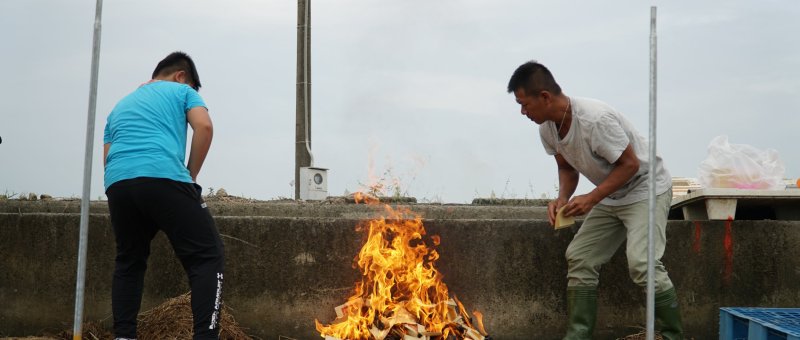
“Do you think the gods ever helped our family? Or, should I say, do the gods exist?” asks documentary filmmaker Elvis Lu of his brother, a spiritual medium who stayed behind with their devoutly Taoist parents while Lu left for the city 20 years previously and never returned. Lu admits that he likely never would have come back had his mother not contacted him with an ominous message about sorting out her funeral plans, but while filming seems to come to a new accommodation with his familial relationships guilty that he stayed away so long no longer a resentful young man but one beginning to consider the encroachment of mortality.

Lu’s mother confesses that she had pretended to herself that he didn’t exist, hurt that he rarely answered her calls and never visited home even as he points out that she never came to visit him him Taipei either. She feels she “achieved nothing as a parent” and is most regretful that she could not nurture Lu’s talent because she was forced to work long hours to support the family while also taking care of the household. In the opening conversation Lu had coldly answered the phone assuming his mother had called to ask for money, and the hollowness at the centre of the family is largely caused by Lu’s father’s longterm gambling problem which saw him fritter away most of the family’s property and savings leaving the couple financially dependent on their sons for support. Lu’s brother also feels a degree of resentment towards their near silent father, revealing that he does not want to do to his son what his father’s done to them in leaving them nothing but debt and disappointment. That’s one reason he’s always looking for new ways to support the family and has recently begun farming.

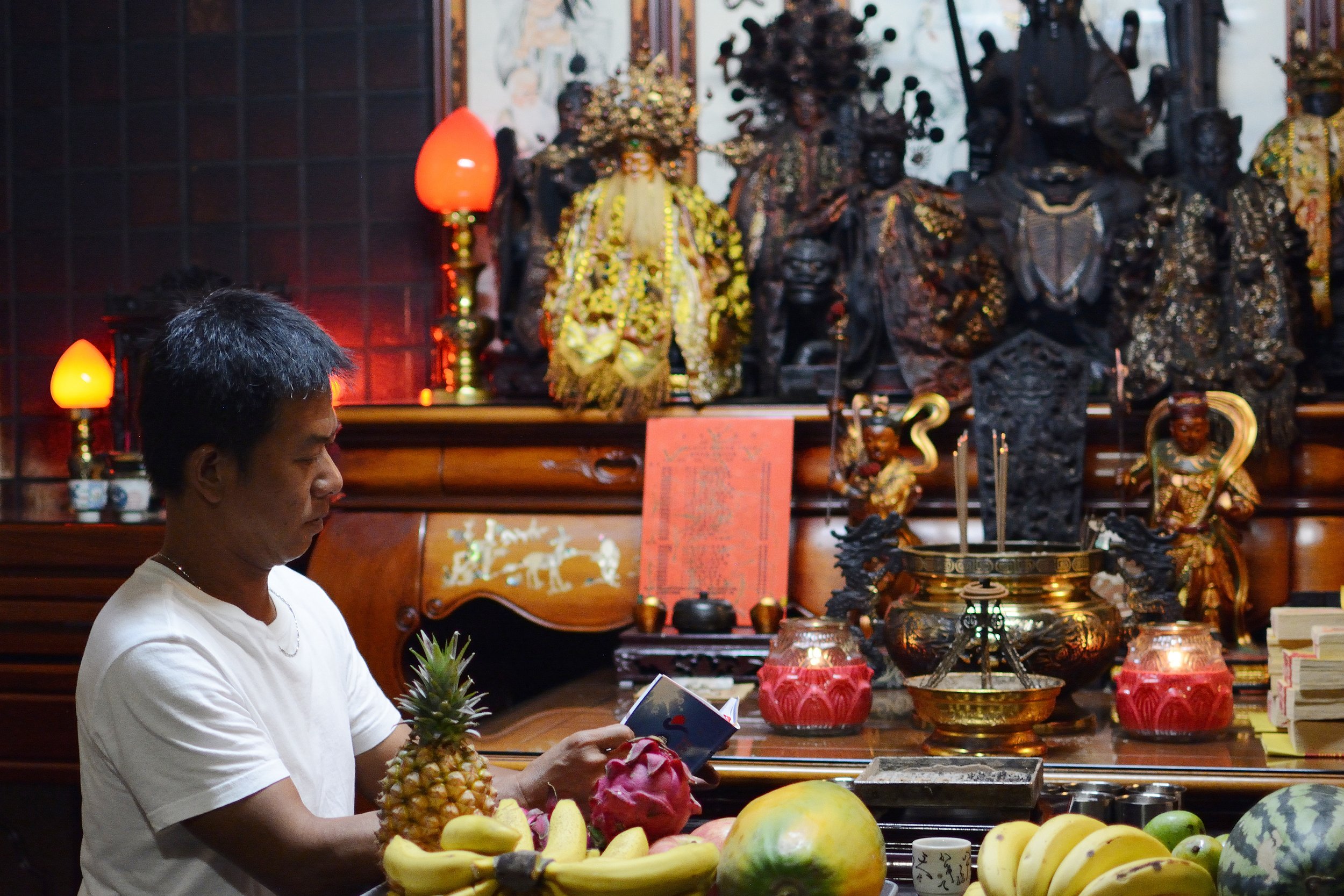
The obvious question when his tomato crop is destroyed by floods is why didn’t he ask the gods for guidance first, only it turns out that he did. As Lu points out, the family has endured long years of suffering despite their piety, if his brother is really so close to them why didn’t they help? It’s a question he obviously doesn’t have an answer for, nor does he have one when his son pleads with him to ask the gods for advice as to what to next with the ruined tomato field. His brother’s pained expression hints that he might have doubts despite being able to talk to the gods in his job as a spirit medium handing out advice on investments and other more Earthly worries for a small donation. The family’s upper floor is home to a large altar with several statues of the gods his mother describes as her only friends during the time that both her sons and husband were absent from the family home. Lu’s mother is tiny and now somewhat advanced in age. The stairs appear difficult for her, yet she climbs them every day to pay obsevance to the gods. 

After 20 years in the city all of this religiosity seems even more bizarre to the now adult Lu, but he also also captures ceremonies in the community in which people pray to the gods for health and prosperity suggesting that it’s not so odd after all and that the sense of community may be more important that the rituals themselves. Even so, it’s also true that this almost transactional view of spirituality feeds directly back in to his father’s gambling addiction in which he constantly looks for signs of lucky numbers to place bets or buy lottery tickets. After being diagnosed with glandular cancer and too ill to do much else, Lu’s father still picks up the phone to lay a sizeable bet even while his exasperated wife tries to control her resentment that if only he hadn’t lost his job he’d have had a pension, they’d have kept more of their property, and would all have happier, more comfortable lives. 

In any case, through adopting a more neutral position as a filmmaker Lu is able to better interrogate the realities of his family and his own relationship with it. As the documentary progresses, he sometimes appears on screen holding a large camera on a tripod while someone else films him from another angle. What began with frosty resentment slowly gives way to warmth and reconciliation even while underpinned by a melancholy practicality as Lu helps his parents choose pictures to use at their funeral underlining a sense of oncoming loss as Lu finally takes his mother to see the sea and gently tracks her as she walks along the shore, slowly moving away from him.


A Holy Family screens in London 24th March and in Edinburgh 25th March as part of this year’s Hong Kong Film Festival UK.

Original trailer (English subtitles)

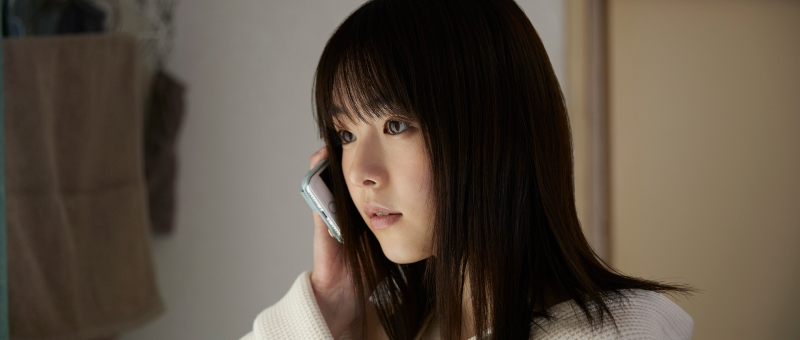
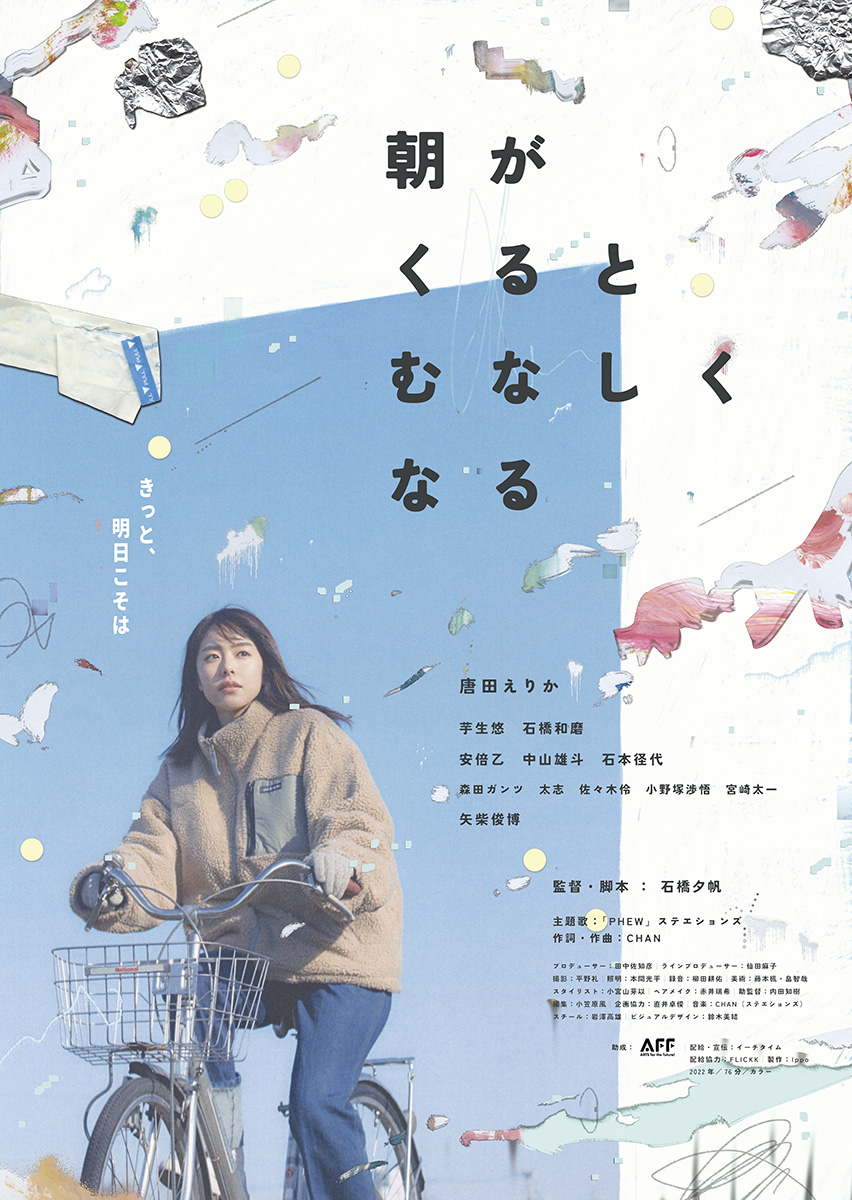
When Morning Comes, I Feel Empty (朝がくるとむなしくなる, Yuho Ishibashi, 2022)

A young woman finds herself dealing with feelings of inadequacy and worthlessness after giving up on the corporate life in Yuho Ishibashi’s zeitgeisty indie drama When Morning Comes, I Feel Empty (朝がくるとむなしくなる, Asa ga Kuru to Munashiku Naru). Set against the backdrop of a society in which death from overwork is not uncommon and there have been countless reports of young people taking their own lives because of workplace exploitation, the film seems to ask if there isn’t another choice and if one can really be forgiven for rejecting the conventional path in an intensely conformist society. 

Nozomi (Erika Karata) quit her job at an ad agency six months previously and is currently working part-time in a convenience store not far from where she lives. So ashamed is she of her failure to live up to the demands of corporate life that she can’t bring herself to tell her parents that she no longer works in an office. Her co-workers at the store seem to know, but when they ask questions she tells them that she quit because of too much overtime which is ironic as her boss is forever asking her to work an additional late shift because of poor staffing levels and she always meekly agrees though never seems all too happy about it despite the extra money. 

Then again, she doesn’t seem too happy about anything. In a repeated motif, her mother sends her fresh vegetables from back home but she never has the energy to cook for herself and is usually seen eating bento from the store or slurping cup ramen. The fact her life is out of kilter is brought home to her when one side of the curtain rail in her room suddenly collapses in a bid for freedom from its imprisonment on the wall. Barely speaking and aloof from her colleagues, she seems to carry a deep-seated sense of shame that she “failed” to settle in to company life, later telling an old friend she’s unexpectedly reconnected with that she couldn’t cope with the intense overtime that often meant she’d miss the last train and have to overnight in a manga cafe or fork out for a taxi. Her boss always yelled at her, but she felt like everyone else seemed to be managing so the fault must be with her. She regards her decision to leave as a defeat and not a victory even as she recounts feelings of despair and hopelessness crossing the bridge every day to work with only a sense of emptiness in the hollowness of the salaryman dream. 

But then the film takes it title from a reflection something her younger colleague said about earnestly feeling that it was wonderful just to get up every day and come to work. Ayano doesn’t mean it as some kind of cultish devotion to the combini life or a toxic commitment to an unreasonable worth ethic, but more that she manages to find joy in the seemingly mundane even as she jokes about her nerdy college boyfriend who wears glasses, and sheepishly reveals that she’s been saving money with the intention of studying abroad. Nozomi’s only in her mid-20s, but perhaps it is a little different for these contemporary college kids who have bigger dreams and don’t feel the need to throw themselves into the corporate straightjacket just so they can feel like legitimate “members of society”. Their relative youth and sense of possibility may fuel Nozomi’s sense of failure, that she’s back doing a college kid’s part-time job at 24 and surrounded by students as if accidentally arrested in adolescence, but perhaps also shows her that there are other options and making a different choice doesn’t necessarily equate to failure. 

More than anything, it’s an accidentally encounter with a former middle school classmate (Haruka Imo) that finally allows her to make peace with herself and feel like a human being again, someone worthy of love and respect and with new hope for the future. Evoking a sense of disillusionment with the salaryman dream and the emptiness of corporate success that is devoid of human connection, Ishibashi shoots with a laidback ease that on one level reflects the heroine’s malaise but soon gives way to a comforting breeziness as Nozomi discovers a new home for herself in the wholesome pleasures of friendship and mutual acceptance as a bulwark against the vagaries of a capitalistic society. 


When Morning Comes, I Feel Empty screened as part of this year’s Osaka Asian Film Festival.

Images: (C)Ippo

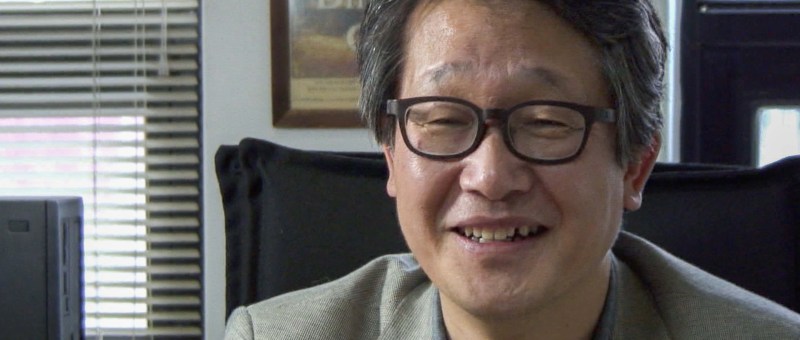
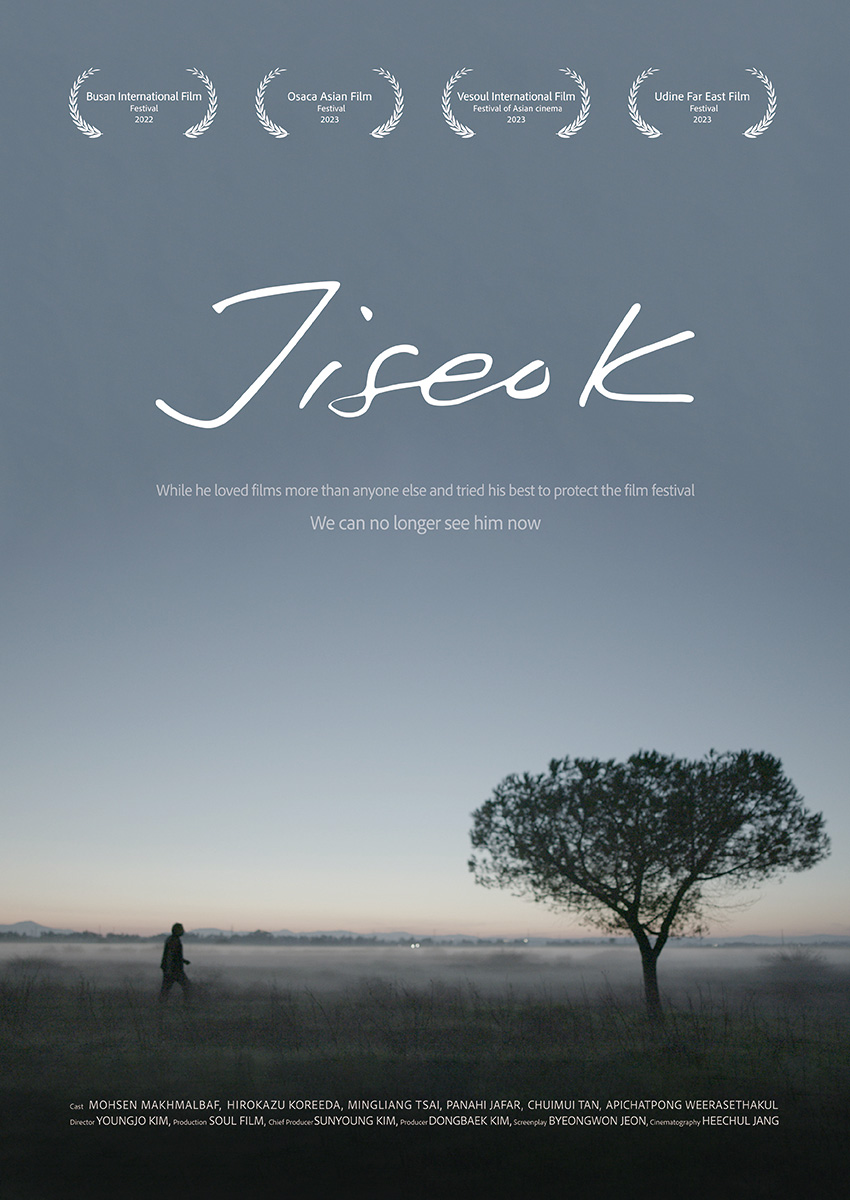
Jiseok (지석, Kim Young-jo, 2022)

When Kim Jiseok, co-founder and head programmer of the Busan International Film Festival, passed away suddenly at Cannes in 2017 of a heart attack at the young age of 57, it sent shockwaves through the cinema industry. Kim had been a key figure in the promotion of Asian cinema which he founded the festival to showcase, but had also become mired in controversy following the decision to go ahead with a screening of a documentary about the Sewol Ferry disaster that the municipal authorities had tried to pressure the festival to cancel because it reflected badly on the government. 

Kim Young-jo’s documentary Jiseok (지석) makes no secret of suggesting that the stress of dealing with the government’s attempts to overrule the festival’s autonomy was a direct cause of his death. In a poignant clip from a 2012 interview included close the documentary’s conclusion, Jiseok is asked why BIFF has managed to survive when so many other festivals have not and answers that there has always been such a tight bond between its team members which has not so far been strained by conflict or controversy and he doubts that it ever will be. 

But this is in fact thought what happened as the organisers split into factions with differing views as to how the festival should proceed after it was targeted by the government, some feeling they should cancel all together and others wanting to go ahead. Jiseok felt himself pressed into a corner caught between opposing forces and torn between loyalty to his old friends and the desire to preserve the film festival. Industry friends also privately recall that he was personally very affected by the Sewol Ferry Disaster in which a large number of school children were killed when the ferry they were travelling on as part of a school trip capsized due to mismanagement and lax safety procedures. 

Still, Jiseok was regarded by some as a traitor for continuing to work with the festival and taking over the duties of Lee Yong-kwan who had made the decision to go ahead with the screening but was forced to resign under government pressure and later accused of embezzlement after a government audit carried out in retaliation. In subsequent years, many Korean industry figures decided to boycott the festival entirely while a question mark hung over its autonomy and artistic freedom. Most of the interviewees are able to acknowledge that Jiseok found himself in a difficult position and do not necessarily hold his decision to continue working at BIFF against him but do suggest that it was the fragmentation of these relationships, some of which went back over 30 years, that caused him additional strain and damaged his health. 

What’s most clear is that Jiseok was very well loved and is much missed not only by his wife who also appears in the documentary but by the international industry at large. Some of the biggest names in East Asian cinema such as Hirokazu Koreeda, whom Jiseok had asked to become the dean of the Asian Film Academy, and Apichatpong Weerasethakul appear on camera offering their memories of Jiseok while it’s clear that he also enjoyed warm and close relationships with filmmakers at both ends of their career. Malaysian director and actress Tan Chui Mui (Barbarian Invasion) makes a particularly poignant statement recalling the bubbling frog bath toy Jiseok had gifted her infant son who will now only know his “Korean Uncle” only from photographs and her stories of him. Other South Eastern filmmakers also pay tribute to his warm support of underrepresented national cinemas and encouragement of new cinematic voices.

Kim’s documentary may in some ways find itself caught between competing visions on the one hand keen to examine the fallout from the tightening censorship regime of the Park Geun-hye era which eventually led to the blacklisting of artists who were critical of the regime including internationally renowned names such as Park Chan-wook and Bong Joon-ho, while on the other offering a simple memorial of the man himself in an act of catharsis for those who knew him with the consequence that little else of him is revealed aside from his warmth, cheerfulness, and affability along with his passionate love of film. In any case, many of the interviewees appear close to tears as they attempt to bid Jiseok goodbye, testament to good he left behind not just in terms of cinema but as a human being.


Jiseok screened as part of this year’s Osaka Asian Film Festival.

Original trailer (English subtitles)

The Dream Songs (너와 나, Cho Hyun-chul, 2022)

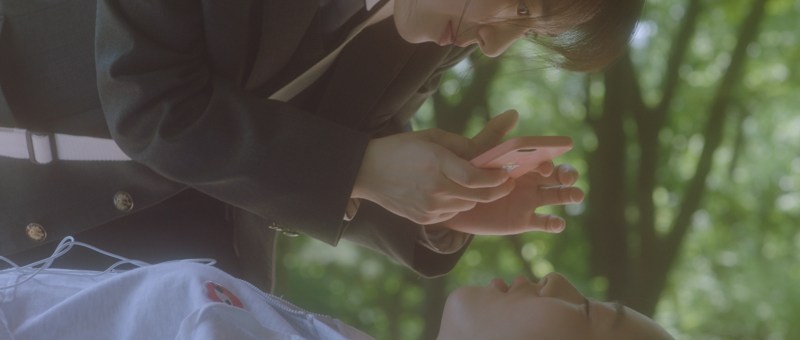
Teenage friends wrestle with a sense of mortality, frustrated longing, and future anxiety in the etherial feature debut from actor Cho Hyun-chul, The Dream Songs (너와 나, Neo wa Na). Set shortly before the 2014 Sewol ferry disaster and shot in a washed out soft focus with a hazy nostalgic quality, the oneiric drama finds its conflicted heroine coming to an appreciation of the solipsistic qualities of obsessive love while preparing to cross the line between adolescence and adulthood in fearing she may not return from her upcoming trip or that the her that returns will not be same and the world will have moved on without her. 

The trip is only four days, but for Sam (Park Hye-su) it represents the end of her adolescence and the beginning of adulthood. As the film opens, she wakes up in her classroom after having a disturbing dream that something bad is going to happen to her best friend Ha-eun (Kim Si-eun) who is currently in the hospital though only for broken leg after being hit by pedal bike on a zebra crossing. So upset is she, that Sam manages to convince her teacher to let her leave early to verify that Ha-eun is OK with her own eyes and try to convince her to come on the school trip to Jeju with her, broken leg and all, so that whatever happens happens to them together. 

In the repeated dream imagery, it’s being left on her own that Sam seems to fear. She doesn’t want to be the only one who survives or the only one who dies and leaves her friend behind though as she confesses there was something that felt peaceful in her dream on looking at a corpse that might have been her own. The school trip to Jeju is one that many teenagers take in a quite literal rite of passage, but it’s also tinged with additional anxiety in the painful reminders of the 2014 Sewol Ferry disaster, directly referenced via a radio broadcast, in which many school children taking the trip from the area where the film takes place lost their lives. Sam’s impending sense of foreboding causes her to reevaluate her relationships and especially that with her best friend Ha-eun for whom she has developed romantic feelings she is unsure can be returned. Afraid to leave without saying anything but also worried she may be rejected and end up imploding the friendship too, Sam’s internalised conflict ironically blinds to her Ha-eun’s individual suffering in having recently lost her pet dog as well as her disappointment on missing out on the trip while recovering from her accident. 

Cho frequently lands on the image of clocks, often stopped, which hint at time running out while there are frequent allusions to death and drowning from the bird Sam finds on the ground by the school to the girls’ final parting seemingly taking place in front of a stranger’s funeral with mourners talking outside while people carry funeral wreaths directly past them. While the lines between dream and reality continue to blur, Sam sees images of herself in the two little girls playing together in the park and another with her grandmother who “saves” a toy dinosaur from drowning in an environment in which it is unable to survive. She and Ha-eun chase a lost dog and eventually end up on opposite sides of a fence which is the outcome Sam most feared, but are eventually reunited and able to have a more emotionally honest conversation now that Sam has come to an understanding of the self-involved qualities of her romantic obsession. 

Even so, for the first part of the film it isn’t entirely clear if Sam’s feelings are indeed romantic or if it’s more a case of intense teenage friendship that causes her to be jealous of others that might be spending time with Ha-eun while preoccupied with the identity of the mysterious “Humbaba” whom Ha-eun apparently wanted to kiss in a diary entry Sam was presumably not intended to read. Sam’s feelings are made clear in a letter she doesn’t have the courage to send while she seems to fear that time may slip away from her and Ha-eun won’t be there when she returns from her trip. Yet what she ends up awakening to is more like self love, or at least no longer fearing “Joy” will fly away from her when she’s not looking. Cho’s hazy, poetic coming-of-age drama excels in capturing the joyful quality of teenage female friendship and diffidence of first love if tinged with a note of melancholy nostalgia in the wake of a devastating loss.


The Dream Songs screened as part of BFI Flare 2023

Original trailer (English subtitles)