Love Never Ends (我爱你!, Han Yan, 2023)

The generational tensions in the contemporary society are gradually exposed when a retired mechanic begins to fall for a feisty widow in Han Yan’s quietly affecting romantic dramedy, Love Never Ends (我爱你!, wǒ ài nǐ). Based on a Korean webtoon by Kang Full the Chinese title “I Love You!” hints at its true intentions along with the potential for incongruity when exploring romantic courtship among the older population even as the film hints at the destructive cycles of repression and lost love in a still conservative culture. 

Something of a rebel, widower Wenjie (Ni Dahong) walks around with a chain whip clipped to his belt that should probably be illegal. He likes to get it out every now and then to whirl around while talking like the hero of a martial arts serial, claiming that his whip exists for truth and justice so he’s going to use it to punish unfilial children and heartless bullies. Quite frankly, it’s ridiculous and on this particular occasion he chooses the wrong side coming to the defence of a park manager who’s trying to move a pair of elderly scrap collectors on because inspectors will soon be arriving and he’s worried their presence will make him look bad. Wenjie mock slaps the woman, Ru (Kara Hui Ying-Hung), stopping his hand just before connecting with her face and then shatters her jade bracelet with the whip. It’s fair to say they don’t get off on the best foot, which is unfortunate as Wenjie soon discovers she is the carer for a former Cantonese opera star, Mrs Qiu (Lu Qiuping), his daughter desperately wants to take on her son, Sai, as a pupil. 

In one sense, the scene makes plain the battle for the use of space in urban environment, Wenjie insisting the park is for “everyone” to exercise, but simultaneously suggesting that Ru and her friend Dingshan (Tony Leung Ka-Fai) have no right to use it. Meanwhile, it becomes clear that Wenjie is also rebelling against a kind of infantilisation at the hands of his well-meaning children who have put up a surveillance camera in his home to make sure he isn’t drinking alcohol while his doctor also breaks medical ethics by immediately calling to tell them that the security system hasn’t worked because whatever he says Wenjie has obviously been continuing to drink. It may be for his own good, but a role reversal has taken place as his children exercise all the power not just over his life but their own chidren’s too. Wenjie’s teenage granddaughter wants to study abroad to reunite with her boyfriend, but her parents don’t approve echoing the sad story of Ru who once came from a moderately wealthy village family and eloped with a painter when her parents pressured her to accept an arranged marriage to the headman’s son only for the painter to die not long afterwards leaving her all alone in an unfamiliar city. 

Mrs Qiu too has her own sad romance in having been prevented from marrying her childhood sweetheart because of parental opposition. Despite her illustrious career, she eventually became a heartbroken recluse while her lover, Chen (Bao Yinglin), was driven out of his mind and has spent his whole life in a psychiatric hospital pushing a wooden mannequin around believing it to be Qiu save for the heartbreaking moments of lucidity in which he realises the truth. Dingshan, meanwhile, is lovingly caring for his wife who has advanced dementia and cannot bear the thought of being parted from her while she continues to dwell on a sense of guilt that her older children felt neglected that they had to spend what little they had trying to cure their youngest daughter’s illness though it eventually resulted in the loss of her hearing because they could not treat it fast enough. 

The children are, however, largely ungrateful. The sons barely visit them and are each a little repulsed by their parents’ humbleness, more or less ignoring them at their 45th anniversary celebration while one of the daughters-in-law sprays disinfectant everywhere as if she thinks this place is dirty and a danger to her children. Wenjie can barely contain himself on witnessing such unfiliality and perhaps comes to reflect that his children’s micromanaging is at least better than the total indifference of Dingshan’s sons and daughters though they suffered so much more to raise them. He blames himself for his wife’s death worried that she didn’t tell him she was in pain until it was too late or worse that she did and he didn’t listen, while uncertain how to pursue a new romance with Ru just as she wonders if Chen and Qiu are really the lucky ones living in an endless fantasy of romantic love. Conversely, she’s afraid of romance because it will inevitably lead to the pain of separation and she isn’t sure it’s worth it in the time she has left. 

Then again, Wenjie has a youthful quality, shifting from the wuxia speak of his mission for justice to embrace the new internet lingo of his grandchildren along with its meme culture before following his granddaughter’s lead in deciding to please himself rather than those around him by saying how he really feels even if it’s a bit awkward or embarrassing. A minor subplot about the inheritance of traditional culture echoes the intergenerational themes as little Sai resolves to learn from the previous generation in order to pass it on to the next, while Ru and Wenjie finally come to an acceptance of living in the moment that even if it eventually leads to heartbreak there’s no point being unhappy now too. 


Original trailer (Simplified Chinese & English subtitles)

12.12: The Day (서울의 봄, Kim Sung-soo, 2023)

Sometimes, the bad guys win. Kim Sung-soo’s long-awaited return after superb underworld drama Asura, 12.12: The Day (서울의 봄, Seoul-ui Bom) explores one of the darkest hours of recent Korean history as all hopes for democracy and freedom are dashed by a 1979 coup by General Chun Doo-hwan whose reign turned out to be far worse than that of his predecessor, Park Chung-hee who had been assassinated by a member of his own security team some months previously.

Yet Kim is less concerned with the coup itself than why so few people tried to stop it. Though everything appears to be going very badly for Chun (Hwang Jung-min), he eventually succeeds in taking Seoul by force while opposed by a solo general who is the lone guardian of justice and righteousness. Lee Tae-shin (Jung Woo-sung) first turns down a promotion to command the Seoul garrison and accepts it only when it’s explained to him that Jeong (Lee Sung-min), the army chief of staff, hopes to use him as a bulwark against Chun whom he fears is indeed preparing for an insurrection. Sure enough, Jeong is eventually abducted by Chun’s minions, who run the security division, on a trumped up charge of being involved with Park’s murder while Chun desperately needs the duly elected president of a democratising Korea to sign his arrest warrant so his blatant power grab will be legitimised rather than branded a “coup”.

Only the president doesn’t play along. He insists on following proper protocol and getting the approval of the defence minister all of which is vexing for Chun who is left humiliatingly standing in his office while the president holds his ground. The defence minister has, as it turns out, fled to the American embassy in his pyjamas where he finds little sympathy while the film subtly implies that the Americans advise him to return and back Chun who is doubtless considered much more useful to them politically.

Though Tae-shin and another officer at HQ try to warn of a brewing coup, their orders are often overruled by superiors either because they do not take the situation seriously or are actively siding with Chun whose “Hanahoe” faction has taken over a significantly large proportion of the military. Kim zooms in on militarism as the fatal flaw in this botched defence system as it seems no one can act without first receiving an order from above nor are they equipped to make critical decisions on a personal level as to whether or not an order should be obeyed. Tae-shin calls on countless devisions for backup but finds them either actively allying with Chun or refusing to get involved believing it is a hopeless battle. Tae-shin asks what the army is for if it refuses to fight at the crucial moment and abandons its responsibility to protect the interests of its citizens in simply allowing Chun to seize power but receives no real answer. 

Chun has already aroused suspicion for his handling of the investigation into Park’s death, reportedly bringing in countless people with no obvious connection to the case and torturing them. The men who support him want to continue Park’s “glorious revolution” which was in itself a repackaging of Colonial-era Japanese militarism, and fiercely resist the idea of “democracy” advocating totalitarian views that the ordinary person longs for a strong hand at the wheel and to be absolved of the responsibility of choice which ironically fits perfectly with hierarchal structure of the Army. The film paints Chun, slight, small, and bald, as a man with a chip on his shoulder apparently resentful of military elites and the wealthy. He craves power because of his own insecurity and a desire to get one over on righteous men like Tae-shin which might be why his line about Chun being unworthy of the uniform of a Korean solider seems to get to him. 

Using the film language of the 1970s such as heavy grain and split screens, Kim keeps the tension on a knife edge even though the conclusion is all too inevitable. Tae-shin cuts a heroic figure, standing alone on a bridge and forcing back the advancing tanks solely with his imperious righteousness but in the end it’s not enough, there are too few like him and too many like Chun whose maniacal laughter is intercut with scenes of Tae-shin in the torture facility which lies beneath the facade of government. Bleak, but also angry, Kim’s extraordinarily controlled political thriller is damning in its condemnations of a militarising culture and the ever present threat which accompanies it.


International trailer (English subtitles)

The White Storm 3: Heaven or Hell (掃毒3︰人在天涯, Herman Yau, 2023)

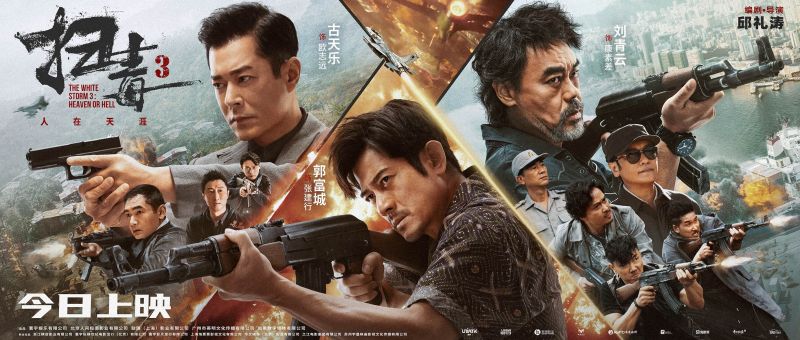
Who is the most foolish, the arch criminal who didn’t realise his two best buddies were undercover cops, or the cops that killed or took bullets for him? The latest in the White Storm series of standalone action thrillers with starry casts thematically dealing with drugs and organised crime, White Storm 3: Heaven or Hell (掃毒3︰人在天涯) like its immediate predecessor casts the net a little wider than just Hong Kong and is keen to stress the real victims of the international drug trade are the economically disadvantaged farmers who are left with no other option than to turn their fields to poppies. 

Back in Hong Kong, meanwhile, the film opens with local drug lord Suchat (Sean Lau Ching-Wan) retrieving a huge haul of drugs dropped in the ocean by helicopter only to be interrupted by the police who were watching all along. Suchat’s righthand man Yuen (Louis Koo Tin-Lok) blows his cover by pulling a gun to convince him to surrender, but Suchat chooses not to and in the firefight that ensues his other buddy, Hang (Aaron Kwok Fu-Sing), who is also an undercover cop and in fact very good friends with Yuen, is seriously wounded. In a show of loyalty, Suchat rescues Hang and manages to flee to Thailand where he sets up in his home village soon coming to the attention of the warlord who controls the local drug trade.

Describing the gang as the “rising stars of the Golden Triangle”, Suchat eventually cuts a deal with the general to provide security for his logistical operation in which drugs, mostly ice but also heroin, are transported inside fruit and other foodstuffs to be moved through the local market. Suchat had originally tried to set up his own operation only to fall foul of the general but also concedes that the margins in this game are fairly thin, no one in this area has any money to spend on drugs and there’s no point trying to produce them with the general in town so his only option is to provide a different service at another point in the chain. Hang becomes fond of the young woman who nurses him back to health, Noon, who explains that the only crop anyone is interested in is opium so aside from the food they grow for themselves it’s all they can produce to support themselves. There may a particular implication in her reply when Hang asks her if she’s ever considered moving that this even if this place is not a “home” because she has no remaining family members (her grandfather in fact seems to die of opium poisoning) it is still her hometown and why should she have to leave it. 

Before being taken to Thailand, Hang’s boss had worried that he might have spent too long undercover to successfully come back and it’s true enough that he seems to have become conflicted not only in his feelings for Noon but reflecting on the genuine brotherhood that exists between himself and Suchat whom he will eventually have to betray. Hang almost died for him, and Suchat repaid the favour by refusing to leave him behind. But on the other hand, there’s also a degree of homoerotic tension between himself and Yuen who rushes straight over to Thailand to rescue him once he’s able to make contact only to be frustrated when Hang tells him he has to go back to the village to save Noon who, as she’s already told him, does not actually want to leave despite the danger of constant violence from drug gangs and army raids. 

The film ends with the razing of the village of the Thai authorities who evidently decide the loss of life is justified in the necessity of stopping the general though it’s the ordinary farmers who lose their lives, families, homes and livelihoods because of their proximity to the trade in drugs. “I miss Hong Kong” Hang finally exclaims as if longing to shake off his undercover persona and recommitting himself to his role as a policeman but also perhaps hinting at a more subversive meaning as Yau ends on the clouds parting to reveal the famous city skyline amid picturesque terrain. Filled with a series of incredibly elaborate action sequences culminating in the all out warfare of the village raid, Yau’s heroic bloodshed subversion has its share of absurdity in the complicated relationships between its central trio and the ambivalent justice of its final resolution.


Original trailer (Traditional Chinese / English subtitles)

The Boy and the Heron (君たちはどう生きるか, Hayao Miyazaki, 2023)

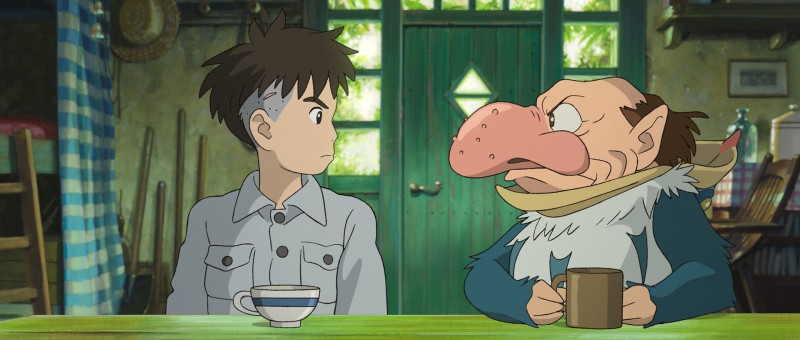
Sales of Genzaburo Yoshino’s 1937 novel How Do You Live? (君たちはどう生きるか, Kimitachi wa Do Ikiru ka? went through the roof when it was announced that the no longer retired Hayao Miyazaki would be directing a new film with the same title. Predictably, Miyazaki’s film turned out not to be an adaptation at all, or at least not a literal sense, but was intensely interested in the question not so much how do you live but how will you? Will you allow the past to make you bitter and live in a world of pain and resentment, or will you choose to live in a world of peace and beauty free of human malice?

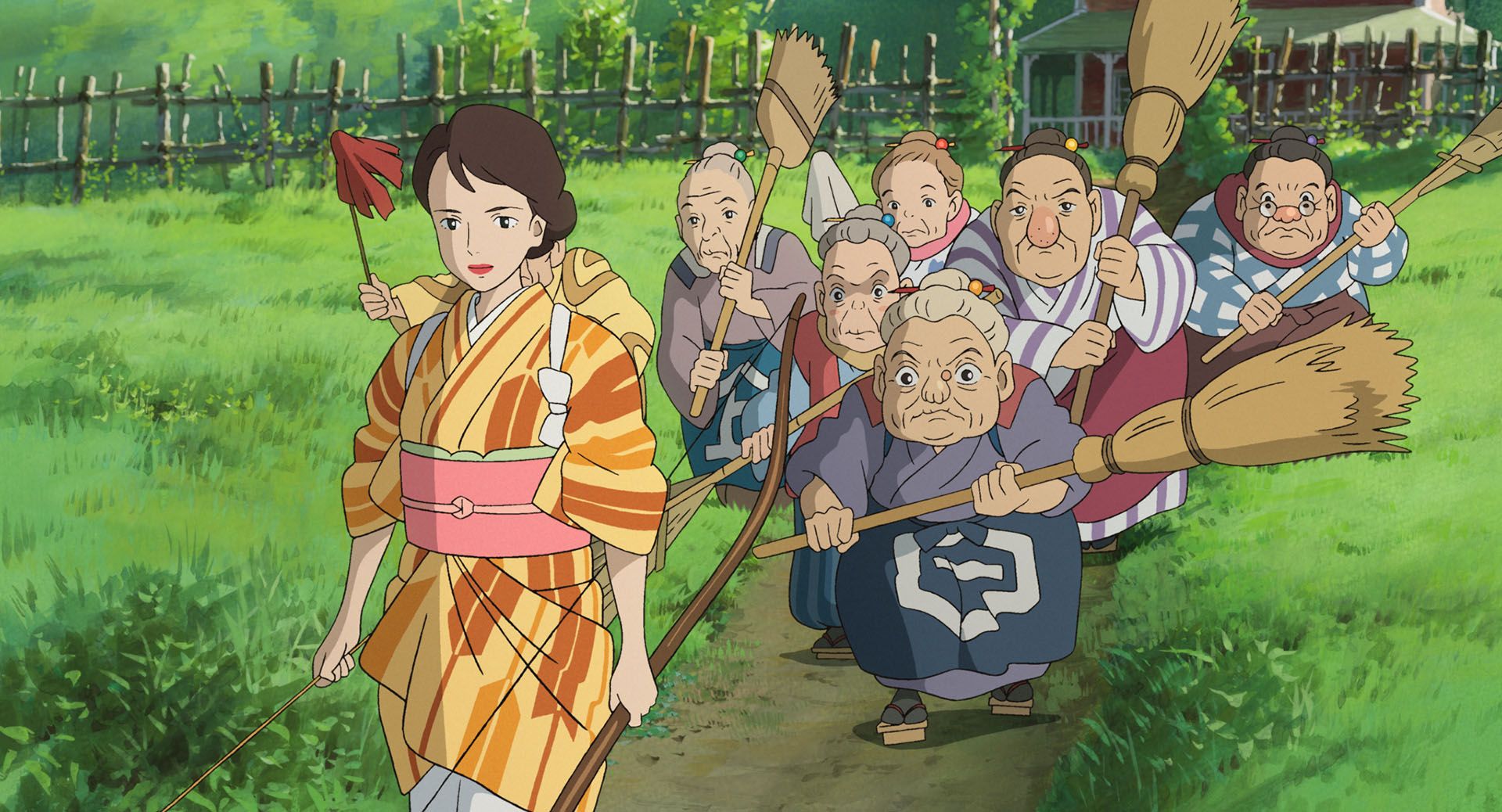
These are of course the questions faced by a post-war generation, the children of Miyazaki’s own era who came of age in a time of fear and suffering. Mahito (Soma Santoki), the hero, loses his mother in the firebombing of Tokyo. He runs through a world of shadows to save her from the flames but of course, he cannot. A year later everything has changed. His father has remarried, taking his mother’s younger sister Natsuko (Yoshino Kimura) as his new wife. Natsuko is now pregnant which suggests the relationship began some time ago though Mahito knew nothing of it and had no recollection of ever having met Natsuko before being sent to live in her giant mansion in the country more or less untouched by the war. 

It’s here that Mahito’s own malice rises. He is polite, if sullen, but cannot warm to his new stepmother and resents his father’s relationship with her. Perpetually bothered by a grey heron (Masaki Suda) his first thought is to kill it, crafting a bow and arrow from bamboo and one of the heron’s own feathers. Shunned as the new boy at school he hits himself on the head with a rock while his father, Shoichi (Takuya Kimura), comically vows revenge and lets him stay home. As he points out, there’s not much “education” going on anyway with most of the students pulled away from their studies for “voluntary” labour in service of the war effort in this case agricultural. 

Shoichi has moved to the country to open a factory which it seems produces canopies for fighter planes which is all to say that he is profiting from the business of war, though transgressively referencing the failure in Saipan over breakfast with the mild implication that it might work out alright for him. There is after all a grim reason they’ll be in need of large numbers of aircraft parts in the near future. Mahito’s dark impulses are directly linked to those of militarism and the folly of war. When he finally enters the tower of madness apparently constructed by a great-uncle who went insane through reading too many books, he discovers that his enemies are an ever expanding clan of fascistic, man-eating parakeets led by a Mussolini-like despotic leader attempting to manipulate the Master of the tower. 

Inside the tower is a land out of time, a place for those already dead or in essence an eternal past. It’s here that Mahito is presented with a choice, how will he live? Will he choose malice and destruction, or will he choose to leave and build a new world of beauty and peace above? In many ways, the important point is that the choice is his as it is ours, that we are free to decide and that our choices create the world in which we live. Through his adventures in the tower, Mahito begins to come to terms with his situation and resolves to accept Natsuko as a mother and make friends of those he once considered enemies. When the tower itself crumbles, it takes with it the last vestiges of authoritarianism and tyranny.

Prompting his epiphany, Mahito discovers a copy of How Do You Live? in his room, a present from his late mother inscribed to the grown-up Mahito. He is surrounded by the world’s ugliness, forced into a surprisingly graphic fish gutting session that leaves him wiping away blood, recalling his profusely bleeding head injury and the scar it will forever mark him with. Pelicans imprisoned in the other world meanwhile tell him that they have no choice but to behave as they do for the Master of the Tower neglected to put enough fish in the rivers intending them to destroy rather nurture new life while their young too learn all the wrong lessons. Yet there is beauty and strangeness here too, along with kindness and humanity. Boundlessly inventive, Miyazaki couples surrealist visions of murderous birds and the hellish scenes of a city on fire with Mahito the only figure visible in his pale blue school uniform darting through the soot and the shadows. A vivid symphony of life, the film may in its way be about grief and the pain of moving on but finally discovers a kind of serenity in an accommodation with the present and the eternally unfinished question of how you yourself will live. 


The Boy and the Heron screened as part of this year’s BFI London Film Festival.

One More Chance (別叫我”賭神, Anthony Pun Yiu-Ming, 2023)

A feckless gambler gets a final shot at redemption when he’s suddenly asked to take care of an autistic son he never knew he had in Anthony Pun Yiu-Ming’s nostalgic drama, One More Chance (別叫我”賭神). Previously titled “Be Water, My Friend”, the film has had a troubled production history only reaching cinema screen four years after filming concluded in March 2019 and has been retitled in the Chinese “Don’t Call Me the God of Gamblers” which seems to be a blatant attempt to cash in the audience’s fond memories of similarly pitched Chow Yun-fat vehicles from the ’80s and ’90s such as All About Ah Long.

In truth, Chow is probably a little old for the role he’s cast to play as the middle-aged barber Water who’s long since fled to Macao in an attempt to escape problems with loansharks caused by his gambling addition. Of course, Macao is one of the worst places someone with a gambling problem could go and so Water is already up to his neck in debt and a familiar face at the local casino. That’s one reason he ends up going along with the proposal of old flame Lee Xi (Anita Yuen Wing-Yee) to look after her grownup son, Yeung (Will Or Wai-Lam), who is autistic, for a month in return for 50,000 HK dollars up front and another 50,000 at the end assuming all goes well. She claims that Water is Yeung’s father and even provides forms for him to send off for a DNA test if he doesn’t believe her, but at this point all Water is interested in is the cash. 

To begin with, he pretty much thinks of Yeung as cash cow, descending on a Rain Man-esque path of using him to up his gambling game but otherwise frustrated by his needs and ill-equipped to care for an autistic person whom he makes little attempt to understand. For his part, Yeung adapts well enough and tries to make the best of his new circumstances but obviously misses his mother and struggles when Water selfishly disrupts his routines. For all that, however, it’s largely Yeung who is looking after Water, tidying the apartment and bringing a kind of order into his life while forcing him to reckon with the self-destructive way he’s been living. 

Picking up a casino chip in the opening sequence, Water describes it as a “chance” in an echo of the way he’s been gambling his life just as he decides to gamble on taking in Yeung. At one point, he wins big on the horses but takes his winnings straight to the casino where he’s wiped out after staking everything on a single bet only to realise he’s been played by another grifter at the table. It seems that Xi left him because of his gambling problem and the resultant change in his lifestyle that had made it impossible for her to stay or raise a child with him, causing Water to become even more embittered and cynical. Where once he provided a refuge for wayward young men trying to get back on the straight and narrow, now he’s hassled by petty gangsters over his massive debts.

Nevertheless, it’s re-embracing his paternity that begins to turn his life around as he bonds with Yeung and begins to have genuine feelings for him rather than just fixating on the money while simultaneously recognising that Yeung is already a man and able to care for himself in many more ways than others may assume. One could say that he gambles on the boy, staking his life on him rather than endless rolls of the dice to fill an emotional void but also rediscovering a sense of himself and who he might have been if he had not developed a gambling problem and left it up to chance to solve all his problems. Unabashedly sentimental, the film flirts with nostalgia in the presence of Chow and Anita Yuen and largely looks back the Hong Kong classics of the 80s and 90s if with half an eye on the Mainland censors board, Bruce Lee shrine not withstanding, but nevertheless presents a heartwarming tale of father and son bonding and paternal redemption as Water crosses the desert and finally reclaims himself from his life of dissipation. 


Original trailer (English subtitles)

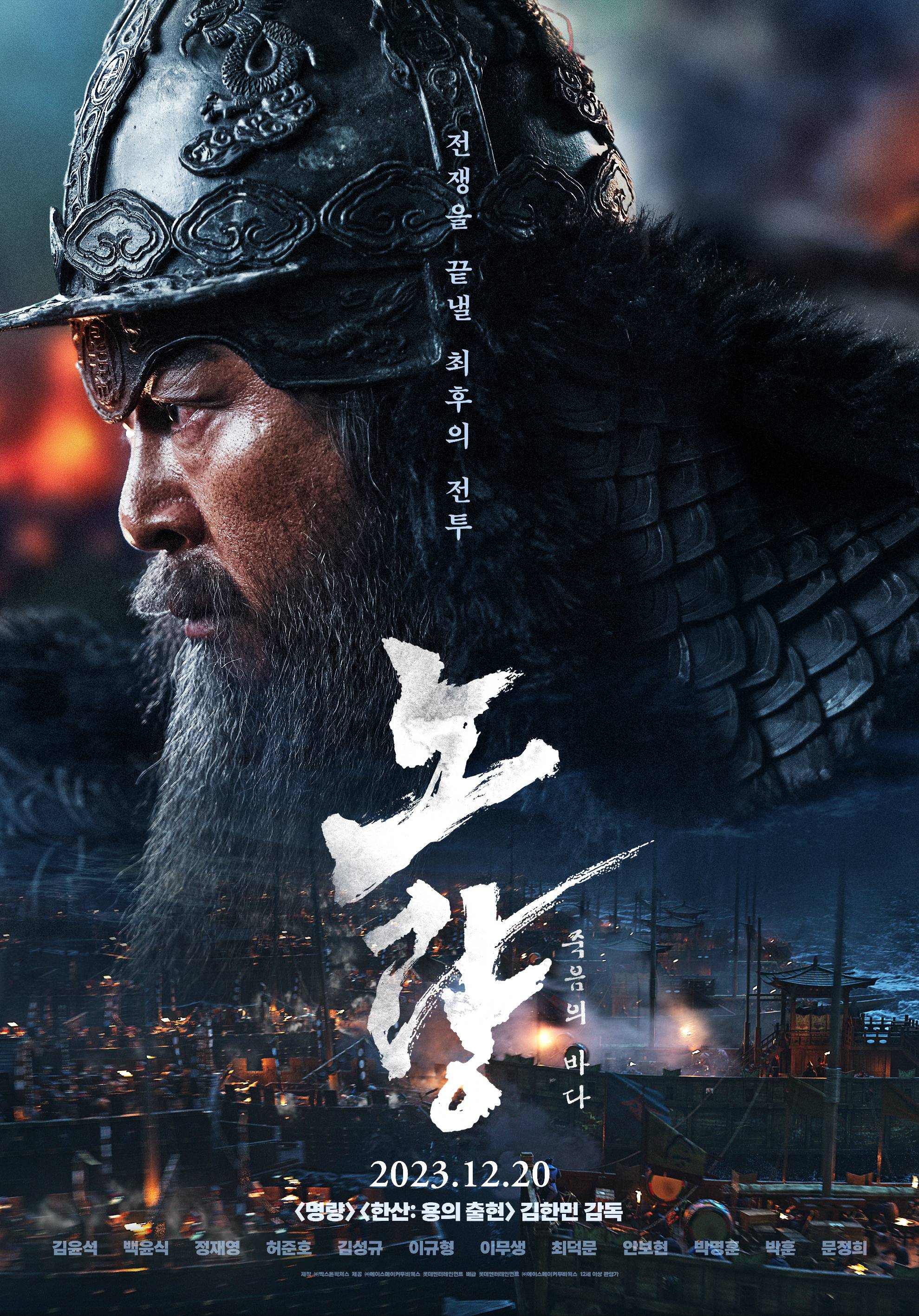
Noryang: Deadly Sea (노량: 죽음의 바다, Kim Han-min, 2023)

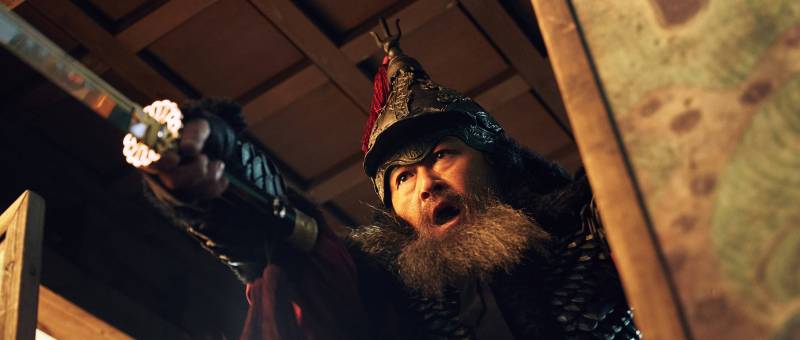
The strange thing about Noryang: The Deadly Sea (노량: 죽음의 바다, Noryang: Jugeumui Bada), the third and final instalment in Kim Han-min’s trilogy about 16th century admiral Yi Sun-sin is that everyone wants to end the war but they all want to end it definitively and so are unable to simply let it run its course. Then again, there is a little more complexity involved in the depiction of Yi in asking whether his desire to repel the Japanese once and for all is really about the national good or personal vengeance for the death of one of his sons at the hands of Japanese raiders.

The opening scenes taking place in 1598 witness the death of Toyotomi Hideyoshi who had launched two invasions of Korea in the previous decade which were in themselves precursors to an invasion of Ming China in an attempt to disrupt the Chinese Tributary System that prevented Japan from trading with China without agreeing to pay them taxes and recognise their political superiority. In the film at least, his deathbed order is to withdraw troops from Korea where they had been unsuccessfully fighting for the previous year. The leader of the Japanese forces, Konishi Yukinaga (Lee Kyu-hyung), is however prevented from leaving by a naval blockade placed by Admiral Yi around their fort on Suncheon Island. With Hideyoshi dead, Yukinaga is keen to return to Japan as quickly as possible in order to defend Hideyoshi’s young son, Hideyori, from Tokugawa Ieyasu who makes a very sinister appearance at Hideyoshi’s deathbed.

One might wonder why Yi does not allow Yukinaga to simply leave and return to Japan now that the war is technically over yet he insists that without a full surrender nothing is guaranteed and the Japanese may simply regroup and return as they had done before. Then again, he’s haunted by nightmares of his son’s death in which he witnesses him cut down by Japanese pirates while unable to intervene dragged back by shadowy figures rising from the water. Yi also later makes clear that his motivation is coloured by a desire for revenge to the extent that he is willing to sacrifice his life for it, which is one thing but it also necessarily means he’s willing to risk the lives of his men over what is partly a personal vendetta. 

Yukinaga, meanwhile, and the Japanese in general are depicted as cruel, ruthless, and cowardly. Shimazu (Baek Yoon-sik), the admiral leading the reinforcements sent to help spring Yukinaga, wilfully fires on his own men in order to cut his way through to the enemy and then threatens to execute sailors who tried to desert. In the end Yukinaga breaks his promise and declines to come to the assistance of Shimazu’s fleet as arranged, turning away and sailing back to Japan (he is subsequently beheaded after being on the losing side of the battle of Sekigahara as he was unable to commit ritual suicide because he was a Christian). They had originally been let down by a Chinese general they’d bribed to assist them but had decided not to turn up given the war was already over, making a secondary agreement with Admiral Chen (Jung Jae-young) who also desires a peaceful end to the disruption but vacillates between each side while not really wanting to get involved before making a fairly disastrous intervention in the final battle. 

There is something a little a uncomfortable in the film’s framing and most particularly in its post-credits scene which reinforces Yi’s conviction that the war isn’t really over without a complete surrender from Japan. In any case, Yi becomes a literal beating heart of the battle banging the drums of war to encourage weary fighters that it isn’t over yet and to keep going to the last man buoyed by the spirits who appear to him of his son and allies who lost their lives fighting similar battles in the previous films. That aside, Deadly Sea is mostly standalone though some knowledge of Japanese and Korean history in the late 16th century is undoubtedly helpful. Kim devotes the second half of the film to a lengthy series of naval battles as Yi tries to lure Shimazu to a vulnerable position, eventually shooting a harrowing long take from the perspective of an ordinary sailor trying to cut his way through after boarding a series of enemy boats. The senseless futility of the violence is the point, but it’s one that’s continually lost on Yi who continues to insist that this war will never really be over until they chase the invaders all the way back to their own islands and into total capitulation even as his quarry sails away towards his own unhappy destiny in an equally turbulent Japan.


International trailer (English subtitles)

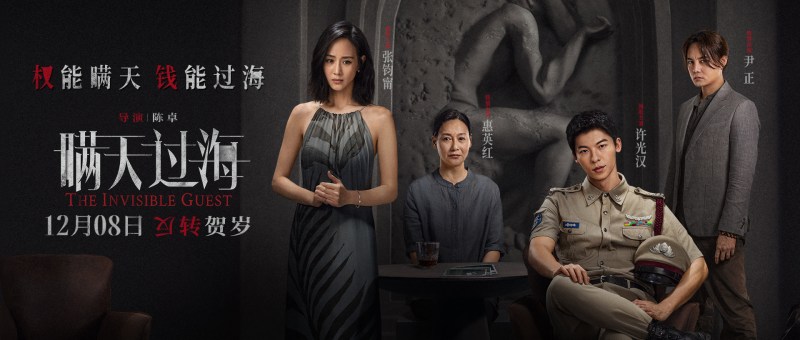
The Invisible Guest (瞒天过海, Chen Zhuo, 2023)

Prestige mystery thrillers are definitely having a moment at the Chinese box office and like last summer’s Lost in the Stars, The Invisible Guest (瞒天过海, mántiānguòhǎi) takes place in a fictional South East Asian nation among a largely Chinese community where the policemen mainly speak English and almost everyone else Mandarin. Like many similarly themed films that might partly be because there is a strong suggestion of normalised judicial corruption which would otherwise be a difficult sell for the Mainland censorship board even if very much on message in its anti-elitist themes in which it is repeatedly stated that money cannot in fact solve everything. 

Adapted from a Spanish film which was a huge hit on its Chinese release and recently remade in Korea under the title Confession, the film opens as a locked room mystery. A well-known architect, Minghao (Yin Zhung), who is also the adopted son of the nation’s only Chinese lawmaker, has been brutally murdered in a luxury hotel. Joanna (Chang Chun-ning), the wife of a filthy rich real estate magnate, has been arrested but maintains her innocence. She claims that they were attacked soon after entering the room and that she was temporarily knocked out waking up to find Minghao with his throat cut, the attacker vanished, and police kicking down the door.  

The twist is that she’s then approached by Zheng (Greg Hsu), a local cop, who offers to “help” her for a small fee promising to sort out all the problematic evidence against her if only she’s honest with him about what really happened in the room. Obviously, the depiction of such an openly corrupt law enforcement officer would not be possible on the Mainland which explains the international setting but it soon becomes clear that Joanna may not be a very reliable narrator and Zheng obviously knows a little more about what’s really going on than he pretends.

Joanna had only recently married her superwealthy husband whose business interests have been very badly affected by the scandal, suggesting at least that she may be a patsy at the centre of a corporate conspiracy with her husband’s firm possibly hoping to get rid of her or someone else’s using her to get to him. But the most essential message is that the rich and powerful shouldn’t have a right to assume that everything can be solved with money and they can get away with anything so long as they have financial means to pay for it. In a flashback which we can’t be sure is completely reliable, someone suggests that the victim’s life was meaningless and killing them no different from crushing an ant, a view somewhat validated by Zheng when he tells Joanna that he isn’t interested in people like that only people like her, wealthy. 

Conversely, a tangenital victim of the case later insists that you shouldn’t underestimate what poor people will do for their families because in the end that’s all they have. The film is sympathetic to those like them who do not have the means to face off against someone like Joanna who probably could, if she is not actually innocent as she claims, evade justice thanks to her vast wealth and social standing assuming her husband’s company don’t decide to drop her in it. There is also, however, the implication that Joanna was once herself poor and downtrodden and has been corrupted by her desire for the illusionary freedom of wealth, abandoning her integrity while carrying the innocent dream of buying an idyllic orchard where she could live in peace and comfort. 

Playing out in near realtime, Chen keeps the chamber drama tension high with frequent on-screen graphics reminding us that Joanna only has a couple of hours left to clear her name before the dossier of evidence against her will be presented to the prosecution and she’ll be charged with murder. Zheng says he can help but keeps pressing her not only for more money but more information, the “real” truth, rather than a favourable narrative though arguably the flow of hypotheses made more sense in the context of a lawyer prepping a client than a policeman probing for evidence in order to neutralise it as did the accused’s willingness to trust the person poking holes in their story. A kind of justice, at least, is done and not least poetic as the truth begins to emerge though the guilty parties or invisible guests of latent classism and social inequality are very much here to stay. 


The Invisible Guest is in UK cinemas now courtesy of CMC.

International trailer (English subtitles)

Ransomed (비공식작전, Kim Seong-hun, 2023)

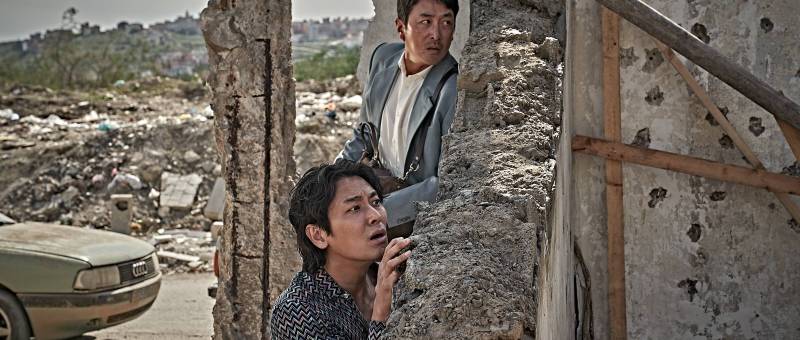
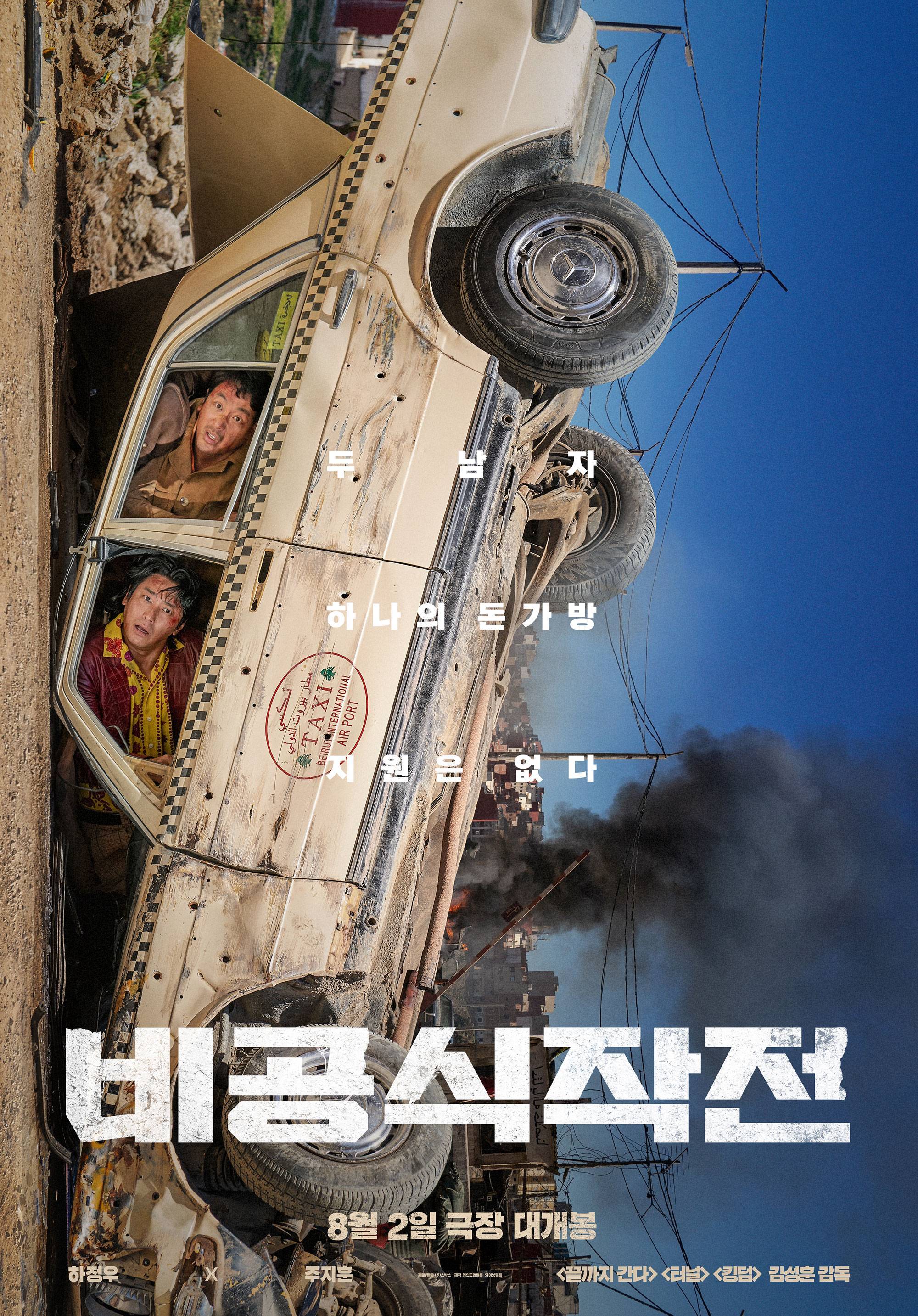
A jaded diplomat finds himself caught between competing factions both at home and abroad while trying to rescue a kidnapped colleague in Kim Seong-hun’s action dramedy, Ransomed (비공식작전, Bigongsigjagjeon). Inspired by true events, the film ironically echoes the recent Chinese hit Home Coming which was itself at least incredibly indebted to Escape from Mogadishu in praising the efforts of a civil servant who braved a war zone to rescue a stranded colleague but received little support from his conflicted government.

During the time the film takes place, Korea is caught in a moment of transition technically still under the military dictatorship of Chun Doo-hwan but with the first democratic elections already scheduled and the 1988 Olympics in the offing. Diplomat Oh Jae-seok (Lim Hyung-guk) is kidnapped in during the civil war in Beirut in 1986 and believed dead after efforts to retrieve him fail. Nearly two years later, jaded Foreign Office Middle East specialist Lee Min-jun (Ha Jung-woo) picks up a call and hears a message in morse code including a special diplomatic password and the claim the that it comes from Jae-seok who is alive and requesting rescue. The problem is that both the Foreign Office and the KCIA are on the fence about taking action, each wanting the glory of bringing Jae-seok home but fearful of being professionally embarrassed if it turns out that the call is a hoax and they pay a ransom for a man who’s already dead. 

Min-jun finds himself caught between the two while essentially forced to set up a secret covert operation through former US CIA officer Carter (Burn Gorman) and a wealthy Swiss businessman with connections in Lebanon. The irony is that both he and Pan-su (Ju Ji-hoon), a Korean taxi driver he inexplicably runs into in Beirut, only want to go to the US, Min-jun desperate for a more prestigious positing to advance his diplomatic career while Pan-su, technically undocumented, seeks a better life in a more stable environment. As such, Min-jun’s motivations for rescuing Jae-seok are only partly a sense of responsibility as a fellow diplomat and the man who took the call that Jae-sook was alive, hoping to prove himself to his superiors only agreeing to the job on the promise of a transfer to a major US city resentful of having been passed over for a position in London in favour of an elite graduate of Seoul University. 

The irony is that once in Beirut he’s faced with a further series of kidnap threats, another random militia hot on Min-jun’s trail hoping to capture at least one Korean in the hope of a major payout though Min-jun’s problem is that the government only agrees to send more money after each step has been completed endangering the efficacy of the rescue mission while leaving him at the mercy of the militia leader the government has secretly and perhaps questionably agreed to pay to broker the negotiations to secure Jae-seok’s release and passage out of the country. Caught between competing militias in Beirut, Min-jun is also a victim of the push and pull between the waning influence of the KCIA and the Foreign Office with his fate decided largely by political infighting while in the end it’s his colleagues who eventually take a stand each chipping in three months’ salary to fund his rescue out of a sense of solidarity in the reflection that their job is only really possible given their government’s assurance of protection when they undertake dangerous work overseas for the national good. 

As expected, Min-jun soon rediscovers his sense of duty as does shady taxi driver Pan-su though more thanks to the shaming of his Lebanese girlfriend who points out that it’s not a good look to run off with millions of dollars intended to save to save a man’s life. Despite the constant precarity of the situation, what arises is an awkward brotherhood between the two men brokered by an uneasy trust and genuine fellow feeling as they try to rescue Jae-seok while evading the militia trying to kidnap them along with the wider civil war. Undercutting the seriousness of the situation with a healthy dose of irony and black humour, Kim lends his otherwise grim tale of citizenry held hostage by a bureaucracy in flux a degree of positivity if only in proving the power of the individual over a dysfunctional system. 


International trailer (English subtitles)

The Goldfinger (金手指, Felix Chong Man-keung, 2023)

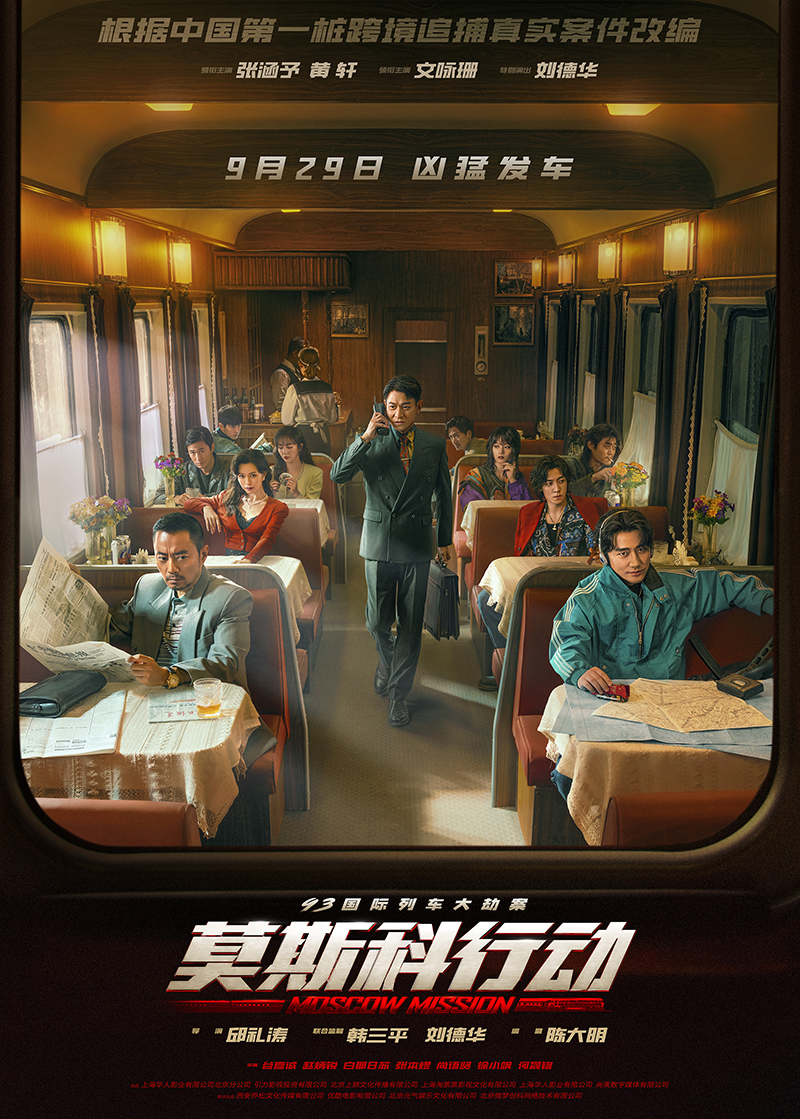
Following Wong Jing’s Chasing the Dragon and Philip Yung’s Where the Wind Blows, Felix Chong’s financial thriller The Goldfinger (金手指) is the latest in a series of Hong Kong films revolving around colonial-era corruption in which the apparent lawlessness of the pre-Handover society allowed crime to flourish along with a nascent greed nurtured by the island’s rising prosperity as an increasingly important financial centre. In an ironic touch, the film even opens with mass protests against the introduction of ICAC with protestors calling for more respect for law enforcement officers while implying some dark authoritarian force is in play even as angry policemen demand the right to immunity from their own misconduct.

In any case, what arises is a cat and mouse game between wily conman/entrepreneur Henry Ching (Tony Leung Chiu-Wai) and ICAC investigator Lau (Andy Lau Tak-Wah) who chases him for 15 years trying to expose his web of financial fraud. A failed businessman on the run from debt having supposedly abandoned an idealistic desire to build homes for people, Ching arrives in Hong Kong seeking a land of opportunity and largely finds it though through dubious means. Teaming up with similarly embittered businessman KK (Simon Yam Tat-Wah), who is resentful towards his family who treat him with disdain for being a mistress’ son and force him to do their dirty work, to build a giant real-estate based empire that is in reality rooted in complex financial fraud.

Working on the rationale that stocks can be spent like money, Ching makes contacts and manipulates markets which is all very well as long as no one asks for the cash because it doesn’t exist. Chong hints at the realities of the housing market in Hong Kong today in which land is at a premium and apartments largely unattainable as Ching alternately allies with and subverts British rule to build a property empire, setting his sights on acquiring prestigious Golden Hill building as symbol of a new Hong Kong and his own hubristic desire for personal success. With shades of Wolf of Wall Street and The Great Beauty, Ching attends soirees organised by the British and puts on a show for his targets. In his attempts to woo a British bank, his office is suddenly invaded by salsa dancers and gold glitter falls from the ceiling much to the chagrin of a bemused and increasingly mistrustful KK.

Even so the title of the film is echoed in a comment Ching makes to Lau that though he may thinks he’s some genius with the Midas touch he’s really just a patsy, pushing him to investigate possible international conspiracy that is bigger than either of them. Ching has already become a legend with a series of stories about how he made his stake money which range from running into Imelda Marcos in a shoe shop and getting backing from the oppressive regime in the Philippines, to narrowly escaping a war zone and catching a CIA spy in Moscow. He even has the hutzpah to attempt to bribe Lau by offering him a vast fortune and a scholarship for his daughter to study abroad if only he’d find a way to nix the case.

The corruption is indeed embedded, as is obvious when a judge with a posh British accent actively welcomes Ching to the court in a friendly manner and suggests they conduct their business swiftly to avoid any unnecessary turmoil to the Hong Kong economy. Friends in high places largely assist him, whether through personal greed or blackmail though as another of his associates admits, in the end there is no real loyalty among thieves only increasing fear and desperation along with resentment that Ching seems to be taking more than his fair share of the loot. Loosely based on the Carrian Group scandal, the film never loses sight of the damage one man’s greed and duplicity can do as millions of Hong Kong citizens find themselves out of pocket and uncompensated when the shares they bought become worthless, but equally suggests that in the end justice will always be denied to ordinary people while men like Ching will never fully pay for their crimes. With gorgeous production design, Chong beautifully the woozy world of Hong Kong in the ’70s and ’80s amid an intense cat and mouse game of financial fraudsters and a compromised authority.


The Goldfinger previews from 30th December ahead of opening in UK cinemas 5th January courtesy of CineAsia.

UK trailer (Traditional Chinese / English subtitles)

Endless Journey (三大队, Dai Mo, 2023)

The police officers at the centre of Dai Mo’s Endless Journey (三大队, Sān Dàduì) are soon stripped of their badges, accused of excessive force contravening laws existing since the medieval era to prevent vigilante justice. Yet in someways that’s essentially what they end up doing, extra-judicial investigators with a personal vendetta rather than a pure-hearted interest in justice even if the victim of the crime weighs heavily on their conscience. 

Though the film plays into the recent trend in Sino-noir and popularity of mystery thrillers at the Chinese box office, it is surprising that a film that is at least subtly critical of the justice system, featuring police who break the rules and are sent to prison, was approved by the censors board even if the central message is one of heroism as Captain Cheng (Zhang Yi) doggedly chases his suspect all over China for several years. Then again, the hero of this true life case turns out to be China itself as Cheng is reminded that his search is unnecessary given that the fugitive, Eryong (Zheng Benyu), is sure to be captured by the burgeoning surveillance network of CCTV cameras then being rolled out across the country. Years later, it’s the system that allows Cheng to identify Eryong as his DNA and fingerprints throw up positive matches within seconds of samples being taken thanks to the nation’s DNA database. 

Even so, as the veteran officer, Zhang (Yang Xinming), reminds the rookie behind every major case there’s a ruined family broken by their loss which is one reason why he doesn’t relish the prospect of investigating one so late in his career. This particular crime is so heinous that it’s become front page news which means that they’ve also got their boss breathing down their necks to get it solved as soon as possible with the existence of Division 3 itself on the line. Cheng pops home for a matter of minutes to check on his wife and daughter, shutting down his wife’s suggestion that they get a security system for their windows on the grounds that it would be an embarrassing thing for a detective’s home to have. The reason she wants one is that the victim in this case had been a little girl of around their daughter’s age unexpectedly home alone when thieves broke in by climbing over their aircon unit and smashing a window. Finding nothing of value they raped and killed the daughter. 

After a police officer dies as a result of the investigation, the squad take things too far questioning the first suspect leading to his death which is how they end up disgraced and sent to prison. After his release, Cheng has lost his family, his home, his job and identity as a protector of justice yet his determination to catch Eryong is born more of his desire to avenge a friend than it is to prevent further crime. His fellow officers join him in the beginning, but during the endless searching each make the decision to move on for easily understandable reasons such as their marriages, children, and illness but Cheng cannot let go even when prompted by an old friend from the force who tells him they have this in hand though there is perhaps a subtle implication that the police force isn’t really doing enough otherwise Cheng wouldn’t have to be chasing Eryong all over the country. 

But haunted by reflections of his own face, ageing, at times dishevelled and hopeless, Cheng is also searching for himself and a means to reclaim the self he once was by vindicating himself as a policeman along with Division 3 in finally completing their mission. The ominous score by Peng Fei with its stinging strings adds to the noirish feel as does the perpetual inevitability of Cheng’s forward motion in the dogged pursuit of his prey, unable to rest until Eryong has been brought to ground. His quest robs him of his life, but there is an undeniable poignancy to it in Cheng’s inability to find himself outside of the chase only to be left with a moment of uncertainty no longer sure who he is or where he goes now, left alone and with no sense of direction in the absence of his quarry.


Endless Journey is in UK cinemas now courtesy of CMC.

International trailer (English subtitles)