We’re Nothing at All (我們不是什麼, Herman Yau, 2026)

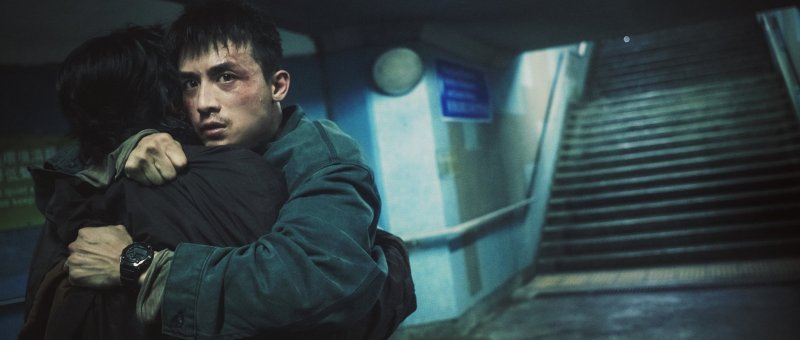
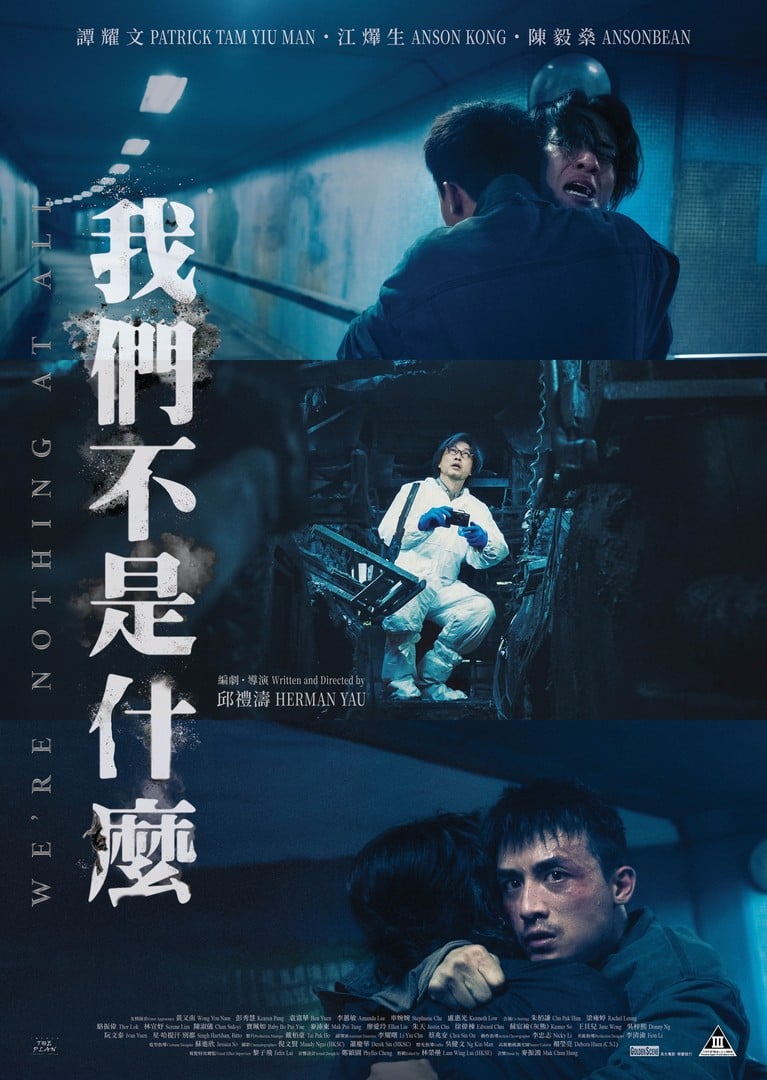
When a bus explodes in the middle of the city on Valentine’s Day, it opens a series of old wounds in Herman Yau’s self-financed state of the nation genre picture, We’re Nothing At All (我們不是什麼). The vision the paints of contemporary Hong Kong is indeed bleak. Radio and television reports talk only of economic downturn with businesses going bust while traditional spaces like wet markets are dying in the ever-changing city. Engaging with the idea of “lam chau” or mutually assured destruction, this is a Hong Kong on the brink of explosion.

Indeed, the bombers justify themselves that there are no innocent snowflakes in an avalanche and that, therefore, everyone else on the bus has contributed to the circumstances that have made their impossible. The largest of these is entrenched homophobia that has seen the two men exiled from mainstream society. Shy sketch artist Ike inadvertently hints at his sexuality in deflecting his parents’ marriage talk by snapping back that he cannot get married in Hong Kong which is another basic right he has been denied. He can only tell his family about his sexuality by writing a note and passing it through the letterbox. When his father reads it, he beats him and calls him a freak, telling him never to come home again. His family do not report him missing, and it seems it doesn’t occur to them that he might have been on the bus. 

Yau uses homosexuality more as a metaphor for marginalisation rather than a topic for exploration in and of itself. That said, it’s clear that their exclusion from mainstream society as gay men contributes to the poverty that otherwise defines their lives. Fai lives in a subdivided apartment and faces workplace exploitation when the construction site he was working at abruptly stops paying its labourers and his attempts to strike prove ineffective. He fares little better after getting a job at a restaurant with a similarly exploitative boss. Ike, meanwhile, is hassled by police while selling sketches with the implication being that law enforcement would rather go after ordinary people for small infractions while protecting the interests of large corporations. 

Ike at one point attempts to take his own life by jumping from a window in Fai’s subdivided flat, but is distracted by someone else jumping from a higher a floor. It’s at this point that Fai turns his anger back on society, asking him what the point of dying alone is and telling him that if they’re going to go, they should drag a few others along with them. Unable to see a way of transcending their circumstances, the two men can only envision freedom in death and stage a rebellion against the society they feel has rejected them.

The film obviously does not condone their actions, it also places the blame on societal and indifference particularly in the ways in which a wealthier middle-class world unsees men like Fai and Ike and prefers to move anything it finds unpleasant out of its line of sight. In the course of the investigation, the police move through an underground world of backstreet clubs where middle-aged women go to blow off steam and ageing sex worker Andrew desperately tries to stay afloat. Even veteran policeman Leung has his frustrations, admitting that he too came close to blowing the world to hell after he was forced out of the police force due to what he sees as an unfair double standard. 

Even so, his claim that he was saved by the love of a good woman reinforces a societal bias and suggests that the only path to success lies in self-repression. Despite his skills, Leung is depicted as something of a dinosaur with his desire to return to a world where smoking at the office was not only fine but encouraged. Aside from one young man, the other assistants mostly ignore him while he clashes with his more conventional colleagues, but in exploring the circumstances that led to the bus bombing, Leung begins to dig into a pressure cooker society and comes to the conclusion there were many such people like Fai and Ike or even himself who find themselves on the brink of explosion.


Trailer (English subtitles)
The White Storm 3: Heaven or Hell (掃毒3︰人在天涯, Herman Yau, 2023)

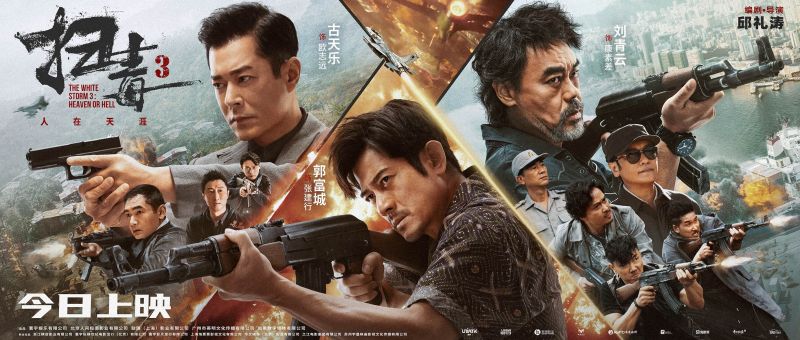
Who is the most foolish, the arch criminal who didn’t realise his two best buddies were undercover cops, or the cops that killed or took bullets for him? The latest in the White Storm series of standalone action thrillers with starry casts thematically dealing with drugs and organised crime, White Storm 3: Heaven or Hell (掃毒3︰人在天涯) like its immediate predecessor casts the net a little wider than just Hong Kong and is keen to stress the real victims of the international drug trade are the economically disadvantaged farmers who are left with no other option than to turn their fields to poppies. 

Back in Hong Kong, meanwhile, the film opens with local drug lord Suchat (Sean Lau Ching-Wan) retrieving a huge haul of drugs dropped in the ocean by helicopter only to be interrupted by the police who were watching all along. Suchat’s righthand man Yuen (Louis Koo Tin-Lok) blows his cover by pulling a gun to convince him to surrender, but Suchat chooses not to and in the firefight that ensues his other buddy, Hang (Aaron Kwok Fu-Sing), who is also an undercover cop and in fact very good friends with Yuen, is seriously wounded. In a show of loyalty, Suchat rescues Hang and manages to flee to Thailand where he sets up in his home village soon coming to the attention of the warlord who controls the local drug trade.

Describing the gang as the “rising stars of the Golden Triangle”, Suchat eventually cuts a deal with the general to provide security for his logistical operation in which drugs, mostly ice but also heroin, are transported inside fruit and other foodstuffs to be moved through the local market. Suchat had originally tried to set up his own operation only to fall foul of the general but also concedes that the margins in this game are fairly thin, no one in this area has any money to spend on drugs and there’s no point trying to produce them with the general in town so his only option is to provide a different service at another point in the chain. Hang becomes fond of the young woman who nurses him back to health, Noon, who explains that the only crop anyone is interested in is opium so aside from the food they grow for themselves it’s all they can produce to support themselves. There may a particular implication in her reply when Hang asks her if she’s ever considered moving that this even if this place is not a “home” because she has no remaining family members (her grandfather in fact seems to die of opium poisoning) it is still her hometown and why should she have to leave it. 

Before being taken to Thailand, Hang’s boss had worried that he might have spent too long undercover to successfully come back and it’s true enough that he seems to have become conflicted not only in his feelings for Noon but reflecting on the genuine brotherhood that exists between himself and Suchat whom he will eventually have to betray. Hang almost died for him, and Suchat repaid the favour by refusing to leave him behind. But on the other hand, there’s also a degree of homoerotic tension between himself and Yuen who rushes straight over to Thailand to rescue him once he’s able to make contact only to be frustrated when Hang tells him he has to go back to the village to save Noon who, as she’s already told him, does not actually want to leave despite the danger of constant violence from drug gangs and army raids. 

The film ends with the razing of the village of the Thai authorities who evidently decide the loss of life is justified in the necessity of stopping the general though it’s the ordinary farmers who lose their lives, families, homes and livelihoods because of their proximity to the trade in drugs. “I miss Hong Kong” Hang finally exclaims as if longing to shake off his undercover persona and recommitting himself to his role as a policeman but also perhaps hinting at a more subversive meaning as Yau ends on the clouds parting to reveal the famous city skyline amid picturesque terrain. Filled with a series of incredibly elaborate action sequences culminating in the all out warfare of the village raid, Yau’s heroic bloodshed subversion has its share of absurdity in the complicated relationships between its central trio and the ambivalent justice of its final resolution.


Original trailer (Traditional Chinese / English subtitles)