A Guilty Conscience (毒舌大狀, Jack Ng Wai-Lun, 2023)

“Something is wrong” a defence lawyer eventually asserts, witnessing a blatant attempt at perverting the course of justice right in front of her but otherwise unsure what to do about it when her opponents are so sure that they really are above the law. The directorial debut from screenwriter Jack Ng Wai-lun, A Guilty Conscience (毒舌大狀) is the latest in a series of films to put the judicial system on trial in pointing out that we are not in fact all equal before the law and the systems that are intended to protect us can often by subverted. 

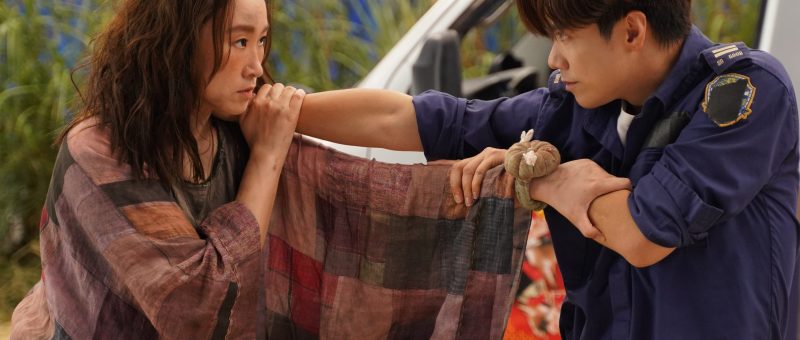
Subverting the legal system was in a sense what the hero, fast-talking lawyer Adrian Lam (Dayo Wong Chi-Wah), had been trying to do. After years on the bench, his career as a magistrate is going nowhere and he doesn’t really bother to show up anymore which is why he’s abruptly demoted to a committee dealing with potentially obscene material. Cutting his losses, he decides to join the private sector working for a sleazy firm representing the rich and powerful. His first case is supposed to be a walk in the park, defending a woman, Jolene Tsang (Louise Wong Dan-Ni), accused of murdering her daughter. As usual, Lam assumes the case will be easy to win and doesn’t really bother putting the work in, especially once he finds out the mother was the mistress of a powerful man, Desmond Chung (Adam Pak Tin-Nam), and assumes sorting out the murder charge will help him get in with the elite. Only Lam badly miscalculates and owing to his own hubris sees his heartbroken client sentenced to 17 years in prison for a crime she almost certainly did not commit. 

It’s a huge wake up call for Lam who is suddenly snapped out of his cynicism and burdened by the guilty conscience of the title knowing that it’s his sloppiness that sent a bereaved young mother to serve out the rest of her youth in jail. Opening a small office of his own in a rundown part of town he resolves to serve a better kind of justice, but also determines to do what he can for Jolene in an effort to correct his mistake. He gets a chance when someone involved with the case dies and leaves a note explaining that they lied during the original trial, but as the wealthy Chung family is involved he finds himself frustrated at every turn. No one is brave enough to go against them, while their sleazy legal advisor Tung (Michael Wong Man-Tak) continues to manipulate the system to his own advantage. 

Lam may have to play a little dirty, appealing directly to the jury and wilfully breaking court procedure to make sure they hear evidence which is otherwise inadmissible, but does so in the interest of “truth” which according to Tung has no place in a court of law. Tung may well be correct, objective truth is largely irrelevant when rhetoric and legal argument hold sway. What’s morally wrong might not actually be against the law, while doing what’s right might also get you into trouble. That’s where the jury comes in, Lam answers, as a kind of check and balance using common sense to temper cold legality and decide what might best serve a kind of moral justice rather than simply answer if an offence has been committed under the law. 

But Tung calls the jury “laymen”, implying they are too stupid to understand legal complexities and are in fact a spanner in the works of justice. He objects to the introduction of “feelings” and preaches “fairness” while manipulating the system to his own advantage. Lam catches him out by needling at his elitism, pointing out that he may think he’s an elite now that he hobnobs with the rich and powerful but in their eyes he’ll never really be their equal in a world still ruled by old money. In a case Lam presided over in which a young man was accused of stealing a pair of ready meals from a convenience store where he’d previously been employed, he asks the defendant if he thought poverty was an excuse to do whatever he wanted, irritated by his attempt to manipulate his feelings by emotionally blackmailing him in claiming the meals were for his elderly parents and only taken because his boss had not paid his wages. Nevertheless, Lam had acted in the interests of “fairness” spotting that he was being asked to repay the full price in compensation when the meals he stole were actually heavily discounted and adjusting the amount accordingly. In effect Lam does something similar in defending Jolene, asking the rich if they think their power and status puts them above the law. The Chungs at least clearly think they do, doing their best to intimidate and frustrate the course of justice. 

“Everything is wrong” Lam adds during his closing speech, decrying the influence of wealth and power not only in the judicial system but in society at large. Tung thought he could manipulate the prosecutor (Tse Kwan-Ho) in knowing him to be a stickler for letter of the law, but even he knows that sometimes you might have to break the rules to do the right thing and to apply the law incorrectly would not be in the best interests of justice. With strong comedic undertones and warmhearted charm, Ng’s farcical courtroom drama discovers that the real culprits are privilege, elitism, corruption, and ambition but that justice can be served if only we apply a little common sense. 


A Guilty Conscience is in UK cinemas now courtesy of Magnum Films Global.

Original trailer (Cantonese with Traditional Chinese / English subtitles)

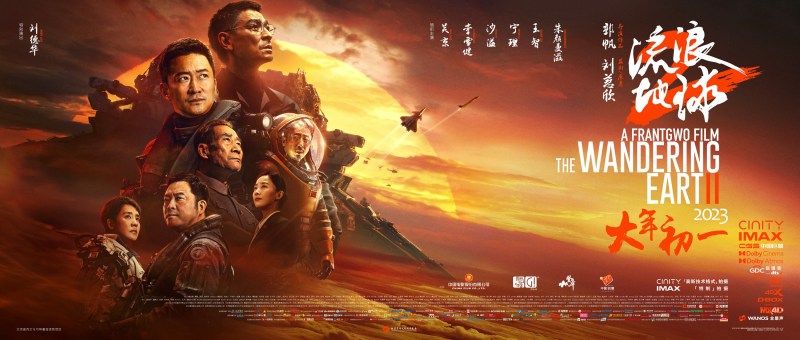
The Wandering Earth II (流浪地球2, Frant Gwo, 2023)

Back in what now seems like another world, Frant Gwo’s The Wandering Earth became a Lunar New Year box office smash and was described by some as China’s first foray into big budget sci-fi. Adapted from a novel by Liu Cixin, the film was much about fathers and sons as it was about sacrifice and solidarity in the face of oncoming apocalypse all of which are quite traditional New Year themes. Arriving four years later, The Wandering Earth II (流浪地球2, liúlàng dìqiú 2) largely drops overt references to the Spring festival bar the repeated motif of journeying home, but does once again stress the importance of international cooperation in safeguarding the future of the planet.

Then again, it seems that many feel it’s not a good use of time or resources to address a problem that will occur in a hundred years when they are long dead. A prequel to the first film, Wandering Earth II begins in the early days of the Moving Mountain Project which is the plan to push the Earth onto a different orbit to escape the sun’s eventual implosion. Given its enormous expense and the reality that much of the population will simply be left to die, the majority of the public back the rival Digital Life program in which humanity would be saved by relocating to a new virtual reality. Where this virtual reality is supposed to be stored is not exactly clear if there is no Earth for it to exist on, but it’s clear that some consider the possibilities of the digital existence preferable to allowing millions to die in the tsunamis which will engulf the Earth as it uncouples from the moon’s gravitational pull. 

Chief among them is software engineer Tu (Andy Lau Tak-wah) who is griefstricken by the loss of his wife and child in a traffic accident and has been secretly working on creating a fully fledged AI simulacrum of his daughter Yaya. He tells his more practically minded colleague Ma (Ning Li) that he doesn’t have the right to define what is “real” while eventually jeopardising the Moving Mountain Project by prioritising his desire to save Yaya over saving the Earth and eventually creating the AI system that will become Moss, a possibly dangerous entity which decides the best way to save humanity is to destroy mankind. 

The first film’s hero, Liu Peiqiang (Wu Jing), meanwhile is a rookie astronaut caught up in a terrorist incident carried out by militant opponents of the Moving Mountain project while enjoying an incongruously goofy courtship with fellow astronaut and future wife, Duoduo (Wang Zhi). This time around, he’s a dutiful son rather than conflicted father serving alongside his own dad who eventually becomes an example of intergenerational sacrifice as the old begin to make way for the young whose responsibility it now is to preserve the Earth. A nervous young aid serving the current premier later takes over the reigns and finds herself giving the same advice to a similarly nervous young man as they prepare to carry on the Wandering Earth project despite knowing that it will take thousands of years to complete. 

The ultimate message is therefore to choose hope, as Peiqiang later does striving to save the world even if it all turns out to be hopeless, rather than giving up and resigning oneself to one’s fate as many suggest doing when faced with the potential failure of their mission. As in the first film, the plan requires cooperation between nations and this time even more so as world powers must surrender their nuclear weapons to help blow up the moon. The Chinese premier looks forward to a day when governments can work on solving future problems rather than preparing for war, but then in an echo of the ongoing climate crisis some just don’t seem to see the point in dealing with something that won’t happen for a hundred years despite likely being among the first to complain no one did anything sooner when it finally affects them. Gwo adds a little whimsy in the technically pre-apocalypse setting with charming details such as Tu’s warm relationship with his dog-like robot helper and the general goofiness of Peiqiang’s attempt to court Duoduo while improving on the already polished visuals of the first film through several high impact set pieces but finally returns to its messages of hope and solidarity perhaps intended for a weary world attempting to find its own way out of a period of protracted strife.


The Wandering Earth II is in UK cinemas now courtesy of CineAsia.

International trailer (English voice over, Simplified Chinese / English subtitles)

Onlookers (Kimi Takesue, 2023)

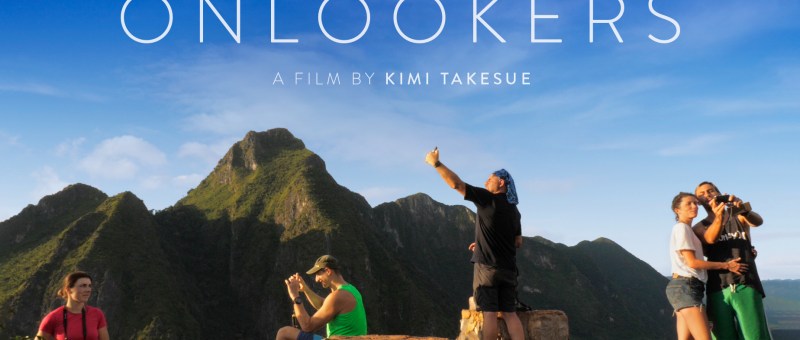
Onlookers is a strange word. It implies passivity, if also perhaps indifference, but nevertheless invites a question. Who exactly is looking at what or is the onlooker themselves also a spectacle of attention? The opening shots of Kimi Takesue’s Laotian documentary find a row of people waiting by the side of a road. A young man stares intently at his phone, as does an older woman two stools over, while an old lady’s eyes idly flicker as she watches the passing traffic. Another woman sits further away with a dog, facing an entirely different direction. 

Of course, we are also onlookers, watching the old lady as she watches if not exactly us then perhaps our ghost as manifested in the camera. In a sense the landscape is also onlooker, a passive presence often strangely forgotten by the tourists who pass through the frames throughout the rest of the film. In the early scenes, more local sightseers can be seen visiting temples and other landmarks, like others paying more attention to getting the perfect photographs rather than immersing themselves in the experience of actually being there. 

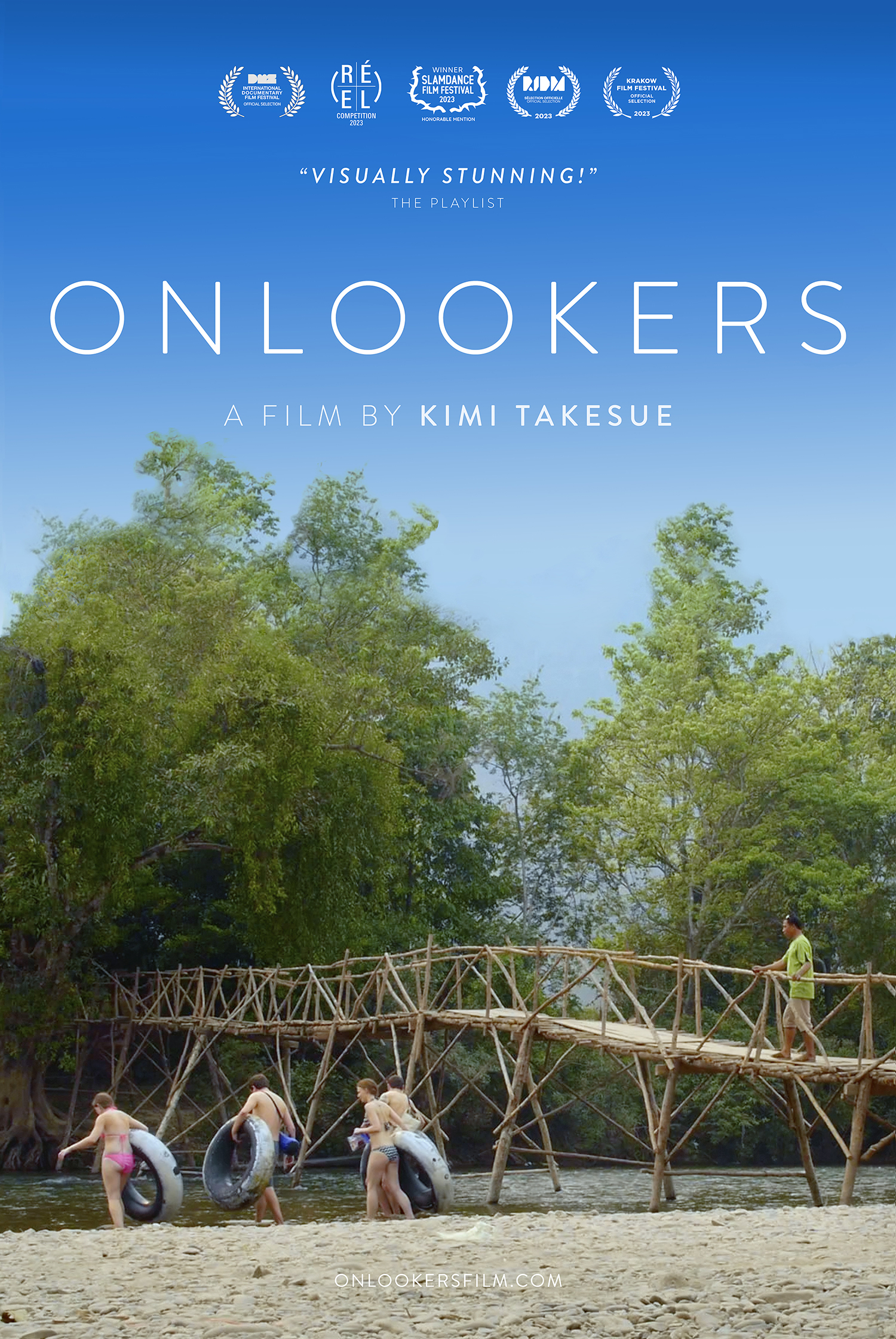
The temples seem to loom over them, onlookers too, passively observing their conduct which is not always respectful. “Don’t smoke weed here” a large sign pleads in English while large groups of tourists congregate at a swimming hole. In an elegantly composed shot of the mountains, most of the tourists are facing the wrong direction, quite literally bending over backwards to get the perfect selfie while otherwise oblivious to the beauty all around them. In a small waiting area near a shop offering tube swimming tours, the TV seems to be tuned in to ancient episodes of Friends while potential customers haggle with the driver leaving the young boy who accompanies him to wander out into the road. 

Even religious practice seems to have become a tourist attraction, gaggles of sightseers crowding round a small hut where monks ring bells, taking turns banging gongs themselves. Takesue contrasts these acts of accidental voyeurism with the local people simply trying to go about their business, a row of women again siting on the roadway though this time to offer alms to a seemingly endless parade of monks in a near eternal loop. Much of the local economy does seem to revolve around the tourist trade, the monk’s parade also attracting is share of onlookers, while a woman washes a dog in the street and others try to get on with selling their goods before Takesue abruptly switches to scenes of schoolchildren on scooters or filling plastic water bottles from the river. 

Then again, perhaps the real onlookers are the bemused cows fighting over tufts of grass as they wander onto temple grounds. The tourist trade may also be having a negative effect on the local environment, drowning out the sounds of the nature and disrupting the natural tranquility of the area while the tourists often appear indifferent to the world around them as if it were a mere playground and the people themselves little more than onlookers observing them from the outside. Occasionally Takesue cuts to scenes of nature without any people in them, bathing in the natural beauty of the landscape unsullied by human intervention as if to remind us of the various ways in which consumerism eats away at the world in which we live if also hinting at our own desire, as onlookers, to paint these scenes with a kind of pastoral innocence coupled with an otherwise uncomfortable exoticism. 

The film ends as it began, with another roadway only this time empty save for a dog who turns around to look towards the departed people before a second dog enters the frame and barks at the camera as he passes through as if to ask where everyone’s going or perhaps what they were doing here in the first place. A gentle meditation on the nature of “travel” and the disruptive qualities of “tourism”, Takesue’s elegantly lensed images seem to argue for a more active reflection on the world and our place within it rather than remaining a perpetual onlooker observing without thought or feeling.


Onlookers had its world premiere as part of Slamdance 2023.

Trailer